
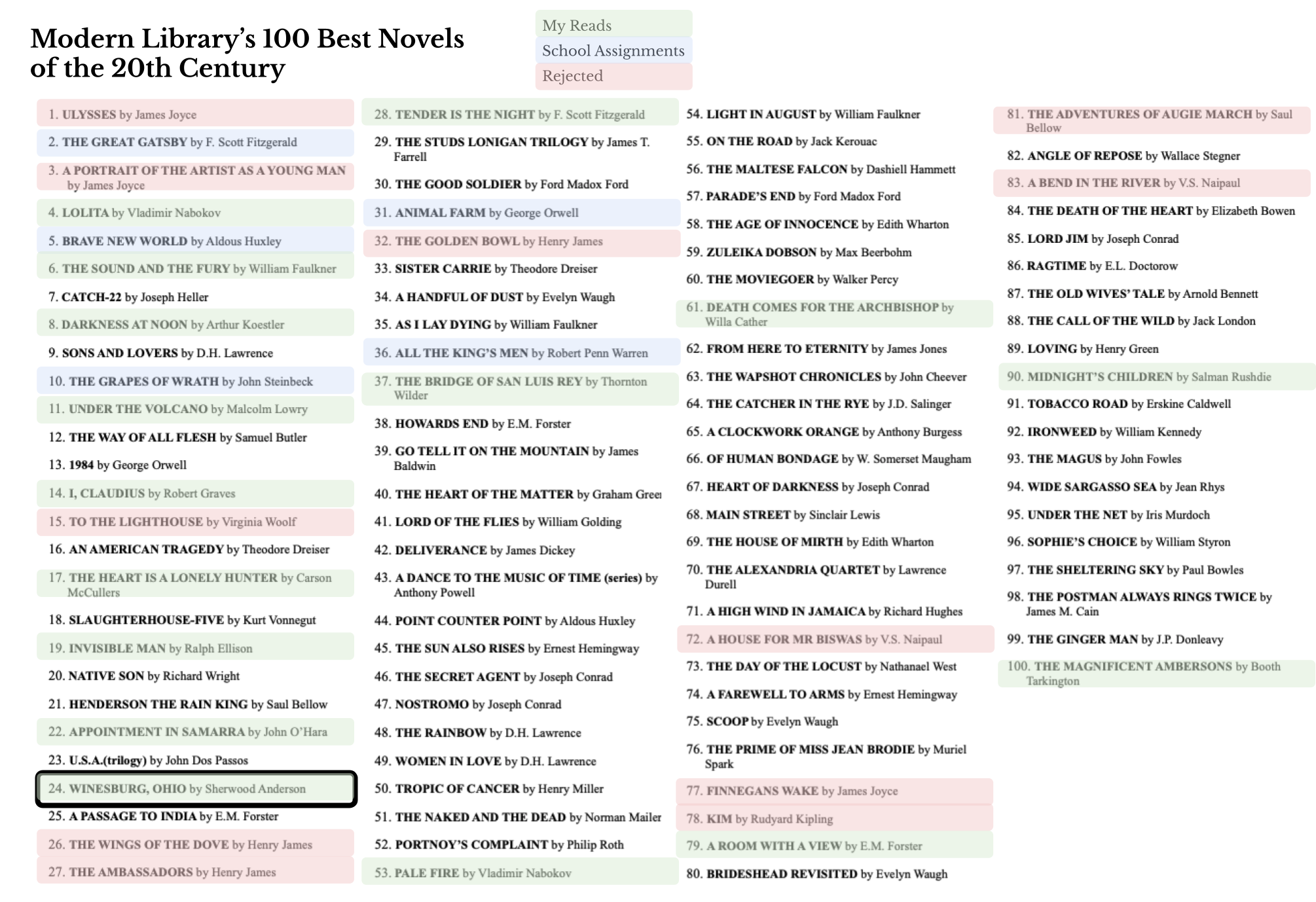
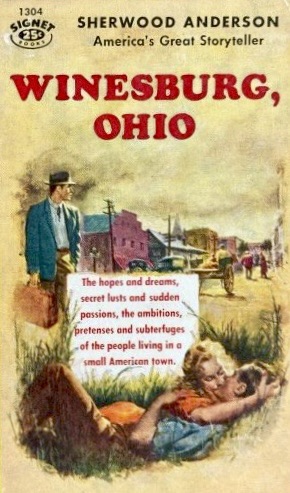
Have you ever heard of Sherwood Anderson? I had not, until I noticed his book Winesburg, Ohio listed at #24 on Modern Library’s self-serving 100 Best Novels of the 20th Century.
The Greatest Books of All Time meta-analysis ranked it as 304th, although a year earlier it had been 279th. My reading of it in May 2026 made it the 21st of the Modern Library 100 that I had read.
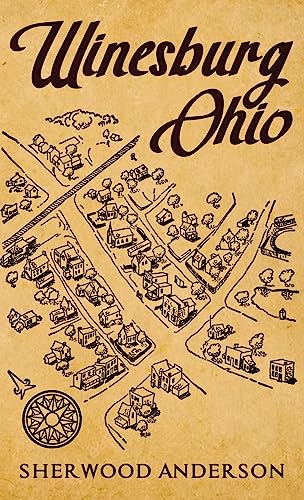
I had just finished six genre fiction books, four mysteries and two classic science fiction fix-ups, and I was ready for something more literary. I downloaded an EPUB3 of it from Standard Ebooks and used Send to Kindle. Despite their claims of more rigorous proofing, I spotted three typographical errors in that version. You can also read it at Project Gutenberg.
Happily, given my fragmented attention span in the last weeks of my occupancy of a work office, Anderson’s 1919 book was a short story cycle. It was, in a way, an early fix-up in that ten of its twenty-two stories had been previously published, in slightly different versions, in various literary magazines between 1916 and 1918.
The stories are set in the titular town at the turn of the 19th century into the 20th, which was loosely based on Clyde, Ohio, where Anderson had lived from 1884 to 1896, when he was roughly ages eight to twenty. His father, a former Union soldier and harness-maker, had moved the family there after his drinking led to financial difficulties in Caledonia, Ohio.
Anderson’s father could barely support the family as an occasional sign-painter and paperhanger, and his mother took in washing. Sherwood earned the nickname “Jobby” for his efforts to find various odd jobs to help out, leaving school at age fourteen after nine months in high school. He spent the rest of his time in Clyde as a “newsboy, errand boy, waterboy, cow-driver, stable groom, and perhaps printer’s devil, not to mention assistant to Irwin Anderson [his father], Sign Painter”.
Anderson later went to night school, did a short stint in the army and went to Cuba for the Spanish-American War, but fighting had ceased four months prior to his company’s arrival there. At age twenty-three, he enrolled in a preparatory school on the campus of Wittenburg University. While he was working at a boardinghouse, a high school teacher introduced him to fine literature. Anderson was one of eight students chosen to give a commencement speech, impressing an advertising manager enough to give him a job in the firm.
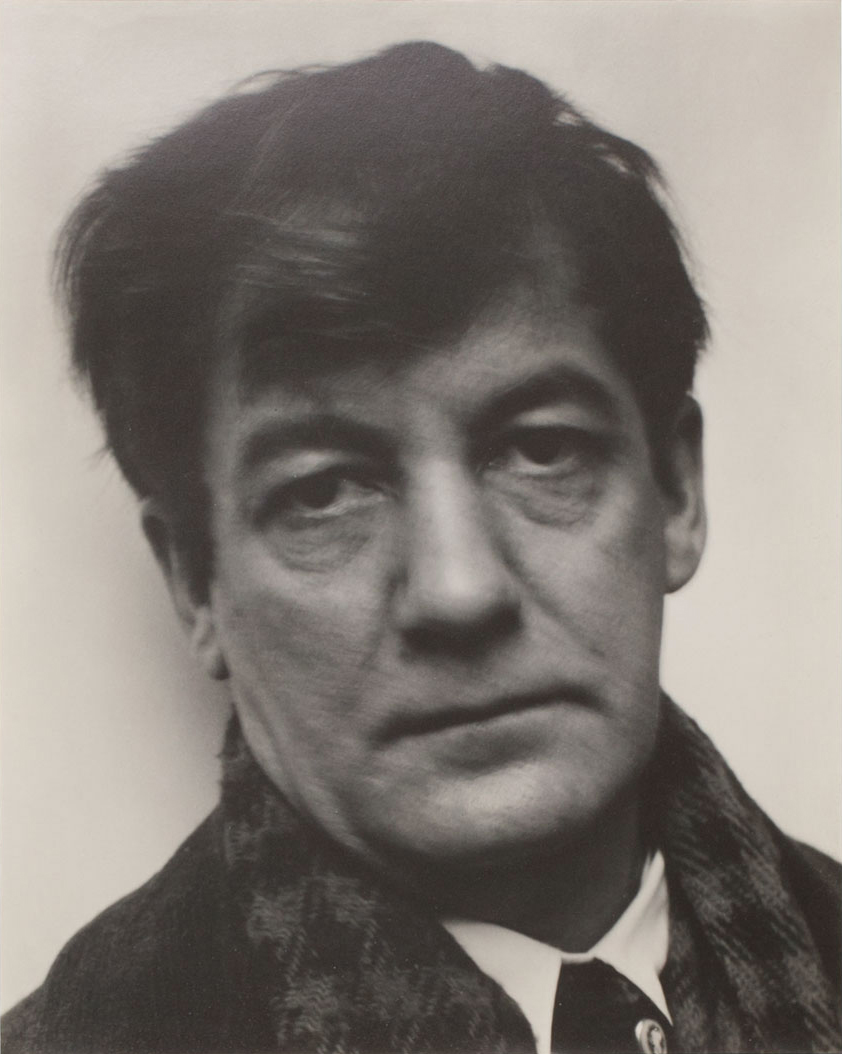
Anderson worked at the advertising firm for six years, married, and became a sales manager for a mail-order firm. A batch of defective incubators was his undoing, with Anderson suffering a nervous breakdown from months of answering hundreds of complaint letters.
The Andersons moved to another town in Ohio, where he had several successful businesses, but Anderson had a second nervous breakdown in 1912 and abandoned his wife and their three children. Thankfully, she came from a prosperous family, but his behavior reminded me of how the architect and egotist Frank Lloyd Wright treated his own family in 1909. Anderson moved to Chicago, was divorced in 1916, and he would marry three more times, with each marriage enduring about eight years.
He wrote a couple of inferior novels before producing Winesburg, Ohio. That story cycle, written when he was in his early 40s, is generally recognized as his best work. While he produced a handful of additional highly regarded short stories and a few novels of varying success in the 1920s, his work after the start of the Great Depression is generally regarded less favorably, although it still produced quotable passages.
In 1941, at age 64, he swallowed a toothpick at a New York cocktail party before embarking on a cruise to South America. The toothpick caused internal damage that led to peritonitis, and he died in Panama.
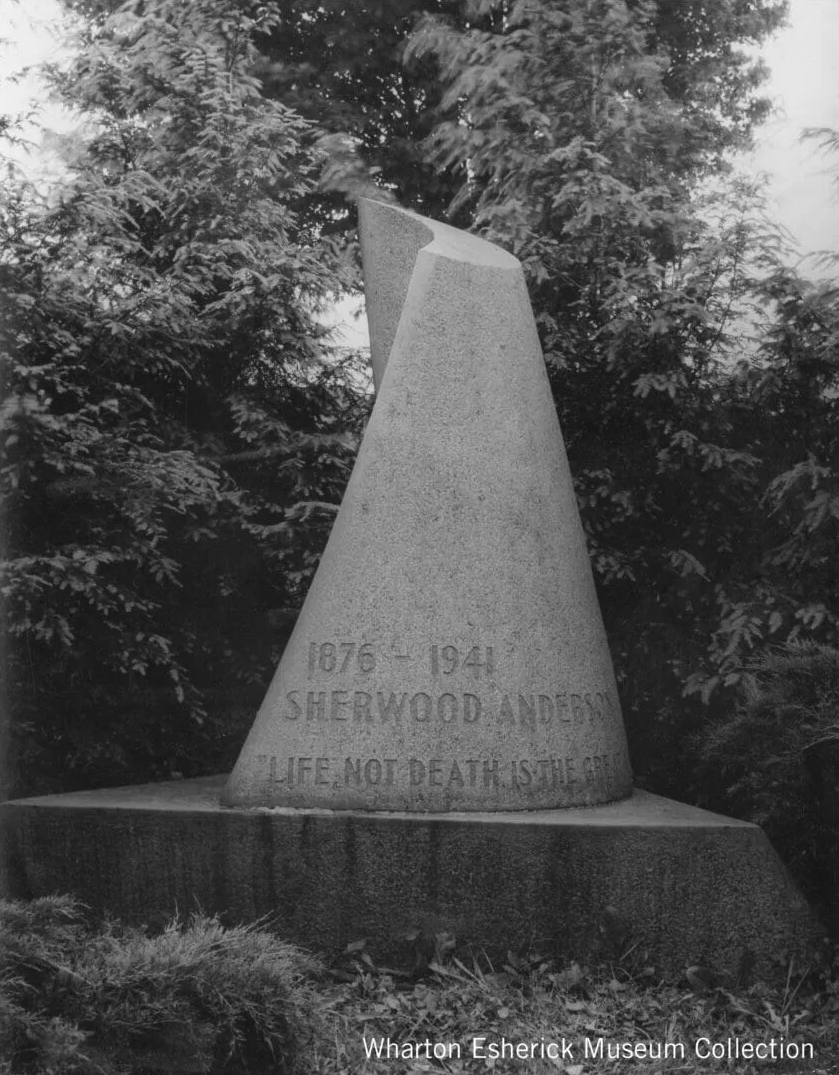
Anderson’s body was buried on the slope of a grassy hilltop in Virginia, near the border with Tennessee and North Carolina. His tombstone, a modernist creation by one of his friends, the sculptor Wharton Esherick, bears the epitaph Anderson had composed for it: “Life, Not Death, Is the Great Adventure”.
His greatest work included suggestive sexual overtones, but one source declaims, “…it is not an American classic because it introduced hitherto taboo subjects and experimented with new forms of structure in novel and tale. It is a classic because it is a deeply moving book about the loneliness and frustration of ordinary people…because it portrays the difficulty of communicating with one another yet clings to the tenuous hope that love and understanding can bridge the moat that isolates each of us…”
Decades ago, I devoured Ray Bradbury’s stories about Green Town, Illinois—a fictionalized version of his own childhood in Waukegan. Bradbury infused many of his stories about the Green Town of the 1920s with intense nostalgia, lyrical prose, and the blending of magical wonder with the bittersweet realities of life, as experienced through 12-year-old Douglas Spalding.
That contrasts greatly with Anderson, who imbued his fictional Winesburg of the 1890s with profound isolation, frustration, and repressed desires of small-town life. Anderson featured “grotesque” characters—lonely individuals defined by singular, obsessive truths—who struggled to communicate, all tied together by the central observer, young reporter George Willard, who matures through the cycle from an adolescent boy to a young man.
Bradbury was the more gifted writer, but his romanticized style can become cloying. Anderson was far gloomier and more adult, including sexuality that was most unusual in 1919.
I enjoyed the themes of most of his tales, even though they were almost all downers. He did provide a bit of relief with the humor in the story A Man of Ideas, with its lively and even lovable, if exhausting, verbose protagonist. I also liked the linkages between The Strength of God and The Teacher, with the strong contrast of a Peeping Tom pastor’s interpretation of a night’s events with that of the frustrated teacher he spied upon.
Anderson effectively sketched recognizable oddities of personality, several of which I have encountered over the decades. I also related to the adolescent confusion of young George, which revived memories from my teenage years. I was struck by the desperation of Alice Hindman in Adventure, who runs naked out into the street one night, only for her wild act to end without anyone else ever knowing about it, and her tragic embrace of a future that holds nothing but more loneliness.
Ball State professor Bill Sutton claimed that Anderson observed people in Chicago and transplanted them to his fictional town, and the book has been characterized as an exposé of the hypocrisy, frustration, and inhibition behind a typical small town’s façade of gentility. However, it is more a book about, as Irving Howe wrote, “extreme states of being, the collapse of men and women who have lost their psychic bearings and now hover, at best tolerated, at the edge of the little community in which they live.”
Howe’s analysis includes:
It was in the freedom of the city, in its readiness to put up with deviant styles of life, that Anderson found the strength to settle accounts with—but also to release his affection for—the world of small-town America. The dream of an unconditional personal freedom, that hazy American version of utopia, would remain central throughout Anderson’s life and work. It was an inspiration; it was a delusion.
…
Anderson evokes a depressed landscape in which lost souls wander about; they make their flitting appearances mostly in the darkness of night, these stumps and shades of humanity. This vision has its truth, and at its best it is a terrible if narrow truth—but it is itself also grotesque, with the tone of the authorial voice and the mode of composition forming muted signals of the book’s content. Figures like Dr. Parcival, Kate Swift, and Wash Williams are not, nor are they meant to be, “fully-rounded” characters such as we can expect in realistic fiction; they are the shards of life, glimpsed for a moment, the debris of suffering and defeat. In each story one of them emerges, shyly or with a false assertiveness, trying to reach out to companionship and love, driven almost mad by the search for human connection. In the economy of Winesburg these grotesques matter less in their own right than as agents or symptoms of that “indefinable hunger” for meaning which is Anderson’s preoccupation.
I suppose Anderson in his way set the stage for the infamous Peyton Place of 1956, a novel by Grace Metalious which was filled with secrets, sex, and hypocrisy in a small New England town. Peyton Place has a stronger sense of plot and is noisy, sensational, and accusatory, while the more symbolic Winesburg, Ohio is quiet, moody, and empathetic.
Anderson’s abandonment of his wife and children makes an appearance in The Untold Lie. A young troublesome farmworker has impregnated a woman and asks a fellow field worker, who is a henpecked husband with a half-dozen scrawny children, if he should follow in his footsteps and marry his lover. The older man turns and walks away, providing no answer. Later, sent to town to get groceries, he runs to intercept the young worker, intending to tell him to not settle down. However, the young worker has already decided to get married, and the older man never proffers his advice, which he then discounts as an untold lie. Knowing Anderson’s behavior, his ambiguous treatment of the topic is interesting.
I was grateful that Anderson gave his young reporter, George, a character arc. He is not merely a sounding board for the various misfits, but has romantic relationships throughout his adolescence that begin as shallow and purely sexual, progress to confusing, and culminate in one which has the potential of becoming something deeper and more mature.
The final stories have some beautiful moments. In Death, a doctor speaks to George’s mother:
“Love is like a wind stirring the grass beneath trees on a black night,” he had said. “You must not try to make love definite. It is the divine accident of life. If you try to be definite and sure about it and to live beneath the trees, where soft night winds blow, the long hot day of disappointment comes swiftly and the gritty dust from passing wagons gathers upon lips inflamed and made tender by kisses.”
And the penultimate story, Sophistication, has this marvelous evocation:
There is something memorable in the experience to be had by going into a fair ground that stands at the edge of a Middle Western town on a night after the annual fair has been held. The sensation is one never to be forgotten. On all sides are ghosts, not of the dead, but of living people. Here, during the day just passed, have come the people pouring in from the town and the country around. Farmers with their wives and children and all the people from the hundreds of little frame houses have gathered within these board walls. Young girls have laughed and men with beards have talked of the affairs of their lives. The place has been filled to overflowing with life. It has itched and squirmed with life and now it is night and the life has all gone away. The silence is almost terrifying. One conceals oneself standing silently beside the trunk of a tree and what there is of a reflective tendency in his nature is intensified. One shudders at the thought of the meaninglessness of life while at the same instant, and if the people of the town are his people, one loves life so intensely that tears come into the eyes.
The sombre and muted beauty of the final stories, after the “terrible if narrow truths” in Anderson’s previous “shards of life”, struck home. My eyes stung as I read of George Willard’s Departure from his home town, with him not thinking of big or dramatic things, like his mother’s death, his leaving home, or his uncertain future. Instead, George thought of little things, those little moments that formed “a background on which to paint the dreams of his manhood.”
I’m quite glad to have read Winesburg, Ohio. It is widely regarded as Anderson’s pinnacle, but F. Scott Fitzgerald is known to have rated Anderson’s Many Marriages of 1923 as his best novel. It has been summarized thusly: “A psychological novel exploring a middle-aged Midwestern washing machine manufacturer’s rebellion against conventional marriage, sexual repression, and societal expectations.”
I’m more likely to eventually take that up than Anderson’s only bestseller, Dark Laughter of 1925, which has been described as being “about a man who abandons his life for a simpler one, only to find new complexities in a romance with his employer’s wife, contrasted with the ‘dark laughter’ of Black servants who observe the white characters’ struggles”. That book was influenced by James Joyce’s Ulysses and uses a stream-of-consciousness style which usually aggravates me, and Hemingway penned a parody of it, mocking the pretensions of Anderson’s style and characters.
I certainly need time to digest Winesburg, Ohio before taking on anything deep. So my next Kindle read will be something that first caught my eye in an Ace Double when I was a teenager, but which I never actually read. Lester del Rey’s The Sky is Falling, which first appeared as a short story in 1954 and as a novella in 1963, has itself fallen into the public domain, and is said to have a fast pace, no explicit content, and an inventive and lighthearted style. Time for a wade in the shallows.








 Meador Manor