Sooners or Cowboys? In Oklahoma, one is often expected to take one side or the other in the rivalry between its two largest institutions of higher education: the University of Oklahoma (OU) and Oklahoma State University (OSU). I am bemused when asked which team I support. I earned 162 credits and a bachelor’s degree at OU, but I also earned a dozen graduate credits at OSU and 36 graduate credits and a master’s degree at the small private Southern Nazarene University.
So I consider myself a Sooner, but I can also lay claim to having been a Cowboy and part of the Crimson Storm. If one goes back to grade schools, I was also a Patriot, a Trojan, and a Colt at various Putnam City schools in Oklahoma City and Bethany. I posted last week about my undergraduate coursework, so in this post I’ll shift to the last 51 of the 210 college credits I earned: my post-graduate work.

That began in 1992, three years after I moved to Bartlesville. OSU and Phillips Petroleum partnered to convert a former science lecture hall at Bartlesville High School, where I taught physics, into a compressed video room with two large monitors, speakers, multiple microphones, and video cameras. That allowed OSU to offer interactive graduate courses to teachers via an audiovisual feed with Stillwater.
I was never interested in becoming a school principal, but OSU offered a program to earn a master’s degree in curriculum and instruction. I could see myself one day transitioning to curricular administration, and having a graduate degree would mean a slight bump in my paltry pay, so I enrolled.

I enjoyed an educational statistics course via compressed video, which had lasting value in allowing me to assist students with analyzing science fair project results for statistical significance. After that, Fred Wood, the dean of my alma mater, the OU College of Education, offered an excellent in-person course in professional development. I was delighted in how he practiced what he preached, ensuring that he made extensive use in each class of the very techniques we were learning.
But then I suffered through a couple of terrible courses taught over compressed video by an arrogant OSU professor. I learned very little from the jargon-laden deconstructionist drivel he assigned. Alan Sokal, who famously hoaxed a journal that espoused deconstructionism and postmodern philosophy, would have had a field day with the journals we had to consult.

I had logged onto the early internet throughout the previous decade via the engineering computer system at the University of Oklahoma, but in the early 1990s the world wide web was still in its infancy. So our research materials were still analog.
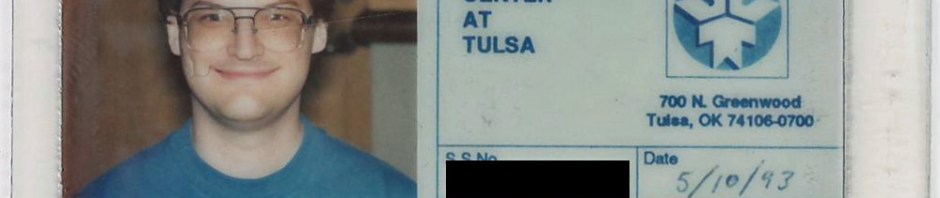
I had to get an identification card at the University Center of Tulsa (UCAT), which back then was a joint operation by OU, OSU, Northeastern, and Langston. I would drive down to Tulsa some weekends to access journals stored on microfiche for my graduate class research.
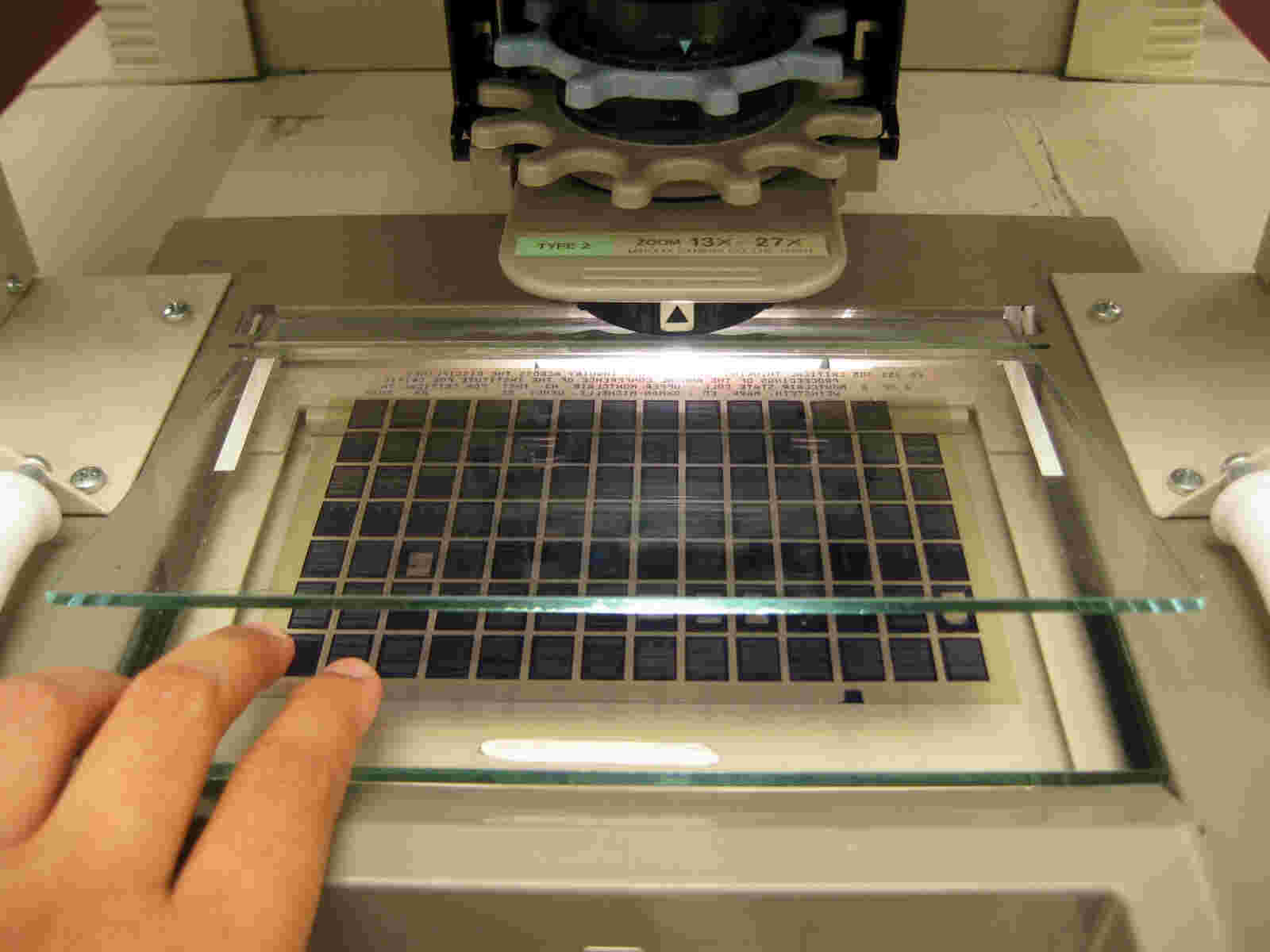
Microfiche stored tiny photographic images of journals on film cards, which you loaded into a magnifying viewer. If you needed a copy, you could pay by the page for smelly wet reproductions from a wet electrophotographic process.

The only lasting benefit I got from those two courses was that for one class the professor insisted that we go out and rent the 1990 Christian Slater film Pump Up the Volume. That introduced me to Everybody Knows by Leonard Cohen, and I became a lifelong fan of The Godfather of Gloom.
My next course was on children’s literature and was so uninspiring that I dropped out, having discovered that OSU’s College of Education had lost its NCATE accreditation. I had earned 12 graduate credits via OSU and 3 via OU, but I wasn’t interested in any more from them.
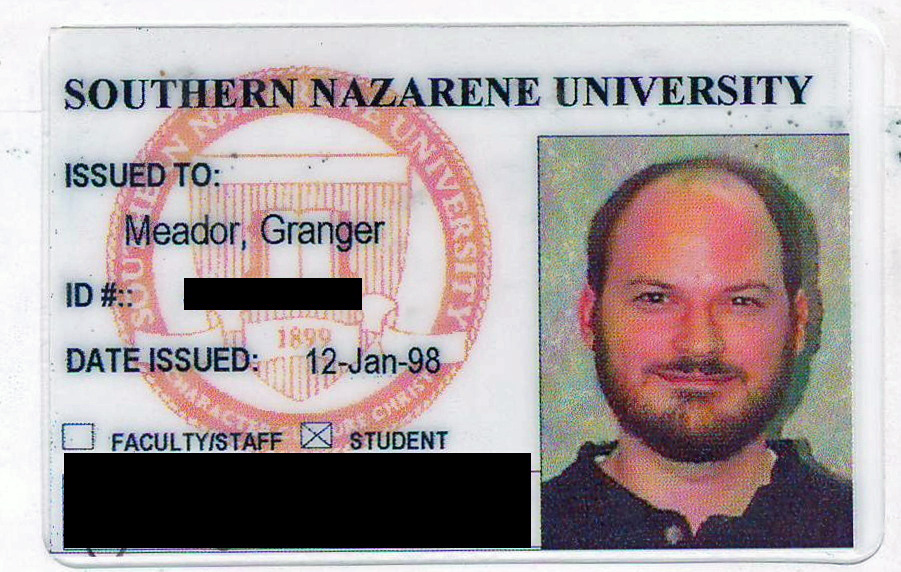
Later in the 1990s, Southern Nazarene University (SNU) started offering condensed graduate courses where you could drive down to Tulsa for a three-hour class once per week, write papers on the weekend, and earn a master’s degree in educational leadership in two years. They included all of the journal material you would need in three-ring binders, instead of you having to hunt things down on microfiche. Nowadays, of course, all the material would be provided online. But then, although they required that you have a laptop computer, the program actually made almost no use of the technology.
I got more out of that program than my earlier graduate work, and I earned a master’s degree and school principal certification, but I still had no intention of becoming a building administrator. I just wanted the experience to help me in my leadership of the science department and for the salary boost a master’s degree would bring. However, since I stayed in the classroom rather than becoming an administrator, the pay boost was so small that it took over a decade to earn enough extra to pay for the degree from the private university, even after parlaying my earlier 15 graduate credits into an additional salary boost.
My 51 hours of graduate work was thus split up as 36 at SNU, 12 at OSU, and 3 from OU. I jokingly say that I have a master’s degree in education leadership and half of another in curriculum and instruction. Eventually some of that helped me in the administrative role I assumed after leaving the classroom, in which I direct my school district’s technology and communication efforts.
Why Choose Sides?

The truth is that I have no allegiance to the Sooners or the Cowboys sports teams, not because of divided loyalties, but due to indifference.
One illustration of my disengagement from sports is back in the 1970s when I worked in the student store at our intermediate school serving grades 4-6. Boys would purchase pencils representing various teams in the National Football League. I was clueless about the teams and colors. So a kid would demand a “Packers” pencil. I would start hunting, and he would add, “Green Bay Packers!”
When that didn’t speed me up enough, he would groan and yell, “The green and yellow one!”
I remember some kids would purchase a pencil for a team they didn’t like. Then they would just snap it in two. As they strutted off, I would scoot the remains into the trash, muttering, “What a waste of a perfectly good pencil!”
The Recruit
The only university sporting events I ever attended were a few football games at OU, since my girlfriend and I had student season tickets during my freshman year. After that, I was never at a game until I had graduated and was recognized at halftime as the Outstanding Senior of one of the university’s colleges, in my case the College of Education.
As I stood out there on Owen Field, way above me was the Santee Lounge up underneath the overhang of what was then Oklahoma Memorial Stadium. I gazed up there, recalling a funny moment up there the summer before I started my freshman classes.
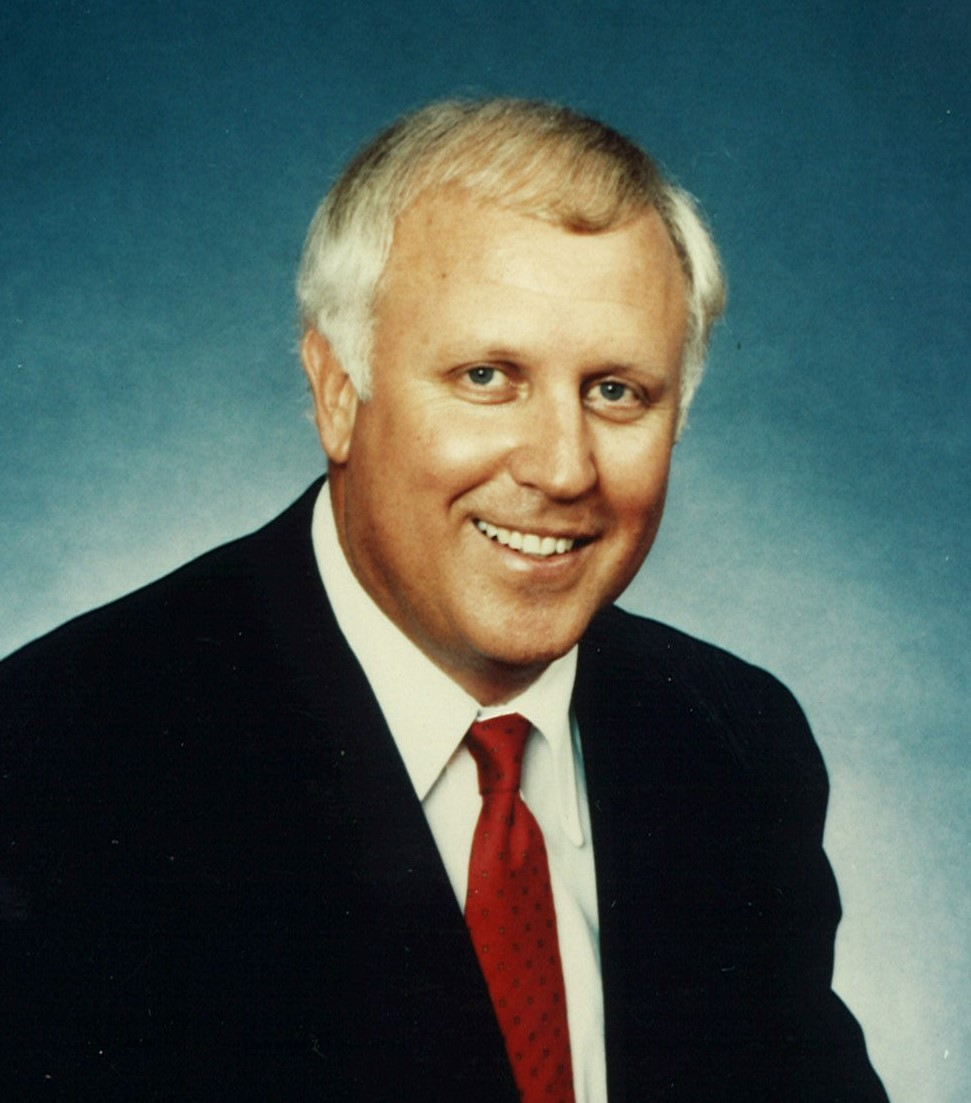
All of the university’s scholarship recipients had been gathered together and introduced up in that premier area of the stadium. I was one of the R. Boyd Gunning Scholars, which at the time was the university’s most lucrative academic scholarship.
When he introduced me, Dr. Stephen Sutherland, whom I would later work for in OU Scholars Programs, mentioned that he had first heard of me through Donnie Duncan, the university’s well-known athletic director. He joked how I was the only R. Boyd Gunning Scholar that had been referred to him by the athletic department.
What he didn’t explain was that a coworker of my father was also a friend of Mr. Duncan, and he had mentioned to Duncan my academic achievements. That is what prompted Duncan to pass my name along to Sutherland, and he had skeptically looked into my academic record, realized I was indeed a top-performing high schooler, and started recruiting me.
The only reason I remember any of that is because, after all of the introductions, there was a mixer up there in the Santee Lounge of the scholarship recipients. Several attractive girls, who appeared to be fit athletes, walked up to me and were clearly sizing me up in my dress suit. I started to think university life was going to be interesting. Then one exclaimed, “I’ll bet you play tennis!”

I was confused, and answered, “Uh, no.”
That prompted another to grin and state, “You run cross country!”
“Er, no.”
A third added, “So what are you great at? Chess?”
I finally realized that they presumed I had come to Duncan’s attention for my athletic prowess, and my slight 5’8″ frame had them all speculating what sport I excelled at.
I’ve always been far too honest, and they were clearly disappointed when I explained how Duncan had heard of me. Once I confessed that I had never played any sport and had no athletic ability, and I didn’t even know how to play chess, they lost all interest.
Boomer Sooner.







 Meador Manor