
October 2024

A year ago, Wendy and I watched a movie in a cinema together for the first time in over 4.5 years. The COVID-19 pandemic was part of the reason for our absence from the multiplexes, but another year has passed, and we haven’t returned to a cinema.
Back in the 1950s, Hollywood started competing with television for audiences and revenue. That led to gimmicks like 3-D movies and wider aspect ratios, offering audiences something they couldn’t readily obtain on their home televisions.
So did we just switch to watching TV? Well, no. Wendy and I don’t watch any television shows. Instead, we stream niche videos on our respective iPads. As for movies, I’ve been logging our movie watching on Letterboxd, which shows that we have watched an average of seven movies annually over the past four years. The chart shows when those movies were first released:

Yes, the preponderance of films from the 1940s means that over half of the movies we watched in the past four years were in monochrome, and many were in the academy screen ratio. So I guess technical innovations aren’t much of a draw for us!
The pandemic dealt a mighty blow to box office revenues and ticket sales, with the later making only a fractional recovery, plateauing in 2022 and 2023 at less than 2/3 of the average in the 2010s. So the future of movies is cloudy, and that prompts me to take a look back at some of my cinematic experiences.
Before My Time
My father was of the Greatest Generation, and as a kid he would go to the “picture show” on Saturday afternoons and pay a dime for a cartoon, a newsreel, a feature film, and an episode of a continuing serial. He continued to see movies in cinemas while serving in the army in World War II, but 20 years later, when I came along, he rarely went to a cinema.

My mother is of the Silent Generation, and her strict Pentecostal father did not allow his children to attend movies or even watch films presented at school. He died too early for me to remember him, but I clearly recall how my maternal grandmother had no television and would only tolerate news and weather reports on a radio and nothing more. When I was seven and stayed with her for a week one summer, I asked her about that. She replied that the devil was the “prince of the power of the air” and thus television and radio entertainments were not to be trusted.
However, my mother did allow my father to take her to a movie for their first date. They saw The World of Suzie Wong, a film about an American painter in Hong Kong who falls in love with prostitute he hires as a model. No doubt my maternal grandparents would have been horrified. Years later, when I was around, my parents did not frequent cinemas; we instead watched television at home.
General Audiences

When I was a kid, movies were rated G, M, R, or X. M was renamed GP and then PG, which finally stuck, but the added PG-13 rating didn’t come along until 1984 when I went to college, and X eventually became NC-17.
Until I could drive, what few movies I saw in cinemas were mostly G-rated Disney re-releases such as Pinocchio in 1971, Dumbo and Lady and the Tramp in 1972, and so forth. I recall getting to see Bedknobs and Broomsticks when it was first released in 1971, and having a picture book of Doctor Dolittle, although I never saw the film.
Parental Guidance Suggested

So I was taken aback when a friend took me to see my first PG film, The Bad News Bears, in 1976. The film features an alcoholic baseball coach of young foul-mouthed players. I remember sinking into my seat at the “N” word being used. I was still nine years old and found kids cursing like that quite shocking. Needless to say, my parents had not seen the trailer. When my mother asked me about the movie when I came home, her usually loquacious son became quite taciturn. For context, in my entire lifetime I have only heard my parents curse one time each: I knew what was and was not acceptable in our family.
A month of so after my first PG film, I was invited to go to another movie with a friend. It seemed safe enough: the G-rated Hawmps! slapstick film at the MacArthur Park cinema, which was a 4-screen theater built in 1971. However, in the adjacent theater was the PG war film Midway. That wouldn’t have been an issue except that the MacArthur Park cinema had gone to the expense of installing banks of low-frequency subwoofers in one theater. Only five films were ever released to take advantage of its ability to vibrate viewers’ innards…and Midway was one of them.

So I was sitting there, suffering through the stupidity of Hawmps!, when suddenly the wall near me began to vibrate, and I could clearly hear explosions and curse words. Midway featured about five dozen instances of profanity, and I heard quite a few of them. Let’s say I was left shell-shocked.

The next film I remember seeing in a cinema was Superman over winter break in 1978. The movie was fun, if corny, and I remember thinking that the opening title sequence looked impressive but took way too long, something my 7th grade math teacher also complained about when we returned to school in January 1979.
A film I saw in 1979 happened to be the last of the five films released in Sensurround: Saga of a Star World, which was just the pilot of the Battlestar Galactica television show. So I saw pretty much what I had already seen on television, just bigger and LOUDER. You haven’t really experienced Lorne Green’s stentorian delivery until you have heard it in Sensurround. Like Superman, that film was rated PG, but they were both pretty mild.
Overtures
Over the next winter break, I convinced my mother to take me to see Star Trek: The Motion Picture at the Westpark Twin. I remember being surprised that the film began with a three-minute overture played against a black screen.
Soon thereafter I saw The Black Hole in a cinema, and it too had an overture. Movie overtures were popular in Hollywood musicals of the 1950s and 1960s and part of the old roadshow tradition. Robert Wise, who directed Star Trek: The Motion Picture, also directed the famous musicals West Side Story and The Sound of Music, which may explain it having an overture, but the two science fiction films I happened to see in cinemas in 1979 were the last to feature overtures for many years.
Overtures were a vestige of the old roadshow theatrical releases where films were opened in a limited number of theaters with presentations that mimicked live theatre. There were no short subjects and few, if any, promotional trailers. Screenings were limited to one or two a day, sold with reserved seating and souvenir programs, and included an overture and an intermission between the two “acts” of the film, with the first act usually longer than the second. The heyday of the roadshow releases were the 1950s and 1960s, and they were gone by 1973.


Seeing Star Trek: The Motion Picture in the cinema was an odd experience after years of watching television reruns that relied on old 16 mm prints. I was impressed with the opening sequence with three Klingon ships and the dramatically different appearance of the Klingons themselves. The special effects by John Dykstra and the make-up blew away what I had seen in the television show. I glanced over at my mother to see how she was reacting, and she was already sound asleep! The overture served as her lullaby.
Date Movies
Movie buffs who are science fiction fans might have noticed that I failed to mention the blockbuster Star Wars of 1977. While I had a few friends in sixth grade who saw it and were crazy about it, I just wasn’t interested. I loved Star Trek on television but regarded Star Wars with its robots and laser swords — er, droids and lightsabers — as rather childish.
One of the inspirations for Star Wars was old movie serials, and I was put off by what I’d seen of Flash Gordon and reruns of the old Commando Cody serials on the HOHO and Pokey show on television, so I opted out. I remember staring in disbelief at my friends as they jabbered on about “Artoo-Deetoo” and “See-Threepio” and the like. After years of thrusting my Star Trek obsession upon others, the tables had been turned!
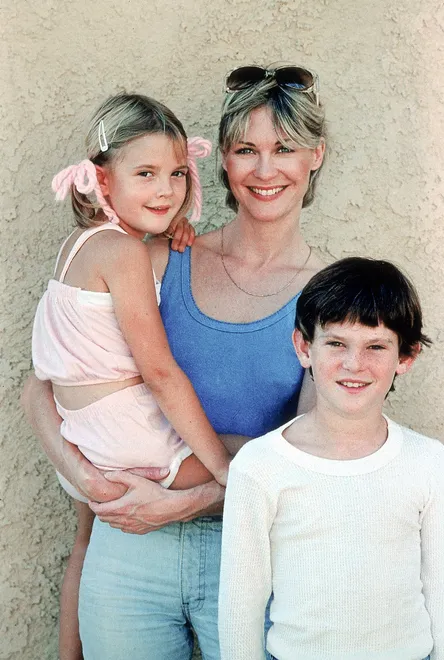
I actually didn’t see any of the Star Wars films until I was dating in high school, and I actually saw the third one first. But a few months before that, the first movie I remember taking a girl to on a date was E.T. the Extra-Terrestrial. I was still so sheltered that I was taken aback by how rude and disrespectful the kids in that movie were to their single mother.
A few months later, we saw Return of the Jedi at the Westwood Theater. Having missed the first two films, I was baffled by some of it. My girlfriend helpfully whispered occasional guidance to me, as I had little understanding of Darth Vader, Luke Skywalker, Princess Leia, Han Solo, Yoda, and the rest. I was reminded of that experience at our cinematic outing last year, watching The Marvels with Wendy without having seen any Marvel movies or television shows since Avengers: Endgame over 4.5 years earlier.
Restricted Shows
The first R-rated movie I recall seeing was when some high school friends rented the slasher film My Bloody Valentine. I’d already seen Psycho on late night television, so I thought I was prepared, but I found the slasher film made two decades later rather sickening, even with nine minutes of its violence and gore cut by the Motion Picture Association of America.
When I turned 17, one of the first R-rated motion pictures I saw in a cinema was Silkwood, which lured me in not for its rating but because it was a factual story about a whistle-blower in Oklahoma. The next year I saw another R-rated film in a cinema, Amadeus, which is still one of my favorite films. But after that I saw far more movies on videotape than at a cinema.

The first truly raunchy film I saw in a cinema was Lifeforce in 1985. The nudity was titillating, but I was put off by how some of the film’s plot stole heavily from a better and older horror/scifi film, which had no sex or nudity: Quatermass and the Pit. The other memorable thing about that showing of Lifeforce is that was the only time I saw a sneak preview. When my friend and I purchased our tickets, we were asked if we would agree to see another film first for free and fill out comment cards about it. As college guys not dealing with a curfew, my friend and I agreed. But I remember absolutely nothing about the preview we watched…I suppose Lifeforce was too distracting.
In 1986, I saw David Lynch’s Blue Velvet at a cinema in Norman. My recollection is that two old ladies were in the audience, commenting before the film started that they looked forward to seeing Elizabeth Taylor. Evidently they had confused Blue Velvet with National Velvet, and boy were they in for a surprise! Obviously they hadn’t watched a trailer for the film.
Before the Show

Movie trailers began in 1913 and back then were shown after, or trailing, the feature film. Later they were mixed into the program shown before a film, alongside cartoon shorts, newsreels, and serials, but the old name stuck.
In the 1940s, many folks went to a theater weekly. But as television viewership expanded in the 1950s, what was on offer at the cinemas had to evolve.
Serials were a series of short subject films exhibited in consecutive order, usually advancing weekly for 12-15 episodes. Universal, Columbia, and Republic Pictures made many of them. Flash Gordon is a famous example, and I had fun a few years back watching Rifftrax mock the 1949 Batman and Robin serial. Serials lasted until 1956, but they were gone a decade before I was born.

Cinema newsreels were also doomed by television, although they persisted about a decade longer. The last American newsreel was released on December 26, 1967. I remember references to newsreels when I was young and being nonplussed since those simply didn’t exist in my world.
Animated cartoon shorts migrated to television as well, with MGM closing its cartoon animation studio in 1958, Warner Brothers giving up in the 1960s, and Walter Lantz closing his studio in 1972.
Trailers, however, survived. If you partake of Trailers from Hell, it becomes obvious that they changed in the early 1960s. Earlier ones showed key scenes, often with large descriptive text and a stentorian narrator. In the 1960s, quick-editing montage trailers became popular.
In the 1960s, many trailers were about two minutes long, with blockbusters getting trailers about twice that duration. The typical trailer was three minutes long in the 1990s, and is now back to two minutes, with cinemas often showing four or five trailers before a feature film.

However, at the Regal Warren Broken Arrow in November 2023, Wendy and I endured 18 minutes of trailers. While that alone isn’t too far out of line with the past, the intensity of modern trailers can be exhausting with fast editing, explosions, giving away key moments, and showing off their “money shots”. They usually fail to engage me emotionally, and I often find them tedious.
In the 1990s and 2000s, they would run slides in a cinema before a movie. They were often a mix of still advertising and trivia questions. The trivia and lack of full video kept them from becoming annoying, but I remember when pre-trailer video advertising began in cinemas, blurring the line between a cinematic experience and watching television at home. By 2005, pre-trailer ads were standard, with infomercials and promotions for television shows, video games, and products.
In our return to a cinema, Wendy and I were subjected to 12 minutes of such commercials before the 18 minutes of trailers. Only then could we enjoy the 105-minute movie. Spending 22% of our time at the cinema watching commercials of one sort of another, at a movie matinee costing us $25.66, wasn’t a good experience to us.

My annoyance was magnified by changes in how I have experienced video at home. When I was a kid watching broadcast television, about 15-16% of each hour was consumed by advertising and station breaks. Over time, the amount of time consumed by advertising increased to about 24%, and in 2022 broadcast networks in prime time were reportedly running ads for 20% to 28% of each hour.
But I haven’t watched broadcast or cable television in decades. Instead, I watch lots of YouTube videos on my iPad. I’ve had a YouTube Premium membership since May 2019, so I don’t see ads except for ones embedded by the video creators, which I can readily fast-forward through. So I’m now used to watching esoteric videos with very little advertising. That meant the ads and trailers at the cinema were excruciating for Wendy and me.
Home Video v. Cinema
Looking back, most of my movie-watching has been at home. When I was young, they were provided via broadcast television, with plenty of commercial interruptions. Videocassette players cost $1,000 or more in the 1970s, the equivalent of about $5,000 in 2024. So I didn’t rent home movies until high school and college in the early 1980s, having to rent not only the tape cartridges but also a player. During my early years in college, I remember writing a check for $200 as a deposit on a rented player at the Sound Warehouse in Norman, knowing that check would bounce if they tried to cash it.
Later in the 1980s, I was able to afford a videocassette recorder of my own. By then, there were 15,000 video rental stores across the country. I found one small store in Norman that had a collection of Hitchcock films on VHS, which I would watch back in my apartment on a 19″ Zenith television that lacked a remote control.
However, some of my most memorable college movie experiences were in a cinema of sorts. The film appreciation classes at the University of Oklahoma held public screenings on campus in lecture hall 211 of Dale Hall.

During my freshman year, I saw Citizen Kane and Vertigo there. It was a treat to view such masterworks on a large screen in a room full of undergraduates. I remember the end of Citizen Kane, with a few dummies seated in front of me who were only there because of a class assignment. They decided to beat the crowd by leaving a little bit early. A minute later, what a reaction there was from the audience when Rosebud finally appeared amidst the flames!

The screening of Vertigo was even more memorable. It had been unavailable since 1973, and the audience was utterly spellbound despite its slow burn. After the conclusion, with James Stewart framed in the doorway of the bell tower, like a man standing before a huge tombstone looking down into a grave, the entire room remained dead quiet until the members of the audience did something unexpected: a standing ovation.
Over the years, I upgraded my home video from VHS to DVD, HD-DVD, Blu-Ray, and then 4K Ultra HD Blu-Ray. Now Wendy and I can watch a disc, or stream a movie, on our 55″ OLED HDR 4K television with 5.1 surround sound. But the cinema can still offer something our home video setup cannot match.
For years I enjoyed laughing in a crowded Tulsa theater at fun Rifftrax Live movies. I enjoyed that so much that back in 2011, when I was in Kansas City with a bunch of science teachers, I treated them at an AMC cinema to the Rifftrax showing of House on Haunted Hill. And in 2016, after Gene Wilder passed, Wendy and I greatly enjoyed a special revival showing of Blazing Saddles on a big screen in Oklahoma City.
Sharing a great film in a big theater with a large, lively, and appreciative audience is something to treasure which we cannot recreate at home. Perhaps some day Wendy and I will add more experiences like that to our movie memories, but I wouldn’t want to bet on it.







 Meador Manor