

Life is all about change, and television technology, programming, and my own viewing habits have evolved significantly over the past half-century. As broadcast and cable television diminish in favor of streaming, and the optical disc fades away, I’m taking a look back at television as I knew it.
Cathode Ray Boob Tubes
The chart shows the growth in the penetration of television technologies into U.S. households from 1950 to 2013.
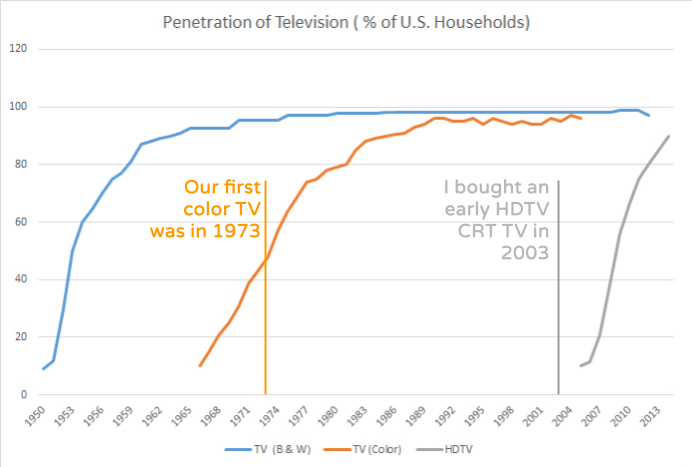
By the late 1950s, 4 out of 5 households had a television, and that proportion had a color television by the early 1980s and a high-definition set by the early 2010s.
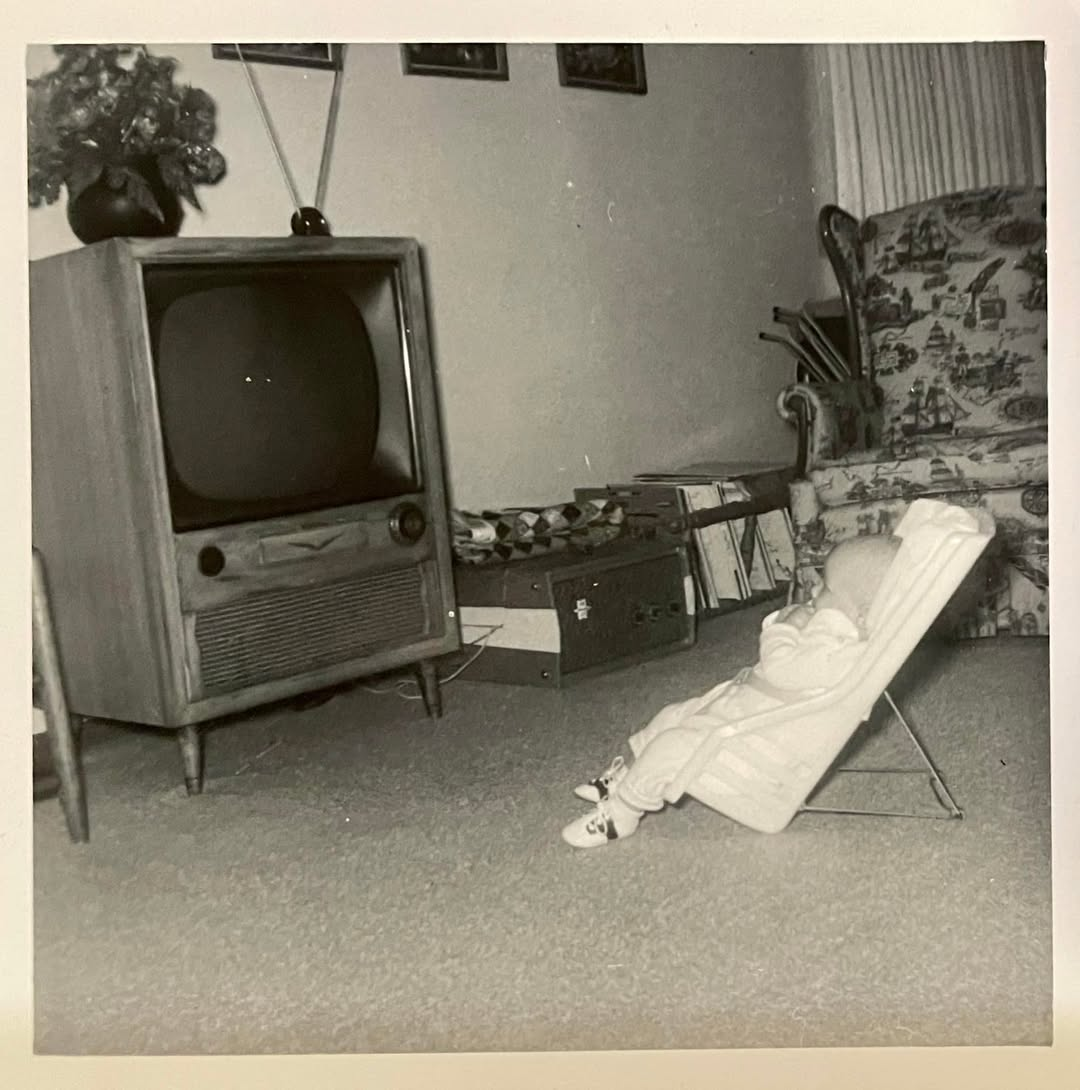
I’m one of the eldest members of Generation X, and my Greatest Generation father and Silent Generation mother only had black-and-white televisions until 1973. Our first home television was a RCA Victor in a wood cabinet with rabbit ear antennas, and I remember how you had to turn it on and wait. It took several seconds for the vacuum tubes in its circuitry to heat up and the sound to begin, and the picture tube remained dark for about a minute until the cathode ray gun could heat up. When you shut the set off, the picture would collapse into a glowing dot for some time.
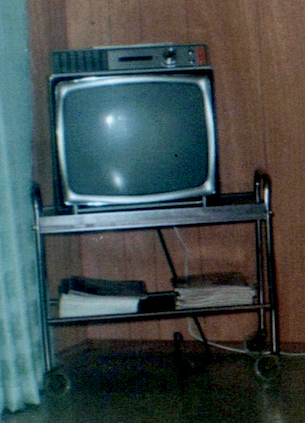
In 1967, my father won a 19″ RCA portable television at a hunt. It was placed on its rolling stand at our bluffside cabin on Table Rock Lake in southwestern Missouri.
That television was also slow to warm up, and tuning it was more difficult, as the ABC affiliate we could pick up was on an ultra high frequency (UHF) channel, somewhere in the 20s as I recall, instead of the very high frequency (VHF) channels 2-13. At that time, our home in Oklahoma City was less than three miles from the television broadcasters’ aerials on Britton Road, so we just used set-top rabbit ear antennas there. But at our cabin, the NBC and CBS affiliates were KY3 and KTTS/KOLR Channel 10 in Springfield, Missouri over sixty miles away, requiring the use of a big antenna mounted on a three-story pole outside.

Eventually we could pick up an ABC affiliate in Arkansas as well, but that required re-aiming the big antenna and using a slide-style tuner on the television to tune in on the UHF band. I had to put on gloves and go outside to manually rotate the antenna pole (we didn’t have a motorized aimer like some around us did) and then return to the television, turn its channel knob to U, and then twist the knob’s perimeter dial to tune in the UHF station, depressing that dial while turning it for fine tuning. If I hadn’t re-aimed the antenna quite right, I might not be able to get a clear signal and would then have to go back outside and repeat the process. I definitely tended to stick with NBC and CBS while at the cabin!

Color television broadcasts began in the USA in 1954, but it wasn’t until 1973 that my father sprung for a television with a 23″ cathode ray tube with three electron guns aimed by a shadow mask at red, green, and blue phosphors. At that age, I could still hear very high frequencies and my folks took me with them to Delmar Buckner’s shop to ensure I didn’t hear noise from the Zenith console they purchased.
I was fascinated by the technology, avidly reading the user manual. One feature the television lacked was a Space Command remote control. My aunt and uncle in Kansas had long had a television with that handy little box. When you pressed a button on it, a spring-loaded hammer struck an aluminum rod in it, and the television would respond to the resulting ultrasonic tone. Unlike later remotes that produced infrared light signals, you didn’t need to aim the remote nor did it require batteries.


But at home in OKC we still had to get up and manually turn on and off the set and adjust the channel or volume knobs. Even with its “Chromatic Tuning” button, we would also have to fiddle with its contrast, brightness, tone, peak pix, and vertical hold knobs.
I appreciated how that set came on instantly, since when turned off it still drew enough power to heat the electron gun. However, my parents would always unplug the set when we went on vacations, and when we returned, I would plug in the set, turn it on, and for that first viewing I would have to wait for the picture to show up just like on the older sets.
Occasionally the heavy set would malfunction, and Mr. Buckner would make a house call to work on the circuitry. That sort of home repair is unimaginable today, although I do know some people hire specialists to come tune their sophisticated audiovisual systems.
The cabin remained stuck with the old black-and-white television until 1986, by which time 9 out of 10 households had a color set. I was halfway through my undergraduate studies and vacationing with a friend at the cabin, stuck inside on a rainy day, and I had had enough of the 1967 B&W TV. A Wal-Mart had just opened in Cassville, so we drove through the rain for 17 miles to purchase a new color television. We then had to drive another half-hour through the hilly Ozarks back to the cabin, and by the time we had the new set going the rain had ended, but at least the cabin had finally received a belated audiovisual upgrade.

Four years earlier, I had received my own 13″ Zenith color television, complete with infrared remote. It was on a desk in my bedroom and was not merely a TV but also the low-resolution monitor for my TRS-80 Color Computer. My parents were happy to get it for my computer since they knew that in a couple of years I could take it with me to college for watching television.
In the freshman dormitory, I made the mistake of placing my fancy DUōFONE-140 telephone next to my television, and over a few weeks the magnet in its handset magnetized the shadow mask, deflected its electron beams, and created a color shift in the lower left corner. I had to move the telephone across the room and degauss the TV.
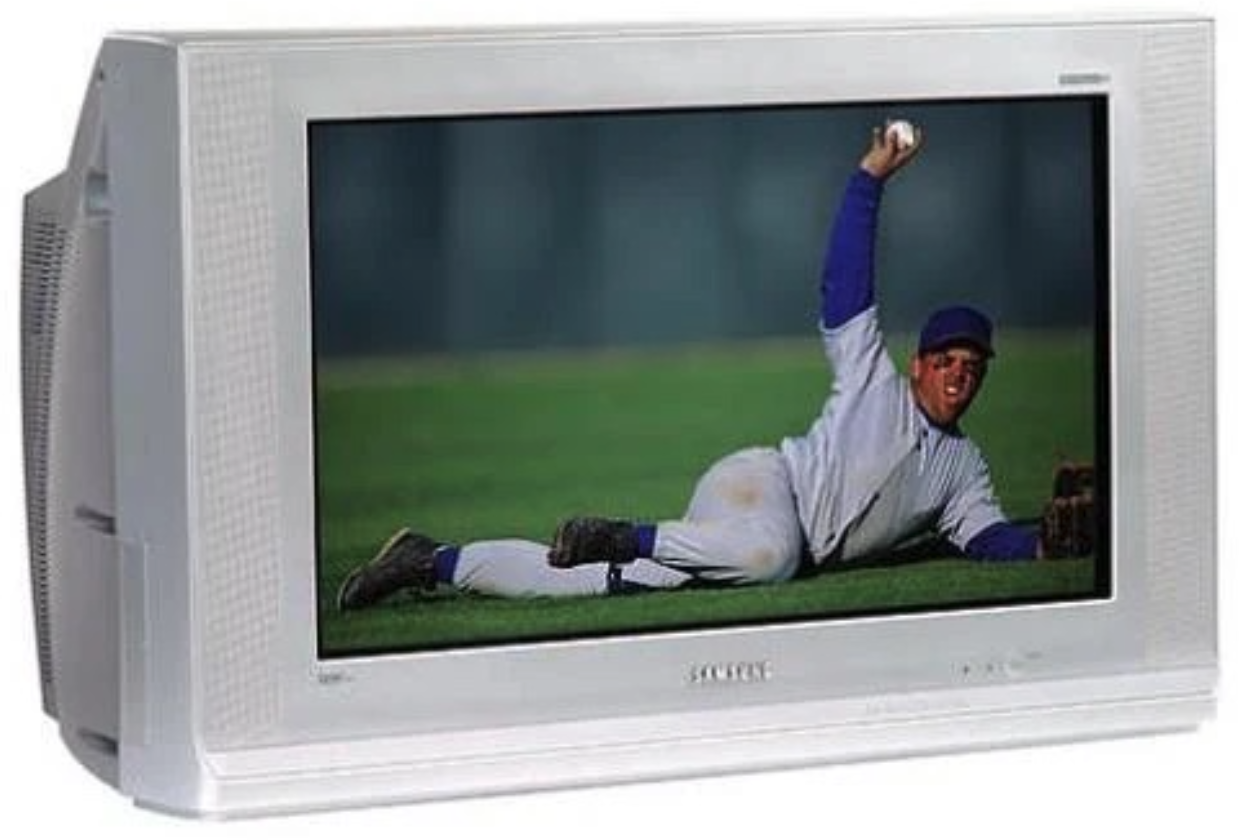
Around 1987 I moved to an apartment with a long living room where my 13″ television was too small. My father gave me a used 19″ Zenith color television, and I used that until 2003, when I paid $1,000 for a 30″ Samsung wide-screen flat CRT television. I liked its 16:9 aspect ratio and that it had about 800 lines of resolution, so it was an early high-definition set that could accept 1080i signals. However, it was still a cathode ray tube set and consequently weighed over 120 pounds. I had to buy a special swiveling stand for it, and I still use that stand in our living room for our lightweight 55″ OLED television.
Back in 1994, I had purchased our current house in Bartlesville. It came wired for cable television, but in 1995 Star Trek: Voyager was about to premiere, and none of the cable channels was slated to carry it, while a broadcaster in Tulsa would carry it. I waited, hoping things would change, but the show premiered on January 16, 1995, and I still couldn’t see it. So on January 19-21, I spent $157 on a big VHF/UHF antenna that my friend Carrie helped me mount to the chimney and wire into the television with a booster amplifier. After all that was set up and working, wouldn’t you know, one of the cable channels announced it would start carrying Voyager! So I only used the antenna when the cable was malfunctioning or on occasion after 2008 when I cancelled my cable TV service.
The old cathode ray tube technology is still valued by some retro gamers who like its fast response time for vintage computer games and consoles, and I was fascinated by how it worked. If you want a history of the technology, I recommend the 1996 book Tube: The Invention of Television in the Sloan Technology Series, but you could also just watch Tim Hunkin and the late Rex Garrod:
I finally got away from cathode ray tubes in 2010, when I spent $800 on a 40″ Sony LCD HDTV. That set is now hanging in an office at the district’s Education Service Center, connected to a Chromebox for use in conferences, since in 2017 I spent $1,600 on a 55″ LG OLED HDR 4K television. That fancy set is better in every way than the ones I grew up with, but the irony is that I mostly use it to watch low-resolution VHS aerobics tapes I recorded off Lifetime television 30 years ago…with the sound off. I haven’t regularly watched any television shows since 2009 when the Battlestar Galactica reboot ended, and almost all of my video entertainment is via YouTube on my iPad using bone conduction Bluetooth headphones to avoid disturbing Wendy, whose hearing is far more acute than mine.
1960s and 1970s TV Programming
However, as an only child, while I was growing up I watched a lot of television, along with reading scads of books. The first show I remember watching was Ed Sullivan with plate spinning by Erich Brenn, but the musical segments were the parts with staying power.
Regular children’s shows I enjoyed were Captain Kangaroo and very politically incorrect Mr. Magoo cartoons that aired each morning on KWTV at the end of the boring Evergreen Farm Report with Bill Hare, who later lived just around the corner from us.
I watched cartoons and live-action children’s shows all morning on Saturdays, especially enjoying anything by Sid & Marty Krofft.
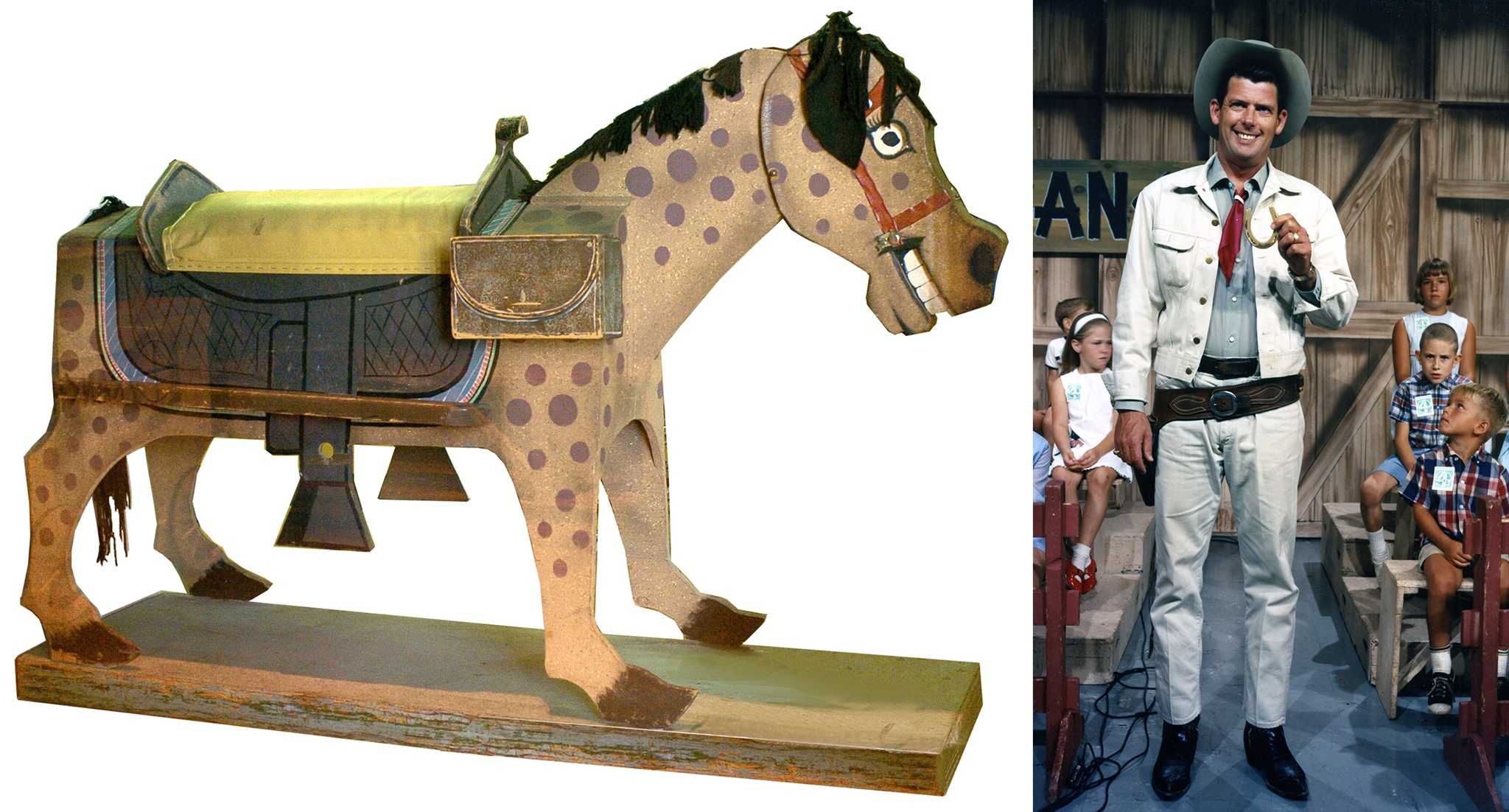
On weekday afternoons when I was very young, I would watch the Foreman Scotty show on WKY television, and I got to sit on Woody the Birthday Horse twice at their studio. My only memory of the experience is of being backstage in a dim hallway and them showing us Flintstones cartoons on a monitor to keep us entertained. However, I found that terribly confusing, as we were seeing that on a television at the wrong time of day…I was so used to live television that it was a revelation that they could show something on a closed-circuit system. Decades later, I showed Wendy the horse in the Oklahoma History Center, and she was mightily unimpressed.
Another childhood favorite was HOHO the Clown with Pokey the sock puppet on KOCO Channel 5, but I didn’t particularly care for Miss Fran on KWTV.
Sundays were less rewarding. Before church, I would watch Gospel Singing Jubilee, Davey and Goliath, and Jot the Dot, and on Sunday evenings my parents would watch Jude N Jody, Porter Wagoner, and Hee Haw.
I was a music fan, and in prime time from 1969-1971 my favorite shows were The Glen Campbell Goodtime Hour and The Johnny Cash Show. On weekdays, if I wasn’t at school, there were lots of soap operas, which I didn’t understand. I remember how my mother would watch All My Children, and my being confused as to why Erica put up with the scoundrel Nick.
Right after that, we would watch the noon news on WKY Channel 4 with George Tomek, weatherman Jim Williams, and Bob Barry, Sr. with sports; that was several years before the legendary Linda Cavanaugh came along. At the time, they didn’t use a set for that newscast. Instead, it looked like a production of Our Town. Tomek just sat behind a podium with a spotlight on him, and Jim Williams had a few wall-mounted meters and one rotating cube with different formica maps, which he wrote on with water-based paint that was dispensed via a wick in a glue dispenser.
Much more to my liking were game shows like Password, which I enjoyed watching while eating fish sticks and catsup.
My favorite show of all was, of course, Star Trek. Reruns were shown every weekday afternoon in the 1970s, and I made my mother or any friends who were around stop and watch it with me.
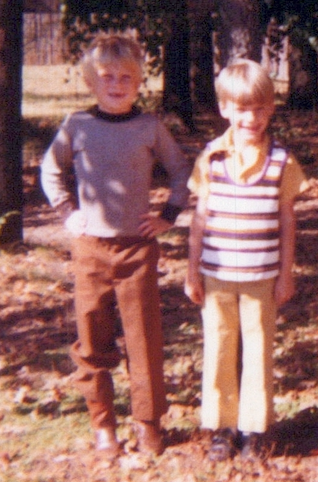
My favorite prime time television show was The Six Million Dollar Man, which had a magnificent title sequence. Gene Freeman, who died in his early 50s of a brain tumor, was my best friend in elementary school. Although he moved away to attend a different school, for years we still played together each Saturday at each other’s homes.
We avidly watched the show and would frequently make up our own adventures to act out. Gene was more athletic and fascinated with motorized vehicles, so he was always the bionic cyborg Steve Austin. I played his boss, Oscar Goldman.
My mother would think that made sense, as she once admonished me, saying, “I don’t know why the neighborhood kids let you boss everyone around when you play.” She says I responded, “But mother, they simply have no imagination!”
As I grew up, I convinced my parents to get cable TV after it became available in OKC in 1980, and I watched a lot of music videos on MTV. Another TV highlight in 1980, when I was still in junior high, was the Shogun miniseries, which led me to read several books in James Clavell’s Asian saga.
My favorite shows eventually shifted to things like St. Elsewhere, L.A. Law, and Moonlighting, and some of the last shows I watched were escapist fare such as Lois & Clark and Babylon 5 in the 1990s, as I steadily drifted away from watching series to watching movies instead.
Movies on TV
Until the 1980s, most of the movies I saw were shown on network or local affiliate television, interrupted by plenty of commercials. Movies made after the mid-1950s were often widescreen, so they were usually shown in pan-and-scan on TV, since 16:9 widescreen televisions did not become popular until in the late 1990s, and I didn’t have one until 2003.
I remember periodic prime time network showings of the 1939 classics The Wizard of Oz and Gone with the Wind, The Ten Commandments of 1956, and various early films from the James Bond franchise. Eventually OKC gained some independent UHF stations (OKC did not have cable television until the early 1980s), and I could watch old B-movies on the weekends. Some memorable ones were Tarantula, William Castle’s The Tingler, and the original The Fly from 1958.

When I was a teenager, I watched some films from 10:30 p.m. to midnight on Sundays via Trust House Theater, which was hosted by jewelers Jim and Gloria Berkey. Their interstitial commercials always had them displaying gaudy gold nugget rings and diamond jewelry, which Jim would always say was, “Paved in diamond property!” as Gloria wriggled them on a tabletop to make them sparkle. They would pre-tape their segments, and sometimes things went awry. My favorite was when the movie was Jesus Christ Superstar and at the end of a commercial segment, Jim turned to Gloria and said something like, “Let’s get back to the movie. I just love these westerns!”
One of the oddball characters of OKC television was Count Gregore, but I never cared for his schtick. Far more to my liking, although it didn’t begin until 1988 when I was about to graduate from college, was when B.J. Wexler hosted the OETA Movie Club.
I became enamored of Alfred Hitchcock’s films by seeing them on television, although his Alfred Hitchock Presents television anthology was off the air before I was born. I sought his movies once VHS videotapes became available for rent in the 1980s. However, videocassette recorders were still quite expensive, so I would have to rent one along with the cassettes. I usually rented them at Soundtrak in OKC and Norman, which was also where I bought 45 rpm 7-inch vinyl singles.

I was finally able to purchase my own VCR when I was in college, and I was grateful to discover that a small video store in downtown Norman stocked many of Hitchcock’s movies on VHS. In 1990, a year after I moved to Bartlesville to teach, I invested $400 in upgrading to a Sharp 4-head VCR. In 2000, I spent $76 having it repaired at Balentine TV on Tuxedo Boulevard, and a year later I purchased a Sony Hi-Fi VCR for $150. I still use that one each weekday morning in 2025 to work out to aerobics shows I taped from 1993-1997.
That old thing has outlasted a number of devices that offered superior recording formats: a $333 DVD recorder from 2004, a $75 DVD player from 2005, a $200 HD-DVD player from 2007, a $265 Sony Blu-ray player from 2008, and multiple TiVo HD DVRs.

My last optical player is a Sony Ultra HD Blu-ray player that I purchased in 2019 for $152. I still have a cabinet full of discs, but now whenever Wendy and I fire up the system to watch a movie at home, we almost always stream it with the Amazon Prime app on the television. If Amazon doesn’t have a movie, I’ll check to see if I can stream it with YouTube. The only time we use my Apple TV, which in 2017 was the third one I had purchased, is when we’re mirroring video from one of our iPads.
The era of the optical disc for computer data, audio, and video is winding down. Compact discs debuted in the early and mid-1980s for audio and computers, respectively, and DVDs debuted in the late 1990s, but now few computers come with any sort of optical drive, and consumers stream both their music and their videos thanks to widespread high-speed internet access.
In 2008, Sony’s Blu-ray beat out HD-DVD in a format war, but disc sales began to slide. Ultra HD Blu-ray players supporting 4K resolution of 3840×2160 came out less than a decade ago, but that failed to halt the decline. As of early 2025, Best Buy has stopped selling and Netflix has stopped mailing discs, Redbox has gone out of business, Samsung and LG no longer produce any players, and Sony has killed off recordable Blu-ray. The only remaining major producers of video optical disc players are Sony and Panasonic.
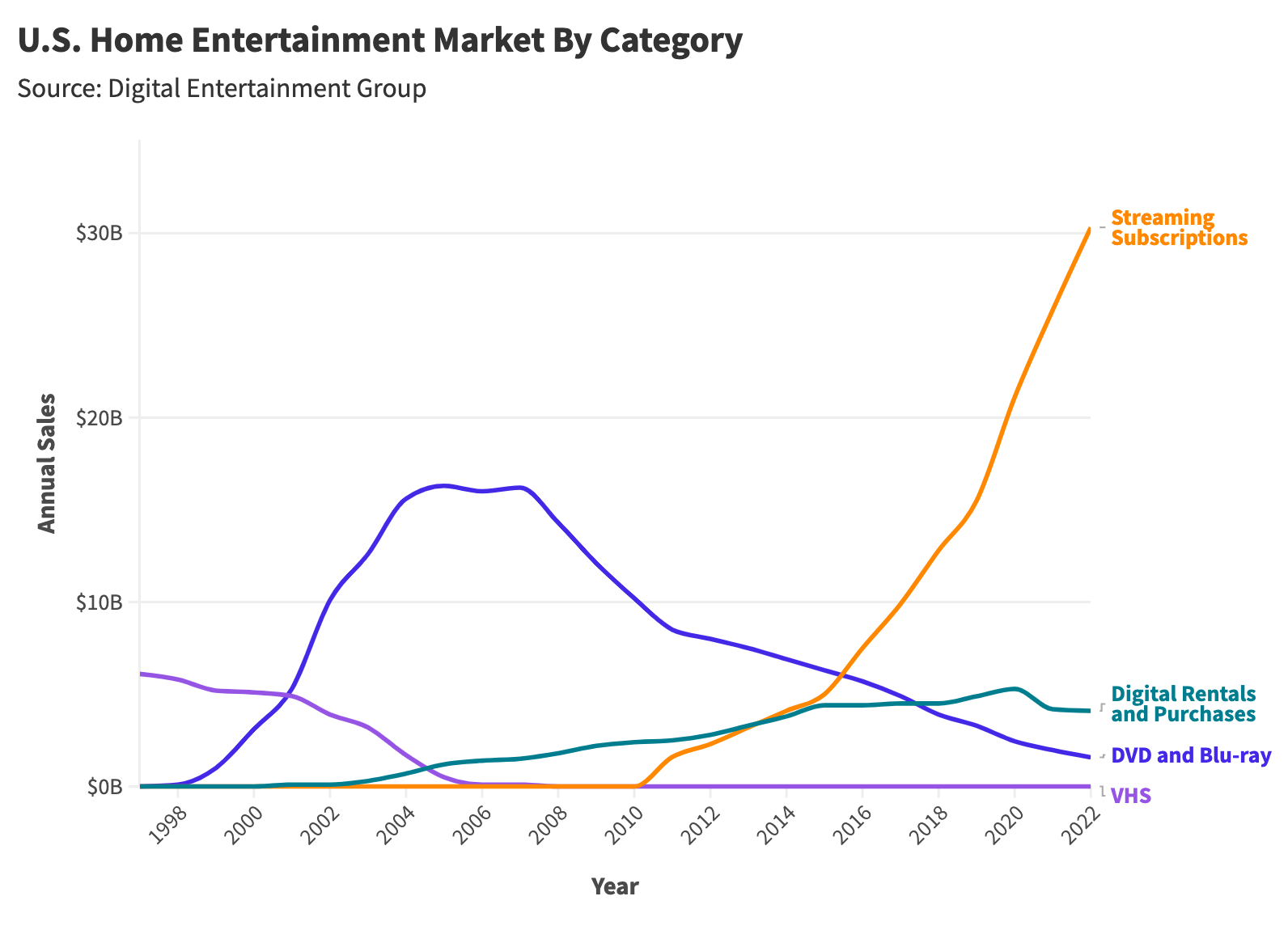
Die-hards who insist on owning their media and value the better picture quality of an Ultra HD Blu-ray over 4K streaming may be able to keep discs alive in a niche form. After all, enthusiasts have somehow kept vinyl from going completely extinct, and my own continued reliance on VHS tapes I recorded from 1993 to 1997 shows that some optical discs will remain in use for decades to come, regardless of their fate in the marketplace. But once Blu-ray players are no longer being manufactured, movie studios will eventually reach a point where the profit in producing discs is too marginal to continue. One alternative will be high-quality digital downloads, such as Kaleidescape, but currently only the wealthy can afford that service, and collectors want the physical discs, cases, and inserts. I greatly enjoy the extras bundled on collector discs, and wish that streaming services made it easy to access similar bonus documentaries and the like, but for now those are marketed as reasons to buy discs.
Returning to traditional television shows, those were already dying off over a decade ago, except among the oldest viewers. Consider these charts from 2010-2015:


Digital media in general overtook traditional media five years ago, and digital internet activities continue to siphon off time from traditional media such as print, radio, and TV.

I’ll be retiring in the summer of 2026, and Wendy will likely continue working for a few years. Some of my iPad viewing will switch back to the big screen when she isn’t home, so our big television will be on for more than just my aerobic workouts and the occasional shared movie. But I will also be out walking, reading more books on my Kindle, listening to more books with Audible, and continuing to write blog posts and research local history. The boob tube may have become a dream screen, but it will have plenty of competition.






 Meador Manor
