
Children’s toys usually require materials that are cheap and durable. My dad, who was born a century ago, recalled playing marbles with his cousins, mumblety-peg with a pocketknife, spinning tops, darts, yo-yos, jacks, and stilts. He later graduated to bean shooters, rubber guns, and a Daisy air rifle, but the only item that survives with us today is a sturdy cast iron bank.
Cast Iron
My dad’s penny coin bank from the 1920s weighs 1.3 pounds empty and is in the form of a colonial house. Such banks were produced from 1910 to 1931 by the A.C. Williams Company of Ravenna, Ohio. Their miniature banks were available in several hundred types and styles and distributed through F.W. Woolworth’s, S.S. Kresge’s, and other five-and-dime stores.
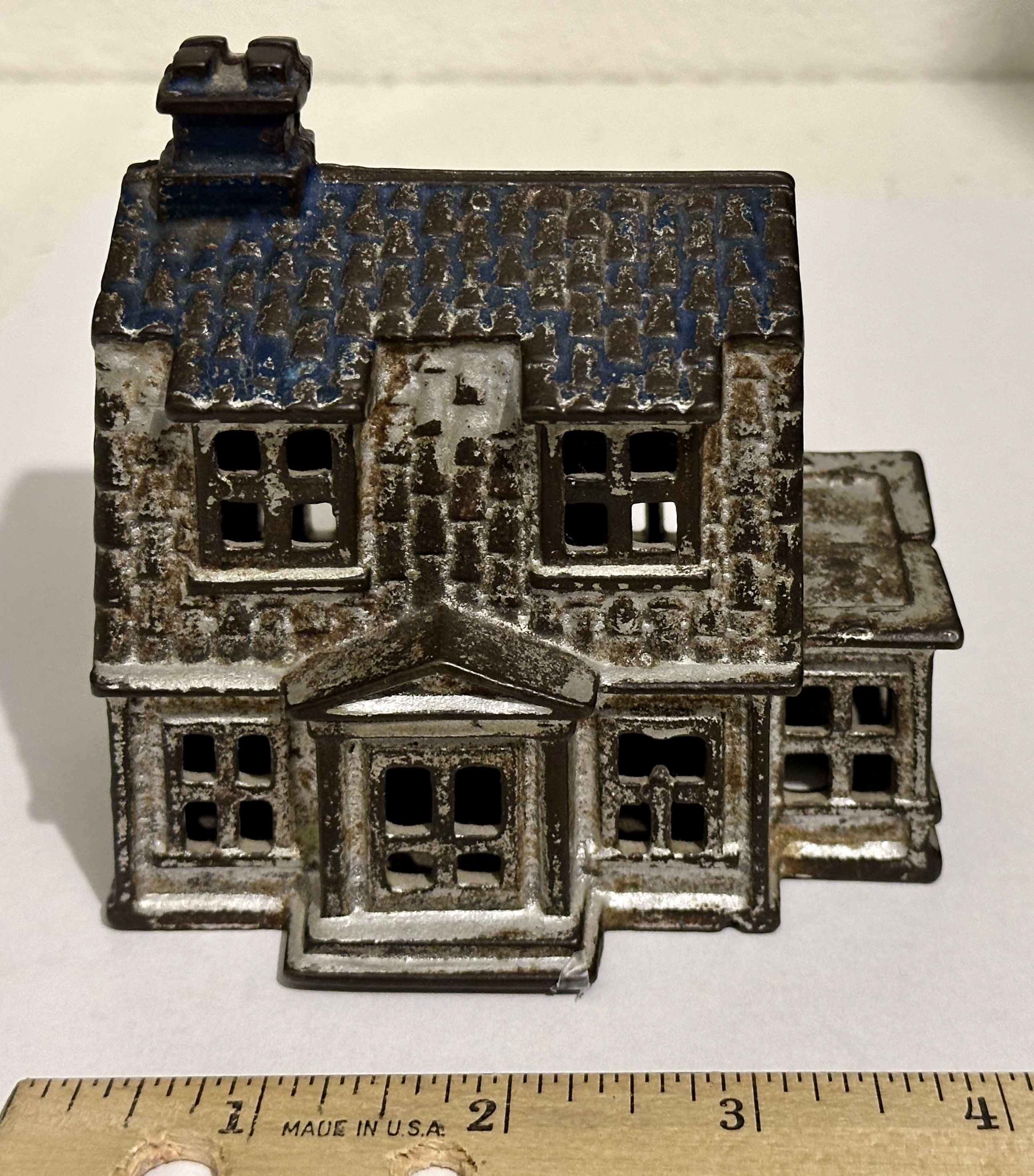


To create cast iron toys, iron ore was melted in a blast furnace and poured into molds made from tightly packed sand. The casting sand used in the old days was often finer than what is used today, yielding a smoother surface with finer details.

Perhaps my father’s bank came from one of the five-and-dime stores in Bartlesville; his parents had a custom of driving the four miles from Dewey to Bartlesville on Saturday nights after his father got off work at the Dewey Portland Cement Plant. They would do a bit of shopping, but downtown Bartlesville was also cheap entertainment. They would find a good parking spot in front of the lighted stores and watch the people come and go. As my late father once wrote, “This type of entertainment has been replaced by radio, television, and now the internet. It was a slower pace back then.”
As for me, one of the first of the kids born into Generation X, I don’t recall having any cast iron toys; mine were mostly wood, Masonite, and, of course, plastic.
Plastics
Eventually, plastics displaced cast iron as the moldable material in children’s toys. My wife, Wendy, enjoys re-rooting the hair in new and vintage Barbie dolls. In her childhood, she loved Mattel’s Pink & Pretty Barbie from the early 1980s. That doll, which includes an outfit with 20 different configurations, is now a collector’s item. Some time ago, Wendy snagged one at a good price and re-rooted its hair.


The types of plastic used in Barbie dolls varies by body part. Early dolls were mostly polyvinyl chloride, with phthalate-based plasticizers added to improve its flexibility and durability. Later ones tended to have ethylene-vinyl acetate arms, acrylonitrile butadiene styrene torsos, polypropylene leg armatures, outer legs of polyvinyl chloride, and heads formed of a hard vinyl compound.
The first synthetic plastic, celluloid, was invented in 1863. Bakelite, a fully synthetic plastic, was invented in 1907, the same year that Oklahoma achieved statehood. By 1967, plastics had revolutionized consumerism such that they were what Mr. McGuire advised Benjamin Braddock to pursue. Of course, in that context, plastics were also symbolic of a cheap, meaningless, and ugly way of life.
Celluloid
By the 1850s, the industrial revolution had begun to strain animal-derived materials like horn, ivory, and turtleshell. In 1862, Alexander Parkes patented in England the first man-made plastic, a semi-synthetic thermoplastic material made from cotton fibers dissolved in nitric acid, intending it for waterproofing woven fabric clothing.
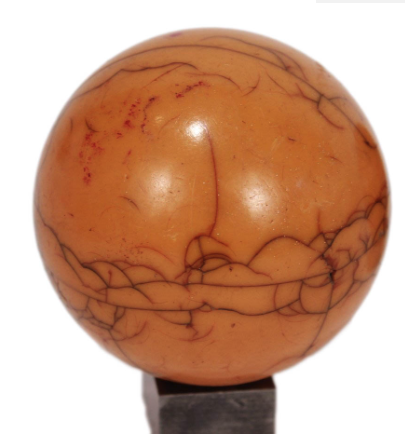
Across the Atlantic, John Wesley Hyatt acquired Parkes’ patent and experimented using cellulose nitrate to manufacture billiard balls, which until then were made of ivory. Hyatt admitted that sometimes hitting two of the celluloid balls together could produce “a mild explosion like a percussion guncap.”
Hyatt also noted, “We had a letter from a billiard saloon proprietor in Colorado, mentioning this fact and saying that he did not care so much about it, but that instantly every man in the room pulled his gun.”
Celluloid went on to important uses in film, but its flammability was a significant problem. Many old films shot on nitrocellulose have been lost to fire and decomposition. In 1978, both the National Archives and the George Eastman House had their nitrate film vaults auto-ignite, destroying the original camera negatives for 329 films and 12.6 million feet of newsreel footage.
Films were later shot on acetate, which was once called “safety film” since it melts, rather than burns, when heated. However, heat, moisture, or acids break acetate down into acetic acid, and vinegar syndrome plagues old films and magnetic tapes. It might interest you to know that while polyester, in the form of polyethylene terephthalate, was eventually used for film prints, it was not suitable for actually shooting films because it was so strong that it could damage a camera in a film jam. Polyester also requires tape or ultrasonic splicing, while acetate can be spliced with film cement, so acetate film was easier to edit before almost everything went digital.
Bakelite

In 1907, Leo Baekeland of Belgium beat his rival, James Swinburne of Scotland, to the patent office by one day. Thus I grew up associating Bakelite with molded items like older telephones and radios, which was named for him. Swinburne and Baekeland were intrigued by the product of the reaction of phenol with formaldehyde, with Swinburne unable to produce a good, solid resin but using it for hard lacquer. In 1927 Swinburne merged his Damard Lacquer Company with Baekeland’s English licensees to form Bakelite Limited for United Kingdom products.
Meanwhile, Baekeland systematically experimented with controlling temperature, pressure, and composition until he could produce a hard moldable plastic out of polyoxybenzylmethylenglycolanhydride. Thank goodness he called it Bakelite!

Bakelite’s advantages included excellent heat resistance, high electrical insulation, good strength, moldability into complex shapes, and a distinctive appearance. However, it was brittle and lacked the flexibility and impact resistance of modern plastics. It also had limited color options, is difficult to recycle, and offgases formaldehyde, a known carcinogen.
So Bakelite was superceded by a variety of different thermoplastics such as polypropylene and polyethylene terephthalate (PET). I kept on hand some Bakelite electrical meters and old Dial-An-Ohm boxes in my physics lab at Bartlesville High School, but offhand I can’t think of any Bakelite items at home.
Modern Plastics

I live in the city where crystalline polypropylene was invented by Paul Hogan and Robert Banks of Phillips Petroleum Company, and I recently toured the ChevronPhillips’ Plastics Technical Center on the west edge of town where 190 chemists, scientists, and technicians focus on the development of new plastics, work to improve existing ones, and provide technical support for customers worldwide with polyethylene, normal alpha olefins, and more.
The most commonly used plastics now include:
- Polyethylene (PE): Considered the most widely used plastic overall, including its different densities like HDPE and LDPE.
- HDPE (High-Density Polyethylene): Known for its strength and rigidity, commonly found in milk jugs and detergent bottles.
- LDPE (Low-Density Polyethylene): More flexible than HDPE, used for plastic bags and food wraps.
- PET (Polyethylene Terephthalate): Often used for beverage bottles and food packaging due to its transparency and ability to prevent oxygen from entering.
- PVC (Polyvinyl Chloride): Used in pipes, construction materials, and some flexible packaging, but concerns exist regarding its environmental impact.
- PP (Polypropylene): Often used for containers, lids, and some food packaging due to its heat resistance.
- PS (Polystyrene): Commonly found in disposable cups, food containers, and Styrofoam packaging.
There are others, of course, including polylactic acid (PLA) and acrylonitrile butadiene styrene (ABS), which are commonly used in 3D printers.
The immense utility and low cost of modern plastics brings with them environmental concerns. Over 90% of plastic is not recycled, and there is mounting concern about microplastics.
Many of my favorite toys were plastics, with ABS forming my Tog’l blocks and Legos.
I received my Tog’l blocks when I was two-and-a-half years old, and I first encountered Legos at my spinster aunts’ home some years later. I played so much with the Legos that my mother bought me the 135 and 145 Universal Building Sets with hundreds of bricks, and my aunts eventually gave me all of theirs, so I had about 1,000 bricks to play with.
Back in 2016, when Wendy and I were engaged and cleaning out Meador Manor for her later move-in, she gathered up the Legos and we donated them. In the process, she discovered taped to each box the “Building Specifications for The Super-Deluxe Home” which as a child I had typed out and affixed.
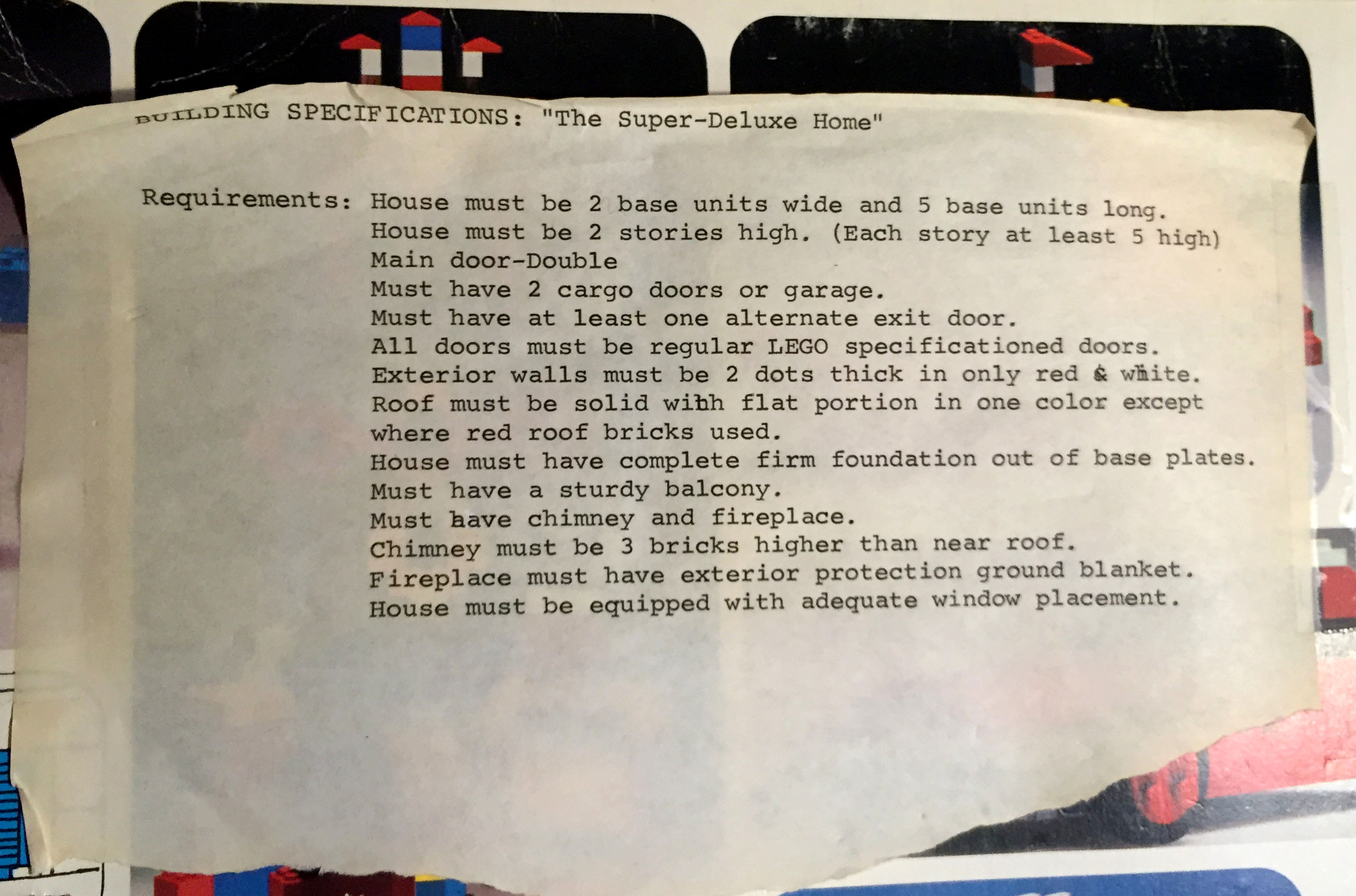
Clearly my Lego constructions were serious business. But, just as only one cast iron bank remains with us from my father’s childhood, I only retained a couple of my childhood items: a bouncy ball made of elastomers and a hippie figurine molded not out of plastic, but of diatom skeletons. However, my ABS Legos may still be in use by some child somewhere. .they certainly held up better than anything else of mine did.






 Meador Manor