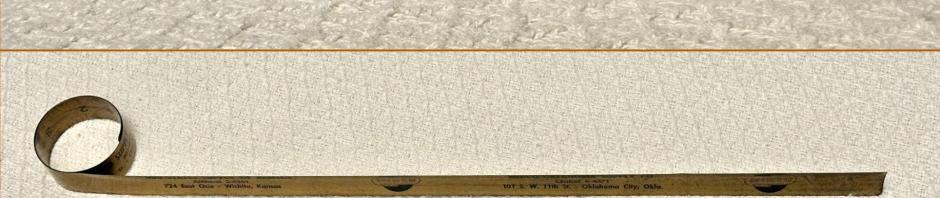

One of my favorite tools is from the early 1960s and has been superseded by its cousins. My parents received it around 1963, when Mid-States Supply Company of Kansas City, Missouri opened a warehouse in Oklahoma City. It’s a metal roll-up yardstick.
It is similar to what one finds in a retracting cased tape measure, but when you roll it out to be read, its convexo-concave blade rolls downward against the surface, not upward, and it needs no case. When unrolled completely, it stays extended and when you’re finished with it, you just flex one end and it will roll up into coil two inches in diameter.
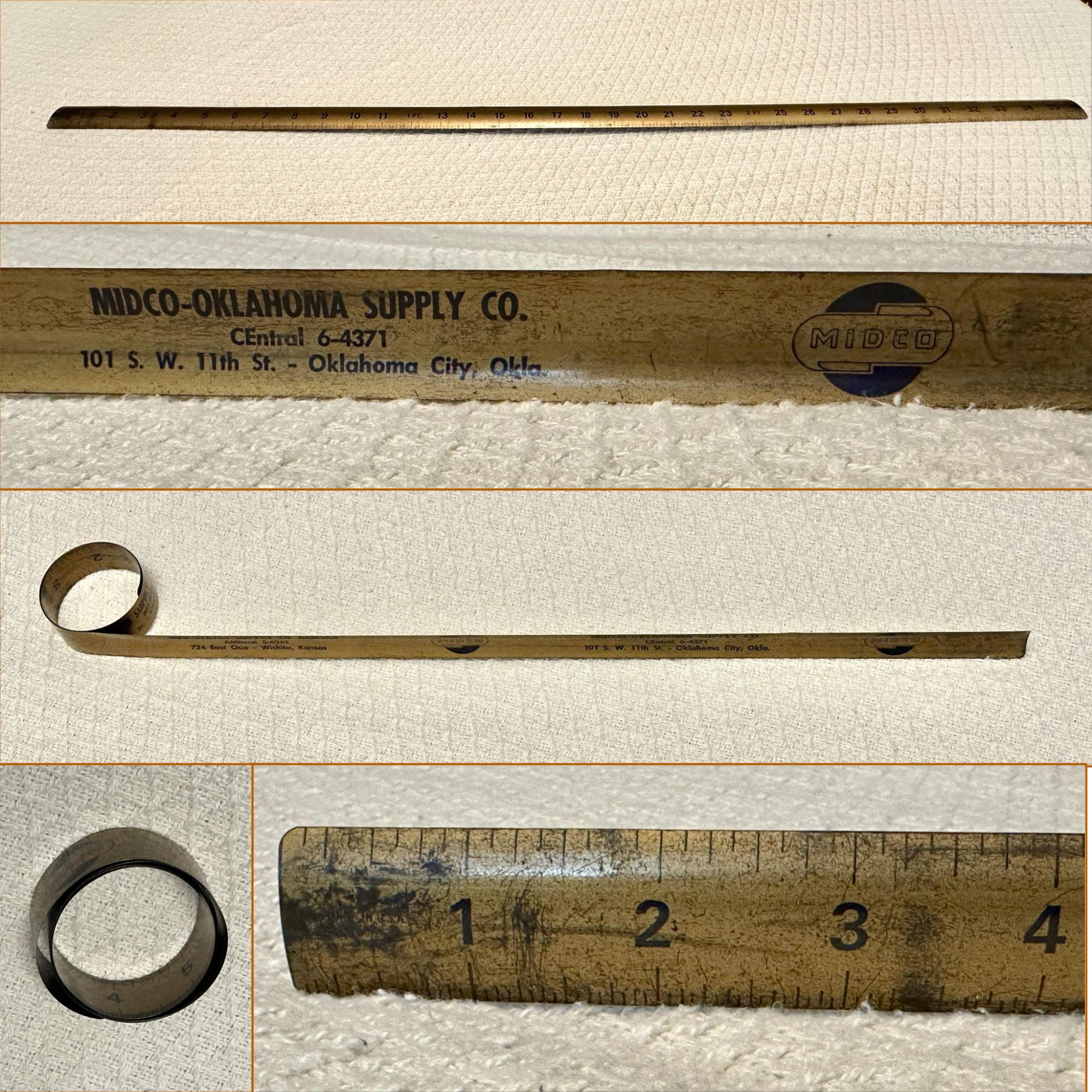
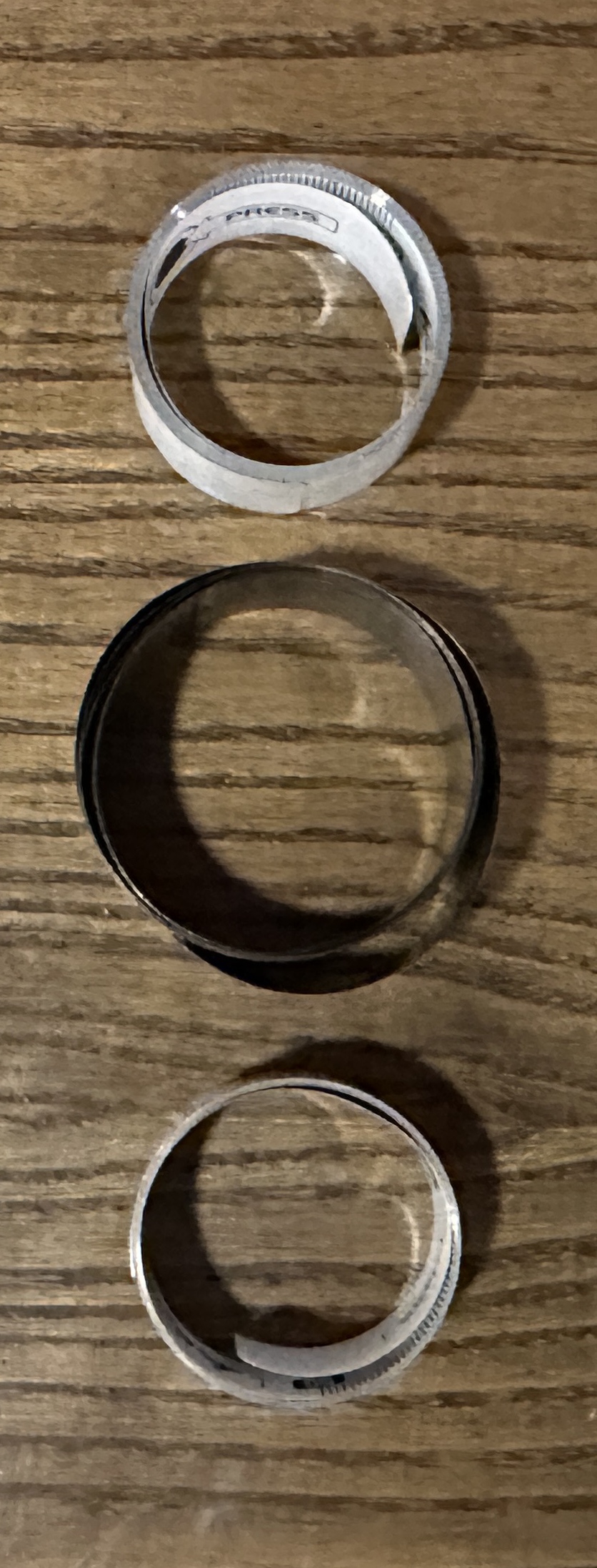
My only complaint is that it is so old that it has 1/8 and 1/16-inch scales, and I would sometimes prefer a finer scale in millimeters. I had no luck finding a roll-up meterstick on Amazon, but I was able to set up an account and order uncased metric roll-up tape measures from the Hoffman Group in Germany, which were delivered by DHL some weeks later.
So now I have three of these gems, which will serve me for the rest of my years. I would much rather carry one of them in my pocket than wear a bulky cased measuring tape on my belt when I am headed to a store where I will need to check dimensions.
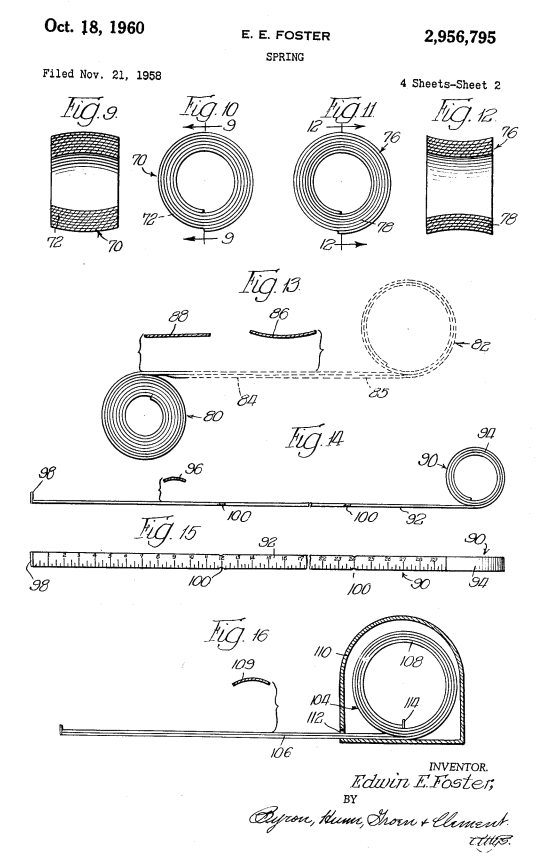
My examination of the yardstick did turn up the patent on its design: U.S. Patent 2,956,795 filed in 1958 by Edwin E. Foster of Austin, Texas and awarded in October 1960. He held a number of patents on various springs and similar mechanisms. I perused them and was surprised to find dozens of them filed over a 66-year period from 1923 to 1989. Egad!

Foster was born in Athens, Texas in 1903 and went to Austin to study at the University of Texas toward the end of World War I. By then he had already invented a pump to inflate Model-T tires. He took it to Chicago to sell, but removable rims were about to come on the market and that negated the appeal of his pump.
Foster didn’t give up. Instead, he rented some space in a machine shop and turned his pump design into a new kind of shock absorber. However, manufacturers feared the shocks might be susceptible to mud caking, so he struck out again.

He next put his inventiveness with springs to work on a system to allow one to iron clothes while sitting down. It had springs counterbalancing the iron, which was held in place by an arm above the ironing board.
He was still toying with ironing boards, with no reported great success, by the time World War II began. Some U.S. tanks had a clutch pedal that took five times as much force as normal to operate since Chrysler had chained together five engines for them. Foster devised a new clutch with his springs and the army used it in 50,000 medium tanks. General Eisenhower recognized him for the role his “clutch booster” had in the war in North Africa.
That was a success, but he didn’t profit greatly from it. He next devised a steel spring for window balances, but it wasn’t until the 1950s that he patented his real “money maker” — the “spirator” steel band. It had just the right curvature so that when rolled out and released, it rolled back up again. It was used in seatbelt retractors, tape measures, and my roll-up yardstick.
Mr. Foster died at age 93 in 1997. He had been awarded over 100 patents, from wind-up baby swings to toys to the devices used in gas pumps, seat belt retractors, wheel covers, cameras, windows, early spaceships, and…roll-up yardsticks.
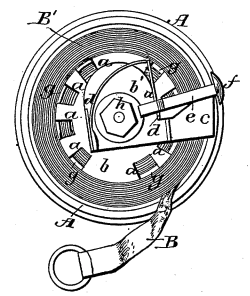
The first spring-loaded tape measure U.S. Patent was #45,372 by William Bangs Jr. of Connecticut back in 1864. In 1868, Alvin J. Fellows, also of the Constitution state, patented a spring-click tape measure which included a locking mechanism and metal case.
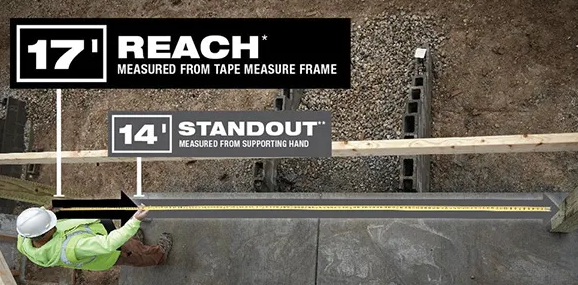
Their tapes were not concavo-convex, so they had little standout or reach distance, which refer to how much the tape can be extended without buckling. I used to have a little tape measure of that sort, and enjoyed pressing a center side button that caused the long white flexible tape to whip back into the case.
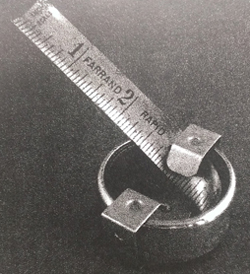
Hiram A. Farrand received a patent for concavo-convex tape in 1922, although his version had no locking mechanism or spring. Instead, the tape was manually coiled inside an open-ended can.
Stanley tools purchased the rights to produce Farrand’s push-pull tape from him, and he went to work for them in 1931. Their tapes were all in closed housings and in the late 1930s Stanley released a model that locked, but it still did not self-retract.
Later innovations included the floating hook to ensure a correct measurement whether you push the end of the tape against a surface or hook and pull it. Stanley finally added a retracting spring in 1956. I presume that it was the self-retracting nature of Foster’s spring that made it special, but I’m no patent examiner with all of the answers.
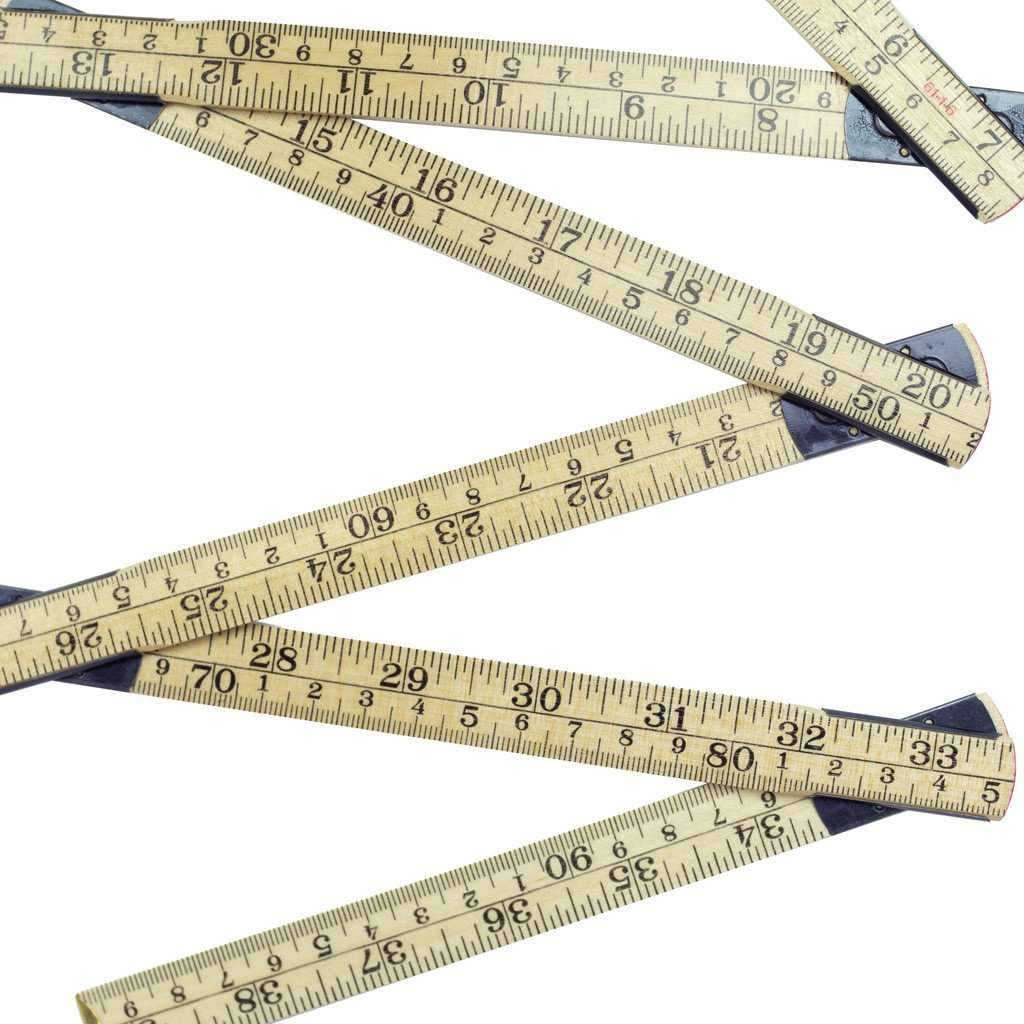
Before World War II, metal retracting tape measures were still relatively expensive, and many carpenters still used those yellow folding rulers. My father had one, but I never liked using it.
Stanley’s PowerLock patent was awarded in 1963, allowing you to extend and lock the tape in place one-handed. Back in 2013, Stanley celebrated 50 years of selling tape measures. It noted how at that time it was manufacturing 31 versions of their PowerLock tape in seven different sizes and producing over nine million tapes each year in its Connecticut plant.
I yanked open my main tool drawer and noticed three retractable locking measuring tapes: a 9′ Craftsman, a 16′ Stanley, and a 25′ Lufkin plus one 5′ sewing tape. I have at least two more cased measuring tapes at work, and I wouldn’t be surprised if another is lost somewhere in the garage.
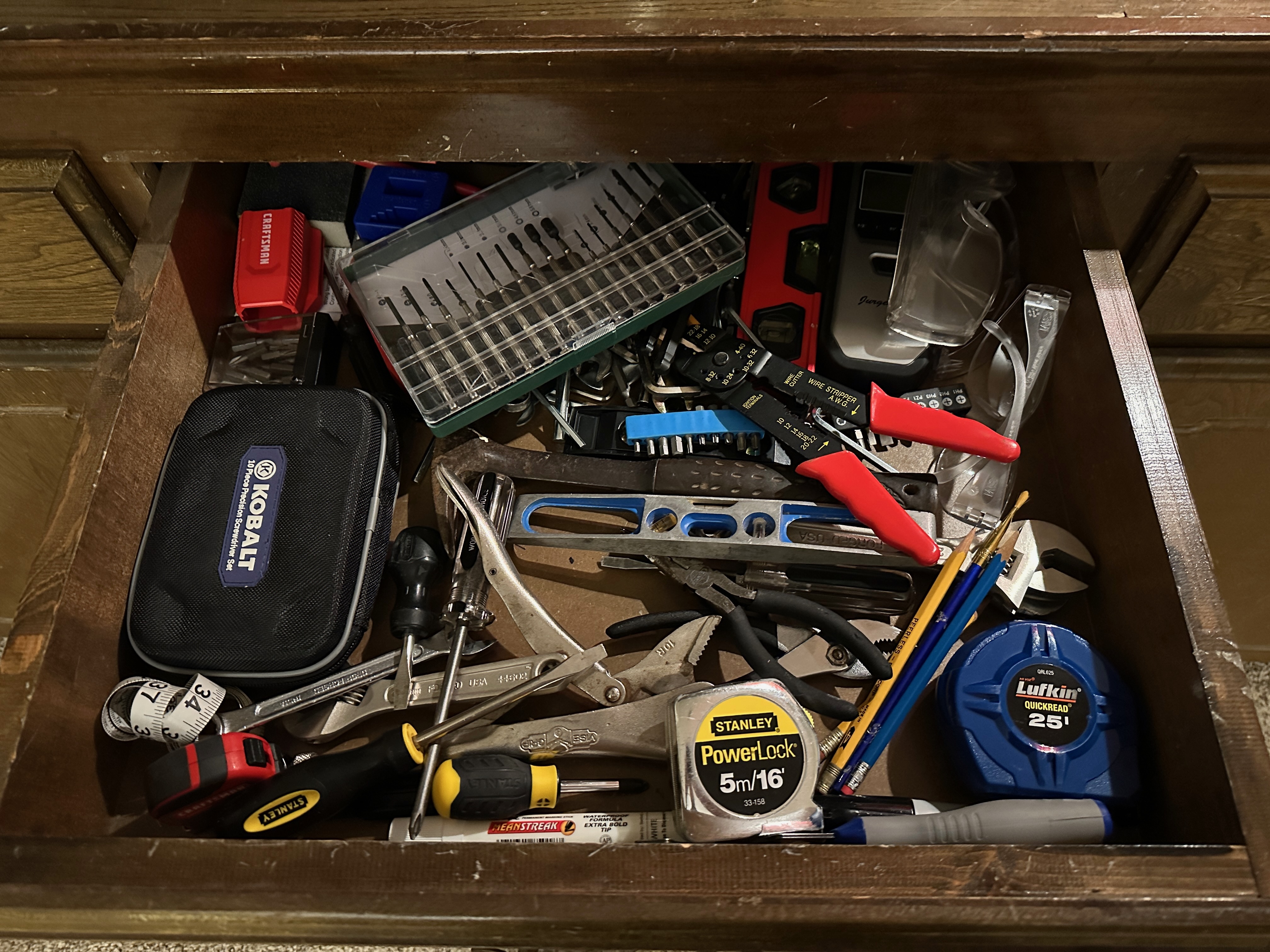
That conforms to how retractable cased tapes are far more popular than roll-up yardsticks or metersticks these days, which have become obscure and far harder to source. I’m so proud of my old-fashioned uncased tapes that I refuse to toss them in the drawer with their more popular cousins. Instead, I keep them at hand beside my desk. Thanks, Edwin E. Foster!








 Meador Manor