
Throughout my childhood, from 1967 to 1988, actor Jesse White portrayed “Ol’ Lonely”, the Maytag repairman who never had enough to do. Eventually other actors, including Gordon Jump of WKRP in Cincinnati fame, played the role. The campaign rang true with our family, since our Maytag washers and dryers lasted for decades.
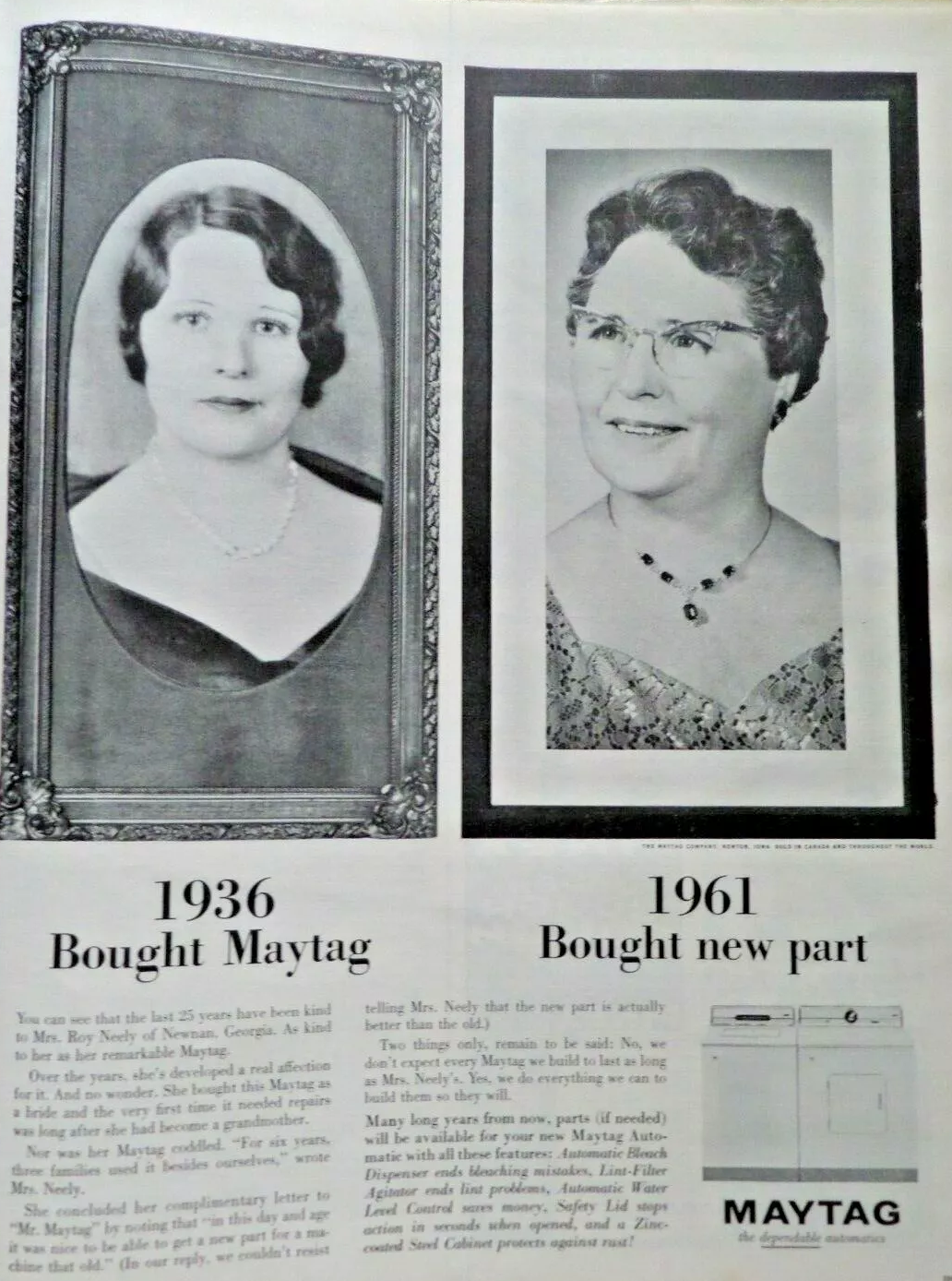
Before the iconic television ads, Maytag advertised its reliability in print with ads such as one about a Georgia woman whose 1936 Maytag washer was used by four families and finally needed a part replaced after 25 years.
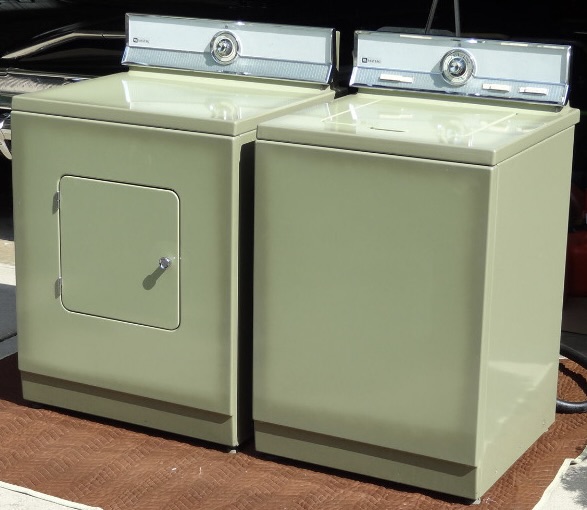
In the early 1970s, my parents bought a Maytag washer, in the trendy avocado green of the day. In 1978, they purchased a matching Maytag dryer.
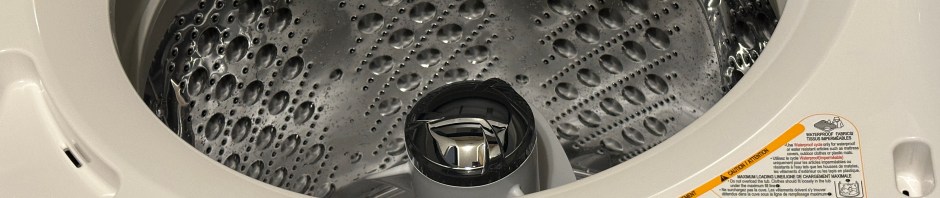
As a kid, when unsupervised I liked to dial up the spin cycle on the washer, prop open the lid, and jam its switch so it would keep running. I would toss in a washcloth and marvel at how it seemed to disappear due to the high spin rate and the limitations of my vision.
In 1989, when I moved into my own apartment in Bartlesville, I had a small washer and 120-volt electric dryer, of a brand I don’t recall. They were barely adequate, with the dryer taking an extraordinary amount of time to dry towels due to its low voltage. The next year I moved into a rent house and was delighted when my parents gave me their Maytag washer and gas dryer, even if the washer was about 18 years old and the dryer age 11. Those were far superior to what I had been using.
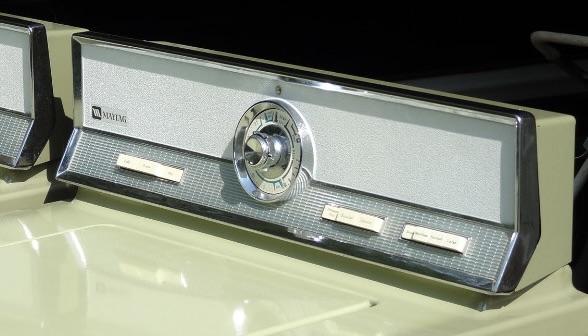
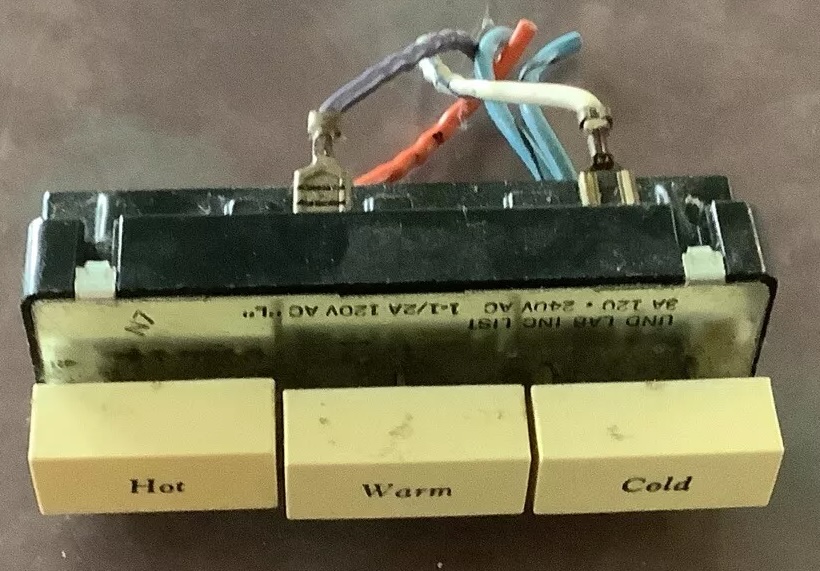
The washer finally did need a repair, as the water temperature selector switch stopped engaging. I unscrewed the top panel and was able to easily disconnect and remove the faulty switch, buy a new one from a local supplier, and be back in business. I could see my repair for years, since the new switch buttons were bright white, while the old buttons for cycle type and load size had yellowed with age.
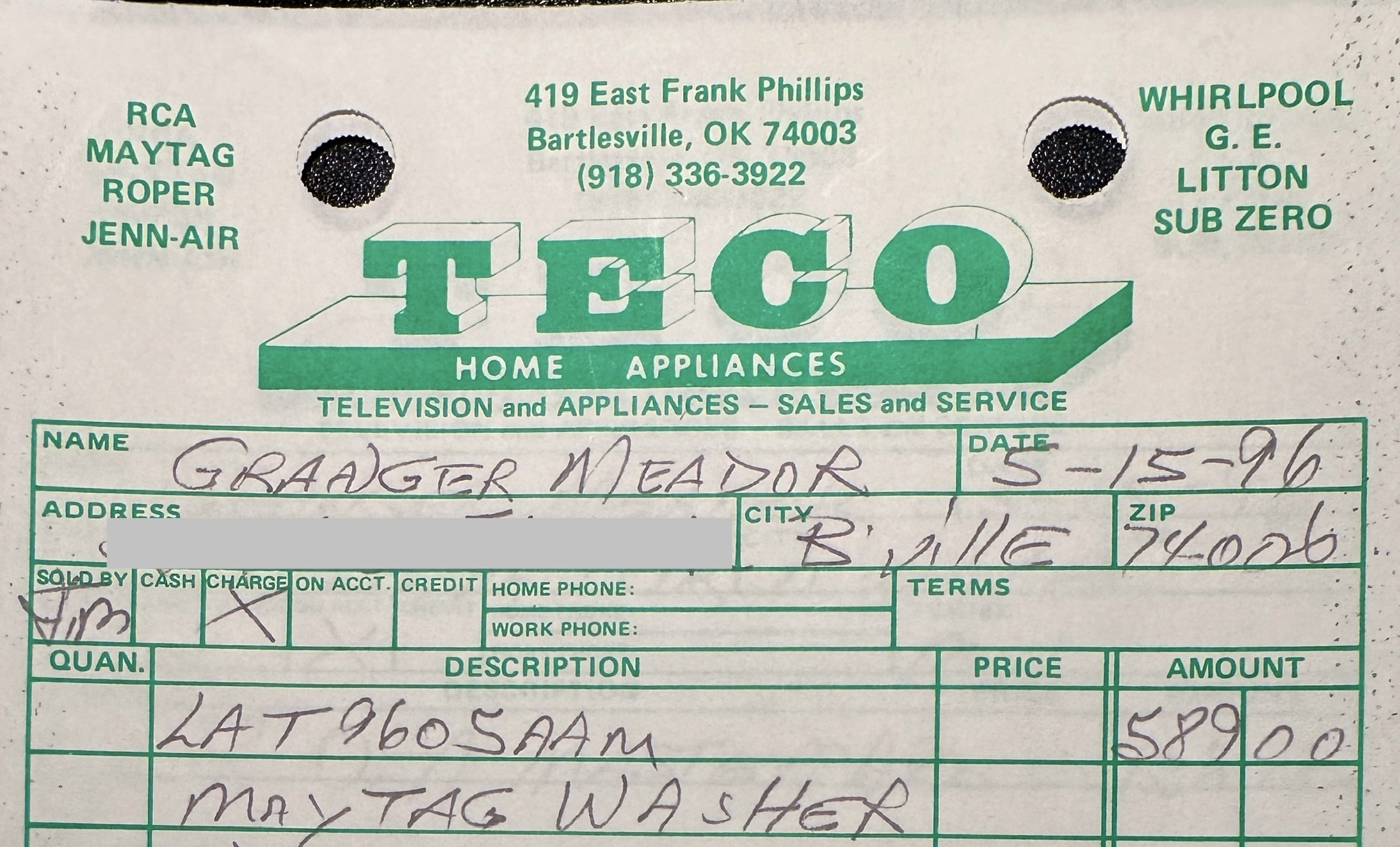
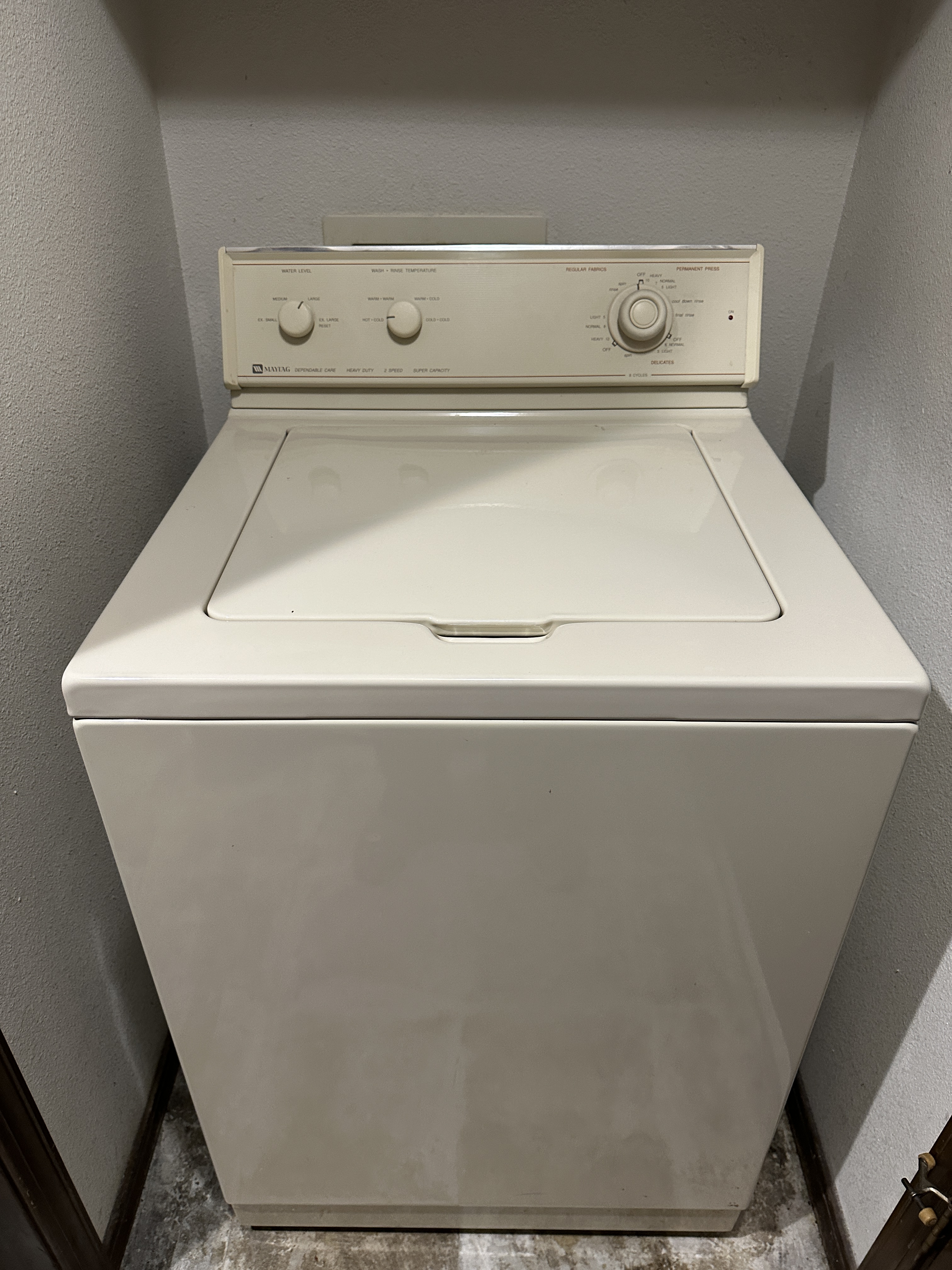
In 1996, the washer broke again, and this time it would have required a more significant repair that would have strained my finances as an underpaid schoolteacher in Oklahoma. However, I had just received the local Kurt Schmoldt Teacher Appreciation award, a cash prize that would cover virtually all of the cost of a new washer. So rather than try to have a 25-year-old unit repaired, I went to the local TECO appliance store, which Ted Schwermer founded in 1969; his son Gary ran the shop from 1985 to 2016.
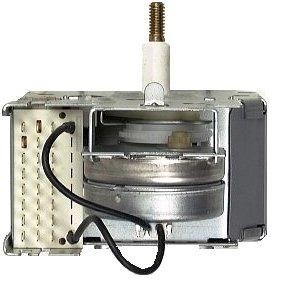
I told them that I wanted another Maytag, and they fixed me up with one for $589 that ended up lasting 29 years. I did have one repair on that washer over the decades. In 2008, after perhaps 2,500 loads, the washer began running the motor at the wrong speed and sometimes stopped in the middle of a cycle. I had a repairman out, who said it was a bad timer and since the model was no longer manufactured, he could not replace it.
Rather than buy a new washer, I paid the repairman for his diagnosis and his time, and then I went on eBay to buy a new electromechanical timer for $88. I installed it and was back in business for almost 3,500 more loads of laundry. My total capital and repair costs ran to less than 13 cents per load over three decades.
However, a few weeks ago I was doing the laundry and my socks got wet…the ones I was wearing, that is. The washer had leaked water across the tiny utility room and a bit into the adjacent kitchen. I dried things out and checked the hoses and drain, but I couldn’t locate where the water leaked from. Later loads that day were fine, so I hoped it was just a fluke…but I knew better.
Sure enough, a couple of weeks later another load leaked a bit, and since the leak was something intermittently amiss inside a washer approaching 30 years of age, rather than crack it open to try to diagnose and repair it, I decided it was time for a replacement. It struck me as better to enter my retirement in July 2026 with one-year-old washer rather than one with 30-year-old parts. But this time, despite the great reliability of the Maytags of the 20th century, I knew that I wouldn’t be buying that brand.
A Very Brief Maytag History
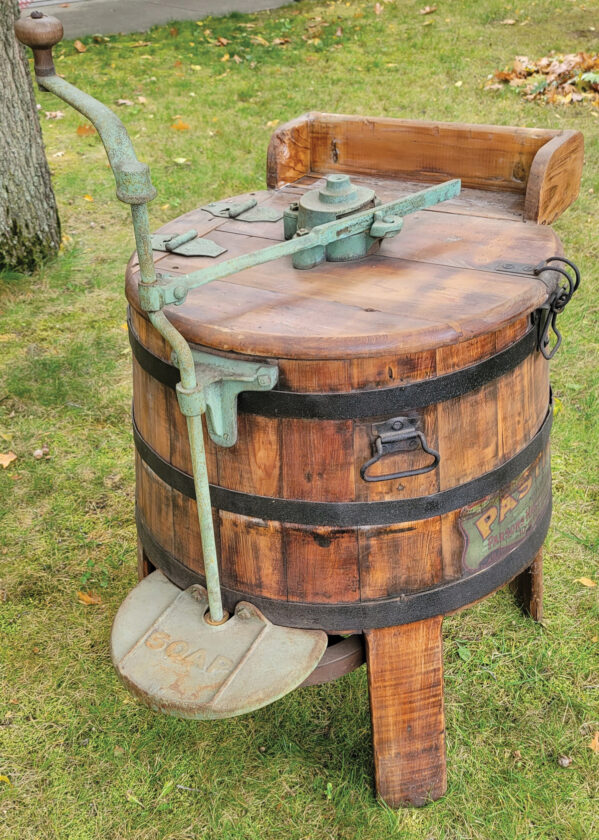
Frederick Maytag, his two brothers-in-law, and George W. Parsons started a new farm implement company in Newton, Iowa in 1893, producing threshing machines, band cutters, and self-feeder attachments. It became the Maytag Company in 1909 after it began manufacturing washing machines to fill in the seasonal gaps in the farm equipment business.
The first Maytag washer, the “Pastime,” was a wooden tub model with a hand crank that had a retail price of $11 to $15, the equivalent of about $450 in 2025.
By 1927, the Maytag Company was producing more than twice as many washers as any other competitor. They didn’t start producing clothes dryers until 1953, and the Maytag family sold their appliance business in 1962. Its reputation for durability and dependability would endure until the 21st century.
Maytag was acquired by the Chicago Pacific Corporation, the remains of the Chicago, Rock Island & Pacific Railroad, in 1988, which also owned the US and UK divisions of Hoover. In 2004, it was still producing 88% of its products in older US-based factories, but the company hurt its reputation by selling low-end Amana models produced in Searcy, Arkansas as Maytag-branded ‘Legacy Series’ machines.
Front-load washing machines that used less water and energy were promoted by the government in the early 2000s, but Maytag’s Neptune line of front-load washers were called Stinkomatics by dissatisfied customers when the washers developed mold that was not easily cleaned. By 2005, the company’s market share had declined to all-time lows, sales were flat, and it was ranked low in customer satisfaction. Whirlpool completed its acquisition of Maytag in 2006.
Switching Brands
When I purchased my new Maytag washer in 1996, I kept using the 1978 avocado green gas dryer. Its burner finally failed in 2003. Consumer Reports had warned me that Maytag was no longer a reliable brand, so I purchased a KitchenAid gas dryer that worked fine until 2020. While the Maytag dryer had lasted 25 years with one igniter replacement during its run, the KitchenAid only lasted 17. By then, Wendy and I were married, and she isn’t a fan of natural gas dryers. Our 1981 home was built to support either type of dryer, so we switched to electric.
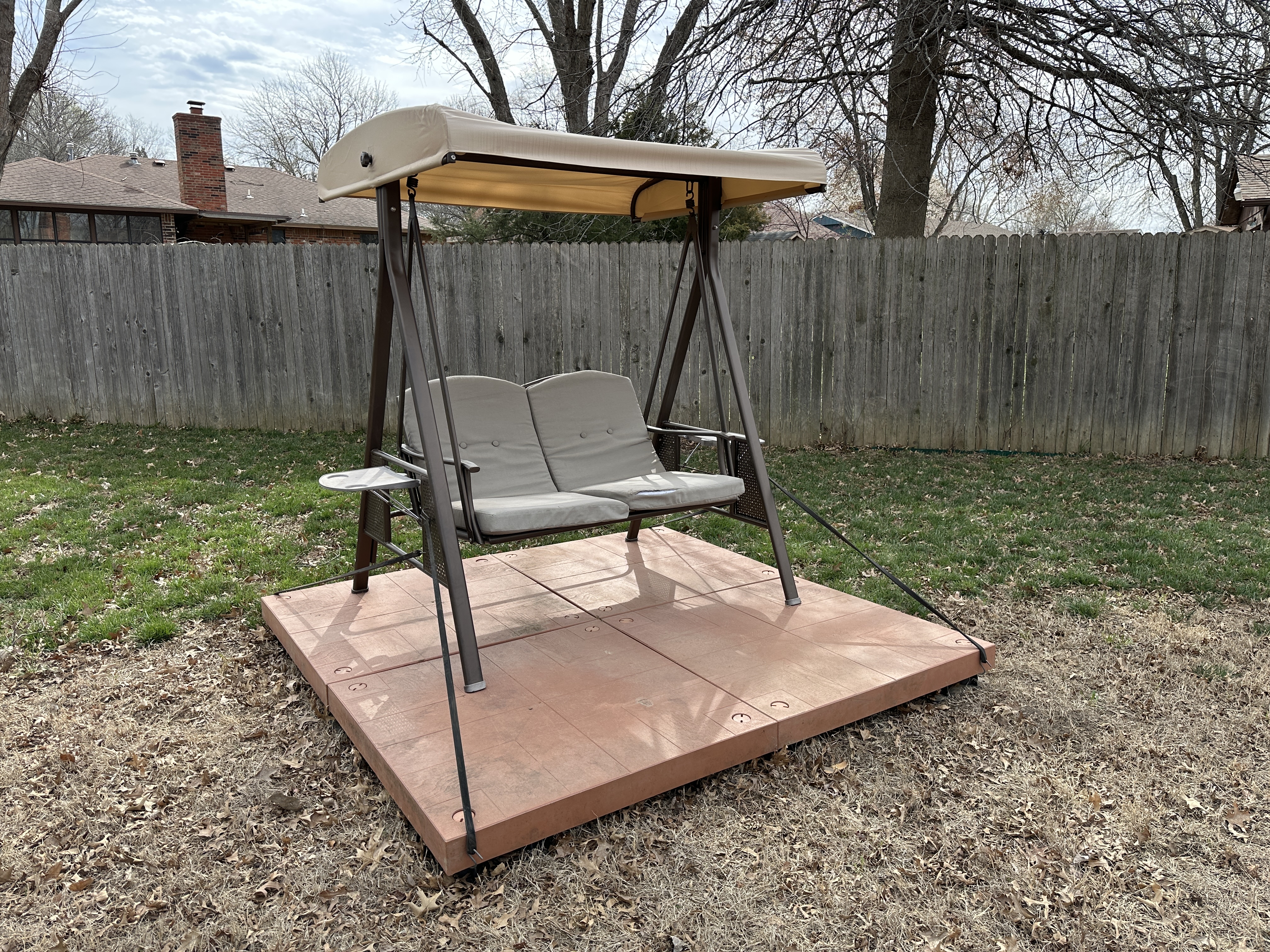
I checked Consumer Reports, for which I’ve had a digital subscription for decades, and they recommended an electric dryer from LG. We had enjoyed using an LG washer and dryer in a rental cabin, so that sealed the deal.
The dryer is fine, although being a 240-volt electric unit, its cycle time is longer than the natural gas dryers I was used to, yet still far superior to the 120-volt electric dryer I used in 1989-1990. We like the tune it plays when a load is done, although it is one of the few appliances that I wish had a WiFi connection so that I could be out on my swing in the backyard and get an alert when it is done. I have compensated by setting timers on my Apple Watch that help somewhat, but I have a ordered a vibration sensor to see if I can program it to alert me. [See my update at the end of this post.]
Our new washer does have WiFi, although I doubt I will need remote notifications that a load of washing is completed. I had always used top-load washers with agitators, but I read about the pros and cons of front-loaders, agitators versus wash plates in top-loaders, and how Speed Queens are very reliable but have smaller tubs. I decided to go with the highest-rated top-load agitator washer, as I didn’t want to deal with the extra cleaning to properly maintain a front-loader. That turned out to be another LG unit.

A Very Brief LG History
LG was once Lucky-GoldStar. It was founded in South Korea in 1947 as Lak Hui Chemical Industrial Corporation; Lak Hui is pronounced “Lucky” in English. It established GoldStar in 1958 as it expanded its plastics business, and the company manufactures electronics, chemicals, appliances, and telecommunication devices. Four generations of the Koo family have managed the company.
In recent years, LG models have consistently ranked high in Consumer Reports, and I have enjoyed the 55″ LG OLED television I purchased in 2017. However, I grin when I remember that LG stands for Lucky-Goldstar, since there was a time decades ago when they were known for cheap bargain-basement electronics.
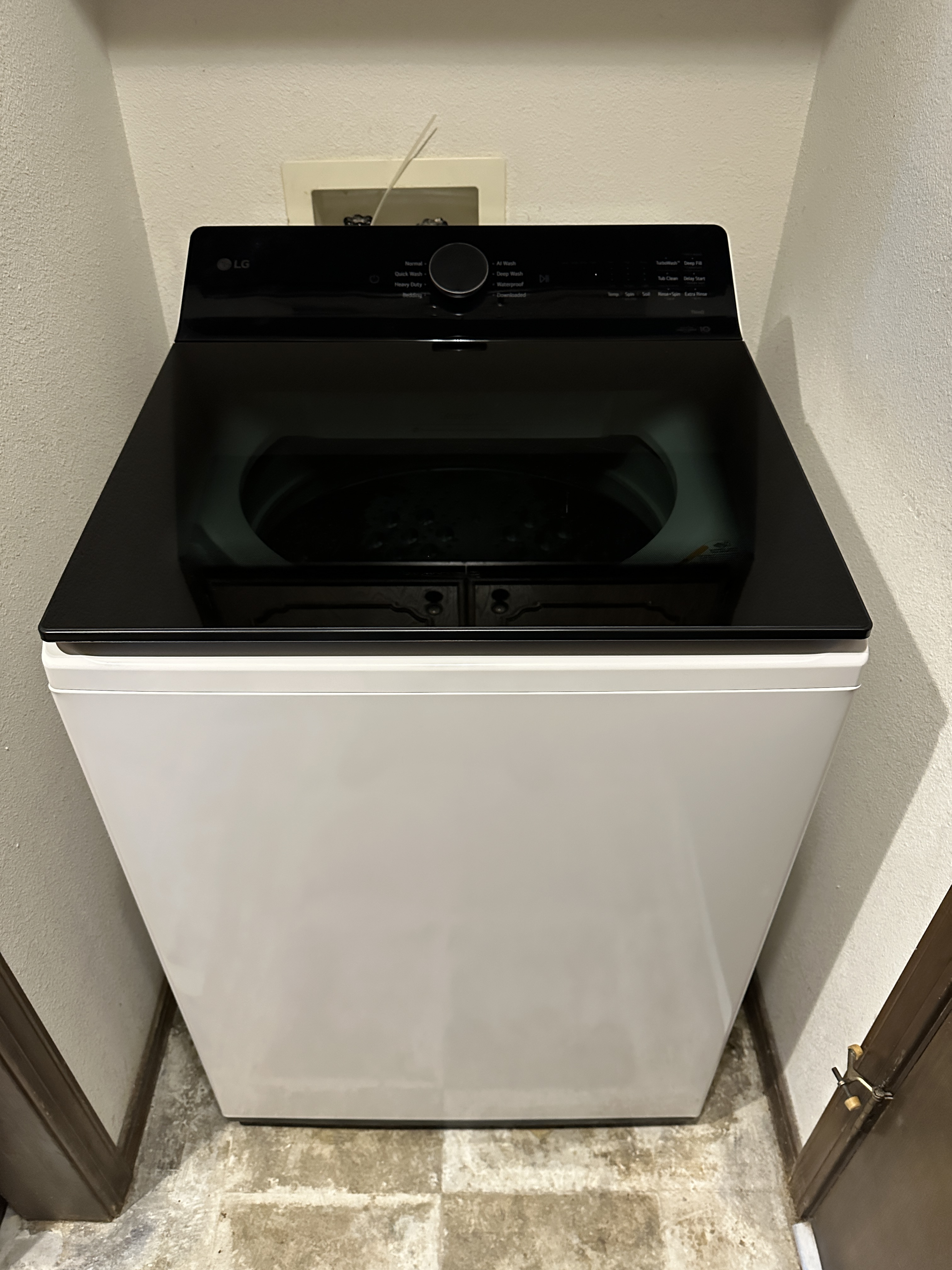
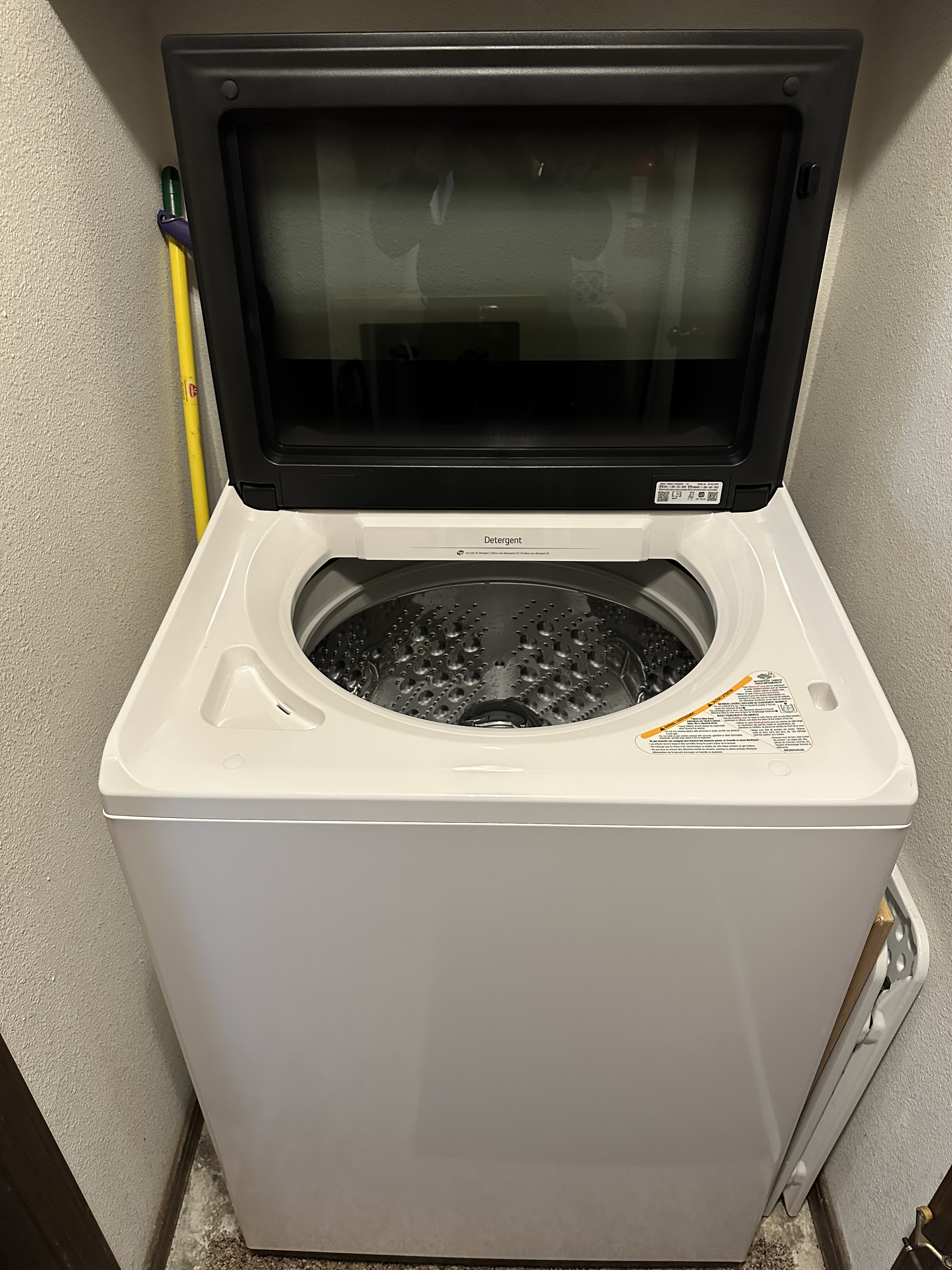
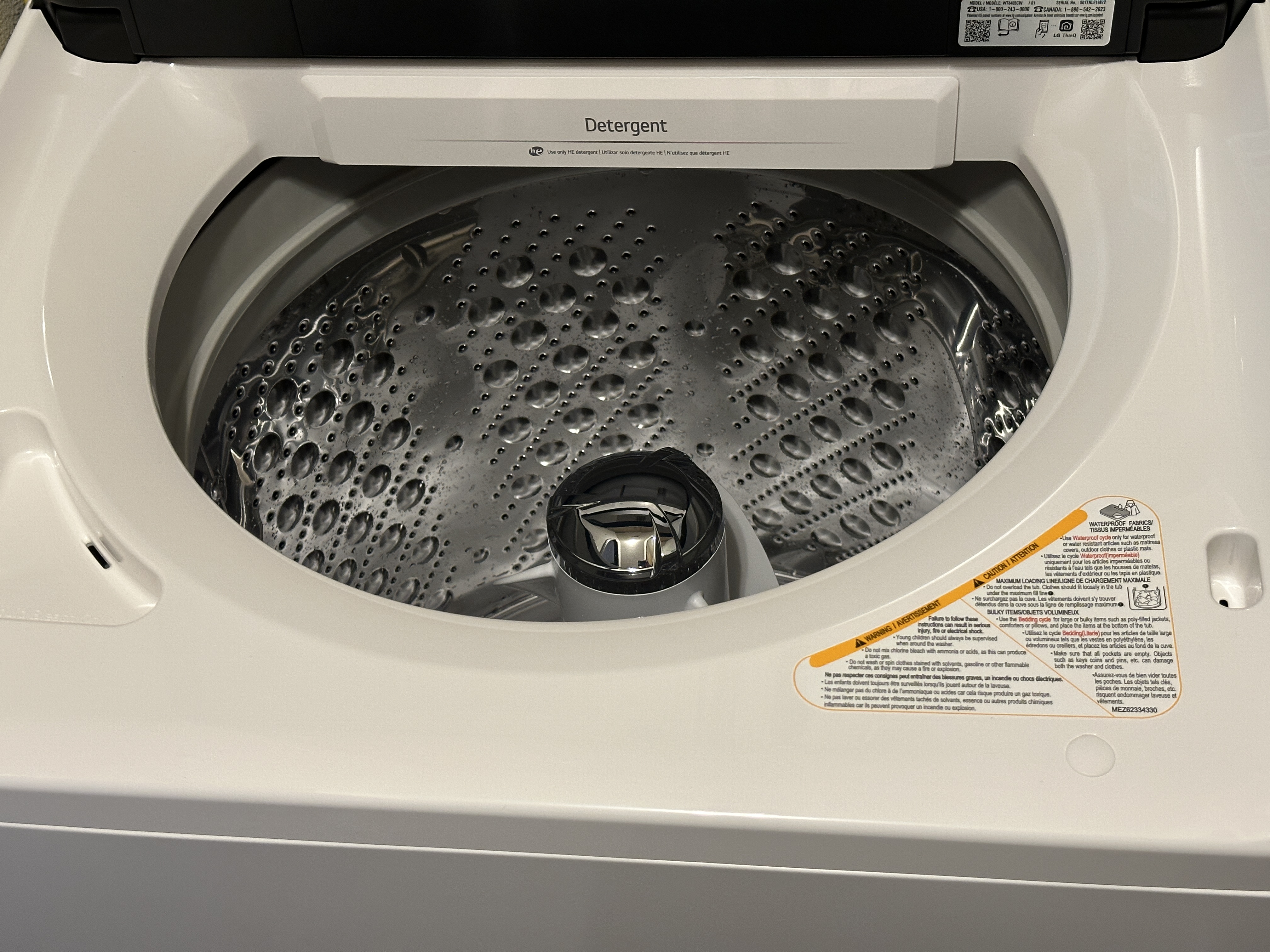
My 1996 Maytag washer completed the largest load in about 25 minutes; modern-day washers typically take much more time, although they use less water and energy. Our new LG washer would take 90 minutes to complete its most aggressive normal cycle with Consumer Report’s eight pound test load. They report wash times from 65 to 120 minutes for front-loaders and 40 to 100 minutes for top-loaders with agitators.
Our dryer typically takes 60 to 90 minutes to dry a load, and I’m not used to a washer taking that long or more. So I suspect I’ll be taking advantage of the washer’s faster “TurboWash” mode, which still won’t be as brisk as my old Maytag.
The new washer was $848 plus $38 for new connectors, $50 to haul off the old Maytag, $79 tax, and $29 delivery for $1,044 total. That’s actually cheaper than my Maytag, which cost $686 with tax back in 1996, which would be about $1,400 in 2025 when adjusted for inflation. Even better, my old Maytag used 923 kilowatt-hours per year in the government’s tests, while the new LG uses only 210 kilowatt-hours per year.
However, can the LG washer last 29 years with only one fairly simple repair? Is there an LG repairman, and is he lonely? Time will tell.
April 8, 2025 UPDATE:
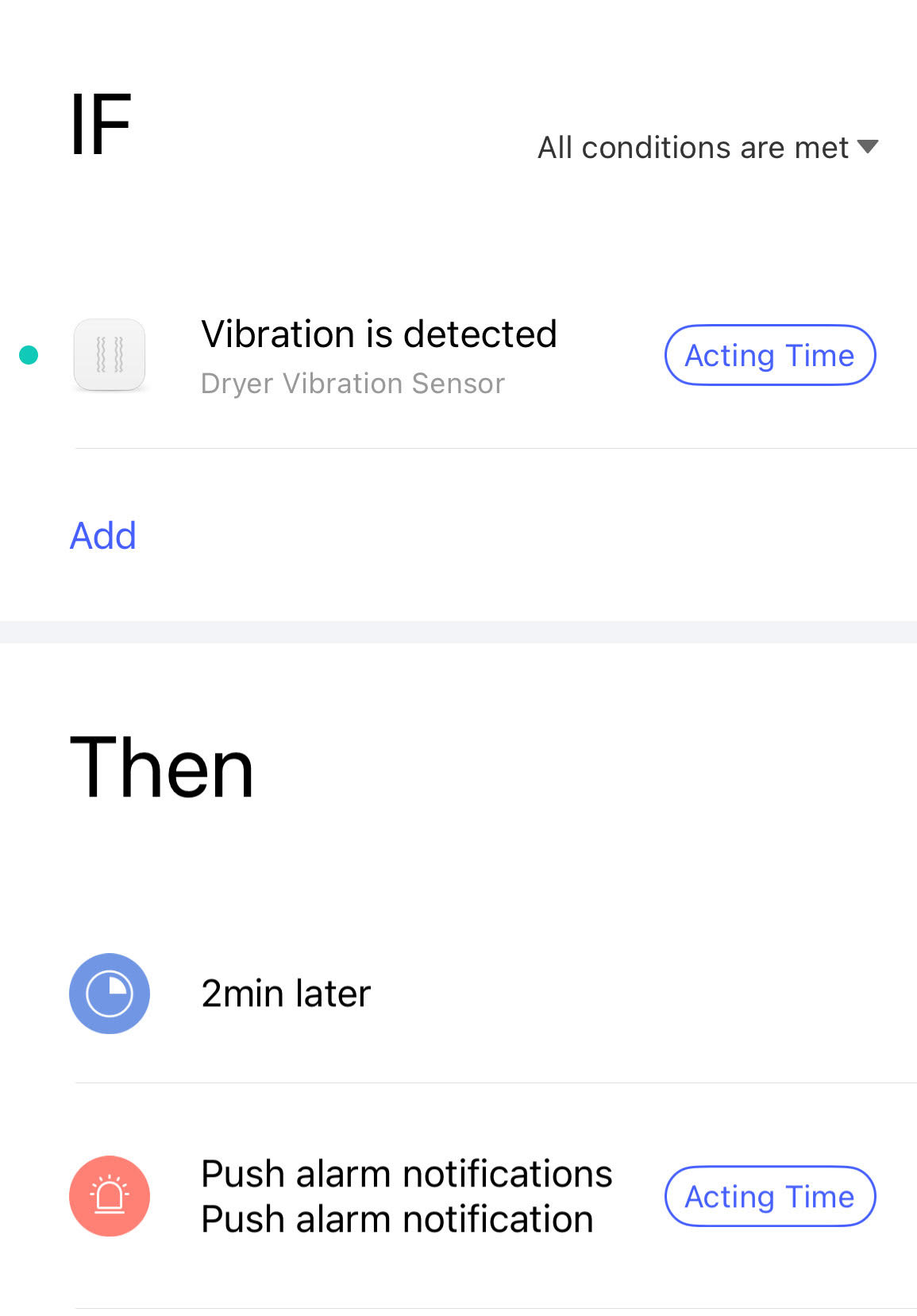
I purchased an Aqara Smart Hub and a Vibration Sensor for a total of $120. In the Aqara Home app, I created the Automation shown at right after setting the sensor to its highest sensitivity and placing it down on the side of the dryer where the drum appeared to vibrate it the most.
I turn on that automation if I’m going outside to recline on a swing while the dryer is running. The vibration detector checks each minute by default, and it only sends the push alarm if it doesn’t detect the vibration. I also reset the volume on the hub to zero, as it made arming and disarming chirps when I enabled and disabled my automation; I can tell that the Aqara products were designed for home security.
I’ve only had one false alarm thus far, on a load of sheets on the delicate dry cycle. I presume it didn’t vibrate enough, and if that is an issue, one can increase the delay time from 2 minutes, with one guy setting his to 5 or 10 minutes. However, I don’t want permanent press items sitting in the dryer that long, so I’ll see if the 2 minute delay will suffice for my needs. I could always make a separate automation for delicates.
The hub plugs into a wall socket for power, while the vibration sensor takes a CR2032 lithium coin cell that is supposed to last around two years.
July 2025 UPDATE:
For whatever reason, the vibration sensor stopped send me notifications. I didn’t bother trying to diagnose, but just unplugged the Aqara Smart Hub. Our LG washer still sends me notifications, and that will do until someday when the dryer dies and we buy a replacement that includes wireless notifications.






 Meador Manor