

Digital technology makes it easy to modify the rate of media playback, and pitch correction makes it far more practical. My wife routinely plays YouTube videos at high speeds, and some folks speed up their audiobooks and podcasts. Recently, Audible said 7% of its listeners had tried listening to audiobooks at higher speeds, with 1.2x and 1.5x being the most common choices, while those who listen to content at more than 2x are often listening to newspaper or magazine articles.
I prefer to listen to audio and watch videos at normal speed, but I have sped up a book or two that was read by a slow narrator. When I overhear one of Wendy’s videos playing back at high speed, instead of being reminded of Alvin & the Chipmunks, pitch correction instead leads me to think of Speedy Gonzales: “¡Arriba, arriba! ¡Ándale, ándale!”
Of course, analog technology also allowed for faster or slower playback, although it seldom compensated for the resulting change in pitch. Back in November 2023, when I reviewed my personal history with recorded music, I noted how the ready ability to change the rotational speeds on phonographs led to discoveries such as transforming Anita Ward into what I imagined to be a male singer by playing her song Ring My Bell on a 45 rpm single at the reduced speed of 33-1/3.
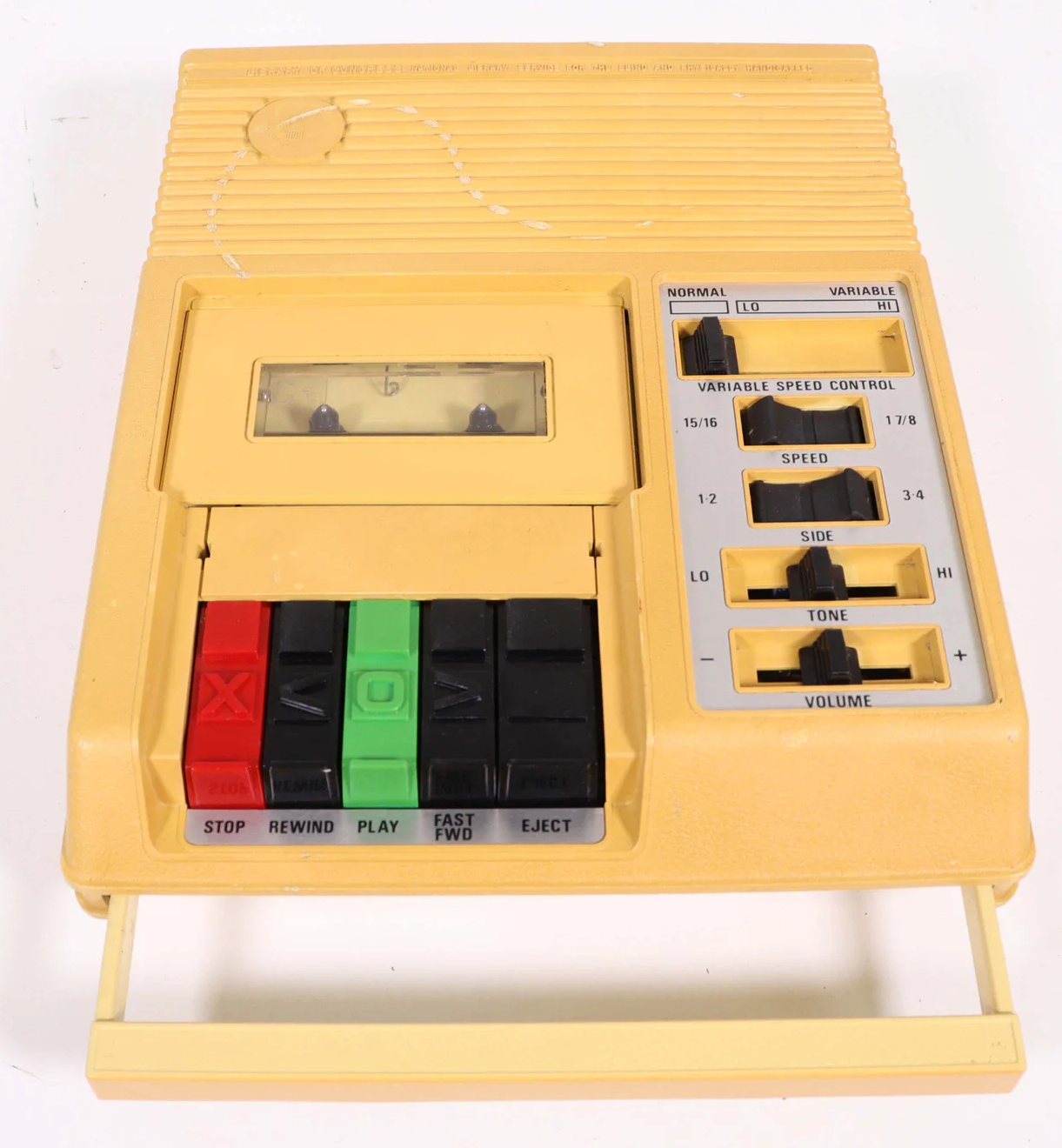
When I was in junior high school, one of the neighborhood kids had poor eyesight, and he had a special cassette tape player with adjustable playback speed for audiobooks. It was a Library of Congress C1 unit, which could lengthen the playback time of a standard C90 cassette, normally limited to 45 minutes of stereo audio on each side, to up to 6 hours using specially recorded 4-track monophonic tapes.
The units had no digital pitch correction, so we amused ourselves by playing with its vari-speed control.
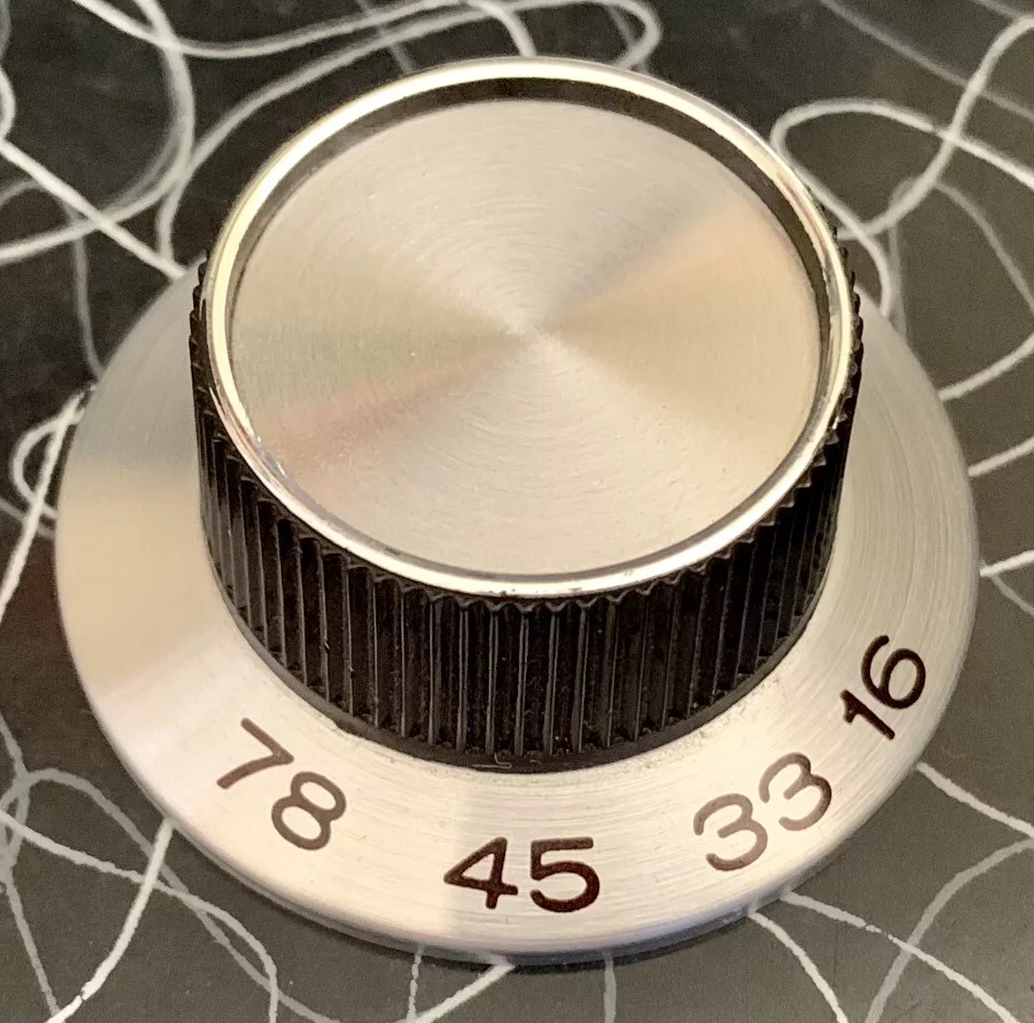
Analog speed changes over at my house were accomplished via my mother’s 1950s four-speed Silvertone suitcase-style phonograph player, which could play records at 16-2/3, 33-1/3, 45, and 78 revolutions per minute.
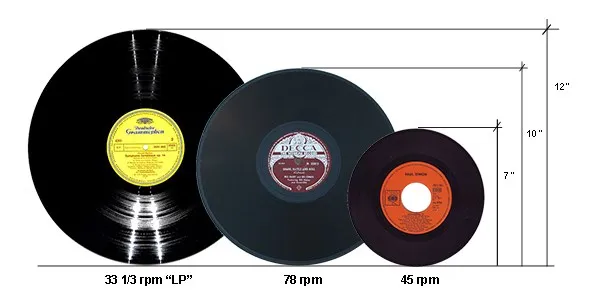
Phonograph discs played at 78 rpm were produced from the late 1890s to the late 1950s, but the only ones we had were in an actual album of records by Nat King Cole that my father had picked up at a garage sale. I took it to Bartlesville High School decades later when showing phonograph technology to my physics students as an application of circular motion. Some still knew that an “album” was a 33-1/3 rpm 12-inch long-playing record, usually with 10-12 songs, but they didn’t realize its name came from the actual albums you needed to get that many songs on 78s. Such lingering anachronisms are fairly common…do you still hear people say they will “dial” a telephone number? I’ll wager they won’t!

Columbia introduced the 33-1/3 long playing record in 1948. It was not only larger and rotated more slowly, but it also downsized the grooves to be used with a stylus with a 0.001″ radius of curvature, whereas the styli for 78 rpm records had a 0.003″ curvature. RCA promptly initiated a format war, introducing its own smaller 45 rpm records, and when I was a kid you bought your singles on 45 rpm 7″ records and “albums” on 33-1/3 rpm 12″ records.
But what about the 16-2/3 playback speed on my mother’s old record player? I only used it to have fun slowing down albums by half and singles by almost 3/4. The format was never highly standardized, but some excellent articles by Mike Dicecco detail its use for some audiobooks and background music systems, as well as in a short-lived system for Chrysler automobiles in the late 1950s.
There are many examples of using variable tape speeds to create art. Beatle John Lennon famously wanted the song Strawberry Fields Forever to be released using two different takes which had different tempos and keys. Geoff Emerick and George Martin used the vari-speed control on the tape machines to speed up one take and slow down the other to better align the pitches.

However, I’m more amused by mistakes. Herb Alpert’s song Rise became a club hit in England, but at the wrong speed. The length of the song meant it wouldn’t fit on a 7-inch 45 rpm record without editing, so a 12-inch single was released. However, that single was cut for playback at 33-1/3 rpm, while at the time most 12-inch singles were played at 45 rpm. Some disc jockeys in Britain accidentally played it at the wrong speed, and that helped it become a disco hit over there.
Funly enough, Rise was originally written at a disco-friendly tempo of about 124 beats per minute, but Herb decided he preferred a slow take with a tempo of 100 beats per minute, which allowed club audiences to “dance and hug each other at the end of the night.” While that approach worked to propel the song to #1 in America, in some British clubs it was often accidentally being played at 135 beats per minute.
I listened to Rise at that rate, but I preferred the original. I couldn’t find a properly sped-up version online, so I ripped the 12″ single version of Rise into an MP3 file and used the Audacity software to speed it up. That’s easy to do, since Audacity’s Change Pitch and Speed effect dialog already has presets for changing playback from what would be 33-1/3, 45, or 78 on a phonograph to another of those speeds. I’m surprised that they didn’t include 16-2/3, but perhaps none of the Audacity programmers ever used a four-speed phonograph.
Other songs people have recommended for playback at altered speeds include I Got You Babe by Sonny & Cher, Relax by Frankie Goes to Hollywood, and Video Killed the Radio Star by The Buggles, but like Jolene and Ring My Bell, those are all slow-downs. ¡Abajo, abajo! ¡No, no!

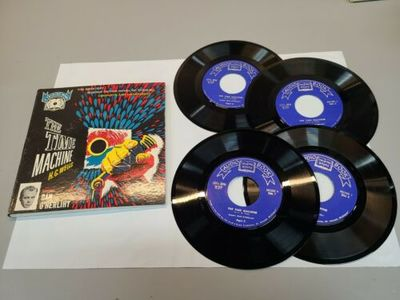
Speaking of slow, I was intrigued to see that actor Dan O’Herlihy did a spoken-word version of H.G. Wells’ The Time Machine on 16-2/3 records. I remembered O’Herlihy’s resonant voice from the splendid 1964 movie Fail Safe. I can’t provide a sample of his take on Wells, but the Internet Archive has selections of Walt Whitman’s Leaves of Grass read by O’Herlihy.


Years ago I watched Norman Field demonstrate a 20″ French Pathé ‘Theatre Disc’ from 1913 which was meant to be played at 60 rpm. I was surprised to learn that their “usual” 20-inch records played at an incredible 120 rpm. The high speed really vibrated the stylus, allowing for high-volume playback before electrical amplification.
At the other extreme, the internet informed me that there were some 8-1/3 rpm records produced by the American Foundation for the Blind, with 12″ versions that could play for up to six hours. I found a video of a 7″ 8 rpm disc being played, but the children’s story it presented was so boring that if I were a kid, I’d want to play it at 78, crying, “¡Arriba! ¡Ándale!”






 Meador Manor