

James Joyce supposedly said, “Life is too short to read a bad book.” I like to think that is true, since I generally have no patience for stream of consciousness writing, and thus I will never read his Ulysses or Finnegans Wake.
Wendy shared this on Facebook a few years ago:

This is my husband in a nutshell.
Wendy: So whatcha been reading?
Granger: I’ve been reading about the lost pianos of Siberia.
Wendy: Hehehe no really.
Granger: That’s really what I’ve been reading about.
He proceeds to tell me about the book...
Wendy: Why would you ever read a book like that?
Granger: I just felt sorry for the book, like maybe nobody would ever read it.
However, when I stumble into a work that I find repulsive, I do stop reading it, adding it to my Abandoned/DNF list on Goodreads to ensure I don’t accidentally try reading it again later.
I’ve abandoned seven books in the last couple of years, almost 1 out of every 10 that I started. The latest rejection was for A House for Mr. Biswas, one of the entries on Modern Library’s list of the 100 Best Novels of the 20th Century.


I did give it the ole college try, however. My Kindle reported I read 20% of it, which would be over 41,600 words. Heck, my favorite novel, The Great Gatsby, is only about 47,000 words.
The 1961 novel by V.S. Naipaul offered a glimpse of the harsh life for poor Hindus in the first part of the 20th century on the island of Trinidad in the Caribbean Sea off the coast of Venezuela. I didn’t sympathize with any of the characters, particularly the protagonist, who grows up to become petulant, rude, and abrasive. I enjoyed the start about his childhood, and I recognize why some find the book an amusing satire, but for me it grew tiresome and irritating once he became an adult.
In his positive review of the book, Peter Berard wrote, “The thing with living under various kinds of oppression, Naipaul reminds us, is that it doesn’t make us into saints or superheroes. It more often makes you and those around you a mess.”
The more I read of the book, the more oppressed I felt, so I reluctantly abandoned it. Wanting to cleanse my palate, I decided to pick up a book of John O’Hara’s short stories that I had purchased in May via AbeBooks: The Hat on the Bed.
I had ordered it after reading his novel Hope of Heaven and before I read Appointment in Samarra, which is on the Modern Library list of great novels. I’m told O’Hara was a master of the short story, but I was leery given that his style appears to be that of a keen observer who describes, but does not explain, and offers little in the way of symbolism.
The first story in the collection, “Agatha”, served as confirmation. It was a sharply delineated portrait of a silly society woman, but it had virtually no plot or punch, earning the book a rejection.
Deflated, I decided to go with something short and bound to entertain. I like a plot, but I’m not interested in ones that are overly complicated. Locked-room mysteries like Rim of the Pit by Hake Talbot or intricate whodunits like John Dickson Carr’s Hag’s Nook are a bit much. I prefer something with a bit less plot and seek out splendid dialogue, such as almost anything by Agatha Christie or the characters that populate the Thursday Murder Club series by Richard Osman.
Recently I was reminded of my need for plot when I tried and failed to read To the Lighthouse by Virginia Woolf. Who’s afraid of Virginia Woolf? Me!
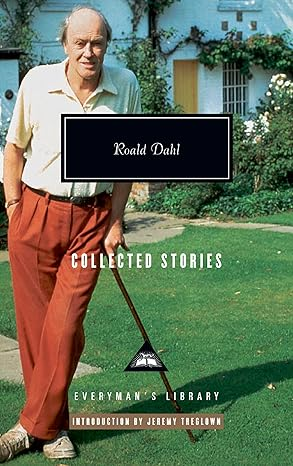
So I picked up the hardcover collection of Roald Dahl’s stories for adults which I had bought in 2012. In 13 years, I’d read the first 20 of its almost 50 stories, which are arranged in chronological order of publication.
If you’re only familiar with Dahl via something like Charlie and the Chocolate Factory, the adult tales share his taste for meting out consequences. The children’s book addresses gluttony, greed, pride, and sloth, while the adult tales take on deception, cruelty, infidelity, and yes, greed, often via table-turnings and twists of fate.
The 21st story was just what I needed, and I plan to read a few more before embarking on another novel. Dahl has a sense of humor, but it is more wicked than satirical. In 2023, I tried to read Patrick Dennis’s Auntie Mame: An Irreverent Escapade, but it was not to my liking. I’m reminded of my reading, and actually finishing, A Confederacy of Dunces by John Kennedy Toole back in 2020, which also really wasn’t my cup of tea. If you want to make me chortle, give me books like A Walk in the Woods or In a Sunburned Country by Bill Bryson or have me listen to David Sedaris’s Santaland Diaries.
Meanwhile, when the weather cooperates enough for me to walk on the Pathfinder Parkway, I’ve been listening to The Friedkin Connection: A Memoir by William Friedkin, who directed The French Connection, The Exorcist, The Boys in the Band, and other gritty films.
I’d listened to some interviews with Friedkin and his commentary on Citizen Kane, so I knew I wanted to listen to him reading his memoir. It has been excellent thus far, providing a fascinating glimpse of his tough childhood and how he stumbled his way into live television and documentaries.
Friedkin’s formal education ended after high school, but thankfully in the WGN mailroom he was discovered by Francis Coughlin, a radio and television writer, producer, and panelist. Friedkin recalled, “On my bookshelves I still see the books he gave me fifty years ago, all of which I read and we discussed: the bound works of Dickens, Ruskin, The Autobiography of Lincoln Steffens, Sandburg’s Lincoln, Churchill’s History of the English Speaking Peoples and History of the Second World War, the collected essays of Rebecca West, the writings of H. L. Mencken, and Shirer’s Rise and Fall of the Third Reich.”
Fran helped Friedkin invest in improving himself, and I encourage you to do the same. Find something you like, and don’t be afraid to abandon something that doesn’t suit.
You may have tangible wealth untold; caskets of jewels and coffers of gold. Richer than I you can never be. I had a mother who read to me.
-Strickland Gillian






 Meador Manor