
I am intrigued by societal shifts. Economics is usually one of the largest drivers of change, and the internet and then smartphones and social media and the COVID-19 pandemic have also had significant impacts. Data shows increasing contrasts between my own Generation X (those born from 1965 to 1980), Millennials (1981-1996), and Generation Z (1997-2012).
Alcohol
Gallup has tracked Americans’ drinking behavior since 1939, and this week it released results from its annual Consumption Habits survey. The percentage of U.S. adults who say they consume alcohol is now the lowest they’ve recorded, at 54%.

That is tied to a significant shift in the perceived health effects of moderate drinking:
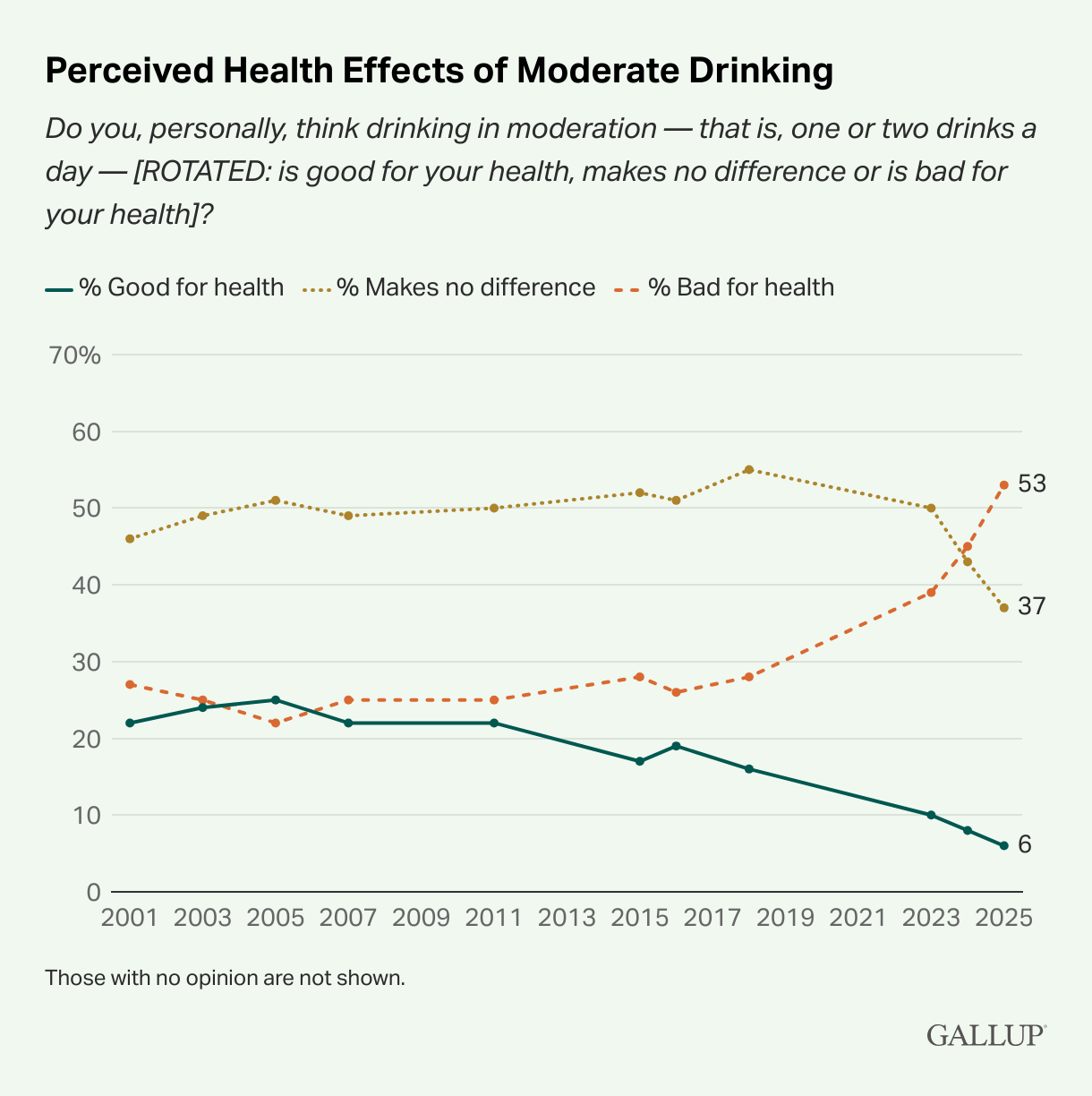
The World Health Organization stated in 2023 that when it comes to alcohol consumption, there is no safe amount that does not affect health, but in the early 1990s, the media was filled with reports that the French had lower rates of heart disease despite their heavy consumption of saturated fats and their smoking, attributing the discrepancy to their consumption of red wine. That helped fuel a boom in vineyards in the USA, but the evidence that drinking red wine is heart healthy is said to be weak and Michael Girdley says the wine industry has recently been in freefall.
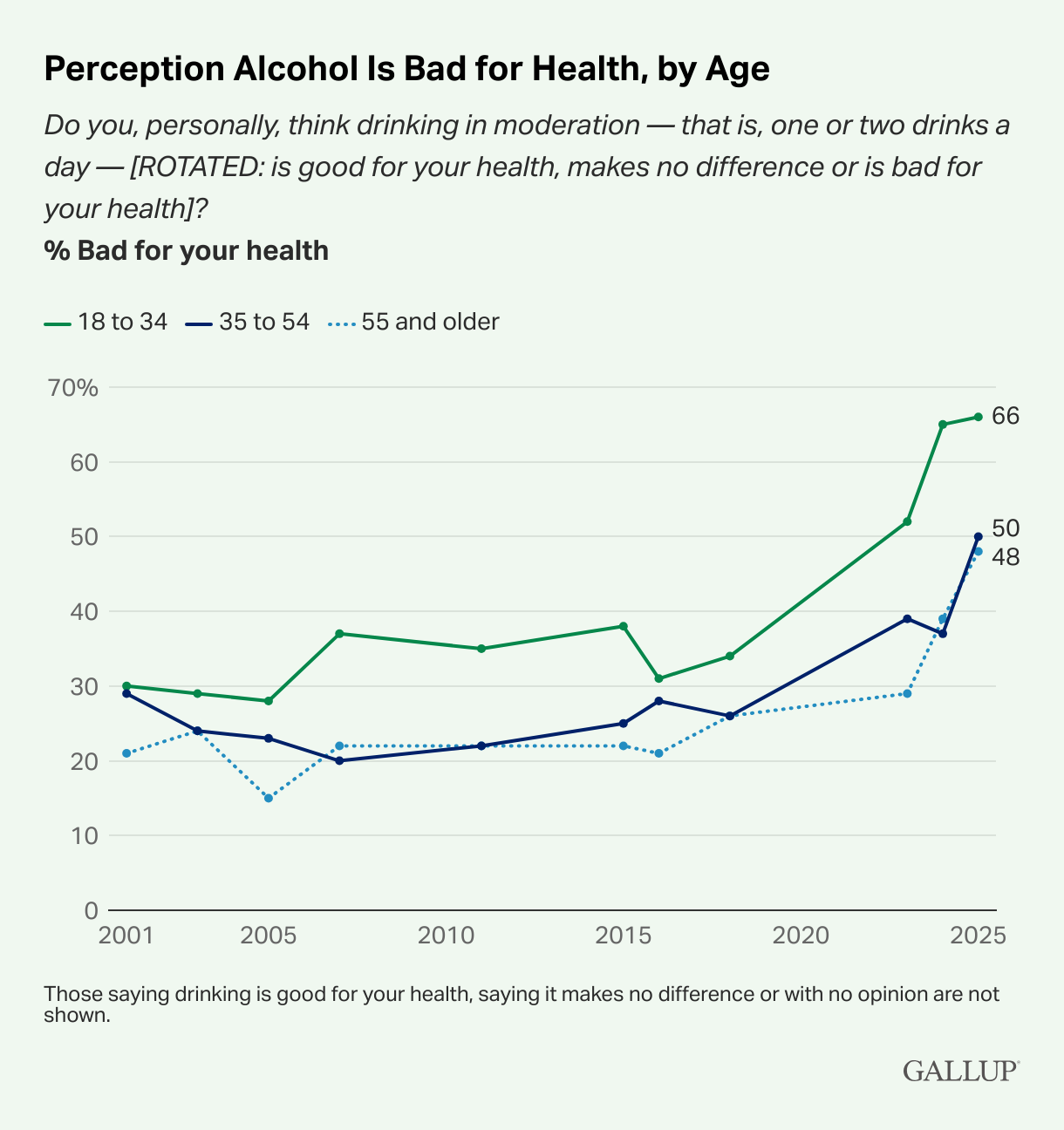
The shift in perception has occurred across all age ranges, but I find it startling that 2/3 of young adults now think drinking in moderation is bad for your health.
Gallup’s full report shows that the percentage of self-reported teetotalers from 1939 to 2025 has ranged from a low of 29% in the late 1970s to a high of 45% in in 1958, nearly matched at 44% in 1989 and 2025. Such self-reporting is a mix of actual behavior and social perceptions.
Marijuana
We have cannabis shops all over town, so I’ve wondered how the increasing legalization of marijuana might be impacting alcohol consumption. Nationwide, the percentage of adults who reported trying marijuana has jumped from about 1/3 to almost 1/2:

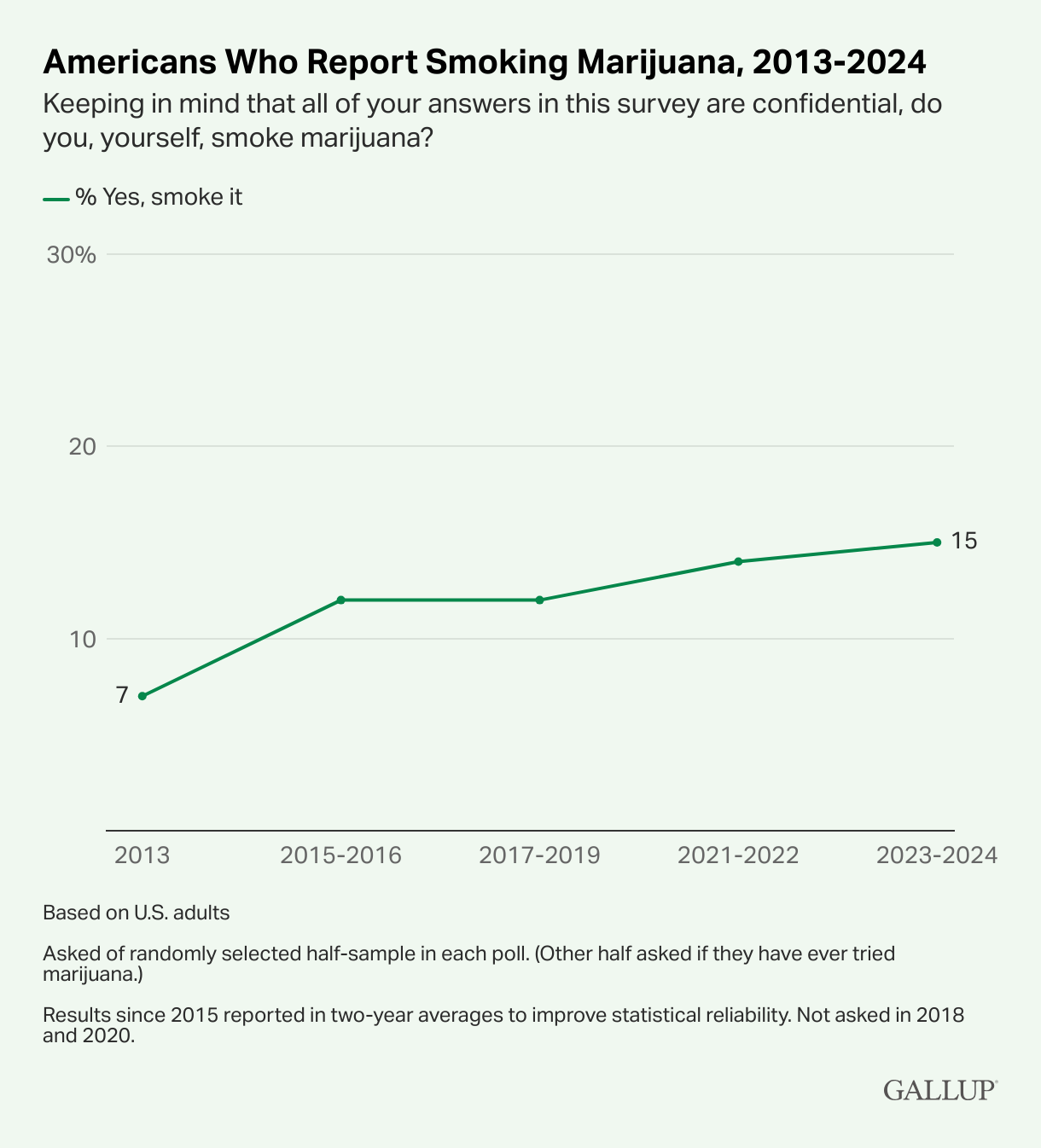
Over the past decade, the percentage who report smoking it has more than doubled:
As for the generations, there are about half as many marijuana smokers among my 55+ group than among young adults:

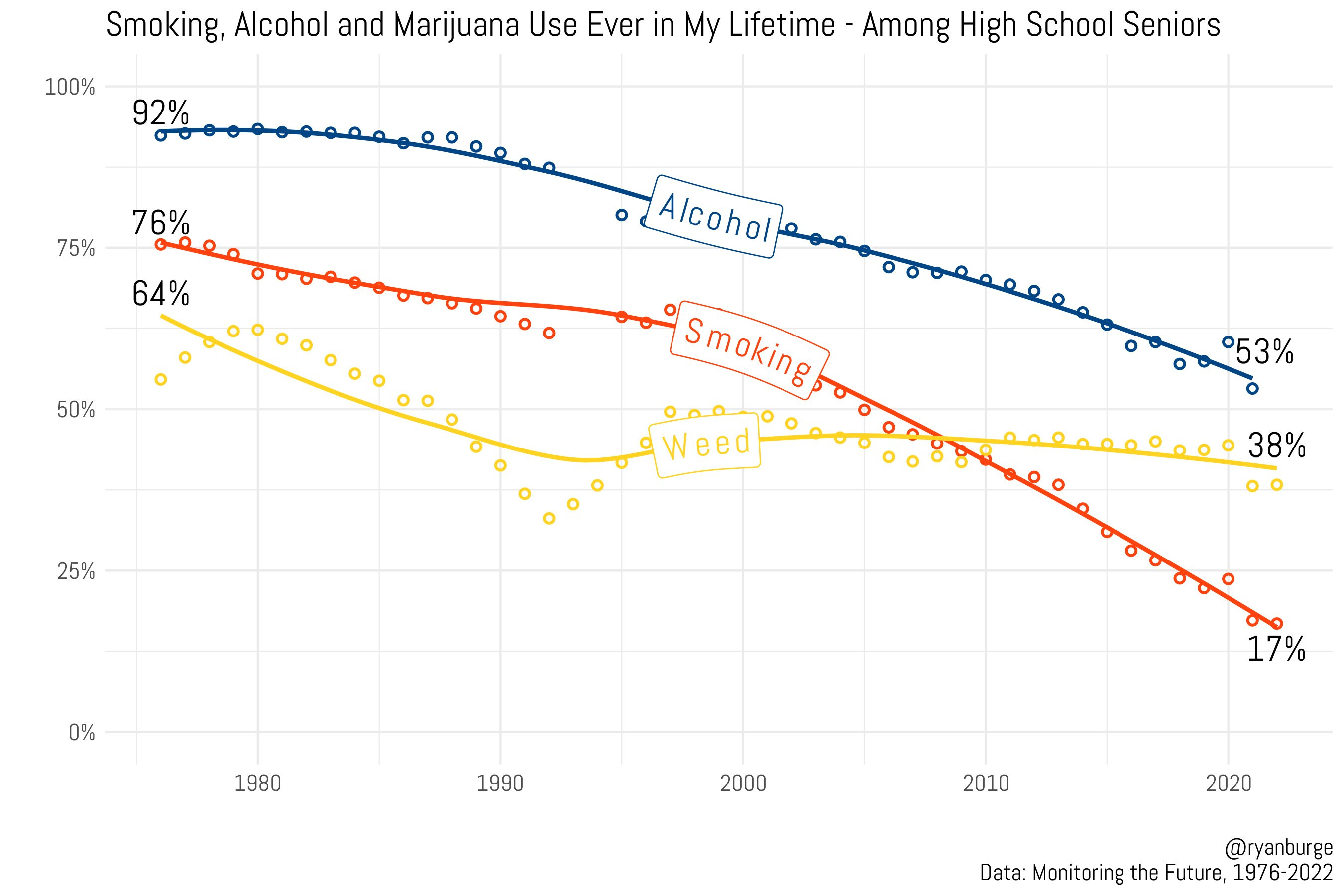
Ryan Burge charted significant declines in alcohol, smoking, and marijuana use among high school seniors from 1976 to 2022:
Those declines have been accompanied by shifts in mobility and socialization.
Driving
I’ve always lived in places where driving was nearly a necessity, and in the early 1980s my peers and I were eager to take Driver’s Education and get our licenses. I had acquaintances who were into fixing up old muscle cars to go cruising on Route 66 in Oklahoma City, and in high school I drove a Toyota Corolla, shifting to a Chevrolet Monte Carlo and then a Toyota Celica Supra during college, amidst oodles of fellow students driving the Datsun 280ZX, Chevrolet Camaro, and the like. My, how things have changed:
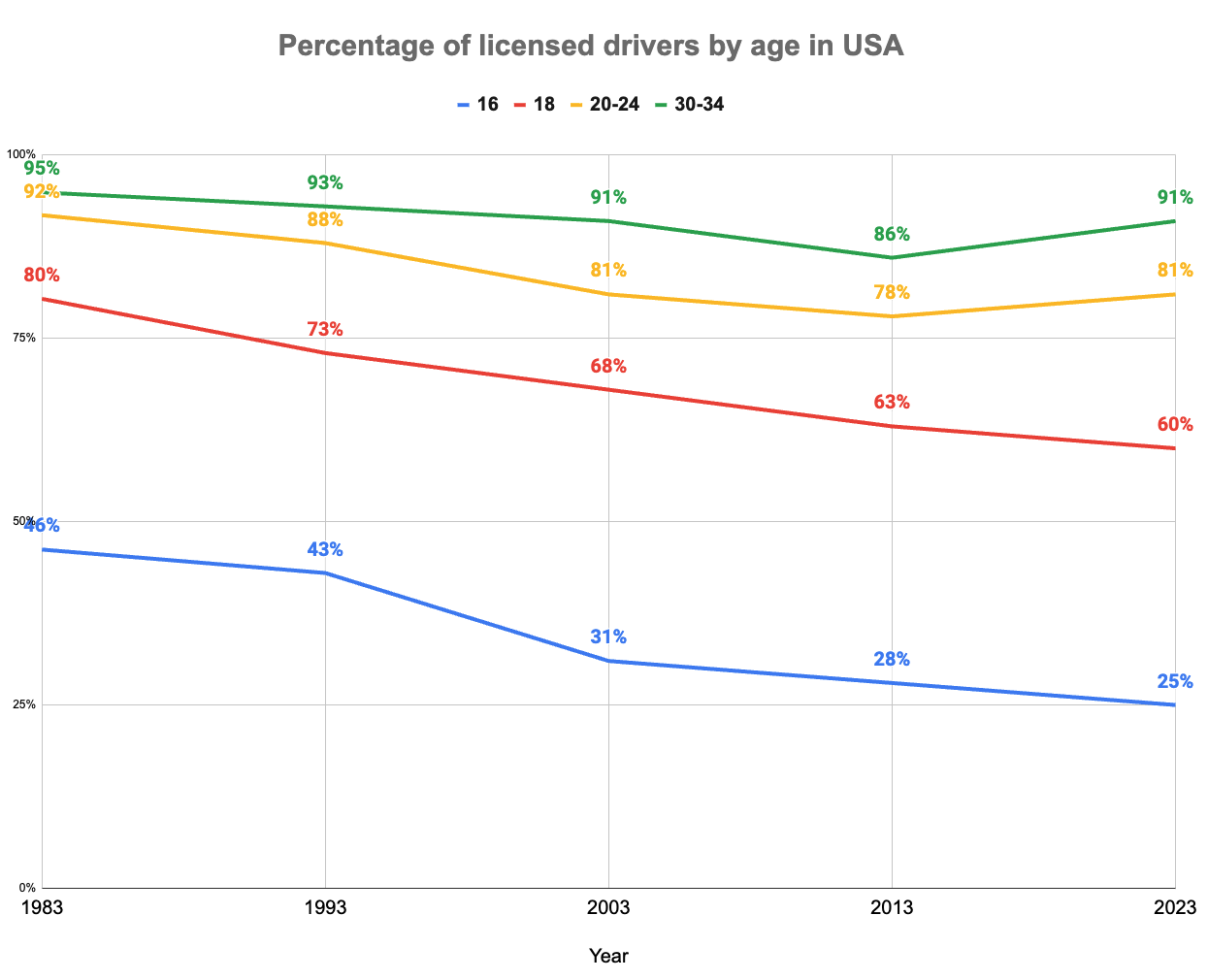
Now only 1/4 of 16-year-olds have a driver’s license, versus almost 1/2 in my youth, and licensing similarly dropped from 4/5 of 18-year-olds in 1983 to 3/5 of them in 2023. The decline is attributed to rising expense, increased availability of ride-sharing services, and teens connecting more with friends online than in-person at shopping malls, cinemas, and the like.
Socialization
These trends are accompanied by significant changes in socialization among youngsters. Over the past 30 years, the share of high school seniors who only go on a date once a month or less has more than doubled to 71%:

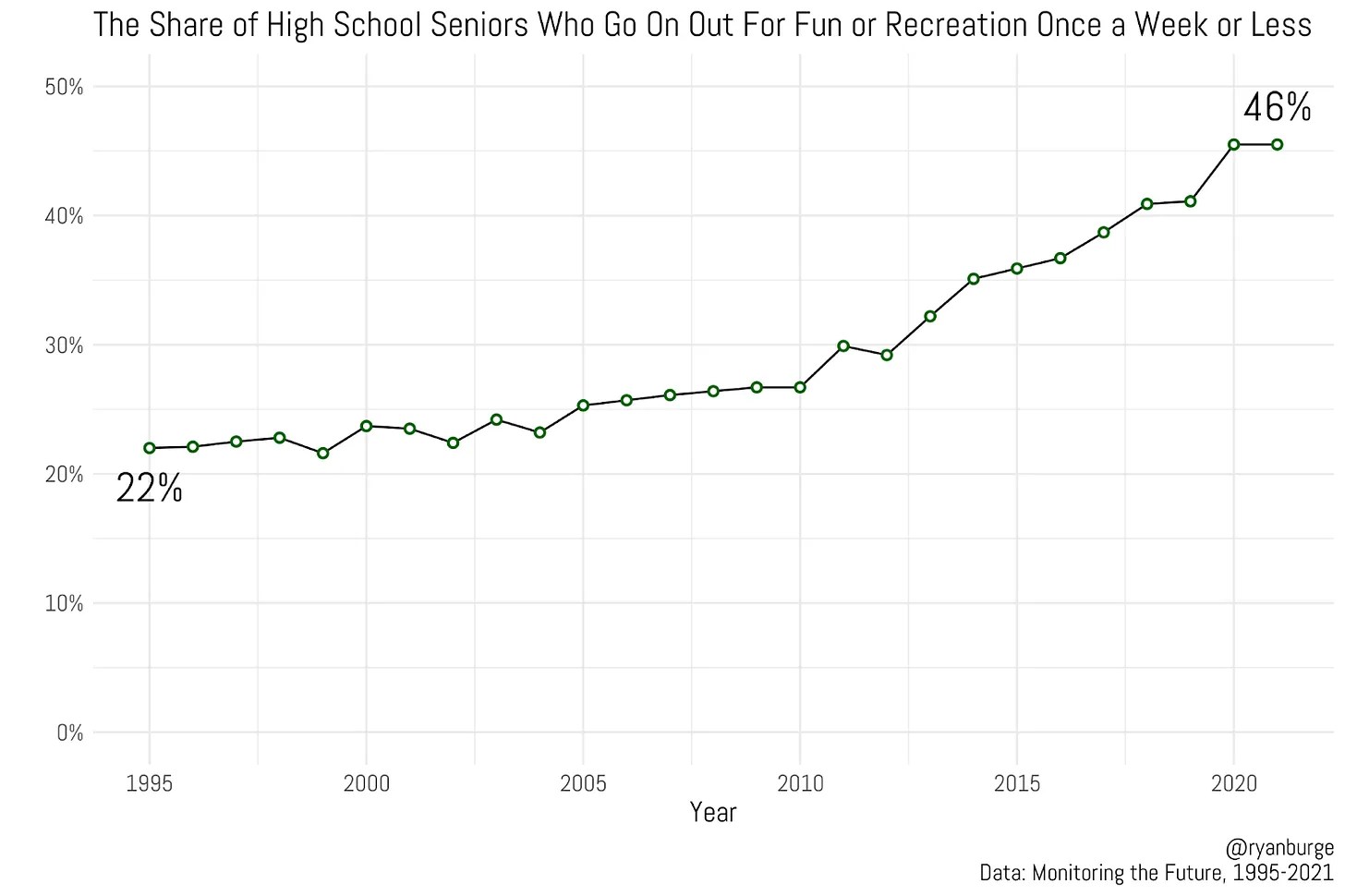
Those who go out for fun or recreation only once per week or less has also more than doubled to 46%:
The share of seniors who don’t work any hours has risen from about 1/5 to over 1/3:
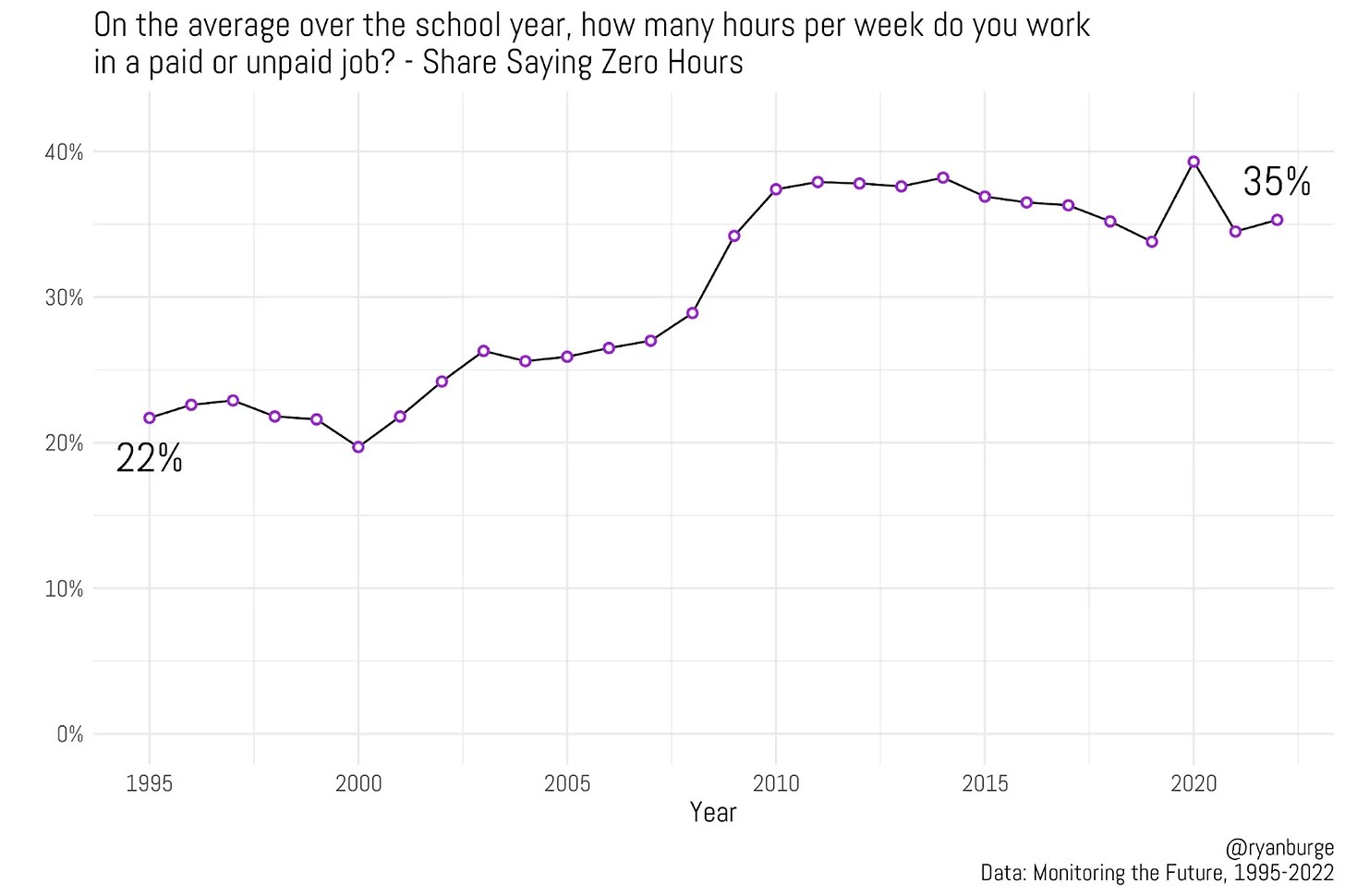
When I was a high school senior, 87% of my peers were employed, but that eroded to 78% over the following decade and is now about 2/3, with the Great Recession of 2008 being a major inflection point reducing the number of working high school seniors.
Combining those factors, almost 1 in 6 high school seniors rarely date, socialize, or work:

Thinking back over 40 years to when I was a high school senior, I was going on a date at least once every week and going out for fun and recreation a couple of times per week, but I did not go to work until after my freshman year of college.
Religion
Religious services and programs are another way to socialize. Religious attendance among high school seniors has decreased dramatically. When I was in high school, about 1 in 3 attended weekly with only 1 in 7 never attending, but now only 1 in 6 attend weekly and over 1/3 never attend.

Religion wasn’t important to about 1 in 7 seniors when I was in high school, but now that is more than 1 in 4:

Below is a chart documenting the erosion in religious behavior, identity, and belief among American adults. It shows the percentages who never attend religious services, who profess to no religion, and those who either profess they don’t believe in God or don’t know if there is a God while not believing there is any way to find out.

Sex
Let’s see…less alcohol, driving, socialization, and religion, and more marijuana. Care to guess the changes in sexual behavior? Here’s the percentage of sexlessness among young adults over the years:
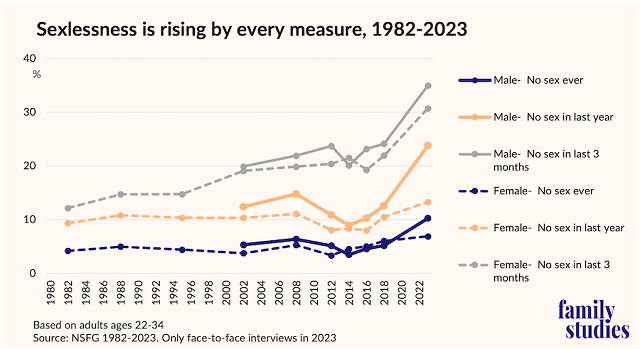
By 2022-2023, about 1 in 10 adult males ages 22-34 and about 1 in 14 young adult females were virgins, and about 1/3 of the young adult males and almost as many of the females had not had sex in the previous three months.
Here’s a look at the percentages of high school students who have had sexual intercourse over time:

The CDC reports that overall 54% of US high school students had had sex in 1991, but that had declined to 30% by 2021. In Oklahoma, the decline was from 50% in 2003 to 33% in 2021.
Over the past 30 years, the percentages of people having sex at least once per month have declined across all ages:

There are many contributing factors to that, including ready access to online pornography. One site estimated that about 2/3 of men and 2/5 of women view it each year, with 57% of young adults using it at least monthly.
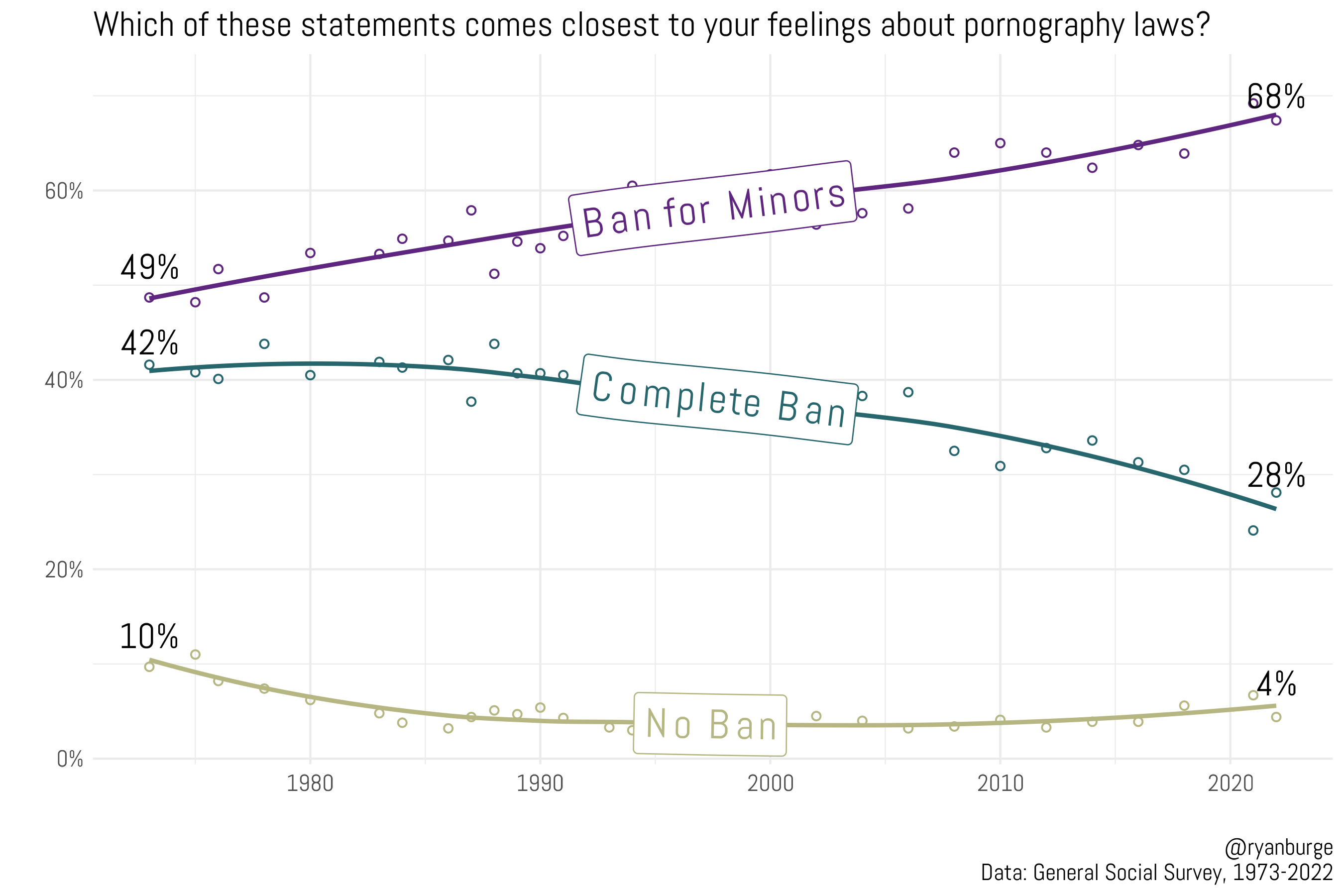
Support for banning pornography access to minors rose from about 50% when I was a kid to almost 68% in 2022, while support for complete bans on porn fell from about 40% to 28%.
In 2024, Oklahoma joined a growing number of states requiring age verification for access to online pornography websites.

Virtual private networks are a workaround to such restrictions, and CNET says about 43% of US adults use one.
Independence
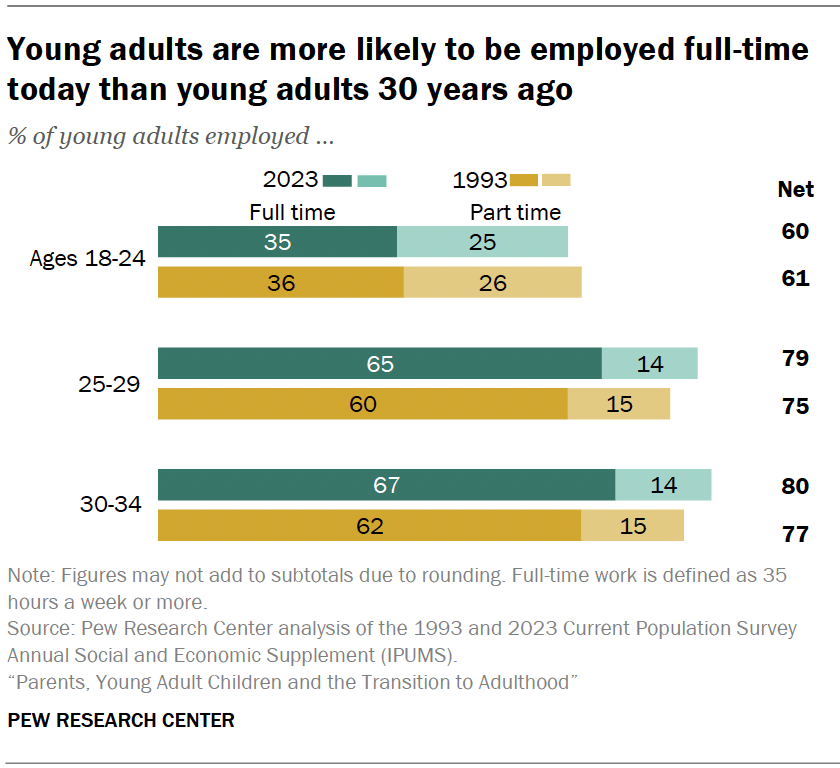
Finally, let’s look at the changing levels of independence among young adults. Here’s a comparison of young adult employment in 1993 and 2023:
College degrees are now much more common:

But that also means more debt:

[Source]
Today’s young adults are less likely to be married or have kids, especially those in their late 20s, and there have been less dramatic increases in the share of young adults living in a parent’s home:

Living with one’s parents understandably usually helps with finances and parental relationships, but can hamper one’s sense of independence and social life:

All of this highlights for me how many young people live differently than my peers and I did back in the day. Having no children or grandchildren of my own, with my interactions with youngsters dramatically curtailed when I left high school teaching nine years ago, I enjoy these glimpses into changing preferences and lifestyles.








 Meador Manor