Sallie Casey Thayer of Kansas City amassed over 6,000 rare books, original artworks by Winslow Homer and Robert Henri, hundreds of Japanese prints, thousands of glass objects from across the eras, antique textiles from four continents, Victorian valentines, snuff bottles, folks samplers, and quilts. She said her purpose in collecting was “to encourage the study of fine arts in the Middle West”.
By 1914, the collection was filling her home, and she began advocating for the establishment of a permanent public art institution in the city. In 1917, with the splendid Nelson-Atkins Museum yet to be built, she was convinced to donate her collection to the University of Kansas in Lawrence.
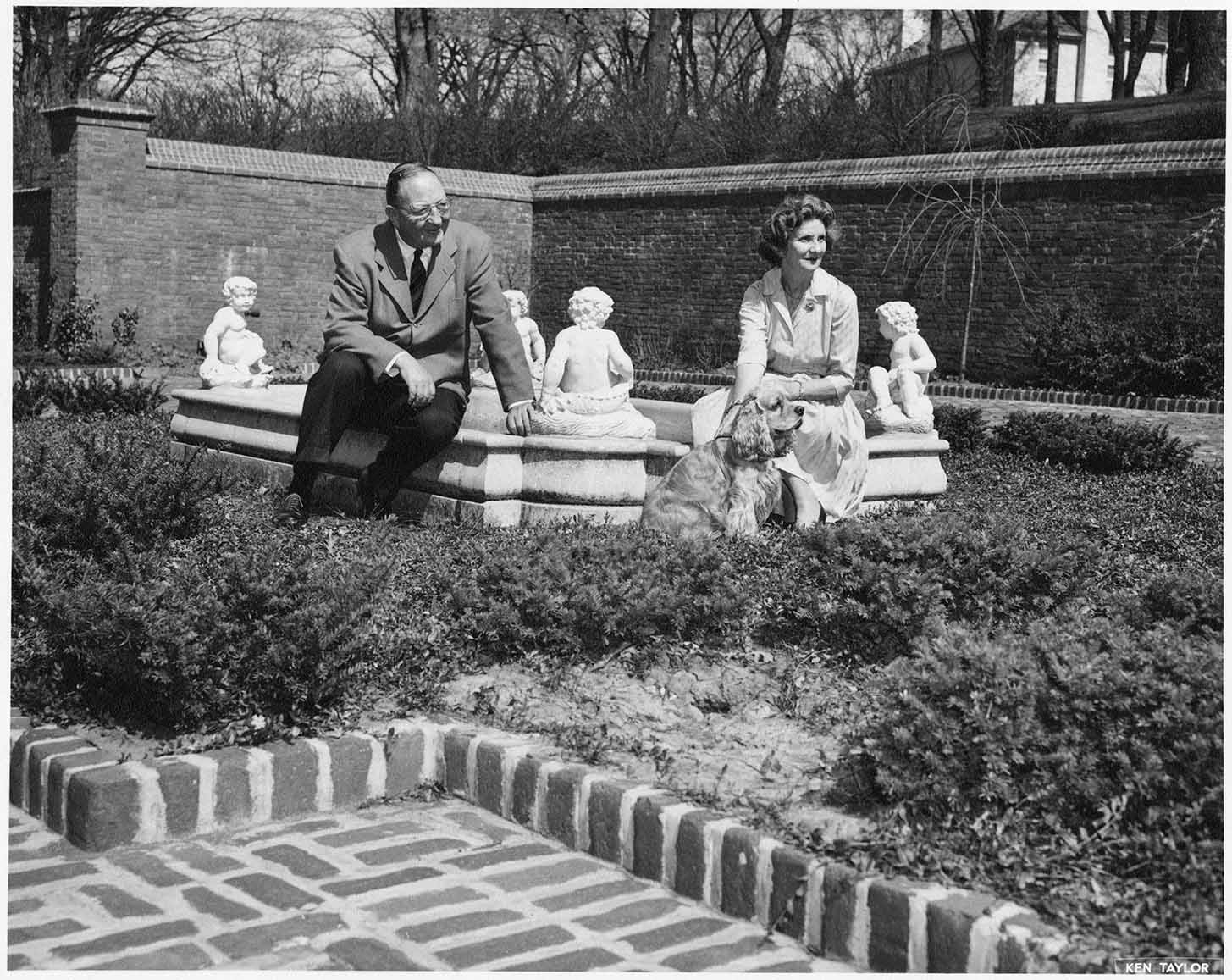
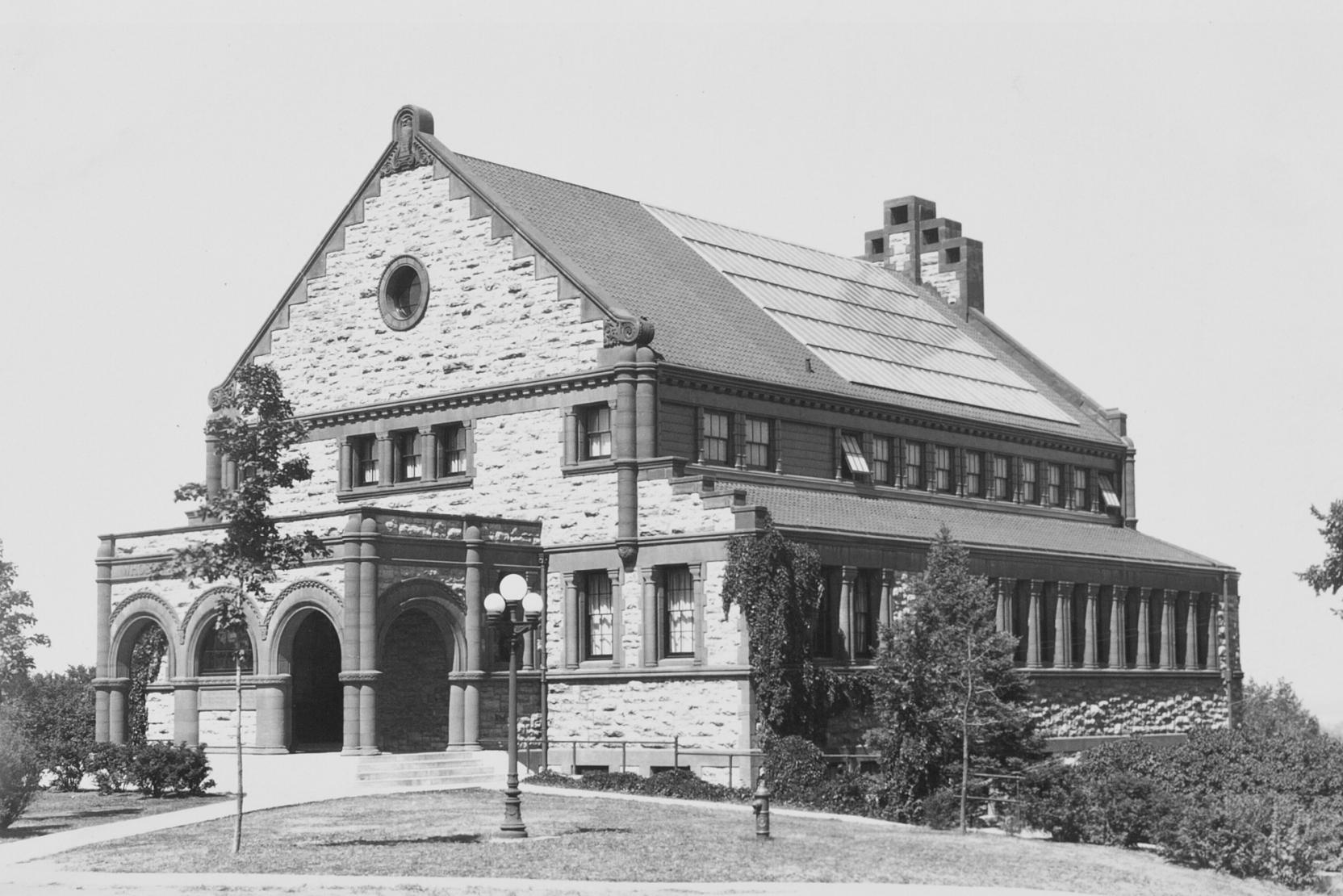
It took several years for the university to provide space for the collection in Spooner Hall, and by the 1960s, it had outgrown that space. In 1978, another Kansas City collector, Helen Foresman Spencer, made a substantial gift to fund the construction of a new space, built of Indiana limestone and designed by KU alum Robert E. Jenks. Her husband, Kenneth, was a coal mine owner who transformed a government surplus factory into the world’s largest producer of ammonium nitrate, and had died in 1960. She would eventually donate over $18 million to cultural institutions in the Middle West.
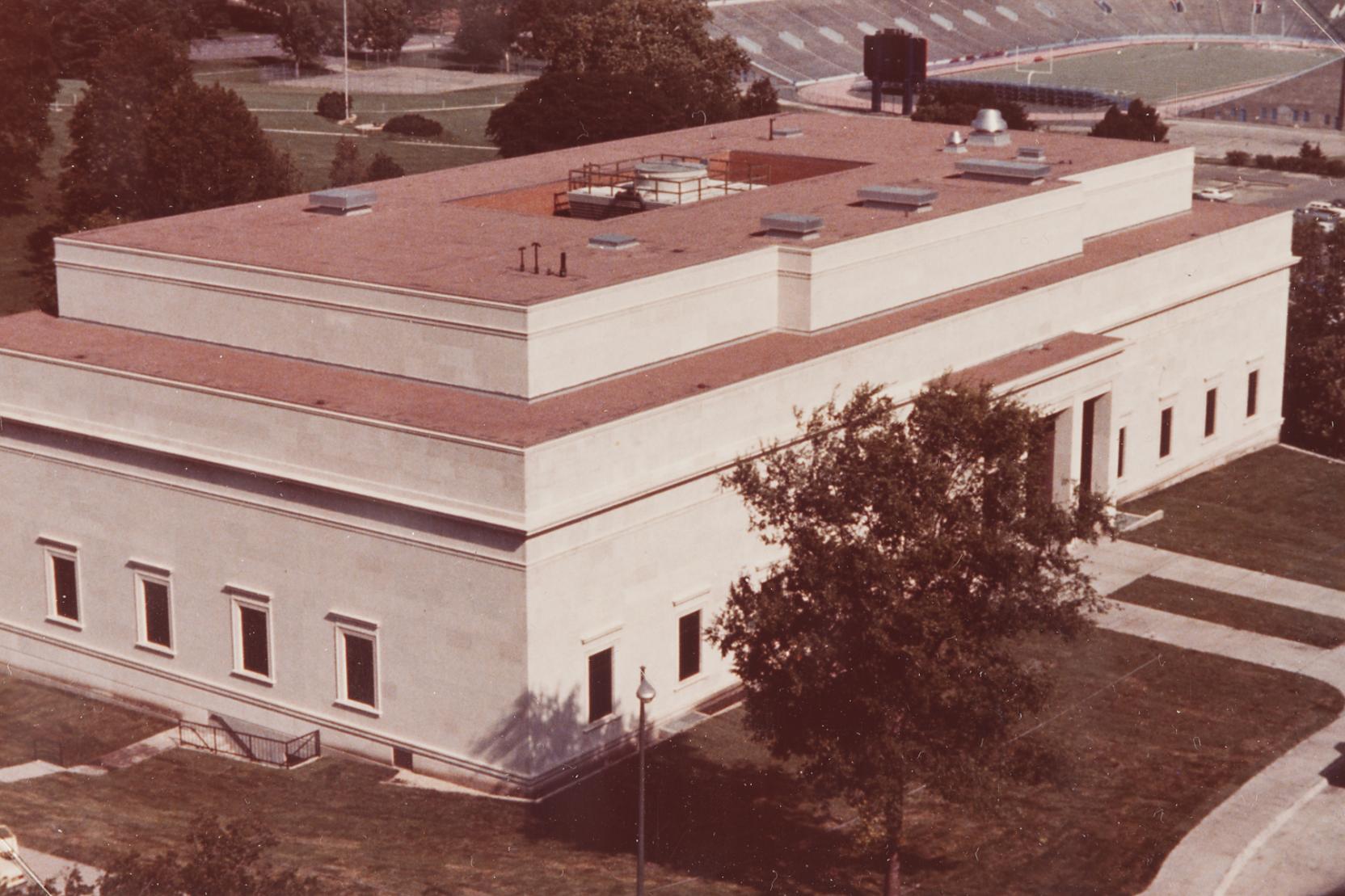
The Spencer Museum of Art was renovated from 2015 to 2022, and we found it to be a functional and easily navigated facility with an eclectic collection that was, pardon my phrasing, artfully displayed. The Nelson-Atkins Museum in Kansas City remains my favorite, with its stunning old architecture and courtyard cafe, while the Spencer’s unobtrusive architecture and renovated galleries kept me focused on its collection, with about 1,300 art objects displayed on a typical day, with about 37,000 more items in storage.
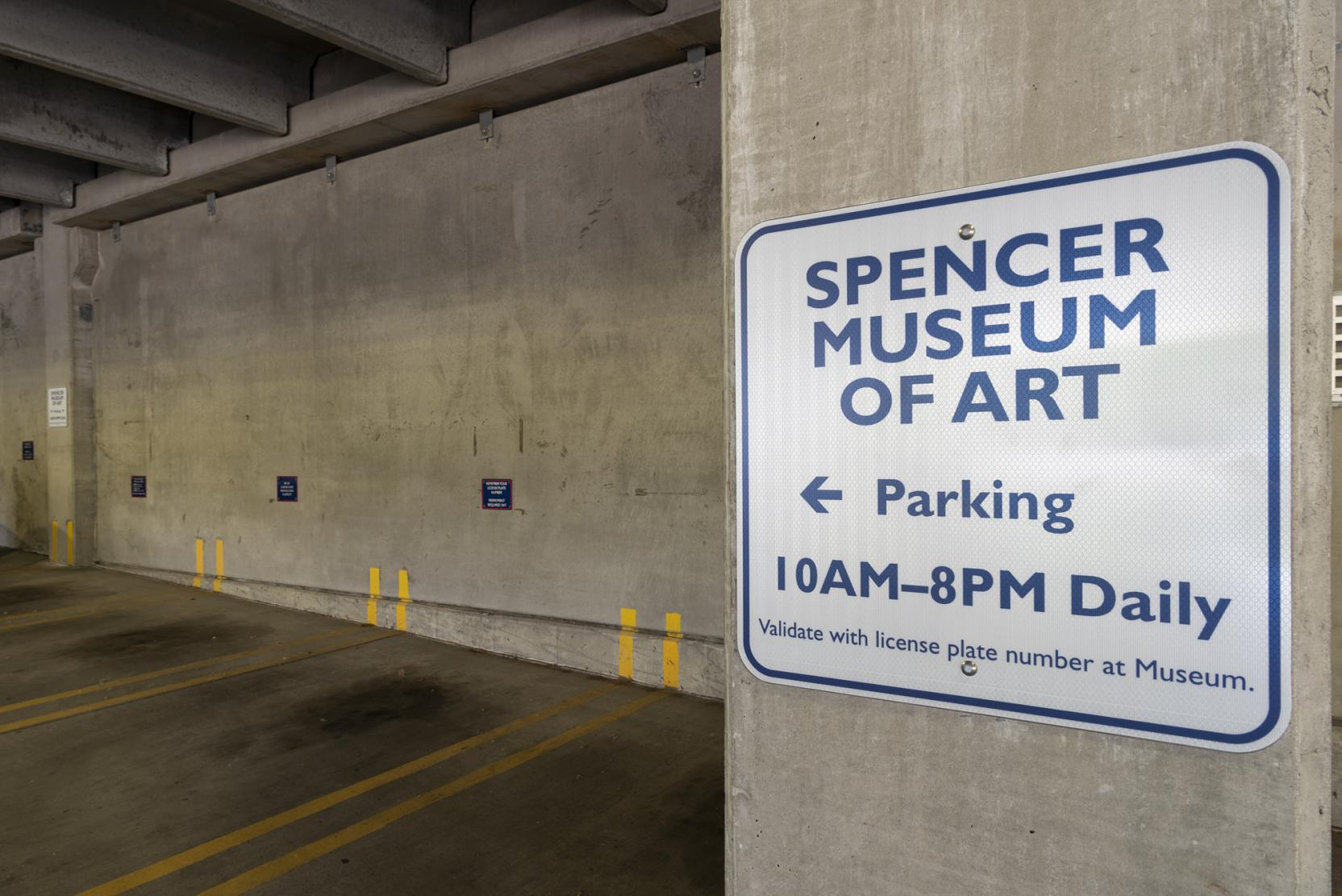
Wendy and I awoke at the TownePlace Suites by Marriott in Lawrence, enjoying a complimentary hot breakfast downstairs that was carefully tended by a hardworking lady. Then we took the elevator down to the parking garage and drove the minivan a half-mile west to Mississippi Street, turning south to pass by the big football stadium and park in the Mississippi Street Garage. There are free spaces there for museum visitors, with us simply having to register our vehicle at the reception desk at the museum, which is always free of charge.

The galleries are on the third and fourth floors, and the main entrance is on the third. Can you tell that KU is built on hills? In nicer weather, I would have enjoyed exiting the museum’s west side for a walk in the Marvin Grove, with the Memorial Carillon and Campanile, but the season didn’t suit.
One of the first pieces that caught my eye was the glass Eagle Hat by Preston Singletary, nicely lit to display its design in its shadow. His art reflects Tlingit culture.

A Shipwreck by Philip James De Loutherbourg was an oil from around 1770. His paintings of such dramatic scenes established his career in France, but he is best remembered for elaborate stage designs he did later in England.

Two Boys Looking by Jim Dine was recognizable to me, having seen a painted version of one of his wooden Pinnochios, Walking to Borås back in 2012 at Crystal Bridges.

It was interesting how Dine chose not to give the boys’ eyes any detail…I suppose his own nose grew when he chose the title.

Navigating by Lisa Grossman had me presuming it was a photograph until I got close enough to realize it is an oil painting by that Lawrence artist. Originally from Western Pennsylvania, Grossman earned an associate’s degree from the Art Institute of Pittsburgh and moved to Kansas City in 1988 to work as an illustrator for Hallmark Cards. She says that she began plein air (open air) painting from direct observation in earnest when she discovered the tallgrass prairies of east-central Kansas, and she left Hallmark in 1995 to pursue painting full-time.

Here is a detail showing a brushstroke in the work:

Another bit of modern trompe l’oeil, fooling my eye into thinking I was looking at a photograph, was Genesis by Jane Bunker, inspired by her childhood myopia that went undetected for several years. I remember my own myopia being caught in a vision screening in fifth grade, and marveling once I got my spectacles how I could see the leaves on the trees and details on my parents’ Buick LeSabre sedan from across the front yard.

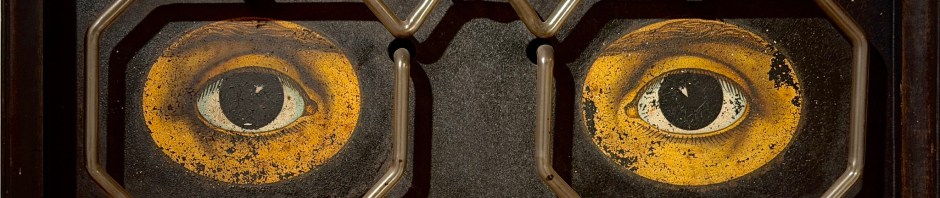
An old neon optometrist sign from around 1910 made both Wendy and me think of Dr. T.J. Eckleburg’s billboard in The Great Gatsby, looking out across the Valley of Ashes.

Roger Shimomura‘s Yellow Fever was a busy acrylic that drew, pun intended, “on personal memory, historical trauma, and popular culture to confront and critique racial stereotypes”.

The highlight of the museum for me was an unexpected opportunity to see one of Joseph Ducreaux‘s paintings, Le Discret. His Self-portrait of the artist in the guise of a mocker became a social media meme some time ago. Ducreux attempted to break free from the constraints of traditional portraiture, and his interest in physiognomy—the belief that a person’s outer appearance, especially the shape and lines of their face, could reveal their inner character —influenced him.

Another favorite for me in the museum, which prompted me to sit on a bench to admire it, was Grass by Tomoke Konoike (鴻池朋子). She crafted a Japanese wolf from wood, styrofoam, and aluminum and covered it in mirrors, creating a striking image of the animals which were exterminated in the 19th century.

The museum had superb lighting to make the piece stand out.

A work with stunning detail was Zen Temple of Techno by Du Kin, a large oil painting depicting Julia Govor, a Russian-born electronic musician. Du Kun renders musicians as monumental structures based on East Asian religious temples.

The detail in his work was stunning.

Wendy and I both loved the striking pose of Charlotte Sullivan in a portrait painted by an artist known only by the last name of Stephens. Her expression told volumes. She was both a studio model and administrator for the Kansas City Art Institute who succeeded despite Jim Crow laws enforcing segregation during much of her tenure from 1940-1975.

That portrait inspired author Anthony Boynton II to compose this haiku:
I will teach you, m’dear,
How to hold your head holy
and look forward.
An artwork that stuck out in a cabinet of curiosities was Navel by Carol Prusa. It is formed of silverpoint, graphite, titanium white pigment, and acrylic binder on an acrylic sphere with an internal light source.

Wendy was impressed by the detial on a reliquary of the True Cross, a silver work from Barcelona circa 1500.


I liked Untitled #751 (Craig’s Piece) by Petah Coyne, who was born in my hometown of Oklahoma City. The wax she used was developed in collaboration with a chemist, with melted candles in the structure which has spidery forms influenced by lace created by her great-grandmother.

The Spencer featured some Haitian art, including three fishing boats and two fishermen on open water by Calixte Henry.

Another Haitian artist, Ernst Prophète, painted but…I dreamt.

I’m so glad we stayed in Lawrence and took in the Spencer. It was better than I expected, with some works I recognized from other museums, but others that stood out in my experience.
After touring the museum, Wendy and I returned to our hotel to reset before heading back out to explore more of downtown Lawrence.






 Meador Manor
