
After enjoying the Spencer Museum of Art, Wendy and I returned to the TownePlace Suites to reset before heading out to lunch. We again took advantage of its location just east of the Massachusetts Avenue strip to go find lunch. On our walk, a couple of structures caught my attention.
A Phillips 66 Cottage Station
Just south of the hotel, on the southeast corner of 10th & New Hampshire, was a ceramics store. If its shield sign wasn’t enough of a giveaway that it had once been a Phillips 66 gasoline station, the store was in one of the telltale cottage-style buildings that date back to almost a century ago.

Phillips built over 500 of the structures across the mid-section of the country from the late 1920s through the 1930s.
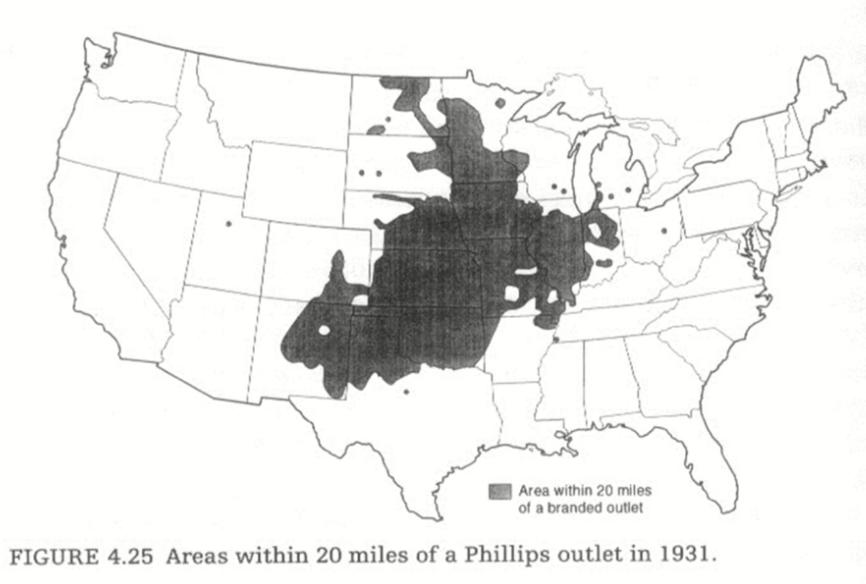
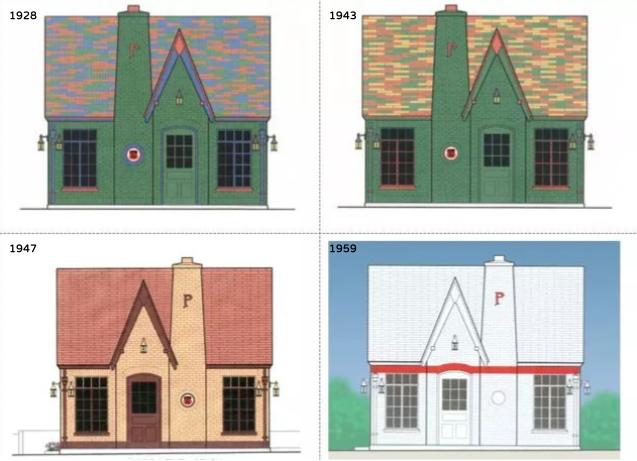
The first of them was at 805 Central Avenue in Wichita, and the building has survived. The cottages’ company color schemes changed over time.
Back in 2018, at a roadsite architecture and attractions forum in Tulsa, Mike Kertok provided a half-hour overview of the cottage stations, showing that many other petroleum companies also made use of the style, and I appreciated his fun categorization of 66 of the surviving stations. His work is also available in text form.
Kertok’s roll call was impressive, given that less than 100 of the old Phillips 66 cottage buildings have survived. Woolaroc Museum has a cottage that was never actually a gasoline outlet, but instead served as Bartlesville’s airport office for several years and was donated to the museum in 2015. It has been renovated to show what a little cottage gas station was like a century ago.
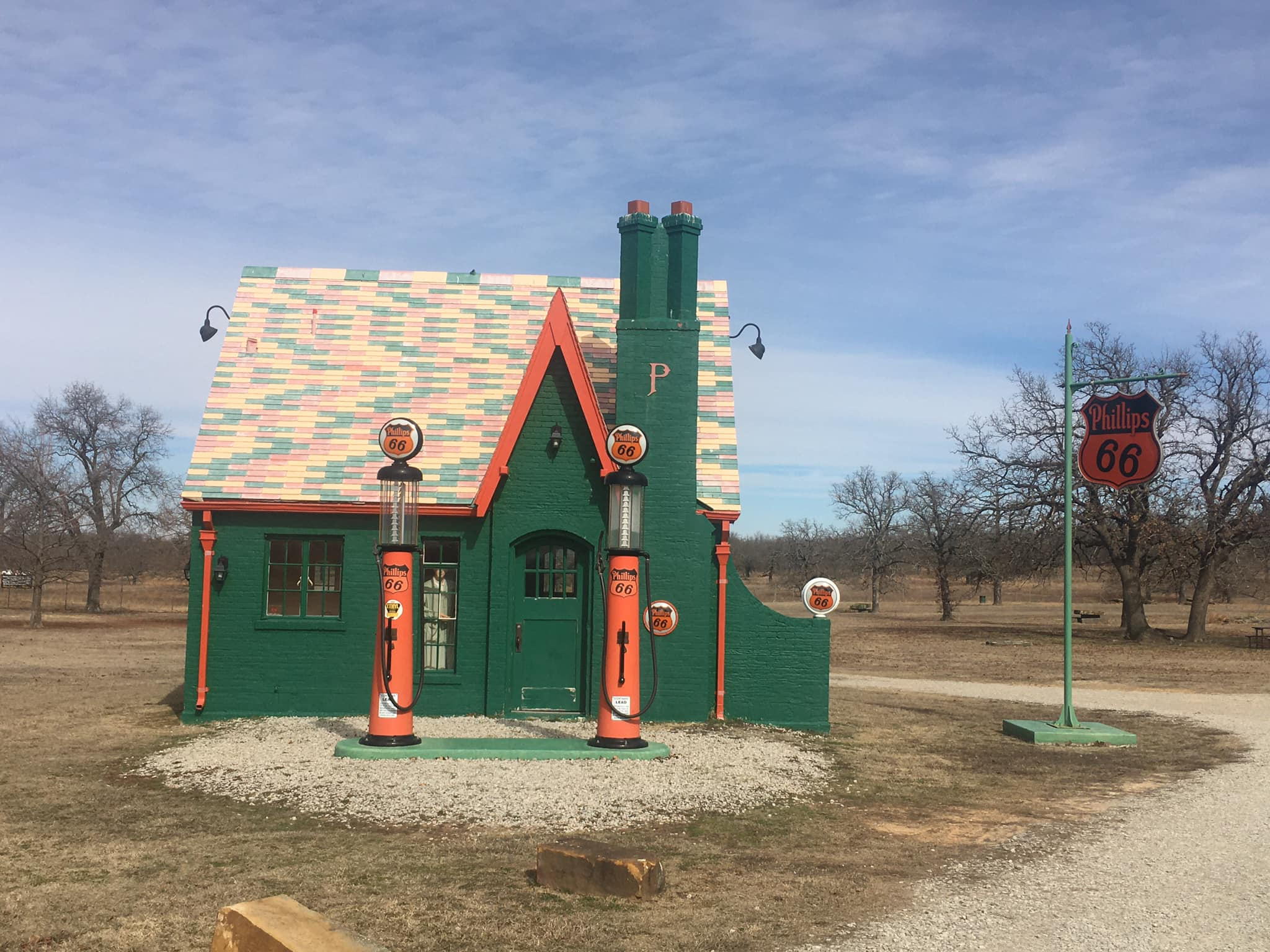
Many of the cottage stations were tiny, making them difficult to repurpose. However, Cramers Phillips 66 in Lawrence, built in 1928, had one garage bay, increasing its adaptability.
A Former Masonic Temple
Another building that caught my eye was the town’s old Masonic Temple, a 1910 building in the Egyptian Revival style. The three-story 14,197 square foot former temple was for sale, with a list price of $1.15 million or leasing at a bit over $7,000 per month.

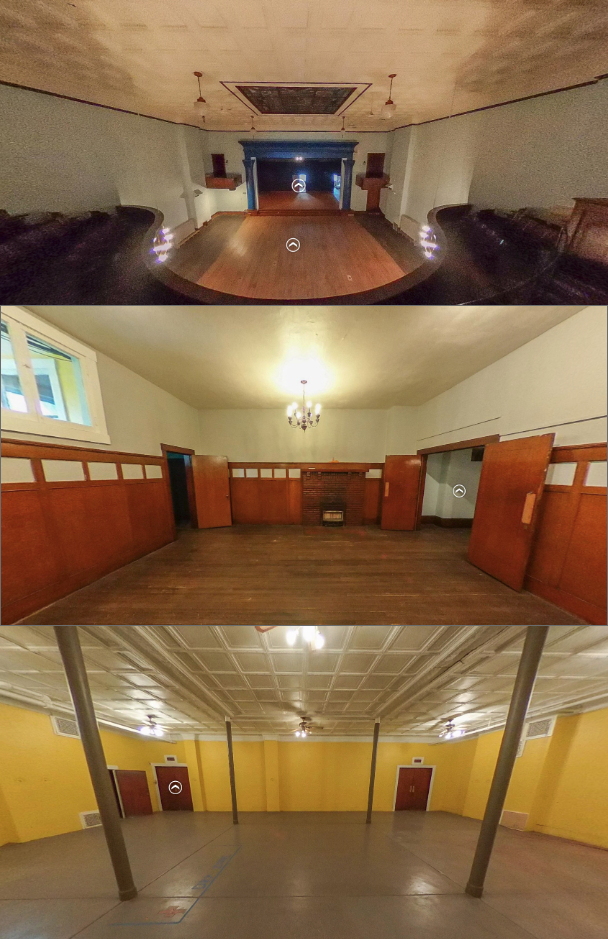
It retains tin ceilings, wood floors, and marble accents, and I was glad to find an interior virtual tour.
Like many Christian churches in the old mainline denominations, many fraternal organizations are having to sell off facilities that are too much for their declining memberships. The fraternal organizations have been weakening for decades, as documented back in 2000 by Robert Putnam in Bowling Alone.
That process has accelerated throughout the digital age as the developing internet and social media offered virtual connections that made in-person lodge meetings less attractive. The Covid-19 pandemic was another powerful accelerant in their decline.
Another factor is that a century ago the fraternal organizations had an important function of serving as a social safety net, but the New Deal reforms made those supports less vital.
At their peak, it has been estimated that as much as 40% of the adult male population held membership in at least one fraternal order. In Bartlesville there were Knights of Columbus, Knights of Pythias, Knights Templar, Woodmen of the World, Odd Fellows, Freemasons, and Patrons of Husbandry, along with a menagerie of Eagles, Elks, Lions, Owls, and Moose. Then there was a much longer list of various civic organizations. A few chapters and lodges endure, but many are long gone.
There were once over four million Masons in the USA, about 4.5% of all American men. However, in 2024, the Masonic Service Association of North America reported 869,429 members under their associated Grand Lodges, a drop of over 75% from their peak, even as the country’s population expanded significantly.
Rebuilding
A month after our visit, an image on the internet captured my attention. It showed the huge football stadium we had driven by during our visit half-destroyed.
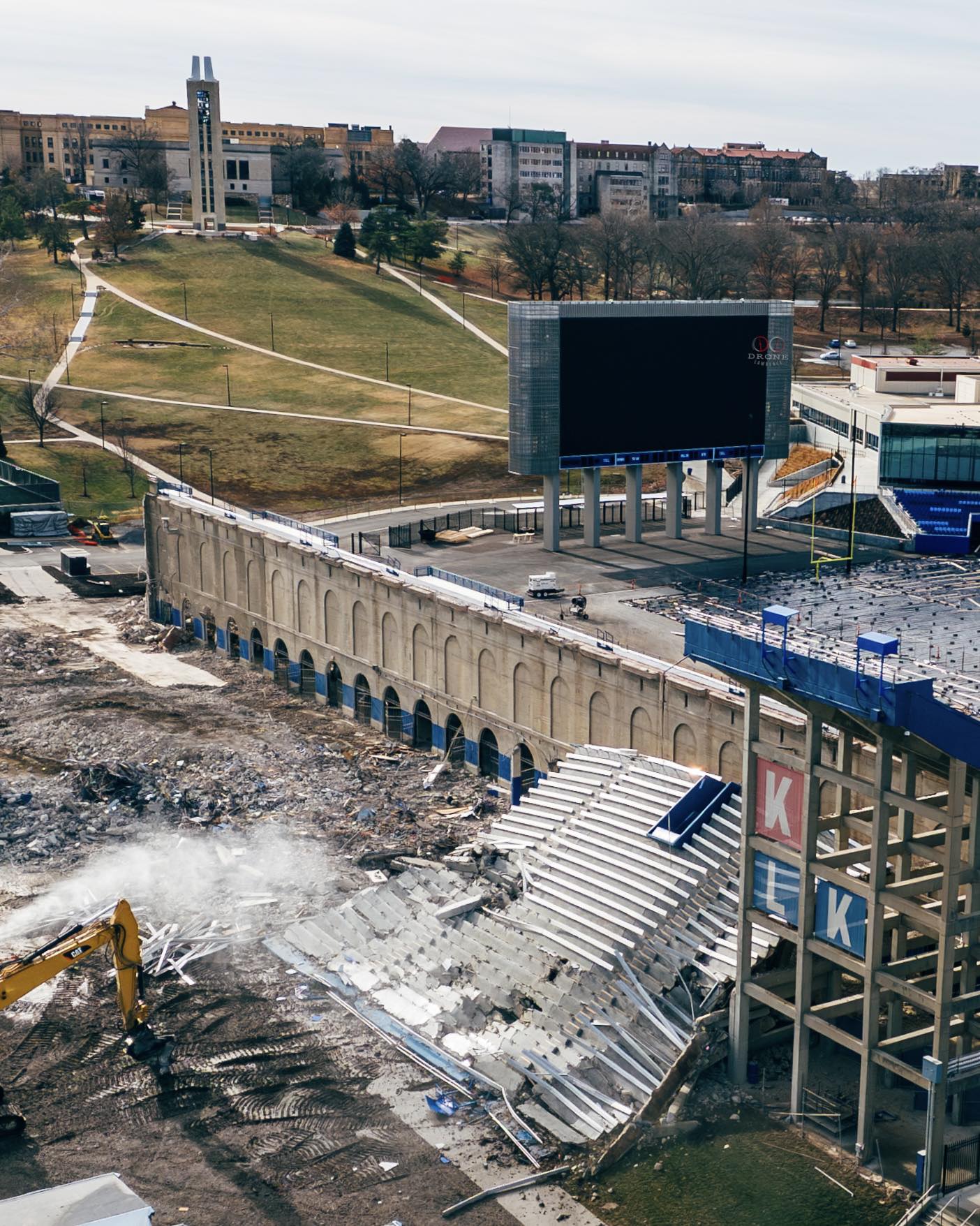
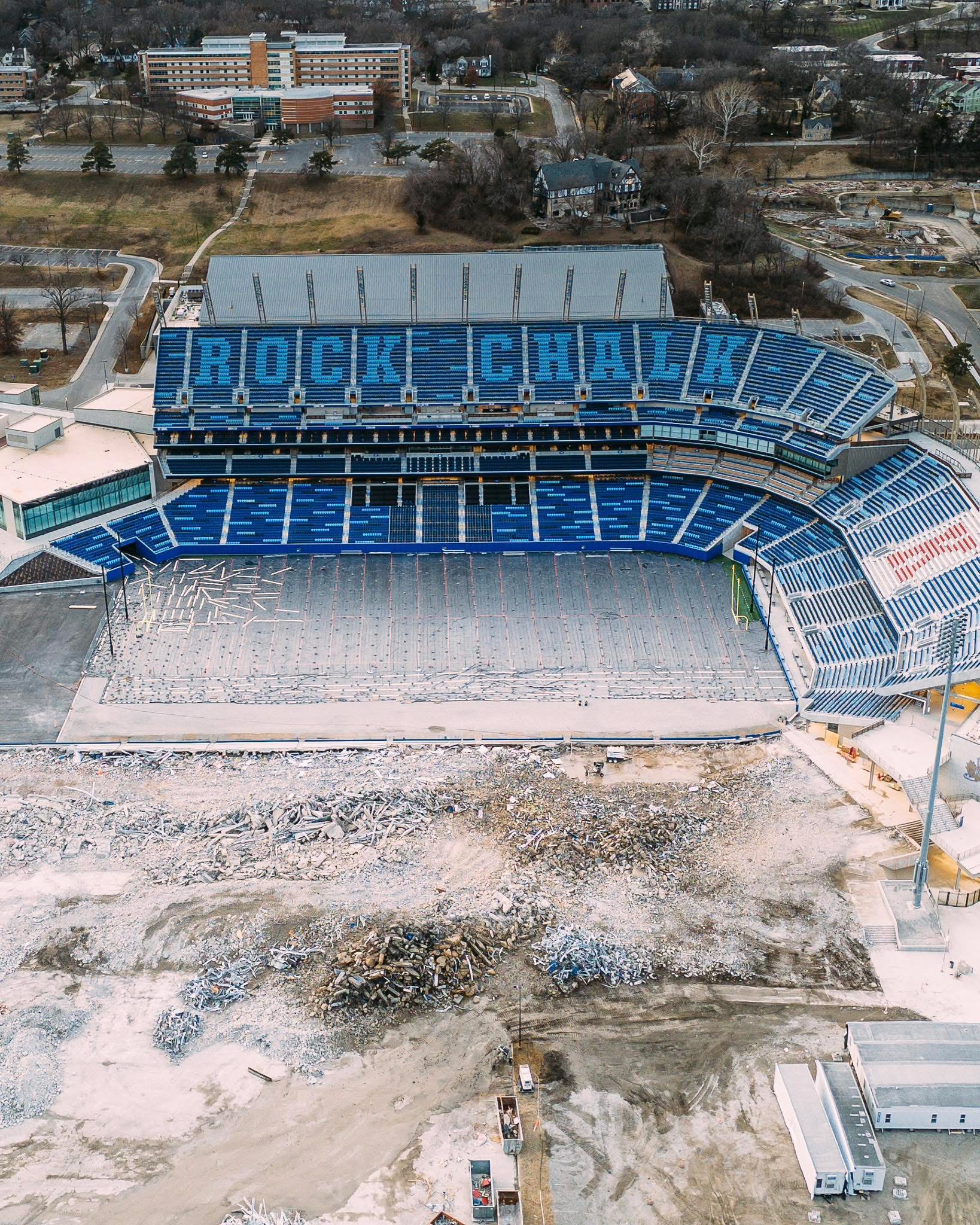
Not being sports fans, Wendy and I had been unaware that the stadium was part-way through a complete rebuild. The west stands had already been demolished and rebuilt before our visit, and the east stands were brought down in December 2025.
Memorial Stadium was built in 1920 with only east and west bleachers, which expanded southward in 1925. A north bowl was added in 1927, and the west bleachers were expanded upward in 1963 and the east ones in 1965. The rebuild will cost hundreds of millions of dollars, with KU alumnus David G. Booth kicking the project off with a $50 million donation that resulted in the stadium being renamed in his honor. Booth later donated another $300 million to KU.
Latchkey Deli
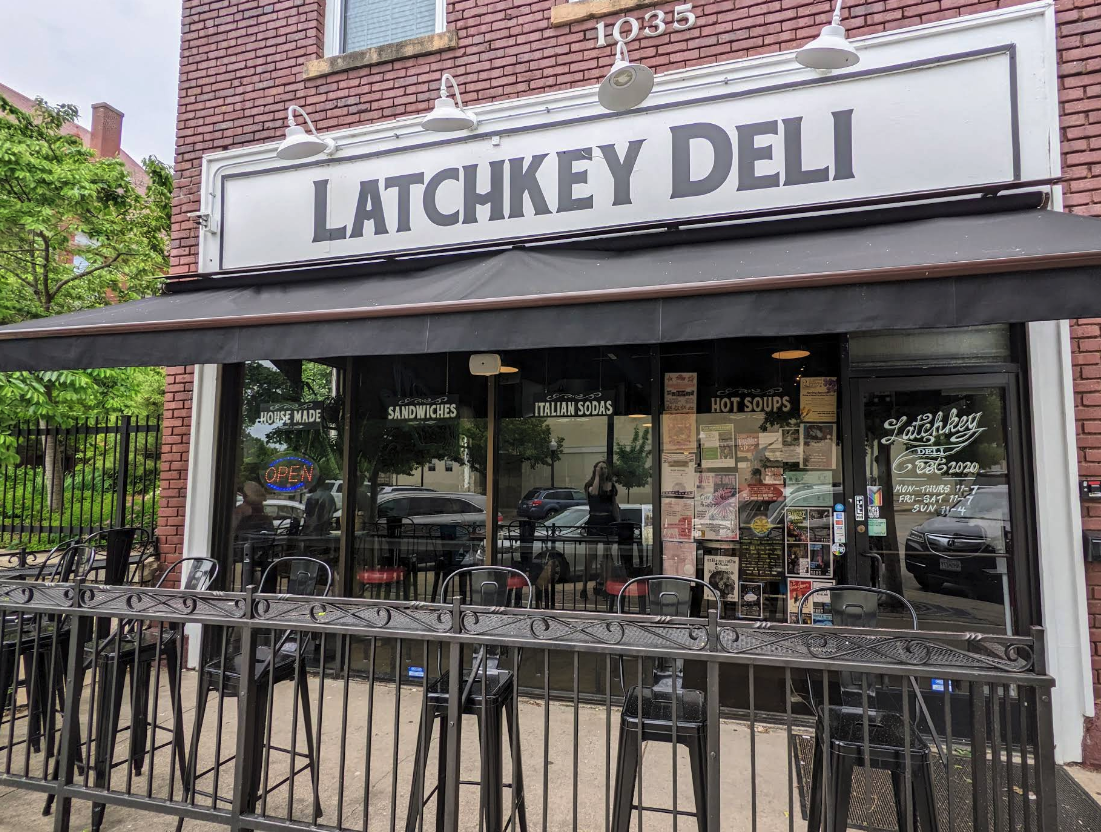
We walked down Mass to a 1910 two-story brick building to have lunch at the Latchkey Deli. There were no tables left in the tiny restaurant, but the weather had improved so that we were able to just take our trays out front to eat at the streetside counter. I recommend their delicious mac & cheese for a side. I had a cherry Italian soda that once again reminded me why I find those confections more fun to look at than to consume.
We then walked past a little Japanese Friendship Garden, established in 2000, to tour the Watkins Museum of History, which will be the subject of the next post.






 Meador Manor