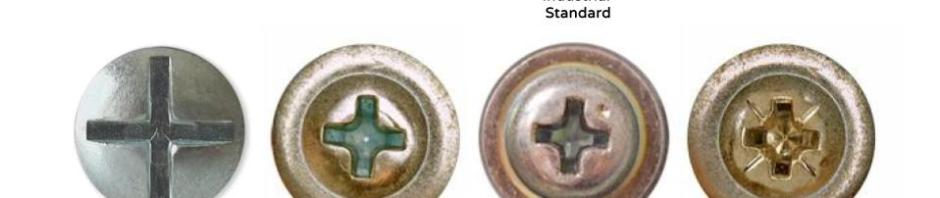

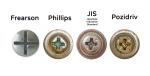
The English inventor John Frearson patented a screw with a cruciform socket in 1873. His design was often used in marine hardware until the 1980s. However, the cruciform screw we in the USA are familiar with is the Phillips design, which was originally patented in 1932 by John P. Thompson, an automobile mechanic in Portland, Oregon. Thompson patented a matching screwdriver a year later. His driver design had a more rounded head that self-centered more readily with power tools.
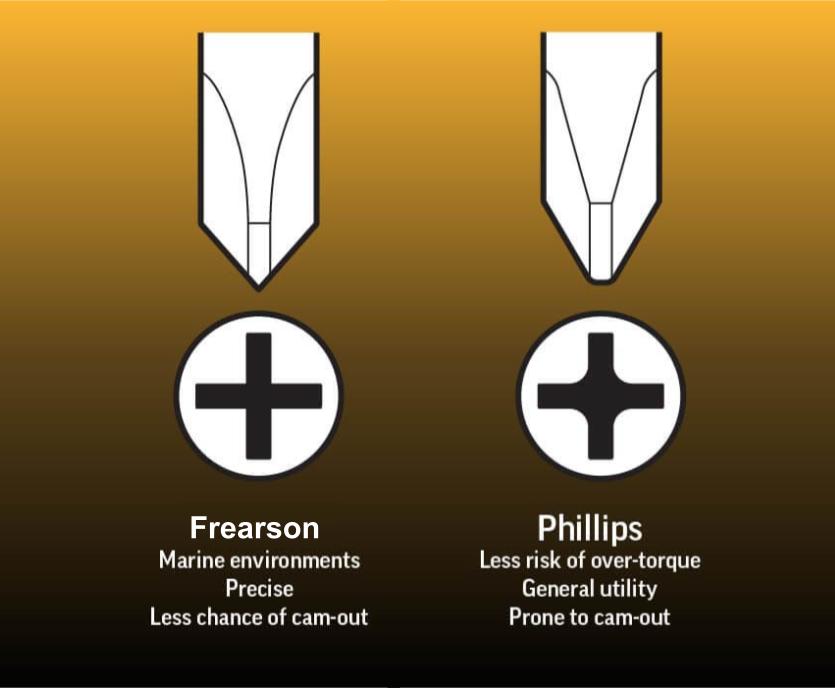
However, Thompson couldn’t find a manufacturer for his design, and businessman Henry Frank Phillips bought the rights to his patents, redesigned the socket to be shallower for easier mass production, and founded the Phillips Screw Company. A side effect of the tapered design was that Phillips screwdrivers cam-out, or slip out of the screw head socket, under lower torques. Contrary to some reports, this does not appear to have originally been an intended feature, although later refinements touted it in what might be regarded as putting a “positive spin” on the issue, if you’ll pardon the phrase.
I’ve always despised Phillips screws for the cam-out issue, resorting to pushing in hard on Phillips screwdrivers to try and reduce cam-outs. However, I have discovered a nifty solution, but it is not to return to Frearson’s system. Instead, use JIS screwdrivers on Phillips screws.
JIS stands for Japanese Industrial Standard, and JIS B 4633 defined a screwdriver with different geometries that reduces cam-out. There are matching JIS screws defined by JIS B 1012, some of which are identifiable by a tiny dimple in one corner of the cruciform head, and you might spot them on Japanese motorcycles and some Japanese electronics. You will be exasperated if you try to use a Phillips screwdriver in a JIS screw, as it won’t seat properly and you may strip the screw.
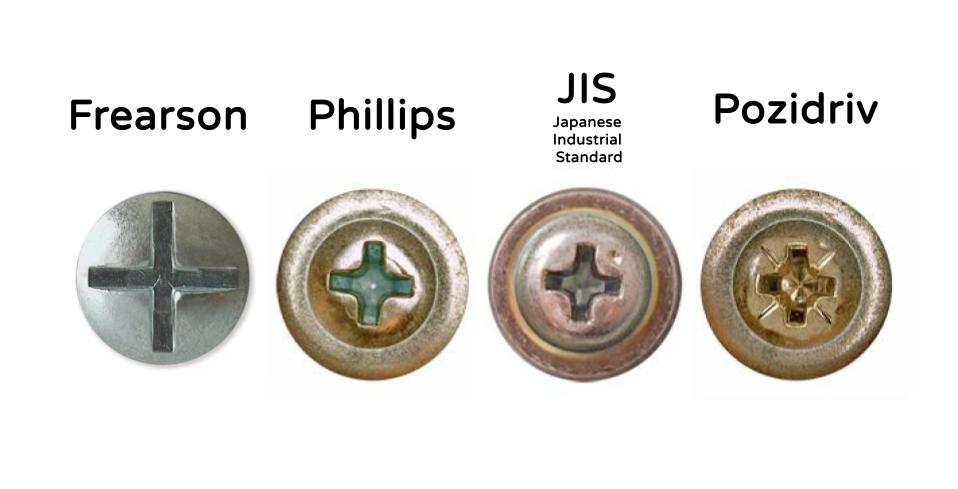
However, while you might be hard-pressed to distinguish a JIS screwdriver from a Phillips one by sight, if you put one to use, even on a Phillips screw, you can readily tell the difference.
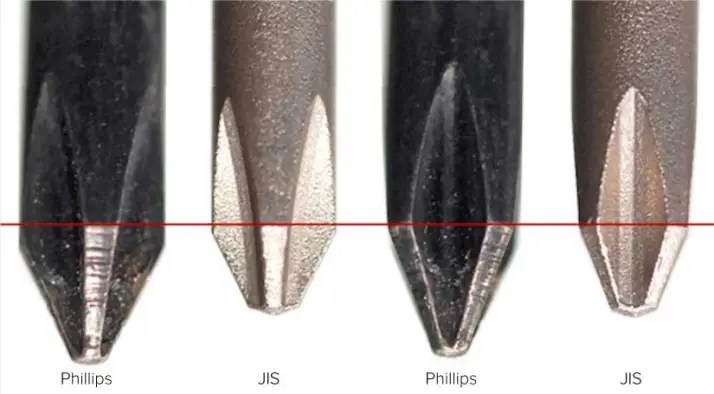
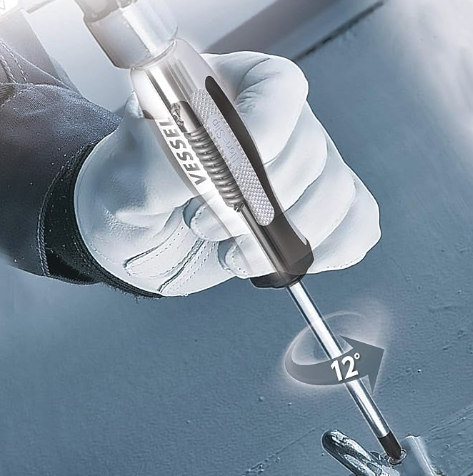
A JIS screwdriver will stay locked into a JIS or a Phillips screw under higher torque, which greatly reduces my frustration when assembling items or loosening screws. When I first heard about JIS screwdrivers, I ordered a couple of impact ones from Vessel. Those have a spring hidden in the handle so that, if you encounter a very tight or rusted screw, you can seat the screwdriver in it and then pound the end of the handle with a hammer. That will produce high torque while turning the screwdriver 12 degrees.
I have yet to use that feature, but just casual use of the Vessel JIS screwdrivers convinced me to buy some more. The first Impacta ones I bought were both P2 (for Phillips head size #2), but for screws of sizes 0-1 you need a P0 screwdriver, you need a P1 for screw sizes 2-4, a P2 for screw sizes 5-9, and a P3 for screw sizes 10-16.
So I bought a less expensive four-pack of cushion-grip non-impact JIS screwdrivers from Vessel of sizes P0 through P3.
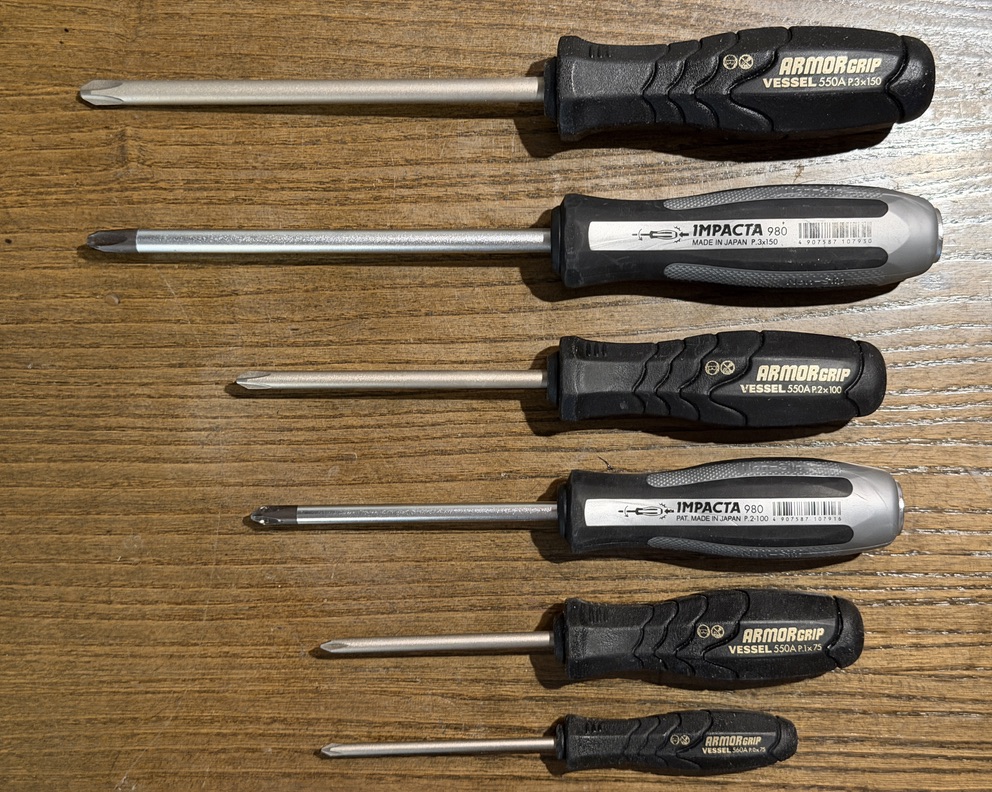
All six of the screwdrivers are magnetized to help hold onto loose screws, and they are now my go-to tools when I encounter a Phillips head screw.
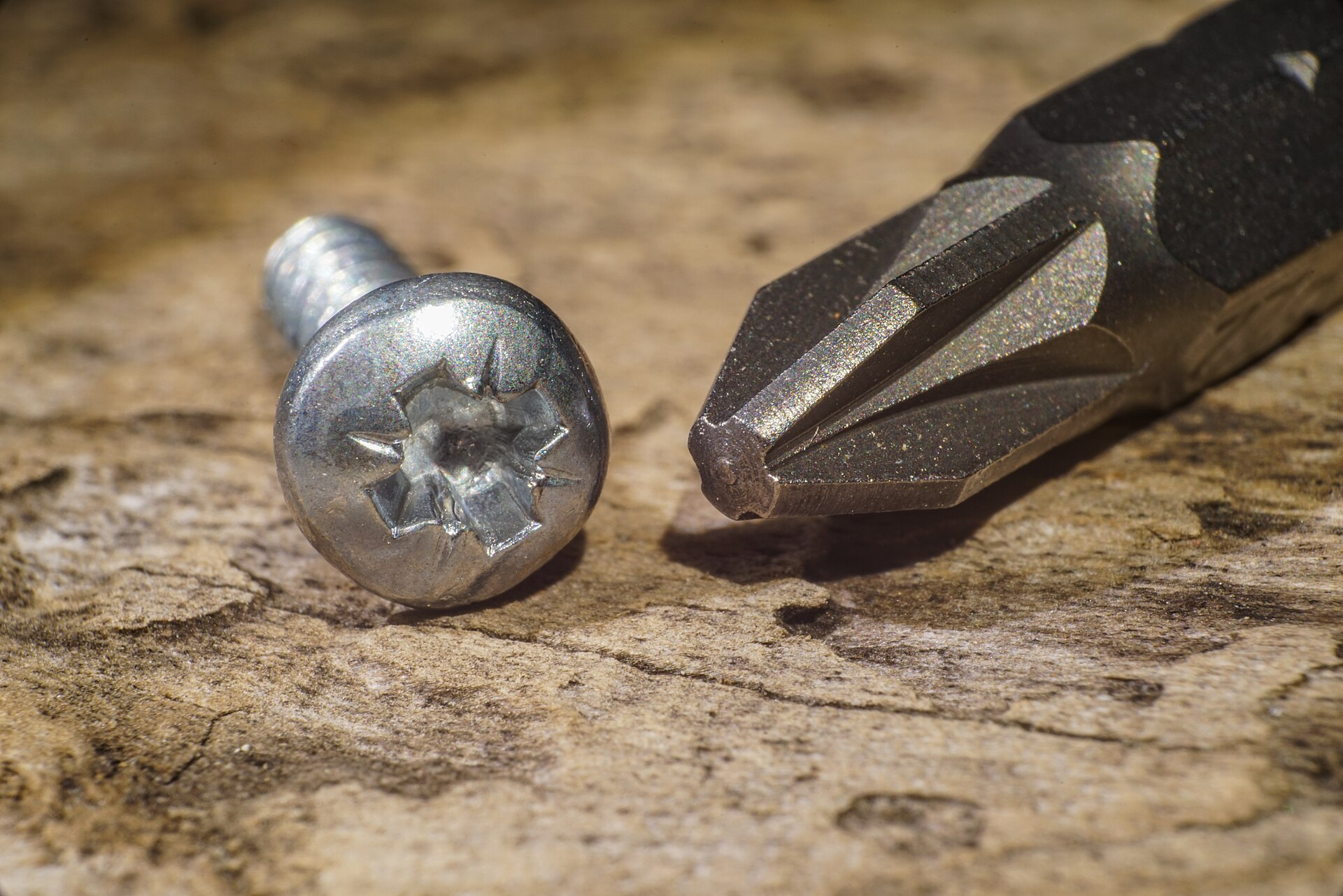
There are other screwhead types, of course. We all know about the simple flat-head screw with a single slot, and there are the rare Pozidriv screws and drivers that were the result of a collaboration between the American Screw Company and the Phillips Screw Company. They also reduce cam-out, but don’t use a Phillips screwdriver in a Pozidriv screw. Heck, never use a Phillips screwdriver at all, I say.
There are also Torx screw drives, with a six-point star-shaped pattern, which I’ve occasionally encountered with electronics. Sometimes a pin is added to the center of the star as a security feature, requiring a special driver, and there are various other security fastener designs.
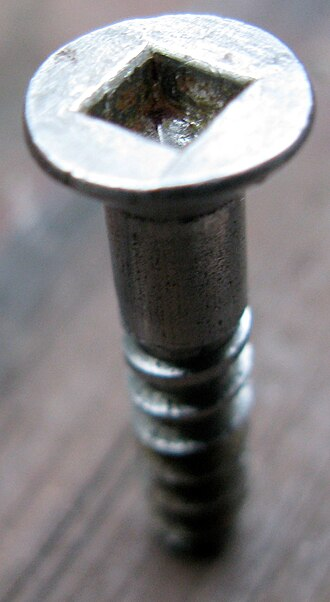
Our neighbors to the north are known for being pretty square with their Robertson screws and screwdrivers. Canadian P.L. Robertson invented them in 1908 after cutting his hand with a slotted screwdriver. They are also self-centering, reduce cam-out, and are easier to use one-handed thanks to the tapered socket which tends to retain the screw even when shaken, and the square socket allows the use of angled screwdrivers and trim-head screws. Henry Ford liked them, finding they saved time in producing his early cars, but Robertson refused Ford’s onerous licensing terms, so Phillips screws eventually dominated the auto industry in the USA.
So while there is no need for you to go purchase JIS screws, do go buy yourself some JIS screwdrivers, and then hide the Phillips ones in the back of your tool drawer.





 Meador Manor

