
In 1972, I flipped on our new color television one afternoon and saw a man with pointy ears appear from nowhere in a corridor and begin sneaking around. I remember thinking, “Is that some sort of ghost?”
I continued to watch, realizing that the person was on a spaceship. Later in the show, a “cloaking device” allowed another ship, that looked nothing like a standard rocketship, to become invisible. I was hooked.
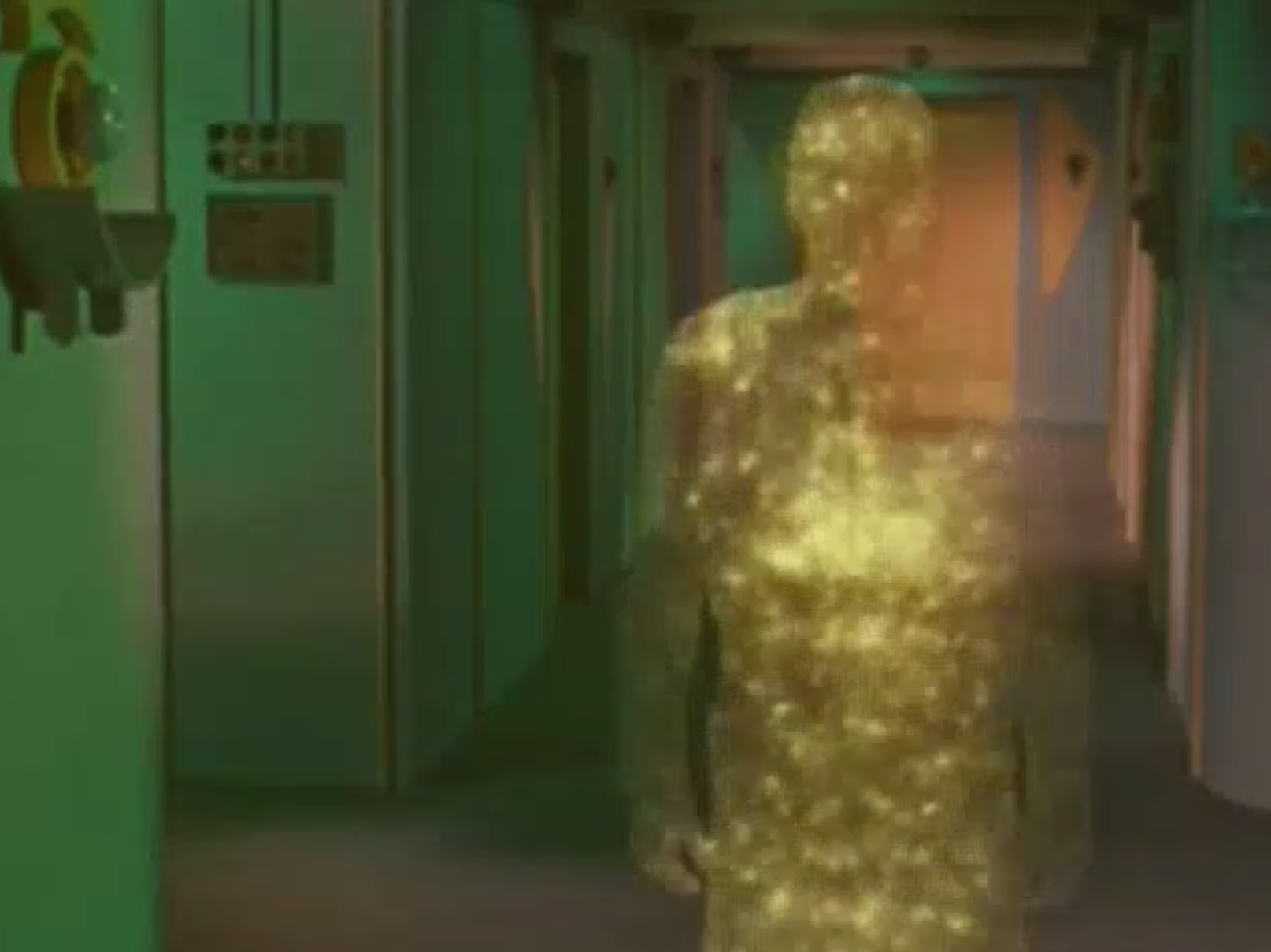
It was, of course, Star Trek, the Original Series, which had originally aired from September 1966 to June 1969. By 1972, it was in syndicated reruns as 16 mm film prints that local television stations would air five days a week. I had tuned into the midst of The Enterprise Incident when Captain Kirk, disguised as a Romulan, “beamed in” to one of their ships. So the pointy-eared guy I first saw was not Mr. Spock!
There were only 79 episodes, which meant that the entire series would play through about three times in a year. So I was excited when a Saturday morning animated series debuted in September 1973, bringing new episodes to my second grade self. I was only seven years old, but I remember hoping the cartoon would not be just a “kiddie show” and being gratified when it turned out to play much like a fourth season of the original show, albeit in an abridged format with Filmation’s typical limited animation and pacing issues.
Early Models
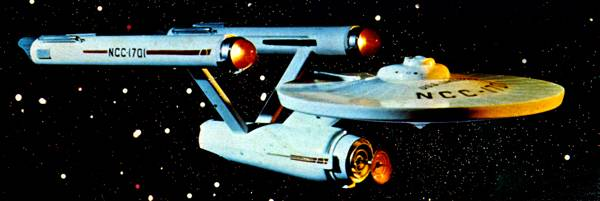
My best friend, Gene Freeman, built an AMT model of the U.S.S. Enterprise. But he painted it red, white, and blue and by the time I saw it, the engines had already snapped off. I had no inkling before that one could build models of Star Trek ships, and it wasn’t long until I’d convinced my mother to buy me a model kit of my own.
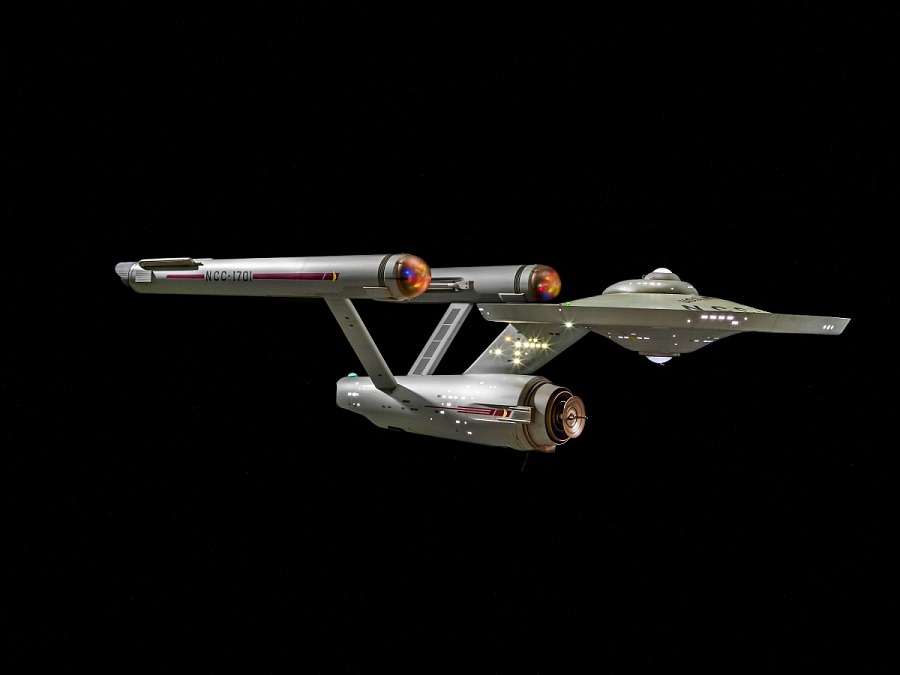
The AMT model kit is notorious for its various inaccuracies, but it was actually used in a few shots in the original series and the two different main studio models built for and used in the original television show didn’t fully match each other anyway.
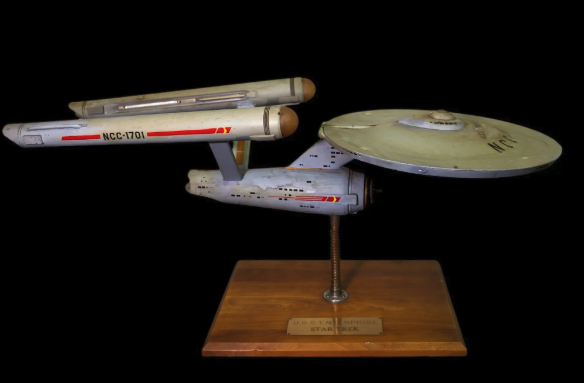
Far worse than any inaccurate details was how the engines on my model always tended to sag, despite my best attempts with glue, rubber bands, and eventually popsicle sticks. It was an early physics lesson, and I can take some comfort in how the long-neglected 33-inch studio model, when rediscovered in 2023 after being lost for decades, had droopy engines.
The 11-foot hero model, donated to the Smithsonian after the show went off the air, also suffered. I first saw that model in person in 1984, by which time it had lost its original nacelle caps and deflector dish. I took photos, with my crummy 110 camera, from various angles, including the unfilmed port side, which had tape all over it due to electrical lighting that had been added to the model in 1965 after the first pilot was filmed.
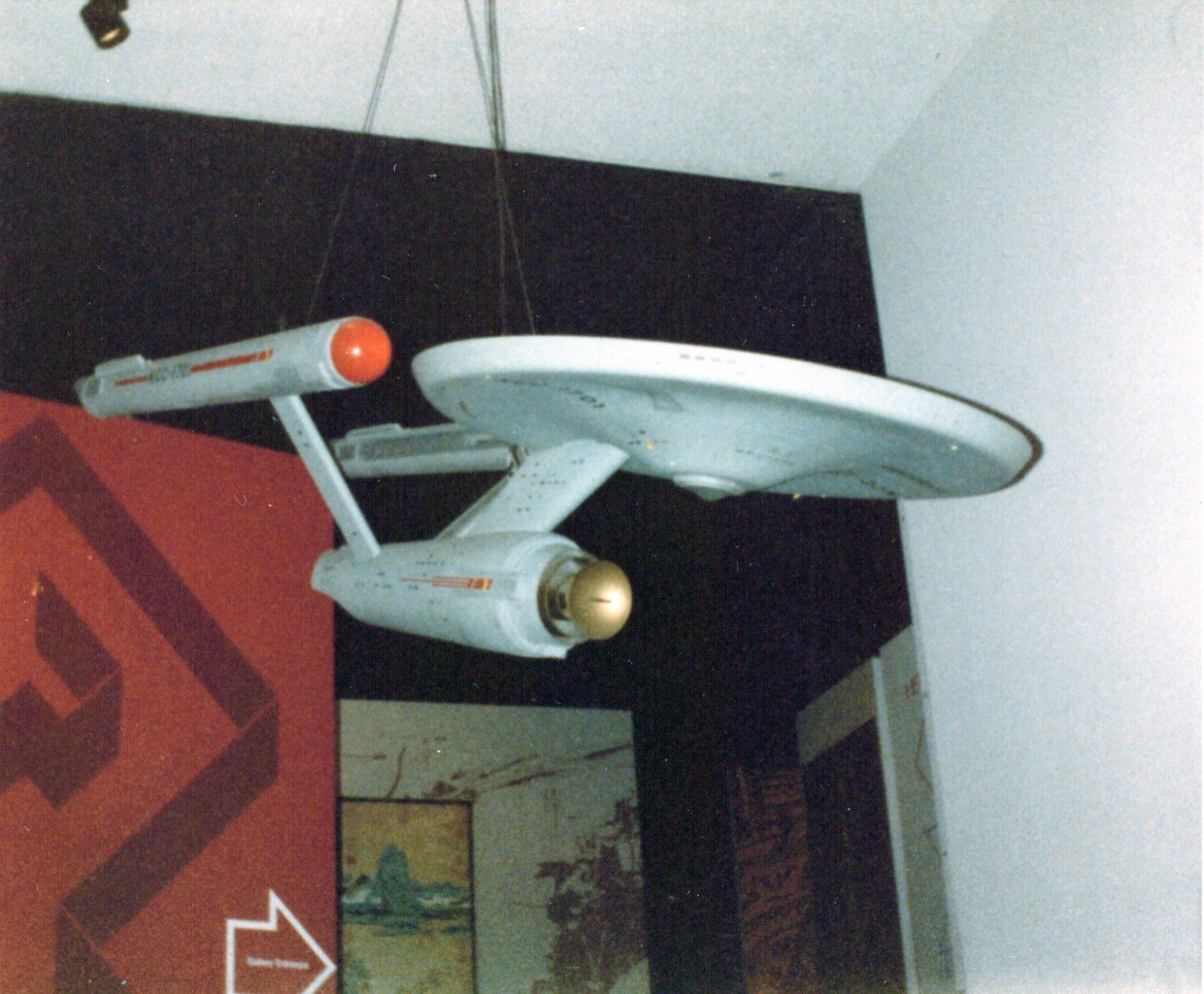
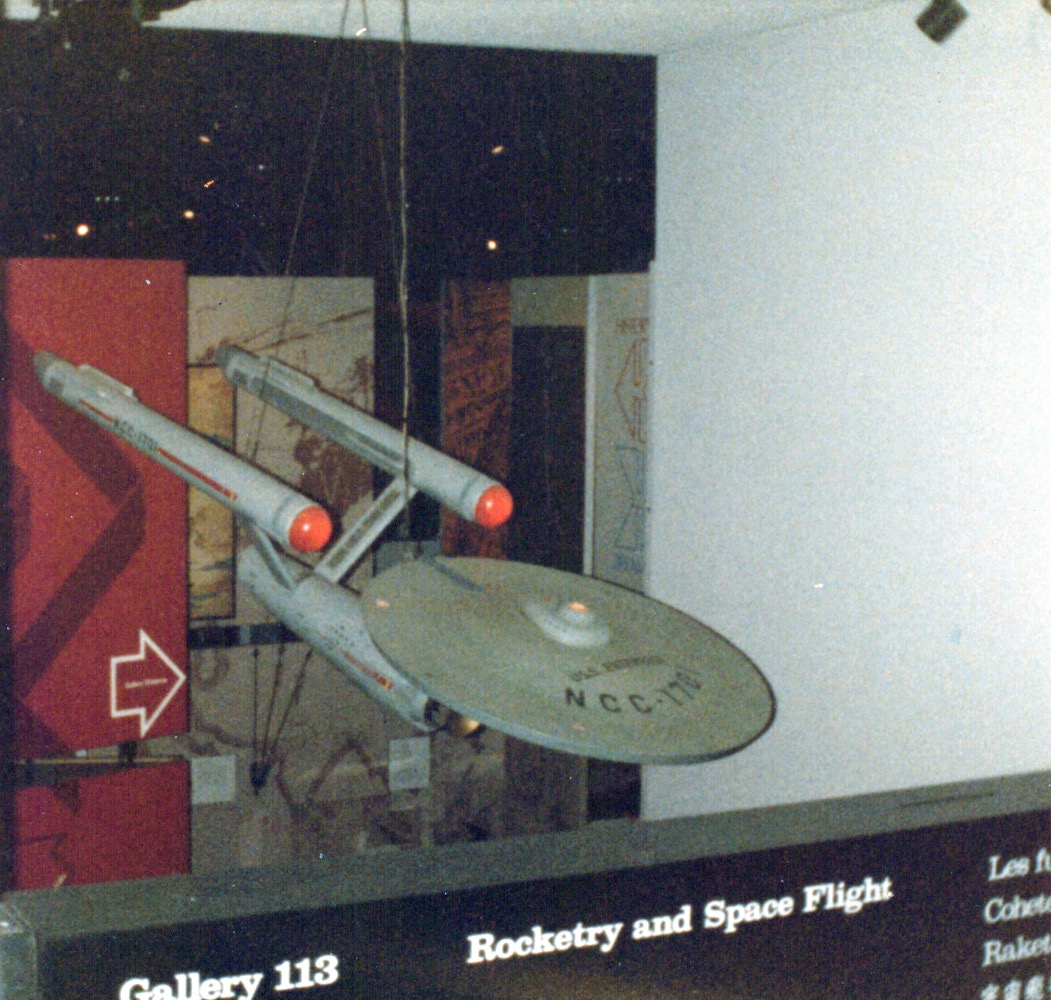
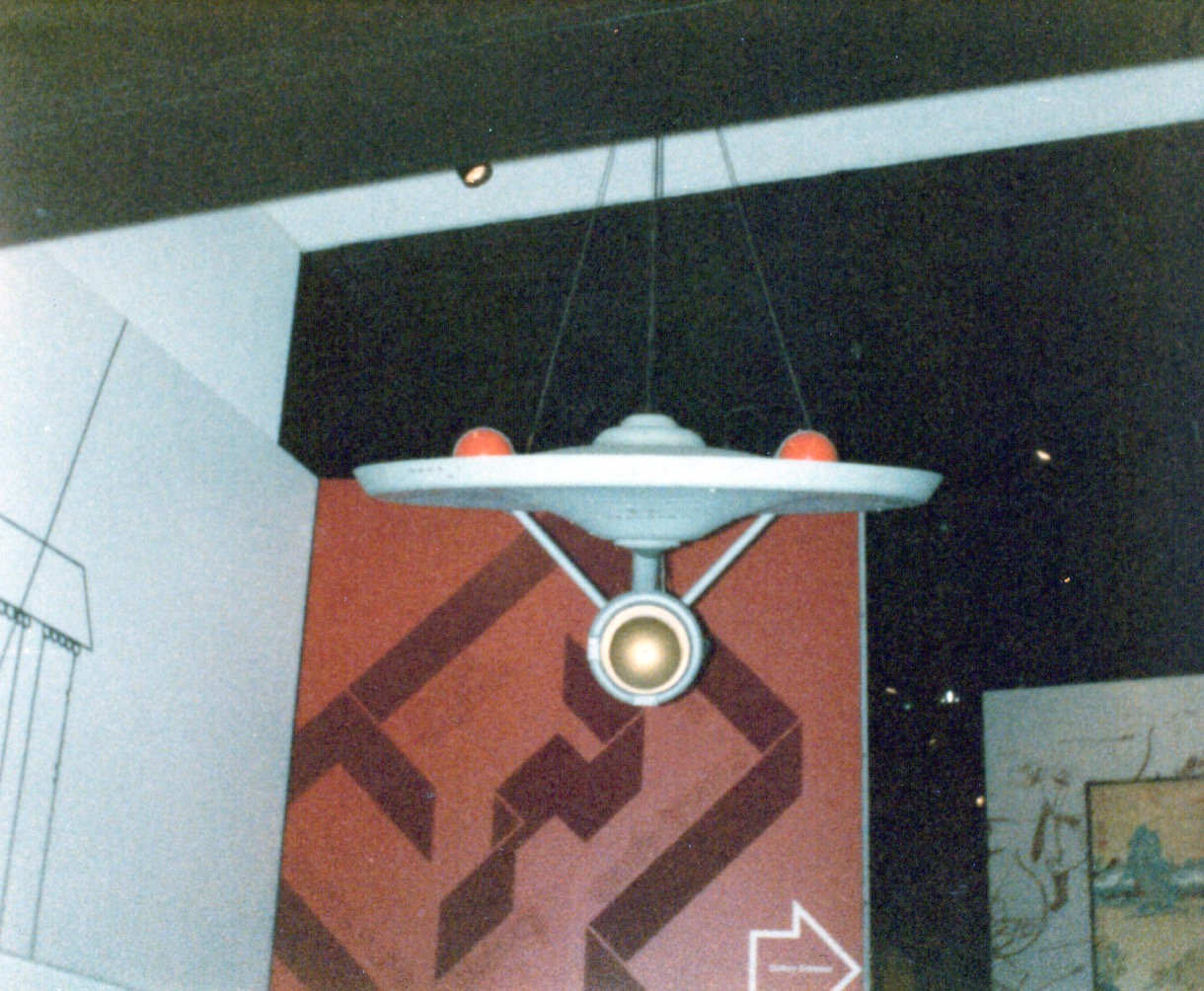
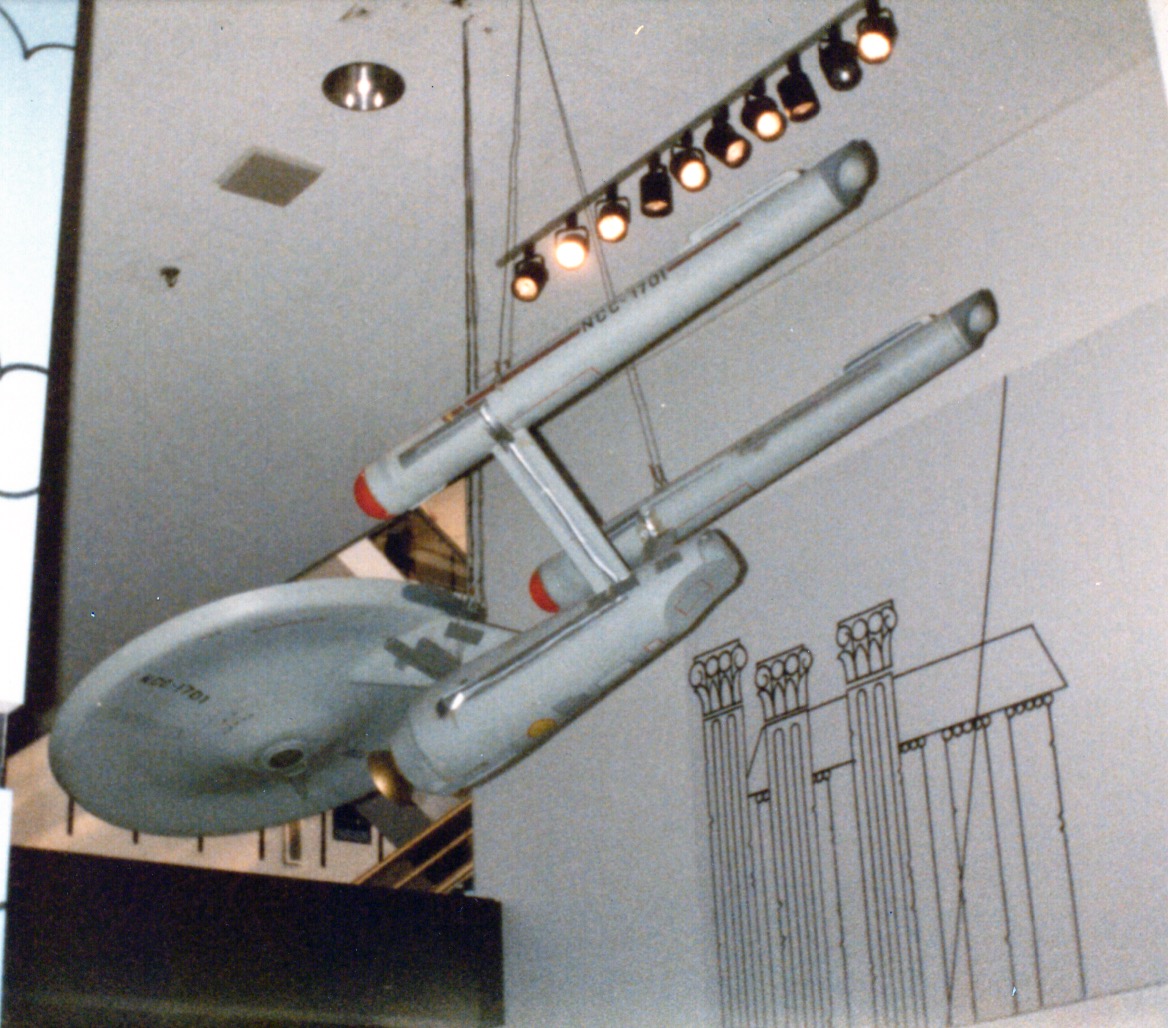
The Smithsonian moved the model multiple times over the decades, with some botched restorations. Its engines were sagging by 2012, and that helped prompt a thorough restoration that has the ship looking its best.
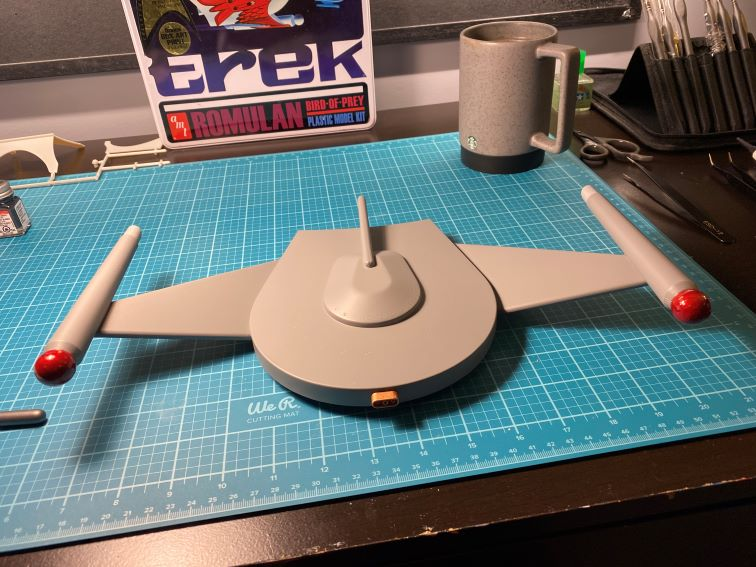
In my childhood I built models of the Enterprise, the Galileo 7 shuttlecraft, the starship bridge, and a Romulan warbird. I asked my mother for help in painting the warbird and, after I’d applied the big decal to its underside, lacquering it to protect it. That model survived the longest, but eventually all of my childhood models were in rough shape and got tossed.
Adult Models
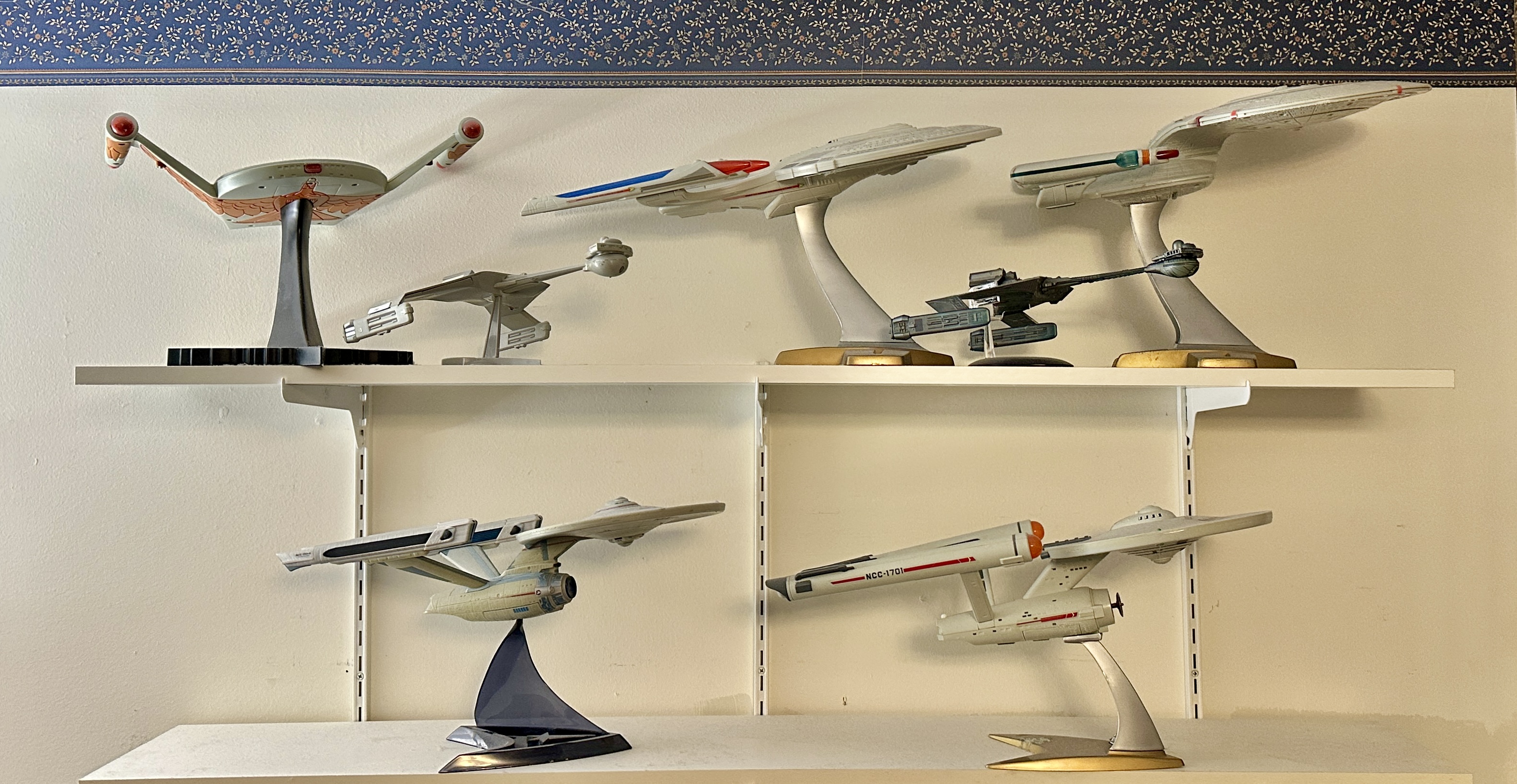
In adulthood, close friends who knew of my love for Star Trek not only gave me a decent plastic communicator, phaser, and tricorder but also several ship toys manufactured by Playmates. Unlike my childhood toys, most of the items received in adulthood have survived.
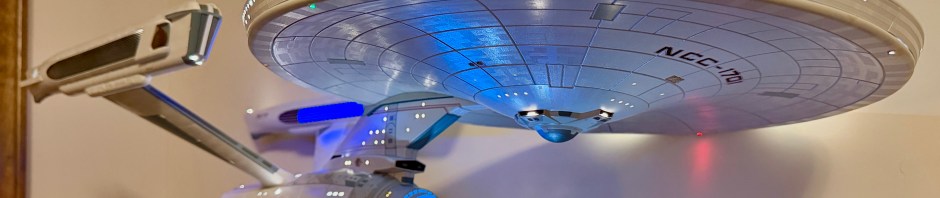
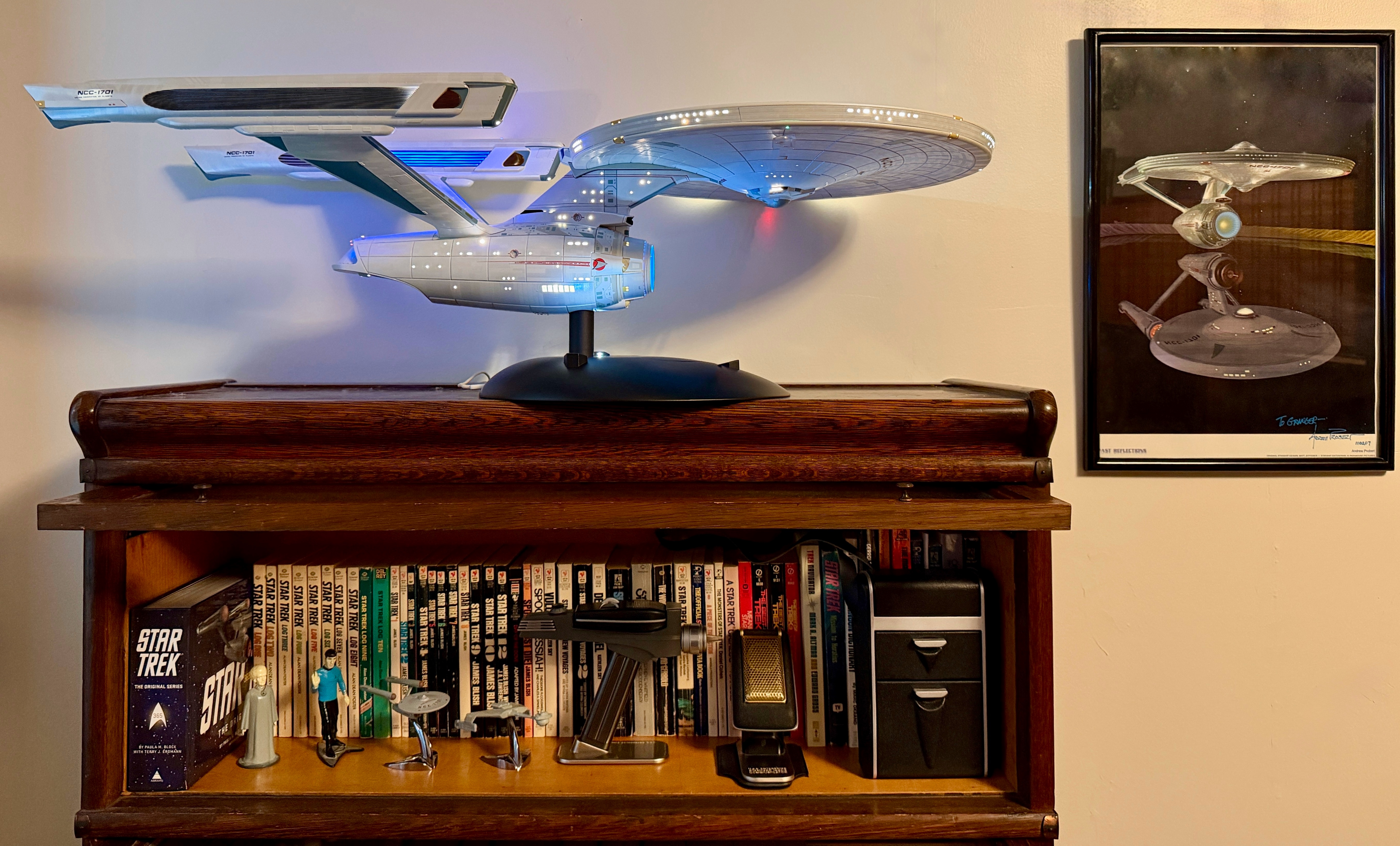
My latest and final such acquisition is a diecast metal model of the U.S.S. Enterprise refit from 1979’s Star Trek: The Motion Picture. It weighs about 20 pounds and is nearly a yard long thanks to its 1:350 scale. I placed it on my barrister’s bookcase that is filled with various Trek tomes and toys.
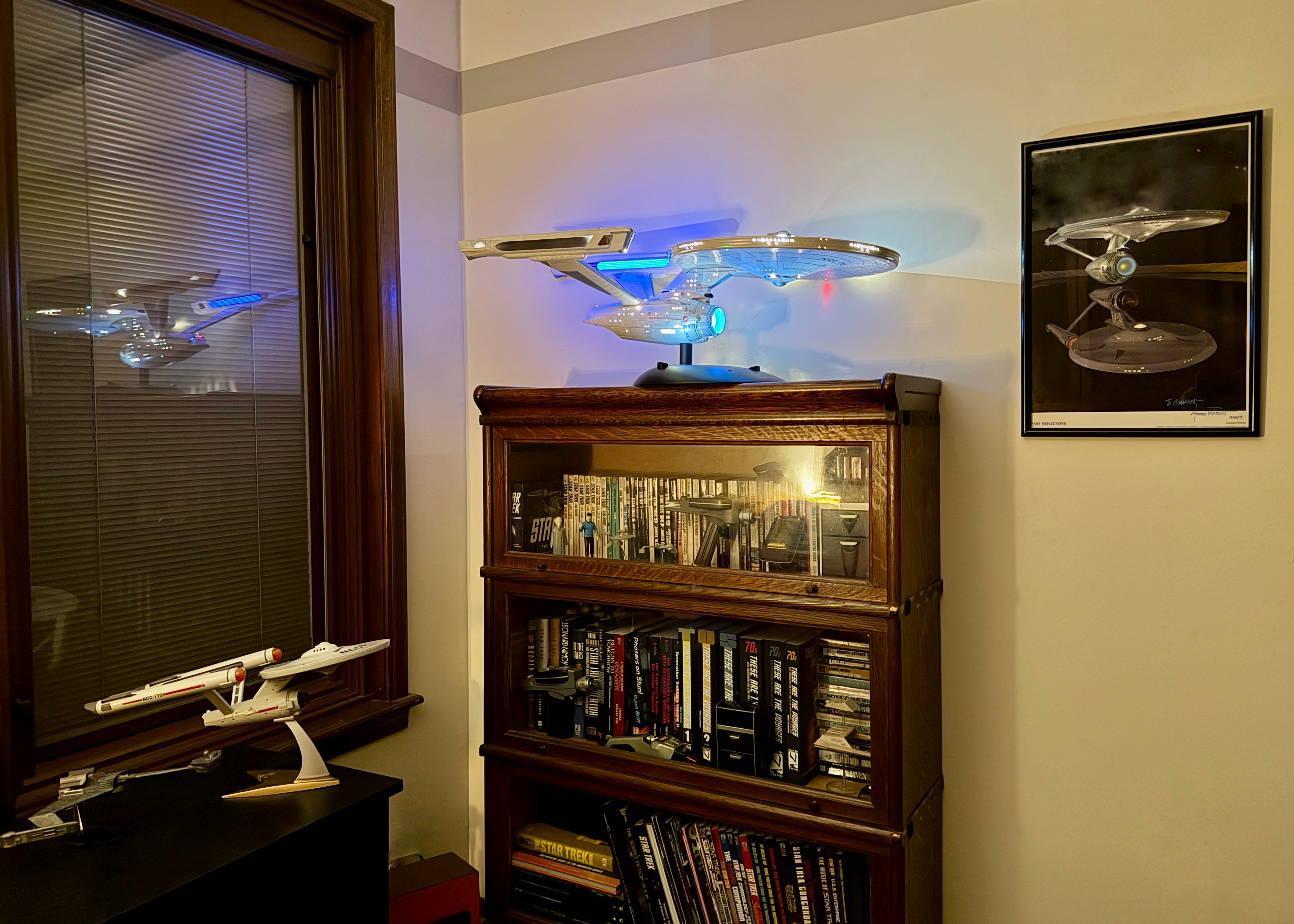
Since Andrew Probert was instrumental in the redesign of the ship for the movies, beside the model I hung his signed artwork, Past Reflections. It shows the refit suspended above a reflection of Matt Jefferies’ original design.
The Bored Game
As a child in the 1970s, I had asked for whatever Star Trek paraphernalia was on offer, but at that time little was available that was truly authentic to the live-action show that had been cancelled back in 1969. What I did obtain reminded me of what Spock said in Amok Time: “After a time, you may find that having is not so pleasing a thing after all as wanting. It is not logical, but it is often true.”
Witness my joy at Christmas 1973 when my 7-year-old self received the Star Trek board game he had requested.
I convinced my parents and friends into playing that game with me a couple of times. However, it wasn’t anything like watching the show, and I much preferred playing other games like Battleship.
From Pathetic to Prized Props
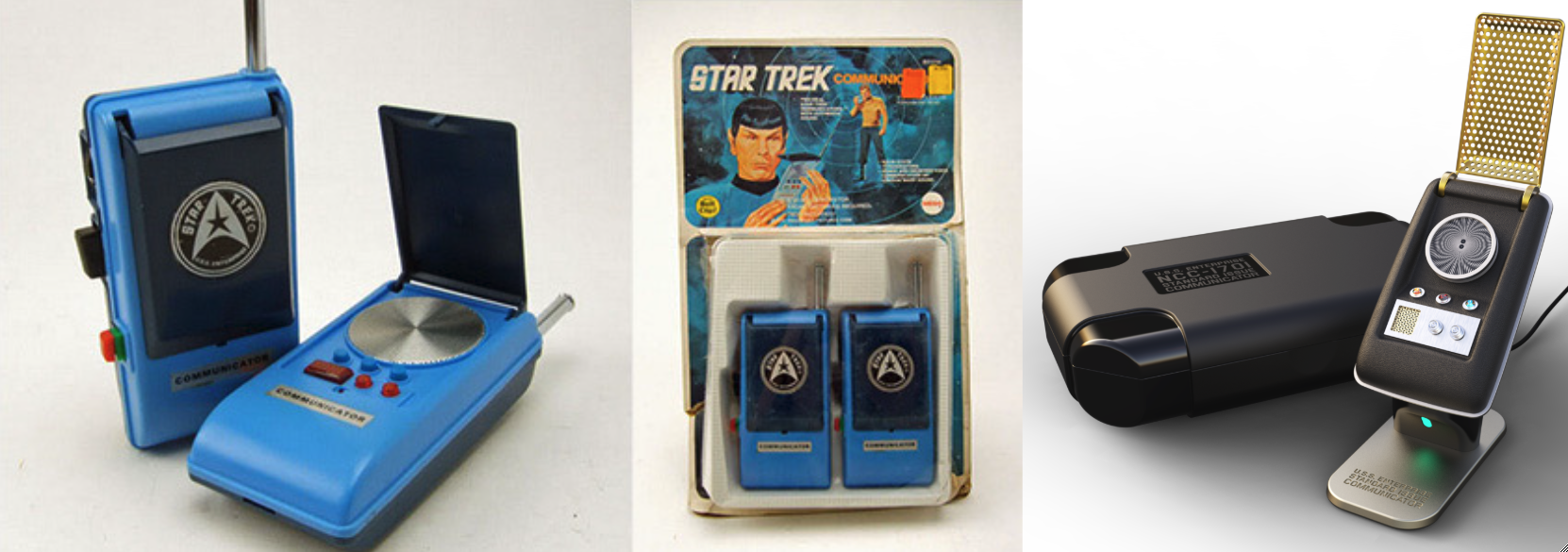
The lesson about being careful what you asked for didn’t take, however, and for my next birthday I received some blue walkie talkies marketed by Mego as Star Trek communicators. Gene and I played with them a bit, but they bore only a limited resemblance to a “real” communicator, and we had little use for walkie talkies, so after a few years they wound up in a garage sale. I built a crummy plastic phaser, communicator, and tricorder, but I didn’t have a decent toy communicator until I was given one in the 1990s, and in 2016 I purchased a superb version by The Wand Company that matched my childhood dreams.
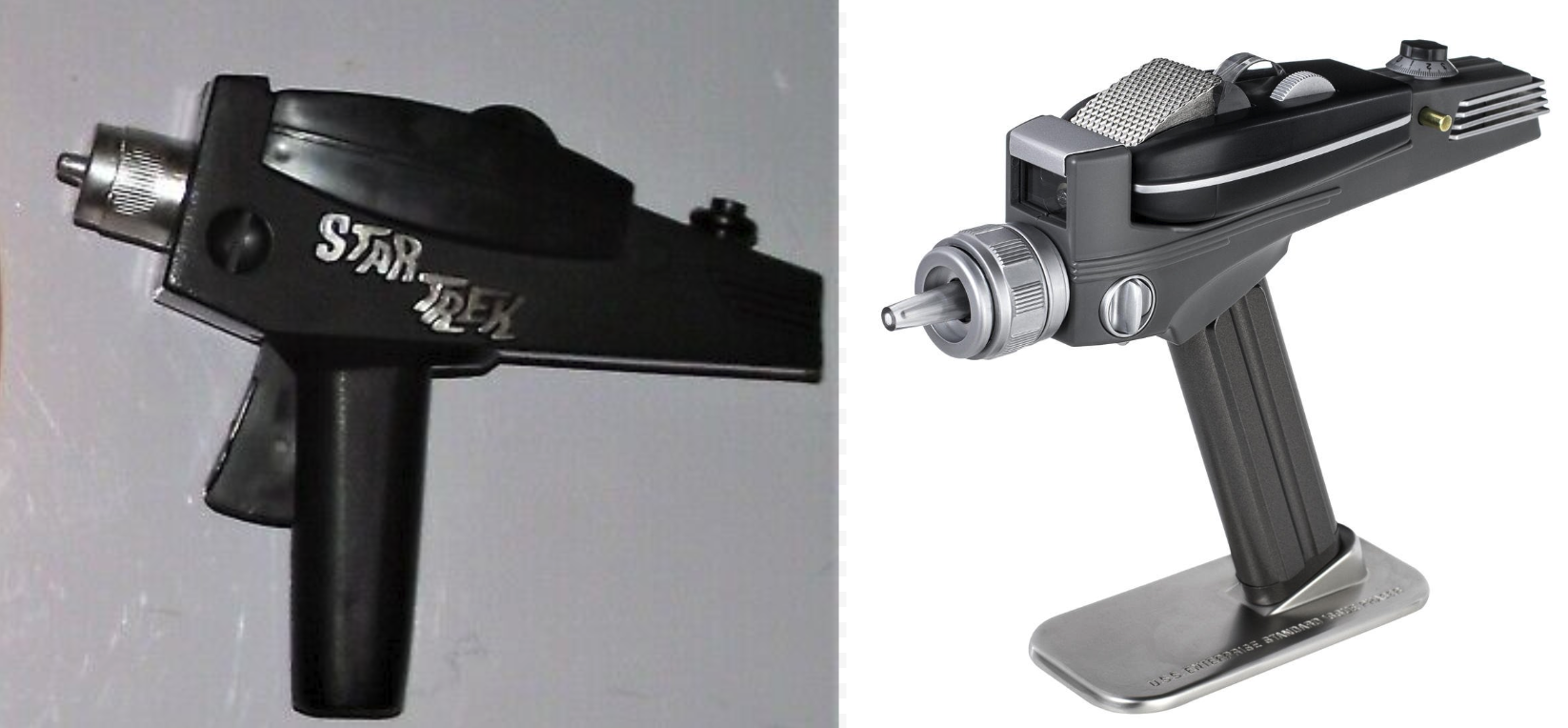
In 1975, I got a Remco phaser. I wasn’t given a somewhat accurate replica phaser until the 1990s, and I managed to snag a top-quality Wand version in 2014. In 2025-2026, Wand finally offered a fantastic tricorder, but it was just too pricey for me. The Wand facsimiles look as good as or better than the original props used in the television show that I saw years ago in Seattle’s Science Fiction Museum and Hall of Fame.
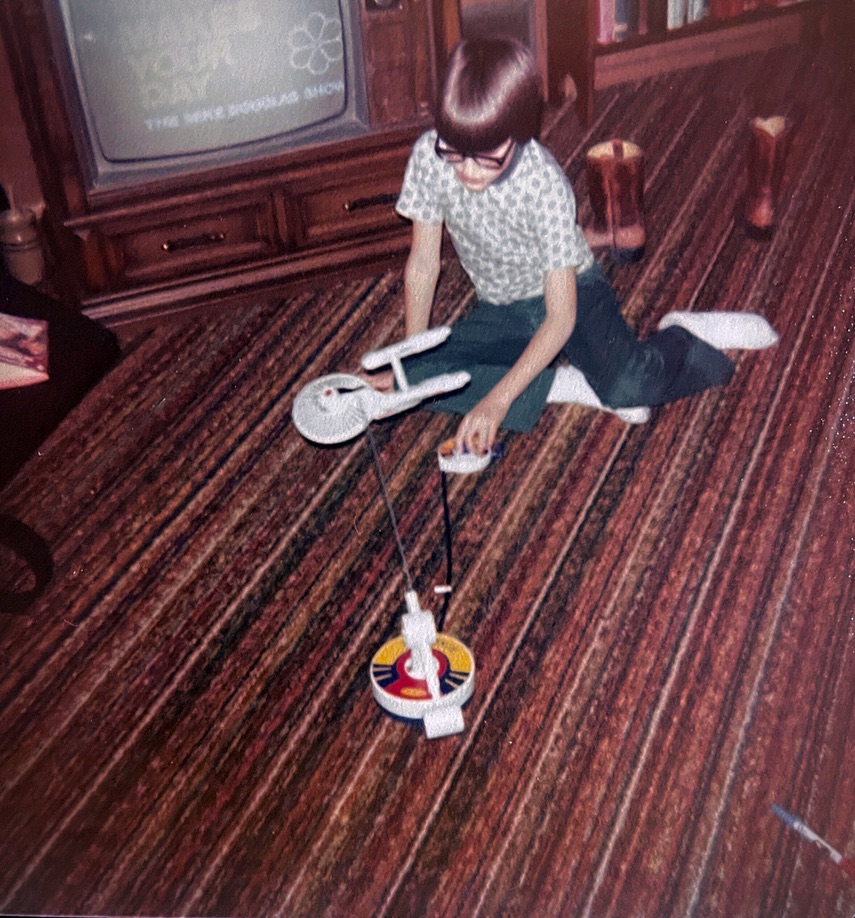
The dud 1973 board game, 1974 communicators, and 1975 phaser failed to prevent me from asking for a ridiculous flying Enterprise toy, again from Remco, for Christmas 1976.
Fifty years later, my last Enterprise is on a completely different level. It even replicates some of the lighting features that special effects pioneer Douglas Trumbull had added to the movie miniature back in the late 1970s. I’m now quite content, and my retirement from employment in 2026 also marks my retirement from collecting Star Trek items.
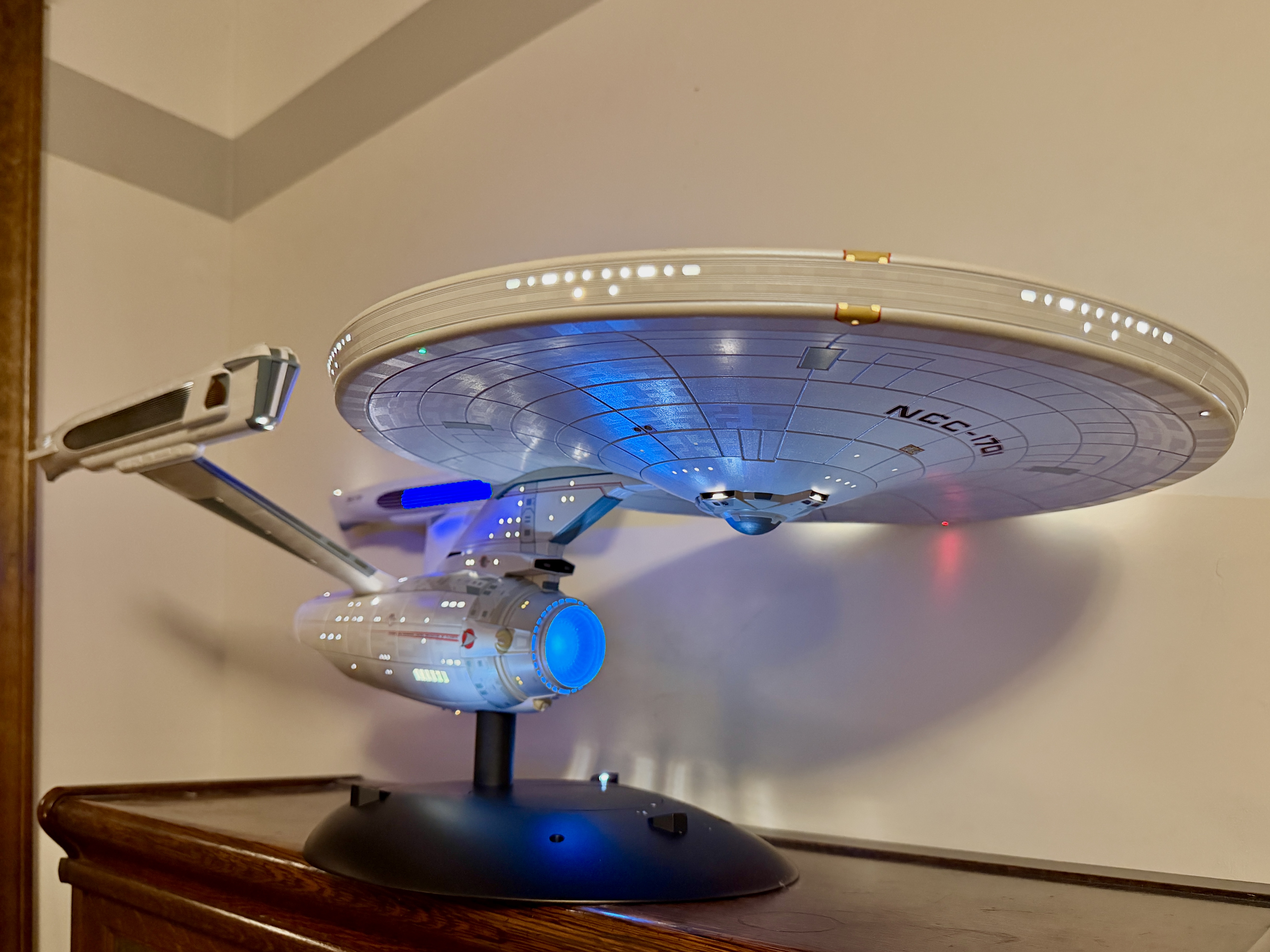
When I gaze upon the model, I sometimes think of the deeply flawed yet visionary Gene Roddenberry. I can hear him softly sharing, “It isn’t all over; everything has not been invented; the human adventure is just beginning.”







 Meador Manor