Pew Research Center periodically examines religious and political beliefs of the populace, and it is interesting to note their shifts over time.
They recently released their latest Religious Landscape Study, a decade after the previous one. It is interesting to note Oklahoma’s proportions of various religious and political beliefs and how they have changed over time and how they compare with national statistics.
Religion
Oklahoma is known as a very religious and politically conservative state, but the study confirms a significant increase in the religiously unaffiliated over the past two decades.
Christians still dominate with 47% of Oklahomans being Evangelical Protestant, 11% Mainline Protestant, 8% Catholic, 4% Historically Black Protestant, and 1% Latter-day Saints (Mormons), while all of the other Christian categories combined are less than 1%.
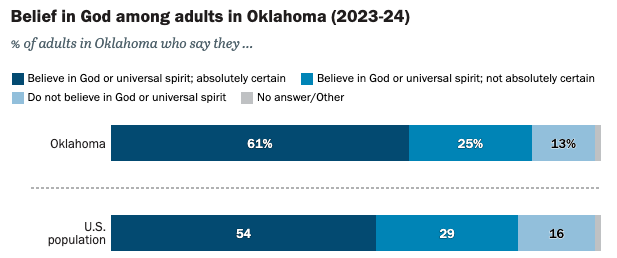
Since 2007, the percentage of Oklahomans who believe in nothing in particular has risen from 9% to 12%, agnostics have risen from 3% to 9%, and atheists have risen from less than 1% to 5%. Another lens to apply is belief in God:
I threw in the nationwide percentages for comparison, and you can examine many other religious beliefs and practices in the study, including religious attendance and belief in heaven and hell.
Politics
The Republican party is particularly dominant in the central and southern states, but I well remember the decades when the Democratic party had a lock on the Oklahoma legislature and most statewide offices. In 2007, most Oklahomans were Democrats, but now the Republicans hold immense sway.
The lopsided party affiliations in Oklahoma in 2024 contrasts to how nationwide 46% identify with Republican politics, 46% with Democratic politics, and 8% with neither.
Back in the day, many Oklahomans were conservative or “Blue Dog” Democrats. In 2007, when most Oklahomans were still affiliated with the Democratic party, 39% of Oklahomans identified as conservative, 36% as moderate, 18% as liberal, and 7% gave no answer. Since then, liberals have increased to 20% and conservatives to 41%.
Notice how nationwide conservatives still outnumber liberals, with the plurality going to moderates. The tendency to overestimate Republican enthusiasm for all conservative ideological stances and Democratic support for all liberal ones is perhaps why some who look at how 46% of Americans lean Republican and 46% lean Democrat then wonder at the current seismic shifts in national politics.
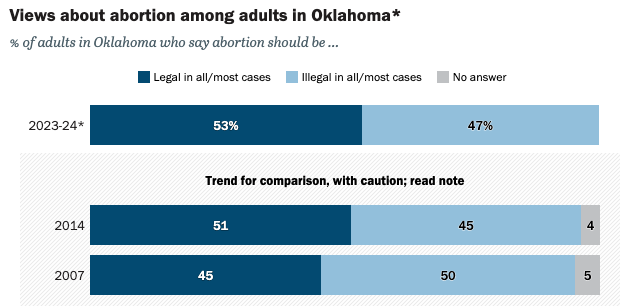
The lopsided politics in Oklahoma have yielded a draconian approach of abortions only being legal if necessary to save the life of a mother. However, it is worth noting that the majority say abortion should be legal in all or most cases.
Such views were in the minority back in 2007.
The study explores other social and political topics, including homosexuality, same-sex marriage, immigration, and evolution. I find it helpful to see actual data about Oklahomans’ views, as opposed to the hyperbole and rhetoric of politicians and the intensely anecdotal and biased posts one finds on social media.
Our home’s fiber has gone dark, and we are back on coax. When our house was built in 1981, it was connected to Southwestern Bell Telephone with twisted pair cable and also had analog television service via coaxial cable. As soon as fiber optic cable was available in our neighborhood in June 2022, I had that installed. Given that it was a new utility, I was patient with frequent outages, but after over 30 service disruptions across 33 months, I canceled it.
These three types of cable go to our home (not to scale), but now only the coaxial cable is active
I bought our house in 1994, when my internet service was on the twisted pair telephone cable using a 14.4 kilobit per second modem. That was 48 times faster than my first 300 baud modem in 1982, but I was glad to jump up to a 56k modem a few years later. In 2001, my bandwidth increased by a factor of 18 when I subscribed to the Digital Subscriber Line (DSL) service from AT&T, which still ran on the twisted pair telephone wires.
The coaxial cable back then just carried analog television service, but by 2005 it was offering cable modems with five times the bandwidth of DSL, so I switched. In 2008 I ditched the cable television service, but I still relied on the coaxial cable for internet. Over the next fifteen years it gradually evolved from 5 megabits per second to 200 megabits per second as Donrey Cablevision became Cable One and then Sparklight. By 2017, it was offering 1 gigabit per second download service, but that was too pricey for me.
In June 2022, Bluepeak became available in our neighborhood, and I had them install a fiber optic line with symmetrical 1 gigabit per second service for both downloads and uploads. That was almost 70,000 times faster than my telephone modem in 1994 and 200 times faster than my cable modem in 2005. Even better, it only cost $60 per month.
The competitive pressure prompted the cable company to offer me 1 gigabit per second download service for only 2/3 of what it had been charging me for 200 megabits per second service. However, in April 2024, Sparklight was still charging me $94 per month for 1 Gbps download and 50 Mbps upload service compared to $60 per month for symmetrical 1 Gbps download/upload service from Bluepeak over fiber.
I delayed giving up the cable modem since Bluepeak’s fiber service went down much more frequently. It notified me of a whopping 17 service outages between March and October 2023, and there were some before that which didn’t generate texts. However, it followed that dismal performance with only one disruption over six months, so I finally terminated my cable service in April 2024.
Three months later, I had long outages on consecutive days. That irritated me enough, given the home automation that Wendy and I had grown accustomed to, that I drove over to Sparklight’s office to see what they were now willing to offer. Just like AT&T, cable companies won’t advertise their better offerings to existing customers, waiting for you to inquire or threaten them with cancellation to offer better deals.
Competition is important in free enterprise, and my account had been suspended long enough that Sparklight offered me their 1 Gbps download/50 Mbps upload plan at $39 per month for six months, with that then rising to $49 per month, or about half what they had been charging me a few months earlier. In addition to the cable modem, they were willing to provide the same eero router that Bluepeak had provided. That was again considerably better than anything they had previously offered. Unlike Bluepeak, Sparklight did not include an eero mesh network extender unit, but Meador Manor isn’t large enough to need that anyway.
Both Bluepeak and Sparklight provided eero routers
I programmed Bluepeak’s and Sparklight’s eero routers to act as backups for each other. So when Bluepeak went down, Sparklight would take over automatically, and vice versa. That was welcome, as Bluepeak went down three times in August 2024 and reported disruptions in October and November. Over the same period, I only noticed one cable outage, but Bluepeak was always far more communicative about outages than the cable company.
The Bluepeak fiber service cost recently increased from $60 per month to $65. So by March 2025 it was costing 33% more than the cable modem with the same download bandwidth. Running both of the 1 Gbps services was costing me $114 per month, which was about what 200 Mbps cable modem service had cost me from 2019 to 2022.
My frustration with Bluepeak spiked in March 2025 when their little optical network terminal box, which converted the optical signals into electrical ones for the eero router, died. They sent two friendly technicians out who replaced the box, but about an hour after they left it stopped working.
The “Optical” light on the box was blinking red, indicating it couldn’t get a signal. I checked the cables and restarted it multiple times, and it would work for anywhere from a few minutes to a few hours, but eventually it always failed. The eero always switched over to the Sparklight cable backup, but my patience was exhausted.
I called Bluepeak, talked to a friendly representative, and canceled the service. I used their website to print off a return mailing label, boxed up all of their equipment, and sent it off at the post office to their nearest office in Stillwater.
So we’re back to relying on the 1981 coaxial cable for our home internet service. When our cable modem goes down, Wendy and I will have to use our iPhones as cellular hotspots, and our home automation will fail. Our upload bandwidth is less, but that is something we’ll seldom notice. At least now I’ll only be spending $49 per month for our home internet service instead of $114. We might eventually have cause to light the fiber optic cable back up, but for now we’re content to be back on coax.
DECEMBER 2025 UPDATE:
Sparklight has been pretty reliable, but a few months ago I noticed my download speed had fallen to only 100 megabits per second, rather than the 9## megabits per second throughput I’d been getting earlier as expected with a 1 gigabit per second service. It took me a couple of months to go into the local office to inquire, and it turned out that the eero Pro 6e they gave me has two ports, but in very tiny print below one port is <2.5> and the other is <1> and the orange 2.5 gigabit per second port on their modem needs to be connected to the <2.5> port on the eero or the effective speed is throttled way down. I switched the ports and then had to reboot both the cable modem and the eero multiple times to finally get it back up and working with the eero reporting 931 megabits per second download and 55 megabits per second upload.
Back in 1993, when I was in my mid-twenties, my skinny days were ending. After spending my entire youth in the bottom quartile in body weight for my age, my metabolism slowed. Rather than adjust my diet, I opted to turn on the television.
No, that wasn’t so I could lounge, but so that I could exercise. I tuned in the Lifetime cable channel. It was geared toward women, but I never suffered from fragile masculinity, and I took advantage of how at 7 a.m. each morning it offered two successive aerobics workouts: Cynthia Kereluk’s Everyday Workout for thirty minutes followed by Denise Austin’s Daily Workout.
I tried each of them and preferred Kereluk’s. A former Miss Canada, she had been a teacher and aerobics instructor, and I appreciated her stream of advice on proper form, why a particular exercise was helpful, how to avoid strain and injury, etc.
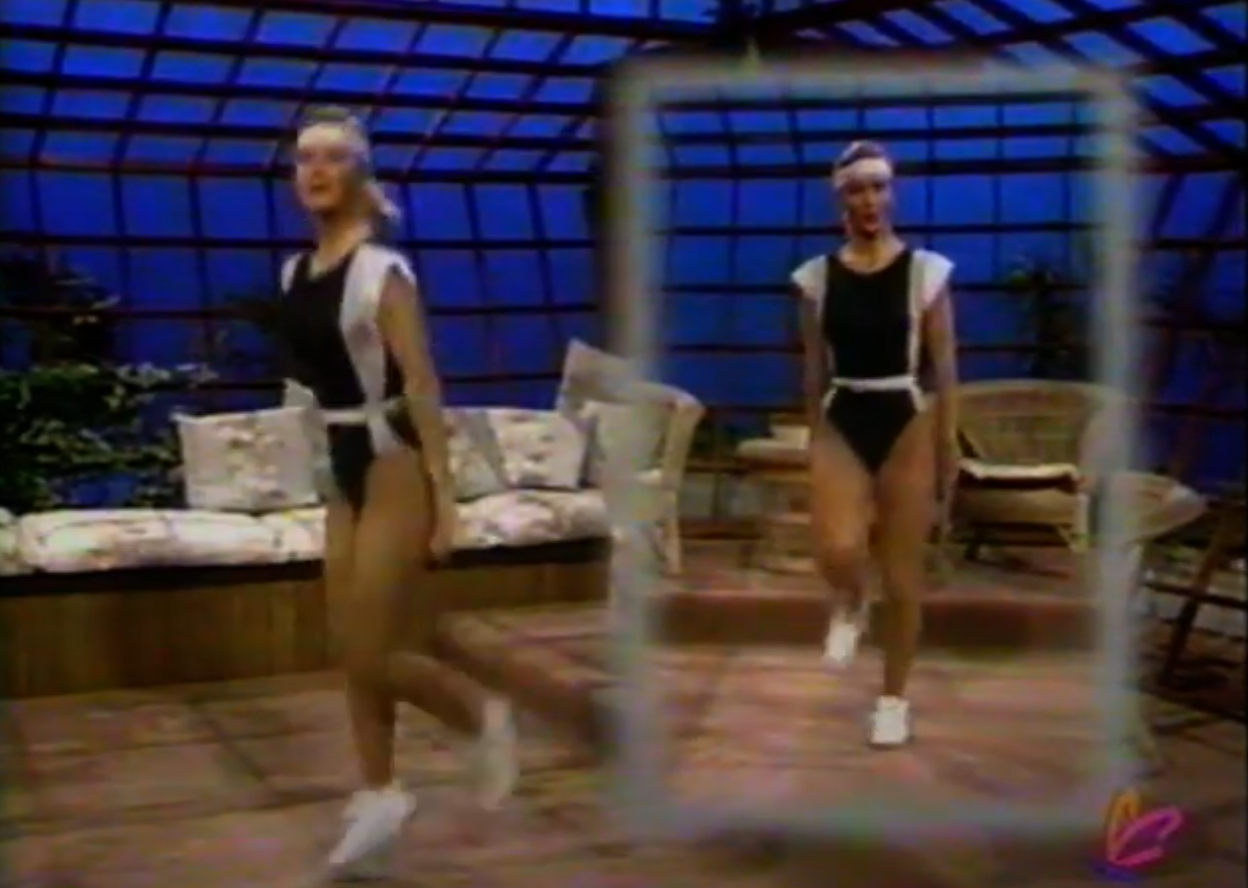
An SOS segment with two levels in Cynthia Kereluk’s Everyday Workout back in 1993
She was then doing her eighth year of shows produced up in Canada, which always had the format of a brief warmup and stretch, about ten to twelve minutes of cardiovascular aerobics, about five minutes concentrating on toning a particular part of the body, and a cool-down. The segments were divided up by commercials.
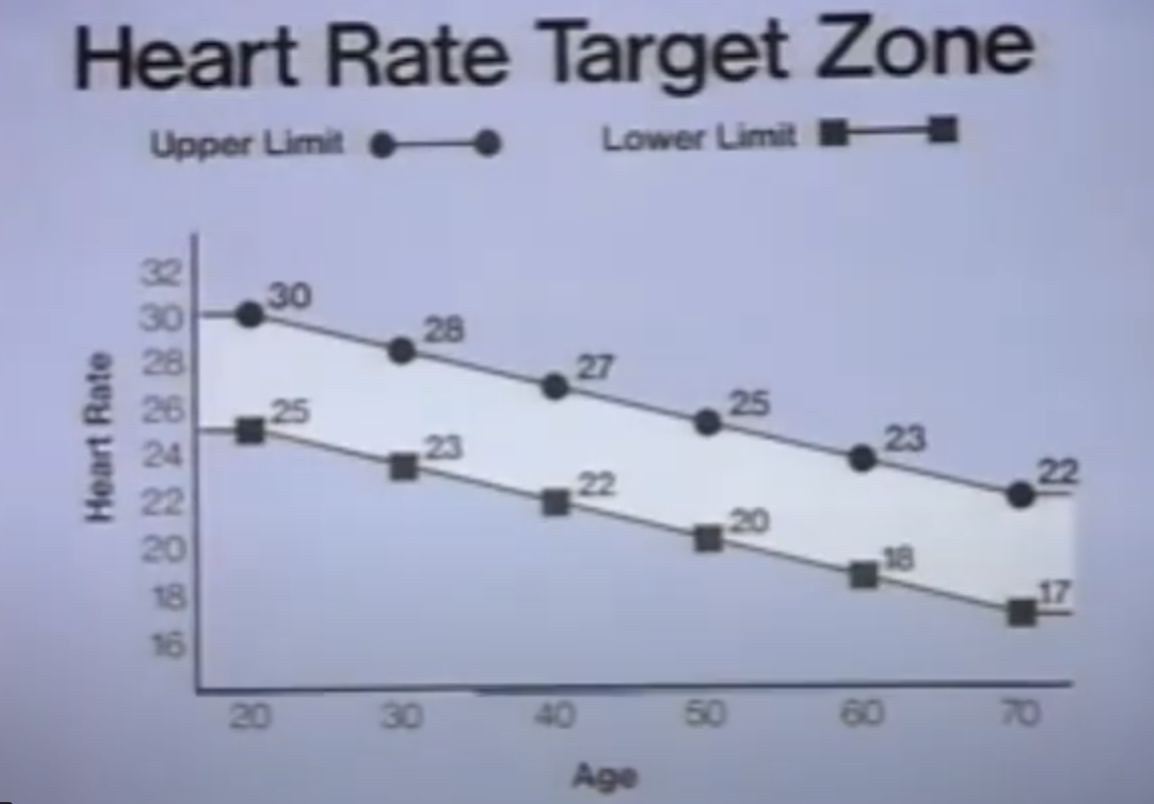
At the end of each cardiovascular segment, she had you take your pulse for ten seconds and compare it to a Heart Rate Target Zone chart.
Often a segment would show two levels, a more intense and a less intense one, with her demonstrating the second level via a picture-in-picture overlay. It wasn’t long after starting the routines that I graduated to the more intense level, and I appreciated how the exercises not only kept me from gaining too much weight but also made me feel better all day. I have now been doing aerobics each weekday morning with her for 32 years and counting.
I was never any sort of athlete, and the only time I’d been in a paid gym was in my teen years when I went with my girlfriend to one of the International Fitness Centers in Oklahoma City. She was a swimmer, twirler, and ballet dancer who worked out there, while I was a skinny kid who could eat whatever he liked without gaining weight, always hated physical education classes, and had no interest in joining a gym.
In my early teenage years, my father had gifted me some vintage weights, but I found weightlifting intensely boring. Years later, as an underpaid Oklahoma schoolteacher, I still had no interest in investing in a gym membership nor in making free use of the school weight room. However, I was willing to do aerobics on workday mornings before school once I captured some shows onto videotape.
I used my videocassette recorder to capture 10 to 12 episodes, in Extended Play mode, onto each tape, accumulating a total of 33 episodes in 1993. I used them each weekday morning, and in 1995 I recorded 55 more episodes, including the 700th episode of Kereluk’s show, which celebrated its 10th year anniversary.
I intended to capture some more episodes in 1996, but her show didn’t air. It reappeared in 1997 after she launched her own production, having been dropped by her station in Canada. I recorded 60 more shows, but after that I never caught the show again, although the internet reports that she kept on producing content until the year 2000. The 148 episodes I had on tape were sufficient for my needs, which I could cycle through for over half a year before repeating.
The Exercise Machine
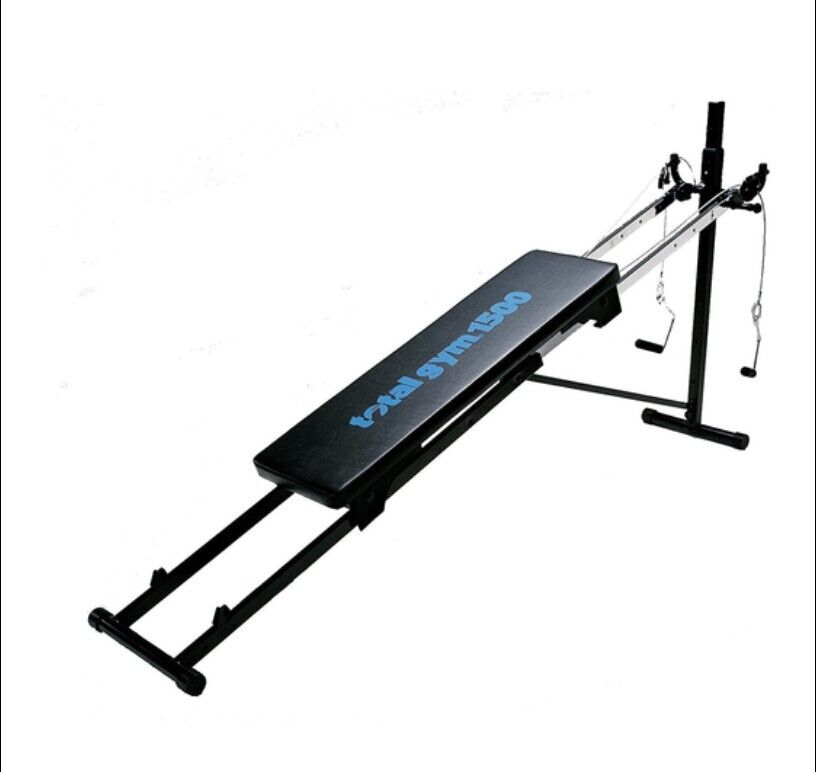
I once used a Total Gym
Eventually I recognized the need for some weight-training. I wanted to exercise at home, but there I wouldn’t have a spotter, so instead of free weights I decided to buy an exercise machine. I didn’t want to spend the money on something pricey like a Soloflex, so I bought a Total Gym 1500.
It had a sliding board, pulleys, and cables with various exercises. My body weight served as the load, and I used it primarily to improve my upper body strength. I used it enough to wear out a couple of sets of pulleys, but I eventually got rid of it after aggravating my lower back and shoulders. All the while, I kept on doing my aerobics each morning.
Push-Ups and Dumbbells
Nowadays I deviate from the Everyday Workout toning segments with my own upper body work twice each week. On Wednesdays, I substitute three sets of 10 slow repetitions of standard plank push-ups. On Fridays, I use low-weight dumbbells in three sets of 10 repetitions of curls, rows, raises, and extensions.
After turning 40, I noticed that I was again gaining weight despite the weekday morning aerobics. My cholesterol levels also weren’t good, so I finally tried modifying my diet.
Dieting
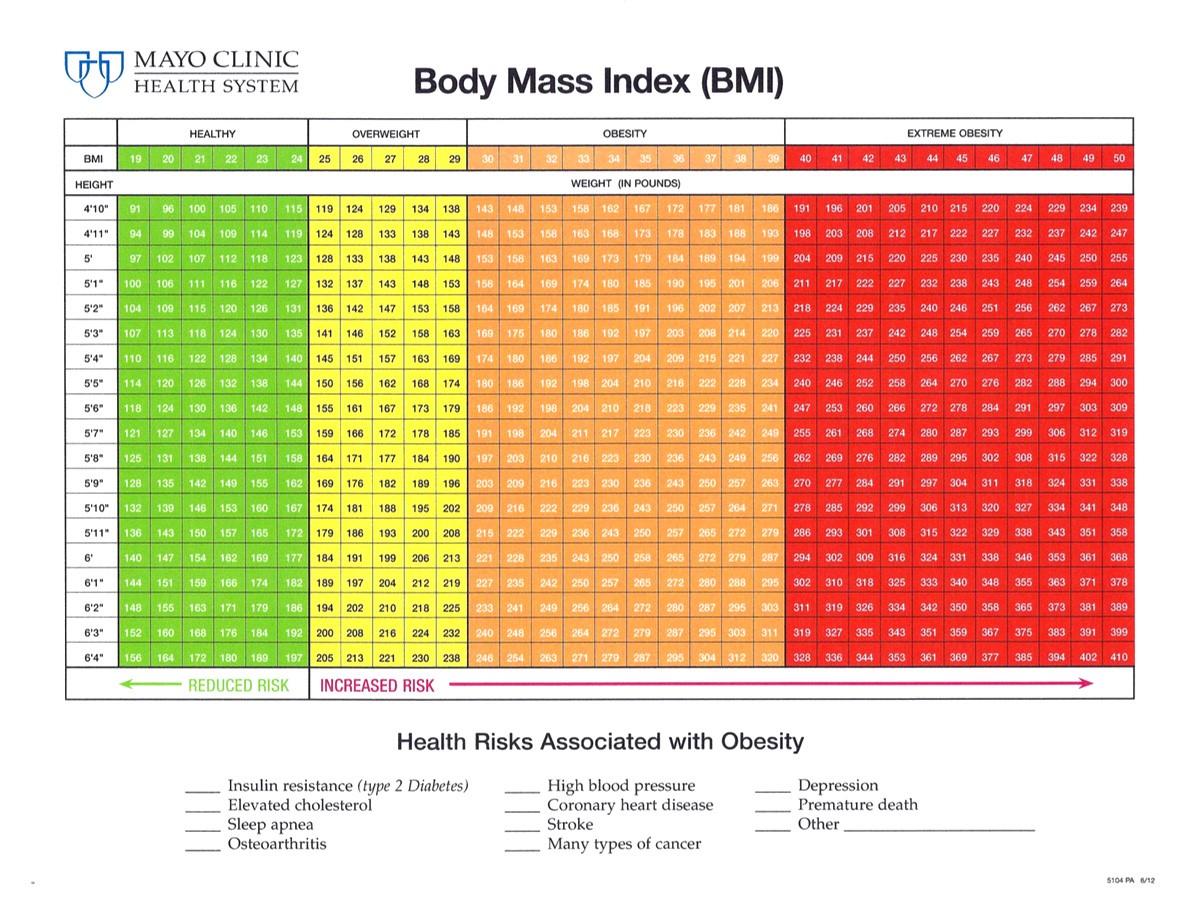
For a year I scrupulously avoided fatty foods, no longer indulging in pizza, hamburgers, or queso dip. I ate more fish, nuts, and vegetables, dealt with hunger pangs with a nightly small bag of low-calorie popcorn, and started drinking Coca-Cola Zero instead of The Real Thing. Over the course of a year, my body mass index (BMI) fell from 26 to 23, but I wasn’t happy and my cholesterol was still unacceptable.
So I went on Atorvastatin and gave up on the restricted diet, although I continued to drink Coca-Cola Cherry Zero or added grenadine to Coke Zero whenever Cherry Zero wasn’t available. I remember how gross my first bite of pizza tasted after a year without it, but I quickly readjusted! I knew, however, that if I didn’t exercise more, I’d eventually have a BMI of 30 or more, with the health risks associated with obesity.
Day Hiking
So I took up day hiking. From 2009 to 2012, I hiked over 1,000 miles on trails across seven different states, and I hiked anywhere from 25 to 50 days each year from 2009 to 2015.
I hiked a lot from 2009 to 2015
I originally relied on audiobooks for my solo travels and hikes, listening to tapes of Ellis Peters and Elizabeth Peters, which were pseudonyms for Edith Pargeter and Barbara Mertz, which I checked out from the Tulsa Public Library. I also purchased numerous Great Courses from The Teaching Company. Eventually technology allowed me to shift to listening to Audible books with my smartphone, and I listened to Ken Follett’s Kingsbridge series and all of the works of Agatha Christie.
My Osage Hills trail map from over a decade ago; I need to add an extension to the lake trail
By 2013, when Wendy and I began dating, I had run out of novel trails within driving range. I shared the best trails with her in the years before our marriage in 2016, but I was no longer out hiking every weekend. In 2017 I became a district administrator, and that led to a precipitous decline in my hiking on out-of-town trails, with me instead walking on the Pathfinder Parkway in town.
Wendy and I still enjoyed some hikes on our vacations, but the COVID-19 pandemic curtailed our trips from March 2020 through May 2021. During that time, we did hike on the Elk River Trail an hour’s drive north and tried to hike at Osage Hills, which is a half-hour drive to the west. I had long walked and mapped its various trails. However, at that time there were many other folks also seeking a weekend escape, and Wendy and I ended up walking together some in our neighborhood.
Hypertension
In recent years I have mostly just walked on the Pathfinder on weekends, at sunrise in the summer and mid-afternoon in winter. The reduction in walking is one of the reasons my BMI has crept upward. It is still below 29, but stress, genetics, and my diet have now led to me taking three different daily medications to keep my blood pressure under control. That is one of several reasons for my planned retirement in June 2026.
My hypertension medications and aging joints also mean that I can now barely make it into the Everyday Workout Heart Rate Target Zone. I also had to indicate in my Apple Watch Health app that I was on a Beta blocker so it would adjust its own algorithms accordingly and stop warning me about my low heart rate.
Retiring My Videotapes
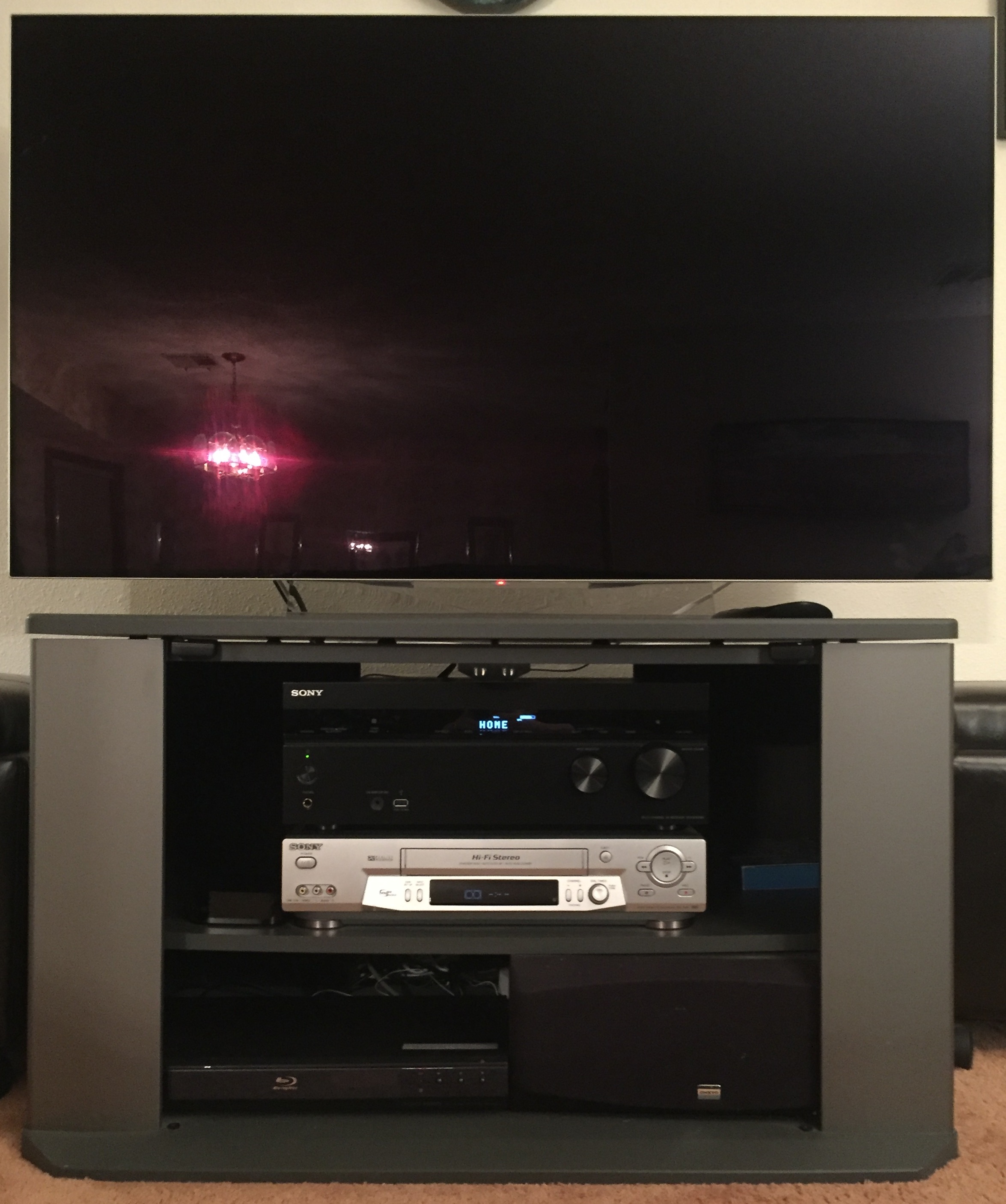
I pulled my 2001 VCR from my media center
I still do my aerobics every weekday morning, and until this year I was still cycling through the 13 videotapes I recorded from 1993 to 1997. Wendy had digitized them for me back when we were dating, but I had misplaced those files. I’ve now digitized them again using a converter dongle and the OBS Studio. I used Microsoft Clipchamp to edit the videos, taking the time to excise the decades-old commercials and replace them with a generic 60-second countdown clip.
I had to connect the VCR to a computer for the digitization, and rather than monkey with a laptop in the living room I pulled my 2001 VCR out of the media center. The time-consuming digitization process could have meant over a month without my morning aerobics, but I wasn’t about to do that.
Years ago, I couldn’t find hardly any of the hundreds of episodes of Everyday Workout on YouTube, but a search this year revealed several dozen. Funly enough, they were from her early years, which I had never seen. So for weeks I played poorly synced episodes from the 1980s that someone had uploaded. She sounds just the same, but there aren’t any commercials and her cardiovascular workouts were pretty intense back then.
At my age, I don’t bounce like a 25-year-old, so I’m grateful for the less intense picture-in-picture variation
Since I’m 35 years older than she was at the time of recording, I usually do something in between the more and less intense levels she was demonstrating, as my knees don’t tolerate me bouncing around like a 25-year-old.
I have long used Shokz OpenRun/AfterShokz Aeropex bone conduction headphones with my iPad around the house, but when I use AirPlay to mirror the iPad to the Apple TV to show the aerobics videos on our television, the television becomes the source of the audio signal. I grew tired of fumbling through menus to change the headphone Bluetooth pairing from the iPad to the TV and back each morning. So I bought a second set of headphones and now have one always paired to the iPad and the other always paired to the television.
My VCR is finally going into retirement
That has worked well enough that I will now use my digitized videos for the workouts once I’ve run through the older ones on YouTube. I respect copyright too much to upload my 148 episodes, but I have them available locally. So I didn’t shove the old VCR back into the media center, but instead I finally stored it after decades of near-daily use.
Next Steps
My own retirement will come in June 2026, and that will reduce my stress and allow me to take more walks and hikes. Lifestyle Interventions and Independence for Elders recommends:
• At least 150 minutes per week of walking or other moderate intensity exercise
• Resistance training with weights or machines two or three times a week, but not two days in a row
• Stretching and other activities that improve flexibility and balance every day
I still enjoy listening to Audible, and I always have an audiobook underway along with an e-book on my Kindle. In recent years I have been listening to works by Mary Roberts Rinehart and P.G. Wodehouse, and I’ve downloaded a few of the early works of Erle Stanley Gardner and Ross Macdonald as additional series to sample.
I still plan to do my weekday Everyday Workout sessions as well. They’ve served me well for over thirty years, and if I’m lucky, they’ll help me stay fit for a few more decades.
Five years ago, in early 2020, interest in the concept of internal monologues spiked after a viral tweet shared how not everyone experiences the phenomenon, which has been described as hearing your own voice talking inside your head, in complete sentences, verbalizing your thoughts.
That prompted Ryan Langdon to post a video interview with a lady who had no such inner monologue, and I remember seeing it at the time. I had missed the tweet because I have always minimized my engagement with Twitter, now called X. I didn’t pay much heed to Langdon’s post, and the statewide shutdown of public schools the next month, due to the COVID-19 pandemic, drove the topic from my mind…which has no inner monologue.
I posted this image when asking my Facebook friends if they had inner monologues; several did
Half a decade later, I saw another mention of the phenomenon, so I finally returned to the topic, taking the time to read descriptions of it. Unsure about my interpretation, I asked my Facebook friends if some of them experienced it. Personally, while I can imagine someone’s voice speaking a given sentence, I don’t recall ever spontaneously hearing such a thing in my head, save for famous media moments, such as FDR’s comments about the attack on Pearl Harbor. I certainly never hear my thoughts being verbalized internally in my own voice.
Immediately several friends confirmed that yes, they hear their thoughts in their head, “spoken” in their own voice. Some experience it frequently.
My psychology background merely consists of a three-credit-hour introductory psychology course and a two-credit-hour educational psychology course almost 40 years ago, plus applying Piaget’s theory of cognitive development in science learning cycles. So I have little understanding of the types of inner thought. Reading that 30-50% of people commonly experience “inner speech” led me to explore the concept and its possible implications in my life.
Types of inner experience
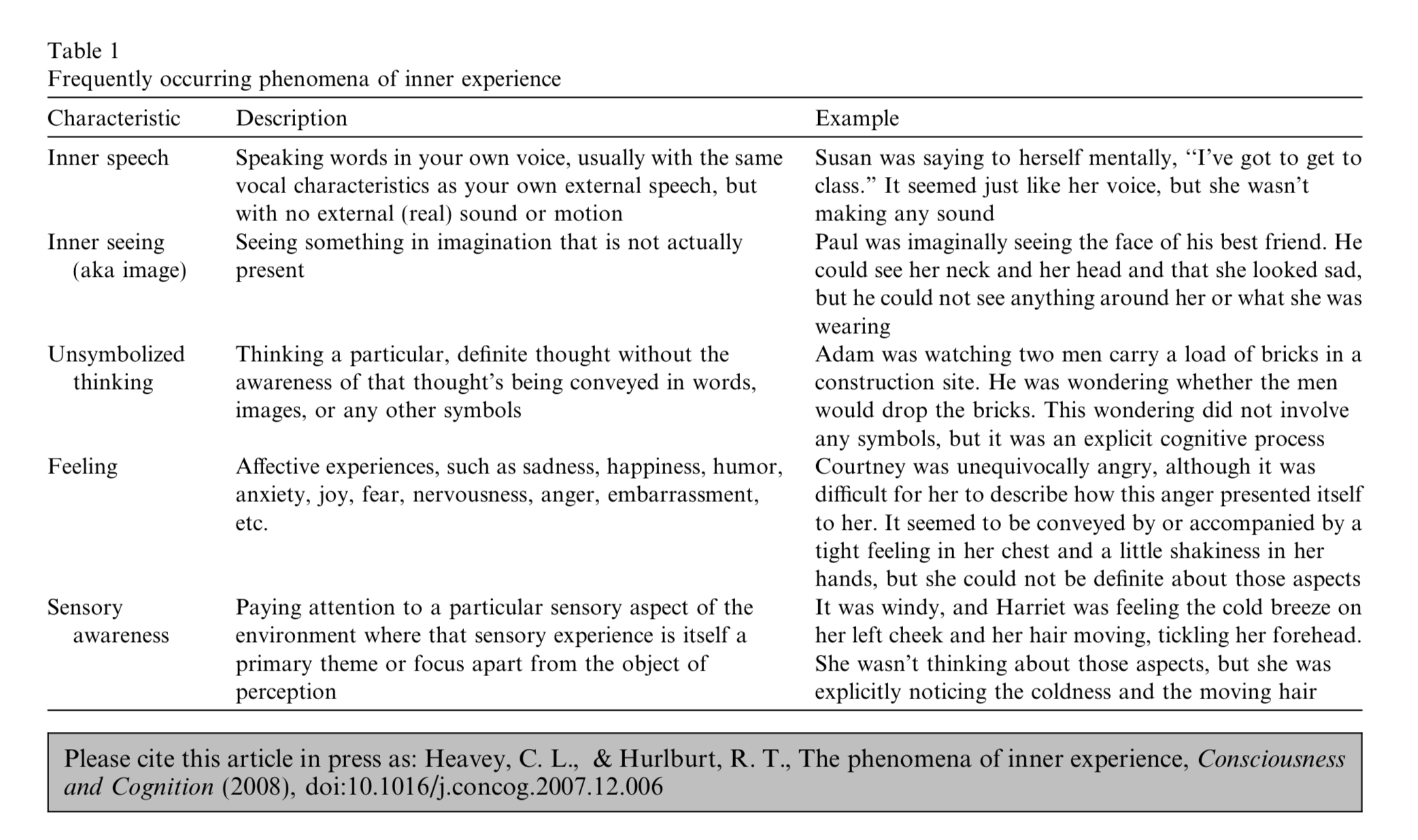
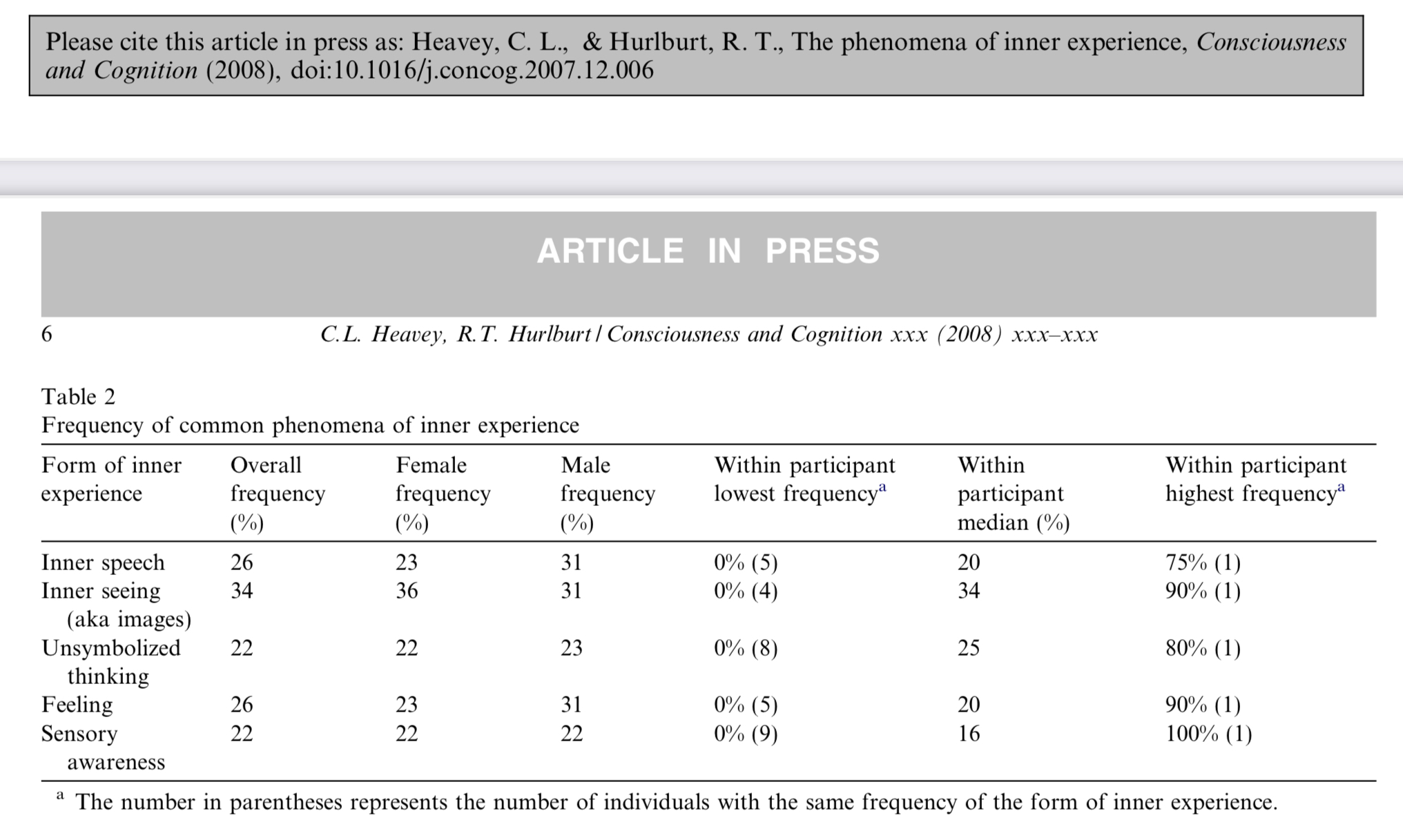
Back in 2007, C.L. Heavey and R.T. Hurlburt identified five frequently occurring phenomena of inner experience, including “inner speech”.
They demographically selected 30 subjects from a pool of over 400 undergraduate students, training them in descriptive experience sampling before equipping them with beepers that triggered randomly to have them note their inner experiences ten times over two days. The subjects might be engaging in simultaneous forms of inner experience at any given moment, so the overall frequencies of the experiences added to over 100%.
I find it fascinating that overall the subjects were engaged in inner speech about 1/4 of the time, although 1/6 of them never experienced it. Hurlburt’s years of research have led him to state that few, if any, people actually engage in inner speech continually, but in some people it can be rather frequent.
I never experience inner speech, but I am familiar with all of the other inner experiences in Heavey & Hurlburt’s study. While I’ve read that some people lacking inner speech also report aphantasia, the inability to visualize mental images, I do not have that rare neurodevelopmental trait. However, rather than inner seeing, I mostly engage in unsymbolized thinking that lacks words, images, or any other symbols.
CAUTION: Scientific jargon ahead, but thankfully it only lasts for two paragraphs.
According to the Stanford Encyclopedia of Philosophy, the Russian psychologist Lev Vygotsky’s theory of cognitive development claimed that inner speech resulted from a developmental process, with children’s linguistically mediated social interactions changed into an internalized “conversation” with the self. Other theorists have argued that it plays a role in reasoning, facilitating abstract thought, etc.
The brain is said to have dorsal and ventral language streams, with the dorsal developing more slowly in childhood and influencing the emergence of inner speech. So it could be that the way my own dorsal stream matured is what prevents me from having an internal monologue.
Personal implications
Throughout my life, I’ve seen portrayals in movies and television of people thinking on screen with a voiceover narration by them of their thoughts. I had always presumed that was just a contructed method of conveying their abstract thoughts, their unsymbolized thinking. Now I realize that for a significant fraction of people, it represents what they actually experience internally.
That is truly strange to me, and it is no surprise that those with an inner monologue may struggle to imagine how people like me think. Perhaps descriptions of unsymbolized thinking would help some of them recognize it as an inner experience they also have, and that would help them understand my most common inner experience.
IQ and Processing Speeds
Otherness is often misrepresented as inferiority, and I’ve seen silly comments, thankfully not from my Facebook friends, that those lacking an inner monologue must be “smooth-brained” or have lower IQs. I’ve also seen on some message boards speculation that an inner monologue slows processing, since the rate of the spoken word lags the typical comprehension rate. I question the validity of such assertions.
The Intelligence Quotient is itself a problematic concept. It claims to measure a person’s cognitive abilities, particularly the capacity for reasoning, problem-solving, and learning. While IQ tests correlate well with academic success, their ability to assess intelligence in a broader sense is highly questionable. The eminent Stephen Jay Gould despised IQ scores, criticizing in The Mismeasure of Man their development and use, charging they reflect two major fallacies: reification, or, “our tendency to convert abstract concepts into entities” and ranking, our “propensity for ordering complex variation as a gradual ascending scale.”
My WAIS-R score in the mid-1980s was at the 99.44 percentile, but IQ scores have limited meaning
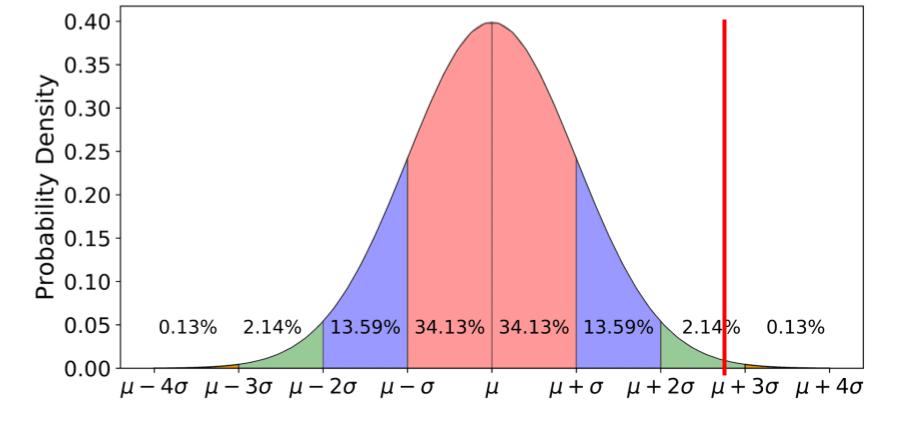
When I was an undergraduate, I participated in a psychological research study that included being administered the Wechsler Adult Intelligence Scale examination, and my overall score was at the 99.44 percentile. That matches up with the IQ score I received on a test in grade school. So my lack of an inner monologue didn’t prevent me from having a high IQ, although how much that means is highly debatable, and one should not confuse intelligence for wisdom.
As for processing speeds, some of my Facebook friends commented how subvocalization could hinder their reading speed. I was a very fast reader as a child, racing through 135 books in first grade, exhausting our K-3 school library before I graduated from third grade, and finishing the SRA box of readings and comprehension tests months early in my sixth grade reading class, which greatly frustrated our teacher. I have never “heard” voices when reading, which I suppose might have sped me along without reducing my comprehension. However, as I have aged, the speed at which I read for pleasure has slowed greatly, and my attention span and stamina have shortened.
Internal Dialogues
Of greater interest to me is that around 80% of people report hearing an “inner voice” when reading silently, and over half report hearing distinct character voices most or all of the time. I’ve never had that experience, and I will now wildly speculate on its possible impacts on me. I haven’t tried to back any of the following with scientific evidence.
A miserable high school boy reading a play, by Microsoft Designer
In junior high and high school, I greatly disliked reading plays in literature class, but I was fine when they were performed, either just vocally or in a live or recorded performance. I suspect that not “hearing” the play internally was a block. I suffered my way through reading Julius Caesar, and I didn’t enjoy it until we watched the 1953 epic movie version. I was grateful that we read the play Death of a Salesman aloud in class, despite the faltering readings of some students, as otherwise I would have had no appreciation for it. I didn’t enjoy reading the play The Crucible, but watching it was a treat. However, after reading the novel The Scarlet Letter, watching a movie adaptation of it did nothing for me.
In 1984, when I was in Washington, DC as a U.S. Presidential Scholar, we toured the Folger Shakespeare Library, but I couldn’t imagine why anyone would want to own a single copy of the First Folio, let alone collect 82 of the 235 known surviving copies. I’d be willing to endure a condensed Shakespeare play, and I admire many of his perfect creative expressions and several of his sonnets, but reading a Shakespeare play is torture for me.
As a youngster, I not only loved to read novels and nonfiction, but I also loved to write essays and articles. I would bang out a family newspaper on our manual typewriter, and I was enthusiastic about editing an elementary school magazine. So when I was ten years old, my father engaged a university student as a creative writing tutor for me. She put me through a variety of exercises, but the dialog I wrote was nothing but dreadful cliches. To this day, I have no “ear” for dialog.
Peter Ustinov as Hercule Poirot in 1982
Decades later, when I was going on weekly day hikes, I started checking out audiobooks on cassette tape to listen to on the long drives and sometimes while hiking. I exhausted the downtown Tulsa library’s collection of Ellis Peters and Elizabeth Peters audiobooks and eventually sampled Agatha Christie. I’d seen Peter Ustinov’s movie portrayals of her detective character Hercule Poirot, and I’d read a couple of her books. They hadn’t made much of an impression, but I was dumbfounded when I listened to her audiobooks at how believable and engaging her dialog could be even when directly narrated from the text. After that, I never read another Christie book, but instead I listened to all 66 of her novels and her 153 short stories in audiobook form.
I have tried to read screenplays, but I find I hate them, and when I am reading a short story or a novel, I don’t form a sharp mental image of the characters, even though I might visualize the settings. My dreams are in color and often have detailed settings, scenarios, and some dialog, but I retain no memories of the sound of any vocalizations. When I see movie or television adaptations of books, I am seldom put off by how an actor looks or talks, unless it clearly violates a description of the character in the text, and my mental image of a character subsequently takes the form I saw in the visual medium. If I see multiple portrayals, I stick with my favorite. I was always puzzled when people who had read a book would watch a movie adaptation and remark, “That isn’t how I visualized him/her.” I had barely visualized them at all, and I certainly never created a voice for them in my head.
All of this has greatly affected my own writing. My essay writing earned me various recognitions, but I have always resisted writing short stories, novels, or plays — anything with dialog — instead sticking with essays, research papers, travelogues, and the like. This blog currently consists of almost 800,000 words across almost 800 posts…with almost no dialog.
So if you have an internal monologue, I hope that you enjoy it, and that it speaks to you kindly and gently. My thoughts, in the form of unsymbolized thinking, are with you.
The modern world is, in many ways, an introvert’s paradise. Technological progress allows me to enact part of the science fiction future I read about in childhood. While practical limits denied us flying cars and human travel beyond the moon, I have at my instantaneous beck and call incredible computing power, world-spanning knowledge, over two hundred million songs, millions of books, and billions of videos.
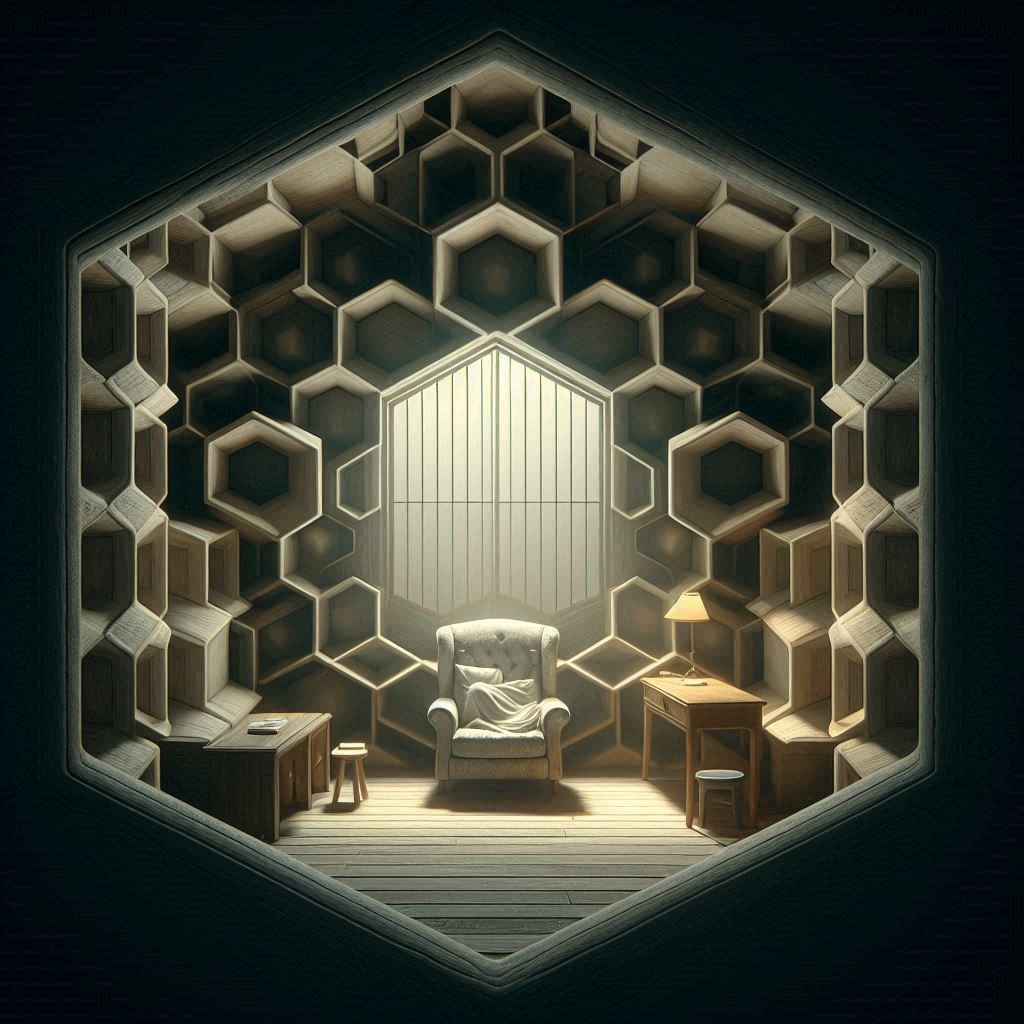
A cell in The Machine, envisioned with the Microsoft Bing Image Creator
However, unmanaged blessings can devolve into curses, and it is striking how technological innovations as well as services like Amazon, DoorDash, and Instacart provide access to a lifestyle that could approximate the dystopian vision that E.M. Forster shared in 1909 with The Machine Stops. If you’ve never read the tale, it is now public domain, and you might explore what influenced many later works, including George Lucas’s THX 1138, Issac Asimov’s The Naked Sun, and Pixar’s WALL-E.
Back in 2000, Robert Putnam’s Bowling Alone documented the decline of social capital in the USA in the second half of the 20th century. He described reductions in many forms of in-person social intercourse, arguing that it undermined civic engagement.
In the February 2025 issue of The Atlantic, Derek Thompson updated the concept in “The Anti-Social Century“, documenting how Americans are now spending more time alone than ever, and arguing that is changing our personalities, our politics, and our relationship to reality.
Consider the change from 2003 to 2022 in average minutes per day spent at home, which spiked during the pandemic and has remained highly elevated:
More time spent at home increased the time spent alone almost three times as much as time spent with family; Source
Granted, time at home does not equate to time spent alone for those with roommates, spouses, and/or children. However, an analysis showed that each additional hour spent at home was associated with an increase of 7.4 minutes in time spent with family, a decline of 5.0 minutes spent with friends, and an increase of 21.0 minutes spent alone.
The same analysis found that activities conducted at home were associated with lower levels of happiness and viewed as less meaningful, although there was a much weaker relationship between time spent at home and sadness and and an inconsistent relationship with stress.
The rise in time spent at home is largest among adults under 35 and smallest among those 55 and older. While younger adults spend less time at home than elders, their time spent at home has risen most sharply, and it is pronounced for those with high levels of educational attainment. Adults are spending more time sleeping and using a computer for leisure and less time shopping, socializing, volunteering, and traveling, but a larger driver was a shift in the location of existing activities.
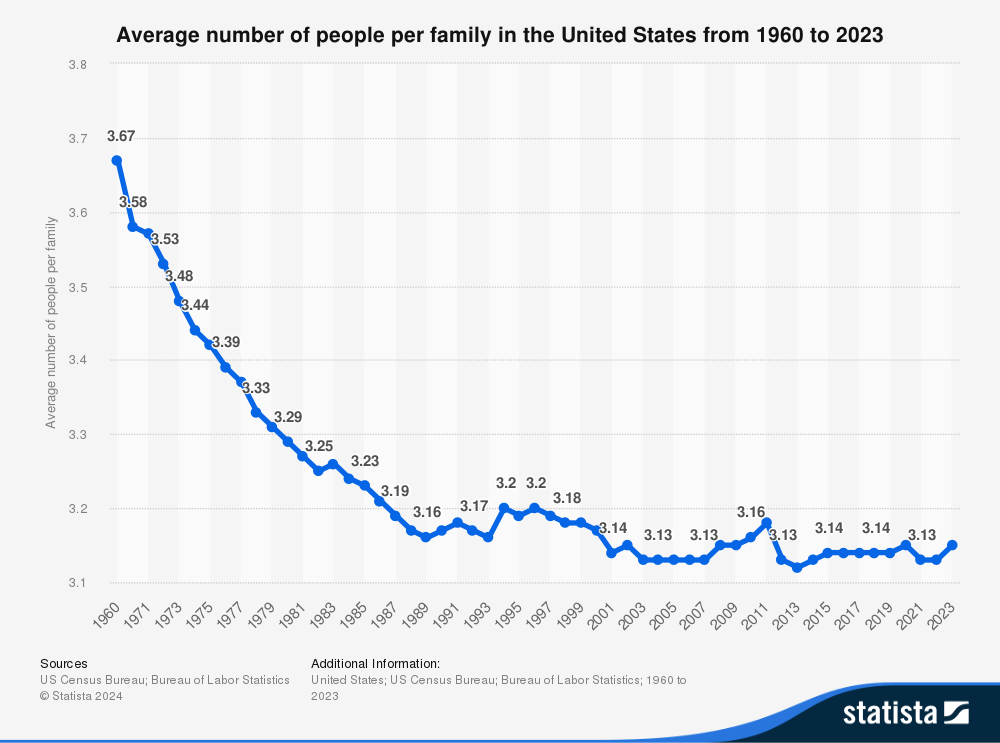
The shutdowns in the early days of the COVID-19 pandemic certainly drove much of that shift in location, including remote work, virtual church services and school, and in-person dining restrictions. The shifts were enabled not only by technology but also by how over my lifetime the size of the average new single-family home has increased by 50% and the share of them with air conditioning has doubled to 98%. Meanwhile, the average number of people per family dropped from 1960 to 1990 before stabilizing.
Note that the y-axis does not start at zero; Source
The shuttering of in-person schools from March through May 2020 by Oklahoma’s State Board of Education forced my wife and I to work remotely, and while we returned to in-person work in August 2020, we also had sixteen virtual days in 2020-2021 unrelated to inclement weather, nine in 2021-2022, and three in each of the later years, many of those in the earlier years due to pandemic-related staffing issues from quarantines and isolations. Some of the folks reporting to me now work remotely during personal or family health issues, while in the past they would have had to take sick leave.
Restaurant delivery
I was startled to read in The Atlantic that 74% of all restaurant traffic came from “off premises” customers in 2023, which means via takeout and delivery. GloriaFood reported that in 2024, nearly 1/3 of people ordered meals online, and the average person ordered delivery 4.5 times per month while dining out only 3 times per month.
The popularity of ordering food online declines with age:
During the pandemic, my wife and I made much greater use of DoorDash for the delivery of restaurant food, and we Gen X introverts have persisted in making frequent use of that service despite its cost.
Online versus in-person retail
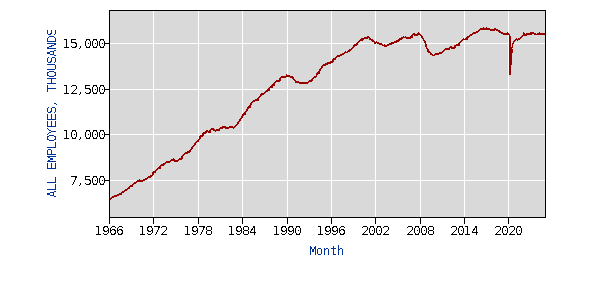
The retail industry has about one million stores in the USA and is its largest employment sector, employing about one out of every four workers nationwide. Despite all of the talk of the “death of retail”, in 2022, physical stores still accounted for 87% of all sales.
The next graph shows the number of retail employees in the USA over my lifetime. Notice how it roughly stabilized a bit above 15 million in this century, with dips in the Great Recession of 2008 and the 2020 COVID-19 pandemic.
Note how the y-axis does not start at zero; Source
The next graph shows the number of private retail establishments in the 21st century. Again, the Great Recession reduced it from 2008-2011, but notice how it has been growing since the COVID-19 pandemic.
Note how the y-axis does not start at zero; Source
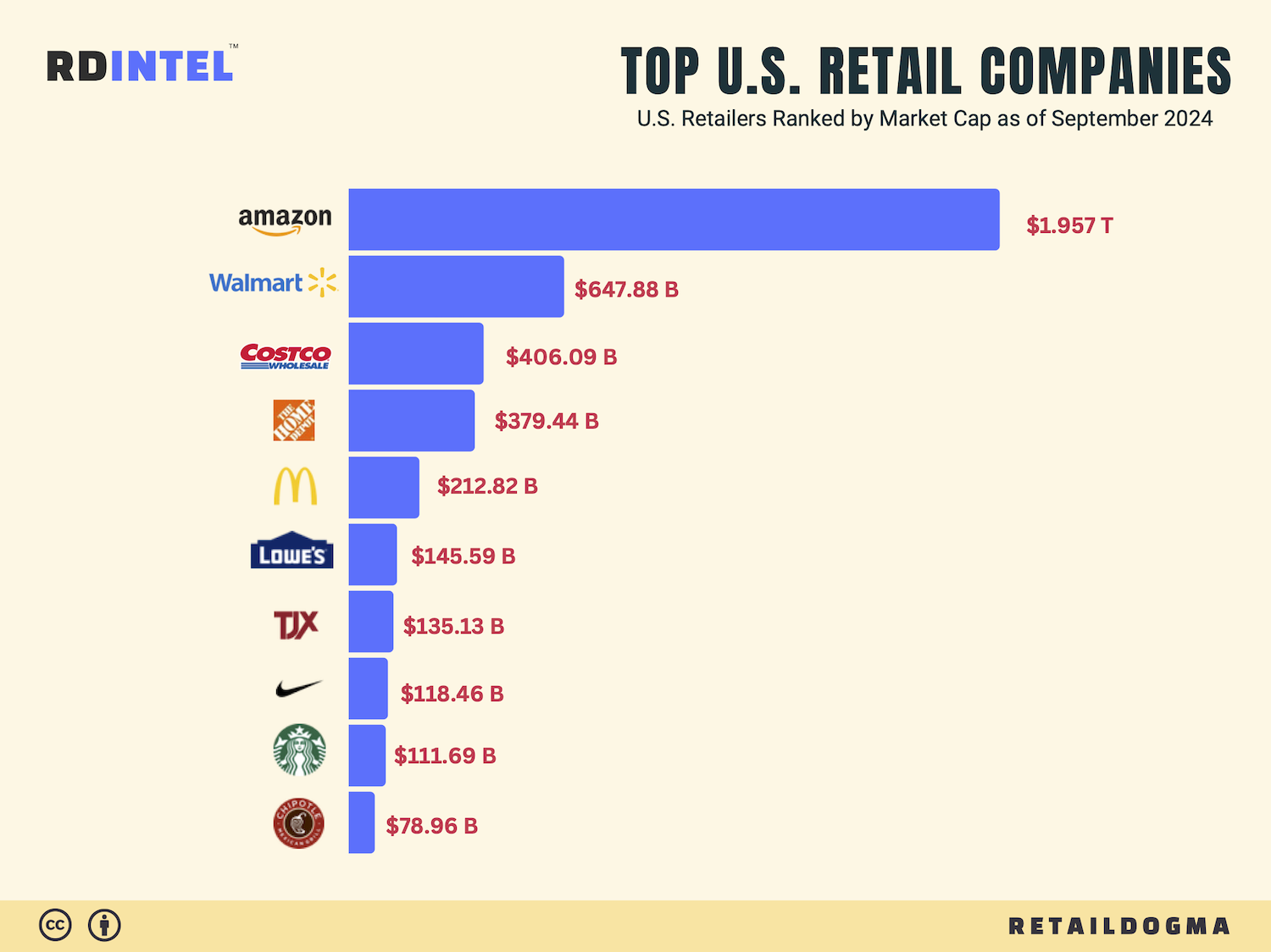
Here are the top retail companies in the USA, ranked by market capitalization:
Amazon is famous as the e-commerce giant which helped doom many department and discount stores. I’ve had an Amazon account since 1998, and it now has about a 40% share of the e-commerce market in the USA, which is over six times larger than that of its nearest rival, Walmart. Amazon does have some physical stores, such as Whole Foods Market, but Walmart has many more physical stores.
I have done most of my shopping online for years, but Wendy still buys many of our groceries at a store. Some of our grocery items, however, have shifted to online. For example, after my paternal grandmother could no longer supply me with homemade black raspberry jelly, I started buying it from Smuckers. They’ve now stopped its production, so I’ve resorted to ordering it from various vendors via Amazon as the small jars available locally were too pricey.
I love my 2020 Kizik Cupertinos, but they stopped making that model, so I’ve tried several later styles
For many years, I bought most of my clothes at J.C. Penney stores in Tulsa, but for well over a decade most of my clothes have been ordered online via Blair Corporation.
I also began buying my Reebok sneakers and Dressports shoes online, although in October 2020 I bought my first pair of hands-free Kizik shoes, and I have bought several more pairs in various styles. I still have a spare unused pair of Dressports as well as of Reeboks in my closet, and it is conceivable that I might never buy any more dress shoes or sneakers, given that I’ll be retiring in June 2026 and after that intend to mostly wear Kizik slip-on shoes except when I’m hiking in my Columbia boots.
The number of retail establishments by market segment shows that collectively the top three of food and beverage, general merchandise, and motor vehicles and parts collectively employ just over half of the retail workers.
Genetics, time, diet, and stress have led to me having six different daily prescription medications, which is one reason I decided to retire in June 2026. I used to make regular trips to Walgreens to pick up prescriptions, but then the store I prefer closed its pharmacy on weekends. Then I had another slew of medications to pick up at CVS when my mother moved into independent living in town.
I grew increasingly frustrated by frequent trips to Walgreens and CVS, finding the latter especially slow. So I shifted all of our chronic medications to Amazon Pharmacy for automatic refills by mail, which has been a true blessing. Wendy still uses Walgreens, and I still rely on it for some vaccinations and short-term prescriptions, but I’m going to the drugstores far less often now.
Between 2016 and 2021, there was a 95% increase in the number of Americans receiving their drugs from home health care, a 45% increase in drugs received from clinics, and a 35% increase from mail-order pharmacies. Over the same period drugs received from long-term facilities dropped by 17%, federal facilities by 9%, and independent pharmacies by 5%. Independent pharmacies have been squeezed by pharmacy benefit managers, with the Oklahoma attorney general alleging that CVS Caremark has been under-reimbursing them.
Home entertainment
Video games have been part of home entertainment for over 50 years. I was never into them much, although I played a few on my TRS-80 Color Computer in the early 1980s and in the 1990s I did play Railroad Tycoon, Sim City, and Myst games on my personal computers, and this year I’ve played some pinball on my Mac.
Arcades games were a big deal in my teenage years, although I wasn’t a customer. I have noticed retro arcades appearing, but the one in Bartlesville and another I’ve seen on YouTube seem to focus on old games. I guess it shouldn’t surprise me that revenue from arcade gaming collapsed in the 21st century, with most revenue now coming from mobile, then personal computers and consoles.
Back in the mid-1950s, movie studios panicked over the rising popularity of television, implementing wide screen ratios and eventually improved sound, and the gimmick of three-dimensional movies which didn’t last long and made a brief odd resurgence in the early 2000s.
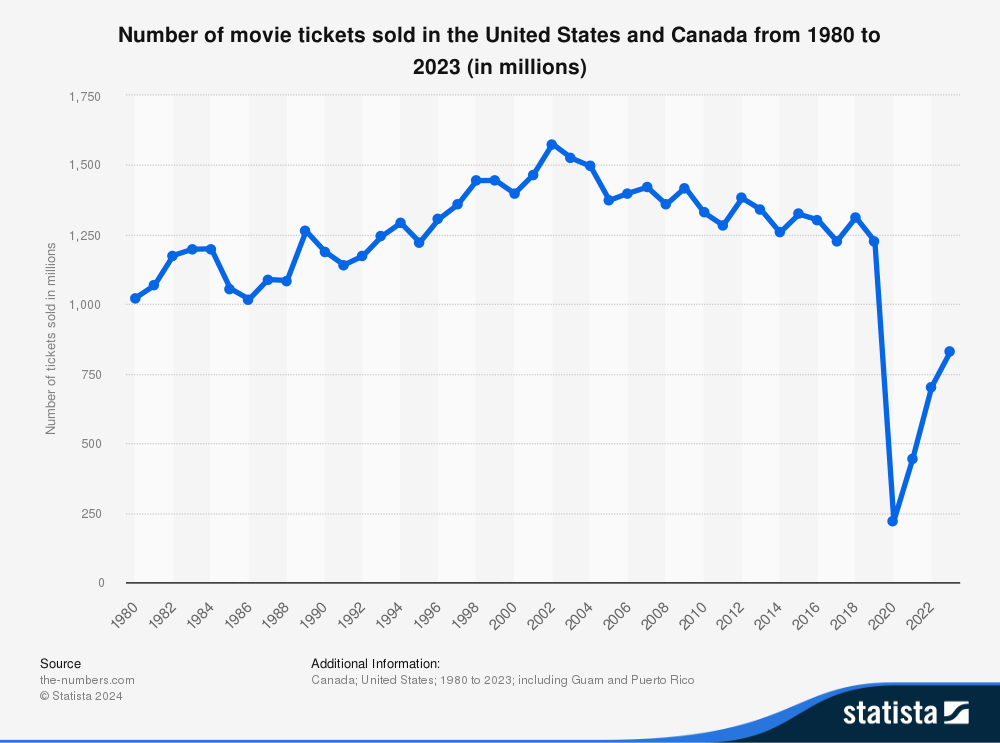
I drastically curtailed my visits to cinemas years ago, and Derek Thompson reported that today the typical American adult buys only three movie tickets a year while watching almost 19 hours of television (about eight movies worth) each week. He also shared, “Men who watch television now spend seven hours in front of the TV for every hour they spend hanging out with somebody outside their home. The typical female pet owner spends more time actively engaged with her pet than she spends in face-to-face contact with friends of her own species.”
You might think that movie ticket sales were okay until the pandemic, but bear in mind that all the while the population was increasing. The per capita movie ticket sales declined from 5.5 tickets per person in 2002 to 2.5 tickets per person in 2023, a 54% decline.
While traditional television viewing has collapsed among younger viewers, the time spent per day with digital media continues to grow.
Teenagers & Smartphones
This year, our school district’s administrators read and discussed The Anxious Generation by Jonathan Haidt, which argues that the spread of smartphones, social media, and overprotective parenting have led to a “rewiring” of childhood and a rise in mental illness.
Derek Thompson’s reporting points out, “The typical person is awake for about 900 minutes a day. American kids and teenagers spend, on average, about 270 minutes on weekdays and 380 minutes on weekends gazing into their screens, according to the Digital Parenthood Initiative. By this account, screens occupy more than 30 percent of their waking life.”
“Young people are less likely than in previous decades to get their driver’s license, or to go on a date, or to have more than one close friend, or even to hang out with their friends at all. The share of boys and girls who say they meet up with friends almost daily outside of school hours has declined by nearly 50 percent since the early 1990s, with the sharpest downturn occurring in the 2010s.”
I’m struck by the huge declines after 1990, thus over the course of my teaching career, in the percentages of high school seniors who have consumed alcohol, got a driver’s license, and who work, along with a significant but more modest decline in how many have had sexual intercourse.
from The Anxious Generation
Haidt argues that smartphone use by teens correlates with elevated teen anxiety and depression, and provides plenty of data to augment the anecdotal evidence that many teenagers and adults are addicted to their smartphones. It is no surprise that social media can exacerbate self image problems, especially for girls, and that negative consequences of various technologies and societal changes, including economic issues, can sometimes lead to a failure to launch for young adults.
While there is a whiff of moral panic about it all, I agree that restricting smartphone use at school would decrease distraction and increase socialization, and adult smartphone usage often negatively impacts community fellowship and parenting. There are also a number of adults whose smartphone addiction appears to be both a symptom of and contributor to their attention deficit hyperactivity disorder.
Both stronger and weaker bonds
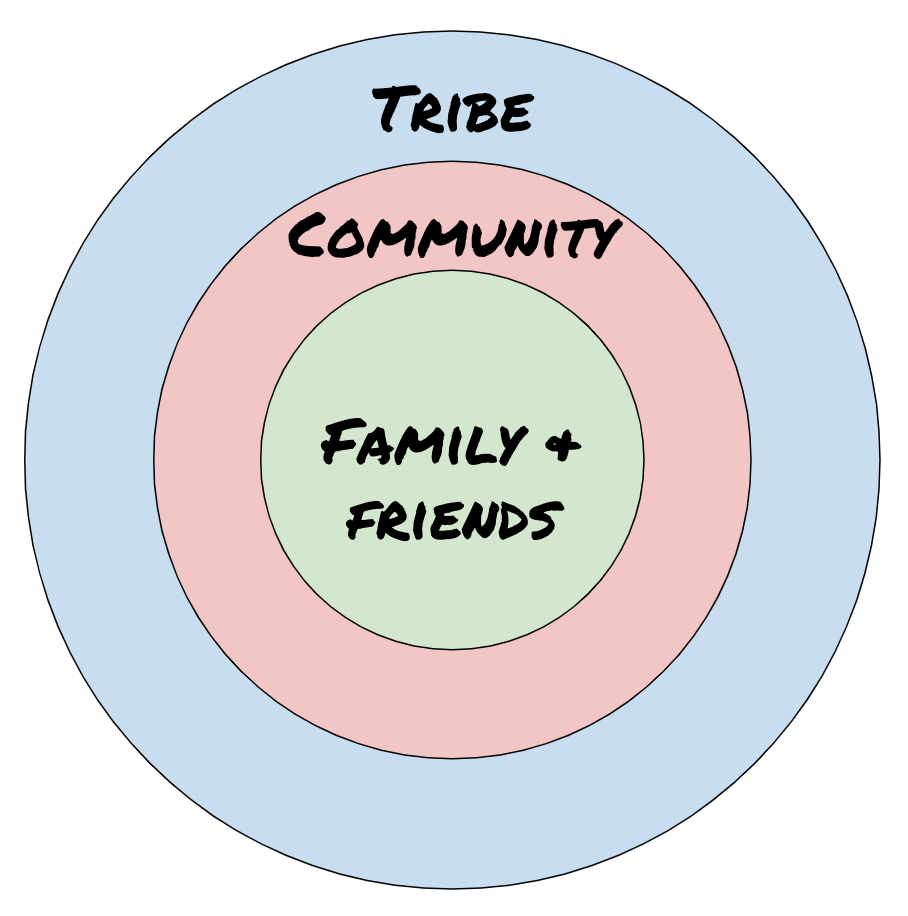
Derek Thompson points out, “Home-based, phone-based culture has arguably solidified our closest and most distant connections, the inner ring of family and best friends (bound by blood and intimacy) and the outer ring of tribe (linked by shared affinities). But it’s wreaking havoc on the middle ring of ‘familiar but not intimate’ relationships.”
He points out how the erosion of the village, the middle ring, has coincided with poisonous partisanship. In a 2021 poll, “nearly a third of college students who identified as Republican said they wouldn’t even go on a date with a Democrat, and more than two-thirds of Democratic students said the same of members of the GOP.”
Thompson argues, “Social disconnection also helps explain progressives’ stubborn inability to understand Trump’s appeal.”
He adds, “Too many progressives were mainlining left-wing media in the privacy of their home, oblivious that families down the street were drifting right. . . .If progressives still consider MAGA an alien movement, it is in part because they have made themselves strangers in their own land.”
Thompson also points out how the Amish famously shun many modern innovations, such as cars and television, but many do have refrigerators and washing machines. Amish adopt only those innovations that support their religious and communal values. I am reminded of how my maternal grandparents shunned television and movies and restricted the radio to news and religious broadcasts.
Thompson offers this insight: “Although technology does not have values of its own, its adoption can create values, even in the absence of a coordinated effort. For decades, we’ve adopted whatever technologies removed friction or increased dopamine, embracing what makes life feel easy and good in the moment. But dopamine is a chemical, not a virtue. And what’s easy is not always what’s best for us.”
That is something for us to ponder, not only alone at home but in conversation with friends and family…and maybe strangers in our community, before the Machine stops.






























 Meador Manor