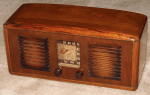
Vintage TV

Life is all about change, and television technology, programming, and my own viewing habits have evolved significantly over the past half-century. As broadcast and cable television diminish in favor of streaming, and the optical disc fades away, I’m taking a look back at television as I knew it.

Cathode Ray Boob Tubes

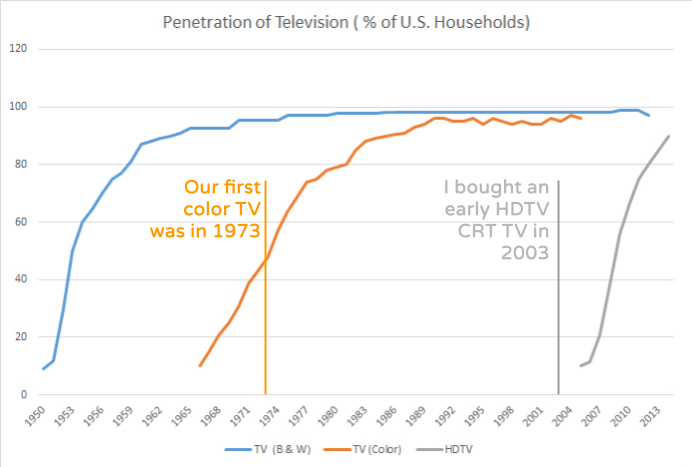
The chart shows the growth in the penetration of television technologies into U.S. households from 1950 to 2013.
Original chart uploaded by BronHiggs in 2016 [Source]
Watching mid 1960s TV
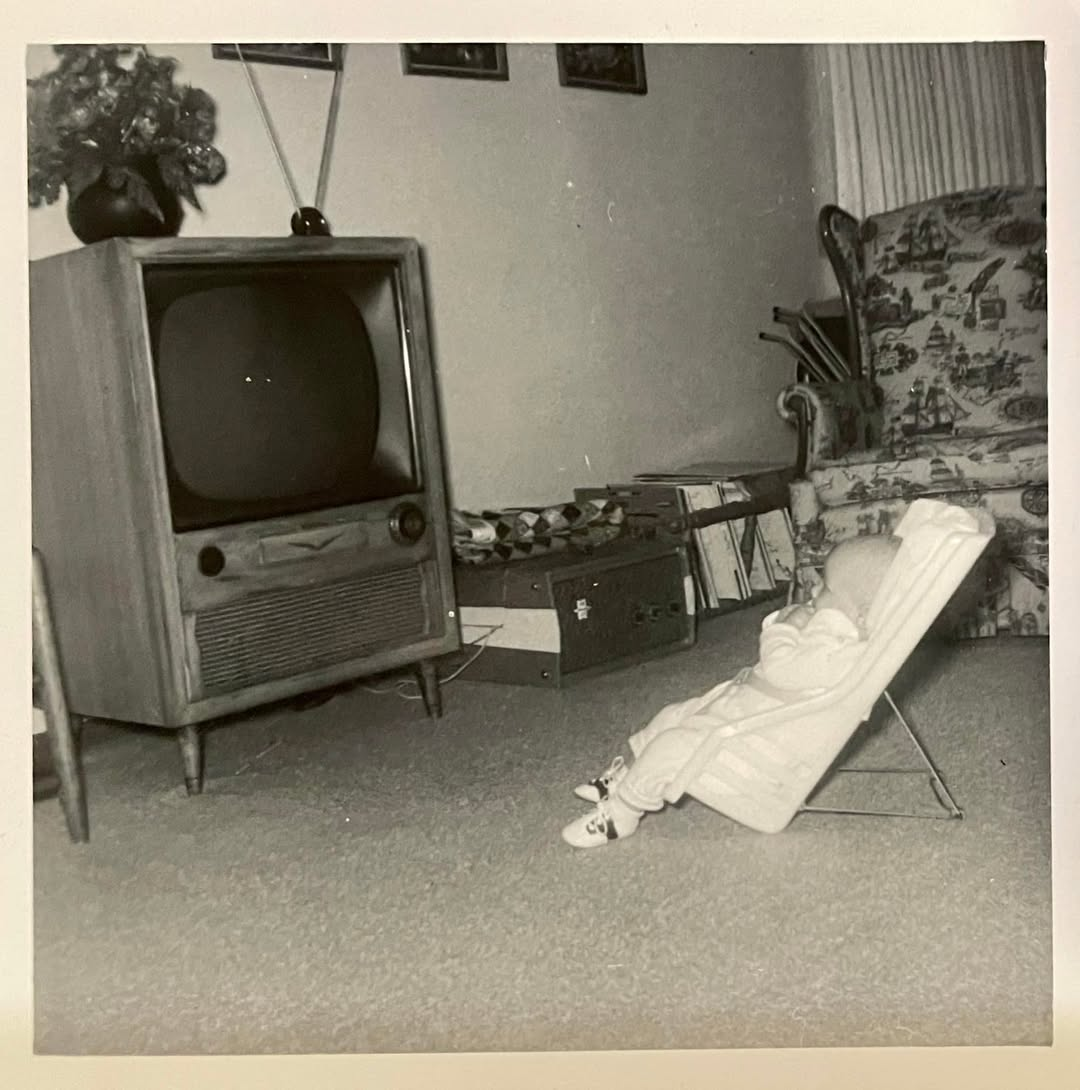
My parents’ black-and-white RCA Victor television in the 1960s

By the late 1950s, 4 out of 5 households had a television, and that proportion had a color television by the early 1980s and a high-definition set by the early 2010s.

I’m one of the eldest members of Generation X, and my Greatest Generation father and Silent Generation mother only had black-and-white televisions until 1973. Our first home television was a RCA Victor in a wood cabinet with rabbit ear antennas, and I remember how you had to turn it on and wait. It took several seconds for the vacuum tubes in its circuitry to heat up and the sound to begin, and the picture tube remained dark for about a minute until the cathode ray gun could heat up. When you shut the set off, the picture would collapse into a glowing dot for some time.
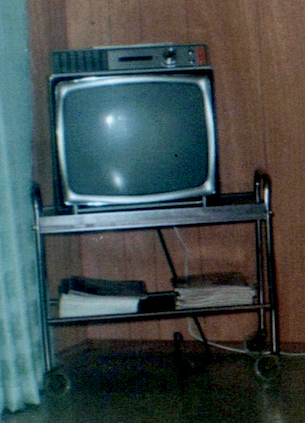
1967 portable television
The set my father won at a hunt

In 1967, my father won a 19″ RCA portable television at a hunt. It was placed on its rolling stand at our bluffside cabin on Table Rock Lake in southwestern Missouri.

That television was also slow to warm up, and tuning it was more difficult, as the ABC affiliate we could pick up was on an ultra high frequency (UHF) channel, somewhere in the 20s as I recall, instead of the very high frequency (VHF) channels 2-13. At that time, our home in Oklahoma City was less than three miles from the television broadcasters’ aerials on Britton Road, so we just used set-top rabbit ear antennas there. But at our cabin, the NBC and CBS affiliates were KY3 and KTTS/KOLR Channel 10 in Springfield, Missouri over sixty miles away, requiring the use of a big antenna mounted on a three-story pole outside.

Old-fashioned UHF tuner
We had to tune in UHF stations on a slide tuner

Eventually we could pick up an ABC affiliate in Arkansas as well, but that required re-aiming the big antenna and using a slide-style tuner on the television to tune in on the UHF band. I had to put on gloves and go outside to manually rotate the antenna pole (we didn’t have a motorized aimer like some around us did) and then return to the television, turn its channel knob to U, and then twist the knob’s perimeter dial to tune in the UHF station, depressing that dial while turning it for fine tuning. If I hadn’t re-aimed the antenna quite right, I might not be able to get a clear signal and would then have to go back outside and repeat the process. I definitely tended to stick with NBC and CBS while at the cabin!

Zenith color CRT
Our first color TV looked much like this, but we didn’t have a Space Command remote control

Color television broadcasts began in the USA in 1954, but it wasn’t until 1973 that my father sprung for a television with a 23″ cathode ray tube with three electron guns aimed by a shadow mask at red, green, and blue phosphors. At that age, I could still hear very high frequencies and my folks took me with them to Delmar Buckner’s shop to ensure I didn’t hear noise from the Zenith console they purchased.

I was fascinated by the technology, avidly reading the user manual. One feature the television lacked was a Space Command remote control. My aunt and uncle in Kansas had long had a television with that handy little box. When you pressed a button on it, a spring-loaded hammer struck an aluminum rod in it, and the television would respond to the resulting ultrasonic tone. Unlike later remotes that produced infrared light signals, you didn’t need to aim the remote nor did it require batteries.

Ultrasonic remote control
The Space Command remote that my Dad didn’t spring for
TV controls
Our first color TV had several controls

But at home in OKC we still had to get up and manually turn on and off the set and adjust the channel or volume knobs. Even with its “Chromatic Tuning” button, we would also have to fiddle with its contrast, brightness, tone, peak pix, and vertical hold knobs.

I appreciated how that set came on instantly, since when turned off it still drew enough power to heat the electron gun. However, my parents would always unplug the set when we went on vacations, and when we returned, I would plug in the set, turn it on, and for that first viewing I would have to wait for the picture to show up just like on the older sets.

Occasionally the heavy set would malfunction, and Mr. Buckner would make a house call to work on the circuitry. That sort of home repair is unimaginable today, although I do know some people hire specialists to come tune their sophisticated audiovisual systems.

The cabin remained stuck with the old black-and-white television until 1986, by which time 9 out of 10 households had a color set. I was halfway through my undergraduate studies and vacationing with a friend at the cabin, stuck inside on a rainy day, and I had had enough of the 1967 B&W TV. A Wal-Mart had just opened in Cassville, so we drove through the rain for 17 miles to purchase a new color television. We then had to drive another half-hour through the hilly Ozarks back to the cabin, and by the time we had the new set going the rain had ended, but at least the cabin had finally received a belated audiovisual upgrade.

My 13" Zenith TV

Four years earlier, I had received my own 13″ Zenith color television, complete with infrared remote. It was on a desk in my bedroom and was not merely a TV but also the low-resolution monitor for my TRS-80 Color Computer. My parents were happy to get it for my computer since they knew that in a couple of years I could take it with me to college for watching television.

In the freshman dormitory, I made the mistake of placing my fancy DUōFONE-140 telephone next to my television, and over a few weeks the magnet in its handset magnetized the shadow mask, deflected its electron beams, and created a color shift in the lower left corner. I had to move the telephone across the room and degauss the TV.
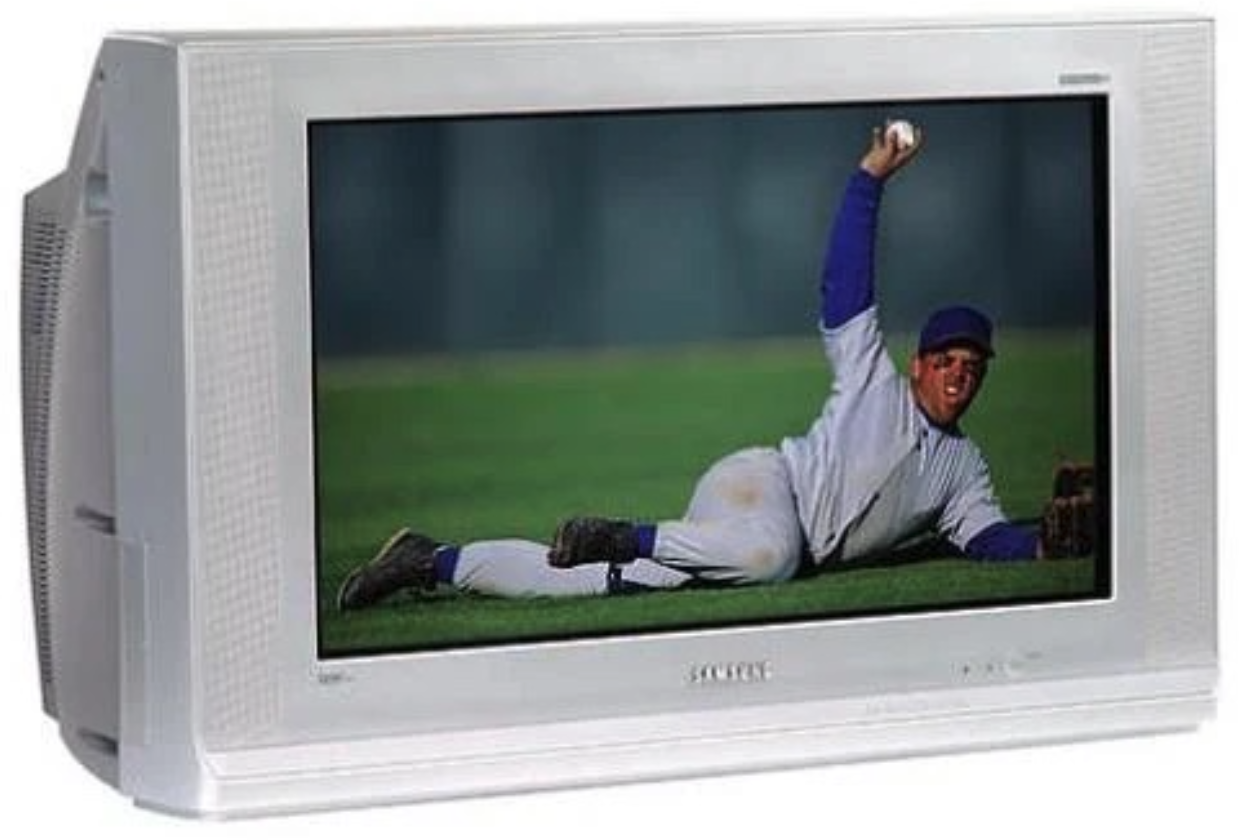
My first HDTV
My first HDTV was a 30″ CRT that weighed over 120 pounds, and I’m certain I never watched sports on it

Around 1987 I moved to an apartment with a long living room where my 13″ television was too small. My father gave me a used 19″ Zenith color television, and I used that until 2003, when I paid $1,000 for a 30″ Samsung wide-screen flat CRT television. I liked its 16:9 aspect ratio and that it had about 800 lines of resolution, so it was an early high-definition set that could accept 1080i signals. However, it was still a cathode ray tube set and consequently weighed over 120 pounds. I had to buy a special swiveling stand for it, and I still use that stand in our living room for our lightweight 55″ OLED television.

Back in 1994, I had purchased our current house in Bartlesville. It came wired for cable television, but in 1995 Star Trek: Voyager was about to premiere, and none of the cable channels was slated to carry it, while a broadcaster in Tulsa would carry it. I waited, hoping things would change, but the show premiered on January 16, 1995, and I still couldn’t see it. So on January 19-21, I spent $157 on a big VHF/UHF antenna that my friend Carrie helped me mount to the chimney and wire into the television with a booster amplifier. After all that was set up and working, wouldn’t you know, one of the cable channels announced it would start carrying Voyager! So I only used the antenna when the cable was malfunctioning or on occasion after 2008 when I cancelled my cable TV service.

The old cathode ray tube technology is still valued by some retro gamers who like its fast response time for vintage computer games and consoles, and I was fascinated by how it worked. If you want a history of the technology, I recommend the 1996 book Tube: The Invention of Television in the Sloan Technology Series, but you could also just watch Tim Hunkin and the late Rex Garrod:

I finally got away from cathode ray tubes in 2010, when I spent $800 on a 40″ Sony LCD HDTV. That set is now hanging in an office at the district’s Education Service Center, connected to a Chromebox for use in conferences, since in 2017 I spent $1,600 on a 55″ LG OLED HDR 4K television. That fancy set is better in every way than the ones I grew up with, but the irony is that I mostly use it to watch low-resolution VHS aerobics tapes I recorded off Lifetime television 30 years ago…with the sound off. I haven’t regularly watched any television shows since 2009 when the Battlestar Galactica reboot ended, and almost all of my video entertainment is via YouTube on my iPad using bone conduction Bluetooth headphones to avoid disturbing Wendy, whose hearing is far more acute than mine.

1960s and 1970s TV Programming

However, as an only child, while I was growing up I watched a lot of television, along with reading scads of books. The first show I remember watching was Ed Sullivan with plate spinning by Erich Brenn, but the musical segments were the parts with staying power.

Bear in mind that when I saw this, it was on a black-and-white television

Regular children’s shows I enjoyed were Captain Kangaroo and very politically incorrect Mr. Magoo cartoons that aired each morning on KWTV at the end of the boring Evergreen Farm Report with Bill Hare, who later lived just around the corner from us.

I watched cartoons and live-action children’s shows all morning on Saturdays, especially enjoying anything by Sid & Marty Krofft.

On weekday afternoons when I was very young, I would watch the Foreman Scotty show on WKY television, and I got to sit on Woody the Birthday Horse twice at their studio. My only memory of the experience is of being backstage in a dim hallway and them showing us Flintstones cartoons on a monitor to keep us entertained. However, I found that terribly confusing, as we were seeing that on a television at the wrong time of day…I was so used to live television that it was a revelation that they could show something on a closed-circuit system. Decades later, I showed Wendy the horse in the Oklahoma History Center, and she was mightily unimpressed.
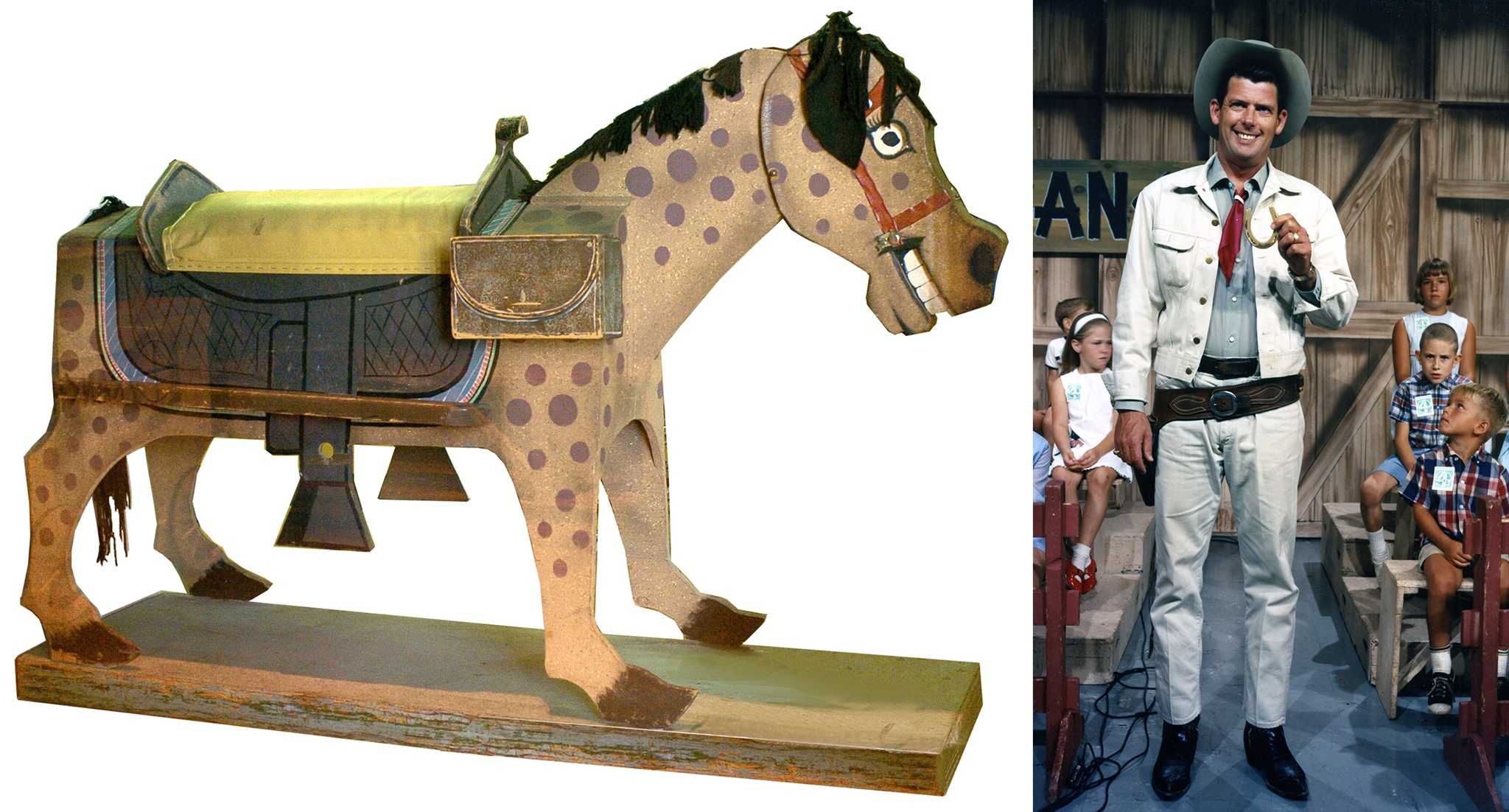
Foreman Scotty show
Woody the Birthday Horse and Foreman Scotty

Another childhood favorite was HOHO the Clown with Pokey the sock puppet on KOCO Channel 5, but I didn’t particularly care for Miss Fran on KWTV.

Sundays were less rewarding. Before church, I would watch Gospel Singing Jubilee, Davey and Goliath, and Jot the Dot, and on Sunday evenings my parents would watch Jude N Jody, Porter Wagoner, and Hee Haw.

I was a music fan, and in prime time from 1969-1971 my favorite shows were The Glen Campbell Goodtime Hour and The Johnny Cash Show. On weekdays, if I wasn’t at school, there were lots of soap operas, which I didn’t understand. I remember how my mother would watch All My Children, and my being confused as to why Erica put up with the scoundrel Nick.

Right after that, we would watch the noon news on WKY Channel 4 with George Tomek, weatherman Jim Williams, and Bob Barry, Sr. with sports; that was several years before the legendary Linda Cavanaugh came along. At the time, they didn’t use a set for that newscast. Instead, it looked like a production of Our Town. Tomek just sat behind a podium with a spotlight on him, and Jim Williams had a few wall-mounted meters and one rotating cube with different formica maps, which he wrote on with water-based paint that was dispensed via a wick in a glue dispenser.

Much more to my liking were game shows like Password, which I enjoyed watching while eating fish sticks and catsup.

My favorite show of all was, of course, Star Trek. Reruns were shown every weekday afternoon in the 1970s, and I made my mother or any friends who were around stop and watch it with me.
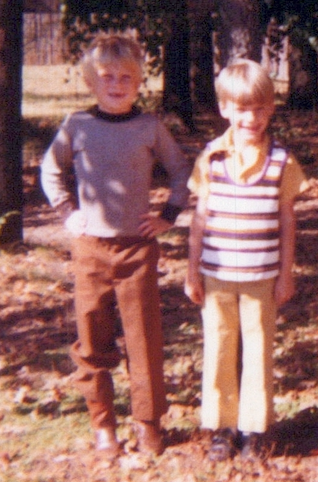
Gene and I loved The Six Million Dollar Man

My favorite prime time television show was The Six Million Dollar Man, which had a magnificent title sequence. Gene Freeman, who died in his early 50s of a brain tumor, was my best friend in elementary school. Although he moved away to attend a different school, for years we still played together each Saturday at each other’s homes.

We avidly watched the show and would frequently make up our own adventures to act out. Gene was more athletic and fascinated with motorized vehicles, so he was always the bionic cyborg Steve Austin. I played his boss, Oscar Goldman.

My mother would think that made sense, as she once admonished me, saying, “I don’t know why the neighborhood kids let you boss everyone around when you play.” She says I responded, “But mother, they simply have no imagination!”

As I grew up, I convinced my parents to get cable TV after it became available in OKC in 1980, and I watched a lot of music videos on MTV. Another TV highlight in 1980, when I was still in junior high, was the Shogun miniseries, which led me to read several books in James Clavell’s Asian saga.

My favorite shows eventually shifted to things like St. Elsewhere, L.A. Law, and Moonlighting, and some of the last shows I watched were escapist fare such as Lois & Clark and Babylon 5 in the 1990s, as I steadily drifted away from watching series to watching movies instead.

Movies on TV

Until the 1980s, most of the movies I saw were shown on network or local affiliate television, interrupted by plenty of commercials. Movies made after the mid-1950s were often widescreen, so they were usually shown in pan-and-scan on TV, since 16:9 widescreen televisions did not become popular until in the late 1990s, and I didn’t have one until 2003.

I remember periodic prime time network showings of the 1939 classics The Wizard of Oz and Gone with the Wind, The Ten Commandments of 1956, and various early films from the James Bond franchise. Eventually OKC gained some independent UHF stations (OKC did not have cable television until the early 1980s), and I could watch old B-movies on the weekends. Some memorable ones were Tarantula, William Castle’s The Tingler, and the original The Fly from 1958.

Gloria and Jim Berkey
Trust House Jewelers hosted late night movies on OKC TV

When I was a teenager, I watched some films from 10:30 p.m. to midnight on Sundays via Trust House Theater, which was hosted by jewelers Jim and Gloria Berkey. Their interstitial commercials always had them displaying gaudy gold nugget rings and diamond jewelry, which Jim would always say was, “Paved in diamond property!” as Gloria wriggled them on a tabletop to make them sparkle. They would pre-tape their segments, and sometimes things went awry. My favorite was when the movie was Jesus Christ Superstar and at the end of a commercial segment, Jim turned to Gloria and said something like, “Let’s get back to the movie. I just love these westerns!”

One of the oddball characters of OKC television was Count Gregore, but I never cared for his schtick. Far more to my liking, although it didn’t begin until 1988 when I was about to graduate from college, was when B.J. Wexler hosted the OETA Movie Club.

I became enamored of Alfred Hitchcock’s films by seeing them on television, although his Alfred Hitchock Presents television anthology was off the air before I was born. I sought his movies once VHS videotapes became available for rent in the 1980s. However, videocassette recorders were still quite expensive, so I would have to rent one along with the cassettes. I usually rented them at Soundtrak in OKC and Norman, which was also where I bought 45 rpm 7-inch vinyl singles.

2001 Sony VCR
My 2001 VCR is still going strong and is used five days a week

I was finally able to purchase my own VCR when I was in college, and I was grateful to discover that a small video store in downtown Norman stocked many of Hitchcock’s movies on VHS. In 1990, a year after I moved to Bartlesville to teach, I invested $400 in upgrading to a Sharp 4-head VCR. In 2000, I spent $76 having it repaired at Balentine TV on Tuxedo Boulevard, and a year later I purchased a Sony Hi-Fi VCR for $150. I still use that one each weekday morning in 2025 to work out to aerobics shows I taped from 1993-1997.

That old thing has outlasted a number of devices that offered superior recording formats: a $333 DVD recorder from 2004, a $75 DVD player from 2005, a $200 HD-DVD player from 2007, a $265 Sony Blu-ray player from 2008, and multiple TiVo HD DVRs.

streaming services
We just stream movies on these services nowadays

My last optical player is a Sony Ultra HD Blu-ray player that I purchased in 2019 for $152. I still have a cabinet full of discs, but now whenever Wendy and I fire up the system to watch a movie at home, we almost always stream it with the Amazon Prime app on the television. If Amazon doesn’t have a movie, I’ll check to see if I can stream it with YouTube. The only time we use my Apple TV, which in 2017 was the third one I had purchased, is when we’re mirroring video from one of our iPads.

The era of the optical disc for computer data, audio, and video is winding down. Compact discs debuted in the early and mid-1980s for audio and computers, respectively, and DVDs debuted in the late 1990s, but now few computers come with any sort of optical drive, and consumers stream both their music and their videos thanks to widespread high-speed internet access.

In 2008, Sony’s Blu-ray beat out HD-DVD in a format war, but disc sales began to slide. Ultra HD Blu-ray players supporting 4K resolution of 3840×2160 came out less than a decade ago, but that failed to halt the decline. As of early 2025, Best Buy has stopped selling and Netflix has stopped mailing discs, Redbox has gone out of business, Samsung and LG no longer produce any players, and Sony has killed off recordable Blu-ray. The only remaining major producers of video optical disc players are Sony and Panasonic.
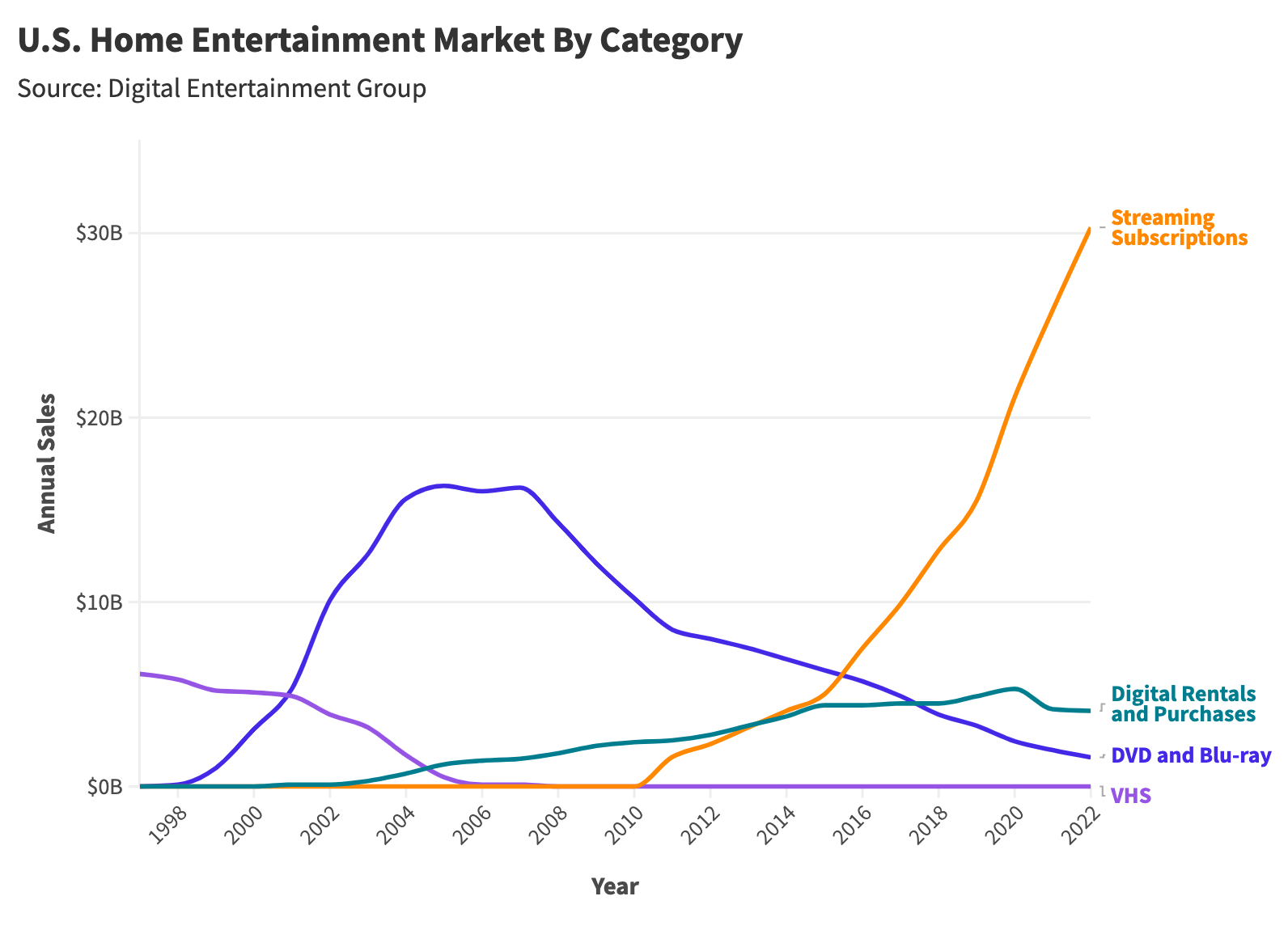
Physical media is now a niche market [Source]

Die-hards who insist on owning their media and value the better picture quality of an Ultra HD Blu-ray over 4K streaming may be able to keep discs alive in a niche form. After all, enthusiasts have somehow kept vinyl from going completely extinct, and my own continued reliance on VHS tapes I recorded from 1993 to 1997 shows that some optical discs will remain in use for decades to come, regardless of their fate in the marketplace. But once Blu-ray players are no longer being manufactured, movie studios will eventually reach a point where the profit in producing discs is too marginal to continue. One alternative will be high-quality digital downloads, such as Kaleidescape, but currently only the wealthy can afford that service, and collectors want the physical discs, cases, and inserts. I greatly enjoy the extras bundled on collector discs, and wish that streaming services made it easy to access similar bonus documentaries and the like, but for now those are marketed as reasons to buy discs.

Returning to traditional television shows, those were already dying off over a decade ago, except among the oldest viewers. Consider these charts from 2010-2015:

Decline in traditional TV viewership
Over a decade ago, traditional TV was losing the future [Source]
[Source]

Digital media in general overtook traditional media five years ago, and digital internet activities continue to siphon off time from traditional media such as print, radio, and TV.

Our 55″ TV will get more use in about 1.5 years, but probably not for traditional television

I’ll be retiring in the summer of 2026, and Wendy will likely continue working for a few years. Some of my iPad viewing will switch back to the big screen when she isn’t home, so our big television will be on for more than just my aerobic workouts and the occasional shared movie. But I will also be out walking, reading more books on my Kindle, listening to more books with Audible, and continuing to write blog posts and research local history. The boob tube may have become a dream screen, but it will have plenty of competition.
Posted in HDTV, history, nostalgia, technology, video | Leave a comment

OKC 1970s Urban Renewal: A Myriad of Issues

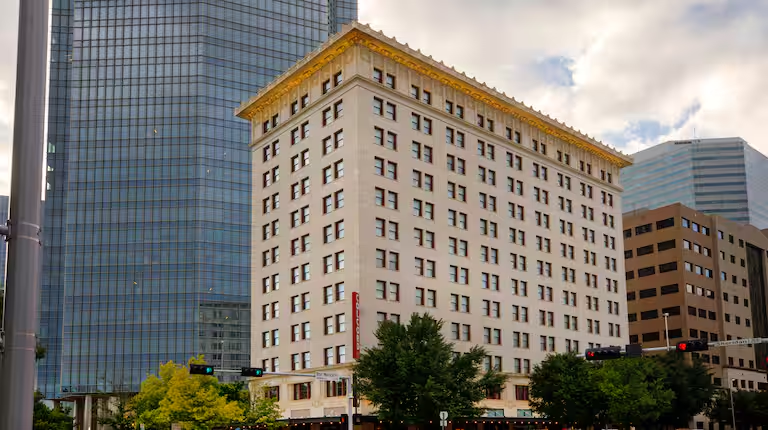
Three months ago, Oklahoma City officials filed their plan to demolish The Myriad. Oh, yes, it was most recently known as Prairie Surf Studios, and back in 2002, 30 years after it opened, it had been renamed the Cox Business Services Convention Center — but it will always be The Myriad for me.

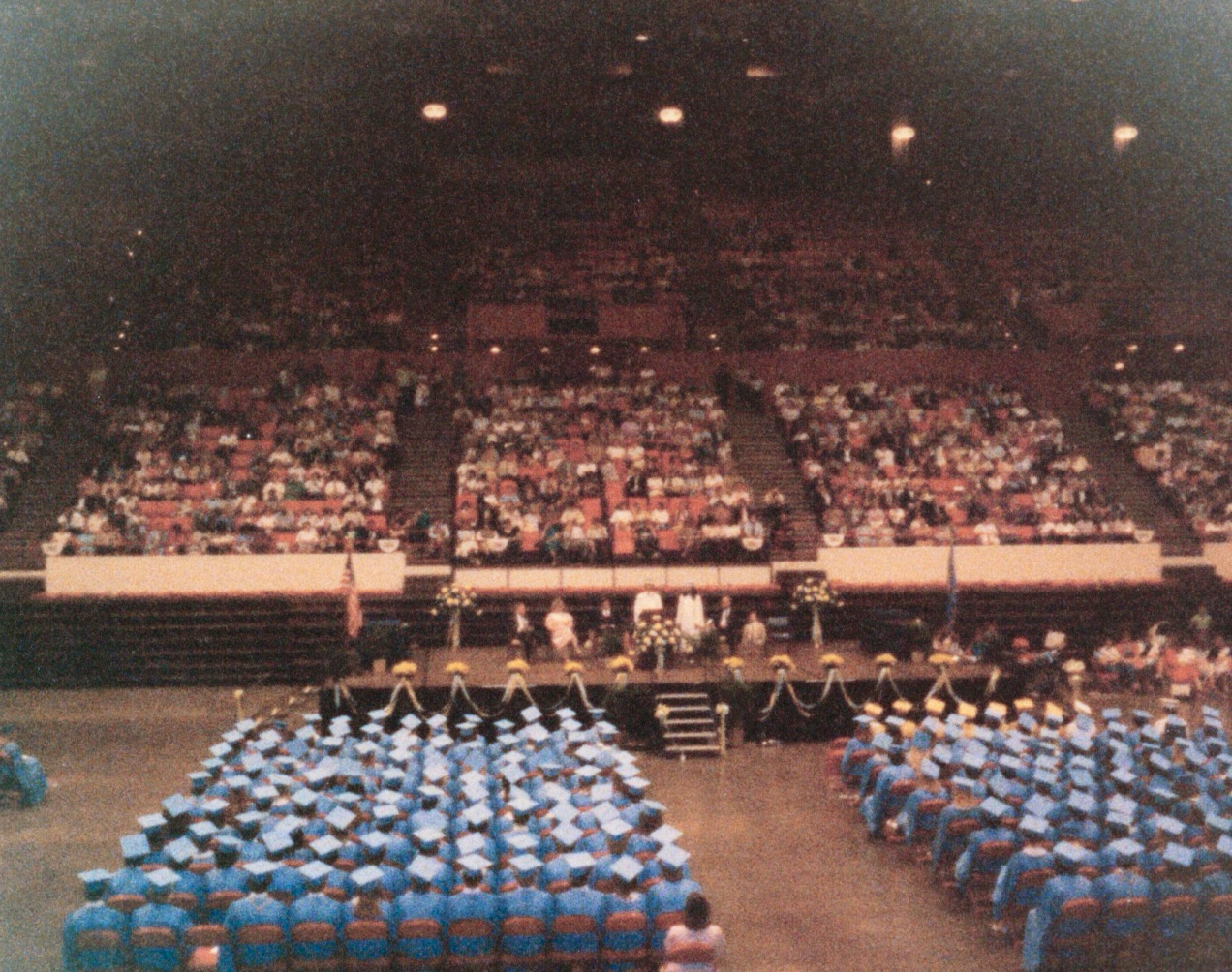
PC West commencement
That’s me at the podium in The Myriad at my high school graduation

They’re tearing it down to make way for a one billion dollar arena. So soon The Allen Morgan Street Memorial Myriad Convention Center will lose its existence, decades after it lost its name.

The destruction of that brutalist convention center in my hometown, which hosted both my junior and senior proms and high school commencement, along with several conventions I attended, prompted me to compile the story of Oklahoma City’s Urban Renewal projects of the 1970s. I grew up in that era, visiting my father’s offices in the First National Complex, and my mother worked in the Skirvin Tower when I was a teenager, so I have scattered memories of this traumatic tale.

The Plan

Oklahoma City’s downtown began to falter as early as 1954, when Sears moved from downtown to where I grew up knowing it to be: at NW 23rd and Penn, with the old Shepherd farm to the west becoming the state’s first enclosed mall a decade later. Other stores either followed Sears or folded, and by 1962, 53 downtown retailers were gone. City leaders Dean McGee, Stanley Draper, and E.K. Gaylord pushed for Urban Renewal, and businessmen hired high modernist architect I.M. Pei to redesign the central business district.

His grandiose initial plan called for redeveloping a whopping 70% of downtown, clearing huge swaths of fine-grained commercial development from the early 20th century. Click any image in the post for the full-resolution view.

Pei's clearance and redevelopment plan
I.M. Pei’s 1964 plan called for clearing and redeveloping most of downtown Oklahoma City [Source]

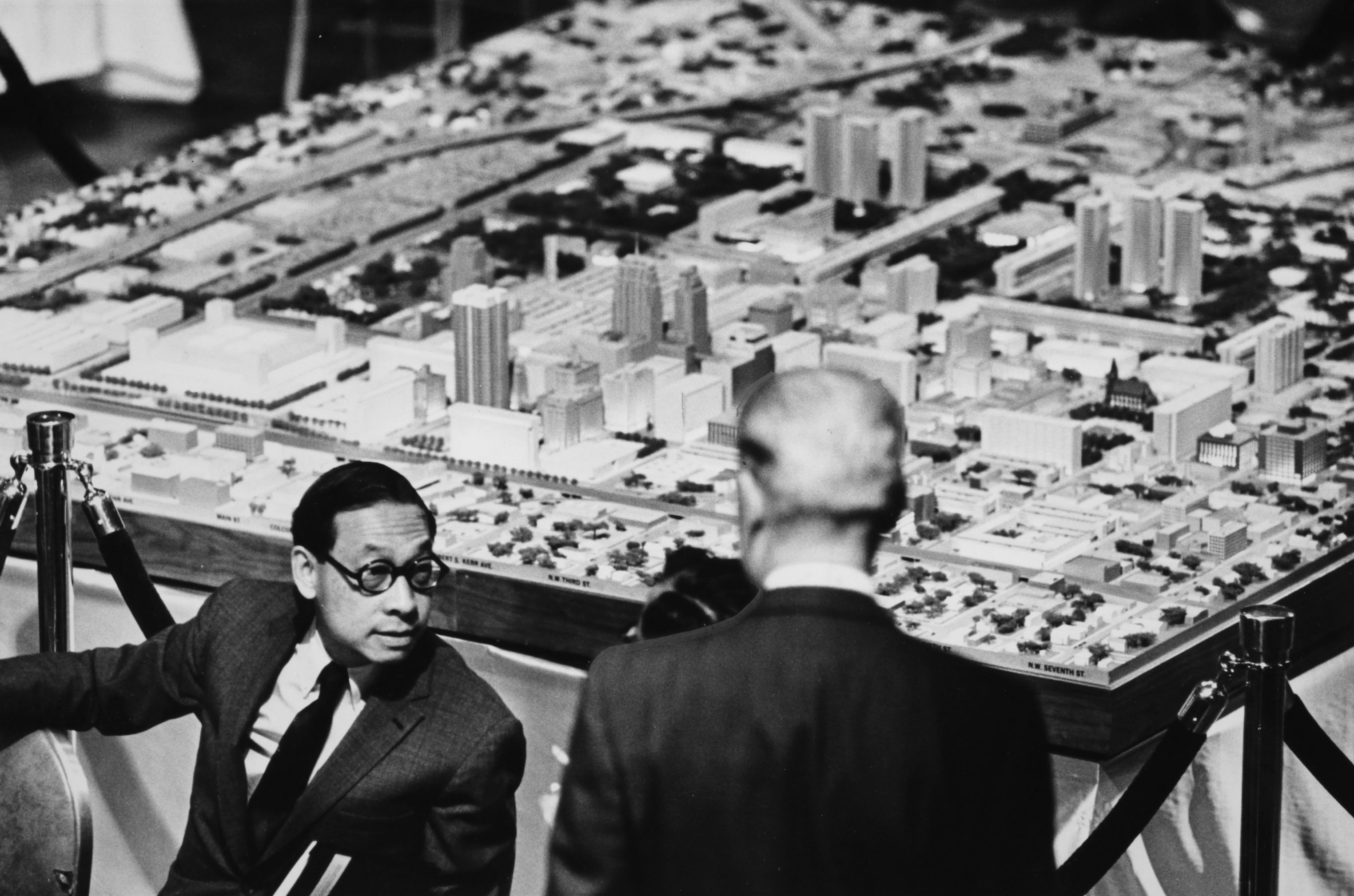
A $60,000 10’x12′ model was constructed, at a scale of 1 inch to 50 feet, to showcase his sweeping vision.

I.M. Pei and his model
Scale model of a new downtown Oklahoma City, background, is explained by urban renewal planning consultant I. M. Pei, left. [Oklahoma City Times staff photo by Tony Wood dated December 10, 1964. Original from Oklahoman print archive, copied Friday, April 30, 2010. Copy photo by Doug Hoke, The Oklahoman.]

The Pei Plan condemned the urban core’s small lots, street grid, and mosaic of small, aging commercial structures. It called for sweeping much of that away to create superblocks, large public projects, parking facilities, and freeways. The urban blight and street crime of the decaying core and the vision of a convention center, park, reinvigorated retail, and increased housing and parking led city leaders to promote the top-down plan. In 1962, voters approved a $5 million bond issue for a convention center as an early step in remaking downton.

Pei’s plan had four phased projects: Kicker, Boomertown, Federal Square, and Westside Industrial. Project Kicker led off, named after the Kickapoo political party in early Oklahoma City, which had been generally dissatisfied with local affairs and conditions. Kicker called for clearing over 100 acres to build a convention center, the “Oklahoma Tivoli Gardens”, and what came to be called the Galleria, which was to be a new major retail core with built-in parking. Those became The Myriad, Myriad Gardens, and…a wasteland.

The Myriad

Although the city had $5 million in bonds approved for a convention center in 1962, intended for a different location than the later Pei Plan, mayor James Norick had been turned out in 1963. He made a comeback in the 1967 mayoral election, pledging to prioritize completing the convention center while accusing current leaders of “feet-dragging” on that and other projects, including a north-south expressway.

Less than a week after Norick was back in office, the architects presented the council with plans for a 15,000-seat arena, 100,000 square feet of exhibition space, and parking for 1,250 vehicles…at a cost of $20 million. It was time to go back to the voters.

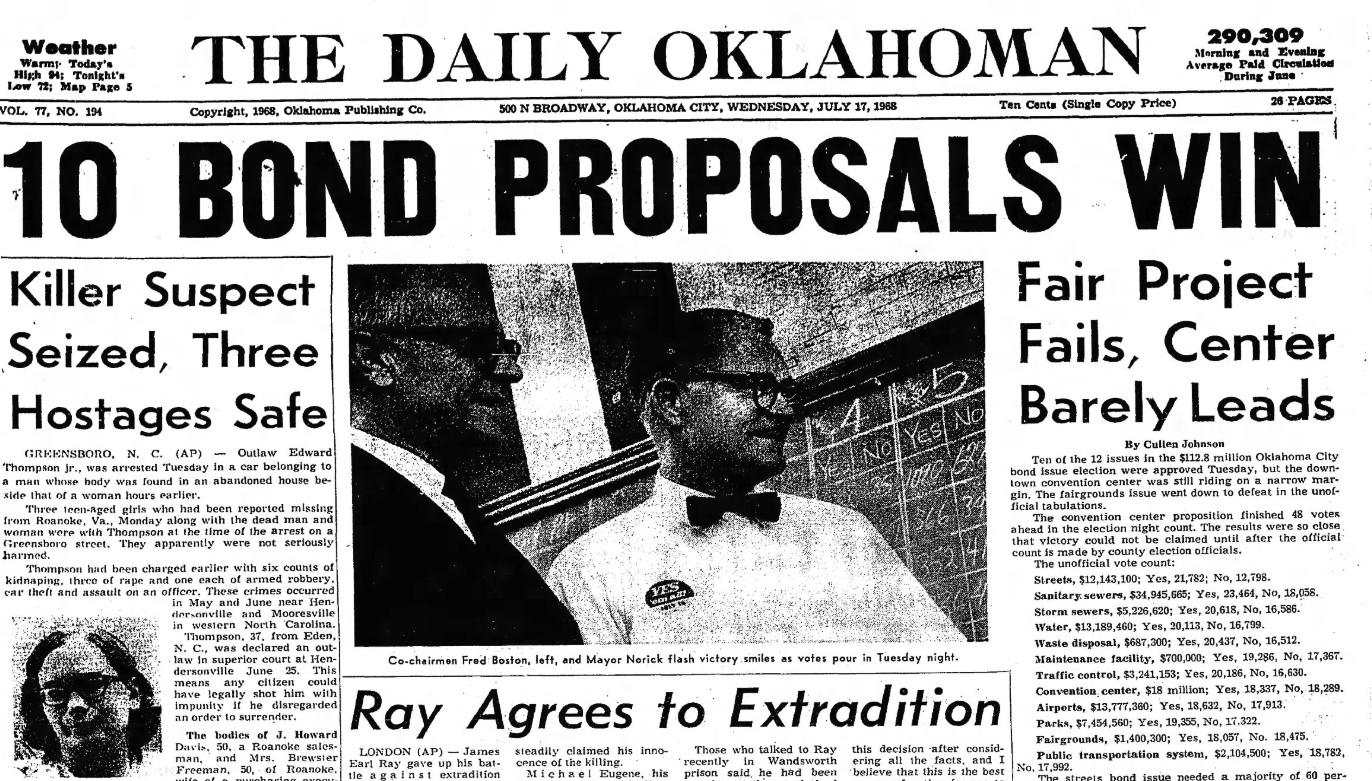
In the summer of 1968, voters considered twelve bond issue questions totaling over $112 million. $18 million for the convention center barely squeaked by with unofficial tallies of 18,337 for and 18,289 against, an approval of 50.007%.

1968 city bond election headline
The convention center received another $18 million in funding in 1968, squeaking by with 50.007% approval [The Daily Oklahoman, July 17, 1968, Page 1]

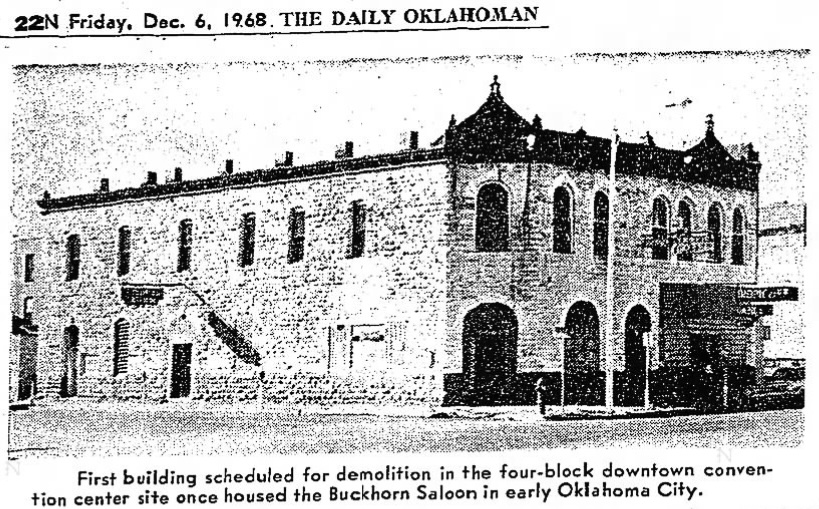
The city busily cleared a four-block area. The first building they demolished was one of the first saloons built in 1892-1893 in what had once been Hell’s Half Acre featuring many saloons, brothels, and pool halls. The Buckhorn Saloon came down in December 1968, by which time the Urban Renewal Authority had purchased 25 of the 68 parcels needed for the convention center.

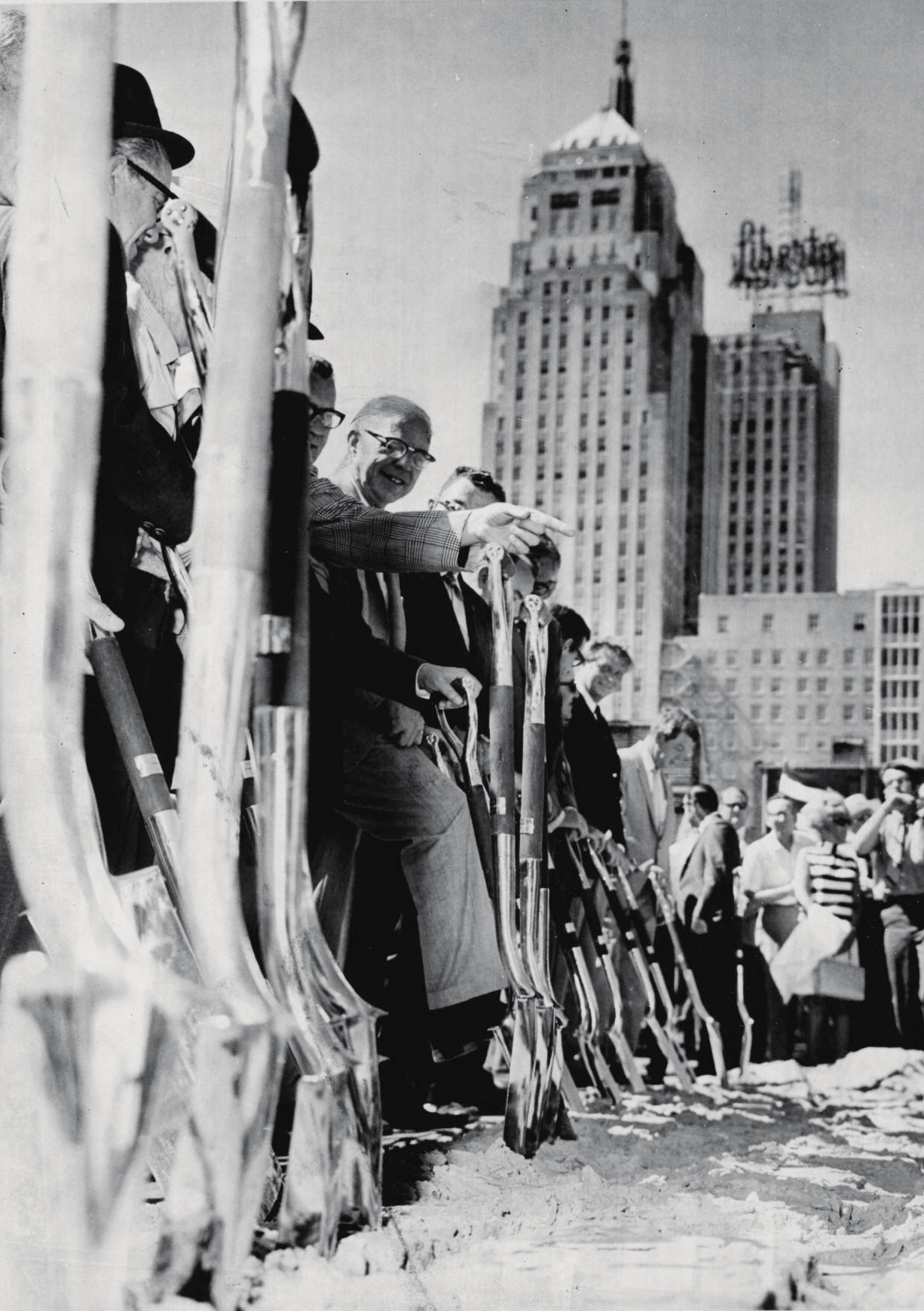
Myriad groundbreaking in 1969
[Photograph by Bob Heaton on July 8, 1969; Source]

In July 1969, officials celebrated the clearing of what had been the center of the original Oklahoma City townsite of 1889, with more than twenty dignitaries posing with chrome-plated shovels to mark the start of the three-year construction project.

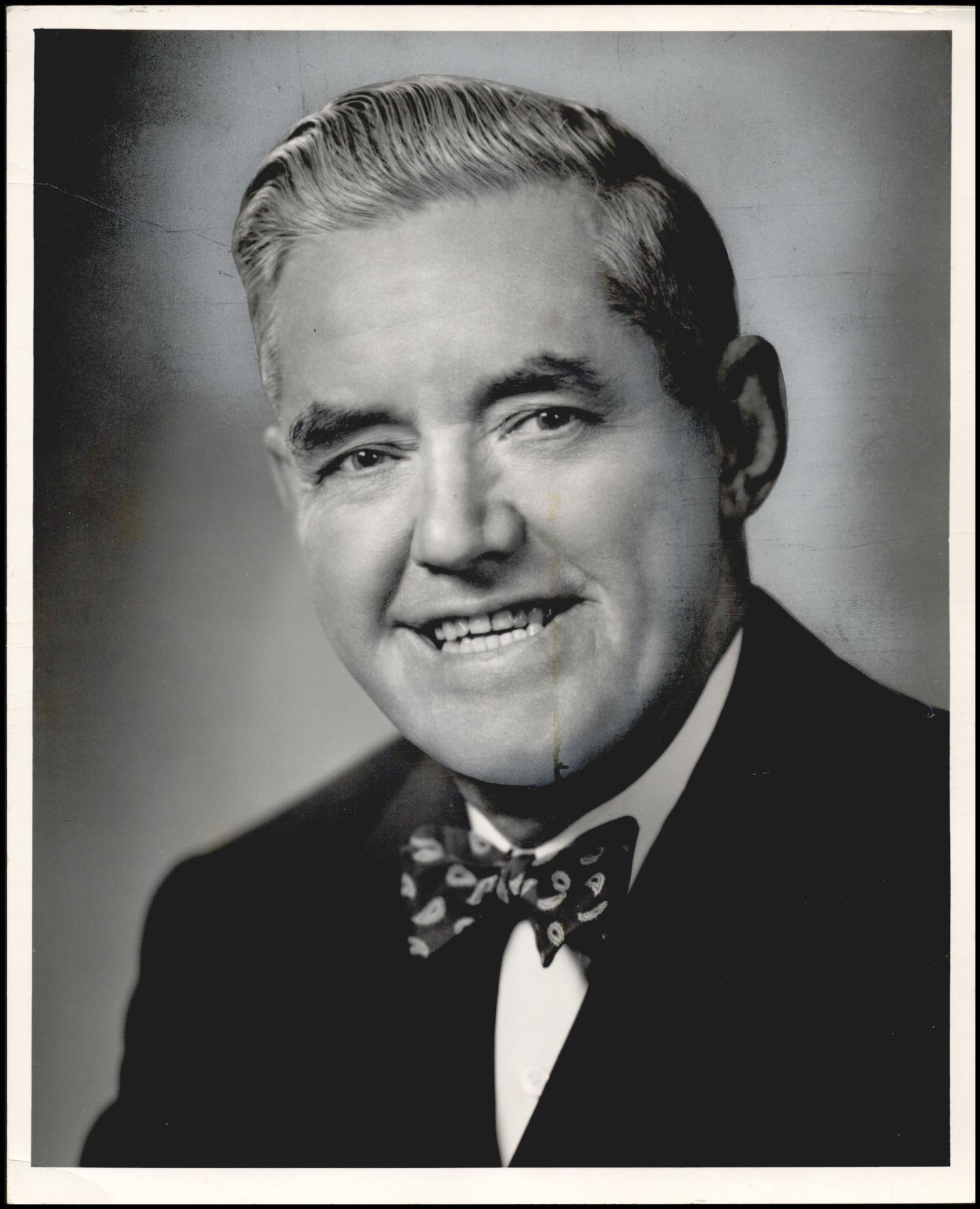
Former mayor Street died in May 1969
[1955 by Richard Lee Portraits; Source]

The group included the widow of former three-term mayor Allen Morgan Street, who had led the city from 1947 to 1959 and had recently passed away. The brutalist Myriad would make for a strange memorial. Cox Business Services was willing to pony up $1.76 million in funds and services, mostly in the form of high-speed internet, in 2002 to get the facility renamed after itself. The newspaper articles of that time don’t even mention poor Mayor Street. I guess OKC can now claim it is not destroying his memorial — they already dishonored him over 20 years ago.

The Myriad was brutalist in the true sense of the architectural term, not merely for being imposing, presumptive, and unadorned, but for its raw concrete form. It was modern and, more importantly, it was relatively cheap.

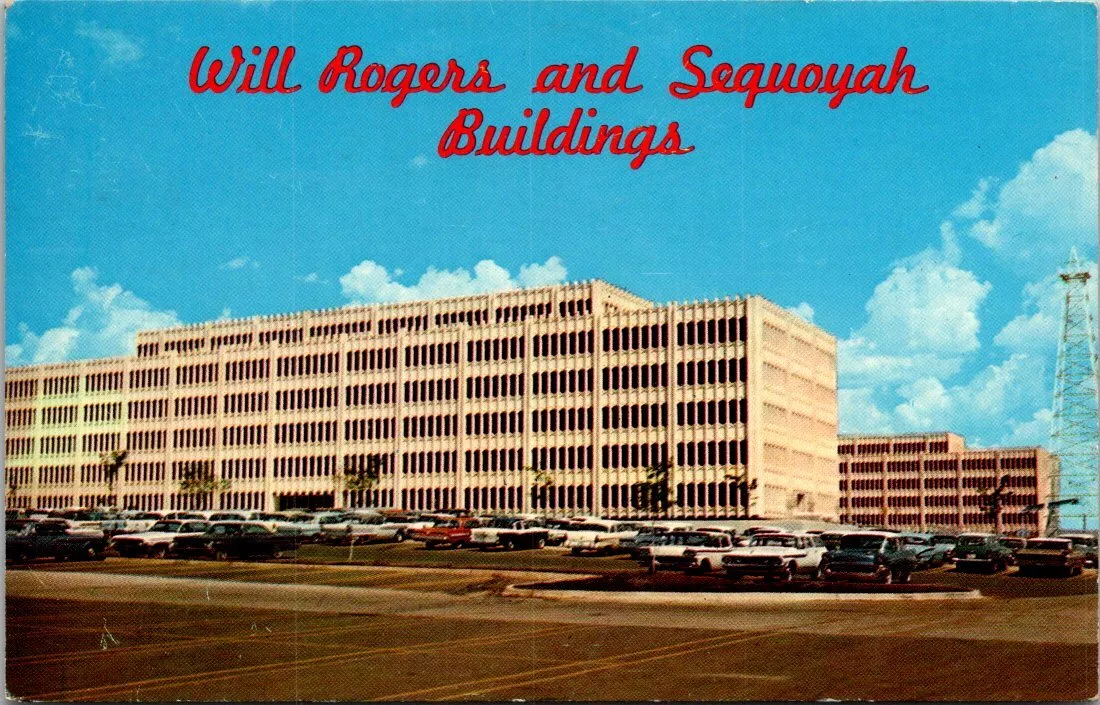
Will Rogers and Sequoyah buildings at Oklahoma Capitol
I worked in the Will Rogers Building in 1985 [Source]

Many might assume that the Myriad was designed by I.M. Pei, but it was actually designed by the local firm of Bozalis, Dickinson, and Roloff, which also designed Oklahoma’s Fountainhead and Arrowhead resorts, the Sequoyah and Will Rogers buildings at the Capitol (I worked in the latter in 1985), the Gold Dome, Leadership Square, and much more.

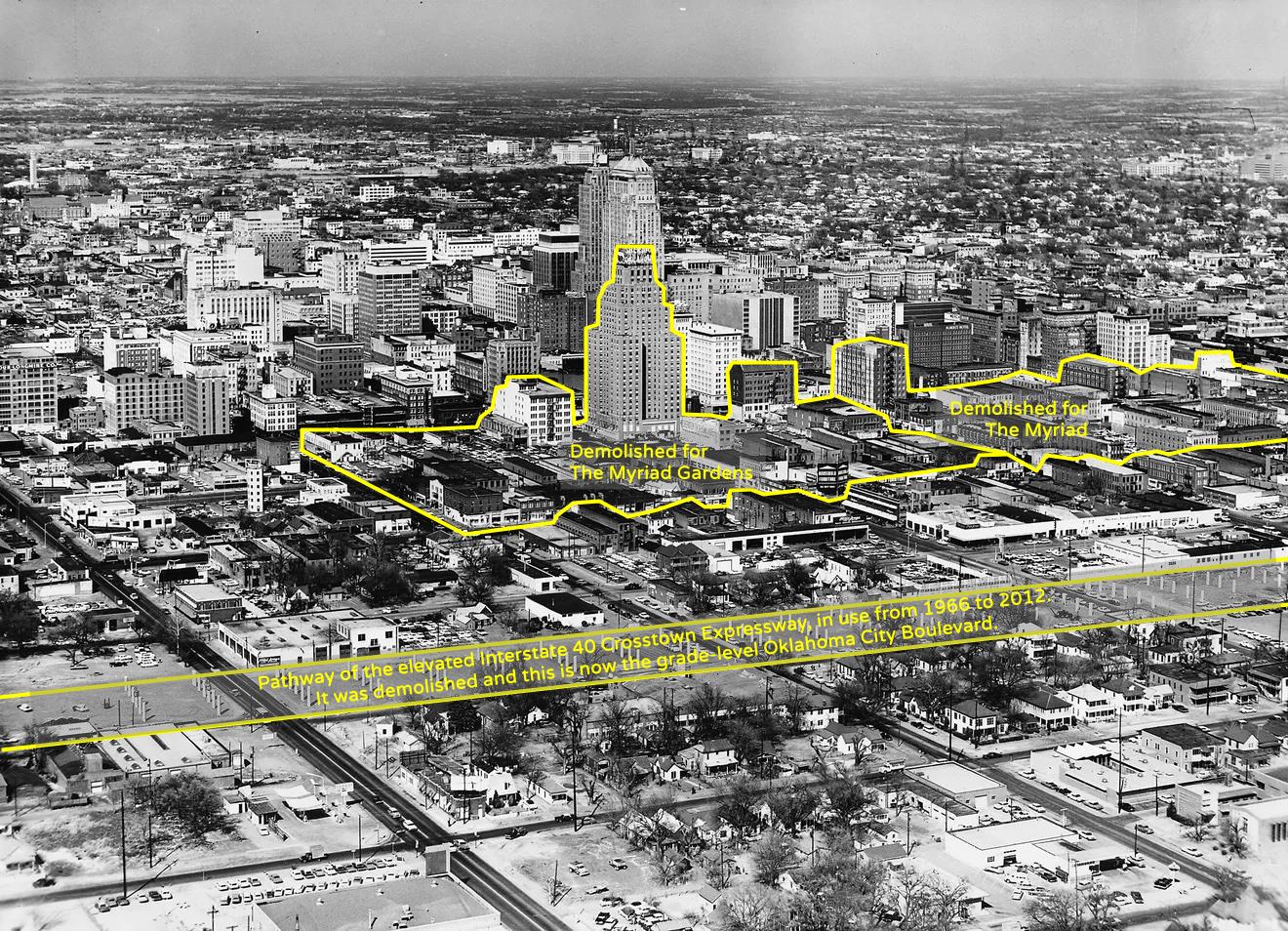
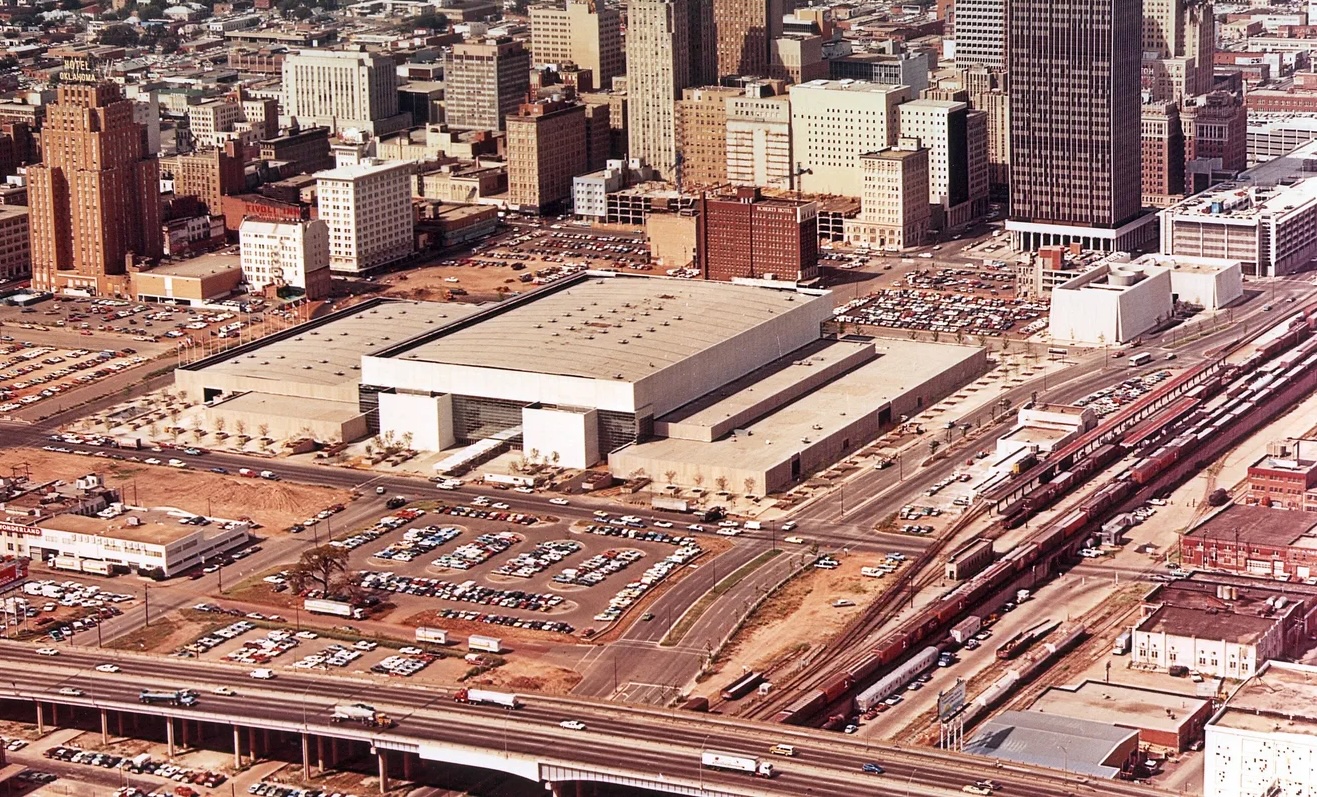
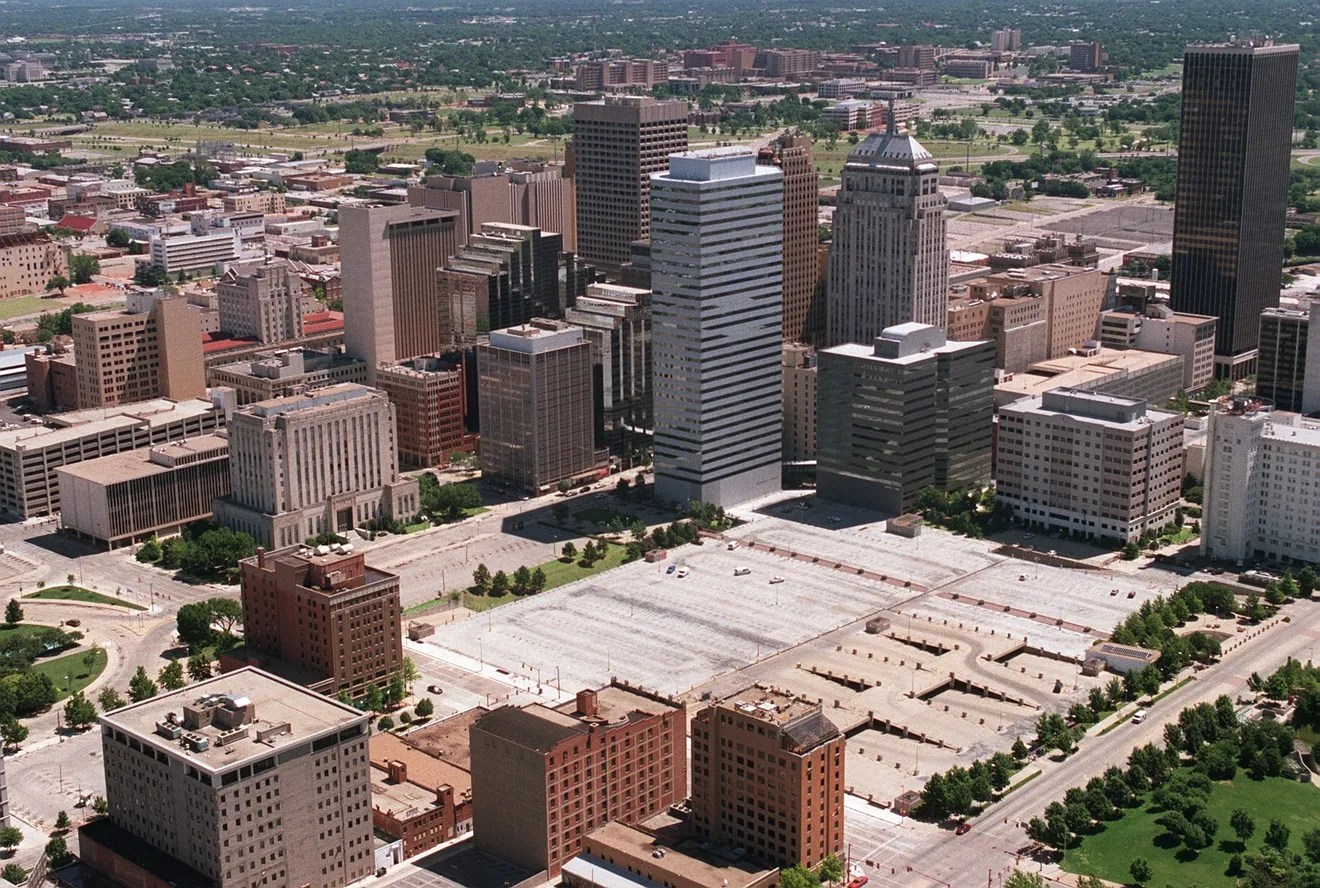
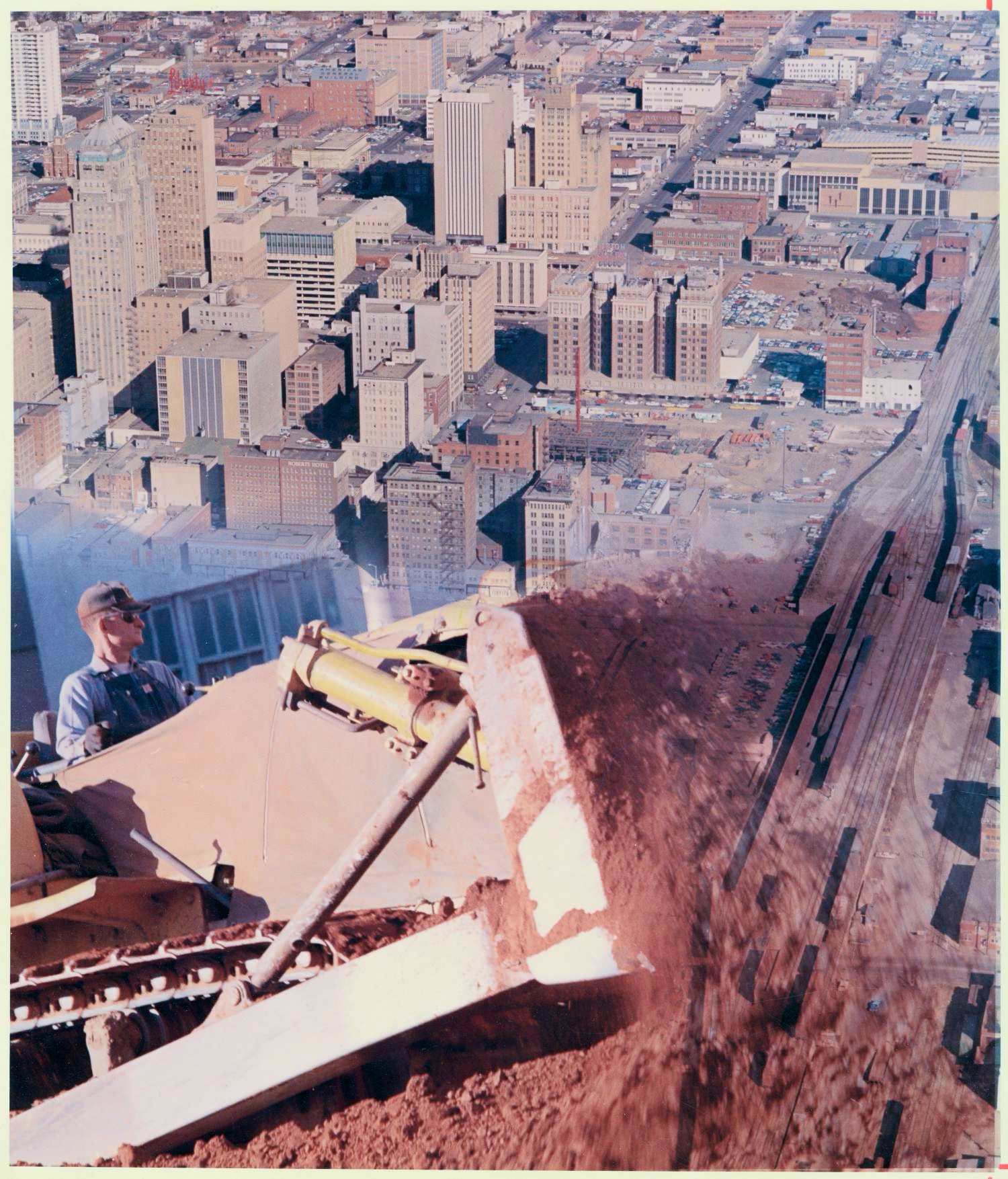
The 1964 aerial view below provides a sense of scale to what was wiped away to make room for The Myriad and later for the Myriad Gardens to the west. As always, click the image for full resolution.

The two projects wiped out eight city blocks
[Original photo taken March 11, 1964 by Jim Lucas; Source]

Four tall buildings lined up along Sheridan Avenue were taken down, one east of Robinson Avenue for The Myriad, and three west of Robinson for its Gardens. By the way, Sheridan Avenue itself was Grand Avenue from 1889 to 1961. The city council sought to rename the street Sheraton Avenue in honor of the Biltmore Hotel being rebranded as a Sheraton. (The Pei Plan called for keeping it, but it would famously undergo a televised explosive demolition in 1977.)

Rival hotel operators objected, so the too-clever council renamed the avenue Sheridan instead, after the Union general in the Civil War. That was egregious given that Sheridan had famously remarked, “the only good Indians I saw were dead” in response to a Comanche chief who introduced himself to the general as a “good Indian” while at Fort Sill.

That stupidity reminds me of Tulsa’s similar imbroglio in 2013, when it renamed Brady Street after too many people objected to a street named after Wyatt “Tate” Brady, who was not only a city founder but also a Ku Klux Klan member who was a volunteer night watchman during the 1921 Tulsa race massacre. They renamed the street “M.B. Brady” after a Civil War photographer with no ties to Tulsa but a convenient last name, and tacked on honorary signs reading ‘Reconciliation Way”.

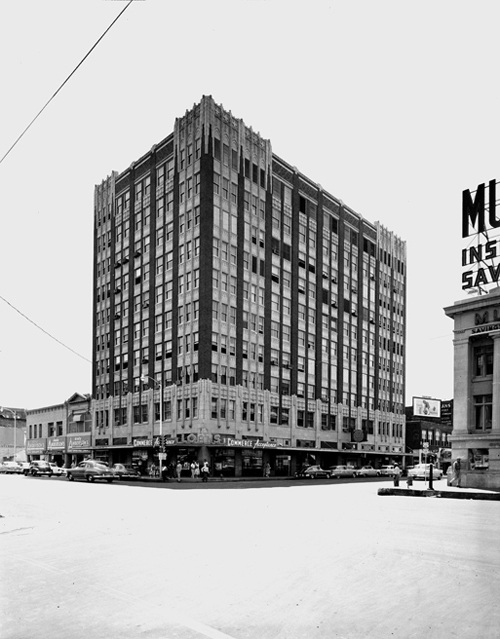
Commerce Exchange building
The Commerce Exchange building was demolished [1955 photo by Meyers Photo Shop; Source]

76 buildings housing 88 businesses were reportedly demolished to make room for The Myriad. The tallest was the Commerce Exchange building at the northwest corner of the property. It had been built in the mid-1920s on the site where in 1890 Henry Overholser built his first opera house.

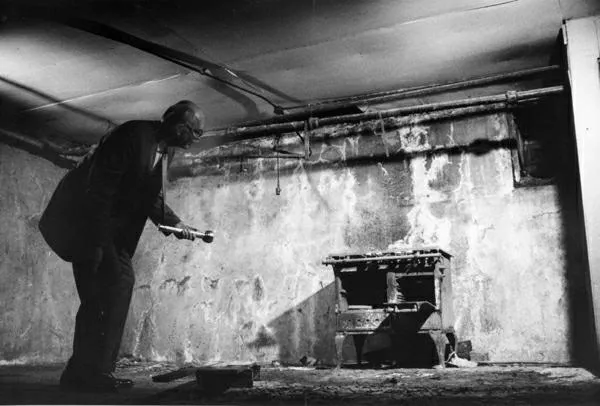
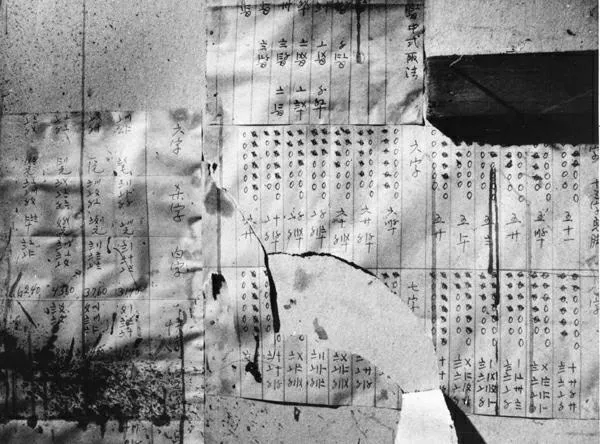
Just south of the Commerce Exchange was once Oklahoma City’s Chinese Underground. In 1969, when the buildings had been condemned for demolition, former mayor George Shirk was tipped off that beneath them was the location of the long-rumored subterranean chambers used by Chinese immigrants before World War II. He discovered large community rooms 25 feet wide with passageways leading to 4′ by 6′ sleeping chambers, a stove, and Chinese writing on some walls. There were levels going down two stories below the basement level.

Chinese underground
George Shirk found this old stove in a corner of a large L-shaped room that was 24 feet long [1969 photo by Jim Argo; Source]
Chinese writing in the OKC underground
Some of the Chinese writing found in the abandoned underground rooms [1969 photo by Jim Argo; Source]

Several of the businesses over the basements had been operated by Chinese persons in the early 20th century, and Li Xiaobing of the University of Central Oklahoma reported that about 100 to 150 Chinese people had lived in the basement complex between 1900 and 1930.

The Myriad was plagued with construction issues. A bad batch of concrete poured into the first 312-foot-long roof truss set off a two-year controversy. Expensive national consultants were called in, and the city council eventually agreed to spend another $167,000 for extra roof bracing plus pay a New York consultant $25,000 plus expenses, and even then the affair dragged on for 18 months in a federal court lawsuit, with engineers never agreeing on whether or not the extra bracing was needed.

The Myriad before its Gardens were added to the west; the Biltmore (Hotel Oklahoma) and the Tivoli Inn were still standing [1970s photo by Al McLaughlin; Source]

The arena seating risers failed when cables broke, exterior mirror glass panels on the north and south exposures broke after installation, and concrete outer walls spalled and concrete floors flaked. The underground parking garage had inadequate ventilation, and a build-up of carbon monoxide required expensive equipment additions as a remedy. Exterior lights didn’t meet city codes and had to be changed. Pedestrian bridges had to be added over the four garage driveways to protect people leaving events.

The roof never collapsed or bowed, but it certainly leaked. A basketball game in 1980 was rained out, inside the Myriad arena, by the massive drips. In 1982, a Fellowship of Christian Athletes banquet was marred by puddles, participants having to hold umbrellas, and having to move the head table to shelter the keynote speaker.

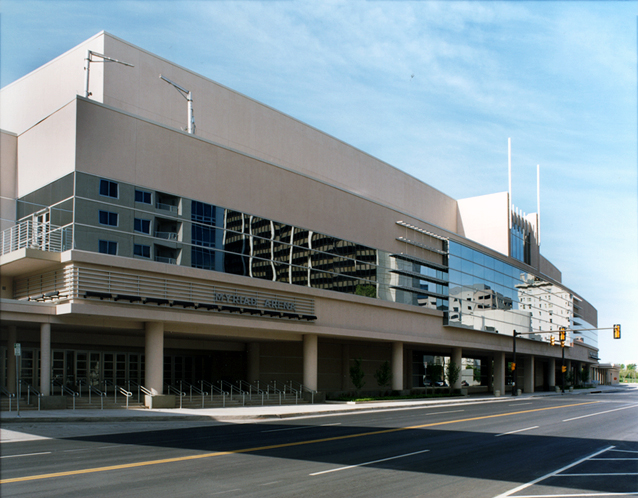
In 2002, the city opened the Ford Center arena, later called the Oklahoma City Arena, Chesapeake Energy Arena, and Paycom Center (but disappointingly never the Allen Morgan Street Arena). Situated directly south of The Myriad, it has over 18,000 seats for basketball, over 15,000 for hockey, and over 16,000 for concerts. That supplanted the 14,000-seat arena in the Myriad. Now, whatever replaces the Myriad will in turn supplant the 2002 arena, and city officials have refused to state any plans for its future, likely because it has none.

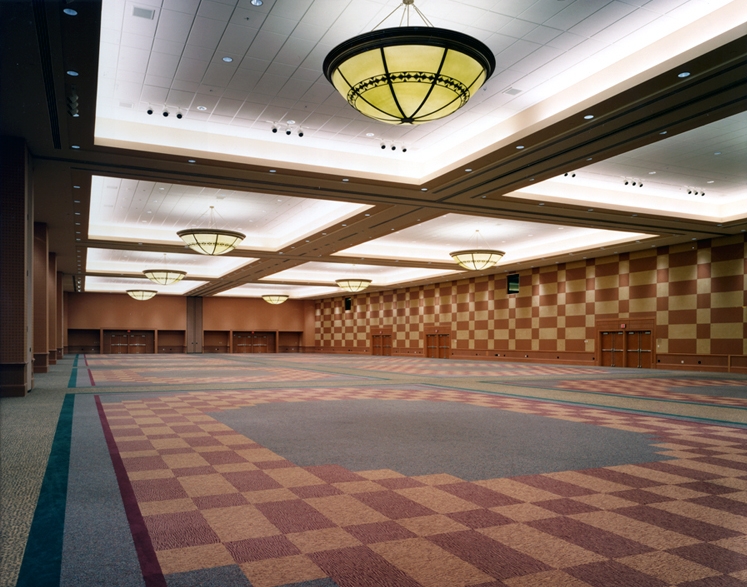
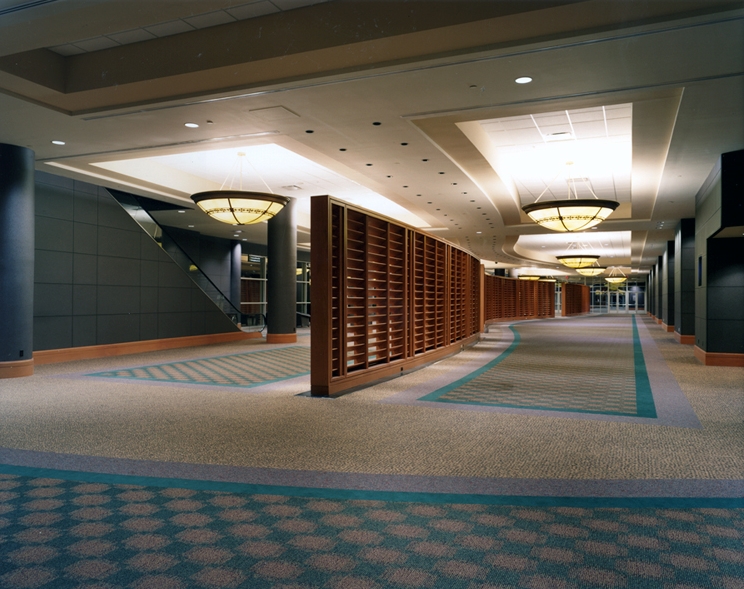
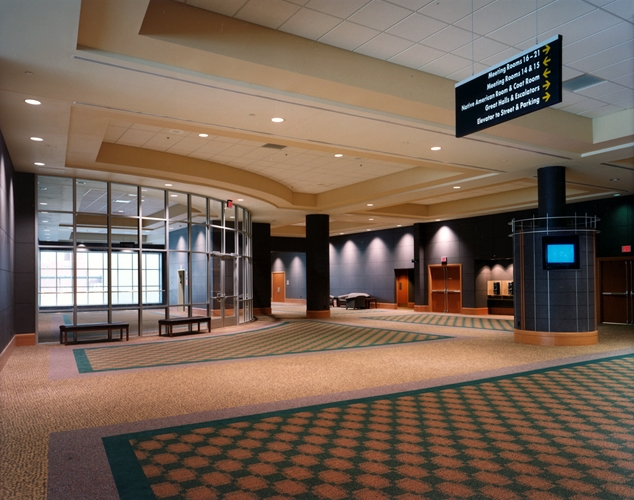
The same project that built the 2002 arena spent $35 million to renovate and expand the 1,000,000 square foot Myriad. That added 105,000 square feet of new facades and entries, a grand staircase, a 25,000 square foot ballroom, 21 meeting rooms, and a sky bridge to a new hotel. Click on the center-right edge of the photo below for a four-photo slideshow; the photos came from GSB, Inc.

I remember being surprised at a convention, having braved the carbon monoxide to park below The Myriad and entered into its old part, to venture out to the new areas with rich warm finishes that contrasted sharply with the cold brutalist concrete elsewhere. I had been unaware of the renovations, and while they were welcome, the richness of their finishes highlighted the shortcomings of the original building.

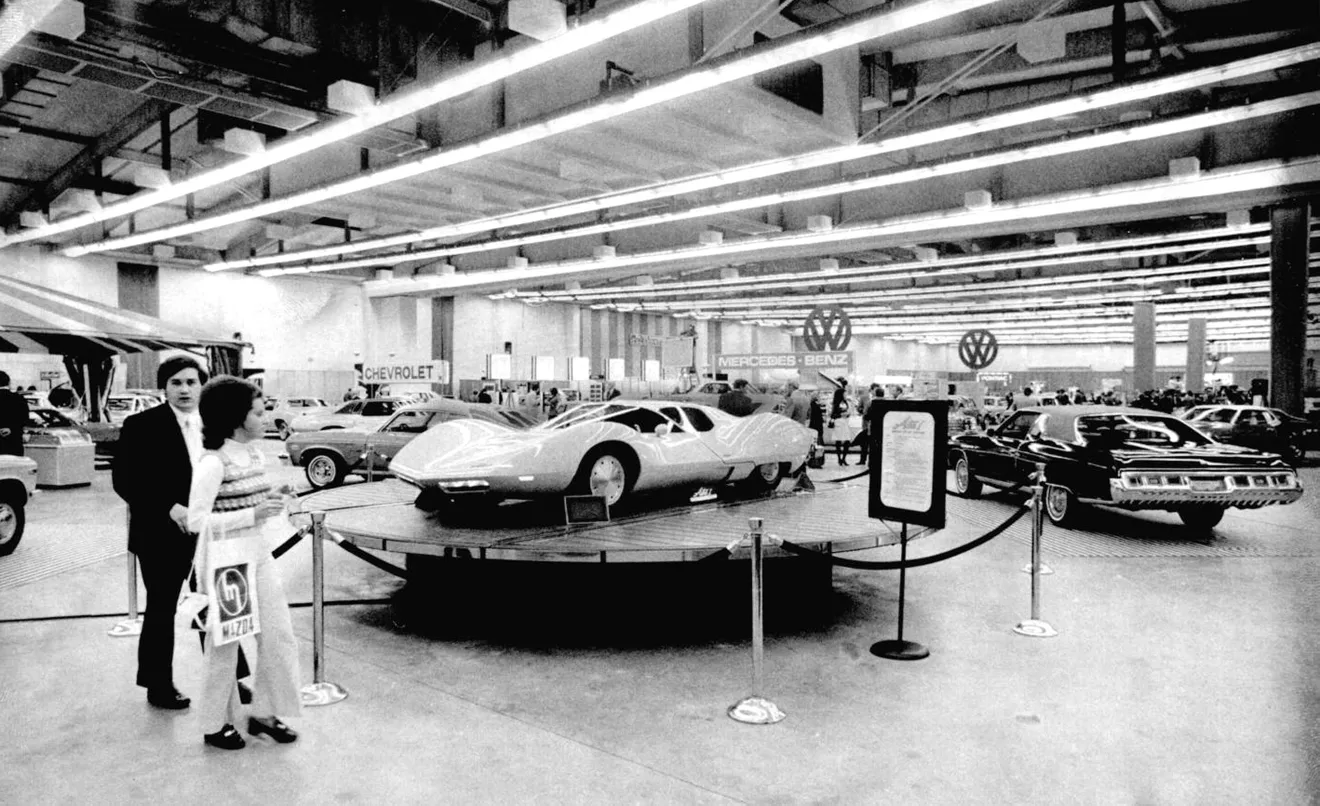
1972 autoshow in the Myriad exhibit hall; plenty of concrete was also on long-term display
[1972 photo by Don Tullous; Source]
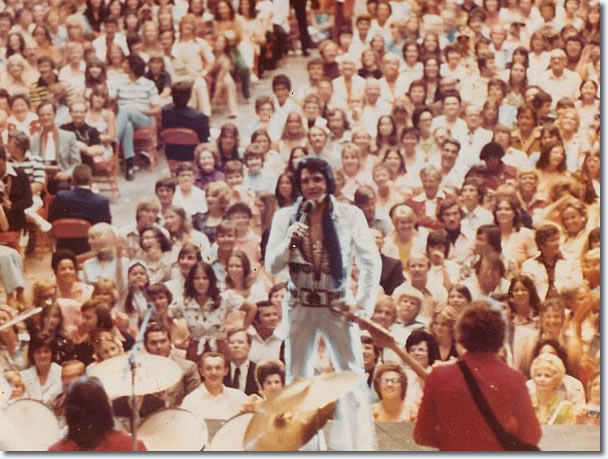
Elvis at The Myriad in 1975
Elvis at The Myriad in 1975 [Source]

The Myriad’s first concert was a free performance of the New Christy Minstrels with Della Reese. The arena’s first bookings were for a basketball league exhibition game, a roller derby, and a Henry Mancini concert. Elvis performed at The Myriad in 1973, 1975, and 1976. Project Kicker’s first big showpiece was complete, with more phases to come.

Myriad Gardens

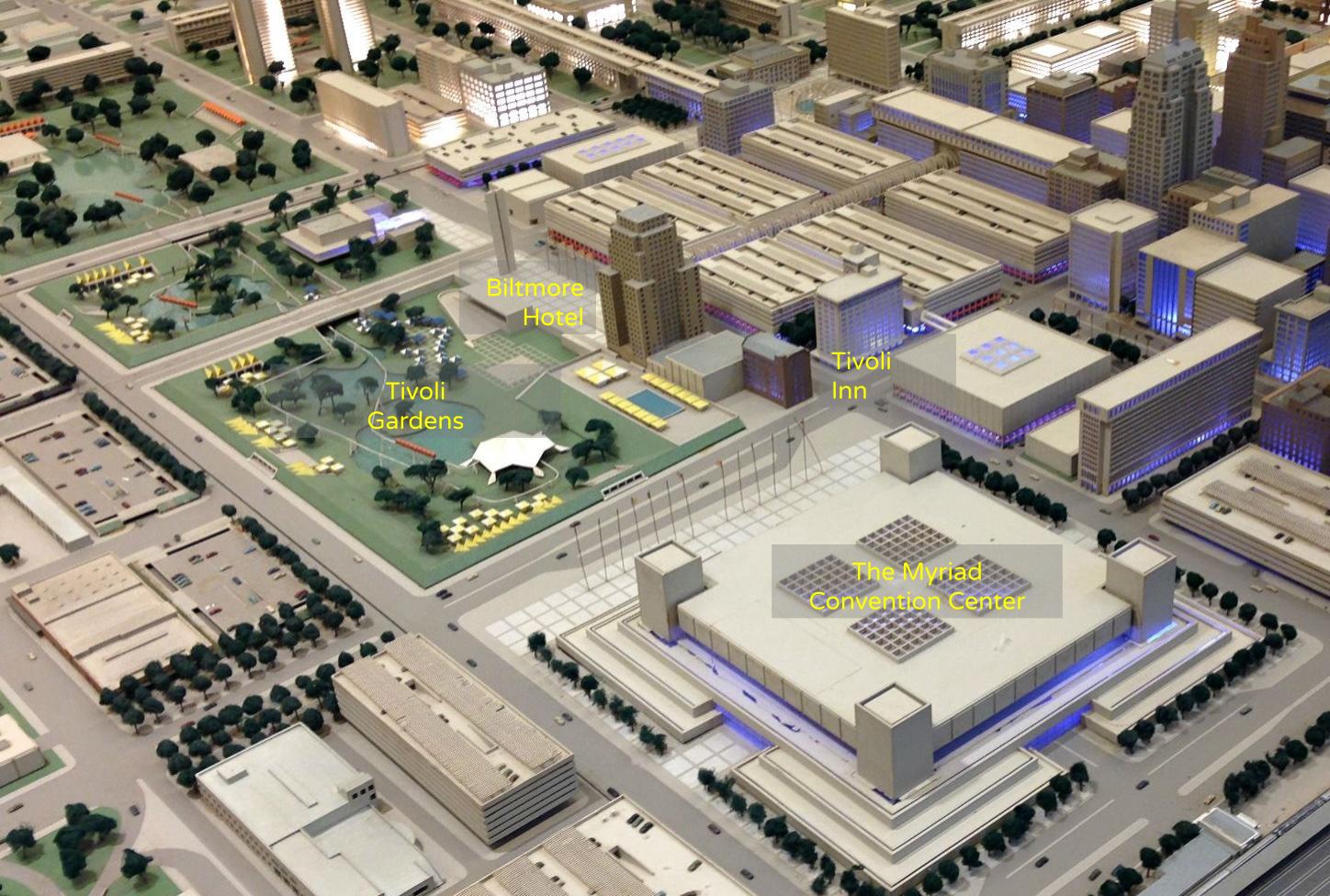
The Pei Plan had called for the “Tivoli Gardens” to the west to act as The Myriad’s “front lawn”. A convention center needs hotel rooms, so his plan called for using the existing 26-story Biltmore and shorter Tivoli Inn that fronted along Grand/Sheridan Avenue.

Tivoli Gardens in Pei model
The Tivoli Gardens, Biltmore, and Tivoli Inn in the Pei Plan model of the early 1960s [Source of original photo]
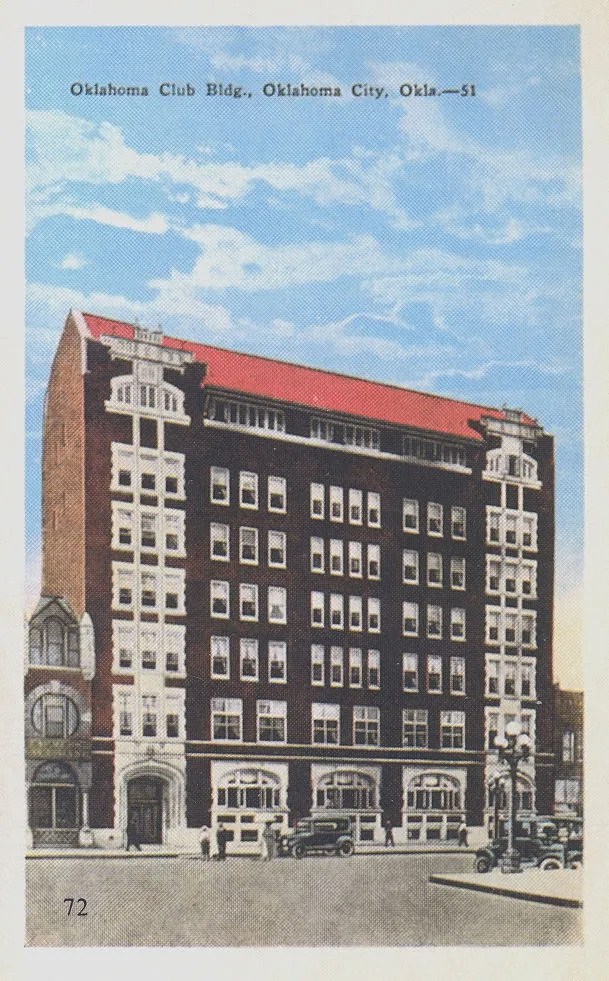
Oklahoma Club Building [Source]

In 1970, the name was officially changed to “Myriad Gardens” and the city began acquiring the 17-acre site in 1975. Neither the Biltmore nor the Tivoli Inn survived.

The eight-story Tivoli Inn had been constructed in 1923 as the Oklahoma Club, a men’s social club with dining and club rooms on the lower floors and dormitory rooms above. The Chamber of Commerce once used the basement.

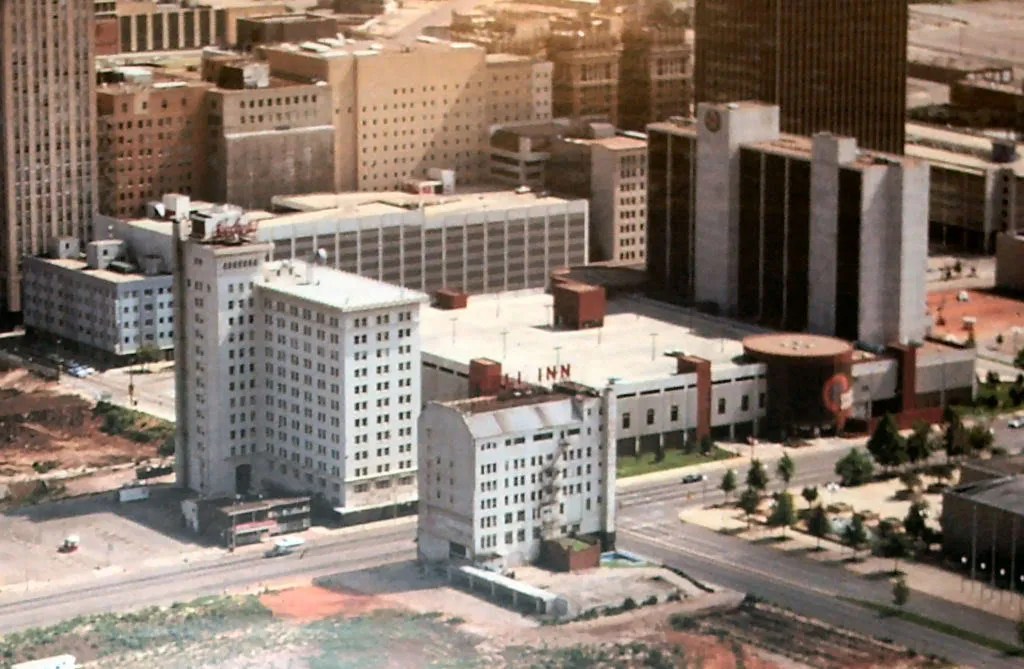
The economically precarious club was foreclosed on in 1960 and became the Tivoli Inn. In August 1979 it finally fell, the last building over two stories tall to be demolished in that era of Urban Renewal.

The Colcord building across the street, the city’s first skyscraper, survived Urban Renewal thanks to Neal Horton, who renovated it. It was an office building from 1910 to 2005, and then it was renovated by Paul Coury into a luxury hotel.

Colcord, Tivoli Inn, and Sheraton Century Center
The Colcord, the Tivoli Inn, and the Sheraton Century Center [Source]
Colcord finishes that Urban Renewal failed to destroy [2010 photo by Paul Hellstern; Source]
Hotel Biltmore in 1952
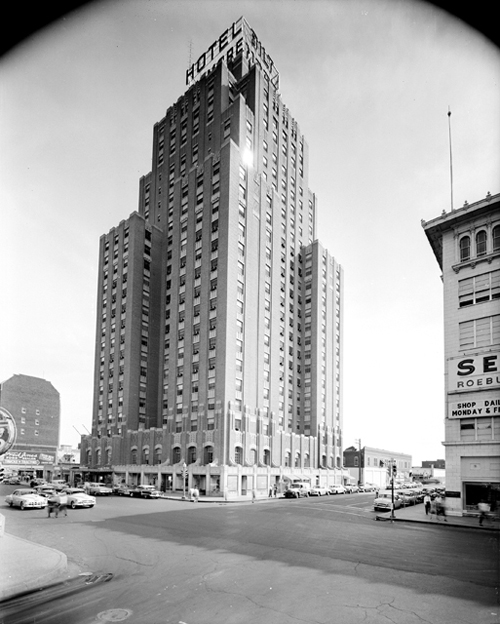
The Biltmore in 1952 [Photo by Meyers Photo Shop; Source]

The most famous building to be wiped out for The Myriad Gardens was the 600-room, 26-story Biltmore Hotel. It had been constructed in 1932 and was originally was slated to survive, bolstered by business from the new convention center.

In 1936, the Biltmore had hosted 104 conventions, served 284,604 meals, and had 114,171 guests. It had two lounges, one English-style and the other more modern.

It was at The Biltmore in 1945 that Gene Wade rolled a “hard six” and won the title to Oklahoma City’s famed Cattlemen’s Restaurant from bootlegger Hank Frey.

However, the Biltmore’s initial luxuries included ceiling fans and circulating ice water…it lacked modern air conditioning. The concrete-and-steel structure lacked high ceilings to allow for easier retrofitting with air ducts, so it later sported dozens upon dozens of window units.

In 1961, the Sheraton chain bought it and did over a million dollars in renovations, but the hotel was not profitable and Sheraton vacated it by 1973, investing in a new hotel in the Century Center to be built directly north of The Myriad.

By 1977, the hotel had been stripped of much of its interior, and the city gave up. Its explosive demolition was televised, and the intense publicity helped sour the public on Urban Renewal. People who had attended weddings, proms, and dinners at the Biltmore were dismayed at its destruction.

The demolition of the Biltmore in 1977
The Biltmore was destroyed in 1977 [Photo by Paul B. Southerland; Source]

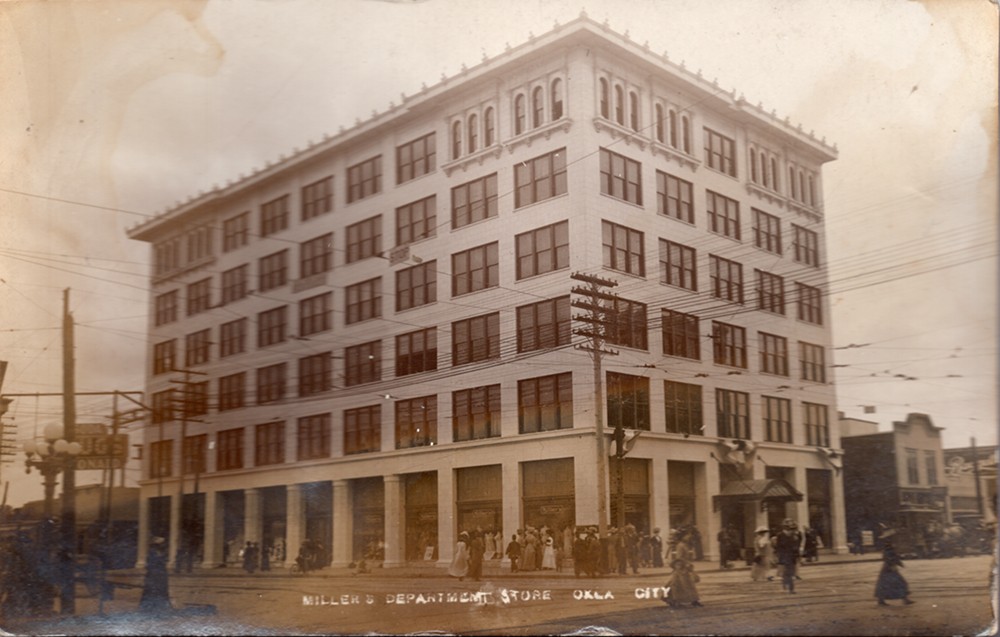
A third tall building along Grand/Sheridan that was sacrificed was known as the Sooner Building at the time. It had been built as the Goodholm Building. That’s the same Goodholm whose house was once featured at the state fairgrounds and was demolished in 2021. His six-story downtown building became the Miller Brothers department store in 1910. In 1916, it was the Grain Exchange where crops were brought to market, and most notably was the home of the city’s first Sears & Roebuck department store, which operated in it from 1929 until 1954.

Sooner Building
Sears left downtown in 1954, and its former home was demolished for the Myriad Gardens [“Sooner Building” by Larry Johnson at https://theclio.com/entry/156746]
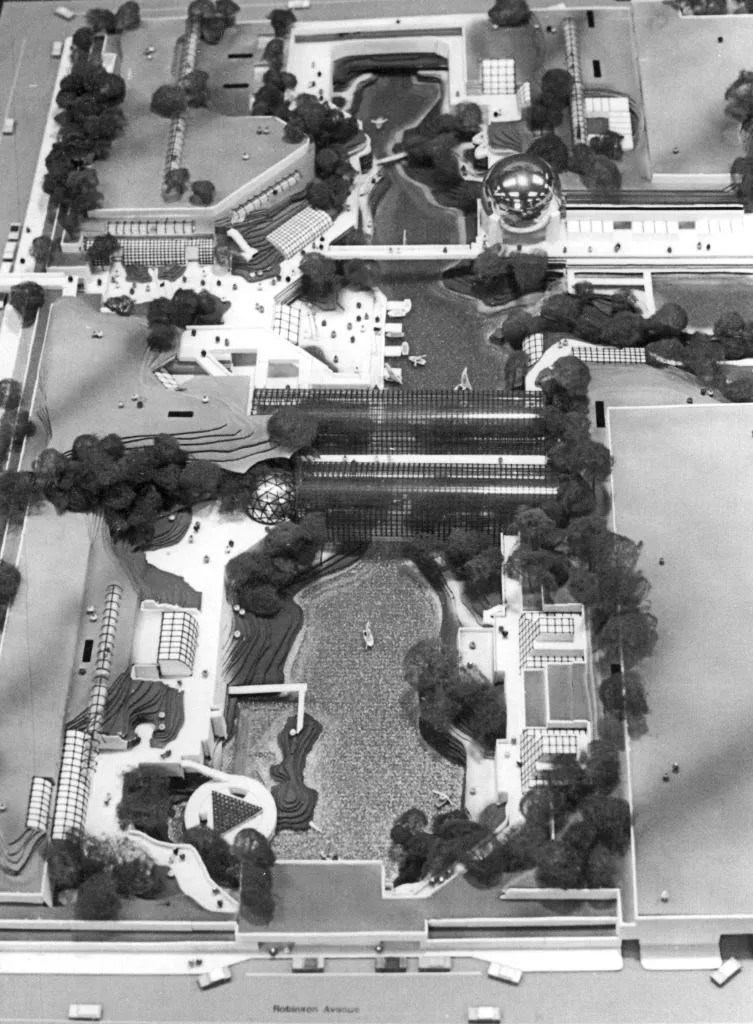
1960s Tivoli Gardens model
Model of an earlier design of the gardens [OKC: 2nd Time Around, OCURA; Source]

The Garden’s infrastructure was built from 1977 to 1981. I.M. Pei in the 1960s had emphasized having a low-elevation pool to make the space feel special, and another 1960s design model for the “Tivoli Gardens” had included two botanical tubes and an observatory.

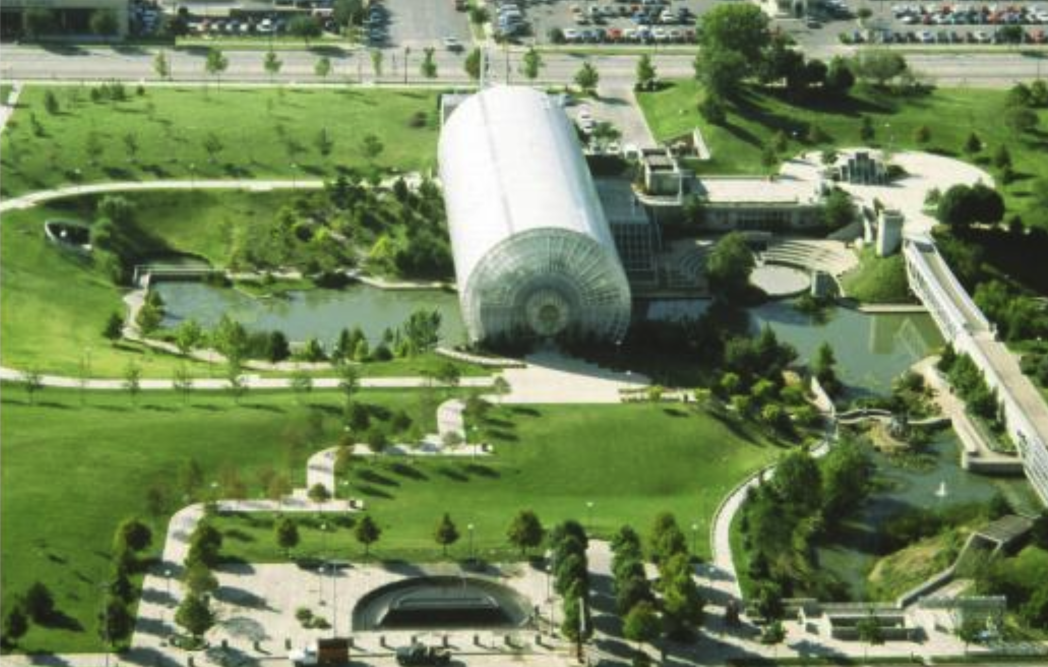
The Gardens were indeed built with a lake, fed by an underground channel from the North Canadian River. The aging Dean McGee formed The Myriad Gardens Foundation, a nonprofit to raise private funding. The design was simplified to a single “Crystal Bridge” glass botanical tube conservatory, which was constructed from 1983-1985, followed by plantings within it. The city parks department took over the facility in 1987, and the Crystal Bridge opened in 1988.

Myriad Gardens
Myraid Gardens in 1988 [Source]

I’d guess that I’ve been through the tube a half-dozen times over the decades, and in 2021-2022 it underwent a complete $11 million renovation of its interior. I haven’t seen that yet, but someday I will revisit the 224-foot-long, 70-foot-diameter tube, with its 3,028 sections of transluscent double-layered acrylic panels and 13,000 square feet of plant display areas. Winter is always an interesting time for a tour of the tube’s tropical wet zone and tropical dry zone.

As you may have already inferred, my antipathy for The Myriad’s architecture is contrasted by my tolerance for the design of its Gardens. It was similarly handicapped by available resources, and I appreciate the honesty in the 2016 video I’ve linked to below, which admits how difficult it was to complete the project and acknowledges its early shortcomings.

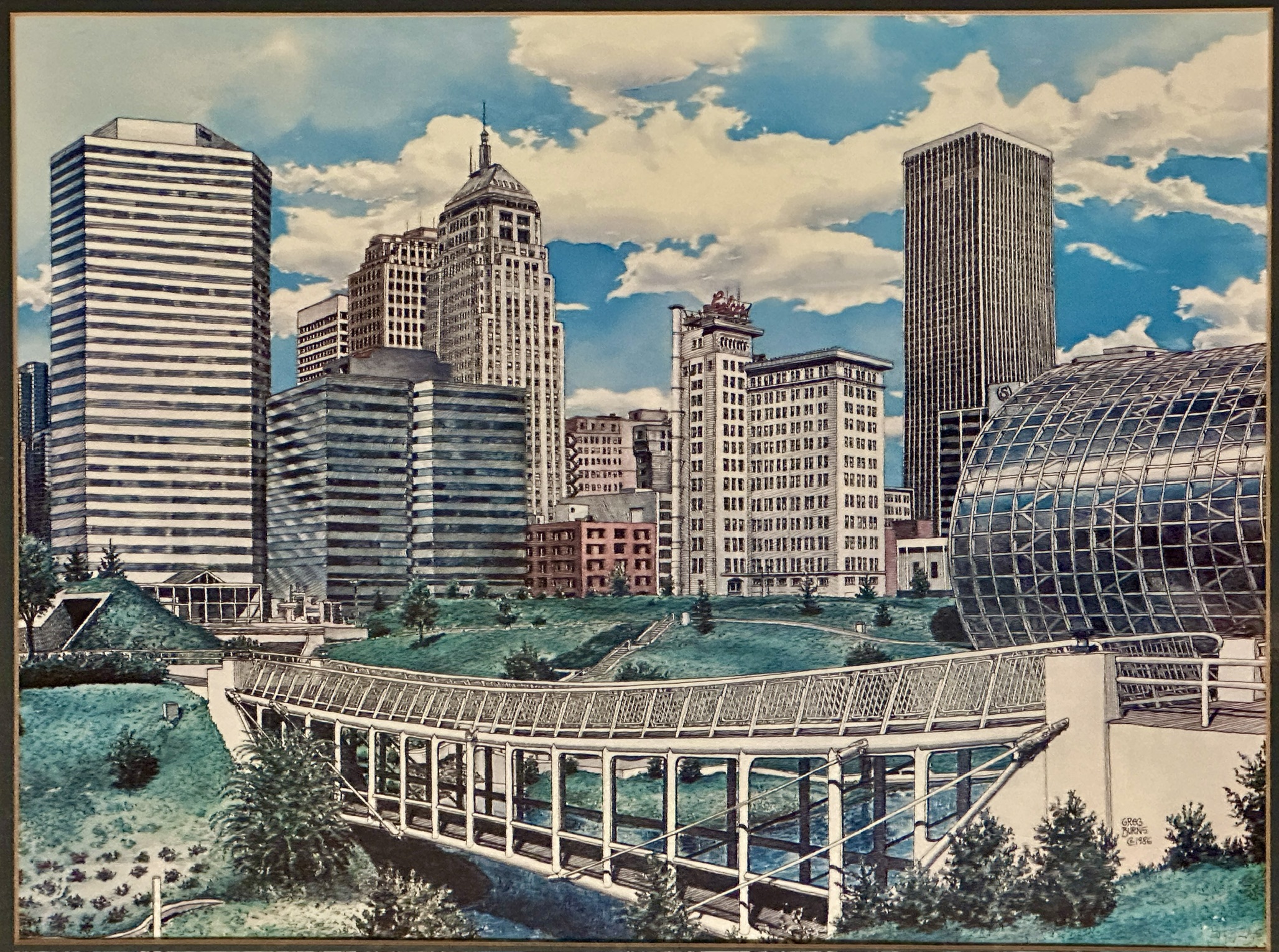
Positioned in my home in Bartlesville where I will see it several times a day is a 1986 pen-and-ink and watercolor of downtown Oklahoma City by the renowned Greg Burns. Below is a video clip illustrating how special Greg is.

When I look at Greg’s artwork, my eye is always first drawn to the majestic First National Bank building of 1931, which had the Beacon Club up top and step-backs reminding everyone of the Empire State Building; that was where my late father worked for Cities Service Gas. It eclipses the Ramsey Tower, which seems symbolic. My gaze then drops down and right to the old Colcord building, and finally takes in the end of the botanical tube and the double-decker pedestrian bridge of the Myriad Gardens.

Greg Burns artwork
The Greg Burns artwork of downtown Oklahoma City

The boring Galleria skyscrapers are on the left and the Myriad Gardens are below. I appreciate how the artwork displays both what survived the 1970s Urban Renewal as well as some of its projects, and I’m grateful that it predates the out-of-scale Devon Tower. If you peer closely, you can see just peeking out past the end of the tube, in front of the columnar slab of Liberty Tower (now BancFirst), the edges of the Sheraton Century Center, including the emblem on the top floor penthouse.

The Century Center

The Sheraton Century Center was a key component of of making the convention center work, as it provided a major adjoining hotel after the Biltmore and Tivoli Inn were judged unsalvageable. It also provided additional downtown parking, something the Pei Plan had correctly stressed. It even made an attempt at retail, but that didn’t last long.

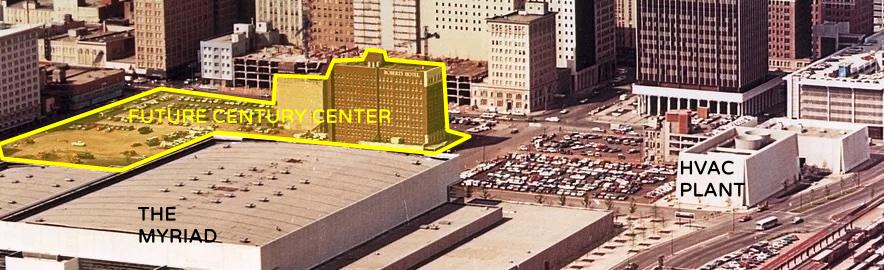
The Century Center was constructed just north of The Myriad in the block west of the new downtown central HVAC plant. Thermal Systems, formed by Charles Ingram, president of Oklahoma Natural Gas, had set up a boiler/chilled water plant at the corner of Sheridan and Broadway in 1970. Now Veolia Energy, it still pipes water to buildings across downtown for climate control.

Future Century Center location
The situation in late 1972 [Excerpt from original photo by Al McLaughlin; Source]

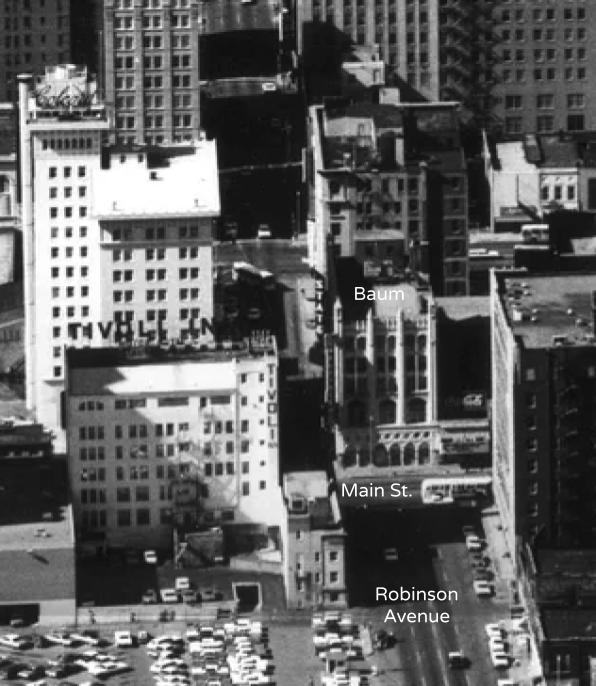
Creating space for the hotel and parking garage required some heavy sacrifices. The first to go was the ornate Baum Building of 1910, which mimicked the Doges Palace of Venice and was likely the most elaborate building in the city. M.J. Baum had been the first dealer in exclusive women’s garments in the southwest. His building, with stone cupolas on all four corners, towers, arched windows, and marble and terra-cotta decorations, had his store on its lower floors with office tenants above.

His building’s great sin to urban planners was how it forced a jog in Robinson Avenue where that intersected Main Street. It had to go to improve traffic flow and begin clearing the Century Center’s superblock, since at the time they still planned to save the Tivoli Inn.

[Excerpt from original 1968 photo by Oklahoman Staff – Source; Baum photo from “Baum Building” by Larry Johnson at https://theclio.com/tour/2308/18]

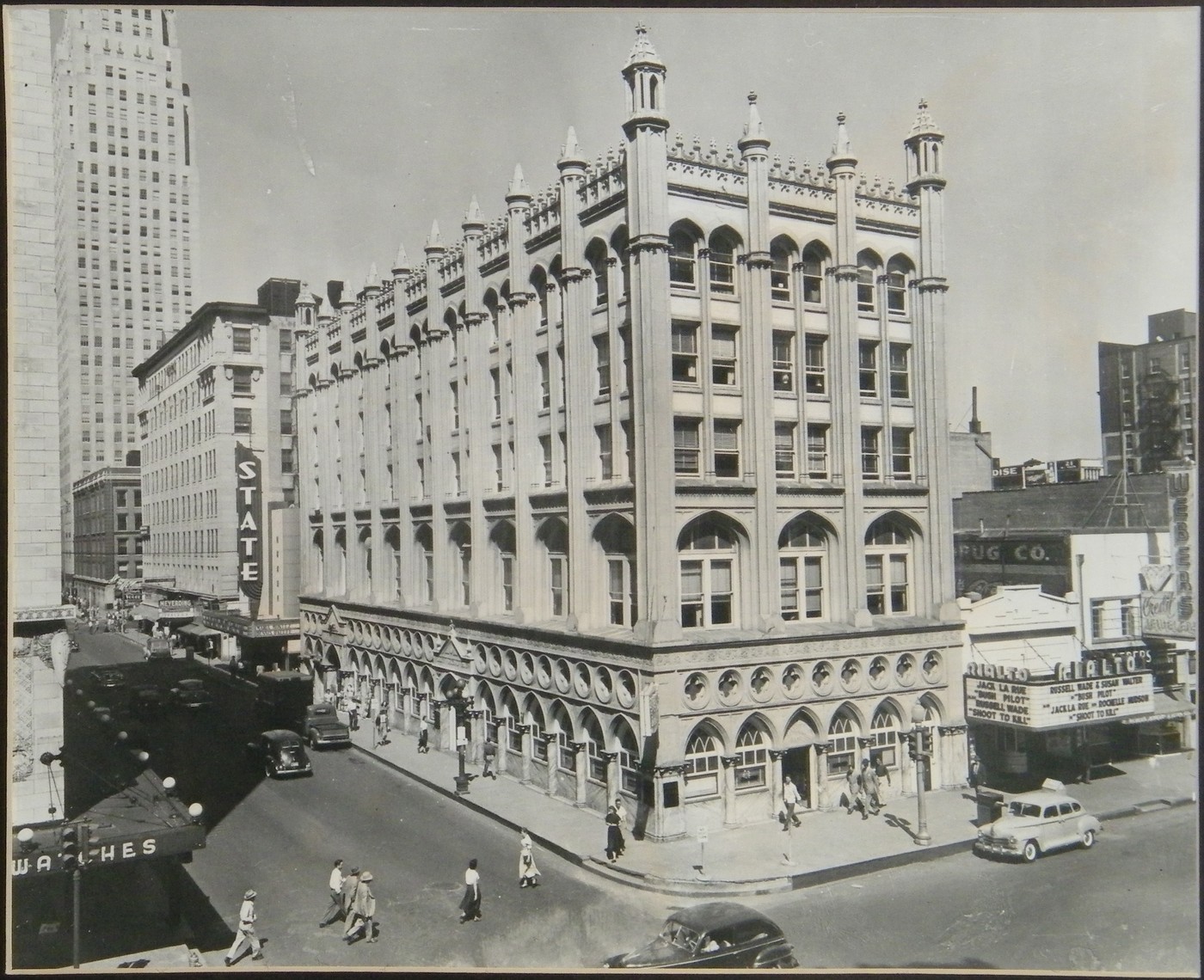
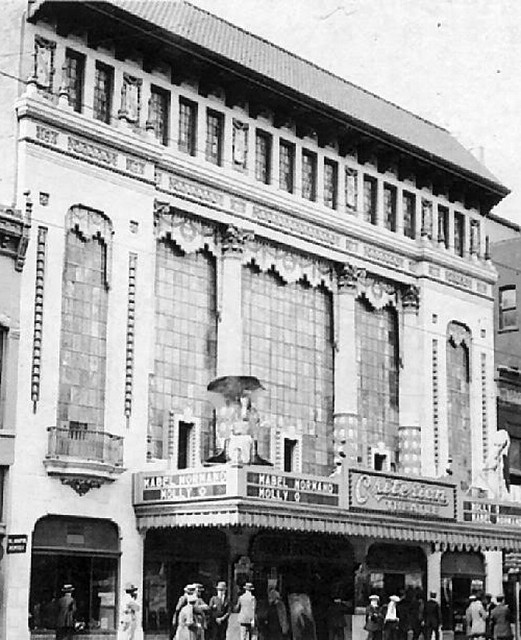
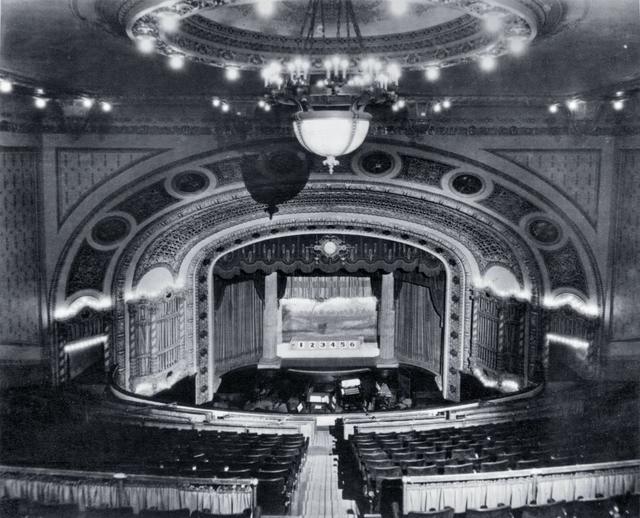
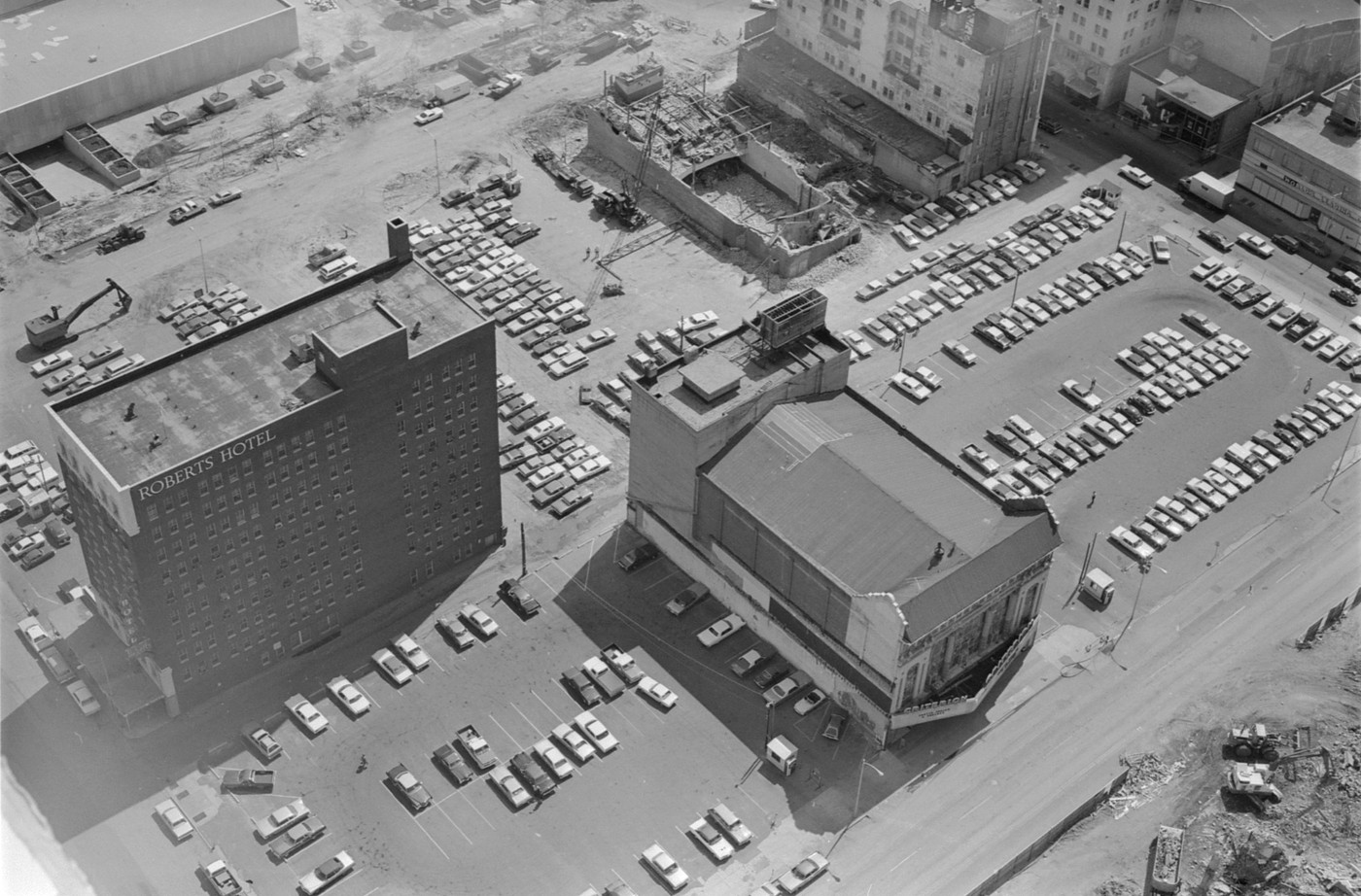
Two other notable losses to make room for the Century Center were the 10-story Roberts Hotel of 1927 and the beautiful Criterion Theater. The 1900-seat theater had opened in 1921 as a silent film cinema, had screened the first talkie in OKC in 1928, and featured crystal chandeliers, velvet-covered walls, two orchestra pits, and an immense organ. It had been refurbished in 1967, but it was still destroyed in 1973, the last building on its block to make way for the Sheraton Hotel/Century Center. Click on the center-right edge of the photo below for a seven-photo slideshow.

[“Criterion Theater” by Larry Johnson at https://theclio.com/tour/2308/18; Roberts Hotel in 1954 by Meyers Photo Shop – Source; Roberts Hotel postcard – Source; Criterion facade, stage, and organ – Source; Criterion seating – Source]

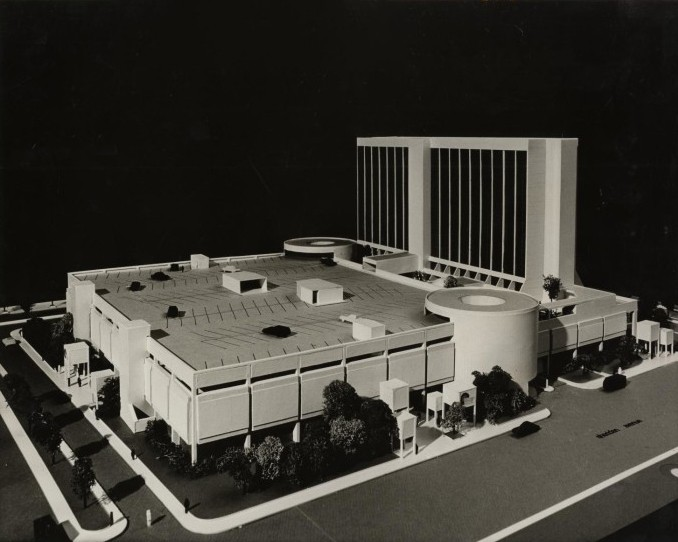
So what replaced those fabulous old structures? A 400-room Sheraton Hotel with a huge parking garage and failed interior mall.

Century Center model
Model of the Century Center [“Sheraton Century Center/Broadway” by Larry Johnson at https://theclio.com/tour/2308/14]
Century Center as built
Century Center [1998 photo by Jim Argo; Source]

The hotel opened in 1977 and was vital for The Myriad, given how many older hotels had been demolished. By the early 1980s, the 89,000-square-foot Century City Mall incorporated into the structure was home to an F.A.O. Schwartz toy store, newsstand, gift shop, clothing stores, jewelry store, restaurants, fitness center, and offices. But it ignored the street, and the mid-1980s oil bust emptied it out.

You can see views of the empty mall at AbandonedOK. It was eventually purchased and remodeled into 100 W. Main as a new home The Oklahoman newspaper, which then downsized as its circulation shrank, and by 2022 it was also home for Griffin Communications News 9 and the nonprofit Oklahoma Watch.

When I was a kid visiting my father’s office in the First National Building or my mother when she was working at the reskinned Skirvin Tower, my parents sometimes parked in the 779-space parking garage, with me marveling at the spiral car ramps. However, the last time I attended a convention at The Myriad, I parked over at the Santa Fe garage and took skywalks through the Renaissance hotel (now the Grand Wyndham) and on to the convention center. So I haven’t been in the Century Center in a long time.

The Galleria Ghost

The Metropolitan Library System’s Urban Renewal tour notes that Main Street between Robinson and Hudson once featured downtown’s three major department stores: Brown’s, Kerr’s, and Halliburton’s. It also shares that at its height in the 1950s, an observer quipped that on Main Street, “You can buy anything but a car or a boat.”

I appreciate Larry Johnson’s take that, contrary to popular belief, Urban Renewal did not kill Main Street retail, although it certainly destroyed the street and most of its buildings. Johnson points out that consumers were the ones who killed the retail businesses by prioritizing close parking and locations in suburbia. Nowdays, consumers like me are killing off stores everywhere by prioritizing online purchases and home delivery.

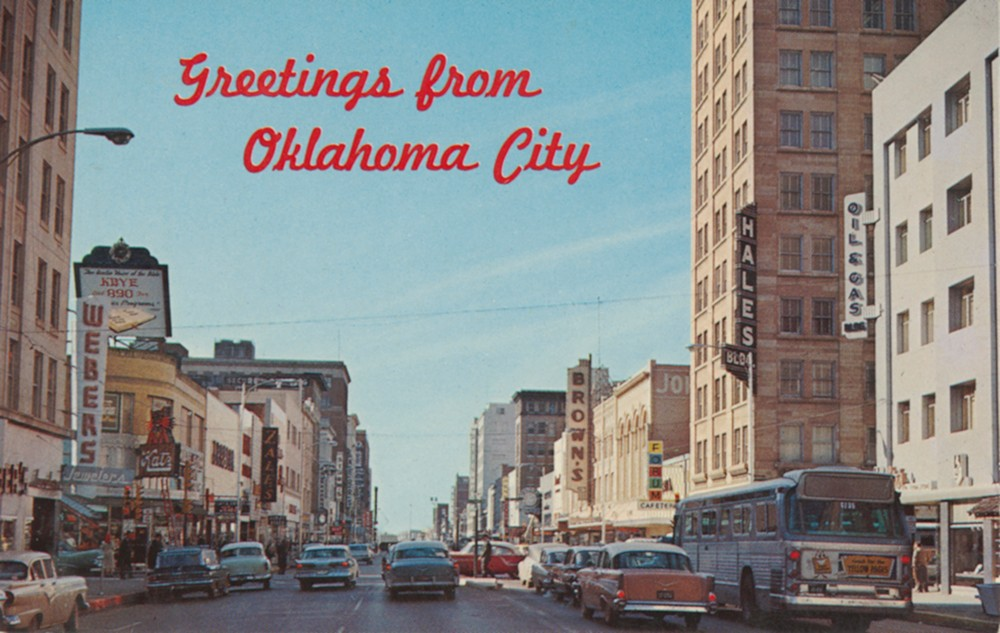
OKC Main Street circa 1960
Main Street in 1957 [Bill Wilson’s postcard collection; Source]

The fading of retail along Main Street was to be addressed by demolishing most of the area, creating a superblock for a mixed-use Galleria development. Pei’s plan hoped to recreate a community that worked, shopped, and lived downtown with big features drawing in folks from suburbia.

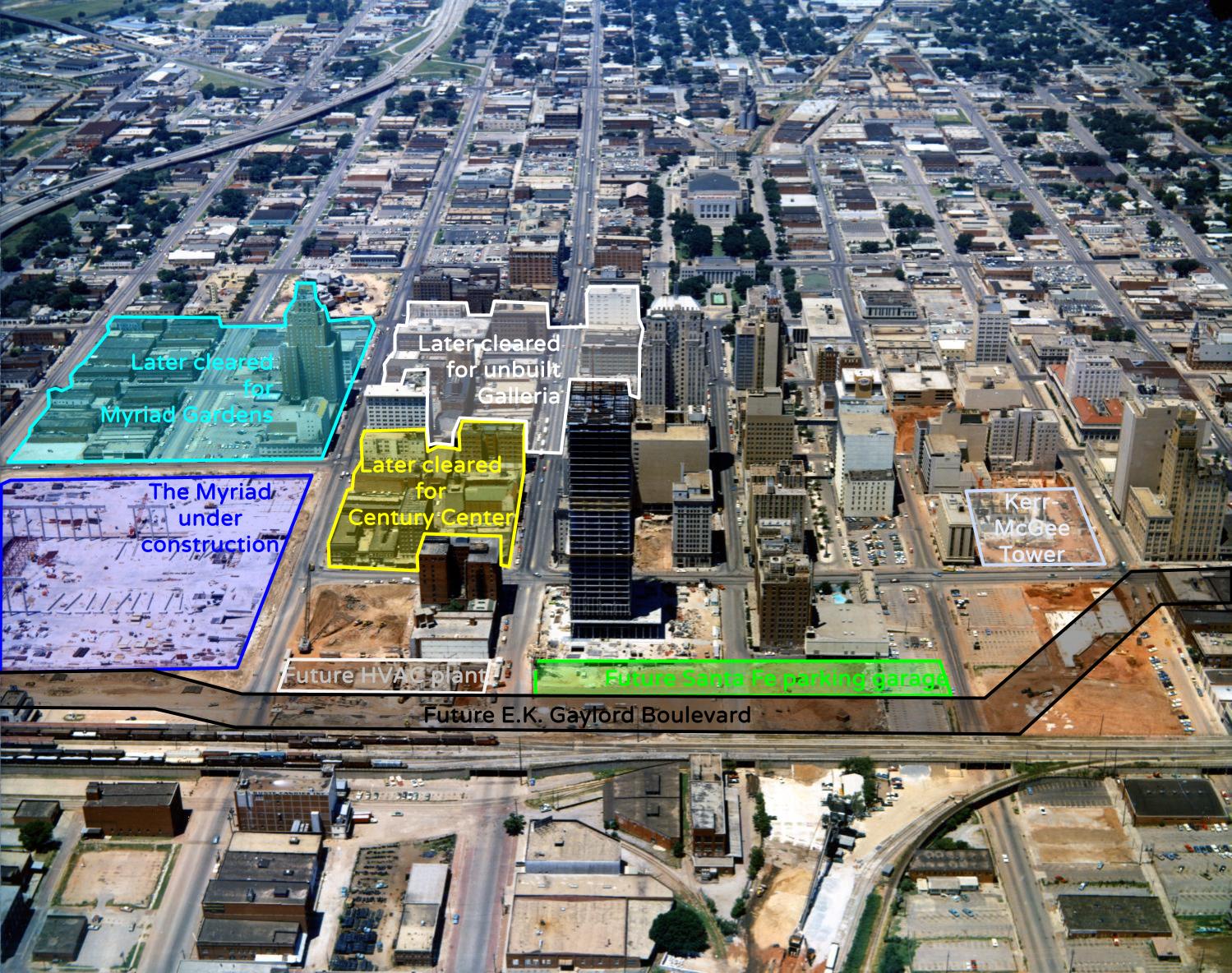
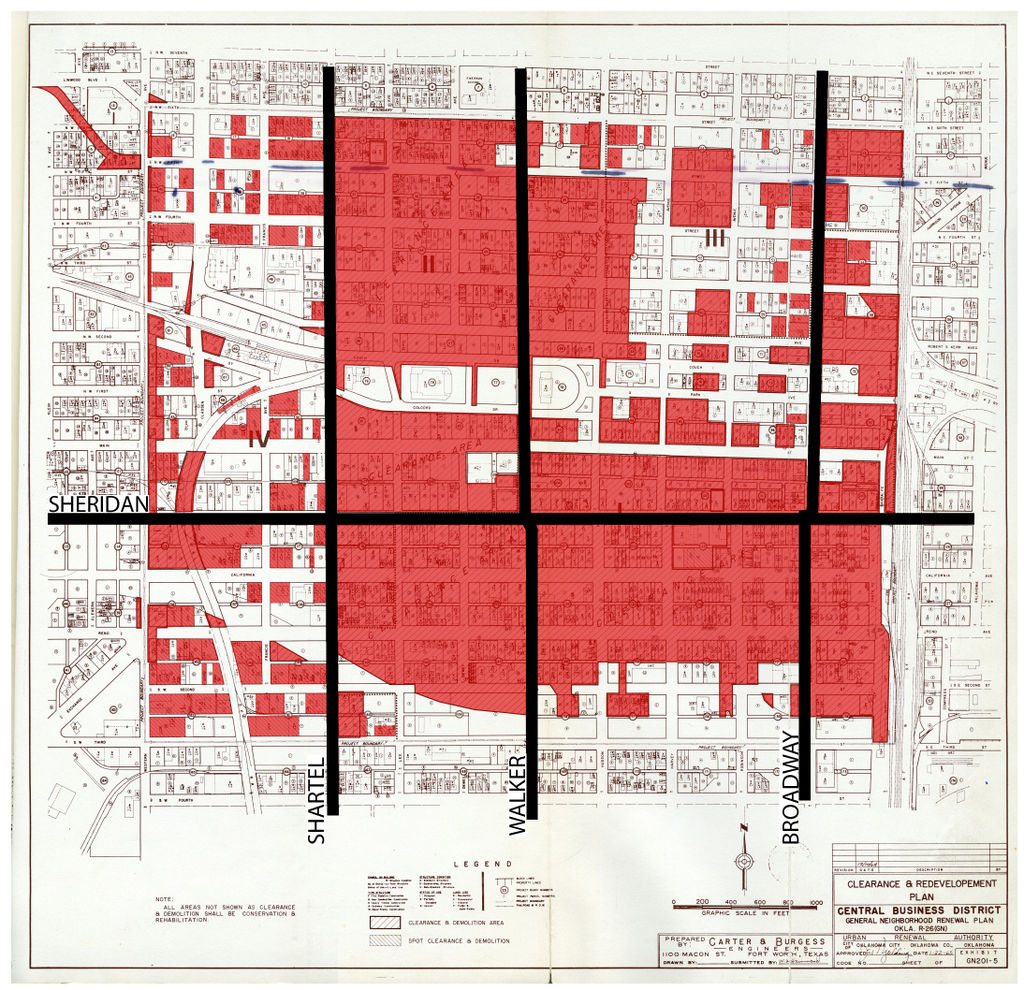
Click the 1970 aerial view below to see my overlays for the areas that were cleared. We’ve already covered The Myriad, its Gardens, and the Century Center. I shall conclude with the great failure: the largely unfinished Galleria.

1970 aerial
1970 aerial view looking westward with Urban Renewal project overlays [Original photo by Don Gwynne; Source]

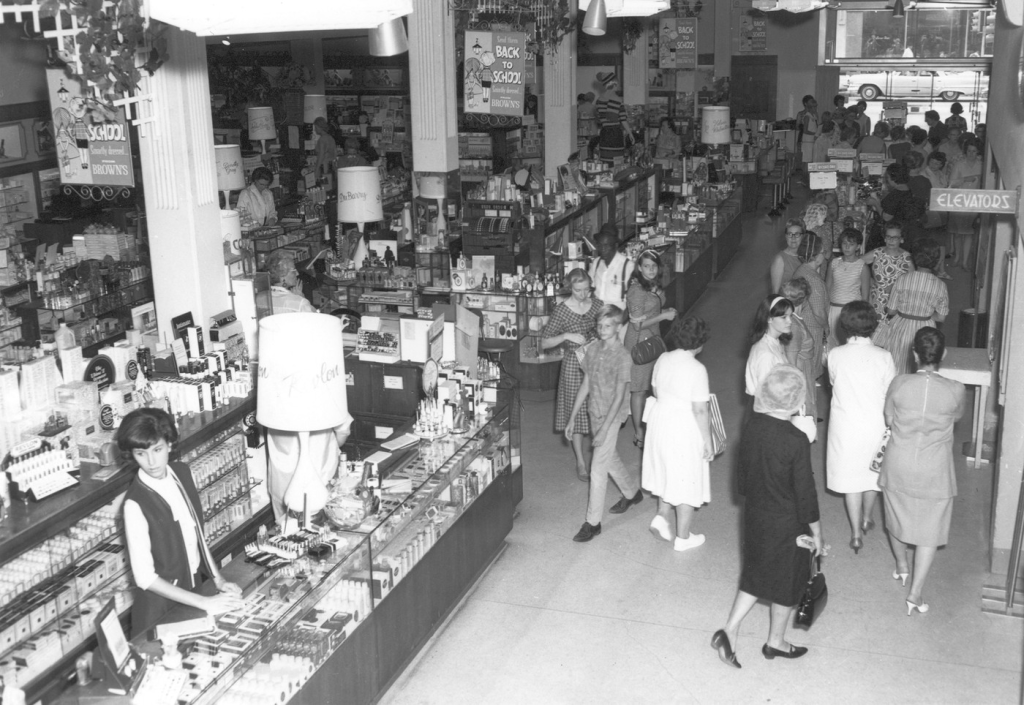
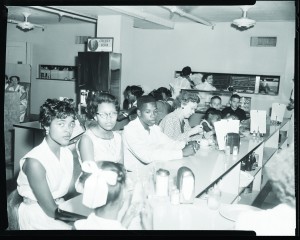
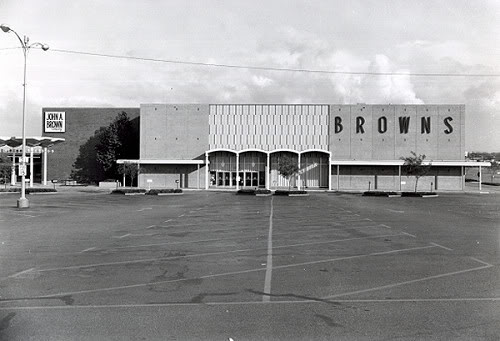
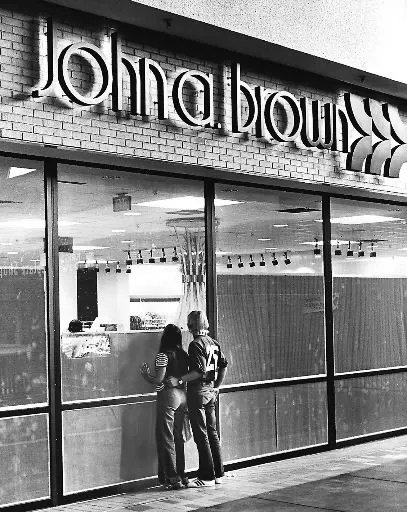
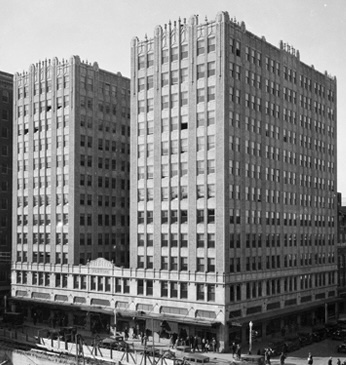
Larry Johnson has noted how the beloved retailer John A. Brown’s complicated the redevelopment of the Galleria blocks, as it had spread weblike into multiple buildings and refused to move or sell until 1974 when its branch at Crossroads Mall could open; it had already opened a branch at Penn Square Mall. Click on the center-right edge of the photo below for a four-photo slideshow.

[1960 interior – Source; Sit in – Source; Penn Square exterior – Source; Crossroads exterior – Source]

Cravens Building
The Perrine/Cravens/Robinson Renaissance escaped destruction [Excerpt from original photo of Meyers Photo Shop; Source]

Then the blocks were cleared, sparing only the 1910 Colcord skyscraper and the 1927 Perrine building, known then as the Cravens building, and today as the Robinson Renaissance.

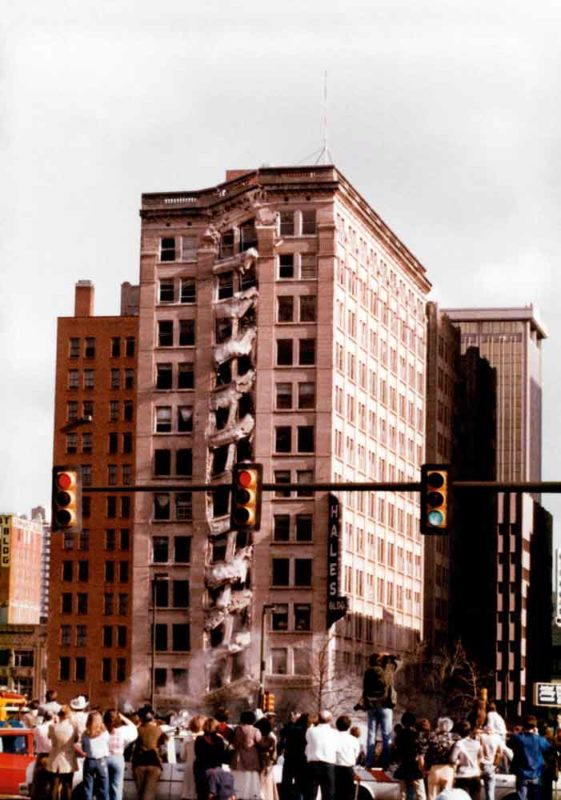
Far less fortunate was the 12-story Hales building of 1910, which had been built with a Bedford limestone exterior and floors of Tennessee marble and Italian marble wainscoting. An offer from the Hales heirs to buy and renovate it was not accepted, and the building was dynamited and destroyed in 16 seconds on April 8, 1979.

[Photos from the W.T. Hales Collection; Source]

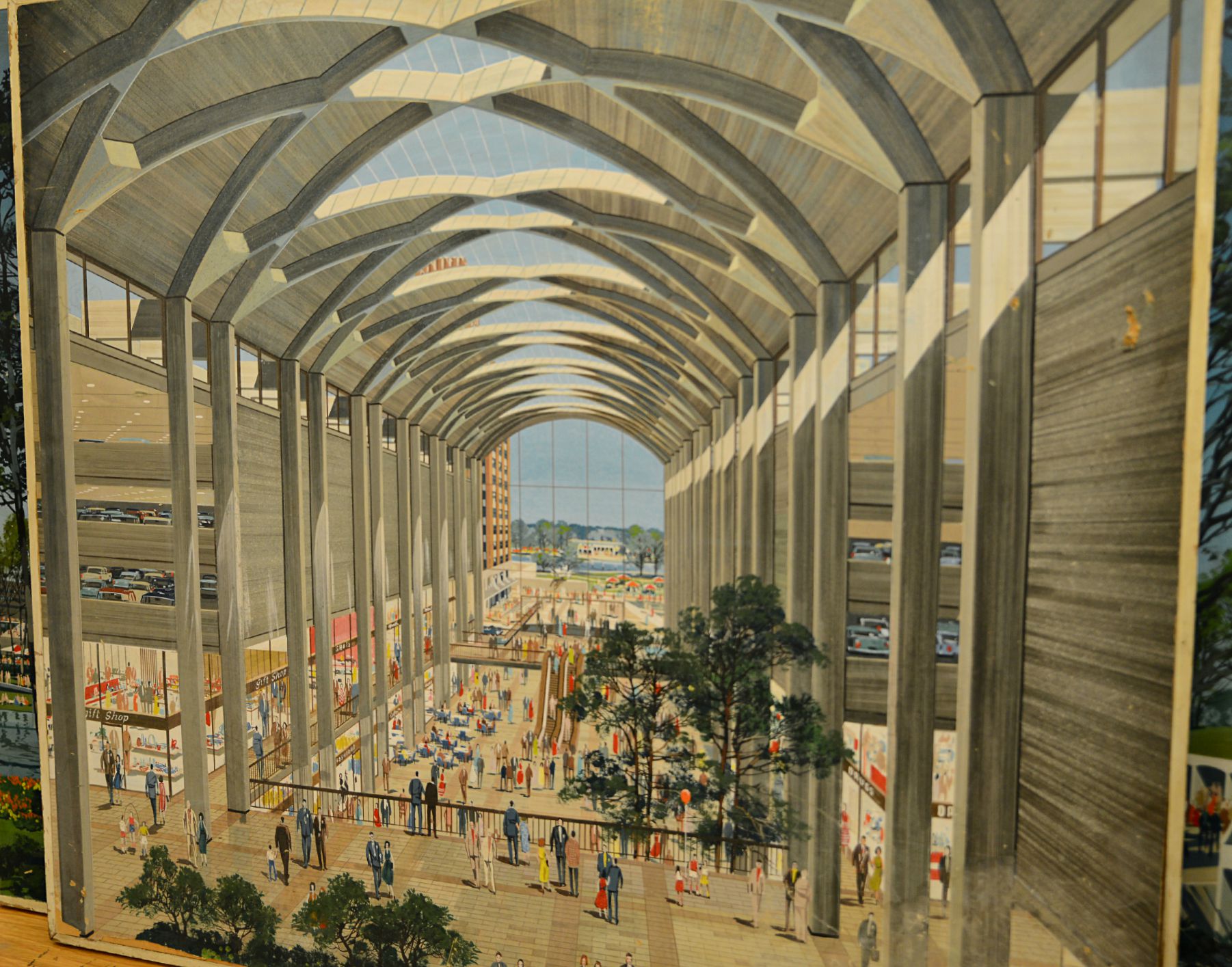
The Urban Renewal Authority had struggled to find a developer for the Galleria, and Dallas developer Vincent Carrozza finally came on board. He hired I.M. Pei and Associates to do the architectural planning, which called for 1.5 million square feet of office space, a 400-room hotel, and 700,000 square feet of retail, plus parking for 3,300 vehicles. A two-story shopping mall was to be topped with a 90-foot-tall glass dome.

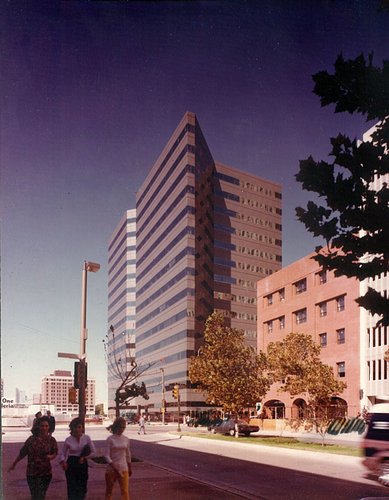
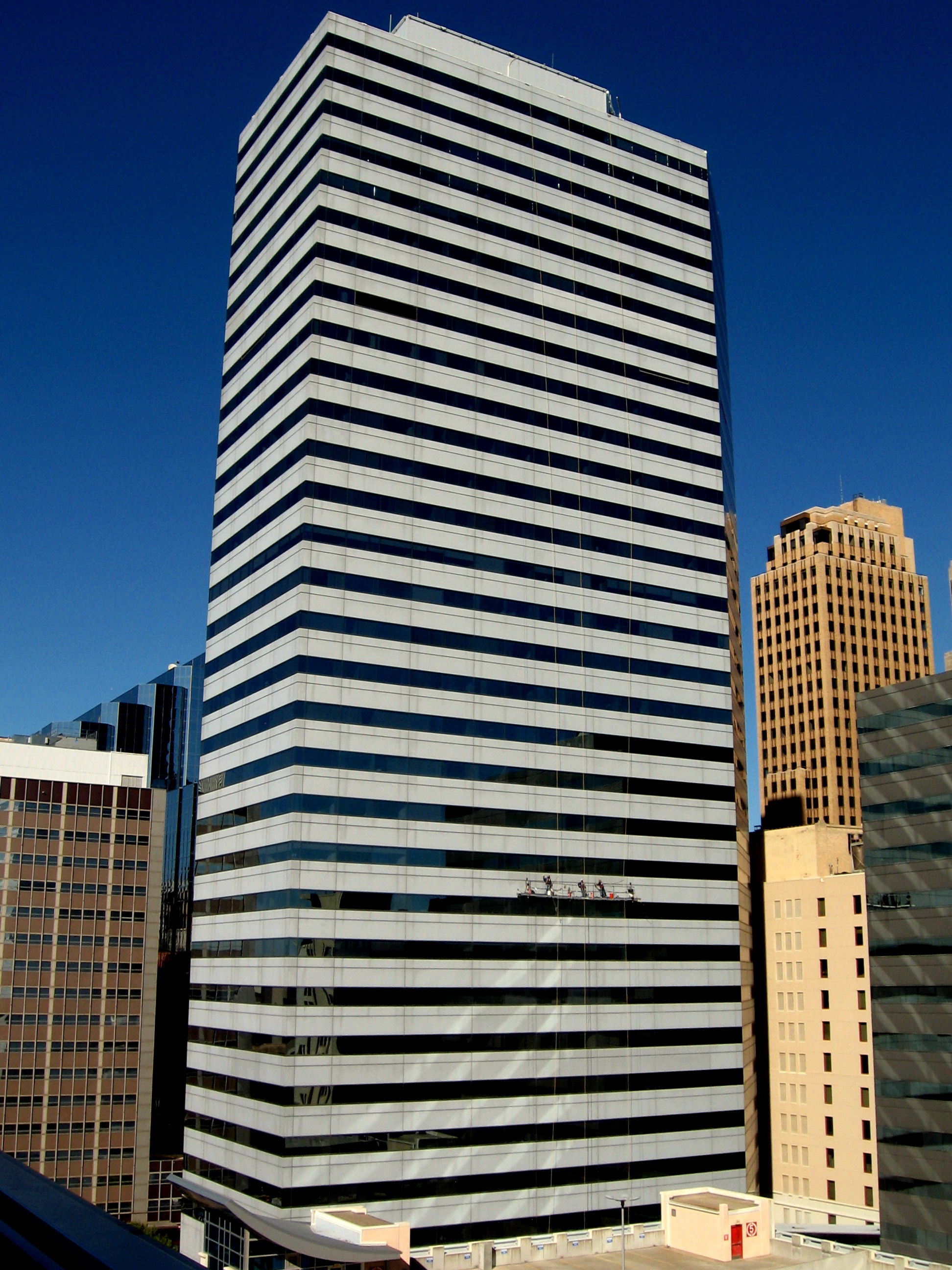
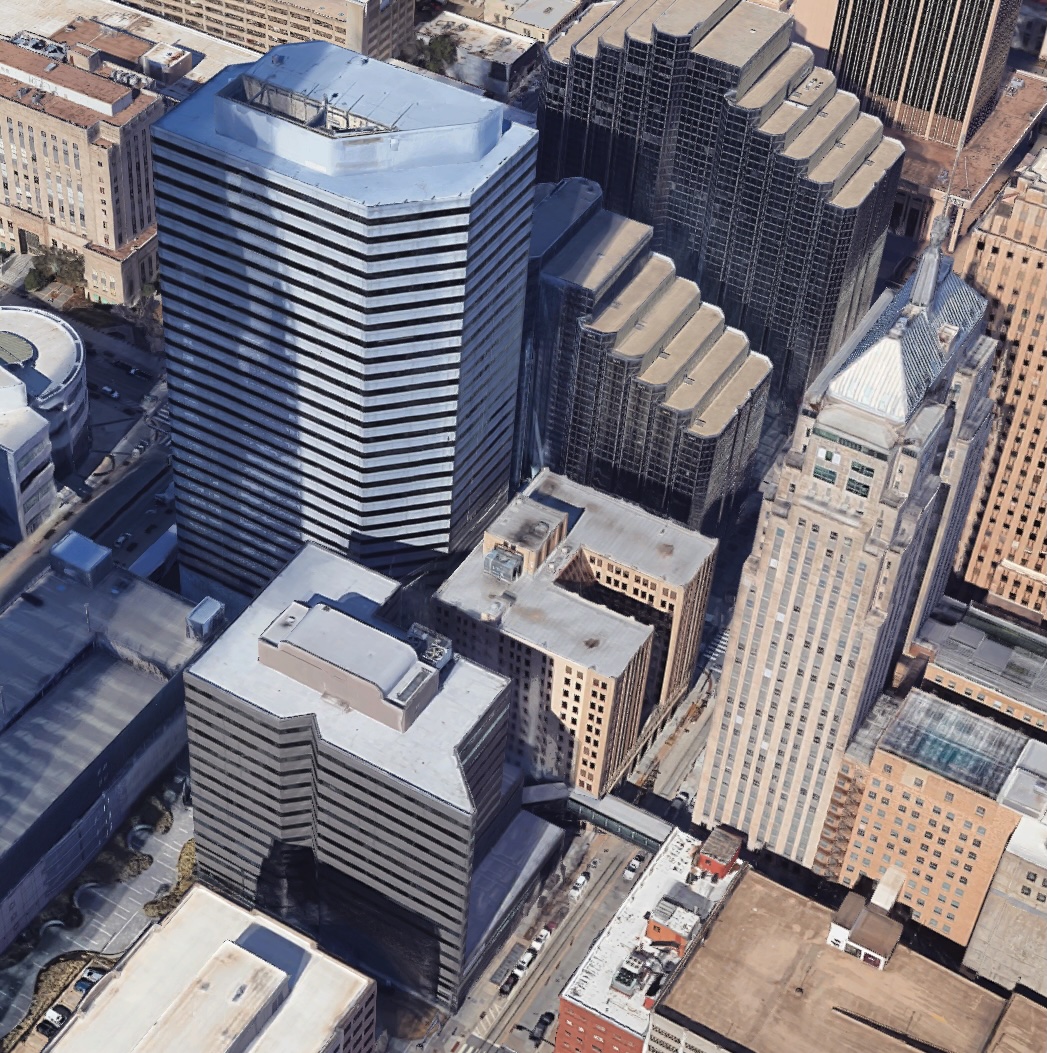
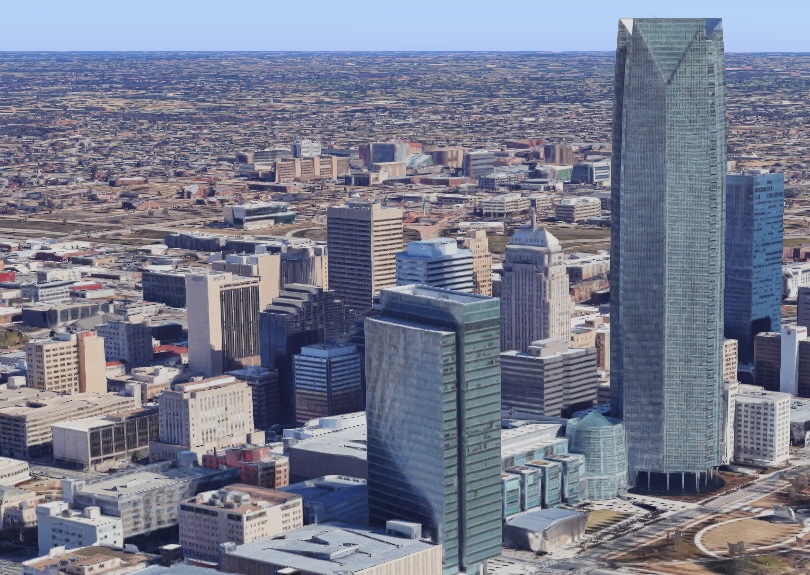
The first phase was to be one office tower, the hotel, and parking. Carroza insisted on building the odd-shaped One Galleria, now known as Corporate Tower, on the old Hales building site in 1980. Carrozza then announced the taller but even less inspiring Two Galleria, now known as Oklahoma Tower. They sit at the northeast corner of the superblock, hemming in the venerable Robinson Renaissance.

[Galleria One – Source; Galleria Two by Urbanative – Source]

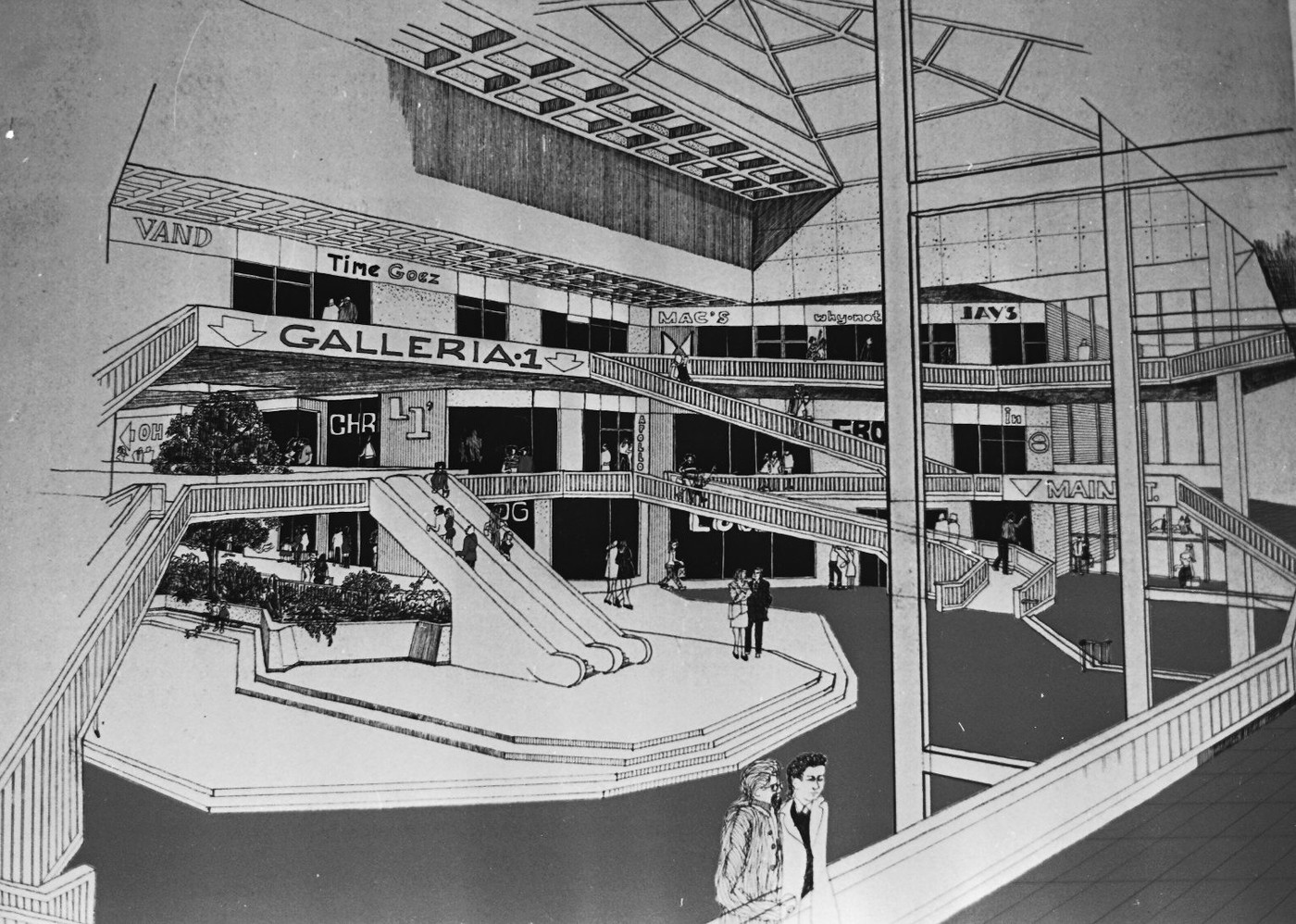
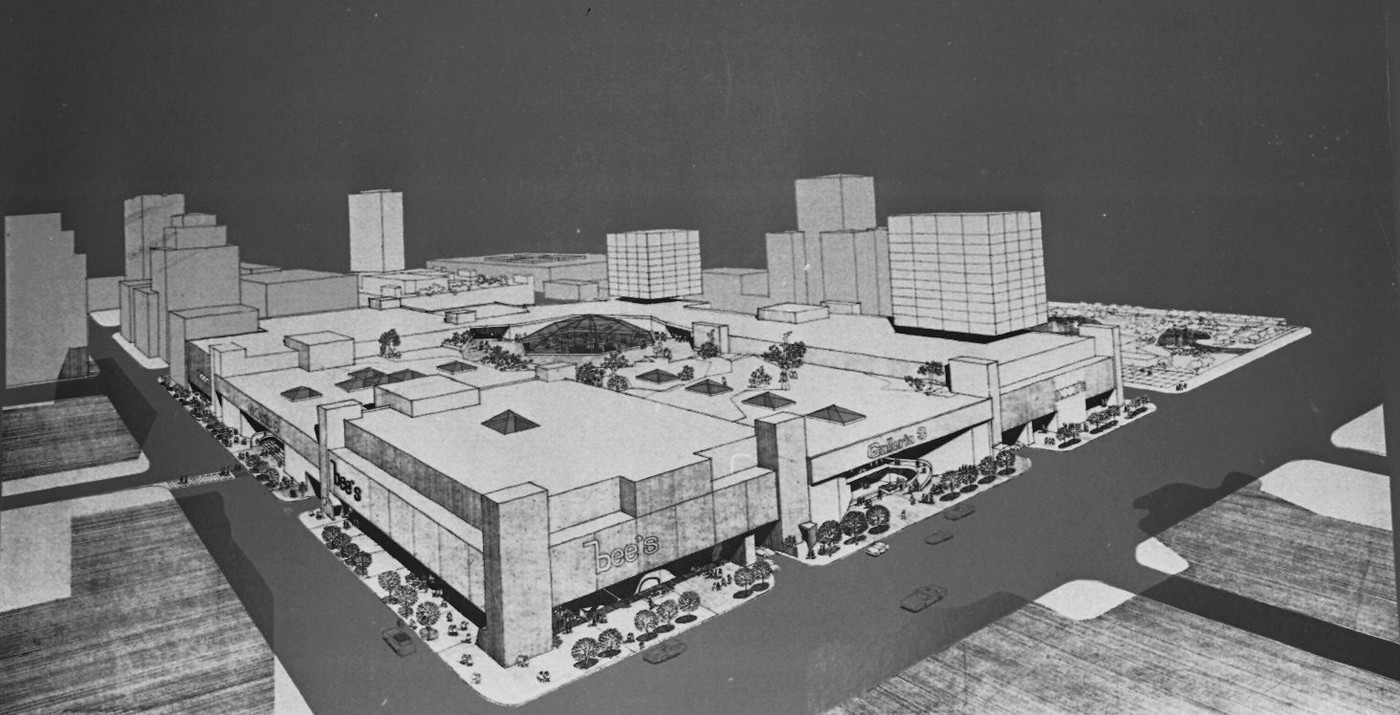
The Galleria’s primary purpose was supposed to be lots of impressive retail. Below are glimpses of some of the concepts.

[Color image – Source; Drawings from “John A. Brown Department Store / Oklahoma Tower” by Larry Johnson at https://theclio.com/entry/154149]

However, in December 1981 and January 1982 Carrozza asked for three-year extensions on the shopping mall and hotel projects. He couldn’t find retail anchors for the development without an established store like Brown’s already in place. When he was fired from the development effort in 1983, Carrozza summed up his frustration with, “Oklahoma City tore down too much.”

[1998 photo by Jim Argo – Source; Google Earth Pro imagery from January 4, 2023]

The economy was in a recession and the oil crisis and Penn Square Bank failure had arrived. Together they brought Project Kicker to an ignominious end, and it would take decades to fill the hole in downtown’s fabric with a new library, the Devon Energy Center, and parking garages.

Failure Analysis

Zachary Anderson has noted, “Oklahoma City’s urban renewal program of the 1960s and 70s was ultimately a failure – due in part because of its top-down nature, and in part due to the project’s dependency on federal funds, which dried up when urban renewal fell out of favor nationally in the mid-1970s.”

Demolition is cheap, while renovation and rebuilding can be exquisitely expensive. The Oklahoma City Urban Renewal Authority’s contractors leveled 447 buildings, and private owners tore out another 75 between 6th and I-40, from Shartel to the Santa Fe. However, new structures were costly, and renovations were rare and could be even more pricey.

From the March 1, 1970 Orbit Magazine insert of The Daily Oklahoman [Source]

Anderson wrote: “Work began by 1966, and the Pei Plan itself would see its first projects completed in the early 1970s, though some of the most crucial elements, namely a downtown shopping center and downtown apartment towers, would never be built, leaving the ‘Pei Plan’ incomplete and the central business district full of empty lots that had been bulldozed in preparation for work that would not occur, and leaving that part of the city largely vacant outside of the nine-to-five week-day working hours. Furthermore, the urban renewal work done in the city’s historically African American ‘Eastside’ district would help speed up the area’s decline, which had already begun due to the end of segregation.”

After the economy recovered, mayor Ron Norick, the son of the former mayor who spearheaded The Myriad, convinced voters to approve the first MAPS initiative in 1993. $350 million in renovations and new projects again sought to revitalize downtown, along with the abandoned warehouse district of Bricktown east of the railroad tracks. The renovations and new projects were built debt-free, funded by a limited-term one-cent sales tax. That was followed by a series of later MAPS initiatives that continued to transform the city.

But all that happened after I moved away to Bartlesville in 1989. I grew up in a city that was steadily destroying much of its downtown to build a convention center, a hotel, parking garages, a park, and a few office towers. The times were different, difficult, and quite destructive. OU created an interesting comparison of downtown Oklahoma City in 1954 and 60 years later. It is fascinating, and frustrating, to see how much was targeted and cleared for new projects, freeways, and institutions. I.M. Pei’s vision of a community that lived, shopped, and worked downtown did not materialize, although some infill and conversions persist in an era when much shopping is done online.

I don’t particularly miss the downtown Oklahoma City of my youth, and it has become a stranger to me in my adulthood. I grew up in three locations that were eight, seven, and six miles away from downtown as the grackles flew. By visiting my parents downtown, I caught repeated glimpses of its destruction and its painful and incomplete reconstruction, snatches of a long story of a myriad of issues.


This post was only possible thanks to a number of online resources. The following were of particular value and are highly recommended for further reading:

Posted in history, nostalgia | 4 Comments

The Lights are Out Along Hubcap Alley

One of my favorite tools is from the early 1960s: a metal roll-up yardstick that I inherited from my parents. I will delve into its design in a later post, but my preternatural curiosity has me chasing after a different rabbit.

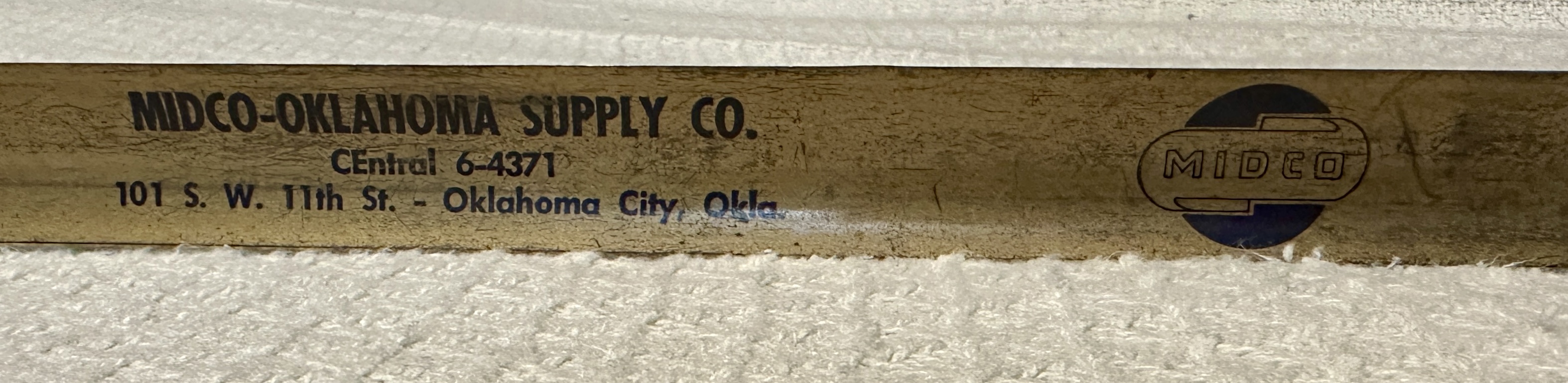
Companies used to distribute yardsticks as free advertising. They would print their name, logo, address, and phone on them hoping that you might see it repeatedly over the years as you made use of the tool. In this case, MIDCO-Oklahoma Supply Company of Oklahoma City was the advertiser.

Roll-up yardstick

You can tell the yardstick is from the early 1960s since the phone number for MIDCO is in the old exchange-name 2L5N format. I couldn’t help wondering what MIDCO had been, and if it was still around. Answering that led me back to Hubcap Alley and to contemplate what my hometown gained and lost in reinventing itself.

MIDCO

MIDCO was Mid-States Supply Company, which began in 1947 in Kansas City, Missouri. It was a PVF supplier — pipes, valves, and fittings. When it opened a warehouse in Oklahoma City in 1963, it needed a cheap industrial area where its inherently ugly all-business aesthetic would fit right in. So it had a couple of obvious choices: the railroad warehouse area of Bricktown or the automobile scrapyards along Hubcap Alley.

Bricktown

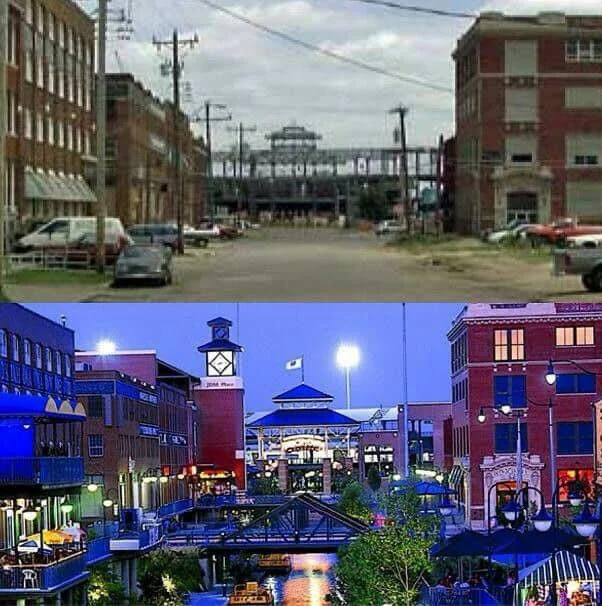
Bricktown in 1990s and 2023
Bricktown in the early 1990s and 2023

In the late 19th and early 20th century, four railroad companies had freight operations east of the tracks that ran along the eastern edge of the central business district. To avoid fires, they constructed brick warehouses from 1898 to 1930, along with working-class houses nearby. Bricktown declined in the Great Depression, and after World War II many residents left for the suburbs along subsidized highways. Railroads restructured with a lot of freight traffic shifted to highway trucks. By 1980, Bricktown was a cluster of abandoned buildings. So Bricktown was in steep decline in 1963, and MIDCO didn’t locate there.

In the 1990s, OKC residents were persuaded to invest in themselves by approving a sales tax for MAPS which renovated the Civic Center Music Hall, renovated and expanded the Myriad convention center, constructed a ballpark and sports arena, and dug the Bricktown Canal to transform that area from an abandoned warehouse district into a more lively entertainment one.

The success of the first MAPS led to three later MAPS projects. MAPS 3 would destroy Hubcap Alley.

Hubcap Alley

Almost as soon as automobiles became a part of city life, working-class families set up repair, tire, and accessory shops. There are blocks of downtown Bartlesville, where I now live, that were dotted with tire and battery companies, metal shops, and garages. Several buggy and harness firms transformed themselves to service the horseless carriages.

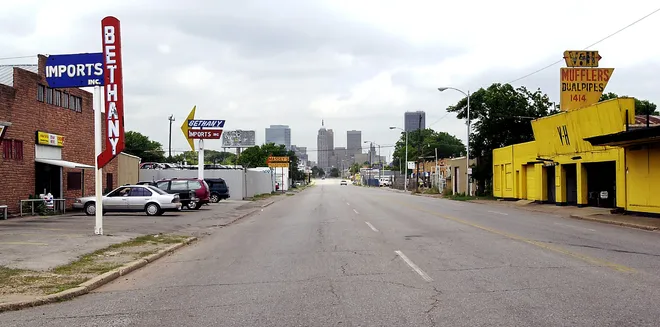
In Oklahoma City, the stretch of Robinson Avenue south of downtown toward the dirty ditch officially labeled as the North Canadian River became Hubcap Alley, not to be confused with Automobile Alley up north on Broadway where the car dealerships were located.

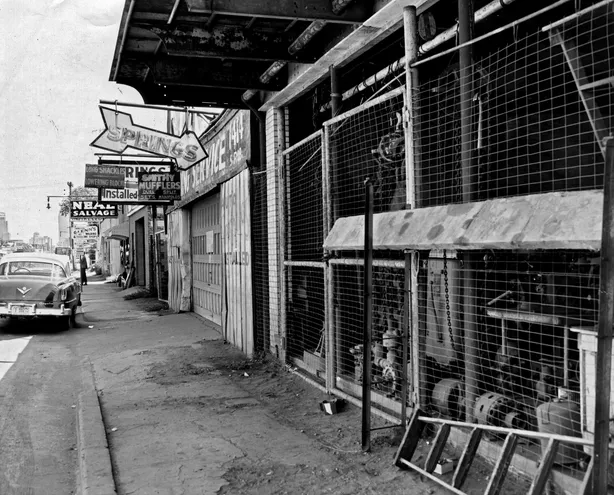
Hubcap Alley in 1956
Hubcap Alley in OKC in June 1956

Working-class families set up over two dozen repair, tire, and accessory shops along Hubcap Alley, along with big auto salvage scrapyards. If you needed a car part and couldn’t afford new, which was true for most of the folks in Oklahoma City, you would head to Hubcap Alley.

It was the birthplace of Hibdon Tires, and it was anything but pretty. So in the 1950s, it became one of the targets of the first wave of Urban Renewal. Hubcap Alley was considered an embarrassment, an ugly gauntlet for out-of-state visitors passing along US 77 on their way to downtown.

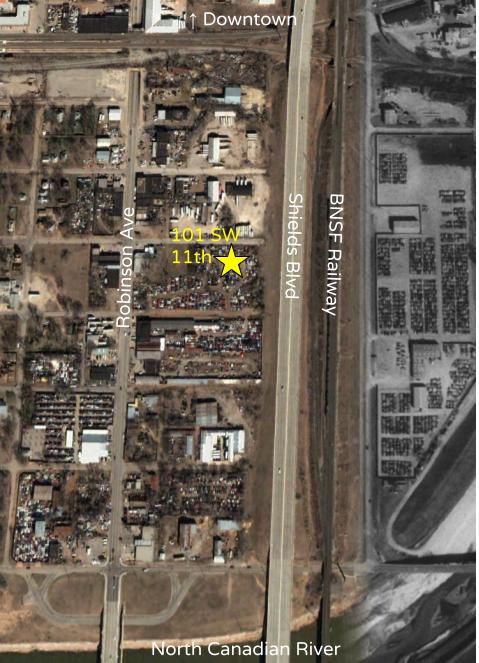
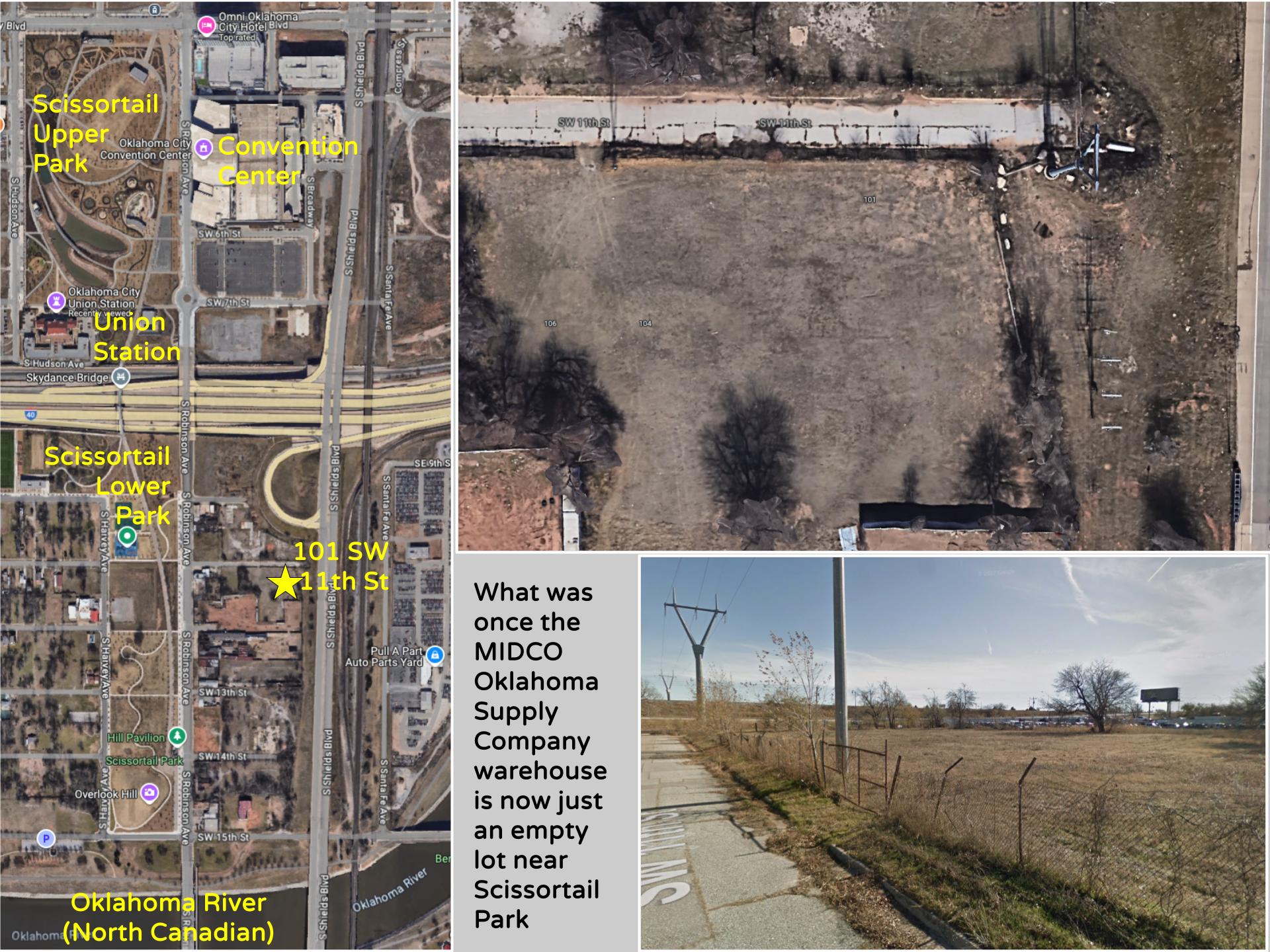
However, the businesses successfully fought back against the Urban Renewal in the 1950s, and MIDCO planted itself at 101 SW 11th in the heart of Hubcap Alley. I don’t know how long it lasted, but by 2002 that property had just become part of the auto salvage yards.

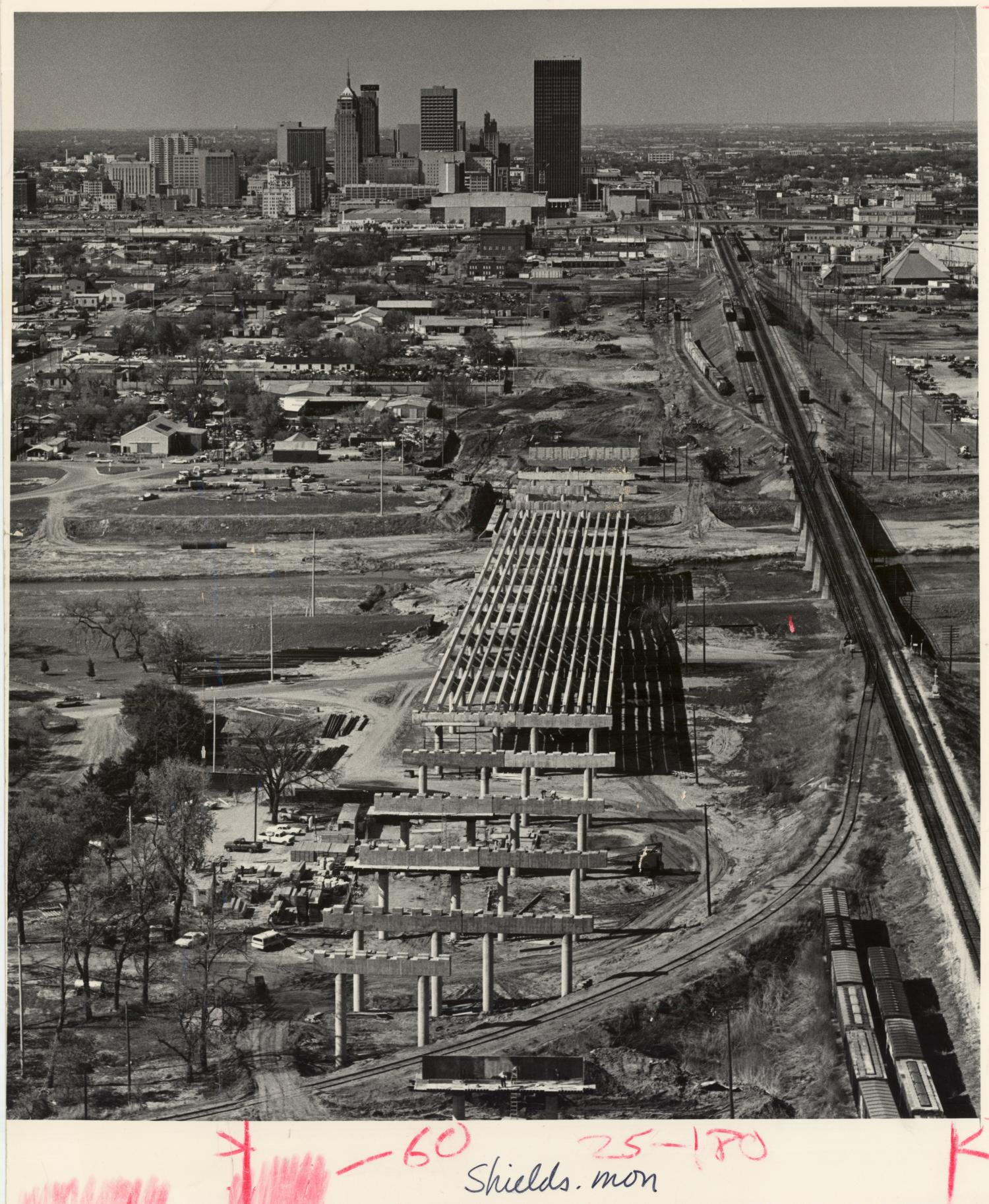
In the 1970s, Urban Renewal became stronger than ever as retail downtown collapsed. But even as it was destroying whole blocks of downtown, Urban Renewal spared Hubcap Alley by extending Shields Boulevard northward to downtown, rerouting US 77 off Robinson Avenue.

Shields extension in 1978
Extending Shields Blvd in 1978 across the North Canadian River and northward between Hubcap Alley and the BNSF tracks
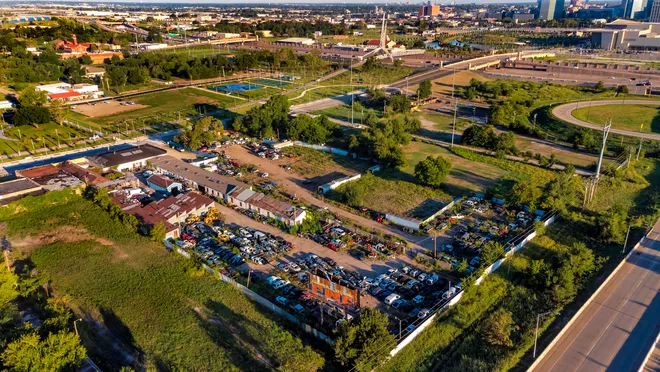
Hubcap Alley aerial in 2002
Hubcap Alley in 2002

The snoots still fretted about how building the Shields extension into downtown as an elevated road, instead of at grade, would ensure no development along that stretch, and thus spare the unsightly warehouses and junkyards to the west along Hubcap Alley as Shields stabbed northward alongside the Burlington Northern Santa Fe railway tracks.

In 2009, the MAPS 3 project approved by city voters included a plan for a massive park connecting Capitol Hill, the Oklahoma River, and downtown.

By the way, lest a non-native form the wrong impression, Capitol Hill was once a small town south of the river, two miles from the actual state capitol. A newspaper man purchased the hill in 1900, hoping it might become home to the state capitol, but the capitol was instead built a mile northeast of downtown. Another scheme for a suburb location for the capitol led to the non-existent Putnam City, a story I’ve shared previously.

As for the Oklahoma River, that is a renaming of a seven-mile stretch of the North Canadian that now has several locks creating small lakes for rowing, kayaking, and canoeing regattas. You guessed it — that was another MAPS 3 project, part of the same package that dealt with Hubcap Alley.

Hubcap Alley before its demise
Hubcap Alley just before its end

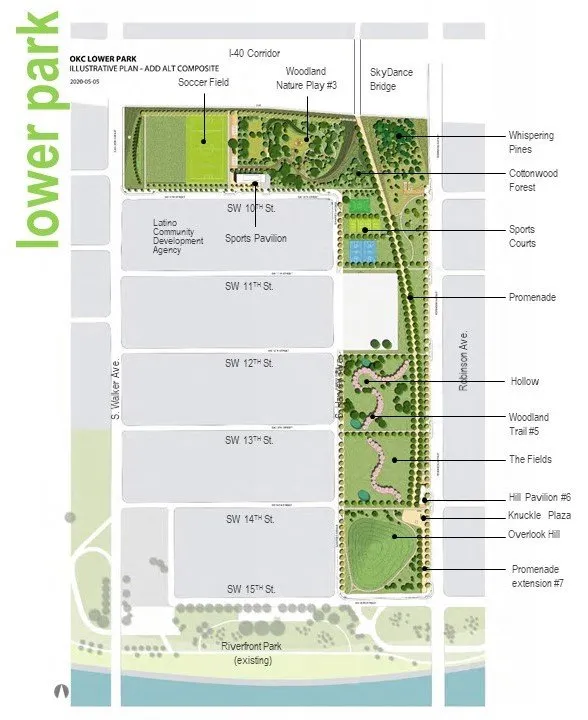
MAPS 3 funded the city’s acquisition of the west side of Robinson Avenue from the then-new rerouting of Interstate 40 all the way south to the river. Car shops and junkyards were transformed into the skinny lower half of Scissortail Park.

Scissortail Park South
How they destroyed Hubcap Alley

As intended, that meant that the remaining scrapyards on the east side of Robinson lost business as former customers presumed all of the junk dealers were gone. It also led hopeful developers and speculators to start buying those properties, betting on rising values near the new park. A&A Auto Parts & Salvage, the last holdout with about 400 cars on its lot, closed in 2022.

Last scrapyard at Hubcap Alley
A&A Auto Salvage, the last scrapyard along Hubcap Alley, closed in 2022

So 101 SW 11th Street is now just an empty lot east of the Scissortail Lower Park, south of the new convention center, part of the landscape that MAPS 3 denuded.

101 SW 11th vacant lot

The snobs finally won, and the lights went dark along Hubcap Alley. Below you see the fancy northern part of the park just west of the new convention center, with the distinctive spikes of the Skydance pedestrian bridge to the south across Interstate 40.

Scissortail Park North
Scissortail Park’s northern part, the distinctive bridge across I-40, and trees

I’ve yet to see Scissortail Park or the new convention center, but I’ve driven under Skydance Bridge a few times. If I were ever at the convention center, I might walk across Skydance Bridge to the lower park, which is far less compelling than the northern portion since the lower park was really just a mechanism for destroying Hubcap Alley.

A Lost World

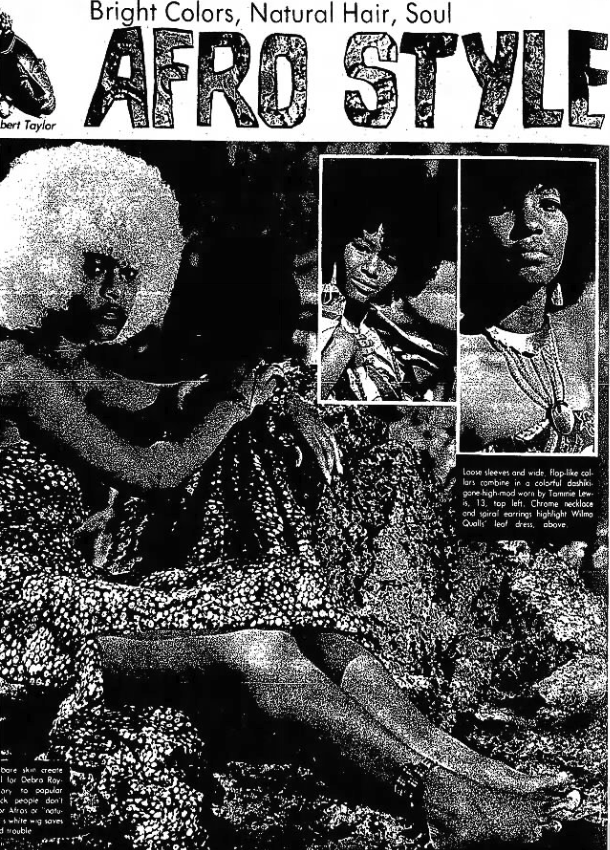
Afro style
The Soul Boutique was high-end black fashion in OKC in the 1970s

I have rather mixed feelings about it all. I grew up in Oklahoma City and knew it was not a beautiful town, but rather a flat, sprawling, and eminently practical-minded mess. I grew up in a city that sported the junkyards of Hubcap Alley, the world’s largest stockyards, and the diaspora of Deep Deuce after the Civil Rights era, when the black culture that had earlier created Ralph Ellison stretched out into a truly funky stretch of 23rd Street.

The Soul Boutique offered high-end mod and Afro fashions along an urban corridor that looked like the set of Starsky & Hutch, with big colorful Cadillacs sporting curb feelers and people strutting along in crushed velvet.

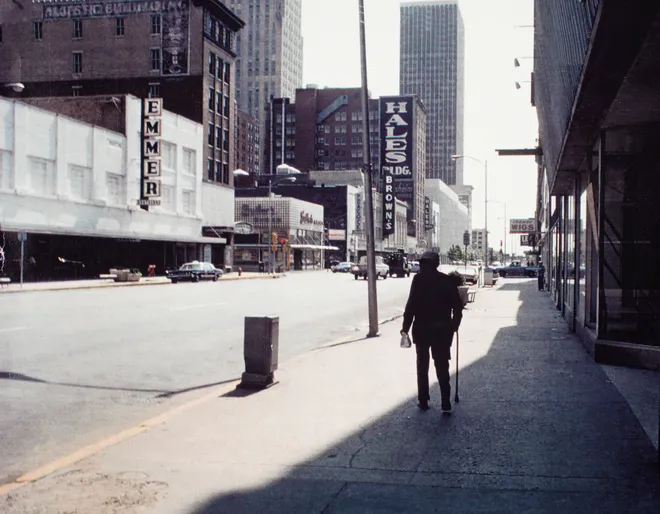
It was all rather gritty. The collapsing downtown spread urban blight and street crime. The fancy shops on the ground floors of the skyscrapers were closing, and Main Street was emptied while I explored the underground Conncourse.

Main Street in 1974
Man Street in 1974, just before it was wiped out

The old Mayflower cinema on 23rd Street had opened in 1938 showing Bing Crosby in Pennies from Heaven. It had a nautical theme contrasting to the southwest look of its architectural twin, The Bison. While the Bison closed in 1971, the Mayflower survived…by becoming a porno house directly across the street from the famous Gold Dome of Citizens State Bank.

Mayflower adult theater
The old Mayflower became an adult-movie house

OKC knew it was in trouble by 1962, when 53 downtown retailers had closed or moved to the suburbs. City leaders Dean McGee, Stanley Draper, and E.K. Gaylord pushed for Urban Renewal, and businessmen hired architect I.M. Pei to redesign the 528 acres of the central business district.

His way of dealing with the small lots and aging structures was to demolish hundreds of buildings to form superblocks for larger-scale development. To his credit, his original plan did call for retaining notable landmarks like the Biltmore and Huckins Hotels, but that wasn’t how things went.

Huckins Hotel demolition
The Huckins Hotel came down in 1971

The large-scale demolitions began in 1967, but the plan ended up destroying far more than it rebuilt. In 1971, the Huckins Hotel at Broadway and Main, which had once been the temporary state capitol, was the first of the city’s buildings to be brought down with explosives.

The big John A. Brown department store was to be rebuilt, but in 1974 the out-of-state Dayton Hudson Corporation announced they would entirely abandon downtown for suburban malls. The site for a Main Street Galleria was cleared, but it just became a surface-level parking garage.

Along with Brown’s, the beautiful old Criterion Theater and the Baum Building had been torn down, but the Galleria shopping area never materialized, and the Century Center Mall ignored the street and never thrived.

My parents would sometimes take me downtown to visit my father’s office in the First National Building downtown. Eventually we parked at the new Century Center, and I was struck by the oddity of driving up and down its spiral ramps. It was strange to see so much of the city razed to make way for megastructures.

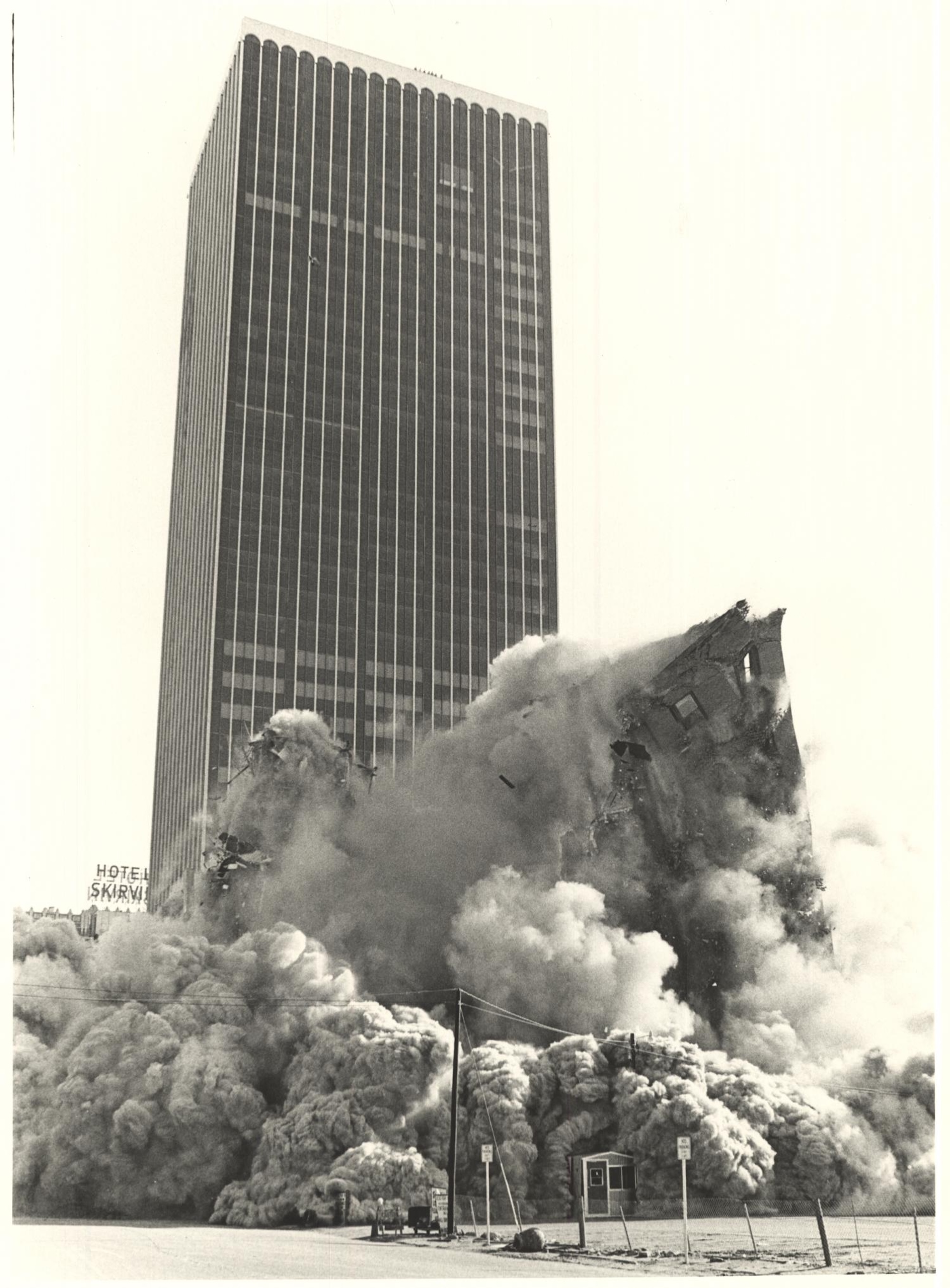
Biltmore Hotel demolition
The Biltmore was destroyed in 1977

Just across the street was the brutalist and cheaply built Myriad convention center. My high school proms and commencement were held there, and I was struck by its unadorned and grim bare concrete interiors.

In 1977, one of the last acts of destruction was blowing up the old 26-story Biltmore Hotel. The original Pei Plan called for “Tivoli Gardens” around the hotel, but the hotel was judged to no longer be economically viable. The Myriad Botanical Gardens simply grew a bit to swallow up the Biltmore plot.

The Oklahoma City Urban Renewal Authority’s contractors leveled 447 buildings, and private owners tore out another 75 between 6th and I-40, from Shartel to the Santa Fe.

The street grid and fine-grained commercial core of the early 20th century was replaced with superblocks, large public projects, parking facilities, and freeways.

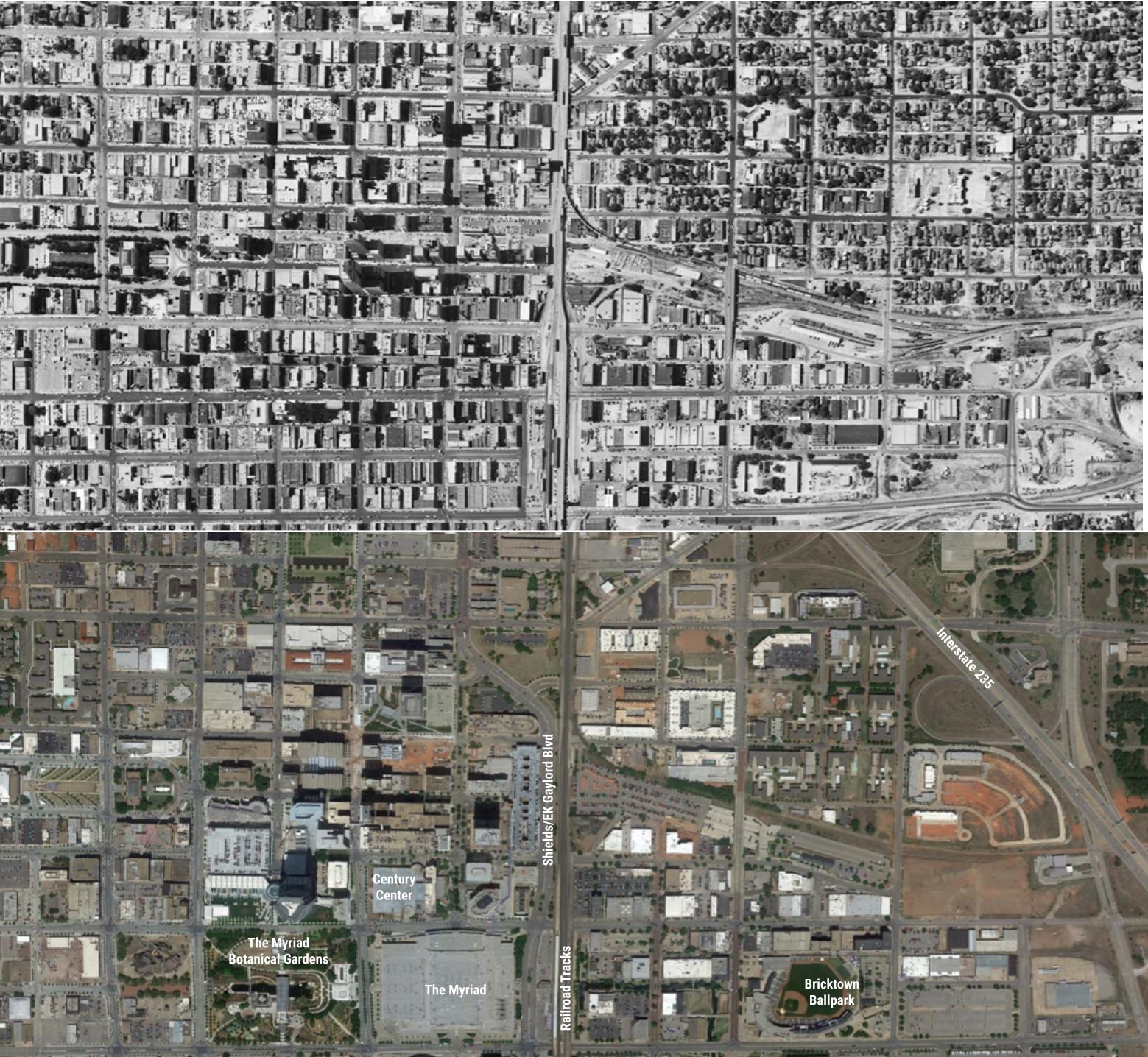
OKC in 1954 and 2014
Comparing downtown OKC in 1954 and 2014

The city reeled for some time after the appalling destruction of the 1970s Urban Renewal, which had been followed by the 1980s oil bust. We should bear in mind that many of the old buildings failed to meet modern safety and accessibility codes, had antiquated heating, and could be difficult to retrofit for air conditioning. The Biltmore, for example, unlike the old Skirvin, First National, and Colcord buildings, lacked the high ceilings needed for ductwork retrofits, so it used window air units.

Colcord Hotel in OKC
The Colcord Hotel was spared from Urban Renewal

The Colcord Building of 1909 was the city’s first skyscraper with 14 floors stacking up to 145 feet. Charles Colcord built the office tower of steel-reinforced concrete, having seen the devastation in San Francisco from its 1906 earthquake and fires. But saving it cost $2 million in the 1970s; there simply weren’t the resources to make similar investments on a large scale. It is now a luxury hotel, and Wendy and I enjoyed a stay there. Time marches on, and now the Colcord is dwarfed by the neighboring Devon Energy Center, a ridiculous 844-foot 50-story example of corporate hubris.

Oklahoma City finally tried again at a modified form of urban renewal in the 1990s with MAPS, which at least combined some big new structures with renovations and repurposing of some of the remaining old ones. Bricktown was revived by its ballpark and big ditch.

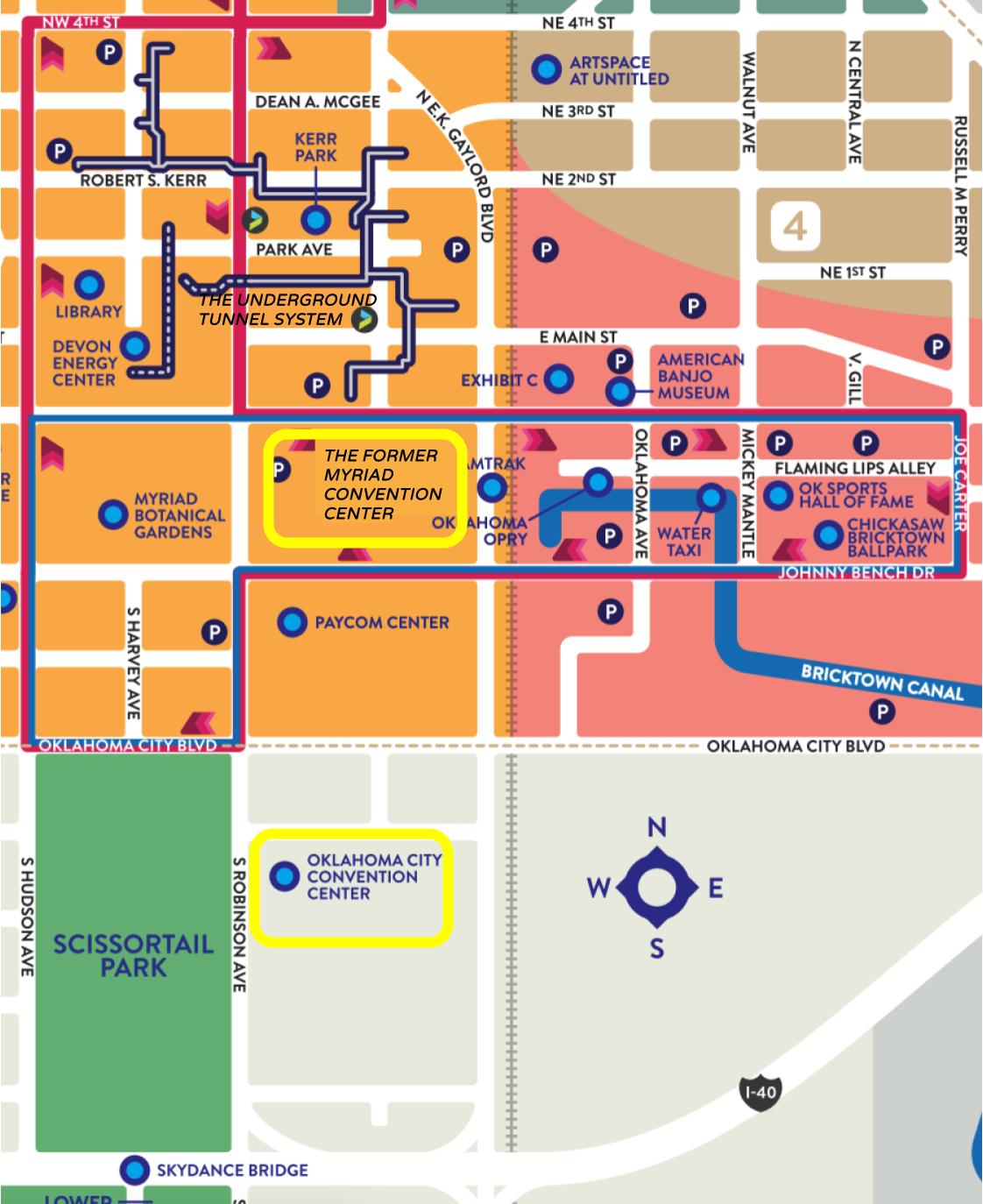
Downtown OKC Map
The new convention center is isolated from several downtown hotels and Bricktown, which is shaded red

MAPS 3 addressed the Myriad’s shortcomings by building a new convention center to the south, which struck me as counterintuitive, placing it at some distance from several major hotels and doubling the walk to Bricktown’s restaurants. Oklahoma City’s summer weather is anything but pedestrian-friendly, and I’m skeptical about the expensive new streetcar system making up for the inconvenience. The old Conncourse tunnels, now called The Underground, are now blocks away, and were never extended to Bricktown anyway.

Just as the Myriad had its gardens to the west, MAPS 3 ensured that the new convention center would have the even larger Scissortail Park. It all seems rather wasteful and duplicative, and a year ago OKC voters doubled down on that approach by approving a sales tax extension that will fund a new arena on the site of the old Myriad. That will render obsolete the intervening downtown arena built by the first MAPS project, an $89 million investment from 1999 to 2002. That first MAPS arena only had a useful life of a bit over 20 years, and the new arena will end up costing a whopping billion dollars.

I find it all a bit bewildering and alienating, but I’m not a sports fan and I haven’t lived in OKC since 1989. So I don’t pretend I know better than the people who live and play there. What I do know is that the decades of MAPS projects have allowed my hometown to sand and scrape off much of the grit that I grew up with. The city is far sleeker and more appealing these days, yet it is still busily gnawing holes in its inner core in a continuing quest for bigger and better.

What does it all mean? That what I think of as my hometown is long gone, and if I’m honest, maybe that’s for the best.

Posted in history, nostalgia | Leave a comment

2024 Reads & Watches

This is my third annual book and video report after sharing my reads in 2022 and my reads and watches in 2023. I also still have old book recommendations preserved on seven blog pages, but those haven’t been updated in years. I continue to track my reading at LibraryThing. While my reading is also logged at GoodReads, my Read list there is inaccurate, and I dislike the GoodReads interface too much to properly curate its records.

Book Tech

I read about 30 books in 2024, almost as many as I finished in 2023. 65% of those were Kindle ebooks, 25% were Audible audiobooks, and 10% were hardback books.

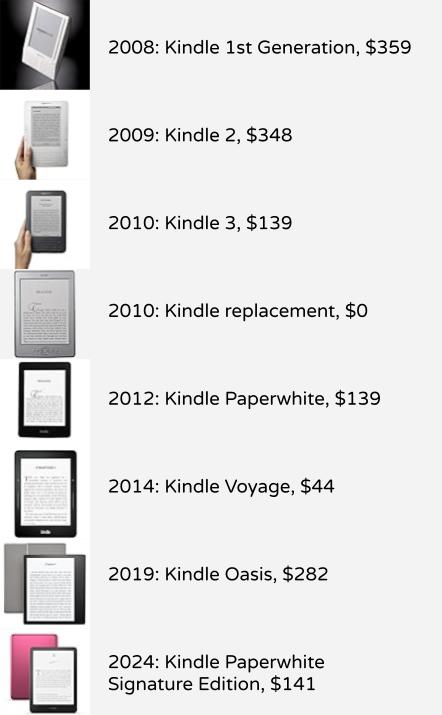
My Kindle eReaders over the years; some prices reflect discounts and rewards points

As I compose this post, I’ve read Kindle books for 16 weeks in a row, although I had a far longer Kindle streak of 98 weeks from November 2018 to September 2020, maintained after March 2020 by the COVID-19 pandemic. I will note that although I’ve had a Kindle since 2008, Amazon doesn’t show statistics before August 2018.

I had used seven models of Kindles over the past 16 years, and I took advantage of a Black Friday sale to purchase my eighth: a Kindle Paperwhite Signature Edition. I never liked the uneven thickness of my 2019 Kindle Oasis, although I appreciated its physical page buttons when I was reading outside on a patio swing in cold weather and wearing gloves. I usually fell back to using my 2014 Kindle Voyage, but after a decade of use the battery life on it had declined enough to annoy me.
Thus I bought the Kindle Paperwhite 6 Signature Edition, which is the 12th generation of the Amazon e-reader. Amazon no longer sells any e-ink reader with physical page buttons, but happily I find that I can still adequately advance the pages of my new Paperwhite when wearing my Sonoran Merino wool gloves with SilverSync Touch fingers — they have conductive silver fibers to allow touchscreen interactions.

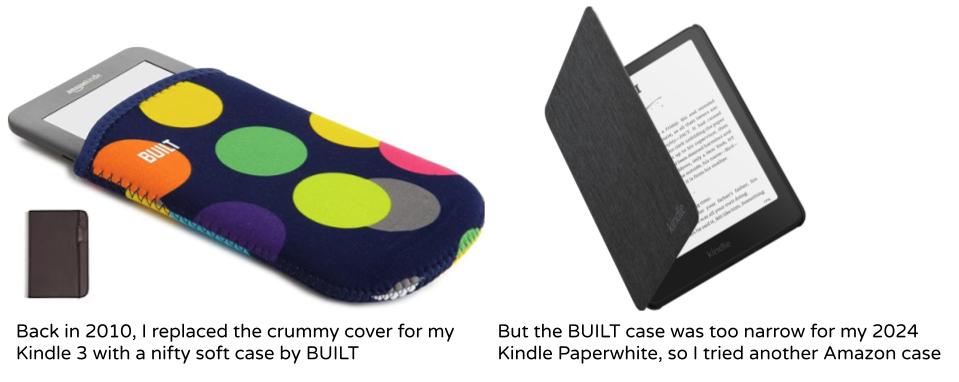
One issue I faced with the upgrade, however, was getting a Kindle case. Since 2010 I had carried most of my previous Kindles in a soft case from BUILT. It was too narrow for the Oasis, but I would just take the Voyage on my escapades. However, now the Voyage was dying and both the Oasis and the new Paperwhite wouldn’t fit. I was a bit leery of purchasing an Amazon case, since their case kept crashing my Kindle 3 back in 2010. Frankly, they’ve never been particularly adept at hardware design.

I couldn’t find a wider form of the vintage BUILT case, so I reluctantly ordered a Kindle Colorsoft case. I am pleased to report that I find it comfortable to use, and I like how the Kindle sleeps and awakens when you close or open the case.

As for physical books, one was required reading for my job and was purchased for me. Another was about a photographer, and while I don’t mind reading comics with the Kindle app on an iPad, a Kindle’s e-ink is still marginal for photographs. Another book was a 1978 biography that simply was not available as an electronic book, so I ordered a used hardback for $29 with tax.

Book Reviews

Books I Read in 2024
The books I read in 2024

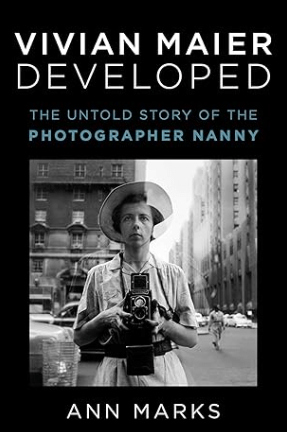
My favorite book overall in 2024 was Vivian Maier Developed: The Untold Story of the Photographer Nanny by Ann Marks. I read it shortly after finishing Vivian Maier: A Photographer’s Life and Afterlife, which may be the first time I’ve read two biographies of the same person in succession. It was a beautifully written and well-researched look at a complicated and talented woman whose work did not find acclaim until its serendipitous discovery in a storage locker sale, and it included many of her photographs. The Finding Vivian Maier documentary is also quite good.

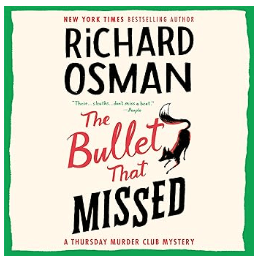
My favorite audiobook in 2024 was The Bullet That Missed, the third in Richard Osman’s Thursday Murder Club series. He has published four of them thus far, with a fifth promised for September 2025. I have loved that series so much that I deliberately save them up to enjoy one per year. Their plots are less important to me than the poignant characterizations of the aging heroes and villains.

My favorite book of 2024

I often find multiple narrators a bit gimmicky, but they were used to decent effect in Emily St. John Mandel’s Sea of Tranquility with different narrators for its timeframes of 1912, 2020, 2203, and 2401. I found the plot clumsy, but I enjoyed the book’s atmospherics.

A far more skillful and moving work was Ann Napolitano’s Dear Edward, which has melancholic existential staying power. Far more lively was Ken Follett’s lengthy The Evening and the Morning, book four in his Kingsbridge series, which offered another well-researched glimpse of long-ago life in England. That sucker was over 24 hours long, and I don’t speed-read audiobooks, but it was worth the investment.

I didn’t seek out any classics this year, other than to finally finish Pinocchio 50 years after starting it. But I did read some old works, including the final manuscript of Mark Twain’s No. 44, The Mysterious Stranger from 1908. It was a strange book and my least favorite of the ten Sam Clemens books that I’ve read. Thus far, I prefer his non-fiction travelogues and reminiscences to his fiction novels.

My favorite audiobook of 2024

Other old works I enjoyed this year were two fantasy novels by Abraham Merritt. I first read 1924’s The Ship of Ishtar, and followed that with 1919’s The Moon Pool. I liked them both, but I’d recommend the ship over the pool. I’ve downloaded a couple more of his works in my Kindle for future reading.

I listened to Mary Roberts Rinehart’s The Great Mistake from 1940, but it was far less memorable than her mysteries The After House of 1914, The Window at the White Cat of 1910, or her comedic Where There’s a Will in 1912. Another mystery author I happily returned to was Edith Pargeter, writing as Ellis Peters, with 1959’s Death Mask and Never Pick Up Hitch-Hikers! from 1976.

I decided to seek out another mystery author with a long series, so I read the first Perry Mason mystery, The Case of the Velvet Claws from 1936. I watched some of the episodes of the old television show years ago; here is a great example. While I had heard of Erle Stanley Gardner, I did not know he had been a self-proclaimed fiction factory who authored at least 140 books with about 100 million sales.

The book was not what I had expected, with a gritty tone and no court appearances. Upon discovering that Gardner had been the best-selling American author of the 20th century at the time of his death in 1970, I decided to read a biography. That meant purchasing a used hardback of Erle Stanley Gardner: The Case of the Real Perry Mason, which I found fairly interesting. I have Perry Mason #2, The Case of the Sulky Girl, downloaded into my Kindle for a future read, and I will likely sample the first in the Cool and Lam series he published using the pen name of A. A. Fair.

I also revisited another favorite author, who helped me endure the darkest days of COVID-19: P.G. Wodehouse. Service with a Smile was the eighth full-length novel set at Blandings Castle. I’m parceling those books out as well, with only two finished novels left to go, plus one unfinished work. I plan to finish that series before sampling a Jeeves and Wooster novel.

I’m finishing 2024 with this one

I’m currently reading 1944’s Rim of the Pit, one of only two published novels by Henning Nelms, writing as Hake Talbot. It is lauded as the second-best locked room mystery of all time, after John Dickson Carr’s The Hollow Man. TomCat wrote a great review of the Talbot book, and Curtis Evans provided a nice biographical article on Nelms. I especially enjoyed how Hake Talbot introduced one of the characters in Rim of the Pit:

Her face still showed traces of a beauty which must have been flamboyant in her youth, but she had fought age with the wrong weapons. The implausible black of her hair made her look five years older than she was.

I’m generally unimpressed by depictions of the supernatural, but the hysterics of a spirit supposedly contacted via a dark séance were striking:

Imbecile!” Désanat’s voice rose to a shriek. “You dabble in mysteries you are not able to comprehend, like a child playing on the rim of a volcano. Imbecile, like the child, to think that which lies dormant cannot engulf you.”

My most disappointing read of 2024 was my attempt at Philip José Farmer’s Riverworld Saga. I finished To Your Scattered Bodies Go, which had a fascinating premise but uneven execution, but I abandoned The Fabulous Riverboat mid-stream. I read about half of The Kingdom, the Power, and the Glory: American Evangelicals in an Age of Extremism, and I listened to Kurt Andersen’s Evil Geniuses: The Unmaking of America and Fantasyland: How America Went Haywire, which helped delineate the origins of some of our problems, which seem unlikely to be solved anytime soon.

I don’t read many comic books, but I enjoyed Three Rocks: The Story of Ernie Bushmiller: The Man Who Created Nancy by Bill Griffith, although it would have benefited from a harsher edit. I got a kick out of the 12-part Batman ’66 Meets the Green Hornet series by Kevin Smith, Ralph Garman, and Ty Templeton. I particularly enjoyed the dark and deep My Favorite Thing Is Monsters by Emil Ferris, with Part 2 finally released seven years after Part 1. Almost Completely Baxter: New and Selected Blurtings was a bizarre work.

Videos

I’m currently supporting eight creators via Patreon, having dropped three of my 2023 memberships and added Asianometry. You can see my 2023 post for links to my favorite video creators; I’ll just highlight a new discovery here.

Perf Damage is great

Recently I stumbled onto Perf Damage, with the wife-and-husband team Charlotte and Adam Barker. She is the Director of Film Preservation for Paramount, and he is a camera utility for the Jimmy Kimmel show. They are movie fanatics who watch double features all the time. I loved their look back at The Lydeckers, who did practical effects for the old Republic pictures, and Natalie Kalmus, the infamous Technicolor consultant.

Their videos were so good that I wanted to listen to several of their older podcasts, but I found that most of the links were broken. Happily, the ones at Spotify still work, which was the first time I’ve ever used that service. I especially enjoyed their two episodes on William Castle: his early years from 1914-1958 and his later years from 1959-1977. I also recommend H for Horrific. If you get interested in their work, there is a great interview with Charlotte by Cereal at Midnight.

That is part of the beauty of all literature. You discover that your longings are universal longings, that you’re not lonely and isolated from anyone. You belong.

F. Scott Fitzgerald
Posted in books, video | Leave a comment

Switches Old and New

In 1972, my parents moved us to Bethany, Oklahoma after I graduated from kindergarten. I was excited to explore our new home, which consisted of a 1949 house with a large addition constructed sometime in the 1960s. My bedroom was in the 1949 part of the home, which had the standard toggle light switches that were invented in 1916. The new addition, however, had different switches that are quite uncommon these days.

Low-Voltage Sierra Despard Switches

Christmas 1972 with my father at our new home; behind him is one of the low-voltage switch sets

The addition was wired with low-voltage light switches, which first came on the market in the late 1950s and were discontinued in the 1980s. You can see a gang of three on the wall plate behind my father in the photo from Christmas 1972.

They were 24-volt momentary switches. You briefly pressed a tab upward to turn on a circuit or briefly pressed it downward to turn it off, and a spring always returned the tab to the central position.
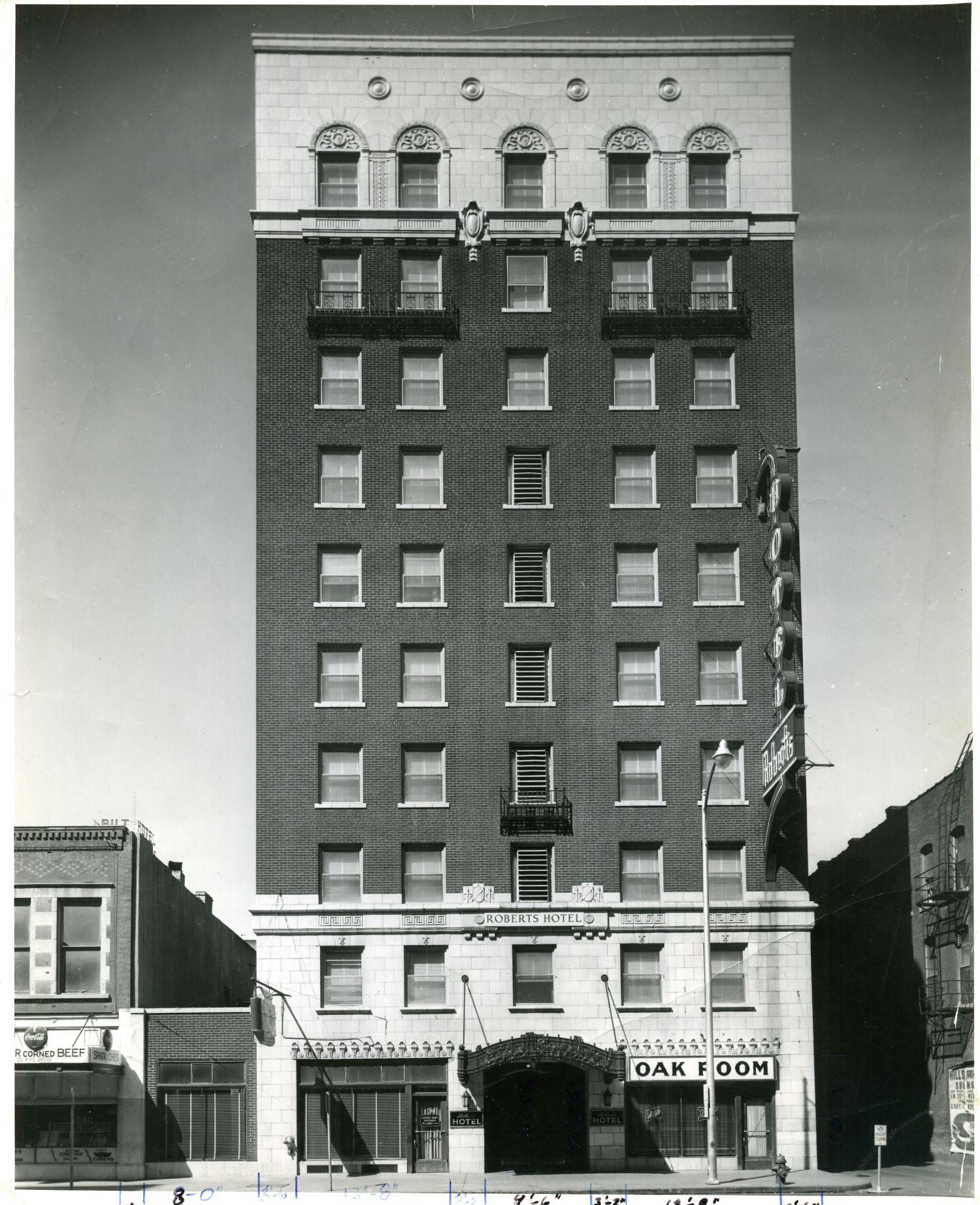
Pressing the tab one way or the other briefly energized a 24-volt line leading to one of several latching relays on regular 120-volt circuits for the various lights. The set of relays were all mounted together in a panel in the garage. The relays were what opened or closed the actual lighting circuits, themselves being triggered by thin 24-volt lines leading off to the various switches.

A set of relays in an old low-voltage lighting system

This odd approach to wiring meant you could have any number of switches for a given circuit without complicated wiring paths. It was also used in some high-end housing because it could be used to control multiple areas or zones. Smarter Circuits showed how his home has a rotating switch in the master bedroom that once could be used to control up to nine different circuits scattered around his home.

The rotating switch allows one to control different lights throughout the home

Our home didn’t have anything that fancy, but it did have panels with little Sierra despard switches. If you removed the cover plate, you found units like the one shown below.

Despard switches and outlets are compact units that allow you to cram more components onto a plate when wall space is limited.

My current home, constructed in 1981, has a set of three despard switches in each bathroom that operate the light, vent, and heat in NuTone units in their ceilings. However, they are typical full-voltage switches, not low-voltage momentary switches connected to hidden relays.

Low-voltage switching didn’t catch on. Sierra Electric went out of business in the early 1980s, and my impression is that most low-voltage switch-relay systems have been abandoned.

20th Century Evolution

Several different light switch types came and went in the 20th century, and Nils Rasmusson did a nice job illustrating them, although he omitted the variants using low-voltage momentary switches and relays.

We had one of those old mercury silent light switches in one of our houses, and it was also outfitted with a tiny internal neon lamp that made the switch glow. I didn’t care for it, however, as I preferred to give a toggle switch a quick snap on or off as I walked by.

Eventually I replaced the Audio Lite with a simple Decora switch
I installed one of these in my bedroom when I was a teenager

Later I was a teenager fascinated with gadgets, and in our next home I swapped a toggle switch in my bedroom for an Audio Lite. It turned on the light if it detected sound and had a dimming function. The novelty wore off quickly, and eventually I replaced it with a simple Decora switch.
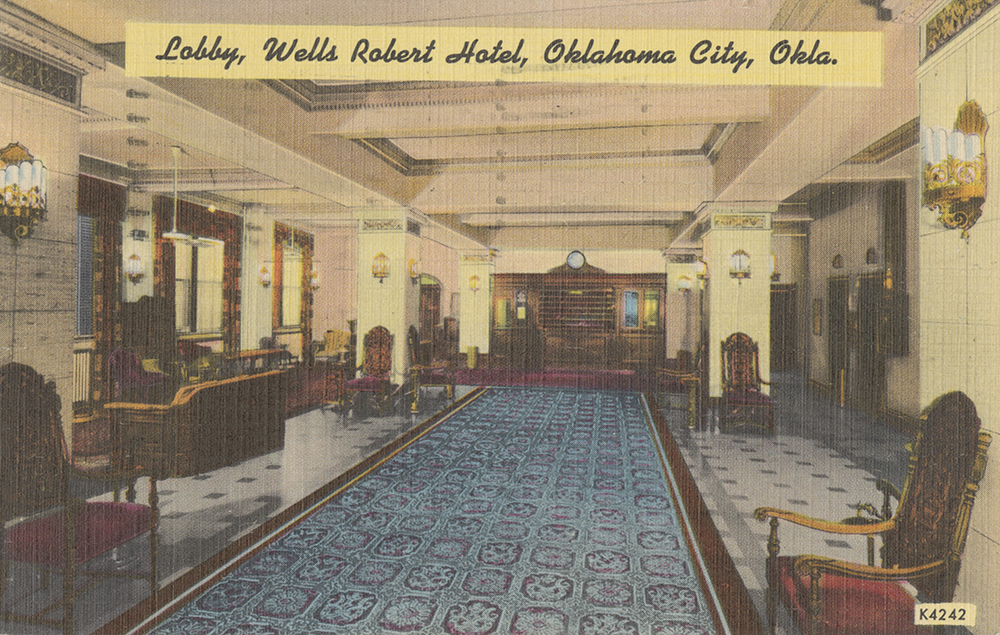
Leviton introduced those rocker switches in the 1970s, and they were popular enough that the Decora brand has morphed into a generic name for rocker switches, just as Kleenex became a generic term for facial tissues. When my mother sold the home forty years later, that bedroom still had its oddball Decora light switch.

At work, I encounter some motion sensor light switches. Technology Connections explained how passive infrared motion sensors work. I understand their utility in turning the lights off in unoccupied rooms, but they are endlessly annoying, and I would never consider having them at home.

Pet Peeve

Another light switch type that I’ve never liked is the rotary dimmer that you push to turn on and off and rotate to adjust the brightness. I don’t like their look and feel and how easily the dial can turn when you push them on or off.

My 1981 home came with five of the damnable things in the living room. A gang of three in one corner operates some little-used ceiling can lights, and those have survived my wrath. However, two near the kitchen were used constantly for some switched outlets for living room lamps and for the dining area chandelier.

So soon after I moved into the house 30 years ago, I replaced those two rotary dimmers with toggle ones. They have a thinner toggle switch with a dimmer slider alongside. That lets us flip a switch on or off without inadvertently affecting the amount of dimming, while still providing full dimming control.

Various types of dimmer switches are available, including expensive fancy ones with online access, but eventually I’ll just replace our three surviving rotary dimmers with toggle switches and slide dimmers.

Smart Lights

The Nest Hub and lamp on my nightstand

As a lifelong technology and gadgets guy, years ago I bought some of the Philips Hue smart light bulbs, which can be dimmed and set to various colors, and they are programmed into our Google Home system. But the only one I ever use for its smart features is in a bedside table lamp. Instead of messing about with the lamp’s clumsy inline power switch, I just tell the Nest Hub on my nightstand to turn the light on or off, adjust its brightness, etc. Plus I have preprogrammed bedtime and wake-up routines on the Nest Hub that involve that lamp.

Wendy and I also use smart switches linked to our Google Home system for a few other lights that otherwise would be awkward to control. Otherwise, we have stuck with dumb switches.

Modern Bulbs

This crazy bulb is in our main living room torchiere lamp

I switched to LED bulbs over a decade ago, and Wendy has installed LED strips in a few spots around the house. However, our main living room light is a torchiere lamp hooked into a wall outlet controlled by one of the dimmer switches. Until 2022, I still had to regularly replace its 50/200/250 watt bulb since the 200 watt tungsten filament had a limited life but there were no LED bulbs capable of rivaling its 4000-lumen output that were dimmable and had the 3000 Kelvin warm white color I prefer.

I finally was able to order a bulb from SANSI meeting my specifications. It has 156 LED chips that collectively only consume 27 watts. That means the only incandescent bulb I still have to regularly replace is the 40-watt appliance bulb in our 1981 JennAir oven.
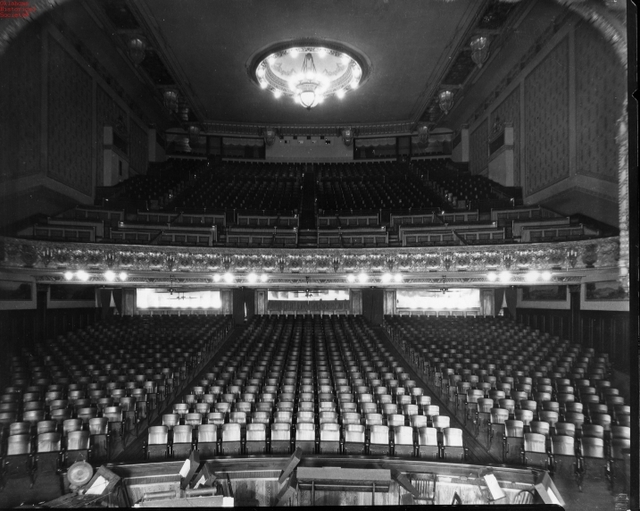
LEDs and their associated circuitry remain vulnerable to heat. Over the past decade I have replaced almost all of the LED bulbs at least once, some multiple times, particularly in enclosed or tight fixtures.
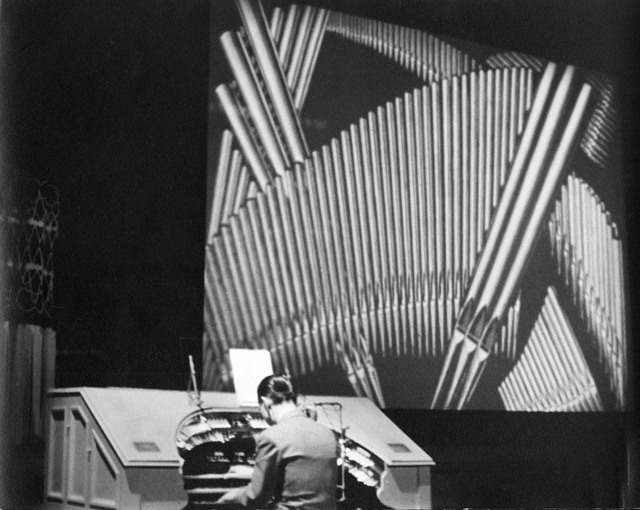
However, my two oldest LED bulbs are still going. Back in 2011 or so, I purchased those Philips Ambient bulbs. They were primitive by today’s standards, with a light output equivalent to only a 40-watt incandescent bulb, huge heat sinks, and yellow-orange covers for the LEDs to produce a warm white.

I put them in a table lamp beside my recliner in the same circuit as the big living room torchiere, so those lights are used every day. But, with those huge heat sinks, their relatively low power, and placement in a lamp with adequate ventilation, they have endured. I’ve grown fond of them, and I am glad that they weren’t recalled like some of their 12.5-watt brethren. I’ll be sad when they finally expire.

This year I also replaced the only remaining fluorescent light in our home when a 1981 fixture for a 24″ T12 bulb above our kitchen stove finally gave out. I had known for years that it was difficult to get started, so the old ballast was shot, but that didn’t matter since we left the light on continuously. Finally it went out and wouldn’t restart, even with a new bulb.

Rather than mess with the ballast in a cheap 43-year-old fixture, I wired in a new LED light, wedging the old light cover over it to reduce its glare. That wrapped up the modernization of the lighting in our home for the foreseeable future.

Posted in home repair, technology | Leave a comment