Winter Break 2013 Trip, Day 6: Fort Worth on New Year’s Eve

December 31, 2013

Our final true vacation day in Texas was spent visiting art museums and attending a New Year’s Eve concert in in downtown Fort Worth. (Originally we’d hoped to visit some of Wendy’s friends and relatives in the Arlington area on New Year’s Day, but weather intervened again with a winter storm headed for Bartlesville. So we had to pack up early on New Year’s Day to make it home before the storm hit.)

Fort Worth Stops (click image for slideshow)

Gloria’s at Montgomery Plaza

We left San Antonio early on the day of New Year’s Eve as well, successfully beating the traffic from the Alamo Bowl, driving 270 miles north that morning to Fort Worth. We had lunch at Gloria’s Latin restaurant at Montgomery Plaza. I enjoyed my fajitas and Wendy enjoyed sampling a chicken tamale, pupusa, Yuca, fried plantain and gallo pinto on the Super Special plate. The restaurant is in a huge multi-story building (here’s a photo by Dave Hensley) which was built in 1928 and was the largest building in Texas at the time, a Montgomery Ward store and catalog center. It is a Mission Revival building with 12-inch solid concrete walls and is now condominiums, restaurants, and retail.

Kimbell Art Museum

Standing Dignitary

After lunch we drove over to the Kimbell Art Museum, which was having a large exhibition of 100 works from the Art Institute of Chicago. We didn’t realize the scope of the exhibit and were frankly shocked to walk in and be standing a few feet from Picasso’s Old Guitarist, one of the most significant works of modern art. We’ve seen reproductions of it over the years, including slides in the art appreciation course I took in college, but I never thought I’d see it in person without visiting Chicago. Wendy was excited to see original works by Matisse, and she discovered Mondrian at this show. We overlap in our appreciation of the latter’s works, with me having a few old Mondrian prints I purchased back in college now tucked away in a bedroom closet. After the many fine “modern art” paintings from the early twentieth century which we saw at the McNay and the Kimbell on this trip, we are both spoiled.

Neither of us wanted to plod through the exhibit with the audioguides, opting to just dash through, weaving around the viewers transfixed for long periods in front of each work by the narration they held up to their ears.

We couldn’t snap photos of the visiting show, but the permanent collection was fair game. I liked Jacques-Louis David’s Anger of Achilles, although Achilles’ expression doesn’t register as anger for me. The Kimbell has a fairly extensive webpage on the work. I snapped Piet Mondrian’s Composition as well; here’s the Kimbell’s take on it.

Wendy liked the Mixtec Rain God Vessel, which was created more than 600 years ago, along with the much older Standing Dignitary figurine from Peru with its inlays of mother-of-pearl, purple and orange spondylus shell, mussel shell, turquoise, pyrite, greenstone, lapis lazuli, and silver. Kudos to the Kimbell for their great website descriptions of their collection.

Part of the permanent collection is in the recently opened pavilion designed by Renzo Piano. The main building is a famous design by Louis Kahn and the addition also uses concrete walls and innovative use of natural overhead light. I’m not a fan of Kahn’s monolithic style and am put off by so much bare concrete, although his skylights at the Kimbell are quite nice. For me, the best part of the new pavilion is the use of wood in the beams and flooring, warming the space, and the soft, natural, overhead lighting in some of the galleries.

Modern Art Museum of Fort Worth

I’ve enjoyed past visits to the neighboring modern art museum, but this visit was a disappointment. None of the visiting works impressed me, with most of them striking me as shrill, angry, obvious, and reflecting little technical skill. I was sad to see that the nifty Ladder for Booker T. Washington was no longer on display, but in its place was an interesting three-dimensional piece of stones and bits of glass suspended mid-air on uniformly arranged strings. Outside I could still enjoy Roxy Paine’s Conjoined.

The most memorable part of our visit at this museum was when a patron ahead of us at the admission booth balked at the lack of an audioguide. The ensuing conflict between him and his wife about this was an amusing interlude for us, but not for them.

Water Gardens

The Active Pool

Our next stop was the Water Gardens designed by Philip Johnson in the 1970s. I hadn’t visited this spot in years and it was Wendy’s first time to see the area. We were annoyed by the dearth of adjacent parking; we finally found a meter south on Lancaster, but had to scale the large walls to enter from that way. Clearly the design was intended more for the adjacent convention center than other visitors, unlike the more accessible and child-friendly Keller Fountain Park I’ve visited in Portland, Oregon.

We saw the dramatic Active Pool first, which was featured in the old Logan’s Run movie. I enjoyed taking the open steps down 38 feet to the bottom with the dramatic cascades about me, pouring 10,500 gallons per minute into the central pool. Wendy, who is always more safety-conscious than this testoterone-addled guy, found it a treacherous spot, especially for children. There’s a reason this sort of architecture is called brutalist!

The Aerating Pool was less interesting with its array of sprinklers; it would be much more popular, especially in summer, if it were designed for kids to roam about in.


Wendy’s favorite spot was the Quiet Pool with its tranquil rows of cypress trees and serene stillness. The “knees” growing about the cypress trees and the pool wall were fascinating.
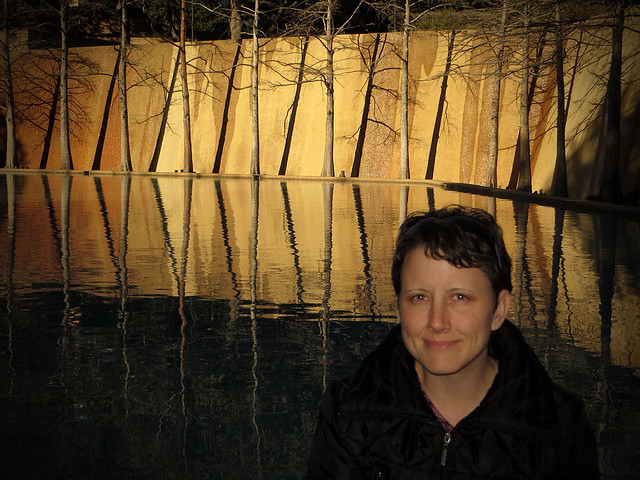
The Quiet Pool

Blackstone Hotel
Blackstone Hotel

Blackstone Hotel

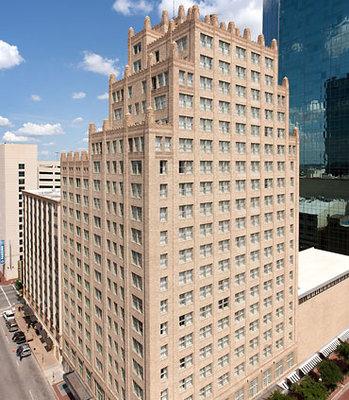
When planning this trip I wanted our first New Year’s Eve together to be something special, and I found a suitable event in downtown Fort Worth. I never want to drive on the night of New Year’s Eve, so I booked us a pricey room at the Courtyard by Marriott Blackstone. This 1929 skyrise hotel eventually fell on hard times, sitting vacant for decades, but was gutted and rebuilt for a reopening in 1999. It is less than a block from Bass Hall where the evening’s festivities would occur, so it was perfect for our needs.

Due to its location, the hotel depends on valet parking in area garages. Being used to carrying a pack on long day hikes, I despise paying for valet parking; I’d rather just haul my luggage in myself and spare the expense and delays. Thankfully Wendy is just as willing to lug it with our rolling suitcases, so we scouted around and finally found an available public garage a few blocks away. We rolled into the lobby, which has few traces of the original design, and found our 15th floor room to be quite modern and comfortable.

New Year’s Eve with Steve Lippia

We had dinner at the Flying Saucer bar off Sundance Square, grabbing a table before the 6 p.m. reservations kicked in. I enjoyed my French Dip and Wendy had Honey Dipped Chicken. Then we went to the beautiful Bass Hall, with those impressive 48-foot-tall angels sculpted by Marton Varo adorning the front.

Bass Hall Angels

I’ve been to Bass Hall twice before to see Pink Martini perform, but tonight it would be Steve Lippia doing Sinatra songs. From our seats in the hall we spotted festive balloons up against the 80-foot-diameter dome, which was beautifully painted by Scott and Stuart Gentling.

Steve Lippia gave a terrific professional performance, with many fun anecdotes and comments on the songs and their arrangements, and we were delighted when he performed our songI’ve Got You Under My Skin. The Chairman of the Board came back to life to serenade us!

A Room with a View

We were too road-weary to participate in the later festivities at Sundance Square, but enjoyed them from on high when the fireworks rose into view from our hotel room, appearing from behind the beautifully lit Sinclair Building with its eagle finials. It was a perfect ending to a wonderful winter break in Texas.

Click here for a slideshow from this day

Day 5: Natural Bridge Caverns

Posted in art, photos, travel, video | Leave a comment

Winter Break 2013 Trip, Day 5: Natural Bridge Caverns

December 30, 2013

On this day we had originally planned to be down at the Gulf Coast in Corpus Christi, but a rainy forecast led me to ask to extend our stay in San Antonio for a couple of days. The hotel clerk was accommodating, charging us the same rate even though our stay now included this day of the Alamo Bowl game, when rates typically jump upward.

Day 5 Map (click image for slideshow)

At first we were headed northwest toward some parks on the northwest edge of San Antonio, intending to spend the day hiking. We stopped along the way for lunch at La Fogata, with me ordering Un poquito de Todo, a little bit of everything. It was all tasty.

When we exited the restaurant, the weather remained very cold and windy, so we changed plans again. I knew we were tired of museums and wanted a nature walk, and it occurred to me that one can walk quite comfortably underground even in wintry weather. So we headed to Natural Bridge Caverns northeast of town for what would prove to be a warm and humid half-mile walk deep beneath the surface.

Back in 1960 a group of persistent (and cave crazy) college students discovered two miles of underground passageways leading from a large sinkhole beneath a natural stone bridge on the Wuest ranch. Wendy and I opted for the popular Discovery tour of the first half-mile. These largest known caverns in the state are a popular attraction; several dozen people were leaving for the tour every half-hour, and we had an hour-long wait for our group to depart.

The Natural Bridge

We walked around the area, locating the natural bridge and the sinkhole, where a group was lined up to enter. Wendy located a woodpecker pounding away at a nearby tree as we walked by, huddled in our coats. Our group was finally called and we proceeded to the cave entrance with our guide, Christian.

We soon reached a room with significant formations. Christian explained that ceiling discolorations were caused by long-gone bat colonies. The next room had a profusion of formations, including very long columns where stalagmites joined up with stalactites. We crossed a deep creek chasm and passed an immense column, the first of a series of gigantic formations, including one which looked like a goblin king’s throne.

The King’s Throne

More flowing formations followed, and we passed above a deep canyon, reaching the largest room of all, where we threaded our way upward through numerous features.

We certainly got the warmer walk we sought; the cavern has 99% humidity so even at 70 degrees it feels much warmer. The last stretch was particularly hot.

We were pooped when we made our way back to the hotel through Alamo Bowl traffic, settling on Chili’s for dinner at the nearby Rivercenter along the River Walk. The next day we would rise early to make our way back north to Fort Worth for more art museums and a New Year’s Eve celebration.

Click here for a slideshow from this day

Day 6: Fort Worth on New Year’s Eve >

< Day 4: Art in San Antonio

Posted in day hike, photos, travel | Leave a comment

Winter Break 2013 Trip, Day 4: Art in San Antonio

December 29, 2013

We spent most of the fourth day of our Texas trip at San Antonio art museums. But first, having discovered a day earlier that our hotel’s breakfast bar was not appealing, we snacked in our room and then dashed over to the Alamo since we figured there would be only a short line for entry on a Sunday morning.

Alamo Plaza

Emily Morgan Hotel (click image for slideshow)

The customary photographers snapped our photo as we entered the shrine, but photography is prohibited inside. Wendy located the names of two Alamo fighters who might be her ancestors on the plaques inside as well as the exterior cenotaph, or empty tomb. The Spirit of Sacrifice is built on the spot where, according to tradition, the slain defenders of the fortified mission were piled after the battle and their bodies burned.

The beautiful sculptures by Pompeo Coppini include the eponymous spirit rising from the burning corpses as well as larger-than-life figures of the famous fighters. I am fascinated to find out that he went so far as to sculpt the musculature of the figures in clay before adding their clothing to achieve a more realistic portrayal. I enjoyed viewing the bas-relief sculptures from a severe angle to note the necessary distortions. It is a shame that Bowie’s nose was vandalized and features a botched repair, and that Alamo Plaza’s west edge is marred by noisy tourist traps which introduce a jarring carnival atmosphere to a somber setting.

Wendy took a lovely shot of the looming Emily Morgan Hotel with her iPhone, and I was bemused by the history behind that name. We returned to the hotel, stopping along the way to admire the interesting front façade of the old building at 411 Bonham. We speculated about the Stars of David in the windows, and later I found out that it was opened in 1892 as a German athletic club, complete with those stars, was later used for storage by the post office, and is now a gay-friendly dance club. Quite a history!

Tootie Pie’s

We drove over to a Tootie Pie’s franchise for brunch on our way to the McNay Art Museum. I enjoyed my marbled rye grilled cheese sandwich, and Wendy said her club sandwich was as wonderful as it appeared to be. We followed up with pie, of course, with me selecting Lemon Velvet while Wendy had Buttermilk Custard. Yum!

The McNay

The McNay

Ohio-born oil heiress Marion McNay lived for decades in San Antonio, and when she passed in 1950 she left more than 700 works of art, along with her mansion, surrounding 23 acres, and an endowment to establish the first museum of modern art in Texas. Like Tulsa’s Philbrook, significant additions to the mansion have expanded the gallery space.

We saw some startling sculptures on the lawn as we approached the McNay, including an aluminum Victoria by Philip Grausman (best viewed from the front, ahem) and Man on Fire by Luis A. Jiménez Jr. We toured the visiting exhibits CUT! Costume and the Cinema and later the complementary Onstage! Costume Design and the Theatre. There were some beautiful costumes, including John Bright’s dress for Natasha Richardson as Countess Sophia Belinskaya in 2005’s The White Countess and Marc Forster’s dress for Radha Mitchell as Mary Ansell Barrie in 2004’s Finding Neverland.

Portrait Bust of Paul Avenel

In the permanent collection I was struck by the contrast between Alberto Giacometti’s pockmarked Bust of Annette IV and Käthe Kollwitz’s idealized Grave Relief: Rest in the Peace of God’s Hands. Wendy and I both liked the unusual use of color in Ernst Ludwig Kirchner’s Portrait of Hans Frisch.

While the McNay has a nice hillside setting, its grounds lack anything like the beautiful gardens at Philbrook. However, the McNay does have a wonderful patio courtyard, which we took advantage of on this cool day when the sun broke through the overcast. Decorative tiles of peacocks and many tiles with characters and scenes from Don Quixote adorned the walls.  We particularly liked the tiled risers on the exterior stairs.

A wonderful glass room off the mansion housed many sculptures, including the striking Portrait Bust of Paul Avenel by Aime-Jules Dalou. We enjoyed the orientation film on the life of Marion McNay, and wrapped up our visit relaxing outside in front of the mansion, enjoying the setting.

San Antonio Museum of Art

Detail from Boy with Cane

We next tried to see the Japanese Tea Garden, but it was packed on Sunday afternoon. So we diverted to the former Lone Star Brewery, now the home of the San Antonio Museum of Art. Among the paintings I especially liked were The Appian Way by John Linton Chapman and Boy with Cane by John George Brown; I love the expression on that rascal. The glow of the fire in Walton Ford’s John James Audubon – The Head Full of Symmetry and Beauty was lovely, although the subject matter is disturbing, presenting a buffalo hunt Audubon described in his 1843 Missouri River journal, with Audubon intently sketching the decapitated head of a buffalo, oblivious to the gruesome slaughter.

The museum has an extensive collection of art of the Americas, and I was interested to find Theodore Gentilz’s 1880s paintings of Mission San José and The Alamo, the latter depicted without the iconic campanulate, or bell-shaped façade, on the front of the chapel, which was added by the U.S. Army long after the famous battle in order to allow for a new pitched wooden roof; the mission was a roofless ruin during the 1836 battle. So if you see any depictions of the Battle of the Alamo with a campanulate on the chapel, that is an anachronism.

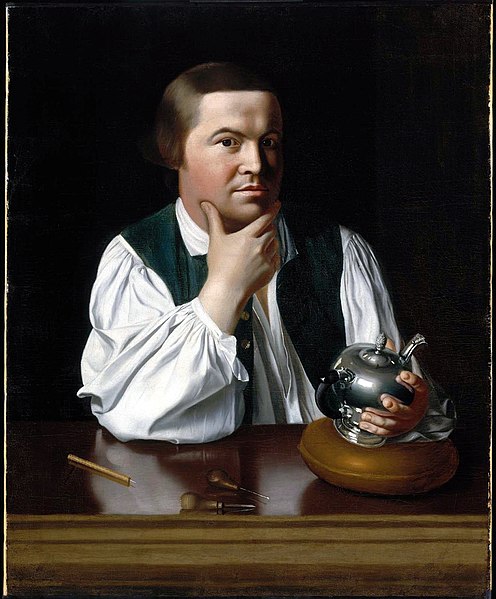
Wendy and I admired Robert Henri’s Spanish Gypsy and Albert Bierstadt’s Passing Storm over the Sierra Nevadasbut laughed out loud at Ralph Earl’s clumsy Portrait of Mrs. Timothy Conklin, which Wendy said looked like Paul Revere in drag.

Wendy loved the care put into a Mixtec mask made around 1500 out of wood with a turquoise and mother-of-pearl mosaic, with long fangs. We both admired a Medicine Buddha Sand Mandala, one of only four sand mandalas in U.S. museums. This one was created in 2001 by the Drepung Loseling Monks of Karnataka, South India, and the 14th Dalai Lama granted permission to have it preserved.

Mixtec Mosaic Mask

We ended our day with tasty Italian food at Zocca at the Westin Riverwalk. We hoped to spend the next day hiking, but cold and wind drove us underground…

Click here for a slideshow from this day

Day 5: Natural Bridge Caverns >

Day 3: San José Mission & River Walk

Posted in art, photos, travel | Leave a comment

Winter Break Trip 2013, Day 3: San José Mission & River Walk

December 28, 2013

This day was spent in downtown San Antonio with a visit to the Mission San José, (aka the Mission San José y San Miguel de Aguayo) and a circumnavigation of and dinner along the Paseo del Rio, the famous River Walk, with brief stops in front of the Alamo (aka the Mission San Antonio de Valero), and at the downtown Cathedral of San Fernando (aka the Church of Nuestra Señora de la Candelaria y Guadalupe).

Mission San José (click image for slideshow)

A Rough Start

Since we drove into town very late the day before, we got off to a late start and missed the hotel breakfast, which was just as well given the offerings we sampled the next day. We wanted to see a mission and knew the Alamo would be packed on a Saturday, so I drove us south toward the largest of the San Antonio missions, the Mission San José. I tried to find brunch in the area, but one quality Mexican food place had a long line and another we stopped at was unappealing.  So we drove along Military Drive and settled in for a long wait at a table at Applebee’s, but despite inquiries never were served, prompting me to leave with a complaint lodged with the hostess. We finally plopped down at a nearby Denny’s for a late breakfast after wrestling with frustrating traffic on Military Drive.

Mission San José

Thankfully the rest of the day went better, starting with a walk about the Mission San José. Founded in 1720, the mission was named for Saint Joseph and the Marqués de San Miguel de Aguayo, the governor of the Province of Coahuila and Texas at the time. It was built on the banks of the San Antonio River several miles south of the earlier mission, the San Antonio de Valero (the Alamo), and eventually had about 350 Indian neophytes. Over the centuries it fell into ruin, but was rebuilt in the 1930s by the Works Progress Administration, and had a recent multimillion dollar interior and exterior facelift.

We saw the one-room deep Indian Quarters built into the mission walls to protect occupants from attacks from other Native Americans outside the walls. We had a good view of the 1782 chapel and 1755 convento, the latter being the residence for the missionary and lodging for visitors.

The south side of the chapel features the decorative carvings around the Rose Window (the area of the wall recently cleaned in the photo) and a barred doorway onto a spiral staircase. A fellow tourist remarked how as a child he used to climb up those stairs back when they were open.

The chapel was closed for a wedding, but we could admire the recently restored frontispiece, and saw the bride’s attendants and later the bride herself outside the chapel. After viewing the north side of the chapel and convento, we completed our walk around the perimeter of the mission and went back to the hotel to prepare for an evening on the River Walk.

Alamo Plaza and River Walk

Our hotel was located just east of I-30, which meant we were several blocks from the Alamo and the River Walk, but our pick was considerably cheaper than closer hotels. There is colorful LED lighting at night on the Houston Street underpass, making it a welcome route to and from our hotel. We walked to Alamo Plaza and admired the big Christmas tree out front, later returning so I could shoot photos of Wendy in front of the famous mission and the big tree.

Wendy at The Alamo

We walked over to Commerce Street and descended to the River Walk, walking north and then west through the crowds. I was sad that we did not find the pet duck I’d seen last spring wandering the aisles at the five and dime, and Wendy was glad to exit the hustle and bustle when we reached the San Antonio River.

San Fernando Cathedral

We ascended to the main plaza, amused by the tools and gears embedded in the walkway. We walked westward to the oldest, continuously functioning religious community in the State of Texas: the Cathedral of San Fernando, which was founded in 1731. We ventured inside to listen to music rehearsal, and then made our way back to the River Walk.

Casa Rio

Dining at Casa Rio

The quieter walk eastward on the southern leg of the River Walk burst into life when we reached the Arneson amphitheatre at the La Villita Historic Arts Village. Wendy and I are not sports fans, so we did not grasp that it was the Oregon Ducks’ and Texas Longhorns’ bands in town for the Valero Alamo Bowl, but slithered through the crowds to reach the historic Casa Rio restaurant.

There we got a riverside table and enjoyed the delicious Mexican food, with me eagerly paying the Mariachi band to perform a tune for us.

As we ate, darkness brought out the beautiful lights along the River Walk, with my iPhone creating interesting artifacts.  We laughed when both the Ducks’ and the Longhorns’ bands floated by on river taxis, playing up a storm.

The River Walk at Night

We returned to the hotel via the Rivercenter mall. The next day would be spent in art museums since the weather was inhospitable for hiking.

Click here for a slideshow from this day

Day 4: Art in San Antonio >

< Day 2: Pedernales Falls

Posted in photos, travel, video | 1 Comment

Winter Break Trip 2013, Day 2: Pedernales Falls

December 27, 2013

Thirty miles west of downtown Austin the Pedernales River cuts through the hill country, dropping 50 feet over a distance of 3,000 feet, forming a series of cascades across a tilted layer of 300-million-year-old Marble Falls Limestone. The low waterfalls and numerous fluvial slots and potholes attract throngs of people to stroll across the rocks and enjoy the fascinating scenery. The falls were part of the Circle Bar Ranch, which was acquired by the state of Texas in 1970 and developed and expanded into a state park.

Pedernales Falls (click image for slideshow)

Wendy and I were charged $6 each to enter the park. We headed straight to the falls area, where we parked and walked down the trail to the overlook. Dozens of folks were milling about the riverbed, which went dry back in 2009 and 2011. The drought has lifted a bit, and the spring-fed river had some flow for our visit; it has been known to flash into a raging torrent.

Pedernales Falls from the overlook

We took the east fork of the trail leading down from the overlook to the eastern edge of the falls, where the river cuts through narrow slots in a broad plane of marble limestone. We followed a trail of rock dust deposited on the limestone by hikers’ footwear to the lumpy limestone riverbed.

Pedernales River slot

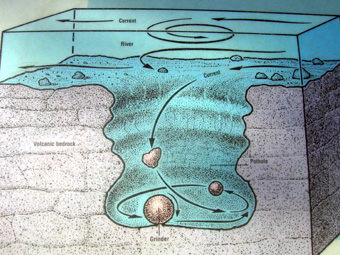
There were potholes both large and small, formed when rock clasts get caught up in whirlpools and cut through the limestone. The river cascading down from higher falls roared through deep slots in the rock, wriggling its way eastward. A large boulder wedged in one slot testified to the power of the flash floods. Wendy captured a shot of me relaxing by a slot, with my customary trail drink, an Orange Fanta. She was fascinated by the unusual textures of the rock surfaces throughout the falls area, which had potholesgrooves, craters, breccia, karst, gashes, and dimples. We climbed to one of the large pools, where I reclined for a low shot across the water. Wendy posed for me beside a low fall, and we climbed back up to the overlook to take the more difficult west trail fork across rough terrain to the higher falls. The hillside across the river here had scenic erosion with mottled rocks, a cliffside hole partially plugged by a boulder, and water-filled clefts. Upstream we posed for a shot, Wendy found a rock bathtub, and there were more waterfalls with longer drops. The gouged limestone and pools created a very different landscape, as did the yucca plants by the riverside and the white lichen. After we spent a couple of hours exploring the falls area, I consulted the park map. Wendy laughed at my typical pose with my spectacles dangling from my mouth, since I cannot read anymore with them on. I discovered a few weeks ago why I’ve struggled for years with these lenses, despite them being purchased as my first set of progressive bifocals. They are NOT bifocals; the optical house screwed up! I feel pretty stupid for not realizing this much sooner, and hopefully new lenses will help me with this annoyance.

Twin Falls

I chose to drive us over to the Twin Falls Nature Trail to hike that short but steep loop. We ducked under a large tree and wound our way down the hillside, encountering two young ladies who were hurriedly attaching balloons to bushes along the path. They excused themselves, explaining that they were preparing the trail for their sister’s engagement down at the overlook. We found their decorations all the way to the overlook, where we spied flowers awaiting the happy couple, and carefully arranged stones down below the pretty little waterfalls. We then climbed back to the road, encountering the happy couple just starting their way down the trail. The groom-to-be asked if this was the Twin Falls Trail. I replied that it was and we hoped they enjoyed it. He gave me a knowing grin as they departed; I am certain they enjoyed their walk! We wrapped up our time at the park with a walk down to Trammell’s Crossing, a rocky ford on the Pedernales. Down at the riverbank we found some photogenic trees, including a stump which formed a nice heart frame for my sweetie. We wrapped up the day with dinner at the Salt Lick in Austin, provided by long-time friends Joe and Bama Falkner, who have retired there. Joe was on the Bartlesville school board back when I was looking for my first teaching job. When the physics job opened up at the high school a few weeks before school started, Joe mentioned to the high school principal that his younger brother’s friend from high school and college just happened to be looking for such a position. A quarter century on, I’m still grateful how that tip led to an interview which launched my happy teaching career in Bartlesville.

We loved Pedernales Falls

After dinner and fellowship with Joe and Bama, Wendy and I headed to San Antonio for what turned out to be a four-day stay.

Click here for a slideshow from this day hike

Day 3: San José Mission & River Walk >

< Day 1: The Cliffs of Waco

Posted in day hike, photos, travel, video | Leave a comment