I am indebted to Kate Strycker for some fresh music, since these days I don’t listen to music radio, internet music services like Pandora, nor watch hardly any television. She took my physics course back in 2004-05, and back then we began trading music mix CDs. Kate is one of those alums who has kept in regular contact with me over the years. Although she now lives in Illinois, she was in town for Christmas and suggested we trade mix CDs again after a long hiatus. So I burned off an assortment of my most-listened-to songs of the past few years. Of much greater importance is what Kate brought to the dinner get-together I had with her and her sister Kristen, who is also one of my physics alums. (Need I even mention that Kate is now a Physician’s Assistant and Kristen is wrapping up a degree in Civil Engineering at Notre Dame? Physics kids are the best!)
Musically, Kate is now into Nate Reuss, singer for The Format and now fun. By that I mean the group “FUN.” She provided an extensive sampling of his work, and I won’t be surprised if one of his efforts is a Song of the Month for me next year. But Kate also provided a general mix CD, and a standout song on it for me relates to another long-term interest of hers: Joss Whedon and his talented clan. Stay with me here as I weave the web links to my December Song of the Month:
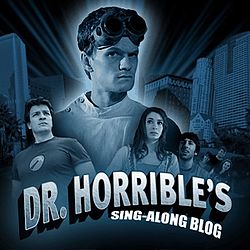
Dr. Horrible’s Sing-Along Blog
Kate loved Buffy the Vampire Slayer and other Whedon projects. General readers might associate him most readily as the director of the summer 2012 blockbuster movie The Avengers. During the Writers Guild strike of 2007-08, he teamed up with his brothers Zack Whedon (a television writer) and Jed Whedon (a composer and screenwriter), along with writer/singer/dancer/actress Maurissa Tancharoen, to create the wonderful musical tragicomedy web miniseries Dr. Horrible’s Sing-Along Blog.
I loved that mini musical, which introduced me to Felicia Day, which in turn led me to her hilariously nerdy web series The Guild, which I adore even though I am not a gamer. Day wrote the great song (Do You Wanna Date My) Avatar with Jed Whedon, who married Maurissa Tancharoen in 2009. Tancharoen was a writer for and also acted in Joss Whedon’s Dollhouse TV show, and she and Jed co-wrote Remains, my Song of the Month, which see sang as part of the final first season episode they scripted for Dollhouse. And wrapping this nest of links up with a final twist, Felicia Day acted in that episode.
Remains is sad and haunting, with lyrics constructed to have general meaning as well as fit the TV episode in question. It also fits well with the official video, with Tancharoen-Whedon playing an android love bot ordered by Fran Kranz, who also acted in Dollhouse. The video was directed by Anton King.
The video is not just a science fiction trope about androids and love dolls, with echoes of Lars and the Real Girl. It is an interesting portrayal of the objectification of women as well as our tendency to discard damaged goods, including people. Notice how the damaged, discarded android was rescued and appreciated by a homeless war veteran. The gorgeous chord progressions, piano, and guitar in Remains capture my heart, and the lyrics are shattering:
REMAINS
Burn down my home
My memories hardened and are bright as chrome
Good times escape
While every mistake seems to be caught on tape
I will go rolling fast
Arms out in the rain
Feel momentum building ’til
I lift off ground like an airplane
Love ties you down to the pains
A billion eyes are watching, fossilized
They see what remains
Remains
Gave up this town
What waste are we left with when it’s boiled down
Shine light on me
Your image reflected is all you’ll ever see
I will go rolling fast
Arms out in the rain
Feel momentum building ’til
I lift off ground like an airplane
Love ties you down to the pains
A billion eyes are watching, fossilized
They see what remains
Remains
Rocky bed of Sand Creek (click image for slideshow)
Yesterday I went to see the first installment of the latest Middle Earth film trilogy: The Hobbit: An Unexpected Journey. I have not yet read the book, but the familiar mood, settings, and some characters from the earlier The Lord of the Rings trilogy of films lent the journey a familiar air. (And yes, I did see a film at the AMC 20 in Tulsa. The reel change markers in the two-dimensional version I viewed were quite evident, along with the juddering of actual film sliding past a lens. However, soon that will be an experience relegated to the past. Will digital projection lead to a shift to higher frame rates? Director Peter Jackson hopes it will.)
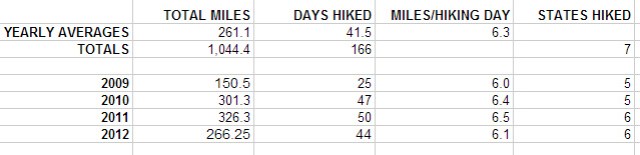
Similarly, the day before I made what, for regular readers, should be an expected journey: driving 30 minutes west from home to hike at Osage Hills State Park. Since my day hiking frenzy began in mid-2009, I’ve hiked various trails there almost two dozen times: three times in 2009, eight in 2010, seven in 2011, and now five in 2012. I’ve thoroughly exhausted the novelties of its trails and any appealing bushwhacks.
But I still enjoyed taking a few shots along my 5.25 mile journey roughly following the Bugle Trail loop. The shelter in the picnic area was a nice spot despite the tepid afternoon sun, which also illuminated the no-longer-leafy bluff across Sand Creek, affording a good look at the cave across the way, along with the large fading KEEP OUT sign adorning the bluff below it, which I managed to exclude from my shots.
Sand Creek was stilled by the drought, the rocky creekbed mostly dry, as were the waterfall ledges separating pools of water. The rope swing hung forlornly in the winter air. But the soft, calming walk around the Creek Loop was restorative, followed by the rougher and invigorating tower/lake trail.
I’ve made no grand hiking plans for this winter break, and my declining number of hiking days and mileage for 2012 represents how I’m running out of novel trails which don’t require an overnight stay.
My day hiking has declined in 2012 as I ran out of novel trails.
But I still enjoy day hikes and, unless weather and ennui intervenes, I might add a few more miles to my total for 2012 during the final week of the year.
Years ago I met the son of an English greengrocer: a corpulent, droll fellow known for murder and mayhem. I was probably vaguely aware of him through television, although his long-running show was not in reruns in the limited broadcast television markets of my youth. But I first really knew of him because he lent his name (for a fee, naturally) to a monthly mystery magazine and he had bookending cameos in The Three Investigators mysteries. But then, late one night on the television, I saw Psycho. After that I became fascinated, perhaps morbidly so, by Alfred Hitchcock.
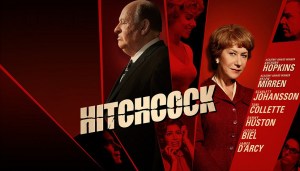
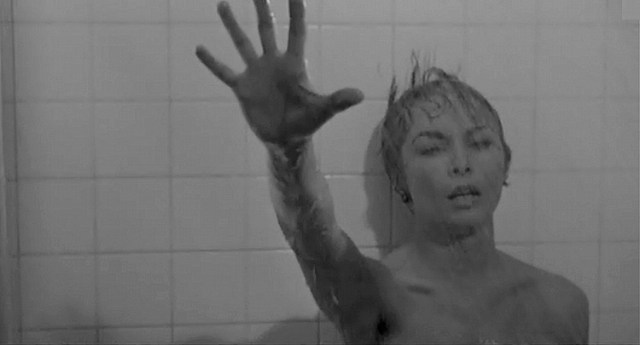
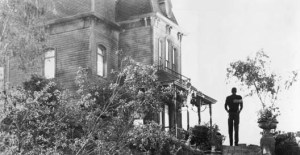
So I was delighted to go see the new movie Hitchcock with Sir Anthony Hopkins playing Sir Alfred. While it was modestly entertaining, it was anything but suspenseful. I wouldn’t recommend the movie to folks who are not already fans of Hitch. It would be far more entertaining to see Psycho, or almost any Hitchcock film, on the big screen. I’ve seen all of his films, most of them multiple times, but Psycho does stand out for one reason in particular. I was young enough to approximate the reaction of cinema audiences in 1960 to first seeing Psycho: it shocked me. The slow, mundane, somewhat dreadful pace let me know something was coming, but I was still quite unprepared for what could happen when a truly great director, who was always a masterful manipulator, made a horror film.
Psycho (1960)
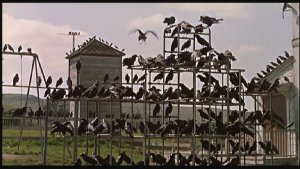
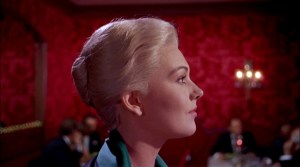
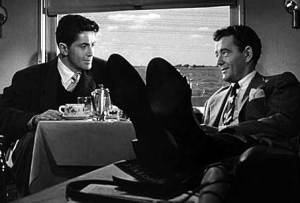
Is Psycho my favorite Hitchcock film? Hardly. That honor goes to Vertigo, underappreciated at the time but now ranking at the top of Sight & Sound’s top movies of all time. So allow me to urge you to go rent something great from the Master of Suspense. Here’s my top ten Hitchcock films in reverse chronological order, but I caution you that some linked clips are SPOILERS for the films in question. If you don’t want to spoil some major plot points, watch the entire movies from start to finish!
Frenzy (1972)
Frenzy (1972)
The most graphically violent Hitchcock film, leavened with British humor. I love the British inspector, tortured by his wife’s cooking. It is a far more modern film than Psycho, although only made a dozen years later.
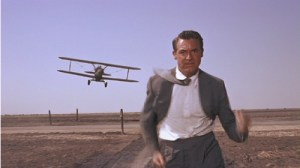
A marvelous script by Ernest Lehman pairs up with Cary Grant to make this the best of Hitchcock’s “innocent man on the run” movies. The later James Bond films were heavily influenced by sequences from North by Northwest. The cropduster sequence is also one of the most famous in all of cinema. What could possibly threaten you in broad daylight on a bleak flat prairie?
This film was unavailable for a decade. I first saw it on a big screen at OU’s film series when it became available again in the 1980s. The students stood up and applauded after it ended; something I had never seen them do before for any film.
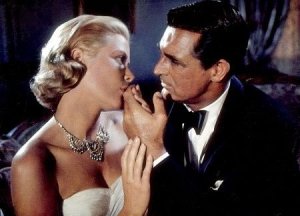
To Catch a Thief (1955)
To Catch a Thief (1955)
This is a gorgeous film with gorgeous people. Light fluff for Hitchcock, but wonderfully romantic. Grace Kelly was never more beautiful or flirtatious, and you simply can’t go wrong pairing her with Cary Grant. The fireworks kiss scene is quite wonderful and Grace’s outfits are almost as stunning as she is.
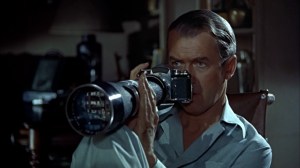
Rear Window (1954)
Rear Window (1954)
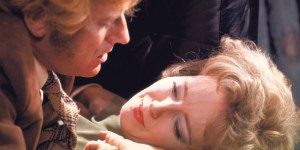
Grace Kelly is stunning once again in this much more serious tale; her entrance is amazing. Jimmy Stewart allows us to sympathize with a voyeur, the world outside his window drawing us in. This one has a prime example of why Hitchcock was the Master of Suspense. We are led to adore Grace’s character, and the scene where she is bravely and recklessly searching an apartment across the courtyard is incredibly intense at that point in the movie. I’ve repeatedly seen fellow viewers tense up, yell at the screen, and even stand up in anguish, their hands at their mouth, during this sequence.
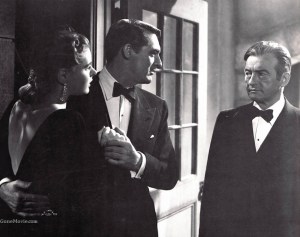
This one features beautiful work by Ingrid Bergman and Cary Grant in their prime, along with a surprisingly sympathetic villain in Claude Rains. The kissing scenes are well known, but (SPOILER) my favorite segment is when the spies are discovered and Claude and his evil mother plot a slow murder; the abandonment by Grant in Bergman’s greatest hour of need is devastating.
Spellbound (1945)
Spellbound (1945)
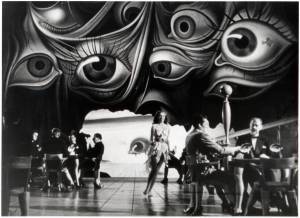
This is a very dated and uneven film, but it has some stunning visuals and Bergman once again pours on the love as she did in Notorious and, of course, Casablanca. Gregory Peck is stiff, but that fits his amnesiac character, and character actor Michael Chekhov is simply lovable. The dream sequence by Salvador Dali is fascinating, and the (SPOILER) final confrontation is both suspenseful and, with its massive point-of-view gun and two red frames of film, visually impressive.
Today made up for the dreary overcast days of the prior weekend; it was sunny and warm, reaching the mid 60s. I drove an hour south to enjoy some restaurant meals in Tulsa and walk and snap photos at three of my favorite spots: Redbud Valley, Oxley Nature Center, and Woodward Park. Altogether I walked about 5 miles today, helping compensate for a lunch at El Chico and dinner at Kilkenny’s.
The afternoon would soon be waning, so I headed over to Woodward Park for my final walk. I spied a guitarist seated on a bench, eyeing the Appeal to the Great Spirit.A chubby squirrel was busily preparing for winter.
Years ago my former student Kate Strycker and I exchanged CDs of some of our favorite songs. On one she included a couple of songs by a late artist I’d never heard of, Jeff Buckley. One strung-out song had lyrics rendered powerfully by Jeff’s delivery, and some synapses somewhere in my brain fired weakly…there was something familiar about this work. The trigger wasn’t the vocalist or the music, instead it was the intelligent, knowing, and wistful lyrics with their mix of Biblical and sexual imagery.
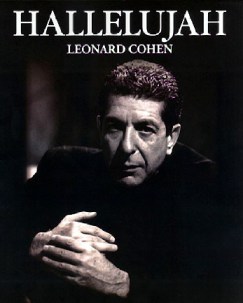
It took some research to discover that Hallelujah had wondrous lyrics because it was written by the incomparable song poet Leonard Cohen. The song was on the Various Positions album, which was originally rejected by Cohen’s record label, and it made it out on an independent label in 1984 but remained obscure for years.
Close attention reveals that Buckley’s version has omitted some of Cohen’s original verses and included several alternates. These were drawn from a later secularized version of Hallelujah which Cohen started performing live after the initial album version failed to gain any headway. Cohen has said this song, like many others, took him years to write. In this case, he wrote and discarded dozens of different verses before alighting on the four he used in the original recording, three of which were replaced in the alternate version.
Betty Henderson, my friend and colleague, and I were introduced to the tremendously talented Canadian singer/songwriter’s works by Professor Bill Reynolds when we took a couple of graduate curriculum courses via compressed video from OSU in the 1990s. Prof. Reynolds had assigned us to watch the movie Pump Up the Volume, which featured Cohen’s hauntingly cynical Everybody Knows. We were both fascinated by the shattering bass voice linked to such powerful lyrics. That led us to the I’m Your Man album and beyond.
Cohen’s voice has deepened over the years, in part due to cigarettes, and he has limited vocal range. His wonderful Tower of Songeven has an ironic verse which alludes to this: “I was born like this, I had no choice; I was born with the gift of a golden voice.” When Cohen received Canada’s Juno award for Best Male Vocalist for his album The Future, he quipped, “Only in Canada could somebody with a voice like mine win Vocalist of the Year.” (I concur with the Canadians: The Futureis my next favorite Cohen album after I’m Your Man.)
But despite his vocal limitations, he is a marvelous poet and songwriter, and I now own 84 songs sung by Cohen, plus many covers since often a song of his reaches new heights, or depths, when interpreted by others. I’ve mentioned before how wonderful Teddy Thompson’s take on Cohen’s Tonight Will Be Fine is, a somber reinterpretation of Cohen’s sing-songy original take on it. The change in style shifts it from a cheeky song about an affair into a tale of sorrow, loneliness, and desperation. The power in the words was there, waiting for the right artist to illuminate it.
Another example is how Antony sung from the heart in his gutwrenching version of If It Be Your Will. You can both see and hear the pain of experience from this transgender singer in his performance, granting a pathos absent from Cohen’s original recording. My heart breaks when the 6’4″ man with the voice of an angel sings, “Let your mercy spill on all these burning hearts in Hell, if it be your will to make us well.” Cohen’s lyrics in this context could be taken as a plea for some sort of “cure”, a supernatural change to conform those who are different to society’s norms. But I am confident Antony would instead interpret them as a plea for society itself to change in its tolerance and acceptance of people of all different sexualities, freeing them from a man-made hell on Earth.
Buckley’s version of Hallelujah is the best known and it rescued the song from obscurity; it owes much to John Cale’s cover on a Cohen tribute album, which merged the sacred and secular version of Cohen’s song with some deletions.
It took over a decade, but the song evolved into a standard covered by hundreds of artists. The most popular versions after Buckley would be the faster-paced cover by Rufus Wainwright and kd Lang’s version, which draws upon her impressive vocal range and leaves out one of the alternate verses. Lang’s is my friend Betty’s favorite take on the song, and kd was asked to sing it at the 2010 Winter Olympics:
But what makes this song so powerful? Let’s walk through the seven verses of both of Cohen’s versions of it, looking at some possible interpretations of the lyrics:
ORIGINAL VERSE ONE:
I’ve heard there was a secret chord
That David played, and it pleased the Lord
But you don’t really care for music, do you?
It goes like this
The fourth, the fifth
The minor fall, the major lift
The baffled king composing Hallelujah
The song begins with a self-reference to its own composition. As noted at 3intheam.com, “The fourth, the fifth, the minor fall, the major lift” references how the song shifts from C major to F major to G major to A minor and then to F major. The harmonic device of transitioning from minor to major at the end of a musical section is the Picardy third, and often used in hymns.
David is King David of Psalms, whose talent on the lyre rid Saul of the evil spirit. The “secret chord” can refer to the power of David’s playing of the lyre, but it can also be taken as a reference to how the lyre in King David’s time had no minor chords in its pentatonical tuning. But lest we err too much on the side of solemn analysis, note how the verse also undercuts its own seriousness with the Allenesque line, “But you don’t really care for music, do you?” Already we can see how we are in the hands of a very intelligent songmaster.
But the first two verses are dominated by allusions to two Biblical tales of adultery, betrayal, and death: King David and Bathsheba as well as Samson and Delilah. Like some of U2’s most powerful songs, Cohen’s religious references blend the sacred and the secular to tap into ancient symbols about the powers and perils of love. One of the greatest things about Cohen songs is how he, like the Old Testament of the Christian Bible, blends the profound and the profane.
ORIGINAL VERSE TWO:
Your faith was strong but you needed proof
You saw her bathing on the roof
Her beauty in the moonlight overthrew you
She tied you to a kitchen chair
She broke your throne, and she cut your hair
And from your lips she drew the Hallelujah
Some might wonder how this song, which includes veiled references to bondage and orgasm, would find its way into church worship services and public memorials. They would do well to recall how King David of Psalms, named in the first verse, is portrayed in the Bible. David seduced and committed adultery with Bathsheba, impregnated her, and then ordered her husband to leave a battlefield engagement to sleep with her so as to disguise that David was the father. When Bathsheba’s husband refused to leave his companions on the field of battle, David ordered that he be abandoned to die at the enemy’s hands. The first verse refers to David’s talent on the lyre, while the second mentions how, while walking on the roof of the king’s house, David first glimpsed Bathsheba while she was bathing.
The second verse not only references David, but blends in the story of Samson and Delilah. For those unfamiliar with this tale of a Jewish demi-god, Samson was given supernatural strength to deliver the Israelites from the Philistines. In this story the tables are turned by a woman, Delilah, who seduces Samson. She learns the secret of his God-given strength: his uncut hair. She has him shaven while sleeping on her knees, leading to him being captured, blinded, and enslaved by the Philistines. Later, after his hair grew out, his vengeance was to destroy their temple from within, destroying them yet ending his own life in the process.
A great article by Michael Welch points out, “When taken as a whole, the second verse addresses, in order, longing (‘Your faith was strong but you needed proof’), temptation (‘You saw her bathing on the roof’), lust (‘Her beauty and the moonlight overthrew you’), foreplay (‘She tied you to a kitchen chair’), sex (‘She broke your throne, she cut your hair’), and finally, climax (‘And from your lips she drew the Hallelujah’).”
ALTERNATE VERSES:
Baby I have been here before
I know this room, I’ve walked this floor
I used to live alone before I knew you.
I’ve seen your flag on the marble arch
Love is not a victory march
It’s a cold and it’s a broken Hallelujah
There was a time when you let me know
What’s really going on below
But now you never show it to me, do you?
And remember when I moved in you
The holy dove was moving too
And every breath we drew was Hallelujah
Maybe there’s a God above
But all I’ve ever learned from love
Was how to shoot at someone who outdrew you
It’s not a cry you can hear at night
It’s not somebody who has seen the light
It’s a cold and it’s a broken Hallelujah
These are drawn from an alternate secularized version of Hallelujah, where Cohen replaced the Old Testament references with these more embittered and sexualized lyrics. The love he sings of is not a victorious one, but one mired in defeat. The relationship has grown distant from its earlier shared moments of true openness and intimacy. Here he explicitly expresses religious doubt, and the cries of passion, be it sexual or religious, have been replaced by satisfaction at taking vengeance, or perhaps only attempting it, upon someone who hurt you in love, having learned “how to shoot at someone who outdrew you.”
ORIGINAL VERSE THREE:
You say I took the name in vain
I don’t even know the name
But if I did, well, really, what’s it to you?
There’s a blaze of light in every word
It doesn’t matter which you heard
The holy or the broken Hallelujah
This verse addresses how the word “Hallelujah“ is a command to “Praise Jehovah, you people”, invoking the name of the JudeoChristian God, which one is forbidden to take in vain (use outside of the context of its religious significance) in the Ten Commandments. In the context of the extended Buckley version of the song, we could think of how “Hallelujah” might be used in an expression of orgasm or vengeance, a broken cry that still carries power. But in the original version of the song, we harken to David’s enunciation, which should be in praise of his Lord, the holy Hallelujah, but he used profanely in orgasm. Another interpretation is that David’s “broken Hallelujah” would be his plea upon his recognition of his grievous sins.
ORIGINAL VERSE FOUR:
I did my best, it wasn’t much
I couldn’t feel, so I tried to touch
I’ve told the truth, I didn’t come to fool you
And even though it all went wrong
I’ll stand before the Lord of Song
With nothing on my tongue but Hallelujah
The song ends with this acknowledgment. In the context of King David, he recognizes his sins with Bathsheba and confesses them to Jehovah, praising what he hopes will be a merciful God. In the secular context, the lovers are no longer truly in love, only seeking sexual satisfaction, and there is still celebratory joy in that.
Cohen has been called “the poet laureate of pessimism” and “the godfather of gloom.” But he doesn’t agree that his songs are all dark, especially Hallelujah. “It’s a rather joyous song,” Cohen said when the song was first released on the Various Positions album. “I like very much the last verse – ‘And even though it all went wrong, / I’ll stand before the Lord of Song / with nothing on my tongue but Hallelujah!'”
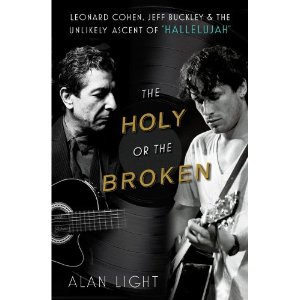
The Holy or the Broken by Alan Light
The key message I take from the song is what Alan Light calls, “the value, even the necessity of the song of praise in the face of confusion, doubt, or dread.” He adds, “Like our forefathers, and the Bible heroes who formed the foundation of Western ethics and principles, we will be hurt, tested, and challenged. Love will break our hearts, music will offer solace that we may or may not hear, we will be faced with joy and with pain. But Cohen is telling us, without resorting to sentimentality, not to surrender to despair or nihilism. Critics may have fixated on the gloom and doom of his lyrics, but this is his offering of hope and perseverance in the face of a cruel world. Holy or broken, there is still hallelujah.”
If you are intrigued by the story of Hallelujah, and also want to learn more about Leonard Cohen, the man who said he couldn’t sing or play yet became one of the greatest songwriters of our time, who spent five years in seclusion and became an ordained Buddhist monk, who was bilked out of his fortune and nearly bankrupted, and who followed up a 15 year hiatus from touring by performing hundreds of concerts while in his 70s, purchase and enjoy a copy of The Holy or the Broken.












 Meador Manor