Today made up for the dreary overcast days of the prior weekend; it was sunny and warm, reaching the mid 60s. I drove an hour south to enjoy some restaurant meals in Tulsa and walk and snap photos at three of my favorite spots: Redbud Valley, Oxley Nature Center, and Woodward Park. Altogether I walked about 5 miles today, helping compensate for a lunch at El Chico and dinner at Kilkenny’s.
The afternoon would soon be waning, so I headed over to Woodward Park for my final walk. I spied a guitarist seated on a bench, eyeing the Appeal to the Great Spirit.A chubby squirrel was busily preparing for winter.
Years ago my former student Kate Strycker and I exchanged CDs of some of our favorite songs. On one she included a couple of songs by a late artist I’d never heard of, Jeff Buckley. One strung-out song had lyrics rendered powerfully by Jeff’s delivery, and some synapses somewhere in my brain fired weakly…there was something familiar about this work. The trigger wasn’t the vocalist or the music, instead it was the intelligent, knowing, and wistful lyrics with their mix of Biblical and sexual imagery.
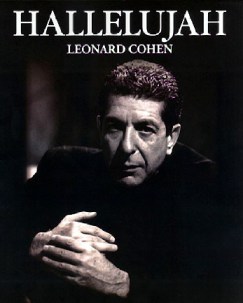
It took some research to discover that Hallelujah had wondrous lyrics because it was written by the incomparable song poet Leonard Cohen. The song was on the Various Positions album, which was originally rejected by Cohen’s record label, and it made it out on an independent label in 1984 but remained obscure for years.
Close attention reveals that Buckley’s version has omitted some of Cohen’s original verses and included several alternates. These were drawn from a later secularized version of Hallelujah which Cohen started performing live after the initial album version failed to gain any headway. Cohen has said this song, like many others, took him years to write. In this case, he wrote and discarded dozens of different verses before alighting on the four he used in the original recording, three of which were replaced in the alternate version.
Betty Henderson, my friend and colleague, and I were introduced to the tremendously talented Canadian singer/songwriter’s works by Professor Bill Reynolds when we took a couple of graduate curriculum courses via compressed video from OSU in the 1990s. Prof. Reynolds had assigned us to watch the movie Pump Up the Volume, which featured Cohen’s hauntingly cynical Everybody Knows. We were both fascinated by the shattering bass voice linked to such powerful lyrics. That led us to the I’m Your Man album and beyond.
Cohen’s voice has deepened over the years, in part due to cigarettes, and he has limited vocal range. His wonderful Tower of Songeven has an ironic verse which alludes to this: “I was born like this, I had no choice; I was born with the gift of a golden voice.” When Cohen received Canada’s Juno award for Best Male Vocalist for his album The Future, he quipped, “Only in Canada could somebody with a voice like mine win Vocalist of the Year.” (I concur with the Canadians: The Futureis my next favorite Cohen album after I’m Your Man.)
But despite his vocal limitations, he is a marvelous poet and songwriter, and I now own 84 songs sung by Cohen, plus many covers since often a song of his reaches new heights, or depths, when interpreted by others. I’ve mentioned before how wonderful Teddy Thompson’s take on Cohen’s Tonight Will Be Fine is, a somber reinterpretation of Cohen’s sing-songy original take on it. The change in style shifts it from a cheeky song about an affair into a tale of sorrow, loneliness, and desperation. The power in the words was there, waiting for the right artist to illuminate it.
Another example is how Antony sung from the heart in his gutwrenching version of If It Be Your Will. You can both see and hear the pain of experience from this transgender singer in his performance, granting a pathos absent from Cohen’s original recording. My heart breaks when the 6’4″ man with the voice of an angel sings, “Let your mercy spill on all these burning hearts in Hell, if it be your will to make us well.” Cohen’s lyrics in this context could be taken as a plea for some sort of “cure”, a supernatural change to conform those who are different to society’s norms. But I am confident Antony would instead interpret them as a plea for society itself to change in its tolerance and acceptance of people of all different sexualities, freeing them from a man-made hell on Earth.
Buckley’s version of Hallelujah is the best known and it rescued the song from obscurity; it owes much to John Cale’s cover on a Cohen tribute album, which merged the sacred and secular version of Cohen’s song with some deletions.
It took over a decade, but the song evolved into a standard covered by hundreds of artists. The most popular versions after Buckley would be the faster-paced cover by Rufus Wainwright and kd Lang’s version, which draws upon her impressive vocal range and leaves out one of the alternate verses. Lang’s is my friend Betty’s favorite take on the song, and kd was asked to sing it at the 2010 Winter Olympics:
But what makes this song so powerful? Let’s walk through the seven verses of both of Cohen’s versions of it, looking at some possible interpretations of the lyrics:
ORIGINAL VERSE ONE:
I’ve heard there was a secret chord
That David played, and it pleased the Lord
But you don’t really care for music, do you?
It goes like this
The fourth, the fifth
The minor fall, the major lift
The baffled king composing Hallelujah
The song begins with a self-reference to its own composition. As noted at 3intheam.com, “The fourth, the fifth, the minor fall, the major lift” references how the song shifts from C major to F major to G major to A minor and then to F major. The harmonic device of transitioning from minor to major at the end of a musical section is the Picardy third, and often used in hymns.
David is King David of Psalms, whose talent on the lyre rid Saul of the evil spirit. The “secret chord” can refer to the power of David’s playing of the lyre, but it can also be taken as a reference to how the lyre in King David’s time had no minor chords in its pentatonical tuning. But lest we err too much on the side of solemn analysis, note how the verse also undercuts its own seriousness with the Allenesque line, “But you don’t really care for music, do you?” Already we can see how we are in the hands of a very intelligent songmaster.
But the first two verses are dominated by allusions to two Biblical tales of adultery, betrayal, and death: King David and Bathsheba as well as Samson and Delilah. Like some of U2’s most powerful songs, Cohen’s religious references blend the sacred and the secular to tap into ancient symbols about the powers and perils of love. One of the greatest things about Cohen songs is how he, like the Old Testament of the Christian Bible, blends the profound and the profane.
ORIGINAL VERSE TWO:
Your faith was strong but you needed proof
You saw her bathing on the roof
Her beauty in the moonlight overthrew you
She tied you to a kitchen chair
She broke your throne, and she cut your hair
And from your lips she drew the Hallelujah
Some might wonder how this song, which includes veiled references to bondage and orgasm, would find its way into church worship services and public memorials. They would do well to recall how King David of Psalms, named in the first verse, is portrayed in the Bible. David seduced and committed adultery with Bathsheba, impregnated her, and then ordered her husband to leave a battlefield engagement to sleep with her so as to disguise that David was the father. When Bathsheba’s husband refused to leave his companions on the field of battle, David ordered that he be abandoned to die at the enemy’s hands. The first verse refers to David’s talent on the lyre, while the second mentions how, while walking on the roof of the king’s house, David first glimpsed Bathsheba while she was bathing.
The second verse not only references David, but blends in the story of Samson and Delilah. For those unfamiliar with this tale of a Jewish demi-god, Samson was given supernatural strength to deliver the Israelites from the Philistines. In this story the tables are turned by a woman, Delilah, who seduces Samson. She learns the secret of his God-given strength: his uncut hair. She has him shaven while sleeping on her knees, leading to him being captured, blinded, and enslaved by the Philistines. Later, after his hair grew out, his vengeance was to destroy their temple from within, destroying them yet ending his own life in the process.
A great article by Michael Welch points out, “When taken as a whole, the second verse addresses, in order, longing (‘Your faith was strong but you needed proof’), temptation (‘You saw her bathing on the roof’), lust (‘Her beauty and the moonlight overthrew you’), foreplay (‘She tied you to a kitchen chair’), sex (‘She broke your throne, she cut your hair’), and finally, climax (‘And from your lips she drew the Hallelujah’).”
ALTERNATE VERSES:
Baby I have been here before
I know this room, I’ve walked this floor
I used to live alone before I knew you.
I’ve seen your flag on the marble arch
Love is not a victory march
It’s a cold and it’s a broken Hallelujah
There was a time when you let me know
What’s really going on below
But now you never show it to me, do you?
And remember when I moved in you
The holy dove was moving too
And every breath we drew was Hallelujah
Maybe there’s a God above
But all I’ve ever learned from love
Was how to shoot at someone who outdrew you
It’s not a cry you can hear at night
It’s not somebody who has seen the light
It’s a cold and it’s a broken Hallelujah
These are drawn from an alternate secularized version of Hallelujah, where Cohen replaced the Old Testament references with these more embittered and sexualized lyrics. The love he sings of is not a victorious one, but one mired in defeat. The relationship has grown distant from its earlier shared moments of true openness and intimacy. Here he explicitly expresses religious doubt, and the cries of passion, be it sexual or religious, have been replaced by satisfaction at taking vengeance, or perhaps only attempting it, upon someone who hurt you in love, having learned “how to shoot at someone who outdrew you.”
ORIGINAL VERSE THREE:
You say I took the name in vain
I don’t even know the name
But if I did, well, really, what’s it to you?
There’s a blaze of light in every word
It doesn’t matter which you heard
The holy or the broken Hallelujah
This verse addresses how the word “Hallelujah“ is a command to “Praise Jehovah, you people”, invoking the name of the JudeoChristian God, which one is forbidden to take in vain (use outside of the context of its religious significance) in the Ten Commandments. In the context of the extended Buckley version of the song, we could think of how “Hallelujah” might be used in an expression of orgasm or vengeance, a broken cry that still carries power. But in the original version of the song, we harken to David’s enunciation, which should be in praise of his Lord, the holy Hallelujah, but he used profanely in orgasm. Another interpretation is that David’s “broken Hallelujah” would be his plea upon his recognition of his grievous sins.
ORIGINAL VERSE FOUR:
I did my best, it wasn’t much
I couldn’t feel, so I tried to touch
I’ve told the truth, I didn’t come to fool you
And even though it all went wrong
I’ll stand before the Lord of Song
With nothing on my tongue but Hallelujah
The song ends with this acknowledgment. In the context of King David, he recognizes his sins with Bathsheba and confesses them to Jehovah, praising what he hopes will be a merciful God. In the secular context, the lovers are no longer truly in love, only seeking sexual satisfaction, and there is still celebratory joy in that.
Cohen has been called “the poet laureate of pessimism” and “the godfather of gloom.” But he doesn’t agree that his songs are all dark, especially Hallelujah. “It’s a rather joyous song,” Cohen said when the song was first released on the Various Positions album. “I like very much the last verse – ‘And even though it all went wrong, / I’ll stand before the Lord of Song / with nothing on my tongue but Hallelujah!'”
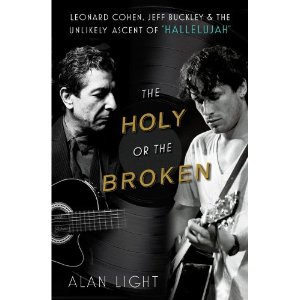
The Holy or the Broken by Alan Light
The key message I take from the song is what Alan Light calls, “the value, even the necessity of the song of praise in the face of confusion, doubt, or dread.” He adds, “Like our forefathers, and the Bible heroes who formed the foundation of Western ethics and principles, we will be hurt, tested, and challenged. Love will break our hearts, music will offer solace that we may or may not hear, we will be faced with joy and with pain. But Cohen is telling us, without resorting to sentimentality, not to surrender to despair or nihilism. Critics may have fixated on the gloom and doom of his lyrics, but this is his offering of hope and perseverance in the face of a cruel world. Holy or broken, there is still hallelujah.”
If you are intrigued by the story of Hallelujah, and also want to learn more about Leonard Cohen, the man who said he couldn’t sing or play yet became one of the greatest songwriters of our time, who spent five years in seclusion and became an ordained Buddhist monk, who was bilked out of his fortune and nearly bankrupted, and who followed up a 15 year hiatus from touring by performing hundreds of concerts while in his 70s, purchase and enjoy a copy of The Holy or the Broken.
Andrew and I hit the trail (click image for slideshow)
Today a former physics student of mine, Andrew Geibel, helped me gain authorized access to the Osage Trail leading from Osage Hills State Park to the Boy Scouts’ Camp McClintock. I’d blundered along the trail three years ago, back when there was no sign demarcating the private scout property from the state park. A few weeks ago, Andrew, who graduated from Bartlesville High back in 2006, said he was back in town and inquired about going on a day hike with me, later volunteering that he, as a former Eagle Scout, would get us access to the trail.
That appealed to me, not only to catch up with how Andrew was doing, but also because I’d never mapped the trail with my GPS and long ago I downloaded an intriguing map of the Osage Trail from the website of the Cherokee Area Council. It showed an old homesite, an old stove, and a deer stand along the trail, plus a cave up a side stream. I hoped we might find at least one of those things on this unusually warm and windy first day of December.
Andrew and I opted to meet at the stone building that once housed the gasoline pump which provided water to the CCC camp, now the trailhead for the mountain bike trail system and the nearest parking spot to the private section of the trail. We had signed permission forms relieving the scouts of liability for our safety along the trail, so they were off the hook if we got ourselves into trouble.
I took a shot of the rustic entryway of the old pump house as I awaited Andrew’s arrival. The Osage Trail technically leads on into the park for over a mile from this point, but it is just following other hiking trails in those areas. We started out by fording the stream midway, heading along the Red Bike Trail and following the infrequent red metal circle markers for the Osage Trail.
We passed a stone totem someone had erected along one of the streambeds we crossed on our way to the Grotto, where the drought had stopped all of the water flow but a small pool of water remained. Andrew posed for me, giving scale to my favorite spot along the Red Bike Trail.
The Grotto
When we reached the most dangerous area for bikers, where the bike trail descends a short but very rocky bluff, I spotted some temporary warning signs lying on the ground. They’d probably been placed for a recent ride, and Andrew and I acted like good Boy Scouts, remounting the flimsy signs.
We reached the edge of the state park and each of us posed at the sign admonishing us to get permission before continuing. Satisfied we met that mandate, we forged onward, with me plodding along in my usual Columbia Hiking Boots and Andrew in his more daring Vibram Fivefingers Running Shoes. I prefer to keep my feet dry and cushioned, but Barefoot Ted McDonald champions the close-to-barefoot style of his Vibram offerings and I’ve noticed them on a few feet, mostly younger and more adventurous types.
Andrew had to be adventurous to bushwhack up a side creek with me, searching for the cave, us having failed to spot the old homesite beside the trail after a not-at-all-exhaustive glance up on the hill. We bushwhacked to the fork and followed a branch some ways, finding nothing more than a small overhanging ledge. Now that I’m home with my Google Earth trail track, I can see that we probably would have found it if we had ventured a bit farther up the right branch of the fork. I’ll bet one or both of us does that soon.
Andrew toured me through the camp. We passed through a stone gateway built by the troop from Picher back in 1936; little did they suspect their handiwork would outlast their town: Picher is a ghost town, one of the few locations in the world evacuated and declared uninhabitable. The town in far northeast Oklahoma was undermined by lead and zinc mines and the toxic piles of chat throughout it had poisoned its inhabitants.
I had a great time visiting with Andrew on our 5.75 mile hike and bushwhack, although our chattering meant the only animals which would stay near us were armadillos. I still want to find that cave, though!
If the weather holds up, I’ll probably take him to the Table Mound Trail at Elk City in the coming weeks. Like me, he’s hiking to enjoy nature and to stay fit, and I’m sure he would enjoy that great hiking spot only an hour’s drive north of town, across the border in Kansas, where seldom is heard a discouraging word and the sky is not cloudy all day.
I waited until the very last day of November to finalize my selection for the song of the month, although I was pretty certain I’d be picking something from Lana del Rey’s new Paradise release. I’ve been eagerly awaiting it since I discovered Born to Die last April and made the title track my song of that month. I’m entranced by how her songs interlace world-weary sadness and a used-up street-worn sensibility with cheeky youth.
If it weren’t for the choice of a different body part instead of “lips” to kick off Cola, I’d pick that song as my favorite. But Lana (and her management) made the choice to be explicit for the publicity, no doubt. I’m too much of a schoolteacher to want to hear some words in songs when others do just as well…and leave more to the imagination. Witness how I like the bowdlerized Forget Youfrom Cee-Lo Green over the original version and wince any time Aimee Mann drops a cuss word into one of her songs. If Wal-Mart or another market force convinced Lana to release a “lips” version of Cola, I’d buy it in an instant in preference over the kitty cat version.
So my choice from the new album is American, which reminds me of the album version of National Anthem, another favorite from the Born to Die album. I especially like how she borrows one of the best lines from Tom Petty’s Mary Jane’s Last Dance.
But I have a feeling over time Cola will rack up more plays in my iTunes library, explicit or not.
Play house, put my favorite record on
Get down, get your crystal method on
You were like tall, tan, driving ‘round the city
flirtin’ with the girls like you’re so pretty
Springsteen is the King don’t ya think
I was like ‘hell yeah that guy can sing’
like ooh ooh ooh ooh ooh
You make me crazy, you make me wild
Just like a baby, spin me round like a child
Your skin so gold and brown
Be Young Be Dope Be Proud
Like an American
Drive fast, I can almost taste it now
L.A, I don’t even have to fake it now
You were like so sick, everybody said it
You were way ahead of the trend, get get it
Elvis is the best, hell yes
Honey put on that party dress
like ooh ooh ooh ooh ooh
You make me crazy, you make me wild
Just like a baby, spin me round like a child
Your skin so gold and brown
Be Young Be Dope Be Proud
Like an American
Everybody wants to go fast
But they can’t compare
I don’t really want the rest
Only you can take me there
I don’t even know what I’m saying
But I’m praying for you
You make me crazy, you make me wild
Just like a baby, spin me round like a child
Your skin so gold and brown
Be Young Be Dope Be Proud
Like an American
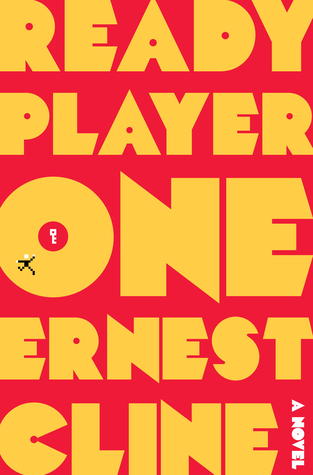
I like to listen to podcasts, lectures, and audiobooks as I hike. My two hikes on Thanksgiving Break 2012 were accompanied by a fantastic audiobook of Ready Player One by Ernest Cline. I’ve heard about this book, often described as a “nerdgasm”, repeatedly on technology podcasts and online articles. It blends the Willy Wonka plot device from Charlie and the Chocolate Factory with the virtual reality of Snow Crashand mixes in heaping helpings of 1980s nerd culture. Sounds scrumptious, except that I’ve never been much of a video game player and the plot revolves around them.
Yes, I’m hyperlinking in this article like crazy, because that was what listening to Wil’s splendid rendition of Ready Player One was like for me; time and again the plot drew upon nerdy experiences from my youth, popping out in my mind with hyperlinks to memories from my junior high years into college.
The author, Ernest Cline, embedded his own favorite nerdy experiences into the plot, and many of them match up well to my own:
This book gave me a nerdgasm
He had a Color Computer 2 and references the Dungeons of Daggorath game from that system; that was my second personal computer (preceded by an original TRS-80 Color Computer) and I hand coded in BASIC my own graphical adventure game for it during my freshman year in college. (And though the source code is long gone, I still have an old VHS videotape walkthrough of it which I recorded back in the day.)
He prominently features the classic arcade games Joust and Pac-Man, which are among the very few I enjoyed with my severely limited skill set.
The Dungeons & Dragons role-playing game’s adventure module Tomb of Horrors is replicated in the story, and I was a dungeon master for that module back in high school.
Cline draws upon some of my own televised guilty pleasures like Ultramanand at least name-checks my favorite Henshin show: Gatchaman, which I can assure you is best watched in the original Japanese version and not the bowdlerizedBattle of the Planets. You’ll be surprised to find who Zoltar’s sister really is when you watch him as Berg Katse! [I’m racking up nerd points here.]
For me the story was a sweet nostalgic romp with a fast-paced storyline and several characters one could relate to and care about, even though they were virtual avatars most of the time. However, the two Japanese characters were clichés, and perhaps that is part of the humor: Wheaton’s portrayal of them is straight but his accent is tongue-in-cheek. In fact, Wheaton’s narration was a major contributor to my enjoyment of the book, especially when he would alter his voice to briefly imitate an old computer game. His enthusiastic and youthful reading of the dialogue is spot-on for the characters driving the plot.
Oz, or the OASIS, awaits
The book has a dark opening, in stark contrast to the virtual fun which abounds when the protagonist is online. Here’s an excerpt courtesy of NPR, but don’t worry, the whole book isn’t angry gloom and doom; Mr. Cline is just setting up a contrast for the fun that will follow. Think of the excerpt as the black-and-white Kansas you need for Oz to really pop when Dorothy opens the door…or, in Ready Player One, when Wade dons his haptic outfit to enter the OASIS online universe.
Cline is having too much fun to preach for very long about the dangers of our current pathways of global warming, class division, and online escapism; and thankfully he avoids providing any pat answers to the dilemma of the real world in his story – only the online simulation has a built-in deus ex machina, although one character is close to being one in the novel’s real world to set up the climax.
It took Cline years to write Ready Player One, so I won’t hope for another novel from him soon. But I hope he will someday tap into those reservoirs of nerdiness with another rollicking adventure.










 Meador Manor