June 13-16, 2023 | Photo Album

We arrived in Santa Fe and checked into the Casita Bonita studio guesthouse at the Santa Fe Motel & Inn. We always enjoy our stays there, although on our next visit I will try to rent the more spacious Casita Fina next door.
Dinner was from Tomasita’s just down the block at the Rail Yard, although we used Doordash so that we could relax and enjoy our food in the casita’s courtyard.


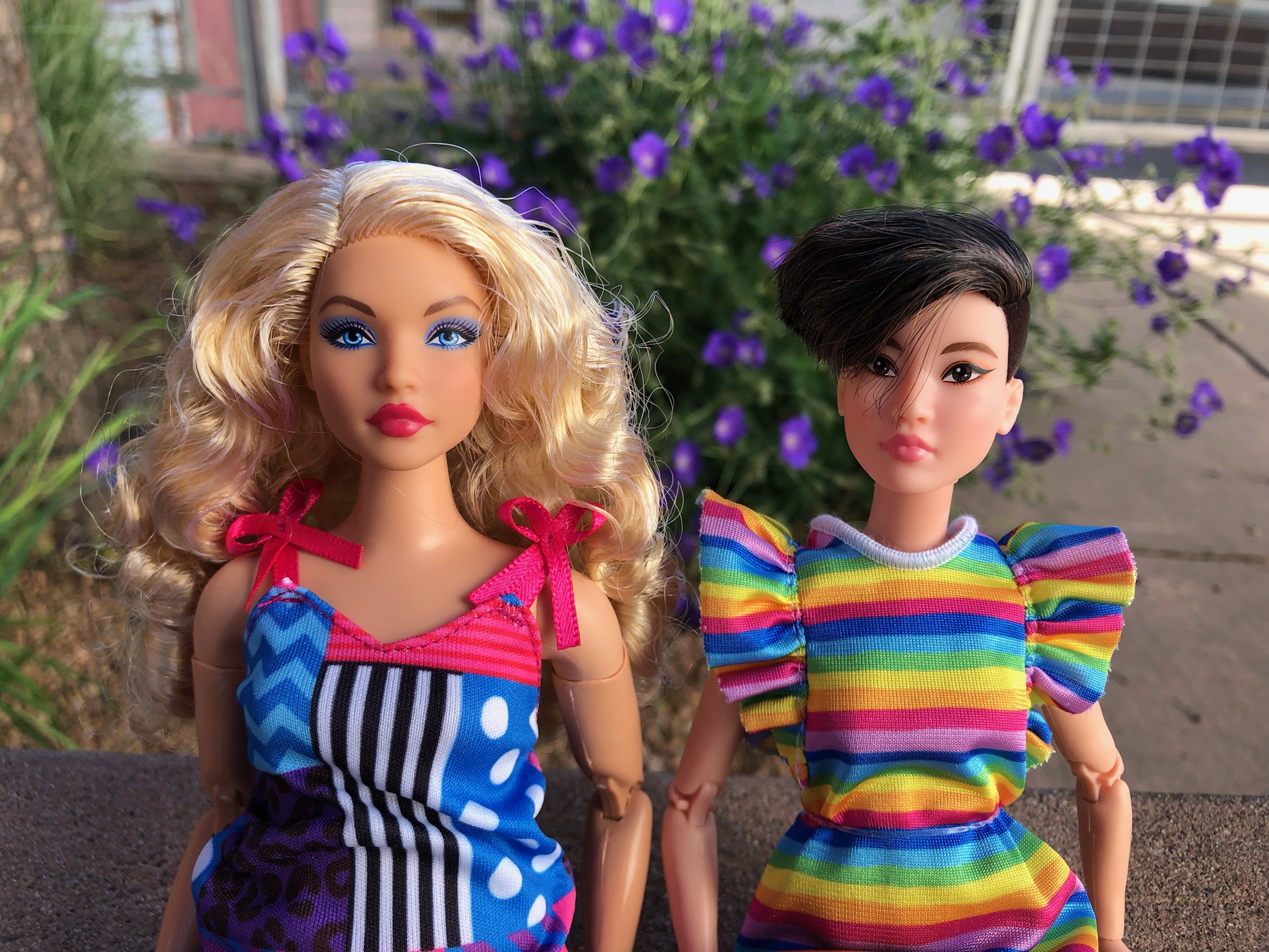
Wendy had her Barbies pose on a chair in the courtyard, with one holding the fun tile that came with the rental.
Museum of Contemporary Native Arts
The next morning, it was a 15-minute walk to have breakfast at The Burrito Company near the historic plaza. Wendy had blue corn and piñon pine nut pancakes, while I opted for scrambled eggs, hash browns, and toast. We then used the NARM feature of our Woolaroc memberships to get free entry to the Institute of American Indian Arts’ Museum of Contemporary Native Arts.
I snapped a photo of Pueblo Feast Day by David Bradley, a 1961 graduate of the institute. It is one of a series of paintings in which he churns American culture. The Lone Ranger, a blonde with a Gucci handbag, and a member of “Heck’s Angels” were among the guests at the table in this version.

As for the meaning of the dollar bill on the floor, I can only speculate. The Genízaro Pueblo of Abiquiú’s background includes this:
[Spanish colonists] first abducted and then later purchased war captives from surrounding tribes. Those ‘ransomed’ were primarily from mixed tribal heritage, including Apache, Comanche, Kiowa, Navajo, Pawnee, and Ute. The colonists took these individuals to their households, where they were taught Spanish and converted to Catholicism. They were forced to work as household servants, tend fields, herd livestock, and serve as frontier militia to protect Spanish settlements. Many endured physical abuse, including sexual assault. The Spanish called these captives and their children ‘Genízaro.’ The term originated from a Turkish word for slaves trained as soldiers.
The Santo Tomás feast day ceremony culminates on Sunday with El Cautivo (The Captive) Dance, which has been performed at Abiquiú for more than 150 years. Dancers dress as their ancestors, with face paint, feather hair ornaments, and ankle bells. They also wear dollar bills pinned to their ceremonial clothing, signifying their “ransom”—being purchased by the Spanish from other tribes—and the beginning of their enforced servitude. Spanish law allowed them to be free after 10 to 15 years.
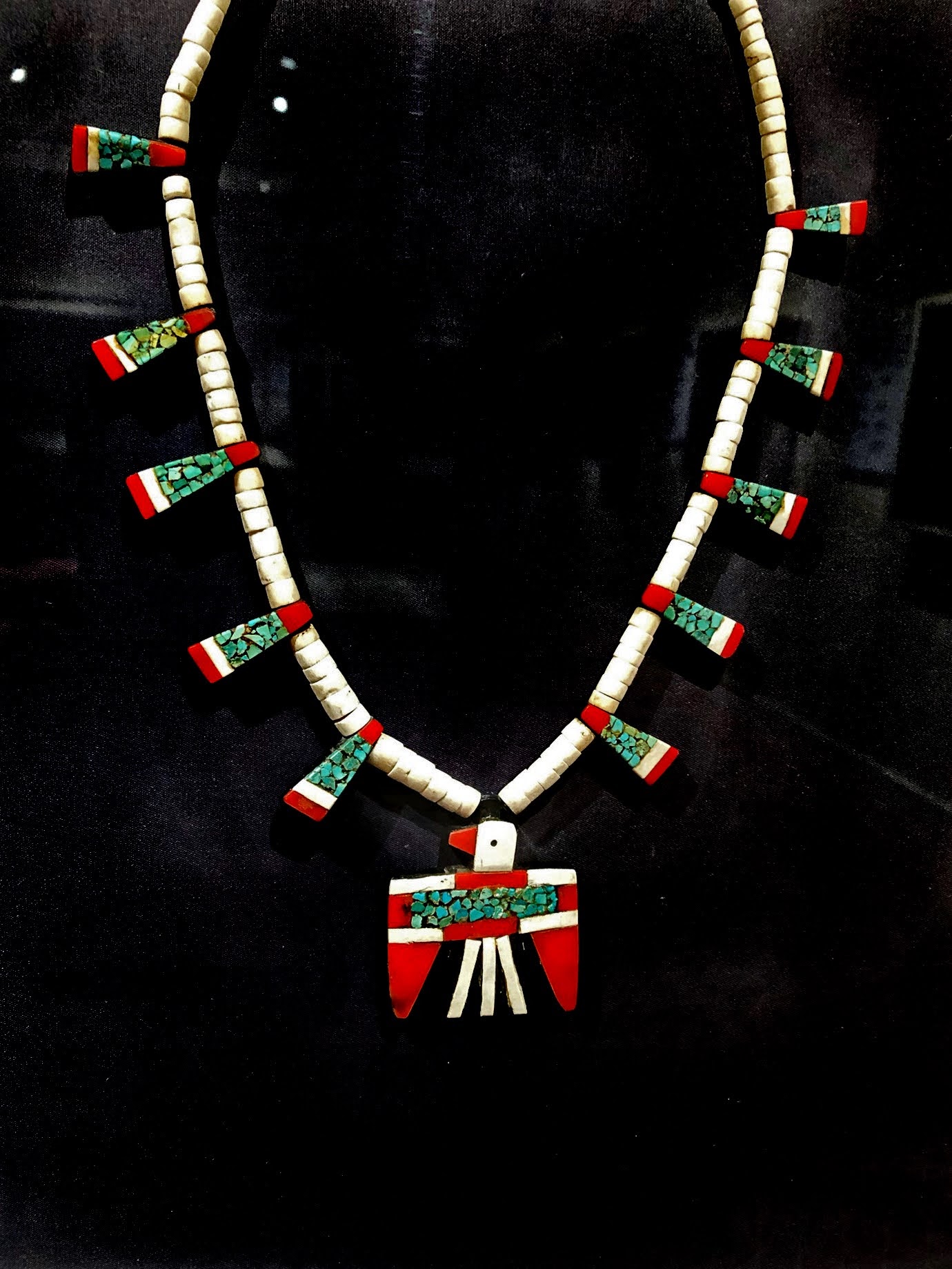
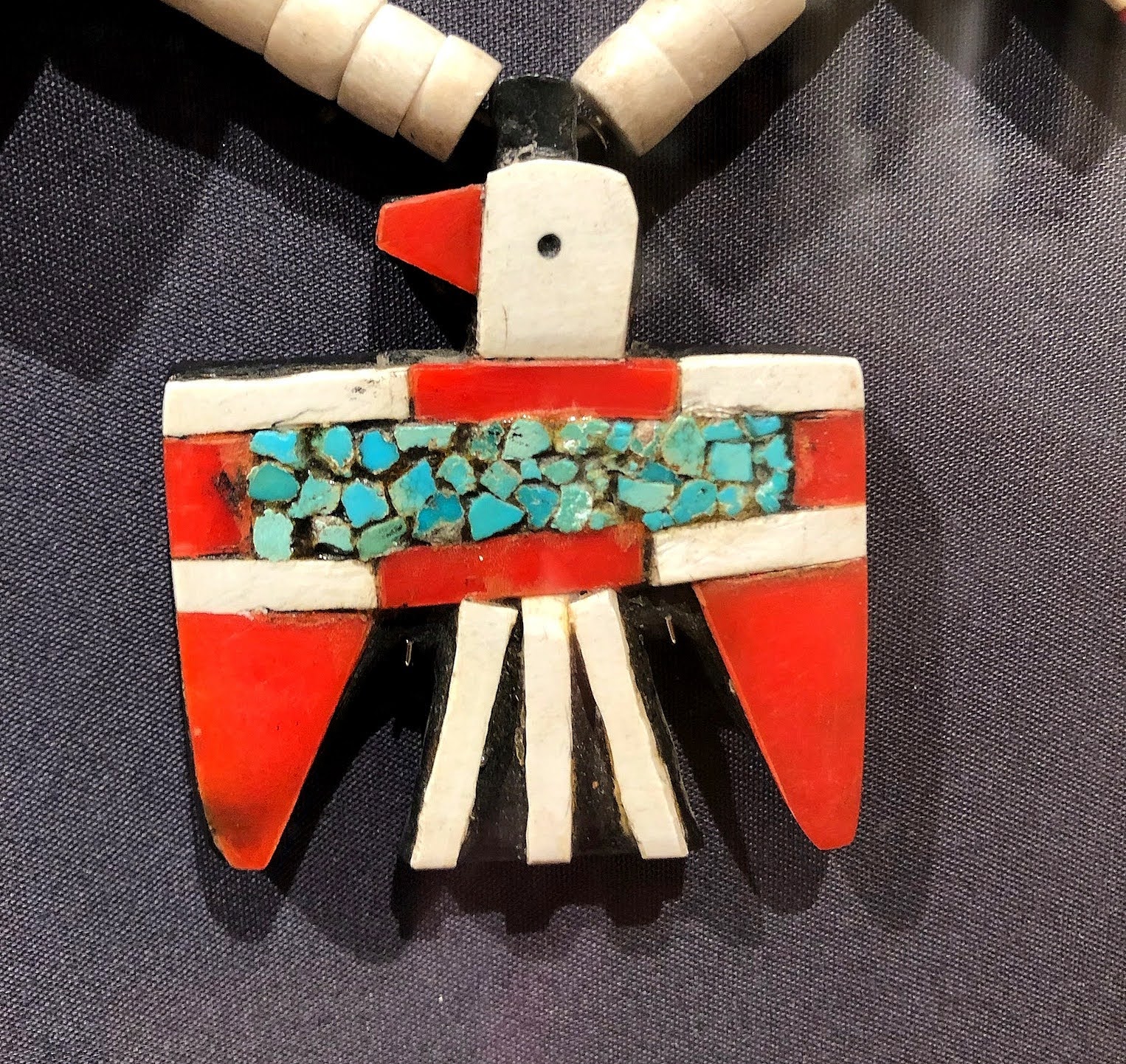
The institute had mounted an exhibit of contemporary jewelry created by more than 100 artists.
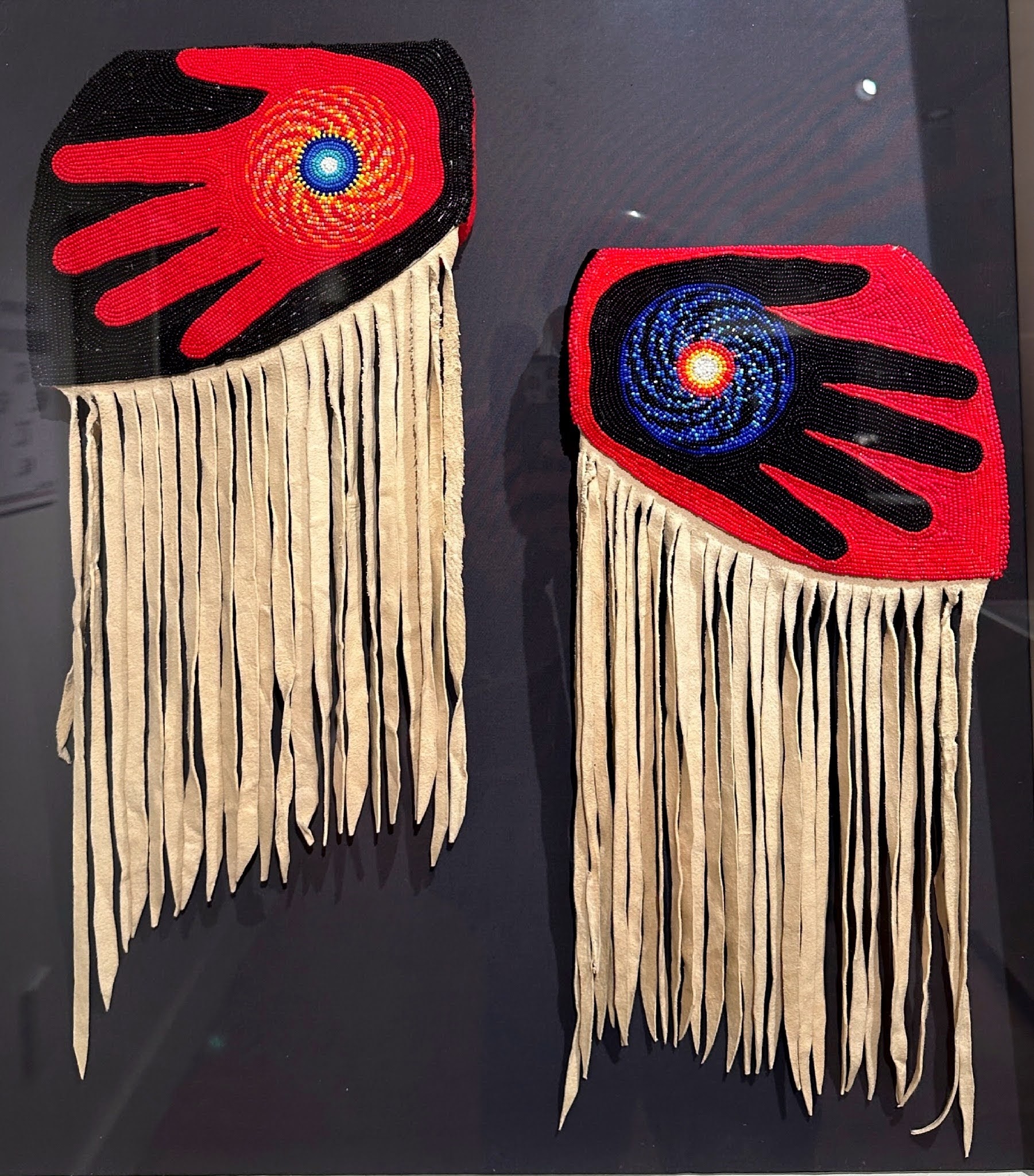

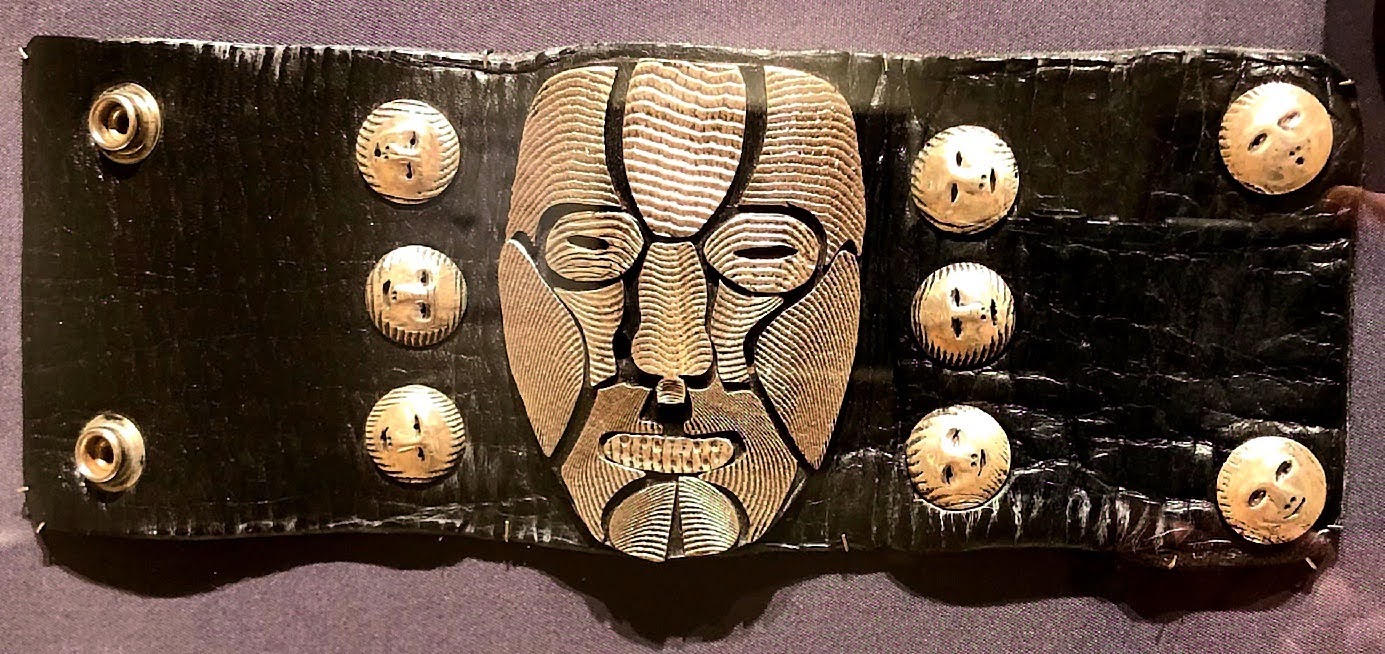
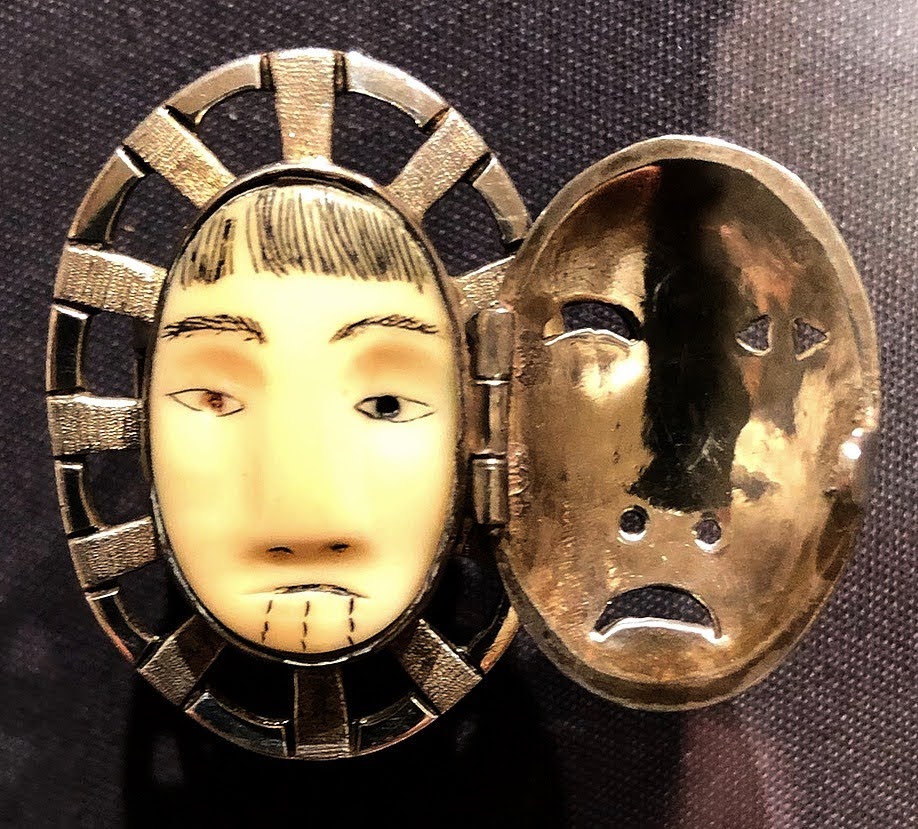
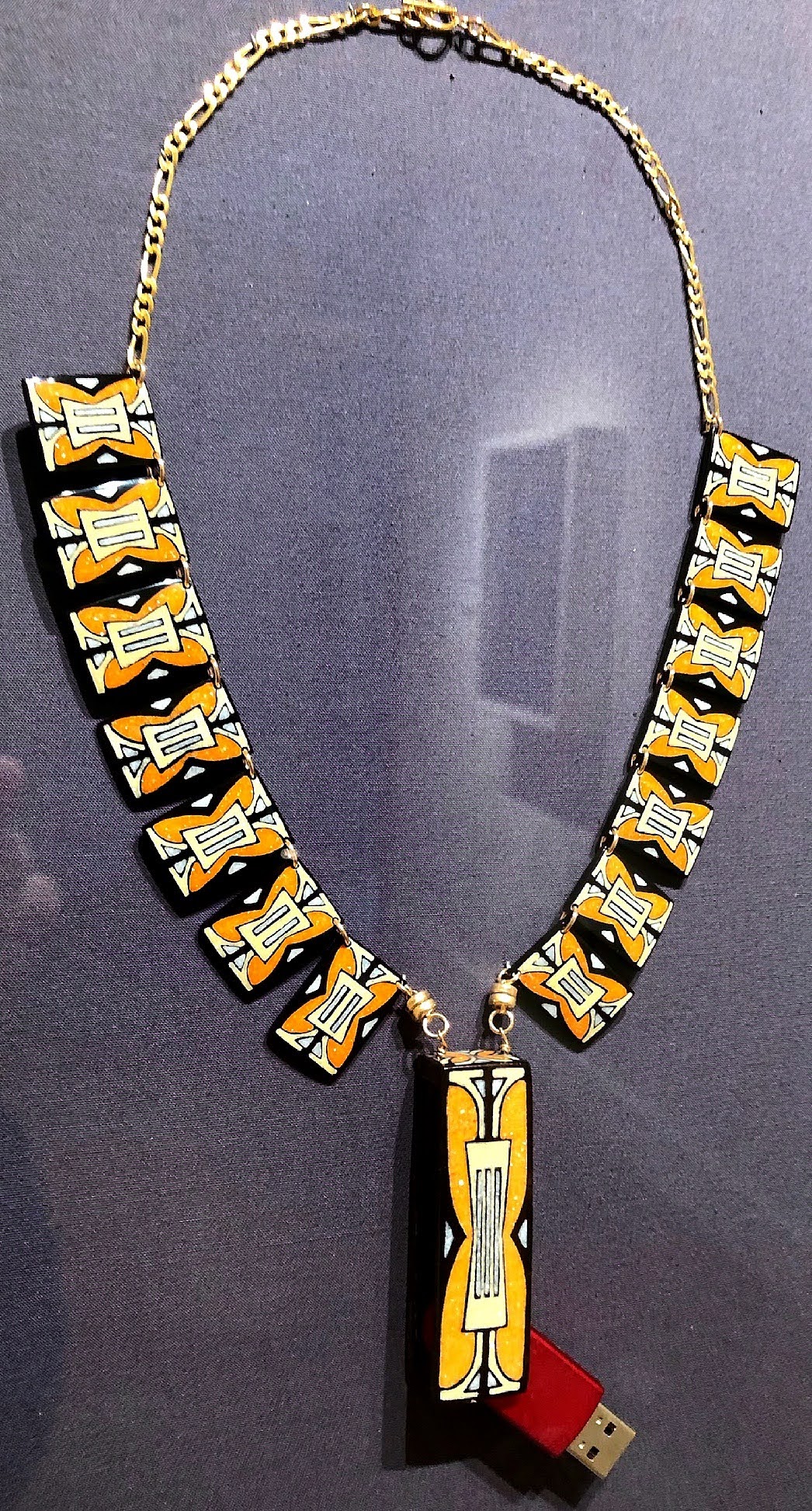
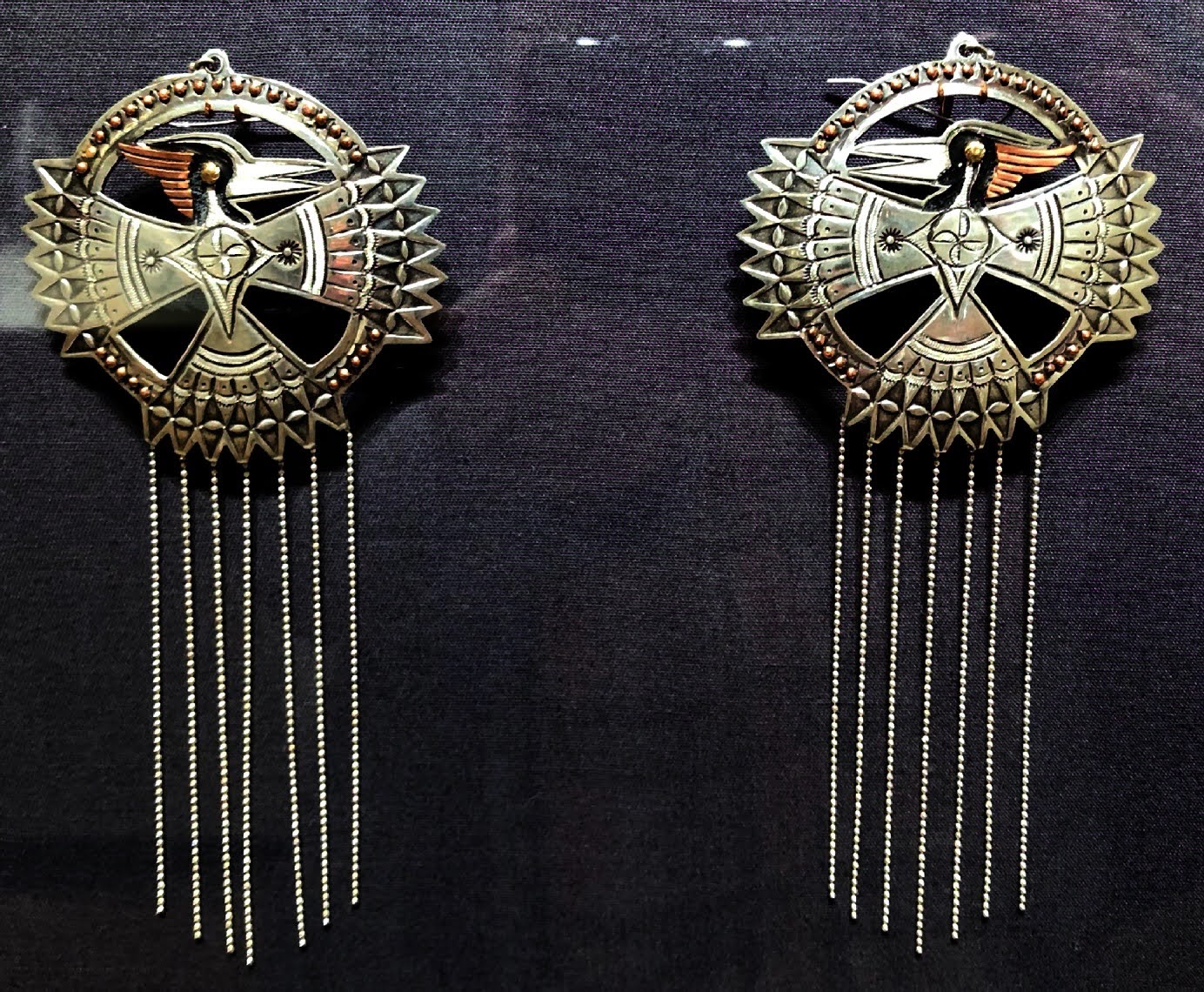
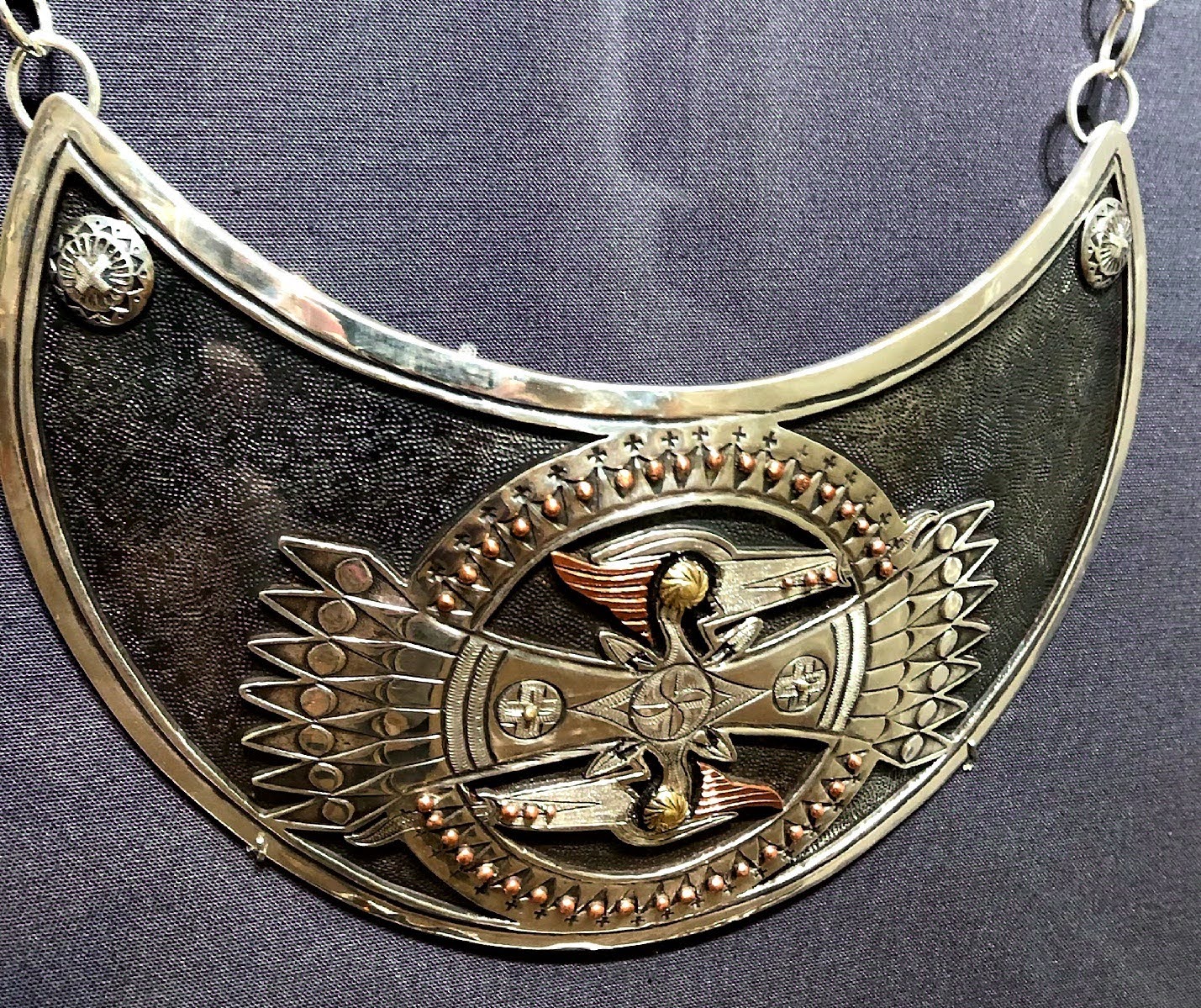
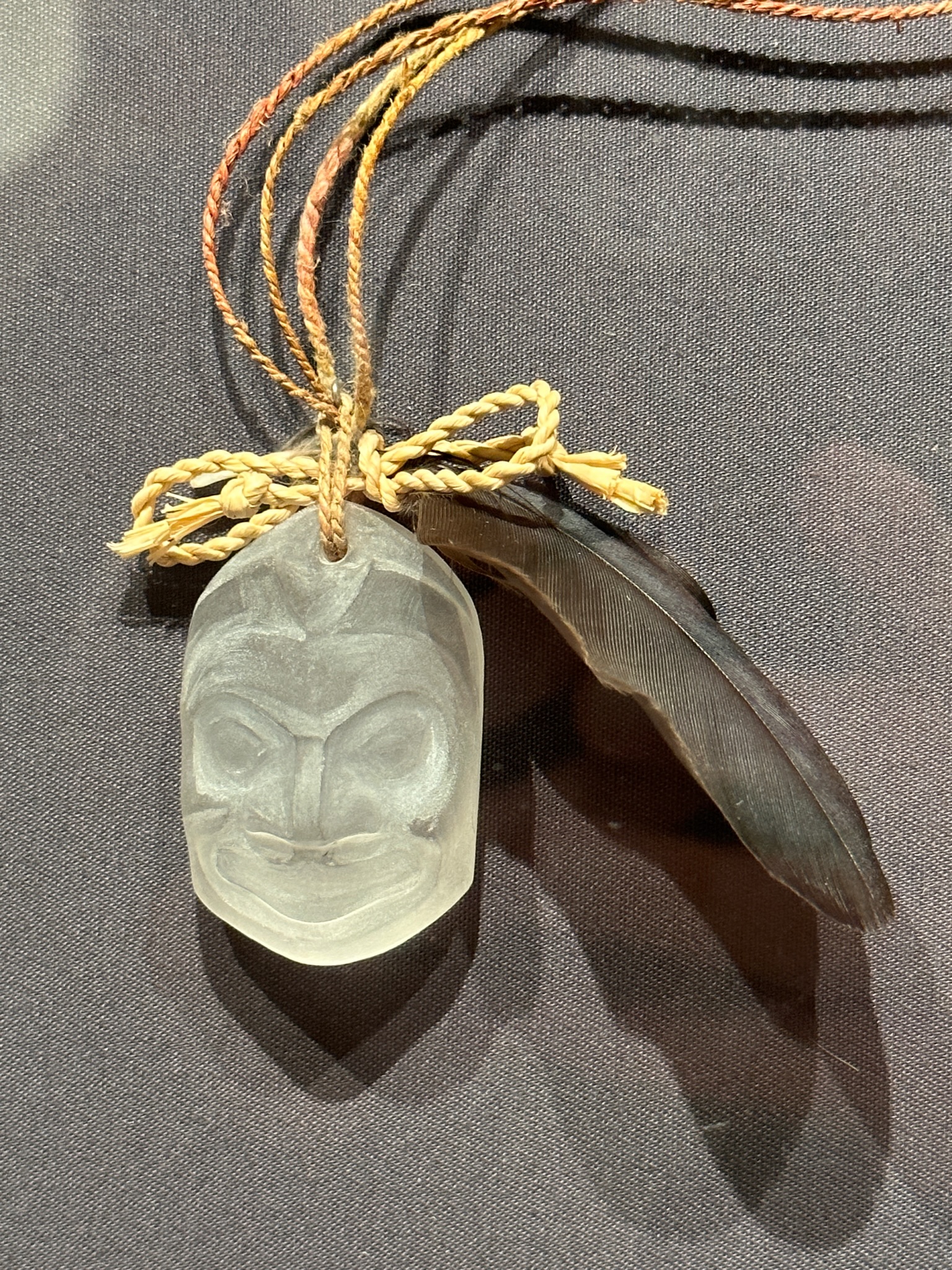
There was also an exhibit of beautiful dresses and disturbing collages by Jontay “Kahm” Kahmakoatayo just off the gift shop.
The New Mexico Museum of Art
It was a short walk to another museum with NARM privileges, the New Mexico Museum of Art. Before we delve into the exhibits, I will indulge in its architecture.
The Architecture
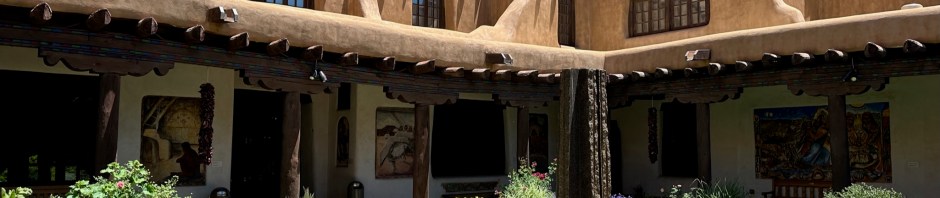
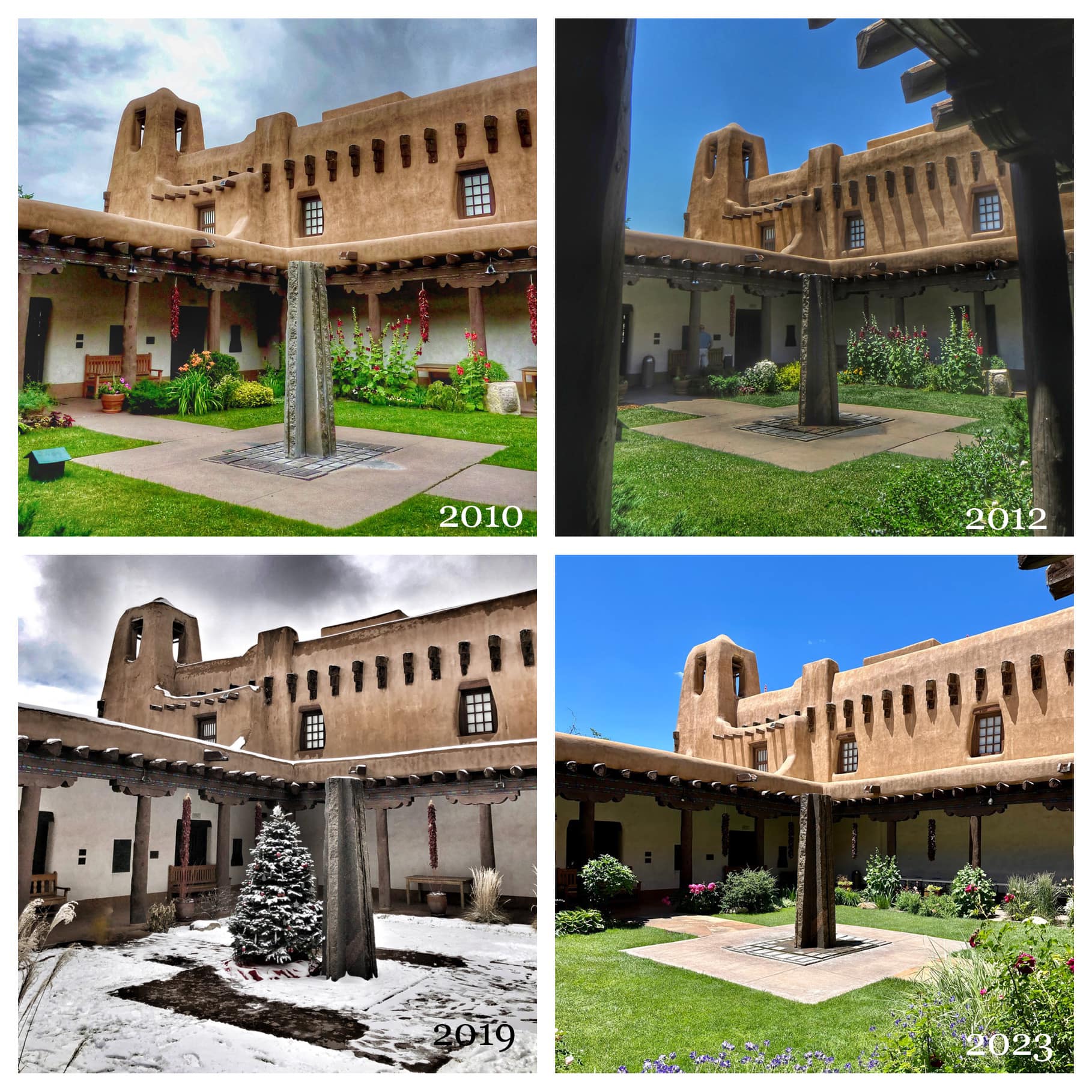
The museum was completed in 1917 in the Pueblo Revival style which was codified 40 years later as one of a few style options allowed in central Santa Fe. The architecture imitates the appearance of traditional adobe Pueblo architecture using rounded corners, irregular parapets, and thick, battered walls often stuccoed and painted in earth tones. The style includes projecting wooden roof beams called vigas, and curved and stylized beam supports called corbels.
Here is the same view of the courtyard from some of my visits over the years:
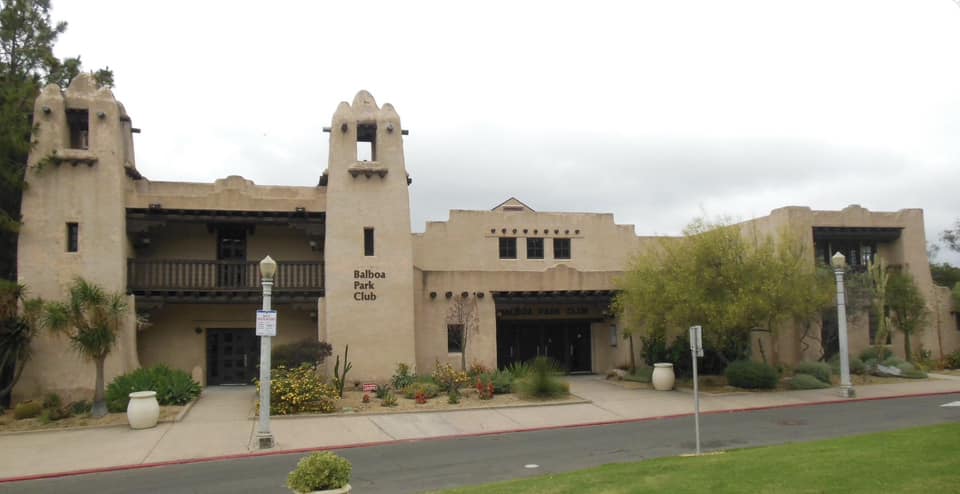
The museum was designed by architects Isaac Hamilton Rapp and William Morris Rapp as an enlarged and modified version of the New Mexico building they made for the 1915 Panama-California Exposition in San Diego, which still stands as the Balboa Park Club. They modeled the structure after the church and convent at Ácoma Pueblo.
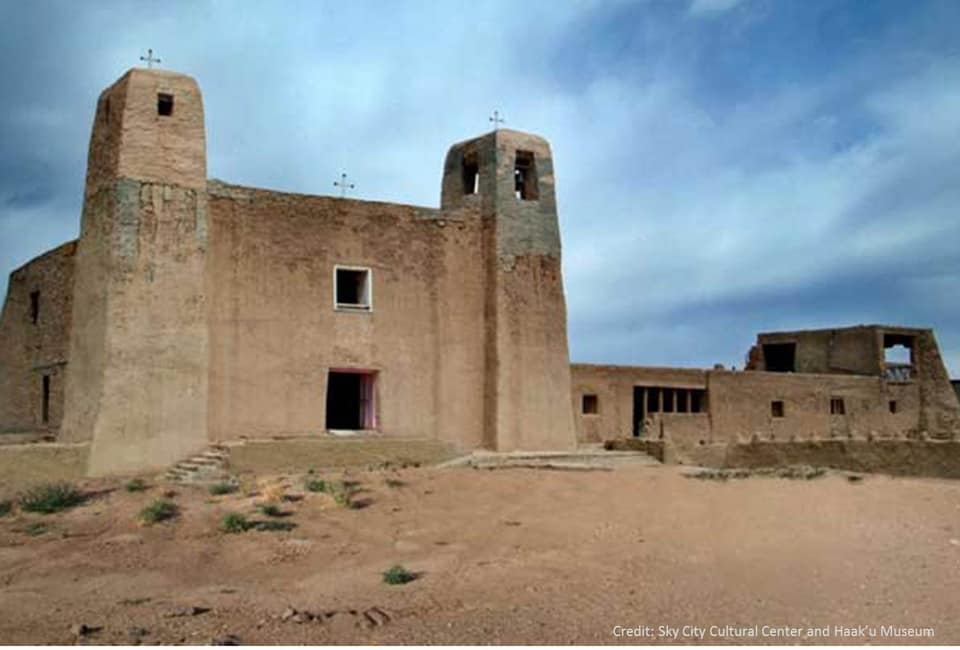
Mission San Estévan del Rey, constructed between 1629 and 1641 at the Ácoma Pueblo, is the oldest church of European construction remaining in New Mexico. It was founded by Franciscan Father Juan Ramirez in 1629. Ácoma was hostile to Spanish rule, and the inhabitants participated in the 1680 Great Pueblo Revolt. The building was repaired and restored in 1810, 1902, and 1924. Ácoma is a “living” pueblo and has been continuously occupied since the 12th century.
Isaac Hamilton Rapp went on to design the beautiful La Fonda Hotel off the plaza. Upon completion of the original incarnation of La Fonda in 1920, he promptly retired to Trinidad, Colorado, having lost his architectural partners to premature deaths. Rapp’s contributions to Santa Fe architecture precede that of well known southwestern architect John Gaw Meem, who arrived four years after Rapp’s retirement and became his major successor. Meem ensured that the regional Spanish Pueblo Style that Rapp helped to recapture became a norm in Santa Fe by 1957, as enforced by strict city ordinances.
In addition to the courtyard, we looked at the murals in the museum’s St. Francis auditorium, which looks like a church but is a secular gathering place.

The Art
You pass through the back of the auditorium to reach the exterior sculpture garden, where my favorite works were the large Native American by Glenna Goodacre and Martin Cary Horowitz’s immense Cherry Bomb.
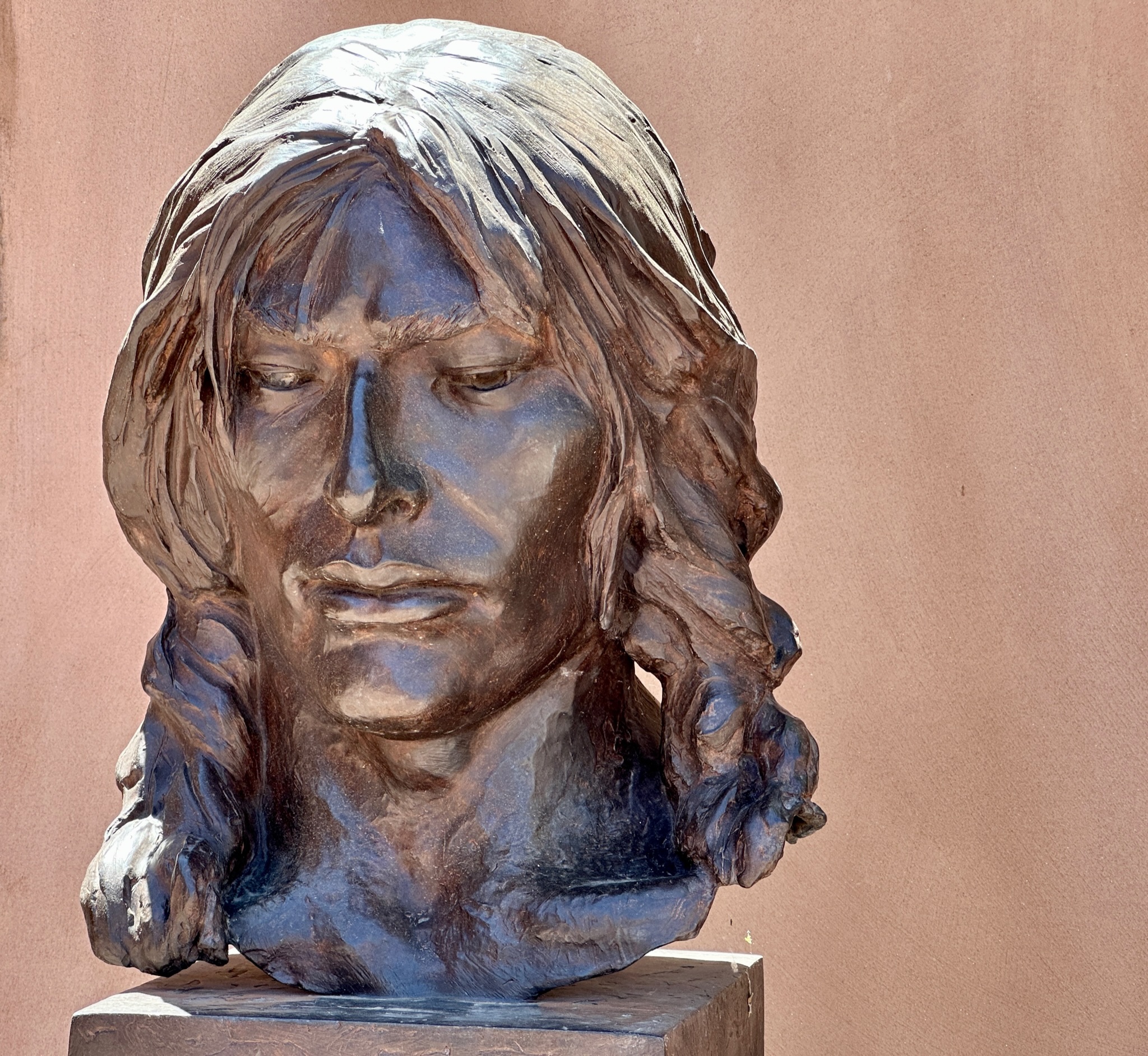
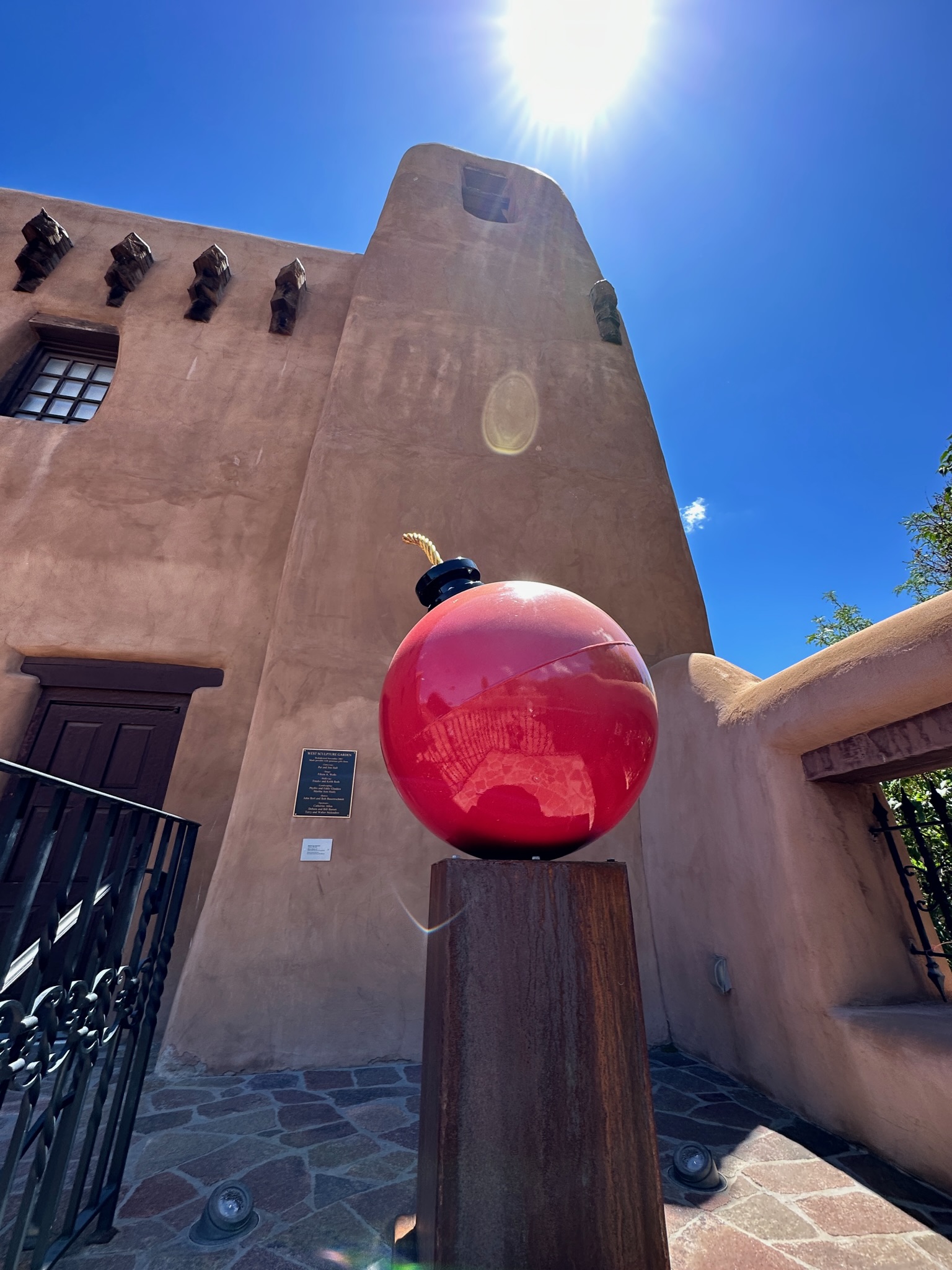
There was an exhibit of glasswork that included a self-portrait by Frederick Hammersley.

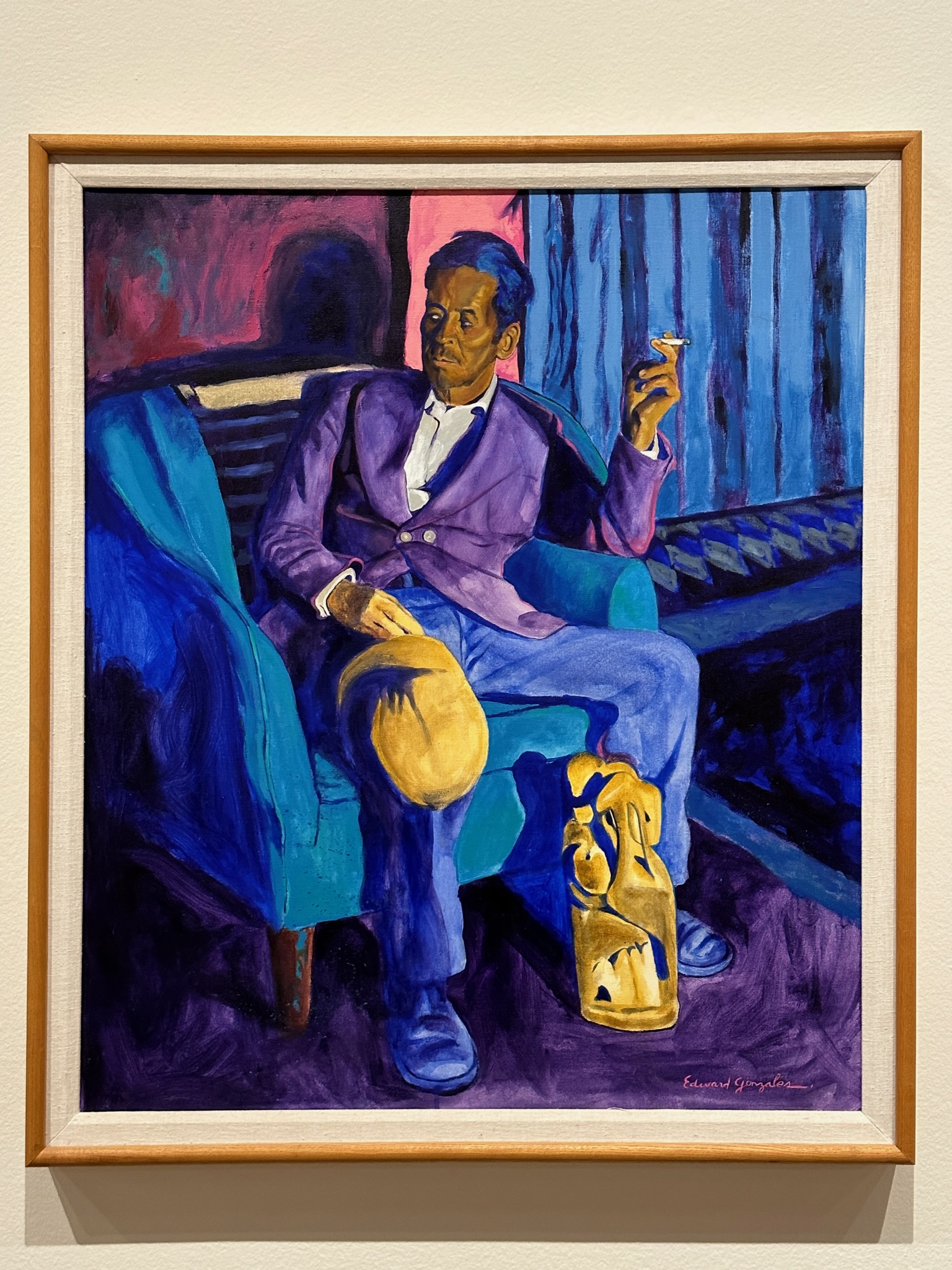
We lingered at a woodcarving exhibit. I liked how they displayed a work by Patrocino Barela, and included a painting of him by Edward Gonzales.
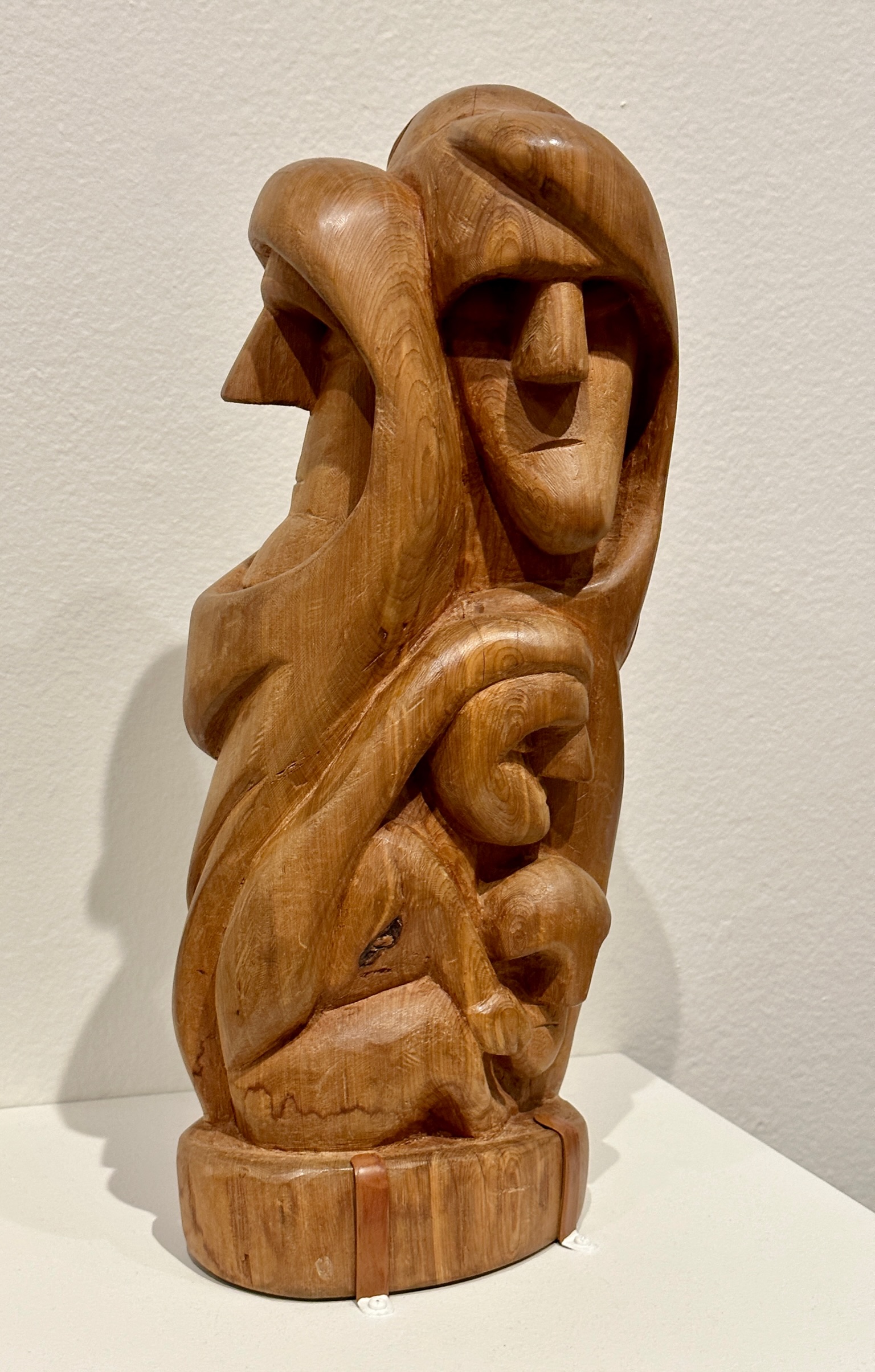
Wendy and I were impressed by the Chima Altar, Bertram’s Cruise by Luis Tapia. It was a dashboard altar inspired by his mother’s car.
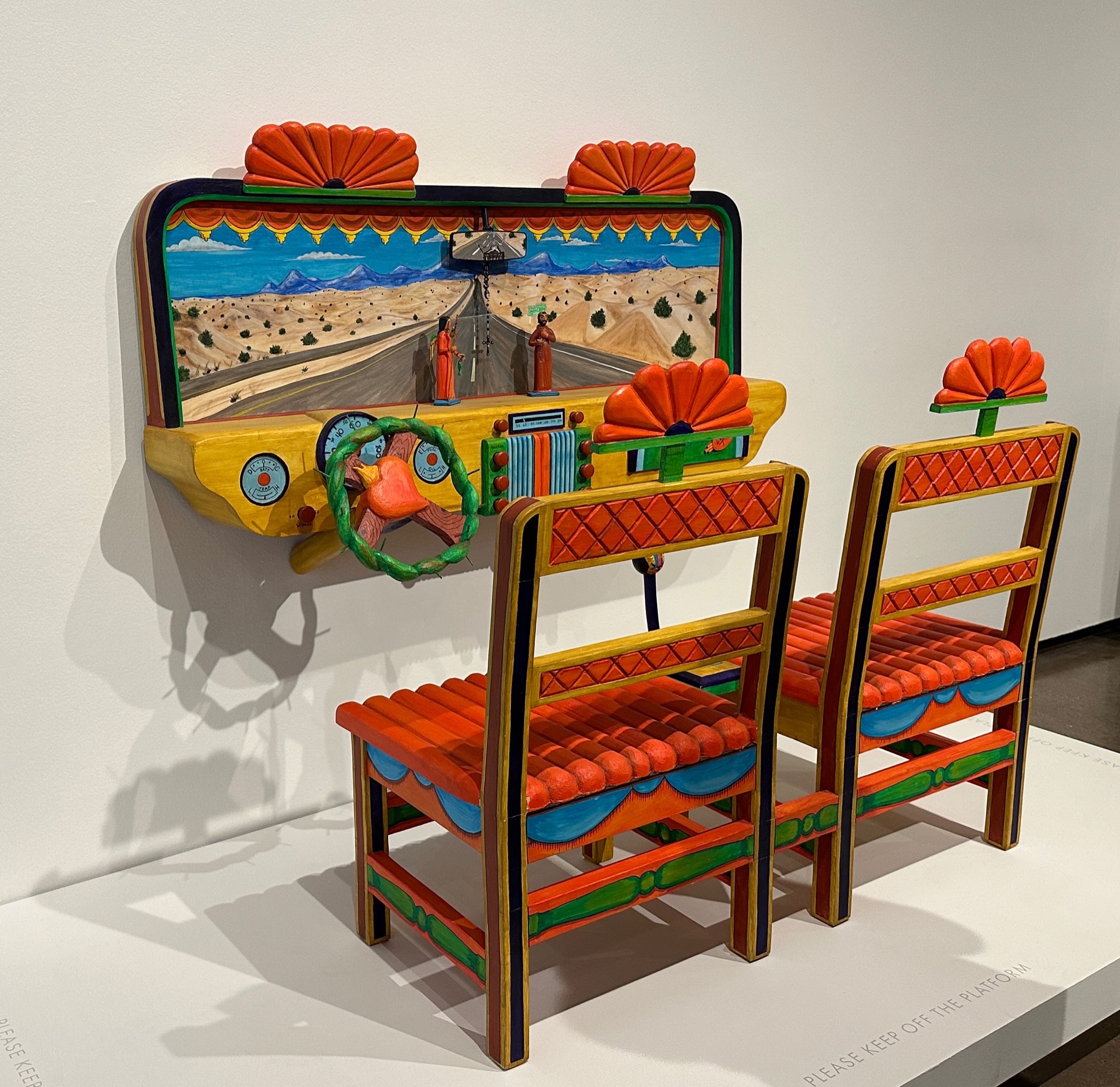
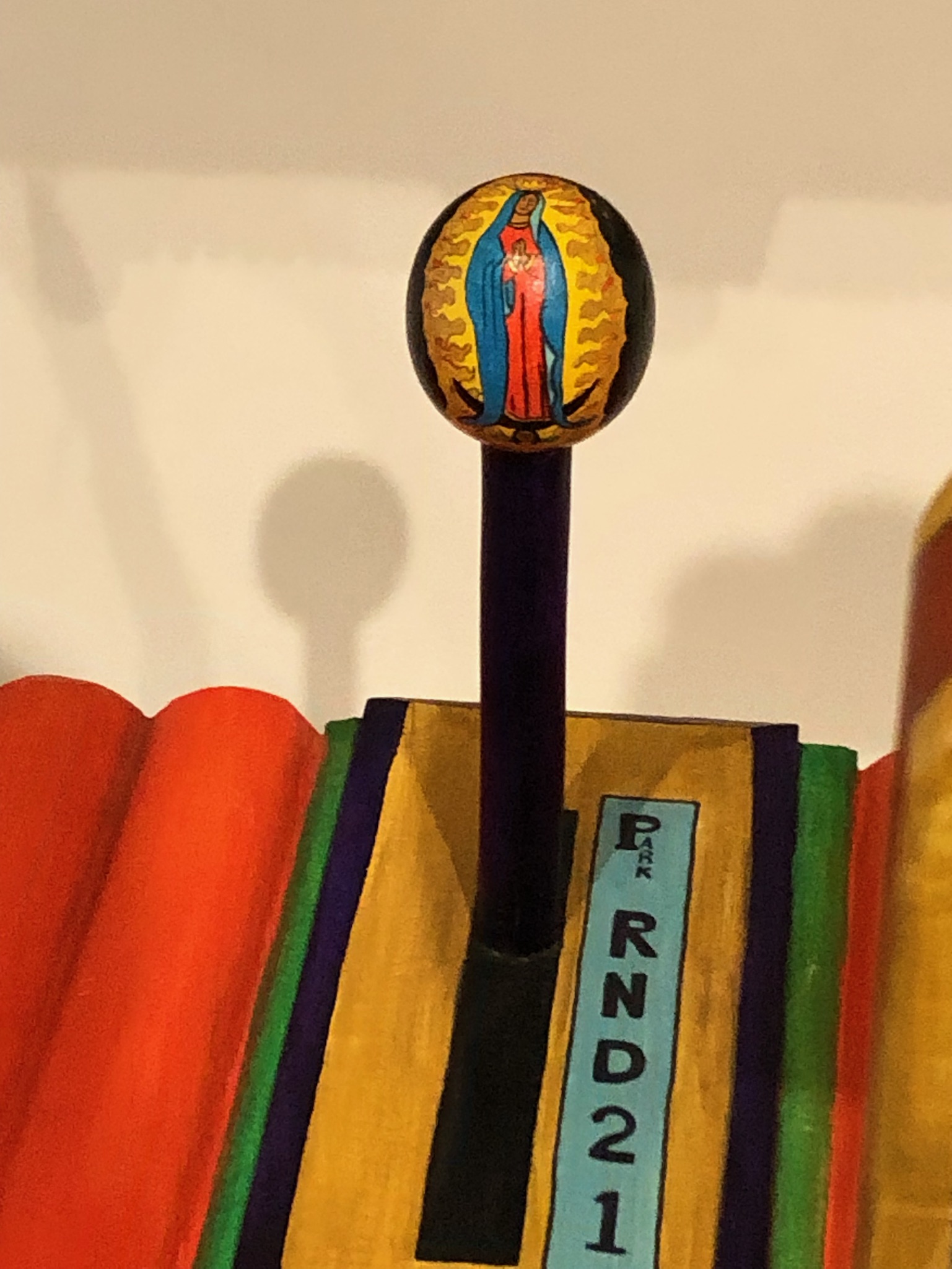
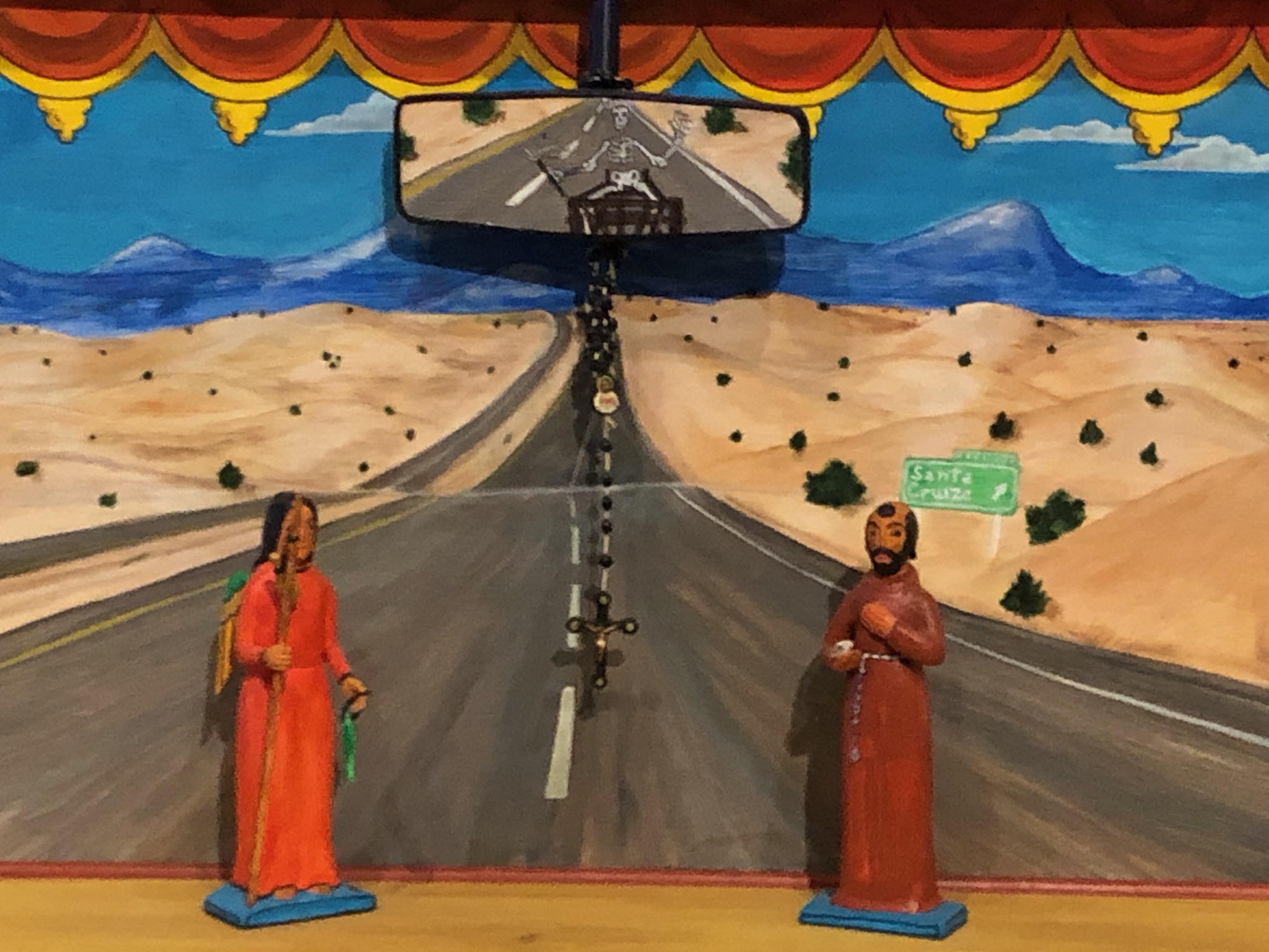
A death cart with the skeletal figure of Doña Sebastiana is visible in the rearview mirror.
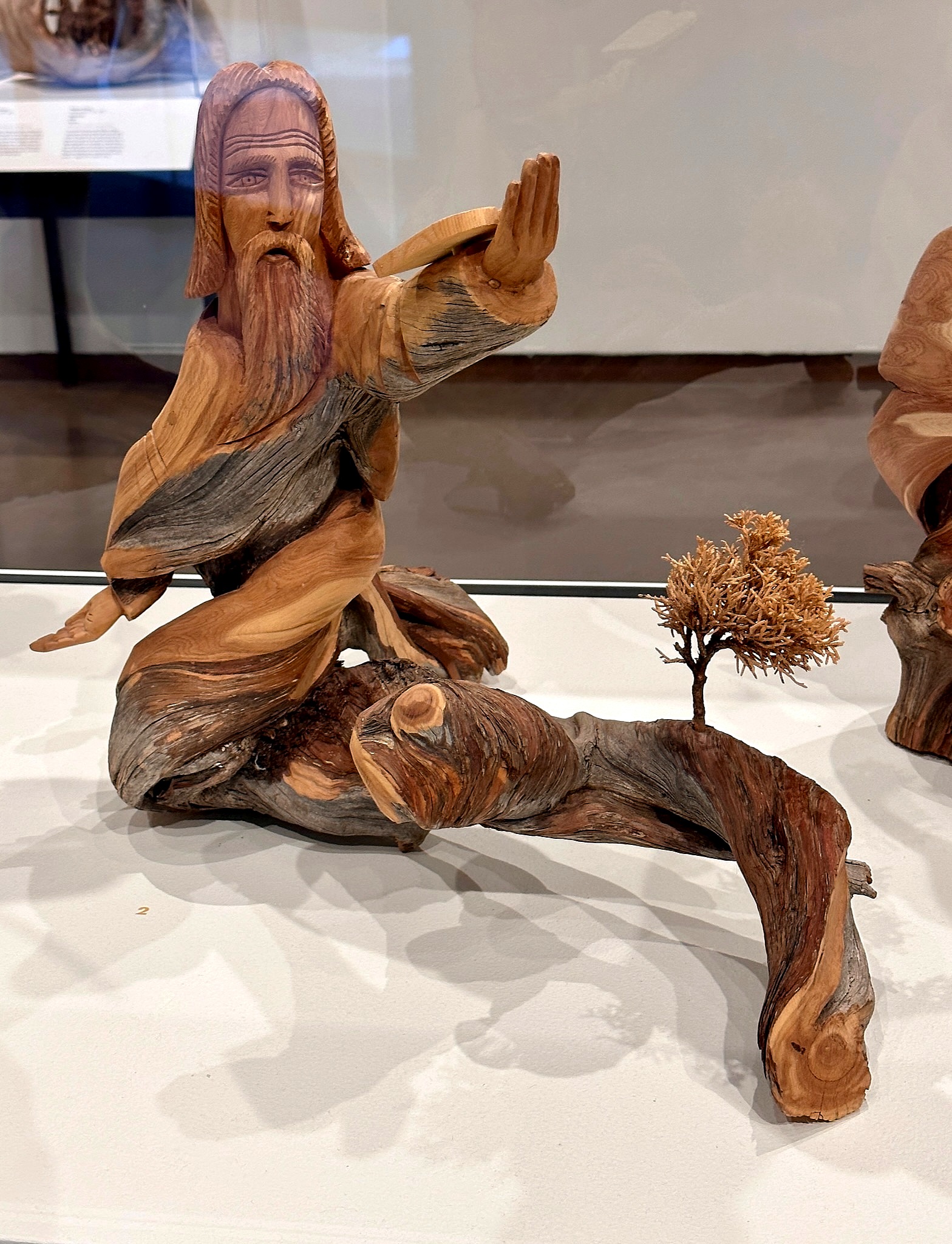
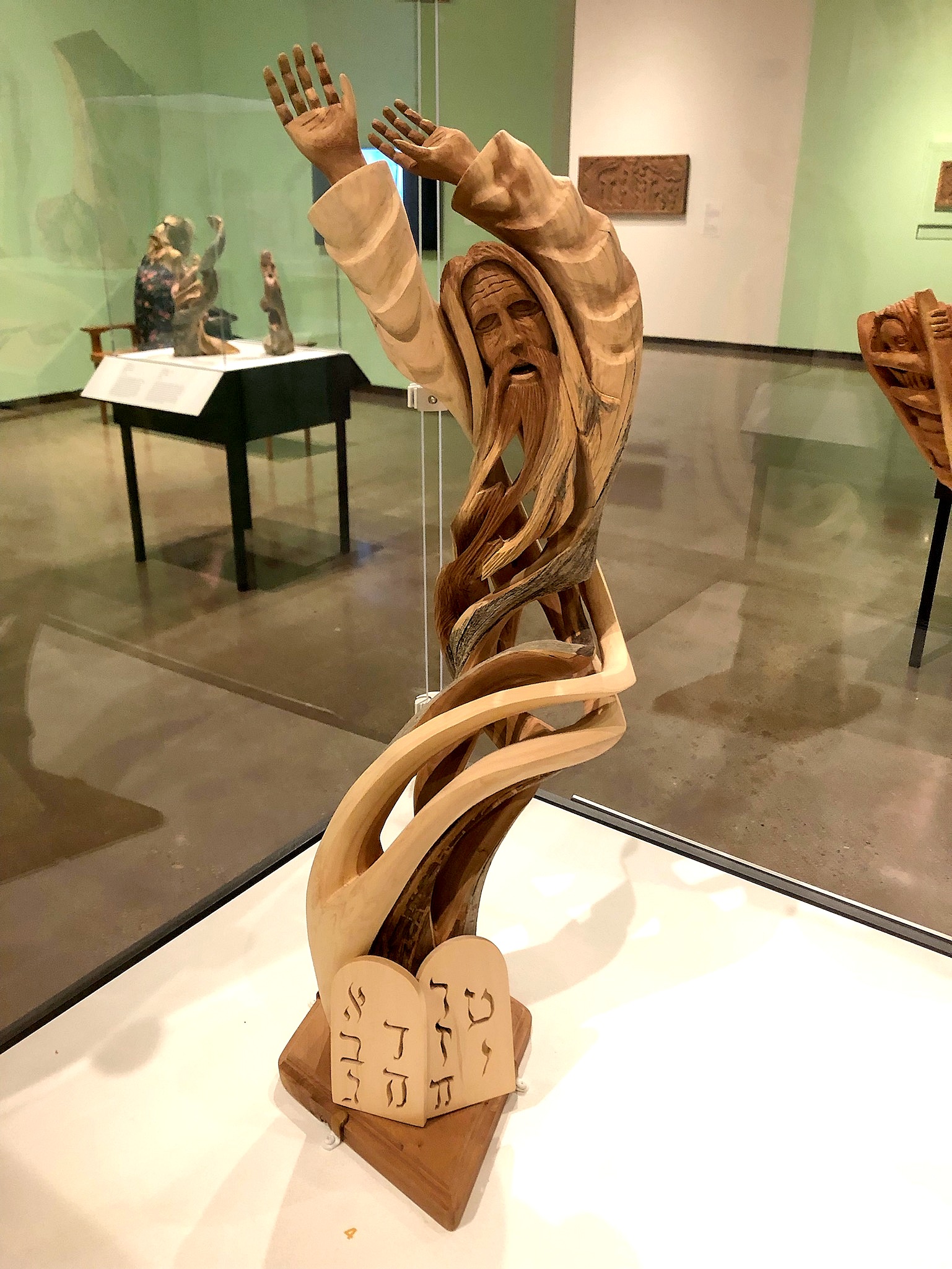
There were striking cedar carvings of Moses by Leonardo and Jacob Salazar.
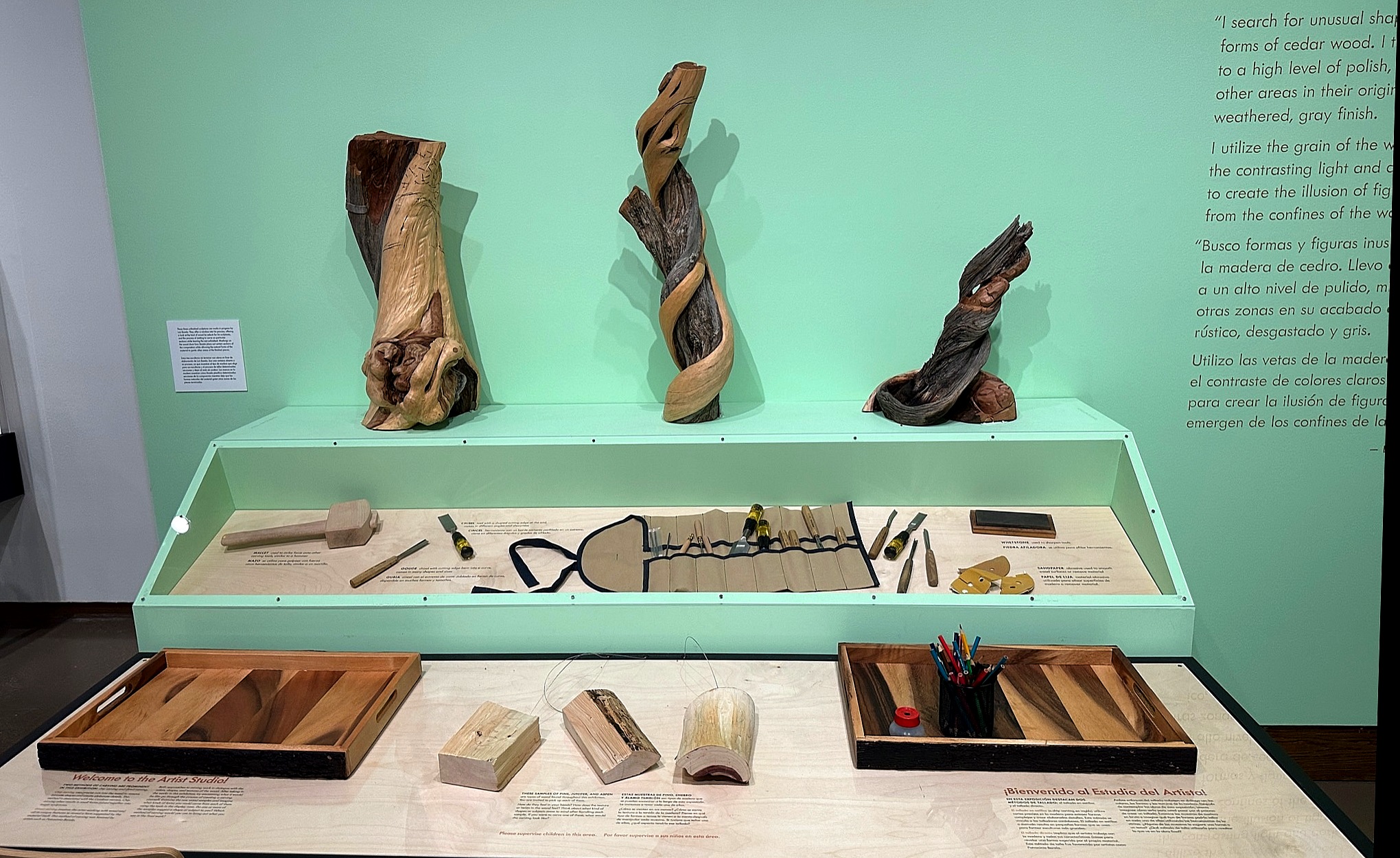
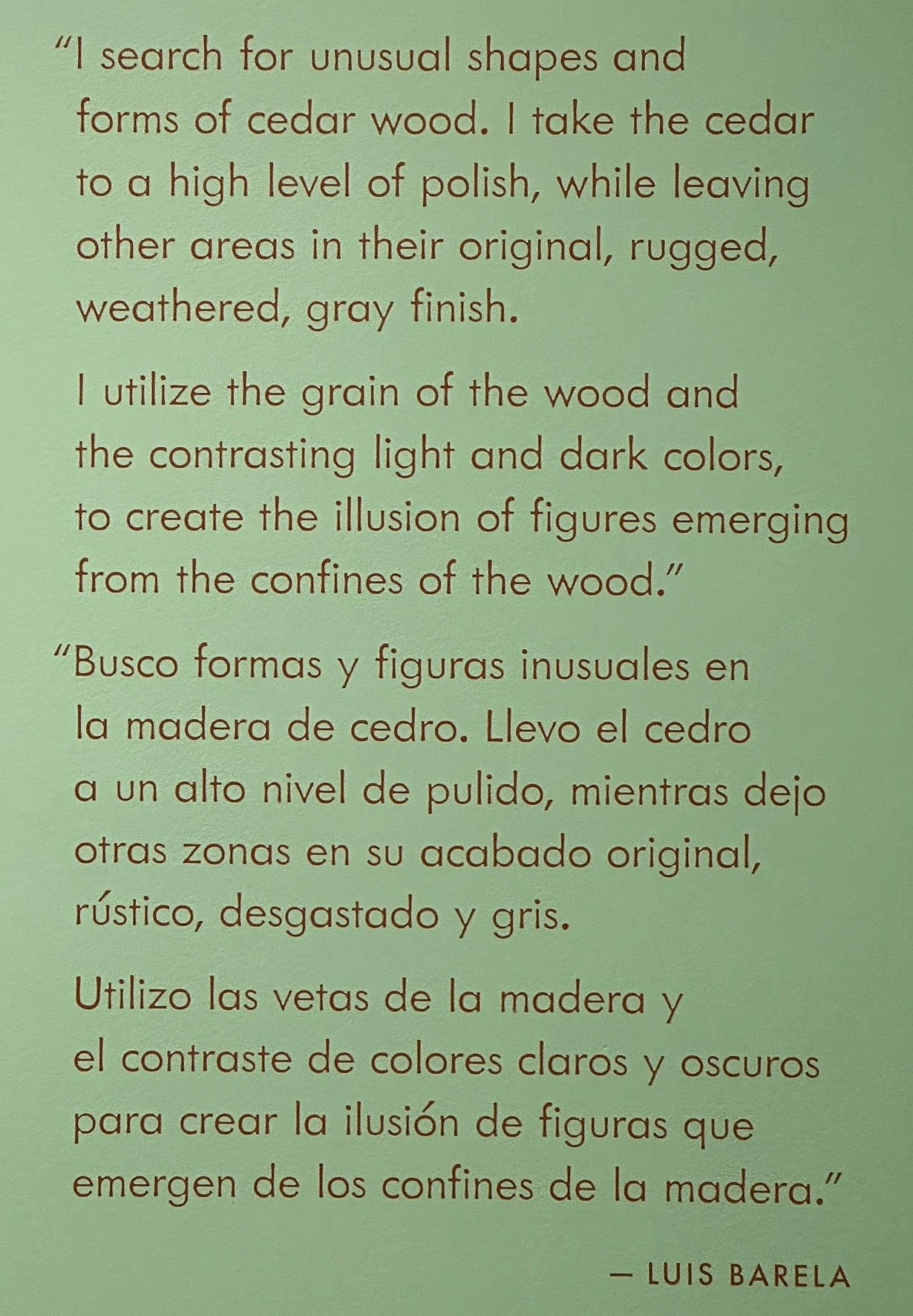
A display of the the tools of Luis Barela accompanied some of his works.
Wendy liked the Saint Francis of Assisi carvings in cedar and aspen by Gloria López Cordova.
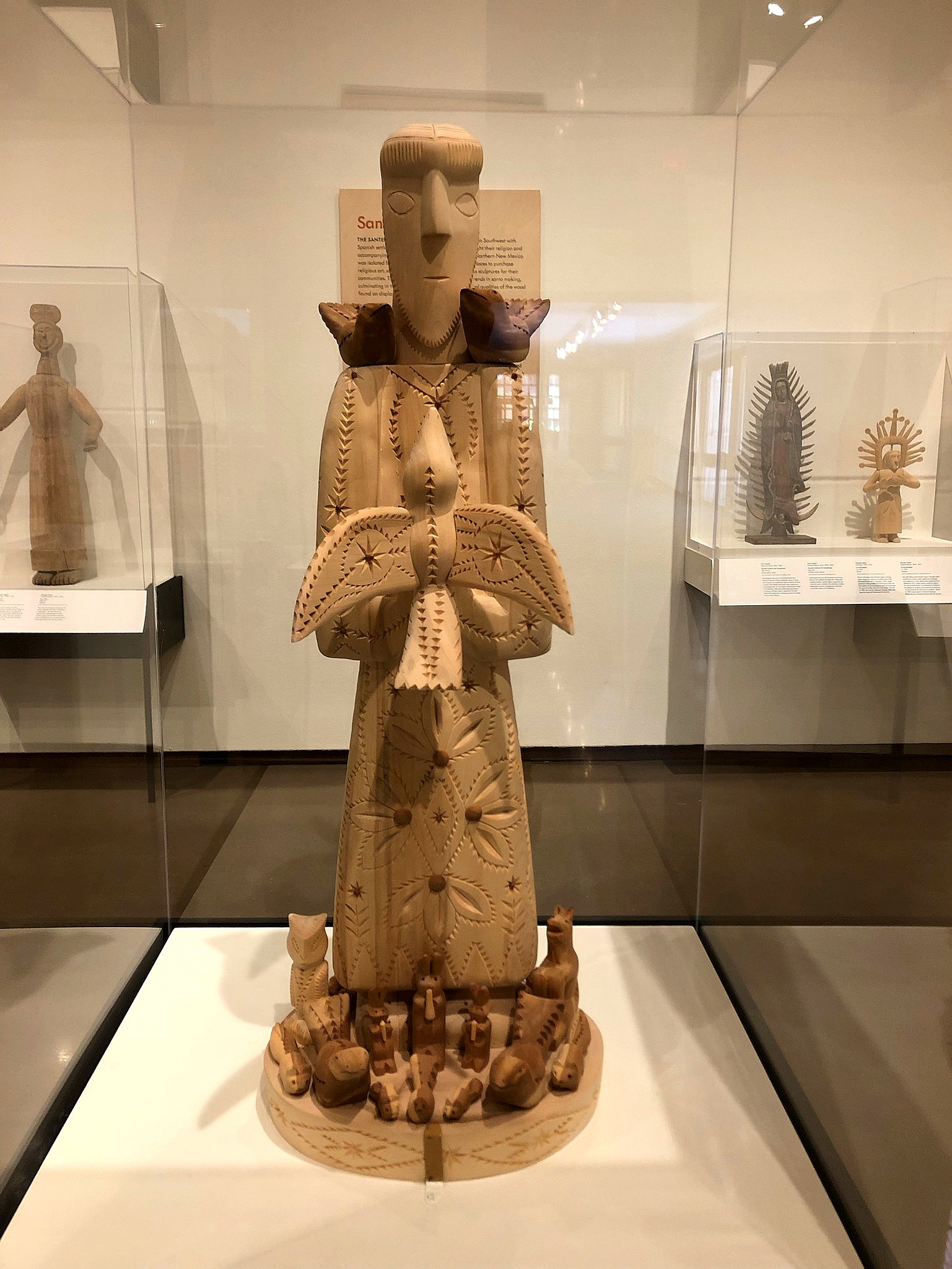
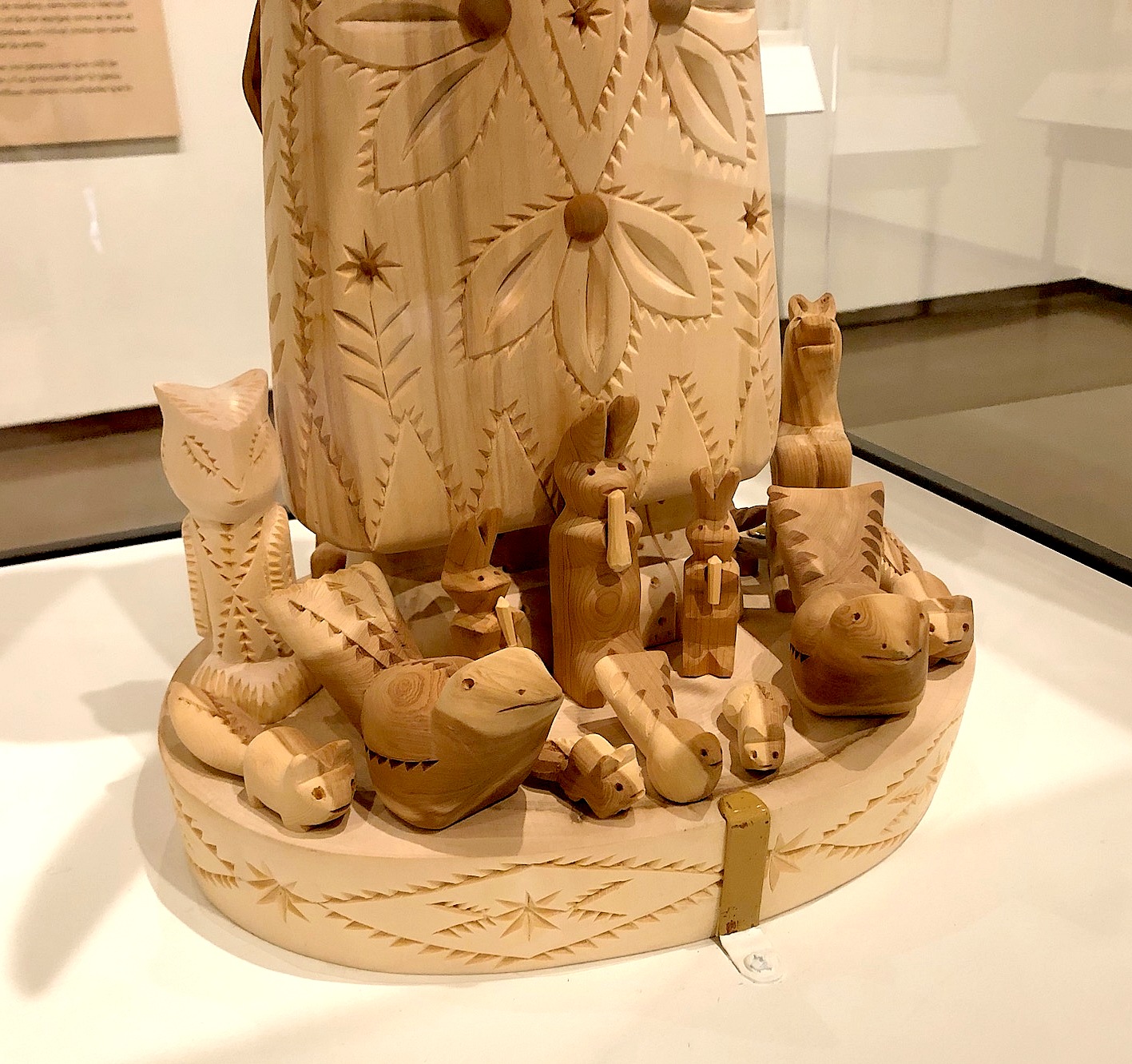
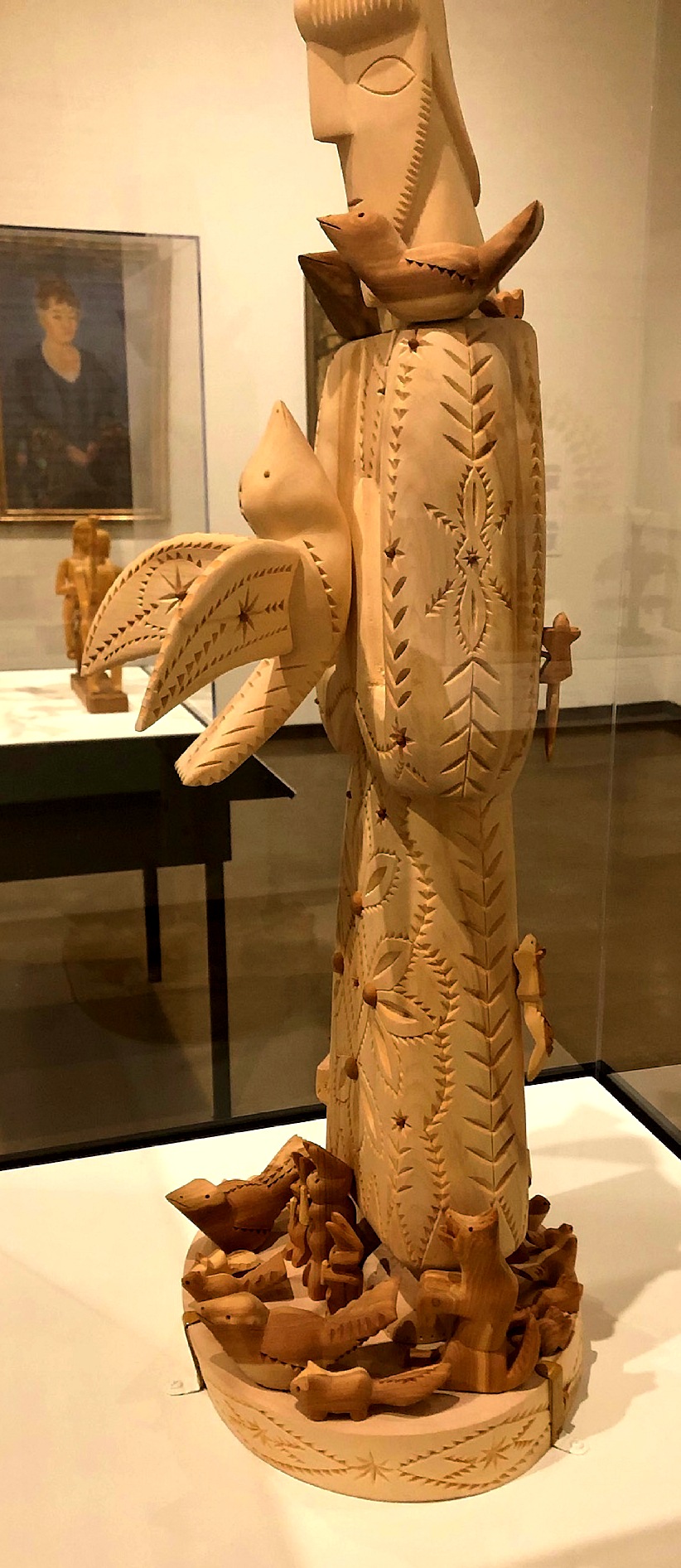
We had dinner at the Plaza Cafe’s south side location, dining on chicken fried steak and tacos. Wendy said their green chile was good.
Nedra Matteucci Galleries and Garden
I prefer museums over galleries, but I had read that the garden at the Nedra Matteucci gallery shouldn’t be missed. So the next day we took another 15-minute walk past the state capitol to its location south of the many galleries along Canyon Road.
Forrest Fenn, of treasure hunt fame, launched the gallery in 1972 and sold it to Matteucci in 1988. She reportedly sold it in 2022, saying it would become condominiums. But it was still open and operating for our visit, and the staff were welcoming and congenial.
The works were completely out of our price range, filling room after room of a rambling building. An example is that Henry C. Balink’s Sioux Chief – 1930s Pine Ridge Reservation was for sale at $125,000.

The sculpture garden was indeed impressive, with a large elephant statue, several different bear statues, and more scattered about the beautiful grounds. The property was a four-acre tract with an orchard and vegetable farm when Forrest Fenn acquired it over 50 years ago.

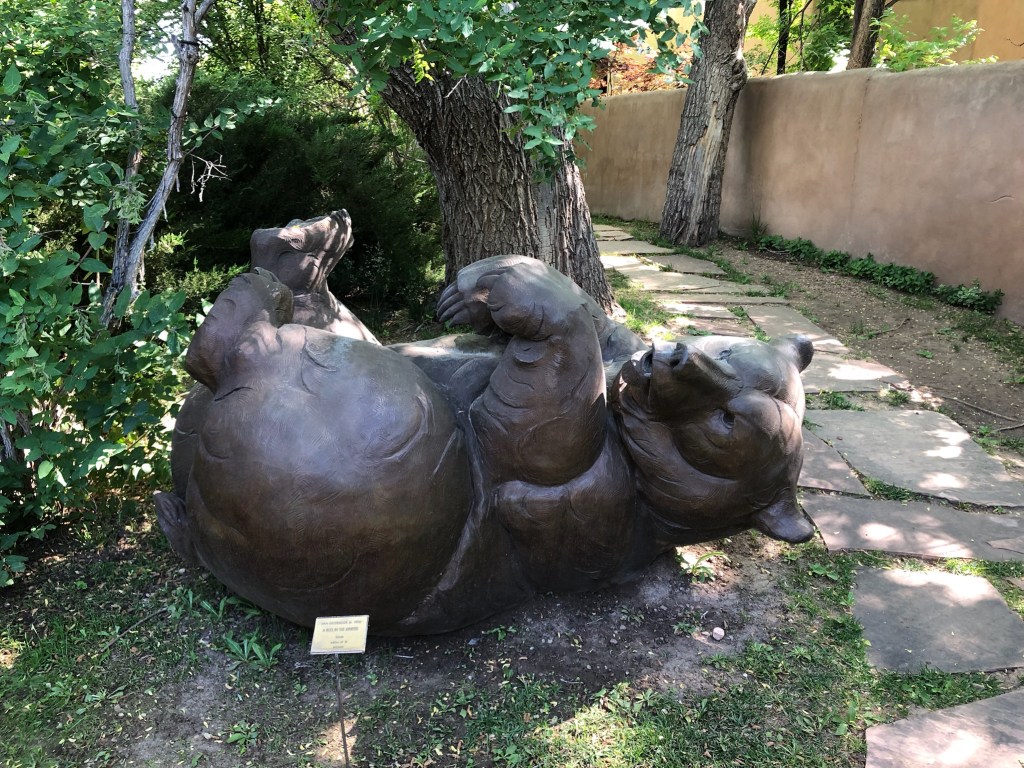
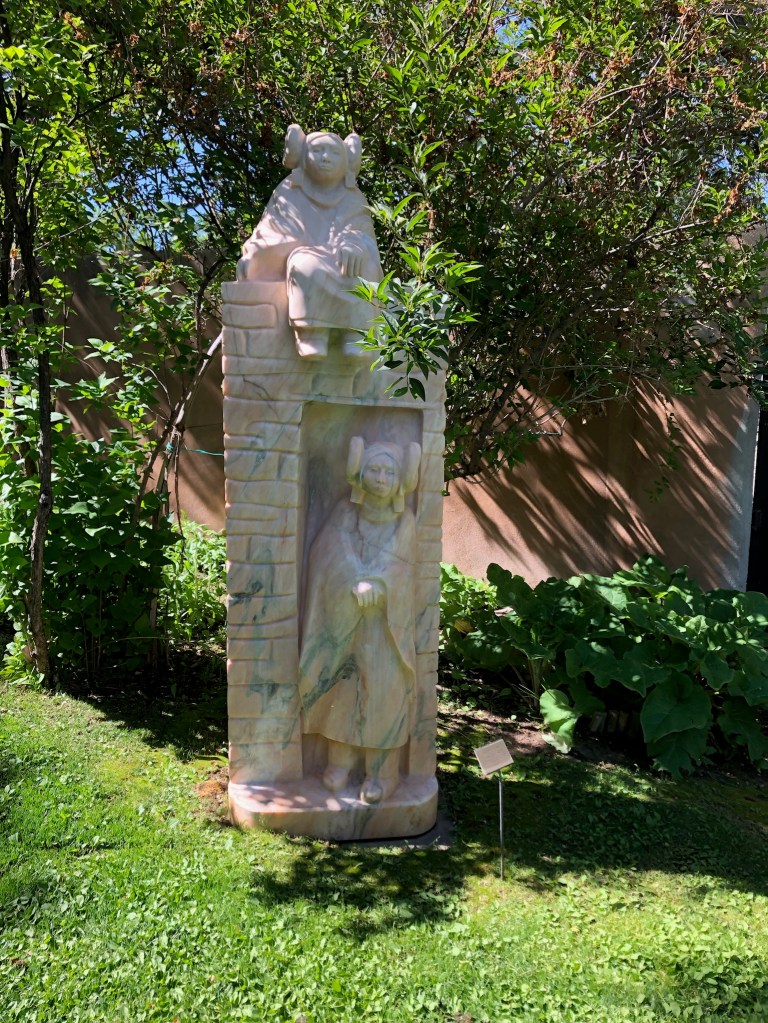
My favorite work was Ya Ta Hey by Glenna Goodacre. That is a Navajo greeting that literally means it is good.

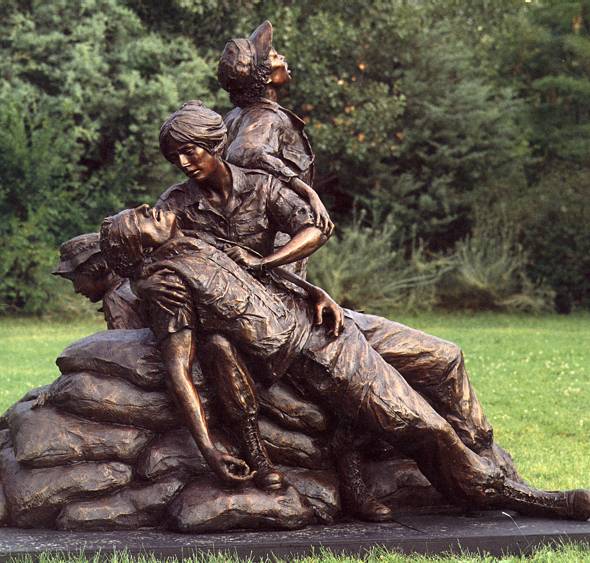
Since two of her pieces around town had arrested my attention, I looked up Glenna Goodacre. She passed in 2020 at age 80. Two of her most well-known works are the Vietnam Women’s Memorial in Washington, DC and the observe (heads) side of the Sacajawea dollar coin.

State Capitol
Wendy and I then walked back along the Paseo De Peralta past the 1966 state capitol roundhouse. We decided to see if there was art inside, and indeed there was, both near the rotunda and all along the corridors.
There was an interesting abstract piece by Margarete Bagshaw in a display area.

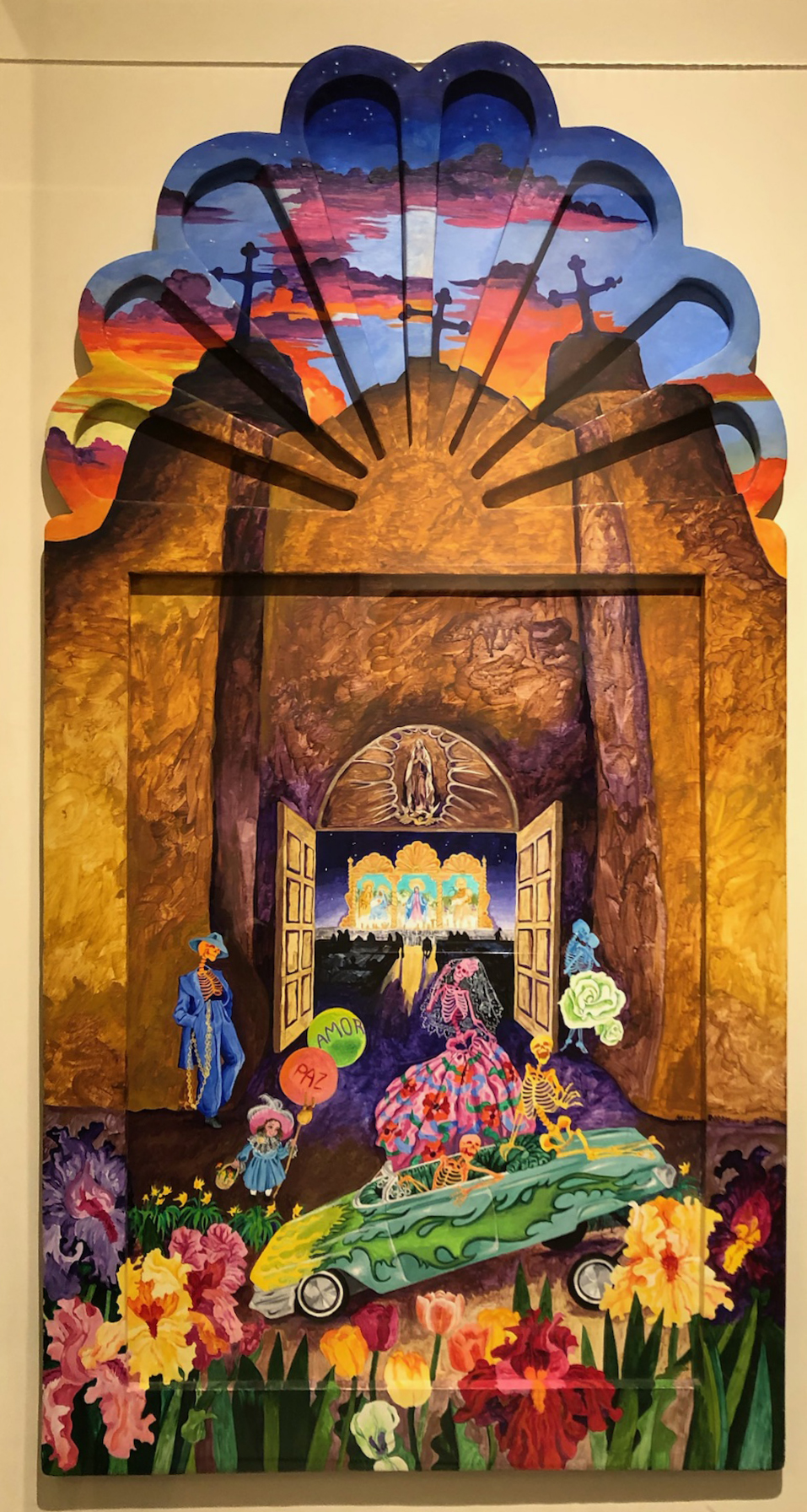
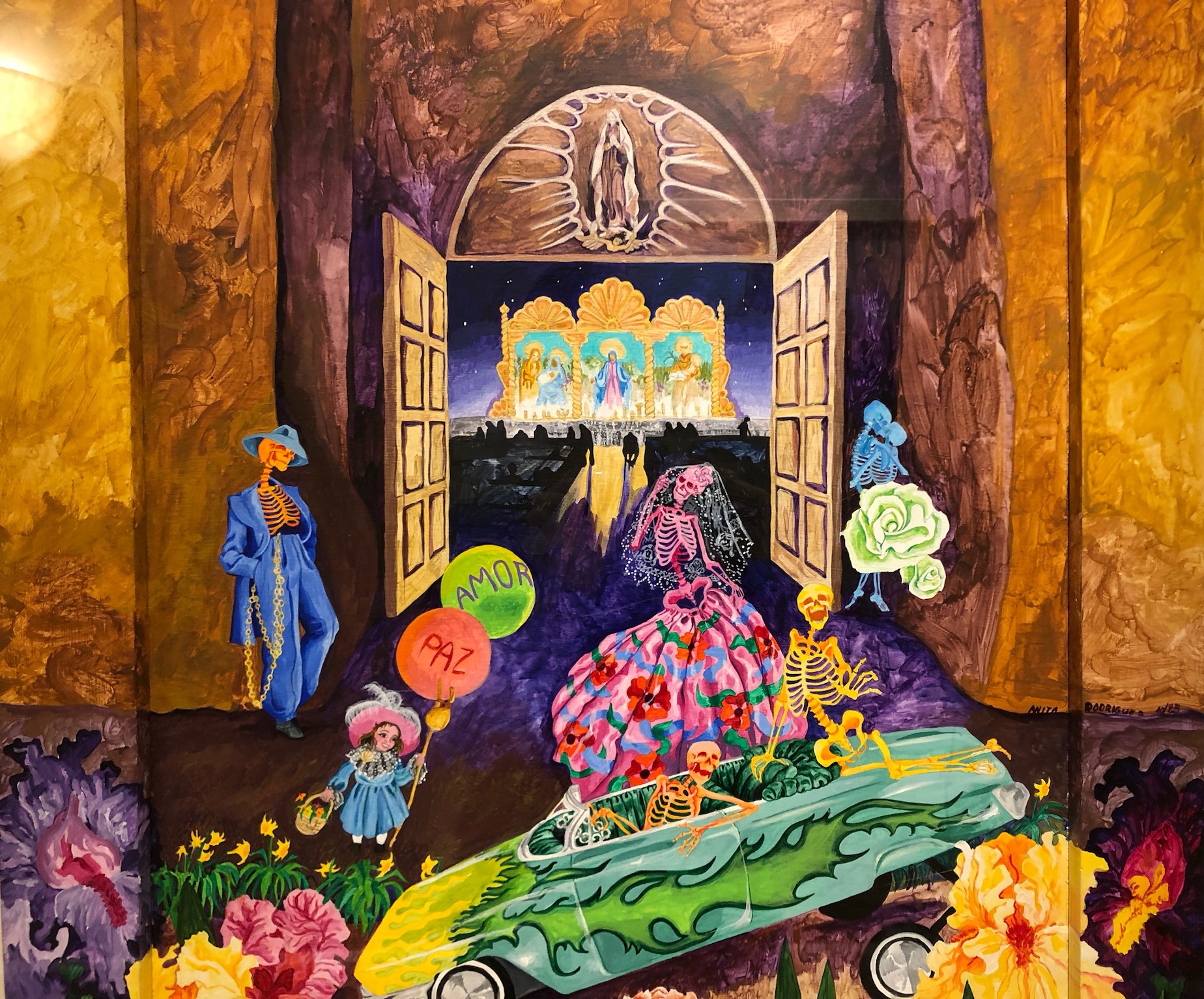
Along the first-floor corridor, Wendy liked My Lowrider Heaven by Anita Rodriguez.
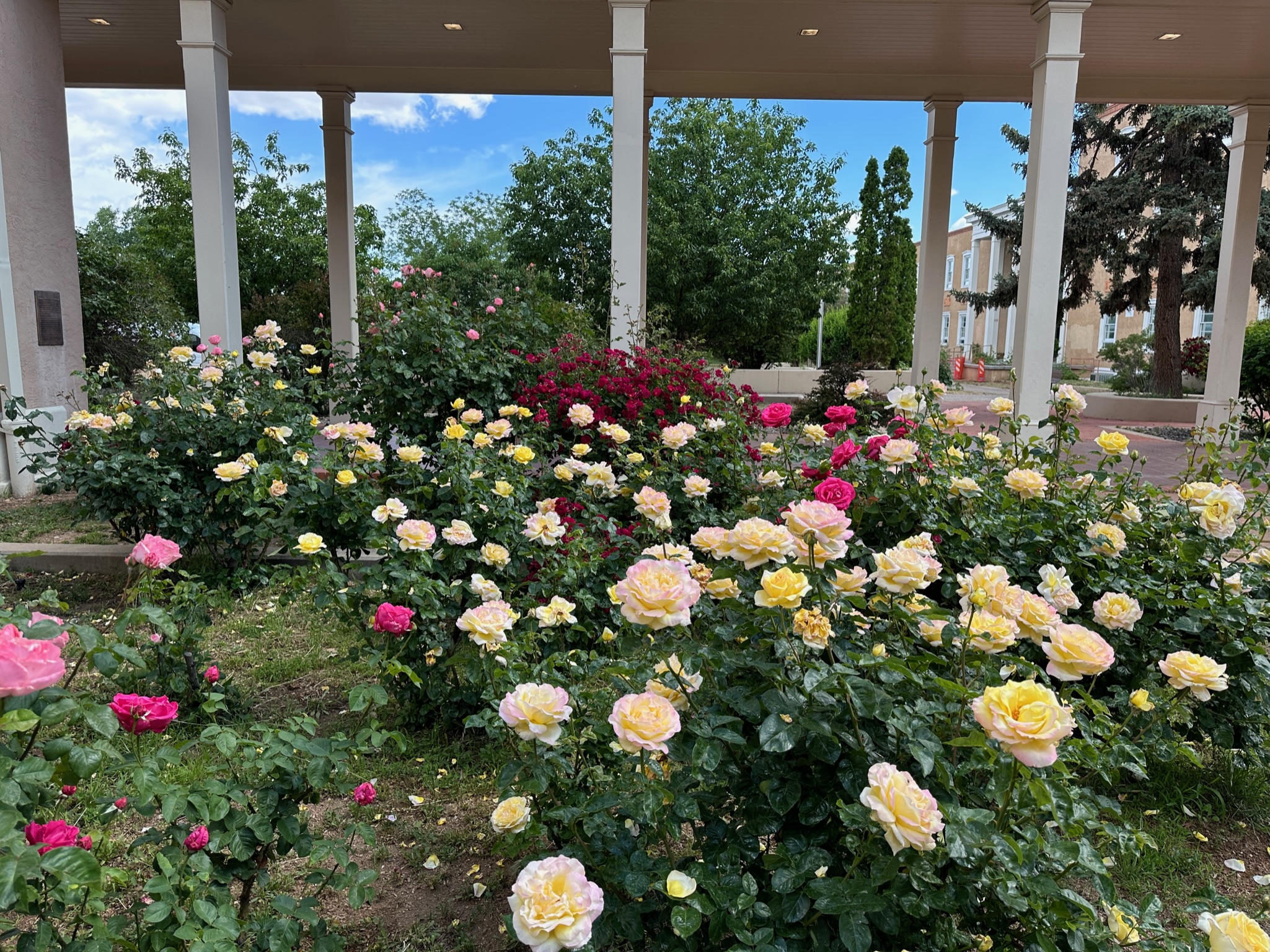
We made the round of the entire first floor, deciding to save the second floor for a future visit. Wendy remembered that a section of the capitol grounds has large rose bushes, and she requested that we go check them out. They did not disappoint.
Rail Yard
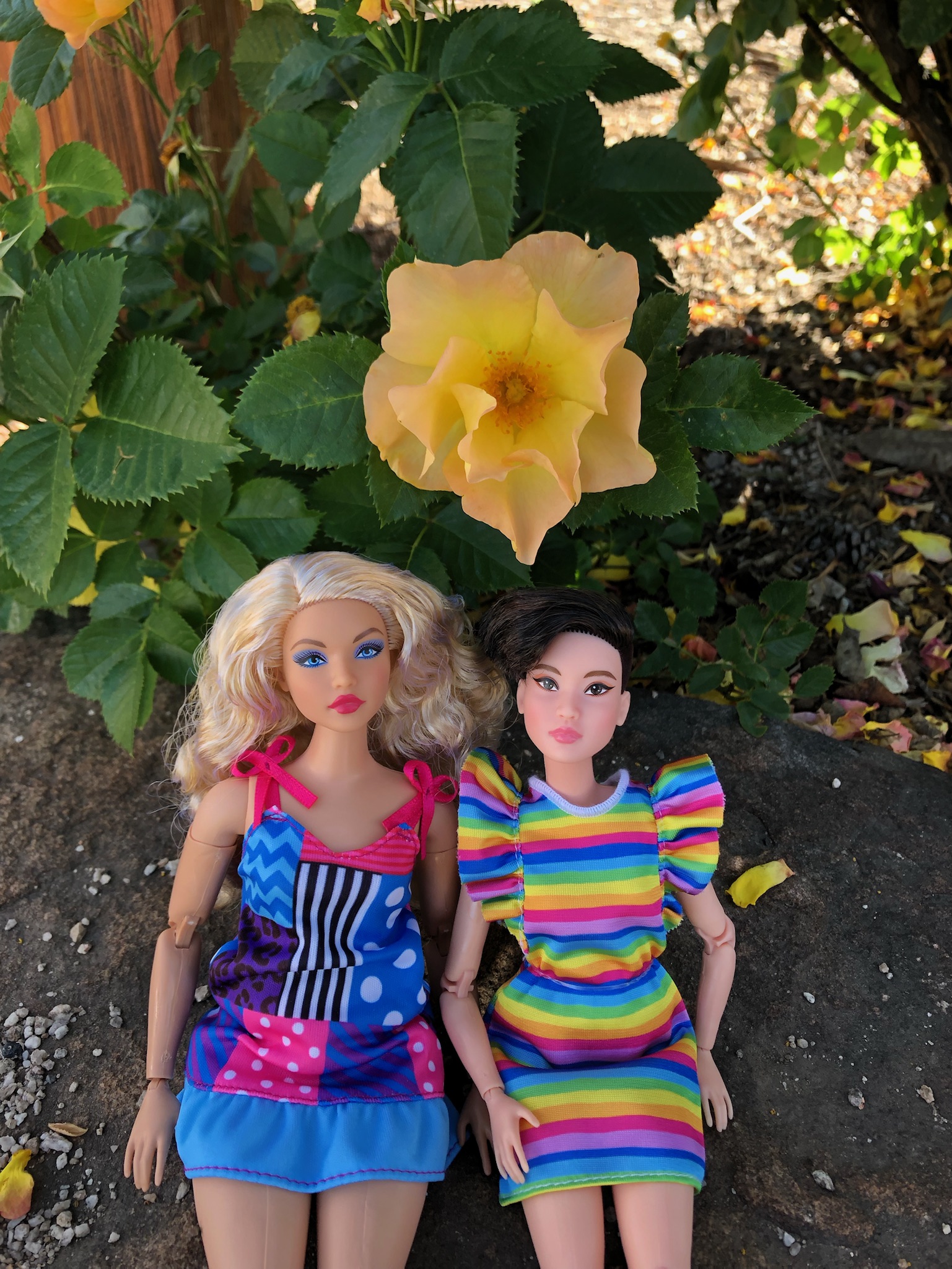
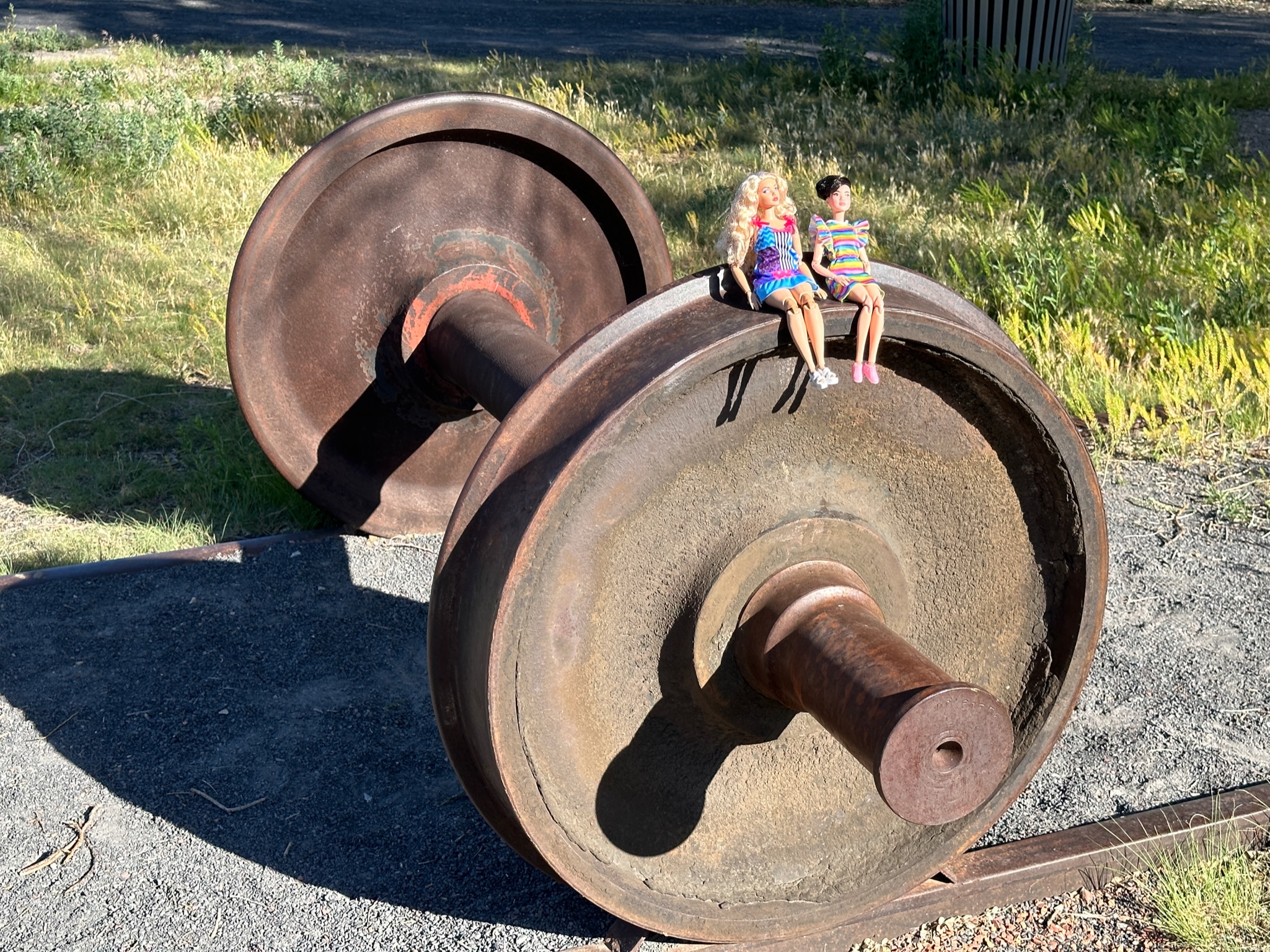
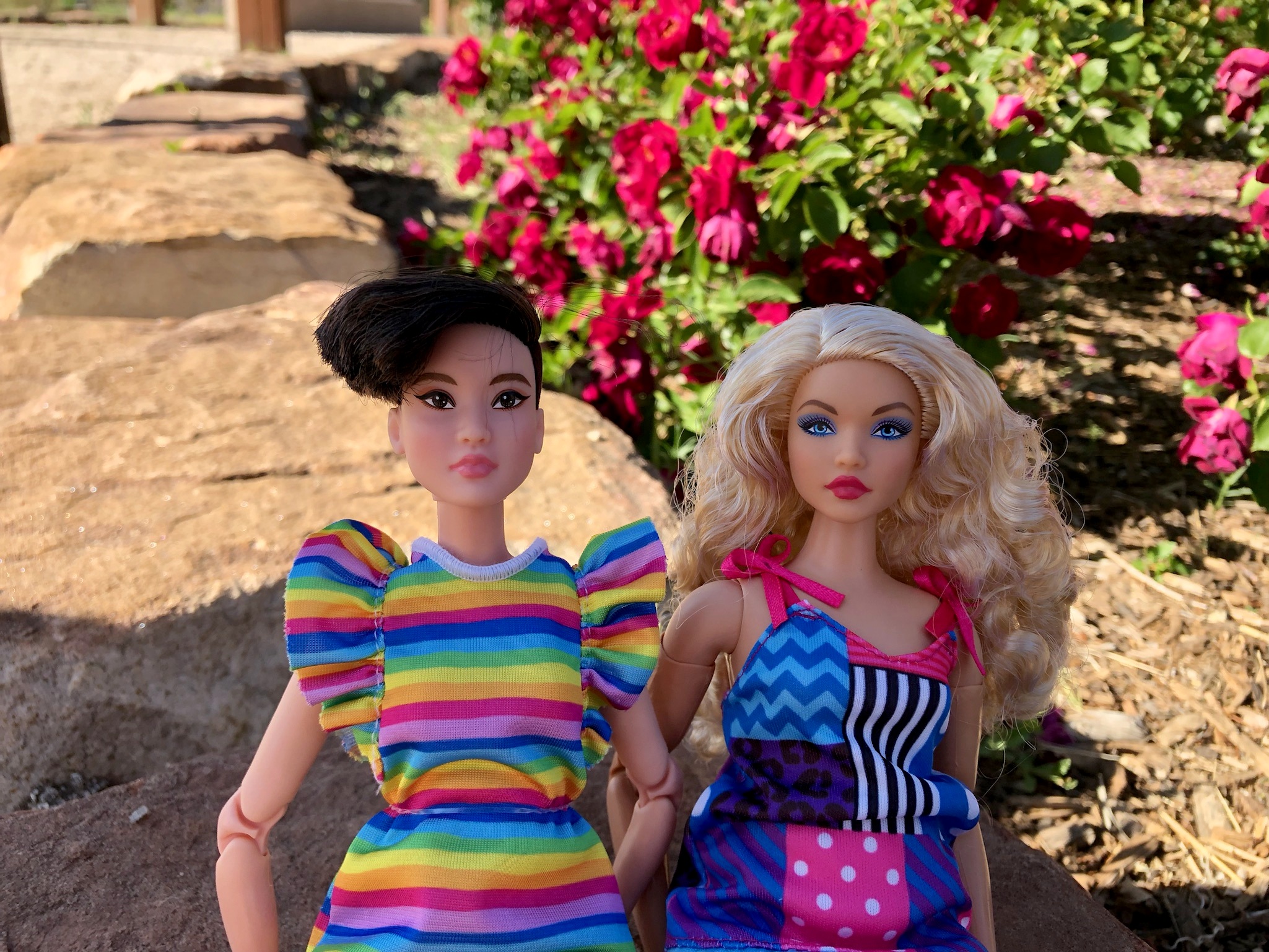
We made our way back to the casita, where we had Doordash bring us some Burrito Company food. Then we walked over to the Rail Yard Park, where Wendy’s Barbies posed by the plants, and on top of an axle and wheels.
I was surprised to see the Lost Saucer had crashed in the Rail Yard. I hope Fi and Fum are okay.

We wrapped up our day with Pizza Centro. On our last evening in Santa Fe, I noticed how the wooden latillas of the casita’s coyote fencing were silhouetted in one of the side windows.

The next day we would take the low road by the Rio Grande to Taos and then cross the Sangre De Cristo Mountains to Trinidad, Colorado.
Photo Album | Next Stop: Trinidad | Previous Stop: Amarillo




 Meador Manor
Wow, thank you for introducing me to David Bradley’s art. Ann C.