August 2023

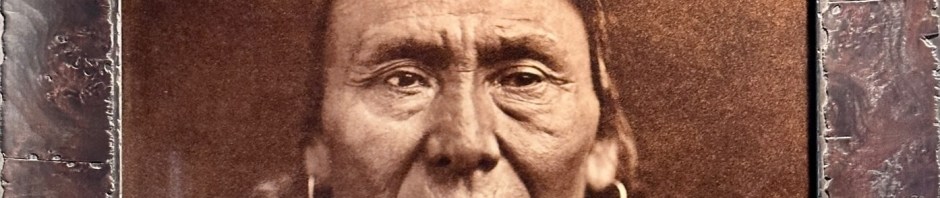
Earlier this summer, Wendy and I were in Trinidad, Colorado at the A.R. Mitchell Museum of Western Art. There was an exhibit of photographs by Edward Curtis, and I wasn’t at all surprised to see a print of a photograph he took in 1903 — of a man who would be dead within a year.
Seeing that famous portrait of Chief Joseph of the Nez Perce took me back almost 50 years to my elementary school days. And that journey in the mind not only led me to consider the Nez Perce War, but the Culture Wars of today.

I was in 4th or 5th grade at Putnam City Central Intermediate in Warr Acres, one of many Oklahoma City suburbs. Each student was assigned a different First Peoples tribe we were to research and present about. I was dissatisfied with what little the school’s library had on the Nez Perce. Being a precocious student, my teacher made a special arrangement for me.
The PC Central campus stretched for 4/10 of a mile along US 66 with multiple district administration buildings scattered about its perimeter. I was told to go west a few blocks and across a back street to an anonymous wooden building. It was the home of the district’s “Indian Education” program, and they had a far more extensive and advanced collection I was allowed to search through on multiple visits. I remember climbing up on a chair to retrieve heavy volumes and loading and watching filmstrips as I tried to grasp the tribe’s tragic history.
The Nez Perce War
What I found made a lifelong impression on me about betrayal, adversity, leadership, and fortitude. And now, almost five decades later, I can simply use Wikipedia, with some cross-checking on its accuracy, to share the story again.
Lewis & Clark Encounter the Nez Perce
At the time of the Lewis and Clark expedition, the nimíipuu, whom French fur traders called the Nez Percé, or pierced nose, had more than 70 permanent villages, of 30 to 200 individuals each, across parts of present-day Washington, Oregon, Montana, and Idaho. The tribe fed the explorers and gave them fresh horses, with Lewis and Clark entrusting their worn horses to the Nez Perce to be fattened up while they ventured onward.
When the Corps of Discovery returned the following spring, again hungry and exhausted, the tribe constructed a large tent for the explorers and again fed them. The explorers desired fresh red meat and offered an exchange for a Nez Perce horse. The Chief was offended at the idea of an exchange, saying his people had plenty of young horses and if the explorers wanted to use that food, they could have as many as they wanted. The party stayed with the tribe for a month before moving on with their recovered original horses.
Eighty years later, the tribe’s relations with whites were quite different.
Reductions and Betrayals
We took away their country and their means of support, broke up their mode of living, their habits of life, introduced disease and decay among them and it was for this and against this they made war. Could anyone expect less?
General Sheridan
In 1855, the federal government forced the Nez Perce to accept a reservation that was about half of their indigenous territory. The 1855 reservation is in green in the map below.
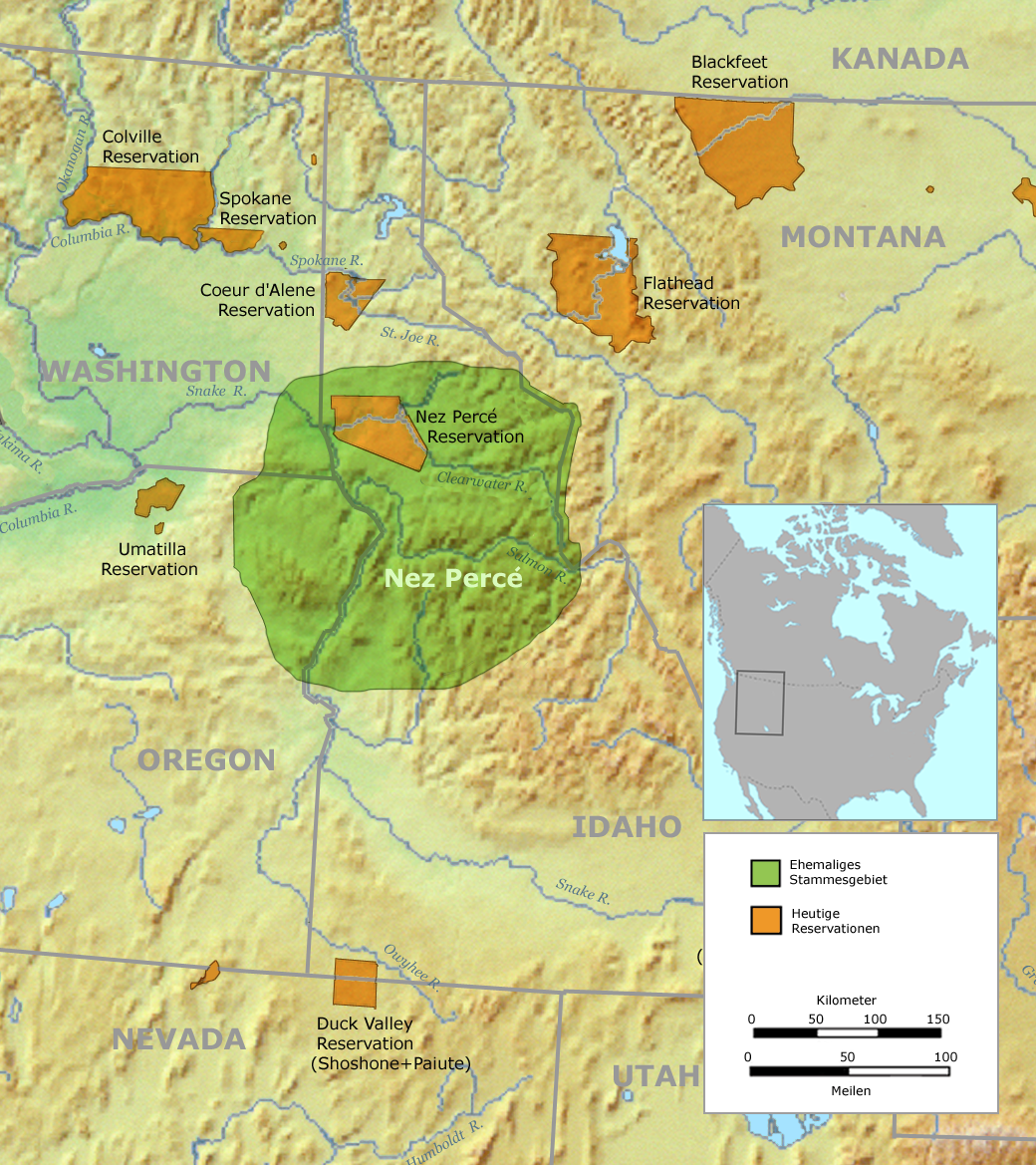
No white settlers were to be allowed on the reservation without the tribe’s permission. But in 1860 gold was discovered in Idaho and 5,000 gold-seekers rushed onto the reservation. They illegally founded a city on the tribe’s land, and ranchers and farmers followed the miners. The settlers plowed the prairies the tribe depended on for subsistence. The government did not honor the treaty.
Even worse, in 1869, a group of Nez Perce were coerced into signing away 90% of their reservation, leaving them with only the orange area in Idaho within their former, already reduced, and unprotected boundaries.
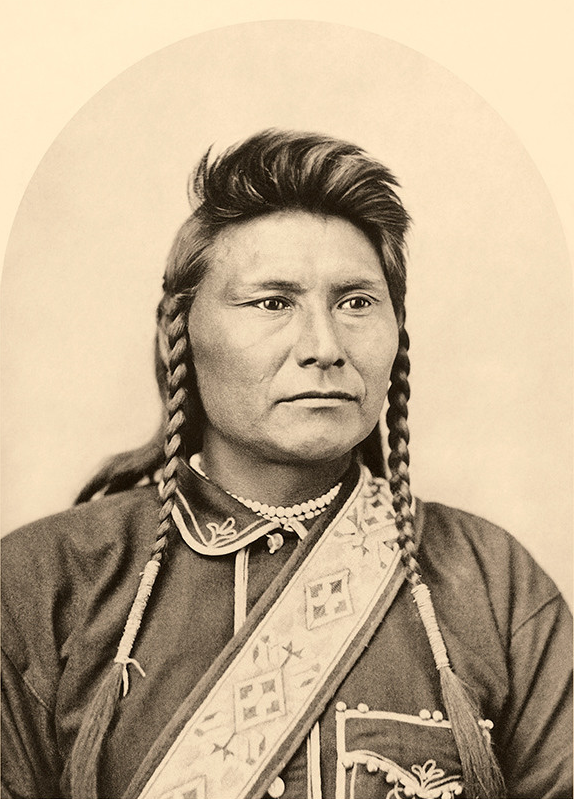
The Nez Perce who approved the 1869 treaty were mostly Christian, while many Nez Perce who mostly followed the traditional religion refused to move. That included the band of Hin-mah-too-yah-lat-kekt, who we know as Chief Joseph, who lived in the Wallowa valley in northeastern Oregon. Disputes there with white farmers and ranchers led to the murders of several Nez Perce, and the murderers were never prosecuted.
Powderkeg
Tensions between the Nez Perce and white settlers rose in 1876, and General Howard ordered the non-compliant bands to move to the reservation in 30 days, jailing their old leader, Too-hul-hul-sote, for speaking against the move. The other tribal leaders, including Chief Joseph, considered military resistance to be futile and reported to Fort Lapwai as instructed.
Days before the deadline, the White Bird band of the tribe held a tel-lik-leen ceremony with warriors parading on horseback while boasting of their deeds. One old warrior challenged the presence of several young participants whose relatives’ deaths at the hands of white settlers had gone unavenged. Three of the young warriors set out to nearby settlements and killed four white men and wounded another.
Caught up in the fervor, sixteen more young men rode off to raid settlements. Chief Joseph was away from camp when they killed at least another 14 whites. When Joseph returned to camp to discover this catastrophic development, he considered an appeal for peace, but he realized it would be useless.
The Battle of White Bird Canyon
General Howard sent out 130 men to punish the Nez Perce. The Nez Perce sent out a truce party under a white flag, with orders not to fire unless fired upon. For reasons unknown, civilian volunteer Arthur “Ad” Chapman, who could speak their language, made first contact with the Nez Perce truce party and fired at them.
The Nez Perce returned fire, beginning the Battle of White Bird Canyon. 34 U.S. Cavalry soldiers were killed and two wounded, with two volunteers wounded. In contrast, only three Nez Perce warriors were wounded, and the Nez Perce warriors retrieved 63 carbines, many pistols, and hundreds of rounds of ammunition. They had won, despite being outnumbered two to one and fighting uphill with inferior weapons. As for Chief Joseph, he may have fought in the battle, but he was not a war leader.
The Fighting Retreat
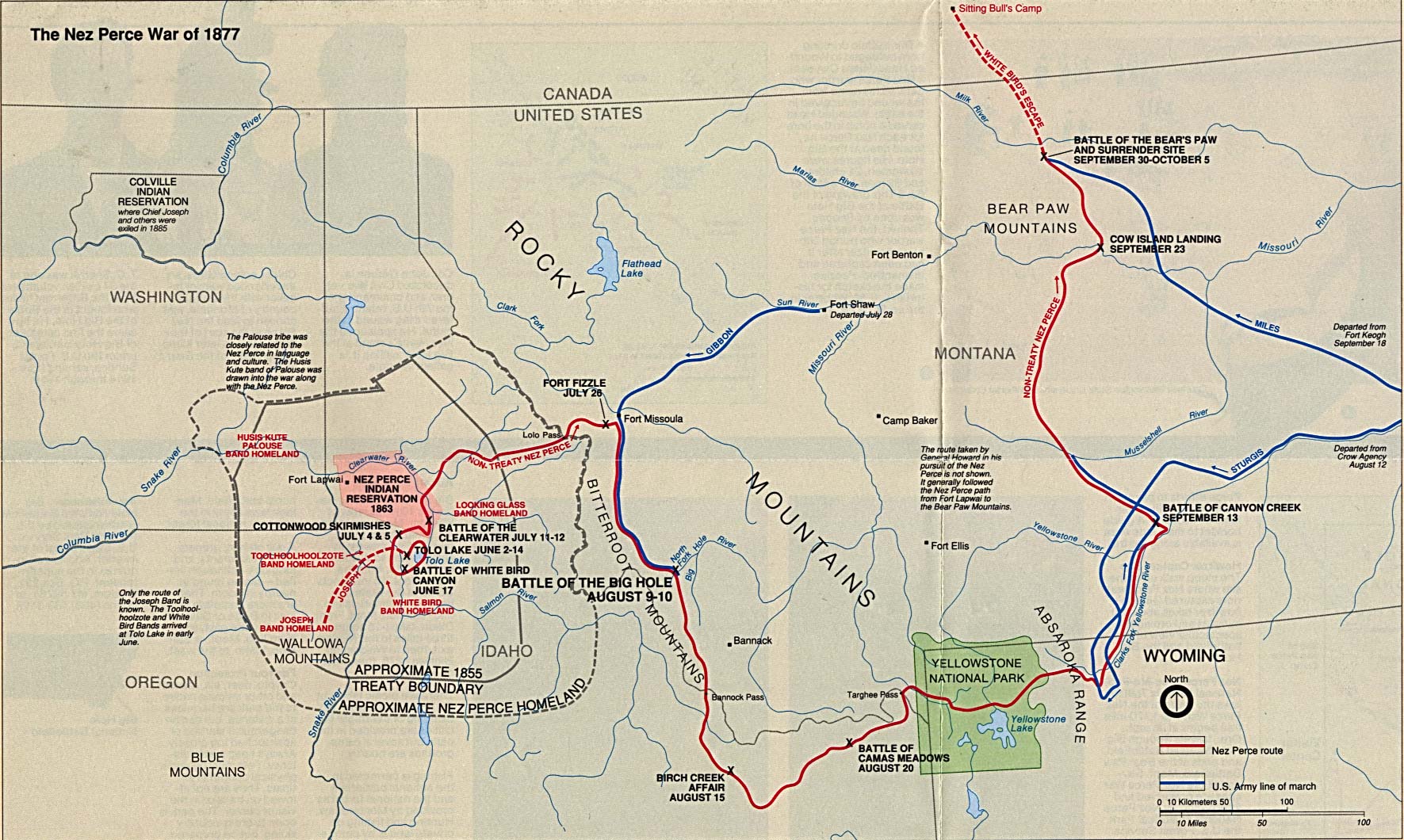
The Nez Perce knew that victory was only temporary, and thus began their desperate fighting retreat across 1,170 miles of Oregon, Idaho, Wyoming, and Montana. 250 Nez Perce warriors and 500 women and children, along with 2,000 head of horses and other livestock, set off toward Montana, seeking assistance from the Crow.
The map below shows their incredible fighting journey from their homelands through the Bitterroot Mountains and across Yellowstone National Park. Having been rebuffed by the Crow, they headed northward in a failed attempt to reach Sitting Bull’s Camp in Canada. Over several months they outmaneuvered and battled more than 2,000 pursuing U.S. soldiers.
The Surrender
They were only 40 miles south of the Canadian border, believing they had shaken off their pursuers, when General Miles led a surprise attack on September 30. There was a fierce battle followed by a siege in freezing weather.
Joseph, who was in charge of protecting the camps during the long retreat, said his band could have escaped if they had left their wounded, old women, and children behind. But many of the war chiefs had died, and he was unwilling to continue. He negotiated to allow his people to return to the reduced reservation in Idaho.
These words attributed to Chief Joseph moved me greatly when I first read them almost 50 years ago:
Tell General Howard I know his heart. What he told me before, I have it in my heart. I am tired of fighting. Our chiefs are killed; Looking Glass is dead, Too-hul-hul-sote is dead. The old men are all dead. It is the young men who say yes or no. He who led on the young men is dead.
It is cold, and we have no blankets; the little children are freezing to death. My people, some of them, have run away to the hills, and have no blankets, no food. No one knows where they are—perhaps freezing to death. I want to have time to look for my children, to see how many I can find. Maybe I shall find them among the dead.
Hear me, my chiefs! I am tired; my heart is sick and sad. From where the sun now stands, I will fight no more forever.
But Chief Joseph did not speak those English words. His speech had to be translated. And who was the translator? None other than the civilian Ad Chapman, who had fired upon the truce party almost four months earlier, setting in motion the Nez Perce War.
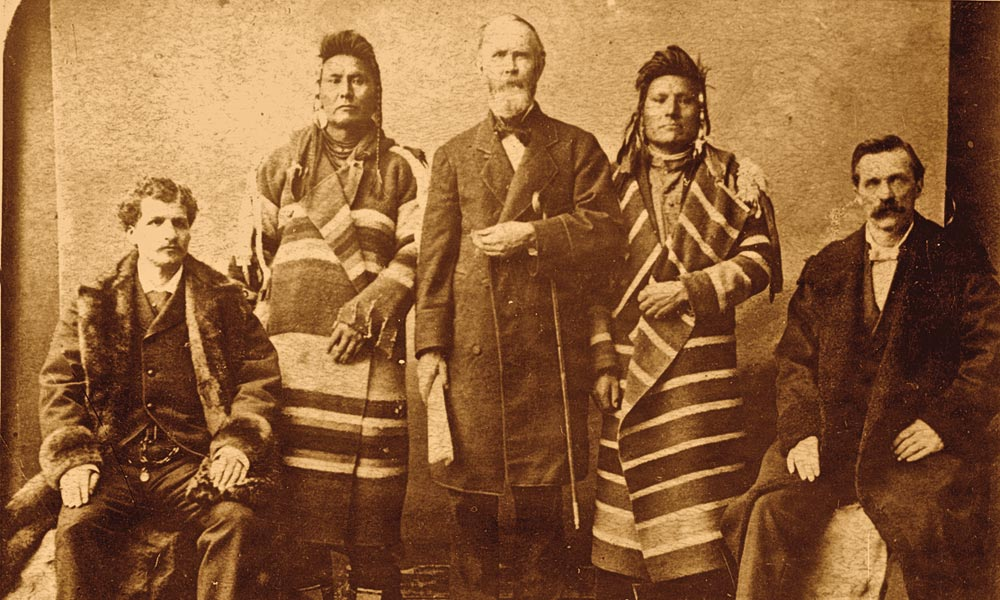
Betrayal and Exile
As an elementary student, I shared Chief Joseph’s famous speech, and ended the tale there. But there were more betrayals to come, including seven years of exile in what would become Oklahoma.
General of the Army Sherman violated the surrender terms, overruling allowing the Nez Perce to return to Idaho. Chief Joseph and his followers were taken to Fort Leavenworth, Kansas and held as prisoners of war for eight months in a swampy bottomland. One author described them as “400 miserable, helpless, emaciated specimens of humanity, subjected for months to the malarial atmosphere of the river bottom.”
Chief Joseph travelled to Washington, DC to plead that his people be allowed to return to Idaho or at least be given land in Indian Territory. He met with the President and Congress.
When I think of our condition, my heart is heavy. I see men of my own race treated as outlaws and driven from country to country, or shot down like animals. I know that my race must change. We cannot hold our own with the white man as we are. We only ask an even chance to live as other men live. We ask to be recognized as men. We ask that the same law work alike on all men. If an Indian breaks the law, punish him by the law. If a white man breaks the law, punish him also.
Let me be a free man—free to travel, free to stop, free to work, free to trade where I choose, free to choose my own teachers, free to follow the religion of my fathers, free to think and talk and act for myself—and I will obey every law or submit to the penalty. Whenever the white man treats the Indian as they treat each other, then we will have no more wars. We shall all be alike—brothers of one father and one mother, with one sky above us and one country around us, and one government for all.
from Chief Joseph’s speech at Lincoln Hall, Washington, DC in 1879
That same year, the U.S. government had argued in federal court in the case of Poncan Chief Standing Bear that First Peoples were not citizens and even claimed they were not persons. But federal judge Elmer Dundy ruled that “Indians” were people with the personhood, but not citizenry, rights and freedoms promised in the Constitution.
So Chief Joseph’s people were allowed to leave Leavenworth, not for Idaho, but to be relocated on a small reservation near modern-day Tonkawa, Oklahoma. Conditions in “the hot country” were little improvement over Leavenworth, and many died of epidemic diseases during their seven-year exile there.
Never to Return Home
In 1885, Joseph and his followers were finally granted permission to return to the Northwest. They were allowed to settle on the Colville Reservation in Washington at the town of Nespelem.
In 1899, the government finally offered Joseph’s people allotments on the Nez Perce reservation in Idaho. But the Nez Perce there, who had accepted the 1869 treaty, had converted to Presbyterianism. Chief Joseph declined, still hoping to return to his home in the Wallowa Valley in northeast Oregon.
By 1901, the Colville Reservation had been cut in two, with the government neglecting to pay an agreed sum for the northern half. The southern half was opened for mineral entries and prospectors streamed in. A visitor to a mining camp within two miles of Chief Joseph’s tepee said the herds of tribal ponies were startled twice daily by rock blasting. There were about 1,000 Nez Perce in Nespelem, of which 127 were of Chief Joseph’s band. His band were given regular rations of food, clothes, and agricultural implements, but they had to ask permission to leave the reservation, leading an observer to construe them as still practically prisoners of war.
Joseph had had nine children, five girls and four boys, but they were all dead. One had died after the move to Nespelem, two had died in Indian Territory, and the rest had died in Idaho. The Chief showed a visitor a picture of one daughter who had grown to womanhood and been married, telling of what a good girl she had been.
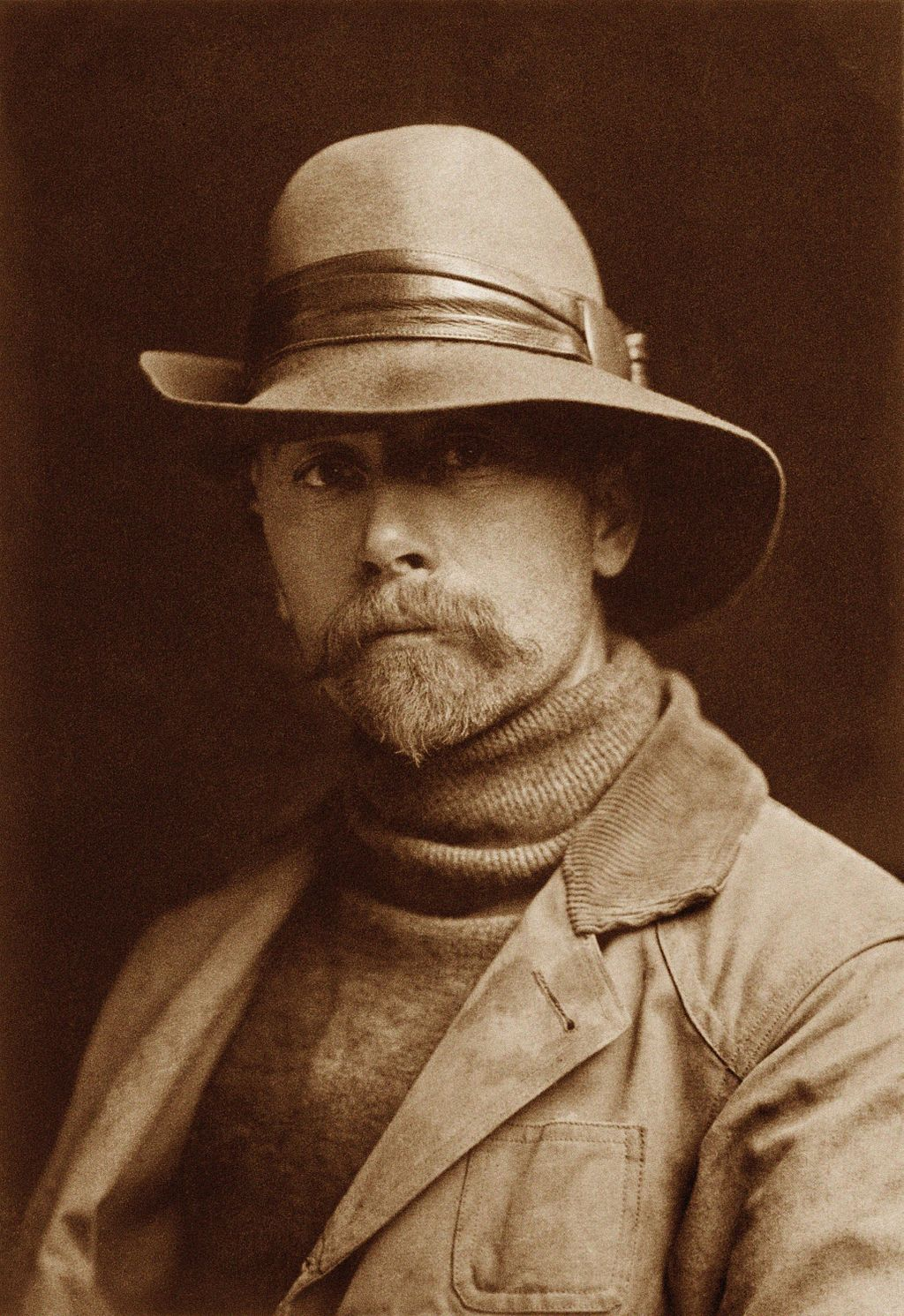
In 1903, Joseph was invited to speak in Seattle by professor Edmond Meany of the University of Washington. He took Joseph to a football game with some 4,000 cheering spectators. Joseph seemed baffled by the game but enjoyed it while smoking a cigar he had been offered.
The old chief was exhausted that evening when he was set to talk at the packed Seattle Theater. Through a translator he said,”My heart is far away from here. … I would like to be back in my old home in the Wallowa country, my father and children are buried there, and I want to go back there to die. The White father promised me long ago that I could go back to my home, but the White men are big liars.”
It was in Seattle that Edward Curtis took his photographs of Chief Joseph.
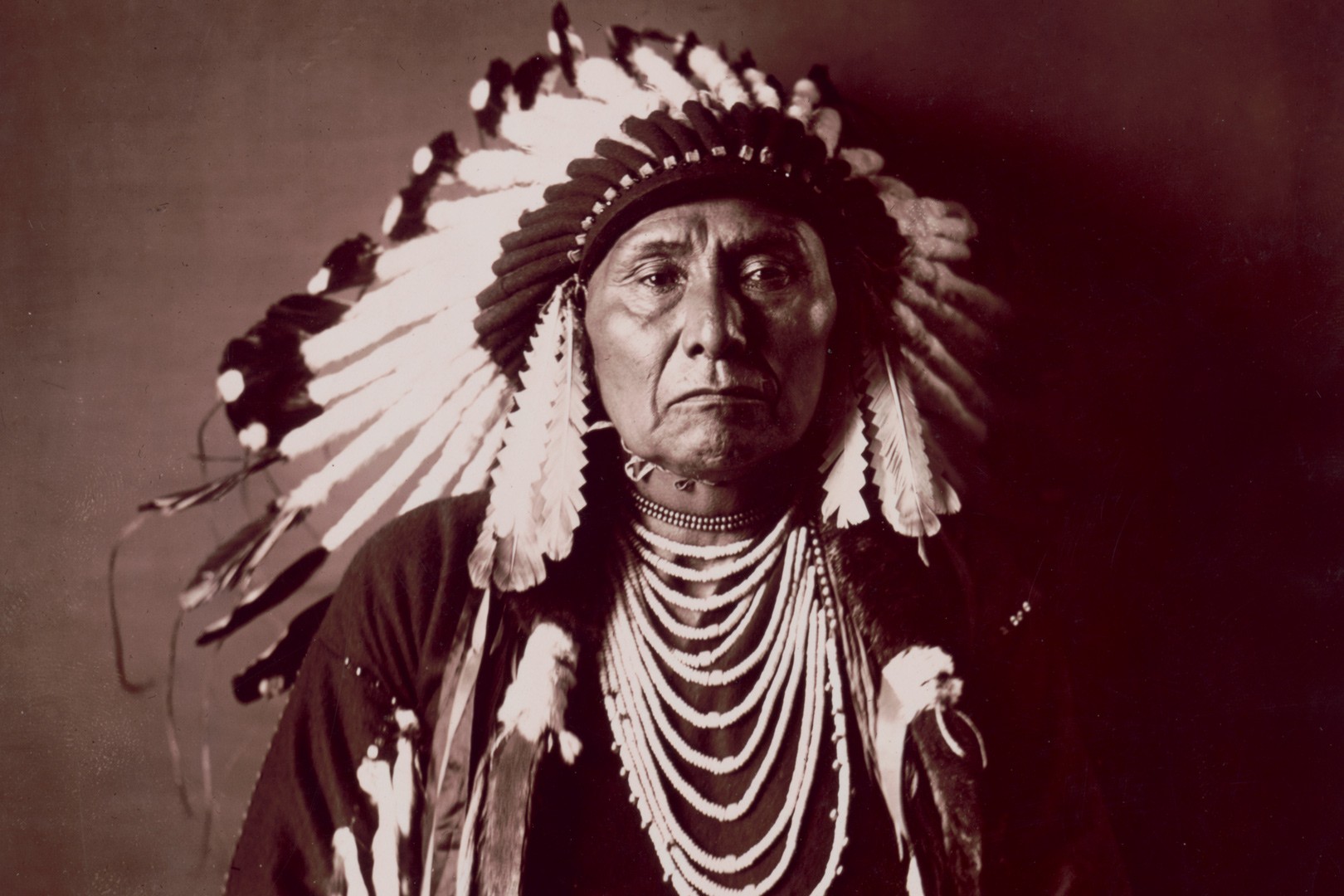
Chief Joseph had also visited with his third U.S. President that year. Having previously met with Rutherford Hayes and William McKinley, he visited President Theodore Roosevelt in Washington, DC to continue to plead that his band be allowed to return to their home in the Wallowa Valley in northeast Oregon.
His pleas were never answered. Joseph died in 1904 at age 64. His band of the Nez Perce still live to this day on the Colville Reservation in Washington.
No Easy Answers
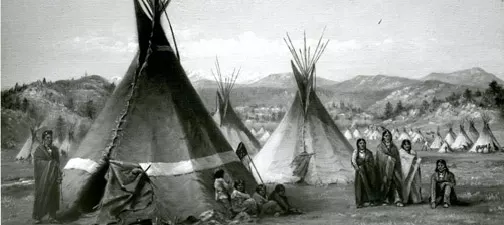
The Nez Perce were reliant on a seasonal subsistence cycle of fish and game and root resources. That lifestyle required a lot of undisturbed open land, incompatible with the lifestyle of white farmers and ranchers. While the tribe had adapted well to the introduction of the horse, the intrusion of white settlers, the war, and the devastation wrought by smallpox, malaria, influenza, measles, and other epidemics reduced the tribe by 70%, from about 6,000 members to about 1,800, over the course of the 19th century.
The U.S. government reflects the priorities and interests of its citizens, and when those do not align with its own ideals the result can be greed, oppression, and injustice. That is particularly true for interactions with a minority people who look, live, and believe differently.
Black Americans were often enslaved and did not gain citizenship until 1868, and it took a century before the civil rights movement abolished legalized segregation, discrimination, and disenfranchisement. First Peoples were not even considered persons under U.S. law until 1879. Women, including white women, were not guaranteed the right to vote until 1920, and First Peoples were not even granted citizenship until 1924.
So while we can empathize with Chief Joseph’s quest to return to the Wallowa country, we can also recognize that if his band had returned there, relentless conflict with the entrenched white farmers and ranchers would have been the likely result. And are we to feign surprise that a government failed to constrain, let alone evict, voting citizens of a majority race in favor of a minority people who lacked citizenship? Such naivety is unsustainable.
Chief Joseph and his band certainly were unjustly robbed of their homeland. However, correcting that wrong is an easy thing to desire, yet a hard thing to accomplish.
Culture War
There is no redemption in that long, sad tale of thievery, murder, revenge, war, betrayals, and the many needless deaths of people from both cultures.
But I am grateful that I was exposed to those bitter truths at a young age. Frankly, I had already been exposed to tales of hatred, betrayals, vengeance, and death in the Holy Bible of my parents’ religion. But living in Oklahoma, surrounded by the remnants of displaced and decimated First People cultures, the stories of Chief Joseph and of the Trail of Tears resonated with me more than those set in ancient Israel, Canaan, Babylon, and Egypt.
These days, extremists in state governments decry “wokeness” and seek to suppress, distort, or even deny the truth about our shared history and systemic failures, as if schoolkids can’t handle it or might be brainwashed into hating their own culture and heritage.
Pish posh! I am grateful that public schools shared the truth with me that our nation, and especially Oklahoma, have a long history of oppression, thievery, broken promises, and unjustifiable deaths. That didn’t lower my self-esteem or lead me to be ashamed of my race or despise my homeland. Heck, I devoted my career to serving Oklahomans — to give back to and build up our state, not tear it down.
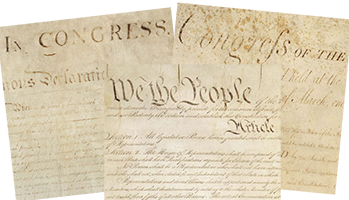
That is because those same public schools also instilled in me empathy, understanding, and compassion. They taught me the value and honor of service. They taught me the impossible ideals that our flawed and contradictory founding fathers espoused in the Declaration of Independence, the Constitution, and the Bill of Rights, and our long endless struggle to approach them.
My teachers trusted me to learn from both the bad and the good. I learned the words of Chief Joseph alongside Lincoln’s Gettysburg Address. I traced the Trail of Tears as well as the route of the Corps of Discovery. I learned about the Confederacy and the Union, the KKK and the NAACP. I learned about the dangerous extremism of McCarthy and the Weather Underground. I was taught that people can evince both decency and depravity.
I learned what this meant in The Crack Up:
The test of a first-rate intelligence is the ability to hold two opposing ideas in mind at the same time and still retain the ability to function. One should, for example, be able to see that things are hopeless yet be determined to make them otherwise.
F. Scott Fitzgerald
Oklahoma is still struggling with its tortuous history, from how to negotiate tribal sovereignty to what a race massacre of a century ago means today, and so much more. I will always choose freedom over oppression, truth over lies, and forbearance over vengeance — because the public schools in what some call Indian country taught me ugly truths alongside beautiful ideals. Those very contradictions are what empower us to learn from the past so that we may strive to build a better future.






Thank you for writing this. It has information I never knew about. I especially liked how you tied your life and learning into it. I think Granger, you must write a book (or a few) someday. I’ll be happy to be another pair of eyes, a copy editor. Ann Cleary