

In July 2023, I was asked to present about the history of Bartlesville Public Schools at a Thursday Lunch & Learn meeting at the Bartlesville Area History Museum. This spring I began gathering and digitizing thousands of photographs in the district’s Community Relations archives. I had shared hundreds of them in a Facebook group on local history, and that caught the attention of the museum staff.
I later made presentations about what was going on in the district, with an overview of its history, to the Washington County Retired Educators and residents of Green Country Village Senior Living. I had enough interest at those talks to prompt me to create a 40-minute video about the district’s history.
I want to provide some context for that video:
- How did I wind up in Bartlesville?
- Why am I interested in its history?
- How did I gather the material used in the video?
- How did I make the video?
To study history means submitting yourself to chaos, but nevertheless retaining your faith in order and meaning.
Herman Hesse
My family history with Bartlesville
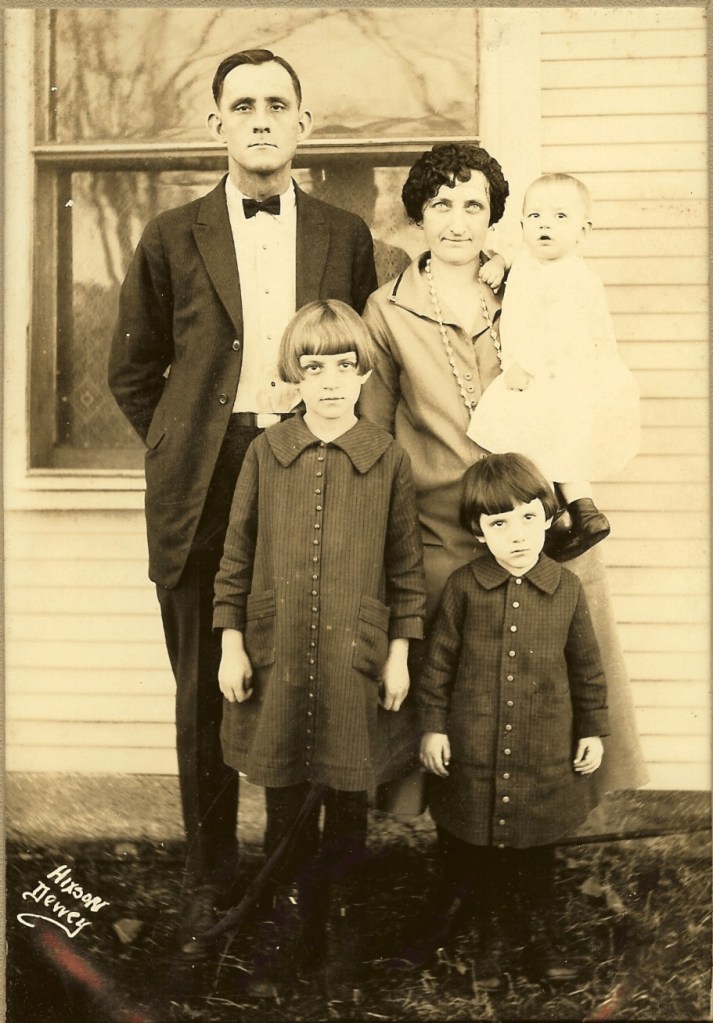
My family connections to Bartlesville go back a century. In 1923, my paternal grandfather and grandmother brought their two daughters to the town of Dewey, Oklahoma, immediately north of Bartlesville. They had left hill farming in southeast Missouri, travelling to Dewey in a horse-drawn covered wagon.
My grandfather hoped to find work at the Dewey Portland Cement Company, where his brother-in-law was a power plant operator. Grandpa Meador got hired on, and my father was born in Dewey in 1925. They moved to a compressor station south of Independence, Kansas in 1936, when my grandfather became a machinist for Cities Service Gas.
So my father had childhood memories of Bartlesville, and it was along the highway route from Oklahoma City, where I grew up, to my grandparents’ home in Independence. We made regular trips to visit our Kansas relatives, and my parents often stopped in Bartlesville to have lunch with Frank and Alice Rice, who had once worked with my father at the Cities Service Gas Company offices in Oklahoma City. The Rices had built a home in the Madison Heights neighborhood in northeast Bartlesville, just south of Sooner High School.
Getting hired to teach in Bartlesville
Fast-forward to 1989, after I had graduated with my bachelor’s degree from the University of Oklahoma (OU) and certified to teach a variety of high school sciences. I had spent the spring substitute teaching at the three high schools in the Putnam City district I had attended for grades one through twelve.
I was looking for a position to teach physics at an Oklahoma high school. Full-time physics positions are a rarity in our state, but I was stubborn and passed up offers to teach other subjects at Moore, Sapulpa, and Ponca City, holding out for physics. Finally, in late July 1989, I got a call to interview in Bartlesville.

I was only familiar with a few things in Bartlesville: Highway 75, the Pizza Hut, Sooner High School, and the Madison Heights area. So when Bartlesville High School Principal Ben West asked me if I knew where the high school was, I said, “Sure! It is on Baylor Drive.”
Ben chuckled and explained that in 1982 Sooner High had become a Mid-High serving grades 9 and 10, and he would be interviewing me at Bartlesville High School on the west side of the Caney River.
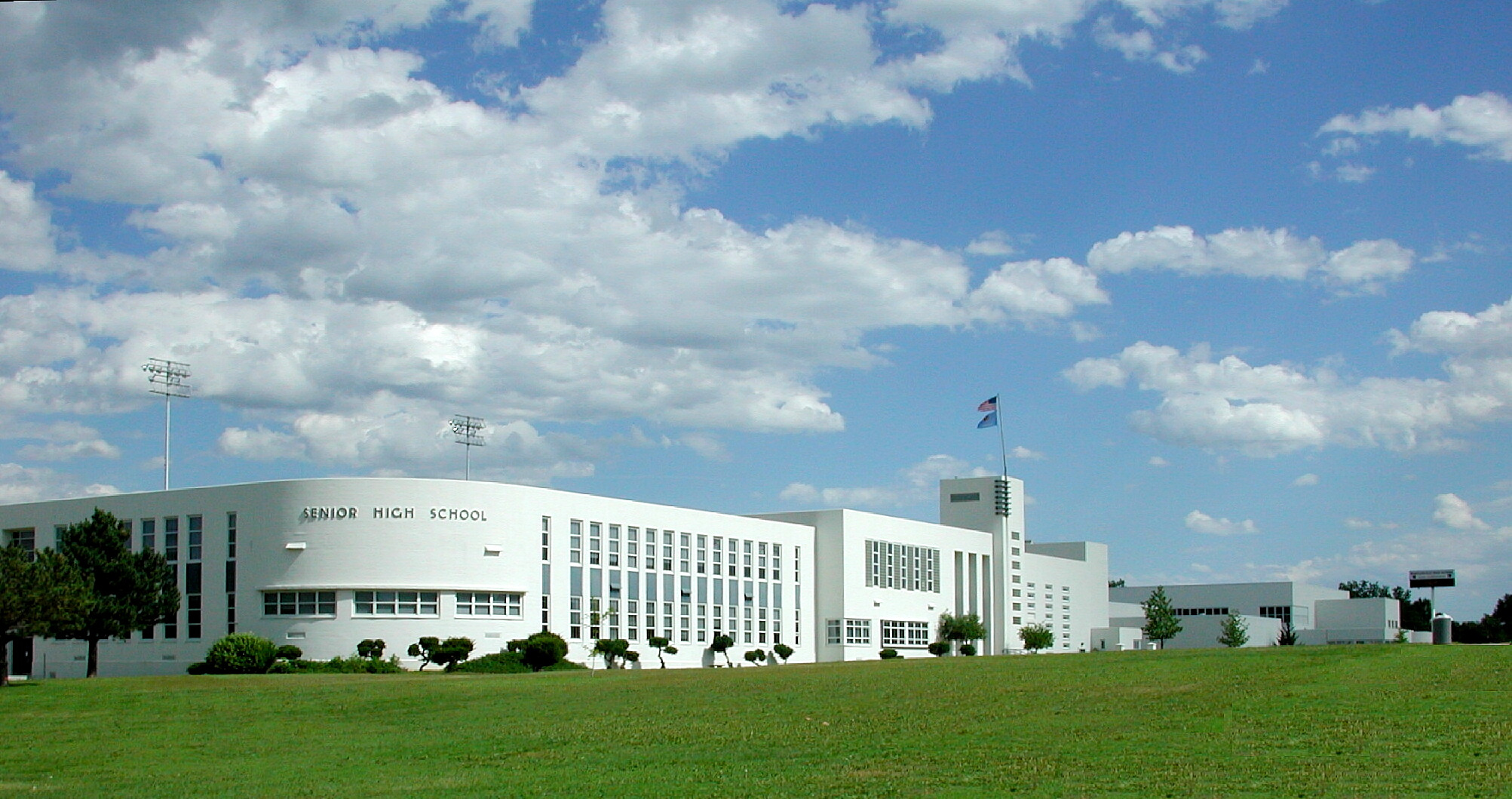
I drove to Bartlesville, found my way west across the Caney River for the first time, and entered an odd-looking white concrete building that had once been College High. The facility was interesting but quite dated. The science labs and auditorium were pathetic compared to what I had experienced as a student at Putnam City West High School and as a student teacher at Norman High.
However, I had worked for several years for Scholars Programs at OU, advising fellow National Merit Scholars and members of the President’s Leadership Class. So I knew Bartlesville churned out lots of top-notch students with plenty of Advanced Placement credits. Its high socioeconomic status, arising from being the headquarters of Phillips Petroleum, a Fortune 500 company, allowed the small town of 35,000 to punch above its weight in academics as well as cultural opportunities.
So I left the 1,000,000 strong metropolitan area where I had always lived and began looking for an apartment in little Bartlesville.
Family historians
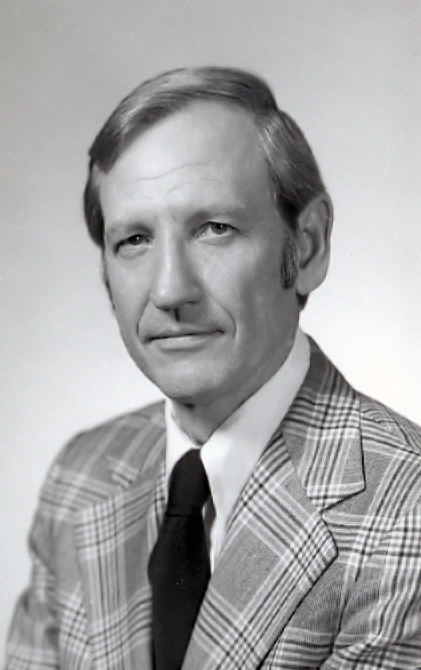
My father had always enjoyed history. He drew a huge timeline of world history on the backs of a series of natural gas pipeline charts, compiled many notebooks on genealogy, and wrote autobiographies, a biography of my mother, etc.
I enjoyed my high school history classes, and choose my World History teacher to accompany me to Washington, DC when I was named a U.S. Presidential Scholar. In college, I took Honors Seminars on ancient Greece and Rome as well as the mandatory U.S. history course. But I wasn’t a history buff.
After I moved to Bartlesville, I knew I would eventually see Edgar Weston, my double first cousin once removed. For those needing a translation, Edgar was the son of my paternal grandmother’s brother and the son of my paternal grandfather’s sister.
Edgar was 50 years older than me and an avid historian. He was born in Dewey nine years before my father and helped organize the Washington County Historical Society, raised funds and supervised the restoration of the Dewey Hotel, helped build the Tom Mix Museum, researched and conducted tours of historical sites and landmarks in the county, and wrote a newspaper column about local history. Edgar passed in 2002, but the local paper is now re-running his columns.
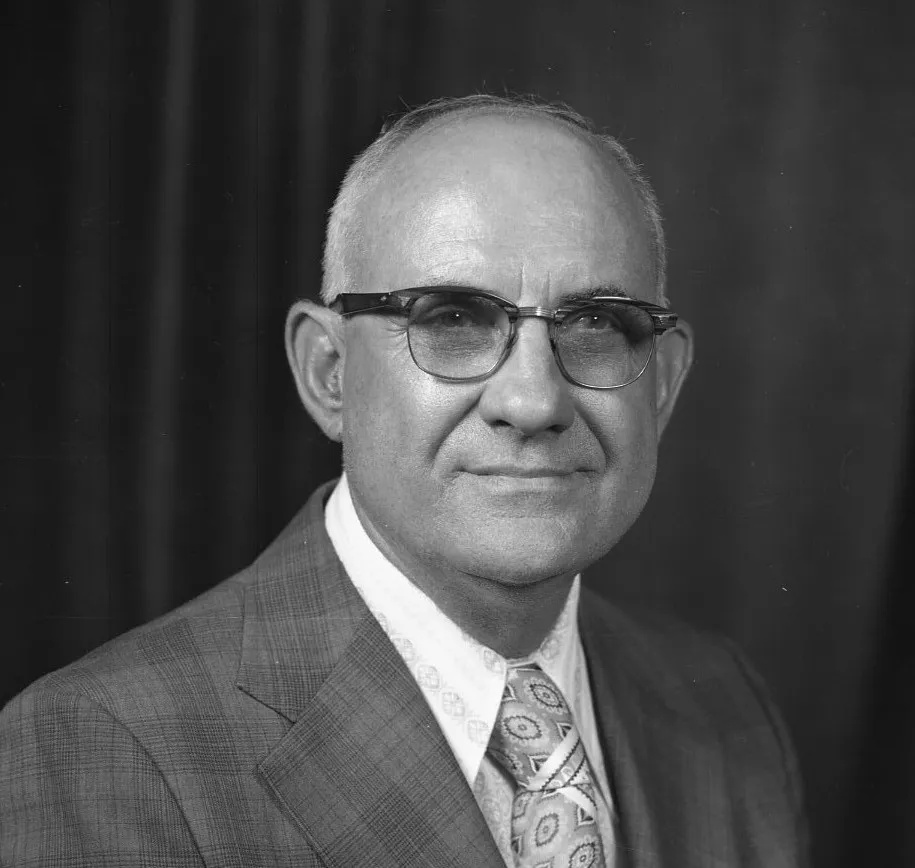
Edgar had been a fixture at the Meador and Weston reunions I had attended in childhood, so in June 1990 when I saw that he was going to host a bus tour of area historical sites as a showcase event for the annual OK Mozart music festival in Bartlesville, I signed up.
Edgar regaled us with stories as we drove around downtown Bartlesville and down south of town to the Tyler-Irwin farm. That kindled my interest in the history of the little town I had made my new home.
Whetting my interest in school history
Teaching at a high school which dated back to 1939, with oddball additions, also roused my curiosity. Why was the building clad in concrete rather than bricks? Why was the annex where I began teaching so oddly built, with its basement numbered as the third floor?
Exploring with Rick

I learned a lot about the old buildings from Rick Keen, the high school head custodian. During my first winter of teaching, I was desperate for more electrical equipment for my physics courses. I asked Rick if he’d seen anything squirreled away somewhere. He grinned and said there was some stuff in an odd place. He could show me, if I was feeling adventurous.
Rick led me outside and down an old stairwell to a room tucked beneath the 1939 field house. He led me under a huge air handler to a hatch in a wall. He opened it and climbed through with his flashlight, located a light switch, and urged me to step carefully through the hatch. I clambered through the narrow opening and found we were standing on the unexcavated soil beneath the 1939 field house.
Back then, scattered on the dirt beyond the ducts, were a bunch of old College High athletic trophies and, relevant to me, some wood cases and boxes of electrical equipment. Rick told me they had come from the old physics lab, which had been turned into a second chemistry lab years before. He thought some of the items dated back to before 1950, when there had been a junior college class in electronics at the school. We hauled the stuff back to my physics lab. That was also when Rick told me about the tunnel connecting to the main building.

The equipment we scavenged included old gutta percha cables, light bulb circuit boards, and, of particular interest to me, analog ammeters and voltmeters in Bakelite housings. We used those old meters for years in my physics classes, until a generous parent eventually donated funds for me to purchase digital multimeters. I know that some of the old meters eventually found their way to a school in India…one school’s trash is another’s treasure!
That scrounging success led me to eventually explore every nook and cranny of the old buildings. That in turn led me to skim through old yearbooks to figure out how they had evolved. I also started asking Rick for insights about some of the building’s oddities.
One example was how, in the 1939 building, there used to be a metal plunger sticking out of the wall in the student restrooms. You pumped it to get soap, but there was no visible reservoir. So where did the soap come from? There were no custodial closets behind most of those restroom walls.
I asked Rick, and he took me on another adventure. We climbed up inside the tower on the front of the building, where there was still a huge wooden case for what had once been a telescope that they used to wheel out onto the roof back in the junior college days. He led me out onto the roof and over to a barrel way out in the center. It was marked SOAP on the side, and had a line coming out of it down into the roof.
Yes, it was an original centralized soap system. That single barrel fed, via internal conduits, all of the wall spigots in the various 1939 bathrooms. Eventually the entire district started using the now-ubiquitous plastic soap wall dispensers we are all familiar with, and the old spigots were removed, but I remember how they used to do it!
Figuring out the district
One thing I noticed as I drove around Bartlesville over the years was that it had a LOT of former school buildings. Why were there so many tiny old neighborhood schools? Why had the town built two high schools, only to later consolidate them?
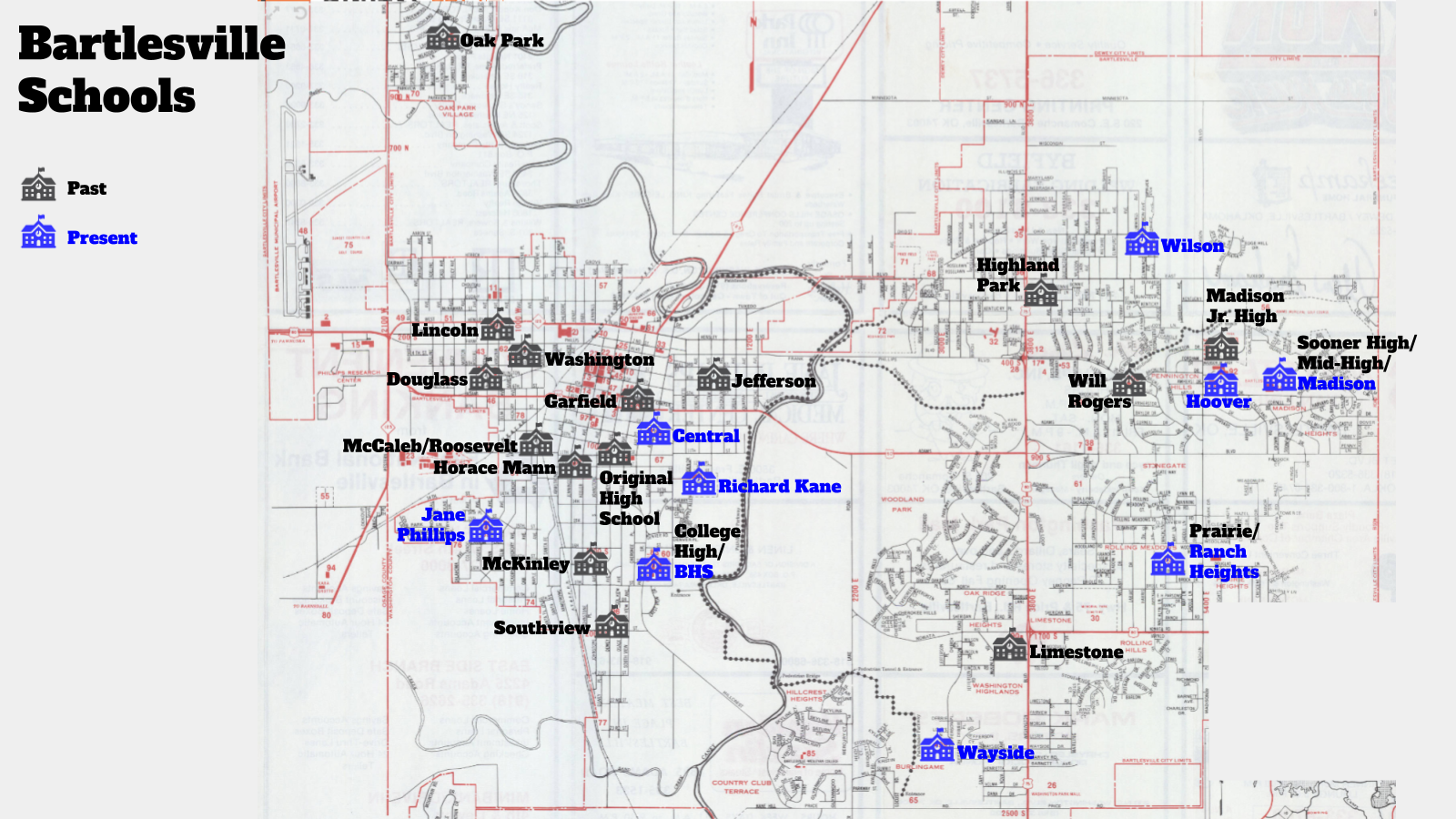
In the summer of 1997, I decided to get some answers. I went to the public library’s Local and Family History Room. The librarian showed me some publications dating to the 1910s that were from a time before yearbooks. Better still, she told me there were vertical files on the school district. I thumbed through those, finding many old newspaper articles, back-to-school newspaper layouts from decades before, and an old computer printout listing two dozen different school buildings and the years of their construction, various additions, and when many were closed.

Having gathered a lot of information, I decided to share it in a more modern fashion. On my personal website, I built a page about each school, past or present. I drove around town, taking photographs of every building, to enhance each page. When I built the high school website two decades ago, I included a lot of historical information, and I have migrated that to each new platform ever since.
When I took over the district website a decade later, I shifted all of my information and photos of the various buildings to it.

Over the decades, I purchased a couple dozen books on local history and saved scraps of information I found online. I pieced together how and why the district had changed. This year, I found time to scour the files squirreled away in the district administration building, where I have worked since 2017.
That started a massive project to digitize for a public archive the most interesting documents and thousands of photographs trapped at the district headquarters as uncatalogued dead media: old prints, negatives, slides, and optical discs.
I’ve digitized almost 9,000 photographs thus far, with thousands more still be processed. I’ve built facility timelines and charts and created a spreadsheet of district leaders.
This project ensures that I always have something to do when I’m not helping diagnose technology issues, planning budgets and purchases, handling the district websites and social media feeds, and whatever other Technology and Communications tasks arise.
Making the new history video
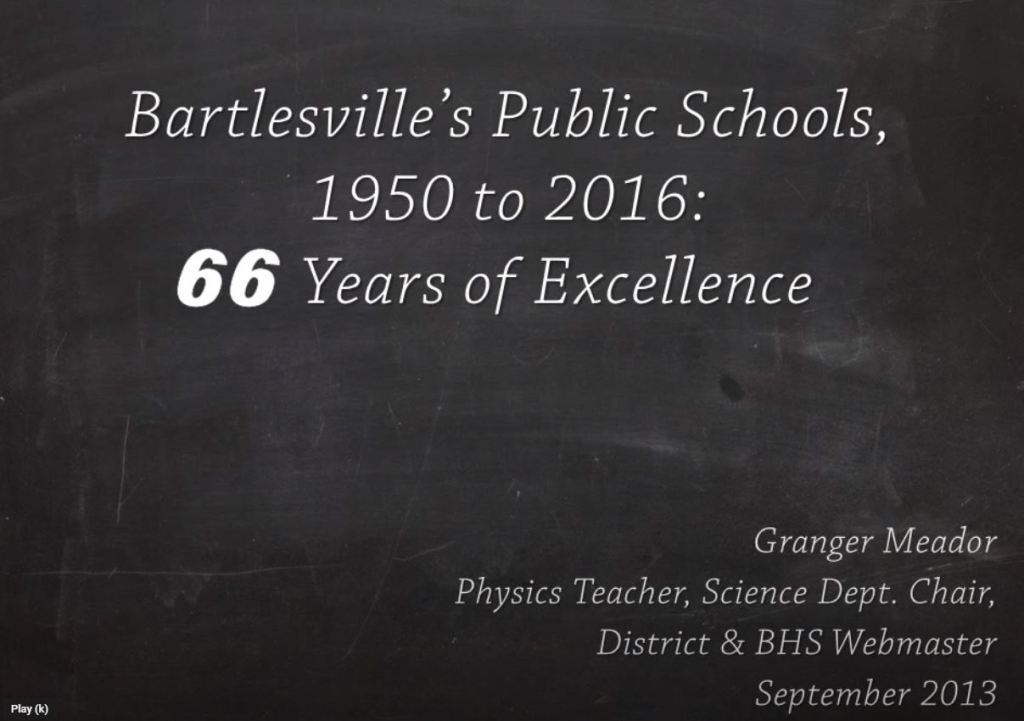
A decade ago, when I was still teaching physics, I made a video about the district’s history since 1950. It was directly adapted from a PowerPoint presentation I had prepared for some community presentations.
So when I was approached about a new round of presentations, I wanted to go back to the beginnings of the district in 1899 and share what I had gleaned from months of archiving. I again wanted a video for the public to see, but I had watched a lot of YouTube videos during the COVID-19 pandemic. Their higher production values encouraged me to go beyond simply narrating a slideshow.
So I wrote a script and inserted various photographs and charts in the WeVideo online video editing service we make available to all district teachers and all secondary school students. I then animated many of the photographs, in what is often termed the “Ken Burns” style, to boost their visual interest. Recalling Burns’ use of the Ashokan Farewell in his influential series The Civil War, I also experimented with adding period background music, such as ragtime for the first years of the district’s history. But I judged that to be too distracting given my limited experience and patience for mixing audio.
I hope you enjoyed this post, and if it has sparked your curiosity, you might see if my 40-minute video is worth your time. No worries if it is not; there are countless videos out there these days on every imaginable topic. Happy hunting!






 Meador Manor
Thank you for sharing this captivating history of Bartlesville Public Schools. Your dedication and effort in preserving it are truly appreciated!