
January 2024

Libraries have been at the forefront of recent culture wars. Much of the political posturing and consequent legislation appear to be performative, since many titles are readily available online through Books Unbanned and other initiatives. Personally, I’m all for parents regulating what their own children experience, but I am skeptical about those who wish to impose their will upon other parents and students. I am necessarily a censor myself: in my technology role in a public school district, I must help enforce the Children’s Internet Protection Act.
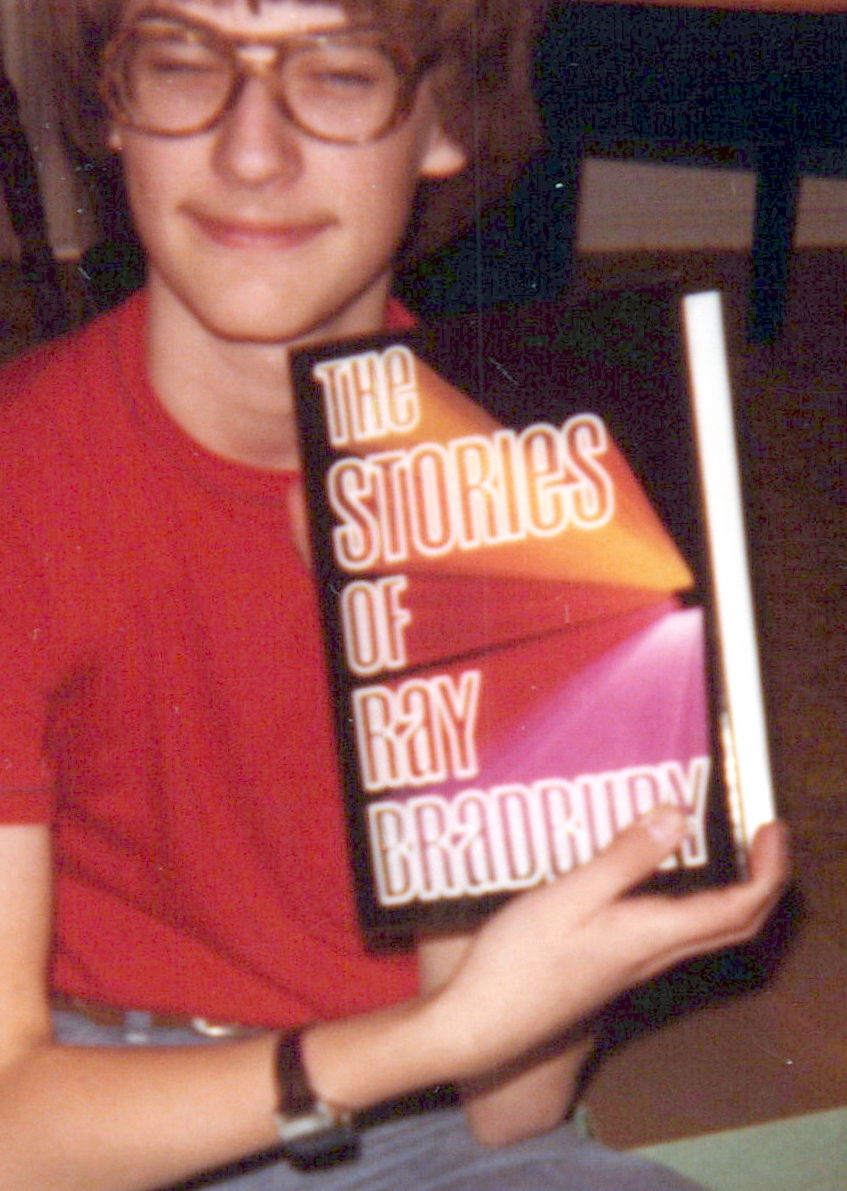
Censorship and book banning are nothing new, of course, and there have long been accompanying concerns when they stray beyond protecting children. Ray Bradbury published Fahrenheit 451 in 1953 as a cautionary tale about conformity, technology, and government censorship. When I was assigned to read it in junior high, I didn’t find it as compelling as his fantastic short stories, which were so good that I asked for a collection of them for Christmas. I do recall liking how in the book the leader of a group of wandering intellectual exiles, who memorized books to preserve them, was named Granger. I remember pondering which book I would choose to memorize in such a situation.
My adopted home of Bartlesville has its own history of library censorship gone awry. In 1950, librarian Ruth Brown was fired on trumped-up charges of supplying “subversive” materials. She was actually fired because of her support for racial desegregation and civil rights. Many decades later, the Bartlesville Women’s Network commissioned a bronze bust of Brown for the library lobby, along with an exterior wall mural.

My own youthful encounters with censorship and ratings involved comics, music, and movies, rather than books. All of them involved efforts by the respective industries to self-regulate and thus avoid legislative censorship and suppression.
Comics
The comics I purchased in the 1970s all featured an odd seal on their cover, saying they were approved by the Comics Code Authority. That was a self-regulation scheme among publishers in the United States. It was instituted in 1954 after an episode of moral panic centered around Senate hearings and the publication of Seduction of the Innocent by the psychiatrist Fredric Wertham.
The comics code was revised in 1971, and I’ve previously shared how the grittier Bronze Age Batman stories did not appeal to me when I was a child. The Code’s power weakened in the 1980s and 1990s, with the influential Watchmen series released by DC in 1986 without a CCA Seal of Approval, and the Code was finally abandoned in the early 21st century.
More sophisticated ways for media companies to self-regulate involved ratings and warnings rather than content codes. Ratings could allow for greater artistic expression while providing guidance to parents looking to censor what their children experienced.
Music
Music ratings didn’t become a thing until after I graduated from high school. Tipper Gore founded the Parents Music Resource Center, pushing for a ratings system and for lyrics to be printed on the backs of albums. Senate hearings followed, and the Recording Industry Association of America (RIAA) responded by introducing a standard Parental Advisory label for recordings with “explicit content”. Walmart famously refused to stock any music carrying that label.
As for what constitutes “explicit content”, there are no standards, just general guidelines. The RIAA suggests the advisory be used for material with “strong language or depictions of violence, sex, or substance abuse to such an extent to merit parental notification” while its British equivalent also suggests that “racist, homophobic, misogynistic or other discriminatory language or behavior” merits a warning.
The effectiveness of the “Tipper stickers” has been questioned, with some suspecting kids might simply seek out music with the adornment. But “Explicit” labels persist, and the major streaming services have optional settings to block such content.
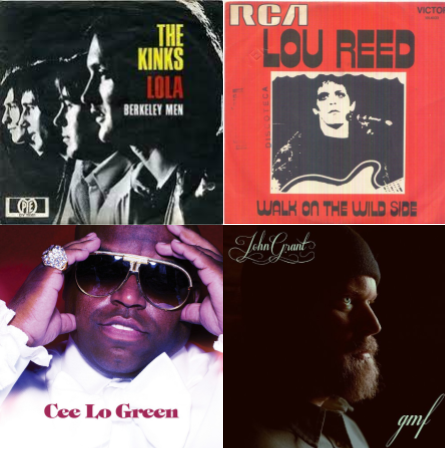
I generally prefer to avoid explicit lyrics, but I do like some songs that would push some people’s buttons, such as Lola by The Kinks from 1970 and Lou Reed’s Walk on the Wild Side from 1972, which both reference transgender people. The latter is famously also quite direct about prostitution and oral sex among characters at Andy Warhol’s New York studio.
I generally shy away from songs with curse words in their lyrics, but I must admit that Cee Lo Green’s cleaned-up Forget You from 2010 lacks the punch of the original song, and I understand why John Grant invoked the curse in his Gmf.
Movies
As for motion pictures, their first attempt at self-regulation was the Motion Picture Production Code applied to most films from 1934 to 1968. It arose after various Hollywood scandals led to almost a hundred film censorship bills across 37 states in 1921. Around the time of my birth, Jack Valenti successfully pushed for the old code to be replaced by a ratings system.

The original movie ratings were G, M, R, and X. M was later renamed GP and then PG, which finally stuck, and the added PG-13 rating didn’t come along until 1984 when I went to college. X eventually became NC-17. My parents took me to G-rated movies when I was young, and I was perturbed when I saw my first PG films, being unused to rude and profane movie characters.
I associated R ratings with violence, profanity, and sex/nudity. The first R-rated movie I recall seeing was when some high school friends rented the 1981 slasher film My Bloody Valentine. I’d already seen Hitchcock’s Psycho on late night television, so I thought I was prepared, but my girlfriend and I found the slasher film sickening, even with nine minutes of its violence and gore cut to avoid an X rating.
When I turned 17, one of the first R-rated motion pictures I saw in a cinema was Silkwood, which lured me in not for its rating but because it was a factual story about a whistle-blower in Oklahoma. The next year I saw another R-rated film in a cinema, Amadeus, which was far less factual but is still one of my favorite films. After that, I saw far more movies on videotape than at a cinema, and what a movie was rated was less prominent for me.

A memorable cinematic experience in my introduction to R-rated films was seeing Lifeforce in 1985. The nudity in that science fiction/horror film was titillating, but I was put off by how some of the film’s plot stole heavily from a better and older film, which had no sex or nudity: Quatermass and the Pit. The most unusual thing about that showing of Lifeforce was how that was the only time I saw a sneak preview. When my best friend and I purchased our tickets, we were asked if we would agree to see another film first for free and fill out comment cards about it. As college guys not dealing with a curfew, we agreed. But I remember almost nothing about the preview we watched, except that I rated it very poorly. Lifeforce was too distracting, and if asked I would have given it a poor rating as well.
As for even-more-mature X or NC-17 movies, I don’t recall ever seeing one in a cinema. A friend and I rented 1971’s A Clockwork Orange in college, and I have shown Wendy 1969’s Midnight Cowboy and Bad Education from 2004. Years ago, I also watched 1995’s Showgirls for laughs. While none of those movies are appropriate for children, the first three are among the best films I have seen…and yeah, Showgirls is one of the worst. Ratings aren’t perfect, but I certainly prefer their use to production codes or bans that would block the creation and distribution of mature works for adults.
Back to Books
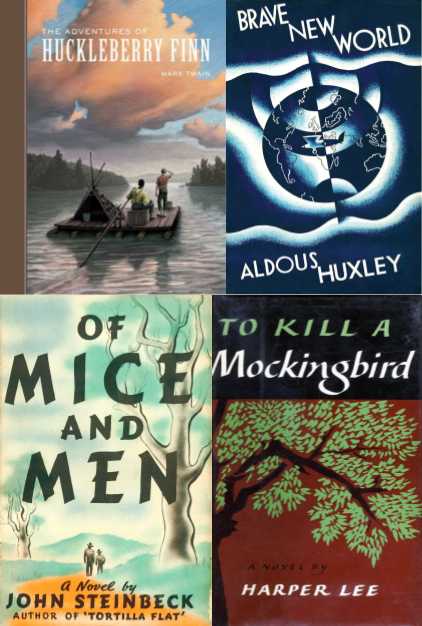
Book censorship is far more fraught for me than slapping an explicit label on a song or a rating on a movie. It is interesting how many books that have been banned from various libraries over time were assigned reading when I was a public school student, including Huckleberry Finn, Brave New World, Of Mice and Men, and To Kill a Mockingbird.
The Comstock laws passed in the years after the Civil War criminalized the use of the postal service to send obscenity, contraceptives, abortifacients, sex toys, and personal letters with any sexual content or information. Those laws were inspired by the widespread availability of pornography during the Civil War. An updated form of them is still on the books, although the legal definition of obscenity has changed over the years.
The courts originally held that all material tending “to deprave and corrupt those whose minds are open to such immoral influences” was obscene, regardless of its artistic or literary merit. That began to change in the USA in 1933, when James Joyce’s Ulysses was found to not be obscene. The courts decided that offensive language in a literary work was not obscene if it did not promote lust.
In 1957 a new test for obscenity was formulated: whether the average person, applying contemporary community standards, would find that the material appeals to a prurient interest in sex, and whether the material was utterly without redeeming social value. In 1973 that second condition was modified so that materials with “serious literary, artistic, political, or scientific value” were not to be considered obscene.
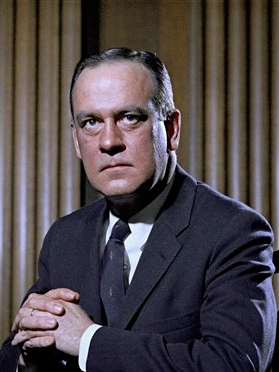
What any of that means is pretty darn vague, and effectively allowed many localities to crack down on adult theaters and bookstores, as well as nude dancing. It also explains why Bartlesville and many other venues have recently had disputations over whether or not particular performances in public forums were obscene. In 1964, Supreme Court Justice Potter Stewart was asked to describe his own test for obscenity. He replied, “I know it when I see it.”
That famous non-definition shows the difficulties inherent in censorship. People differ on what they find shameful or morbid. Some seek out steamy sex scenes in pulp romances or slash fiction, while others regard such material as obscene. Pornography of all sorts is readily available online, even as religious fundamentalists condemn it. And we are all too familiar with the rampant hypocrisy of many who vociferously promote what they claim to be “family values”.
My own preference is that adults self-regulate. If something offends you, then avoid it while heeding the advice first written down in 1622 in The Ancient Law Merchant: Leuen ende laeten leuen…live and let live.





 Meador Manor
Thank you for sharing your views and the facts. It is reassuring to read that B’ville at last honored the librarian who was fired in the 1950’s.