
I deliberately sickened myself multiple times in 2023 and 2024, and I’m glad that I did. I opted to take fourth and fifth booster doses of COVID-19 vaccine. I also took two doses of the Shingrix vaccine against shingles, a disease which has afflicted some of my colleagues and acquaintances over the years. Each time, I had immune system reactions that subsided after 36 hours.
After you recover from chickenpox, the varicella virus stays dormant in your body and can reactivate years later, causing shingles. That can mean a painful rash of blisters with an intense burning sensation, and the possibility of long-lasting pain from postherpetic neuralgia, as well as the risk of vision loss or blindness if the virus attacks an eye.
A varicella vaccine became available in 1995, and by 2014 that had reduced the incidence of chickenpox in the USA by over 90%. But of course I’m far too old to have been vaccinated as a child against chickenpox, and I contracted a severe case of it back in 1972 when I was six. I remember how my body was covered in blisters, and my mother having me wear mittens and plastic Baggies to ensure I wouldn’t pick at them.
Those memories were vivid enough for me to accept some mild and temporary discomfort to reduce my likelihood of shingles by well over 90%. A Zostavax shingles vaccine was approved in the USA in 2006, but it has been supplanted by Shingrix, which provides strong protection against both shingles and postherpetic neuralgia. Shingrix was approved in 2017, and the CDC recommends that healthy adults 50 years and older get two doses separated by two to six months, whether or not they previously had chickenpox.
I knew in advance that it would likely have some temporary side effects. I had my first dose of Shingrix in one arm, and my fourth COVID booster in the other. My arms were sore for a couple of days, and I had body aches and fatigue that began about 6 hours after the shots and lasted another 24 hours.
The Shingrix vaccine requires a second dose two to six months after the first. So I scheduled my second dose on a Friday afternoon four months after my initial dose. Sure enough, my arm was again sore and I began to have body aches by the time I went to bed. I had a slight fever, body aches, and headache that Saturday. Taking ibuprofen helped a bit, and I was actually fairly happy to have such symptoms, since they meant that my immune system was responding as intended. When I woke up on Sunday, I felt fine, other than a sore spot on my upper arm.
I went through a similar process recently, getting my fifth COVID booster and a Tdap booster against tetanus, diphtheria, and pertussis on a Friday afternoon. I again was sore and fatigued on Saturday and woke up on Sunday feeling fine. It had been nine years since my previous Tdap booster, and they recommend a booster every ten years. I advanced mine since our school district had numerous cases of pertussis this fall, so it is going around.
While my immune system ramped up, I thought back to my previous diseases and vaccinations. As a child, I contracted mumps, chickenpox, rubella, and scarlet fever, and later endured influenza and mononucleosis. But I was vaccinated against poliomyelitis, smallpox, measles, pertussis, diphtheria, and tetanus, so I avoided them.
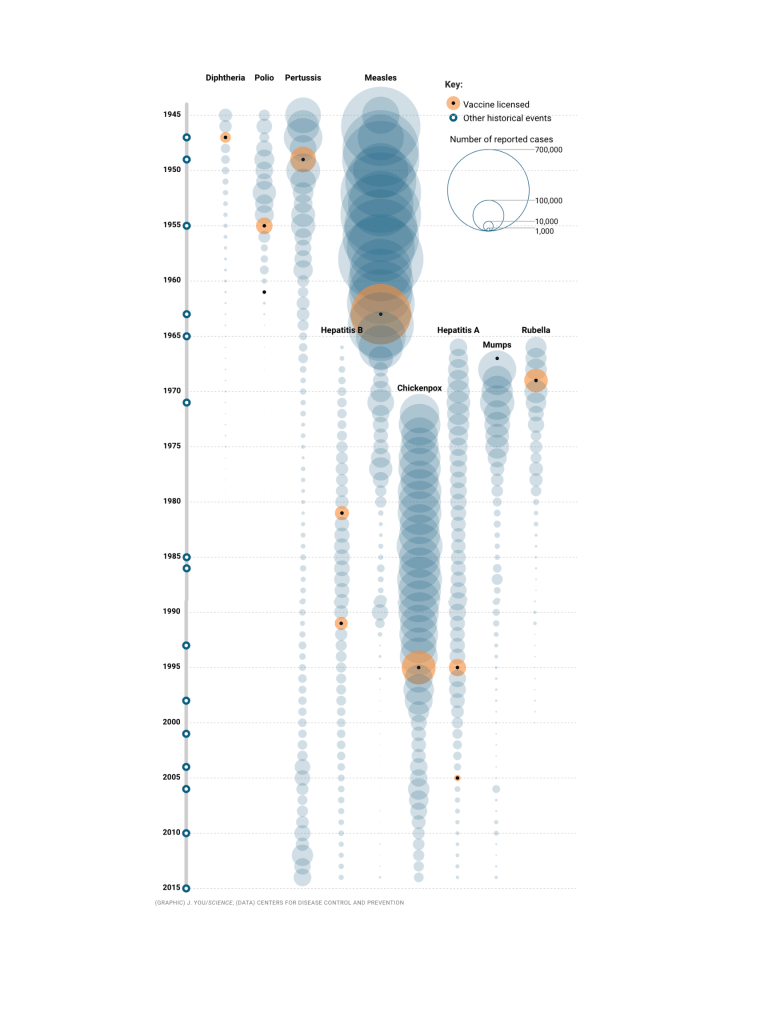
Vaccinations are in the news because of vaccine skepticism and misinformation, so I decided to delve into diseases in this post, with some illustrations. I’m motivated because many younger people lack direct experience with a variety of diseases which have been largely vanquished by vaccines. Consider the following chart, which you can also view online in an interactive:
So I’m going to provide you with a glimpse of various infectious diseases, including my own experiences with some of them.
Poliomyelitis
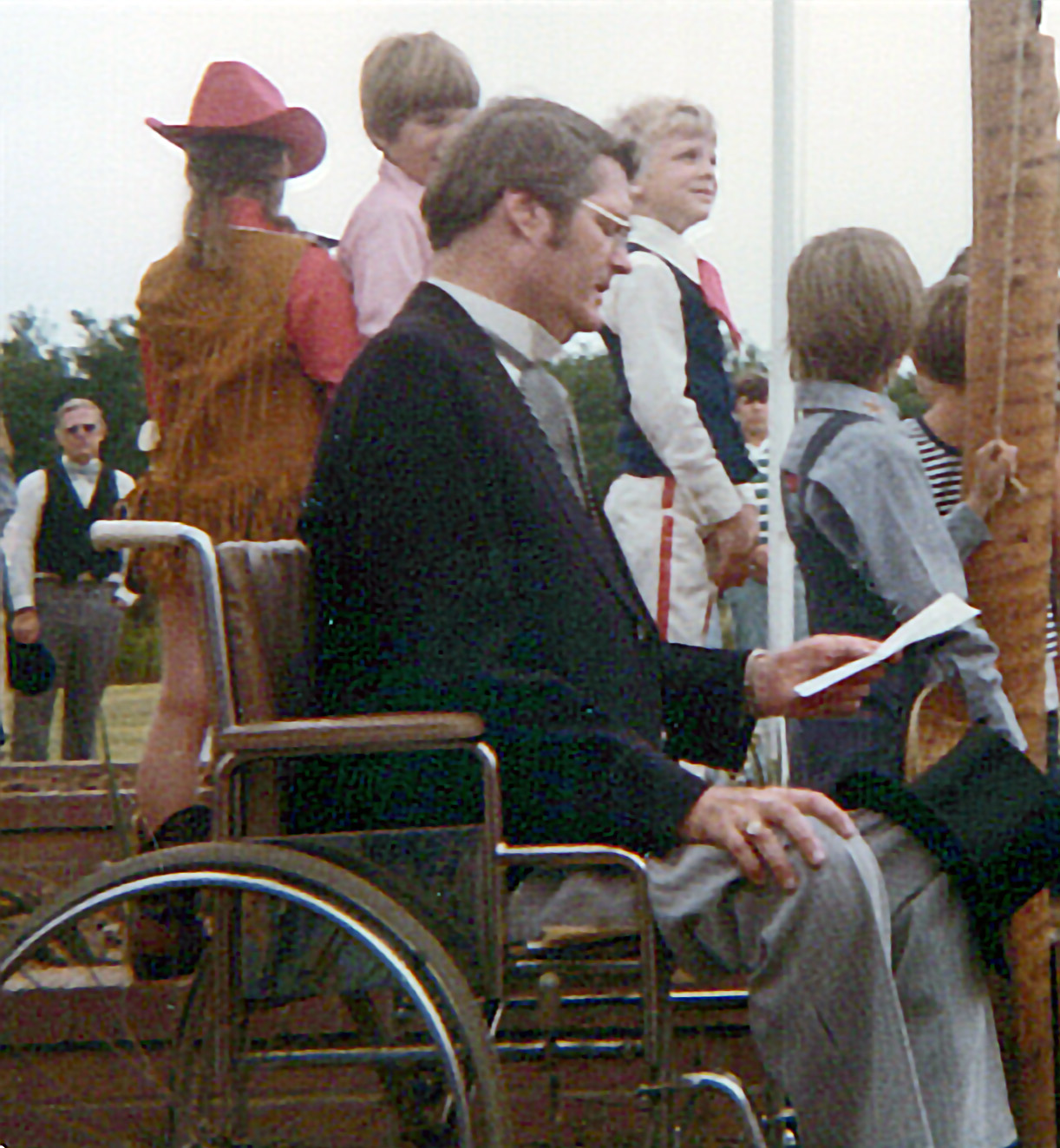
Poliomyelitis was a scary disease for previous generations. My childhood minister and one of his brothers had been paralyzed by it, so while I was growing up I saw firsthand every Sunday how it could change lives.
My parents had witnessed the polio epidemic of 1952, with 58,000 cases in the USA which killed over 3,000 and left over 21,000 with mild to disabling paralysis. Those who were spared lasting paralysis could still suffer post-polio syndrome 15-30 years after an acute attack, with decreased muscular function or weakness with pain and fatigue. That is analogous to shingles: the polio virus lies dormant in the body for many years, but it can eventually reactivate.
Thankfully, the Salk vaccine became available in 1955, and the Sabin oral vaccine in 1961. So my parents ensured that from 1966-1971 I had three doses and a booster of the Salk vaccine, as well as three types of Sabin oral vaccine with a trivalent booster.
However, the scourge of polio didn’t disappear in 1955. The three Johnson brothers and their wives were together for Labor Day weekend in 1956. A few days later, all three of the brothers came down with polio. Our minister, Jerry, and his brother Tommy were paralyzed, while their brother Dale recovered with no long-term effects.
I vividly recall how every breath was a struggle for Tommy, a retired military veteran. He was so afflicted that he couldn’t work for a living, so he devoted himself to volunteer work, and he always sat behind his brother’s pulpit at church. That pulpit had a steep ramp that Jerry would be wheeled up, locking his wheelchair into place for most of the service.
Yet Jerry never dwelled on their disabilities. I only recall one sermon in which Jerry spoke of his own struggles with being confined to a wheelchair because a scarce vaccine had been prioritized for others. He never doubted the importance or efficacy of vaccination, as he and his brother were living proof of the consequences of not being protected by modern science.
Smallpox
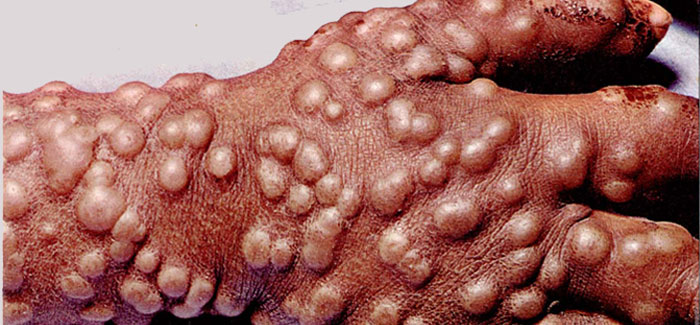
Variola virus emerged thousands of years ago and killed 30% of its victims, leaving the rest with scars. My smallpox vaccination spared me from that scourge, which wiped out 50% of the First Peoples in America after Europeans brought it to these shores. The last outbreak in the USA was in 1949, and a concerted worldwide vaccination campaign led to the eradication of the disease by 1980.
That was the greatest victory of vaccinations, but smallpox and rinderpest are the only infectious diseases we have thus far managed to fully eliminate. Vaccinations can keep many, but not all, of the others at bay. For example, thanks to vaccinations, there were only 30 confirmed cases of polio worldwide in 2022.
Measles, Mumps, and Rubella
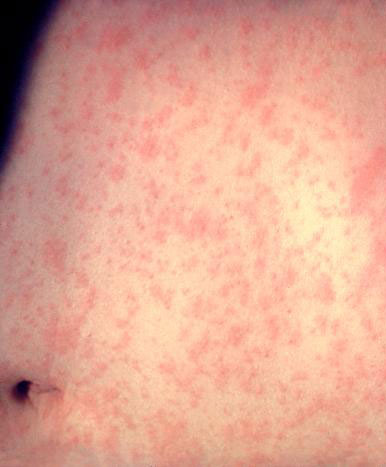
Measles is an airborne disease that is extremely contagious and with no specific treatment. A measles outbreak at a boarding school outside Boston in 1954 provided an opportunity for the rubeola virus to be isolated and cultivated, leading to the first vaccine trials from 1958 to 1960 and licensing for public use in 1963. I had two shots of inactivated rubeola virus and an attenuated live rubeola virus vaccine in 1967, so I never had the measles.
Dr. Maurice Hilleman developed an improved measles vaccine with fewer side effects in 1968, and he combined vaccines against measles, mumps, and rubella into the MMR vaccine in 1971. It is estimated to be 97% to 99% effective in preventing measles after a second vaccination, and measles was declared eliminated in the USA in 2000. However, travelers continue to bring it into the country, and there can still be outbreaks among the unvaccinated, so children should still receive the MMR vaccine.
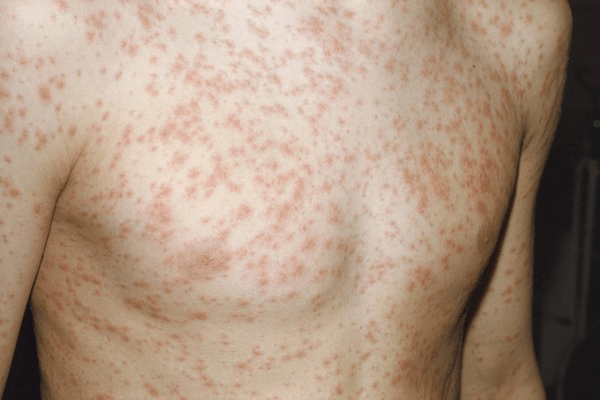
Dr. Hilleman’s work came too late for me, and I had rubella in 1967 and mumps in 1970.
Rubella is sometimes called 3-day measles or German measles, but it is actually caused by a separate virus, against which the MMR vaccine is 89% effective. The MMR vaccine has virtually eliminated it in the USA, with less than 10 people contracting it each year.
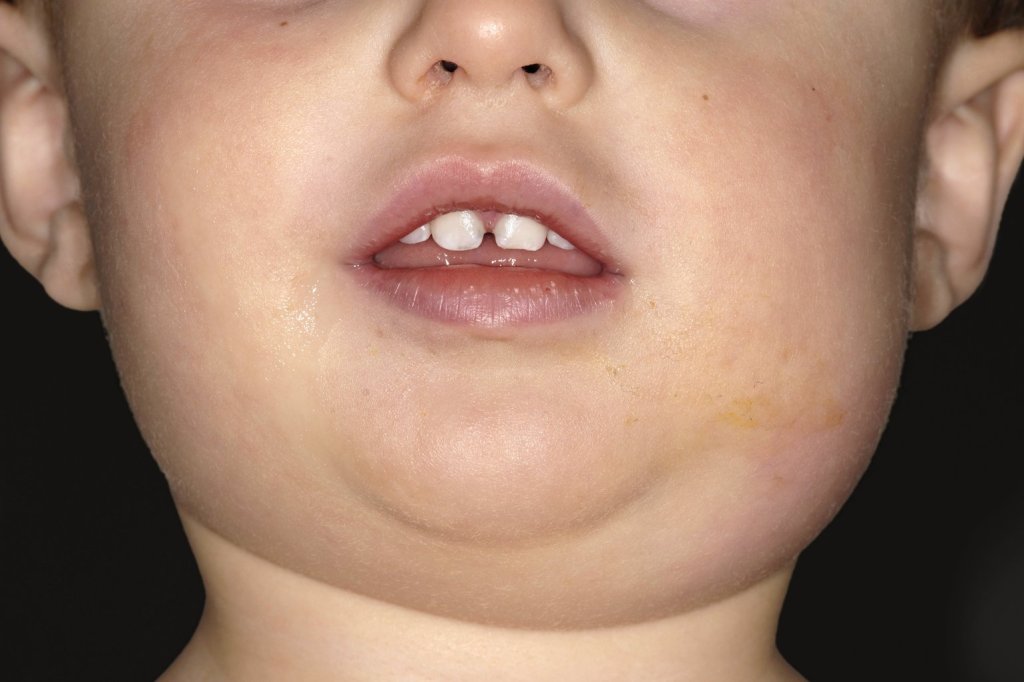
Mumps is caused by a third virus, and it doesn’t cause a rash. Instead, it makes the salivary glands swell, causing puffy cheeks and a tender, swollen jaw. Back when I got it, there were over 150,000 cases each year in the USA. The MMR vaccine is 86% effective against it, and now there are only a couple hundred to a couple thousand cases of it in the USA each year.
Chickenpox
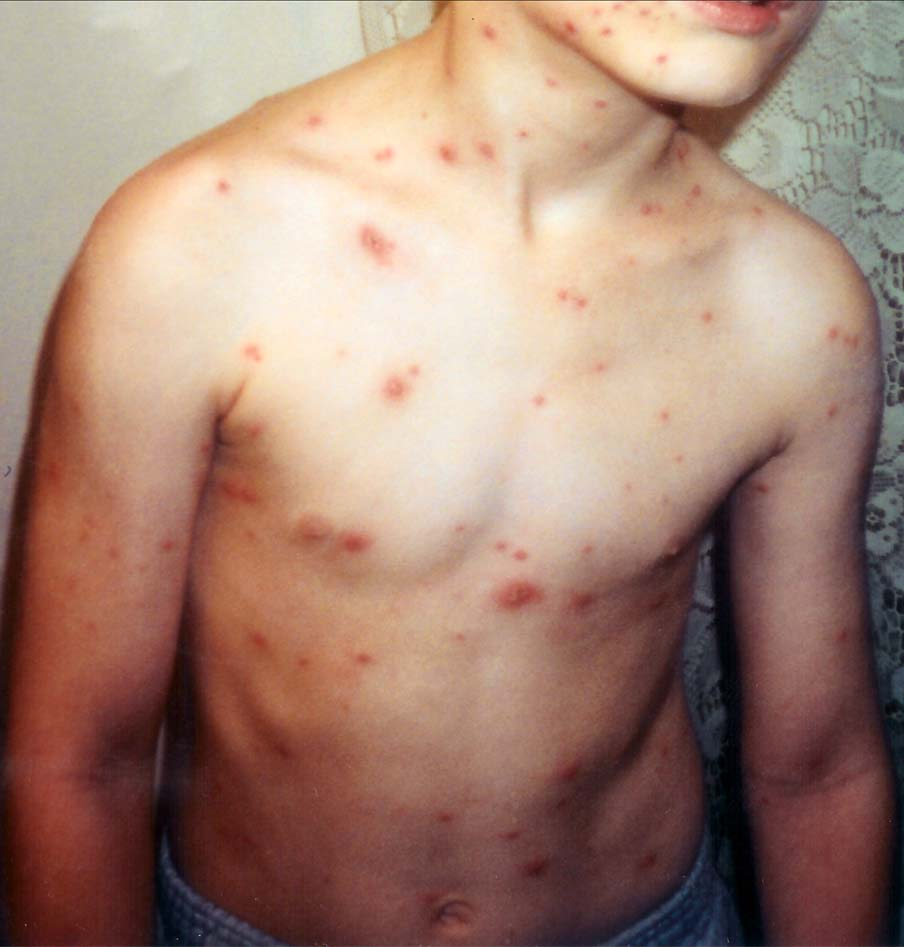
While my rubella and mumps infections were mild, I was not so lucky when I contracted chickenpox in 1972. I was six years old, so I can remember the experience. Dr. Sam Sepkowitz had my mother apply Caladryl lotion to my skin and had me take Benadryl by mouth. The stratagem of mittens and Baggies to control my scratching and prevent picking did help me avoid having any of the telltale round, depressed marks on my skin caused by the varicella zoster virus which I noticed on several of my childhood friends.
Scarlet Fever
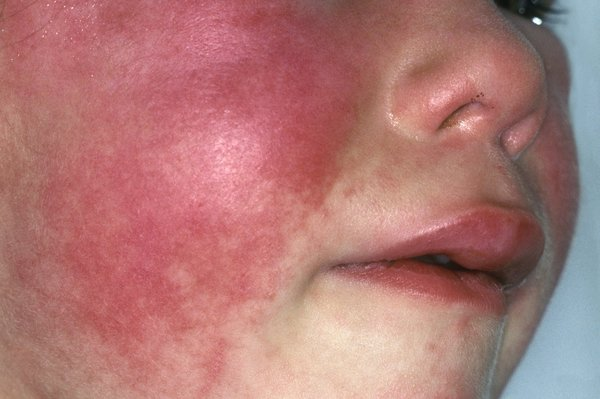
Many a sore throat has been caused by an infection of the bacterium Streptococcus pyogenes; there are several million cases in the USA each year. When it causes scarlatina, or scarlet fever, a rash begins on your trunk and then quickly spreads outward, usually sparing your palms and soles. I contracted it in 1975, and that kept me out of school for several days.
My pediatrician, Dr. Eric Meador (no relation), was concerned that a future infection of Streptococcus pyogenes might lead to rheumatic fever, which could damage my heart. So from then on, he wanted to see me whenever I had a sore throat. He would culture my infection and, if it was caused by strep, he would prescribe an antibiotic.
Mononucleosis
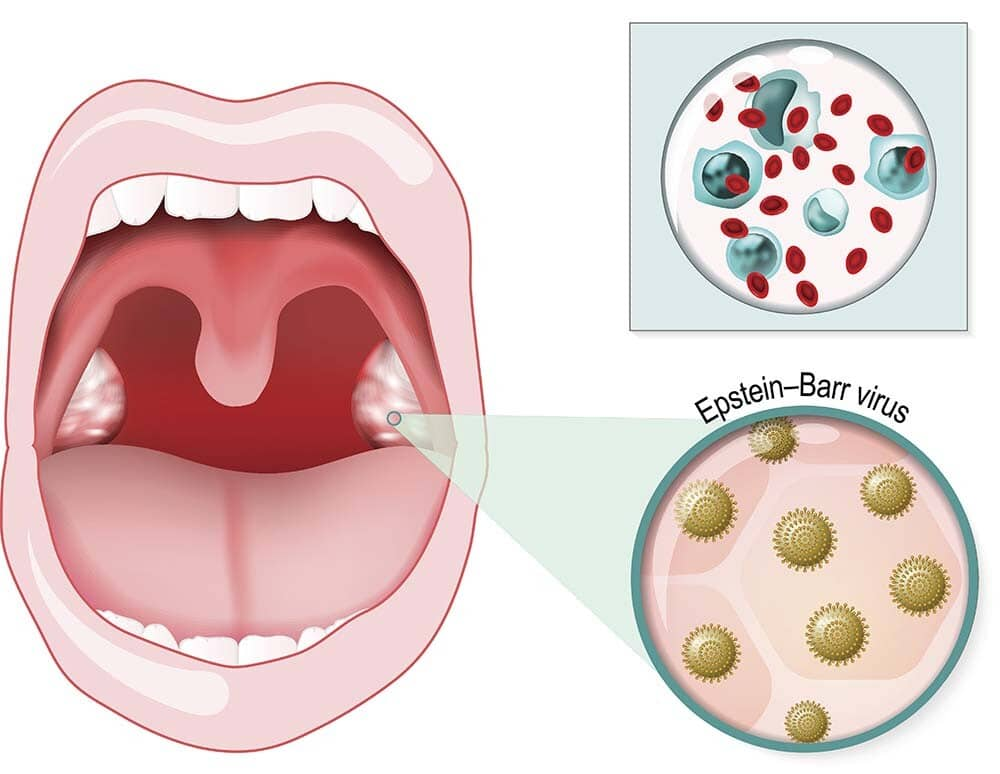
In college, I contracted mononucleosis, probably from the Epstein-Barr virus. About 10% of college students develop it. I had the typical fever, sore throat, and swollen glands. Even after those symptoms resolved, I had chronic fatigue for weeks, so when I returned to my classes, I sat far from everyone else. That precaution wasn’t necessary to prevent contagion, since mono is contracted through direct contact with infected body fluids, but I was so exhausted that I wanted to avoid interacting with my fellow students. There is still no vaccine for mono, and nearly 95% of people have had an Epstein-Barr viral infection by the time they are adults.
That experience gave me empathy for those afflicted with chronic fatigue; those were the most depressing weeks of my time in college. When I finally began to recover, my parents came to Norman to help me launder weeks of dirty clothes at a laundromat.
Influenza
As an adult, I didn’t think much about vaccinations, having no memory of the shots and oral doses of early childhood, until I contracted a severe case of influenza in 1989. I was moving into my first apartment after graduating from college, and I felt miserable for two weeks. Tamiflu had not been developed, and fever-reducing medications could only get my fever down to 103 degrees Fahrenheit.
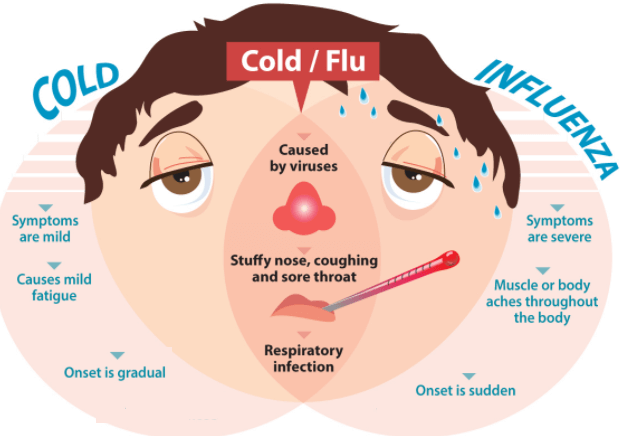
After that, I made sure to get a flu shot every year. Influenza mutates so much that over the last 20 years the vaccines’ efficacy ranged from 10-60%, averaging at a bit over 40%. But I haven’t had the flu since 1989, and I hope to never experience it again.
By the way, when people say they had the stomach flu, that means it wasn’t actually influenza, but rather a bacterial infection or infection by noroviruses or rotavirus.
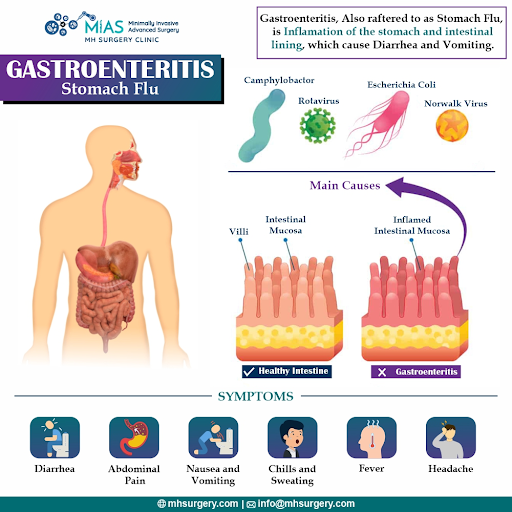
About 8% of the USA population contracts influenza each year, while about 7% are infected by a norovirus. You can get vaccinated against the flu, but currently there is no available vaccine for norovirus. Children are especially susceptible to rotavirus, which infects 95% of them by 5 years of age, with about 2.7 million cases per year, although vaccines are now available.
Respiratory Syncytial Virus
Respiratory syncytial virus (RSV) infects nearly all children by age two, hospitalizing about 58,000 of them annually in the USA. It also hospitalizes about 177,000 older adults each year, killing about 14,000 of them. It was first identified in humans in the late 1950s, but a vaccine candidate in the mid-1960s was not effective and dozens of later attempts also failed.
In the 2000s, the structure of its proteins was determined, allowing an 80% effective vaccine to be developed for older adults. As of this writing, 22% of adults age 60+ get vaccinated for RSV. There is an RSV vaccine available for pregnant mothers, which protects infants from birth through 6 months of age, as well as an antibody product for infants.
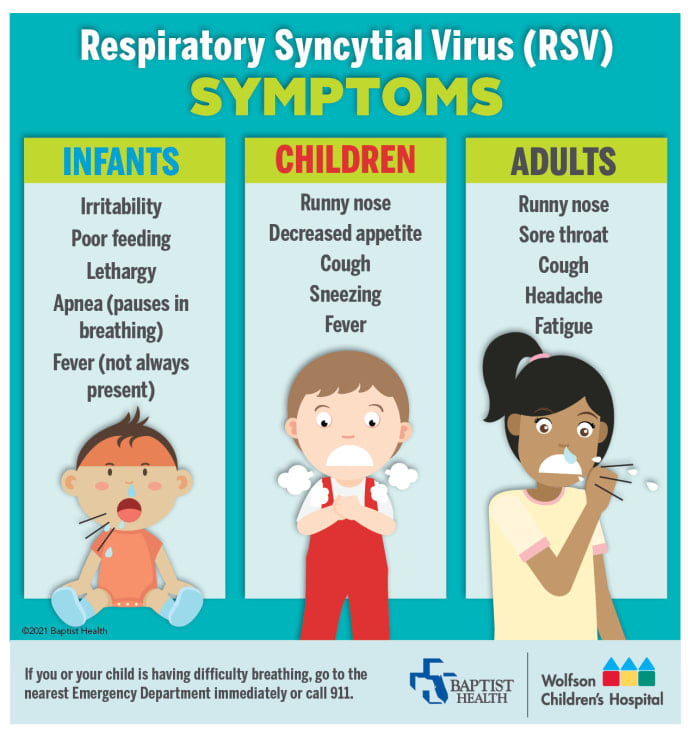
The work analyzing the protein structure of RSV paved the way for determining the spike protein structure of SARS-CoV-2, the virus that causes COVID, allowing for the famous COVID vaccines to be developed in record time.
COVID
I’ve written previously about my personal and professional experiences with COVID. I have been grateful for every COVID shot I could get. I had two doses of the first Pfizer vaccine in February and March of 2021, a Pfizer booster in October 2021, a Moderna booster in April 2022, and another Moderna booster in October 2022.
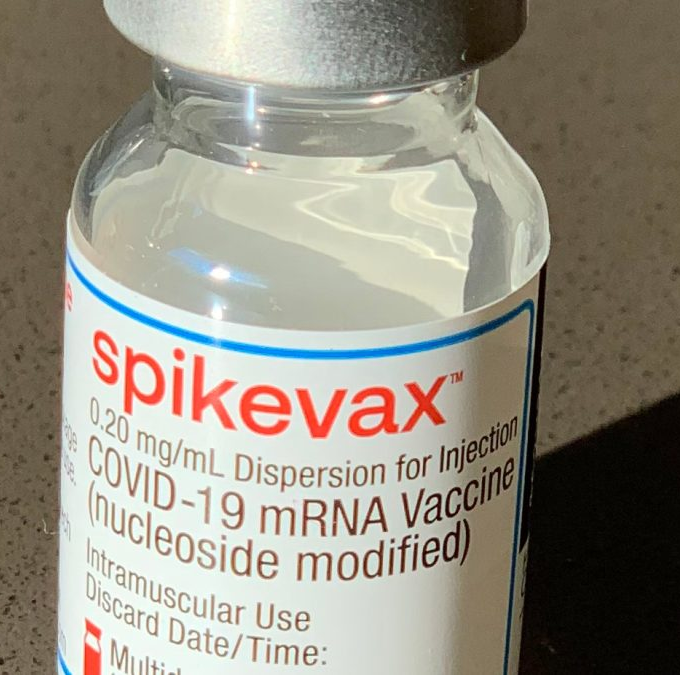
Unfortunately, I still contracted COVID in November 2022 and again in June 2024; the vaccines have proven to be highly effective at preventing hospitalization and death, but they are no guarantee against infection. My first bout with COVID included a chronic cough for several days, nasal congestion and a runny nose, fitful sleep, and chills but no fever. I began testing positive five days after my first symptoms, and didn’t get a negative rapid test until 14 days after I first suspected I might have the virus.
I contracted COVID again in June 2024 during a vacation to the California redwoods. That round brought congestion, fever, headache, body aches, fatigue, and chills and eventually a cough. No doubt all of that would have been much worse if I hadn’t been vaccinated.
Vaccinations and immunity via infection helped lower COVID from the third leading cause of death in these United States in 2020 and 2021 to fourth place in 2022 and tenth in 2023. I’ll gladly do whatever I can to keep improving that statistic.
Tetanus, Diphtheria, and Pertussis
Influenza and COVID mutate so rapidly that the smart money is on getting an annual dose of the latest tailored vaccine. Another vaccine that needs an occasional booster is the Tdap, which protects against the tetanus, diphtheria, and pertussis bacterial diseases.
Tetanus or lockjaw is caused by the bacteria Clostridium tetani. It causes painful stiffening of the muscles, which can lead to trouble opening the mouth, swallowing, and breathing, so it can be fatal. Vaccinations reduced it from 500-600 cases each year in the USA to only a few dozen.
Diphtheria is caused by the bacteria Corynebacterium diphtheriae, which product a toxin can lead to difficulty breathing, heart failure, paralysis, or death. Before vaccination, there were at least 200,000 cases each year in the USA, but now the average is less than one per year.
Pertussis or whooping cough, which is caused by Bordetella pertussis bacteria, is tougher to beat. It can cause uncontrollable, violent coughing making it hard to breathe, eat, or drink. It is especially dangerous for babies and young children. Babies and children younger than seven receive DTaP vaccines, while older children and adults receive Tdap.
Pertussis waxes and wanes. There were over a quarter-million cases in the USA back in 1934. The first triple-vaccines were licensed in 1949, and that dramatically reduced the cases to below 10,000 from 1964 to 2002. But it surged back to almost 50,000 in 2012, thanks to misinformation that led some parents to decline to vaccinate against it. As of this writing, the old epidemic cycle of pertussis peaking every two to five years has been re-established.
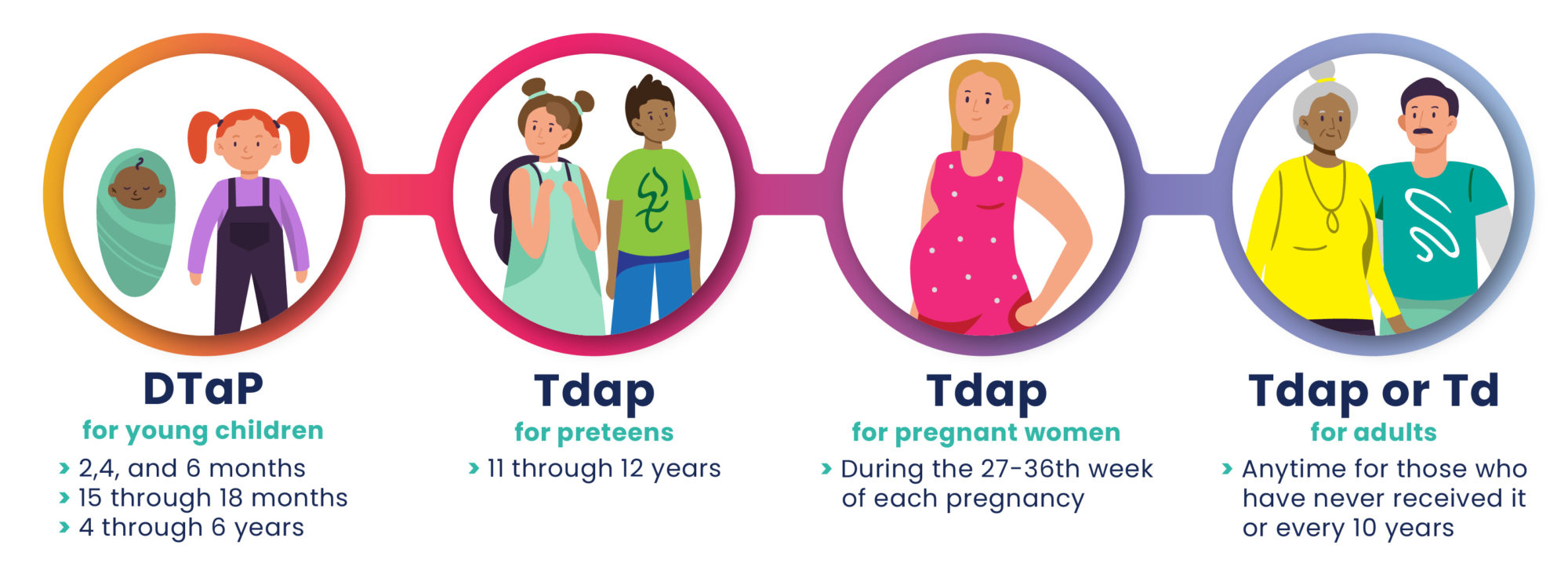
I’ve experienced paroxysmal coughing from pneumonia, so I am grateful that I’ve never had pertussis. Tdap is a little over 50% effective against pertussis, which beats the average efficacy of flu vaccines. Adults should get a Tdap booster every 10 years, and we had a significant number of pertussis cases in all of our local schools this fall, so I went ahead and got my booster a year early.
Get your shots!
I hope you found that informative and interesting. Don’t let news coverage of attention-seeking crackpots mislead you. The vast majority of people trust and support vaccination. 93% of kindergartners in the USA are up-to-date on their vaccinations, 88% of parents believe the MMR vaccine is important for their children, and over 90% of children are vaccinated against polio.
I am certainly grateful that modern medicine has protected me against many terrible diseases, and helped me battle through the ones I could not avoid. In the coming years, it is important that pediatricians, family doctors, community leaders, and friends and family leverage their relationships to promote accurate, evidence-based information. Recent events reinforce how useless it is to belittle or insult the ignorant or misled among us. Be kind and patient while holding firm. Don’t preach; educate…and get your shots!









 Meador Manor
