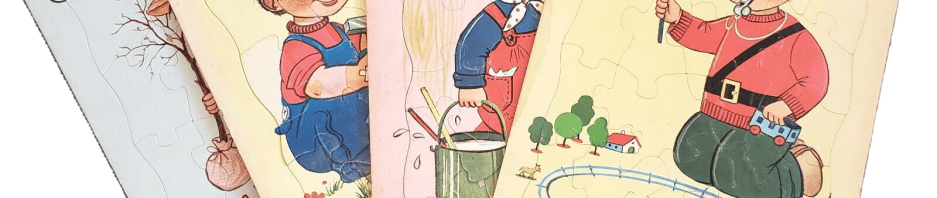

The oldest item I have from my childhood is a jigsaw puzzle of a boy pasting up posters. When I was very young, I enjoyed putting it together, charmed because it had four “figure pieces” in the shape of objects: a lamp, a duck, a star, and my favorite, a little bell.
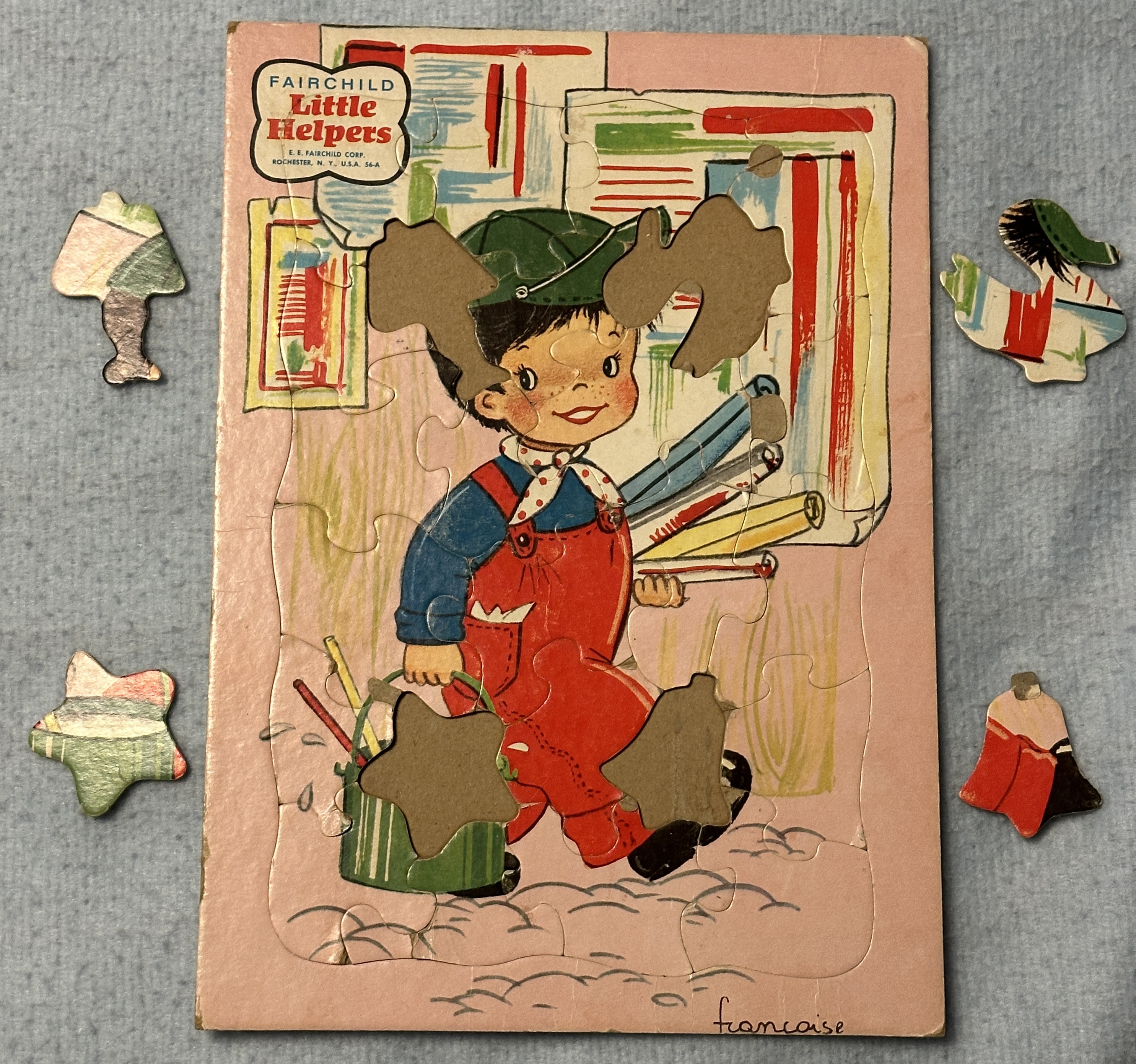
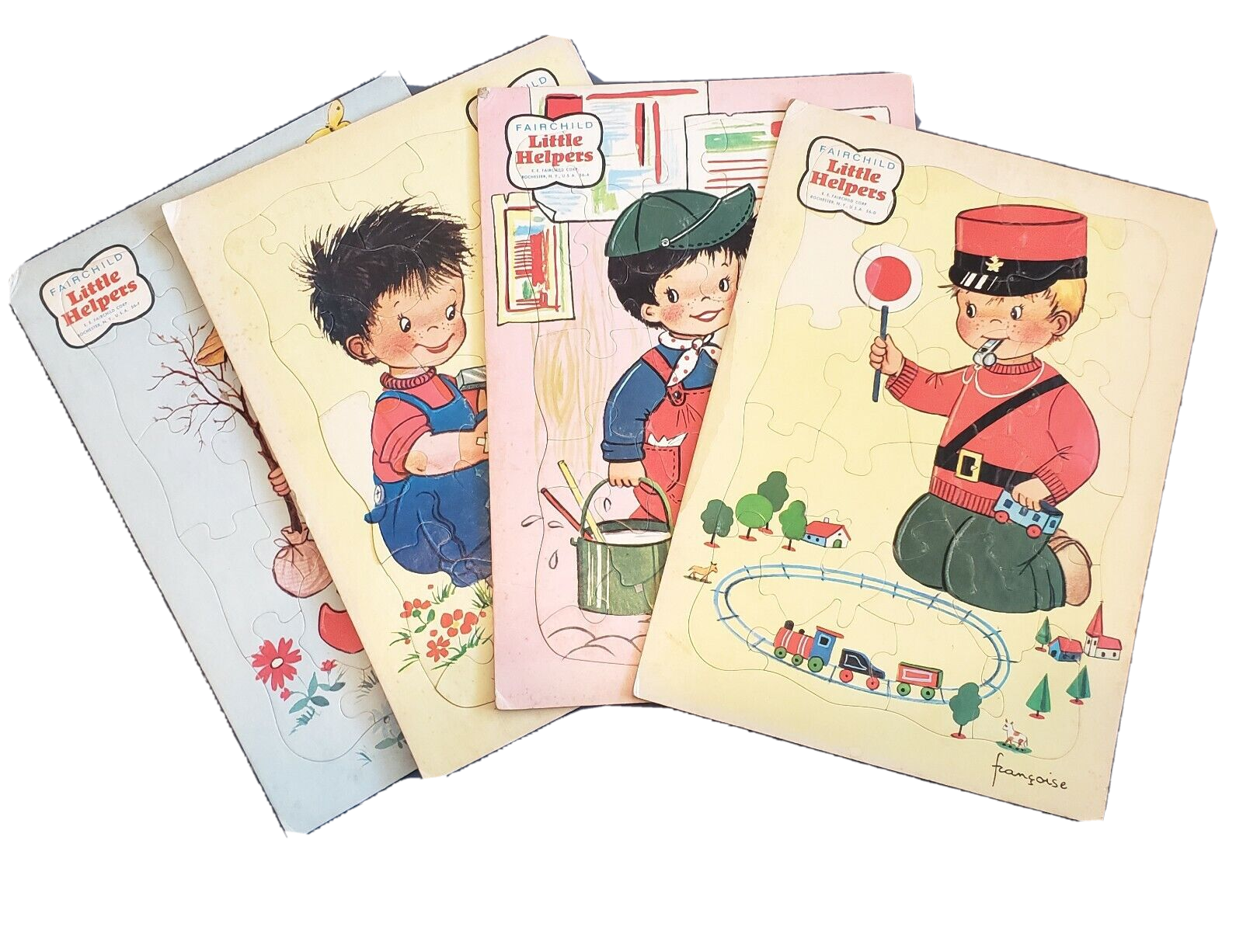
That was one of several such puzzles produced as Fairchild Little Helpers. Henry Alderman and Elmer E. Fairchild formed a company in Rochester, New York in 1900 that initially printed paper goods and cardboard boxes for clients such as candy companies. They branched into games after World War I, constructing a factory in 1926 in the Churchville suburb. Alderman left after 1928 and the E.E. Fairchild Corporation continued to produce paper goods as well as games and jigsaw puzzles under the All-Fair brand, taking advantage of a craze for the latter during the Great Depression.
Elmer passed in 1954, and his son, E. E. Fairchild, Jr. kept the firm afloat making puzzles and card games until a 1974 fire wiped out much of his inventory and a competitor bought out what was left.
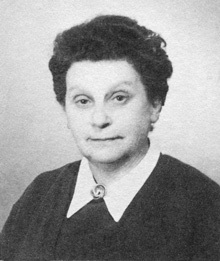
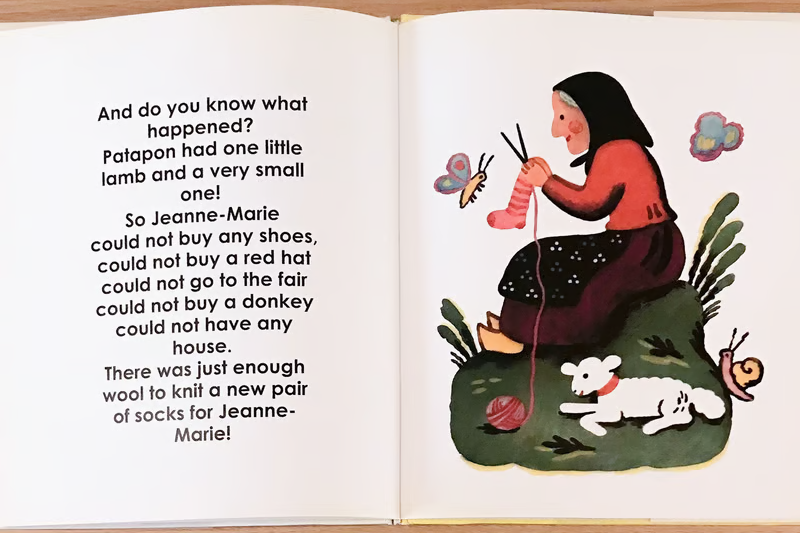
My puzzle’s imagery was by children’s book illustrator and author Françoise Seignobosc (pronounced say-nyoh-boh). She was born in 1897 in Lodève, a commune in the département of Hérault in southern France. She emigrated to the United States and wrote over 40 children’s books before she died in 1961. Many of them were tales about a little girl named Jeanne-Marie. Jeanne-Marie Counts Her Sheep was the Book of the Year for the American Institute of Graphic Arts and won the New York Herald Tribune prize for children’s books.
That was a numbers book about a little girl dreaming of how many lambs her sheep, Patapon, would have, and what Jeanne-Marie would be able to buy with the money she made from the lambs’ wool. Patapon agreed that she might indeed have many lambs, but that being in the sunshiny green pasture all day long was all they really needed to be happy. Jeanne-Marie imagined many lambs and many purchases, but it turned out there was just one lamb. In the end, an aged Jeanne-Marie was able to knit only one pair of socks. “But Jeanne-Marie tried to look very happy, anyway, for she did not want Patapon to feel sad. Patapon was so pleased with her one little Lamb!”
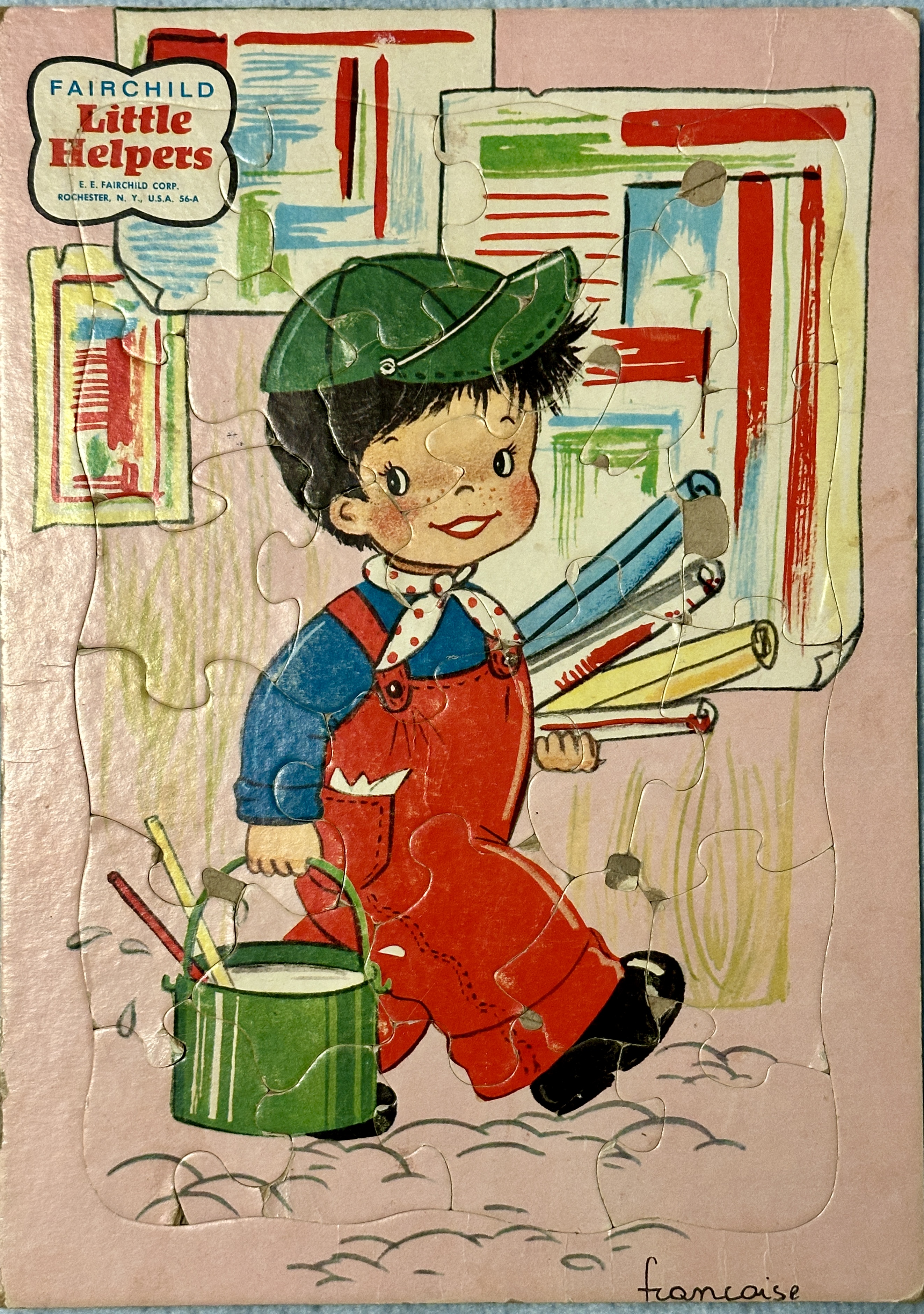
When I was a preschool-age child, I loved puzzles. My mother provided me with a wooden Playskool Winnie-the-Pooh puzzle and various others, but only this Little Helper survived later garage sales and giveaways, as it had been forgotten in an unused side table drawer at our cabin on Table Rock Lake.
Jigsaw puzzles were invented by John Spilsbury, a British cartographer. Around 1767, he pasted one of his maps of Europe onto a piece of wood, cutting sections and countries into individual pieces. He gave the puzzle to schoolchildren to help them learn geography. I can relate to that, as I remember school puzzles of the states of the USA and how some of the small New England states had to share a piece to avoid creating choking hazards. Oklahoma always stood out, thanks to the Panhandle.
Spilsbury’s first puzzles did not interlock, leaving them vulnerable to a slip of the hand or table wobble. Since the jigsaw wasn’t invented until the 1880s, the early puzzles were called “dissected puzzles”.
Jigsaw puzzles play a symbolic role in one of the greatest films ever made: Citizen Kane. At my first viewing, I remember being struck by how thick its wooden puzzles were compared to the cheap cardboard puzzles I was familiar with.
In the early 1900s, lithographic printing, saws, and plywood were combined to create somewhat cheaper high-quality puzzles. From 1907-1911, when Oklahoma became a state, a puzzle craze gripped America’s northeast, but a 400-piece puzzle still cost about $4 at a time when an average worker only earned $12 per week. So puzzles were often shared and swapped.
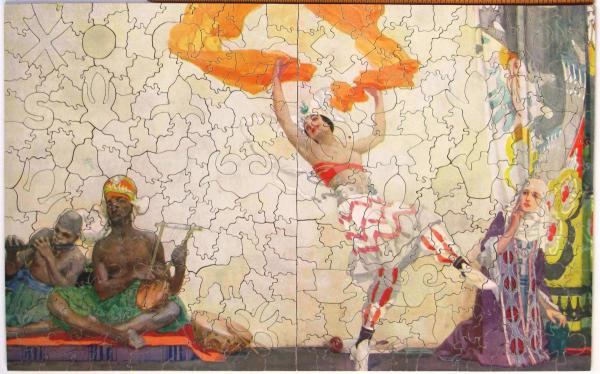
Some people started wanting more difficult pieces with trick edges, no cover image, and images on both sides. Game manufacturer Parker Brothers entered the puzzle business in 1908, and in 1909 shifted entirely to creating hand-cut wooden puzzles, with 225 puzzle cutters crafting 15,000 puzzles per week. It was producing interlocking, non-interlocking, and color-line cutting puzzles. The latter are ones where piece edges fall along color boundaries, reducing pictorial clues and forcing one to rely much more on the shapes of pieces.
Their Pastime Puzzles were the first commercially successful puzzles that used figure pieces in large single-color areas, in the shapes of animals, flowers, letters, numbers, and geometric shapes. They usually included a dozen figure pieces among every 100 puzzle pieces. The large white area in 1928’s Before Jazz puzzle makes it easy to spot several of its 35 figure pieces.
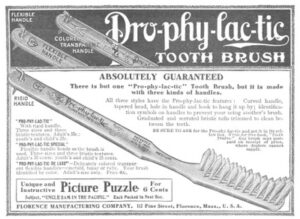
The fad faded after a few years, but another craze came in 1932 as people sought distractions during the early years of the Great Depression. A switch to cardboard allowed for a standard die-cut rather than paying teams of women to cut pieces by hand. A 300-piece puzzle could then be had for just a quarter dollar, subsidized by advertising.
By early 1933, 10 million puzzles were produced each week, with 7 million of them being advertising puzzles. Some were themselves ads, some featured just the name of a company on them, and others were double-sided.
That craze also quickly faded, perhaps due to the loosening of prohibition restrictions, or an improving economy, or because puzzles were then being taxed. A third brief craze came in 2020 during the lockdowns of the COVID-19 pandemic.
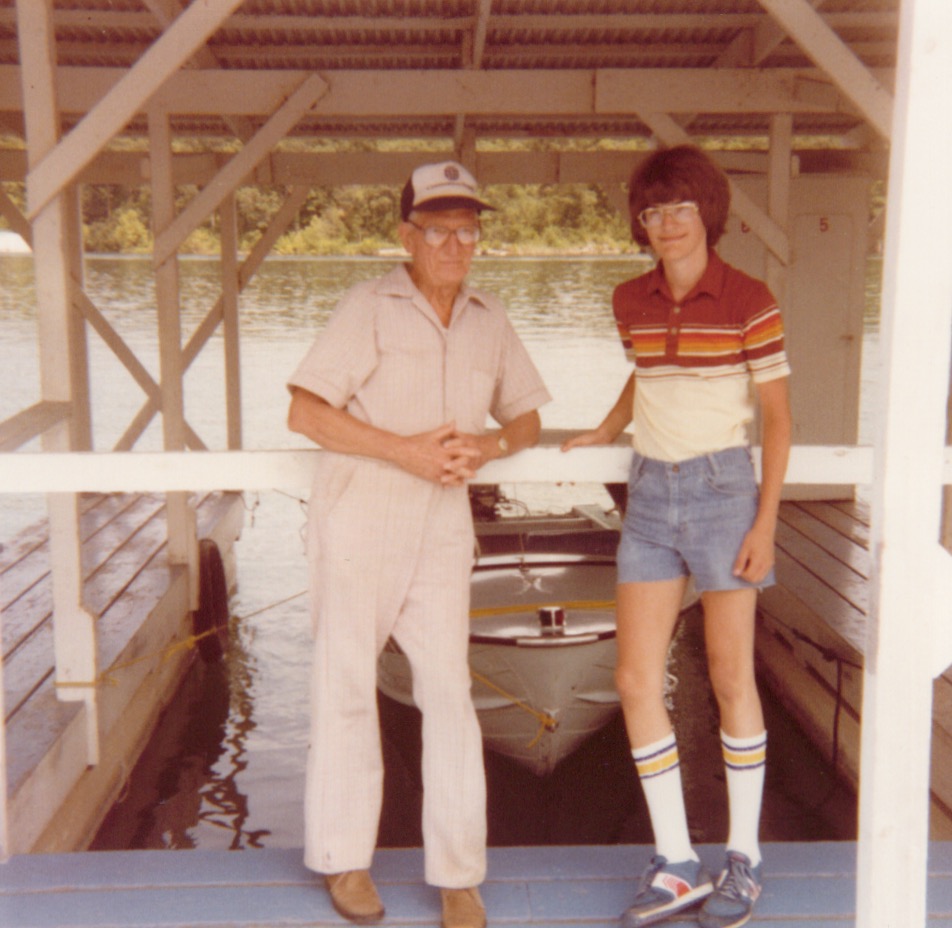
My childhood love for jigsaw puzzles did not endure, but I remember how Truman Thompson, a sweet retired high school history teacher who lived near our lake cabin in Missouri, enjoyed them. Since I was a little boy, if he wasn’t out tending the flowers in his bluffside beds, he might be in his home doing a puzzle.
When his frame home burned and was replaced by a mobile home, he had a big picture window in one end looking out over the lake. He had placed a card table in front of it, and I remember him happily seated there, a cigarette burning in an ashtray, as he assembled a picture puzzle, sometimes glancing up to contemplate the ever-changing puzzle of the outside world.







 Meador Manor