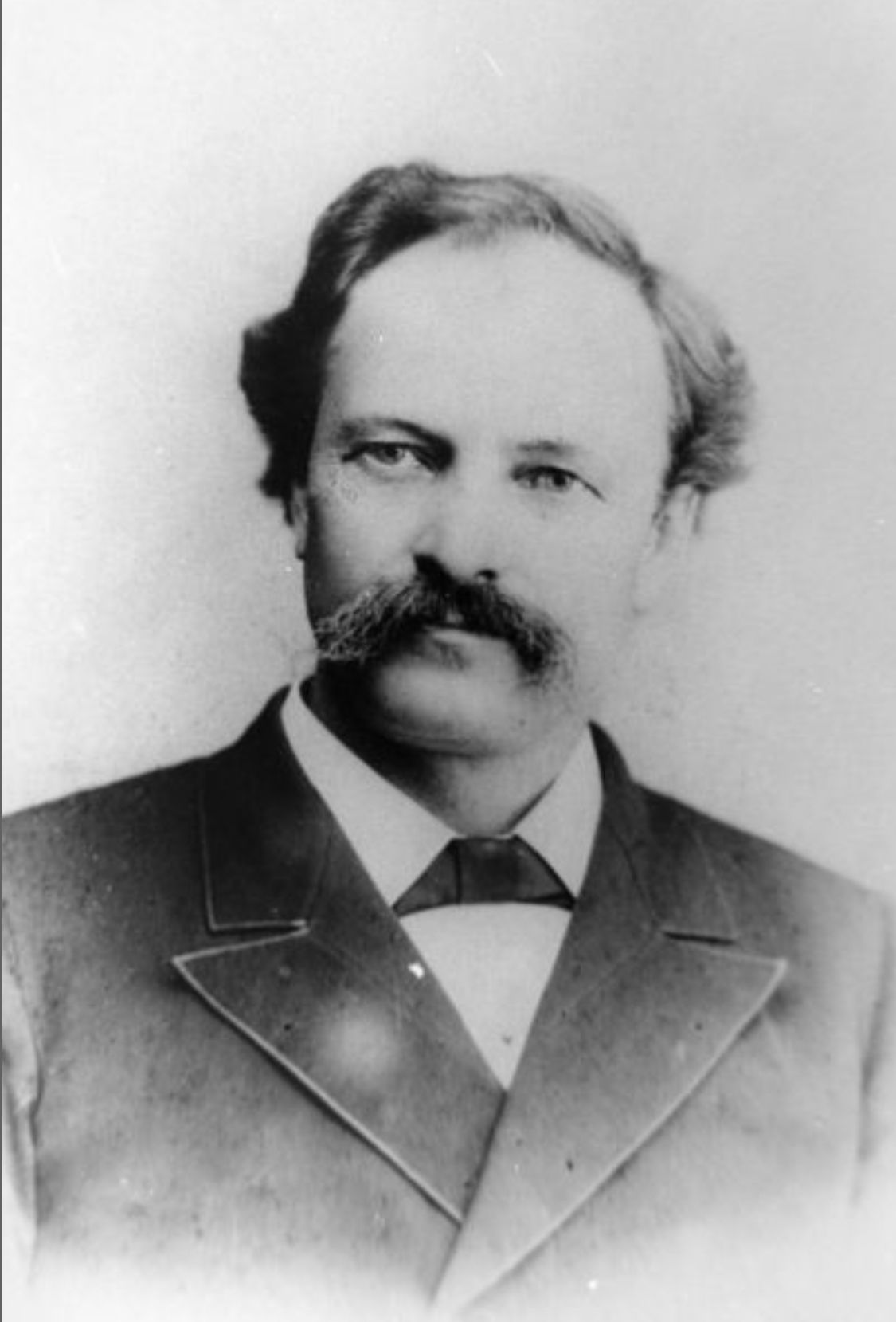
Jabez Bunting Watkins was born in 1845 near Punxsutawney, Pennsylvania, about forty years before its Groundhog Day celebrations commenced. He had humble beginnings, studying law and settling in Lawrence, Kansas in 1873, where he established a land mortgage firm connecting eastern investors with Kansas farmers needing loans.
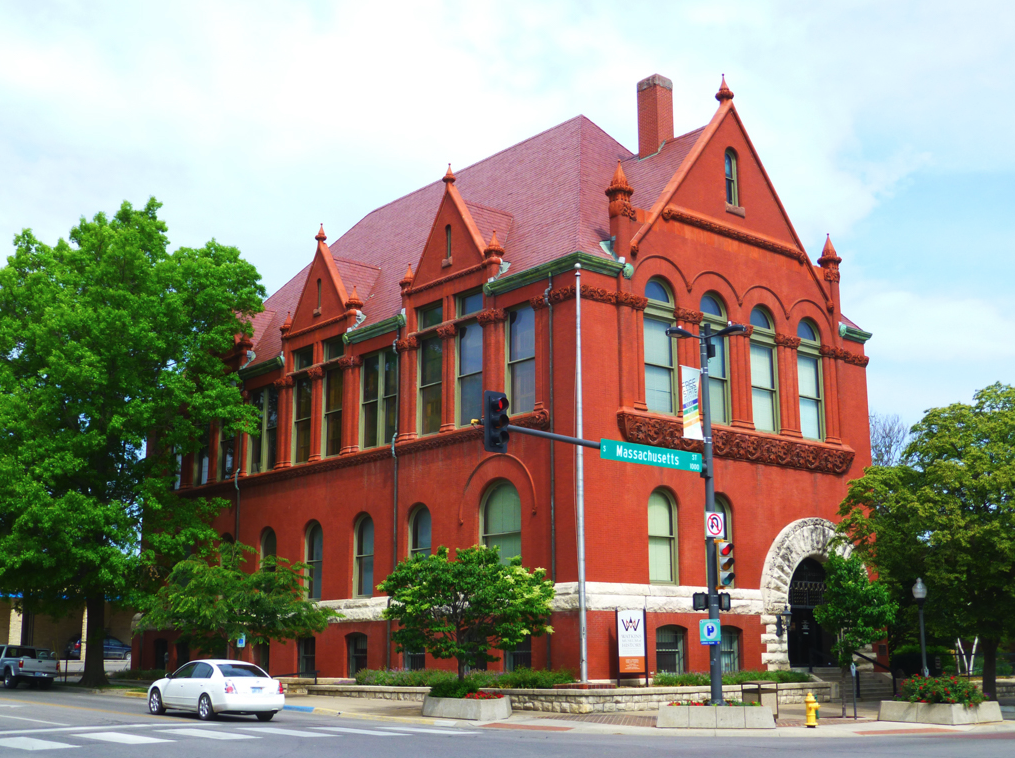
He developed an empire, owning more than 300,000 acres in Kansas and 1,500,000 in Louisiana. He organized the Merchants National Bank in Lawrence in 1876, and a decade later work began on a new headquarters for his business ventures.
The imposing red brick building was Richardsonian Romanesque, with a limestone entry arch and profuse ornamentation achieved via terra cotta borders between the floors, decorative turrets at the corners, and window ornaments.
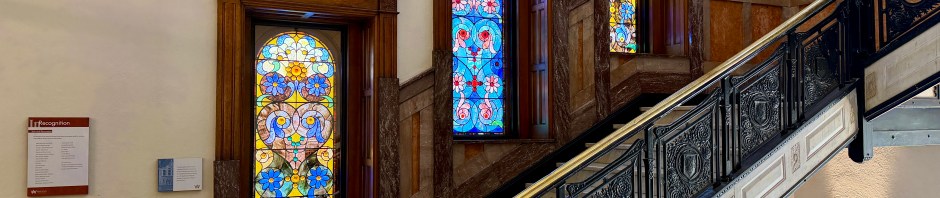
The main entrance features a grand stair which ascends to a second floor that was Watkins National Bank and a third floor for his land mortgage company, with a mezzanine between that floor and the attic for company employees. Beautiful decorative paneling and door and window frames were ash on the ground floor, white oak on the second, and curly yellow pine on the third. Watkins spared no expense in outfitting his HQ, including multiple vaults and expensive custom furnishings. The building had ventilation chases and was plumbed for gas lighting but also wired for electricity to take advantage of the hydroelectric dynamos at the Kansas River dam.
Watkins died at his home in Lawrence in 1921, and the bank closed in 1929. His widow gave the building for use as City Hall, which remained until 1970, when the Douglass County Historical Society acquired the building and began restorations. The Elizabeth M. Watkins Community Museum opened in 1975.
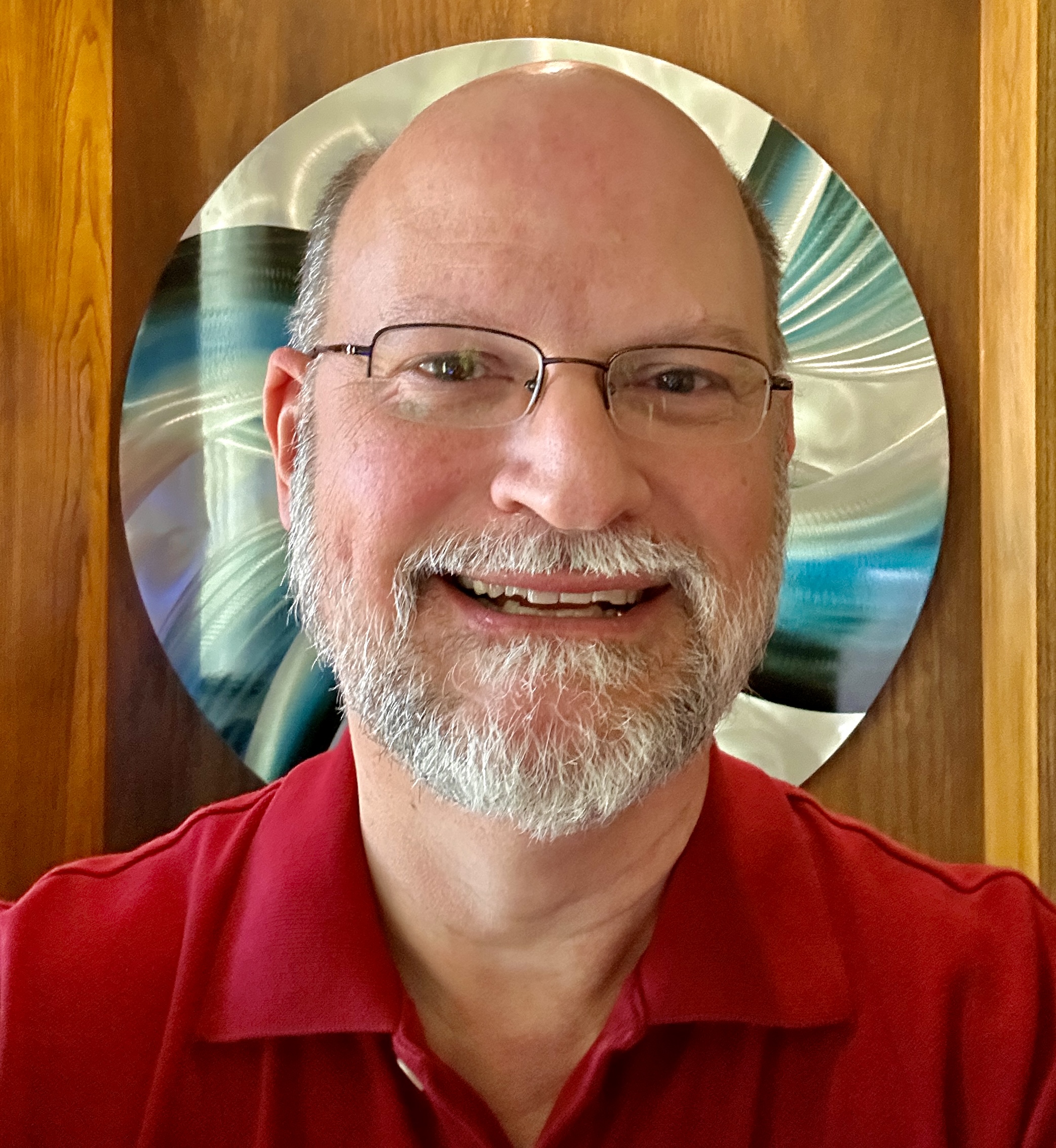
Wendy and I walked in the main entrance, finding ourselves on a landing of a large stairwell. The landing was large enough that to one side, seated at a desk, was a lady who welcomed us and outlined the building’s layout.
We ascended to the banking floor, struck by the beautiful stained glass windows on the stairs leading up to mortgages. They are original to the 1888 building and were recently restored.

You couldn’t miss the original function of the floor we entered, as BANK was spelled out in a lovely floor mosaic.

The old bank had beautiful ceilings.

Black Minstrels
A fascinating temporary exhibit was In the Spotlight: Lawrence’s George “Nash” Walker featuring the research and personal collection of author Daniel Atkinson. It followed the career of Walker from Lawrence to the lights of Broadway. He and his partner, Bert Williams, performed a highly successful vaudeville act on Broadway and overseas.

Wendy’s and my eyes bugged out to see the Jim Crow era sheet music on display from 1897. It was striking that when George and Bert did their black minstrel shows, George was a “dandy” who performed without makeup. Bert had fair skin, giving him easier access to the white vaudeville scene.
The two billed themselves as “The Two Real Coons” since many vaudeville minstrels were whites painted in blackface. At first, the lighter-skinned Bert would trick the darker Walker in their skits. With lighter skin expressing some European ancestry, and a fine voice, by the expectations of the time Williams would have performed as the “straight man” in comedy routines. Williams was very talented, and he played all instruments very well. Walker had darker skin, and was a great comedian and dancer. He would be expected to play the fool.
However, they discovered that audiences found them much funnier when they subverted the stereotypes and played against their appearances. Williams applied the burnt cork to his face to become a black man in blackface, while Walker performed without any makeup, dressing a little too high-style and spending all the money he could borrow or trick out of the lazy, carefless, and unlucky character Williams portrayed.

There was a photograph of George and his beautiful wife, Ada, who was “The Queen of the Cake Walk” and later also became a choreographer. Here is an example of a Cake Walk.

Sadly, in 1909 Walker began to stutter and suffer memory loss due to syphilis. He died in early 1911, at age 37 or 38, in a sanitarium on Long Island, and he was buried in Lawrence. Ada died suddenly of kidney failure in 1914 at age 34.

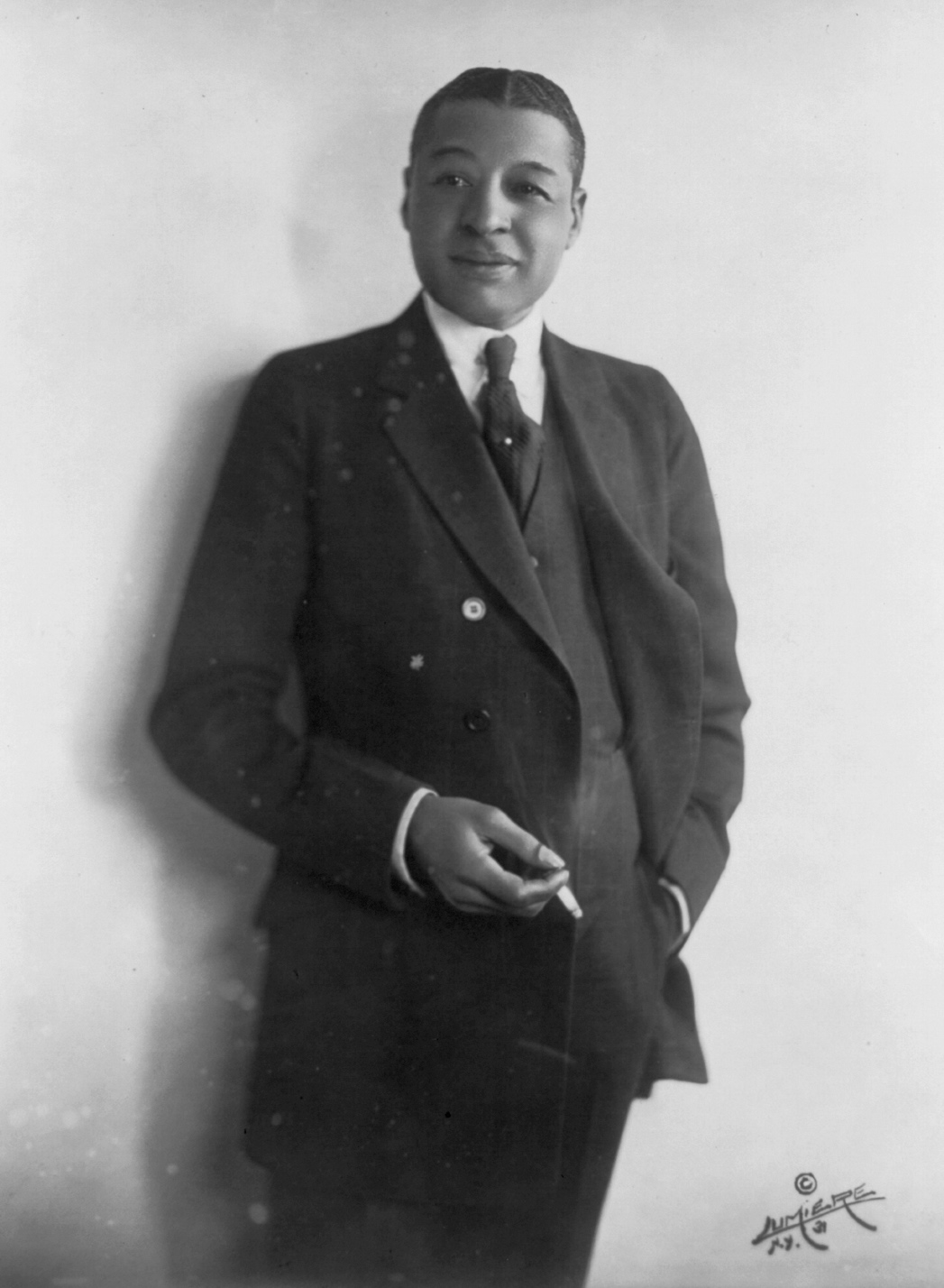
As for Bert Williams, back in 1910, Booker T. Washington had written of him: “He has done more for our race than I have. He has smiled his way into people’s hearts; I have been obliged to fight my way.”
Walker’s death made it a struggle for Williams to keep their company operating, and he was approached by Florenz Ziegfield to perform in his famous Follies. Williams agreed and signed a three-year contract. The white actors threatened to walk out because they did not want competition from a black actor, but they changed their minds when Ziegfeld said he could replace any of them except for Williams, because he was unique and talented. After his contract was up, Williams performed for another three years with the Follies because of his success.
However, his career lagged after his final Follies appearance in 1919, and his final years were marred by chronic depression, alcoholism, and insomnia. He died in 1922 at age 47. A private funeral service held at a Masonic Lodge in Manhattan broke a color barrier, being the first Black American to be so honored by the all-white Grand Lodge. When the doors were opened for a public service, nearly 2,000 mourners of both races were admitted.
Other Exhibits
I liked a Life in Early Lawrence exhibit that Abby Magariel, who was the museum’s education and programs coordinator from 2011 to 2019, had unveiled a decade earlier.

The architecture of the old building fascinated me, including its five sliding banks of shutters for the large windows, some of which are a whopping 12 feet tall.

We ascended the beautiful stairway to the upper floor, which re-opened in 2022 after an eight-year remodeling project.

A prime display there was a Milburn Light Electric Car from the early 1900s. Its only customary owner had been Eleanor Henley, who drove it around downtown Lawrence in the 1920s. It was restored in 1973.

The woodwork continued to impress.

One of the more unusual items was a sculpture of shoe soles. Lloyd Burgert had asked his customers to sign the worn soles he removed, and he assembled that piece of folk art in the late 20th century.

After completing our tours of the second and third floors, we took an elevator to the lowest floor, which appeared to be used as meeting and research space, and I enjoyed seeing an old fuse box preserved in the men’s bathroom.

We returned to the entrance, and I was glad to find they had a booklet by Jack Newcomb with the story of the Watkins building. The docent said it was $5, so I pulled out a $20. She confessed she did not have change, and I said that was no bother, that we had enjoyed the free museum so much that the remainder should be considered a donation.
Unbeknownst to us, Steve Nowak, the museum’s Executive Director, was on the stairway above us. He greeted us, identified himself, and shared that witnessing that sort of spontaneous moment warmed his heart. I am truly grateful to all of the past and present staff of the museum and its board members for their successful efforts to curate such a beautiful, interesting, and happily diverse experience. If you are ever in Lawrence, I highly recommend stopping in at the Watkins.







 Meador Manor