
This is the third of five snowed-in posts, illustrating the pathways I sometimes pursue due to my avid curiosity. This Tangent began with a video remix of an old song by Duran Duran, which had inserts from a French New Wave film from 1961, which had echoes of a failed star of the silent screen who grew up just 40 miles from our home in Bartlesville.

In Last Year at Marienbad, director Alain Resnais wanted Delphine Seyrig’s appearance to resemble that of Louise Brooks in 1929’s Pandora’s Box. Alas, Delphine showed up for filming with a haircut that would not allow for the recreation of Brooks’ Lulu bob. A wedge cut was utilized instead, and that became a phenomenon as well.
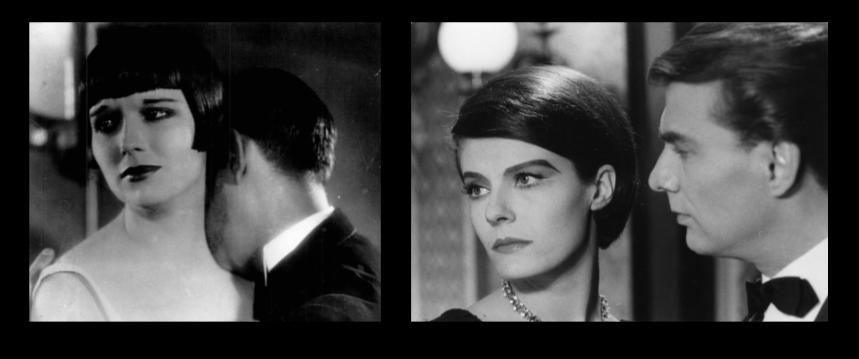
Louise Brooks
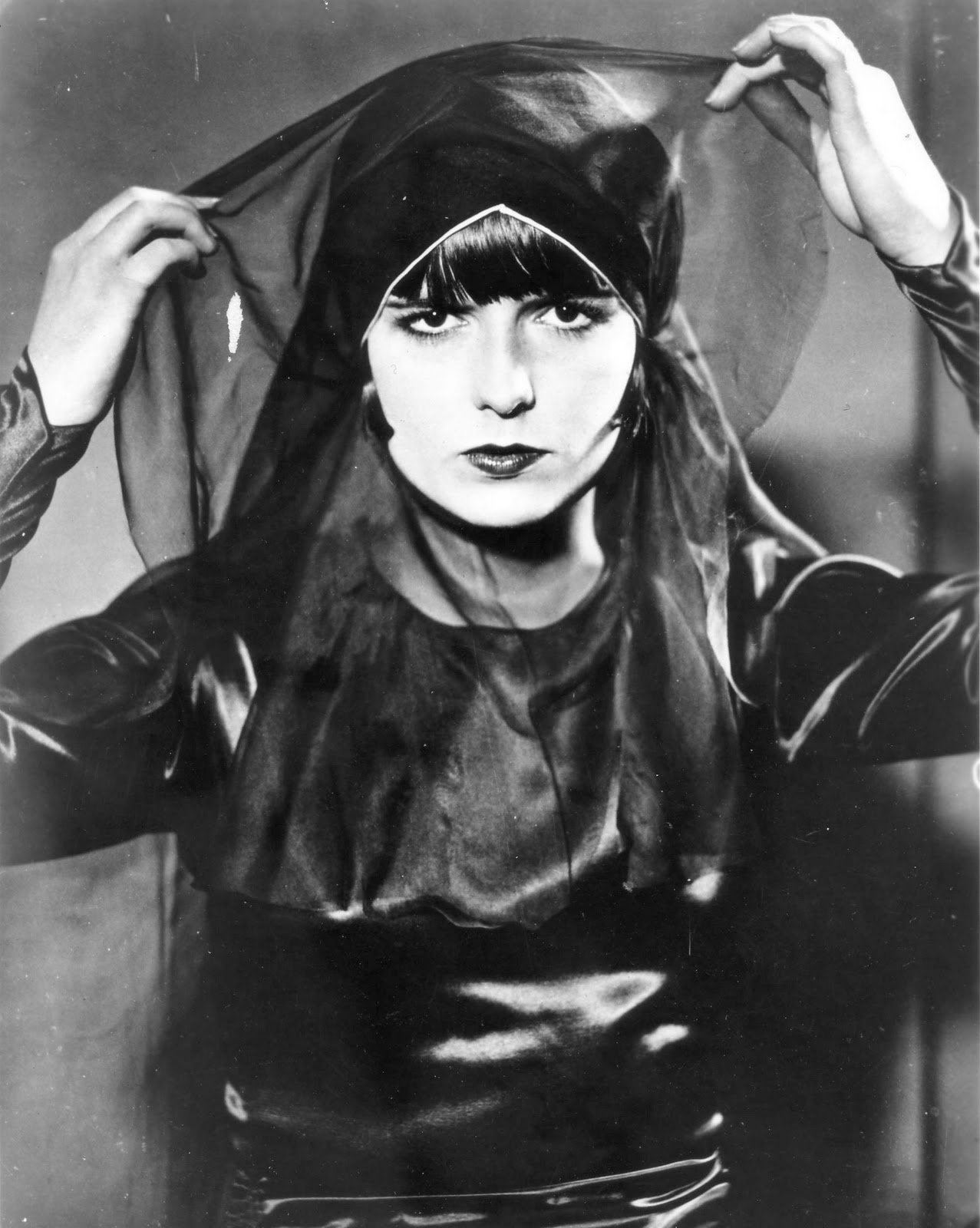
I’ve never seen Brooks’ films, but her look is iconic, and she eventually became a powerful essayist on Old Hollywood. She memorably shared, “If I ever bore you, it’ll be with a knife.”
Louise was born in 1906 in Cherryvale, Kansas, just 40 miles from my home in Bartlesville. Her father was a lawyer and her mother was cultured, participating in Chautauquas and playing Debussy and Ravel on the piano for her children.
However, Louise was sexually abused by a neighbor when she was nine years old. She shared, “We were Midwesterners born in the Bible Belt of Anglo-Saxon farmers, who prayed in the parlor and practiced incest in the barn.”
The family moved to Independence when she was 13, and then on to Wichita. She regularly performed as a dancer across southeastern Kansas and left for New York, and at age 18 she was signed to a five-year film contract with Paramount. Although she only appeared in a couple dozen movies between 1925 and 1938, starring in only three of them, her bobbed black helmet of hair was a style icon, and I already knew of her sharp wit.
If I ever bore you, it’ll be with a knife.
Louise Brooks
Brooks led a wild existence with plenty of drinking and sex. After two highly regarded German films, she returned to Hollywood in 1930, where her independent spirit, rebellious nature, and outspokenness clashed with studio executives. Her career faded, and she eventually returned to Kansas, where “the citizens of Wichita either resented me having been a success or despised me for being a failure”. She then fled to New York to star as a radio actor in soap operas and failed. She became a gossip columnist and was fired. She became a salesgirl at Saks, and finally fell into prostitution from 1948 to 1953.
She began an autobiography, Naked on My Goat. The title was from a young witch’s lines in Goethe’s Faust, who displays her youthful beauty and confidence while another witch warns that eventually she is bound to rot. However, after working on it for three years, she threw the manuscript into an incinerator. Her drinking increased and she considered suicide. Brooks would later share that despite two marriages and numerous affairs, she had never loved anyone.
The French saved Louise. Henri Langlois and others rediscovered her films and, at age 51, she was the subject of a film festival. The curator of film at the George Eastman House in Rochester learned how the former film star was living as a recluse in NYC and persuaded her to move into a tiny apartment nearby. She agreed to watch films, including some of her own which she had never seen, and launched a new career writing essays for film magazines.
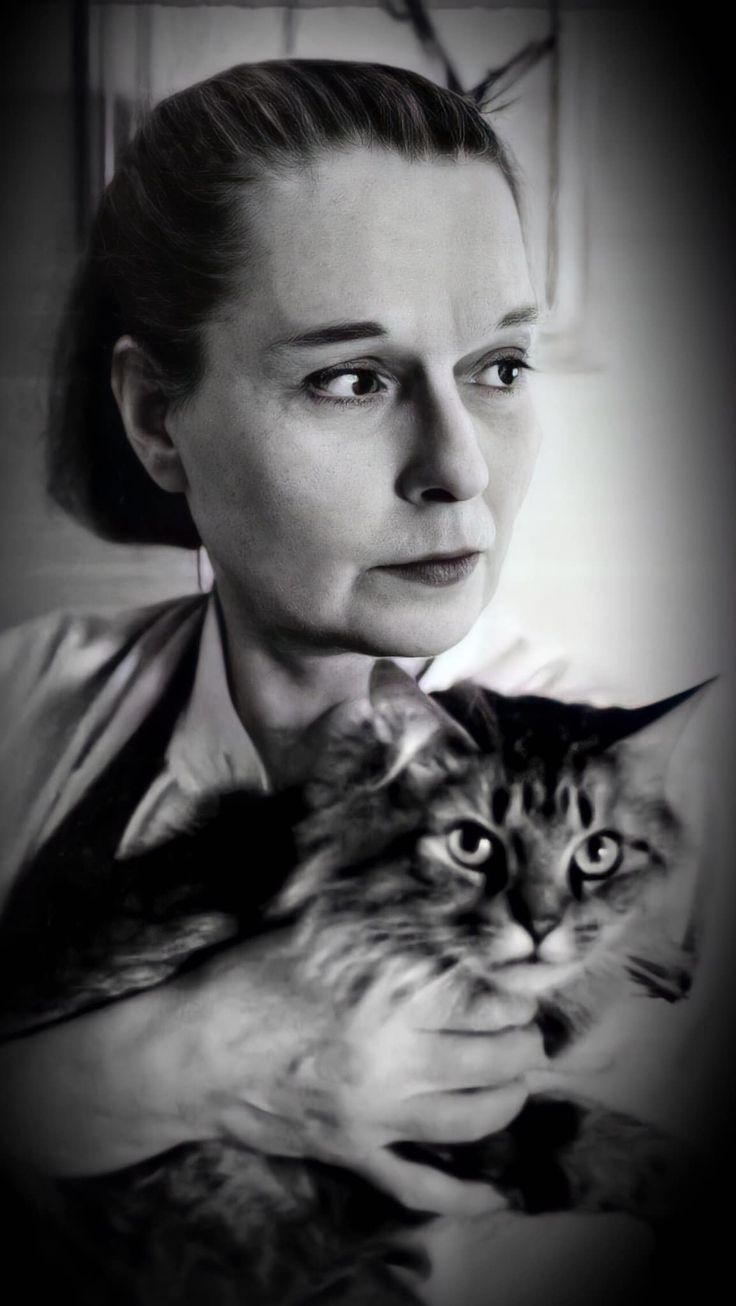
Once derided as a brainy showgirl, Brooks proved to be an articulate and acerbic writer. Her revived notoriety helped inspire director Resnais to model his 1961 film’s star after her classic appearance, all the more since the movie was influenced by a 1940 novella whose author had Brooks in mind for its main female character.
Sight and Sound shared, “If Brooks has an Achilles heel, it is her own intelligence: she tends to attribute to others as much self-awareness and analytical power as she has herself.”
Film Comment‘s take on her work was, “It is also an exhilarating display of the sort of diamond-hard prose whose beauty is inseparable from its precision.”
All that led me to order her only book, Lulu in Hollywood, with eight of her essays. It wasn’t available electronically, so I ordered a splendid print version that the University of Minnesota Press published in 2000 which included a famous profile of her by Kenneth Tynan.
In one of her last essays, Brooks explained why she had not written her full memoir: “I am unwilling to write the sexual truth that would make my life worth reading. I cannot unbuckle the Bible Belt.”
Louise died at age 78 in Rochester, having always thought of herself as a failure. Late in her life, she wrote to her brother: “I have been taking stock of my 50 years since I left Wichita in 1922 at the age of 15 to become a dancer with Ruth St. Denis and Ted Shawn. How I have existed fills me with horror. For I have failed in everything — spelling, arithmetic, riding, swimming, tennis, golf, dancing, singing, acting, wife, mistress, whore, friend. Even cooking. And I do not excuse myself with the usual escape of ‘not trying.’ I tried with all my heart.”
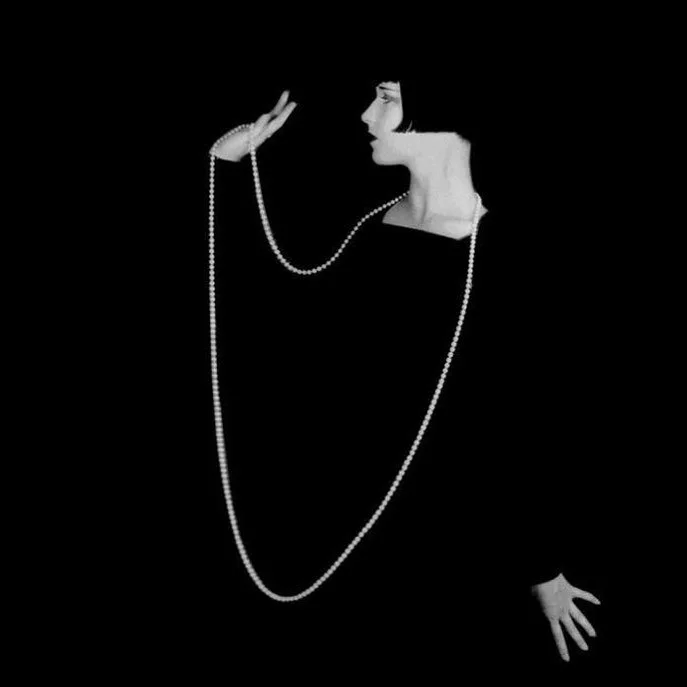
Last Year at Marienbad birthed multiple Tangents, including the ancient game of Nim, which I shall explore in Tangent A4.







 Meador Manor
wow, what a fascinating yet tragic life. Thanks for sharing!
Bob Fraser
Just by coincidence I found myself in Cherryvale on the centennial of Louise Brooks’ date of birth. I wanted so bad to slip into the persona of a reporter or a documentarian and ask “the man on the street” to reflect on the importance of she who is probably the most famous native of that city.
The two people I was traveling with didn’t have any idea who she was.
What an incendiary presence she was! She was a Ziegfeld girl while she was a teenager. Despite her present-day anonymity her face and figure are deeply ingrained into the collective unconscious.