
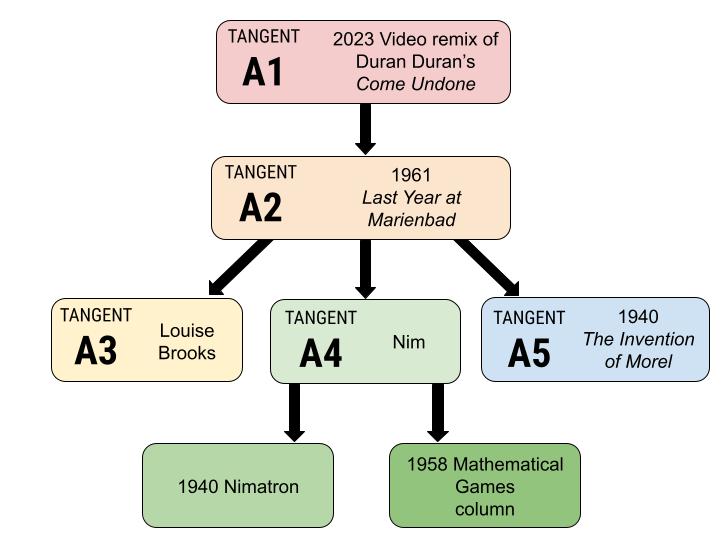
This is the fifth and final of five snowed-in posts, illustrating the pathways I sometimes pursue due to my avid curiosity. This Tangent began with a video remix of an old song by Duran Duran, which had inserts from the French New Wave film Last Year at Marienbad. The film was heavily influenced by an Argentine science fiction novella of 1940.
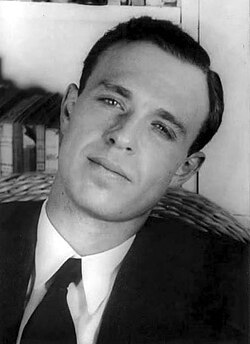
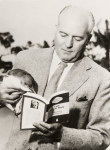
Adolfo Bioy Casares was an Argentine fiction writer, journalist, diarist, and translator. He authored ten novels and novellas, including the 126-page novella La invención de Morel or The Invention of Morel, which included an introduction by his countryman and prize-winning writer Jorge Luis Borges.
The novella won the First Municipal Prize for Literature of the City of Buenos Aires in 1941, and although it was his seventh work, Bioy Casares thought it launched his writing career.
The writer of the 1961 French New Wave film Last Year at Marienbad, Alain Robbe-Grillet, wrote an admiring but mixed review of it in Critique magazine in 1953. The first drafts of the screenplay had Hispanic names, but it eventually evolved into characters named X, A, and M in the script but never named in the bewildering film. While Robbe-Grillet denied the connection, the connections are obvious, so I suspect he was trying to avoid copyright claims. As Kirby Ferguson would say, “Everything is a remix.“
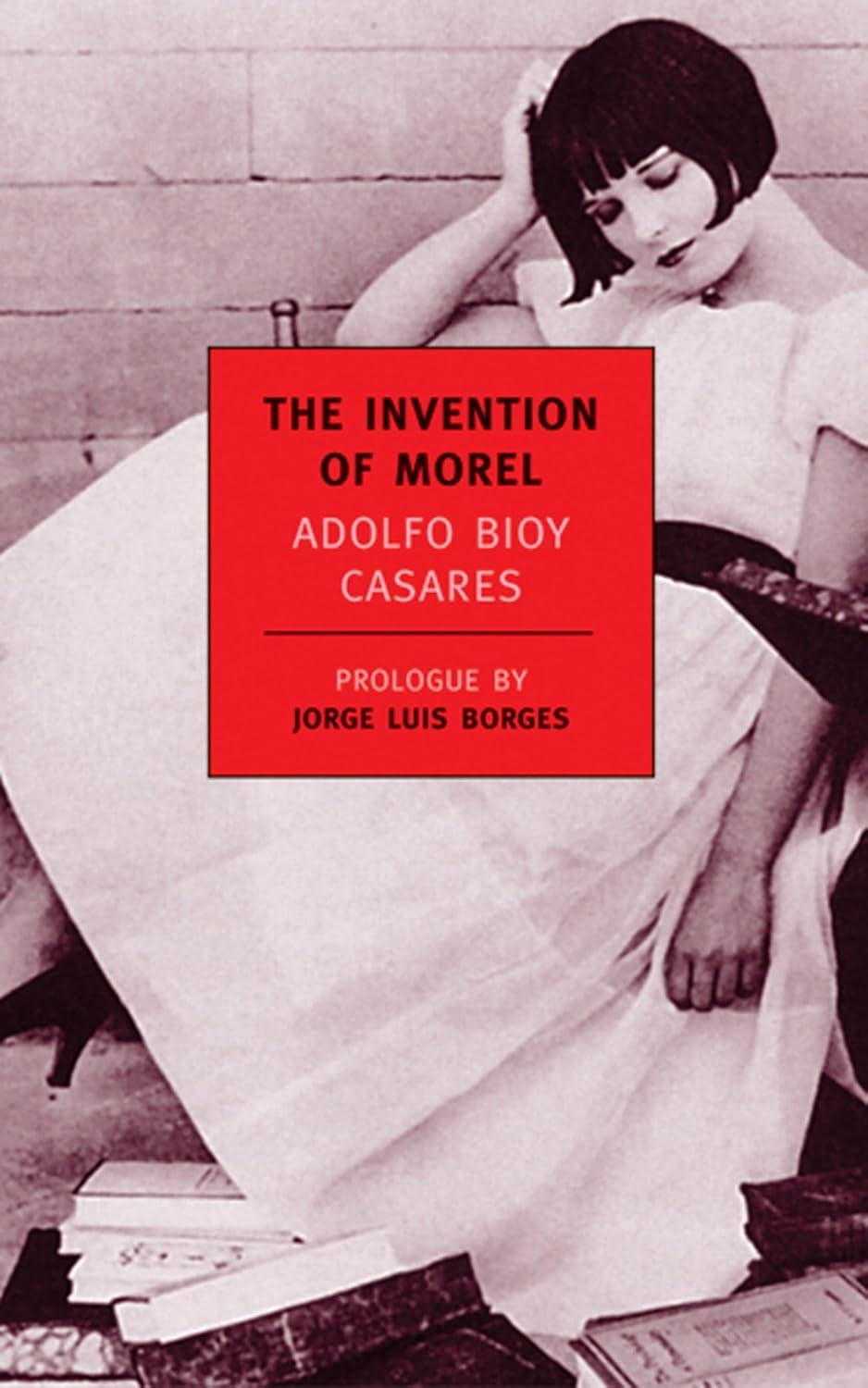
The Invention of Morel was translated into English and published by the University of Texas Press in 1964, but went out of print until reissued as a paperback in 2003 by New York Review Books Classics. There is a Kindle edition, but it is reportedly a bad scan full of errors, so I bought the paperback, which interestingly has the silent film actress Louise Brooks on the cover with her distinctive bob.
That’s because Bioy Casares was fascinated by Brooks and disillusioned by the decline of her career. She had disappeared from the screens of Buenos Aires after three or four movies, and he modeled the character of Faustine in the novel after her. Hence the desire of the director of Last Year at Marienbad to have his lead actress resemble Brooks.
The novel not only served as inspiration for Last Year at Marienbad, but also influenced the science fiction television series Lost, which featured a mysterious island and was broadcast from 2004 to 2010. In season four, a lead character is seen reading Bioy Casares’ novel.
The novel begins, in translation, with, “Today, on this island, a miracle has happened: summer came ahead of time.”
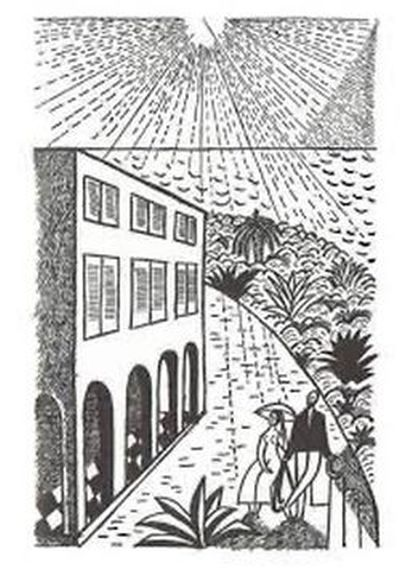
Ann Manov summarized: “A group of elegant French tourists arrive in 1920s dress, like summer tourists at ‘Los Teques or Marienbad.’ Lounging around the hotel and the garden, they have the same banal conversations over and over again. One of them is an enigmatic, Gypsy-like woman sporting a bob and a headscarf. Her name is Faustine, and the fugitive follows her around the island, desperately in love. But she simply does not notice him.”
There are other mysteries, such as two suns or moons in the sky, and the tourists shivering under a hot sun, dancing in a storm, and swimming in a pool filled with rotting fish. Some of the weirdness reminded me of the children’s science fiction television series The Land of the Lost from 1974-1976.
The book explains these mysteries as effects from the titular recording and reproducing machine of Morel, who may be in love with Faustine.
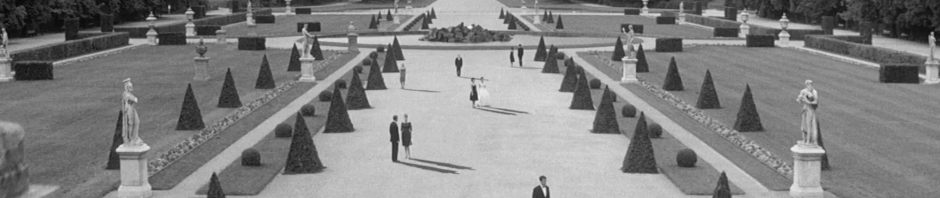
One of the most memorable images from Last Year at Marienbad features a different sort of disquieting wrongness in the environment. Tourists in the formal garden stand and cast shadows, but the statues and conical shrubbery do not. This was achieved by shooting the scene at high noon with false shadows painted onto the ground.
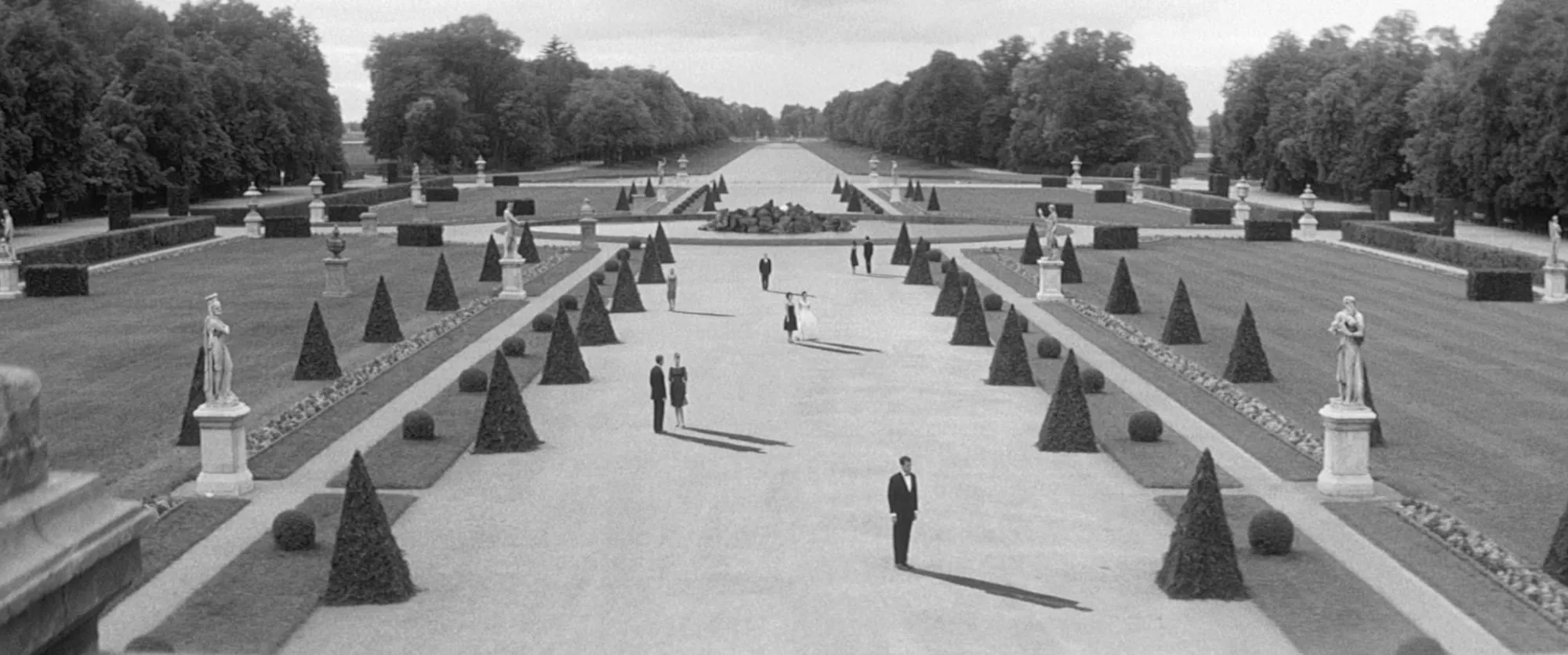

In other scenes, the garden decorations do cast obvious shadows, heightening the dissonance.
There are also repeated changes in a hotel bedroom through the film which reflect a man’s repeated remoldings of a woman’s memories/reality into preferred forms.
The book was interesting, although I would disagree with Jorge Luis Borges’ claim that it is perfect. I liked a throwaway line in which the narrator shared his plan to write a book to enshrine the memory of a man who had assisted him, declaring that the memory of men is the probable location of heaven. I liked that concept: after all, a fellow had just been “resurrected” in my mind 80 years onward, thanks to the novella.
And with that, I close out this first series of Tangents. A music video of an old English pop song to a French New Wave movie to an acerbic Kansan actress in German silent films to an ancient mathematical game to an 85-year-old Argentine novella. What am I going to do when I retire? You have a partial answer.







 Meador Manor