
The mass market paperback is dead. Not all paperback books, mind you, for the larger and more expensive trade paperbacks are still with us. But it shook me to realize that the pocket paperback, which was so important in my life until 2008, is now extinct.
A story related by Smithsonian is that back in the mid-1930s, Allen Lane, chairman of the British publishing house Bodley Head, spent a weekend in the country with Agatha Christie. While in a train station, worrying about how to keep his business afloat amidst the Great Depression, he browsed for something to read, but struck out, only finding trendy and pulp magazines. That gave him an idea.
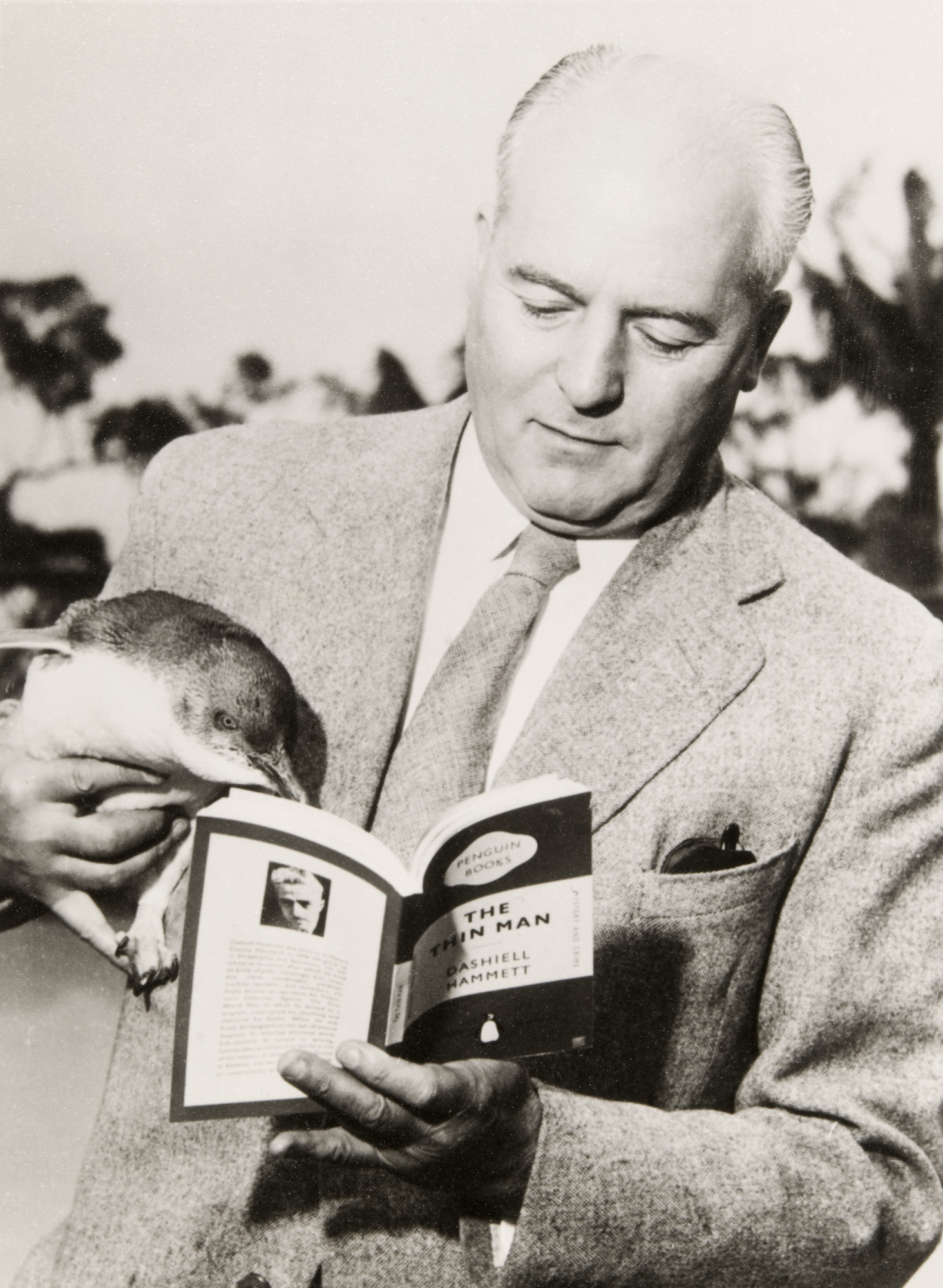
Lane used his own capital to found the Penguin publishing house, acquired the rights to reprints of some literary titles, and worked to place his titles in places other than bookstores, with Woolworth’s an early customer. His paperbacks were cheap, costing the same as a pack of cigarettes, and their reduced size required fresh typesetting. Penguin started with 10 titles, and it had to sell 17,000 copies of each book to break even. That wasn’t a problem: in its first year, Penguin sold over three million books.
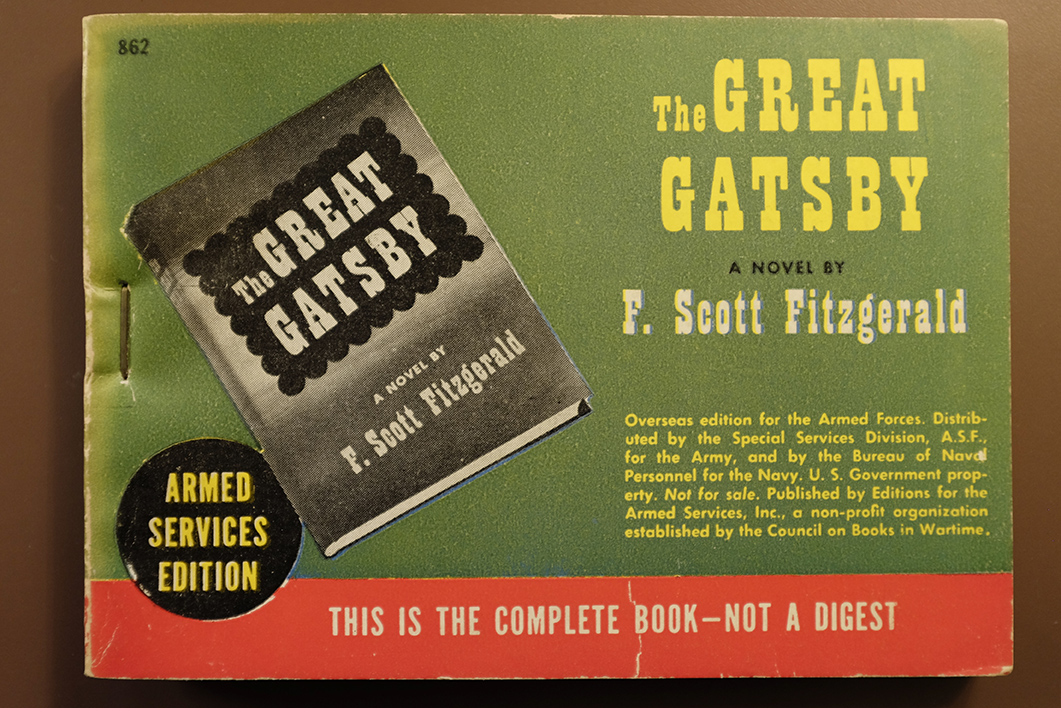
The U.S. adopted the model in 1938 with Pocket Books, starting out by selling Pearl Buck’s The Good Earth in Macy’s. World War II popularized pocket books with soldiers via Armed Services Editions, with nearly 123 million copies of 1,300 titles being distributed. That revived interest in The Great Gatsby, helping make it the great American novel. 1925’s Gatsby had sold fewer than 25,000 copies by the time Fitzgerald died in 1940, but 155,000 copies of it were distributed during the war, and it is estimated that those copies were read and passed along an average of seven times each.
Penguin’s pocket size books were 4 3/8 by 7 1/8 inches, while the US ones were often 4 1/4 by 6 7/8 inches with some variations in height, while the width remained stable to fit in the wire racks used to display their cover art. At one time, over 600 independent distributor wholesalers were delivering them to 100,000 outlets where magazines and newspapers were for sale, including newsstands, variety stores, gas stations, and supermarkets. School book fairs, book clubs, and bookmobiles also helped bring paperbacks to students and teachers, from a variety of publishers.
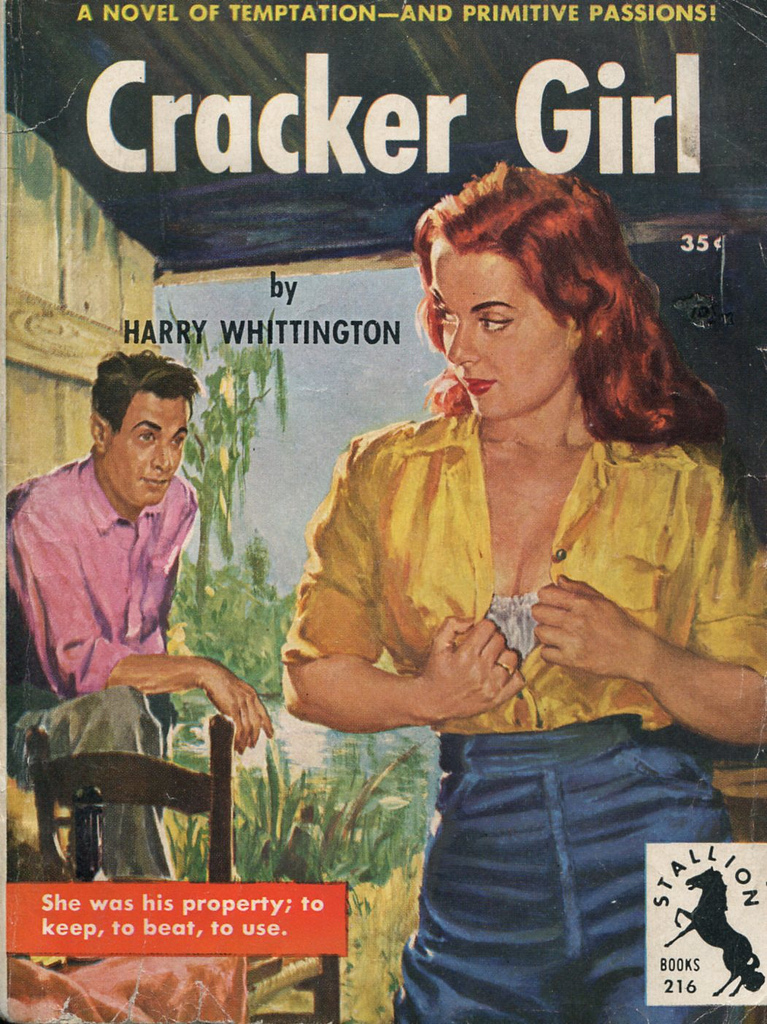
In 1950, Fawcett began publishing original fiction in mass-market paperback form, instead of just reprints. Cheap paperbacks followed with lurid covers for detective, romance, science, and western fiction printed on cheap, high-acid wood pulp paper. Such works were hurriedly written, fast paced, and often featured exploitative elements.
I have used Open Library to read some fun trash by the ‘King of the Pulps’ Harry Whittington, who churned out hardboiled crime, mystery, western, erotica, and slavesploitation for cheap paperbacks from the late 1940s into the 1980s. Whittington published over 200 novels under at least 17 pseudonyms as well as his own name, including 85 in a span of only a dozen years. He once managed to write seven novels in a month.
A slump in the science fiction market in 1959 led author Robert Silverberg to switch to other genres for awhile, writing two books per month for one publisher, another book each month for a second publisher, and churning out about 200 erotic novels under a pseudonym. Motivated by mortgage payments, he reportedly could write 250,000 words each month. When I was in junior high, one of the neighborhood kids snuck a couple of erotic mass market pulps out of his father’s den, and we pored over them for extracurricular education, as they were more explicit than my mother’s and my aunts’ Harlequin romance novels and far more exciting than the Life Cycle Library my parents had purchased for my edification and enculturation.
Most of the pulp magazines had collapsed in the late 1950s, done in by both pulp paperback novels as well as television, with only a few digest-sized science fiction and mystery mags hanging on.
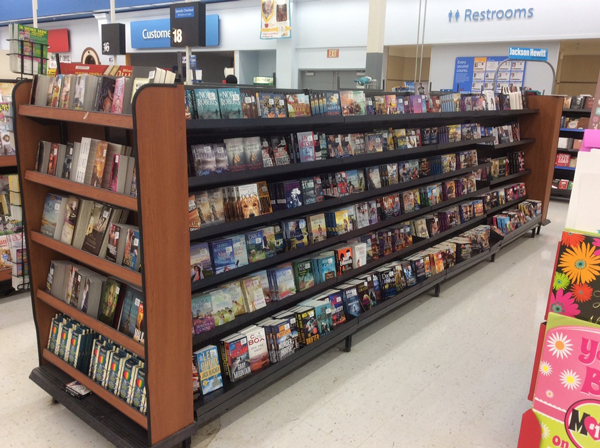
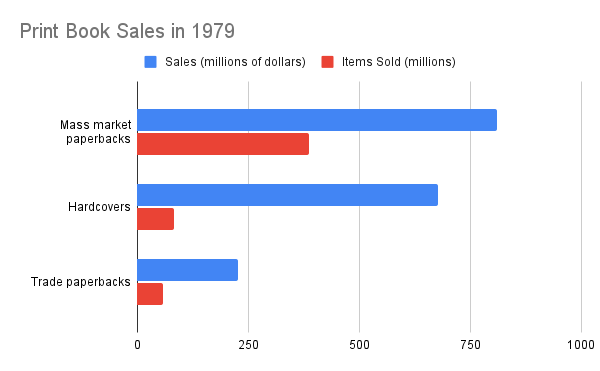
I remember large racks of pocket-size mass market paperbacks in discount stores and airport shops. Their heyday was from the late 1960s into the mid 1990s. $657 million in sales in 1975 rose to $811 million in 1979, handily beating hardcovers and the newer trade paperback format.
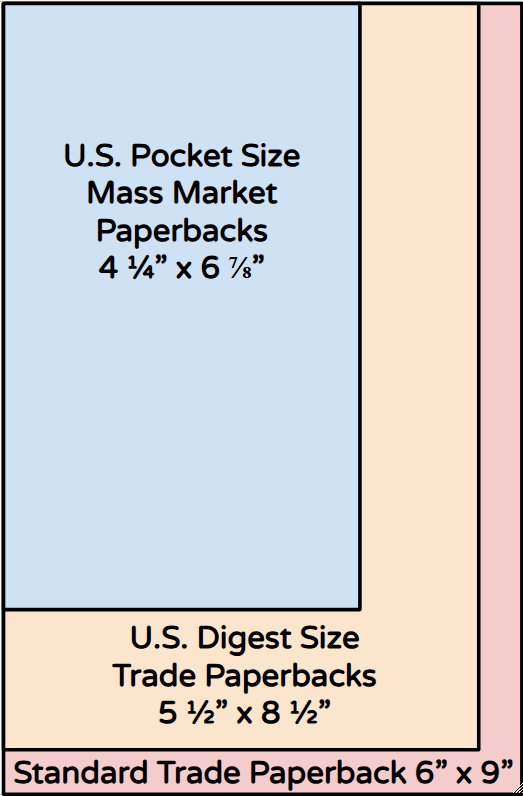
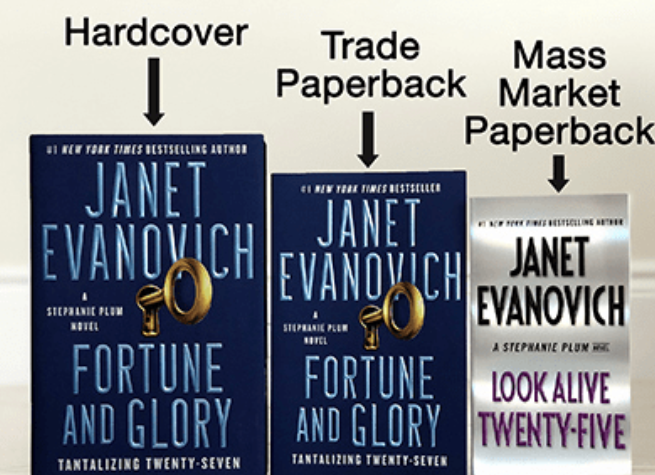
In the US, unlike the mass market paperbacks which at least had a standard width, trade paperbacks came in a variety of sizes. Two of the more common ones were 5 1/2 by 8 1/2 inch “digest” books and 6 by 9 inch “standard trade” editions. The trades featured better paper, thicker covers, and the same typesetting used in hardcover editions, and were once priced much higher than the cheap mass market pocket paperbacks.
By the late 1970s, if I couldn’t find what I wanted at the school or public libraries, I would spend allowance money on books at Tag Kimberling’s Henry Higgins bookstore in our neighborhood shopping center. That was my introduction to trade paperbacks, but they were too costly for me, with even the smaller mass market books having undergone outsize price inflation. Originally priced at a quarter, mass market paperbacks had risen to $1.50+ by the mid-1970s and by 1982 were costing $2-$4, whereas the consumer price index had only inflated $0.25 in 1950 to $1 by 1982.
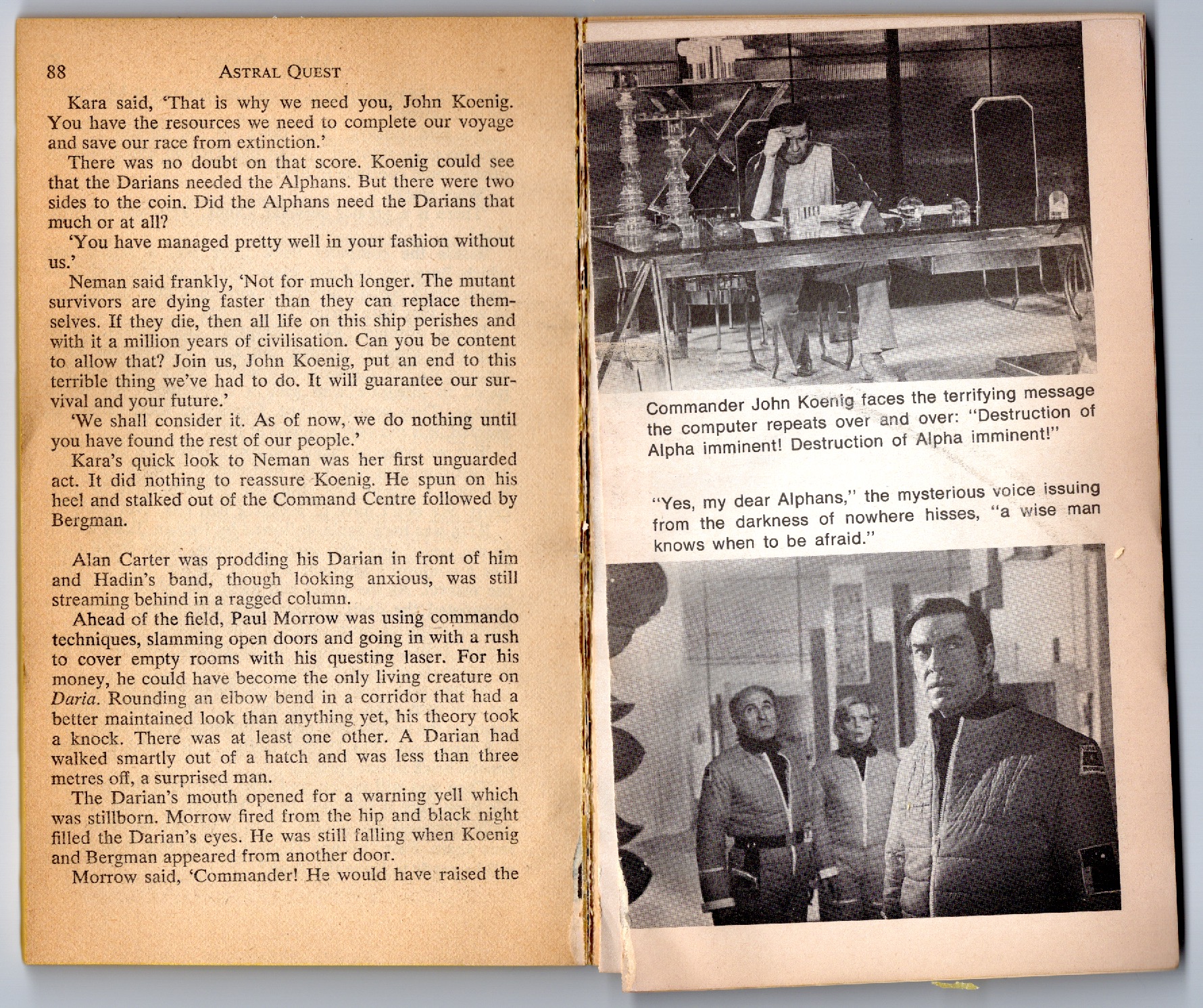
Relatively cheap mass market paperbacks were crucial in nurturing and deepening my youthful obsession with Star Trek, from the glimpses into its production provided by The Making of Star Trek and The World of Star Trek to Alan Dean Foster’s adaptations of the animated series in his Star Trek Log series. I also collected 11 of James Blish’s 12 adaptations of the original series shows, but they were based on early scripts and thus differed so much from the broadcast versions that they were just works-in-progress curiosities to me.
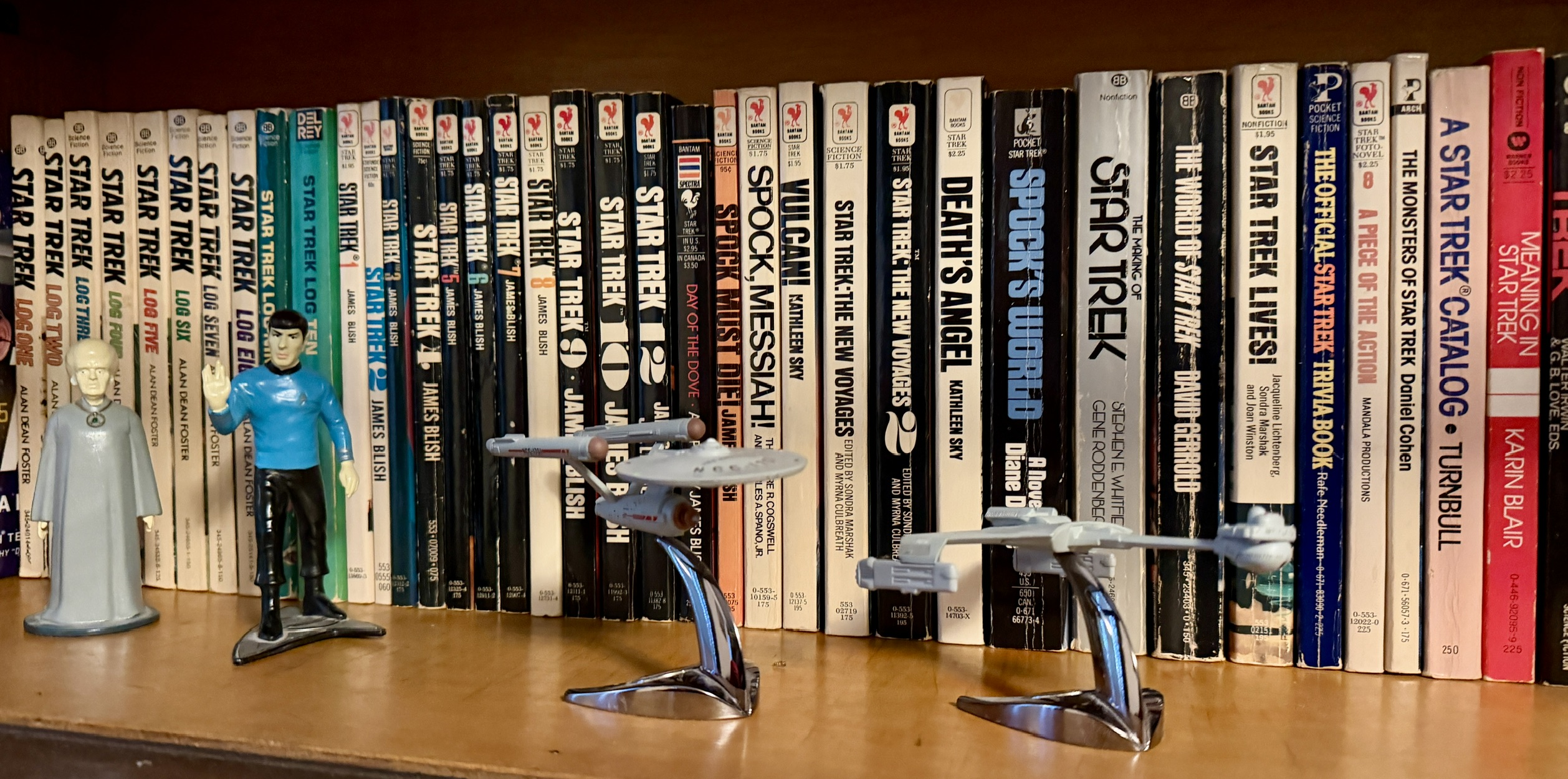
Reading a mass market paperback often created creases in its spine, the acidic pulp paper gradually turned yellow-brown, and if there were photo inserts those played havoc on the book’s durability as the glue aged and cracked.
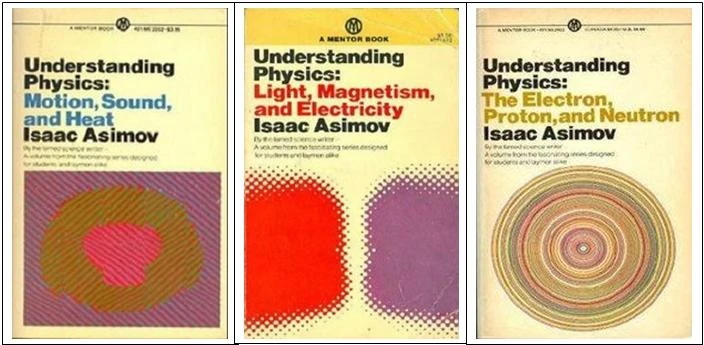
Despite the format’s limitations, three mass market paperbacks profoundly changed my life in seventh grade. They were reprints of Isaac Asimov’s Understanding Physics, and they set me on a path that led six years later to a couple of years of college physics courses and then 28 years of teaching high school physics.
I stuck with mass markets in my purchases until Asimov’s Foundation’s Edge science fiction novel came out in June 1982, almost 30 years after his original Foundation trilogy, itself formed from eight short stories and novellas originally published in the Astounding Science Fiction magazine from 1942 to 1950. The sequel was only available in hardcover, and while I loved the 1950s trilogy, I debated for weeks before coughing up $14.95 for the sequel, since that was as much as four or five mass market books. I didn’t see a mass market paperback edition of it until November 1983.
Someone growing up now with e-books would probably think it strange how more prestigious books were once released over many months in a sequence from high-priced hardcovers to trade paperbacks to mass market paperback reprints, similar to my surprise when I first learned about the serialized novels of Dickens and the subscription system for Mark Twain’s works.
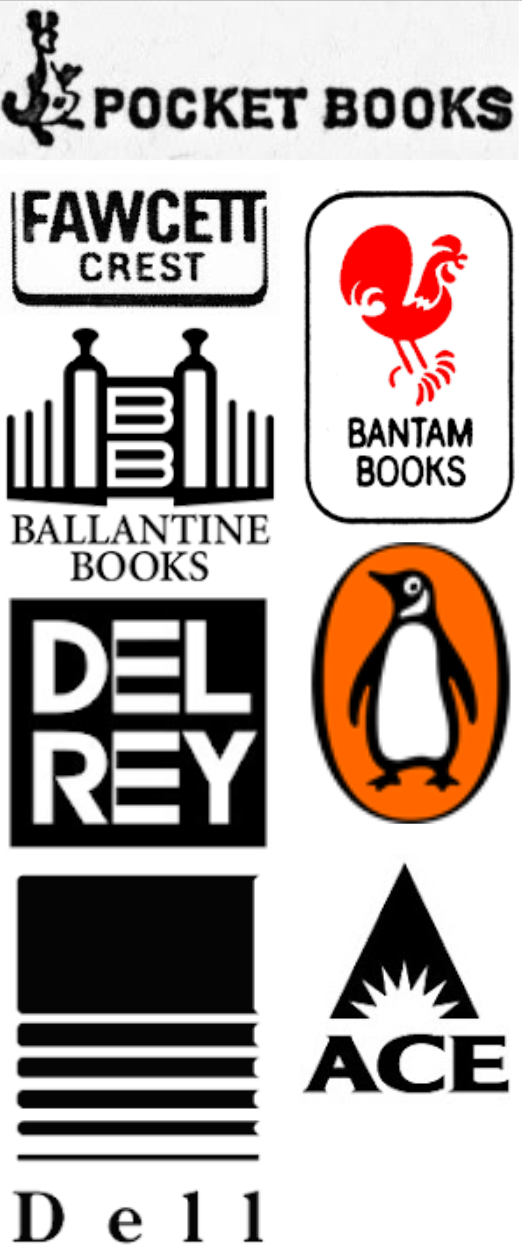
Many of my purchases were Bantam books, which had been formed by Ian Ballantine in 1945. He convinced Bennett Cerf of Random House, John O’Connor of Grosset & Dunlap, Charles Scribner, and Meredith Wood of the Book of the Month Club to become Bantam’s Board of Directors and roll their hardcovers into Bantam paperback reprints. They required new typesetting for the reduced size, which likely worried some readers that they were abridged. I remember how the copyright pages always stated, “This low-priced Bantam Book contains the complete text of the original hard-cover edition. NOT ONE WORD HAS BEEN OMITTED.”
The inevitable friction with the major publishers eventually led to Ballantine being fired from Bantam, and he and his wife, Betty, then formed their own publishing house. In addition to Bantam, I remember buying mass market paperbacks published by Ballantine, Dell, Del Rey, Pocket, and Signet.
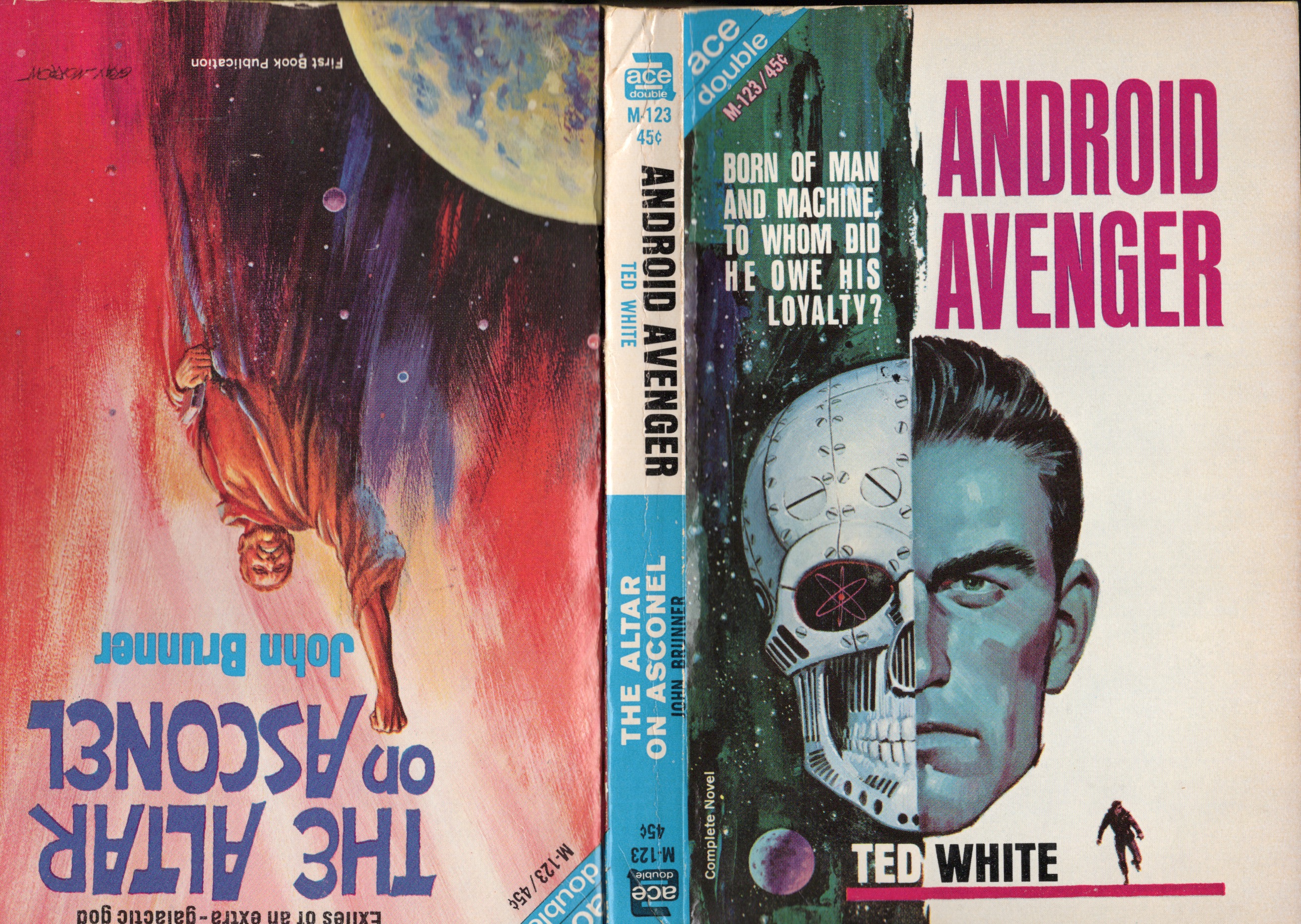
I was fascinated by the Ace doubles that one of my uncles had purchased and passed down to me. Those were tête-bêche format books published from 1952 to 1973. Each contained two novellas, with the front cover and interior of one novella rotated by 180 degrees and bound back-to-back with the front cover and interior of the other. Gardner’s Used Books in Tulsa once had a sizable collection of them.
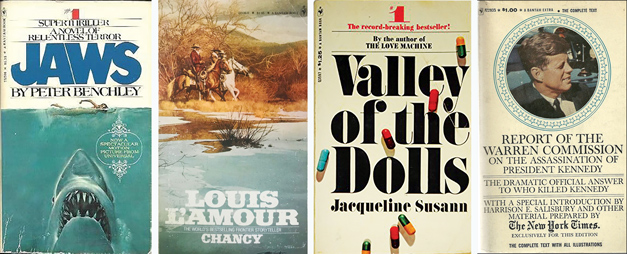

In 1987, 112 mass market titles sold more than one million copies each, led by Danielle Steel, who sold almost 12 million copies of three of her titles. However, by 1996 mass market sales were beginning to decline, although they still racked up $1.35 billion.
In 2001, eight mass market paperbacks sold more than two million copies each and another 39 sold over a million. However, the number of independent distributor wholesalers was collapsing, consolidating under Levy Home Entertainment, which became ReaderLink in 2011. By then, mass market paperback sales were plummeting, nearly matching the rising amount of e-book sales, and only six paperback titles sold more than a million copies each.

Back in 2017, Publishers Weekly wasn’t sure if the mass market paperback was enduring an incredibly slow death or had begun to stabilize. Mass market titles were 13% of print sales in 2013, falling to 9% in 2016. That trend kept going, and mass market book sales dropped from 131 million in 2004 to 21 million by 2024, an 84% collapse.
They were displaced by e-books, smartphones, and more profitable trade paperbacks, and to make money on the falling sales, their cover prices kept inflating to what had once been trade paperback prices. In 2025, Hudson stopped carrying them in its airport stores, and ReaderLink, which grew to become the largest book distributor in the USA, stopped distributing mass market paperbacks at the end of 2025. The Guardian commented how that marked “the end of a format that once democratized reading for the working class”.
I was part of that change. Back in grade school, I always had a paperback on me to read when I finished my class work early, and for years I still had one on me, or a print magazine, when dining alone in restaurants, never being one to cook. However, in 2008 I started carrying a Kindle, and for several years wait staff and other customers would gawk and ask about it.
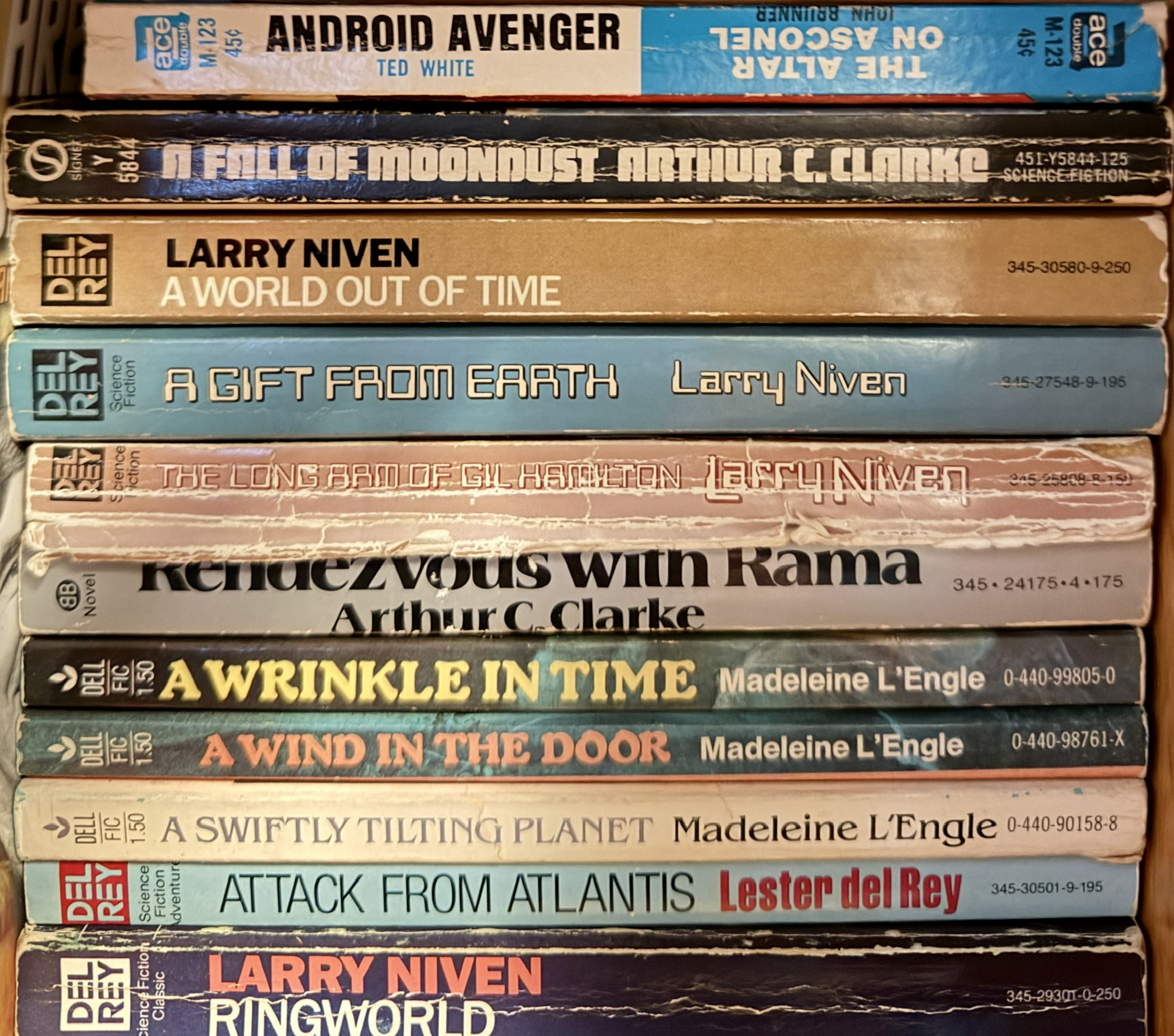
In 2016 I donated 700 books, including hundreds of mass market science fiction paperbacks, to the local public library. Only a select few survived the culling, and now the very format they represent is extinct. That is a loss, given that even today’s teenagers reportedly have a strong preference for affordable paperbacks, but market forces have eliminated a once-inexpensive option. Thank goodness for used bookstores and library sales, where the fossils of the extinct format can still be dug up.






 Meador Manor