One of the YouTube creators I support on Patreon is Henry’s Dime Store Adventures. At the start of 2025, I joined his Postcard Club, so he sends me a handwritten vintage postcard each month. For May 2026, Henry outdid himself, sending me a linen postcard pack with 20 images from Oklahoma, circa 1940.
So on each of the first 20 days of June 2026, I will share with you a postcard and expound about the pictured location. We’ll start with an image shown on the address side of the pack.
A Burning Oil Well…in Texas?
The cover shows a burning oil well. Well, gee, welcome to Oklahoma!
I found separate linen postcard reproductions of that image by the Oklahoma News Company which captioned it as being near Tulsa. However, the original photograph was actually taken by Jack Nolan on April 26, 1930 of the Skelly-Amerado University No. 1 well in Ector County, Texas. Nolan had been informed that the well, just west of the Concho Bluffs, would be shot with 420 quarts of nitroglycerin at 3,723 feet to increase its production. The typical gusher became a fire when the shot came in contact with the steel crown block, sparking the explosion. It took over 25 hours to control the fire.
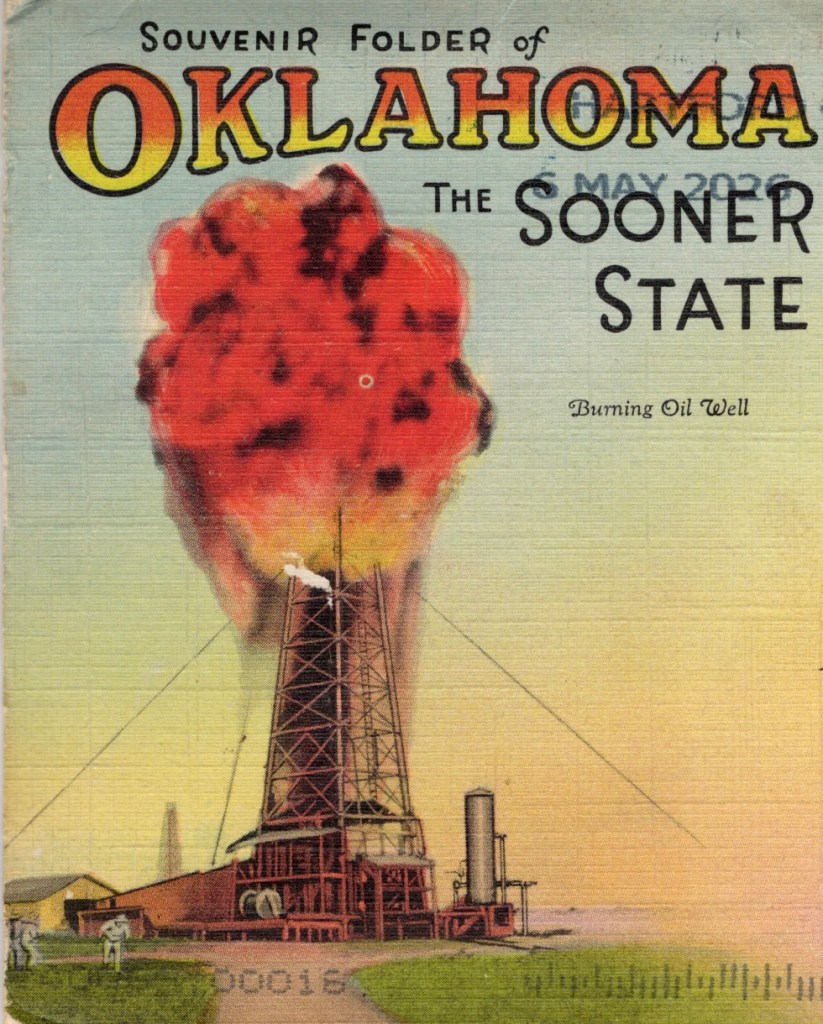
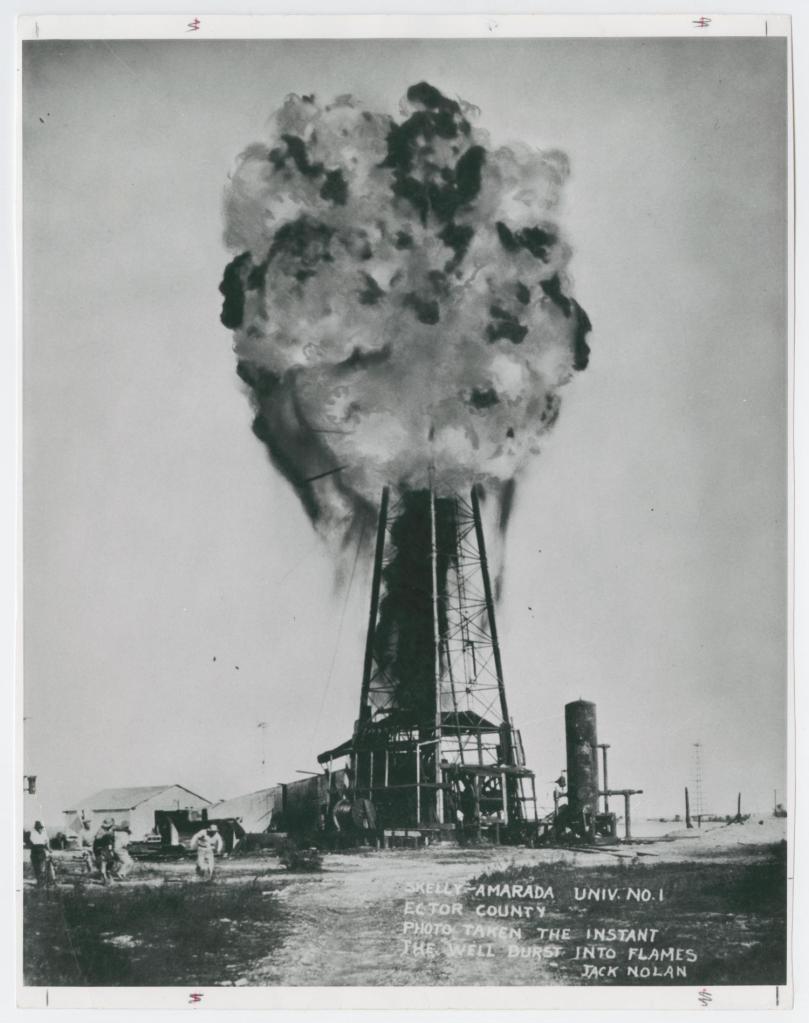
So right off the bat we have an anomaly. The attention-grabbing cover image of the Oklahoma souvenir folder was a burning oil well that wasn’t even located here, but instead in our much larger and flamboyant neighbor to the south.
A Bartlesville Connection
I will bring out some Bartlesville connection to each of the postcards, and of course in this case I can’t help but think of the Nellie Johnstone #1 well in Johnstone Park, which was the first commercial oil well in Oklahoma.
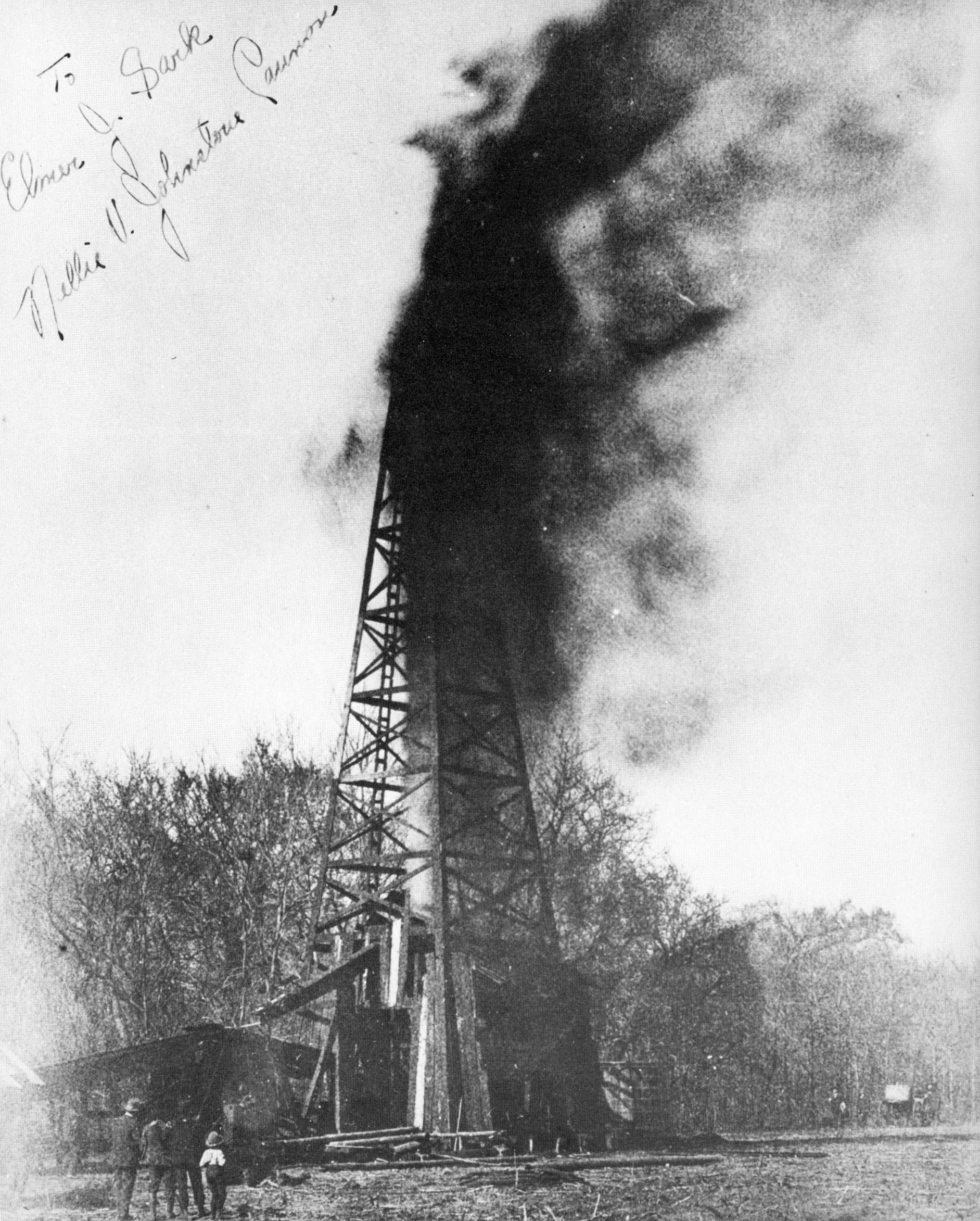
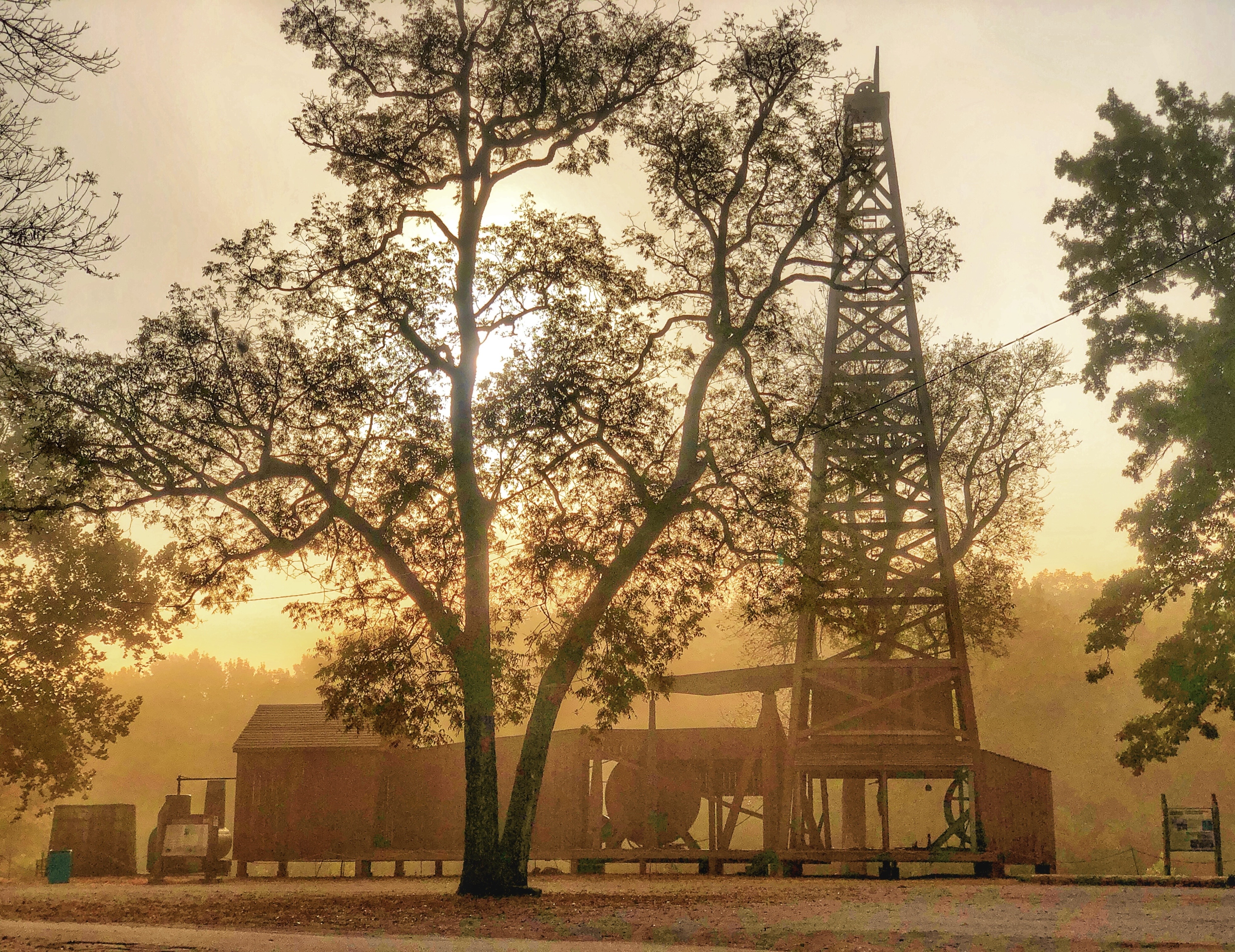
The Nellie Johnstone blew in on March 25, 1897 as a wildcat well named for the six-year-old daughter of community leader William Johnstone. Wildcatter Michael Cudahy made a deal with George Keeler, William Johnstone, Frank Overlees, and other community leaders to drill the well. Keeler’s stepdaughter Jennie Cass dropped the Go-Devil to blow in the well, and thankfully it gushed without igniting.
It was producing 30 barrels a day in 1903 when it became commercially viable, thanks to the Santa Fe railroad reaching Bartlesville to transport its output. During its productive life, it produced over 100,000 barrels of oil. It was plugged in 1947, and replica rigs were erected over it in 1948, 1964, and 2008. You can learn more about it in the Block 2 lot 7 slides of my Historic Downtown Bartlesville series.
Oh, and the original Nellie Johnstone derrick was destroyed by fire, but not due to a bad shot. Rather, after it blew in, the well was capped to await the arrival of the railroad. However, oil seeped from it and pooled. During a cold winter in the late 1890s, a group of children ice-skating on the frozen river built a bonfire which accidentally ignited the seep, and the fire tracked back to the well and destroyed the derrick.
The kicker? One of the young people in that skating party was little Nellie Johnstone.
Linen Postcards
I am not a postcard aficionado, so I had to look up what a linen postcard was, given that the ones I have been sent were clearly not printed on fabric. Instead, they are inexpensive, high-rag cotton paper embossed with a textured crosshatch pattern that only mimics the feel of linen cloth.
During the Great Depression and World War II, standard cardstock had trouble absorbing newly introduced brightly colored ink dyes. So Curt Teich & Co. in Chicago and other postcard printers embossed the paper, increasing the surface area so ink would dry much faster. The images often started as black-and-white photographs that artists heavily covered and retouched.
Teich pioneered the offset printing process in which an inked image is transferred (or “offset”) from a plate to a rubber blanket and then to the printing surface of the paper. Teich began using a five-color process in 1931, adding a darker blue color to the usual CMYK palette of cyan, magenta, yellow, and the “key” color of black.
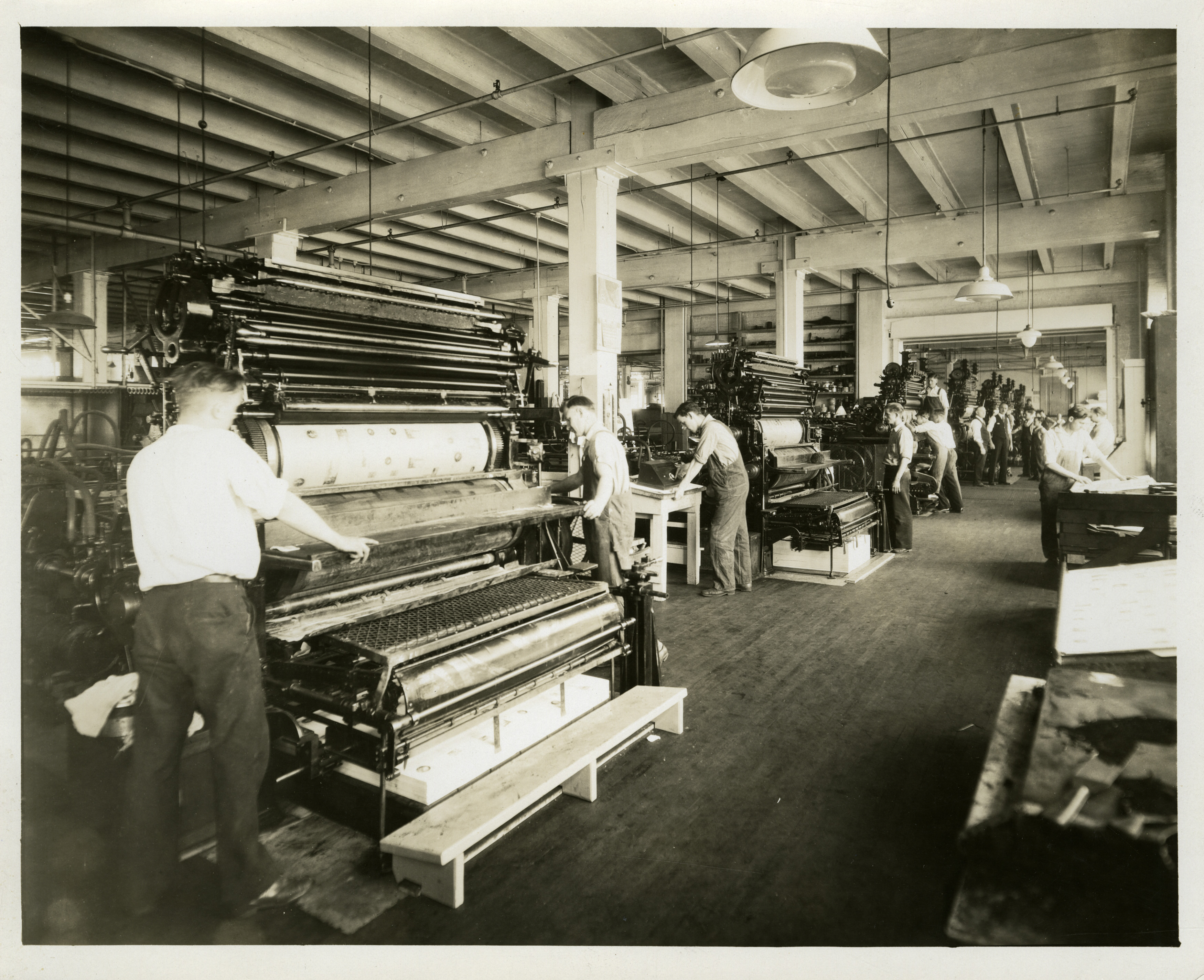
Linen postcards were phased out after World War II when the realistic, glossy photochrome printing process became the industry standard.
The Sooner State
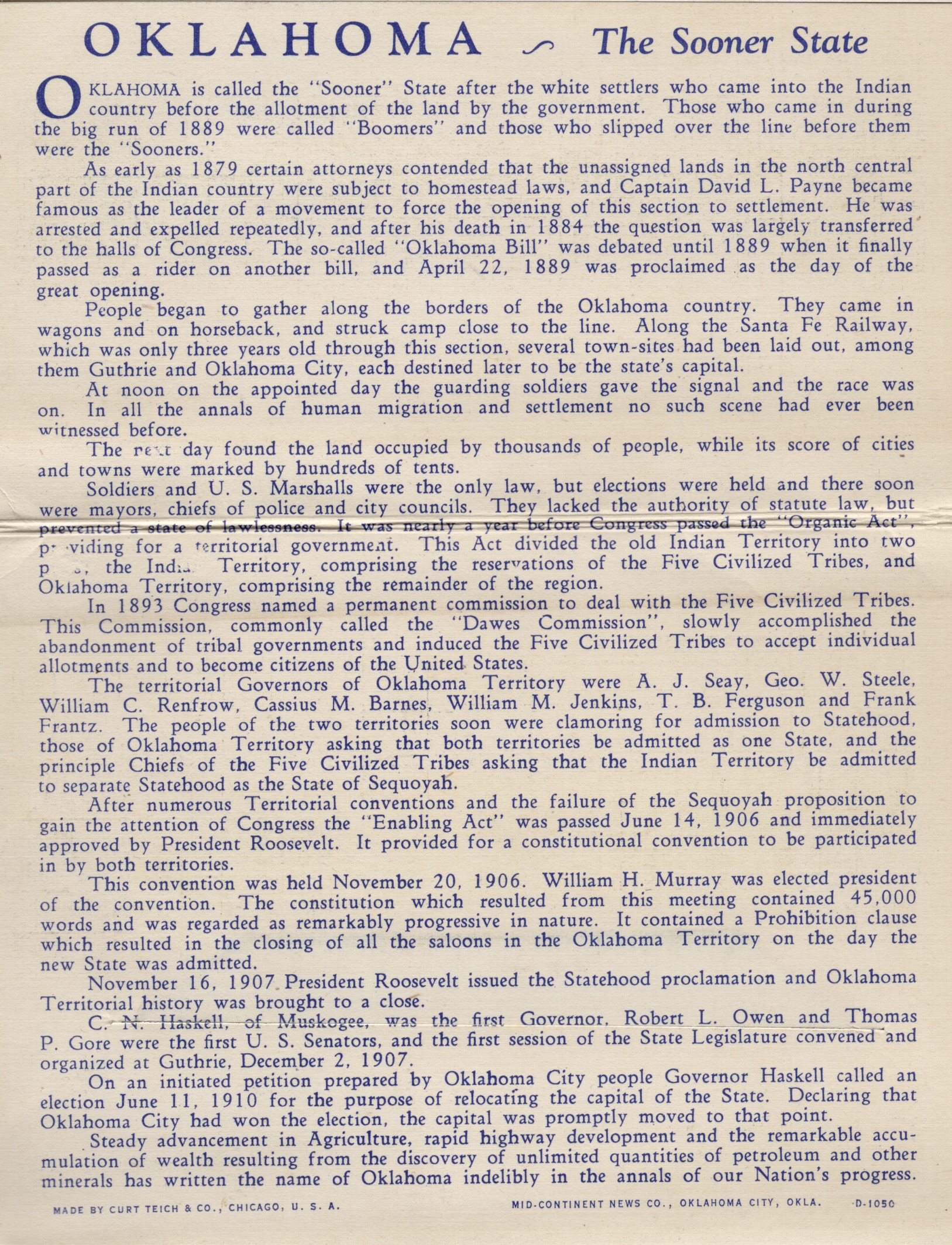
The inside of the pack cover had some text about the state. It is a dry-as-bones summary of the early days of white settlement which I can’t recommend you bother reading. It certainly doesn’t read like a tourist tract to me.
Thankfully, the 19 remaining images were more interesting than that! Tomorrow we’ll visit the State Capitol.