
Pseudonyms are invented for various reasons. Edith Mary Pargeter became “Ellis Peters” to separate her mystery stories from her other work. Samuel Longhorne Clemens experimented with the pen names “Josh,” “Sergeant Fathom,” and “Thomas Jefferson Snodgrass” before hitting upon “Mark Twain”. The cousins Frederic Dannay, birth name Daniel Nathan, and Manfred Bennington Lee, birth name Emanuel Benjamin Lepofsky, adopted the “Ellery Queen” pseudonym for the detective character they crafted, who supposedly wrote his own books.
Pen names sometimes disguised gender or ethnicity, in an attempt to boost sales, but Leonard Knapp evidently used them, along with some fictional biographical details, to seem more exotic. Born in rural Minnesota in 1915, he re-invented his father as a poor sharecropper of part-Spanish extraction and became best known as Lester del Rey. The mischievous man would sometimes claim his actual name was the ludicrous Ramón Felipe San Juan Mario Silvio Enrico Smith Heathcourt-Brace Sierra y Alvarez del Rey y de los Verdes. He also published works as Philip St. John, Erik van Lhin, John Alvarez, Marion Henry, Philip James, Charles Satterfield and Edson McCann, with the last two pen names sometimes also used by Frederik Pohl. There were reportedly eight additional pen names over the years.
Attempts to ascertain factual information about his early life run into obstacles. Reportedly records showed his birthplace as Clydesdale, which might have referred to a community in the Saratoga Township. Wikipedia offered this interesting tidbit: “He also claimed that his family was killed in a car accident in 1935. In reality, the accident only killed his first wife.”
Well, gee, what’s the story behind that? I ordered an old paperback copy of the referenced source, Sam Moskowitz’s Seekers of Tomorrow of 1965. It was a collective biography that profiled 22 authors of classic science fiction, and consisted mostly of reprints of Moskowitz’s articles in Amazing Stories from 1961 to 1964. I also ordered the January 2008 issue of Locus, which had a brief item on his background.
Moskowitz was clearly just retelling some of Lester/Leonard’s yarns, and he wrote that Lester was working with some bootleggers in a New Mexico town in 1930 when he met a girl and proposed to her that same day. The boy was supposedly only 15 while the girl of legal age, and supposedly three months after their marriage she was thrown from a horse and died from her injuries. Later in the tales is the claim that his family, save for one full sister, died in a car accident in 1935.
Well, it seems there was a mysterious first wife, but Leonard’s sister, Sara Knapp, said he broke all ties with his family after leaving home in 1931 and that he “seemed to be ashamed of where he lived and of his folks”. She also said the 1935 car accident killed his first wife, not his blood family, when he would have been about 20 years old.
By the mid-1970s, del Rey included autobiographical comments throughout his collection Early del Rey, mentioning reading various literary classics as a boy in a little farming community of southeastern Minnesota, and in high school discovering science fiction magazines. He acknowledged attending George Washington University in the District of Columbia in the early 1930s on a partial scholarship while living with an uncle, dropping out after two years, and doing various odd jobs. However, he made no mention of his first marriage nor a car accident, although he did say he was in poor health for awhile before 1937.
del Rey’s 1948 collection of short stories, And some were human, had this nerdy blurb on the back of its dust jacket:

Lester del Rey’s first wail of protest against a life-sentence to Earth sounded in 1915 under the dual-personality sign of Gemini. In this case, astrology was correct. His nature was divided between magnificent laziness and hopelessly insatiable curiosity. As any scientist knows, after laboring ten years to learn one subject, the two are incompatible, and sure to lead to early schizophrenia. But he was saved from this by his own astounding discovery that a net weight of 105 pounds was barely enough to support a single personality, and utterly inadequate for the development of two. He promptly ceased growing, and only the dominant laziness remained.
Thus a writer was born! There is no easier way to earn a living — provided three skipped meals a day form a satisfactory diet; and no surer preventative against adding enough weight for that dread split in personality. After his discovery of a 1929 Gernsback magazine, it was perhaps inevitable that his frustrated desire for knowledge of all things should lead him into dream-worlds of fantasy and the bright Utopias of tomorrow. As some of the meek who shall inherit the dirt turn to poetry, so he turned to fiction. The result is inside.
Statistics: Tired of college after two years; tried office work, metal forming, restaurant work, bibliographic research, etc., but found they interfered with loafing and cheerfully abandoned them. Interests run from archeology to zoömorphisms; and chiefly run from labor. Ambition — to sell enough copies of this book to retire.
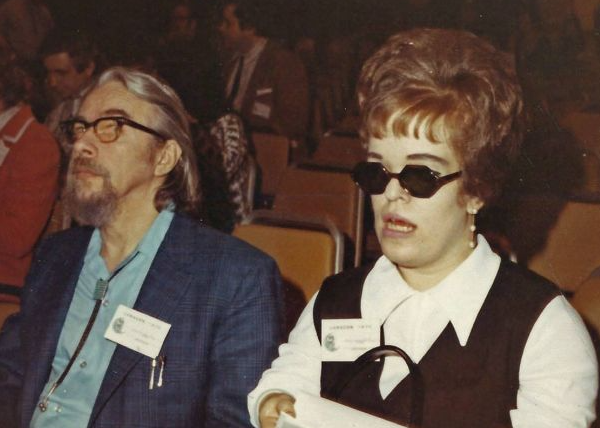
In my younger days, I bought several paperbacks with the Del Rey imprint, which “Lester” had established with his fourth wife. Already a friend of del Rey, Judy-Lynn Benjamin married him after the death of his third wife, and she was a respected editor, born with dwarfism, whom the gifted author Isaac Asimov described as “incredibly intelligent, quick-witted, hard-driving” and “generally recognized (especially by me) as one of the top editors in the business” while the troubled but talented Philip K. Dick called her a “master craftsman” and “the best editor I’ve ever worked with”.
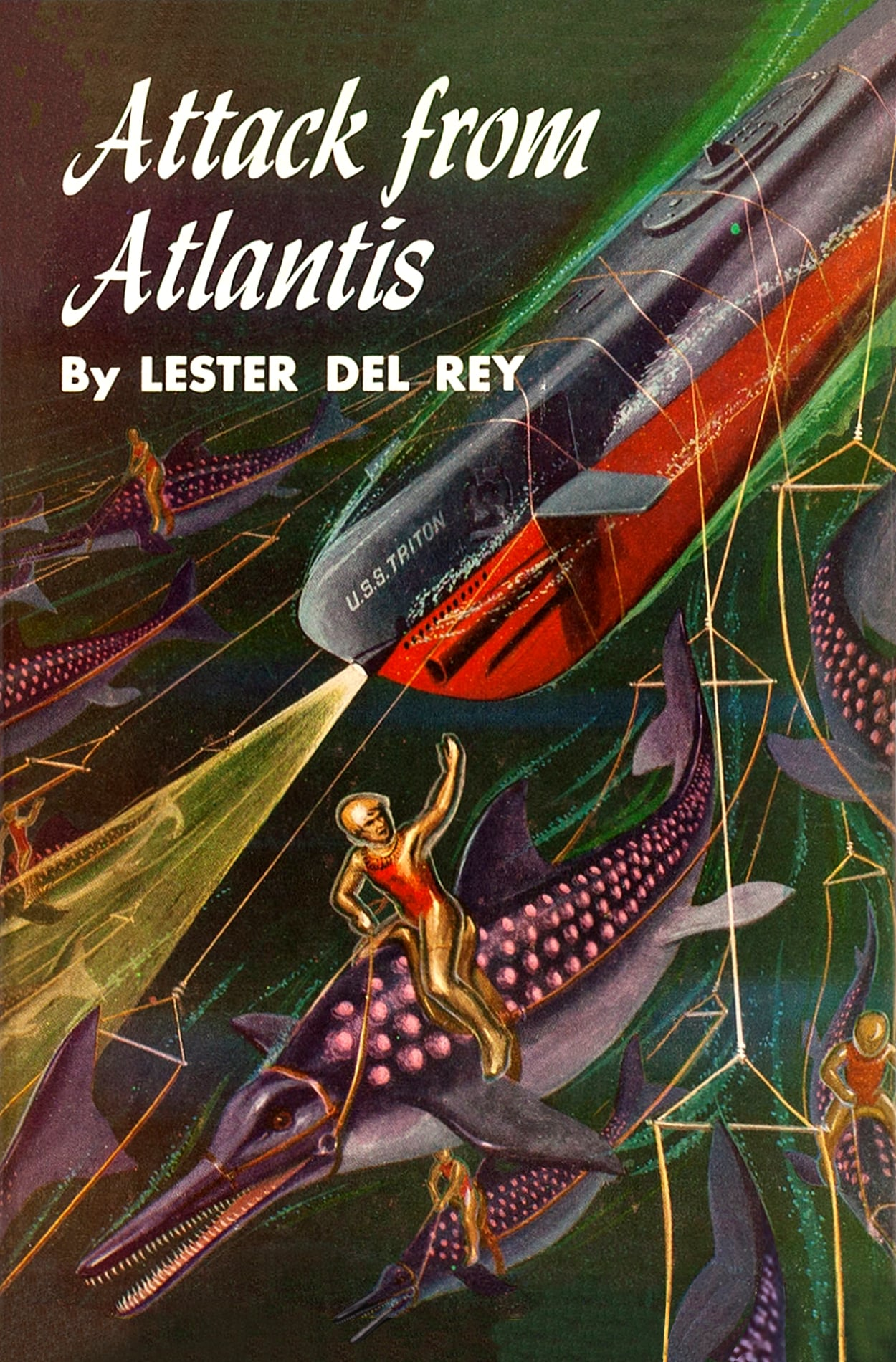
I read a few of his short stories, but the only del Rey novel I had read was not part of their imprint, but rather authored by Lester del Rey as part of the John C. Winston Company’s 37-volume series of juvenile science fiction novels published in the 1950s for teen-aged boys.
I came across that 1953 book, Attack from Atlantis, on the shelves of the Leo C. Mayfield Junior High library in the late 1970s. Having enjoyed the movies Run Silent, Run Deep and Ice Station Zebra (a few years before the incredible Das Boot was filmed), the cover art of a submarine making a steep dive into the deep compelled me to read it. It was memorable, but its science was so goofy that I did not read more of his work. One online source claimed the quality of his work declined once he began writing full-time in 1950, as he increased his output to stay afloat. The Encyclopedia of Science Fiction describes him as “a versatile but rather erratic writer who never fulfilled his early promise”.
There were crystals in del Rey’s 1953 novel that formed force field bubbles, and George Pal‘s worst movie, Atlantis, the Lost Continent of 1961, had volcanic power crystals that were used to create a death ray. However, that is about the only overlap, and the movie’s scriptwriter Daniel Mainwaring had unfaithfully adapted a 1948 play by Gerald Hargreaves, Atalanta: A Story of Atlantis: A Fantasy with Music, which itself had been partly based on Ignatius Donnelly’s pseudoarchaeological book Atlantis: The Antediluvian World of 1882. As Kirby Ferguson says, “Everything is a Remix.”
When I was a teenager, one of my uncles gave me a slew of science fiction paperbacks. The most physically intriguing ones were Ace Doubles, which were little tête-bêche format books published from 1952 to 1973. Each contained two novellas, with the front cover and interior of one novella rotated by 180 degrees and bound back-to-back with the front cover and interior of the other.
The most memorable of those which I read was Ted White’s Android Avenger. I judged the Ace Doubles by their covers, and for me, that was a clear winner over Lester del Rey’s The Sky Is Falling.
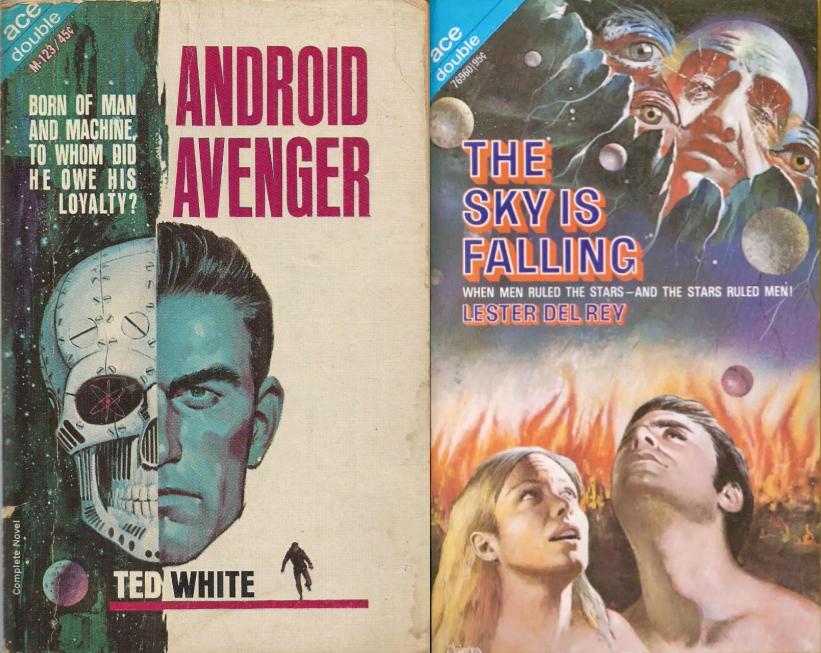
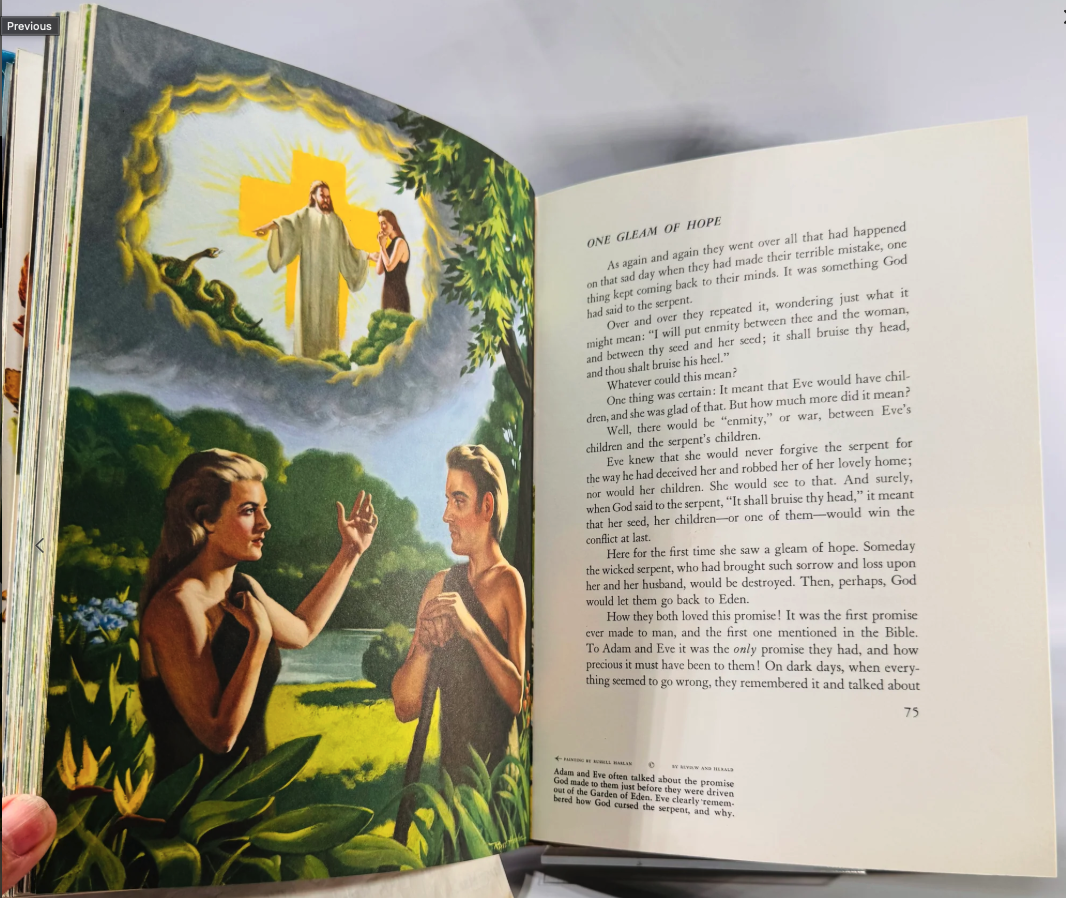
As a childhood fan of The Six Million Dollar Man television series, a man with a metal skull was far more appealing to me than artwork that reminded me more of something from a The Bible Story sample book that always graced the waiting room of my pediatrician. Was that Ace cover supposed to depict Adam & Eve in hell? I’ll admit that I never got past that, given my ambivalence about Lester’s earlier Attack from Atlantis for kids.
However, after reading Winesburg, Ohio by Sherwood Anderson, and feeling scattered as I was nine work days away from vacating my office for my approaching retirement, I wanted something light and frothy. I stumbled across The Sky Is Falling again, not as an Ace Double, but as a work on Project Gutenberg that had fallen into the public domain. An online summary claimed it had a fast pace, no explicit content, and an inventive and lighthearted style.
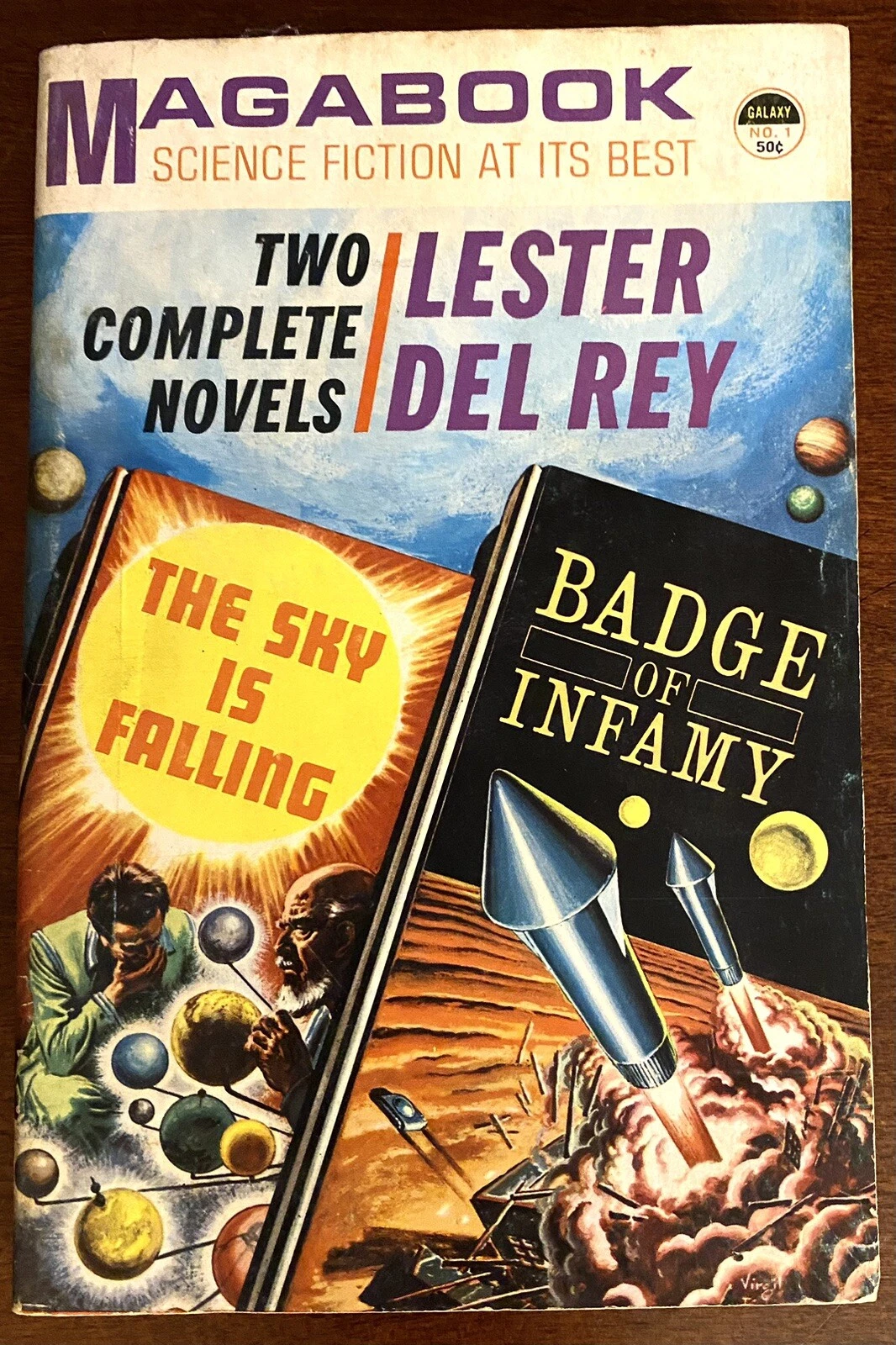
It originated as the short story “No More Stars” by “Charles Satterfield” in Beyond Fantasy Fiction‘s July 1954 issue. The man who was actually Leonard Knapp expanded that into a novella and it was joined with his novella Badge of Infamy in 1963’s Galaxy Magabook #1 and finally reprinted as one of the last Ace Doubles in 1973.
Galaxy Magazine, sometimes known as Galaxy Science Fiction, had published companion novels in the 1950s, but then sold that line to Beacon Books, which specialized in softcore pornography. When Galaxy decided to try to get back into the book business, it was with the Magabooks, each consisting of two novellas by the same author. However, only three of the Magabooks were released, featuring Lester del Rey, then Jack Williamson, and finally Theodore Sturgeon.
The story opened well, with a man being brought back from the dead via an odd combination of scientific and seemingly magical methods.
“Dave Hanson! By the power of the true name be summoned cells and humors, ka and id, self and—”
Dave Hanson! The name came swimming through utter blackness, sucking at him, pulling him together out of nothingness. Then, abruptly, he was aware of being alive, and surprised. He sucked in on the air around him, and the breath burned in his lungs. He was one of the dead— there should be no quickening of breath within him!
He caught a grip on himself, fighting the fantasies of his mind, and took another breath of air. This time it burned less, and he could force an awareness of the smells around him. But there was none of the pungent odor of the hospital he had expected. Instead, his nostrils were scorched with a noxious odor of sulfur, burned hair and cloying incense.
He gagged on it. His diaphragm tautened with the sharp pain of long-unused muscles, and he sneezed.
“A good sign,” a man’s voice said. “The followers have accepted and are leaving. Only a true being can sneeze. But unless the salamander works, his chances are only slight.”
This Dave Hanson was not a hockey player, playwright, roboticist, jazz pianist, or investment advisor. He was a computer repairman who had been crushed by a bulldozer, and mysteriously revived in the alternate world of Terah for a mission: prevent the sky from falling.
The story was fast, and while it had some funny inventiveness, I think it probably worked better as a short story than as a novella. Del Rey just wasn’t that great of a writer, although he certainly proved his worth as an editor of mass-market paperbacks.
The success of J.R.R. Tolkien’s Lord of the Rings led del Rey to realize there was demand for an unformed genre that would become known as “fantasy”. He published Terry Brooks’ The Sword of Shannara, a ripoff of Tolkien but a page-turner that my best friend of the 1980s read again and again. The del Reys also published Stephen Donaldson’s Lord Foul’s Bane, unworried about a protagonist who was incredibly unsympathetic, and my friend also read that multiple times.
Lester understood how to sell to that era’s mall bookstores of B. Dalton and Waldenbooks, and fellow editor David Hartwell delineated del Rey’s formula for success: “The books would be original novels set it invented worlds in which magic works. Each would have a male central character who triumphed over the forces of evil (usually associated with technical knowledge of some variety) by innate virtue, and with the help of a tutor or tutelary spirit.”
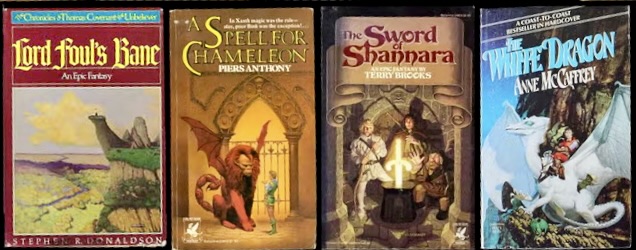
That certainly worked for Piers Anthony, a forty-something science fiction author, who followed it to write his first fantasy novel as a mass-market paperback original in 1977. By 1994, Anthony had published seventeen more of his “Xanth” books, and by 2026 there were a whopping 49 of them, although he has moved from one publisher to another whenever he felt editors were tampering too much with his work. The guy is still churning them out in his 90s!
My late friend also read Xanth, and he convinced me to try a couple of them, but they quickly wore thin for me. I was more impressed with Anthony’s first Apprentice Adept trilogy, which mixed science fiction with fantasy, although I didn’t read the next phaze (pun intended) of that series featuring a later generation of protagonists.
Both Piers Anthony and Lester del Rey were creatives who found success in their writing, but Lester truly came into his own, with the help of Judy-Lynn, as an editor. In the future, I’ll be far more likely to read an author’s works that he edited than Lester’s own output.








 Meador Manor