Lolita, Under the Volcano

I recently decided to burden my Kindle with some “fine literature.” A perusal of the Modern Library’s list of 100 best novels showed I had only read a paltry 10% of the board’s list, which I find sadly biased against genre fiction, and only 17% of the reader’s list. So I looked over the top entries on the board’s list and decided to take on #4: Lolita and #11: Under the Volcano.

I selected Lolita by Vladimir Nabokov, despite my doubts about its prurience, for several reasons. First, my admiration of Stanley Kubrick’s other films led me many years ago to rent his 1962 cinematic version and I found it, like most of Kubrick’s films, a memorable if unsettling experience. Also, I had noted the furor when Nabokov’s unfinished The Original of Laura was finally released in 2008, reflecting his unorthodox manner of writing novels via index cards. Finally, I had recently read about synesthesia and the article had noted how Nabokov made use of that unusual neurological condition, perceiving certain letters and numbers as colors, in his work.

Reviews had noted that Lolita is full of wordplay, and I was again reminded of the inadequacy of the Kindle’s built-in dictionary, which often as not had no entry for obscure English terms the protagonist, Humbert Humbert, uses in his first-person narrative. I could readily infer most unfamiliar terms from context, but the frequent use of French had me typing define: recueillement into Google and “Prenez donc une de ces poires. La bonne dame d’en face m’en offre plus que je n’en peux savourer.” and the like into Google Translate.

I can see why many critics would love the book, for it is full of symbolism, literary jokes and allusions, and has an entertaining devilish streak. And despite its negative portrayal of pedophilia, there is little surprise that it has been challenged by censors over the years. Thankfully Lolita isn’t terribly long and has a strong narrative drive, unlike some other lauded works such as Pynchon’s Gravity’s Rainbow and Wallace’s Infinite Jest, both of which I started and gave up on after several turgid chapters: too obscure, too many footnotes, too many more pages to go without much hope for lyrical relief. And while I have a deep regard and affection for Neal Stephenson’s The Diamond Age: A Young Lady’s Illustrated Primer and have enjoyed most of his output, including his most recent Anathem, I waded only partway into the first of eight books in the three volumes of his Baroque Cycle of books before giving up in exasperation at how slowly the plot developed.

My reading of Lolita was enhanced by, of all things, SparkNotes. At the end of each chapter I would stop to read the SparkNotes summary and discussion and, although it and the movie spoiled the mystery of Humbert’s rival, it pointed out some symbols and wordplay which had eluded my initial perusal. I never used Cliff Notes or SparkNotes to cheat in school, but I did find them helpful when I took on The Sound and the Fury one summer and they again served me well.
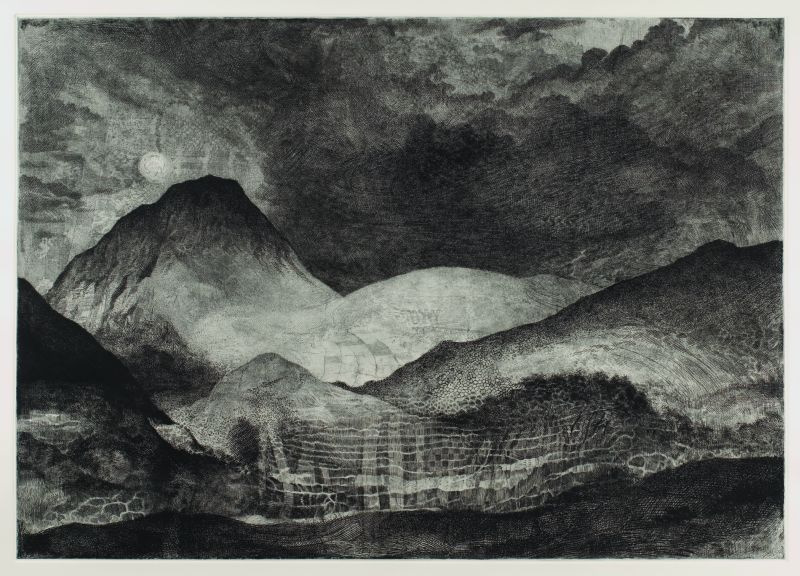
Under the Volcano

After the rich read of Lolita I was suffering from eyeburn. So I followed it up with a non-fiction polemic written by a journalist in straightforward prose. That left me refreshed and ready to go Under the Volcano with Malcolm Lowry. Again I was a bit dubious about the subject matter. The story centers on an alcoholic Englishman living in Mexico on the Day of the Dead in the late 1930s, and I am effectively a teetotaler. But I love the work of F. Scott Fitzgerald, who produced much more than Lowry but also drank himself to death, so I forged ahead.

Oh my. These pages were rough. There is much to love about this book, but it is slam-bam full of obscure literary and cultural references. I knew I was missing some of the jokes and allusions in Lolita, but I could sail merrily along without worrying about it too much. Under the Volcano begged explanation, and not merely for the many Spanish phrases. Sadly, there was no brief SparkNotes entry I could consult. I did find an immense site on the book, but its deluge of detail threatened to swamp me. I finally found a rhythm where I would read the book and only stop to consult the hypertext site for lengthy Spanish quotations or when context and guesswork still left a paragraph indecipherable.

The ending is horrific, but powerful. I shall always remember it, just as I can always visualize Scottie standing at the edge of the bell tower at the end of Hitchcock’s Vertigo, leaving me to wonder whether or not he will do what the movie’s logic makes all too plausible and even forgivable: take one more step into the void.

The ending of Vertigo, giving a different meaning to "one small step"

But Under the Volcano is more than a tragedy, being quite lyrical and beautiful at times describing how “the sun poured molten glass on the fields” or a “savage scribble of lightning” – such lines might adorn one of Ray Bradbury’s lovely short stories. Yet consider this heartbreaking letter, written by an adulterous woman still drawn to her alcoholic ex-husband:

Surely you must have thought a great deal of us, of what we built together, of how mindlessly we destroyed the structure and the beauty but yet could not destroy the memory of that beauty. It has been this which has haunted me day and night. Turning I see us in a hundred places with a hundred smiles. I come into a street, and you are there. I creep at night to bed and you are waiting for me. What is there in life besides the person whom one adores and the life one can build with that person? For the first time I understand the meaning of suicide … God, how pointless and empty the world is! Days filled with cheap and tarnished moments succeed each other, restless and haunted nights follow in bitter routine: the sun shines without brightness, and the moon rises without light. My heart has the taste of ashes, and my throat is tight and weary with weeping. What is a lost soul? It is one that has turned from its true path and is groping in the darkness of remembered ways—

How alarming, given how much of the book is autobiographical, and how unsurprising that Lowry would kill himself with an overdose of sleeping pills in a “death by misadventure” a decade after Under the Volcano was published. The line Lowry lifted for the book is a haunting admonition: No se puede vivir sin amar. One cannot live without loving.

The wonders and horrors of this book led me to watch the depressing documentary Volcano: An Inquiry Into the Life and Death of Malcolm Lowry. And I’ve placed John Huston’s 1984 film of it in my Netflix queue. I’m not through with seeking out more summer lit, but I’m also not yet out from under the volcano.

Posted in books | Leave a comment

A Bit of Darkness Brightens My Day

The 1960s were the Golden Age of children’s movie musicals with the likes of Mary Poppins, The Sound of Music, and Chitty Chitty Bang Bang. All three were choreographed by Marc Breaux and Dee Dee Wood, who got their break into film when Dick Van Dyke, who had never trained as a dancer but had worked with them on an Andy Williams TV special, recommended them to Walt Disney for Mary Poppins.

Besides the choreographers and Van Dyke, Mary Poppins and Chitty Chitty Bang Bang also have in common music and lyrics by brothers Robert and Richard Sherman. All three of these common elements are on full display in the justly famous Step in Time from Mary Poppins and the similar Me Old Bamboo from Chitty Chitty Bang Bang.

But my focus here is how a bit of darkness and melancholy makes the happy parts of a musical that much brighter. I love how Bert foreshadows the arrival of Mary Poppins:

Although not used in the Scary Mary parody, it would work there. And the bit about “what’s to happen all happened before” echoes the first line in Disney’s Peter Pan, “All this has happened before. And all this will happen again.” That line had a far more ominous meaning in the re-imagined Battlestar Galactica, something made clear, if only by the title, in this ominous video mashup.

Walt Disney’s favorite song from Poppins was the melancholy Feed the Birds, and he insisted on bringing character actress Jane Darwell, who had played Ma Joad in The Grapes of Wrath, in from the old folks home to play the bird lady in what would be her final film role.

Think how much brighter Let’s Go Fly a Kite is because it is preceded by Feed the Birds. The sad song, based on one of the disparate tales in the original Mary Poppins books, provided Walt Disney and the Sherman brothers with the story arc needed to make the film not only successful but meaningful: Mary had come to teach not only the children, but also the parents, about the importance of family and charity.

Chitty Chitty Bang Bang has the cloying Hushabye Mountain to provide its melancholy note:

But this later film lacks the character development and meaningful story arc which makes Mary Poppins more successful and treasured. Its zany adventures don’t allow the characters to grow, and need I point out how the relationship between Potts and Scrumptious is pathetic when compared to the powerful love story of Captain Von Trapp and Maria in The Sound of Music?

Rodgers and Hammerstein knew the importance of melancholy, of course, and equipped The Sound of Music with Edelweiss:

But even cloyingly sad songs have power. Listen to Hushabye Mountain removed from its context as performed by jazz singer Stacey Kent:

Can you see how a bit of darkness brightens my day?

Posted in movie, music | Leave a comment

Way Down Yonder in the Indian Nation

I attended a fun performance by Hot Club of Cowtown at OK Mozart today. Living this close to Tulsa, Bob Wills style Western Swing is pretty classic, if not classical.

I loved hearing some of my favorite Bob Wills tunes, such as Stay All Night (Stay a Little Longer), and it was an unexpected treat to hear Roly Poly as an encore. Elana James was burning the horsehair strings off her bow, Jake Erwin was slapping that bass, and Whit Smith was great on the guitar. They harmonized well to boot.

Their rendition of Oklahoma Hills reminded me of one of the great songs about the Sooner State. The music is by Woody Guthrie, the lyrics are by Jack Guthrie, and my favorite recording of it is by Gentleman Jim Reeves.

I’d say there’s no better song for life here in the Osage Hills.

Oklahoma Hills

Many a month has come and gone
Since I’ve wandered from my home
In those Oklahoma Hills
Where I was born
Many a page of life has turned
Many a lesson I have learned
And I feel like in those hills
I still belong

Way down yonder in the Indian nation
Ridin’ my pony on the reservation
In the Oklahoma Hills where I was born
Way down yonder in the Indian nation
A cowboy’s life is my occupation
In the Oklahoma Hills where I was born

But as I sit here today
Many miles I am away
From the place I rode my pony
Through the draw
Where the oak and black-jack trees
Kiss the playful prairie breeze
And I feel back in those hills
Where I belong

Now as I turn life a page
To the land of the great Osage
In those Oklahoma hills
Where I was born
Where the black oil rolls and flows
And the snow white cotton grows
And I feel like in those hills
Where I belong

I also greatly admire an instrumental version of the song by Jim Hendricks.

Posted in music | 1 Comment

Wildflower Lane

On Wildflower Lane (click image for slideshow)

On my day hikes on Black Friday 2010 I’d been unable to take the Rock Creek Trail near Veterans Lake in the Chickasaw National Recreation Area (which is still Platt to me). Three major projects had been underway at the time: rehabilitating the dam, a north shore trail for the lake, and removal of eastern red cedars in the area. I would see all of these improvements up close on a hot Saturday in early June, hiking over six miles on the Rock Creek Trail and another three miles around the shores of the lake.

I found the north trailhead near the lake and set off on what would prove to be a trek strewn with wildflowers, which I’ll struggle to identify. They were a clear contrast to the organized horticulture of Woodward Park on the previous day. First up were Black-eyed Susans with their distinctive conical centers. Trail 1 led south past an embankment and above Rock Creek and then rose to the rocky top of the embankment. Patches of coneflowers and phlox attracted butterflies, a tree made the sign of four, and there was thelesperma and a trail toad.

Beebalm and and thistle attracted more butterflies and there were some more unusual offerings, including yellow flowers sticking their tongues out at me. I passed fading oxeye daisies and followed what I termed Wildflower Lane southward until I turned off to explore what may have once been Gilsonite, an asphalt mining area with trace remnants of old roads of the same material. Throughout this area were the remnants of destroyed eastern red cedars. I reversed course and returned northward, taking the eastward Trail 3 to return to the trailhead.

I passed more thistle and the trail paralleled a streambed groove in the prairie into which a big conglomerate boulder had fallen. More flowers reminding me of hungry mouths gaped at me and I passed one last stand of wildflowers as I approached the improved spillway of Veterans Lake. I finished my wildflower trek with a contrasting cactus.

I decided to next circumnavigate the lake so I could see the new north trail. The primary feature was a shelter stuck out on a projecting peninsula. The sunny walk along the wide concrete path was not inspiring, lacking the wildflowers and softer footfalls of the Rock Creek trail.

By then it was past noon and I was starving, having been too hot on the trail to stomach the typical turkey sandwich. So I cooled off in the car and drove to Sulphur’s Sonic for lunch. A quarter-pound hot dog, tater tots, cherry limeade, and chocolate shake restored my energy so I could drive south along old Highway 77 across the Arbuckle Mountains to Turner Falls.

The Arbuckles are the ancient worn-down roots, or anticline, of a mountain range that is hundreds of millions of years old. I well remember visiting its tombstone topography, due to eroded strata tilted on end, during a geology field trip when I was at OU.

Today I-35 blasts through the shallow roots of the range, but back in the 1920s George Ramsey of Ardmore initiated a project to build the first highway across the Arbuckles, which was done using prison labor from the Oklahoma State Penitentiary in McAlester. The road features tilted strata as you climb hairpin curves to a panoramic overlook of Turner Falls.

Named after pioneer Mazeppa Turner, this has been a recreation spot since 1868 and is operated by the city of Davis. Back in junior high or high school my friend Jeff and I camped with his family at Turner Falls. We swam in the pools, strolled along Honey Creek, and clambered about the hillsides. For some reason one of my clearest memories is of Jeff playing Wizard of Wor there: I was hopeless at video games, but he could advance far enough to earn a bonus warrior, and I loved how the crude voice synthesizer would have the Wizard taunt, “Another warrior for my babies to devour.” The park’s odd ruins of Collings Castle, built by OU’s education dean back in the 1930s, are fun to explore and featured at Abandoned Oklahoma.

From my vantage point at the overlook I could see folks wading above the falls, Collings Castle sticking out above the trees, and I shot a jiggly video of the area. I know one of my just-graduated students is working at Turner Falls this summer, and I wished I had brought a swimsuit so I could take a refreshing splash in Honey Creek. But, like any water park, Turner Falls is best suited to group activity, so I put off a nostalgic return for a future day with friends.

Click here for a slideshow from this day hike

Posted in day hike, photos, travel, video | Leave a comment

A June Stroll Through Woodward Park

Woodward Park (click image for slideshow)

Echoing part of my winter day last January, on a hot Friday afternoon in early June I had the Chatsworth at Kilkenny’s and then roamed lovely Woodward Park in Tulsa, admiring the flowers. I’d originally planned to see a movie, but opted to stroll in the sunshine.

The most beautiful park in Tulsa, now adorning the Maple Ridge neighborhood in the northeast quadrant, began as Perryman’s Pasture and was originally criticized for being so far out of town that only wagon trails led to it. Tulsa bought the 45 acres, which was part of Helen Woodward’s allotment from the Creek nation, for $4,500 back in 1909. The rock gardens on the north end are in constant use by photographers.

The roses in their own renowned garden were slowly wilting, but the lily pads by the classic Lord & Burnham conservatory were thriving. Inside, a lad sweltered in the humidity. It was too uncomfortable in there to linger long, so I did not identify the names of the plants with odd orange petals resembling the blades of a fan, a red tongue with an inverted yellow uvula, a profusion of pink-veined petals, and a petal pool.

I retreated outside to walk through the three acre arboretum, surrounded by palatial homes, and then explored the newer Linnaeus Teaching Gardens, which are valued at over a million dollars. Impressive supertunias and pink hydrangeas in the entry garden were followed by Rosalind Cook’s portrayal of Carl himself, offering a friendly greeting. The shaded outdoor classroom offered shelter from the blazing sky. I walked through the cooling water garden, pursued by koi.

Then I strolled north across the lawns past the squirrels and Cook’s Poems and Promises to the sounds of a harp, watching a young cowboy and his friends explore the rock gardens. I crossed the bridge and passed the steps, which on this hot day contrasted sharply to their appearance in the January snow.

I made the right choice – Woodward Park beats the bijou any day.

Click here for a slideshow from this stroll

Posted in photos, travel | 1 Comment