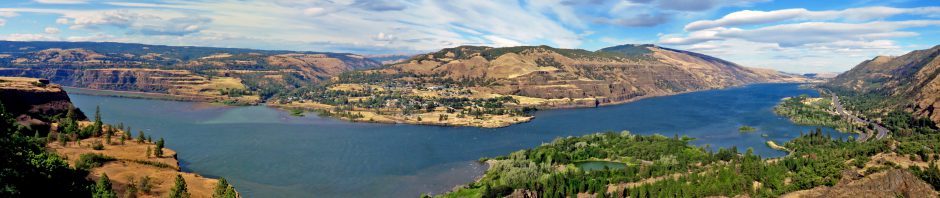
Roman Nose

Roman Nose State Park (click image for slideshow)

November 15, 2010

I have visited Roman Nose State Park, situated a few miles north of Watonga, Oklahoma, on multiple occasions.  Watonga is famous for its cheese, although the remnants of Hurricane Erin back in 2007 blew away the cheese factory which had operated there since 1940.  Just recently the factory reopened, but sadly it is now located in Perryman, Texas since that town offered a financial incentive.

My most vivid memories of Roman Nose are from a camping trip my friend Jeff and I made there over two decades ago.  We went up a trail and decided to head cross-country downhill rather than make a long loop.  Big mistake – the hillside was littered with hidden cacti and my feet and legs took a beating.  I think it was on that same campout that we got so cold in our tent that we gave up and drove over to the lodge and rented a room to warm up!

On a mid-November Sunday morning I breakfasted in Oklahoma City with my father and then drove out to Roman Nose.  My Oklahoma Hiking Trails book recommended a 6.25 mile loop around the edges of the park, and I followed that plan with a small deviation to avoid repeating part of a trail.  As for the lodge, it sits down on its own drive down by Boecher Lake and I only saw it from across the water on this trip.  A Daily Oklahoman newspaper article that same morning indicated the lodge had been renovated, but I was far more interested in the trails.

Roman Nose Park Entrance

Entering the park I saw the striking and familiar sign of an American Indian with a Roman Nose.  Arkansas has erected beautiful three-dimensional painted signs at each of its state parks, and Oklahoma has at least one park with a memorable sign.  The park is named for Henry Roman Nose, a Cheyenne Indian Chief who owned the 600 acre allotment that encompasses the present-day park.  He wintered in his tepee in the canyon from 1887 until his death in 1917, escaping the cold winds up on the plains.

I drove past the golf course and lodge drive and turned to pass the general store and travelled up the western shore of Boecher Lake and adjoining Watonga Lake.  There were several people in the campgrounds and a number of fishermen out on Watonga Lake.  At the end of the drive I parked beside the trailhead for the Lake Loop, shooting a photo of the park’s trail map sign with my camera since it provided more detail than the one in my hiking book.  I should have shot that sign with my iPhone instead of my Panasonic superzoom camera, as it is easier to zoom and scroll images on the iPhone’s display.

Just to the left of the trail was a steep hill.  I took a rough side trail to the top to get a nice view of Watonga Lake.  I could see a boat along the shore near the earthen dam, with the lake surrounded by eroded mesa walls.  Then I clambered back down to the trail and followed it across the dam.  There I had a nice view of a fisherman out enjoying the placid water.

Fisherman on Watonga Lake

After crossing the dam, the mown grass led me past the base of Inspiration Point, the highest point in the park, and led (or misled) me back around to a field on the east side of Bitter Creek before suddenly ending in a loop.  I’d noticed a branching trail a ways back, which must have been the intended route.

So I backtracked a bit and took the side trail, which wound around the northeast side of Inspiration Point.  This section of trail, like many others, is open to horses.  I tried to dodge their deposits but as I took a switchback up the east side of the hill toward Inspiration Point I kept smelling horse manure.  Sure enough, I’d managed to get some on my boots and I was hard pressed for awhile to find a suitable surface or plant material to rid myself of it.  The hillsides were covered with red cedars and eventually I had reached Inspiration Point for a panoramic view of the lake and dam below and the gap in the mesas where Bitter Creek runs northeast to eventually join the Cimarron River, changing its name to Salt Creek along the way.  Through the gap I could see the white gleam of grain silos scattered about the landscape.

Bitter Creek Gap

From the peak I could see a housing development crouched on the hillside just above the park boundary.  The entire park is only 540 acres, so it was practical to circumnavigate much of it by trail in a few hours.  It has an interesting history.  What I’ve pieced together is that the road I had driven to the trailhead was once the railroad bed for tracks that led to a gypsum mining operation that was once located right where Lake Watonga is today, with employees living in the ghost town of Bickford a mile or so to the northeast.  Bickford died out in the 1920s and John Buell Cronkhite and his brother, Cap, designed and began building a recreational facility in the canyon in 1925.  They were sons of Will Cronkhite, who owned the Bitter Creek Ranch adjoining the area to the west.  The family constructed a forty-foot dam to form a 15 acre lake that was 35 feet deep at the dam.  However, a tragedy occurred on June 17, 1926 when Loree Cronkhite drowned in the lake.  The family abandoned development of the resort and in 1935 sold the park site’s 540 acres to the city of Watonga, which in turn gave the land to the State Parks Department.  Officially titled Roman Nose Resort Park, it was one of the original seven Oklahoma State Parks, constructed by the Civilian Conservation Corps and opened to the public in 1937.

Leaving Inspiration Point, I followed a trail along the park’s eastern boundary with a canyon stretching out along my right.  Eventually it dipped down into the canyon’s trees and then popped back up to the rim, making a series of switchbacks along the park’s southern border.  Sometimes the path crossed extensive patches of cacti jutting out from the gypsum rocks, looking just as sharp as I remembered from the 1980s.  At one point a ghostly white deciduous tree stuck out in the canyon below, surrounded by cedars.  The trail eventually passed by a cave-in where a spring had undermined the gypsum beds.

Eventually the trail ran back north to Boecher Lake and I visited a scenic lookout I remembered from years back.  I could see colorful paddle boats, which I was tempted to commandeer for an unauthorized excursion.  Off to one side of the trail was a hidden side outlet where Boecher Lake feeds into Watonga Lake.

Boecher Lake Outlet

I took a trail across the Boecher Lake dam for a panoramic view across Watonga Lake.  I passed a miniature golf area.  Its vine-covered trees and odd figurines helped make the scene a tad eerie without children scampering about.

I brought the 6.3 mile hike to a close after three hours, feeling famished.  So I drove an hour northeast to Enid for a late and, unfortunately, lamentable lunch at its El Chico.  They no longer had El Chico’s “old way” queso available at this franchise, only proferring a thicker complimentary queso that was quite inferior.  I then zipped back to Bartlesville to end the weekend with laundry duties.  Next weekend I hope to make another day hike, perhaps to Missouri or Arkansas, weather permitting.


Click here for a slideshow from today’s hike

<- Previous hike: Charon’s Garden

Posted in day hike, photos, travel | 4 Comments

Charon’s Garden

Charon's Garden (click image for slideshow)

After a couple of weekends without day hikes due to a conference in Kansas City and subsequent illness, I was anxious to hit the trails again.  Former student Quincy Amen, currently living in Lawton, had invited me to visit him for a day hike in the Wichita Mountains Wildlife Refuge.  I did not have to be asked twice, having first visited the Refuge with my friend Jeff back in 1989 and returned multiple times with friends and family.

My new Oklahoma Hiking Trails book recommended the Charon’s Garden trail at the western end of the Refuge, running south from Sunset Pool to Treasure Lake.  So on Friday evening I drove to Oklahoma City to visit my parents.  On Saturday morning I took the H.E. Bailey turnpike to Lawton.  Soon Quincy and I were driving northwest out of Lawton with Sunset Pool as our destination.  We never made it.

As we drove along the south border of Fort Sill, we saw a rocket launch from a ground unit, sending a long contrail off to the northeast.  The only Southern Plains fort built during the Indian Wars which is still an active Army installation, Fort Sill trains marine artillerymen.  Back in 1989, while searching for Geronimo’s grave at the fort, I managed to drive into one of the fort’s live shell areas.  Decades later my navigation skills are now bolstered by GPS, but as Quincy and I drove up highway 115 through the fort toward the main part of the Refuge, soldiers blocked our way.  They politely informed us the road was closed, perhaps wanting to ensure I did not blunder into rocket fire.

So we ducked back westward and took Indiahoma Road to the Treasure Lake Job Corps Civilian Conservation Center, which employs 16-24 year olds in vocational and academic training.  That way we could simply reverse our intended hike, trekking northward from Treasure Lake toward Sunset Pool.  We parked between Treasure Lake and Post Oak Lake and began our northward trek through Charon’s Garden.  The mountains there are about 300 million years old, composed of coarse granite that formed about 500 million years ago.  The central peak is Elk Mountain.

The trail took us above Treasure Lake, with Elk Mountain visible to the north.  I made sure to have Quincy pose in front of both Treasure Lake and Elk Mountain and I included him in a panorama, since I’ve worked with his mother at BHS for over twenty years and knew she’d want some shots.  Some of the fall foliage was quite beautiful, although the cacti did not participate.  Quincy was allowing me to lead, so it wasn’t long until I managed to veer off the main trail onto one skirting along Post Oak Creek.  We stopped to snack at a pool along the creek and then strode into a relatively open area on the southern flank of Elk Mountain where a stream came in from the east.  The eroded boulders atop the mountain were striking.

Knowing I’d already left the main trail some time back, I decided to head eastward along a side trail toward a peak separating our little side creek from the headwaters of Fawn Creek to the east, where the Bonanza Mine operated in the early 1900s.  These creeks carried runoff westward and eastward from Elk Mountain to the north and Mount Lincoln to the south.  Up ahead we spotted a huge boulder that had rolled down from the mountain.  The trail eventually wound over to it, and Quincy posed to provide some scale.

We climbed the slope between the two mountains, paralleling  the eroded ridge of Elk Mountain.  But the trail petered out and we could not safely scale the peak separating us from Fawn Creek.  So after a breather Quincy and I headed back west to the big boulder and then bushwhacked to the southwest, splitting briefly to follow two parallel trails on the mountainous terrain.  He took the high road and I took the low road, which might just reflect our respective characters.  Up atop the mountain I could see the landmark rock called the Pear, with its companion, the Apple, snuggled behind it.  Directly to the west were a series of other smaller mountains.  Soon Treasure Lake was visible to the south.

When we returned to Post Oak Creek my erring navigation skills had me leading us back north again even though we had abandoned our quest to reach Sunset Pool.  Quincy politely hinted that we were going in circles, but it wasn’t until we were back at the snack spot that I caught on.  Soon enough we were heading back south, with a family of hikers on our heels.  This time we followed the main trail all the back to Treasure Lake.  That trail ran on higher ground to the west of the creek trail we took on our northward trek.  We ventured over to Post Oak Lake, which served as another reminder that what they call a lake in the Wichitas we’d call a pond elsewhere.

We then drove north and east through the Refuge, declining to take the road north to Meers.  That little mining town boomed to perhaps 500 in the early 1900s but all that is left these days is a dilapidated restaurant about a half mile south of the original town site.  It is known for its huge thin hamburgers served in pie pans, but neither Quincy nor I had been impressed by our separate visits to the establishment in prior years.  So we drove on east and took the three-mile-long road up Mount Scott, which looms 1000 feet above the flat plains to the east.

The summit was swarming with people, including a couple enjoying the view of Elmer Thomas Lake to the south and another couple looking westward while boys scrambled about the slope.  The Wichita range stretched out to the west just as it has for uncounted years.  But the view to the north had changed dramatically with the addition of a large wind farm.

Descending Mount Scott, we drove into the resort town of Medicine Park to dine at the Riverside Cafe.  Driving about town, I spotted a mountain lion sculpture, but it did not compare well to one I snapped in Estes Park, Colorado a decade ago.  That brought our excursion to the Wichita Mountains to a close and I dropped Quincy off in Lawton, returning to Oklahoma City for the night so I could head out the next morning for a hike at Roman Nose State Park just north of Watonga.

Click here for a slideshow from today’s day hike

Next hike: Roman Nose ->

Posted in day hike, photos, travel | 3 Comments

Thin Is In

The New 11" MacBook Air

For years I relied upon desktop computers, but I’ve used three different styles of Dell laptop computers at work over the years and a laptop has been my main machine at school for seven years.  At home I’ve owned laptops from Toshiba and Averatec and on the road I rely upon a small Asus netbook or my iPad and, of course, my iPhone.  This is in, and if I’m not careful that will be true for my wallet as well.

I love the diminutive size of my 10″ netbook and use it to edit photos and videos and create blog posts when I’m out on a day hiking trip.  But some of its inherent compromises chafe. The keyboard is slightly smaller than normal and, more troublesome, the screen resolution is 1024 x 600 instead of the 1024 x 768 most software and websites expect.  That creates a lot of unnecessary scrolling.  And, even when overclocked, the Atom processor and slow hard disk are real bottlenecks.

I made a project of selling books, CDs, and DVDs earlier this year to pay for a decked-out Apple iPad.  And it is wonderful to carry about the house for reading news, web browsing, and the like.  I don’t find it useful for productivity, however, as it lacks the physical keyboard and applications I need for my photo, video, and blogging work on trips.  It is a consumption tool.  But it was invaluable for accessing my electronic program guide at a recent National Science Teachers Association conference in Kansas City, and I used Google Calendar with it to plan my sessions and keep up with school emails, etc.  In recent months I found I wasn’t using the 3G service on my iPad, so I let it lapse, although I re-upped for a month while in Kansas City since WiFi access in the convention center was spotty.

For my day hiking trips I would love to have a small netbook that had the style, build quality, and instant-on features of the iPad while providing a full-size physical keyboard, software applications, and good screen resolution.  And Apple has created just such a machine – at an Apple price.

The first generation of the thin MacBook Air was intriguing but clearly underpowered and overhyped.  So although I’d like to get a Mac someday (with dual-boot to Windoze), it did not tempt me at all.  But the second generation is another story.

The new 11″ MacBook Air is almost as thin as my iPad and a couple of inches longer.  That’s a great size for travel and the machine boasts a full-size keyboard, big glass trackpad, and full-resolution screen with a five-hour runtime on a charge.  They used a lower-voltage processor, however, which hampers its performance.  But then they compensated with a solid-state 64 GB or 128 GB flash drive system.  That’s pricey, but eliminating the bottleneck of a Winchester hard disk is a big boost.

So I’m seriously considering a visit to an Apple Store soon to try out the 11″ Air.  Quality comes at a price premium, however, with this thin wedge of aluminum costing anywhere from $1100 to $1600 depending on upgrades.   I could buy two or three highly rated Windoze netbooks at that price!  But its features might just win me over if I can find a way to slim down the net cost.  My remaining old computers and stereo components aren’t worth much on the used electronics market, although I still have a few hundred books I’ll probably never reread which I could try to sell.

Or maybe I should just stick with my Windoze netbook, buy a lottery ticket, and dream.  As Spock once said, “After a time, you may find that having is not so pleasing a thing after all as wanting.  It is not logical, but it is often true.”

Posted in technology | Leave a comment

Athens-Big Fork Trail to Eagle Rock Vista

Athens-Big Fork Trail (click image for slideshow)

My final day of hiking for Fall Break 2010 began with me checking out of my old hotel in Hot Springs.  Next time I visit I’ll opt for a more modern budget hotel outside of downtown, since I did not like the miniscule shower in my cheap room, which came complete with no bath towels.  The 1930 building had a retrofitted old ventilation system and original windows which left little to the imagination in the way of a nearby couple’s need for each other and noises from the park across the street, along with the noisy pipes from the building’s plumbing.  Thankfully, as a light sleeper and insomniac, I’d packed some ear plugs.  I was also annoyed by the lack of any sort of desk or table in the room, which left me propping up the netbook in a cabinet drawer.  The hotel did have WiFi, but I could not reliably connect with it again after the first night.  Oh well, you get what you pay for!

Naturally there was no complimentary breakfast either, so I drove once again over to the iHop, substituting pancakes for the previous day’s French toast.  I ate heartily since I knew I had a challenging morning hike ahead of me and planned to have a late lunch at a restaurant somewhere in southwestern Oklahoma.  My plans were constrained by a forecast of a stormy afternoon drive back home and a dinner appointment back in Bartlesville.

Given how beautiful the Little Missouri had been a couple of days earlier on the Winding Stairs trail, I drove back over there to take a section of the Athens-Big Fork trail which is part of the same large loop trail for backpackers.  As I wound along a few miles of one-lane roads, I noticed a series of pickups parked in the pullouts.  I wasn’t sure if shooting season had begun, so when I arrived at the trailhead I made sure to wear my orange vest.  I saw one hiker today wearing a bright orange cap with “Don’t shoot me” scrawled across the front.  I obligingly refrained from taking his picture.

The road was blocked since a flood had washed out a large tinhorn at the trailhead, but I maneuvered the car into a suitable parking position and headed north along the trail.  It paralleled a deep creek which flattened into a series of leafy pools as I ascended, with me posing for a self-portrait in my vest.  The trail took me up a steep gradient on the south side of Big Tom Mountain and I quickly broke a sweat despite the cool overcast morning as I rose 300 feet.  From the mountain top I could look north through the trees and see the ridge of Brushy Mountain, which I would soon ascend to the Eagle Rock Vista.

The trail led me down the north side of Big Tom and eventually reached its low point along the Viles Branch, where it briefly followed the Viles Branch equestrian trail, a broad flat area which was a sharp contrast to the narrow mountain trails I had been negotiating.  Then it began the ascent of Brushy Mountain.  This portion of the trail was a wider old roadbed and no doubt the old postal route.  My trail book had mentioned a cave below the trail somewhere on the south side of Brushy Mountain, but I was unable to locate it.

A sharp turn in the trail afforded a view towards Brush Heap Mountain to the northeast.  One tree was a burst of yellow in the forest below me.  The trail narrowed and steepened as it rose toward the top of Brushy Mountain.  The morning sun glimmered off rocks above me and the trail passed by some of the crags I had viewed from afar earlier, with pink rock exposed by erosion.

I reached a trail junction and took a short spur to the southwest to Eagle Rock Vista, where I sat on a convenient log with my back against a tree, sipping a drink and cooling down.  I was now at 1650 feet, 400 feet higher than the trailhead.  I heard two shotgun blasts from the south and west while up there, so I was glad I’d worn my vest.

To the east I could see the Viles Branch valley etched between the Brushy and Big Tom ranges.  My panorama of Big Tom Mountain doesn’t do justice to the broad sweeping overcast view.  I zoomed in to catch the dim rays of sunlight filtering through the cloud deck.  The overcast sky never cleared while I was at the Vista, although later as I descended Brushy Mountain the sky opened up for about five minutes of sunlight.  The photographer’s lament – if only I had caught that brief window of good light when I was up top.

I walked westward on a rim trail for a bit and when I returned to Eagle Rock Vista two fellows joined me at the rim.  They had no packs and were perspiring heavily, so I knew they probably were backpackers who had shed their load to come see the view.  Sure enough, when I returned to the trail junction I spied their large packs.  I placed my little pack next to theirs to illustrate one reason I’m a day hiker rather than a backpacker.

Retracing my path I returned to the Viles Branch horse trail and bushwhacked a few yards south to follow the Branch itself for a bit since it was fairly dry.  Then I walked back over Big Tom Mountain.  On my descent I encountered more hikers than I’d seen altogether throughout three days of hiking.  A troop of scouts huffed past me. One portly fellow remarked, as he patted his ample stomach, that he might just have shed all of his fat by the time he reached the top. Many of them looked rather weary.

When I reached the car I was weary too since, although the hike was only four miles, I had climbed three mountainsides.  I made sure no one was around and washed up, changing all of my garments in the backseat of the car.  I knew I was a couple of hours from a decent restaurant and wanted to be refreshed.  Then I drove west into Oklahoma and had a tasty pizza at the Mazzio’s in Heavener at about 1:30 pm.

A smattering of rain drops had fallen from the overcast sky along the drive, and as I drove past Cavanal Mountain just west of Poteau the clouds bulked up beautifully.  I had to stop near Shady Point for some shots, since the clouds made it look like Cavanal was a volcano belching light ash.  It was a magnificent sky.

Light rain accompanied for much of my trip back to Bartlesville, footsore but elated after three great days of hiking in the Ouachita Mountains.

Click here for a slideshow from today’s hike.

<- Previous hike: Looping Lake Ouachita

Posted in day hike, photos, travel | 3 Comments

Looping at Lake Ouachita

Lake Ouachita (click image for slideshow)

The second day of Fall Break began with me at the local iHop enjoying a hearty breakfast to carry me through ten miles of hiking at nearby Lake Ouachita.

After driving 20 miles to the lake, I stopped in at the visitor center to pick up their trail maps for the Caddo Bend trail and Little Blakely trail system, all of which are along peninsulas sticking out from the lake’s eastern shore.  It was a short walk to the Caddo Bend trailhead to start the walk westward down the peninsula.

The trail soon ran by a boulder field and then dropped to the lake shore.  The sun struggled to break through the overcast all morning, so the light was not ideal.  You will spot some rocks intruding onto the gravel shoreline – the peninsula is known for its geological variety, with a folded mixture of rocks, including quartz.

Eventually I reached the end of the peninsula, which is Point 50 on the lake.  Here one found the tilted planes of sedimentary rock exposed and leading out into the water.  Clambering out onto the point, I could look back at the lake sign and note how large chunks of one thick vein of rock had broken off.  On the north side of that vein were thin planes of multicolored rock.  I set a branch of small pine cones down beside it for scale in a close-up.

Some rocks had veins of quartz running through them, and I located one where the rock had fallen away to expose the vein.  I had spied a small cave down the rugged shoreline, and carefully scrambled over the ever-changing types of rock to reach it, including a large conglomerate protrusion looking like stones caught in petrified tar.  The north side of this protrusion was fascinating in its erosion.  I placed a trekking pole against it for scale.

After considerable struggle, I finally reached the cave and posed for a shot.  At one point on my journey I had to shimmy down a steep rock face, so I knew I would not be returning that way.  Thankfully ahead I could see eroded bedding planes rising up toward the wooded top of the peninsula.  Walking up them I found more quartz and tree stumps as I groped my way up through the brush to finally rejoin the trail.

Soon I was walking eastward along the peninsula’s north shore.  There were a couple of footbridges to save me from winding my way back every inlet, and my low approach to one of them inspired me to shoot the leaves along the deck, with the bridge railings emphasizing the perspective.

The remainder of the trail was uneventful, so after hiking in silence all morning I finally flipped on an audiobook as I wrapped up the four mile loop.

Then I took gravel roads to the north out of the park to reach the Little Blakely Trail System, a series of loop trails on the next peninsula to the north.  Several loops run along old forest roads, and there are helpful marker maps at each trail junction to help you navigate.  I decided to walk the South Loop since I’d found the south shore of the Caddo Bend peninsula more interesting than the north.

Just after the trailhead was a picturesque creek.  The wide road trail worked its way up through the forest down the peninsula and then turned south, finally offering a view of a small wooded island out in the lake.  I stopped near a large pine tree to dine on another turkey sandwich I’d picked up at a convenience store.  A break in the trees offered a better view of the island beyond.

This section of the trail was not an old road, so it was considerably narrower.  At times the growth forced me to sidle sideways along, but thankfully most of the trail was quite clear.  The trail wound around multiple inlets, with the gravel shore tracing various past lake levels.  I took a side loop that ran out to a point and snapped shots of a downed (or should I say drowned?) tree and a quartz fire ring.  The view of the lake was entrancing with its undulating shoreline.

This side trail ran along steep hillsides and was the most challenging part of the hike, except for my bushwhacking adventure along the rocky western shore of Caddo Bend north of Point 50.  A footbridge with interesting suspended rail bracings brought the hike to a close.

I then drove back into the park, stopping at the Three Sisters Spring, where three springs emerge in close vicinity and their waters are channeled into three rivulets.  I was amused that whereas people used to drink from each spring for different ailments, the state now cautions visitors that the water is not potable.  At least it doesn’t stink like the springs at Oklahoma’s old Platt National Park, now the Chickasaw National Recreation Area.  Above the spring was a picturesque abandoned pump house falling into ruin.  I must say that the whole setup at Three Sisters looked suspiciously like they were just pumping water rather than relying upon natural flow.

The day ended with me driving back to Hot Springs to shower before heading out to dinner with my friend and fellow science teacher Betty Henderson and members of her extended family.  Betty and one of her brothers, with his wife and son, had been digging crystals all day at the Ron Coleman Mine up north of town.  They said they had enjoyed the long day of digging in the mud for the glistening quartz and had gathered some sizable crystals, but I’m glad my own geological adventure was scrambling about the rocks at Point 50.

Tomorrow I plan to hike a bit on the Athens-Big Fork trail, an old mail route just west of Winding Stairs Trail.

Click here for a slide show of today’s hike.

<- Previous Hike: Winding Stairs

Next Hike: Athens-Big Fork Trail ->

Posted in day hike, photos, travel | 2 Comments