Wendy and I flew to southwestern Oregon in early June. We needed a rental vehicle I could drive over to the coast and down to the Redwoods in northwestern California, and when I went hunting online, the cheapest rental at the Medford airport was what Budget described as a “Dodge Grand Caravan or similar”. That was fine by me, since I have enjoyed driving Wendy’s Honda Odyssey mini-van on our vacations.
Renting a vehicle on a vacation is an opportunity to experience something different than my 2014.5 Toyota Camry or Wendy’s 2019 mini-van. The most unusual rental for me was way back in the late 1980s when a girlfriend arranged for me to drive a Firebird Trans Am in Baltimore and Atlantic City. That was a hoot until the hood latch malfunctioned. We had to trade it in, and the replacement was a Chevrolet Celebrity Eurosport station wagon, which was quite a contrast!
The last time Wendy and I rented a car was on our trip through Utah in 2018. We ended up with a Ford Fusion hybrid. While I loved its 45+ miles per gallon efficiency, the large battery reduced the trunk space so much that our largest piece of luggage had to be transported in the back seat, and the car could be sluggish. But it was interesting to drive a car that sometimes relied entirely on its electric motors and had regenerative braking.
Car rental agencies understandably can only approximate what you will get for their cheapest rates, and a mini-van is not what we ended up with in Medford. We were assigned a GMC Yukon Denali, which is a luxury full-size sport utility vehicle that sells for over $80,000.
Our 2024 GMC Yukon Denali rental SUV
We walked out of the airport to find a jet black vehicle that was 17’6” long, 6’9” wide, 6’4.5” high, and weighed over 5,500 pounds. That’s almost two feet longer, 9 inches wider, over 18 inches taller, and over a ton heavier than my own 2014.5 Toyota Camry.
I’ve driven full-size SUVs before; I’ve driven the Chevy Suburbans the school district has to transport small groups, a “People Mover” mini-bus, and I once rented a 15-passenger van to haul people around while at a conference. So I knew I could handle the big Denali, although parking it might be a challenge. One of the surprises of the trip was how easy it was to park the beast, thanks to one of its many luxury features.
The vehicle had many of the high-end features one finds on a Cadillac Escalade, and it was fun to discover them as I wheeled the beast along interstates, narrow winding mountain highways, gravel logging roads, and city streets.
Favorite Features
One of my favorite features was apparent once I pressed the Start button: a heads-up display (HUD) appeared on the driver’s windshield.
The heads-up display
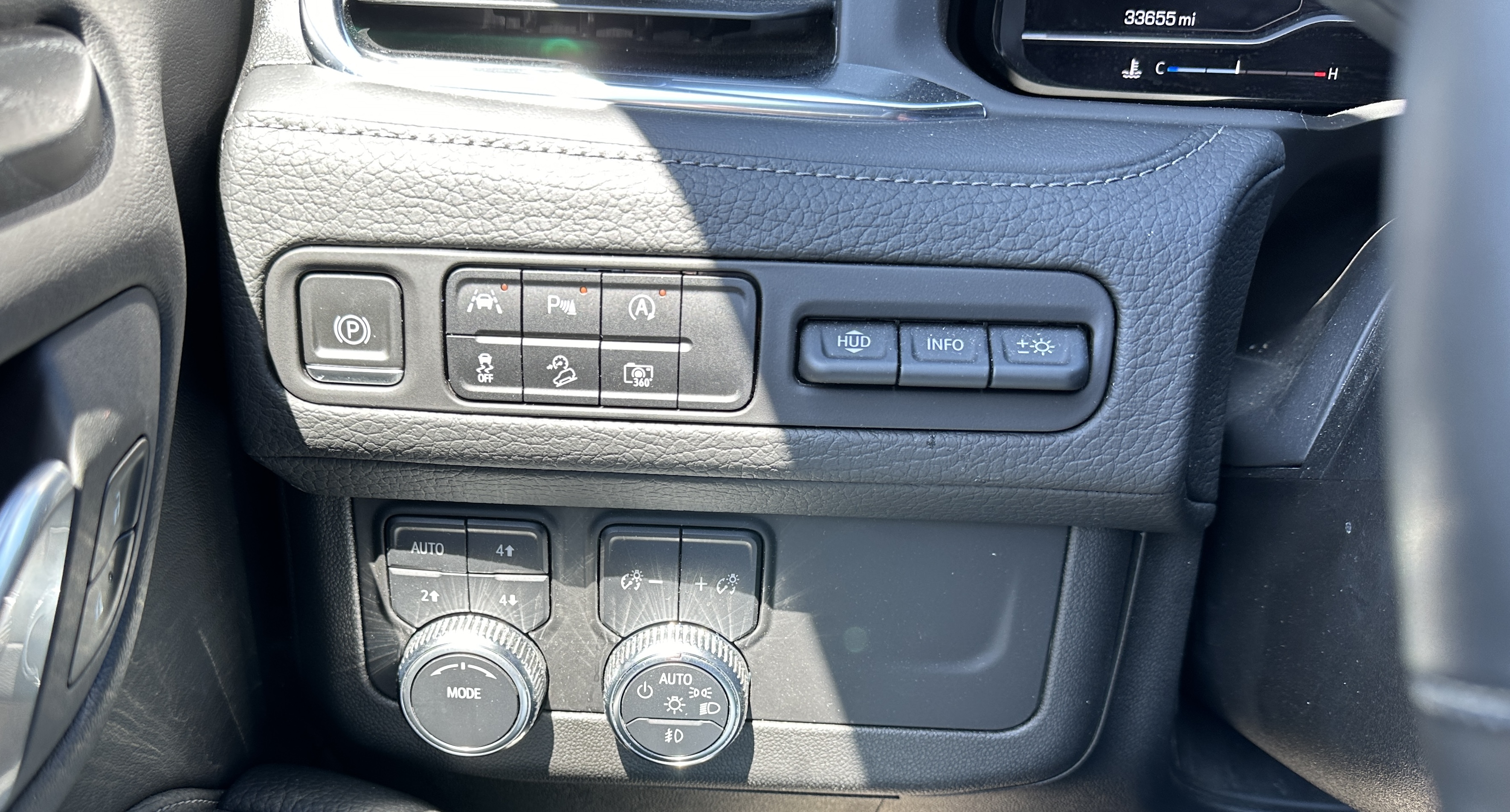
I loved being able to see my speed without glancing down, although I had no use for the off-road elements in the display showing 4-wheel drive mode and vehicle pitch angle, steering angle, and roll angle. The HUD also displayed the cruise control settings, and there were convenient controls on the dash allowing me to adjust the height and brightness of the HUD.
The three toggle switches on the right controlled the HUD
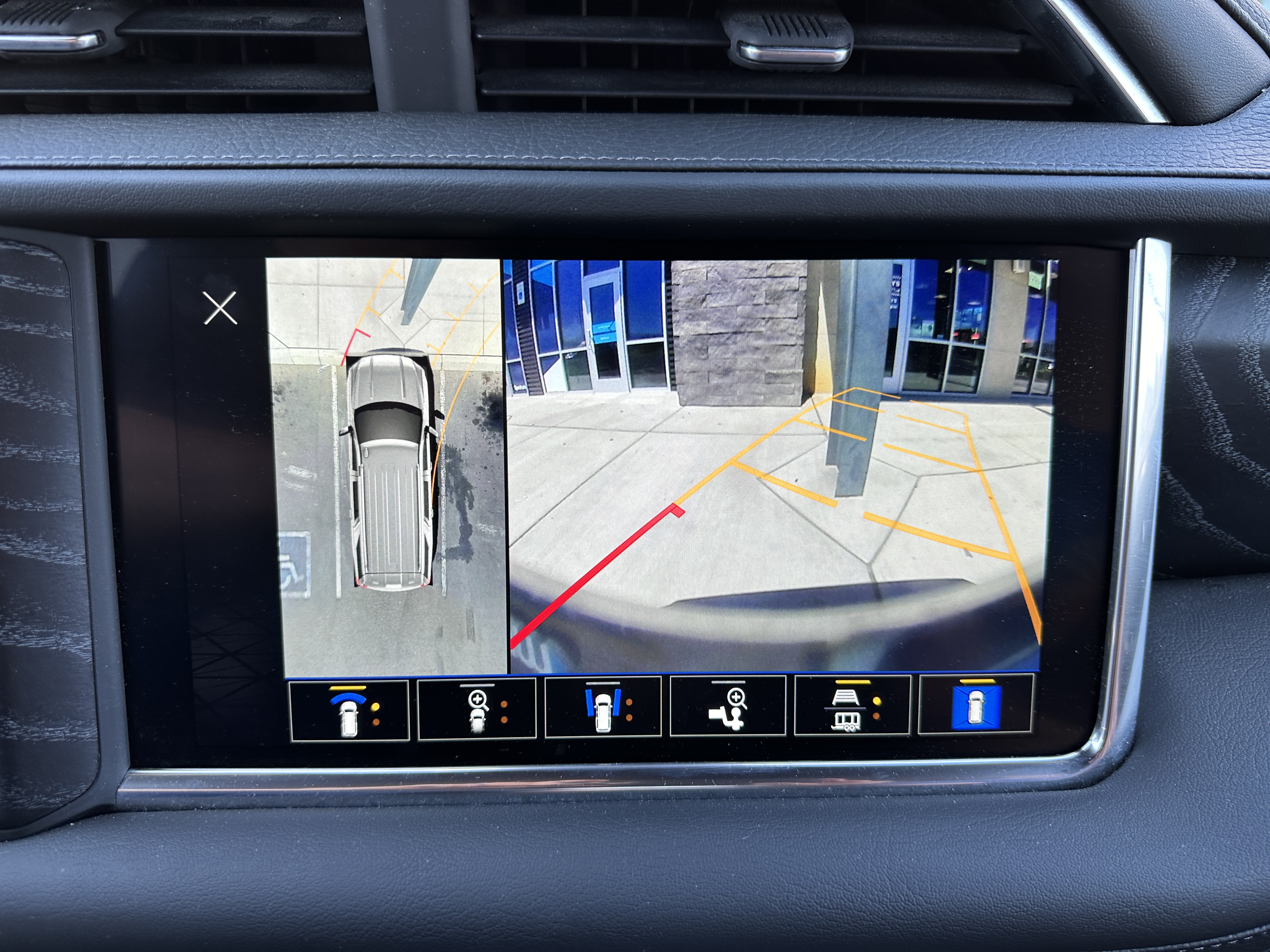
I discovered that other buttons on the dash left of the steering wheel were for the parking brake, lane assist, park assist, stop engine feature, traction control, hill descent control, and 360-degree surround vision system. That latter feature was splendid, showing on the large central display a 360-degree overhead view of the vehicle and its surroundings, with a larger view from any of the cameras, with both views showing guidance overlays.
The Surround Vision System made parking easy
It was wonderful how the cameras on the front, rear, and the two side mirrors were used to create the overhead view, making it easy for me to steer the beast into marked parking spots. Our vehicle didn’t have the additional Automatic Parking Assist feature for parallel parking, but we never needed it, either.
The other feature I appreciated was the power liftgate in the back, with a button you could press to lift it, another would lower it, and a sensor allowed you to wave a foot under the bumper to lift the gate.
Other Surprises
I was surprised by the heated steering wheel and how the seats not only had heat but also a fan that could push air through them for ventilation.
The steering wheel had the controls for the cruise control, heated steering wheel, voice calls, and infotainment system cursor
I wasn’t surprised to find that the vehicle had adaptive cruise control that would adjust its speed when following a slower vehicle, as I’ve grown used to that on Wendy’s mini-van. My older Camry just has old-fashioned cruise control, something I have to bear in mind when switching cars: my Camry would happily plow into a slower vehicle in front of me if I let it.
I also appreciated the lane assist feature, given the vehicle’s imposing size, while I deliberately de-activate that feature on Wendy’s mini-van as it is more annoying than helpful on it.
One can’t get good gasoline mileage on a behemoth like this, but it did manage to average over 20 miles per gallon. My 1978 Chevrolet Monte Carlo I drove for a couple of years in college could only get 17 miles per gallon in city driving and the low 20s on the highway, while my 2014.5 Camry averages about 28 mpg. One feature to save gas was the auto-stop function, which I first heard about a few years back. The engine would usually cut out when you stopped, restarting once you released the brake. Sometimes it would also start the engine in order to run the air conditioning compressor. There was a button to disable the auto-stop feature, but while it took awhile for me to grow accustomed to it, I left it on to save a bit of gasoline.
I see in the owner’s manual that the vehicle also has navigation on its center screen that can include guidance in the HUD, but I never tried using that feature. Instead, I just plugged in my Apple iPhone 14 Pro into the console and used CarPlay to access guidance from my TomTom GO app, which I routinely pre-program with various destinations before a vacation. One nice thing about the Denali was that it could do wireless CarPlay as well, while Wendy’s mini-van requires that you plug in the phone, although I always plugged in the phone to ensure it would stay charged.
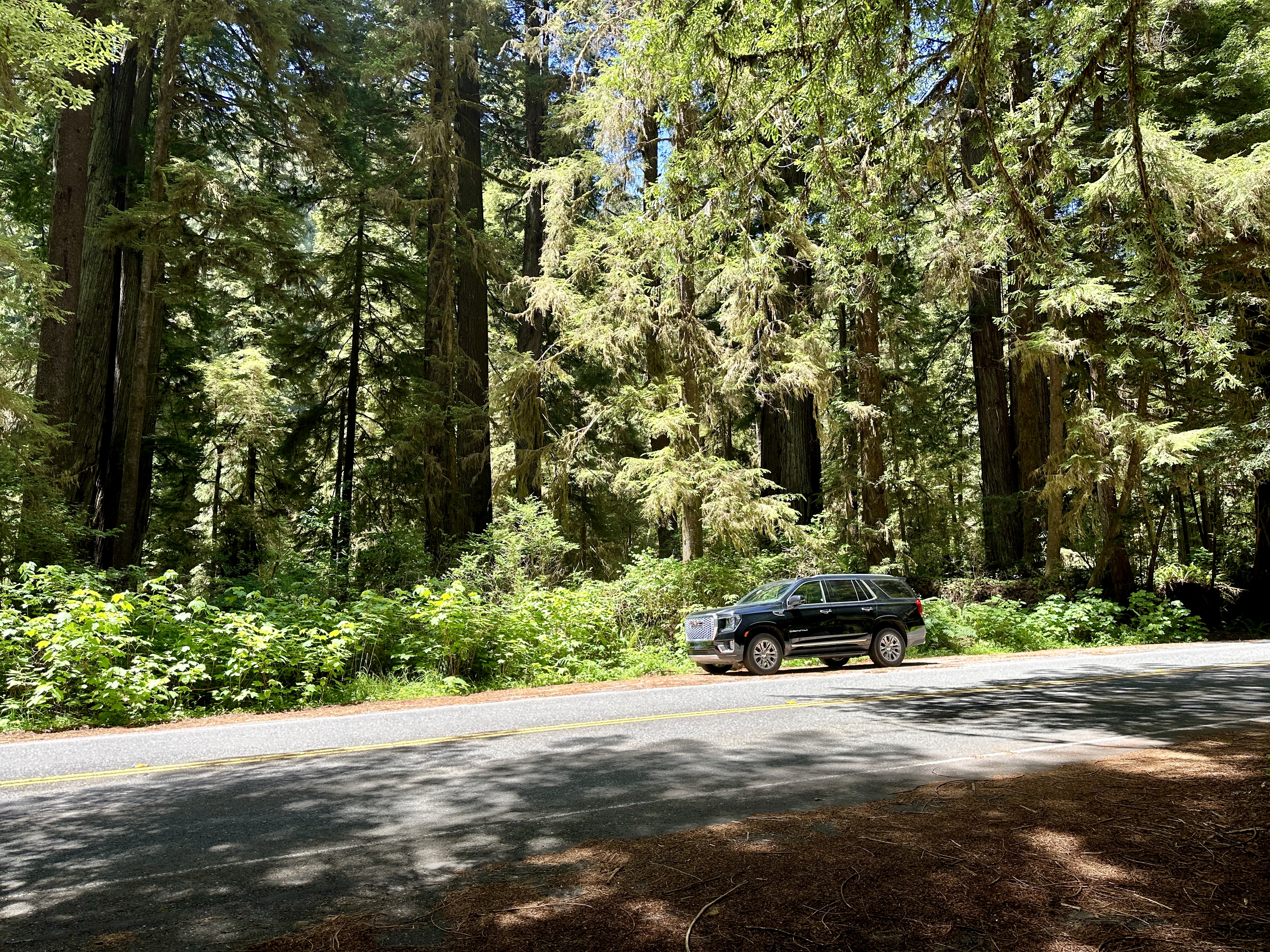
Redwoods are so large they can even dwarf a GMC Yukon Denali
I had fun trying out the various features on the vehicle. Although at first I wasn’t thrilled about having such a large rental vehicle, its features made it less annoying to maneuver than I had expected. I did feel a bit silly clambering up and down from the beast, and with just Wendy and me and our airplane luggage on board, the third row seats sat up and empty most of the time.
I would never contemplate buying such a vehicle; Wendy’s mini-van is all I would ever need for travel or cargo, and I was very glad to be back driving my Camry from the Tulsa airport back home. While I will avoid renting such a large vehicle in the future, it was a worthwhile experience.
Math was usually my most difficult academic subject. That surprises people who know that I was an award-winning high school physics teacher. I think that having to work to earn As in math improved my teaching. I related to students who struggled with algebra and calculus, and the only reason I earned 19 credits in undergraduate math was because I wanted to apply math to model the world via physics. I was all about applied mathematics.
Earliest memories
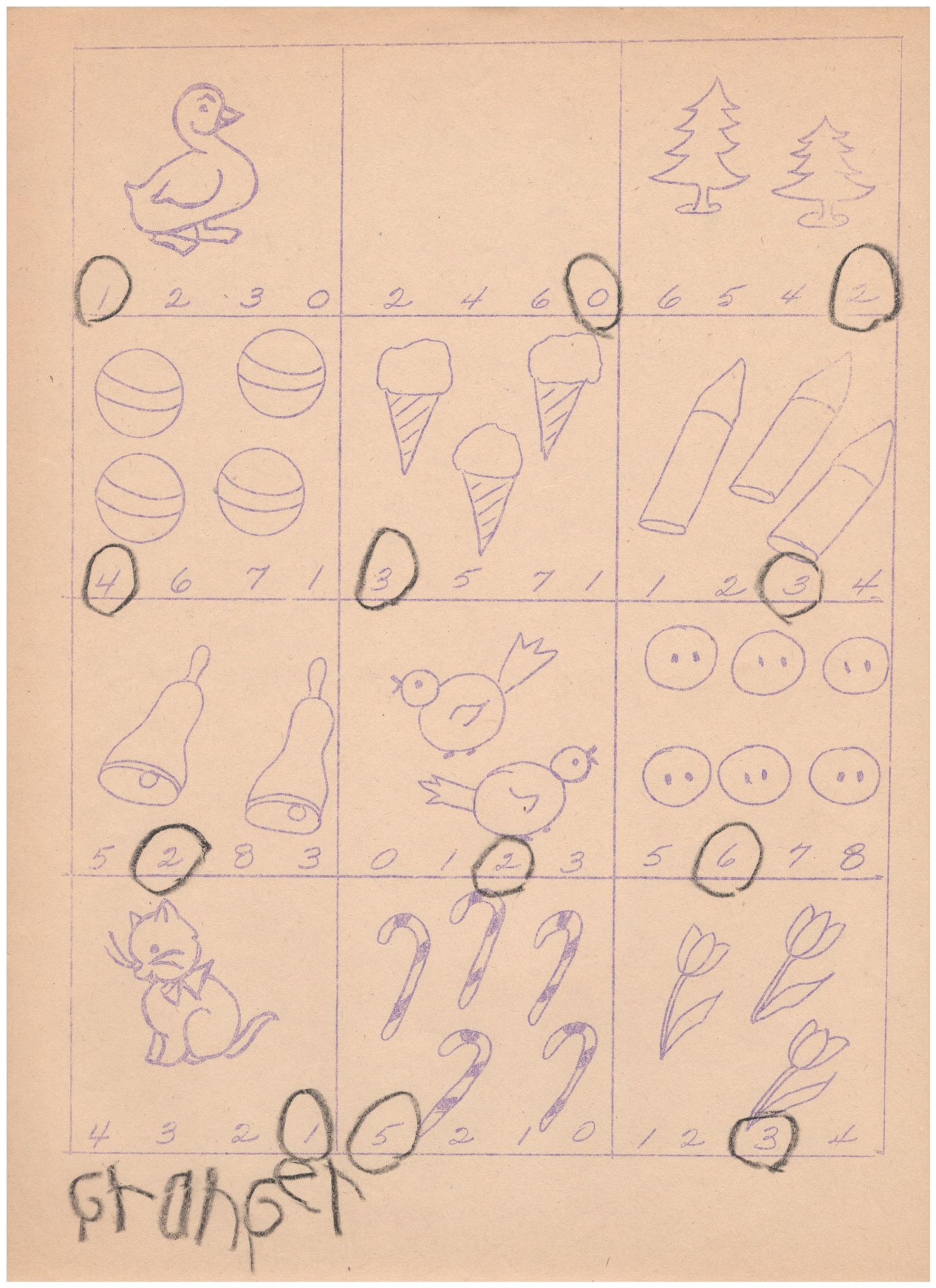
One of my first math papers
My parents saved a few of my kindergarten papers, including one where I used a black crayon to identify how many objects I saw.
My earliest memory of school math was learning about sets in first grade, drawing big circles around things. That was a consequence of the “New Math” that was a dramatic but temporary change in how math was taught in American grade schools after the Sputnik crisis.
I also recall addition and subtraction in a consumable workbook with an addition problem on a page with a subtraction problem on the facing page. I immediately noticed that the answer to the addition problem was the same as the answer to the accompanying subtraction problem, over and over. I figured it had to be a sneaky trick: they were trying to lure me into complacency, skipping doing the subtraction problem and just writing in the answer. I figured at some point the pattern would break.
I wasn’t about to fall for that, so I diligently did every subtraction problem. The pattern never broke, all the way to the end. I remember turning the last page and heaving a big sigh. All that wasted mental effort!
Flashback to flash cards
I used rote memorization, not tricks, for my times tables
In second or third grade, my mother said I had to learn the multiplication tables. She bought a set of flash cards, and I remember stretching out on the smelly green shag carpet in the hallway outside my bedroom. My mother sat cross-legged, flash cards in hand, and proceeded to torture teach me.
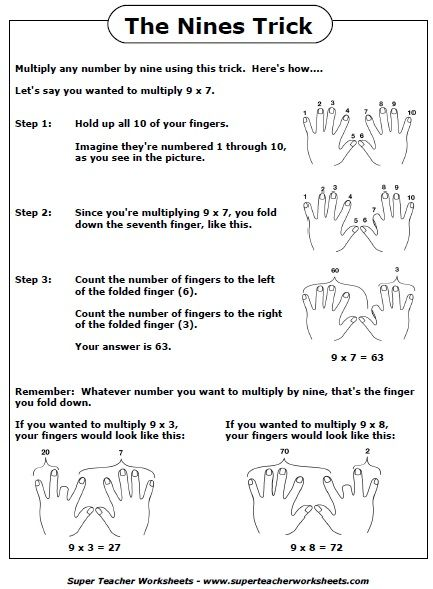
Oh, how I hated it! The only thing I liked was realizing that the sum of the digits in the answers to all of the nines added to nine. 9×3=27 and 2+7=9, 9×6=54 and 5+4=9, and so forth.
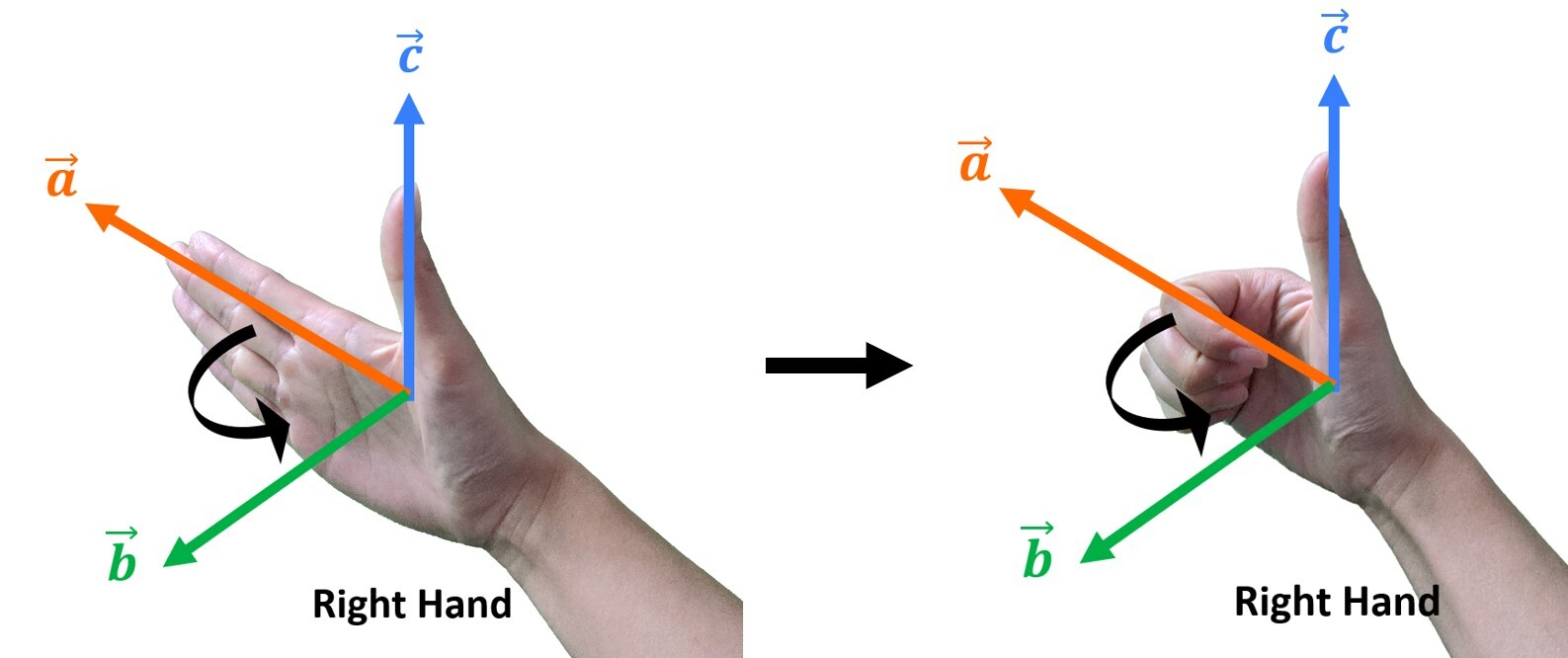
I intuitively realized that had something to do with nine being the final of the Arabic numerals and carrying, but I just used the factoid as a double-check, rather than adapting it into a hand trick. The only hand tricks I ever learned for math were for vector cross products.
I did use hand tricks for vector cross products and electromagnetic fields
Discounts
Olga Zaffos
Difficulty with math was what led me to try and cheat for the only time in school. Mrs. Zaffos was my math teacher in sixth grade, and she could be demanding. I remember her ruler coming out if you said, “one hundred and four” rather than the correct “one hundred four” when you meant 104.
When she taught us discounts, I couldn’t grasp it, and I was too intimidated to ask for help. So the night before the quiz, I took my white vest and used a ballpoint pen to write each discount problem along the inside. My scheme was to learn forward during the test and gaze down inside my vest.
When Mrs. Zaffos started passing out the papers, I felt terribly guilty about my impending behavior and began to sweat profusely. She reached me and exclaimed, “What is wrong with your shirt?”
Illustration created by Copilot Designer
I looked down to see blue ink stains spreading across my sweaty shirt. I looked up and confessed, “I’m cheating. The answers are written in my vest.”
Mrs. Zaffos pulled open one panel of my vest, revealing an illegible blue stain. She grinned and said, “I don’t think you’re much of a cheater, Granger. Do your best, and I’ll help you later.”
I don’t remember the grade I received on that quiz, but I do recall Olga Lorraine Zaffos giving me extra help until I figured out discounts, God bless her. I was never tempted to cheat in school again.
Regular math was not for me
Mr. Jennings was my math teacher in 7th grade
Our family moved as I finished elementary school, and although we were in the same school district, I was shifted to a different junior high than everyone I had known since first grade. For whatever reason, my records didn’t transfer properly, and my parents had never even heard of Honors classes. So while I got to pick a couple of electives, including Photography, I was enrolled in the regular track for all of the required subjects.
After a week at my new school, my mother asked me how it was going. I said everyone was nice enough, but they seemed rather slow. Even junior high math had been incredibly easy…so easy that it was quite dull.
A week later, the school called my mother. They had finally received my records, and I was to be immediately shifted to Honors English, Honors Science, and Honors Math. I was nonplussed, not realizing that there were classes of differing difficulties. I showed up in the new classes, where I was told that none of my grades from the regular classes would come over, and I needed to quickly make up a couple of weeks of work. I wasn’t at all worried about English or science, but could I handle Honors Math?
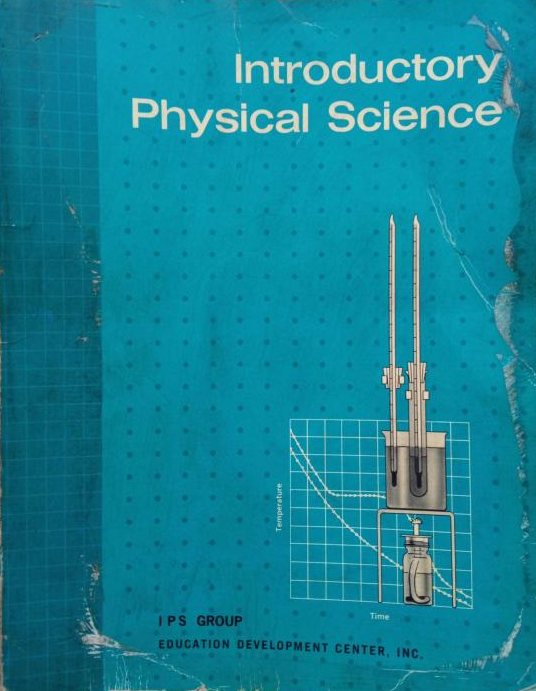
The answer was yes, and it was my seventh grade science class that motivated me to value mathematics. It used the old Introductory Physical Science curriculum developed in the 1960s by the Sputnik-era Physical Science Study Committee. That featured lots of hands-on laboratory work, including us constructing wet cells to power some basic electrical circuits. I decided to read about physics.
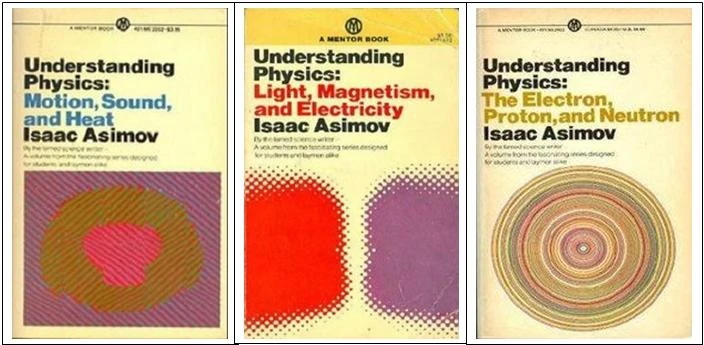
Since I had enjoyed his science fiction novels, I bought and devoured Isaac Asimov’s Understanding Physics books. They were conversational, but chock-full of equations.
Isaac Asimov also introduced me to physics
The bus would drop me off at school each morning, long before they lifted the metal gates that sealed off the classroom wing. I would traipse over to the choir room, climb the risers, plop down in a seat, and read about physics. I remember how a bored eighth grader one morning spotted me up there reading and came bounding up.
“You’re always reading. What’s so interesting, sevvie?”
At the time, I was a 4’8″ prepubescent seventh grader who weighed 72 pounds. I was known as the worst performer in Physical Education class, except on rules tests, until an even smaller and scrawnier Vietnamese refugee enrolled. So I was quite intimidated by this big eighth grader. I nervously showed him the cover of the book, and his face broke into a wide grin. “Physics?!? Wow! That’s a deep subject for a little guy like you! You must be pretty smart!”
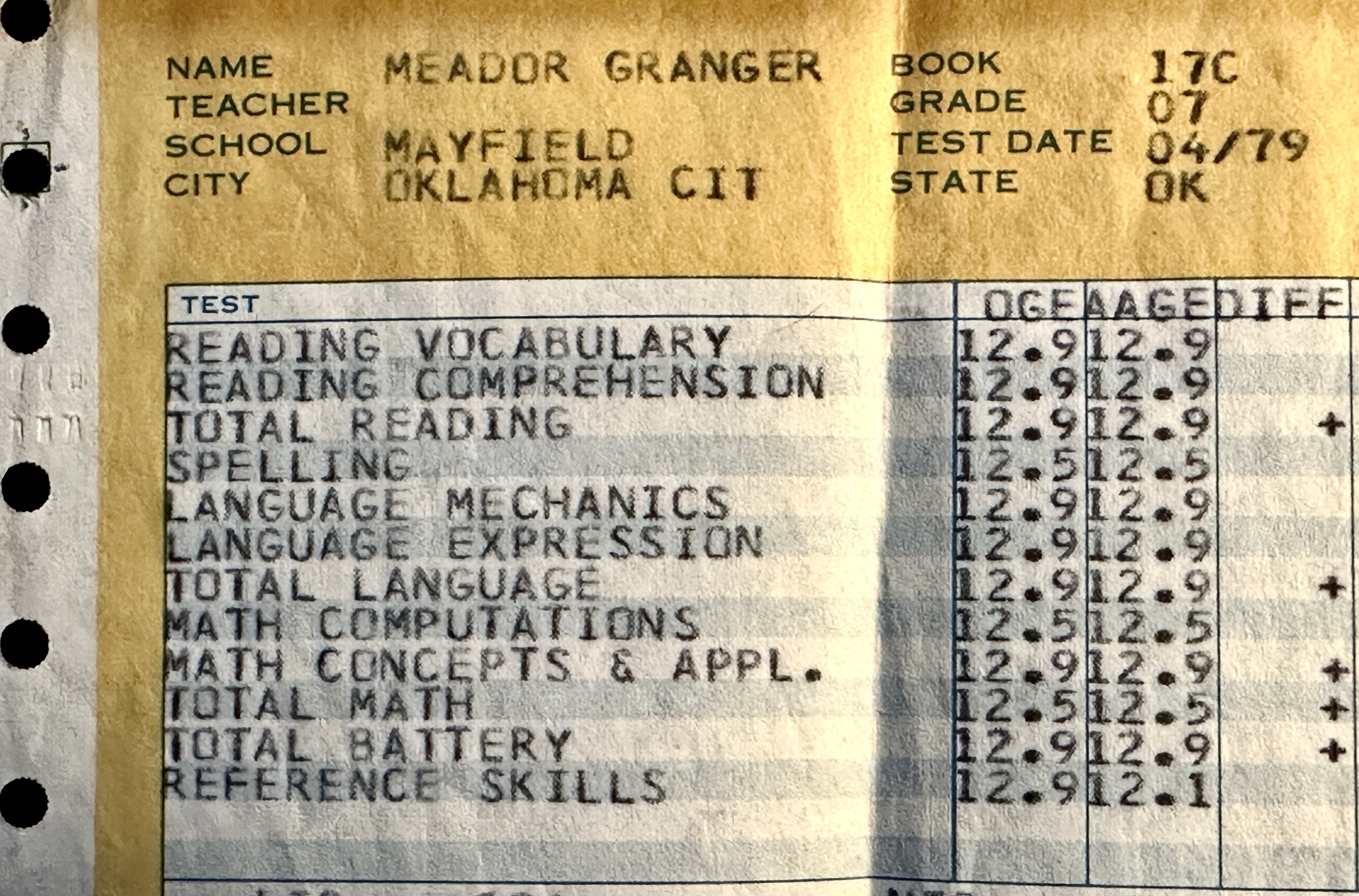
Well, yeah, I was an outlier on one end in PE and on the other end in academics. In April, we all had to take the California Achievement Test. My Obtained Grade Equivalencies were all grade 12…even in math.
A concrete thinker in Algebra
I liked Mrs. Epperley, even though Algebra was a bear at first
That didn’t make my introduction to algebra the next year any easier. I had to work hard to earn an A, despite the able efforts of my kind teacher, Betty Epperley.
I remember spending hours on the phone some nights with classmate Susan Plant, helping each other through the homework. Once I was trained in Piagetian learning theory in college, I realized that Susan and I were still concrete operational at the start of eighth grade; our minds had not yet matured enough to handle formal operations. Thankfully it began to click mid-way through. As we became formal operational, abstract algebra finally began to make sense.
Mrs. Epperley had to be out for some weeks, and we had Ms. Moon, a long-term substitute. She had a British accent, and I was taken by how she wrote her sevens with a strike-through. I adopted the habit to ensure my sevens and ones were distinct. That habit has persisted for 44 years.
What did the little acorn say when he grew up?
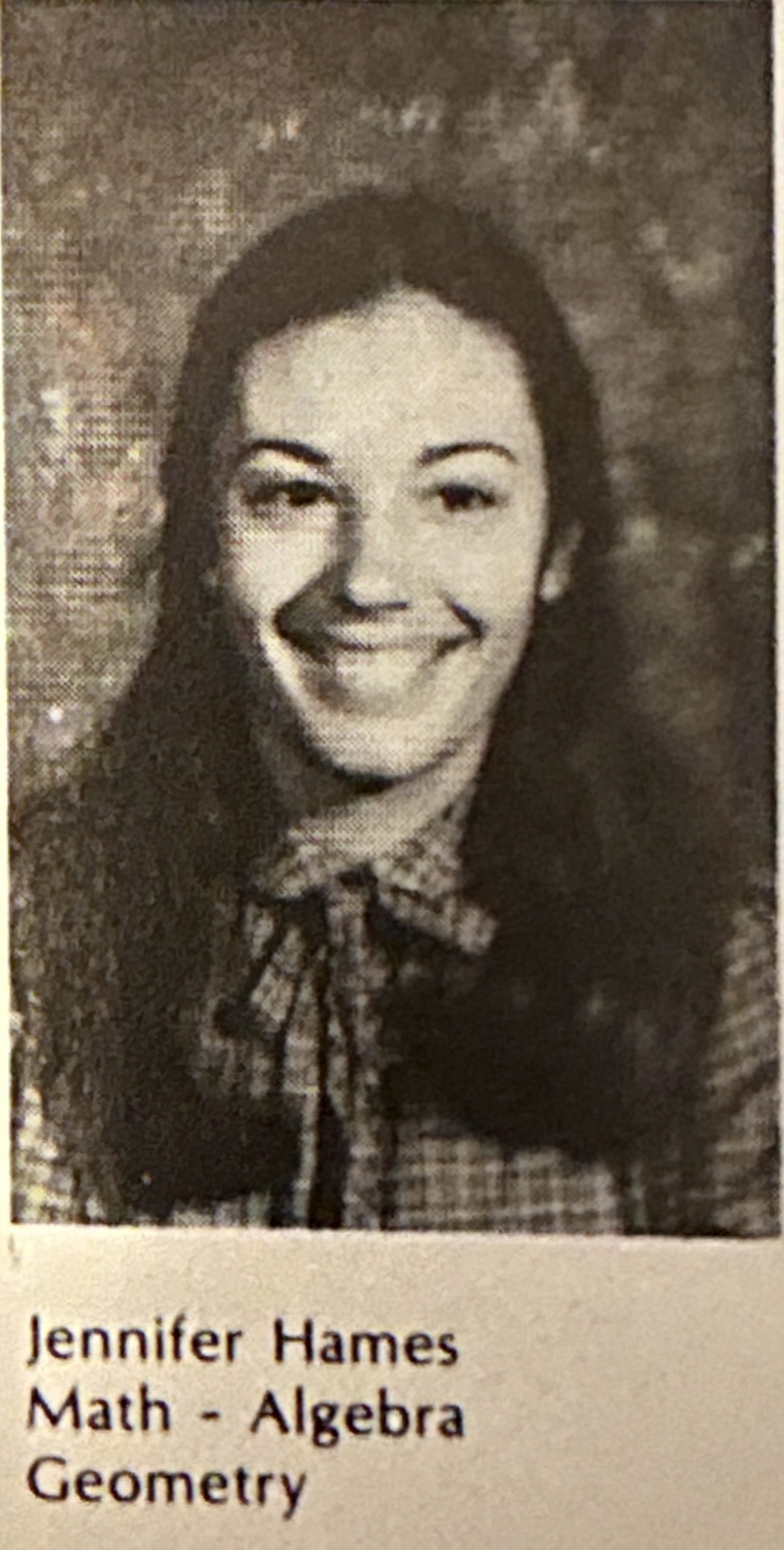
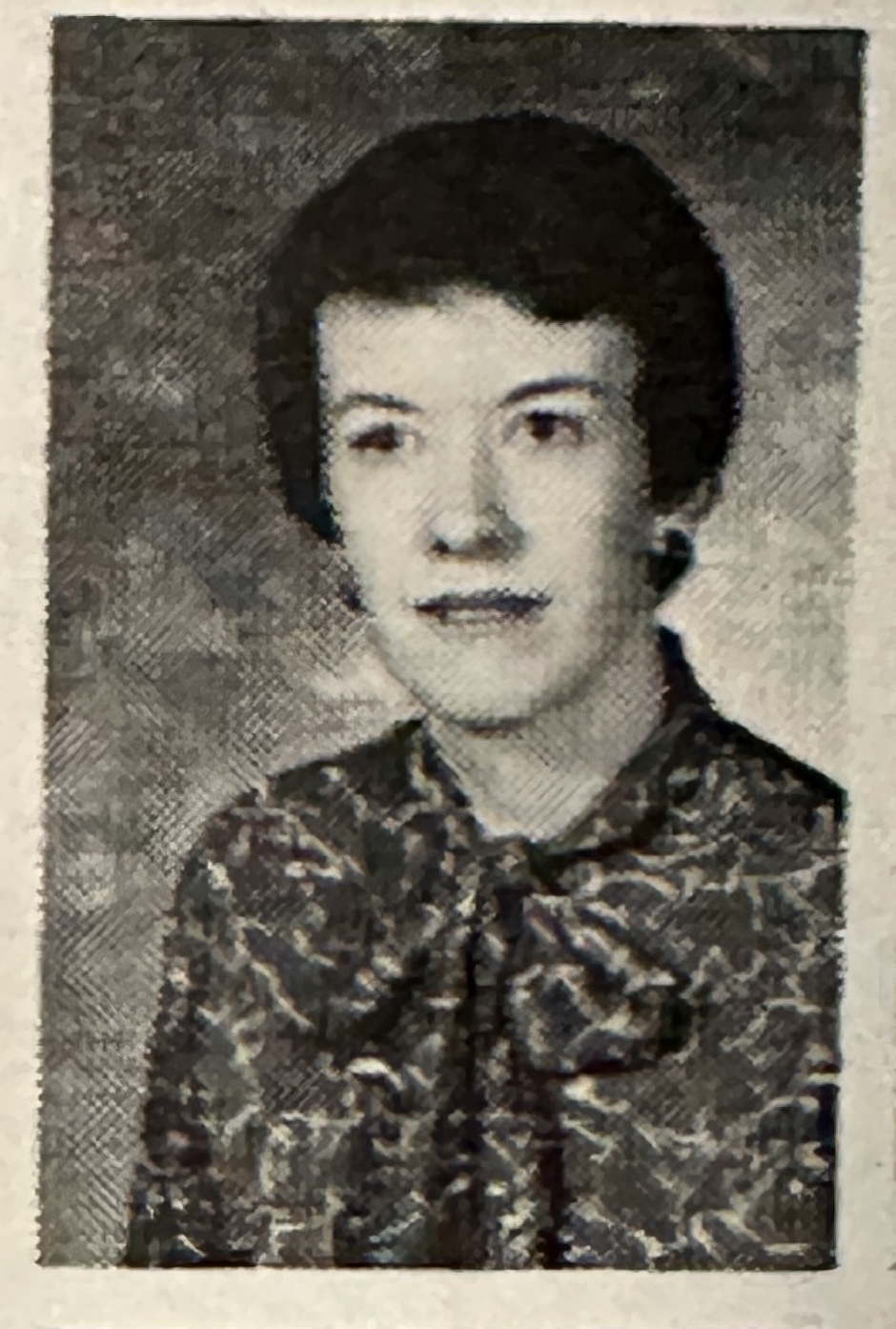
I took Honors Geometry in ninth grade with Mrs. Hames, and I was smitten.
Geometry was so elegant and sensible, and I could visualize everything. I actually enjoyed constructing mathematical proofs and ending them with quod erat demonstrandum, while many of my classmates groaned about the subject.
Speaking of groans, the answer to the above question is, “Gee, I’m a tree!” I have a whole series of geometry jokes, but I’ll spare you more misery.
Algebra II and Math Analysis
In grade school, when asked what I wanted to be, I had always responded, “Music teacher.” However, my father always wanted me to become a writer, and he paid for a writing tutor one summer and ensured that I had my own Science Research Associates Laboratory writing kit at home. When I was enrolling in high school, which was grades 10-12 at the time, Honors and later AP English were inevitable, but I had more freedom in choosing courses than in junior high. I asked my mother for advice on what electives to take. She responded, “You like science and you are actually good at math. So take all the science and math courses you can.”
Beth Thompson
Beth Thompson was a pale and precise woman who trained her Honors Algebra II students to fold our quiz papers in half length-wise after completing them, writing our name and period on the top of the folded paper. That left a tempting blank space below, and I always finished early. So rather than turn in my paper, I would write a trivia question on it.
A 64th note is a hemidemisemiquaver
Mrs. Thompson would gamely try to answer my questions when she graded my quizzes. I remember stumping her with, “What is a hemidemisemiquaver?
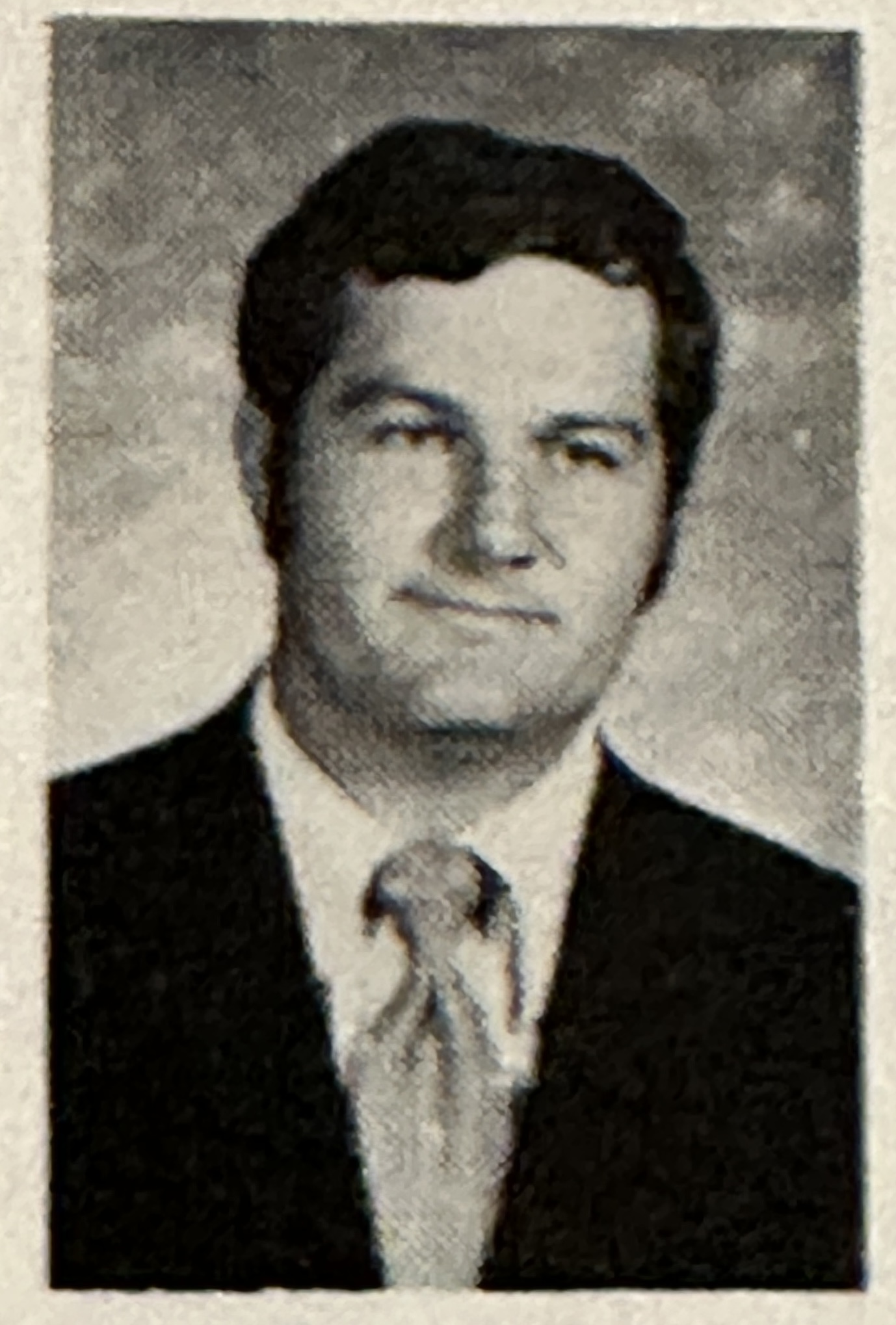
Jay Reagan was the baseball coach and Honors Math Analysis teacher. I enjoyed his class a lot, and throughout my life when people diss coaches with the stereotype that they can’t teach, I always point out that one of my best math teachers was a coach. Baseball, of course, is a sport drowning in statistics, and Coach Reagan could hold his own.
Coach Reagan
At the end of the academic year, we had actually made it through most of the textbook, a rare feat, and he had us do a fun unit on construction. Geometric construction, that is, with a straight edge, compass, and other devices. I ate that up, and years later, when I taught my own students about Kepler’s First Law of orbits, I made sure to show how an ellipse can be formed by taping the ends of a piece of string at the foci, pulling the string taught with a marker, and moving the marker while keeping the string taut to form an ellipse. That was a valuable way of making the foci more relevant to students, and the object being orbited is always located at one focus of the elliptical orbit.
Mu Alpha Theta
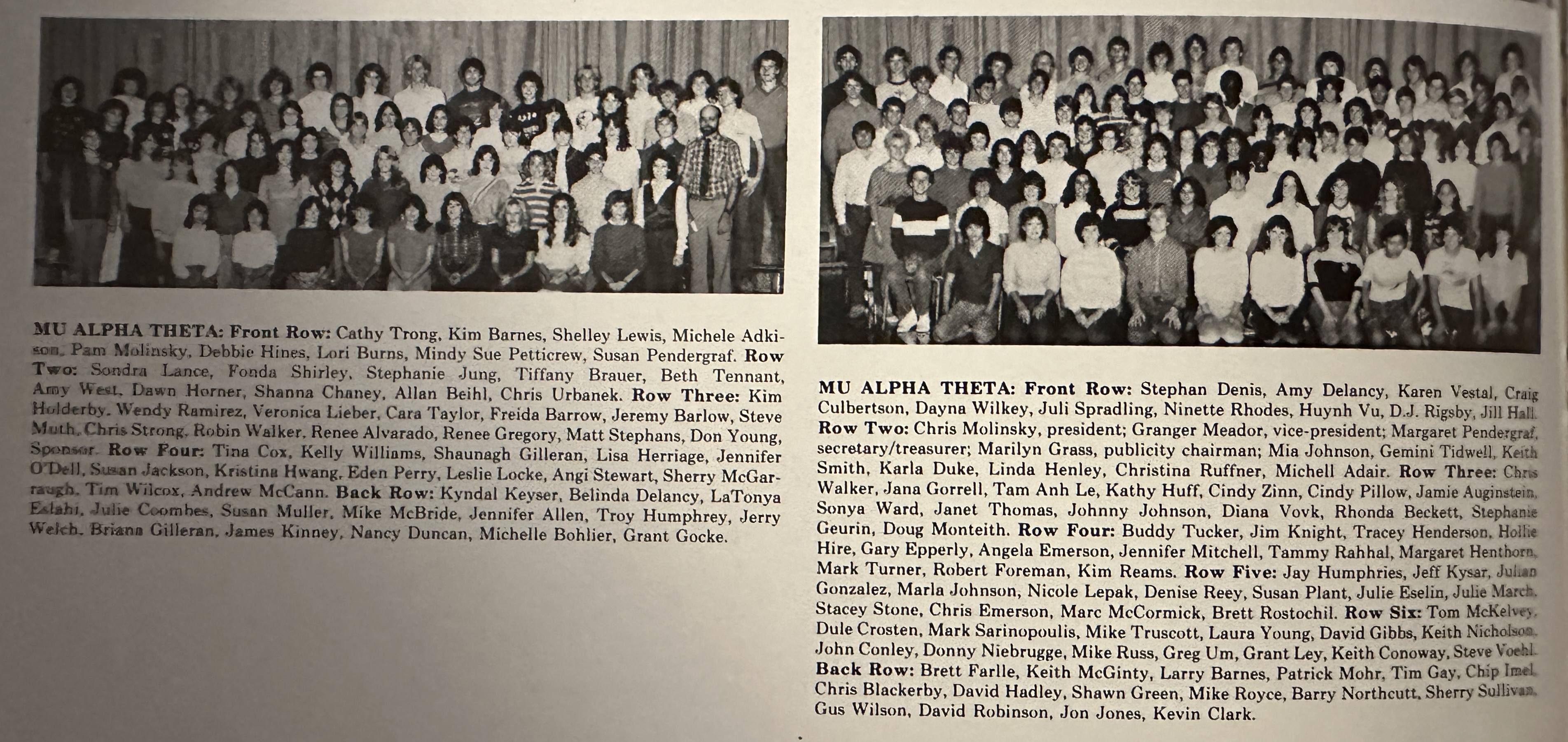
In 10th grade, I had been elected homeroom representative for our Honors Algebra II class in the Student Council, but I didn’t start actively running for offices in student organizations until I went steady with a girl starting in 11th grade. She was more extroverted and motivated me to become the Vice-President of the Honor Society, Parliamentarian of the Junior Classical League, Secretary of the Science Club, and, of all things, Vice-President of the rather large Mu Alpha Theta club…Mu Alpha Theta…MATH.
I was Vice-President of the Mu Alpha Theta math club
Our club initiation was at a buffet restaurant, something I had not experienced. The lighting was dim, and I remember going down the buffet line and what I thought was a big pan of mashed potatoes. I scooped a big glob out onto my plate. When we sat down to eat, my girlfriend eyed my plate and asked, “Why did you get so much butter?” Oops!
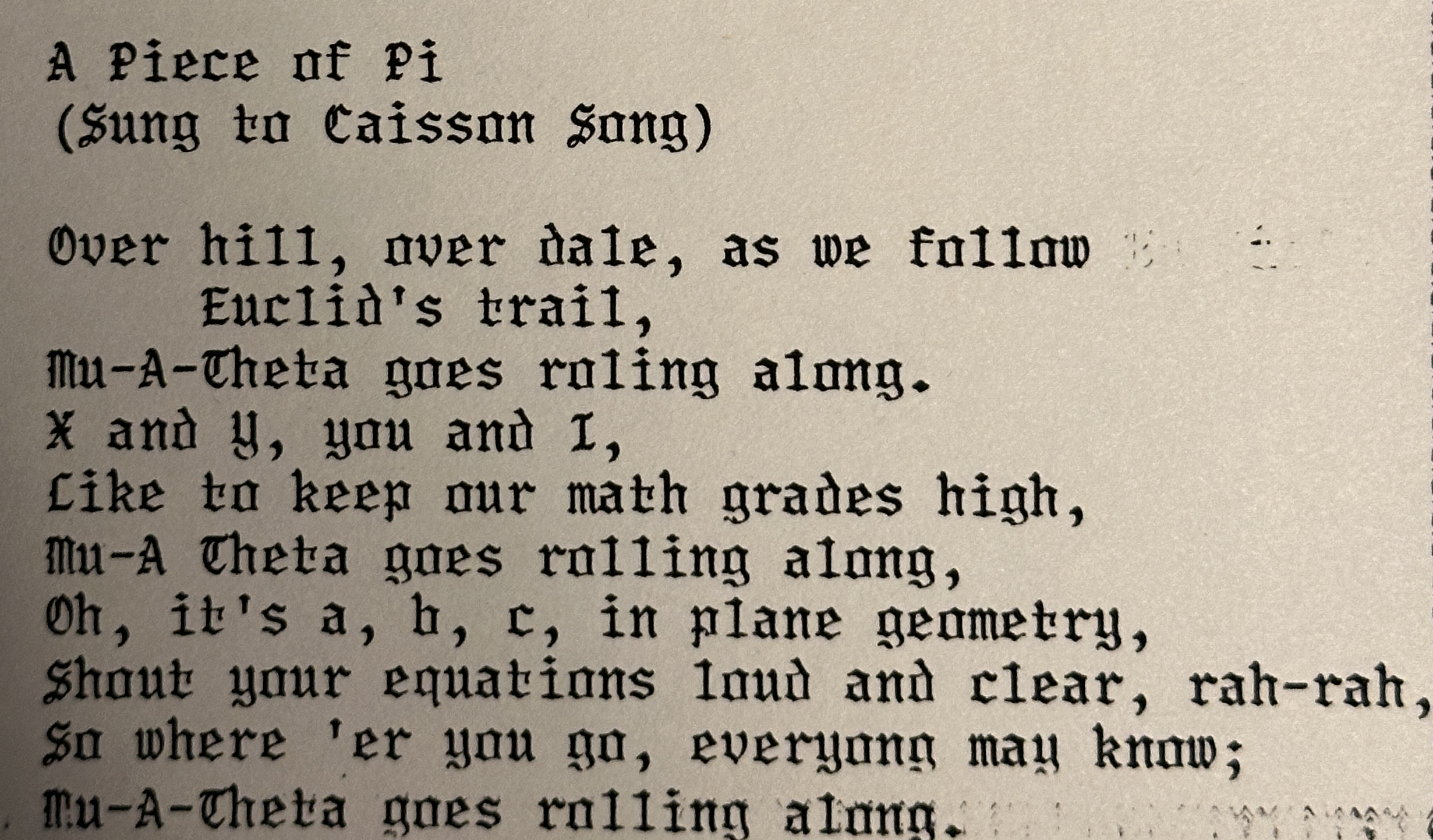
We sang a hokey song at our initiation which was a parody of the original Caisson song once sung by the U.S. Army. Here it is, as printed in the initiation program, complete with typographical errors:
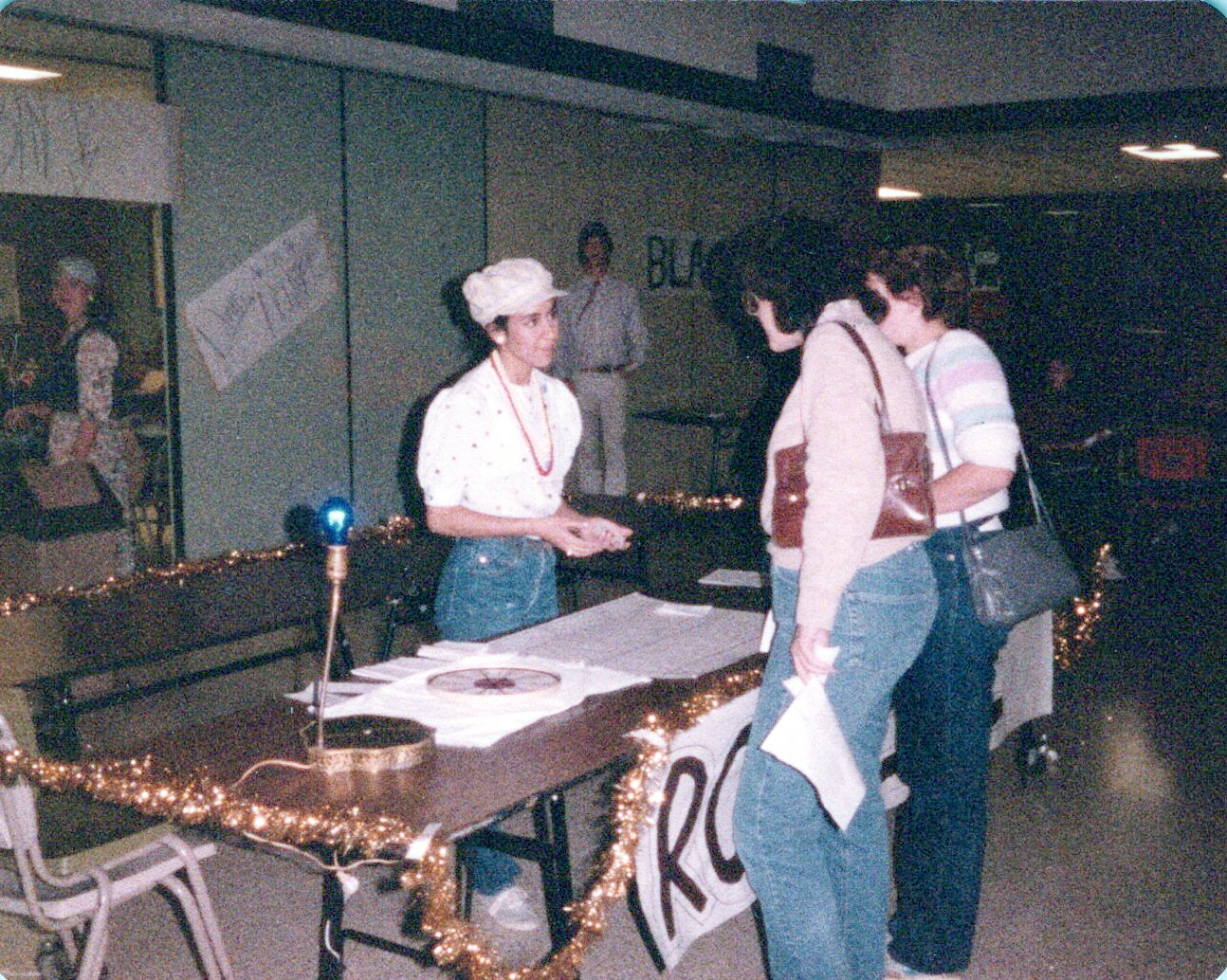
Our Roulette booth at Cosino Casino
Our club’s fundraiser was Cosino Casino, where people bought tickets in the school cafeteria one evening to use in playing games of chance. We included math lessons with each game, and my girlfriend and I were charged with running a roulette table. We bought a cheap lazy Susan turntable at the T.G.&Y. and my girlfriend decorated it and ran the table.
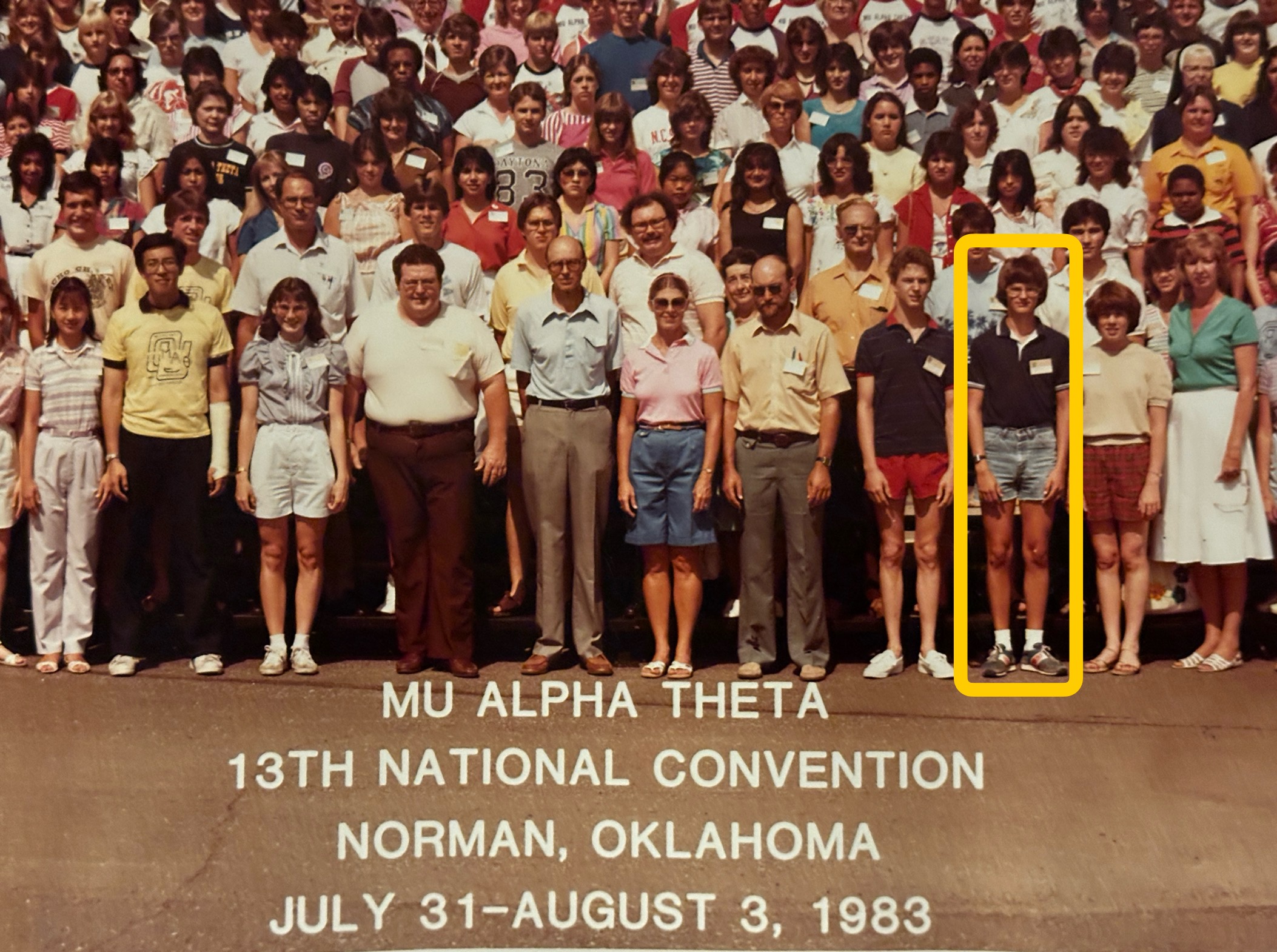
Our school co-hosted with Norman High the national Mu Alpha Theta convention in the summer of 1983. Hundreds of kids from all over the country converged at the University of Oklahoma for activities, including plenty of math contests. I remember staying in one of the high-rise dorms. I would end up spending my freshman year in college living in one of them.
I was an officer when we co-hosted the Mu Alpha Theta national convention
After graduating from high school, I attended the 1984 national convention in New Orleans. We went to the World’s Fair, where I remember seeing the space shuttle Enterprise and visiting Sea World. My other memory is of dining at a restaurant in the French Quarter and ordering a steak. When they asked how I wanted it, I didn’t know what they meant. The waitress prompted me, “Rare? Medium? Well done?”
I figured “well done” sounded good. When my steak came out, it was blackened, but not in the Cajun fashion. Someone across from me noticed it and asked me how I’d ordered my steak. The math teacher seated next to me looked over and responded, “Cremated.”
Math Bowl & the ASVAB
In addition to Mu Alpha Theta, I was on our high school’s Math Bowl team. Great…a math competition with top students from other schools, all with time pressure! I was actually surprised at how well I performed, having been cajoled into joining and figuring I might be a huge flop.
I did well enough on the PSAT and SAT to earn a College-Board-sponsored National Merit Scholarship, and I took the ASVAB, the Armed Services Vocational Aptitude Battery. Part of the results identified recommended roles we might fill in the military. The chief recommendation it gave for me was Nuclear submarine engineer.
Calculus
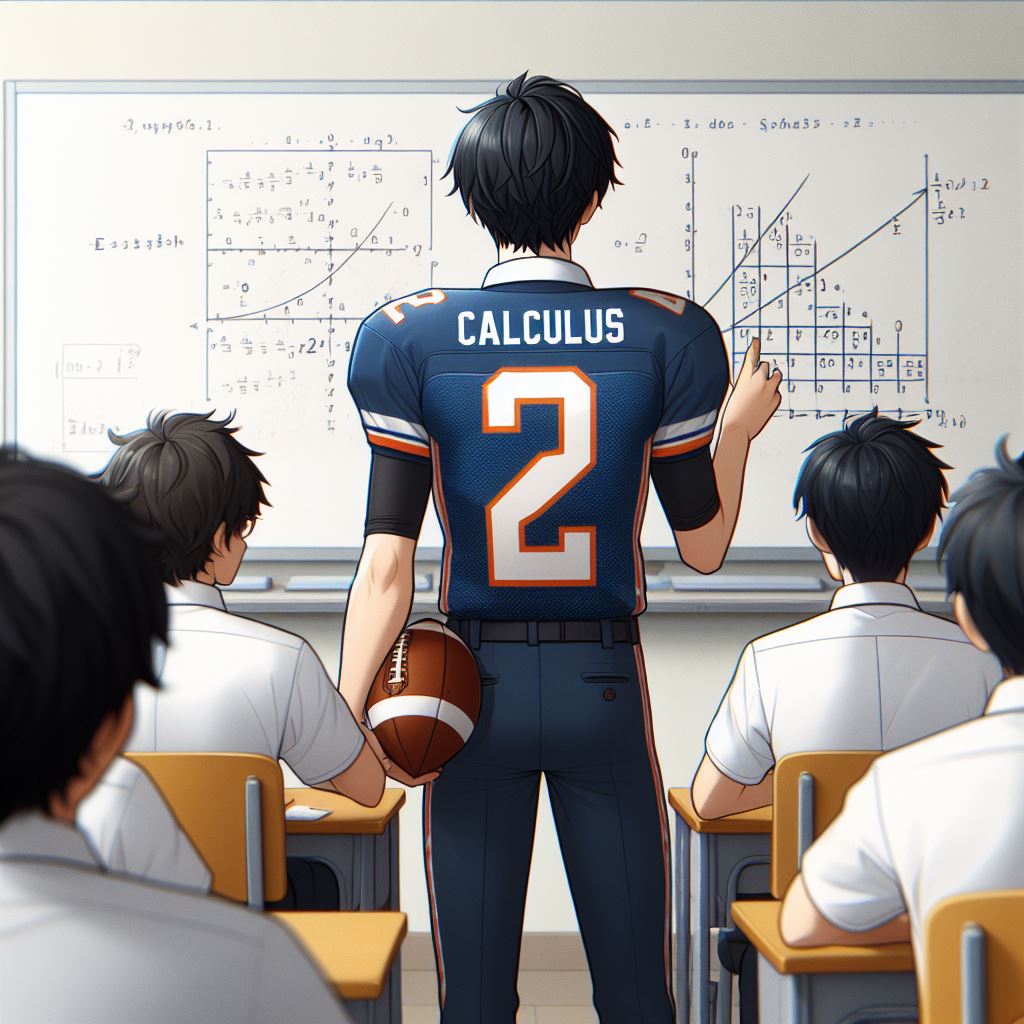
Quarterback calculus by Copilot Designer
I took Calculus in high school from Judy Jolliff; she is in a pink shirt three down from me in the above convention photo. She was spirited, but I found Calculus quite difficult. I remember our class sometimes looking to Barry Northcutt, the school quarterback, for help, as he was a Calculus whiz. Yet another stereotype smasher.
For both semesters of Calculus, although I was exempt from mandatory finals thanks to my attendance, I had to take those tests and score well, including acing the second one, to earn an A in the course. I studied hard and pulled it off.
It is telling that the only high school Calculus paper I saved was one in which I was writing, not calculating.
My top student awards in upper school were in English for three out of four years, Biology, Physiology, and Physics. I won state scholastic meets in Spelling and English, and my writing earned me some awards and was instrumental in my being named a U.S. Presidential Scholar by President Reagan, which took me, my parents, and a favorite teacher to the White House and a week in Washington, DC. The only time I was the top math student was in Honors Geometry, but I wanted to learn more physics in college, despite my ambivalence about pure mathematics.
When I enrolled at university, I avoided pursuing a Physics major, given its theoretical emphasis and demanding mathematics. Instead, I tried Engineering Physics, which was more practical-minded. My ACT English scores were so high that the University of Oklahoma (OU) gave me free advanced standing credits in English, but I had to take tests at the university to earn advanced standing credits in math. (The only Advanced Placement course at my high school was in English, and while I was the top student in the course, I didn’t take the AP test for college credit since OU had already awarded me credits.)
I managed to test out of Analytic Geometry and Calculus I. I decided to not even try to test out of Calc II, as I thought it would help me to repeat it, bolstering my grasp of Calculus to help me in my physics classes.
Well, Calculus II wasn’t as hard as I had imagined; my high school course had actually prepared me well. But Calculus III would be entirely new topics, and I wanted to avoid a big lecture hall class like I had for Calculus II. So I enrolled in a night class, which I knew would be small with some adult students. At the time, the university ensured the professors for the night math courses were native English speakers to avoid getting complaints from adult students who didn’t tolerate accents well.
That gambit paid off, and it was the first time I enjoyed Calculus, as the topics included things like parametric surfaces where my love for geometry could shine.
Differential equations with Resco
I went on to courses in ordinary and partial differential equations, which the university called Engineering Math I and II. The first course was in a huge lecture hall with Dr. Richard Resco. Right from the start, we knew it was going to be interesting.
He would always come into the hall, no matter the weather, in shorts and sandals. On the first day, he gazed out at the hundreds of engineering students and told us that he wanted us to appreciate math for its own sake, not just as a tool.
My girlfriend and I were seated in the front row. Resco walked up to her, flipped open her textbook, and loudly asked, “What are those things printed inside the cover?”
She replied, “Integral tables?”
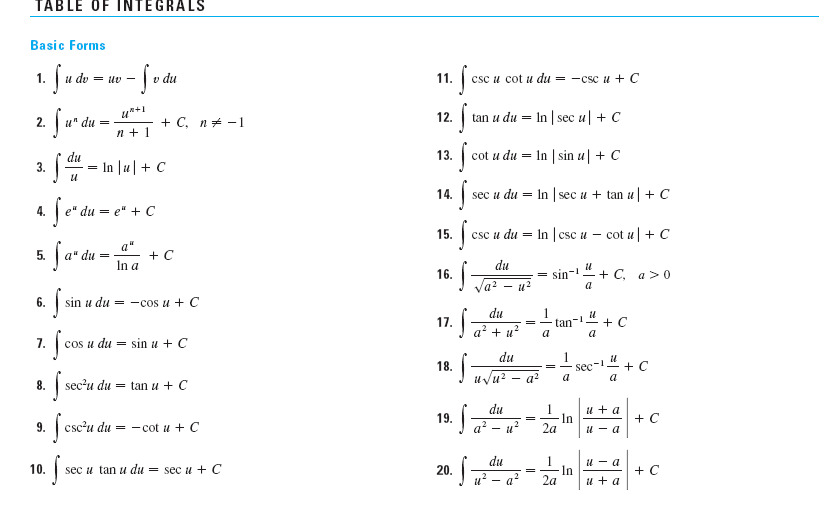
Dr. Resco nodded, and then slammed the book shut. “They’re a crutch, not a wheelchair!”
My girlfriend looked over at me, wide-eyed, and then glanced down at my notes. I had written, “Integral tables: crutch not wheelchair.” She rolled her eyes and sighed.
“They’re a crutch, not a wheelchair!”
Another memorable incident is one I often shared with my own students when we were studying friction and they learned that we symbolize the friction coefficient with the Greek letter mu (μ). One day, Dr. Resco had worked his way through some calculations that took a couple of pages just for one problem. Then he showed us a shortcut, involving the integrating factor, also labelled μ, which drastically shortened the process.
After demonstrating how μ worked, he turned around, triumphant. Then his face fell as he gazed around the hall. He grew visibly frustrated and yelled, “You just don’t get it, do you?”
My girlfriend and I, who no longer sat on the front row, glanced at each other. Dr. Resco threw down his chalk and started gesturing at the boards of calculations.
My friend
“Mu is a gift! You engineers have no appreciation for it?!? Mu is your friend!”
Then he went down on his knees and started genuflecting to the board. “You should appreciate mu! Worship mu!”
My girlfriend again glanced over at my notebook. I had written, “μ is our friend, and Resco completely lost it today.” She nodded in agreement.
Later I found out from my friend Sam, who was a math major with Dr. Resco as an advisor, that Resco had been going through a bad divorce at the time. Bless his heart. Richard Resco taught at OU from 1981 until his death from cancer in 1997. He bequeathed his entire estate of almost $350,000 to endow Graduate Fellowships in Mathematics at OU. And I still remember that mu is my friend.
The Walter Way
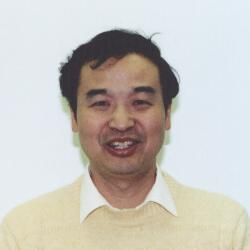
My final undergraduate math course was a stark contrast to its predecessor. Engineering Math II, which was about partial differential equations, was taught in a small classroom with Dr. Walter Wei. I guess most engineers didn’t need to go that far in math, but Engineering Physics demanded it.
Wei was new to teaching and unfamiliar with class procedures. While he was friendly, I sometimes struggled to understand his heavily accented English, and I remember being utterly stumped by one assignment. When I showed up for class, defeated, I was relieved to find that no one had been able to do it. Dr. Wei came in, and we shared how all of us were baffled. He grinned, admitting that there was no known solution to the problem he had posed. He had wondered if one of us might find one!
Someone once asked about his research, which I think had to do with topology or manifolds. He said he was working on developing a new mathematical technique, laughingly saying that he hoped it might become known as “The Walter Way”.
We did have revenge on Dr. Wei, telling him that it was a tradition for the professor to bring the students milk and cookies for the final exam. He did so, and when we sheepishly confessed that we had been pranking him, he looked at us, goggle-eyed, and then laughed heartily. And yes, I enjoyed having milk and cookies on the last day I took a math class as an undergraduate.
Changing majors
The termination of my undergraduate math courses coincided with a change in my major. While I had loved my first courses in Physics for Majors, with the fabulous Dr. Stewart Ryan, aka Dr. Indestructo, and Modern Physics with Dr. Suzanne Willis, I didn’t appreciate the subsequent engineering and physics coursework. Immediately after being named an Outstanding Sophomore in Engineering Physics, I decided to quit.
I remember standing in my apartment in Norman, wracking my brain about what major to shift to. A favorite university professor of mine had tried to recruit me into Letters after having me in Latin class and her honors seminars on ancient Greece and Rome. But I had demurred. Should I switch to Letters? That might lead to teaching those subjects at a university. However, I liked high school far more than university, where many professors cared more about their research than about teaching undergraduates. What to do?
I had once wanted to teach music. I liked high school. I loved basic physics, but I was disillusioned with college and engineering. So what had I liked enough to want to do it for a living?
Teaching…high school…physics. Suddenly, I felt a surge of elation, a true calling I had lacked until then. A fresh course of action coalesced.
If you’re searching for that one person who will change your life, take a look in the mirror.
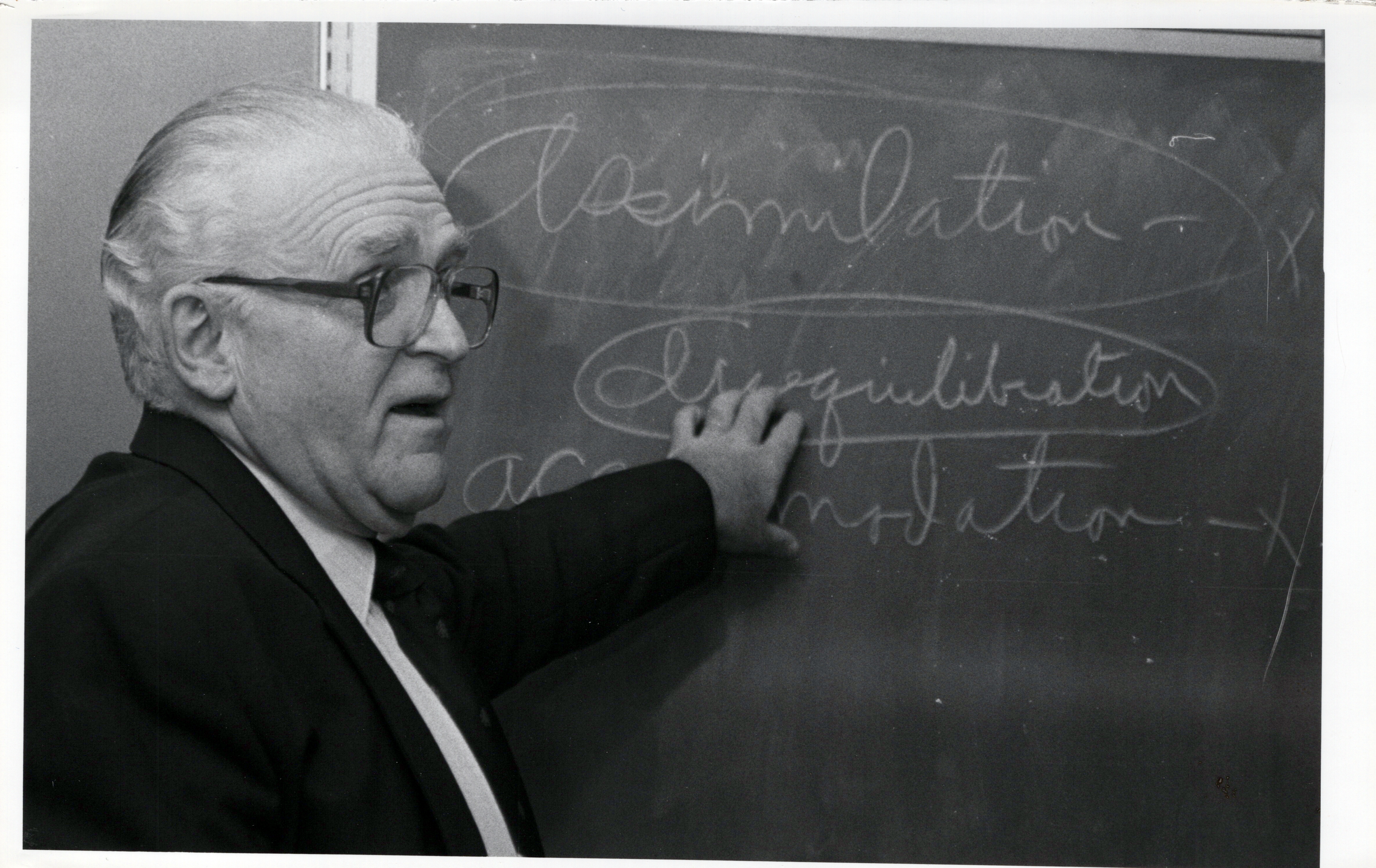
Dr. John W. Renner
I applied to the College of Education at OU, determined to become a high school physics teacher. Dr. John “Jack” Renner, an outstanding leader in science education and the Learning Cycle, interviewed me. I thought he would be thrilled to have me, but after reviewing my transcript he tried to send me away.
Jack Renner said I was too bright to be teaching high school science, that full-time physics positions in Oklahoma high schools were quite rare, and that I should stick with Engineering Physics. “Get your degree and then teach physics at a university, not a high school.”
As you might guess, I was adamant. He eventually caved, and I informed Dr. Ryan, my Engineering Physics advisor, of my decision. He was disappointed but kind and understanding.
No minor matter
Back in 1988, to be certified to teach a high school subject, you had to have earned a certain number of college credits in it and also pass a certification test. I was told that if I wanted to teach physics, I should also certify in math since full-time physics positions were rare, and they often took on some math courses to fill out their schedule.
Well, I wasn’t about to do that. I did ask if I had enough math credits to earn a minor in Mathematics. They checked and said that if I would take just one more math course, such as a methods course about teaching it, I would indeed earn a minor. Another math course? No thanks!
So instead, along with Physics, I certified in Chemistry, Biology, Botany, Zoology, and Earth Science. If I had to teach something else, it would be a science course.
My change in major after two years of Engineering Physics coursework delayed my graduation by a semester, even with me taking summer school courses. So I graduated in December 1988 and substituted in the three high schools in my old Putnam City district from January to May 1989. Substituting when I was 22 years old was challenging, but a happy memory is when I filled in for one of the Calculus teachers, who also had a couple of physics sections. The teacher had left instructions for the students to read the next section in the respective textbooks and do the best they could on the assignments.
As the first class of students walked in for Calculus, they saw me and clearly thought, “No lesson today!”
So they were shocked when I told them to get out their notes and proceeded to teach that day’s lesson. Some gasped, “You’re a sub who can teach calculus?”
When I finished the lesson, the kids actually applauded and got to work on the homework problems, with me circulating to help them individually as needed. Word spread, and for the rest of the day kids came in, saying things like, “I heard we have an amazing sub today.”
My reputation was sealed at that school when I taught the physics lesson as well. That experience was so redeeming, after my years of struggling with math, that I almost regretted not certifying to teach math. Almost.
Christmas 1969 brought me the first childhood vehicle I clearly recall: a Murray Tot Rod pedal car. I had a tricycle before it, and two different bicycles after it to round out my childhood vehicles before I got my first automobile in 1981. Looking back, my favorite vehicle to drive was the Toyota Celica Supra I drove in my twenties, but the Murray Tot Rod isn’t far behind.
Murray Ohio Manufacturing Company was founded in 1919 to make auto parts like fenders and fuel tanks. They began making bicycles in the Great Depression, selling them through retailers like Sears, Roebuck & Co. After World War II, they concentrated on low-cost bicycles and making pedal cars. Below are just some of their pedal car models.
The Super Tot Rod 800 in the bottom row was similar to my green machine.
This is what my Murray Tot Rod looked like
Here I am enjoying my new Tot Rod:
We moved to Bethany after I graduated from kindergarten, and I continued to use the Tot Rod for a few more years. Our house in Bethany was on three lots, with lots of room on both side lots. We lived in the Cross Timbers, with sandy soil and about 70 trees, mostly Blackjack oaks.
My best friend in elementary school was the late Gene Freeman. Gene loved vehicles even more than I did, and he had a Big Wheel.
Gene Freeman with me in the Cross Timbers where we pedaled our vehicles
Gene and I would rake the countless oak leaves into huge piles, forming winding pathways for us to race along, me in my pedal car and Gene in his Big Wheel, which was a huge hit toy in 1971 and 1972. I remember us raking a couple of “parking spots” for our vehicles outside one of the walls of my bedroom.
I’d seen television ads that made the Big Wheel look like a lot of fun:
But I found it much harder to pedal and control than my Murray Hot Rod, and Gene had already pulled so hard on the brake handle that it had busted. So I was happy to stick with my Murray Tot Rod.
Eventually I could no longer squeeze into my Tot Rod. I wound up taking over a purple Schwinn Sting-Ray bike my mother had bought and placed in a mount to use as an exercise machine.
Ignaz Schwinn was a German immigrant backed by fellow German American Adolph Frederick William Arnold, a meat packer, who founded Arnold, Schwinn & Company in 1895. By 1950, most U.S. bicycle manufacturers sold in bulk to department stores, who rebranded the bikes. Schwinn stopped producing such private label bikes in 1950, except for B.F. Goodrich branded bikes sold in tire stores.
Schwinn had a dominant position in the U.S. market by the late 1950s and advertised heavily on television in the 1960s, sponsoring Captain Kangaroo. In 1962, Schwinn’s designer Al Fritz heard about a youth trend in California of retrofitting bikes with “chopper” style motorcycle accountrements, such as high-rise “ape-hanger” handlebars and low-ride “banana seats”. His wheelie bike, the Sting-Ray, was introduced in 1963.
Despite loving Captain Kangaroo when I was little, I wasn’t excited to be getting my mother’s purple Sting-Ray. It struck me as silly and showy. I insisted that a frilly white plastic woven basket be removed from its front, and I cut off the streamers that extended from the end of each handlebar.
If I lost my balance, this awaited my tender flesh
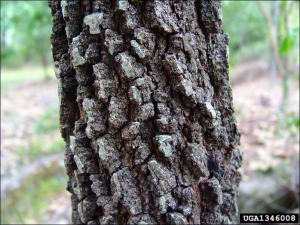
My father tried putting training wheels on it for me, but I didn’t like them, and he wound up taking them off. I just lurched around a side yard to learn to ride, where there always seemed to be a Blackjack oak ready to catch me when I lost my balance. The rough bark on those trees was a great incentive for improvement.
I did enjoy that I could actually ride the bike on the street, and I added a metal basket to the front so I could carry groceries home from the old neighborhood market some blocks away.
The AMF ten-speeds my Dad bought
I was unhappy about the color of my bike, so I made a sign reading Purple People Eater which I affixed over the chain guard, turning it into a joke. Eventually I added a speedometer, but the bike had only one gear and a coaster brake, so I didn’t break any speed records on it.
In junior high, my father bought a couple of AMF Scorcher ten-speed bicycles at a garage sale, and I made good use of one around Windsor Hills, visiting friends and riding down to the big shopping center.
American Machine and Foundry began in 1900 in New York. It evolved into part of what Eisenhower termed “the military-industrial complex” after World War II. In 1950, it purchased the Roadmaster line of bicycles from the Cleveland Welding Company. Its operations shifted from Cleveland, Ohio to Little Rock, Arkansas before moving to a new factory in Olney, Illinois. That is where our bicycles would have been manufactured, and they weren’t considered quality bikes.
This helped me maintain my cheap ten speed bike
My ten-speed’s cheap brakes and gear mechanisms required adjustment, and Dad wasn’t familiar with any of that. So I bought Richard’s Bicycle Book to help me learn how to keep my bike working. Richard Ballantine was the son of Ian and Betty Ballantine of Ballantine Books, which I was familiar with as a major publisher of science fiction. Richard was a cycling writer, journalist, and advocate. He freely expressed his views in his book, which was first published in 1972 and had several later editions.
When my friends and I would go off-road on our bikes, cockleburs would puncture the tires and inner tubes. I couldn’t afford to replace the inner tubes regularly, so I would remove the wheel, use a screwdriver to remove the tire and inner tube, and vulcanize patches onto the tubes using a kit I purchased at the local T.G.&Y. discount store.
My Rampar leg light
I eventually outfitted my ten speed with a speedometer and a headlight. Since I was bicycling to and from a friend’s house after dark, I had a Rampar battery-powered light that I strapped to my lower leg. That light bobbing up and down helped make me more visible to drivers.
I was grateful to have it for transportation, but the ten-speed was just a tool. Once I could drive, I seldom rode it much. I brought it to Bartlesville, but it was difficult to transport to one of the entrances to the Pathfinder Parkway, the paved 12-mile trail system linking the city’s major parks, and I had zero interest in riding a bike on city streets.
I later bought a 21-speed bike with a quick-release front wheel. I used to ride it on the Pathfinder Parkway, using a bell to warn pedestrians that I would pass. By then I had wised up and wore a bike helmet, although I never liked doing so. For many years I’ve left the bike and helmet at home and simply walked along the Parkway. I don’t mind the slower pace now that I can easily listen to an audiobook or music with my iPhone and some earbuds.
I see kids on bicycles on the Parkway, but mostly younger ones with parents. Occasionally I’ll see teenagers, who are usually in a hurry. I’ve never seen a Tot Rod on the Parkway, and while that doesn’t surprise me, it certainly would be a treat to see one pedaled by.
I have never been a fan of passwords. Back in junior high, a friend briefly convinced me to join the DeMolay fraternal organization sponsored by the Masons. I wasn’t impressed with their induction process, which was overloaded with arcane mumbo jumbo, although it was interesting to participate in a ceremony at the immense lodge in Guthrie.
At meetings, we got in a big circle and had to whisper a password to a fellow that went around it. My head was swimming with all of the nonsense they had laid upon us previously, so I couldn’t for the life of me remember the password. I was sweating bullets as the fellow approached me, wondering what would happen when I failed the test. Fortunately, the guy next to me whispered the password so loudly that I could make it out. That was my first lesson in how passwords are a pain in the keester.
Copilot Designer made this for me; our little DeMolay group lacked diversity, although it wasn’t this bad
My first online credentials
When you signed up for CompuServe 40 years ago, they assigned you credentials like this
Around that time, I got a 300 baud modem to connect my TRS-80 Color Computer to dialup services. I had accounts with Dow Jones and CompuServe, finding the latter far more useful to me. My packet included a CompuServe username of 71460,2557 and the initial password COUCH?TANGENT. You can tell how novel online services were at the time by how I still remember those.
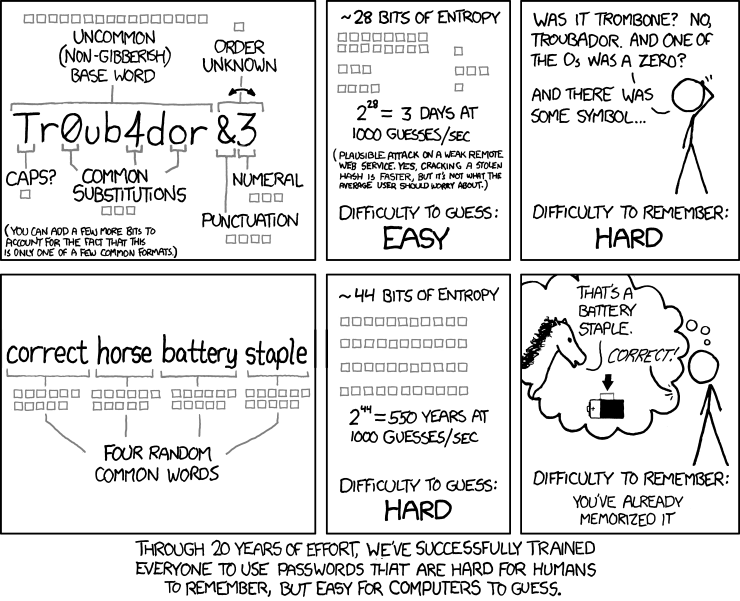
They urged you to change your password while sticking with that format of two random words separated by a symbol. Almost 30 years later, Randall Munroe illustrated the advantages of sufficiently random passphrases over passwords in xkcd:
However, these days most sites won’t let you just use a passphrase of random words, as they insist that you include a lowercase letter, a capital letter, a number, a symbol, etc. You can add those to a properly random passphrase, but you are then making it harder to remember.
Theoretically, set requirements can actually weaken passwords, as they narrow the possibilities the attacker has to try. For example, knowing the password can’t just be a long string of lowercase characters means countless such possibilities can be excluded.
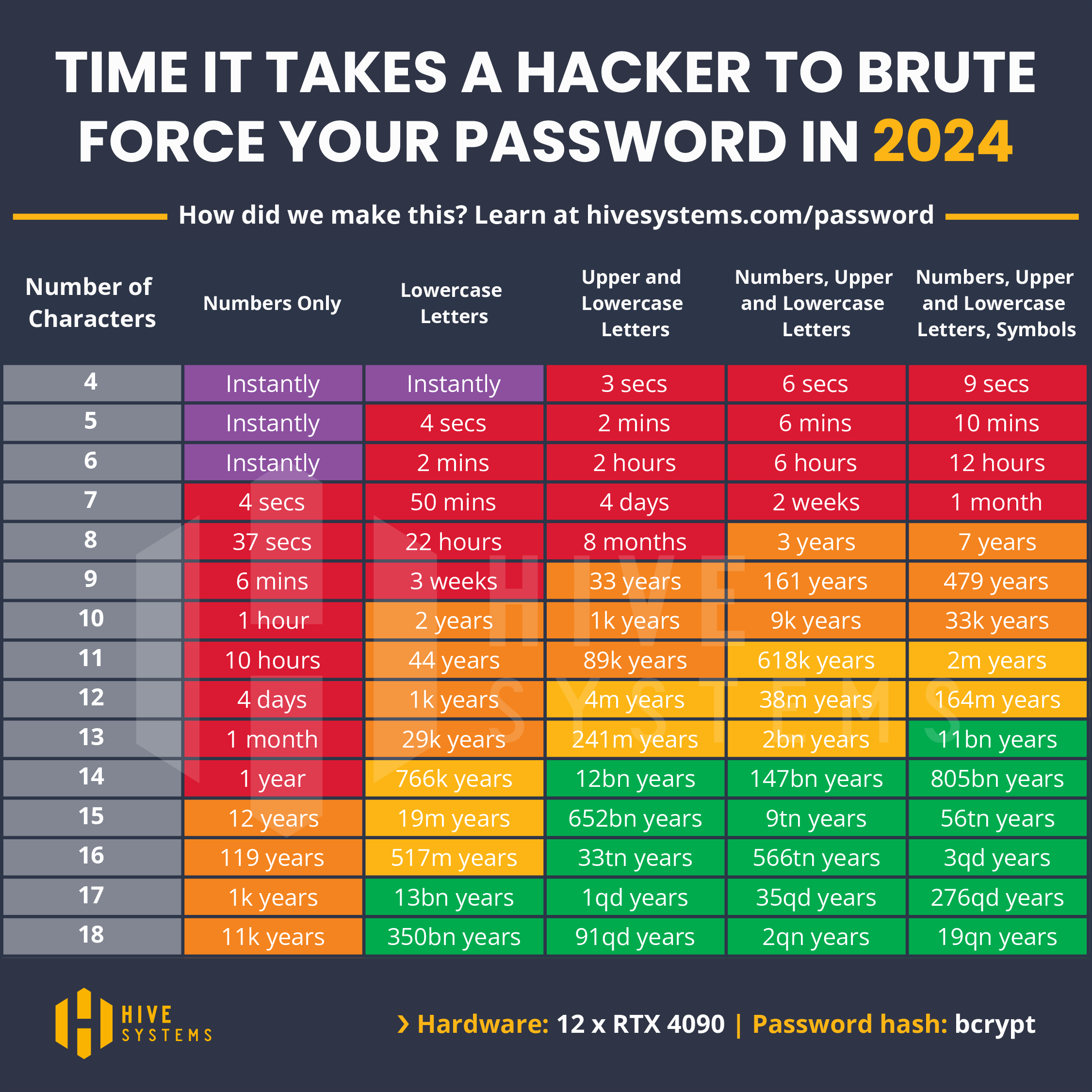
We are told that length and complexity are critical to slow down brute force cracking:
We also know that reusing a password or passphrase across different services greatly increases the likelihood of it being discoverable since so many services, large and small, are the victims of cyberattacks. I’ve had various services notify me of breaches over the years, and two different hospital systems have been attacked in our region, resulting in the diversion of ambulances to other facilities and temporary reversions to paper-and-pencil recordkeeping.
Password managers
SplashID 4 from 2009
It is impossible for most of us to avoid reusing passwords without a password manager. I began using the SplashID one in January 2009. Back then it was called SplashID Desktop for iPhone and iPod Touch version 4, and cost $20. It let me store usernames and passwords on my phone along with notes about when I signed up for a service, at what cost, and more.
Going meta here, I found that timeframe and cost by looking them up in SplashID Pro 9, which also revealed that I paid $10 to upgrade to version 5 in August 2009 and paid $30 in January 2014 for a SplashID Safe Lifetime All Access License.
I like how SplashID can sync across all of my devices, with both web access and dedicated apps for iOS, Windows, Mac, etc. Eventually the Chrome and Safari web browsers could learn usernames and passwords if you logged into them. However, that isn’t secure enough for my taste for accounts with financial institutions, although I’m willing to let the browsers know the credentials for some services where a breach wouldn’t be a big deal. That comfort depends on me using a unique password for each service.
The web browsers, however, don’t let me store the fake answers I create for security questions.
Insecurity questions
Besides password length and complexity, and the danger of a service getting hacked, security questions are another weakness to shore up.
Many services include useless and unsafe questions you can use if you forget your credentials. They are usually stupid ones like In what city were you born? What was the name of your first pet? and the like. The answers are easy to guess, readily found in social media posts, or easily obtained by social engineering, including “games” on social media that lure people into revealing them.
So I make up nonsensical fake answers to all security questions, which in turn means I have to note the Q&A in SplashID.
LastPass lost
SplashID has added features over the years, including password generation and linking URLs with an entry to try and make it easier to login. But it is an inexpensive recordkeeper that lacks the bells and whistles of some other popular services…such as LastPass.
Frustrated by having to repeatedly type in my lengthy master password into SplashID when logging into services, I made the mistake of using LastPass in 2021. It cost me $27 for the first year, and I renewed for a couple of years after that. For awhile it was okay, but then its attempts to overlay links to your credentials on login screens started blocking things I needed to see or type. Then things went south…
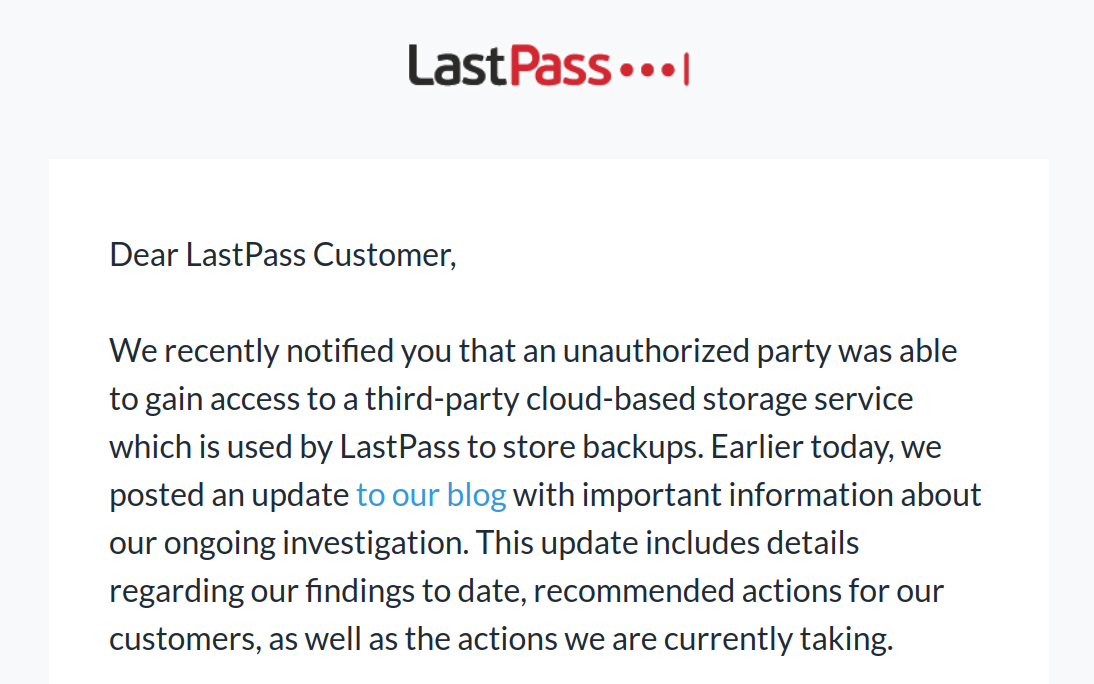
LastPass had some breaches
LastPass had security breaches, so I deleted my account with them and went back to relying on SplashID, which I’d made sure to keep updated all along. Of course, there could be a breach of SplashID that I might not know about. Such is life, but hopefully it is a far smaller target than LastPass, just as the Mac is less vulnerable to viruses and malware than Windows because of its small market share. (I’m satisfied with using the included Microsoft Defender on Windows, but on my Mac I downloaded the free AVG AntiVirus.)
When I shifted to using my Mac mini as my primary computer at home, I of course wanted to install a SplashID app on it rather than having to always use the cloud version.
I noticed they had shifted to SplashID Pro 9 and were urging me to migrate from SplashID Safe 8, which I’d used for years on Windows and my iOS devices. I didn’t want to get overloaded with too many changes at once, so I opted to download the old SplashID Safe 8. It had some issues at first, refusing to sync via the cloud and sometimes failing to fully quit unless I performed a Force Quit on it. But when I found the time to play with it more, I did manage to get it syncing reliably with the cloud and all was okay.
How long is a lifetime?
Eventually I had enough patience to delve into their terms for SplashID Pro 9. I noticed that they indicated they would eventually shut down the SplashID Safe services. So I was concerned that by changing the name of the software they planned to kiss us old Lifetime All Access License holders goodbye. After all, I had used their software on multiple devices for a decade for just $30.
So I was pleased to find that they gave me until the end of June to migrate to the new program and would transfer my SplashID Safe Lifetime license to SplashID Pro 9. Thank you, Morgan Slain!
I downloaded SplashID Pro 9 and it migrated my 946 records. Can you tell I’ve been online for over 40 years and manage a large number of services at work? I then downloaded SplashID Pro 9 on my iPhone and iPad as well as my Windows desktop at work, got everything synced up, and I began using it instead of the old SplashID Safe 8.
Using Google accounts to login
Many years ago, services began offering to let you login via Facebook. I don’t regard Facebook/Meta as trustworthy, so I avoided that. For a long time, I also avoided using Login with Google to link to services, since if my Google account were compromised, that would be a vector into multiple services. But we have used that feature to make many school district services easier for staff to access, so I now use it with my personal Google account for some newer low-threat services. However, I have found that few services let you switch an existing account from using a custom username and password to just using your Google account, so I forget which ones can just use Google. Sometimes I look up credentials for a service in SplashID only to find a notation to myself to use Google to authenticate. 🤭
Multi-factor authentication
A recent trend is multi-factor authentication (MFA), often either in the form of having a numeric code sent via text to your cell phone or using an authenticator app that generates temporary numeric codes. That’s much better than an insecurity question, but until I switched to a Mac desktop, that meant I needed my phone nearby.
We have had several school district employees fall victim to phishing attacks and face increasing insurance requirements. So this spring we starting requiring 2-Step Verification for staff Google accounts. Our two Instructional Technology Specialists worked hard to help people use it, and the transition wasn’t too painful. I think enough people now have to use MFA for their financial and other accounts that most were somewhat familiar with the process.
Authenticator apps on cell phones were an important option to keep MFA feasible at work, since those can be used even when a cellular signal can’t reach within some school locations. I started using authenticator apps to generate codes for various services in 2023, although now that I’m using a Mac mini, text codes are pretty easy to use at home. Since the Mac will receive texts via my iPhone over Wi-Fi, I don’t have to keep my phone handy. However, the app-based authenticators are inherently more secure than codes sent via SMS/text.
The Google Authenticator generates codes I use for multi-factor authentication for some services
I mostly use Google Authenticator, although I also have the Microsoft Authenticator for Microsoft services and, thanks to the federal government, I also have the Oracle authenticator on my iPhone. I ordered free COVID tests for our school district during the pandemic, and for the last set of orders I had to use the Oracle Authenticator to access the ASPR HPOP. Oh, allow me to translate those federal government acronyms for you: the Administration for Strategic Preparedness & Response’s Health Partner Order Portal. 🙄
Security keys
The Titan Security Key I ordered
When we decided to require MFA at work, I was concerned we might have an outlier employee who refused to use a cell phone. A cumbersome workaround would be generating, printing, and using one-time backup codes, but a less irksome alternative to using a cell phone would be a physical security key.
I decided I needed experience with that option just in case, so I spent $34 on a Titan Security Key. I linked it with my district Google account, and now the default MFA method for that account is for me to insert the key in a USB-C port on a device and press the button, or bring it near a device with Near Field Communication and do the same.
The key has always worked fine, but it is a bit annoying to have to pull it out and insert it into a Chromebox or Chromebook every time I login to one, as I can’t tell them to not ask for MFA again like I can on a desktop computer. I can go through prompts for Try another way to instead get a prompt via the Gmail app on my iPhone for MFA, but there have been a few odd situations where the key was useful. I have encountered authentication traps where something demanded I authenticate, but then demanded authentication to use the second form of authentication, setting up an endless loop of frustration until I used the key, which just works. So I will probably keep using the physical security key until I retire. I’m thinking I might smash it with a hammer when I leave employment, not out of anger or frustration, but as a real-world expression of separation beyond just leaving behind my master keys and door fob.
Passkeys
Recognizing the many problems with passwords, Google began offering “passkeys” for some accounts. You link a mobile device with your account and then use a fingerprint, facescan, or personal identification number to login rather than a username and password. That’s cute, but they don’t support passkeys yet for education accounts, so they aren’t as useful to me as they could be.
I did set up a passkey for my personal Google account, but I’ve only had cause to use it a few times. I’m skeptical that passkeys will replace passwords for most services, but never say never.
Since I first encountered passwords in DeMolay over 40 years ago, they have multiplied like rabbits as little tokens of my identity in a digital life. Those pesky little buggers!
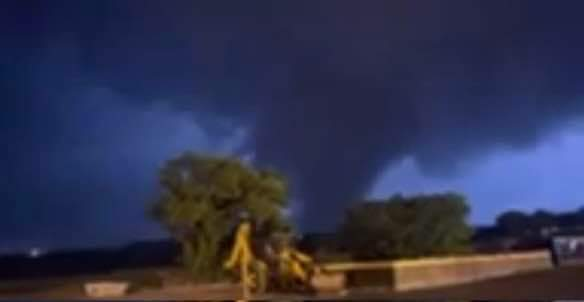
Last night I was drifting off to sleep when I dimly perceived a faint wail muscling its vibrations through the triple-pane windows. We Okies know that sound all too well. Our city of 38,000 souls is dotted with a few dozen tornado sirens, and that sound told me that a twister had been sighted and was tracking toward town. Washington County Emergency Management was telling us to take shelter.
Here is a video from the tornado that damaged the Hampton Inn 2.5 miles from us, and you can clearly hear the siren warning everyone to take cover right up until the twister struck and disabled it. [Profanity alert: the fellows who shot the video had quite a scare.]
Washington County Emergency Management tests the sirens monthly, as they are important in a state that averages 58 tornadoes each year, with 24 in a typical May.
Bartlesville has a few dozen tornado sirens
Our “shelter” is a closet
I have lived in two homes that had the ultimate in tornado protection: underground refuges. But both had significant drawbacks. From first through sixth grade, we lived in a 1940s home in Bethany, an old town in northwest Oklahoma City. It had been expanded in the 1960s and gained a basement shelter under an attached garage. But, like many basements in Oklahoma, it needed a sump pump because of the high water table. When the power failed, the pump would stop, and the basement could slowly fill with water. As a kid, I remember seeing how the water level in the basement could get higher than I was tall, which was anything but reassuring.
Oklahoma basements tend to get flooded
Despite its position in Tornado Alley, less than 10% of homes in Oklahoma have basements. In addition to a high water table, much of Oklahoma has red clay soil which absorbs moisture and causes basement leaks and cracks. Also, building codes required foundations be poured below the freeze line, but the freeze line here is quite shallow at about 18 inches, while it might be three to five feet in some other states.
When a basement is too expensive or you don’t care to deal with water issues, you can opt for a storm shelter. In the cold war, people would often build one in their backyard. In the early 1990s, I rented a 1950s home in Bartlesville’s Pennington Hills subdivision. It had a shelter built into the hillside behind the house. But the water table and clay soil meant that shelter was always partially filled with water, and I had zero interest in pumping it out. My next-door neighbor was a preacher with a basement under his living room floor, and he and his wife invited me to come over and take shelter with them in any storm…that’s the Oklahoma Standard.
When I bought my home in Arrowhead Acres back in 1994, I didn’t mind that it lacked an underground shelter. After an EF5 tornado killed 24 people and injured 212 others in Moore back in 2013, interest in above-ground shelters skyrocketed. But they require room and cost thousands of dollars. If I were to get one, I’d look for one that could fit into the corner of our garage.
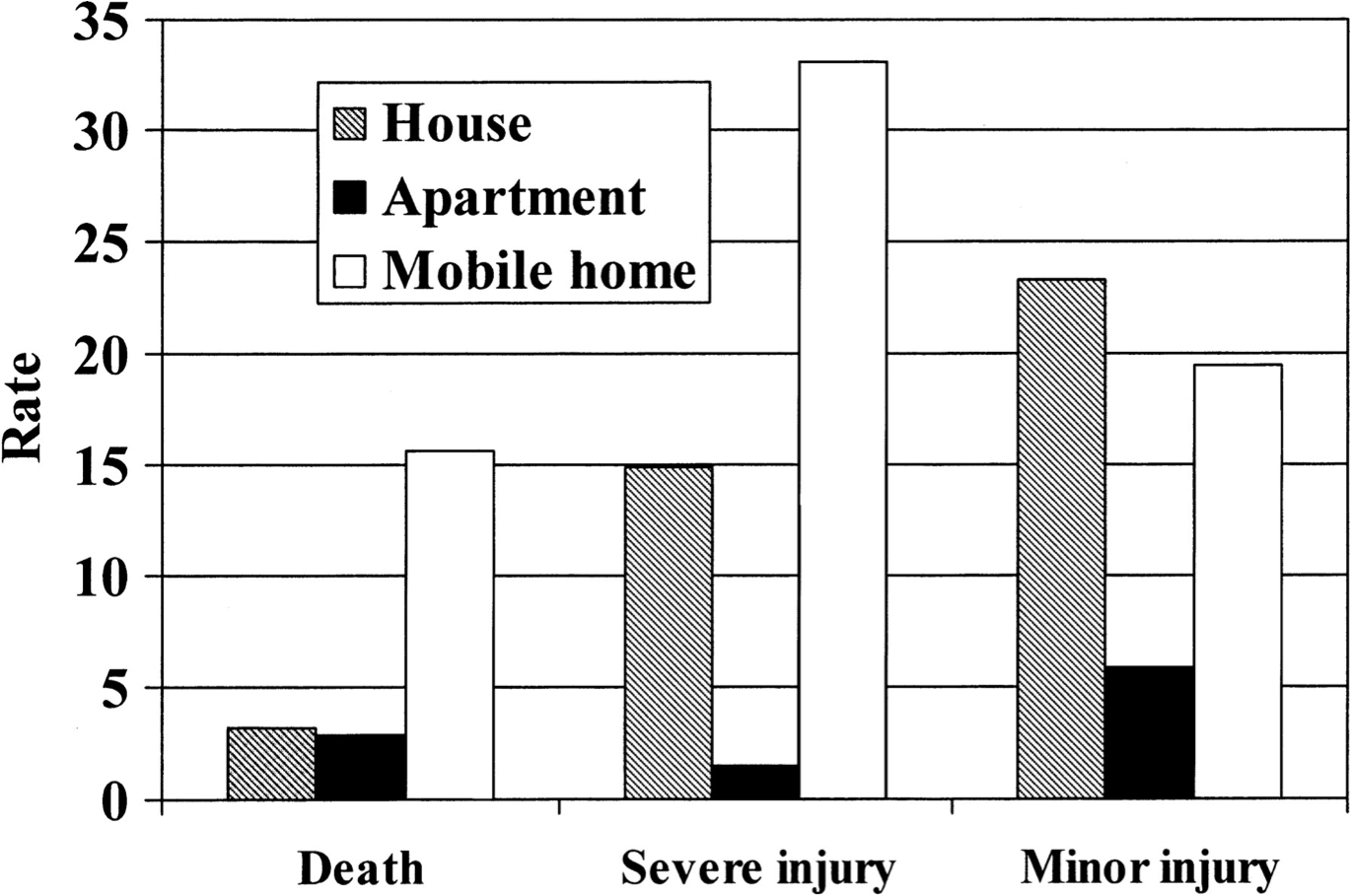
The type of housing was a crucial factor in the rates of death and injury per 1,000 homes damaged or destroyed in the May 3, 1999 tornadoes in Oklahoma
The reality is that 99% of people exposed to the worst F/EF5 tornadoes survive them, although they are no doubt traumatized. The type of housing is crucial: apartments are much safer than houses, and one study found the risk of death from tornadoes was 35 times higher for those in mobile/manufactured homes than those in permanent homes like ours.
The key advice we follow is to get to an interior room away from windows. The only room in our house that has no exterior wall is the walk-in closet off the master bedroom bath. So Wendy has a survival kit in it, and we hunker down in there with the pocket doors shut that stand between it and the nearest window.
Getting the news
Bartlesville Radio news director Nathan Thompson
The afternoon before the storm I ran into Nathan Thompson, the news director of the radio station, at a local grocery. We chatted about how he would have a long night, with a City Council meeting followed by him helping monitor the severe weather at the radio station. I thanked Nathan for the coverage he and the others at the station had provided last month when we had tornadoes passing nearby.
Once Wendy and I were situated in the closet, I connected to the Live Feed from our friends at Bartlesville Radio using my cell phone. We listened to Nathan and Tom Davis reporting on the storm, with station owner Kevin Potter and his son, Kaleb, out driving around to report on developments. I had the pleasure of teaching Kaleb and his brothers, and I am grateful for the local radio station’s hyperlocal coverage, which I find far more useful than watching television meteorologists.
We’re fortunate to have underground wiring in our subdivision, so while the lights flickered a bit, we never had a power failure. Our information network, however, had some issues. From July 2022 through April 2024 we had three ways to access the Internet at home: cable modem, fiber optic, and cellular via our iPhones. I decided to cut costs by $94 per month by discontinuing the cable service, hoping that a storm or power failure wouldn’t take out both the fiber optic line and the cell towers.
First our fiber optic line went dark, so I switched to cellular data. We listened as Nathan and the other radio staff shifted from their second-floor studios to their ground floor shelter and back. Then even the cellular feed stopped working.
So I pulled out the $40 emergency radio I purchased in 2020 and dialed in KWON 1400 AM radio. Thus we soon knew that the area southeast of Washington & Tuxedo boulevards, about 2.5 miles from us, had been hit and the tornado was zooming past to the northeast. That allowed Wendy and I to return to bed and try to get back to sleep.
The emergency radio also has a weather band, but I don’t find that particularly useful since they trigger alerts for storms that are never going to be near me, and I really only care about tornadoes and hail, not thunderstorms in general, which are a dime a dozen around here. Nevertheless, weather radios certainly help people across the region, and if I didn’t live in an area with tornado sirens, I would keep one tuned in for alerts when it was stormy. NOAA Weather Radio stations use seven different frequencies, and you can easily look up which one serves your area.
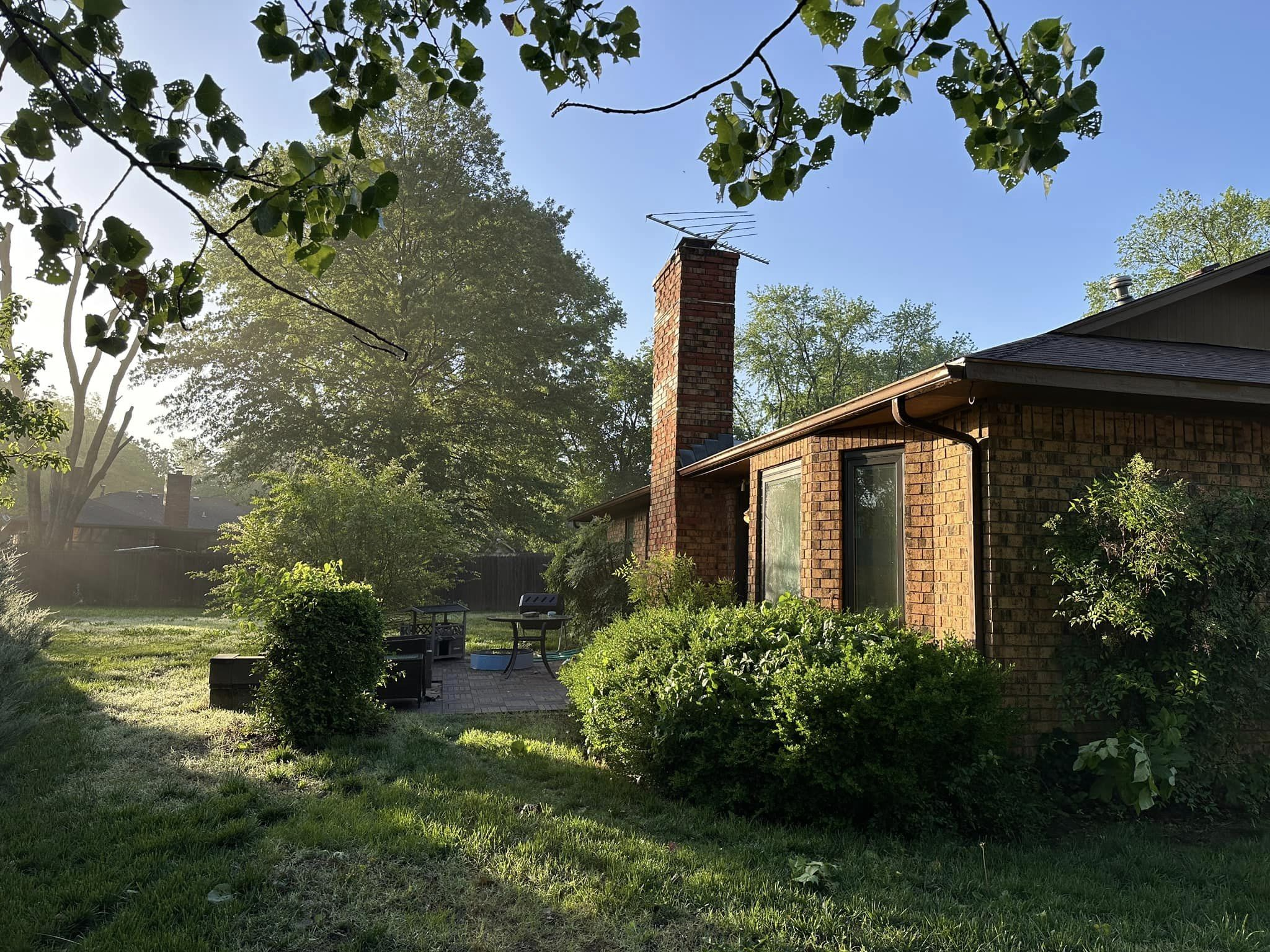
Meador Manor’s television antenna has seen better days
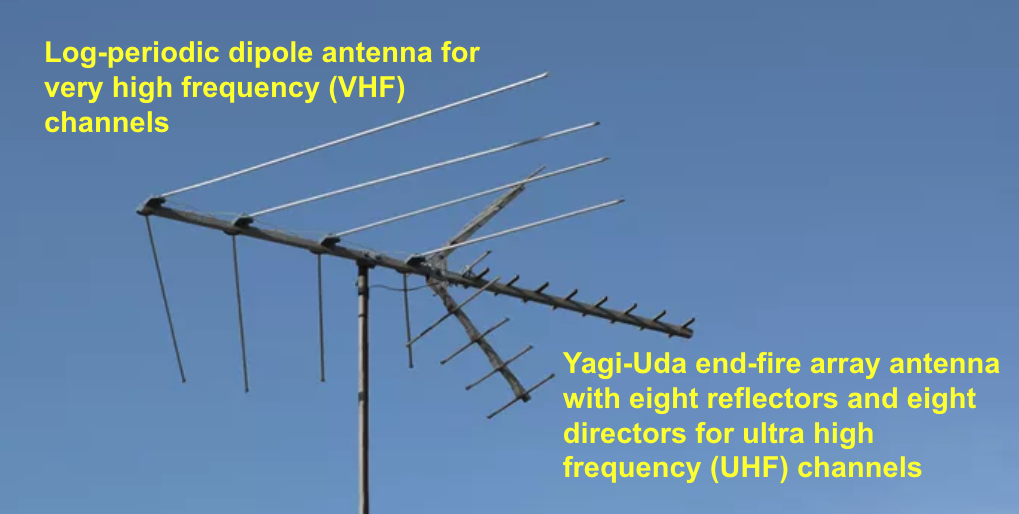
The next morning, I walked around the yard to confirm that we had no damage. I noticed the old television antenna I mounted to the chimney back in 1995. It has two parts: log-periodic dipole elements for very-high-frequency VHF channels and a Yagi-Uda part for ultra-high-frequency UHF channels.
Years ago, several of the long elements on the log-periodic part of my antenna snapped off in a storm, so my antenna can no longer reliably pick up VHF channels 2-8. But the Yagi-Uda part is intact, so it can still pick up Tulsa area stations 6, 8, 11, 23, and 41. You might wonder how an antenna that can’t pick up channels 2-8 can pull in stations 6 and 8; allow me to explain.
The broadcast television channels I should be able to pick up with my antenna
When television went digital, many of the stations began broadcasting on different channels than their branding from the analog days. Most use a “virtual” channel that makes them appear as a different channel on your television than the frequencies they are actually broadcasting on. Tulsa’s KJRH, for example, has always been known as Channel 2, although it now actually broadcasts on the frequency range for channel 8. Similarly, Tulsa’s KOTV Channel 6 is really broadcasting on channel 45, KTUL Channel 8 is really broadcasting on channel 10, and KOKI Channel 23 is really broadcasting on channel 22. The only station I can pick up that is actually using its advertised channel is KOED Channel 11 of the state’s education network.
You can put your address in at tvfool.com and see what channels you can pick up with various types of antennas and what channels they really use, but if you ever do use a television to pick up broadcast signals, it will disguise all of that for you.
Seeing the old antenna, I pondered how I stopped watching broadcast digital HDTV television long ago but kept the antenna just in case. While that antenna had long been superfluous, we had made good use of the antenna on our little emergency radio the night before!
Getting the word out
Early the next morning Supt. McCauley sent word that the schools would be closed for the day. In my communications role for the district, I needed to send out voice calls, text messages, and emails to 6,200 folks across the city, send an email to hundreds of district employees, and post about the closure to a dozen school news feeds and their Facebook and X accounts, etc. However, the fiber optic line was still out, so I’d have to rely on the cellular network.
I finally put the Magic Keyboard Folio for iPad to good use
I realized that I’d left my charged Chromebooks at work. Time is of the essence when closing the schools, so I didn’t plug in an uncharged Chromebook and tether that to my phone. Instead, while I did put my iPhone into hotspot mode, I grabbed my iPad and the Magic Keyboard Folio for it I had ordered back in 2022. I used the iPad to access the communication services and send out the notices. I almost never use the Magic Keyboard for the iPad, but I was glad to have it handy this morning. Typing on that was a lot more comfortable than composing messages on the glass screen of the iPhone or the iPad.
The fiber optic line lit back up a bit after 7 a.m., and I used it for work for much of the day. However, when everything had calmed down, I decided to see if I could have used my Mac mini for the posts during the fiber line outage. When I relied on a Windows desktop computer, I had no reliable way to tether it to my iPhone’s cellular network when the in-house network failed. I was glad to find that my Mac readily tethered to my iPhone, and just to make sure, I used the iPhone’s cellular network connection to create and share a post about our re-opening the following day.
Technology, old and new
The modern technology of the weather services allowed the county emergency management folks to trigger the old technology of tornado sirens in plenty of time for Wendy and me to take shelter. We first used modern but then quite old technology to stay abreast of the storm developments via the local radio station. I later used modern technology to send thousands of voice, text, and email messages to people about the schools being closed, make social media posts, and more. All that again showed that in times of trouble both old and modern tech have their uses.



























 Meador Manor