Landscaping Lamentations

The green thumbs of the former owners of Meador Manor should be stained red, given the poisonous and polluting species they planted. In the early 1990s, they completely reworked the yard, and admittedly it looked good when I bought the property in 1994. I do not enjoy gardening or yardwork, and I have added almost nothing to their designs. Instead, I have merely gradually eliminated some of their worst mistakes. This week came the most expensive fix, and that led me to share my landscaping lamentations.

The previous owners labored long and hard to rip out the front lawn, replacing clay soil with better topsoil and planting shade-friendly grass under the trees and plant beds on the front and back of the house. However, most of the plants were mistakes, and I haven’t done much better myself. Mea culpas all around.

Meador Manor in 1994 with two Bradford Pears, a River birch, and a redbud

Design Drawbacks

I like our Nandinas, but they have some drawbacks

The previous owners planted several Nandina domestica, Asian heavenly bamboo, on three sides of the house, and they lined the front sidewalk with dwarf Nana cultivars. I kept all of them, as I found the plants hardy and beautiful, especially liking the clumps of red berries on the tall plants. They survived decades of occasional drastic pruning with no watering or other care, only suffering in a couple of harsh winters.

However, every part of these plants is toxic to some animal, and cedar waxwings and cats should not eat the berries. They are now considered invasive in Texas, and I can’t recommend planting them.

I made the mistake of having a pest control company treat our yard a few times, and something they used poisoned the tall and dwarf Nandinas. They haven’t thrived since, and this spring I plan to cut down the ones in the front. Let the animals rejoice!

More successful were clumps of striped grass that were planted in front of the dwarf Nandinas along the front bed. Liriope, or monkey grass, is a member of the asparagus family from Asia, and the creeping form, Liriope spicata, has runners and will spread and smother out other plants. It also forms a welcoming environment for mosquitos.

Thankfully, what the landscapers planted decades ago was a striped variety of Liriope muscari, which forms clumps and does not spread with runners. It is very hardy and has narrow, arching leaves. In the late summer, it has pretty purple flowers. Early each spring I just lower the mower on each clump to cut off the withered yellow leaves to the ground, and soon pretty green shoots will appear.

If you plant Lily turf, use the Liriope muscari clumping type

Some choices by the landscapers, however, were so annoying that I eliminated them long ago. They planted a few Berberis barberry bushes, which sport vicious spines on their shoots. I would prune them back while wearing gloves and still get cut up, so those had to go. My torturers also planted some Lagerstroemia crepe myrtles too close to the corners of the house. The crepe myrtles shot up against the eaves of the roof, and even if I cut them off at the ground, they would just grow back. So I had to dig out their roots to eliminate them, which was a joyless task. The largest problem I inherited, however, was trees.

The Bad Bradford Pear

The Bradford pear is a cultivar of Pyrus calleryana, the Callery pear. Arborists made the mistake of importing it into our country multiple times. In 1916, the U.S. Department of Agriculture introduced it after the commercial pear industry was devastated by fire blight. The Bradford pear was used as rootstock for the common pear before its ornamental value was recognized.

Their pretty blossoms fool people into planting Bradford pears; don’t do it!

The Maryland Department of Agriculture started planting them in the mid-1960s as an “excellent option” for ornamental landscaping. True, the tree does have a compact, stable, and symmetrical shape and pretty blossoms, although some find them quite stinky. The tree is also fast-growing and disease-resistant.

By 1967, Oklahoma State University horticulturalists and county extension agents were recommending them across Oklahoma. The City of Bartlesville once planted a long series of them along the median on Frank Phillips Boulevard east of Washington Boulevard all the way to the Will Rogers school. I remember how yellow ribbons adorned them during the Persian Gulf War in 1990-1991. Many of them were also planted on the west side of Jo Allyn Lowe Park.

Unfortunately, as both I and the city learned, the Bradford pear is prone to splitting and cracking upon maturity. It has little chance of long-term survival in the high winds and storms of Oklahoma. As trees began to crack and crash, the city redid the medians, eliminating all of the Bradford pears there, and over the years many of them have been removed at Jo Allyn Lowe Park. But each spring those beautiful yet dangerous trees are increasingly apparent all over town.

One of my two Bradford Pears had a limb break off in a snow storm in May 2000. Thankfully it did not damage my neighbor’s house, but it sure came close. I paid a tree service to remove both of the trees and grind the stumps.

We now know that the Bradford pear is not only too fragile for our climate, but it is also a rapidly spreading and harmful invasive species. Native to Vietnam and China, the Bradford was originally a hybrid cultivar over here that couldn’t, in theory, reproduce. But a wide variety of cultivars were planted in high volumes, leading to cross-pollination and the production of viable seeds. It outcompetes native trees and you will see clumps of them spreading across untended areas of town, such as the floodplain south of Lowe’s and along one side of north Bison Road. I’m glad to note that Green Country Village, where my mother lives, has a plan to remove all of its Bradford pears.

Cherry Laurel

I replaced the two Bradford pears with a fresh mistake: a cutting of Cherry Laurel from my parents’ backyard in Oklahoma City. Prunus laurocerasus is a species of cherry native to regions around the Black Sea. I was attracted to its evergreen nature, since the big River Birch and small redbud in the front yard were always bare in the winter.

The shrub or small tree thrives in sun or shade, grows rapidly, and is commonly used in hedging. However, like the Nandinas, it is a toxic plant if consumed, and I discovered that it also can’t handle our snow and ice storms. At my parent’s house, it had grown in a corner of the fence, where it was protected. But it was exposed in my yard, and a bad ice storm in 2007 bent much of it over, such that I wondered if it would survive. It bounced back and still looked good in 2014.

The cherry laurel was bedraggled in a 2007 ice storm, but looked nice in 2014

However, a snow at the start of 2021 illustrated how fragile the tree was. Part of it broke and died, leaving it ugly and misshapen.
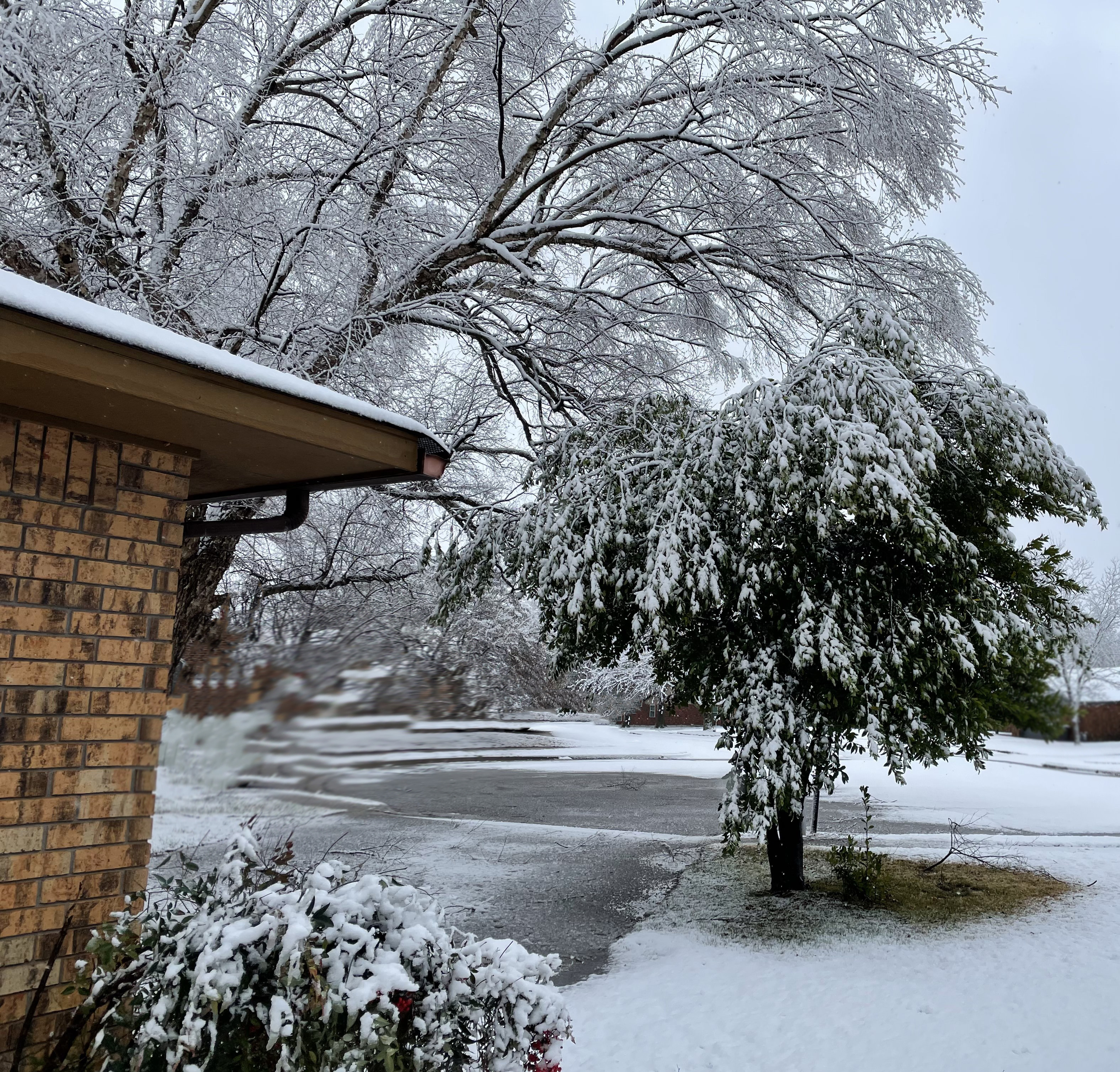
A New Year’s snow in 2021 showed how fragile the Cherry Laurel was

This week I had what remained of the original tree taken down and the stump ground down. There are still some big stems rising out of one its shallow roots which I plan to eliminate.

Leaving my lamentable side strip, let’s turn to my one decent tree, which thankfully declined to die despite my ill treatment.

Oklahoma Redbuds

The Eastern redbud, Cercis canadensis, is a medium-sized tree from the Leguminosae family that boasts an array of purple-pink clustered blossoms in the spring. It is native to the state, hardy, and desirable. Okies know it as our state tree, but in the late 1930s, whether or not the Eastern redbud should be an emblem of Oklahoma became a bone of contention between two future Oklahoma Hall of Famers.
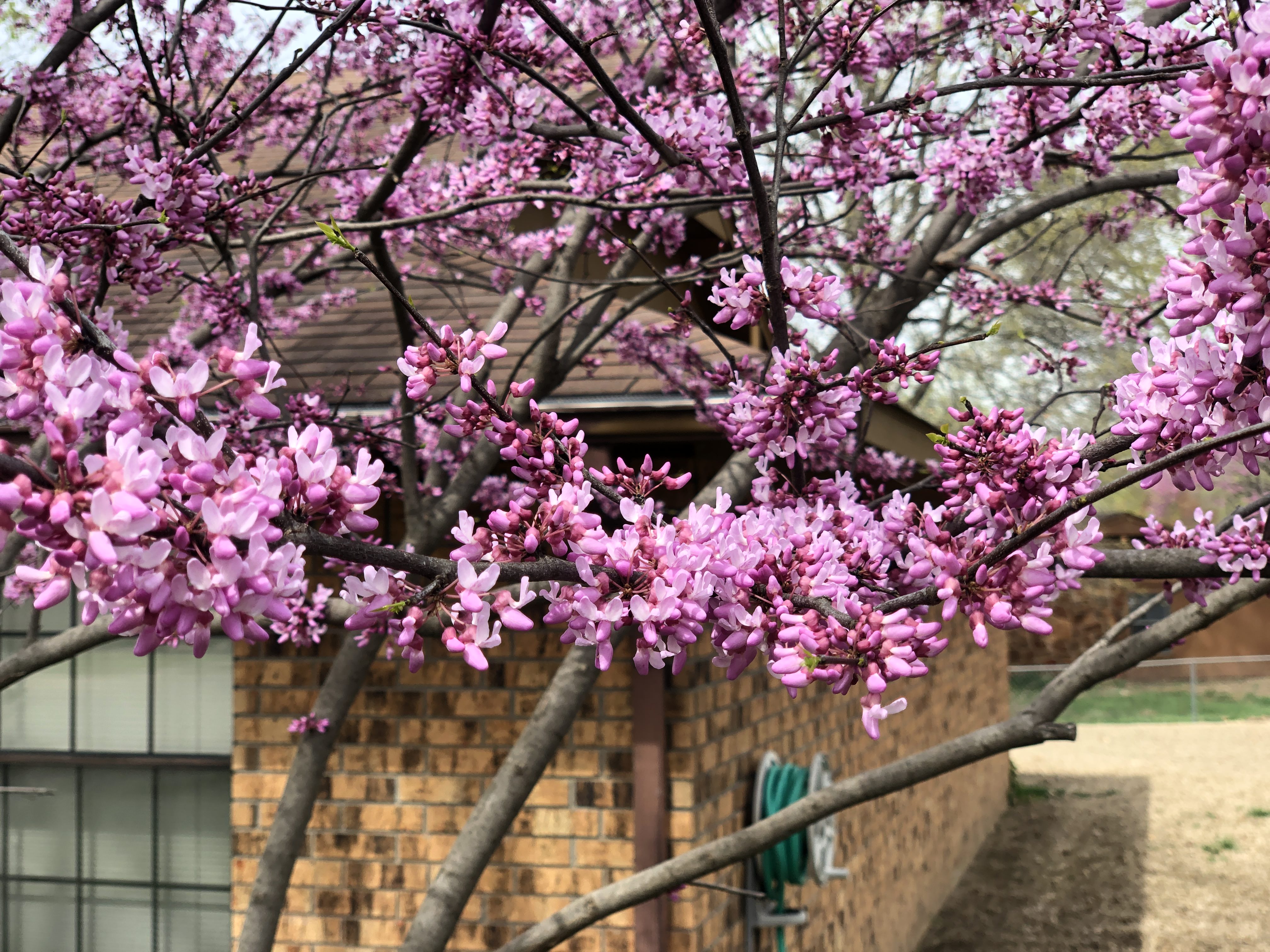
Spring blossoms on my redbud

Maimee Lee Robinson Browne chaired the Oklahoma City Beautification Committee and pushed for the recognition. The Daughters of the American Revolution got a bill through the Sixteenth Legislature in 1937 and onto Governor Marland’s desk.

However, that did not sit well with Roberta Campbell Lawson, a granddaughter of Delaware chief Charles Journeycake and leader in the Federation of Women’s Clubs. Lawson sent Marland a telegram objecting to the redbud’s adoption as the state tree, saying it was the tree on which the disciple Judas hanged himself. She declared, “It would be most unseemly to have such a tree as Oklahoma’s state symbol.”
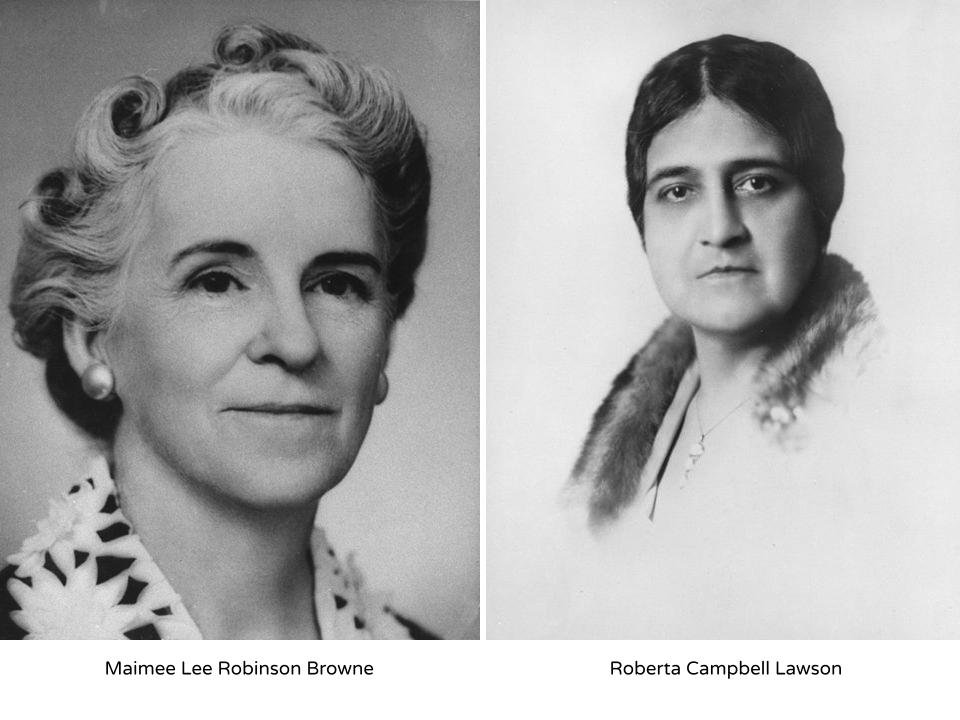
These two ladies took very different views on having the Eastern Redbud as the state tree

Lawson was referring to a myth that Judas Iscariot hanged himself from a Cercis siliquastrum tree, a European redbud, an event which supposedly changed its flowers from white to red. This weird idea may have arisen from a translation error, as the European redbuds were referred to as ‘arbre de Judee’ in French, meaning Judea’s tree, which probably got corrupted into ‘Judas tree’.

Despite the controversy, Governor Marland signed the bill naming the Eastern redbud an emblem of “sturdy and hardy pioneers.” Marland commented, “This resolution is signed at the earnest request of the good women of Oklahoma, and I hope they plant enough redbud to hang every Judas in the state.” He went on to say, “What is the date–the 30th? I couldn’t put this off until the first of April, could I?”

As for Ms. Browne, she led a campaign to plant redbuds, including a slew of them in what was once Platt National Park at Sulphur. In 1939, the legislature made it illegal to harm redbuds growing along Oklahoma’s highways. In 1971, Governor Hall signed a statute naming the redbud as the official tree of the state. Hmm…given the moral failings of both Marland and Hall, was Lawson onto something? Er, no.

My redbud was long an understory tree below the big River birch. As it grew, some of its branches had a shallow angle, and I would struggle to mow around it. In June 2010, a summer storm blew down one section that had begun to rot. Removing that left an asymmetrical mess that was still hard to mow under, so while I had the chainsaw out I cut it all down. I was left with about one-third of a rick of wood and a little stump in the lawn.

It wasn’t long before several shoots rose up from the stump, and over time I pruned those that leaned over too much. Eventually I had four that grew into a reborn tree in the shadow of the River birch. In the 2022 photo below, the redbud is just to the right of the edge of the house. The Lily turf striped grass clumps are visible behind and left of it in front of the hedge, and you can spot a large Nandina in front of the left window and dwarf Nandinas behind the Lily turf at the bottom left of the photo. That was before they were poisoned in 2023.

My reborn redbud is just to the right of the edge of the house

The River Birch

I was very glad that the redbud returned, but that victory brings us to what was literally the biggest yard mistake I inherited: the Betula nigra River birch and the fescue grass surrounding it. River birches are found along water courses and lowlands. Like fescue, they crave water.

For three decades I have reeled out hoses in the summer months and set up sprinklers for the shaded front lawn. When I wasn’t diligent in my watering, the fescue would die off, and for years I have paid to have it reseeded. Without watering, the River birch tree’s leaves would turn yellow and fall off in droves. I refused to have a sprinkler system installed, as that would reduce my incentive to eventually get rid of the annoying tree and pretty but demanding fescue grass.

The River birch did its best to mess with me. It was self-pruning, meaning it continually dropped thin branches that I picked up from the lawn, beds, driveway, roof, and street. I have filled an entire city trash can with those things at one go.

It also has male flowers that are arranged in catkins that are several inches long. They shed pollen and then drop from the tree, clogging the gutters on the house and piling up on any hard surface. Once they dry out, they disintegrate into little flakes that are perfect for clogging downspouts. The trees also have winged seeds packed between the bracts of female catkins on the tree which are the largest seeds of all birches native to the USA.
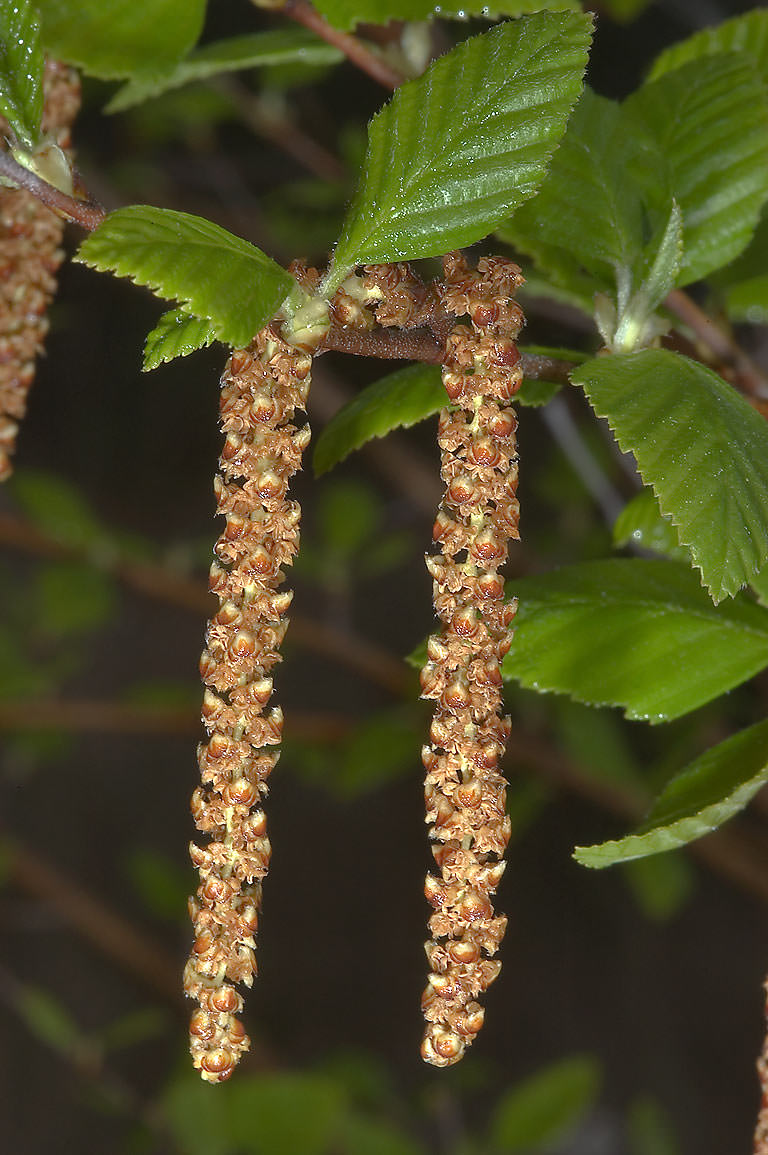
Back in 2015, I covered the gutters on the house with plastic filter screens. That prevented the downspouts from getting clogged by the catkins, but the darn tree covered the screens in a couple of areas, leading to water backflow that damaged the eave near the front door. So I had to remove the screens in a couple of areas and remember to clear the gutters.

The tree of course continued to grow over the past 30 years. A neighbor trimmed part of it back from over his driveway well over a decade ago to ensure it didn’t drop a branch on his vehicles, and every few years I would have to break out my pole trimmer to cut off branches that were too close to the roof or hanging down into the street or threatening the streetlight.

The River birch in 2022, dwarfing the Cherry laurel on the left and redbud on the right

The tree was lovely in the summertime, and its shade was nice. But I’ve reached an age where I should not be climbing up on the roof to clear gutters, I’m tired of picking up sticks, and Wendy rightly considered the tree a menace in a wind storm. But cost and procrastination combined to leave me in limbo until this past summer, when the latest drought made watering the lawn expensive and increasingly problematic.

So this month I finally contracted with Jeff Beck (918-766-5440) to have the massive tree taken down. I couldn’t resist peeking through the window blinds from time to time as he and his helper vanquished my nemesis of the past 30 years.

After one evening of work by Jeff Beck and his helper

By the end of the second evening of work, they had reduced the tree to a stump that was over four feet in diameter.

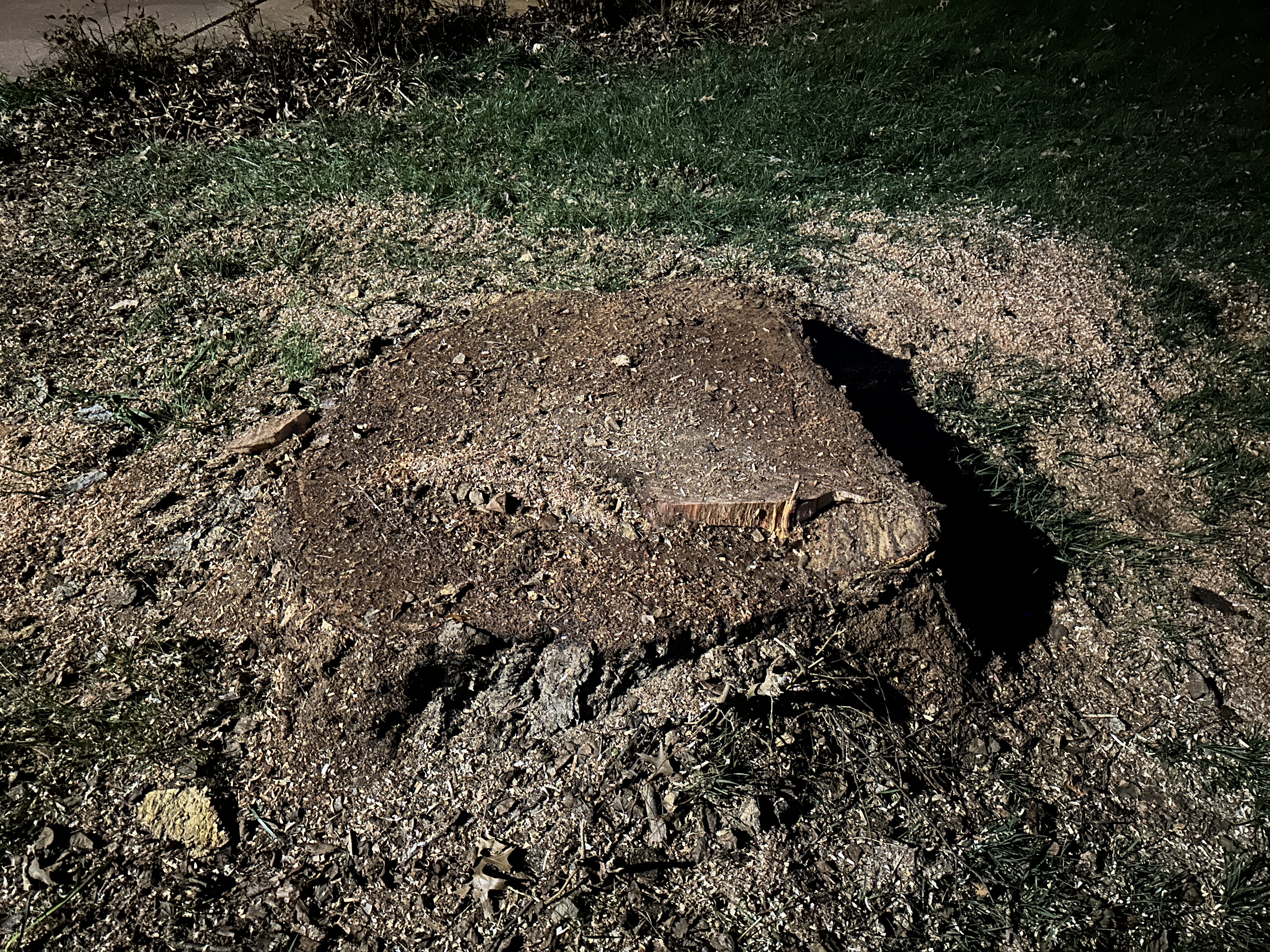
On the third evening, they ground the stumps. I was impressed with their work.
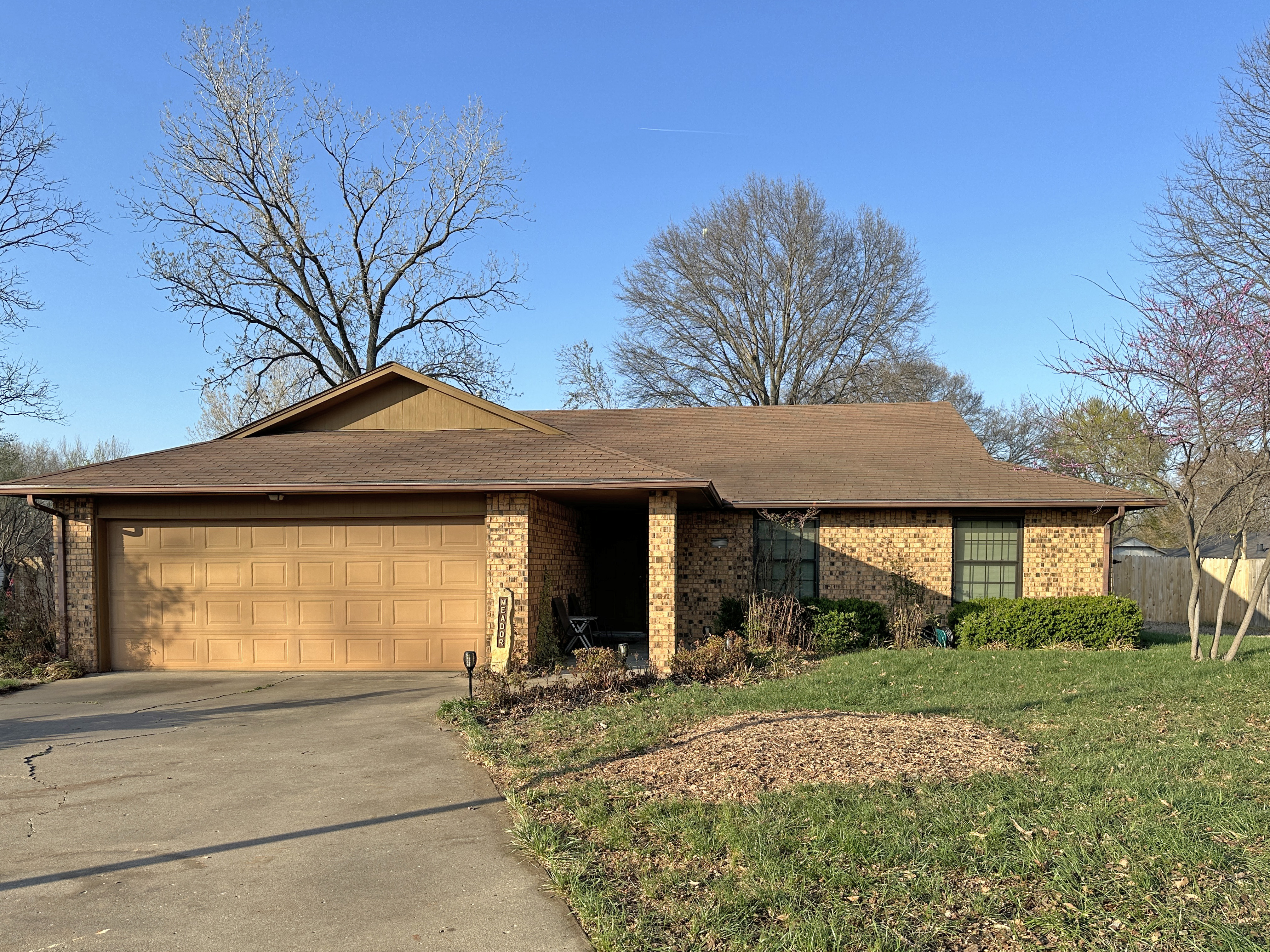
It will be interesting to see how the redbud responds to the loss of its huge neighbor. I want to eventually stop watering the lawn, so I plan to seed Cynodon dactylon Bermuda grass over the now-sunny front lawn and have it choke out the fescue. Bermuda’s above-ground stolon stems and underground rhizome stems spread like crazy, and it is a mainstay of my back yard, which I never water. Bermuda tolerates drought well, simply going dormant in the hottest summer months. However, it requires full sun, so for decades it couldn’t grow out front. That has finally changed, and here’s hoping that I finally put one of my yard’s invasive species to good use.

Posted in gardening, photos, random | 3 Comments

The Elastic Heart of Youth

The elastic heart of youth cannot be compressed into one constrained shape long at a time.

Mark Twain, The Adventures of Tom Sawyer

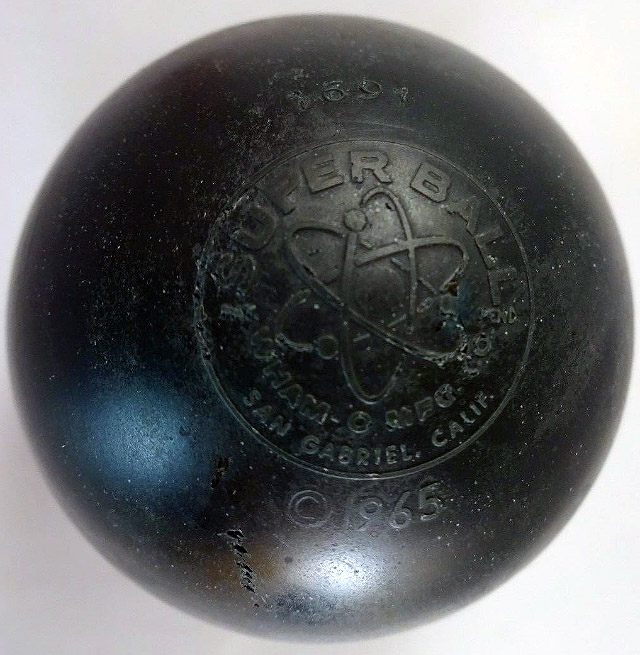
Almost all of my childhood belongings were sold off over time in garage sales, given to younger relatives or charities, or simply discarded. When I scrounged around for the oldest item I still possess, I came up with a bouncy ball from 1968.

This is actually the more attractive side of my rubber ball from over 55 years ago

My bouncy ball features in one the portraits my parents had taken of me at age two by Olan Mills.

Olan Mills was once renowned for photographic portraits. It was founded in the 1930s in Selma, Alabama by Olan and Mary Mills, working out of an old woodshed they had converted into a darkroom. They sold the concept of studio-quality photographic portraits door-to-door across the south, opening their first permanent studio in Pine Bluff, Arkansas in 1938. The company later shifted to telemarketing and in 1952 began selling a package deal. For three bucks, customers received three sittings to be taken any time in a 12-month period. 40 years later, the deal was still available for only $15. At one point the company operated 1,000 free-standing studios, and it thrived into the 1990s. Gradually it lost market share to competitors and was finally sold to Lifetouch in 2011.

As for my toy ball, it has lost much of its elasticity and the white surface is flaking off to reveal a pink core on one side, while the other side has become lumpy and discolored. Light, oxygen, and heat all take their toll on elastomers by adding crosslinks to the synthetic rubber molecules.

The sad state of that bouncy ball after a half century of storage led me to think about two bouncy balls I used back when I taught physics. One was a Super Ball which when dropped lost very little energy to heat via internal friction, so in physics jargon it had low elastic hysteresis and fairly elastic collisions. The other was made of polynorbornene and had such high hysteresis that it barely bounced with highly inelastic collisions. Here is a demonstration at the University of Maryland:

That in turn led me to link up Super Balls, Wham-O, and Bartlesville.

The Super Ball

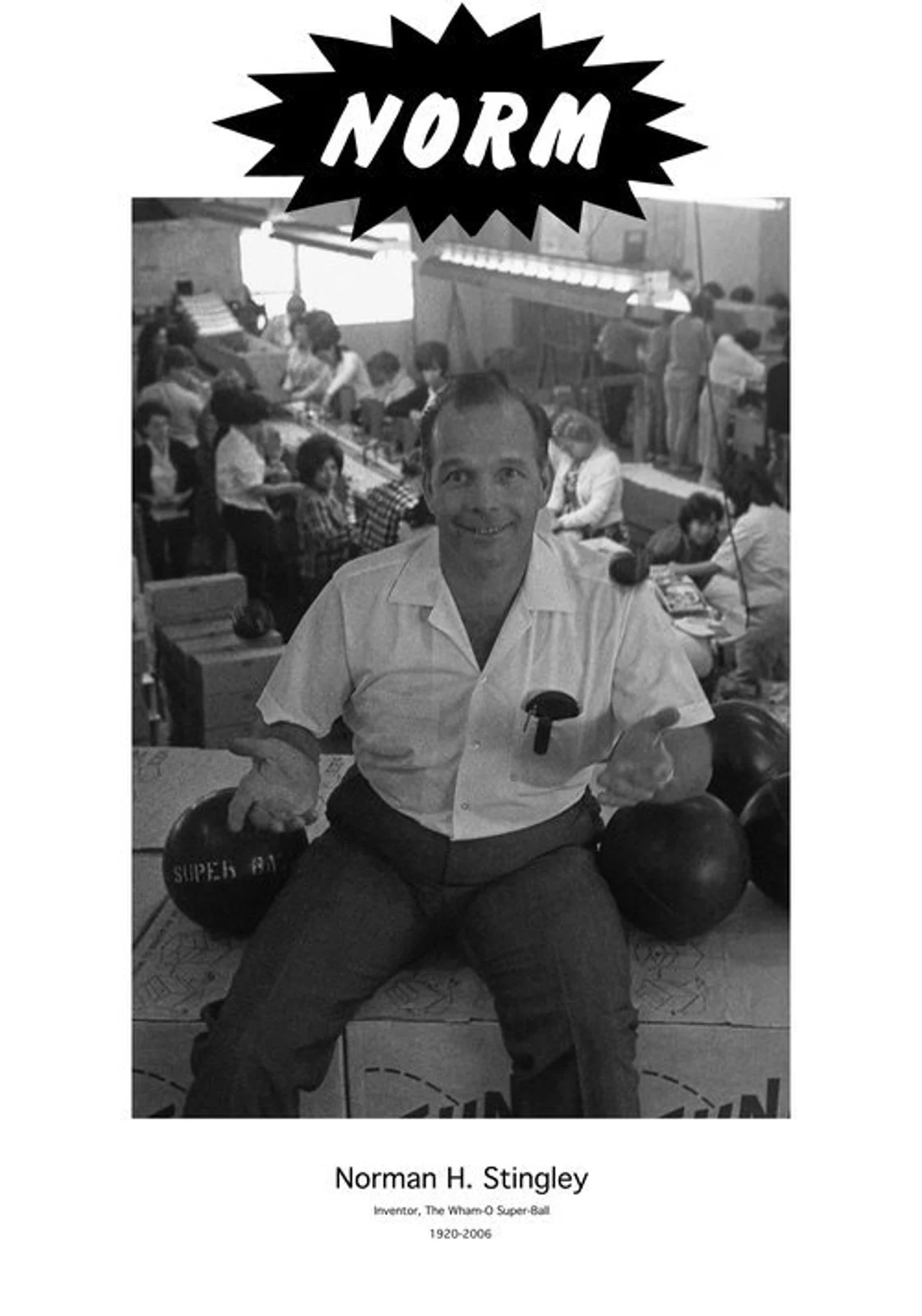
In 1964, Norman Stingley was a chemical engineer working for the Bettis Rubber Company in Whittier, California. He experimented in his spare time. After combining polybutadiene and other ingredients and vulcanizing that with sulfur at 329 degrees Fahrenheit at a pressure of 3,500 pounds per square inch, he created a rubber with a very high Yerzley resilience of about 92%. It wasn’t durable enough to interest his employer, so he approached the Wham-O toy company.

Wham-O had made a fortune in the late 1950s with the Hula Hoop and the Frisbee. They agreed to play ball if Norm could make his compound more durable. Soon he had perfected it, Wham-O named it Zectron, and another hit toy was born.

If you dropped a Wham-O Super Ball, it would bounce back amazingly well, and if you threw one down, it would rebound high into the air. It had about three times the resilience of a tennis ball.

Wham-O sold the original 1 13/16″ diameter balls for 98 cents at retail and was eventually producing over 170,000 per day. They had sold six million by December 1965.

The original Super Ball

Bartlesville & Wham-O

In the late 1950s, Wham-O had a strong connection to Bartlesville, Oklahoma, where Wendy and I live. Prompted by the demand for plastics after World War II, Phillips Petroleum Company invested $50 million to bring Marlex to market in 1954. That synthetic polymer was invented by research chemists J. Paul Hogan and Robert L. Banks in their work on gasoline additives. They modified a nickel oxide catalyst to include small amounts of chromium oxide, expecting to produce low-molecular-weight hydrocarbons.

Paul Hogan & Robert Banks discovered ways to produce high-density polyethylene as well as crystalline polypropylene

Their experiment produced the expected liquids along with a white, solid material. That solid was a new polymer: crystalline polypropylene. Mass-producing it proved difficult, and the company was stuck with warehouses full of dingy, off-size pellets. The company searched for new customers, and Wham-O came to the rescue.

Wham-O introduced the Hula-Hoop in 1958, after a fad began in Norway of girls twirling rings made of cane. That toy craze traveled to Australia, where high demand led to the introduction of polyethylene hoops. When Wham-O introduced the toys to the USA, its first hoops were made of Grex, a plastic produced in Pennsylvania by the Skyline Plastics Company of Titusville. Skyline eventually had 125 employees working three shifts, seven days a week, to try to keep up with demand.

The first Hula-Hoops were made of Grex, not Marlex

The fad simply outstripped their capacity, and Phillips convinced Wham-O to start making hoops with Marlex. The warehouses were emptied of the old Marlex pellets, and the Phillips plant’s entire output was used for Hula-Hoops for almost six months, giving the company time to improve the production process and expand the available product grades. Phillips president Paul Endacott was so happy that he kept a hoop in his office for demonstrations. By 1960, Wham-O had sold 100 million hoops, and as the Hula-Hoop fad faded, Wham-O continued to use tons of Marlex — to produce Frisbees.

Time is the enemy of fads & flexibility

An original Wham-O Super Ball from 1965

By 1970, Wham-O had sold about 20 million Super Balls. It even spawned the moniker for the biggest football game of each year. The first NFL and AFL contests were labeled the “World Championship Game”, but the owners wanted a catchier title. After the second contest, Lamar Hunt, owner of the AFL’s Kansas City Chiefs, recalled watching his daughter play with a Super Ball a few days earlier. A few days before I was born, Hunt wrote to NFL commissioner Pete Rozelle, “I have kiddingly called it the ‘Super Bowl’, which obviously can be improved upon.” Evidently, it needed no improvement.

The Super Bowl lasted, but in the 1970s, the Super Ball fad began to fade, and competitors introduced a variety of colorful bouncy balls that sapped Wham-O’s energy.

I see that Wal-Mart sells a “Mega Bounce” ball with 85% resilience, but why settle for that when you can still buy a Super Ball from Wham-O?

Posted in history, nostalgia, physics, random | 1 Comment

The World at Our Fingertips

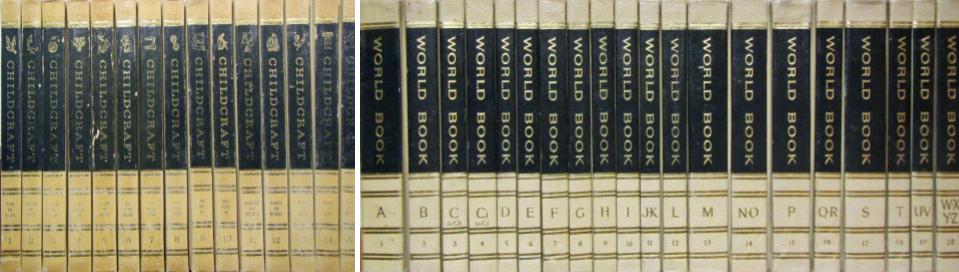
Polly Hotchkiss, Field Enterprises Educational Corporation representative #5592514, was 46 years old when she made the sale. It was March 9, 1968 when she convinced a 31-year-old mother in the Western Village neighborhood of Oklahoma City to invest $228.35 for a 20-volume set of the World Book encylopedia. It was bundled with a 15-volume set of Childcraft books for the mother’s 19-month-old son.

That was a hefty purchase, translating to over $2,000 in 2024 dollars, and my mother paid it in three monthly installments.

These books cost my mother a pretty penny back in 1968

I would grow up consulting the Childcraft books, which had simple text and illustrations designed to make learning fun. It had these categories:

  1. Poems and Rhymes
  2. Stories and Fables
  3. World and Space
  4. Life Around Us
  5. Holidays and Customs
  6. How Things Change
  7. How We Get Things
  8. How Things Work
  9. Make and Do
  10. What People Do
  11. Scientists and Inventors
  12. Pioneers and Patriots
  13. People to Know
  14. Places to Know
  15. Guide for Parents

Here’s a sample page from volume 4, with an illustration by Charley Harper:

My parents kept the World Book in a barrister’s bookcase

Although our set proclaimed Our 50th Year on their covers, Childcraft books actually dated back to 1934; the proclamation referred to the origin of the World Book by the same company. Chicago publishers J. H. Hansen and John Bellow had enlisted Michael Vincent O’Shea, a professor of education at the University of Wisconsin, to help them create it in 1917. Editor O’Shea wrote in the preface, “encyclopedias are apt to be quite formal and technical. A faithful effort has been made in the World Book to avoid this common defect.”

Field Enterprises, which had been founded by Marshall Field III, the founder of the Chicago Sun newspaper, purchased World Book in 1945. At one time, it employed over 40,000 salespeople who sold the encyclopedias door-to-door to families across the country, including one Polly Hotchkiss.

My Childcraft books weren’t the rainbow edition, but the less colorful white-and-green binding

By the time I was in fifth grade, I had been making extensive use of the World Book, and my parents took advantage of the offer to exchange the 1968 volumes for new ones at a discounted price anytime from five to ten years after the initial purchase. On September 25, 1976 they paid $152.49 in three monthly installments, which would be over $800 in 2024 dollars. That was about a 50% discount.
I found these to be fascinating

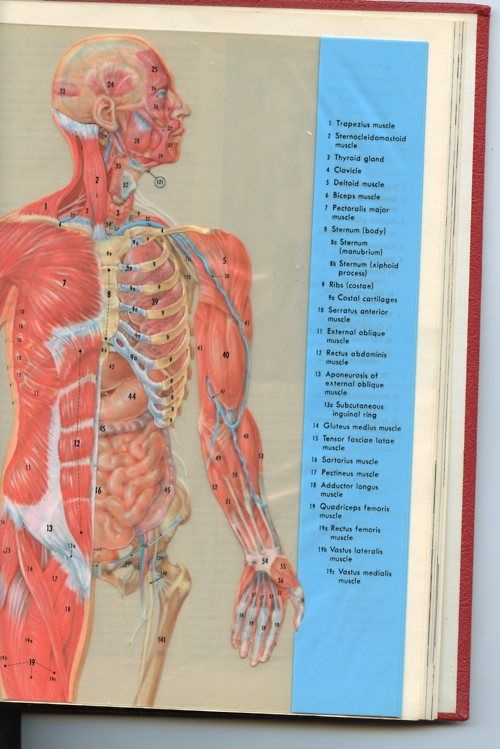
I remember being impressed by the human anatomy transparencies in one of the new volumes, where you could build up figures layer by layer.

The informal style of World Book suited me well. But by junior high, I recognized its limitations. So I tried to consult the more prestigious Encyclopædia Brittanica in our junior high library, but I was annoyed by its three-part structure: the Micropædia of short articles, the Macropædia of long articles that might run anywhere from 2 to 310 pages, and a Propædia outline volume.
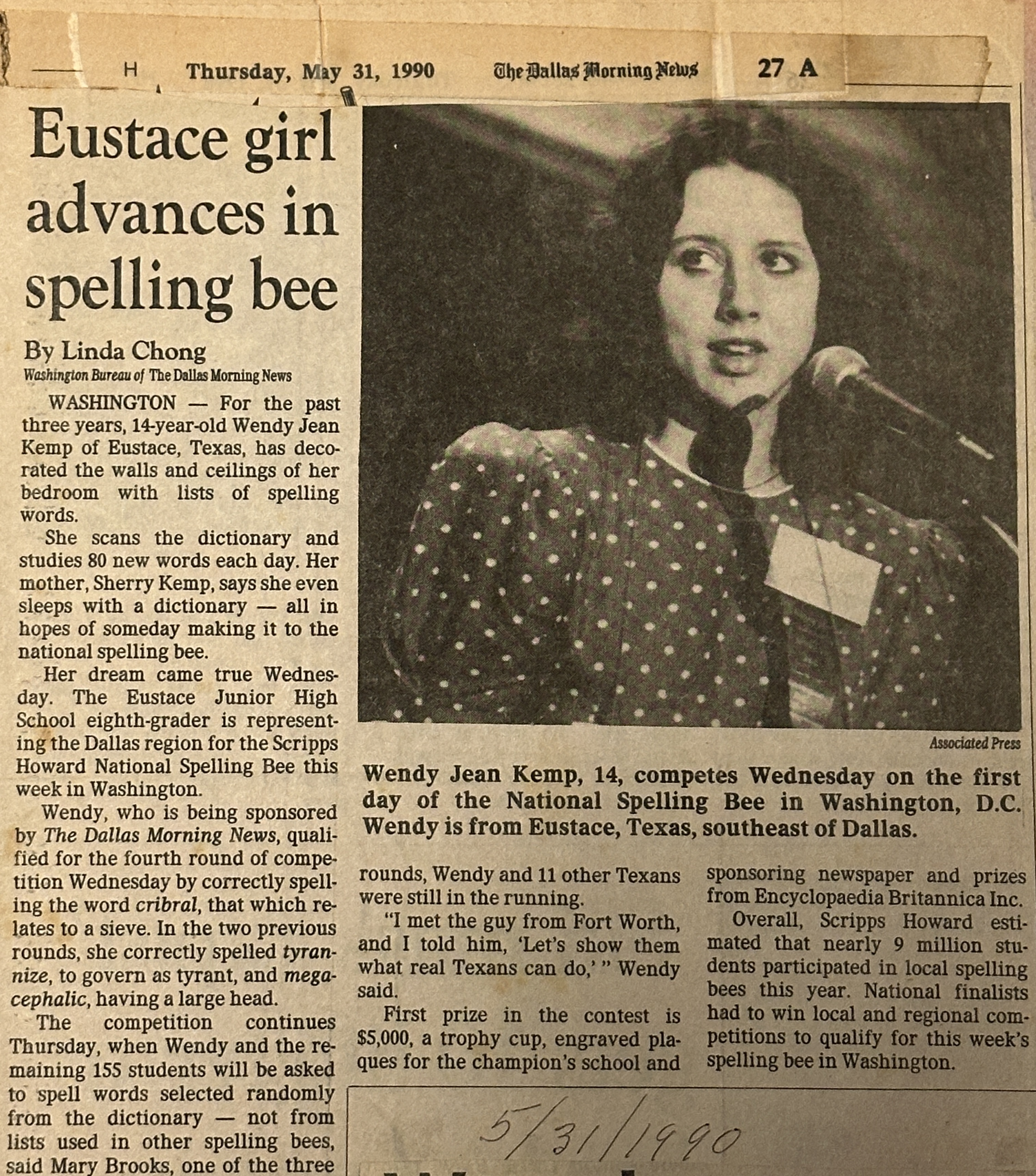
Speaking of the Britannica, my wife, Wendy, won a set of them a decade later in 1990, when she was a 14-year-old from tiny Eustace, Texas. Wendy won The Dallas Morning News Regional Spelling Bee. Being the best speller among over 10,000 students who competed in spelling bees across 700 schools in northeast Texas scored her the $1,600 set of books, which would be over $3,800 in 2024 dollars.

And yes, she was fascinated by the same sort of anatomical transparency overlays in her set of encyclopedias!

My wife is an incredible speller
1990 ad for the Encyclopædia Brittanica; Wendy won a set

Before she won the Brittanica, Wendy’s family had the Funk & Wagnalls encyclopedia, which they had bought on an installment plan. But printed encyclopedias were soon facing stiff competition…on optical discs.

Compton’s put out a multimedia encyclopedia on CD-ROM in 1989, and in 1993, Microsoft launched its Encarta CD-ROM, which was initially based on Funk & Wagnalls after Britannica refused to partner with them. Britannica was in financial difficulties by 1996 and was bought out. Encyclopedias began moving online and by 2004, the free, online, and crowd-sourced Wikipedia was the world’s largest. Encarta itself only lasted until 2009.

Britannica‘s last print edition was in 2010, concluding 242 years of printed publication. World Book still had 45,000 door-to-door representatives in the late 1980s, but sales plunged, and it shifted its focus to selling sets to libraries. As of 2024, the only place they sell their printed set is online, with it consisting of 14,000 pages across 22 volumes, for $1,200.

World Book 2024: 17,000 articles on 14,000 pages across 22 volumes for $1,200

Why someone would purchase a printed encyclopedia with 17,000 articles versus just using Wikipedia for free, which has almost 6.8 million articles, is beyond me. I presume some are still concerned about the accuracy of the world’s greatest encyclopedia, but this article shows such concerns are overblown.

I love Wikipedia enough that I donate $2.85 each month to support it. I consider that a great deal: I could pay it for the rest of my life and still not match, after adjusting for inflation, what my parents spent in 1968 and 1976 on the World Book. What price do we put on having the world at our fingertips?


Posted in books, history, nostalgia, technology | 1 Comment

The Shoemakers of SciFi

Cordwainer is an obsolete term for a shoemaker. It derives from the Old French word cordoanier, referring to someone who worked with cordwain or cordovan, which was equine leather produced in Cordova. I only know the term because two authors of science fiction incorporated it into pseudonyms.

The talented but irascible misanthrope Harlan Ellison wrote the stories that evolved into my favorite episodes of two 1960s science fiction television series: Demon With a Glass Hand for The Outer Limits and The City on the Edge of Forever for Star Trek. Harlan’s original story for the latter had to be rewritten to be practical, affordable, and compatible with the show.

Harlan Ellison, aka Cordwainer Bird

Harlan was so incensed that he threatened to take his name off the story credit and apply his infamous pseudonym “Cordwainer Bird”, something he did whenever he felt his work was mangled. He’d done that with The Price of Doom in Voyage to the Bottom of the Sea. Star Trek creator Gene Roddenberry knew that would hurt the show’s chances of getting stories from other notable authors, so he threatened to blackball Harlan in Hollywood if he did so. It was one of the few battles Ellison lost, and he never forgave Roddenberry.

The strange pseudonym was actually a tribute to fellow science fiction writer Paul A. Linebarger, who used the pen name Cordwainer Smith. Linebarger thought his pen name about shoemaking and blacksmithing implied industriousness, while Harlan said Cordwainer Bird was a reference to a shoemaker for birds, which could be taken to mean “this work is for the birds”.

In high school I came across Cordwainer Smith’s most famous short story, which was his first or second published in science fiction, in The Science Fiction Hall of Fame, Volume I, which was edited by Robert Silverberg and published in 1970.

Scanners Live in Vain was written in 1945 and had been rejected by several magazines before being published in the obscure Fantasy Book in 1950. Thankfully science fiction writer and editor Frederik Pohl had co-authored a story with Isaac Asimov that appeared in the same issue. He was so impressed by Smith’s story, despite having no idea who actually wrote it, that he republished it in 1952 in a more widely-read anthology. That helped put Cordwainer Smith on the map, and Linebarger would go on to have a number of his stories published before his untimely death at age 53 in 1966, while keeping his true identity obscured.

Linebarger had an interesting background. He had been a US Army officer, a noted East Asia scholar and the godson of China’s Sun Yat-sen, and the author of the Central Intelligence Agency’s manual on psychological warfare.

Paul Linebarger, better known as Cordwainer Smith

Many of his stories were set in a shared universe, the Instrumentality of Mankind, with tales starting in the year 2,000 and extending to the year 16,000. What is striking about Scanners Live in Vain, besides its sheer originality, is that he included multiple unexplained references to that shared universe.

The story is contained to a single day out of a 14,000 year history that he would build out in later stories, not in a chain of sequels but instead in what Algis Budrys described in 1965 as “tesserae in a mosaic” providing glimpses into “a completely consistent phantom universe.”

An illustration for Scanners Live in Vain generated with DALL-E 3

I hadn’t thought of Cordwainer Smith in four decades. He was brought back to mind by Matt of Bookpilled:

Bookpilled on The Instrumentality of Mankind short story collection

I find Matt’s opinions to be cogent and persuasive, so based on his recommendation, I purchased the Cordwainer Smith short story collection The Instrumentality of Mankind as a used paperback from a seller in Webster, New York.

I read the first five of the 14 stories in it, and decided I needed to read everything Smith wrote in that series, following a timeline that was cobbled together by John J. Pierce. That meant I needed to fill in many gaps.

John J. Pierce’s timeline of The Instrumentality of Mankind
The 681-page hardcover collection I purchased

Cordwainer Smith’s works are not nearly as well known as other greats of the golden age of science fiction. Consequently, I could find some, but not all, of his work in Kindle format. So I purchased the 681-page hardcover book The Rediscovery of Man: The Complete Short Science Fiction of Cordwainer Smith. It was published in 1993 by the New England Science Fiction Association Press.

I had already read the first four stories in that collection, so happily next came Scanners Live in Vain, which I had last read about 40 years ago.

Egad! What a treat, now that I had read enough of his later stories to know what he meant when he mentioned a Manshonjagger, a Beast, and an Unforgiven one. I was now familiar with the long weird history behind the antagonist Vomact, who led the Scanners through their strange rituals, a bizarre yet believable blend of psychological conditioning and Robert’s Rules of Order.

What a strange and wonderful man. There has been speculation that Linebarger might have been the patient in The Jet-Propelled Couch, a famous psychoanalytic case history about a man who spontaneously found himself living a heroic life as “Lord of a planet in an interplanetary empire,” far in the future. Back in 2009, Mark Frauenfelder of Boing Boing convinced Harper’s to make that famous case history freely available: Part IPart II. If you have ever enjoyed the case histories of Oliver Sacks, you might enjoy the tale of Kirk Allen, who might have been Paul Linebarger, alias Cordwainer Smith.

I am skeptical that Linebarger was the patient in question, but with that possibility in mind, I am struck by what Linebarger wrote to a friend, as relayed by Jeffrey Irtenkauf:

Life is a miracle and a terror. The progress of every day, any day, in the individual human mind transcends all the wonders of science. It doesn’t matter who people are, where they are, when they lived, or what they are doing—the important thing is the explosion of wonder that goes on and on—stopped only by death.

Paul Linebarger
Posted in short stories, video | Leave a comment

Before Jurassic Park came Farwells

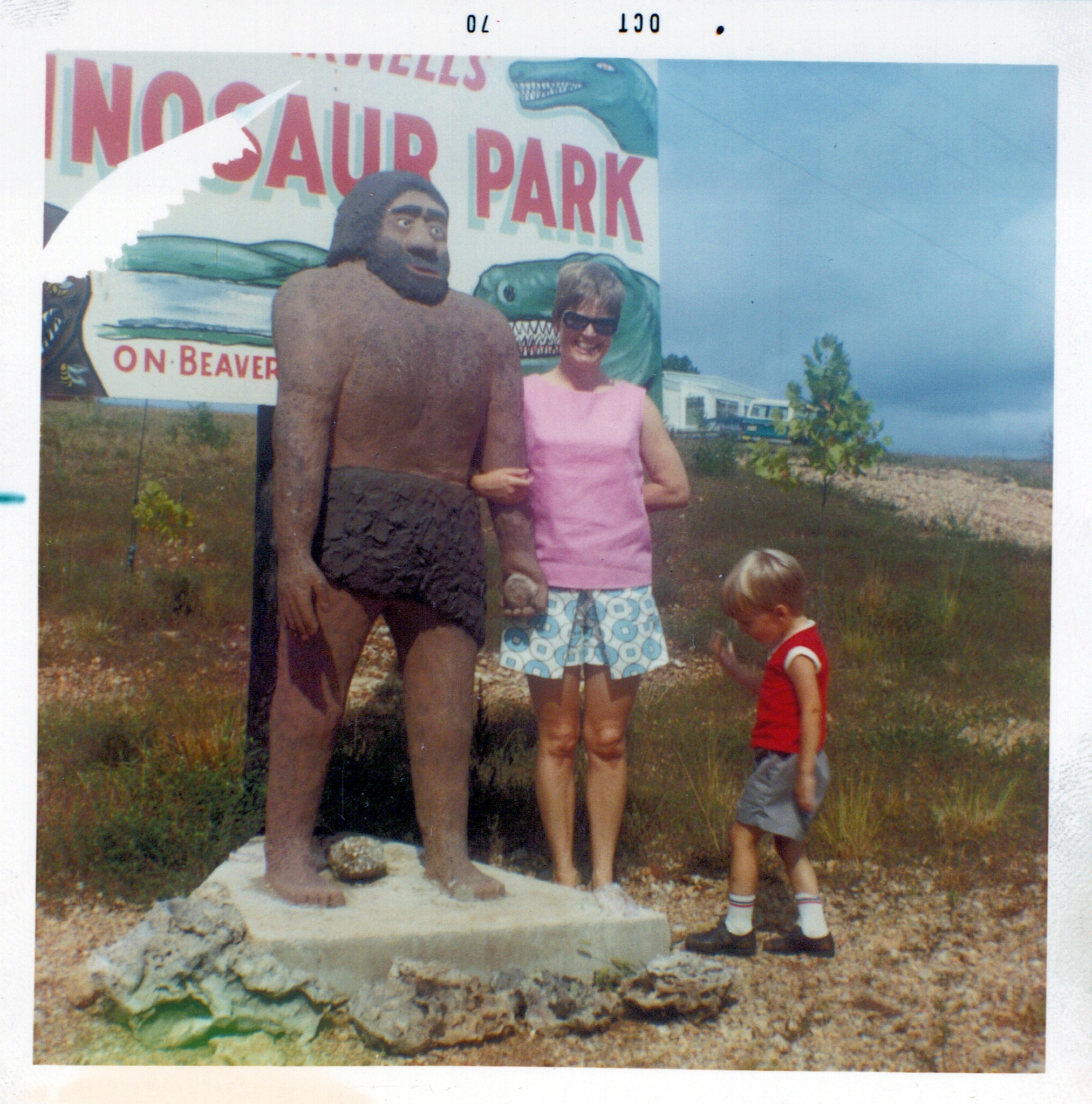
I first visited Farwells Dinosaur Park in 1970, when I was four years old. For almost 40 years, it was one of the more bizarre tourist attractions near Eureka Springs, Arkansas.

My parents had bought a tiny one-bedroom cabin on Table Rock Lake a couple of years earlier in Orville Farwell’s Sunset Heights, and his father’s Dinosaur Park was a half-hour drive away in northwestern Arkansas, or only nine miles across the Missouri-Arkansas state line if one were a pterodactyl.

With my mother at Farwell’s Dinosaur Park in the summer of 1970
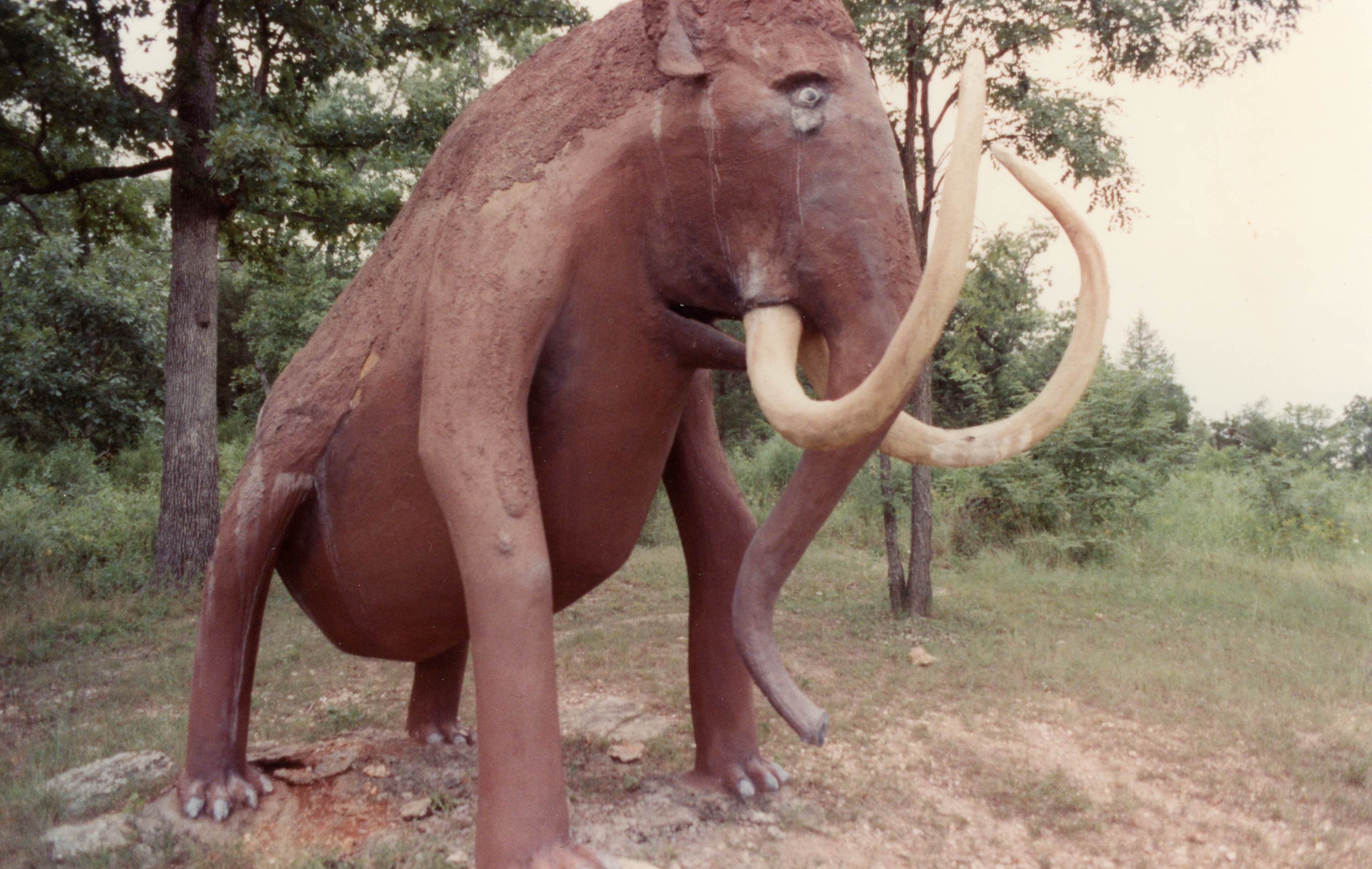
A concrete mammoth at the former Dinosaur Park in 1988 created with little grasp of anatomy; photo by Jeremy Butler

The park was filled with dozens of folk art sculptures of dinosaurs, cavemen, and the like. It began after Ola Farwell befriended Emmet Sullivan, who a year earlier had created the seven-story milk jug with arms known as the Christ of the Ozarks statue in nearby Eureka Springs. That had been created for the raving white supremacist and antisemite Gerald L. K. Smith, who retired in Eureka Springs in 1964. The statue was the first of Smith’s “Sacred Projects”, which grew to include a gallery, Bible museum, Passion Play, and a Great Wall of Jerusalem before that minister of hate expired in 1976.

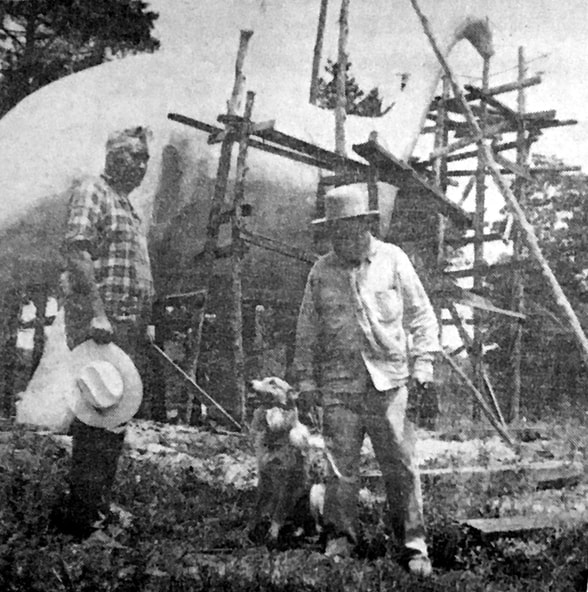
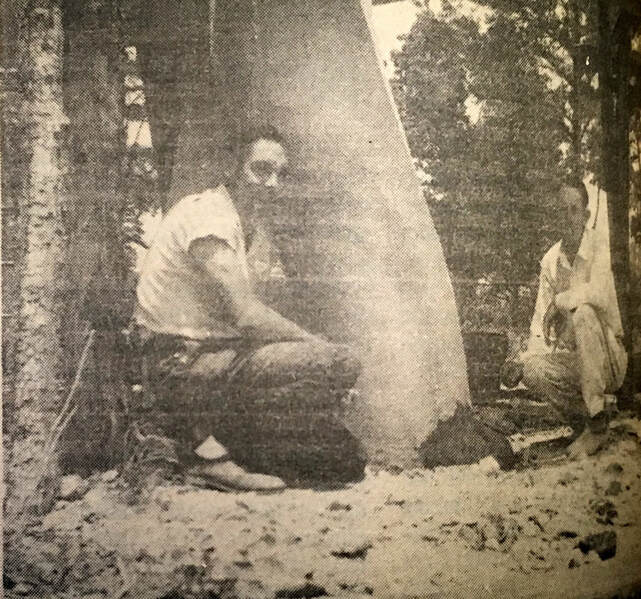
Emmet Sullivan and Ola Farwell with a 55-foot long brontosaurus in the background

Ola and Maye Farwell, who owned a grocery store in Eureka Springs, also owned 60 acres near Beaver Dam. Ola Farwell had been born in Barry County, Missouri, in 1893, so he was a contemporary of my paternal grandfather and grandmother, who were also born at that time in Barry County.

He hired Sullivan to build his Dinosaur Park, which was originally open year ’round from 7 to 7 with an admission of $1 for adults and 50 cents for children over six. Orville Farwell later said his family never lost money on the park while they owned it.

Two local men, A. C. “Mac” McBride and Orvis Parker, handled the actual construction of the dinosaurs. Mac had been the “Chief Mortar Artist” on the Christ of the Ozarks and his tombstone is adorned with an image of his handiwork. Orvis was an old-time country evangelist who lived until 2018. Abandoned Arkansas has many 2013 photos of their works.

Ola Farwell and his dinosaur in Eureka Springs

I always found the park to be a hoot. Emmet had died in 1970, but Ola Farwell kept on going. His favorite hobby was collecting rocks, and in 1972 he said he was building a large “authentic” replica of the moon to house his rock collection. What a character!

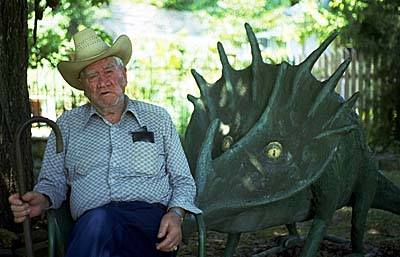
Ola even brought one of the dinosaurs home for his own yard in Eureka Springs. After he retired, he was fixture on the resort town’s Spring Street, sitting in a metal chair surrounded by concrete bunnies and his own personal Styracosaurus albertensis. He would pass out brochures about the Dinosaur Park, even though he no longer owned it.

Orvis Parker and A. C. McBride of Eureka Springs fashioned the dinosaurs

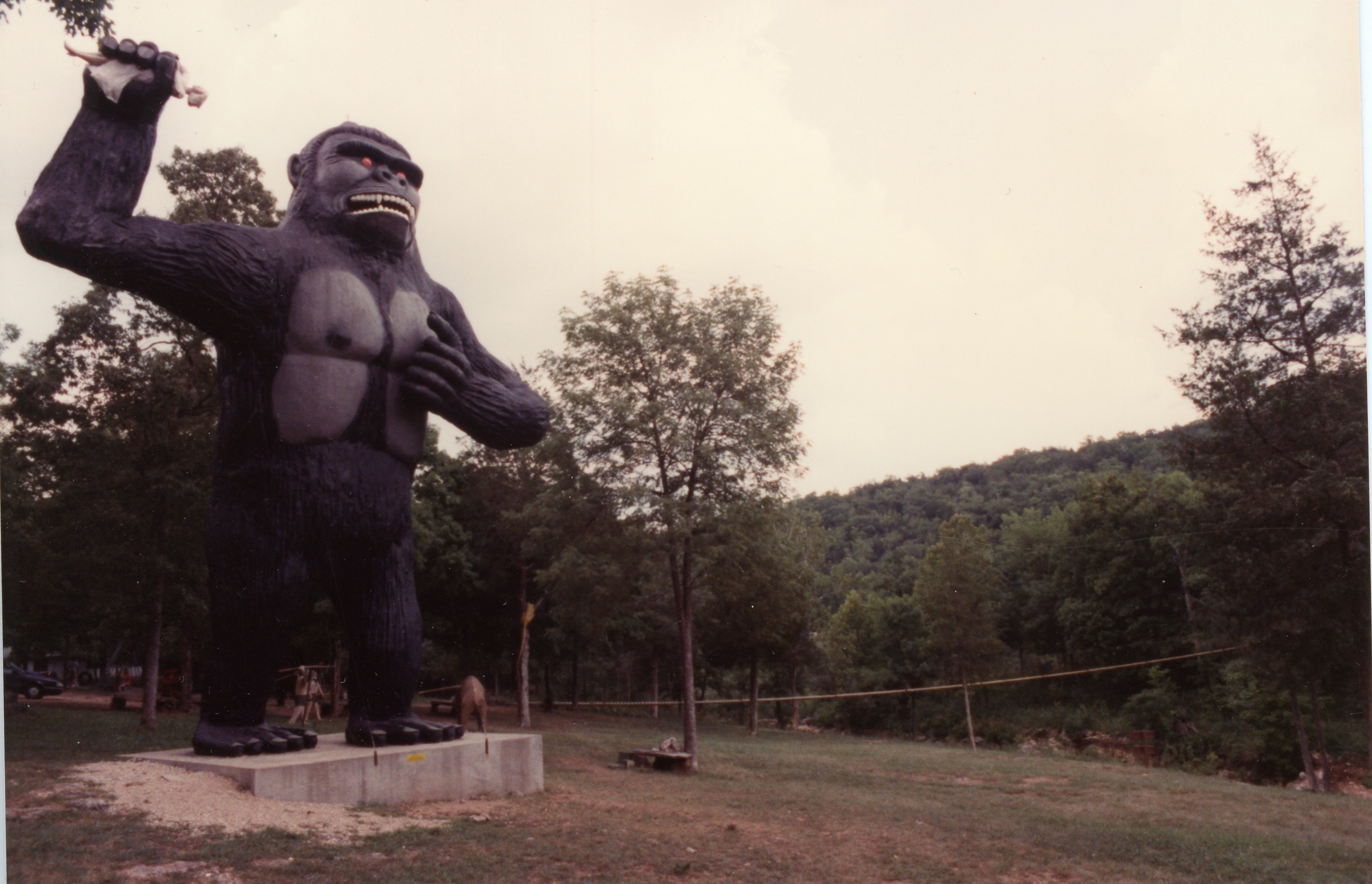
In the late 1970s, he had sold the park to Ken Childs, and Childs renamed it “John Agar’s Land of Kong” and had a 40-foot King Kong statue added. Childs was a friend of John Agar, who had a minor role as a mayor in the 1976 version of King Kong, although I remember him best as Dr. Matt Hastings in 1955’s Tarantula. Agar had famously married Shirley Temple in 1945, when she was 17 and he was 24.

Agar was an alcoholic, and his career suffered for it. He had multiple drunk driving arrests, and when he tried to explain to one judge that his troubled marriage contributed to his drinking, the judge shot back, “Don’t try to blame this on Shirley Temple!”

People presumed Agar had a financial interest in the park, but he had merely let his friend use his name.

The 40-foot King Kong statue at John Agar’s Land of Kong in 1988; photo by Jeremy Butler

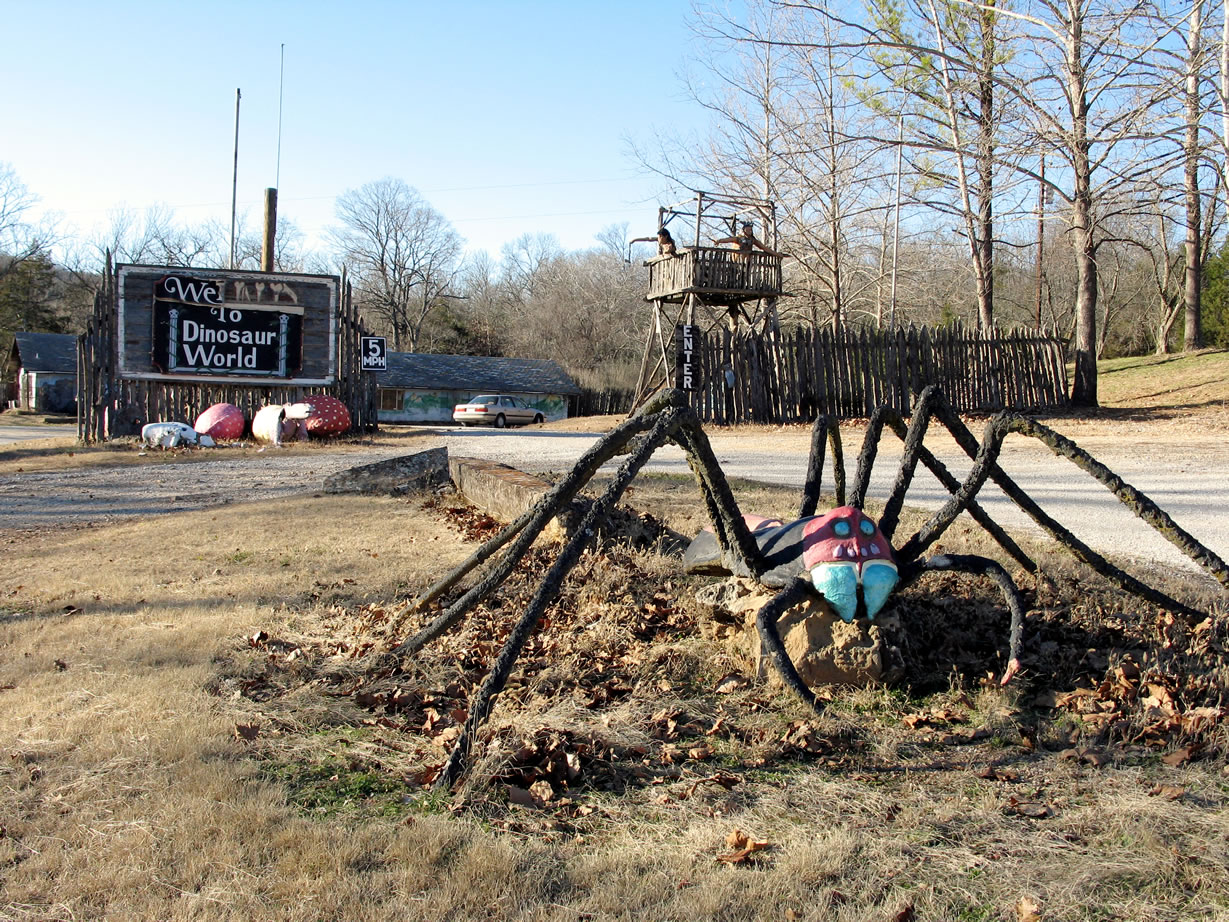
In the late 1980s I treated various college friends to tours of Land of Kong, and we had great fun gawking at the ridiculous sculptures. My last visit was with some friends on spring break in 1993. The facility later became Dinosaur World, and it finally closed in 2005.

Dinosaur World a few years after closing; the spider is appropriate, as the Spider Creek Resort is just across the highway

When Wendy and I have stayed at the Sugar Ridge Resort near Beaver Dam, we have driven by the old Dinosaur Park. I respect private property, so I never trespass, but I do enjoy catching glimpses of that Ozarks Land of the Lost through the trees.

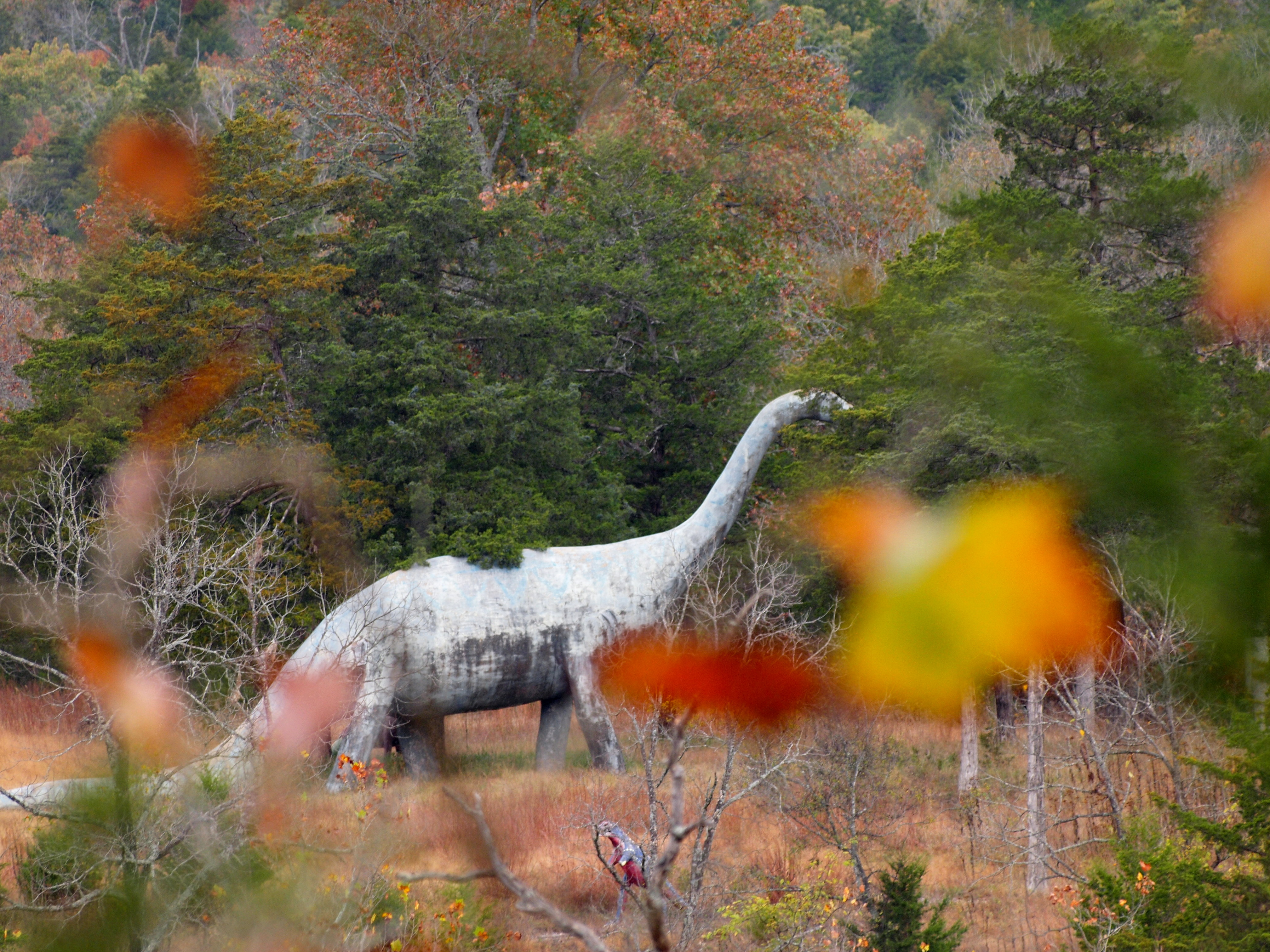
The Wandering Pigeon, like me, enjoys peering through the trees for dinosaur sightings
Posted in history, nostalgia, photos, random | 2 Comments