Social media is a mixed bag, but it can revive some decades-old memories. Today I was scrolling through my Facebook feed when this image arrested my attention, bringing back to me the sound of a fog horn, bowling balls, a horse race, and more.
My parents had that 1968 sound effects record, which I played on my mother’s Sears record player. Of course I wanted to revisit those sounds of yesteryear, and, sure enough, YouTube had them.
It was eerie to hear the bell buoy and foghorn from decades ago, with the lonely calls of seagulls. As a child living over 450 miles from the nearest ocean, those sounds fired my imagination. I wouldn’t hear a seagull in person until I was in college and flew about 1,300 miles to visit my girlfriend, who was doing a summer internship on the Atlantic coast.
Another sound effect on that record that evokes old memories of mine is Ten Pin Bowling. Both of my parents were in bowling leagues when I was little, and I remember being in the nursery at the Hilander Bowling Palace and hearing the rumble of the balls and crash of the pins. I’ve been bowling many times since, most recently in Philadelphia, but recordings of my performances would have fewer crashing pins and more sounds of the gutter.
There are sounds in the YouTube playlist, taken from a 2014 re-release, that did not appear on my parents’ record. Under the Canopy begins with elements reminiscent of Louis and Bebe Barron’s “electronic tonalities” in Forbidden Planet, shifting into jungle sounds.
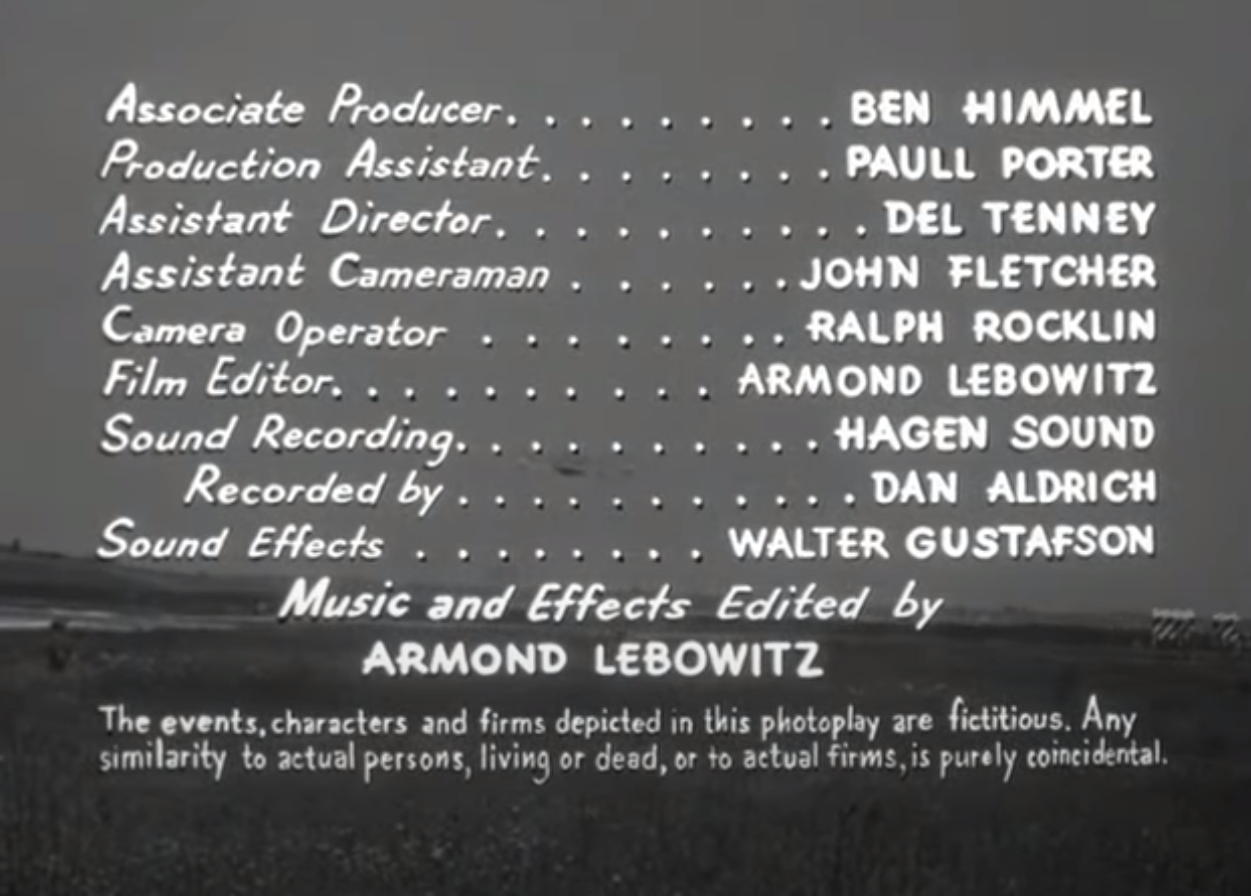
It turns out I’ve heard Walter Gustafson’s sound effects many times, as he did the ones for the Rudolph the Red-Nosed Reindeer television movie of 1964. More titillating is that two years earlier he did the sounds effects for the sexploitation film Satan in High Heels.
Walter Gustafson’s screen credit in Satan in High Heels
Oh, my. A plot synopsis is: “A carnival burlesque dancer robs her junkie ex-husband, goes to New York, gets a job at a high-class club where she becomes the mistress of the wealthy owner. She seduces his son and causes a murder.”
Grayson Hall, best known as Dr. Julia Hoffman on Dark Shadows, is striking in her role, although she later disavowed the film, which has higher production values than many sexploitation films. It notably includes an S&M production number by star Meg Myles and also has Norma Ann Sykes, known as the English bombshell Sabrina, performing for a leering audience.
Sabrina performs – I don’t know that any sound effects were needed for her scene
There is a reason Sabrina wore unfashionable long dresses: at age 11, she had contracted polio and calipers and surgery left her with a damaged right leg. That reminds me of how Cassandra Peterson, better known as Elvira, Mistress of the Dark, had extensive burn scars from an accident when she was 18 months old, and would drape her long hair over the scars on her neck and shoulders. Perfection is always an illusion.
In 1965, Walter was the sound designer for Tom Glazer’s album Noisy & Quiet/Big and Little. That children’s album started out with some recordings of household sounds. I think I’d rather listen to Meg Myles.
It took me 50 years to finish reading Pinocchio. For decades, I blamed Walt Disney and Charles Folkard for that tardiness: Disney for the false impression his 1940 film gave of the book it animated, and Folkard for a book illustration that backfired.
1971
My tale begins in 1971, when I was turning five years old. Walt Disney’s 1940 musical fantasy film based on the 1883 novel was re-released that summer. I greatly enjoyed the film, and I never forgot how Pinocchio and his friend, Lampwick, misbehaved on Pleasure Island and were turned into donkeys after making “jackasses” of themselves. I clearly remembered Pinocchio and his maker, Geppetto, being trapped inside a whale and escaping by making it sneeze. And of course I remembered Jiminy Cricket, how Pinocchio’s nose grew when he told lies, and WhenYou Wish Upon A Star.
Despite its later status as an animation classic, the film was not a box-office success when it was released in 1940. It had cost $2.6 million to create, not including promotion and distribution, and raked in less than $2 million. Walt Disney was quite depressed when both Pinocchio and Fantasia flopped in 1940, although he could take some comfort in the former winning Oscars for Best Original Score and Best Original Song.
My aborted childhood attempt to read the novel
The edition of Pinocchio given to me in childhood
I was precocious, reading 135 books in first grade. So a couple of years later my parents gave me a hardbound edition of the Pinocchio book. It had an orange cover and had been printed by Grosset & Dunlap decades earlier. I suspect my father picked it up at a garage sale.
I remember opening the 200-page book and being surprised that it was a novel, not a simple illustrated book. I was then thoroughly unnerved by the only illustration in it, which was right before the title page. It showed an owl, a crow, and a disgusting-looking anthropomorphic cricket examining a marionette lying in a bed. That marionette looked nothing like the Pinocchio I had seen in the film.
With Italy a fascist state that joined World War II as one of the Axis Powers in 1940, Disney had chosen to emphasize a Tyrolian setting in the Alps of northern Italy and western Austria for his film. His version of Pinocchio was a fat-cheeked little guy who meant well and wore a little alpine hat with a feather, a far cry from the novel’s skinny, weird-looking jerk who wore an outfit made of flowered paper, shoes made from tree bark, and a little hat from the soft part of a piece of bread.
I was particularly upset by the Talking-Cricket doctor in Folkard’s illustration. Was that hideous half-human half-insect thing supposed to be Jiminy Cricket?
Pinocchio as originally illustrated by Enrico Mazzanti
I didn’t know it, but Pinocchio had originated in 1881 as the serial La storia di un burattino in the Italian weekly children’s magazine Giornale per i bambini. Carlo Lorenzini, writing under the pen name of Collodi, stopped his first series at Chapter 15 later that year. But a few months later, popular demand convinced him to extend it to 36 chapters, and he published the complete story as a single book in 1883, with illustrations by Enrico Mazzanti.
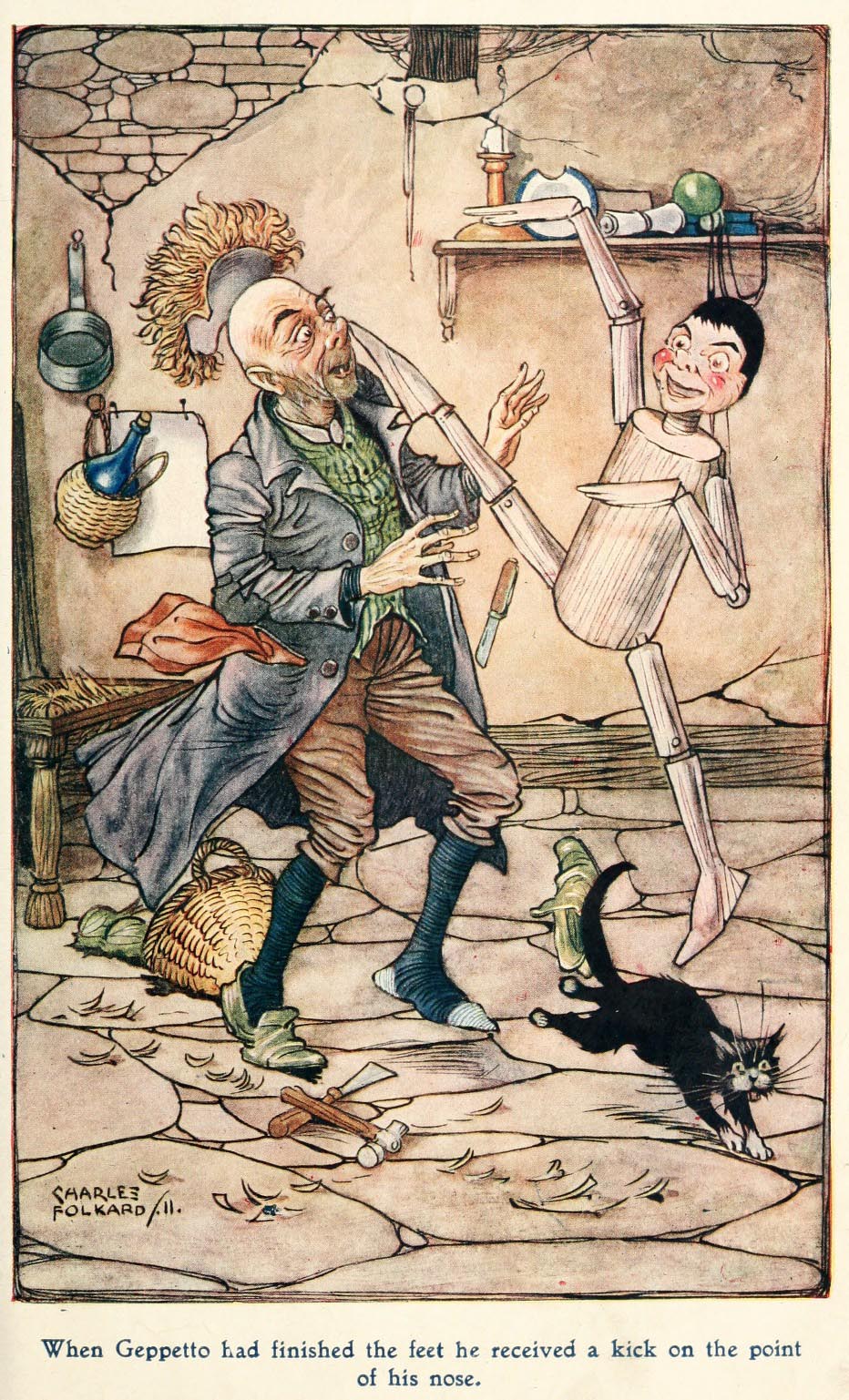
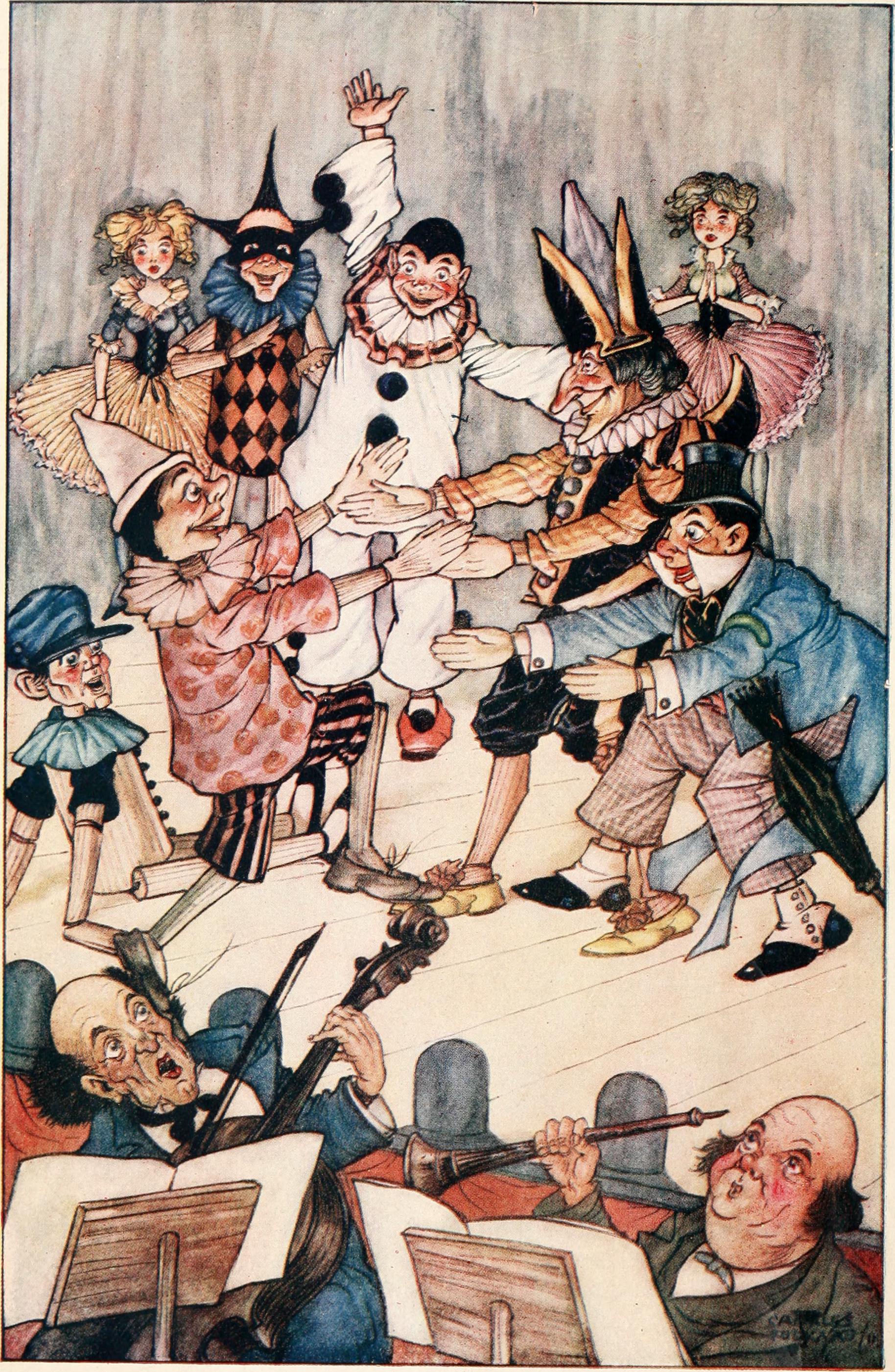
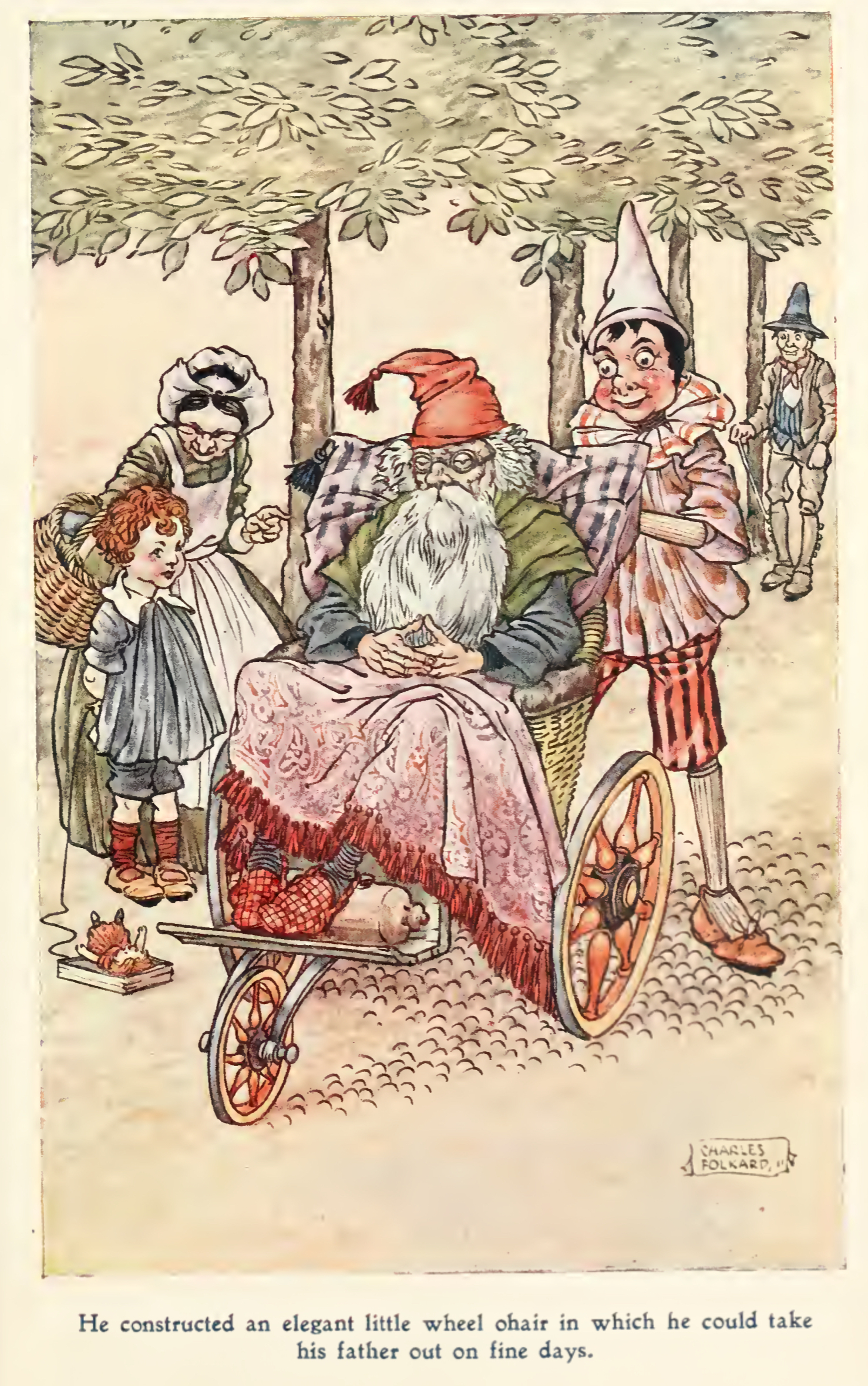
The text of my edition was the first English translation of the novel, performed by Mary Alice Murray in 1892. My cheap edition only included that single color illustration, created in 1910 by Charles Folkard for a British publisher. Decades later, I found out that Folkard had created several full-page watercolor illustrations for the novel, along with dozens of line drawings sprinkled throughout far better earlier editions.
Despite my misgivings from that single disturbing illustration, I screwed up my courage and began reading the novel. The deviations in the film were immediately apparent, throwing my young mind for a loop. The novel began with Master Cherry the carpenter, not Geppetto, cutting on a talking piece of wood. Geppetto did not appear until the second chapter, and the two characters became angry and “from words they came to blows, and flying at each other they bit, and fought, and scratched manfully.” Egad!
Geppetto and Master Cherry fight
Geppetto soon carved the “puppet” Pinocchio from the talking piece of wood, with no talk of wanting a little boy, no blue fairy, etc. Rather than living in a shop full of clever clocks, he was so poor that all his room had was a worn-out chair, a crummy bed, a derelict little table, and on the far wall a painted fire.
I remember being confused as a child when the book and the film referred to Pinocchio as a puppet, when he was obviously a marionette. The 2021 annotated translation by John Hooper and Anna Kraczyna reveals that Collodi used the word burattino throughout the novel, which was used loosely at the time to describe both puppets and marionettes. Only once did he choose to refer to Pinocchio with the actual term for marionette.
Pinocchio murders the Talking-cricket
I made it through Chapter IV, when the “Talking-cricket” appeared. But I was shocked by how it ended:
‘Poor Pinocchio! I really pity you ! . . . ‘
‘Why do you pity me?’
‘Because you are a puppet and, what is worse, because you have a wooden head.’
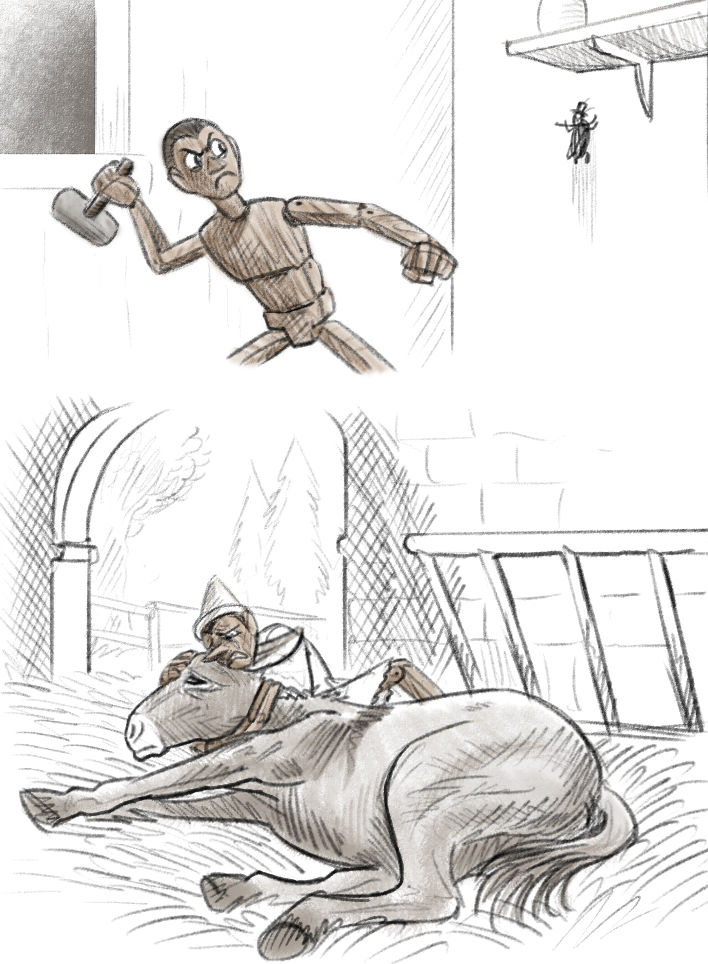
At these last words Pinocchio jumped up in a rage, and snatching a wooden hammer from the bench he threw it at the Talking-cricket.
Perhaps he never meant to hit him; but unfortunately it struck him exactly on the head, so that the poor Cricket had scarcely breath to cry cri-cri-cri, and then he remained dried up and flattened against the wall.
And that was where I stopped reading for 50 years: Pinocchio killing the character I knew as Jiminy Cricket.
Back in 1790, copyrights in the USA only applied to maps, charts, and books for up to 28 years. In 1831, that was lengthened to 42 years and extended to musical compositions, but not performances. In 1909, that was lengthened to 56 years and extended to motion pictures.
In 1976, copyrights were extended to the lifetime of an author plus 50 years, and to 75 years from publication for prior works-for-hire created for corporations, in keeping with the Berne Convention, an international copyright treaty. That would have finally ended the copyright on Steamboat Willie in 2003, so in 1998 Disney helped get the Sonny Bono Copyright Term Extension Act into law, which extended it to the life of the author plus 70 years and to 95 years for works created by corporations.
It was, of course, hypocritical of Disney to lobby for such extensions to protect its own works, given that many of them were based on prior works which had fallen out of copyright. If the copyright law Disney successfully promoted in 1998 had applied to the original Pinocchio novel, Walt could not have made his 1940 film without permission and licensing from the estate of Carlo Lorenzini, since the novel would have remained under copyright until at least 1960.
That was bouncing around my brain when an arctic blast had me working virtually from home for three days. That return to my work life during the early part of the COVID-19 pandemic reminded me of relaxing videos I had enjoyed during the stressful pandemic, such as Pete Beard’s videos on illustrators. One of his early videos had included Charles Folkard.
That was enough to prompt me search out Folkard’s other watercolor and gouache illustrations for Pinocchio.
I could tell some of the scenes had been adapted into the Disney film, but several had not. So I decided to finally finish reading Pinocchio. I no longer owned the old hardback copy of my youth, which was just as well given its paucity of illustrations. So I ordered two print editions: a Golden Books for Childrenedition from 1920 that included Folkard’s illustrations, and a 2004 edition with illustrations by Roberto Innocenti. I didn’t bother downloading older editions of the book with original illustrations by Mazzanti, as those did not appeal to me.
Then I decided to write this blog post about the experience, and regular readers will know that usually prompts me to do a considerable amount of research. So I purchased the Kindle edition of the splendid 2021 annotated translation by Hooper and Kraczyna. Footnotes can be a pain in a paper book or on a dedicated Kindle device, but they are quite usable in the Kindle app on an iPad. You can simply tap the footnote number to overlay it on the bottom of the page, which you can read and then tap to dismiss.
Surprises
If you are unfamiliar with the classic Disney film and/or the novel, Jon Solo to the rescue. He has made over 200 videos about the origins of children’s tales, and here is his complete summary of the plots of the 1940 Disney film and the novel:
One thing that was immediately apparent when reading the novel was what a rascal Pinocchio was. He could be mean-spirited and irresponsible, and he suffered mightily for it. His legs were burned off, and he almost burned alive as firewood.
I enjoyed him meeting the fox and the cat, with the former pretending to be lame and the latter faking blindness. They reminded me of Mark Twain’s twin grifters in Huckleberry Finn, the duke and the dauphin.
Pinocchio is shown to be truly naive, an easy mark, in contrast to how quickly Huck Finn figured out the ruses of the pair of crooks he encountered. Collodi was imparting lessons for children living in the impoverished rural areas of the recently-united Italy. Mandatory schooling was gradually being extended, and he repeatedly arranged for evil consequences when Pinocchio shirked school.
The story does not begin as a fairy tale. The famous Blue Fairy, who appears early on in the Disney film as a blonde in a blue dress and brings the marionette to life, doesn’t appear in the novel until the end of its first part, and then as the unexplained ghost of a little dead girl, waiting for her coffin to arrive.
Many translations call her the Fairy with Turquoise Hair, but Hooper and Kraczyna state that is incorrect. The novel uses the term turchino, which means dark blue, not turchese, which would be turquoise. It was believed that her later and older incarnation in the text was based on blue-eyed Giovanna Ragionieri, who was a young teenager when the book was being written. But her initial introduction is dreamlike and frightening, perhaps partly based on a memory of the author’s sister Marianna Seconda, who died at age six. Death was familiar to Lorenzini: five of his nine siblings died before reaching the age of seven.
That familiarity with death and intense suffering led Collodi to pull few punches in the early chapters. The original series of stories ended tragically with Chapter XV. Here is how Mary Alice Murray translated the cruelty of the barely disguised cat and fox, who want the remaining gold coins Pinocchio has hidden in his mouth:
The grisly original end of Pinocchio
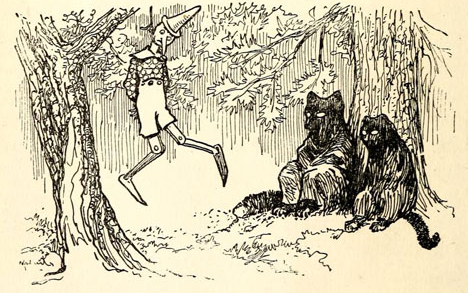
‘Let us hang him!’ repeated the other. Without loss of time they tied his arms behind him, passed a running noose round his throat, and then hung him to the branch of a tree called the Big Oak. They then sat down on the grass and waited for his last struggle. But at the end of three hours the puppet’s eyes were still open, his mouth closed, and he was kicking more than ever.
Losing patience they turned to Pinocchio and said in a bantering tone: ‘Good-bye till to-morrow. Let us hope that when we return you will be polite enough to allow yourself to be found quite dead, and with your mouth wide open.’ And they walked off.
In the meantime a tempestuous northerly wind began to blow and roar angrily, and it beat the poor puppet as he hung from side to side, making him swing violently like the clapper of a bell ringing for a wedding. And the swinging gave him atrocious spasms, and the running noose, becoming still tighter round his throat, took away his breath.
Little by little his eyes began to grow dim, but although he felt that death was near he still continued to hope that some charitable person would come to his assistance before it was too late. But when, after waiting and waiting, he found that no one came, absolutely no one, then he remembered his poor father, and thinking he was dying . . ., he stammered out: ‘Oh, papa! papa! if only you were here!’
His breath failed him and he could say no more. He shut his eyes, opened his mouth, stretched his legs, gave a long shudder, and hung stiff and insensible.
Jeepers! The influence of the Christian gospels is clear, as is the warning about boys who disobey their fathers. If the tale had ended there, as originally intended, I question if it would have become a classic.
The second part of the book has the Fairy with the Blue Hair and the nose that grows with lies
There is a clear change in the storytelling after that point. It reads much more like a fairy tale, with the dead blue-haired little girl, who occupied a small house in the woods, eventually becoming an adult fairy who lives in a mansion. She intercedes to save Pinocchio and, after many more travails and his final redemption, changes him into “a smart, lively, beautiful child with brown hair and blue eyes who was as happy and joyful as a spring lamb.”
The moralizing tone is far more noticeable in the second part of the book, which introduces Pinocchio’s most famous characteristic, a nose that grows when he lies. But he also tells at least six notable lies that have no effect on his proboscis, so it is not a consistent consequence.
Another Biblical parallel in the latter section of the book is when Pinocchio finds Geppetto inside a large sea creature. I was interested to find that Collodi did not make it a whale. He knew that most whales had large mouths but their throats were too small to swallow a person. He made the creature a shark, a pescecane, in a likely reference to loan sharks, which were described in Italy as pescecani. Collodi’s own father had fallen into the clutches of a usurer, and Collodi went into debt to assist him. So, as Hooper and Kraczyna put it, “…father and son both experienced what it was like to end up in the ‘belly of the shark.'”
Roberto Innocenti correctly portrayed Pinocchio being swallowed by a shark, not a whale or fish
While the Talking-cricket, Pinocchio, and the blue-haired girl are each reincarnated in different ways, some miscreants end badly. The cat ends up going blind for real, and the fox goes from pretending to be lame to suffering from ringworm and paralysis, forced to sell his tail to be made into a salesman’s fly whisk. Pinocchio answers his murderers’ pleas with a series of proverbs:
Stolen money never bears fruit.
The devil’s flour all turns to bran.
Those who steal their neighbor’s cape usually die without a shirt.
And then there is Lampwick, Pinocchio’s friend who lured him to abandon school to spend months of leisure at Playland. They caroused and played games until catching donkey fever, but the novel does not depict them smoking, drinking, and fighting like the Disney film has its bad boys doing on Pleasure Island. For once, Disney’s version is nastier than the novel, but the film does not depict Lampwick’s ultimate fate after his transformation into a jackass.
In Chapter XXXIII of the novel, the narrator says he does not know the fate of Lampwick. But in the final Chapter XXXVI Pinocchio finds Lampwick:
As soon as Pinocchio entered the stable, he saw a pretty little donkey lying on the straw, all skin and bones from hunger and overwork. After he had had a careful look at him, he became deeply troubled and said to himself: “But I know that little donkey! His face isn’t new to me!” And kneeling down close to him, he asked in donkey dialect: “Who are you?” In response, the little donkey opened his dying eyes and, stammering in the same dialect, answered: “I’m Lamp . . . wick . . .” Then he closed his eyes again and breathed his last.
So the novel retains some bite even with its metamorphosis into a literal fairy tale. The contrast between how Pinocchio treats the Talking-cricket early on and Lampwick at the end certainly illustrates his character growth.
The novel continued to surprise, even to its last lines. When Pinocchio finally turns into a boy, he kisses Geppetto and asks, “And where do you think the old wooden Pinocchio has gone?”
“There he is — over there!” replied Geppetto, and he motioned toward a large puppet that was propped up in a chair, his head turned to one side, his arms dangling and his legs crossed and bent at the knees. It seemed miraculous that he could stay upright.
Yikes! So the marionette wasn’t transformed into a boy. Rather the consciousness once trapped in a piece of wood was transferred into a freshly created boy. If I were Pinocchio, I’d be having quite the existential crisis at that sight.
It is that repeated disturbing strangeness, the perplexing weird nature of the novel, that makes me glad that I finally finished it after a gap of over a half-century. Was it worth the wait? Sì.
Magazines date back to the 1600s, with the use of the term itself being expanded to include printed periodicals in 1731 by Gentleman’s Magazine. That title reflected the earlier use of “magazine” for military stores and information…the publication was a “storehouse” of information. But magazines waned in the early 21st century, and by January 2024, even Sports Illustrated was on the ropes.
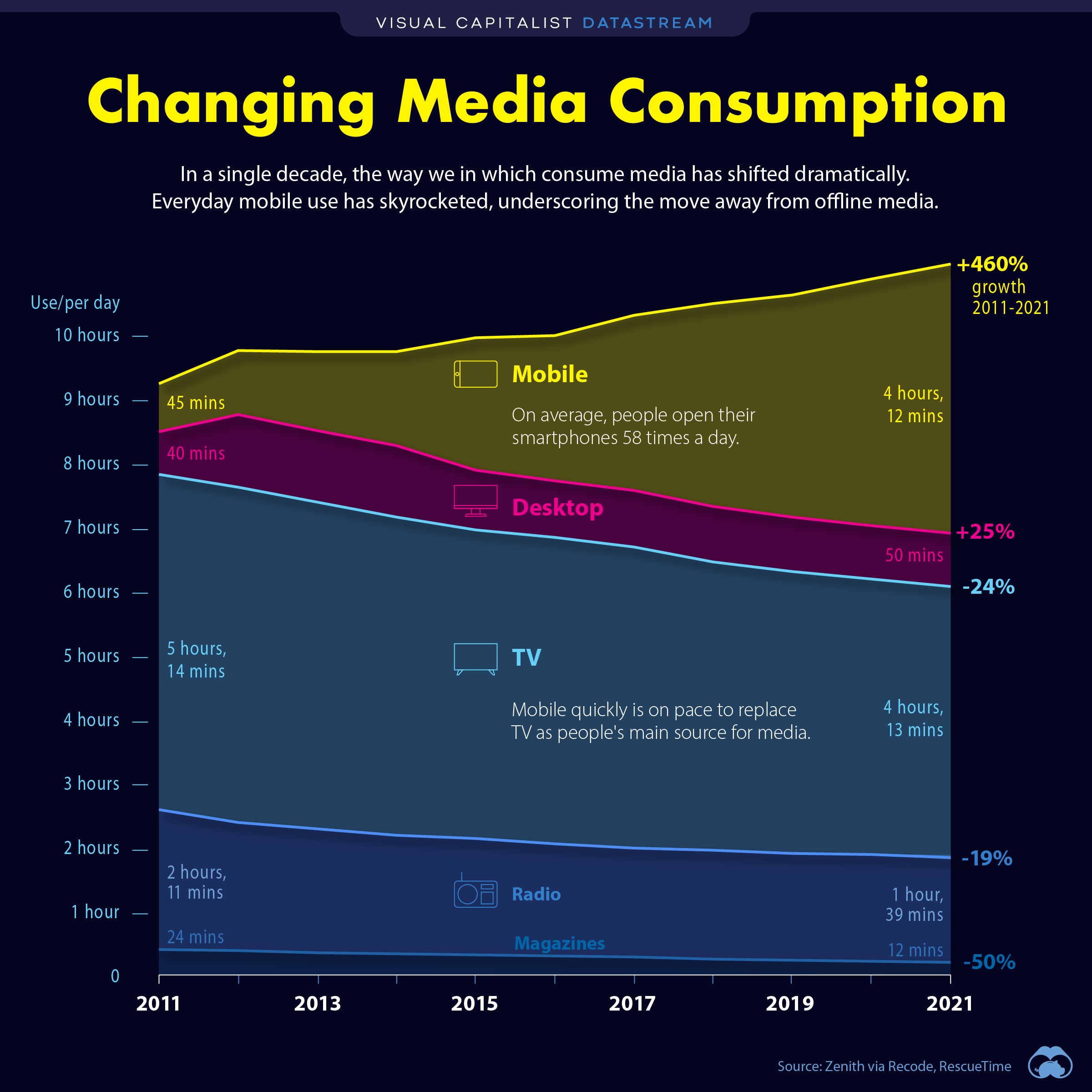
Every segment of the magazine business, including publishing, printing, distributing, and retailing, has been consolidated as the business imploded. After 2012, Newsweek was no longer printed, being available only digitally. From 2011 to 2021, the average American’s engagement with magazines halved from 24 minutes per day to 12. Over that period, broadcast media also declined: radio listening by 19% and television viewing by 24%, while the time spent consuming media on mobile devices increased by 460%.
Magazines are now a tiny slice of the average daily media consumption, at less than 2%
The implosion of the magazine business led me to recall the various magazines I subscribed to for over 50 years. As of 2024, I’m down to a single print subscription and one other quarterly magazine I pick up at a bookstore, although I also still dip into a few others in their online forms via Apple News+.
Growing up with magazines
National Geographic World
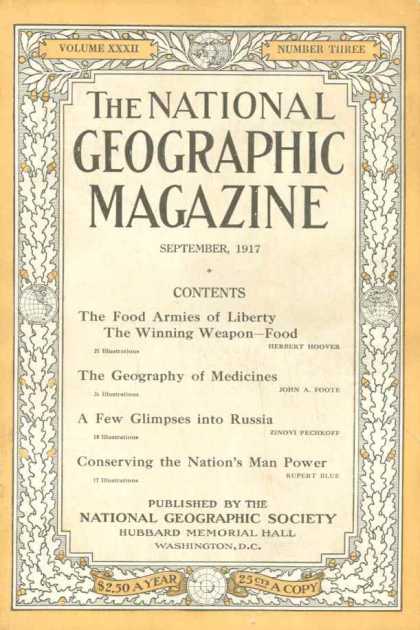
My father was an avid reader and collector of National Geographic, which covered geography, history, nature, science, and world culture. When National Geographic World , which was produced for children, debuted in 1975, my father gave me a subscription.
My father, who worked to fill out his own collection of the adult form of the magazine, started building a second collection of that which he intended to give to me. But I never found the adult magazine that interesting. As a teenager, I convinced him to sell off the spare set of issues and put that money toward completing his own collection.
He eventually had almost every issue from the early 1900s onward, but when he reached his 80s, he started downsizing and opted to sell that off. I bought him a set of compact discs that contained every old issue, but he consulted those sparingly.
National Geographic began in 1888 as a scholarly journal, and began to include photographs in 1905. It peaked in the late 1980s with 12 million subscribers in the USA and more abroad. As of 2022 it had 1.8 million subscribers, had laid off all of its staff writers in favor of relying on freelance writers, and it will end newsstand purchases in 2024.
As for my mother, she read Redbook, Good Housekeeping, and Southern Living, but I found those even more dull than Dad’s National Geographic and Smithsonian.
Reader’s Digest
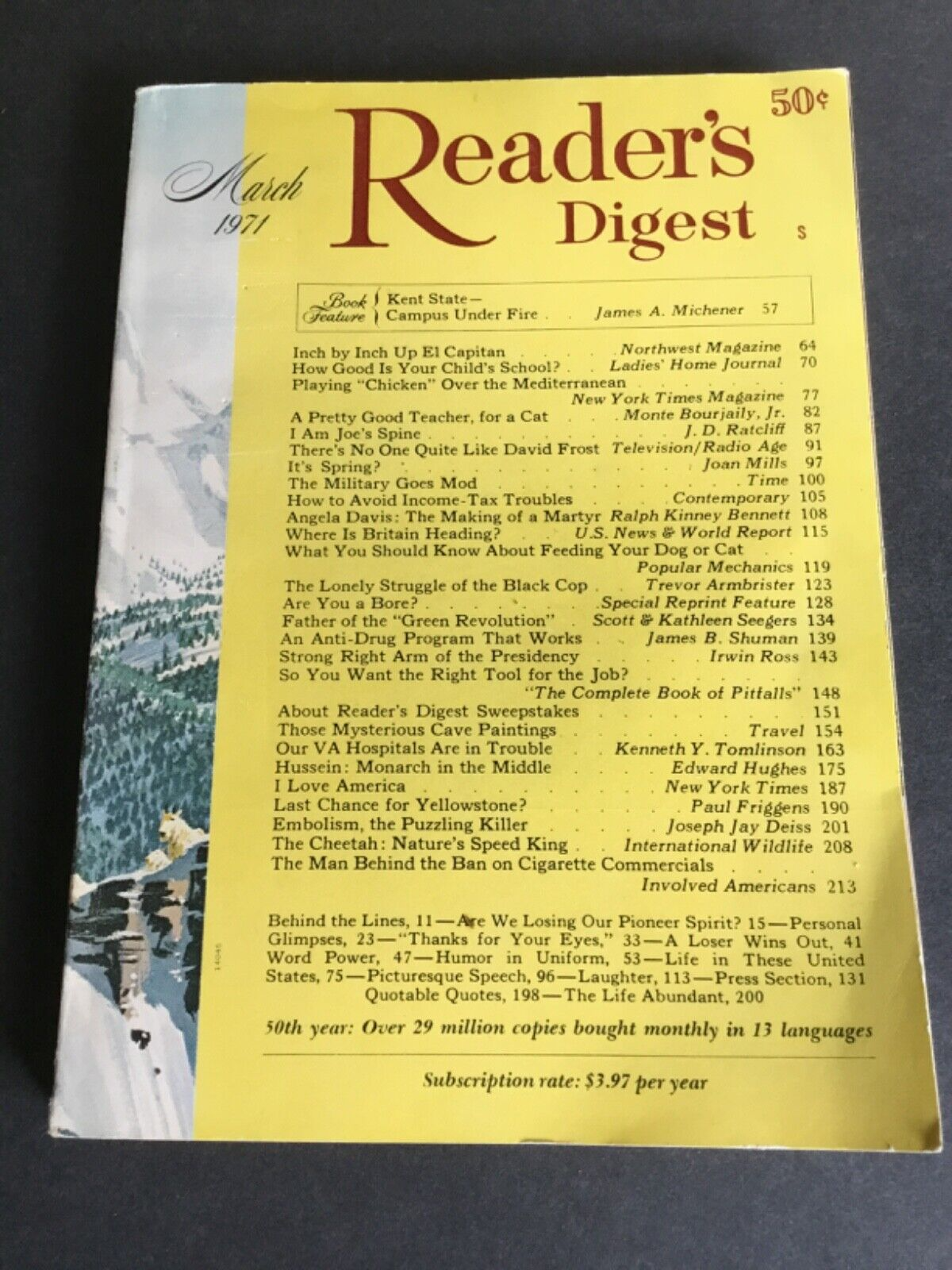
I remember reading the excerpt in this issue of Michener’s book on Kent State
My father also subscribed to Reader’s Digest, which began in 1922 with DeWitt Wallace and his wife Lila Bell Wallace. DeWitt was recovering from shrapnel wounds received in World War I and had the idea of gathering a sampling of favorite articles from various monthly magazines, sometimes condensing and rewriting them, to form a digest. He was unsuccessful in selling the idea to publishers until he met and married feminist reformer Lila Acheson, who encouraged him to publish it himself.
For several decades it had 30 articles per issue to encourage readers to consume one per day, and the tables of contents were on the front cover. It was always grounded in conservative social and political values, and its domestic circulation peaked in 1984 at 17 million.
One of my father’s fellow Cities Service Gas Company employees had purchased a lifetime subscription to the magazine back in the Great Depression, and he had saved all of the issues for decades. When he decided to part with them, they came to me when I was in junior high, filling the bottom of one of my bedroom closets. I enjoyed reading the humor sections and found some of the book excerpts interesting. In particular, I recall reading their condensation of James A. Michener’s Kent State: Campus Under Fire from a decade earlier and how old-fashioned many issues seemed to my young self. I eventually disposed of the collection when I realized it had included some silverfish as an unwanted bonus.
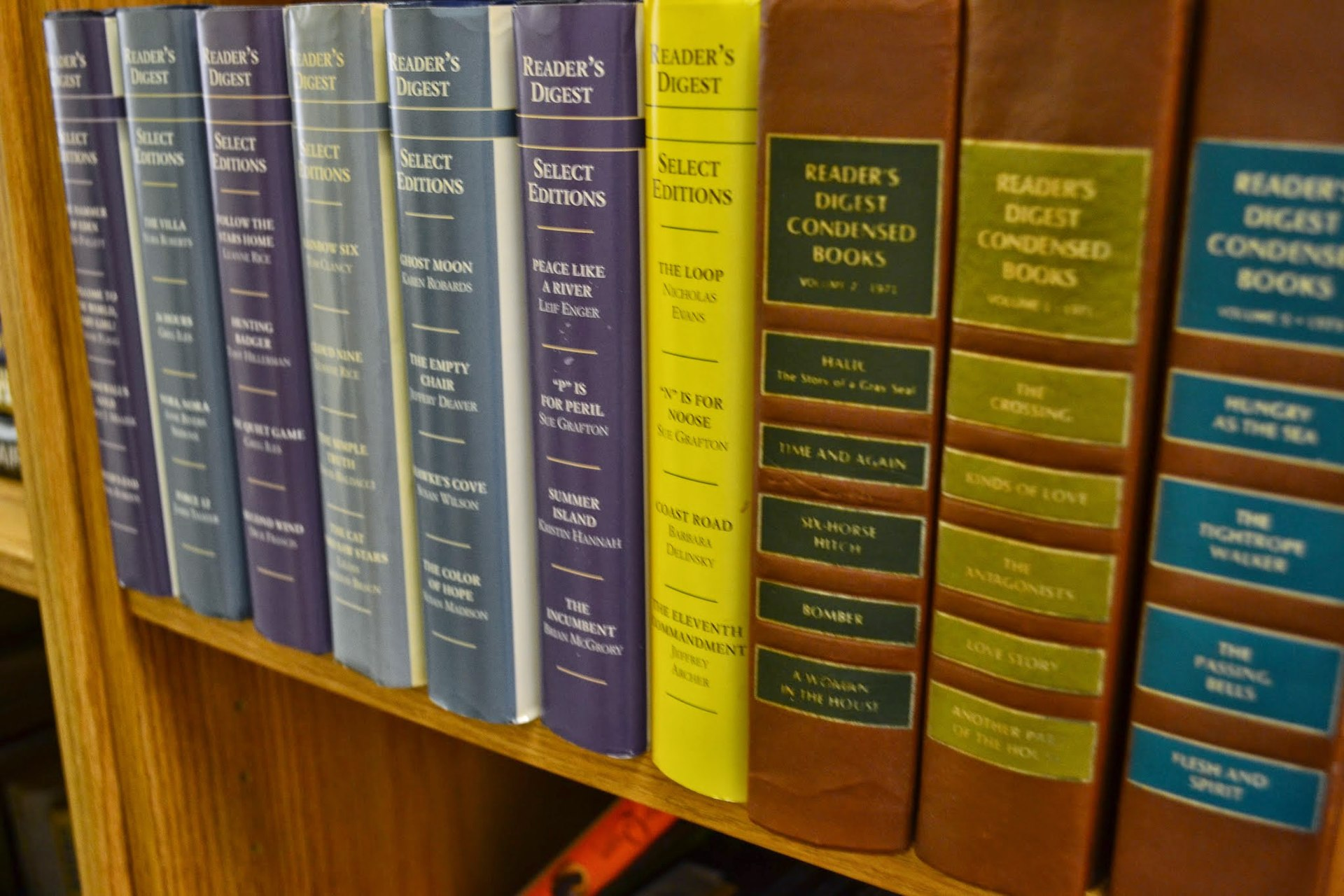
Reader’s Digest also produced condensed books
In 1950, Reader’s Digest also began producing hardcover anthologies of abridged novels and nonfiction. For decades they issued four volumes each year, each containing abridged versions of three to six current best-selling novels and nonfiction books. They were quite popular, boasting 10 million copies sold in 1987, but used copies were little regarded. When we stayed at my paternal grandparents’ home, the headboard of the bed in the guest bedroom had bookshelves filled with old Reader’s Digest condensed books. Even though I was an avid reader, I steered clear of them. Condensing a magazine article was fine with me, as I had no qualms in stopping midway through one if my interest waned, but abridged books seemed sacrilegious. I remember how many paperbacks would reassure you on their copyright pages that “NOT ONE WORD HAS BEEN OMITTED”.
The Condensed Book series ended in 1997, but it was merely replaced with Reader’s Digest Select Editions that continue to be published. As for the magazine, its domestic circulation peaked in 1984 at 17 million. DeWitt and Lila died in 1981 and 1984, respectively, and the company filed for bankruptcy in 2009 and 2013, but still survives over a century after it began with a reported circulation of over 3 million with 49 foreign editions in 21 languages.
My Weekly Reader
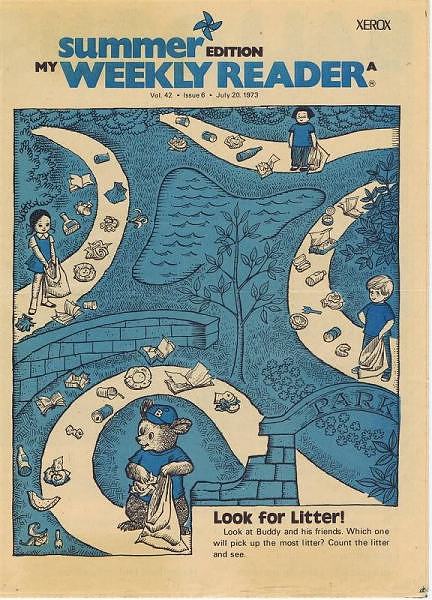
The first periodical I had my own subscription to was My Weekly Reader, an educational magazine that I avidly consumed. Eleanor Johnson founded it in 1928. I read it during its circulation high point in the late 1960s and early 1970s when 13 million issues went out each week, with an edition for each elementary school grade, and Ms. Johnson was still editing each one. She edited it for over 50 years and passed away in 1987. The publication survived, sometimes as just Weekly Reader, until 2012 when it was consumed by the competing Scholastic News.
Highlights
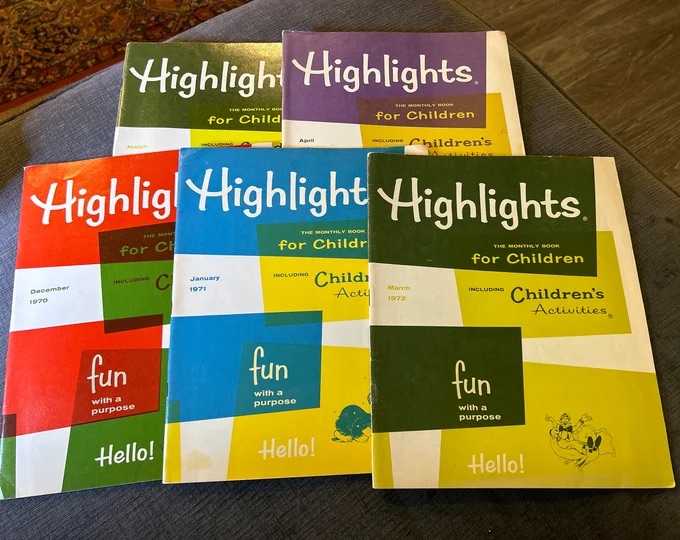
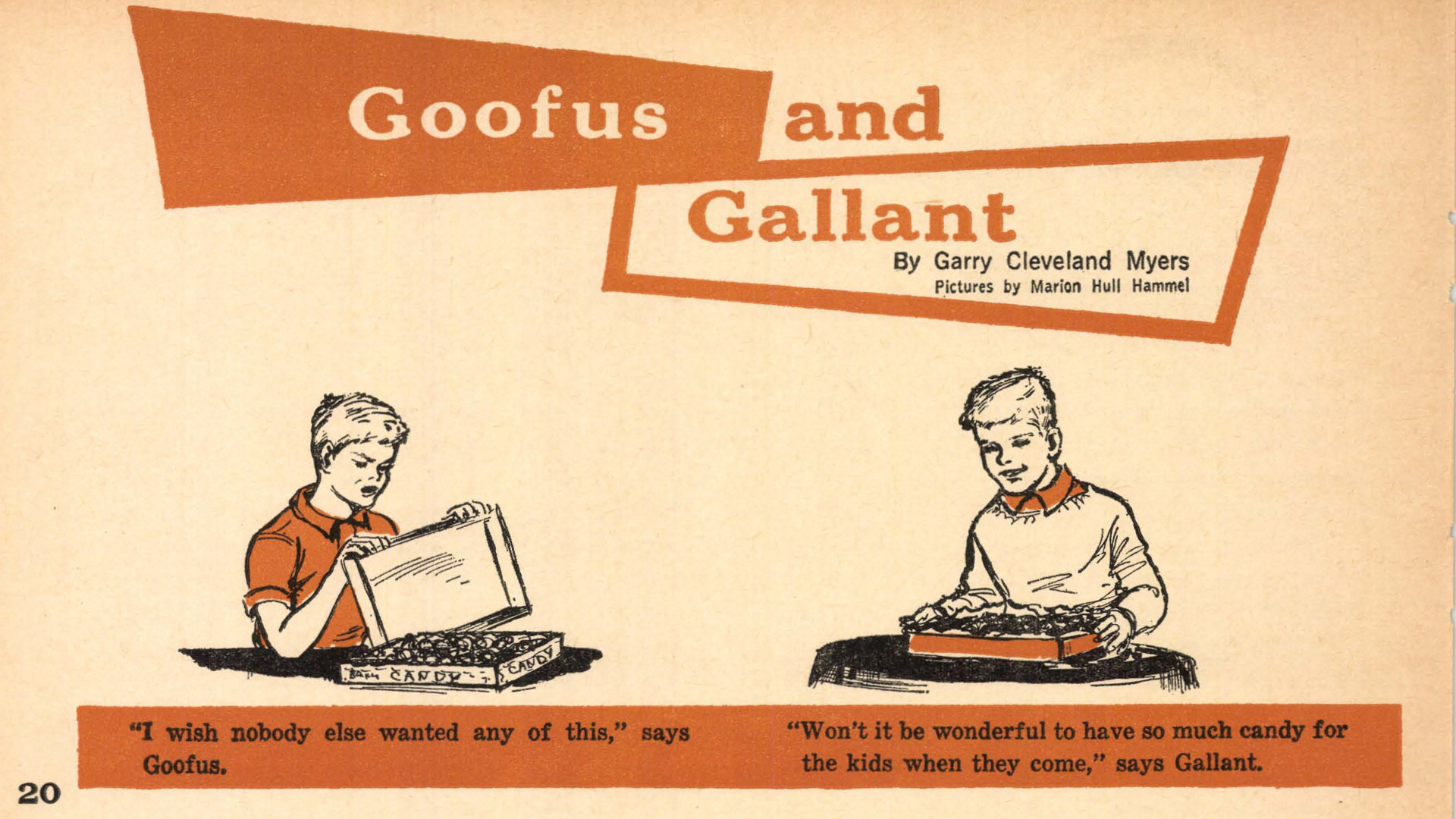
I was also given a subscription to the Highlights children’s magazine for few years. Garry Cleveland Myers and his wife Caroline Clark Myers began producing it in 1946. My favorite regular features in those were Goofus and Gallant and the hidden pictures drawings.
Garry Myers wrote the Goofus and Gallant cartoons about social skills, with Goofus always behaving poorly and Gallant choosing a responsible, mature, and kind alternative. The characters were originally in the magazine Children’s Activities where the Myers worked for a dozen years before starting Highlights.
The Goofus and Gallant comic first appeared in Highlights in 1948. In my time reading it, the drawings were by Marion Hull Hammel.
Goofus & Gallant were originally drawn as elves, but they became human boys by the 1950s. Maurieta Wellman was the artist until 1952, and then Marion Hull Hammel took over and drew it through my era and on through 1984. After that it was drawn by Sidney Quinn, Kit Wray, Anni Matsick, and now Leslie Harrington. They have now appeared in over a billion issues of the magazine.
Did you know that Goofus and Gallant were originally depicted as elves?
The lads are popular enough to have been the subject of parody:
Alfred Hitchcock’s Mystery Magazine
In junior high, I had to sell some magazine subscriptions as a school-related fundraiser. I used my own allowance to purchase a subscription to Alfred Hitchcock’s Mystery Magazine. I was no doubt influenced by Robert Arthur, Jr.’s Alfred Hitchcock and the Three Investigators book series, which I loved as more mature successors to the Hardy Boys mysteries I read in elementary school. They originally featured the famed movie director interacting with the boy investigators at the start and end of each book.
The magazine had been launched in 1956 by HSD Publications. There was no formal connection with Hitchcock’s television shows of 1955-1965, although stories in the magazine were sometimes adapted into television episodes. Davis Publications owned the magazine in the era when I was reading it, with caricatures of Hitchcock appearing on the covers even after his death in April 1980. The magazine was sold to Dell Magazines in 1992 and Dell still publishes it along with Ellery Queen’s Mystery Magazine, which dates back to 1941.
I enjoyed most of the short stories in the mystery magazine, but I had too many other reading interests to finish each issue. So they began piling up, with me feeling guilty about not reading more of them. After a few years, I finally chose to cancel my subscription.
Mad
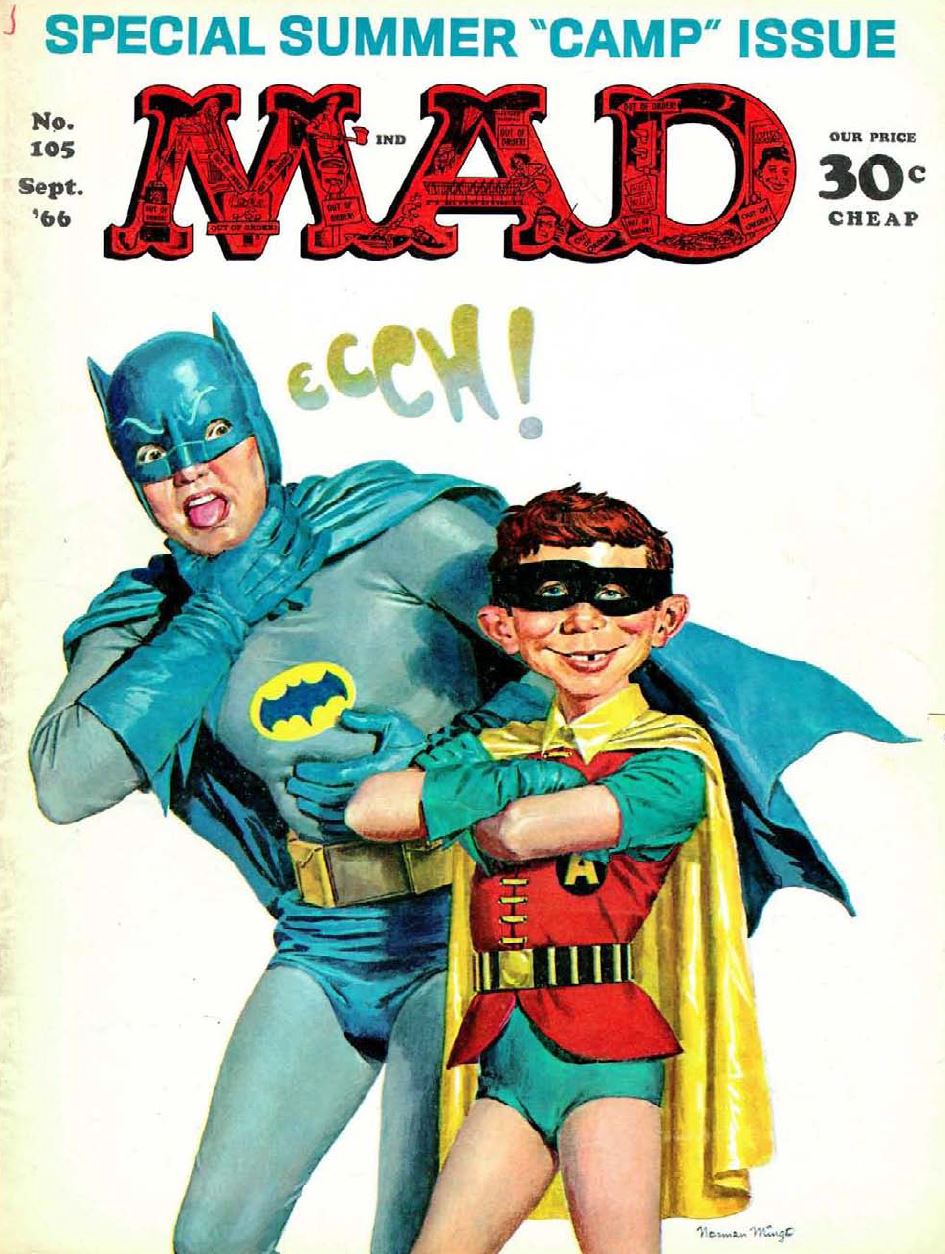
I didn’t read Mad as a kid, although my father did pick up at a garage sale a couple of paperbacks of reprints of old features from Mad that I enjoyed. They seemed a bit old-fashioned, coming from earlier decades, but I liked their retro style, cynicism, and absurdity. Mad was launched in 1952 as a comic book and became a magazine in 1955. It peaked in popularity in 1973-1974 with a readership of over two million.
I remember laughing at this Al Jaffee article in one of the paperbacks my father got for me
Mad‘s “The Usual Gang of Idiots” was quite stable, with some creators contributing to the publication for 30-50 years. In 2007, I bought Absolutely Mad, a DVD with the first 460 issues of the magazine, so I have all of those available in my Google Drive. I did subscribe to Mad for a year or two in the 2010s, having enjoyed seeing contributor Dick DeBartolo, “Mad‘s Maddest Writer”, in technology podcasts. He had new material in every issue from 1966 to 2019, and the original magazine ended in 2018 at issue 550. There is now a rebooted version, consisting mostly of reprints, available as of this writing in comic book stores and by subscription.
Omni
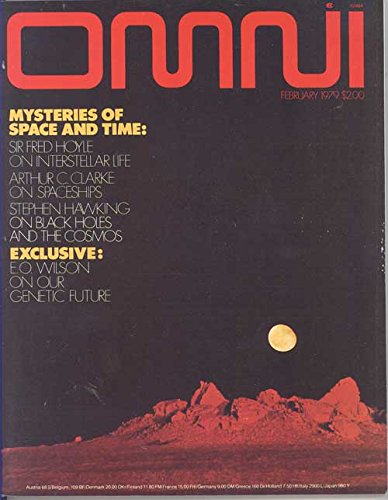
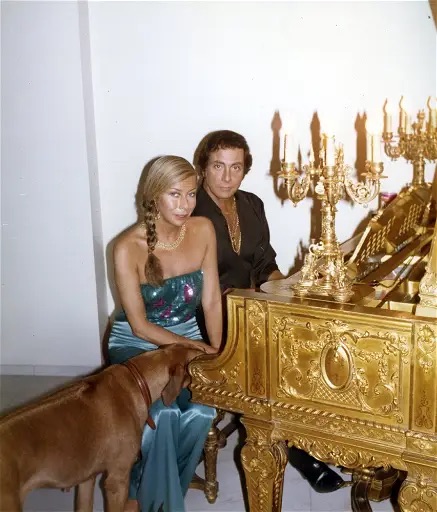
I was a library aide in junior high, so I had ready access to the school’s magazines. I remember spotting Omni, which launched in 1978 and had articles on science, science fiction, and parapsychology. I knew science fiction author Ben Bova was associated with it, but I had no idea that it was funded by Bob Guccione of Penthouse fame. Omni was founded by Kathy Keeton, who had met Guccione in 1965. They were married in 1988 and were quite a pair.
I was initially excited that Omni had articles on science and science fiction. It was a slick production, with high-quality paper and graphics, but I was generally disappointed by its content, which I found to be of limited interest, particularly anything to do with parapsychology. Omni was gone by 1997, although a couple of issues were published in 2017 in a failed revival attempt.
Computer Magazines
It was home computers that truly got me into purchasing and reading magazines on a regular basis.
The Color Computer Magazine
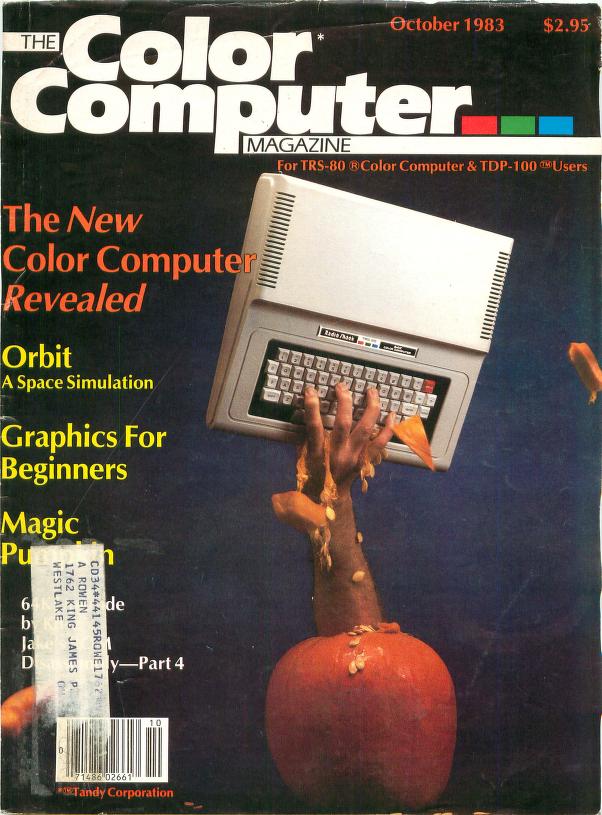
I had the first and second iterations of Radio Shack’s Color Computer, and I subscribed to The Color Computer Magazine from its launch in March 1983 until its demise in October 1984.
Byte
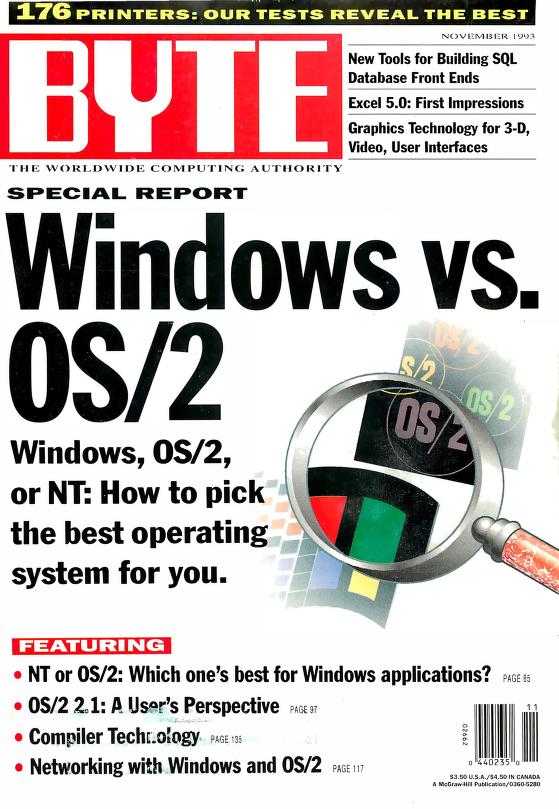
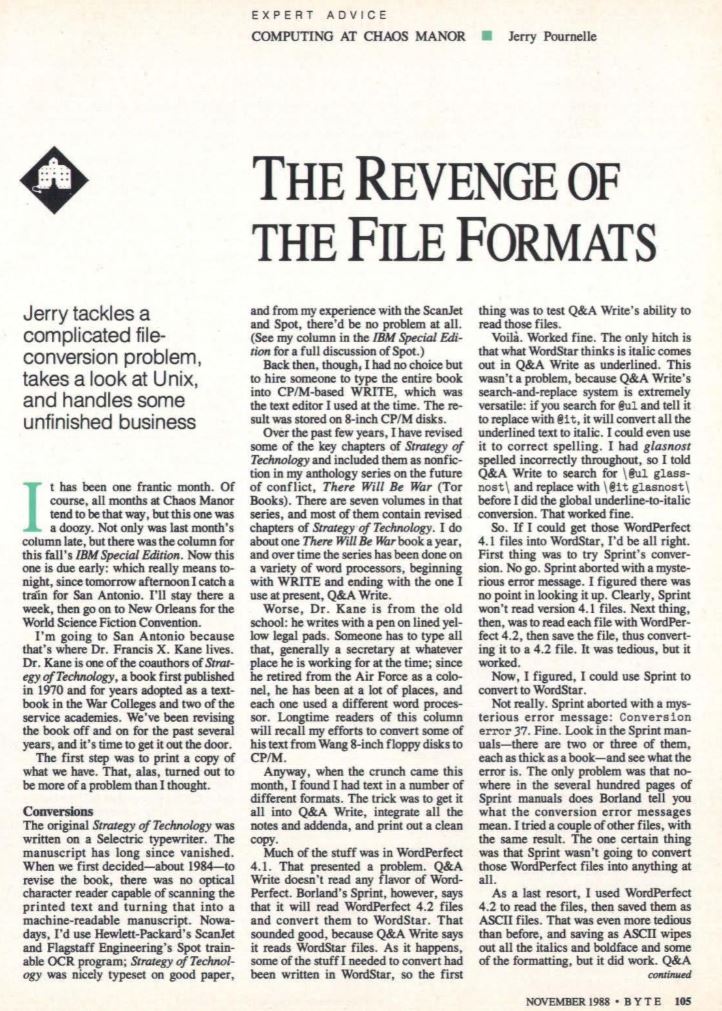
My friend Sam subscribed to Byte magazine, which was founded in 1975 and lasted in print form until 1998. That is how I discovered Jerry Pournelle’s Computing at Chaos Manor column. Jerry described his experiences with computer hardware and software in a funny, frank, and sometimes irascible style. I enjoyed it enough to subscribe to Byte myself until it folded.
PC Magazine & PC Computing
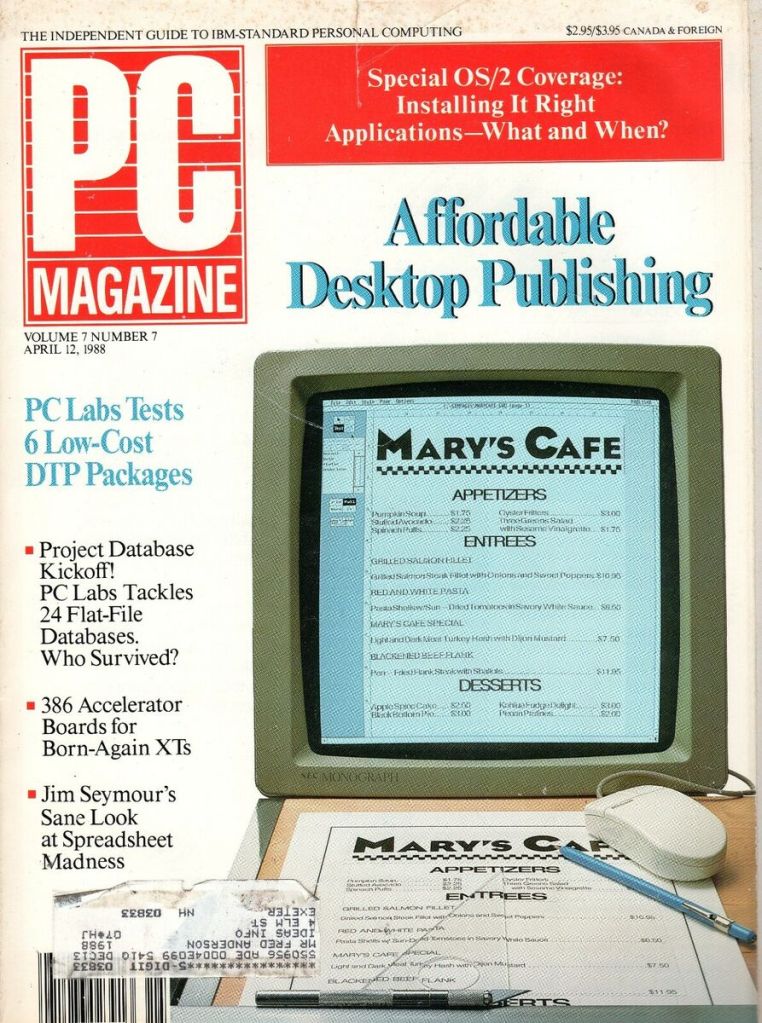
Another magazine I subscribed to for many years was PC Magazine. It had wonderfully detailed and thorough reviews of computers and their peripherals, along with fun columns and articles by Jim Seymour.
I liked Seymour’s writing so much that I also subscribed to PC Computing in 1988 since he was the founding editor. Jim was a folksy and irreverent evangelist for empowering individuals through personal computers. He famously submitted a column to PC Magazine with profane language about a computer program he disliked. A copy editor asked the magazine’s editor-in-chief, “Can we say that in PC Magazine?” The reply was, “We can’t, but Jim can.”
I loved Jim Seymour’s work
PC Magazine grew to a considerable size at its peak, reaching 800 pages in December 1983. In 1984 it switched to two-issues-per-month, which lasted until 2008. Its circulation peaked at 1.2 million in the late 1990s. Circulation had dropped to about 600,000 by 2009 when the print version was discontinued. The magazine format was still available online until December 2022, but it now only survives as the pcmag.com website.
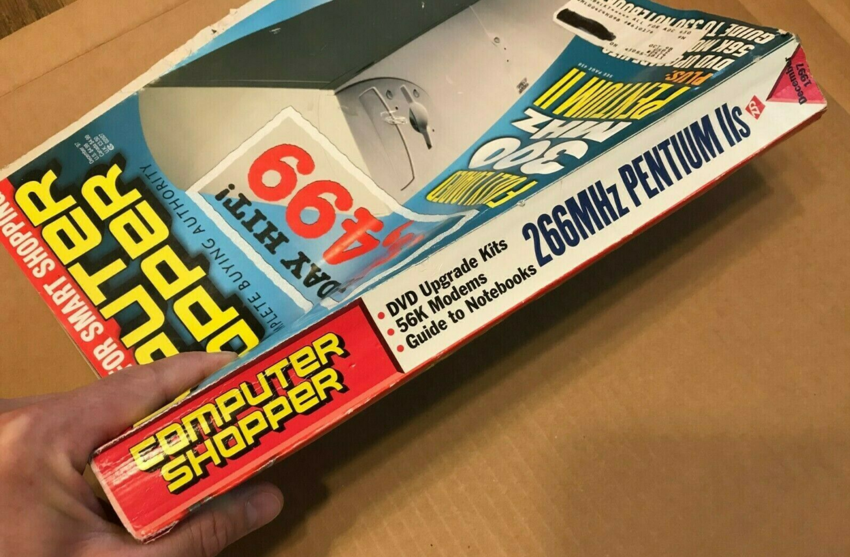
Computer Shopper was a thick tabloid magazine printed on cheap pulp
A magazine that I never subscribed to but picked up on a few occasions was the massive Computer Shopper. It was produced from 1979 to 2009 and was a tabloid, meaning it was larger than a typical magazine, and often had over 800 pages of pulp newsprint. It looked like a giant ad catalog, although it did have articles and editors.
Some used to joke that it was thick enough to stop bullets, but some of the Shopper’s editors and writers put that to the test at a Las Vegas gun range at one of the old Comdex trade shows. There was, as senior editor Dan Rosenbaum recalled, “general surprise when we discovered that even the thickest Shopper couldn’t stop even a .22 — but a .45 made a spectacular pile of newsprint confetti.”
Wired
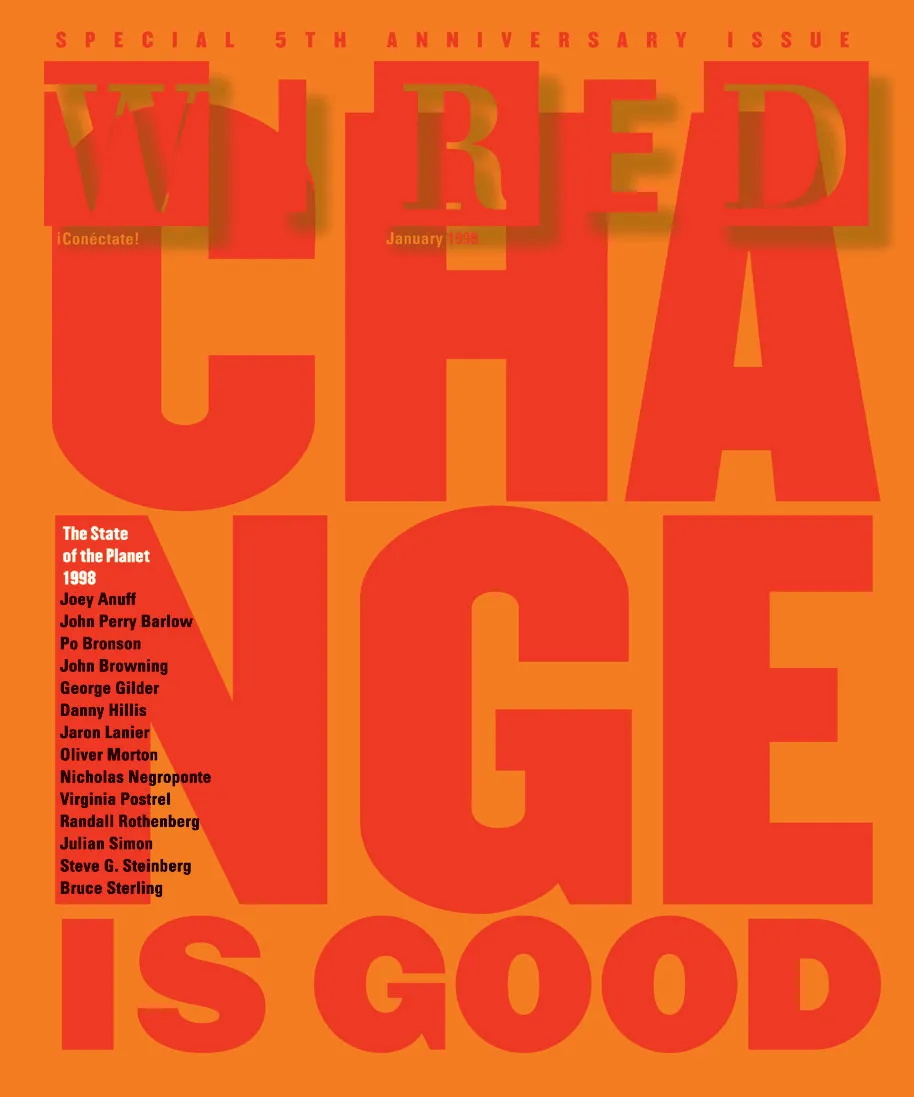
A magazine that both intrigued and frustrated me was Wired. It often had interesting articles, but its garish day-glo design and tiny font sizes often made it needlessly difficult to read. It debuted in 1993 and won a design award in 2005, a sure sign that readability was not a priority.
I subscribed to Wired in print from 2005-2012, then digitally in 2018, and again in 2023 after hitting the paywall too many times. I still like the articles, but I’m grateful that their web versions are toned down, since some modern magazine layouts are truly obnoxious.
The layouts one sees these days appear to be attempts to trigger attention deficit hyperactivity disorder
News Magazines
I subscribed to Time for 30 years
As an undergraduate in the late 1980s, I subscribed to to Time, which began in 1923 as the first weekly news magazine in the USA. It had a circulation of over 20 million at its peak, but had fallen to 4 million by 2006. Single-copy sales plummeted from over 116,000 in 2008 to about 58,000 in 2012. In 2020 it was reduced to one issue every two weeks, and as of 2023, it reportedly had 1.3 million print subscribers and 250,000 digital subscribers.
In his long retirement, my father subscribed to Newsweek, the weekly newsmagazine that ceased print publication in 2012. I would see it on his coffee table during holiday visits and peruse it, finding it thinner and fluffier than Time.
I continued to enjoy reading Time until the mid-2010s, when I noticed that fewer of its articles had information that was novel for me. I started skipping reading it; years of staff cuts had taken their toll on Time‘s coverage, and I had more timely access to text news on my iPad. The magazine grew steadily thinner, so when Meredith bought Time Inc. in 2018, announcing major staff cuts and its plan to sell off the magazine, I finally cancelled my subscription.
For several years in the 2010s, I subscribed to the print edition of The New Yorker, since I enjoyed its long-form articles. But eventually the number of articles that interested me declined, so I switched to a digital-only subscription, and I finally cancelled it once I subscribed to Apple News+ and could use it to access The New Yorker and a slew of other magazines on my iPad. During the COVID-19 pandemic, I found The Atlantic to be a great source of information, although, like NPR, The New Yorker, and other sources I enjoy, it skews left politically. When I desire facts over analysis, I prefer Reuters and AP.
Speaking of news bias, a valuable chart that plots news sources on axes of news value and reliability and political bias is the Interactive Media Bias Chart.
Professional Periodicals
I had dial-up modem access to a CompuServe account beginning in high school in the early 1980s. As an undergraduate at the University of Oklahoma in the 1980s, I repeatedly enrolled in an Engineering Computing course, even after I enrolled in the College of Education, so that I could also enjoy dial-up modem access to Usenet newsgroups.
I then moved to Bartlesville and taught physics at the high school from 1989 to 2017. The World Wide Web wasn’t public when I began my teaching career, so printed periodicals were vital links to the wider world of my profession.
I was also a longtime member of the National Science Teachers Association, so I received NSTA Reports. Throughout my teaching career, I was a member of the local chapter of the Oklahoma Education Association. Thus I received its local newsletter along with the state-level OEA Focus periodical and NEA Today. In the 1990s, when I was doing graduate work in curriculum and instruction, I was also a member of the Association for Supervision and Curriculum Development and received its Educational Leadership periodical.
I left all that behind when I transitioned to district administration in 2017, and while I receive complimentary copies of the aptly named District Administration, I usually toss those in the trash since I have found little in them to assist my roles in communications and technology.
Entertainment
A magazine that I have purchased for many years at Barnes & Noble bookstores is Filmfax, which bills itself as “The Magazine of Unusual Film & Television”. It covers old Universal Studios monster movies, 1950s film noir, interviews with actors and directors, and other nostalgic coverage of the entertainment of yesteryear. It was published every other month for some time and later published quarterly. It always includes several pages of ads about its own back issues; that and the lack of an online presence told me that it was a small operation.
The internet informs me that Michael Stein created it in 1986 and was publishing it while a professor at the Medill School of Journalism, later devoting all of his time to publishing Filmfax and another magazine titled Outré. A 2004 article reported that Michael Stein was 59 with a staff of two working out of a small loft in Skokie, Illinois, and most of the magazine’s stories were by freelance journalists.
The only print magazine I now have a subscription for is bmonthly, a local magazine managed by Keith and Christy McPhail. One can pick up free copies of it at various local businesses, but I would sometimes miss an issue, so I subscribed. I appreciate the local history articles in it by Debbie Neece, Mike Wilt, Sarah Leslie Gagan, Kay Little, et al. along with other features. I could simply read the online version, but with its emphasis on photography, I enjoy thumbing through its printed glossy pages.
A local magazine I enjoy
The Future
While I prefer audiobooks and e-books over traditional paper books, paper is still more than twice as popular as those other formats.
That supports the idea that while print magazines have faded, there is a long tail for them, especially ones emphasizing photography and esoteric topics, that might stretch out through the rest of my lifetime. Algorithms dominate digital media distribution, and artificial intelligence is impacting content creation, but magazines are especially well suited to human curation focused on smaller communities and niche interests. Only time will tell.
Libraries have been at the forefront of recent culture wars. Much of the political posturing and consequent legislation appear to be performative, since many titles are readily available online through Books Unbanned and other initiatives. Personally, I’m all for parents regulating what their own children experience, but I am skeptical about those who wish to impose their will upon other parents and students. I am necessarily a censor myself: in my technology role in a public school district, I must help enforce the Children’s Internet Protection Act.
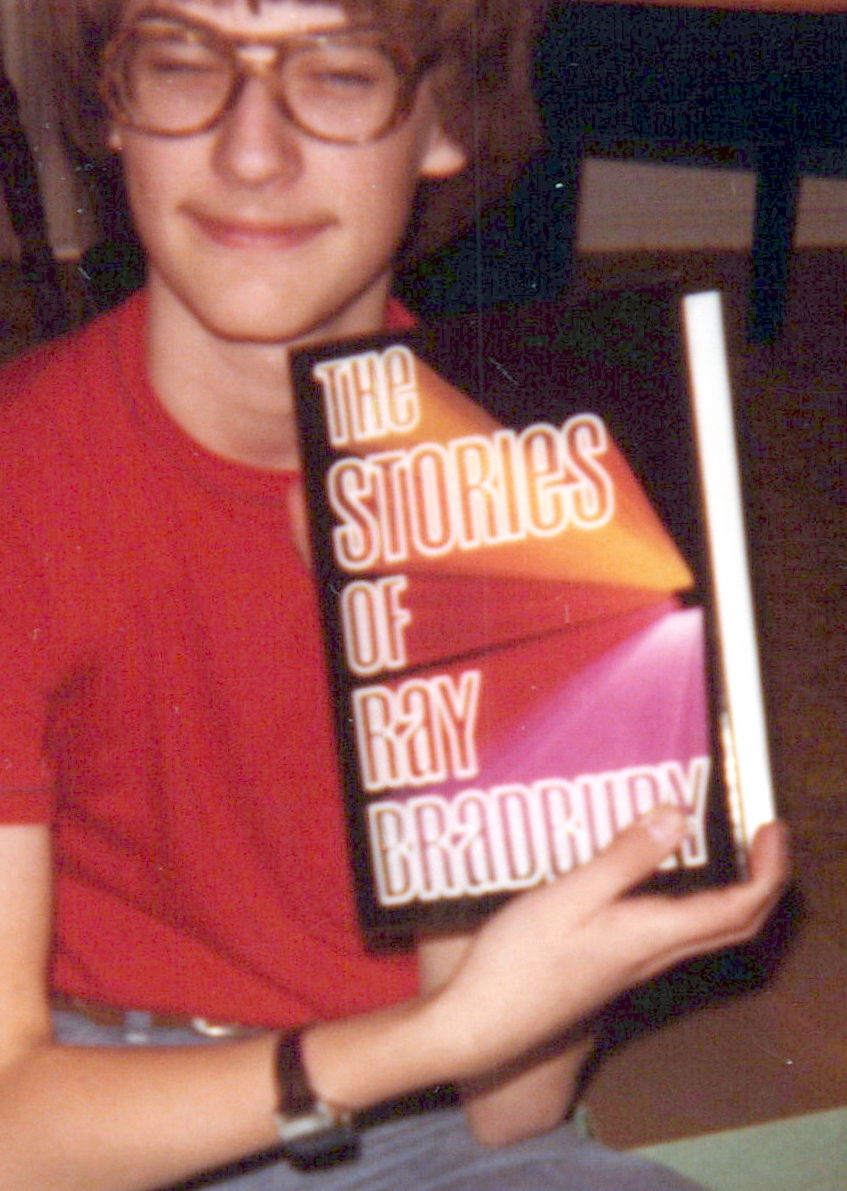
One of my 1980 Christmas presents
Censorship and book banning are nothing new, of course, and there have long been accompanying concerns when they stray beyond protecting children. Ray Bradbury published Fahrenheit 451 in 1953 as a cautionary tale about conformity, technology, and government censorship. When I was assigned to read it in junior high, I didn’t find it as compelling as his fantastic short stories, which were so good that I asked for a collection of them for Christmas. I do recall liking how in the book the leader of a group of wandering intellectual exiles, who memorized books to preserve them, was named Granger. I remember pondering which book I would choose to memorize in such a situation.
My adopted home of Bartlesville has its own history of library censorship gone awry. In 1950, librarian Ruth Brown was fired on trumped-up charges of supplying “subversive” materials. She was actually fired because of her support for racial desegregation and civil rights. Many decades later, the Bartlesville Women’s Network commissioned a bronze bust of Brown for the library lobby, along with an exterior wall mural.
My own youthful encounters with censorship and ratings involved comics, music, and movies, rather than books. All of them involved efforts by the respective industries to self-regulate and thus avoid legislative censorship and suppression.
Comics
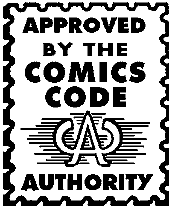
The comics I purchased in the 1970s all featured an odd seal on their cover, saying they were approved by the Comics Code Authority. That was a self-regulation scheme among publishers in the United States. It was instituted in 1954 after an episode of moral panic centered around Senate hearings and the publication of Seduction of the Innocent by the psychiatrist Fredric Wertham.
The comics code was revised in 1971, and I’ve previously shared how the grittier Bronze Age Batman stories did not appeal to me when I was a child. The Code’s power weakened in the 1980s and 1990s, with the influential Watchmen series released by DC in 1986 without a CCA Seal of Approval, and the Code was finally abandoned in the early 21st century.
More sophisticated ways for media companies to self-regulate involved ratings and warnings rather than content codes. Ratings could allow for greater artistic expression while providing guidance to parents looking to censor what their children experienced.
Music
Music ratings didn’t become a thing until after I graduated from high school. Tipper Gore founded the Parents Music Resource Center, pushing for a ratings system and for lyrics to be printed on the backs of albums. Senate hearings followed, and the Recording Industry Association of America (RIAA) responded by introducing a standard Parental Advisory label for recordings with “explicit content”. Walmart famously refused to stock any music carrying that label.
As for what constitutes “explicit content”, there are no standards, just general guidelines. The RIAA suggests the advisory be used for material with “strong language or depictions of violence, sex, or substance abuse to such an extent to merit parental notification” while its British equivalent also suggests that “racist, homophobic, misogynistic or other discriminatory language or behavior” merits a warning.
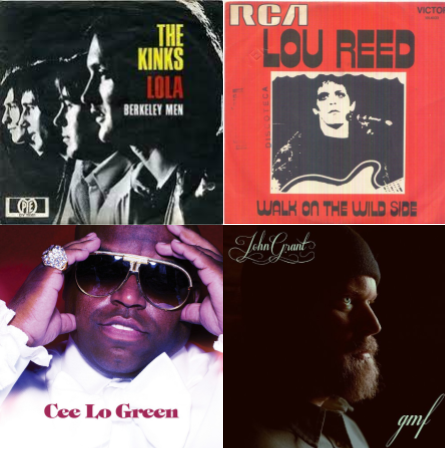
I generally prefer to avoid explicit lyrics, but I do like some songs that would push some people’s buttons, such as Lola by The Kinks from 1970 and Lou Reed’s Walk on the Wild Side from 1972, which both reference transgender people. The latter is famously also quite direct about prostitution and oral sex among characters at Andy Warhol’s New York studio.
I generally shy away from songs with curse words in their lyrics, but I must admit that Cee Lo Green’s cleaned-up Forget You from 2010 lacks the punch of the original song, and I understand why John Grant invoked the curse in his Gmf.
Movies
As for motion pictures, their first attempt at self-regulation was the Motion Picture Production Code applied to most films from 1934 to 1968. It arose after various Hollywood scandals led to almost a hundred film censorship bills across 37 states in 1921. Around the time of my birth, Jack Valenti successfully pushed for the old code to be replaced by a ratings system.
The original movie ratings system
The original movie ratings were G, M, R, and X. M was later renamed GP and then PG, which finally stuck, and the added PG-13 rating didn’t come along until 1984 when I went to college. X eventually became NC-17. My parents took me to G-rated movies when I was young, and I was perturbed when I saw my first PG films, being unused to rude and profane movie characters.
I associated R ratings with violence, profanity, and sex/nudity. The first R-rated movie I recall seeing was when some high school friends rented the 1981 slasher film My Bloody Valentine. I’d already seen Hitchcock’s Psycho on late night television, so I thought I was prepared, but my girlfriend and I found the slasher film sickening, even with nine minutes of its violence and gore cut to avoid an X rating.
When I turned 17, one of the first R-rated motion pictures I saw in a cinema was Silkwood, which lured me in not for its rating but because it was a factual story about a whistle-blower in Oklahoma. The next year I saw another R-rated film in a cinema, Amadeus, which was far less factual but is still one of my favorite films. After that, I saw far more movies on videotape than at a cinema, and what a movie was rated was less prominent for me.
There aren’t very many shots of Mathilda May in Lifeforce that I can share in my blog
A memorable cinematic experience in my introduction to R-rated films was seeing Lifeforcein 1985. The nudity in that science fiction/horror film was titillating, but I was put off by how some of the film’s plot stole heavily from a better and older film, which had no sex or nudity: Quatermass and the Pit. The most unusual thing about that showing of Lifeforce was how that was the only time I saw a sneak preview. When my best friend and I purchased our tickets, we were asked if we would agree to see another film first for free and fill out comment cards about it. As college guys not dealing with a curfew, we agreed. But I remember almost nothing about the preview we watched, except that I rated it very poorly. Lifeforce was too distracting, and if asked I would have given it a poor rating as well.
As for even-more-mature X or NC-17 movies, I don’t recall ever seeing one in a cinema. A friend and I rented 1971’s A Clockwork Orange in college, and I have shown Wendy 1969’s Midnight Cowboy and Bad Education from 2004. Years ago, I also watched 1995’s Showgirls for laughs. While none of those movies are appropriate for children, the first three are among the best films I have seen…and yeah, Showgirls is one of the worst. Ratings aren’t perfect, but I certainly prefer their use to production codes or bans that would block the creation and distribution of mature works for adults.
Back to Books
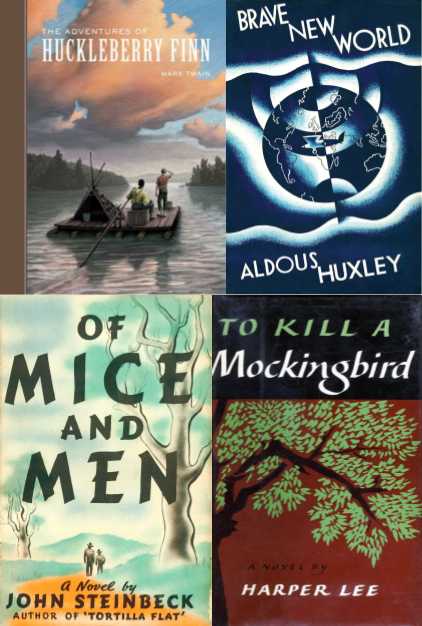
Banned books that were assigned to me in public school
Book censorship is far more fraught for me than slapping an explicit label on a song or a rating on a movie. It is interesting how many books that have been banned from various libraries over time were assigned reading when I was a public school student, including Huckleberry Finn, Brave New World, Of Mice and Men, and To Kill a Mockingbird.
The Comstock laws passed in the years after the Civil War criminalized the use of the postal service to send obscenity, contraceptives, abortifacients, sex toys, and personal letters with any sexual content or information. Those laws were inspired by the widespread availability of pornography during the Civil War. An updated form of them is still on the books, although the legal definition of obscenity has changed over the years.
The courts originally held that all material tending “to deprave and corrupt those whose minds are open to such immoral influences” was obscene, regardless of its artistic or literary merit. That began to change in the USA in 1933, when James Joyce’s Ulysses was found to not be obscene. The courts decided that offensive language in a literary work was not obscene if it did not promote lust.
In 1957 a new test for obscenity was formulated: whether the average person, applying contemporary community standards, would find that the material appeals to a prurient interest in sex, and whether the material was utterly without redeeming social value. In 1973 that second condition was modified so that materials with “serious literary, artistic, political, or scientific value” were not to be considered obscene.
He knew it when he saw it
What any of that means is pretty darn vague, and effectively allowed many localities to crack down on adult theaters and bookstores, as well as nude dancing. It also explains why Bartlesville and many other venues have recently had disputations over whether or not particular performances in public forums were obscene. In 1964, Supreme Court Justice Potter Stewart was asked to describe his own test for obscenity. He replied, “I know it when I see it.”
That famous non-definition shows the difficulties inherent in censorship. People differ on what they find shameful or morbid. Some seek out steamy sex scenes in pulp romances or slash fiction, while others regard such material as obscene. Pornography of all sorts is readily available online, even as religious fundamentalists condemn it. And we are all too familiar with the rampant hypocrisy of many who vociferously promote what they claim to be “family values”.
My own preference is that adults self-regulate. If something offends you, then avoid it while heeding the advice first written down in 1622 in The Ancient Law Merchant: Leuen ende laeten leuen…live and let live.
Comic books have had a significant influence on my life, even though I only owned a few dozen in my childhood and have only read a few as an adult. They have influenced what I saw on television and in cinemas throughout my lifetime, and the rise of the Marvel Cinematic Universe in the 2010s surprised me by its dominance of the box office for many years, although its stars are now dimming.
Exploring Comics
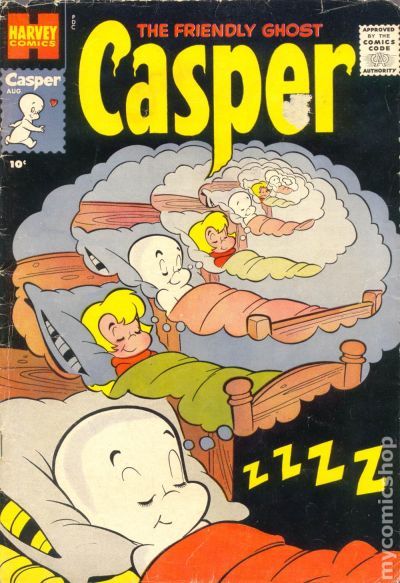
I shared a few months ago the stark contrast of the campy Batman television show of the 1960s with the dark tales of his 1970s comic books. That left me a bit leery of comics. I had never taken to the first comics I encountered, ones that my dentist stockpiled: Casper the Friendly Ghost and Archie. Casper was too childish, and Archie was focused on teen antics that I couldn’t identify with. I loved the Josie and the Pussycats television show from 1970-1972, but I don’t think I even knew it was based on a comic book.
My parents would take me on extended vacations to their vacation cabin on Table Rock Lake in the Ozarks. When I was young, there was just a black-and-white television there that my father had won at a hunting dog event, and even with a giant outdoor aerial, it could only pick up a couple of stations. So when it rained, shutting us in from the great outdoors, I needed additional entertainment.
I was a quick reader, so I exhausted the books we brought. On a rainy grocery shopping trip to the Ramey’s in Cassville, I spotted some three-packs of comic books on a rack and asked for one. That introduced me to more DC comics, featuring satellite-era Justice League of America,Superman, Green Lantern, and the like. I enjoyed the main stories along with the side adventures of minor characters like Atom and Plastic Man.
My favorite Superman comic was from September 1972. Oddly, the cover of Volume 1 #256 wasn’t about the better story in it, which was The Dagger that Ripped the Sky! I was fascinated by its depiction of a jet that had a human personality and created a puzzle for Superman to solve.
From my favorite Superman story
It was a strong story from Cary Bates, and greatly augmented by the artistry of Curt Swan and Murphy Anderson.
I was so impressed that from then on whenever we would go on a vacation in Missouri I would get my mother to buy me a Comicpac at the Ramey’s. But I didn’t get comic books back home in Oklahoma City; they were strictly a vacation luxury. I did get something of a fix via the animated Saturday morning show Super Friends, which began in 1973.
A fun music video based on remix of the theme from Super Friends
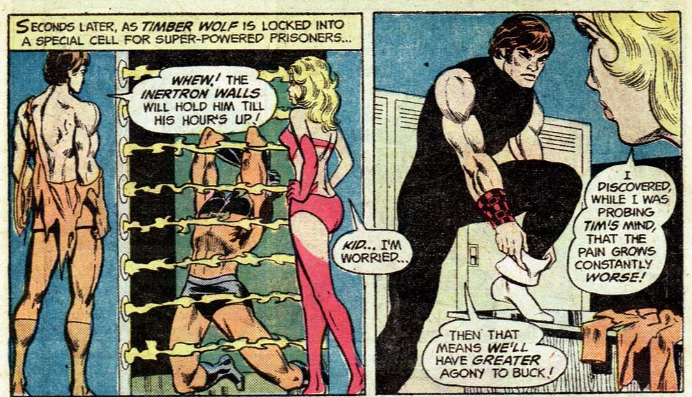
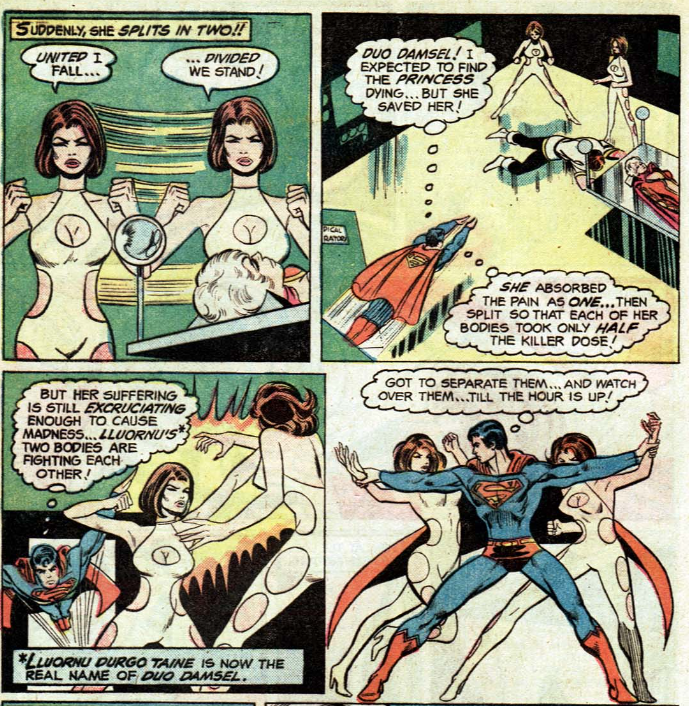
My best friend, the late Gene Freeman, had some issues of Superboy starring the Legion of Super-Heroes from the summer of 1975. Those interested me since they were set in the 30th and 31st centuries and featured the recognizable Superboy but teamed him with a panoply of characters I had never heard of, such as Karate Kid, Timberwolf, Saturn Girl, Lightning Lad, and Duo Damsel. The artwork in Volume 1 #209 was far more sensual than I was used to.
Superboy and the Legion of Super-Heroes featured plenty of young superheroes showing off their figures
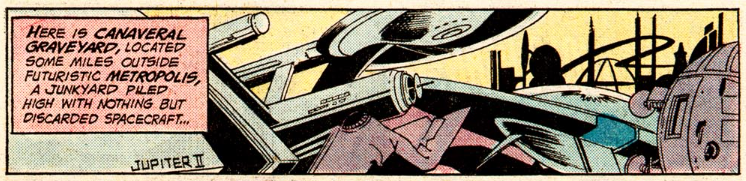
I was intrigued, and eagerly read #210 and #211, and remember being scandalized that Star Trek‘s U.S.S. Enterprise was depicted as being in a junkyard. Sure, put the Jupiter 2 from the crummy Lost in Space there, but the Enterprise? How rude.
A nerdy digression: Trekkies like me will note that they based their depiction on the 33″ model of the Enterprise, not the 11-footer, the giveaway being the flat bottom of the saucer section since the smaller original model was made of solid wood and was turned on a lathe. As I compose this post, the 33″ model appears to have finally turned up after being AWOL for decades. How’s that for making a post about comic books even more nerdy?
Gene also had a few Marvel comics, such as Iron Man and the Fantastic Four. I was surprised at how their superheroes had conflicting and flawed characters. While those comics were interesting, I found that I favored idealism over realism. So I kept asking for DC, not Marvel, comics.
I didn’t keep any of my comic books as I grew up, but I have been and will continue to be exposed to plenty of media based on such books.
1970s TV & Movie Superheroes
The superhero television shows I watched were almost entirely characters from DC. By junior high I had not read any comic books for a few years, but I still liked watching syndicated reruns of Adam West’s Bright Knight and Burt Ward’s enthusiastic Robin. A neighbor tomboy and I had fun creating our own take-offs on the 1960s Batman show, recording Batgirl and Robin narrations on a cassette recorder in my back yard, laughing and giggling our way through our own comedic take on the Dynamic Duo.
I would also sometimes catch reruns of Adventures of Superman from 1952-1958 starring George Reeves. It was dopey and low-budget, with lots of gangsters, and clearly targeted at kids. I preferred the first season of the Wonder Woman television show with Lynda Carter in 1975-1979, which was campy and fun, although the later seasons lost some of the magic.
I watched the Shazam!and The Secrets of Isis shows on Saturday mornings from 1974-1977, and in junior high saw Christopher Reeves and Richard Donner’s 1978 Superman in the theater. I was impressed enough with it that I made sure to see the sequels as they premiered in theaters in later years, but their quality steadily dropped to where #IV was an embarrassment.
I only ever read maybe one issue of the Hulk comic books and found it grotesque. But I liked the television version, which made use of the trope of the innocent hunted man from the 1960s television show The Fugitive. Showrunner Johnson actually disliked comics, so he was happy to make drastic changes for the television version of the big green guy. Stam Fine did a great job looking back at that show:
Stam Fine’s look back at The Incredible Hulk television show
Interesting One-Offs
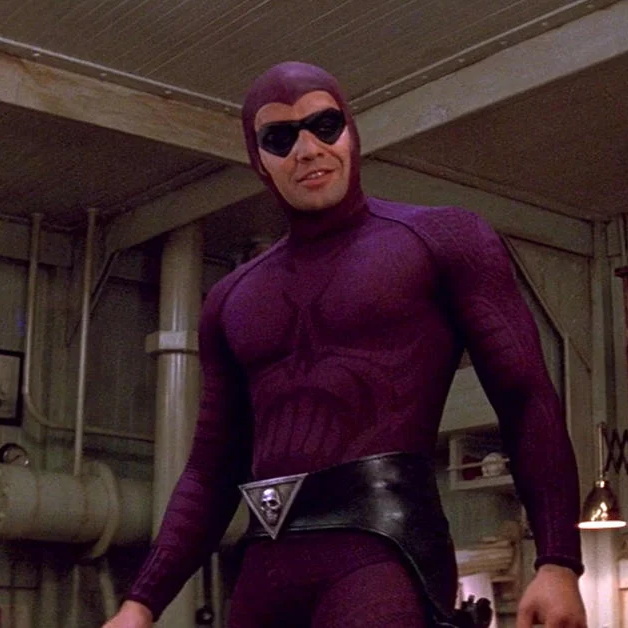
Some other superhero movies I enjoyed in my 20s included The Shadow with Alec Baldwin and John Lone in 1994 and The Phantom with Billy Zane in 1996. I also enjoyed Men in Black, which unlike the other two, did have sequels, although they left no lasting impression on me.
The Marvel Cinematic Universe
And that brings me to the big daddy of all franchises: the Marvel Cinematic Universe. It launched in 2008 with Iron Man and as of late 2023 included 33 films. I have seen 12, or a bit more than 1/3 of the releases.
The Mark 1 suit from 2008’s Iron Man
While I found most of those movies entertaining, they were ephemeral for me. The only one that I might currently consider rewatching would be the original Iron Man, whereas I have rewatched the 1978 Superman a few times over the years, I would happily revisit Superman II: The Richard Donner Cut, and I have seen the 2009 Watchmen more than once.
My affection for those superhero films is presumably deepened by having read Superman comics in my youth and enjoying the Watchmen graphic novel by Alan Moore, Dave Gibbons, and John Higgins. My memory of Marvel comics is limited to a vintage issue or two of Iron Man and the Fantastic Four, so I have no comic book references for most of the Marvel characters I have seen on screen such as the Avengers, Spider-Man, the Guardians of the Galaxy, the Hulk, the Carol Danvers version of Captain Marvel, and the X-Men.
Color Issues
I won’t be reading any vintage Marvel comics online, since the reprints are so garish. Below are images from colorist Jose Villarrubia, who wrote, “Kirby’s robust art could stand more vibrant coloring than most. However, it looked so much better the way it was colored originally. Here is one of the many splash pages in the classic Thor #160. On the left is a scan of my personal copy; in the center is how I would restore it, and on the right is the way it looks in Marvel reprints.”
A vintage Marvel comic, a restoration, and the garish reprints Marvel produces
If you skim a few online vintage issues of Tales of Suspenseor Iron Man, and compare those to the reproductions of DC comics I shared earlier in this post, you’ll see what I mean. Reportedly when Marvel reprints were prepared in the early 2010s, the colorists were instructed to ignore how the pages looked and use a fixed number of swatch colors in Photoshop. Perhaps they were trying to show what the comics would have looked like on high-quality glossy paper, but the reality is they were printed on cheap pulp, which muted the colors. Here is a detailed article on pre-digital comic book coloring.
Comic Tropes
So, given their impact on other media, I’m interested in comics, even though I am not a regular consumer. As I shared recently, I quite enjoy Chris Piers’ looks at ComicTropes. I especially enjoy it when he looks back at weird comics from its Golden Age:
With comic book and Star Wars movie franchises faltering, it will be interesting to see if something more mature can thrive. But, as H.L. Mencken cautioned, “Nobody ever went broke underestimating the taste of the American public.”











































 Meador Manor