Crystal Caves and Moon-Spinners

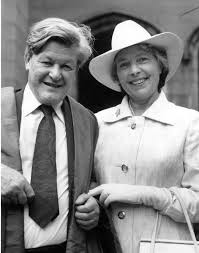
Mary Stewart was a British novelist, born Mary Florence Elinor Rainbow in 1916. She taught in grade schools and lectured part-time at Durham University before moving to Scotland with her husband in 1956. After nearly dying from an ectopic pregnancy and left unable to bear children, she wrote her first novel and effectively launched the genre of romantic suspense, producing a score of novels that sold over five million copies.

Mary Stewart

A very private person, she reacted against the “silly heroine” of mid-20th-century thrillers who “is told not to open the door to anybody and immediately opens it to the first person who comes along”. She reportedly crafted poised, smart, highly educated young female characters who drove fast and knew how to fight but were also tender-hearted with a strong moral sense.

A change of direction came in the 1970s when she surprised her publishers with a novel about the early years of Merlin, The Crystal Cave, which led to four more Arthurian books. I presume she was influenced by T.H. White’s success with The Once and Future King as well as her own fascination with Roman-British history.

Arthurian Attempts
An early exposure to Arthurian retellings

I read The Crystal Cave back in 2020, a few months before Covid-19 changed our world. I’d waited decades to try another book based on Arthurian legends.

As a child, I’d enjoyed The Hidden Treasure of Glaston by Eleanore M. Jewett, which was published in 1946 and was a Newbery Honor book about a medieval boy’s search for the Holy Grail in an area associated with the mythical King Arthur. In junior high or high school, I recall reading a modern English translation of Sir Gawain and the Green Knight in one of my English classes.

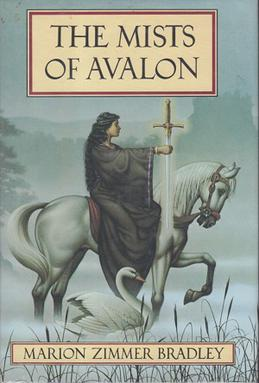
In 1983, when I was in high school, Marion Zimmer Bradley’s The Mists of Avalon was published. I noticed its striking cover at the Henry Higgins bookstore in our local shopping center and eventually read it. That retelling of Arthurian legends from the perspective of the female characters was quite popular in its day, long before disturbing allegations about the author’s behavior came to light.

However, I did not enjoy The Mists of Avalon, despite the praise heaped upon it. I don’t recall if I finished it or not, but I remember finding it obscure. I also didn’t care for most movies or miniseries set in King Arthur’s time, save for the hilarious Monty Python and the Holy Grail. So I generally avoided Arthurian books, although I did listen to the engaging J. Rufus Fears lecture on Arthurian myths.
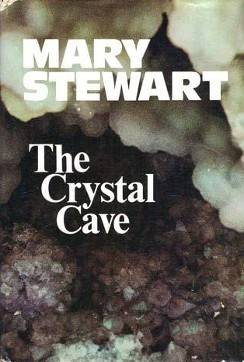
Sorry, but this cover looks like an Ozarks cave pamphlet to me

In early 2020, for reasons I do not recall, I decided to read something Arthurian. I had no intention of trying 1485’s Le Morte d’Arthur, and I wasn’t ready to commit to T.H. White’s fantasy retelling. I chose Mary Stewart’s The Crystal Cave because it was praised as being more realistic and historical and is told from Merlin’s viewpoint.

It was yet another bildungsroman, following Merlin from age six to young manhood. Thankfully it was indeed light on the fantasy. Instead of a young adult sword and sorcery tale, it was a more serious evocation of fifth century Britain. I recall it as well-written, but I was repelled by Merlin’s machinations to allow Uther Pendragon to tryst with Ygraine and thus create Arthur, and I didn’t continue with the later books in the trilogy. I generally dislike tales of feudalism outside of listening to the Kingsbridge series by Ken Follett or the Chronicles of Brother Cadfael by Edith Pargeter, who wrote them as Ellis Peters.

The onslaught of Covid-19 disrupted my world for some time, and I forgot about Mary Stewart, remaining oblivious that she had pioneered romance suspense with capable female protagonists.

A Forgotten Disneyfication

Then, over five years later, whilst wasting my time on YouTube, the algorithm offered up The Moon-Spinners never had a chance by Once Upon a Record. For whatever reason, I clicked on the video about a 1964 Disney film that was completely overshadowed by Mary Poppins.

As a Gen-Xer, I wasn’t around in 1964, but I’ve seen that year’s Mary Poppins many times, while I had never heard of The Moon-Spinners, and I’ve never seen Hayley Mills other than in some episodes of The Love Boat back when I was a bored teenager in a home with only broadcast television. Hayley’s 1964 film was edited into a three-part movie of the week and shown on The Wonderful World of Disney in 1966, but it was never reissued in theaters.

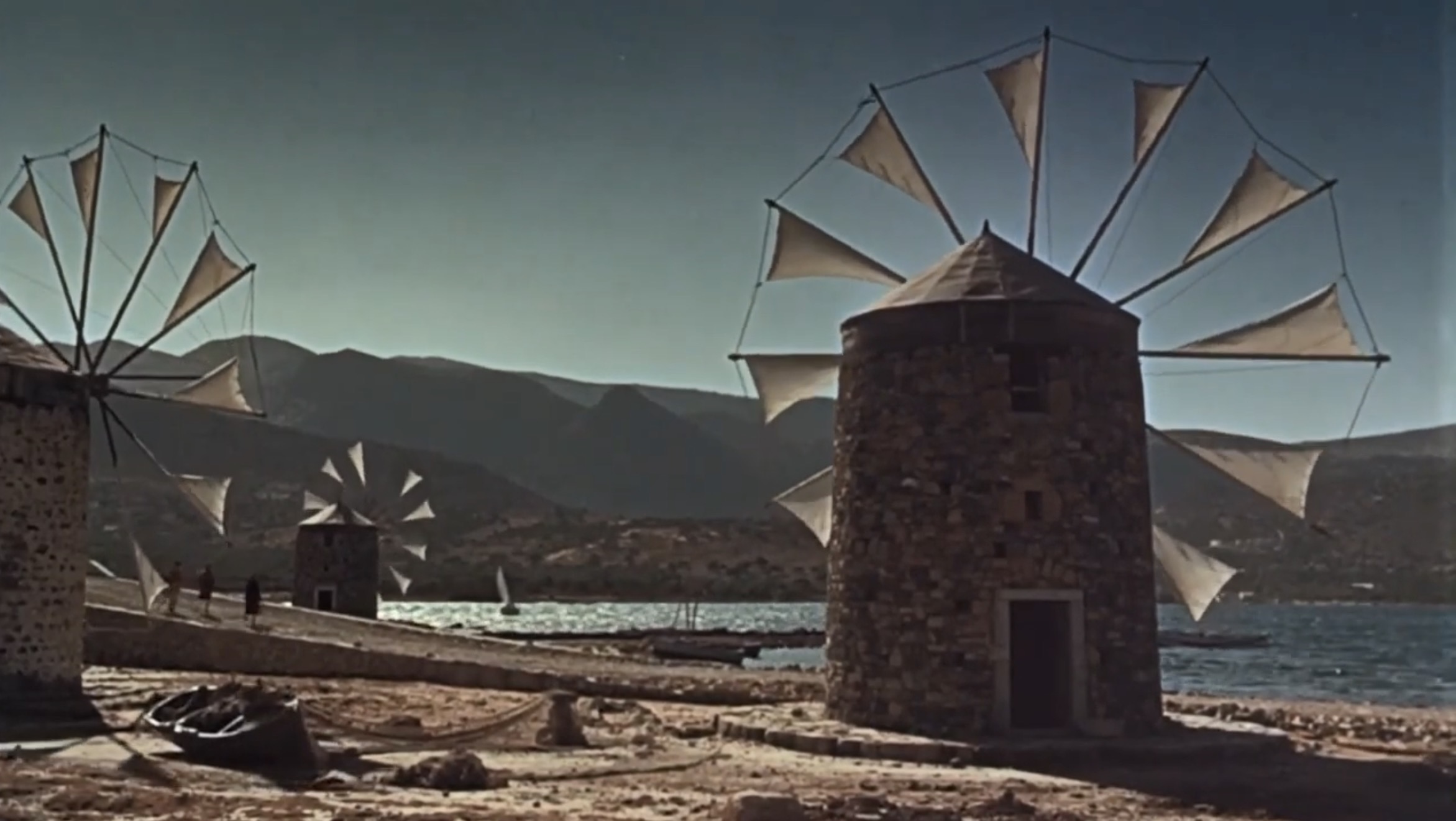
I had no interest in watching the Disney film, although I was intrigued by the beautiful shots of real-world locations in Crete. Ever since reading Mary Renault’s The King Must Die and The Bull from the Sea for an undergraduate college seminar on ancient Greece, I’ve been interested in Minoan Crete and Sir Arthur Evans‘ fantastical recreations.

The Moon-Spinners has some beautiful locations

The Once Upon a Record video mentioned that Mary Stewart had authored the 1962 book the movie was loosely based upon and how she was not pleased with Disney’s adaptation — a common authorial complaint for Disneyfications. I’ll blame the intervening Covid chaos for the mention of Mary Stewart in the video failing to remind me of reading The Crystal Cave a half-decade earlier.

Ever curious, I downloaded a sample of The Moon-Spinners e-book on my Kindle and also read about the author, finally realizing she had also written The Crystal Cave.

Ugh

When I was a child, my mother and my spinster aunts read hundreds of Harlequin Romances, which I dismissed as boring trash, although I never actually read one. In 1957, Harlequin had acquired the North American distribution rights to the romance novels published by Mills & Boon in the British Commonwealth. It eventually acquired Mills & Boon and published six novels each month which were sold in supermarkets, drug stores, and the like. My aunts remodeled an entire room of their house, filling it with shelf after shelf of Harlequin Romances. The company has published about 5,000 titles under that imprint but has many others, and it currently publishes over 120 new titles each month in North America and over 800 globally. I wouldn’t be surprised if many of the storylines are now developed with artificial intelligence and eventually are entirely drafted by AI with human proofreader edits.

I have always enjoyed mysteries, and romances have blended into many of them. Given that Mary Stewart is touted as a talented pioneer in romance suspense, and remembering how her first Merlin book was well-written, albeit unable to prompt me to continue that series, I decided to read The Moon-Spinners. I needed a palate cleanser after reading Thornton Wilder’s ponderous The Eighth Day.

The Romance Suspense

Mary Stewart sketched a Cretan windmill for her publisher as a design idea for the book cover. Hodder in the UK used that for its first edition hardback book cover, but I notice that a later paperback edition added a running male figure to the scene and “Nicola — in an island nightmare of terror and pursuit”. Neither were improvements to my eye, but they would have been helpful to casual shoppers, although they are confusing since Nicola is actually the female protagonist of the story and not pictured on the cover. The US cover was similar to the original UK one, but instead of depicting a windmill in the bright Mediterranean sunlight, Charles Geer‘s illustration was dark and moody.

You might think the windmill has something to do with the title, but while a windmill does play some role in the plot, the character of Nicola shares the tale of the moon-spinners to help lull someone to sleep:

They’re naiads – you know, water nymphs. Sometimes, when you’re deep in the countryside, you meet three girls, walking along the hill tracks in the dusk, spinning. They each have a spindle, and onto these they are spinning their wool, milk-white, like the moonlight. In fact, it is the moonlight, the moon itself, which is why they don’t carry a distaff. They’re not Fates, or anything terrible; they don’t affect the lives of men; all they have to do is to see that the world gets its hours of darkness, and they do this by spinning the moon down out of the sky. Night after night, you can see the moon getting less and less, the ball of light waning, while it grows on the spindles of the maidens. Then, at length, the moon is gone, and the world has darkness, and rest, and the creatures of the hillsides are safe from the hunter, and the tides are still . . .

Then, on the darkest night, the maidens take their spindles down to the sea, to wash their wool. And the wool slips from the spindles into the water, and unravels in long ripples of light from the shore to the horizon, and there is the moon again, rising above the sea, just a thin curved thread, re-appearing in the sky. Only when all the wool is washed, and wound again into a white ball in the sky, can the moon-spinners start their work once more, to make the night safe for hunted things . . .

The novel begins with Nicola being dropped off after a car ride at a trailhead to a small Cretan village by the American tourists Mr. and Mrs. Studebaker. It may not have been Stewart’s intention, but I interpreted those as names the protagonist gave to them that merely reflected the make of car they drove.

On her walk toward the village, Nicola pauses at a bridge and then takes a side path up to the villagers’ fields where windmills whirl, pumping irrigation water through the ditches. She then opts to follow an egret up a ravine. Stewart’s writing is evocative:

For some reason that I cannot analyse, the sight of the big white bird, strange to me; the smell of the lemon flowers, the clicking of the mill sails and the sound of spilling water; the sunlight dappling through the leaves on the white anemones with their lamp-black centres; and, above all, my first real sight of the legendary White Mountains . . . all this seemed to rush together into a point of powerful magic, happiness striking like an arrow, with one of those sudden shocks of joy that are so physical, so precisely marked, that one knows the exact moment at which the world changed.

She ascends the hillside and is soon threatened by a knife-wielding man, tends a man with a bullet wound, and is drawn into ‘skulduggery’. Nicola’s independence and self-assurance are rapidly made evident.

Nicola’s first hint of trouble was a sudden shadow, and near the conclusion of the resulting scene, with the immediate threat vanquished, Stewart adjusts her grip on the reader with Nicola thinking, “Suddenly, out of nowhere, fear jumped at me again, like the shadow dropping across the flowers.”

Nicola & Mark in the Disney universe

Her style is light and deft in a speedy first-person narrative that was a welcome contrast to the pontificating third-person prose in the Thornton Wilder novel I had just finished. I was soon 1/8 into the book and struck by how Stewart’s elegant prose elevated scenes reminiscent of the childhood Nancy Drew or Trixie Belden mysteries my spinster aunt loaned me when I had exhausted the Hardy Boys.

While as a kid I was fine with the minimal involvement of the teenage sleuths’ nearly invisible romantic partners, I quickly sensed that in this story the 22-year-old Nicola might well end up romantically entangled with Mark, the young man who had been shot, even though Stewart was careful not to overplay their initial introduction.

Mind you, Stewart moved fast in her own romance. Elsie of the Tea & Ink Society shares this: “Mary met her husband Frederick at a Victory in Europe Day celebration dance in 1945. It was a costume party, and Frederick was unselfconsciously wearing a girl’s gym tunic, lilac socks, and a red hair ribbon. It was pretty much love at first sight, and the couple were married three months later.”

Stewart begins each chapter with a brief literary excerpt. For Chapter 3 she selected, “When the sun sets, shadows, that showed at noon but small, appear most long and terrible.” That is drawn from Nathaniel Lee and John Dryden’s 1679 adaptation of Sophocles’ Oedipus. A fuller quotation is:

Nathaniel Lee

When the Sun sets, Shadows that shew’d at Noon
But small, appear most long and terrible;
So when we think Fate hovers o’er our Heads,
Our Apprehensions shoot beyond all Bounds,
Owls, Ravens, Crickets seem the Watch of Death,
Nature’s worst Vermin scarce her godlike Sons,
Echoes, the very Leavings of a Voice,
Grow babling Ghosts, and call us to our Graves:
Each Mole-hill Thought swells to a huge Olympus,
While we fantastick Dreamers heave and puff,
And sweat with an Imagination’s Weight;
As if, like Atlas, with these mortal Shoulders
We could sustain the Burden of the World.

Heady stuff!

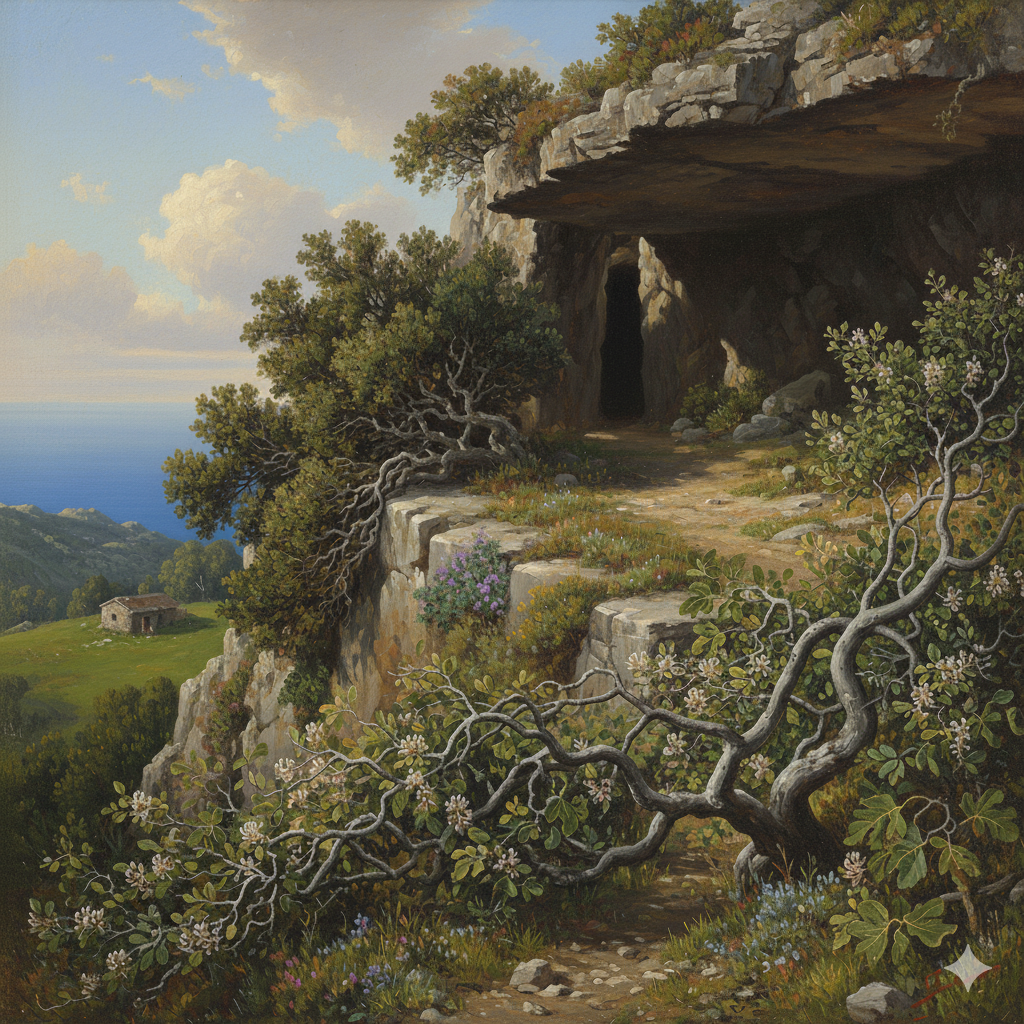
Stewart’s descriptions of the settings were superb. I could readily visualize them, thanks to paragraphs like this:

Google Gemini produced this based on that description; not bad, although the ledge is tilting the wrong way

The story zips along at a fairly rapid clip, with Nicola showing no hesitation in staying overnight to care for the wounded man with a murderer on the prowl, with the next 1/8 of the novel spent on the mountainside avoiding his search. Nicola reaches the village 1/3 of the way into the story and immediately starts to piece together the puzzle.

Nicoloa’s much older female cousin appears, as the character herself phrases it, “at half-time”, and I appreciated this description of her: “Some people, I know find her formidable; she is tall, dark, rather angular, with a decisive sort of voice and manner, and a charm which she despises, and rarely troubles to use.”

The story includes a major red herring, so Stewart does not shy away from manipulating the reader. Overall, I enjoyed the novel, although I did not discern deeper meanings in it beyond a fun adventure, and it lacked the emotional depth and connection that Edith Pargeter could bring to some of her characters in the Brother Cadfael and Inspector Felse mysteries. The first person narrative sometimes shifts plot points into remote retrospectives that are relayed, not related, to the reader. I didn’t find Stewart’s tale particularly romantic, with little time given for Nicola and Mark to develop any sort of relationship beyond trying to protect each other and implausible feats of derring-do, although the settings were suggestive.

I regard the work as a well-written adult version of a Nancy Drew mystery with superb travelogue elements. I’m certainly willing to read more of Stewart’s romance suspense stories, but I would only expect them to be light reads that serve as quick escapes and palate cleansers.
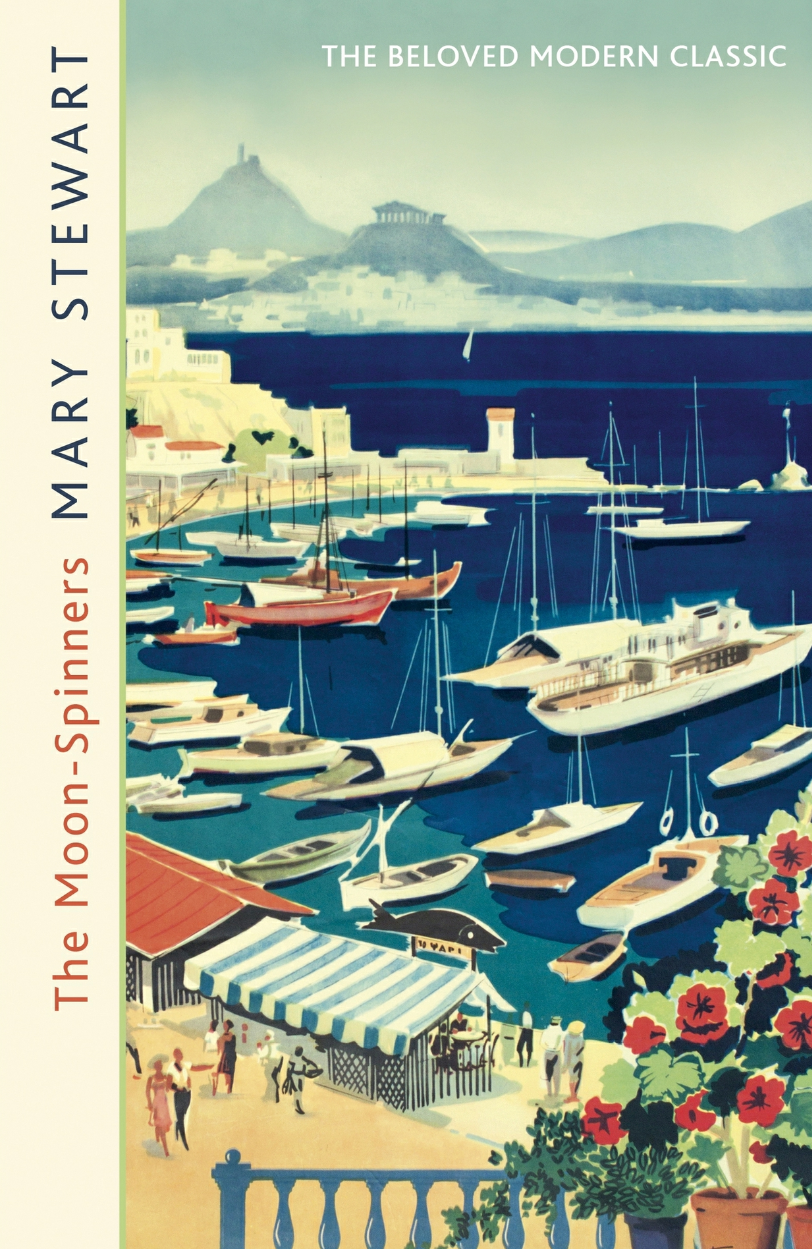

The current Kindle edition cover art

Publishers Hodder & Stoughton have reissued much of Mary Stewart’s fiction under the Beloved Modern Classics label, at least in Kindle editions. I appreciate their beautifully restrained cover designs featuring illustrations that resemble travel posters.

Given her evocative descriptions of the settings, her standalones seem well-suited to armchair travelers. This fast-paced adventure set on the sunny isle of Crete would have been especially welcome on a cold wintry day.

Stewart wrote 15 standalone novels in the romance suspense genre, separate from her five Arthurian books. Elsie of the Tea and Ink Society says, “Her earlier books supply greater drama and thrills and are more Gothic in tone, while her later novels are gentler but still masterfully plotted.”

For both yours and my reference, here is Elsie’s listing with her Amazon links and brief descriptions of Stewart’s standalones:

Madam, Will You Talk? (1955) – set in Provence, France
Wildfire at Midnight (1956) – set on the Isle of Skye, Scotland. Murder mystery elements.
Thunder on the Right (1957) – a Gothic novel set in the Pyrenees in France
Nine Coaches Waiting (1958) – elements of Gothic, fairy tale, and fugitive story. Set in the mountainous Savoy region of France.
My Brother Michael (1959) – set in mainland Greece
The Ivy Tree (1961) – an impostor/mistaken identity story set in Northumberland, England
The Moon-Spinners (1962) – set in Crete
This Rough Magic (1964) – set in Corfu
Airs Above the Ground (1965) – a murder mystery with a touch of espionage, set in Austria
The Gabriel Hounds (1967) – set in Syria and Lebanon
The Wind Off The Small Isles (1968) – a novella set in the Canary Islands, Spain
Touch Not the Cat (1976) – set in the Malvern Hills in the West Midlands of England. Fantasy/supernatural elements.
Thornyhold (1988) – set in Wiltshire in South West England. Fantasy/supernatural elements.
Stormy Petrel (1991) – set on a fictional island in the Hebrides of Scotland
Rose Cottage (1997) – a gentle mystery of family secrets, set in a small village in the North of England

Stewart’s quick story was most welcome after my failing to complete V.S. Naipaul’s A House for Mr. Biswas and reading Thornton Wilder’s remote The Bridge of San Luis Rey and stolid The Eighth Day, but I’m not ready to tackle more “literature” just yet.

As I compose this post, I am still listening to film director William Friedkin’s splendid memoir on my weekend walks, so I want to stick with fiction in my physical or electronic book reading for now. My Kindle collection still has five unread Ellis Peters novels, along with a couple of novellas and sixteen short stories, but I’m not ready for another mystery, either.

So, since it is now Banned Books Week, I’ve started Tim Huntley’s little-known 1980 novel, One on Me, a science fiction pulp paperback I bought at the end of 2023 after Bookpilled cited it as funny but having some controversial content. I doubt there were ever enough copies in circulation to get it banned, but it certainly would offend the blue-nosed bullies.

Posted in books, movie | Leave a comment

Four Measures of Personality

Hippocrates promulgated the first known personality model over 2,400 years ago, which led Galen to name four temperaments: sanguine, choleric, melancholic, and phlegmatic, which were associated with proportions of four bodily fluids. Thankfully little of that nonsense survives outside of adjectives authors employ for their characters. We modern enlightened folk (yes, that is intentional sarcasm) instead rely upon a mix of pseudoscientific and psychospiritual humbug, some useful behavior patterns, and a handful of traits measured on a continuous scale.

Myers-Briggs

The pseudoscientific Myers-Briggs Type Indicator is probably the best-known of the personality tests. It uses answers to 93 questions to assign people one of 16 personality types based on four sets of opposing qualities: Extraverted/Introverted, Sensing/iNtuiting, Thinking/Feeling and Perceiving/Judging. Its publisher makes millions per year on the test and related products.

The test is based on Carl Jung’s interesting but empirically unsupported theories on how the human brain works. Jung’s made-up principles were adapted by Katherine Briggs and her daught Isabel Briggs Myers, who had no formal training in psychology.

Myers-Briggs uses false, limited binaries for its categorizations although human traits are generally spread across a spectrum. For example, people are not true extraverts or introverts, but have a mix of extraverted and introverted qualities. The test is also inconsistent, with up to half of people arriving at a different result if they take it over a month later. It uses flattering, vague descriptions and thus benefits from the Forer-Barnum effect, a technique used in astrology, fortune-telling, and pseudoscience.
The Forer-Barnum Effect in action; don’t all of these sound wonderful?

However, so long as you recognize its severe limitations, the test is still fun for most people. Its four traits also correlate roughly to four of the five personality factors that do have some scientific support, although the five factors exist on continuous scales. I’ll delve into that later.

When I first encountered some version of Myers-Briggs decades ago, I was classified as INTJ. Nowadays that type is often given the flattering labels of The Architect or The Mastermind.

Who wouldn’t want to be a quick, imaginative, strategic, self-confident, independent, decisive, hard-working, determined, open-minded, jack-of-all-trades? As for the weaknesses attributed to INTJ people, I certainly can be arrogant, clueless in romance, and judgmental, but surely those weaknesses are fairly common across a range of personalities, not merely the tiny fraction who are categorized as INTJ.

For the first time in many years, I took one of the free tests based on Myers-Briggs (refusing to pay for the real thing), and it categorized me as ISTJ, The Logistician. Did I really shift from iNtuiting to Sensing over the years? Maybe, but I wasn’t taking the actual for-profit Myers-Briggs test and the various classifications are a false binaries…our traits map out across spectra.

I think of Myers-Briggs as a fun exercise in narcissism or, if you want to put a nice spin on it, as a tool for introspection. Most of us enjoy being categorized, especially when various positive traits are then attributed to us, although I’ve also noticed a trend of people embracing being labeled as neurodivergent, which can be a fraught topic.

Enneagram

I couldn’t make much sense from my Enneagram result

Another pseudoscientific personality test is the Enneagram of Personality, which has been popularized by Truity Psychometrics, not to be confused with our local Truity Credit Union. Its typology traces back to the Bolivian psycho-spiritual teacher Oscar Ichazo and the Chilean psychiatrist Claudio Naranjo, but it doesn’t originate from a validated scientific theory.

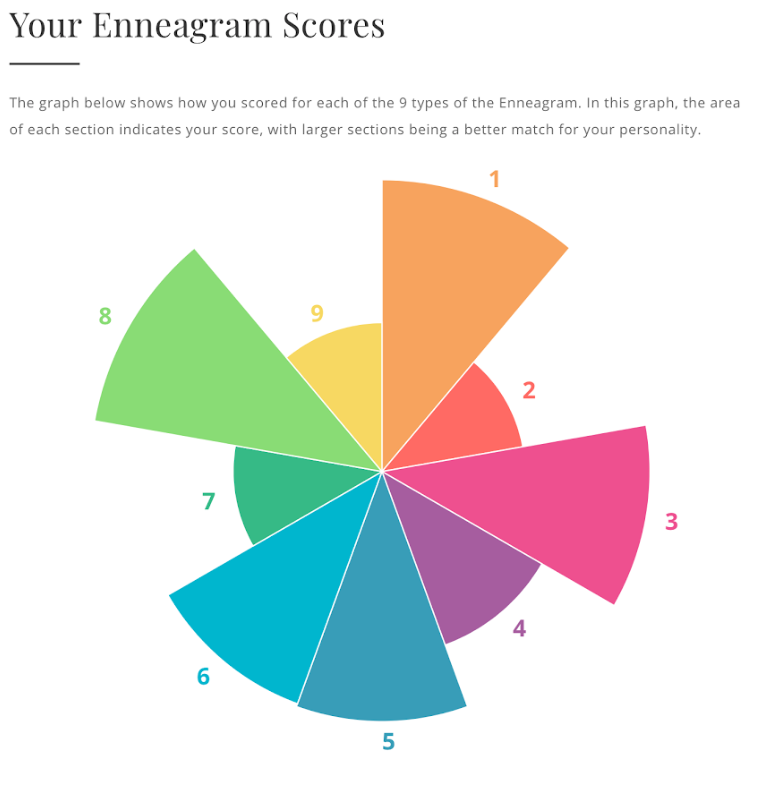
I took the test five years ago and retook it for this post. My results were quite stable, which is an improvement over Myers-Briggs, although I found the Enneagram less interesting. My Enneagram score categorizes me as a Type 1 Moral Perfectionist, Reformer, or Improver. But golly, I also scored high in Type 8, the Protective Challenger, and what did my high scores for Types 3, 5, and 6 mean? Not much, at least to me.

BEST Communication Styles

The personality pattern instrument I have found the most useful in my professional life measures the BEST Communication Styles. Dr. James Brewer adapted and expanded work by William Marston and Ned Herrmann on measuring dominant behavior patterns; Marston was quite a character and invented both the polygraph and Wonder Woman. Brewer developed a basic description of four personality types: Bold, Expressive, Sympathetic, and Technical.

Aspects of the BEST Communication Styles

My clear preferences were for Technical and Bold, with minimal scores in the Sympathetic and Expressive styles. Interestingly, my wife has very similar scores.

What I appreciated about the BEST system was learning the scores for some of my fellow administrators and using that to tailor my interactions with them, in hopes of communicating more clearly and effectively. It also helped me understand better where other leaders were coming from. It is also simple enough that I can make some use of it, while some corporate-style trainings I’ve endured had so many complex steps, acronyms, categorizations, and procedures that I couldn’t be bothered to try to apply them in real life.

The Five Factor Model

In psychometrics, the five-factor model is the most common these days, and at least it was based on empirical research. It measures five factors on a continuous scale: extraversion, neuroticism/emotional stability, amicability/agreeableness, conscientiousness, and openness/intellect & imagination.

A problem with the five-factor model is the naming of the five factors. As you can see, at least three of them have alternate names. This in part reflects how some terms carry positive or negative connotations. Many people might dislike being found less agreeable or conscientious or more neurotic. So alternate terminology is often employed at the cost of confusion.

I took the Open-Source Psychometrics Project’s Big Five Personality Test. Its names for the five factors are shown in the results, including misspelling extraversion, which comes from the Latin extra vertere or “to turn outside”, as “extroversion”. That arose from folks who do not know Latin and thus misspell extraversion to match the spelling of introversion.

My insistence on using extraversion reflects my personality: relatively low in agreeableness and high in conscientiousness.

My Big Five Personality Test results

While Myers-Briggs-style tests always classify me as introverted, I actually scored as more extraverted than 2/3 of those taking the test. People often confuse introversion with shyness or depression, neither of which I suffer from, but I definitely prefer less stimulation and more time alone than those I consider extraverts, and I have to recharge after social interactions.

Emotional stability is an inverse measure of neuroticism. My result says I have an above-average tolerance for stress and change, which I suppose is a function of brain chemistry and also might reflect a happy childhood with few adverse experiences. It might also be influenced by my embrace of Stoicism in adulthood. This factor has no parallel in Myers-Briggs.

Almost 4 out of 5 test-takers scored higher than I did on agreeableness/amicability. My result is thus associated with a lower motivation to maintain social harmony and being more likely to express my opinions forcefully. I’m useful to have on a committee if you don’t want a yes-man. It is also associated with lower levels of compassion, cooperation, and empathy along with enhanced critical thinking, independence, and self-sufficiency. The Thinking/Feeling binary in Myers-Briggs corresponds to this factor. Thinking is associated with low agreeableness while Feeling is associated with high agreeableness.

Independent empirical measures such as my career-long low absenteeism, job stability, and exercise routine correlate with my high score in conscientiousness. I’m a planner with strong impulse control and self-discipline, but that also means that I am quite stubborn and am irritated by those who are impulsive or disorganized. The Judging/Perceiving binary in Myers-Briggs corresponds to this factor. Judging is associated with high conscientiousness while Perceiving goes with low conscientiousness.

My most extreme score was for intellect/imagination, which is most commonly known in the literature as Openness to Experience and is associated with a general appreciation for art, emotion, adventure, unusual ideas, imagination, curiosity, and variety of experience. Folks like me are said to be more likely to hold unconventional beliefs. The Sensing/iNtuiting binary in Myers-Briggs corresponds to this factor. Sensing is associated with low openness while iNtuiting goes with high openness.

My results illustrate some of the problems with personality tests. I have many of the characteristics of introversion, but was rated as more extraverted than 2/3 of the test-takers. I also had a very high score in Openness in the more scientific test, which matches up with the N in my early INTJ label on Myers-Briggs, but I’ve also had tests offer the contradictory label of ISTJ.

The star positions reflect my percentile scores on the Big Five Personality Test

Note that these traits are not fixed; most people shed some of their neuroticism and thus gain emotional stability as they age, and we tend to become more conscientious over time. I do like the continuum of the traits in the Big Five test, which reminds me of how the Kinsey Reports broke ground in the mid-20th century by classifying sexual orientation on a continuum rather than strict binaries. The limitations of heterosexuality and homosexuality spectra then led to initialism in the form of LGBTQ, then LGBTQIA2S+, etc. Golly, but people do love to label and identify themselves and each other.

The utility of most personality tests is dubious, but I do find them interesting. I wouldn’t recommend spending any money on versions of Myers-Briggs or Enneagrams, which I regard as more suitable for entertainment. However, I have found the BEST Communication Styles useful in working with team members, and the Open-Source Psychometrics Project’s Big Five Personality Test is completely free and the five-factor model does enjoy some scientific support.

Posted in random | Leave a comment

My Cultural Ignorance

There are several cultural touchstones I remain rather ignorant of, despite countless references to them throughout my six decades of existence.

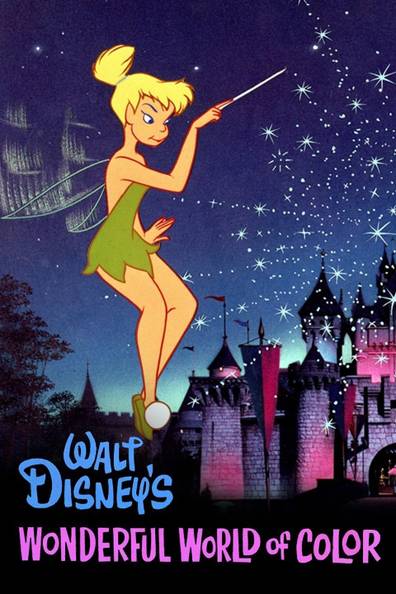
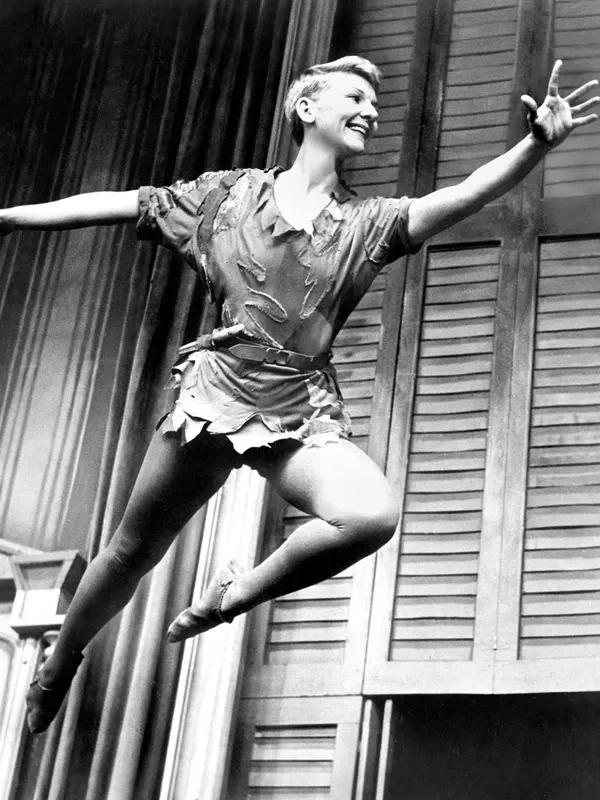
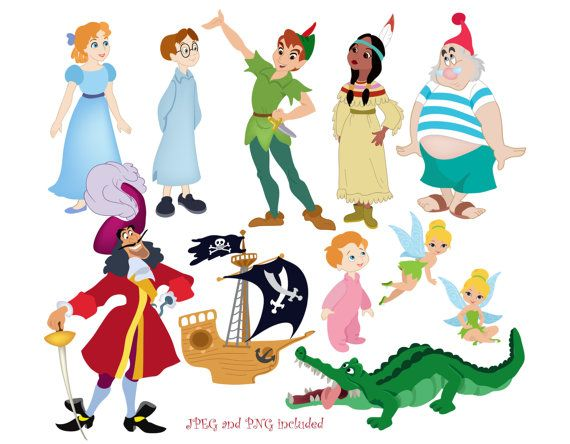
Peter Pan, for example. As a child, I ate plenty of his peanut butter, saw the animated Tinker Bell at the start and end of Walt Disney’s Wonderful World of Color (a lie broadcast weekly into our home, which didn’t have a color television until 1973), and my mother had a phonograph record by Mary Martin with a photograph on the album’s back showing her flying across a room as the character in the 1950s musical.

I recognize these characters, but I don’t know their stories

However, I never saw the animated Disney film or the Peter Pan plays or musicals, and despite being an avid reader, I never read a Peter Pan book. So while I can recognize some of the Disney characters, I don’t know their stories. I did see the Spielberg film Hook in 1991, but I was somewhat mystified by the crocodile and other plot elements.

The character first appeared in Chapter XIV of J.M. Barrie’s 1902 book The Little White Bird, followed by the 1904 play Peter Pan, or The Boy Who Wouldn’t Grow Up, and the 1911 novelization Peter and Wendy. Disney’s animated film came out in 1953 and was re-released in cinemas in 1958, 1969, 1976, 1982, and 1989. I was too young to see the June 1969 re-release, and I was almost ten when it came back around in June 1976, and by then, it was far too juvenile to interest me. Nowadays, many parents can readily make it, or virtually any other suitable film, available to their children at the appropriate age, but I missed out.

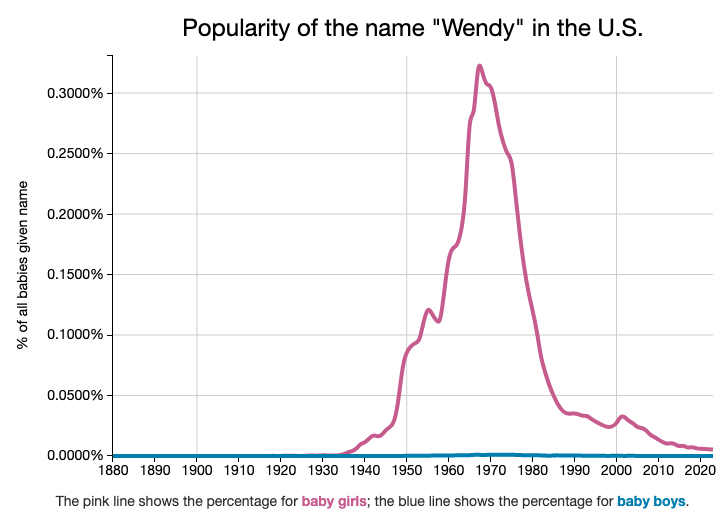
My wife is named Wendy, a name which became quite popular in the second half of the 20th century due to the character of Wendy Darling in Peter Pan. Yet my knowledge of the story is so limited, despite its many related works, that I had to go look up that character’s last name.

Peter Pan created a surge of popularity for the name Wendy

I contemplated this when the YouTube algorithm coughed up The mystery hidden in Disney’s Peter Pan from the Once Upon a Record channel. I was duly impressed by the movie excerpt of the child characters flying over London.

The video went on to theorize that the father character might be the son of Captain Hook. However, none of that is enough to motivate me to watch the movie nor actively partake of any of the multitude of other media offerings about a boy who won’t grow up.

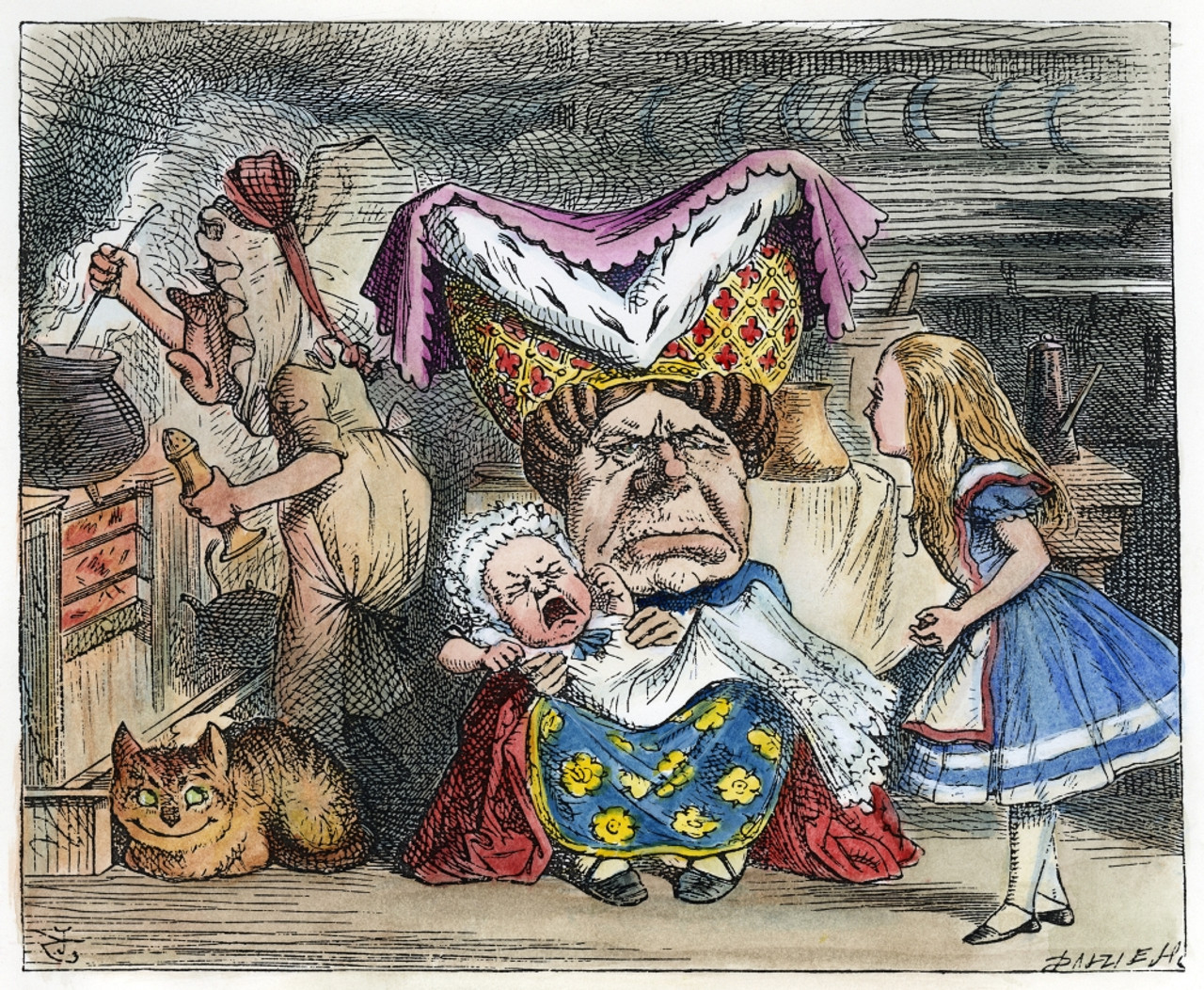
I had no interest in reading this

Similarly, I only read a part of Alice’s Adventures in Wonderland as an adult, although I’ve seen documentaries about the author and countless references to it in a variety of media over the years, including the original Star Trek series, Tom Petty music videos, and the science fiction short story Mimsy Were the Borogroves, which drew upon a verse from the poem “Jabberwocky” in Lewis Carroll’s sequel Through the Looking-Glass, and What Alice Found There.

The story was simply too bizarre to hold my interest. My dissatisfaction reminds me of my disappointment with the Land of Oz.

Back in 2009, I bought and read Wicked: The Life and Times of the Wicked Witch of the West, not realizing it was a dark revisionist fantasy with quite mature themes. I didn’t like it one bit; Dominic Noble didn’t like it, either.

I followed that distasteful experience with downloading and reading L. Frank Baum’s original The Wonderful Wizard of Oz. While it was interesting to note the various differences from the beloved classic movie, I didn’t care for that book, either. It was too nonsensical and disjointed for my taste.

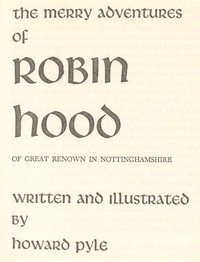
I’m also somewhat ignorant of less fantastic cultural touchstones. I’d wager that while most of us are quite familiar with the basic plot and characters of Robin Hood, few have actually read Howard Pyle’s influential The Merry Adventures of Robin Hood from 1883, let alone the various earlier ballads. I certainly haven’t.

Rather, we likely know the story from countless other references and adaptations. Some of us saw the 1938 movie with Errol Flynn, and perhaps younger generations associate it with 1991’s Robin Hood: Prince of Thieves and/or Mel Brooks’ 1993 parody.

Myself, I’m more partial to Monty Python’s Dennis Moore sketch.

Similarly, I’m often ignorant of the origins of various memes that populate the internet. Recently, several of the video channels I watch on YouTube have used inserts like these to indicate a passage of time:

At first, I thought they might be imitating CuriousMarc, a French electrical engineer who documents restorations of exceptional vintage electronics. But then I noticed the meme on channels that certainly wouldn’t be referencing anything that nerdy. So I looked it up and found out they are taken from the SpongeBob SquarePants television show.

Wendy once had me watch an episode, but it definitely wasn’t to my taste. Similarly, I doubt that I’ve ever seen a complete episode of The Simpsons despite its hundreds of episodes since 1989. I’ve seen various clips, which I often found funny, but they were hardly engaging enough to tempt me to watch the series. Gosh, whenever I hear Marge, I think of Brenda Morgenstern from Rhoda.

I haven’t discerned any meaningful handicaps from my cultural ignorance. I’m fine with remaining unable to recognize any Taylor Swift songs, opera librettos, or many sports references. As I approach retirement, I’m skeptical about investing my forthcoming free time in such pursuits; FOMO is not healthy.

Freedom to choose your own life; freedom to pursue your own interest; freedom to enjoy your own likes, provided they are not harmful to you and the society. I feel I was very fortunate to grow up with so much of freedom, like a tree in the forest…

-Sudha Marty, How I Taught My Grand Mother to Read: And Other Stories

Posted in books, movie, random | 1 Comment

Wilder’s Forgotten Award Winner

Thornton Wilder is still widely remembered for his 1938 play Our Town, and his second novel, The Bridge of San Luis Rey, won the Pulitzer in 1927 and made Modern Library’s list of the 100 best novels of the 20th century.

After reading that novel and rewatching Our Town, I decided to jump to his penultimate novel, The Eighth Day, which was published in 1967. That turned out to be his longest work, over four times longer than his novel I’d just finished. Slogging through it reminded me of picking Emma as my first Jane Austen novel to read back in 2012, not realizing it ran to about 158,000 words, almost twice the length of her most popular book, Pride and Prejudice.

I only found one YouTube video about The Eighth Day, and it was AI slop. I found a handful of online articles about it and reference a couple of them in this post, but it has fallen utterly out of fashion despite winning the National Book Award for fiction in 1968.

The Neglected Book Page offered, “…it sold over 70,000 copies in hardback, was picked up by the Book of the Month Club as a featured title, and stayed on the New York Times best-seller list for half a year. Nor was it a complete critical failure. Edmund Wilson [the influential literary critic who championed Hemingway, Faulkner, Fitzgerald, and Nabokov] called it Wilder’s best work ever, and it received the National Book Award for fiction.”

However, the Neglected Book Page also shared: “Stanley Kauffmann, writing for The New Republic, called it ‘a book that means nothing.’ Josh Greenfield in Newsweek assessed Wilder’s message in the novel ‘a worthless bauble.’ In The New Yorker, Edith Oliver judged that ‘none of the characters, major or minor, rings credible to the reader.'”

The Greatest books of All Time‘s meta-analysis ranked the book at 10,696 considerably below other works of his such as The Bridge of San Luis Rey, Ides of March, Theophilus North, and Our Town. Nevertheless, I opted to read it, based on its national award and its plot device of a murder mystery.

I purchased and read the Kindle edition, with little initial impression of its considerable length. Wilder’s early novels were quite short; his most famous work, The Bridge of San Luis Rey, is only 33,000 words. The Eighth Day turned out to be his longest novel at 141,000 words.

While that is not nearly as daunting as All the King’s Men, which we were assigned in high school, despite its word count of 286,000, or Jonathan Strange and Mr. Norell at a rather numbing 309,000 words, it is still considerable. Wilder split his longest work into six parts, which reminds me of how Tolkien’s 455,000-word Lord of the Rings was similarly subdivided, although it was wisely published as a trilogy.

The character of Dr. Gillies in the novel says, “The Bible says that God created man on the sixth day and rested, but each of those days was many millions of years long.” Reading The Eighth Day similarly took me awhile…about a month.

I was thankful that Wilder structured his meandering tale around the mysteries of a murder and a daring rescue from execution. That provided an impetus to carry me through his digressions and the multitude of pronouncements by his omniscient narrator.


Wilder began the book during a self-imposed exile of 20 months in the desert town of Douglas, Arizona along the Mexican border. In 1962, a month after turning 65, Wilder fled the distractions of too much travel, talk, and busy-ness and steered his Thunderbird convertible out of his Connecticut driveway towards the Southwest. He broke down outside Douglas and stayed there, enjoying “solitude without loneliness.”

Wilder stayed at The Gadsden Hotel in Douglas, AZ for a couple of months
Wilder rented an apartment in Douglas for about 18 months

He extended a night at the Gadsden Hotel into a stay of a couple of months and then rented a three-room furnished apartment in what is now, over sixty years later, an assisted living center.

Wilder had earned three Pulitzers, including ones for the plays Our Town and The Skin of Our Teeth. Over the 15 years since his last novel, he had written five plays, but during his Arizona exile an idea took shape that was more suited for the page than the stage.

During his exile, he went by his middle name, Niven, and peppered people with questions, including how one would set up a boardinghouse, with the answers becoming part of his new novel. Wilder didn’t finish it in Douglas, leaving town in late 1963 to resume his peripatetic ways. He accepted the Medal of Freedom from President Johnson and continued writing during trips to Nice and Cannes, to the Netherlands Antilles, to Casablanca, and more. It was finally published in 1967, three weeks before his 70th birthday.


But what of the book itself? Wilder shared that its writing was influenced by the works of the Danish theologian and philosopher Søren Kierkegaard, the German novelist and Nobel laureate Thomas Mann, and the French Jesuit and polymath Pierre Teilhard de Chardin. I confess to possessing only fragmentary interest in and frequent exasperation with literary analysis and philosophy, so I read Wilder’s novel with little regard to such influences.

1927’s The Bridge of San Luis Rey was set in 1714. I leapt ahead four decades in Wilder’s career in following that up with 1967’s The Eighth Day, which was set between 1880 and 1905. The later novel consists of six parts, identified by location and durations of years. I enjoyed Part I, set in Coaltown, Illinois from 1885 to 1905. The Horatio Alger story of how a daughter of a convicted murderer rescued her family by setting up their home as a boardinghouse intrigued me with its sharply drawn character portraits, although I found the mother figure rather bland and impervious to empathy.

Here is an example of the maxims and observations that pepper the pages:

So defenseless is hope before the court of reason that it stands in constant need of fashioning its own confirmations. It reaches out to heroic song and story; it stoops to superstition. It shrinks from flattering consolations; it likes its battles hard won, but it surrounds itself with ceremonial and fetish.

Hope, like faith, is nothing if it is not courageous; it is nothing if it is not ridiculous. The defeat of hope leads not to despair, but to resignation. The resignation of those who have had a grasp of hope retains hope’s power.

Fortune telling
[generated by Google Gemini]

Part II relates the story of the escaped fugitive’s travels and adventures as he fled south to Chile from 1902 to 1905 and was quite a diversion. While I enjoyed some of the character sketches, particularly of three wise independent women who spirit him along different phases of his flight, the fugitive remained a remote personality to me, perhaps intentionally so.

He is a figure of faith, but not piety. Wilder shares these views on such people:

We have described these men and women in negative terms—fearless, not self-referent, uninteresting, humorless, so often unlearned. Wherein lies their value?

We did not choose the day of our birth nor may we choose the day of our death, yet choice is the sovereign faculty of the mind. We did not choose our parents, color, sex, health, or endowments. We were shaken into existence, like dice from a box. Barriers and prison walls surround us and those about us—everywhere, inner and outer impediments. These men and women with the aid of observation and memory early encompass a large landscape. They know themselves, but their self is not the only window through which they view their existence. They are certain that one small part of what is given us is free. They explore daily the exercise of freedom. Their eyes are on the future. When the evil hour comes, they hold. They save cities—or, having failed, their example saves other cities after their death. They confront injustice. They assemble and inspirit the despairing.

When the evil hour comes, they hold. That’s a good line, worthy of Tolkien, but I particularly like We were shaken into existence, like dice from a box.

The entertaining and empowered character of Mrs. Wickersham is a humanitarian and widow who runs a hospital, school, and orphanage in addition to her hotel. She labors to save the fugitive from capture and destruction, and shares this amidst a torrent of words after the fugitive shares his story:

“. . . Cities come and go, Mr. Tolland, like the sand castles that children build upon the shore. The human race gets no better. Mankind is vicious, slothful, quarrelsome, and self-centered. If I were younger and you were a free man, we could do something here—here and there. You and I have a certain quality that is rare as teeth in a hen. We work. And we forget ourselves in our work. Most people think they work; they can kill themselves with their diligence. They think they’re building Atenas, but they’re only shining their own shoes. When I was young I used to be astonished at how little progress was made in the world—all those fine words, all those noble talkative men and women, those plans, those cornerstones, those constitutions drawn up for ideal republics. They don’t make a dent on the average man or woman. The wife, like Delilah, crops her husband’s hair; the father stifles his children. From time to time everyone goes into an ecstasy about the glorious advance of civilization—the miracle of vaccination, the wonders of the railroad. But the excitement dies down and there we are again—wolves and hyenas, wolves and peacocks.—What time is it?”

And then, abruptly, just as the fugitive appears to have again escaped into the future, we get this lonely line about his fate as Part II comes to a close: He was drowned at sea.

What? We have travelled many miles with this character and the mysteries swirling about him, with hopes and plans for an eventual redemptive return to his family, buoyed by a mention in the book’s prologue that he would eventually be exonerated, but then nature sweeps him into the abyss? There is a disquieting and disturbing symbolism in that.

Part III shifts us back north in geography and backward in time to Chicago in 1902, where the son of the fugitive stumbles his way into good works as a newspaper columnist, reminding me of the early idealistic portrayal of Orson Welles’ protagonist in Citizen Kane. Various characters are introduced, offering their own takes on life and its meanings or lack thereof. One garrulous character pronounces:

“What’s that? What’s that you’re saying? Listen to me: there is no sense behind the universe. There is no reason why people are born. There is no plan. Grass grows; babies are born. Those are facts. For thousands of years men have been manufacturing interpretations: life’s a test of our character; rewards and penalties after death; God’s plan; Allah’s Paradise, full of beautiful girls for everybody; Buddha’s nirvana—we get that anyway, it means ‘see nothing, feel nothing’; evolution, higher forms, social betterment, Utopia, flying machines, better shoelaces—nothing but THISTLE DUST! Will you get that into your draughty head?”

Contrast that to a hospital orderly who shares his vision of people reborn countless times as they ascend a ladder of merit, with none able to step over a threshold into supreme happiness until “all of the men on all the stars have purified themselves.”

Wilder’s characters frequently break with convention, in ways that challenge our expectations for the late Victorian and early Edwardian eras. The future fugitive and his common law wife had four children in nineteen years without having been formally married; the son who fights injustice and suffering has affairs with girls of many races and nationalities before marrying the daughter of the man his father supposedly murdered; a daughter who becomes a famous concert singer supports herself and her bastard son by singing in churches; and so forth.

Part III concludes as the fugitive’s son meets the daughter of the murdered man, with promises of revelations that might solve the murder mystery. We are given no satisfaction, however, as Part IV leaps way back to 1883 in Hoboken, New Jersey, and we are treated to more paragraphs extolling the virtues and delineating the shortcomings of the future fugitive. He hunts for a wife, making a choice by a process of elimination, and then elopes with her.

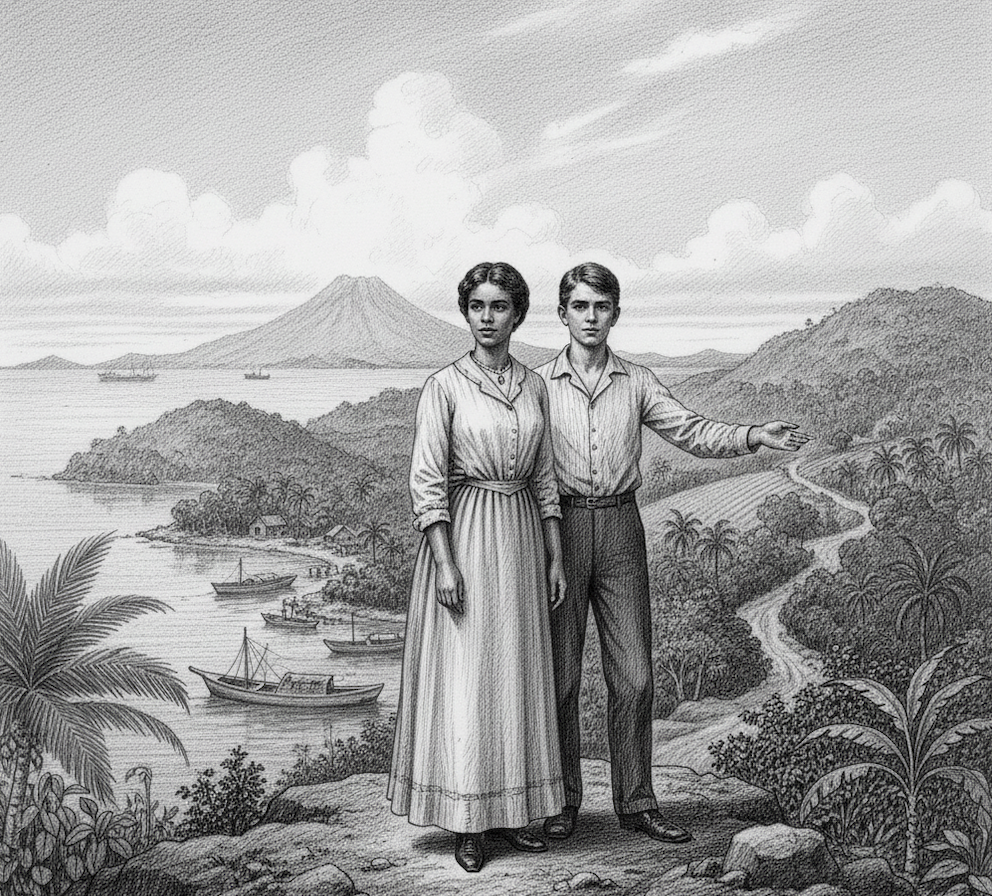
St. Kitts
[generated by Google Gemini]

Part V jumps back a bit further and much farther, to St. Kitts, an island in the West Indies, in 1880. We are finally provided background on the murder victim’s family, something that had been given short shrift in the first 2/3 of the novel. Staging stories in long separate parts, as Wilder did in the 1960s, seems quite old-fashioned to the modern reader. I am used to books that interleave chapters, quickly jumping back and forth, often changing voices or narrators to increase the contrasts versus the drone of an omniscient narrator. I suspect that broadcast and cable television made such tight interleaving more commonplace, as holding the viewer’s attention was vital to the advertising that funded the programming back in the day, with frequent advertising breaks acting like chapter breaks.

Epistolary novels use a series of letters or other fictional documents for such interleaving. 1897’s Dracula is perhaps the most famous example, being composed entirely of letters, diary entries, newspaper clippings, telegrams, doctor’s notes, ship’s logs, etc. Wilder’s Ides of March is another example.

Part V finally provides a motive, previously portrayed as inexplicable, for the murder. I enjoyed the re-introduction of the murder victim:

Breckenridge Lansing was born in Crystal Lake, Iowa. As a boy he planned to enter the Army of the United States and to become a famous general. With his brother Fisher he did a great deal of hunting. Good Baptists cannot take life or do anything else enjoyable on Sunday, but they killed and killed on Saturdays and holidays.

The final Part VI was thankfully the strongest, with a superb opening:

This is a history.

But there is only one history. It began with the creation of man and will come to an end when the last human consciousness is extinguished. All other beginnings and endings are arbitrary conventions—makeshifts parading as self-sufficient entireties, diffusing petty comfort or petty despair. The cumbrous shears of the historian cut out a few figures and a brief passage of time from that enormous tapestry. Above and below the laceration, to the right and left of it, the severed threads protest against the injustice, against the imposture.

Herkomer’s Knob
[misinterpreted by Google Gemini]

There is a superb sequence in which the fugitive son learns how his father was spared from execution. I especially enjoyed the symbolism of a home-made rug:

He returned into the house and placed the letter on the table beside the Deacon and sat down. The Deacon was gazing intently at the home-made rug at his feet and Roger’s eyes followed his. It had been woven long ago, but a complex mazelike design in brown and black could still be distinguished.

“Mr. Ashley, kindly lift the rug and turn it over.”

Roger did so. No figure could be traced on the reverse. It presented a mass of knots and of frayed and dangling threads. With a gesture of the hand the Deacon directed Roger to replace it.

“You are a newspaperman in Chicago. Your sister is a singer there. Your mother conducts a boardinghouse in Coaltown. Your father is in some distant country. Those are the threads and knots of human life. You cannot see the design.”

There was such a rag rug in one of my grandparents’ homes. The chaos of knots created a soft cushion beneath the order presented to the world. While I do not share the perception of a weaver, but instead only human pattern-seeking, the symbol is strong.

Existentialism is addressed as well:

Again he pointed to Coaltown: “They walk in despair. If we were to describe what is Hell it would be the place in which there is no hope or possibility of change: birth, feeding, excreting, propagation, and death—all on some mighty wheel of repetition. There is a fly that lives and lays its eggs and dies—all in one day—and is gone forever.”

I appreciated the novel’s concluding paragraph, once I defined arras as a rich tapestry:

There is much talk of a design in the arras. Some are certain they see it. Some see what they have been told to see. Some remember that they saw it once but have lost it. Some are strengthened by seeing a pattern wherein the oppressed and exploited of the earth are gradually emerging from their bondage. Some find strength in the conviction that there is nothing to see.

Less welcome were the glum glimpses of characters’ futures, reminding me of the epilogue montages in some movies. Wilder confessed in a 1965 letter, “It’s only lately come clear to me what an awful lot of suffering there is in the book. I never intended that. I hope it’s not immediately apparent to the reader because most of the characters don’t regard themselves as suffering—they’re learning and struggling and hoping.”

Well, Thornton, it was certainly apparent to me, as was your excision of much of one daughter’s story, not that I cared to read it. The book would have greatly benefited from a revival of his early “habit of compression” and, if he could not bring himself to do it, an editor demanding a culling, that the historian’s cumbrous shears be grasped far more firmly.

Nevertheless, I am glad to have read it given the exquisite prose he regularly manifested and the sharp wit he could deploy. However, while I found some of the characters interesting and well-drawn, the ones he spent the most time with remained too nebulous, vague, and impenetrable for my liking.


The Thornton Wilder Library

From 2016 to 2022, HarperCollins worked with the Wilder family on a reprinting of Wilder’s seven completed novels and three of his plays in what it called the Thornton Wilder Library. Paperbacks with new covers, linked by the use of the Londonderry Air font, incorporated revised afterwords by his nephew Tappan Wilder, who has served as the literary executor for a quarter-century. That Library is also available in audiobook and e-book formats.

Back in 1967, The Eighth Day became a bestseller in its second week and remained on the list for half a year. Before falling out of print in 1992, two million copies were printed and it had 17 foreign editions. It became his second-best selling and earning book.

I remain intrigued by Thornton Wilder’s handling of matters of faith and existentialism. I enjoy how he subverts expectations while incorporating biblical and Puritan traditions into his works. His Christian humanism led him to a sense of optimism grounded in a faith in improvement and redemption, without shying away from portraying the dull triteness, rank hypocrisy, and intellectual vacuity which readily afflict both the pious and the profane.

The length and many paragraphs of philosophy of The Eighth Day haven’t put me off reading Wilder, but I do need to be selective. I have not found ratings on Goodreads to be of any value, although the number of ratings is an indicator of a book’s popularity. I still prefer using LibraryThing over Goodreads to track my reading, but I continue to update both services given Goodreads’ popularity.

BookGreatest Books Rank# of Goodreads RatingsWordsKindle Edition lengthYear
The Cabala25843,000144 pages1926
The Bridge of San Luis Rey623rd37,99733,000115 pages1927
The Woman of Andros22723,00075 pages1930
Heaven’s My Destination41654,000250 pages1935
The Ides of March2,683rd2,18087,000315 pages1948
The Eighth Day10,696th1,822141,000454 pages1967
Theophilus North4,915th1,214133,000425 pages1973
Statistics on Wilder’s Novels

After gathering the statistics and reviewing synopses, two of the remaining novels pique my interest the most. Heaven’s My Destination is a road farce about a born-again evangelist traveling across Texas, Oklahoma, Kansas, Missouri, and Arkansas peddling textbooks in the Great Depression. Having spent a lifetime surrounded by evangelicals, with one grandmother who was a Holy Roller Pentecostal who spoke in tongues, that sounds like fun since Jonathan Rosenbaum holds that the protagonist spreads “havoc and consternation wherever he goes with his hilarious and maddening fanaticism.”

I’m also somewhat intrigued by The Woman of Andros after reading its exquisite opening paragraph. Even if it proves to be a humorless tragedy, it is sublimely short. Theophilus North is lengthy, but portrayed as a series of related short stories, which prevents its immediate dismissal. The Cabala was early but also short, while I’ve little interest in The Ides of March having had my fill of Gaius Julius Caesar in various histories, plays, and in translating Commentarii de Bello Gallico in the original Latin decades ago.

However, after successive Thornton Wilder books, I need to cleanse my palate. My next target is The Moon-Spinners by Mary Stewart.

Posted in books | Leave a comment

Oklahoma’s Education Struggles

This is a lengthy post about Oklahoma’s public schools. I’ll explore the state’s low rankings and delve into its history of student testing and achievement, student poverty, and finally school spending and taxation. I expect this might be my final post on such matters given that I am now in the twilight of my career.

Bona fides

My retirement in June 2026 will come at the end of 38 years working in Oklahoma public schools. I spent a semester student teaching at Norman High School, then a semester substituting in various classes at the three high schools in the Putnam City district. I then moved from the state’s central metroplex to Green Country in the northeast to teach physics for 28 years at Bartlesville High School, and this is my ninth and final year as a district administrator in Bartlesville.

My familiarity with the state’s educational spending, policies, and reforms includes how early in my teaching career I participated in the school suspension of 1990 that helped push through House Bill 1017, a vital educational reform law. I was afforded a significant role in another school suspension in 2018 that again boosted educational funding. I also learned about school funding during my 22 years on the local teachers’ union contract bargaining team, including 16 as the chief negotiator, and my varied involvement in the planning, promotion, and implementation of 15 school bond issues. I gained experience with achievement assessments during my decades chairing our district’s science department.

I also grew up in Oklahoma’s public schools. Kindergarten was at Western Village Elementary in Oklahoma City, grades 1-6 at Putnam City Central in Bethany, and I attended Putnam City’s Mayfield Junior High and Putnam City West High School. So I have spent over a half-century attending or working in the state’s public schools.

Low rankings

It made the news when Oklahoma’s school systems were ranked 50th out of 51 in WalletHub’s 2025 analysis, which included the District of Columbia. Similarly, Oklahoma was ranked 49th out of 50 on Kids Count, 48th out of 50 by U.S. News and World Report, and 48th out of 51 by World Population Review.

Oklahoma’s education and health care rankings are extremely low [Source]

The truth is not always simple

This political meme is somewhat misleading

One political meme in circulation has laid the blame for the state’s low ranking on its recent Republican governors. The one shown has been circulating for some time, using old Quality Counts rankings from Education Week.

What that meme conveniently leaves out is how Oklahoma’s ranking in Quality Counts might have started at 19 when the Democrat Brad Henry took office, but it dipped as low as at least 28 during his term before rising to 17. While it did drop precipitously to 48th during Republican Mary Fallin’s eight years as governor, that drop took only four years and coincided precisely with the term of the controversial State Superintendent Janet Barresi. The meme also leaves out that the basis for the Quality Counts rankings changed over time, so comparing its overall ranking over the years is sometimes comparing apples to oranges, and Quality Counts was discontinued back in 2021.

Only three components of Quality Counts persisted from 2008 to 2021: achievement, finance, and “chance for success”, with the last one consisting of factors over which schools have no control such as family income, parent education, and parental employment.

Oklahoma’s overall, achievement, and finance rankings in Education Weeks’ Quality Counts from 2008 to 2021

Comparing the Quality Counts reports from year to year, the perilous drop from 17th overall in 2011 to 48th in 2015 was driven mostly by policy changes, with Oklahoma losing ground in a “teaching profession” component that was discontinued after 2014. We were docked for discontinuing teacher mentoring, teacher professional development, and teacher incentives under Supt. Barresi.

The state’s achievement rank also dropped in Quality Counts from 35th to 41st across those same years. However, it is interesting to note that most of the state’s scores in reading and math on the National Assessment of Educational Progress, which features prominently in most ranking systems, actually improved, sometimes markedly, during Supt. Barresi’s tenure.

Oklahoma’s 4th and 8th grade reading and 4th grade math scores actually improved markedly from 2011 to 2015 even though the state’s achievement ranking in Quality Counts dropped from 35th to 41st [Data source]

The other thing of note in the NAEP scores is how Oklahoma’s 2022 and 2024 scores fell, along with the nation’s, due to the Covid-19 pandemic, often with a widening gap between the state and national averages.

Student achievement testing history

Let’s pull back and look at the national NAEP Long Term Trends scores, which are more statistically valid for long-term comparisons since their format is more stable, while the other NAEP assessments evolve over time to reflect current educational trends. Since they began for students of ages 9 and 13 in reading in 1971 and in math in 1973, the Long Term Trends assessments have only had one change in format and accommodations in 2004.

[Data source]

In 1983, the A Nation at Risk report focused attention on public school reforms. It pushed for increased rigor and standards, including requiring more high school courses in core subjects, increasing instructional time and teacher quality, and so forth. You can see how that correlated with a significant increase in age 9 math scores in the 1980s and age 13 math scores in the 1990s, but reading scores showed no improvement.

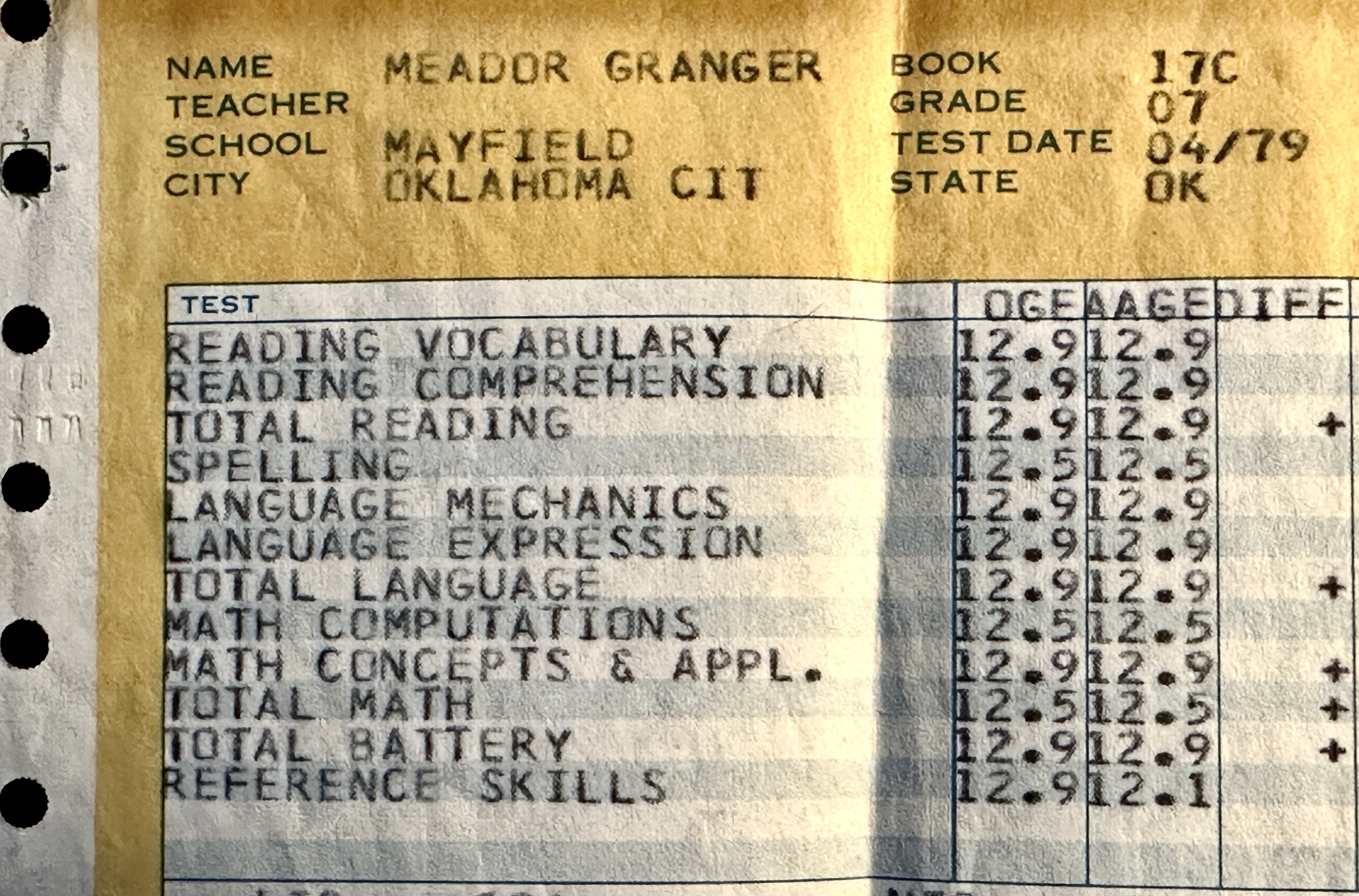
My grade equivalencies on the CAT as a 7th grader

Back in 1984, Oklahoma had about 600 public school districts (it now has about 500), and about half of them gave the California Achievement Test (CAT) and the others gave the Iowa Test of Basic Skills. I took the CAT throughout my time in Putnam City Schools, and both tests were norm-referenced, comparing relative student performance to national norms, as opposed to criterion-referenced exams which show how well students have met various standards.

A Nation at Risk spurred the legislature to establish the Oklahoma School Testing Program, and it mandated ever more tests over the next thirty years. The mandates grew from norm-referenced tests in grades 3, 7, and 10 in 1985 to over two dozen different tests by 2007.

State-mandated testing metastasized from three tests in 1985 to over two dozen by 2007 [Source]

Over the years, more and more norm-referenced tests were then replaced by Oklahoma Core Curriculum Tests which were criterion-referenced. End-of-instruction tests began in seven high school subjects, with students eventually having to pass four of those tests to graduate.

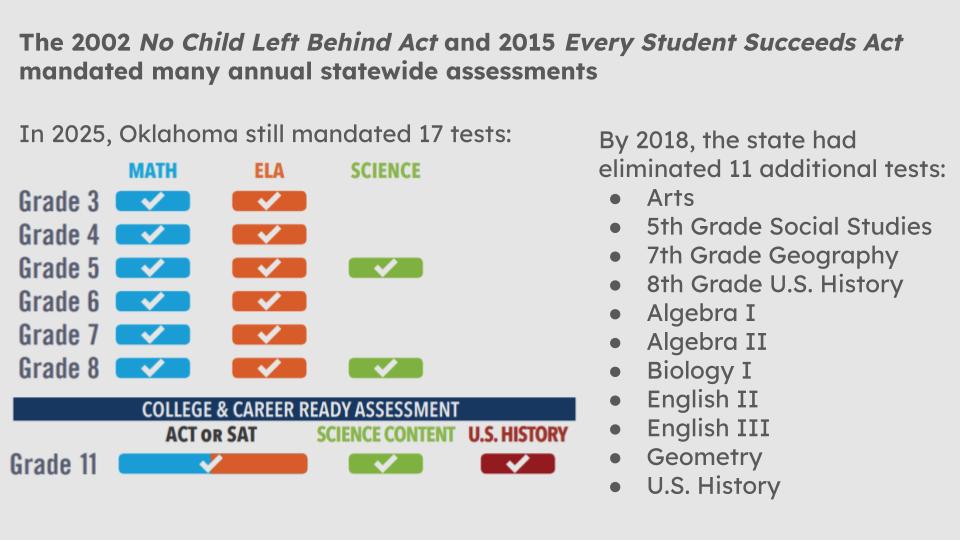
In 2002, the federal No Child Left Behind Act mandated about 16 tests across grades 3-8 plus more in high school. There was an increase in both math and reading scores on the NAEP Long Term Trends in 2008 and 2012. However, after that act was replaced in 2015 by the Every Student Succeeds Act, the legislature finally reduced the time and money spent on state-mandated testing. It had scaled back to 17 tests in 2025, with most of those required by federal law.

The NAEP scores declined in 2020 and 2022 amidst the Covid-19 pandemic. In Oklahoma, all public schools were forced to close for ten days in the spring of 2020, with virtual instruction or distance learning for the remainder of the 2019-2020 academic year. For Bartlesville that meant 33 days of virtual instruction in the spring of 2020.

Bartlesville returned to in-person classes that August, but quarantines, isolations, and staff shortages, along with inclement weather, led to 25 virtual days in 2020-2021 and 14 in 2021-2022. After that, vaccinations and the Omicron wave of infections essentially ended the pandemic emergency. However, in later school years Bartlesville and many other districts then had some planned virtual days and others for inclement weather.

Virtual and cancelled school days for Bartlesville Public Schools

Bartlesville doesn’t plan to have any virtual days in the 2025-2026 school year, anticipating a near-total ban on them in public schools statewide starting in 2026-2027. Things seem likely to return to just some school day cancellations for inclement weather.

It is enlightening to see how the oodles of state-mandated tests, higher standards, and various other reforms after 1982 in the end only yielded a 3% increase in age 9 reading scores and 2% increase for age 13, with all of those gains erased by the pandemic. Math scores showed a bit more lasting improvement, peaking with increases of 11% for age 9 and 8% for age 13 in 2012, but now those have declined to 7% and 3% respectively. In my opinion, the slew of mandates from A Nation at Risk, No Child Left Behind, and the Every Student Succeeds Act had only a limited effect on outcomes while the endless criticism and controls they promulgated exacerbated a nationwide teacher shortage that is especially acute in Oklahoma.

Student poverty

Three factors that we know have an impact on statewide achievement scores are student poverty, per pupil spending, and teacher quality. I’ll illustrate the first of those factors by having you ponder this chart of the NAEP 8th Grade Reading scores over time for our region.

Colorado has led the region in reading achievement since 2010 while New Mexico has been the lowest regional performer for the entire 21st century [Data source]

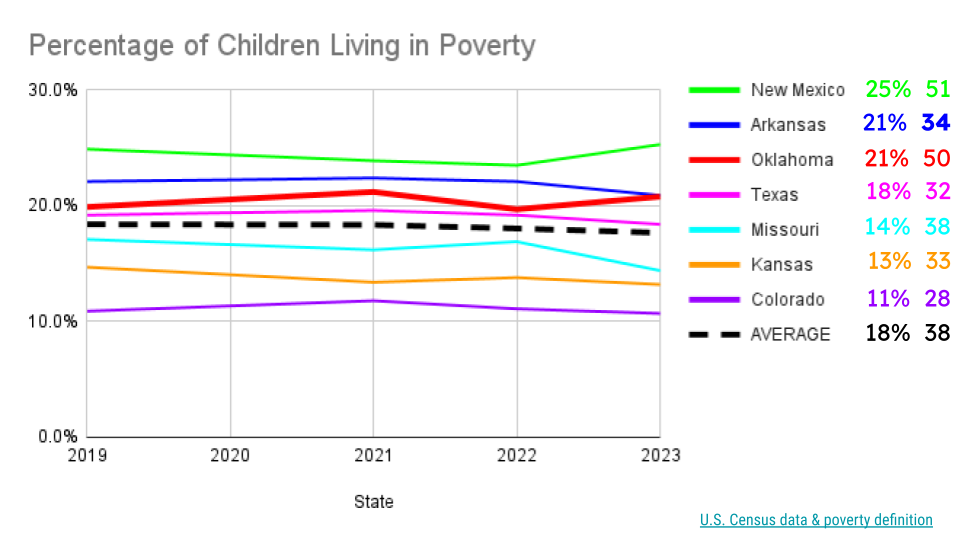
Why is Colorado at the top and New Mexico the bottom? I’d say the most significant reason is because they occupy the opposite extremes when you chart the percentages of children living in poverty.

New Mexico has the most poor children in the region, and Colorado the least; the rightmost numbers in the legend are the states’ 2025 WalletHub school system rankings [Data source]

However, child poverty is not destiny when it comes to a state’s school rank. The outlier in the poverty chart is Arkansas. It usually had more of its children living in poverty than Oklahoma, yet it was ranked 34th in WalletHub 2025, while we ranked 50th. Perhaps Arkansas is investing a lot more in its public schools, or it has measures that drive better outcomes. Let’s first check the regional per pupil expenditures.

Per pupil spending

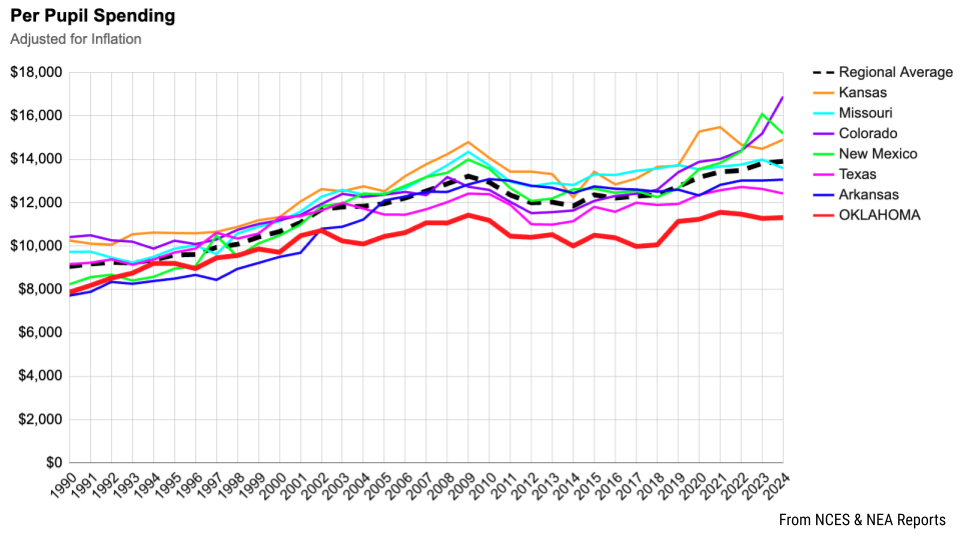
Per pupil spending in the Oklahoma region [from the National Center for Education Statistics’ Revenues and Expenditures for Public Elementary and Secondary Education annual reports and the 2024 National Education Association’s Rankings & Estimates Report]

That chart is adjusted for inflation, so the region increased its real per pupil spending by over 50% during my time in Bartlesville, while Oklahoma’s only grew by about 33%, and Oklahoma’s spending fell away from the group after 2002 for a reason I will identify below.

Per pupil spending is not destiny, either, when it comes to school rankings. In the 1990s, Oklahoma outspent Arkansas, but that changed after 2002. Arkansas has certainly invested more in its students than Oklahoma for over 20 years, but it has spent less than the regional average since 2020 yet its ranking is above average for the region. Also notice how New Mexico has dramatically increased its per pupil funding in recent years, yet its school systems are still ranked dead last by WalletHub. Money alone can’t solve New Mexico’s problems, and I presume Arkansas benefits from some policy and/or demographic differences that raise its rank, although I haven’t been able to tease those out from the data.

However, we certainly can’t ignore Oklahoma’s outlier status in low per pupil spending since 2003. Here’s a chart of its per pupil spending as a percentage of the regional average with some helpful annotations to explain the salient features.

Oklahoma’s per pupil spending took a real hit after 2002 and is now dreadful [from the National Center for Education Statistics’ Revenues and Expenditures for Public Elementary and Secondary Education annual reports and the 2024 National Education Association’s Rankings & Estimates Report]

Taxation

The dramatic rise in spending in the early 1990s was due to House Bill 1017, the most significant education reform law in state history. It lowered class sizes, improved salaries, introduced curriculum standards and testing, and…raised taxes. That’s never popular in Oklahoma, and led to a failed attempt to repeal the law in 1991 and then to State Question 640 in 1992, which made it nearly impossible to raise state taxes. I knew at the time that was a ticking time bomb in the state’s finances. It took about 11 years for it to detonate.

SQ 640 requires that tax increases be approved by a vote of the people or by 75% supermajorities in both legislative chambers. Each method only succeeded once over the following 33 years. In 1994, voters approved a state question that increased tobacco taxes. However, when the dot-com recession hit in the early 2000s, the legislature couldn’t muster the 75% supermajority votes to raise taxes to compensate. So it slashed public school funding by over 8% and the state’s per pupil spending stayed in the mid 80% range for a dozen years, including during and after the Great Recession from December 2007 to June 2009.

Governors and legislators repeatedly cut state income taxes after SQ 640 was passed, which exacerbated the danger of state revenue shortfalls whenever a sharp economic downturn arrived, particularly given the volatility of the petroleum industry.

The legislature repeatedly cut the top marginal income tax rate after 1992, ensuring severe funding cuts in 2003 and revenue shortfalls in 2016 and 2017

Such cuts are heavily weighted toward the wealthy. Below are the average tax cuts by income level in 2016 after a decade of tax cuts.

By 2016, the state suffered dramatic mid-year revenue shortfalls. In Bartlesville, we had to cut 39 positions, including 21 teaching positions, which was 5% of the overall teaching workforce, plus over 20% of the district-level administrators. Average class sizes jumped to levels once banned under HB 1017.

Voters rejected a 2016 state question that would have increased the state sales tax by one penny to help out the schools. However, Bartlesville voters did approve a bond issue to absorb as many of its schools’ operational costs as possible, with limitations given how it is illegal in Oklahoma to pay for salaries or consumable goods with bond issue funding. Shifting about $700,000 in annual operational costs to bond dollars allowed the district to avoid cutting another 15 teachers, but things were at a low ebb.

In 2018, state legislative leader Earl Sears and I devised a tax increase package and Bartlesville Public Schools led a statewide school suspension movement that pressured the legislature into finally achieving 75% supermajority approval in both of its chambers to increase gross production, fuel, and tobacco taxes. That increased state funding for schools by 20%, with most of the money going to salary increases for teachers and support staff to try and slow a growing shortage of qualified teachers, who had been abandoning Oklahoma for better salaries and working conditions in adjoining states.

Even with that historic investment, Oklahoma’s per pupil funding remained the lowest in the region. Unfortunately, the legislature soon returned to cutting sales, corporate, and income taxes. So-called flat budgets for schools consequently eroded our regional per pupil spending percentage back to record lows by 2024.

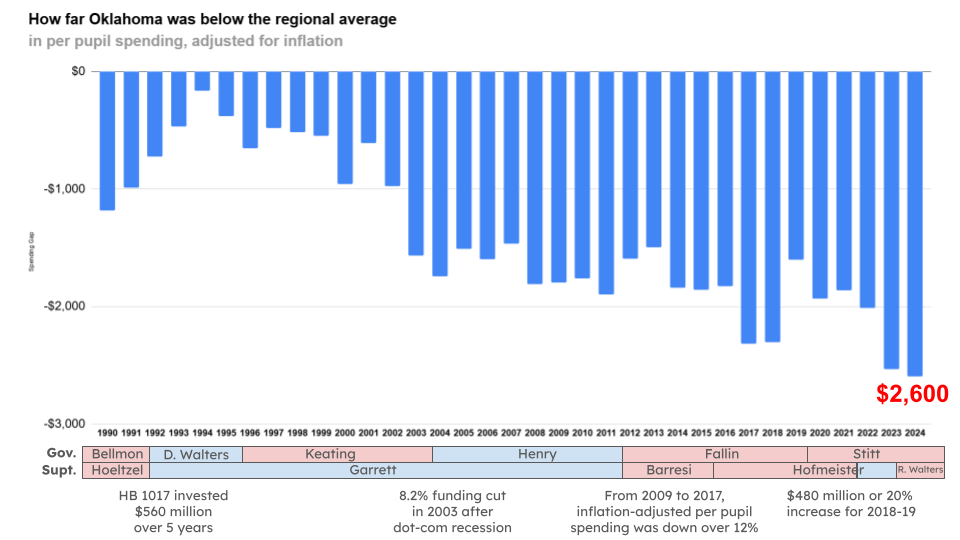
Below is a look at the inflation-adjusted spending gap: how much less Oklahoma spends per pupil than the regional average.

After adjusting for inflation, Oklahoma’s spending gap is now the worst in my career

It simply wasn’t like that when I was a student in Oklahoma’s public schools in the 1970s and early 1980s. Let me illustrate by broadening the view out to Oklahoma’s per pupil funding rank among the 50 states and the District of Columbia from 1970 to 2024.

[Data from the NEA Rankings & Estimates Reports and National Center for Educational Statistics’ Digests]

When I was an elementary school student in the 1970s, the state’s per pupil spending oscillated, but averaged about 42nd out of 51. The late 1970s and early 1980s oil boom allowed that to balloon to about 30th when I was in junior high and high school. However, the oil bust in the mid-1980s led to a dramatic drop while I was in college. Our spending dropped from 33rd in 1983 to 46th by 1989 when I started teaching in Bartlesville. That huge drop is what propelled the House Bill 1017 education reform law and its tax increases.

Funding alone can’t ensure better student achievement or higher overall school rankings, but Oklahoma’s outlier status of having the lowest per pupil funding in the region for over 20 years has crippled its ability to recruit and retain highly qualified teachers. Fifteen years ago, emergency certified teachers were a rarity in Oklahoma. By the budget crises of 2016-2018, 5% of its teachers lacked proper certification. Since then that has more than doubled. A key focus of the 2002 No Child Left Behind Act was to have a “highly qualified teacher” in every classroom. Oklahoma’s political leadership has simply abandoned that goal, keeping school funding flat while emergency certifications continued to climb.

[Data source with percentages computed using NCES and OSDE data]

For the past few years in Bartlesville, about 1 of every 7 teachers has been emergency certified, with a corresponding impact on the quality of instruction.

The state recently eliminated its sales tax on groceries, something crowed about by both Democrats and Republicans in the legislature. That brought our sales and excise taxes to the lowest in the region save for Missouri, which has much higher property and income taxes. That dubious cut, corporate tax cuts, and 10 cuts in personal income taxes since 2003 have left Oklahoma with the lowest tax burden in the region…and woefully underfunded schools, health care, roads, and other services.

[Data source]

The state’s politicians continue to bemoan our personal income taxes, even though they are now the second lowest in the region, because they aren’t zero like Texas. They conveniently ignore that Texas compensates for a lack of income tax with property taxes that are 2.25 times higher than Oklahoma’s, along with higher sales and excise taxes.

Why, since Oklahoma’s per pupil funding is so dire, haven’t teachers risen up like they did back in 2018? Because their salaries aren’t low enough yet in relation to adjoining states, and they would be vilified by the state’s current political leadership.

[Data source]

Back in 2016-2017, Oklahoma’s teachers salaries were the lowest in the region. In 2024-2025, they were below the regional average but still above Missouri, Kansas, and Arkansas. So teachers and boards of education don’t have enough incentive to mount another difficult campaign to improve the situation and bolster record-low per-pupil spending via some sort of tax increase.

Things will inevitably take a turn for even worse in the next moderate or significant economic recession. In 2024, the legislature’s own LOFT budget stress test showed, “Oklahoma’s State Budget is not prepared to manage the effects of a moderate downturn with only its current reserves”. The study pointed out that states should hold at least 15% of prior year spending in their reserves, and states like Oklahoma that are more reliant on volatile sources of revenue should exceed that. However, Oklahoma had only 12% in reserve, and it would need a 25% reserve to cover the projected impact of even a mild downturn.

[Source]

Oklahoma has only raised taxes twice in the past 33 years while repeatedly cutting various revenue sources. That has reduced the tax burden from 9.5% of personal income in 1995 to 7% in 2025 as its public schools foundered.

Given the state’s conservative politics, I don’t expect Oklahomans to significantly increase their investment in their own quality of life with meaningful spending increases on schools, health care, roads, or other state services. Thankfully there are some communities, such as Bartlesville, that are willing to pass bond issues and sales taxes to invest in their schools and their city services, but such efforts can only go so far. That reality makes the conclusion of my career in Oklahoma’s public schools both welcome and bittersweet.

Posted in education, politics | 2 Comments