
¿Quién será?
Who will it be? So asked Luis Demetrio in 1953 in his lyrics for the song he wrote for singer Pedro Infante, with the first few chords provided by bandleader Pablo Beltrán Ruiz.
Who will be the one who loves me?
Who will it be?
Who will be the one who gives me her love?
I don’t know if I’ll be able to find her
I don’t know if I’ll love again
I’ve wanted to relive
The passion and warmth of another love
Another love that would make me feel
That would make me happy, like I was yesterday
That tune might well be familiar to you, but with the title of Sway and different English lyrics that American songwriter and lyricist Norman Gimbel applied to it. There are many covers of it, including:
- 1954 – Dean Martin
- 1960 – Bobby Rydell (or here in better sound quality), returning in disco form in 1976
- 1960 – Rosemary Clooney and Dámaso Pérez Prado
- 1963 – Julie London
- 1965 – Cliff Richard
- 1998 – Dark City with Anita Kelsey’s vocals in the theatrical release & Jennifer Connelly singing in the later Director’s Cut
- 1999 – Shaft, originally meant to feature Clooney’s 1960 vocals but instead featuring Donna Canale
- 2004 – The Pussycat Dolls
- 2004 – Michael Bublé
Who will it be, indeed! There was even a version by the actor Brent Spiner, who played Data in Star Trek: The Next Generation…but I’ll leave finding that as a mercifully optional exercise for the reader.
I first encountered the song in Dark City, but I want to highlight the 1960 version by Connie Francis because she sang the original Spanish lyrics with just a line from Norman Gimbel’s version at the end.
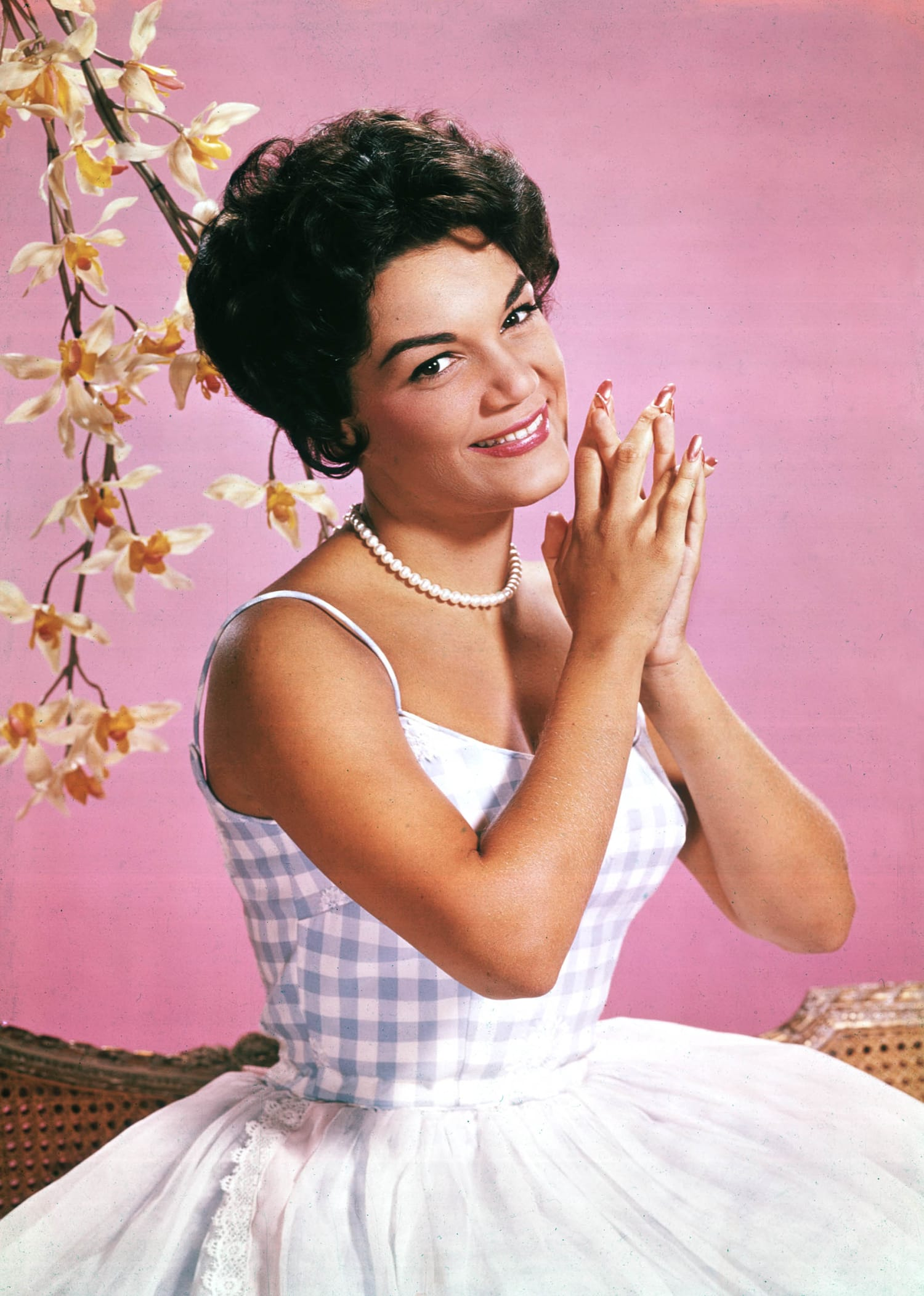
Hearing Connie’s version of ¿Quién será? reminded me of my surprise when I discovered Eydie Gormé’s splendid Spanish-language recordings with Trio Los Panchos.
I wasn’t at all familiar with Francis, even though she was the most popular female singer in the USA between 1958 and 1964. Her final top-ten hit was in 1962, and her last top-forty entry in 1964, two years before my birth. A 2022 survey showed that she had more of her songs dropped from radio airplay than anyone other than the Osmond family. A brief odd resurgence came in May 2025 when her 1962 song Pretty Little Baby went viral on TikTok, but she died in July.
I decided to learn more about Concetta Rosa Maria Franconero, who was convinced at age 13, by television host Arthur Godfrey, to change her name. In 1957, she had a breakthrough covering the 1923 tune Who’s Sorry Now?
Published in 1923 as a waltz, Isham Jones had a hit with an instrumental foxtrot version that is now in the public domain.
From 1955 to 1957, Francis had recorded 20 sides for MGM Records, with only one duet even making the charts. MGM gave her one last shot at a record before dropping her, and at the recording session in 1957, her father insisted on her covering Who’s Sorry Now?, convinced it stood a chance of becoming a hit because it was a song adults already knew and that teenagers would dance to if it had a contemporary arrangement.
Connie did not like the song and argued about it with her father heatedly, delaying the recording of the other two songs during the session so much that she thought no time was left on the continuously running recording tape. Her father insisted, however, and when the recording of Who’s Sorry Now? was finished, only a few seconds remained on the tape.
Months later, thanks to Dick Clark featuring her song on American Bandstand, over a million copies had been sold and Francis was suddenly launched into worldwide stardom. In April 1958, Who’s Sorry Now? reached number 1 in the UK and number 4 in the United States.
Connie’s strong and penetrating vocals remind me of the power of the other popular female singer during her hit-making era, Brenda Lee, or Little Miss Dynamite.
Francis recorded music in English, Italian, French, German, Greek, Swedish, Yiddish, Japanese, and Spanish. Curious about her songs in Spanish, I loaded her 1960 album Connie Francis Sings Spanish and Latin American Favorites on my iPhone and listened to it in the car while driving to a restaurant. I was startled when Vaya con Dios played. I’ve long been used to American mispronunciations of the song, such as you’ll hear in this version with guitarist and multi-tracking pioneer Les Paul and his wife Mary Ford:
Contrast that to the soft, slow, and far more accurate take on it by Connie Francis, who had studied Spanish in school:
I learned schoolboy Latin, not Spanish, but that sounds exquisite to my uninformed ear. Francis was not always so fluent in the other languages, and I laughed at her story of how her German version of Ev’rybody’s Somebody’s Fool, retitled Die Liebe Ist ein Seltsames Spiel, was considered unintelligible by Deutsche Gramophon. She badgered them to release it anyway, and they finally conceded after lopping off the first verse, and she crowed how it became “the best-selling non-local record ever in Germany”.
Why had I not heard more of Connie Francis in my youth? Well, in 1967, cosmetic nasal surgery made singing more difficult for her, with her having to avoid air-conditioned venues. Then, in 1974, she was brutally attacked.
That November, several months after a miscarriage, she was booked for eight performances at the Westbury Music Fair on Long Island, staying at a Howard Johnson’s Motor Lodge in Jericho, New York. While she was asleep on the morning after her second show, an unknown man entered her motel room through a sliding glass door that appeared locked but was easily unsecured from the outside. He brutally raped and beat her at knifepoint, bound her to a chair and tipped it over, and piled heavy mattresses on her. She managed to slowly crawl to dial the telephone for help.
The rapist was never captured, and the attack had varied consequences: Norwegian inventor Tor Sørnes was inspired to invent the keycard lock, while Francis successfully sued the hotel chain for poor security and that led to improvements at many lodges. However, the incident left Francis with post-traumatic stress disorder. She battled agoraphobia, depression, and developed an opioid medication addiction. A follow-up surgery to address her vocal problems only made things much worse, with even more surgeries before she could sing again. In 1981, her brother, an attorney who testified against mob activity, was shot to death by a paid of gunmen in his driveway.
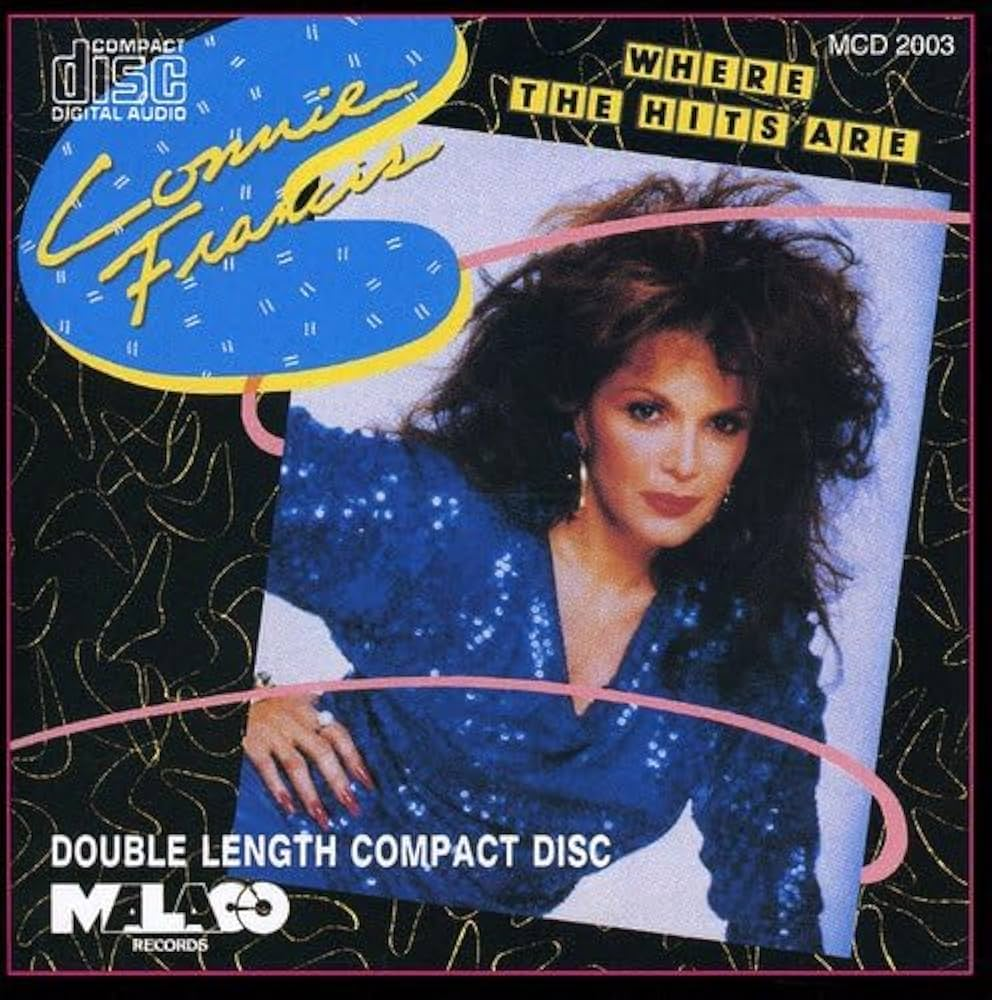
Francis eventually was able to perform again, even re-recording several of her hits and some other classics in 1989. She finally retired to Florida in 2018.
Back when I was teaching physics, I would often play one of Connie’s songs for my students when we learned about nuclear energy. I showed them parts of the filmTrinity and Beyond, and her Where the Boys Are graced a sequence about the last above-ground nuclear tests the USA conducted before the limited test-ban treaty took effect.
I’ll close by noting that the lyricist Gimbel also co-wrote Killing Me Softly With His Song and the English-language lyrics for The Girl from Ipanema, How Insensitive, and I Will Wait for You. There are many covers of that final song. The original version, Je ne pourrai jamais vivre sans toi, translates to “I could never live without you” and originated in the French musical drama Les Parapluies de Cherbourg (The Umbrellas of Cherbourg) with the original French lyrics by film director Jacques Demy, with Danielle Licari dubbing for Catherine Deneuve in the film. I have an optical disc of that awaiting my attention…when I’m ready to have my heart broken.








 Meador Manor
Granger, since the Catlins were your neighbors as you grew up (and mom bought the Catlin’s house becoming your folks neighbor), here’s a good one you might enjoy!
in the late 70s early 80s. I worked for Bill Catlin at Wylie Post. Late one Winter, afternoon F. Lee Bailey, the Attorney, arrived in his Merlin turboprop airplane. The passenger traveling with him was Connie Francis. I’m not sure what their business was in Oklahoma City, but they were going to be gone from the airport for a few hours and then come back to leave.
Flea Bailey requested that his airplane we put in the heated hangar until they returned. Unfortunately, the Catlin’s nephew James, try to put the airplane through the side door of the hangar, which was too short. The top of the tail was damaged and Mr. Bailey and Miss Francis were stranded overnight until we could arrange a charter for them.
miss Francis not being prepared for the cold wanted to know if we had a department store where she could get a coat. By this time it was about 8 o’clock at night. Streets, Rothchild’s, and all the other department stores were closed so we offered to take her to Target. In her dismay, she replied, “Well, that’s just a sundries store! Don’t you have a Sac’s or a Neiman Marcus?” About that time, their ride to the Waterford arrived so I don’t know if she ever got a coat. We figure the snooty b***h could just freeze her ass off!
Of course in the end, it took several weeks to get the airplane repaired. During that time, Catlin had to pay for Learjet charter to fly them around. And our Fuel sale bonus money for the next year was gone. As of matter fact, I don’t ever recall getting another quarterly fuel bonus! Somehow, James kept his job. Must be good to be a relative!
small world isn’t it!
Charlie Wilcox
That’s a great story! Thanks for sharing.