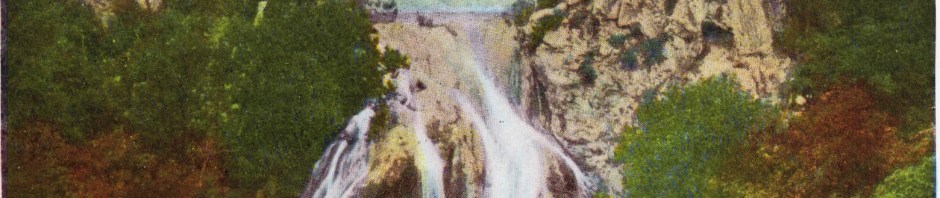

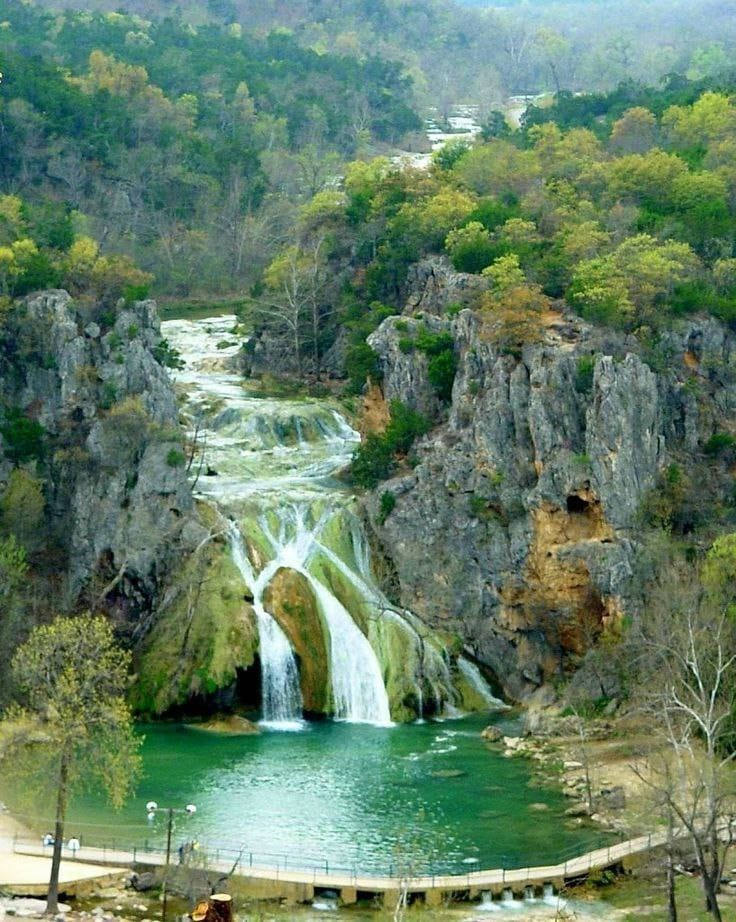
Today’s postcard from a 1940 Oklahoma souvenir pack is of Turner Falls, where Honey Creek drops down around 60 feet near Davis in the Arbuckle Mountains, although some sources claim 77 feet, which is likely inspired by nearby highway 77. Honey Creek and the falls are a lovely oasis in the old worn-away Arbuckles, with a big swimming pool, hiking trails, caves, and the ruins of a little hillside castle.
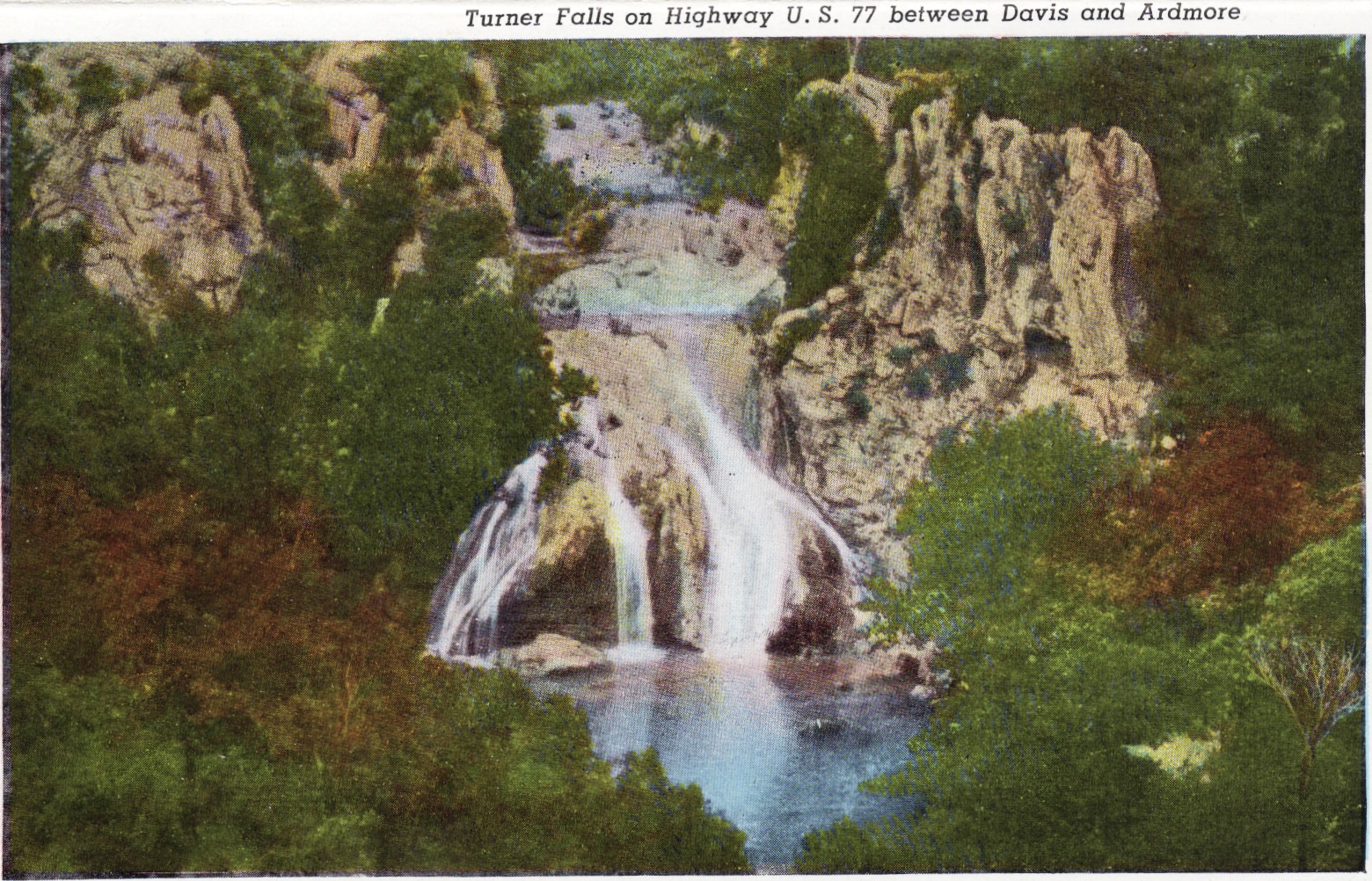
I hiked its trails during Thanksgiving Break in 2012, but my earliest clear memory of it is from over 30 years earlier than that, when I camped there in junior high with my late friend Jeff and his parents.
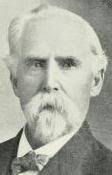
The waterfalls are named after Mazeppa and Laura Turner. He was a Scottish-American farmer who married Laura Johnson, a Chickasaw woman, in Tennessee in 1860. “Zep” Turner fought for the Confederate army during the Civil War and was wounded twice. In 1870, the Turners moved to Stringtown in the Choctaw Nation to farm. Zep wanted to raise cattle, so in 1878 he moved to what is now Murray County and founded Dougherty.
Laura’s allotment included the area around the current cemetery at Dougherty. They began to build a home, but uncovered ancient Indian graves. So the Turners applied for the allotment to be moved and acquired the land around what became Turner Falls.
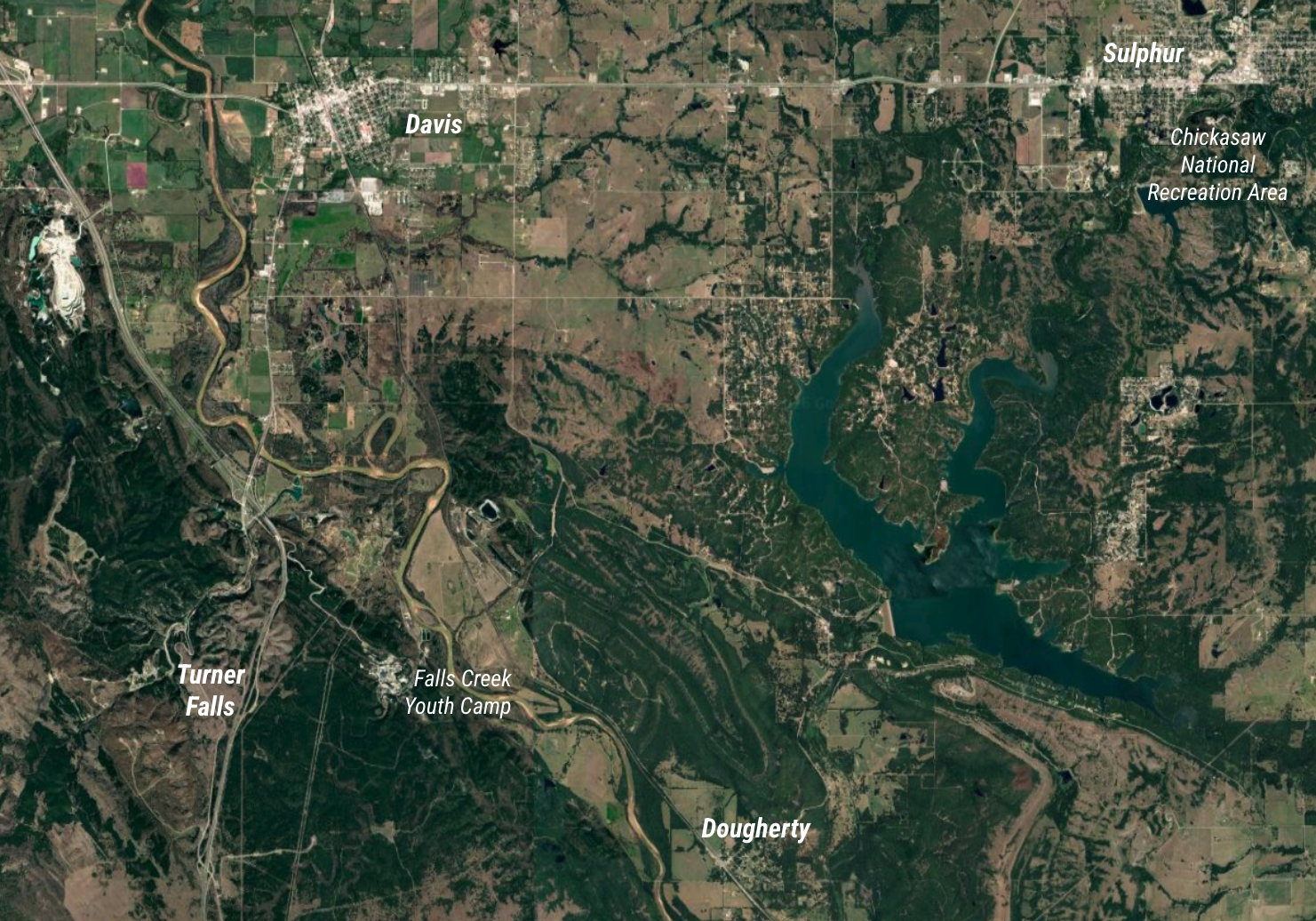
Laura died in 1890 at age 50, and Zep married Alice Adkins. They moved to nearby Davis in 1900, and Zep was elected to the first state legislature, making the first speech in the House of Representatives in 1907. He was responsible for the Oklahoma School for the Deaf being created in Sulphur.
Zep died in 1920, but a year earlier he had sold 710 acres around the falls to a group of Davis businessmen who planned to develop it into a resort. In 1925, Davis taxpayers voted 134 to 35 in favor of issuing $21,000 in bonds to purchase 370 acres of the property, although the newspaper reported, “Little excitement or interest was shown in the election. Very few women were eligible to vote, as a voter had to be a taxpayer.”
In 1933, the Civilian Conservation Corps built walls, roads, and trails in the park, including miles of trail along Honey Creek, enlarging the Blue Hole swimming pool with a new dam, and building an entry road requiring a quarter mile of retaining walls up to fourteen feet high. The city operated the park until 1950, leased it out until 1978, and then resumed managing it.
To a kid, one of the best features of Turner Falls is Collings Castle, the ruins of the vacation home of the founder of the College of Education at the University of Oklahoma. As an undergraduate, I attended several classes in Collings Hall at OU, at the time having no idea its namesake was associated with Turner Falls.
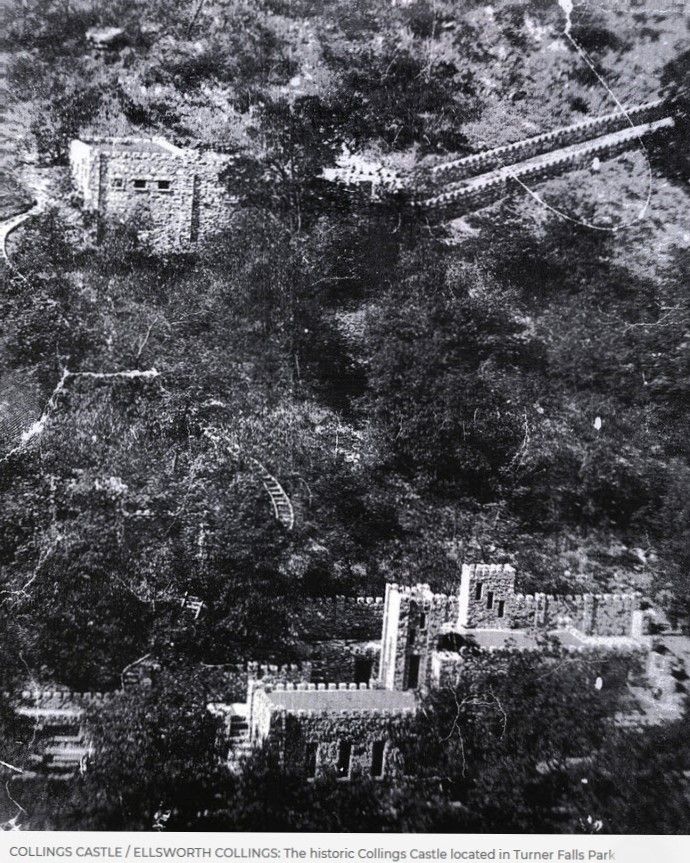
The grounds of the vacation home were less than an acre, with the main house having one of its fireplaces embellished with rose rocks. There were once two bunk houses and two outhouses, with a steep stairway leading up the hillside to a stable area that later served as a garage.
Dr. Ellsworth Collings formed the College of Education in 1929, and in the 1930s he had his oddball vacation and summer home constructed with very low ceilings and doorways leading to extremely steep and narrow spiral stairways, features which have attracted countless young explorers to its ruins.
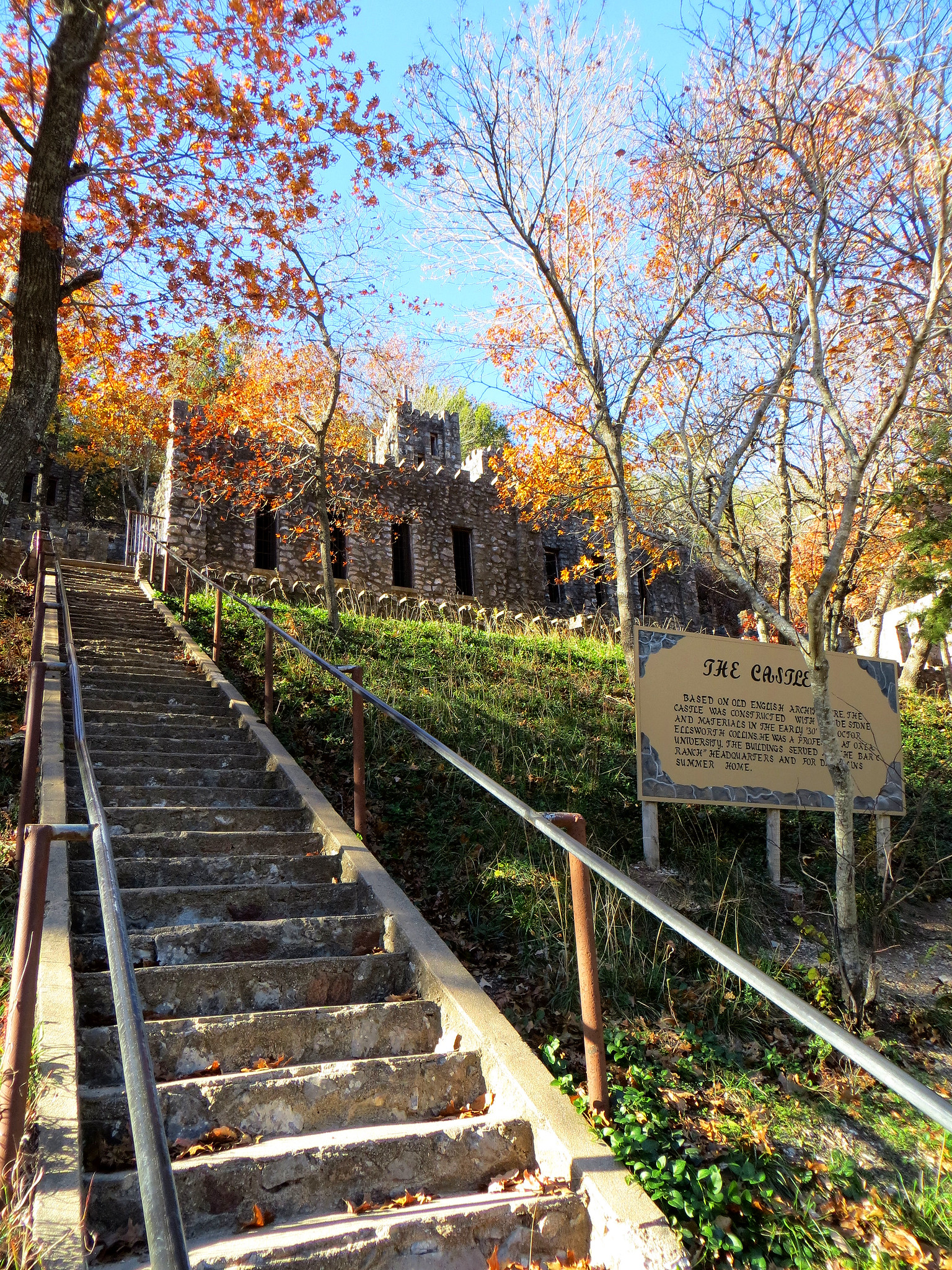
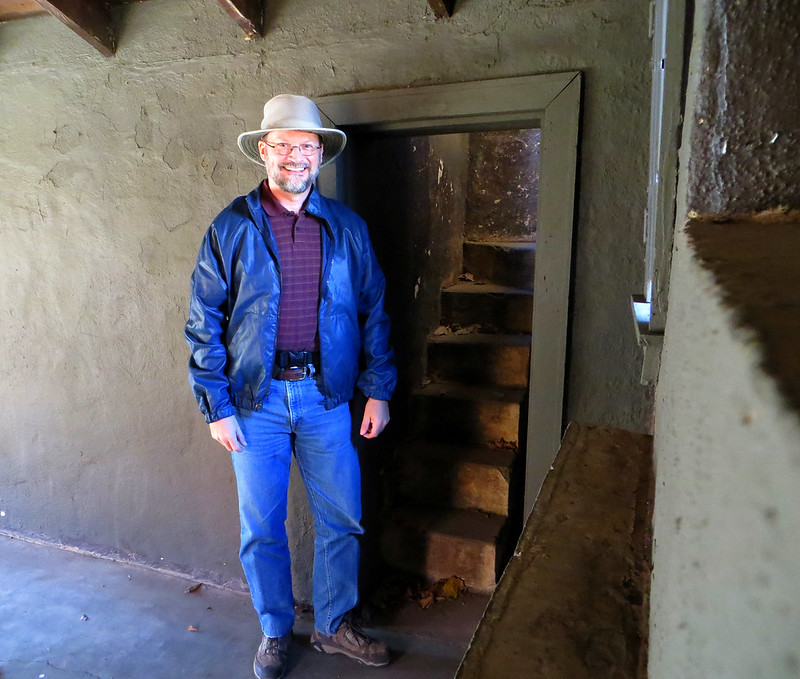
Collings hired a Mr. and Mrs. Parsons and their son, from Norman, to help him construct his castle, with Collings bringing concrete mix down on the weekends for Mr. Parsons to use during the week. The rocks were cut on an adjacent parcel and hauled up and down by hand and wheelbarrow, and the Parsons lived in a tent at Turner Falls during the construction.
Other education college faculty had nearby cabins, such as Wyldacre, and Collings also had the large Bar C Ranch on the higher ground above, with a larger cabin serving as his personal museum with spurs, branding irons, and miniature saddles.
A Bartlesville Connection
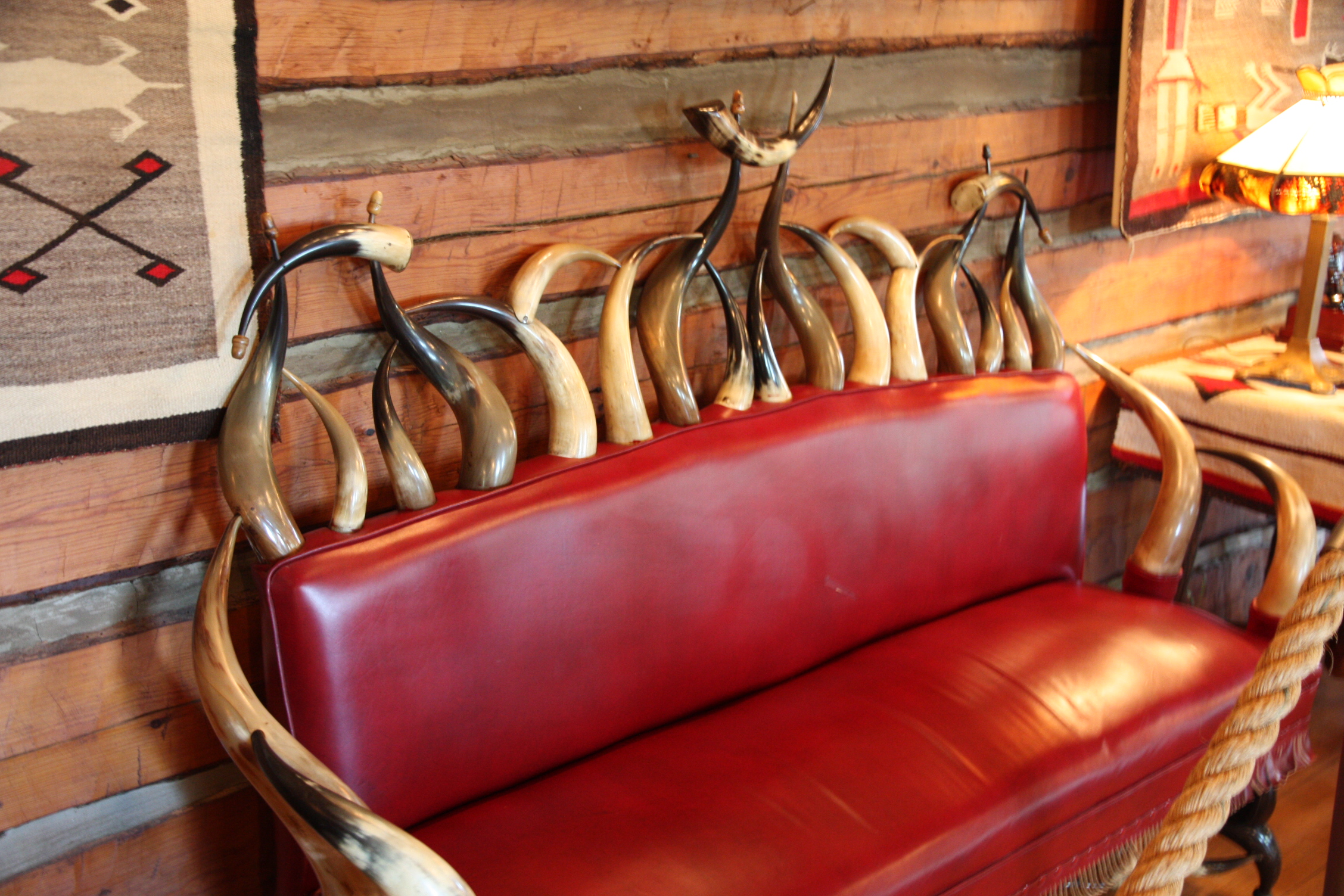
Collings also had a massive collection of western paintings, ornamental longhorns, etc. In yet another Bartlesville connection, much of his collection is displayed at Woolaroc as well as at Oklahoma City’s National Cowboy & Western Heritage Museum.
The castle was eventually sold by Collings’ grandson and passed through multiple owners until the City of Davis bought it in 1977 and it became part of the Turner Falls Park.
You can read more about Turner Falls in my 2012 day hiking post. Tomorrow’s postcard is from US 77 just above the falls.







 Meador Manor