Today’s postcard from a 1940 Oklahoma souvenir pack is of eight Indians, including three men wearing feather war bonnets. Historically, those were only worn by the Plains Indian tribes whose ancestral territories extended into the region, not the tribes forcibly relocated to the area in the 1800s.
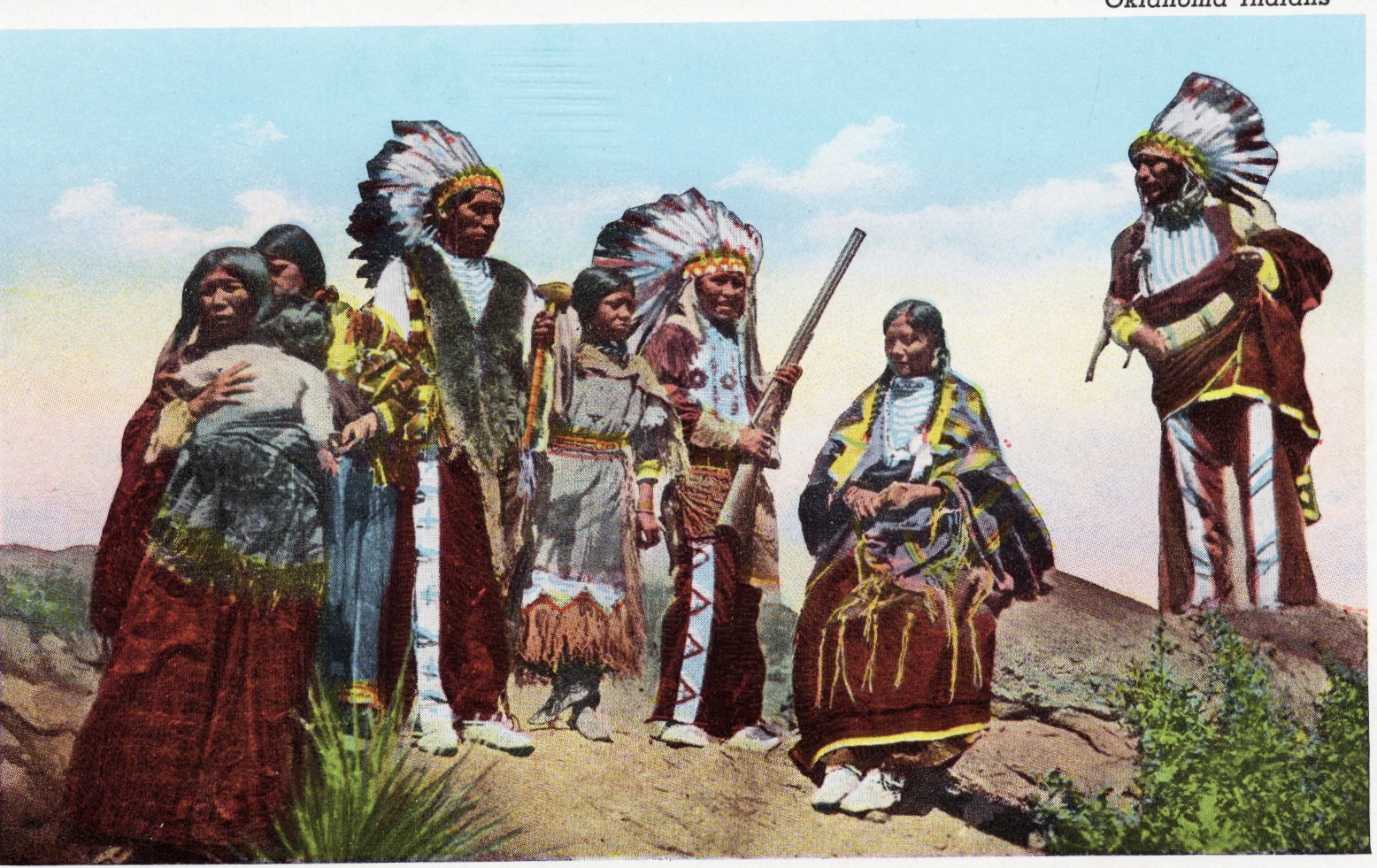
The tribes with feather war bonnets included the Cheyenne, Arapaho, Comanche, and Kiowa. War bonnets were once sacred regalia in which each eagle feather was individually earned through acts of bravery or leadership. However, they were later popularized through Wild West shows and early Hollywood, leading some non-Plains tribes to sometimes adopt them in the late 1800s for their tourist appeal. The Osage historically wore roach headdresses of porcupine hair or turbans of otter fur, Delaware men sometimes sported deer hair headdresses, while Cherokee wore wrapped cloth turbans, sometimes with a hair roach or single eagle feather.
A different reproduction of the postcard claimed the Indians were photographed at the Miller Brothers’ 101 Ranch, a Wild West show near Ponca City that operated off and on from 1905 to 1931. In 1881, George Washington Miller first used the 101 brand on his cattle. He and other ranchers were forced out of the Cherokee Outlet, and in 1893 he leased Ponca land. His ranch eventually covered more than 100,000 acres or over 156 square miles.
Miller’s sons helped diversify the ranch into growing various crops with fruit orchards and vegetables, plus livestock. George Washington Miller died in 1903, and his son Joe ran the operations and farming, his son Zack controlled the livestock, and his son George Lee Miller handled the finances. They added an electric plant, cannery, dairy, tannery, store, and mills to the ranch with its main house about 6 miles southwest of Ponca City. Ernest Marland searched for and found oil on the ranch land, increasing the brothers’ profits, and the basement area of Marland’s Grand Home in Ponca City is now a 101 Ranch Museum.
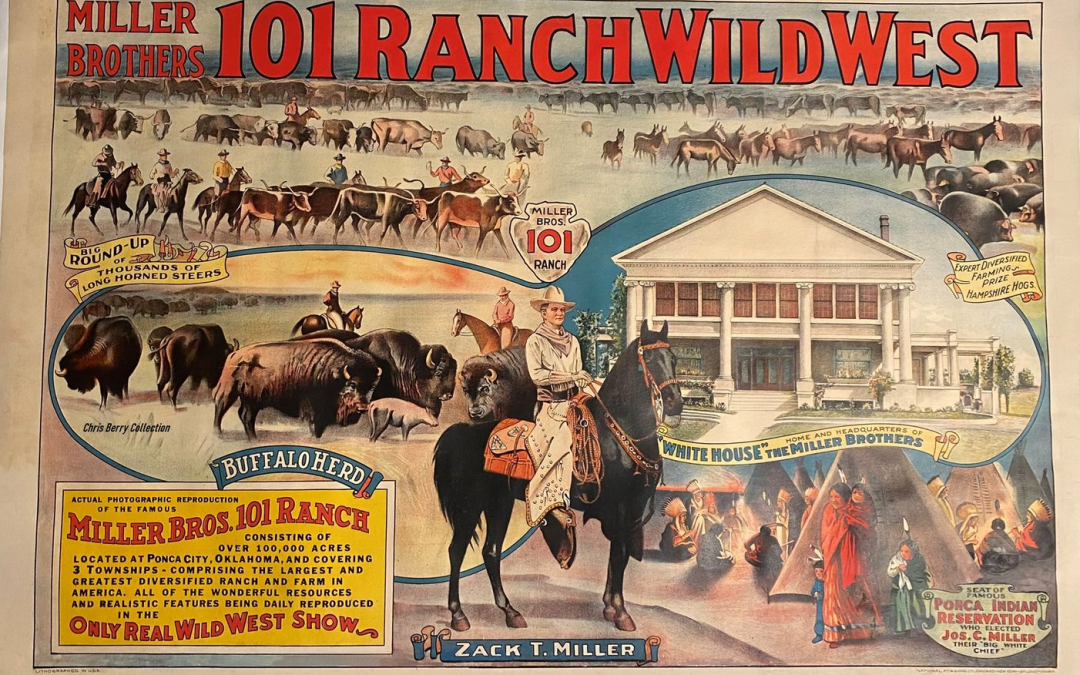
The ranch’s claim to fame was its Wild West shows, which began in 1905. At the first show, the famous Apache Geronimo, at age 76, killed a bison from the front seat of a car. Their show toured seasonally from 1907 to 1915 and 1926 to 1931 across the country and it travelled to Mexico, Canada, Europe, and South America. The ranch assisted with motion pictures by Will Rogers, Tom Mix, and others. In 1916, Buffalo Bill Cody combined his show with the 101 Ranch show, but in the 1920s competition from movies, circuses, and rodeos reduced the show’s popularity.
Joe died in 1927 and George Lee in 1929. The ranch went into receivership in 1931, and the land was divided and leased with much of the personal property auctioned off. Zack died in 1952.
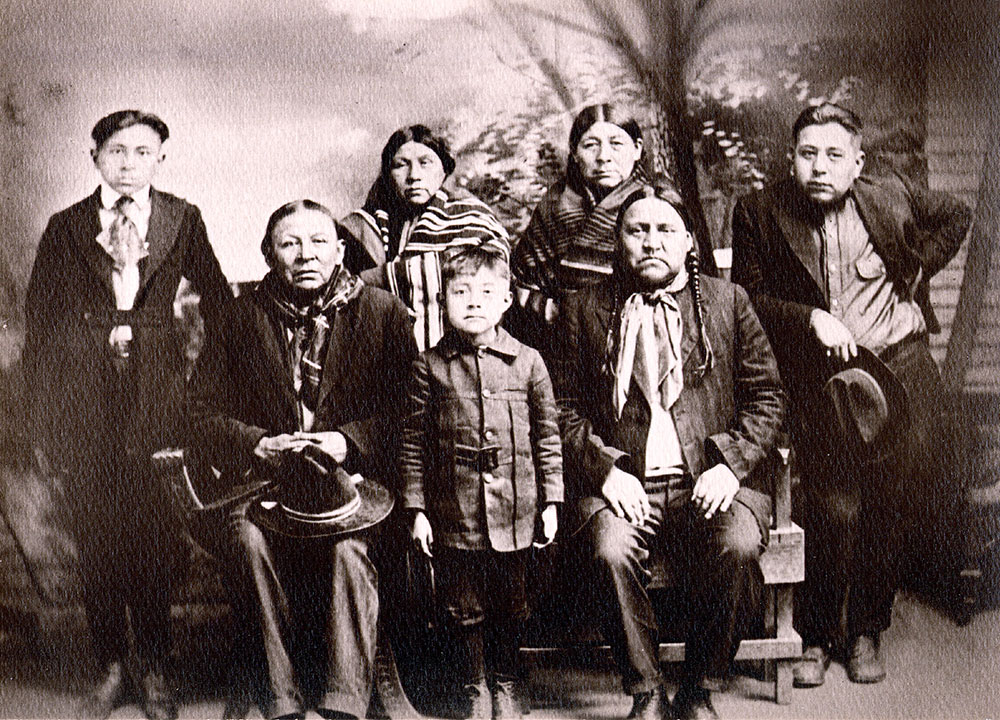
Having old Geronimo shooting a bison from a car at age 76 was as potentially exploitive as the postcard. Maybe the Indians enjoyed such stunts and posing for photographs in traditional outfits, but it likely was an anachronistic example of generalized regalia to evoke a sense of “The Wild West” for tourists. Below is a quite different photograph of an Osage family in the early 20th century.
A Bartlesville Connection
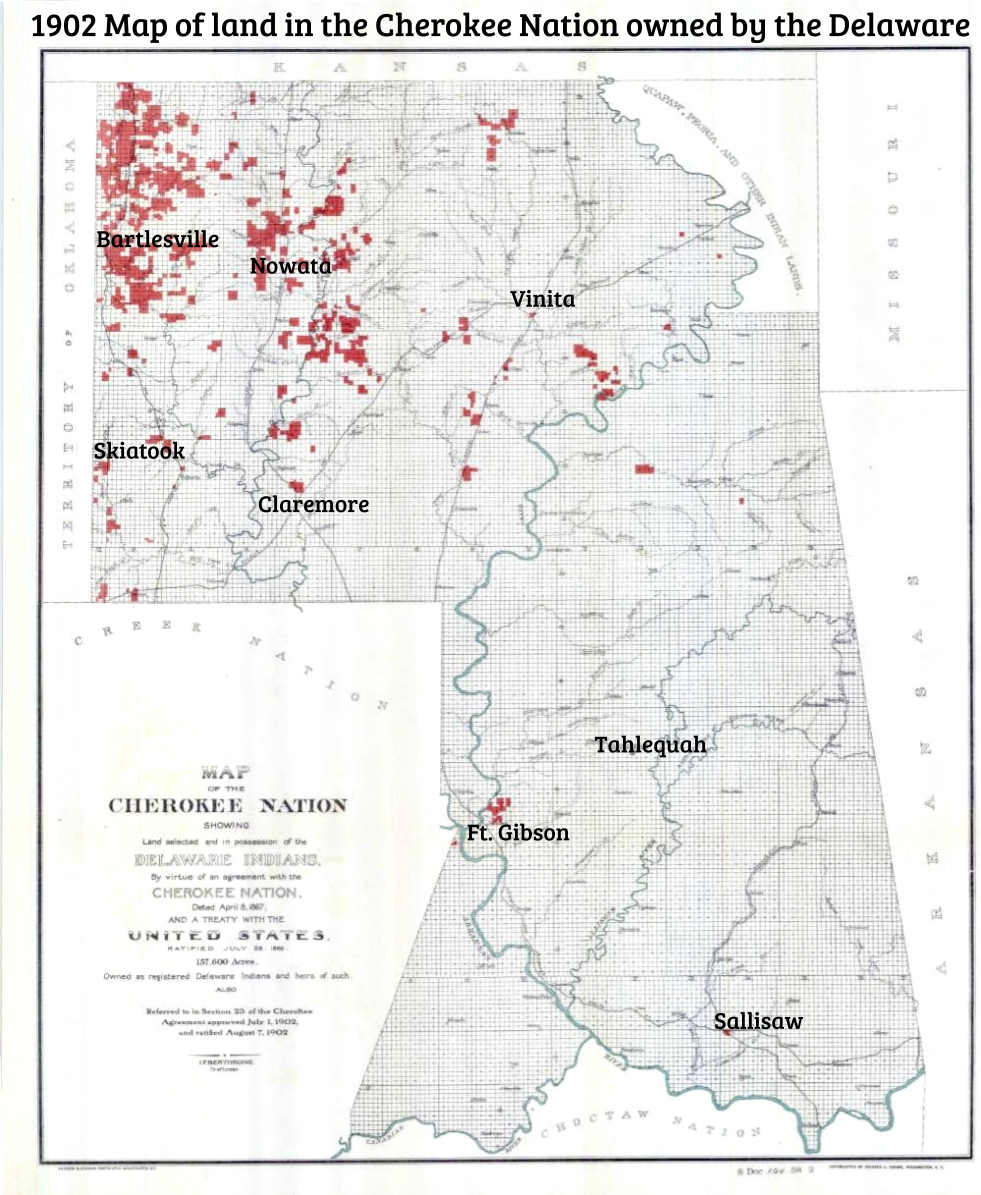
Not only is Bartlesville located in the old Cooweescoowee district of the Cherokee Nation, just beyond the eastern border of the Osage Nation, but it is also the headquarters of the Delaware Tribe of Indians, a federally recognized tribe of the Lenape people. In 1867, the Eastern Delaware of Kansas negotiated with the Cherokee Nation to purchase 157,600 acres, with most of those plots clustered in the northwest districts of the Cherokees, in modern-day Washington, Nowata, Rogers, Craig, and Tulsa counties.
In 1868, Jacob Bartles married Nannie Journeycake Pratt, daughter of Delaware Chief Charles Journeycake. They moved from Kansas to Indian Territory in 1872, and Bartles purchased Nelson Carr’s gristmill in modern-day Bartlesville in 1875.
Tomorrow’s postcard will take us to the state’s largest waterfall.





 Meador Manor