
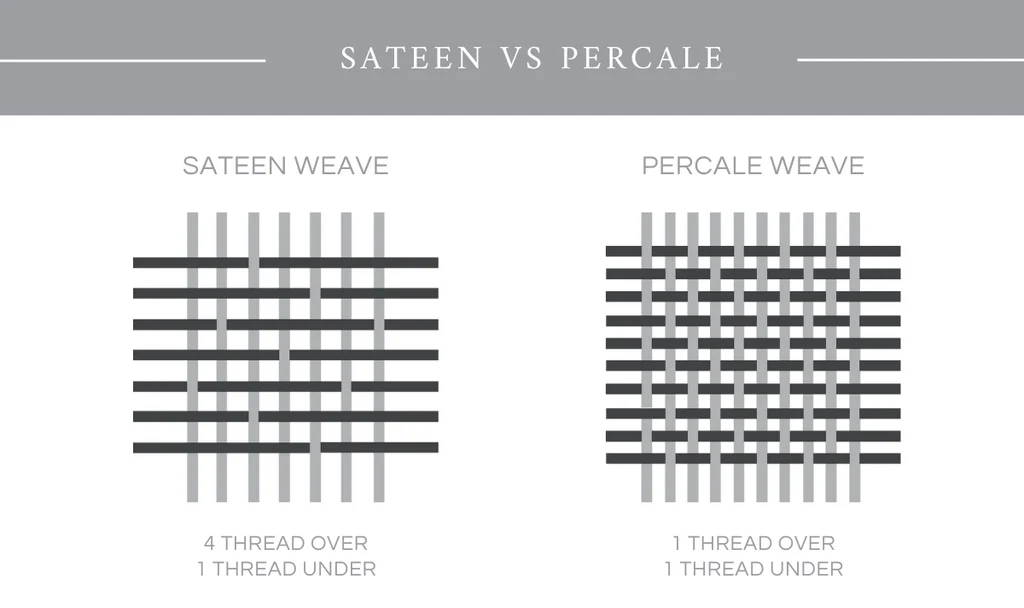
When I first bought bedsheets, I followed my mother’s lead in buying 100% cotton percale. I had no idea what percale meant, but it is a simple one-over, one-under crisscross grid weave pattern. To those familiar with weaving, the warp and weft threads alternate equally.
Eventually they wore out, and I wanted something smoother. I liked the feel of a sateen weave of four threads over and one under, which is more fluid and relaxed. It sleeps warmer than percale but is still breathable.
I’d always heard of silk sheets as being luxurious, but I found them far too slippery. I felt like I might slide out of the bed at times, and they would never work once I started elevating the head of the bed to reduce acid reflux. So I stuck with a sateen weave, but switched to rayon. Polyester is entirely synthetic plastic fiber derived from petroleum and is generally stiffer and sleeps warmer than rayon, which is a semi-synthetic plant-based fiber. However, even after choosing rayon, I had several forms of rayon to choose from, and some trademarks to wade through.
The earliest form of rayon was viscose, which has more breathability than cotton, but its manufacture is quite polluting. Wood pulp, which might be from beech, pine, eucalyptus, or bamboo, is dissolved in solvents like sodium hydroxide into brown wood pulp. That is washed, cleaned, and bleached. It is treated with carbon disulfide and then dissolved in sodium hydroxide to create viscose, which is forced through a spinneret into fibers of regenerated cellulose, which is spun into yarn and then woven or knit into viscose rayon fabric.
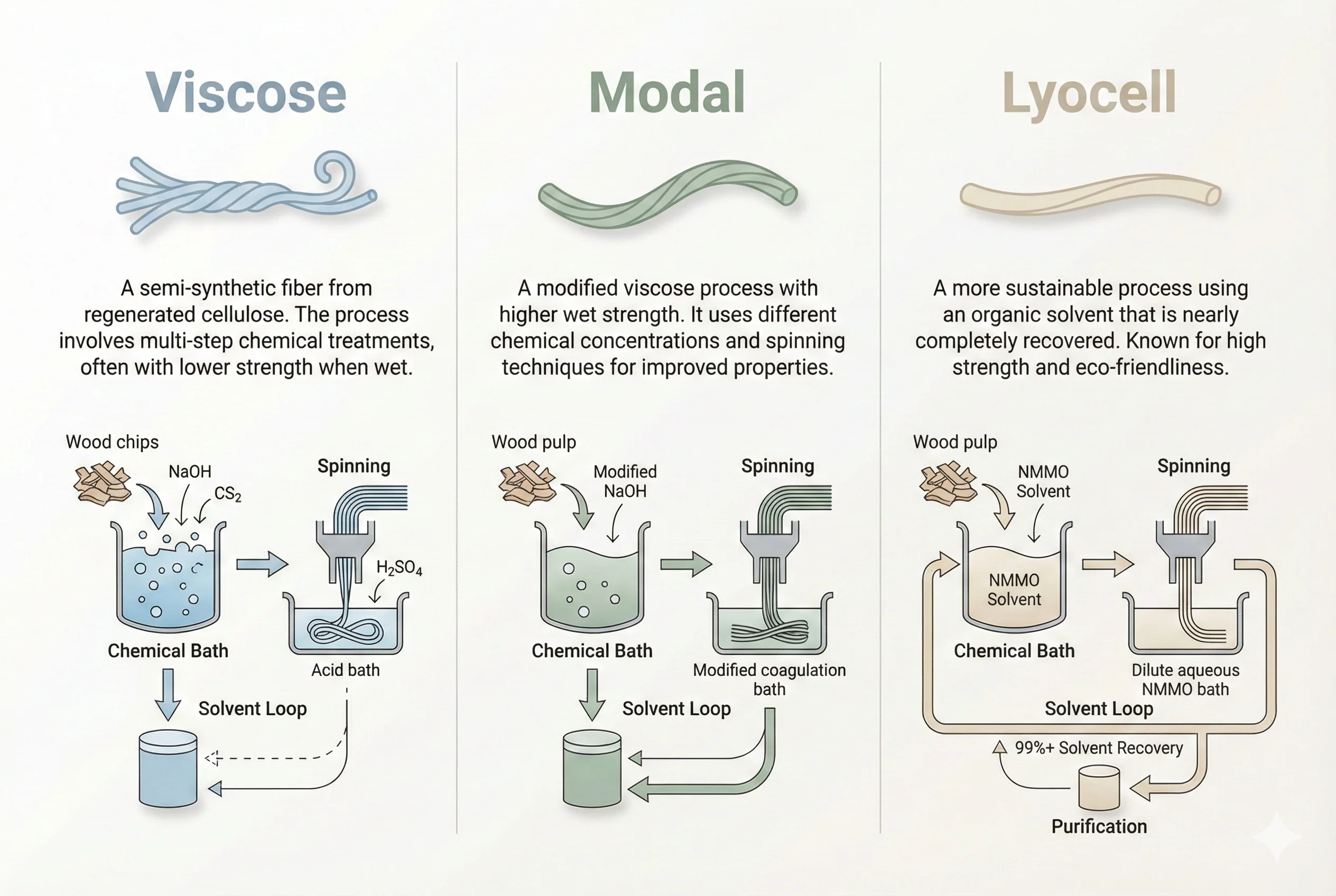
Modal came next, modifying the viscose process for beechwood pulp by using lower concentrations of sodium hydroxide and an extra stretching phase to align the molecules tightly, followed by specific heat treatments.
Lyocell is the most recent form. It again starts with wood-based cellulose, usually eucalyptus trees, which are chipped into small pieces and broken down into wood pulp which is dissolved in a non-toxic organic solvent. The pulp is then spun into continuous fibers that are woven into yarn. The closed-loop manufacturing system captures and reuses up to 99% of the water and solvents, making it much more environmentally sound than the manufacturing of viscose or modal.
Finally, TENCEL™ is a trademark of Austrian Lenzing AG that is applied to both lyocell and modal fibers of rayon.
All forms of rayon dissolve the wood pulp, so any antimicrobial properties of the original plant do not survive. Viscose loses strength when wet, so it is more prone to stretch, tear, or shrink in the wash. Modal retains more strength when wet and can often tolerate tumble drying without damage, but it is more expensive than standard viscose and can still pill or stretch over extended, rough wear. Lyocell is the strongest form, holding up quite well to washing, and resists wrinkles, pilling, and bacterial growth. However, it is sometimes the most expensive option, can feel warmer or heavier than viscose depending on the weave, and if it is blended with synthetics like elastane or polyester it loses its eco-friendly biodegradability.
I’ve bought and used sheets of all three types: bamboo viscose, beech modal, and eucalyptus lyocell, typically with 300-thread-count sateen weaves. They don’t hold up as well as cotton percale, but I much prefer them for sleeping. My experience is that rayon sheets, when always washed in cold water and tumbled dry at low temperature, typically last about nine years when used in two sets alternated weekly.
When my first beech modal sheets thinned to where they needed replacing, the vendor no longer offered that fabric, instead steering me to either bamboo jersey or bamboo sateen, meaning viscose. Jersey is stretchy and ultra-soft and is knitted rather than woven. 100% cotton jersey fabrics are breathable, but synthetic blends or rayon jerseys trap body heat. I tried jersey rayon sheets long ago, but they were too hot for sleeping unless it was winter and I kept the house quite cold.
So I bought some bamboo viscose sheets. They were light and have held up thus far with gentle treatment, but when the alternate set of beech modal sheets wore out, I decided to educate myself on the various types of rayon. That led me to spend more on purchasing pure lyocell, rather than viscose or lyocell mixed with viscose. Pure lyocell should last longer and its manufacturing processes are less environmentally damaging.
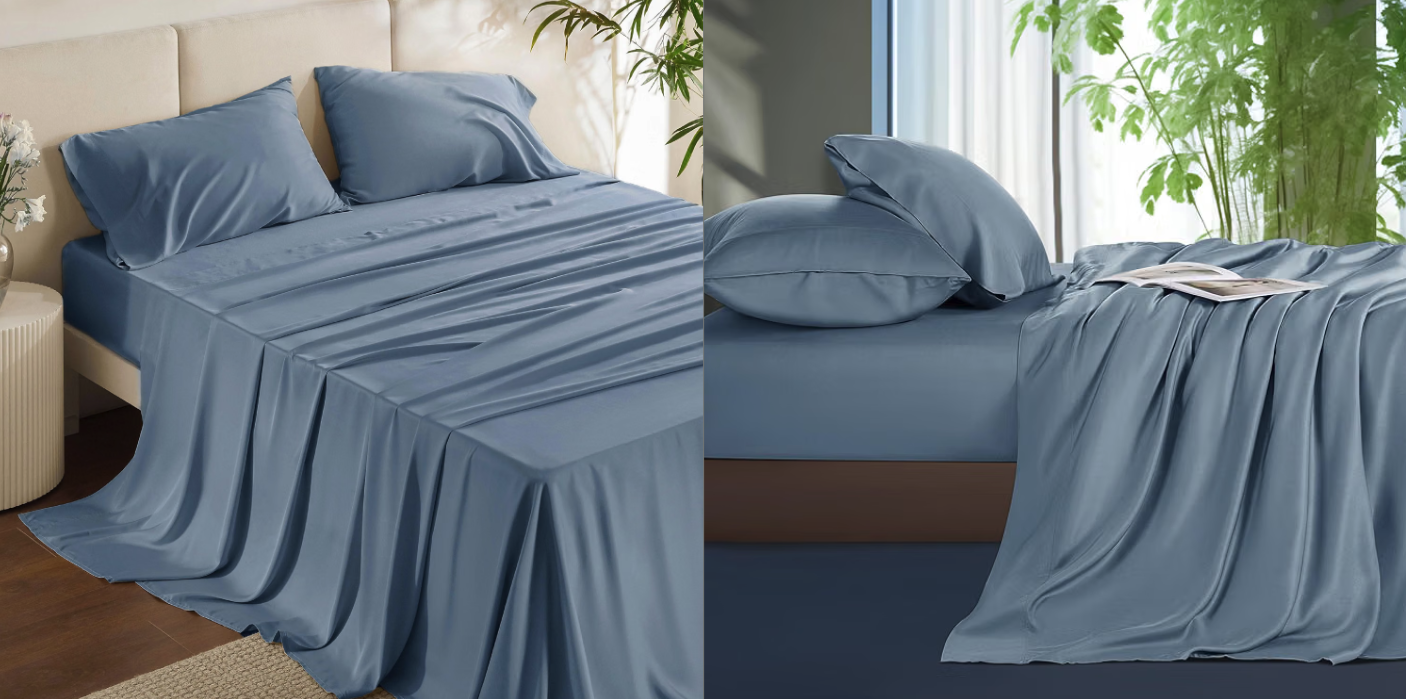
When I washed the new lyocell sheets, I sensed their greater heft and durability. They were a slightly slicker and warmer than the beech modal they replaced, but I slept soundly in them. So in the future I plan to stick with 100% lyocell rayon made from eucalyptus — no bamboo viscose or beech modal for me.