

Paramount is the sixth-oldest surviving film studio globally, and the last major film studio still headquartered in Hollywood. In August 2025, it became part of Skydance Media, and by late 2026 Skydance controlled Paramount, Warner Bros., CBS, CNN, HBO max, and various other entities.
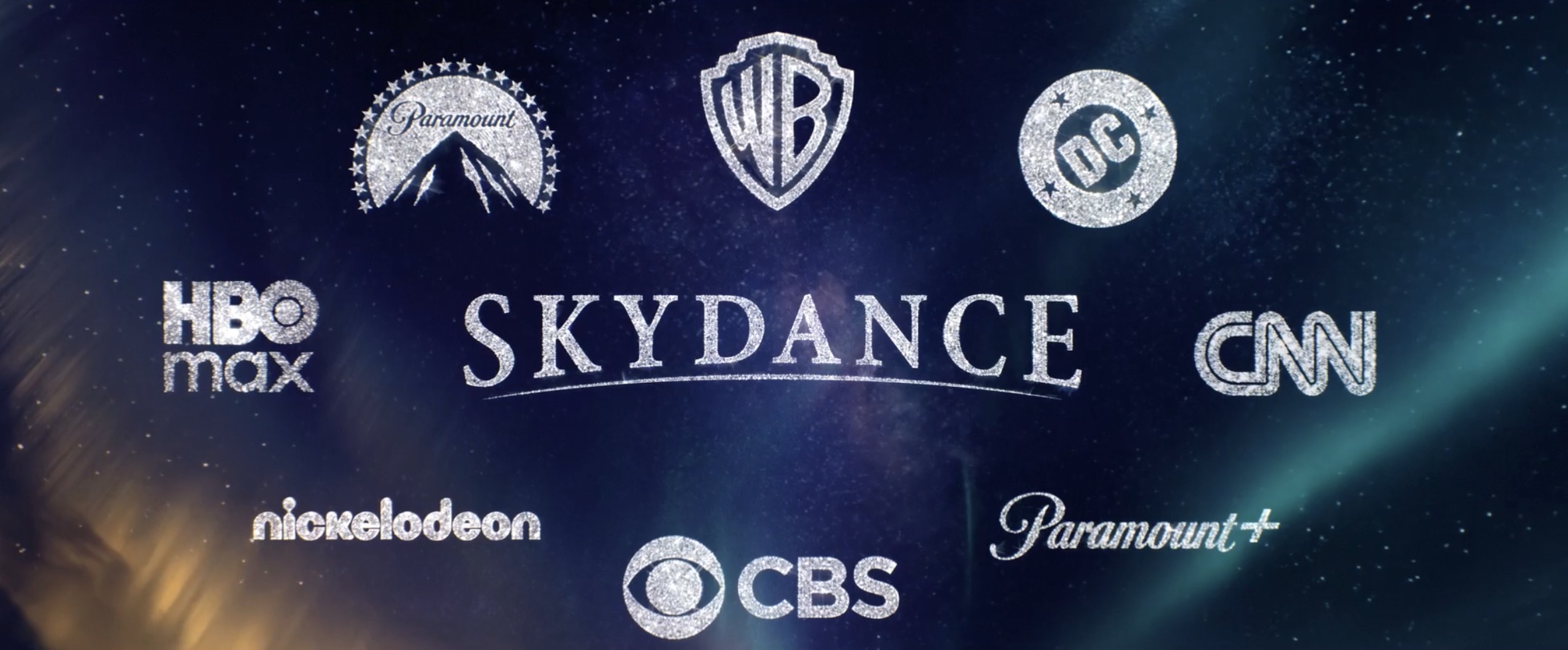
That includes a wide variety of cable television and other franchises.
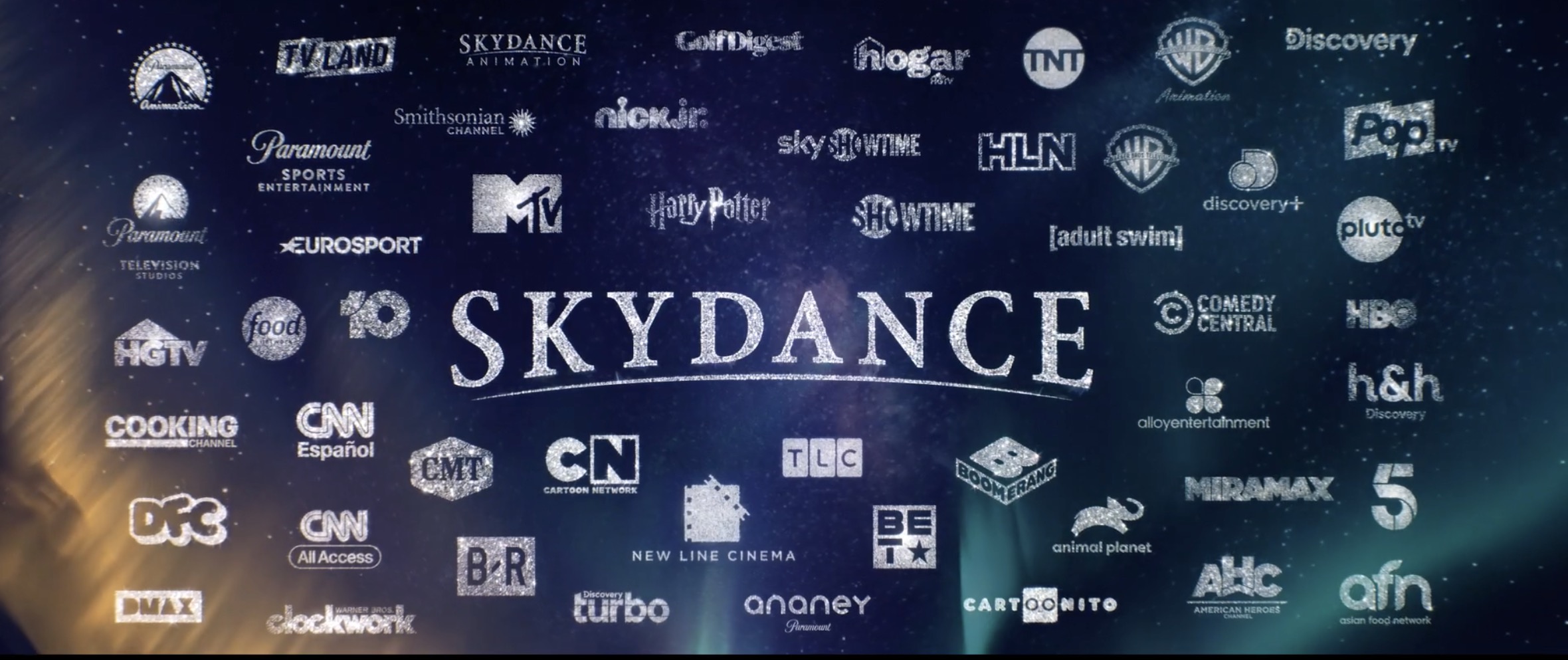
This massive footprint spanning legacy film studios, broadcast and cable networks, and streaming services makes it a behemoth rivaling the Walt Disney Company and Comcast. In the 1930s and 1940s, the “Big Five” movie studios were MGM, Paramount, Warner Brothers, 20th Century-Fox, and RKO. Now there will be just four, consisting of Walt Disney, Universal, Sony Pictures, and Skydance’s with its Paramount & Warner Bros. brands.
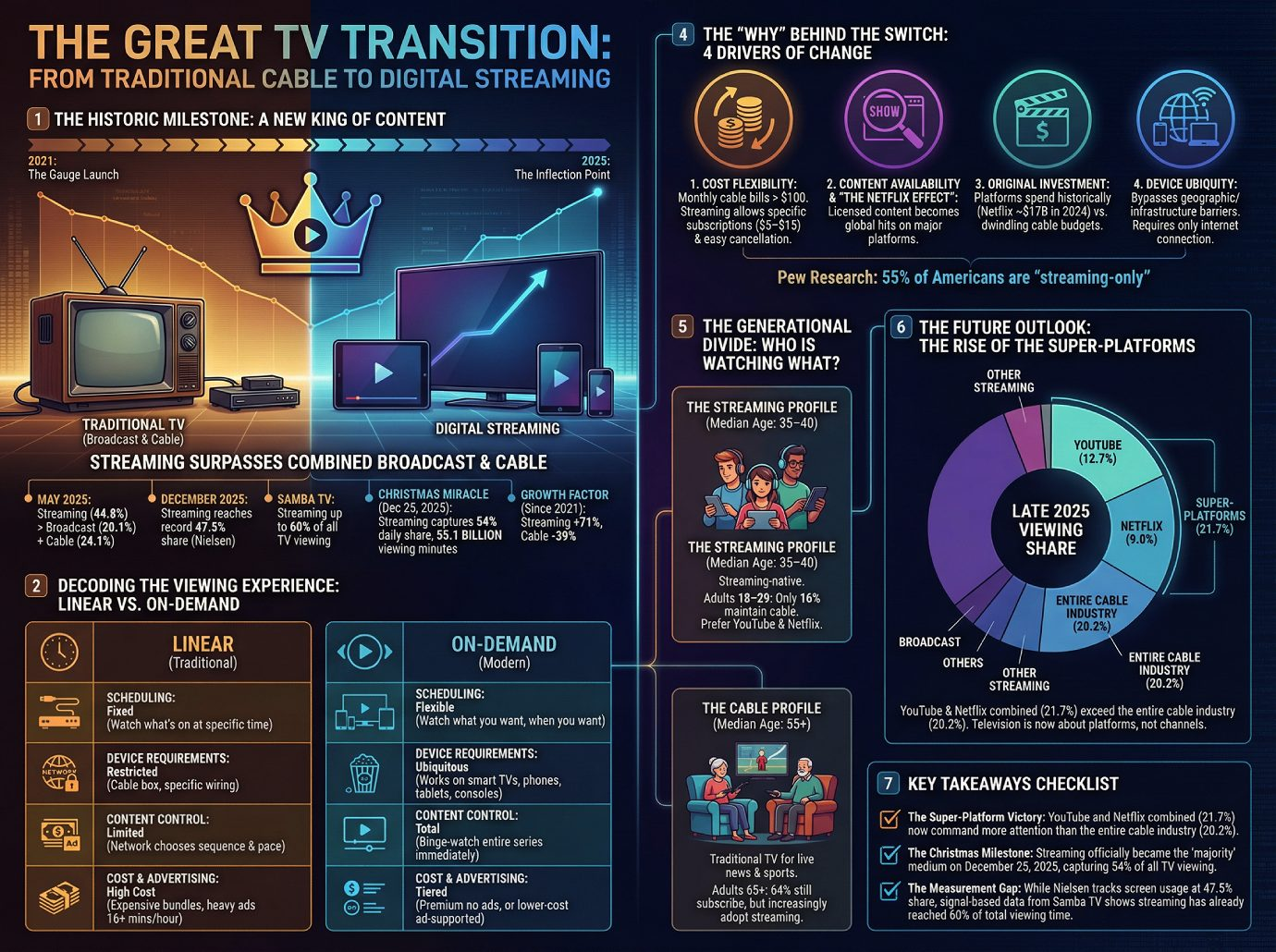
However, the future of Hollywood is very much in doubt. AI-driven production, digital creators, and global tax incentives have vastly curtailed Los Angeles-based production. Linear and cable television are collapsing in favor of on-demand streaming, which became the majority television medium at the end of 2025, capturing 54% of all views.
To complete the merger, Skydance agreed to release at least 30 theatrical movies per year in the U.S. for the first two years of the consolidation, and 32 annually in years three through five. It agreed to spend an additional $300 million annually in domestic U.S. film production above prior baseline levels, and wide-release films will maintain a 45-day exclusive theatrical window before arriving on subscription streaming services.
But those are just temporary measures, and cinemas seem destined to become niche markets like broadcast and cable television. About 5,000 U.S. movie theaters have closed since the COVID-19 pandemic broke regular in-person attendance habits, and rising secularism and isolation have been accelerated by the internet and home/personal viewing technology. Hollywood is far from alone in losing audiences. We are already seeing larger-scale live musical performances, national Broadway tours, symphonies, and the like increasingly concentrate in large urban venues. Smaller live-performance auditoriums across the nation will continue to fail, alongside about 100,000 churches.
Billionaire Larry Ellison and his son, David, are betting that they can funnel the output and content libraries of the various Skydance properties into its streaming services to survive and thrive amidst all of the turmoil. But the $80 billion in debt their acquisitions have accumulated will require at least $6 billion in aggressive cost-cutting and operational “synergies” and thus what remains of Hollywood will be decimated, even with five years of legal protections.
Past Crises
Paramount is no stranger to crises. It began in 1912 as the Famous Players Film Company founded by Adolph Zukor and Daniel and Charles Frohman. They made a distribution deal in 1914 with Paramount Pictures Corporation, founded that year by a Utah theatre owner, and it became the first successful nationwide movie distributor.
The Great Depression
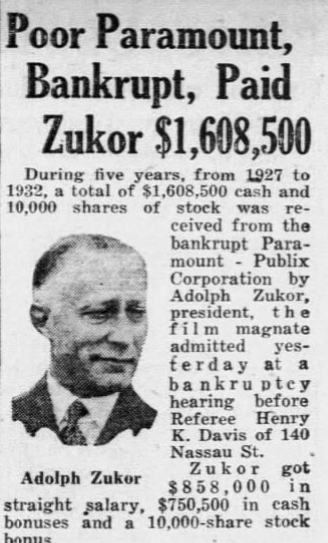
Between 1930 and 1933, weekly movie attendance plummeted 40%. Each of the studios owned significant theater chains, and parts of both Paramount and RKO were forced into corporate receivership. Theaters lowered ticket prices, introduced double features, and slashed most production worker salaries by 50%. That led writer and actors to organize into the Screen Writers Guild and Screen Actors Guild.
U.S. v. Paramount Pictures, Inc.
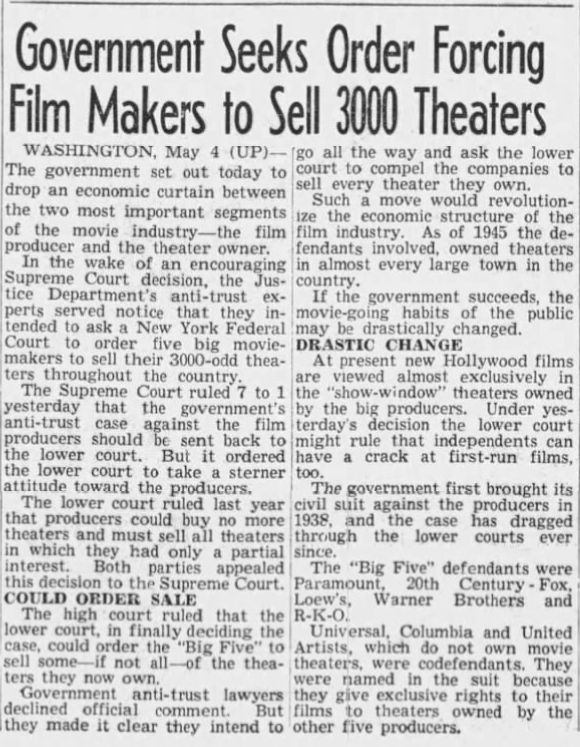
In 1948, a Supreme Court decision forced the major Hollywood studios to sell their theater chains and stop unfair sales bundles. Splitting movie production from theater exhibition meant studios could no longer force their own theaters to show only their films, and they could no longer force theaters to buy large bundles of average films to get top-tier hits.
After that, studios made fewer films and started focusing more on expensive blockbusters. The studio system of long-term actor and crew contracts began to fall apart. Actors were released to become new stars in television, and film libraries began to be sold to television stations.
Television
In 1948, about 90 million people were regular moviegoers. By 1958, that had fallen to 46 million, while the audience for television had grown to 204 million. To try to compete with television, movies boasted Technicolor and a slew of widescreen formats. Large urban venues would have roadshow releases of longer prestige blockbusters with overtures instead of shorts and trailers, reserved seating, and souvenir programs.
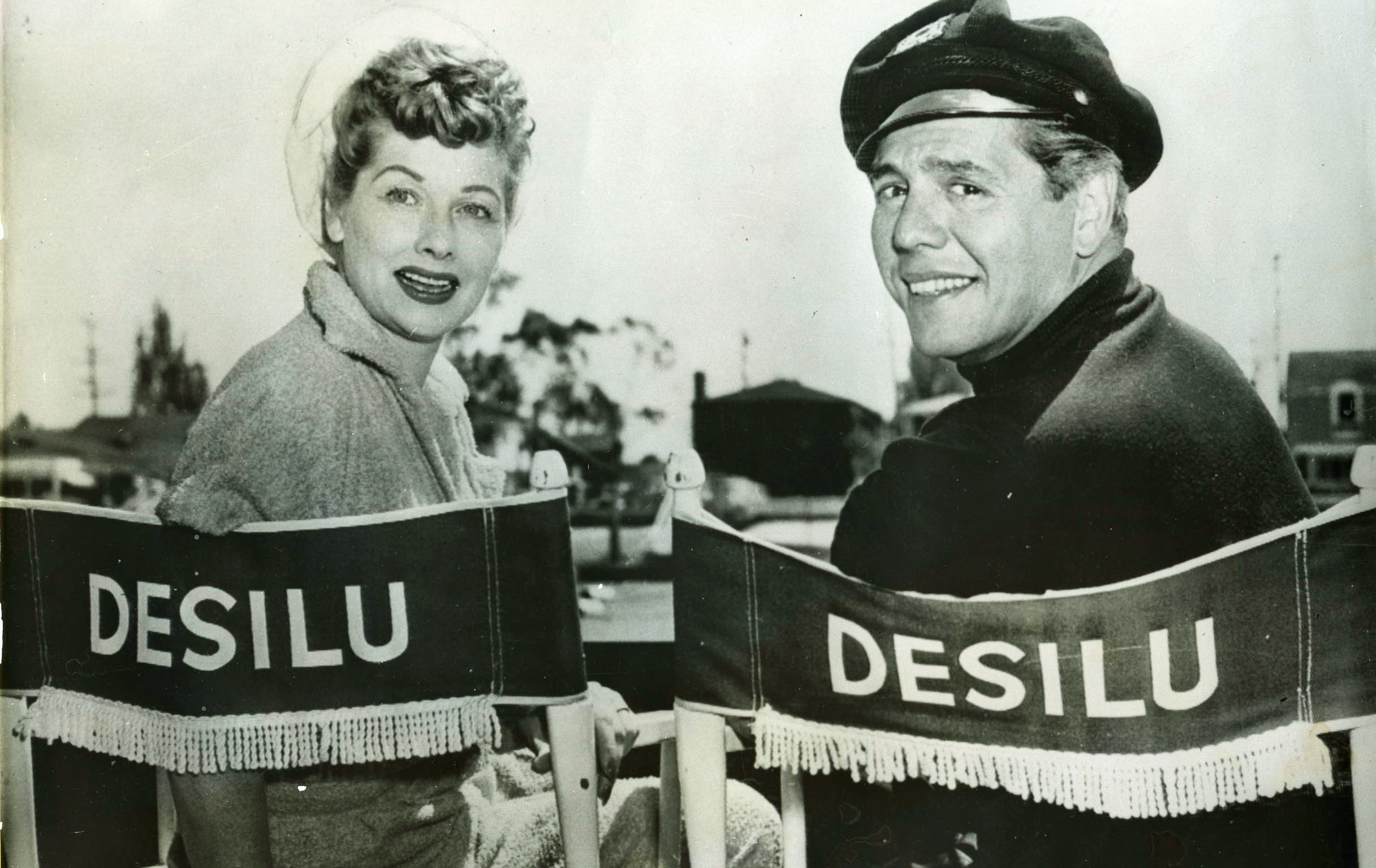
A case in point is how RKO Pictures became Desilu. RKO again went bankrupt under mismanagement by Howard Hughes, being sold to General Tire & Rubber, which sold the studio’s film library to television while shutting down active film production. Desi Arnaz and his wife, Lucille Ball, sold the rerun rights to the early episodes of I Love Lucy to CBS to help finance their acquisition of the RKO studios, which they renamed Desilu.
They went on to create a series of hour-long specials as The Lucy-Desi Comedy Hour and rented their facilities for projects from other production companies that lacked facilities of their own. Lucy and Desi divorced in 1960, and two years later he asked her to buy out his share.
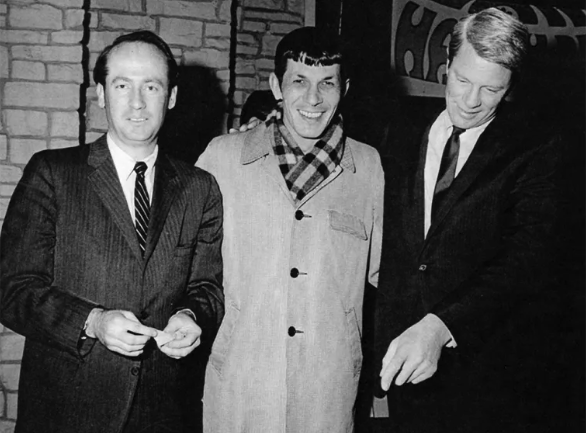
Lucy paid $2.5 million for Desi’s portion, giving her 52% of the company’s stock and making her the first woman in Hollywood history to run a major television and film studio. When her second husband, Gary Morton, proved unable to properly manage Desilu, she hired Oscar Katz to develop, pitch, and sell new shows. Desilu had only one of its own productions still going in its studios, The Lucy Show on Stage 12.
Katz was inexperienced with west coast television production, so he hired Herb Solow, and they managed to start up two new television series in the ailing studio: Star Trek and Mission: Impossible. Katz was soon gone, leaving Herb Solow in charge, with Lucy famously telling him, “I’m just the girl from Stage 12.”
The new shows were expensive to produce, and Desilu lost money on each episode of Star Trek. The first season was budgeted at $193,500 per episode, but only four out of 29 episodes came in under that cap. However, Lucy kept signing the checks. Her ex-husband had pioneered owning series for later syndication of reruns, so she knew Desilu might eventually turn a profit if enough episodes were produced.
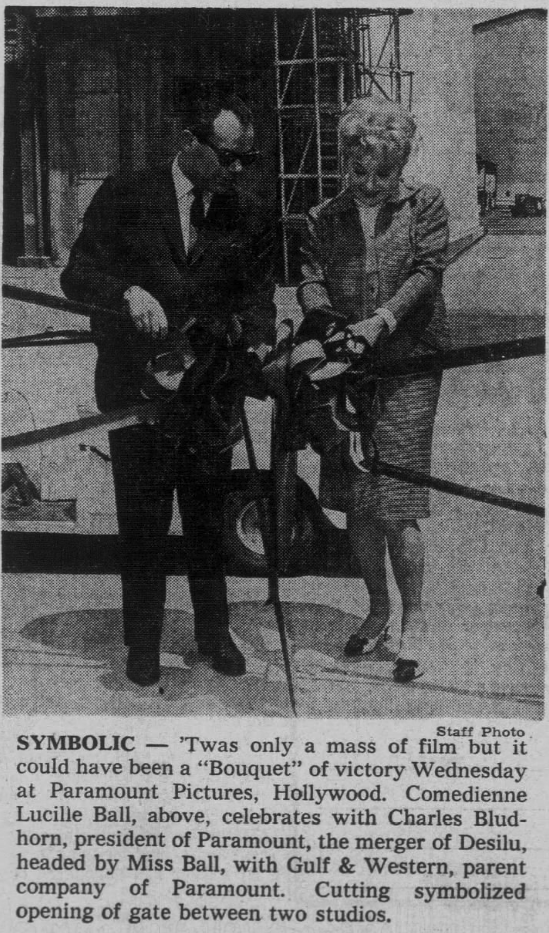
In October 1966, Charles Bludhorn, who ran the Gulf+Western conglomerate, absorbed Paramount, which shared a property line with Desilu’s Hollywood studio. Lucy knew that he was interested in acquiring Desilu for Paramount to gain a foothold in television productions. Her position was strengthened when Herb Solow managed to score hits with Mission: Impossible and the detective series Mannix, while Star Trek had adequate ratings given its demographics. However, the budget for Star Trek was cut about 4% for its second season.
Lucy sold Desilu to Gulf+Western for $17 million in July 1967, while episode 39 of Star Trek was being filmed. Bludhorn wasn’t happy with the per-episode cost of Star Trek or Mission: Impossible, so as with many a merger before and since, he cut costs.
Mission: Impossible had won Emmys and critical acclaim with more funding and a more stable timeslot from the CBS television network than NBC provided for Star Trek. Nevertheless, Paramount’s budget cuts gradually forced the series to rely more heavily on standing studio sets, reduce expensive location shoots, reuse stock footage, streamline the tape-briefing sequences, and batch-film scenes. That series hung on for a total of seven seasons.
When NBC finally renewed Star Trek for a third season, its budget was slashed another 5%. Given inflation and mandatory cast and crew salary increases, the additional cuts noticeably impacted the show’s production values. Penny-pinching included shooting no new footage of the big U.S.S. Enterprise model, skimpier sets for alien worlds, fewer location shoots, less elaborate make-up, etc. A bad timeslot, a lousy third season producer, and cost-cutting made it inevitable that Star Trek would not continue after its third season, except that it had just barely enough episodes in the can for successful syndication.
Paramount would make plenty of money on a Mission: Impossible movie franchise from 1996 through 2025, but its real moneymaker turned out to be, of all things, Star Trek, with that franchise generating an estimated $10.6 billion in total lifetime revenue for Paramount Pictures.
New Hollywood Pivot to Summer Blockbusters
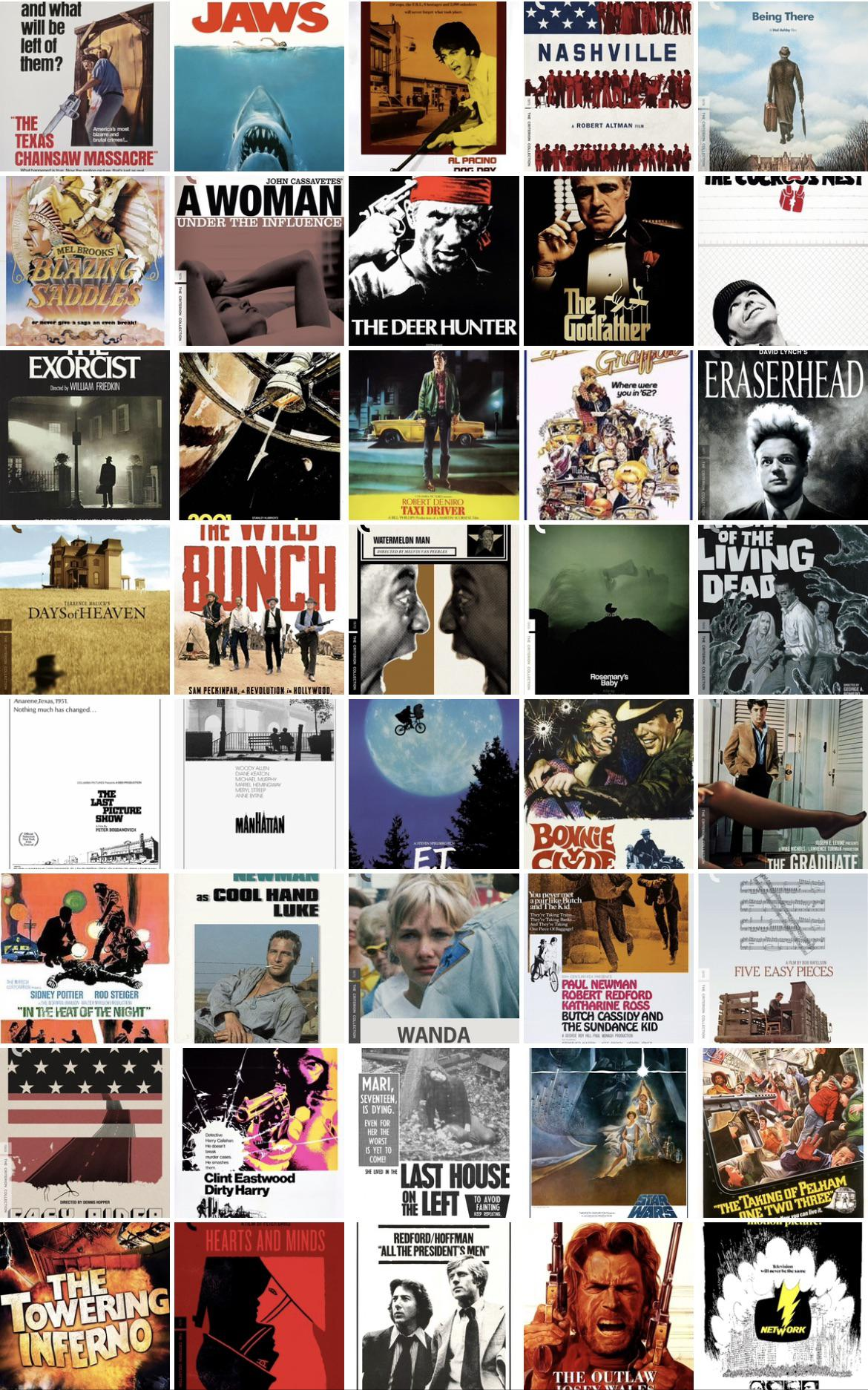
The mid-1960s to the early 1980s was a New Hollywood era when director-driven storytelling replaced traditional studio micromanagement. The collapse of the censorship-enforcing Hays Code brought grittier realism, the counterculture, and anti-heroes. However, big financial flops like 1980’s Heaven’s Gate brought that era of absolute director control to an end.
The massive commercial hits of Jaws in 1975 and Star Wars in 1977 shifted studio focus to high-budget high-concept commercial formulas. The 1980s brought many action movies with practical special effects and bankable movie stars. The introduction of computer-generated imagery brought big hits in the 1990s with Jurassic Park, Titanic, and The Matrix.
The introduction of videocassette players and later optical discs created a boom in secondary viewership, bolstering studio revenues while ticket sales stabilized at about 1.2 to 1.5 billion each year in the late 1990s and early 2000s. Global theatrical markets expanded even as domestic per-capita attendance flattened, making international box office revenues increasingly important for Hollywood profitability.
Franchise Dependency
In the first decades of the 21st century, Hollywood came to depend on major intellectual property franchises, with a slew of sequels and adaptations. The Marvel Cinematic Universe started with Iron Man in 2008, and peaked in the late 2010s with Avengers: Infinity War and Avengers: Endgame culminating a 22-movie Infinity Saga. Marvel Comics also birthed 17 Spider-Man films and 14 X-Men features. The DC Extended Universe and Christopher Nolan’s Dark Knight Trilogy dominated the 2000s with Batman films and the launching of a shared universe in 2013.
Outside of comic book adaptations were fantasy and science fiction adaptations of Harry Potter and Tolkien books as well as The Hunger Games and Twilight Saga. George Lucas had a Star Wars prequel trilogy from 1999 to 2005 and Disney produced a sequel trilogy from 2015 to 2019 and three standalone films.
Other franchises included Fast & Furious street racing films that became an action heist franchise, Transformers, Pixar animated movies, and Shrek & Despicable Me animated films.
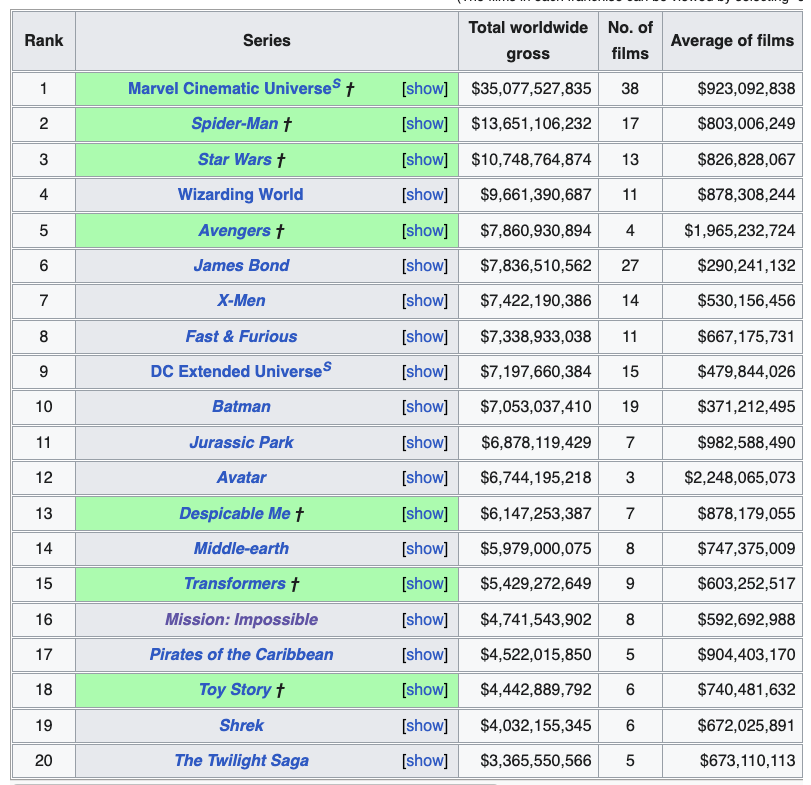
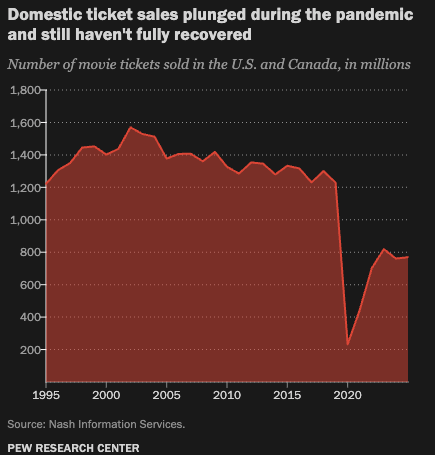
While some franchise properties could draw massive theatrical crowds during peak weeks, mid-budget adult dramas and comedies began migrating to streaming platforms. Total North American ticket sales dropped by over a third after the COVID-19 pandemic. The habit of watching a movie in a cinema was broken for many people, and franchise fatigue had set in.
By 2025, over 50% of all major studio wide-release outputs were from franchises, with the 2026 theatrical slate saturated with Marvel, Star Wars, DC Comics, Toy Story, and Super Mario Bros. movies. As traditional comic book superheroes lost their appeal, studios shifted to video game properties. They now largely bypass riskier, original standalone films due to the profit-to-cost ratios.
A Fraught Future
Studios that once prioritized theatrical runs and DVD sales now measure success in hours viewed and subscriber retention, blurring the line between film and television while ad-supported streaming is surging as viewers experience subscription fatigue. I expect the industry to undergo savage decline in the next decade as franchises falter and streaming further atomizes audiences with increasing AI-assisted personalization. Movies and television are evolving rapidly, and there will be plenty of extinctions along the way.