I began teaching in Bartlesville 22 years ago, moving here at age 23 for my first teaching position, one I’ve yet to relinquish. In many ways Bartlesville has changed little over those decades, but in other ways changes are quite noticeable. I was prompted to write this post both by my own anecdotal impressions and a community profile from the regional United Way. I’ll throw in interesting charts from their report throughout; you can click them to enlarge.
When I moved here after growing up in the sprawling million-person metropolis of the Oklahoma City area, I was struck by how small a town of 35,000 could seem. I was no longer anonymous; when old friends visit me here they comment on how all around town people know me by name, something you just don’t see in a huge city. For years I regularly drove to Tulsa each Saturday to eat out and see movies. The restaurants are naturally more varied and better in the big city – sadly for me, Bartlesville cannot attract an El Chico. And I didn’t enjoy going with a friend to the movies in Bartlesville where I found myself observed by my students and quizzed by them the next week about the person I’d been seen with. Their curiosity was natural, but I wanted more privacy.
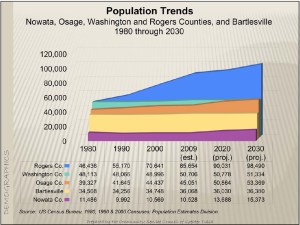
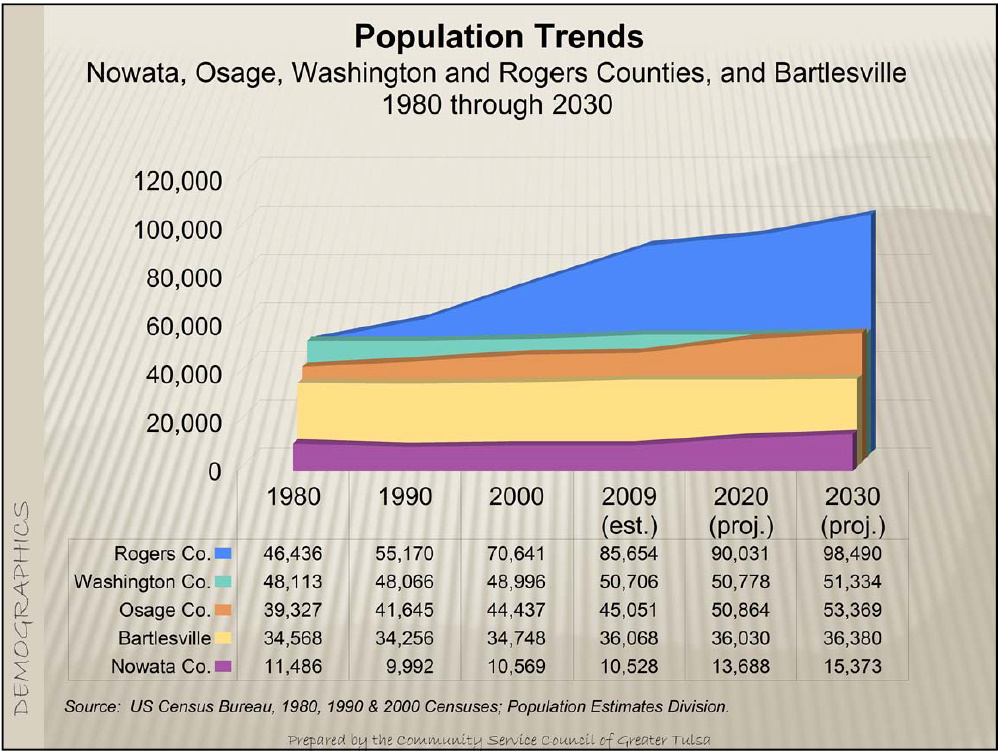
Bartlesville's population trend is flat as a prairie
Bartlesville has only grown to 36,000 as of the 2010 census and still has that small town feel. But I’ve grown to like the advantages of living in a town small enough that you can easily grasp what is going on and even play a meaningful part in town life. In my case I’m extensively involved in school district planning thanks to my track record of achievement, elected office in the teacher’s union, and the openness of our administration. I don’t want to disappear into a big city and in recent years I’ve switched my Saturdays from Tulsa trips to hiking treks. While that certainly has not saved me any gas and it means I see friends in Tulsa less often, it keeps me in better physical and mental shape to spend hours walking in the great outdoors rather than strolling idly through Tulsa’s shopping malls.

Almost 2/3 of the people in our region north of Tulsa have what I consider a long commute
I certainly prefer living here to living in Owasso, although the latter is growing madly thanks to its close proximity to Tulsa and boasts better dining and shopping. Mind you, I don’t cook to any meaningful extent, so restaurant dining is a big deal to me. I see how ConocoPhillips folks moving up from Houston sometimes live in Owasso and gladly suffer what seems to them a minor commute. But I’d hate living in Owasso because, like so many bedroom communities around big cities, it lacks a soul. There is no “there” there; it feels like a strip-mall and big-box store shopping district surrounded by houses, lacking the central downtown Bartlesville has with its large corporate towers, Community Center, and historic structures. I like living in a place with some history.
One reason Bartlesville has not grown much in 20+ years is that Phillips Petroleum was the big employer in town and it kept downsizing the local operations until finally merging with Conoco in 2002. The city managed to hold its own, diversifying with smaller employers, but the merger a decade ago shifted many high-income and highly educated executives and engineers to Houston when the refining, wholesale marketing, and exploration and production divisions shifted way down south. Up here we now have more accountants, human resources, and information technology folks, although thus far we still have the research center and that certainly provides community support for my field of science education.
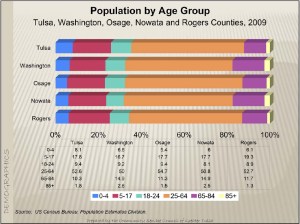
17.5% of the folks in Washington County are 65+
But over the past decade the typical Bartian has become older and poorer. I’ve always noticed how many more retirees and fewer college-age people there are in Bartlesville because we only have a couple of small institutions of higher education. But the United Way data quantifies that in Washington County 17.5% of the population is 65+ while the percentage in Tulsa County is only 12.1%.
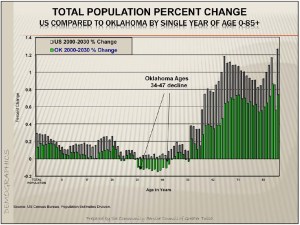
Oklahoma is losing young adults
Overall, Oklahoma is shedding folks who are between 34 and 47, and this cripples our economic power and tax revenues. Hence the importance of the young professionals groups here and in Tulsa who seek to improve the environment for their peers and thus staunch the flow, helping young adults have a happier stay in our state so they remain with us as they mature into their late thirties and early forties.
The students in the corridors at the school where I teach are also noticeably poorer in dress, language, and behavior, showing the impact of increasing poverty and broken homes. I have fewer students in physics than ever before and a smaller percentage of my student are attending selective universities.
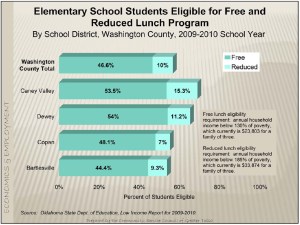
Over half the elementary school children in Bartlesville qualify for a free or reduced lunch
One clear indicator at school of poverty levels is the number of students who qualify for a free-or-reduced lunch. The rate has more than doubled in our district since I came here. Now over half of our elementary school students qualify.
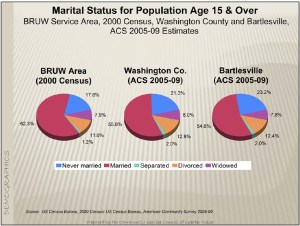
Fewer people are married
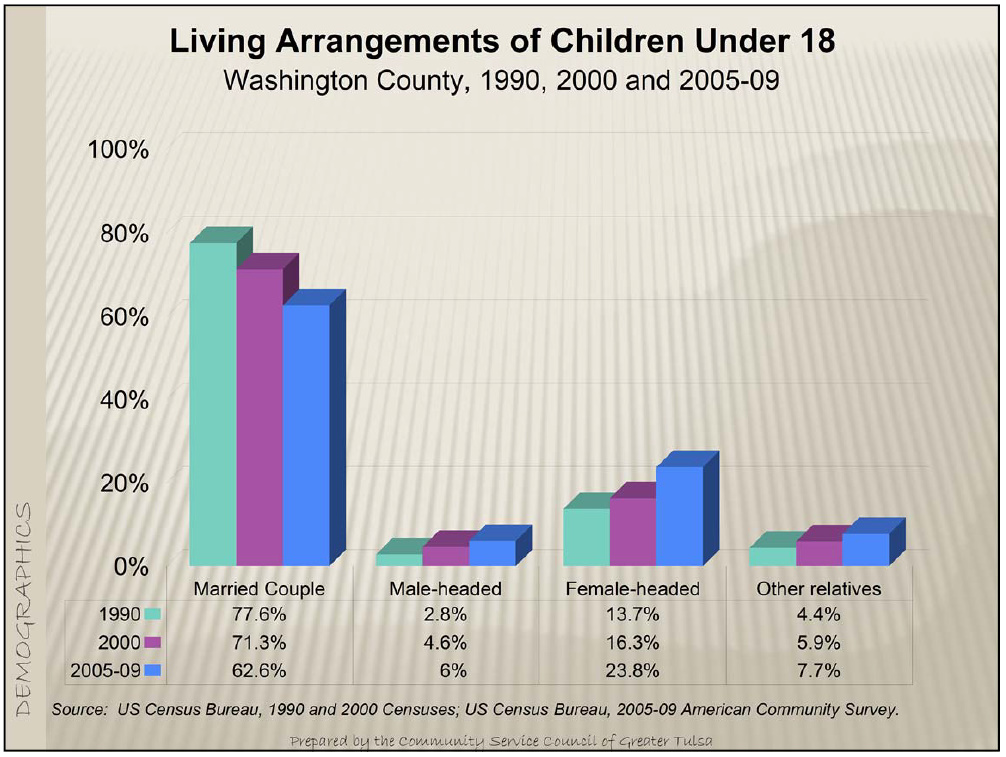
The United Way’s profile shows the changes in the homes those children grow up in. The percentage of folks in Washington County who were 15 years or older and married plummeted from 62% in 2000 to 55% in 2009. I’m part of the problem, of course: my “never married” group has risen from 18% to 23% in that time.

Typical families vary by race
But I don’t have any children, and it is interesting to note how children of different races often grow up in very different families. Notice how much more likely an Asian American child in Washington County is to grow up in a married household (85%) than an African American child (51%), with over 40% of African American children growing up in a household headed by a female. But Hispanic families fall into almost identical category percentages as Caucasians.
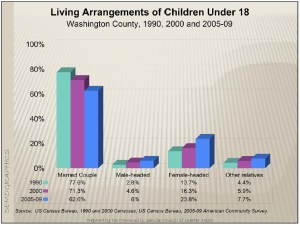
Female-headed households are way up
Overall, the percentage of households with children headed by only a female has exploded since I came to town, rising from 14% to 24%.
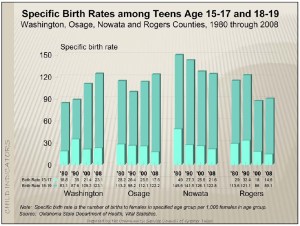
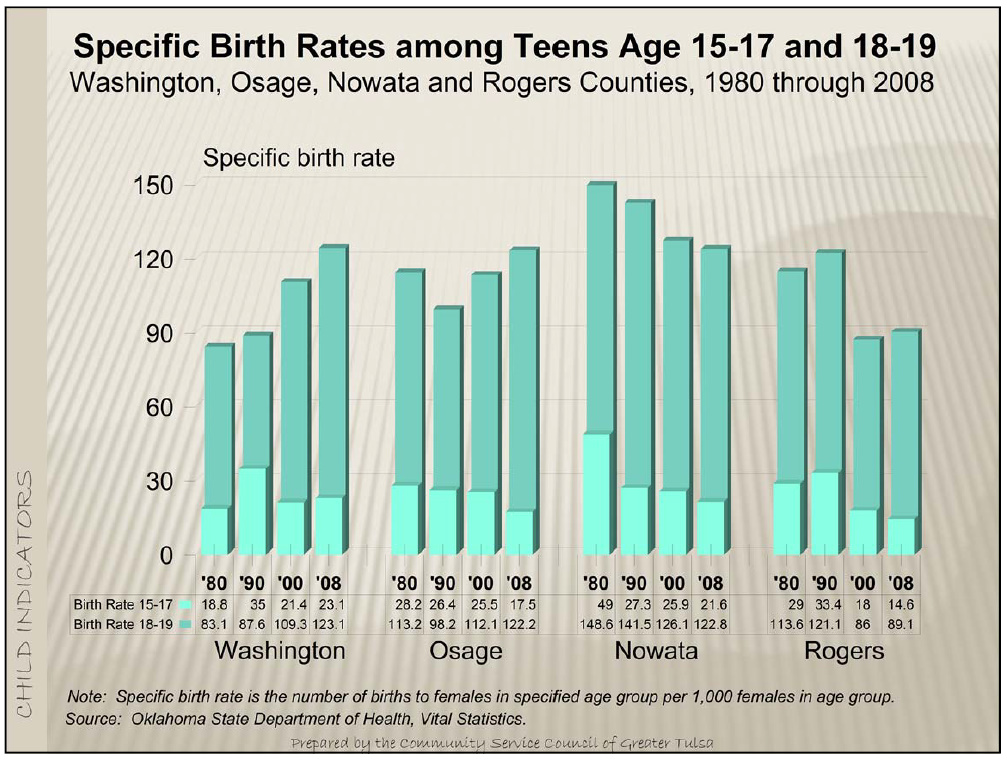
More teenagers are giving birth
The percentage of teenagers giving birth in Washington County rose from 10% in 1980 to 15% in 2008.
When I was in high school, having a child out of wedlock and teen pregnancy were shameful occurrences. There’s a reason the term bastard became a pejorative – the value society placed on wedlock for a child’s upbringing (and for legal inheritances). That stigma is fading, but so is that of teen pregnancy. Some single teenage mothers celebrate their pregnancy and their babies, even though the statistics on the future for them and their children are horrifying.

There are more and more single moms
In Washington County, the percentage of women giving birth who were single has risen from 6% in 1980 to 38% in 2008. Egads!

Look at the median income for female-headed households
Take a look at the very low income level for female-headed households.

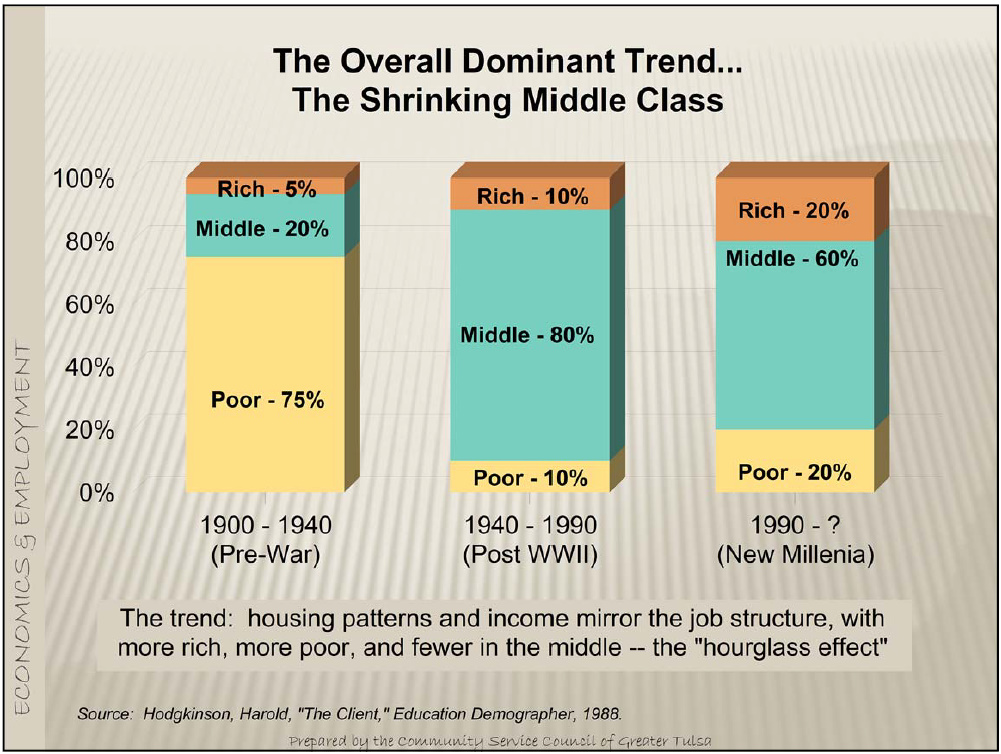
The middle class is shrinking at both ends
Across our nation the era after World War II saw the immense growth of the middle class, but we are now in a long-term trend where the middle class is shrinking and the gap keeps growing between the very rich and the very poor.
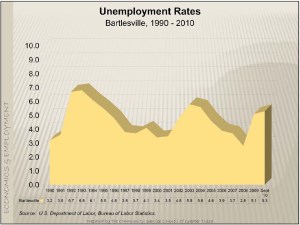
Bartlesville, a city of workers
The Great Recession we have lived through in recent years is shown in rising unemployment here in Bartlesville, but happily the overall rate remains low and has not even reached the rates we saw in the recession of the early 1990s.
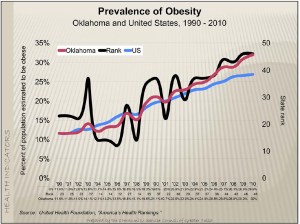
1/3 of Oklahoma are obese
One thing I find particularly striking is how fat Oklahomans have become. When I hike in Colorado or hike or walk city streets in the Pacific Northwest, people are much thinner and healthier. Our whole culture is eating improperly and not getting enough exercise, but Oklahomans are worse off in part due to their poverty. The poor buy cheap processed food which is less nutritious and higher in calories, and easier to prepare, than more expensive fruits and vegetables and the various ingredients needed for healthier cooking, which also takes more time and is a greater relative burden for the stressed-out working poor.
I still like living here in Bartlesville, which continues to win awards as a great low-cost place to live with a good quality of life compared to many other places in our region. But the trends are worrisome. These problems are not insurmountable, but they are not going to be addressed when our state’s voters elect politicians who keep cutting not only taxes but also overburdened state services. Oklahomans have done more with less for years, but there is a limit.




















 Meador Manor