Climbing Mountains of Quartz

Quartz Mountain (click image for slideshow)

The third day of winter found me up early, seeking a better hot breakfast than I’d secured the day before at the Denny’s in McAlester. Yelp and Urbanspoon directed me to Marilyn’s Home Cookin’ out on highway 69 by the Best Western. I drove up at about 6:15 am and found several pickups out front and a few tables occupied by regulars – this looked better than the sparsely occupied Denny’s from the morning before. I ordered the Trucker’s Breakfast from the sole waitress and tucked away two scrambled eggs, a big pancake, toast, hash browns, bacon, and sausage. Once my arteries were sufficiently clogged, I lit out for Quartz Mountain on the other side of the state.

Trixie the GPS app and Google Maps agreed that the fastest route was to take Indian Nations Turnpike up to I-40, cross over to Clinton, and then dive south to Lone Wolf and the lodge. Since I wanted to maximize my time on the trails, I took that advice. The road rolled by swiftly with the moon, which only a few days ago was in eclipse, peering through the clouds in the western sky even as the east remained dark, awaiting the dawn.

I stopped to pick up a turkey hoagie in Cordell and was approaching Quartz Mountain State Park before noon. It was overcast and in the 30s, not sunny and in the 60s as originally forecast. But at least it wasn’t raining and there were trails awaiting inspection.

Quartz Mountain was one of the seven original state parks. Long a camp for Kiowa, Kiowa-Apache, Comanche, Cheyenne-Arapaho, and Wichita-Caddo Indians, the infamous General Custer marched troops to this location back in 1869 as he was pursuing Cheyenne who had fled their reservation.The Western Cattle Trail ran by here from 1874 to 1886. The park began as a water supply lake for Altus in 1927 with a 458 foot long, 27 foot high dam across the north fork of the Red River. It became a state park in 1935 and the CCC constructed roads, picnic areas, shelters, and trails. The dam was raised 50 feet for flood control and irrigation by 1946.

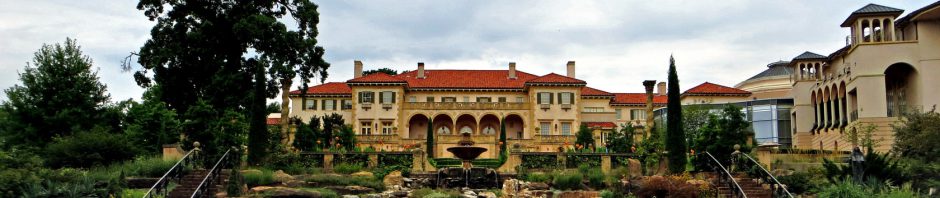
The first lodge was completed in 1955 and it became home to the Oklahoma Summer Arts Institute in 1978, with high school students around the state competing for the privilege. Thirty years after its completion much of that lodge burned down and state and private funding rebuilt it into a resort with indoor and outdoor performance halls and art pavilions. Each year those of us who attend or watch the Oklahoma Foundation for Excellence program enjoy music played by the young artists chosen for the Summer Institute.

It is the nicest state lodge we have and I was able to book a room during this very slow season for only $60. I’ll spend almost that much eating at the restaurant, which has fine food prepared by chef Bola Togun.

But I’m mainly here for the trails, most of which are quite short but very steep since they climb up and sometimes over the distinctive granite hills, er, mountains that pop up out of the prairie here. My first stop was the New Horizon trail. It is only 1/4 mile long, but it climbs right up the side of one of the hills.

It begins with a small building of native cobbles, the same construction one finds at Medicine Park on the east end of the Wichita Mountains Wildlife Refuge. I presume it was built by the CCC for some purpose back in the day – there was no signage to explain it. A low concrete rise in the floor leads me to think it was a machine shop or pump house. After winding through the brush for a bit, you pop out onto the granite outcroppings. Giant granite boulders dot the rugged landscape, and soon I was near the top, admiring the view of part of Lake Altus.

Even in 30-degree weather, I was quite warm from the climb when I reached my highest point and stretched my legs out for a bit before eating part of the turkey hoagie. It was quite bland and I only ate half of it before giving up and deciding I’d wait for a big dinner in the restaurant later. I passed a scraggly old tree on the descent and looked back at where I’d been.

Then I drove past some overly tame deer and saw the twin peaks located just west of the lodge. I passed them and parked west of the lodge at the indoor Performance Hall. Just then a huge jet banked in the sky to the west, reminding me that Altus Air Force Base was 15 miles south of me.

I found the Mountain Pass trailhead for the 1/4 mile trail which leads over a hill to a cove on Lake Altus. As I climbed I looked back to see my car parked by the Performance Hall, which is normally separated by Lake Altus from the resort, requiring a long connecting bridge. But the lake is so low right now the bridge is superfluous.

The high point provided a sweeping panorama of the cove, and then I descended to pop out through a grassland border onto the shore. I enjoyed the cove with its granite sandy shore and hill mounds rising on the sides. Water had sculpted some of the sand into a tiny impermanent arch. I clambered out on a point of boulders, then posed for a self-portrait nearby and then posed again by some lichen-encrusted rocks on the south edge of the one of the peaks.

After climbing back over the hill, it was a short walk to the Twin Peaks trail. This paved trail runs along the eastern edge of the peaks, providing a panoramic view of the nearby lodge. I startled an eagle (I’m no ornithologist, so forgive any misidentification), which reminded me that the Eagle Trail should join up with this one. I searched unsuccessfully for a sign, but picked what looked like a trailhead and began my climb. Vegetation is sparse and granite is slow to wear, so the trails are often difficult to discern, although at first some crumpled grass told me I was on track. I climbed as high as I could with safety, about 3/4 of the way to the summit, and earned a great view of the resort complex below.

Finished with all of the longer open trails by the lodge (a couple were closed since they passed near private land where hunting is underway), I decided to drive over to Baldy Point. It is a little over a mile west of the lodge area and, because of various land parcels, accessed by an indirect route along paved and dirt roads. Baldy Point rises over 300 feet above the prairie and is a popular technical climbing area and, while I’m no mountain climber, I did plan to reach its summit via a promised trail.

The summit trail at first ran right along the smooth granite wall of the Point, then ascended to afford a view of the long granite slabs, one of which had daylight peeking from beneath it. I lost the trail on the steep granite slope and climbed up to a dead end where I was blocked by barbed wire marking private land and granite overhangs. There I rested, enjoying the view.

Then I scrabbled around the slope and found the trail again, following it up and up until the summit was in sight. I paused to shoot a panorama and then made the final ascent.

The view from the top was tremendous – I could even see Lake Altus in the distance. I saw a pickup far below creeping along, the driver watching me standing atop the immense granite mound. I was wearing my hunter orange vest, so I was rather conspicuous. Then I made my descent, my knees aching a bit and growing weary of the cacti and thorns which periodically penetrated my leather gloves and jeans. I skidded and fell twice and, although never in much danger, knew I was reaching my limit for solo mountaineering. Near the bottom I looked back to see how far I’d climbed.

Back at the trailhead I set out on the Mesquite Forest trail, passing signs about technical climbing and the area’s geologic history. I passed one obvious climbing spot which looked rather fearsome when compared to the summit trail, then a spot that resembled a cave and was formed from fallen granite boulders. Another climbing spot was apparent, and then the trail wound around to show me the impressive eastern face of the point. The trail merged with another here and I knew it to be closed due to area hunting. So I paused for a panorama of the countryside and then retraced my steps.

I’d hiked over five miles, with much of that being steep vertical boulder hopping. Combine that with my 4.5 hour drive from McAlester, and I was relieved to see it was 4 pm and I could thus check into my room at the lodge. The view from my second-floor balcony was nice, and I showered and dressed before lounging a bit by a warm fire in the gorgeous lobby and then proceeded to the Sundance Cafe.

The entrance had a nice statue of a Native American, and, as the first customer of the evening, I snagged a seat near its fireplace, enjoying a delicious grilled halibut and indulging in a rich chocolate dessert.

I was at a resort, so I made sure to change into my swim trunks and dash down the hallways to the adjoining building with its indoor swimming pool (heated, but too cold for my taste) and outdoor hot tub. It felt strange to be roaming the hallways in swim trunks two days before Christmas and even stranger to be outside in 30-degree weather so attired. But I flipped on the tub jets and eased in for a blissful period of recuperation.

After leaving the hot tub and toweling off, I jumped onto a running machine for a few minutes to warm back up before returning to my room. I couldn’t get on the internet there since the guest rooms lack WiFi, instead offering ethernet jacks. My MacBook Air is too thin to sport an ethernet port and I haven’t sprung for a USB-to-ethernet adapter. So I edited the photos and composed my draft of the blog post in my room and then dashed over to the main building where I could use the WiFi in the Beverly Badger Memorial Library to upload the pictures and make the post. Nearby was the Survivor sculpture by Ron Bertocchi, a memorial to the loss of the artwork in the original library when the old lodge burned. I love the huge quartz crystals of its base.

Tomorrow’s morning forecast calls for rain, so I may lounge about here and then try to hit a trail if I can locate one that isn’t too wet. I’ll spend Christmas Eve at my parents’ home in Oklahoma City.

Click here for a slideshow of this day hike

<– Previous: Return to Robbers Cave

Next: Wichitas in Winter –>

Posted in day hike, photos, travel | 2 Comments

Return to Robbers Cave

Robbers Cave Lakes (click image for slideshow)

When I awoke on the second day of winter, I decided a hot breakfast was needed to get me through a long day of hiking at Robbers Cave State Park.  So I ignored the continental offerings at the Days Inn and went down the road to the Denny’s.  The food was not good – tomorrow I’ll probably try Angel’s Diner instead, since I’ll need pampering before the 4.5 hour drive to Quartz Mountain.

After escaping the Denny’s it was a 50-minute drive over to Robbers Cave State Park.  I ignored the north end of the park where the cave itself may be found and where I hiked over 8 miles back on December 5.  Instead I turned west and then south at the main entrance and drove to Deep Ford Campground at the south end.  I parked there and took a low-water crossing across Fourche Maline Creek, with Princess parked upstream beyond a low-water dam.

A fallen sign announced I was on the San Bois Mountains Hiking Trail, which would run northward along the mountains on the park’s western edge, passing first Lake Carlton and then Lake Wayne Wallace. The wide and well-maintained trail climbed 150 feet to the top of the mountain, passing through the short rocky bluffs below the summit.

The trail ran along the ridge and then descended to the south shore of Lake Carlton, offering a splendid panorama. The lake was built in 1937 by the CCC and is named for Carlton Weaver, who donated the 120 acre area around the cave site to the Boy Scouts back in 1929. Across the lake some park buildings I would later walk by were visible, while to my right the lake abruptly flowed over the curved rim of the old dam. I walked over to the rim of the dam and then clambered below it.

Returning to the trail, I spied the bluffs across the lake which I would soon be clambering across. The trail made the ascent and I admired the eroded complexity where a tree clung tenaciously to life. The ascent here was the steepest of the day, and I paused for a self-portrait after shedding my jacket but retaining a shirt and sweatshirt since the temperature was still in the 40s with a sharp north wind. I walked out on some bluff edges for a superb view of the lake below. The chain of bluffs afforded more great views, including a set of bridges which I wondered about. Later I would visit them and find out they were part of an outdoor classroom.

The trail then descended, crossing a dry streambed formed from a large shelf of rock, then ascended the next mountain, which would wind past Lake Wayne Wallace. I was surprised that the lake was barely visible, since I was fast approaching the part of the trail I’d been on a few weeks earlier, which ran along the lake’s far northwest shore. The trail began a rapid descent as lunchtime approached and I decided to forego going all the way down to the unattractive lake shore and then have to climb right back up.

Instead, I took advantage of a convenient tree stump seat left for me by a thoughtful forester and enjoyed a sandwich I’d picked up on my out to the park. But then my mouth began burning. I’d forgotten and once again bought one with that darn Pepperjack Cheese and hastily swished some G2 around in my mouth to take the sting off.

I began to retrace my steps, but then decided to bushwhack my way to the summit, where I could see a ring of bluffs. I was surprised to find the top was a large flat clearing with petroleum machinery. A stand of planted pines helped soften the blow. I circled the rim and found a rough trail which led down to a bridle trail which happily ran back south just below the summit rim, high above the trail I’d taken earlier. A series of bridle and foot trails led to jutting bluffs above Lake Wayne Wallace, reminiscent of the ones I’d enjoyed earlier above Lake Carlton.

I had a panoramic view of the 93-foot high earthen dam of this younger lake, created for flood control back in 1964 and more than twice as high as the arch dam of Lake Carlton. A trail ran along high bluffs at the western end of the dam, with a final promontory which was impressive from both the north and the south. I began a quick descent to the outlet pool below the dam. Looking up I could see the promontory I’d stood atop moments before.

Then I hiked through the empty equestrian campground, taking a brief side trip down to the Fourche Maline Creek running beside it. I passed a picturesque CCC shelter and peeked through its doorway as I reached the park road and then hiked along its shoulder back south to Lake Carlton. A soft carpet of pine needles made this one of the most pleasant shoulder walks I’ve taken.

When I reached the lake area, I investigated the wood bridges I’d seen earlier and found they led to a shelter which was part of an outdoor classroom along the creek. Soon I was back at the arch dam.  The arch not only lends it strength, but gives it a distinctive look as the water flows gently over its edge. I took a rough trail down below it to admire some creek bluffs and their odd cavities. A series of low dams create gentle pools for fishing down this stretch of the creek, which I followed back to my car.

I’d hiked just over six miles, but the sun was still up in the sky and I was ready for more. So I drove across the highway over to the Belle Starr View Lodge, where I hiked out back to see the view, which was not all that impressive due to tree growth. But I did get a shot of the lodge perched on its high bluff.

I found the trailhead for the Coon Creek Ridge Trail and followed its red blazes for a bit. But then a side trail made a steep descent amidst huge boulders and lured me away. It wound its way down the hillside but then I lost the trail, so I kept descending until I came across a bridle trail. The 50 miles of bridle trails in the park come in handy for us bushwhackers. By switching from trail to trail I made my way down to the creek, where I found pools providing many lovely reflections.

Soon I came acros an old CCC dam, which I mistakenly thought was creating Coon Creek Lake, although that much larger and newer flood control lake was actually further downstream and I missed it entirely on this outing. I bushwhacked my way across the creek, hoping to find a trail. Eventually I came across the multi-purpose trail which loops the entire park and followed it for some ways until I worried I was too far north for what I thought should be the adjoining Coon Creek Ridge loop trail.

So I started bushwhacking northwestward along a stream bed and then across brushy areas, crossing a stream or two and then steadily climbing the hill to its bluffs and up over its long ridge. Still no trail!  I trudged onward and finally found the trail and its welcome red blazes. I followed it through a pine forest, replete with baby trees, back to the lodge.

I’d gone over nine miles this day and was ready to call it quits. But before I left I drove down the row of cabins to Cabin 101 at the very end to see its view of the San Bois Mountains. I’d practically had the park to myself all day, coming across only a few fishermen and folks in cars, and never encountering another hiker on all of the trails. As gorgeous as this place is, I’m sure it would be a far different tale outside of the wintry months.

Back in McAlester I showered and enjoyed an excellent dinner, complete with homemade flour tortillas, at Patrón Mexican Grill. I spent the remainder of the day in my room, editing photos and blogging.

Tomorrow I plan to rise early for a long westward drive to Quartz Mountain. I reserved a room there back when the forecast called for sun and 60s. But a cold front has replaced that promise with predictions of rain beginning in the evening and continuing through noon on Friday. So I’ll try to get some trails in before the rain starts and then take it easy at the resort.

Previous Robbers Cave Day Hikes:
September 6, 2009: Cave Area
December 5, 2010: Rough Canyon Loop

Click here for a slideshow from this day hike

<– Previous hike: Wister Winterset

Next: Climbing Mountains of Quartz –>

Posted in day hike, photos, travel | 3 Comments

Wister Winterset

Lake Wister (click image for slideshow)

The first day of winter found me returning to southern Oklahoma to begin a series of day hikes away from home.  But first my faithful Camry, Princess, needed some maintenance.  My ongoing series of day hikes has not only had me walking far more than before, but doubling the miles I drive each week.  So after only three months it was already time to have the tires rotated and the oil changed.  I dropped Princess off with Tate Boys and walked about 2000 feet along Washington Boulevard on a cold foggy morning for breakfast at Eggbert’s. The car was ready when I returned, and just down the Boulevard I stopped in at Master Lube.  Finally Princess and I were ready for our trip to Lake Wister in southeastern Oklahoma. By the time I reached Poteau I was ready for lunch, so I stopped in for the buffet at Mazzio’s and then drove over to the lake.

Lake Wister is located in the San Bois Mountains on the Poteau River — the only river that flows north in Oklahoma. The dam’s control house proclaimed it was built in 1948.  The park has fallen on hard times, so while the Quarry Island area out in the lake is still maintained, on my 6.8 mile hike I would soon discover that the camping and picnic Area 2 on the lake’s north shore was locked off and abandoned, while nearby Wards Landing is closed until next March and showing clear signs of neglect.

I parked by the cabins just north of the dam and walked into the cabin office, asking the lady manning it how to find the trail I knew should run along the north shore from the dam all the way over to Wards Landing.  She hesitated and said there was a trail of indeterminate length at the end of the cabin road, but due to funding problems they had not been maintaining it and thus did not call attention to it anymore. I told her I’d go try it out and thanked her.

I found a damaged trailhead and wound my way down to the lake shore below the dam.  The faint trail quickly faded into a shoreline covered in debris and detritus.  Struggling along the rugged shore, I made my way over to a pumping installation.  Climbing up to it, I found the road leading to it was part of an old road bed that led on westward. This abandoned road bed was clearly the first section of the old trail. After clambering along the rocky rugged shore, even an overgrown faint trail was a welcome sight.

At a clearing I shot a panorama of the lake, and later I could see the west point of Quarry Island across the gleaming water.  The road bed was making a straight shot westward along the lake’s north shore for over a mile, with a rugged bluff above me to one side, shot through from time to time by rocky stream beds.  Soon I was passing Quarry Island, wondering if the trail would ever show any variety.

Finally it began leading away from the lake shore into the woods, my path marked by fading blue and white blazes on the trees.  The trail reached the park road, which featured an old bridge of railroad ties across the stream which had formed the long inlet I’d been paralleling.  I crossed its rough surface and then returned to the trail, discovering an old sign with a trail map.

The trail suddenly crashed into a rocky ridge mound and faded away.  I ascended to discover Area 2 on the other side. My first site was a moss-covered picnic table. Clearly this site had been closed for some time, although the large shelter was in good repair. I found a surviving trail sign which pointed to an even more disused section of trail leading on westward to Wards Landing.

There I found a pretty inlet and some tiny shells.  But the paved handicapped-accessible loop of the Lone Star Nature Trail was a sad story of neglect, with only a few legible signs.  Fittingly, across from a weathered sign about wildlife shelters was a tree with a prominent hole.

By 3:30 pm the light was fading on this shortest day of the year, so I began the return journey.  I liked how a stone in the trail bed had been transformed into a white trail blaze.  My retracing of the path was uneventful, with the lowering sun cutting through the cloud deck. This time I followed the old road bed all the way past the cabins back to my car.

At this time of year and in its abandoned state, I was not surprised that I had not encountered any other hikers all afternoon.  The trail is still quite passable, although at one spot the old road bed is washing away and a downed tree blocked the trail completely at one point, requiring a brief bushwhack around it.  But a few more years of neglect will make this trail much more difficult to traverse.  Unfortunately it is likely that our legislature will continue to allow state services and infrastructure to crumble due to budget shortfalls even as it allows a ridiculous growth law (our state’s income “grew” a bit this year, even though it is far below historical levels) to further cut revenue from income taxes.

I zipped westward to Krebs, where I had a cheap dinner at Sonic.  What a contrast to the big Italian family-style dinner Carrie and I had enjoyed the night before a few blocks west at Pete’s Place! But I wasn’t very hungry and just wanted enough fuel to get me through a night of photo editing and blogging in my room at the Days Inn & Suites in McAlester.

For this trip I brought my MacBook Air instead of the Asus Eee PC netbook I’d used on past overnight trips.  I decided to do everything with native Mac apps, so I downloaded a trial version of Photoshop Elements 9 for the Mac as well as the Mac versions of Google Earth and the Flickr Uploader.  It all worked fine and was a superior editing experience over the netbook with the Mac’s improved screen, keyboard, and storage speed.  I did notice that the Air’s inferior processor caused the Auto Smart Fix in Photoshop Elements to run slower than on my Windows 7 desktop machine at home, but the annoyance was minimal.

Tomorrow I head back eastward 40 miles to Robbers Cave State Park to spend the day on the Coon Ridge and Mountain Trails, having hiked the other trails there a few weeks back.

Click here for a slideshow from this day hike

<– Autumn Ends at Arrowhead

Return to Robbers Cave –>

Posted in day hike, photos, travel | 2 Comments

Autumn Ends at Arrowhead

Arrowhead at Lake Eufala (click image for slideshow)

The last day of autumn found me driving south to Tulsa to pick up my friend Carrie for a day hike at Arrowhead State Park on Lake Eufala.  Our first stop was Angel’s Diner, which sported a 1950s theme.  Carrie had James Dean’s Philly Steak and a Tootie Fruity vanilla shake while I had The King’s Chicken Fried Steak and Gomer’s Chocolate Cobbler.  It was a tasty, if unhealthy, repast which would sustain us as we hiked at Arrowhead.

The former lodge was sold off awhile back to Narconon, but the air strip, golf course, campsites, and bridle trails are still open to the public.  We parked at the office and set out on what would become a 5.5 mile loop on the blue/brown and white bridle trails.

The trail started out with little signs nailed to the trees but once it hit a rough road the trail disappeared.  So we followed the road down toward the lake until we hit the blue/brown bridle trail and followed it.  I call it blue/brown as that was the color of the ribbons tied to the trees, but I could also call it the Bud Light trail because throughout the rest of our hike we would frequently spot such cans discarded by thoughtless riders.  I might excuse the park staff for not picking them up if they were recent, but we also saw a number of faded cans which clearly had been left in situ for a long time.  If we had brought a big garbage bag with us we could have picked up a huge sackful of cans.

The trail was rough and rocky with relatively little of great interest.  We finally passed a small lagoon where we spotted some waterfowl.  As the trail wound past what the sketchy park map called Lakeview Circle, we could see the lake below us, glinting through the trees.  The trail finally wound down close enough for us to bushwhack to the shoreline, where we snapped photos of each other. A nearby television set discarded on the shoreline was missing its picture tube, but I set it upright so we could watch the rocks through it for a bit.  This park definitely needs some cleaning up.

The trail later ascended the ridge of the peninsula, passing through some of the rock formations encircling the summit. The day was a mix of sun and overcast, but sometimes the sun and bright blue sky broke through above us, a most welcome sight.

I was tiring of the rough-and-tumble trail as it wound through the somewhat monotonous woods (and beer cans).  I was truly glad to find the trail leveling out with a prominent tree gleaming in the sunshine across the main road up ahead, indicating we were about to turn southeast for the return to the park office.  Soon Carrie asked, “Are we there yet?”  It was her way of letting me know that she had spotted my restlessness and was also footsore and ready for trail’s end.

At one point I pulled off yet another piece of high grass to play with, this time holding it up in one hand while aiming the camera with the other.  The resultant shot turned out better than I had expected.

As we approached the car, an overlook provided a nice view of the lake and the former lodge below. Carrie posed for a final shot.  It had been a nice afternoon tromping about, although the scenery was limited.  Arrowhead is only a shadow of its former self these days.

We drove back to Krebs for a nice if overly large meal at Pete’s Place and then returned to our respective homes.  I would be repeating much of the drive the following day, heading to the east of McAlester as I began a series of day hikes on the first four days of winter.  In about 18 hours I’d be hiking along the north shore of Lake Wister, exploring the abandoned areas of another state park.

Click here for a slideshow of this day hike

Next hike: Wister Winterset

Posted in day hike, photos, travel | 2 Comments

Rhodes, Wiley is after you…

Apachepics gives us Wiley vs. Rhodes, or Wile E. Coyote and the Roadrunner in real life!

Posted in funny, video | Leave a comment