My Epic Films, Digitally Remastered

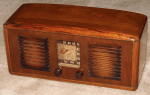
The 1961 wind-up silent camera we used for our splendid junior high films

When I was growing up our family used a 1961 wind-up Kodak 8 mm silent movie camera for home movies.  It pre-dated the better known and highly improved Super 8 cartridge film that came out in 1965.  Our camera used standard 16 mm film which you threaded through the camera, exposed half of the film, then reversed and rethreaded to expose the other half.  In processing they would cut the film in half and you’d end up with a small spliced reel of 8 mm film.  My dad would later splice together several of the small reels of film into longer movies we would watch.

My parents still have a collection of these films from 1961-1974, with indoor shots made possible by a blindingly bright four-lamp light bar that flooded the room with light to compensate for the movie film’s limitations.  We’d watch them on a silent movie projector at 18 frames per second – a far cry from modern videos!

About thirty years ago, when I was in junior high, three different friends joined me in using that old camera to create short film clips.  We were never quite sure what we were capturing, since one had to shoot the film through a tiny viewfinder and then send it out for processing.  A week or two later we’d find out if we had made anything worth watching.   And, of course, I must admit that we never did.

But that won’t deter me from offering you the chance to view our incredible junior high film achievements.  Over Winter Break I used my parents’ original Bolex projector to run the old reels on the home movie screen, capturing those fine cinematic creations with my latest digital camera and then adding some music.  So here are the stupendous digital remasters of our epic films:

Lego Animations

Some stop-motion animations with Legos which I made with my friends Kyle and Jeff:

The Death of a Starship

This is a tragic film, in more ways than one, which my friend Dale and I shot in my backyard.  We loaded up an old table top with some milk jugs, flares, vulcanizing tire patches, and an outdoor faucet cover.  Lowering it on highly visible strings from the swingset, we set it ablaze in a disaster of a film.   If you look carefully, you might spot a little plane taking off from the mother ship after the faucet cover, er, main dome ignites.  And you’ll easily spot the squirt bottle and fire extinguisher in the background that my mother insisted we have on hand.

UPDATE: Dale was running his own Super 8 camera for the above shoot and also converted his film to digital format.  It features even more footage of the burning ship, a camera zoom, and squirt bottle action!  Plus he had some film left over which we used to create, you guessed it, another Lego animation:

Posted in video | 1 Comment

Hiking the Osage Hills Bike Trails

December 22, 2009

Hiking the Osage Hills Bike Trails (click image for a slideshow)

I’m no mountain biker, but when I discovered the biking trails at Osage Hills State Park on Sunday I knew I’d be back to hike them on foot as soon as possible.  The next Tuesday afternoon of winter break was overcast but in the 50s, so I scurried back to the park for my first day hike of the winter.

I’d done my research beforehand, downloading a helpful map of the trails from a blog post at Randall Cramer’s Adventure Bicycle of Bartlesville website.  He had sketched out the trails he found there four years ago and I decided I’d shoot for a hike of about six miles by taking the outer red loop and then the inner blue loop.  On this hike I knew I’d run my iPhone’s MotionX GPS application so I could track my hike, since the signage on the bike trails was said to be sparse.

I drove to the park’s old stone shop, peeking through one barred window to see some metal tables and a big concrete slab where some electrical machinery once resided.  Then I set out on the red loop, shown as loop 1 on this map of my hike.  It hugged a north boundary of the park, with the barbed wire fence and “no hunting” signs visible to my left most of the way.  I’d traded the red circles of the Osage Trail for the smaller red squares occasionally marking this bike trail.  After climbing across waterways it turned south at the park’s northeast corner and climbed to a high open meadow.  There I saw trampled grass and a bare patch resembling a buffalo wallow.  There were no biting flies this time of year, so I didn’t need to wallow there myself.

Soon the trail wound along a rocky ridge coated with moss and lichens, where I took a self-portrait.  I heard faint shouts in the distance, so I figured some actual mountain bikers had hit the trail.  They never got close enough for me to see them, although I would hear them again when I took the inner blue loop, and spotted their vehicle with its empty bike rack when I finally returned to the trailhead at the conclusion of my three-hour 6.15 mile hike.

The red trail drifted south to cross the head of a deep ravine, where I paused for a snack and a drink and clambered down below for a shot.  Later I realized I was high up on the same ravine that down below held the small rock grotto pool I’d photographed two days earlier along the Osage Trail.

Not too much farther I ran into a trail intersection at the far southeast corner of the park, and realized I was back at the Osage Trail where I’d met the hiking family with the Great Dane two days earlier.  Although tempted to dash south to Camp McClintock, to capture that unmapped route on my GPS, the overcast was deepening.  Besides, my map showed I’d hit private land not much farther along the Osage Trail.  So I turned north to follow the Osage Trail back to the lower grotto pool, where I struggled to locate the proposed branching bike trail shown on Cramer’s map.  It did not exist – I guess it was never built.

So I went farther west on the Osage Trail until I knew I’d be somewhat close to the inner blue bike loop and tramped uphill overland until I ran across it.  It eventually broke off northeast and I began what I’ve shown as loop 2 on my map.  I soon encountered a small eroded rock bluff and followed the trail as it snaked along inside the unseen red loop.  The blue loop reached the same high meadow I’d seen before, but ran much farther across it, winding nicely through the grass.  Then it descended back to the Osage Trail and I took yet another route, shown as 3 on my map, back to the stone building and my vehicle.

I thoroughly enjoyed today’s hike, despite the overcast and the lack of significant scenery.  Here’s a shot of my hike in Google Earth, and while I’ve exhausted the official trails at Osage Hills, that mapping service shows what might be a dim trail around the north edge of Lookout Lake which begs exploration.  Maybe I can add some more to my own map of the park.  Happy trails!

UPDATE: Over the years I’ve mapped all of the trails at Osage Hills.

Click here for a slideshow of today’s day hike

Posted in day hike, photos | Leave a comment

Green Weak, and I Don’t Mean Tea

A test for deuteranomaly

Twice this past week I’ve been reminded of my deuteranomaly.  I was diagnosed with it during my physical to enter college, and no, it isn’t contagious.  I didn’t even know I had it for the first 17 years of my life.  Deuteranomaly is “green-weak” color vision, the most common form of so-called colorblindness.  It afflicts about 5% of the male population and is caused by a mutated form of the medium-wavelength “green” pigment in our retinal cones.

The one sure diagnostic I’ve found for my condition is the Ishihara 9.  That’s the image on this post, part of the color test published in 1917 by Tokyo physician Shinobu Ishihara.  If you have normal color vision, you should see the number 74 in it.  I see the number 21 instead.

The irony is that in childhood I was often asked what my favorite color was, and I answered “green”.  I can see the color green, but now I know that I don’t see it as vividly as others do.  I have trouble discriminating small differences in hues in the red, orange, yellow, and green portion of the color spectrum, as they are shifted toward the red for me.  So my favorite color was the one I could perceive less vividly than others did.

The most dramatic evidence of my condition came four years ago.  I was attending a presentation on new textbooks and as part of it we looked at a text on a projected computer screen and the salesperson was pointing out how, with a click of the mouse, all of the verbs would change color to help poor readers identify them.  She clicked to change her projected image of the text, and nothing happened.  All of the words stayed their normal black – to me.  I had to ask a colleague if there was a malfunction, and that brought a stare, first at the screen and then at me.  We expect others to see what we see, but of course they really don’t, do they?

This past week I was surprised when a luncheon companion remarked about the green in my shirt – I only perceive it as gray and black, but she could see greenish hue hidden from my eyes.  And today I’m recharging my Kindle 2 and am annoyed that I have a terrible time distinguishing when its LED light changes from the yellow “charging” status to the green “charged” color.  Hardly much to trouble with, but it does point out the pitfalls of perception.

I am selfishly and naïvely convinced that I perceive the world accurately, but here is direct evidence that my senses are betraying me.  Over time I’ve belatedly learned that a fellow teacher’s pickup truck and some of my hats, shirts, and socks were dark green, not black.  My favorite Tilley hat is khaki, but where I see gray, perhaps others see green.  When I take a picture of the greenery on a day hike, what do others see in it that I can only partially perceive?

And if my physical vision is biased, what about my other ‘vision’ – the philosophical one?  In the certainty of my own rationalist viewpoint, firmly grounded in my senses, experiences, and flawed perception of the world, what am I missing that others may perceive?  Is there something there, hidden from me by spiritual blindness?  I don’t think there’s an Ishihara test for that.

Posted in random | 7 Comments

Scouting the Osage Trail


On the Osage Trail (click for a slideshow)


I spent the first weekend of Winter Break on activities that were predictable yet enjoyable.  On Saturday I drove to Tulsa to eat and shop.  The day began on a sad note, as I drove to 51st and Lewis for lunch at my favorite El Chico, only to discover it had been demolished.  I had eaten there since childhood and am sad to see it go.  I have known for a few years that it would be a victim of the widening project for the section of I-44 which was once known as the Skelly Bypass.  Thankfully that project has spared, barely, the Marie Callendar’s restaurant farther east.  And there are still three El Chico locations in Tulsa, so I drove to Promenade Mall for my El Chico fix.

The holiday crowds were just right – the mall was busy and boisterous without being annoying and I had no trouble parking.  I finished my Christmas shopping in the festive atmosphere, including wasting some money on an absurd Snuggie, and watched a group of young girls do a rather loose imitation of tap dancing in the noisy food court.  Having imbibed enough noisy fun, I drove over to Woodward Park for a quiet stroll in the chilly overcast afternoon and took a photograph of Appeal to the Great Spirit.

Sunday lived up to its name with a bright sunny afternoon in the 50s, so I of course set out for a day hike on the final day of autumn.  I drove to Osage Hills State Park after lunch and parked by the office.  I first trooped up the Tower Trail to the observation tower, noting that its view remains mediocre even with the trees bare of leaves.  So I quickly clambered on up to the old CCC camp site, past the clattering stripper well, and over to Lookout Lake, where I took one shot of the rippling water beyond the trees.  Farther along the Lake Trail I took a side trip to a seamed bluff, admiring a tree hanging onto the edge above.

Popping out onto the main road, I spied a red metal trail marker on the signpost for the next section of the Tower Loop, and similar red markers on another signpost pointing to a nearby clearing.  I’d wandered over there once before, but had only noticed an old storehouse with barred windows and a sturdy door.  There were vehicles parked there today, so I figured there must be some sort of trail there, although it is not documented on the park map.  Sure enough, there was a sign for three mountain bike trails, and my iPhone informed me that one of them is over three miles long.  I’m certainly going to hike it some day.  But those bike trails lacked the red circle marker which I associated with some sort of pedestrian trail.

I then located a nearby gap in a fence with a wide trail leading down to a stream.  The only sign indicated it was a game preserve and no hunting was permitted.  There was no red marker, but I decided to scout ahead.  Scout is a most appropriate term, for later I would discover I had indeed found the trail of the red markers – the Osage Trail.  It leads about three miles southeast out of the park over to Camp McClintock of the Boy Scouts.  This trail is marked only by those red metal signs, which are infrequent in Osage Hills State Park but show up more prominently as you approach McClintock.  Now that I have seen a map of where I was going, I realize I should have obtained permission from the Cherokee Area Council of the Boy Scouts of America to travel the southern portion of the trail once the bike trail heads northeast from it.  The Osage Trail was registered as an historic trail with the Boy Scouts of America in 1999, and reportedly is part of the path taken by the Osage Indians back in the 1800s when they travelled from the Bartlesville area to modern-day Pawhuska.

But I was ignorant of all that as I embarked down the path, soon fording a stream and then ascending and turning south to follow the trail through grassy woodlands.  I could tell some mountain bikes had been in use, and there were recent boot prints and the paw prints of a large dog which I thought might be from a party on the trail today.  I was growing quite curious, since the trail was in good repair and clearly used about as much as the properly marked and mapped hiking trails elsewhere in the park.  What was this thing, and where did it go?  Surely it wasn’t just for mountain bikes.

After leaving the grassy area the trail forded another stream, with a pretty watery grotto, and then ascended to follow a ridgeline southeast out of the park.  I knew I might be approaching the park boundary, although there was no fence blocking my path.  Along some bluffs, with Sand Creek winding past me far below, a bike trail veered eastward from the main trail and at the junction I encountered a father, mother, daughter, and Great Dane.  Aha!  Maybe I should have been a Boy Scout, since I had correctly interpreted those trail prints.  I asked them if the trail looped, and the father informed me that the trail went to the Boy Scout camp.  That explained it – many a scout troop has helped keep this trail up.  I thanked them by taking a group picture of them on the bluffs and then forged ahead.

UPDATE: I belatedly realized that not far beyond this point is the currently unmarked park boundary.  To hike the rest of the Osage Trail requires permission of the Cherokee Area Council of the Boy Scouts of America.  So it is best to just hike the red mountain bike loop – that way you’ll stay in the park.  Here’s my version of the park map.

I didn’t know how far it would be to the park boundary towards Camp McClintock, but I still had over two hours of daylight left. Following the red trail markers, which had become more frequent, I travelled along the ridge and forded another small stream.  I finally ascended into a grove of cedars and was reassured to see a small power line overhead – that must be powering something at the Boy Scout camp.  Sure enough, it wasn’t long until I spied a large rock building looming overhead on a nearby bluff.  It turned out to be the Cub Cabin, a large bunkhouse with a nice view of the countryside.  I never did see a posted boundary to the state park.

So I had stumbled my way out of the park onto private land to Camp McClintock, the first time I recall being in a Boy Scout camp.  I’ve slept overnight at a Girl Scout camp, but it isn’t as lewd as it sounds, since it was for a faculty retreat one summer at Camp Wah-Sha-She near Woolaroc.  I didn’t even explore the countryside on that retreat, since it was blazing hot and only the scorpions roaming the area felt at ease.  I didn’t explore Camp McClintock, either, since I had clearly entered private land, although I did make use of the pit toilet before taking the Osage Trail back to the state park.

On my return journey I paused to take a self-portrait on the bluffs above Sand Creek and later took a shot of the creek shimmering off in the distance down below the trail.  Upon reaching the stream near the rock storehouse in the park, I wandered down its slick bed and found where a big piece of the overhanging bluff had broken off and fallen into the stream.  What a noise that must have made!  I went on downstream until I could spot Sand Creek far ahead.  With the sun rapidly setting, I took the Tower Loop trail back to my car at the park office.

So I closed the autumn with yet another great day hike, and on a newly discovered trail to boot!  As for the coming winter, Osage Hills still has some unexplored trails that beckon to me – when the weather cooperates you’ll find me on those mountain bike trails, although I’ll be afoot rather than pedaling.

UPDATE: A Flickr contact found an interesting online map of the Osage Trail layout.

Click for a slideshow of today’s day hike
Posted in day hike, photos | 1 Comment

Science Party Tricks

I love this video of science party tricks from magician and psychologist Richard Wiseman.

Posted in physics, video | Leave a comment