Windsor Hills History, Part 1 of 3

My parents lived in the Windsor Hills neighborhood of northwest Oklahoma City from 1978 until 2022. I lived there with them in junior high and high school, but left for college in 1984. After my father passed away in early 2022, my mother moved to independent living here in Bartlesville.

So I no longer have a reason to traverse the Turner Turnpike and travel back to Windsor Hills. I decided to compose a series of posts on the history of the area as part of the process of saying my fond farewells.

Indian Removals

According to Native Land Digital, the Comanche, Osage, Kickapoo, Kiowa, and Wichita tribes once used the land where Oklahoma City is today. The infamous 1830 Indian Removal Act removed at least 18 tribes from the eastern U.S. to lands west of the Mississippi River along the Trail of Tears. Southern tribes were mostly relocated to present-day Oklahoma. In 1855, the area of modern-day Oklahoma City on the north side of the North Canadian River was assigned to the surviving members of the Creek Nation, which is now called the Muscogee (Creek) Nation. The portion of modern-day Oklahoma City south of the river was at that time part of the Seminole Nation.

Windsor Hills is marked with a red star just inside the southern border of the Creek Nation

Many tribes supported the Confederacy in the Civil War, and afterward the United States used its victory as leverage to force the cession of more lands. In an 1866 treaty with the United States, the Creek Nation ceded the western half of their lands, estimated to contain 3,250,560 acres, at thirty (30) cents per acre, or $975,168. The tribe established a new government in Okmulgee, which remains the capital of the Muscogee (Creek) Nation.

Creek Cession of 1866

By 1889, some of the lands ceded after the Civil War by the Creeks and Seminoles had been reassigned to the Iowa, Kickapoo, Sac and Fox, Seminole, Potawatomi, and Shawnee. But about two million acres in the center of Indian Territory, including what would become Oklahoma City, had not been reallocated and became known as the Unassigned Lands.

Windsor Hills is marked with a red star within the Unassigned Lands that were opened in the 1889 Land Run

Homesteads

The Unassigned Lands were opened to homesteaders in the Land Run of 1889. By 1905, there were two 160-acre homesteads in Section 22 of the Council Grove Township 12 North-Range 4 West comprising what would later become Windsor Hills. The northern half was owned by O.M. Bisch and the southern half by Thomas A. Cook.

The Oklahoma Land Rush, April 22, 1889 by John Steuart Curry

Why the “Council Grove” township? That name refers to a small portion of the Unassigned Lands just west of Windsor Hills which was exempted from the Land Run. Before we lived in Windsor Hills, our family lived in Bethany, within the boundaries of the former Council Grove, which was far older than Oklahoma City. It was a tract encompassing much of modern-day Bethany, Woodland Park, and portions of Warr Acres and Oklahoma City. Its eastern edge was modern-day Grove Avenue between MacArthur Boulevard and Ann Arbor Avenue, a quarter-mile west of Windsor Hills.

Council Grove originally consisted of a large grove of cottonwood, elm, and oak trees with good spring water, making it attractive for Indian Councils. Cherokee fur trader Jesse Chisholm had opened a trading post there in 1858; the Chisholm cattle trail was named for him. In 1859, it was the site of a meeting of U.S. and Comanche representatives. In the 1870s, Chickasaw Montford T. Johnson had a ranch in the vicinity of MacArthur Blvd, so the Chickasaws in his employ at the ranch may have been the first permanent inhabitants of what became Oklahoma City.

Council Grove before the Land Run of 1889

In the 1889 Land Run, the Council Grove area shown in the above map was set aside as a source of timber for nearby Fort Reno‘s fuel and fencepost needs and not opened to settlement. However, after the Rock Island Railroad arrived, the timber reserve was no longer needed, so it was sold off after 1896. Little remains to mark Council Grove these days beyond an eponymous school, the mile grid street Council Road, and a historical marker on the North Canadian at NW 10th Street and N Eagle Ln, near the red dot on the map.

Streetcars and a Fruit Farm

Oklahoma City’s suburban development in the early 20th century followed the same pattern of other growing cities. Wealthy developers purchased large tracts away from downtown and built streetcar lines, often with an amusement park at the end of a line to drive weekend traffic as they sold lots along the line. I’ve written before about Israel Putnam and his Putnam City venture along an interurban line from Oklahoma City to El Reno which is now US 66/39th Expressway. Another major developer in OKC was Anton Classen.

Two years after graduating from college in Michigan, Anton Classen made the 1889 Land Run. He developed farmland into housing developments beginning in 1900, partnering with John Shartel in streetcar lines. He became the president of the Commercial Club (the predecessor of the Chamber of Commerce) and helped finance the building of what would become Oklahoma City University, promoted the paving of streets, organized street fairs, promoted a meat-packing firm in the stockyards, and much more.

While Putnam was developing his land around the El Reno interurban line into what was intended to become the state capitol, Classen and Henry Overholser donated land for a boulevard/streetcar line that was intended to be extended northwest to 23rd and Meridian and then diagonally up through what would become Windsor Hills to intersect Putnam’s development. But the Oklahoma Senate rejected the plan and the capitol was instead located northeast of downtown on what became Lincoln Boulevard. So while a streetcar line was built northeast to Portland Avenue, it never extended all the way to what eventually became the Putnam City Central school campus.

You can see in the map below how one of the streetcar lines extended northwest from downtown to Portland Avenue just west of modern-day Interstate 44. The dashed line shows NW 19th Street, which is a continued double-lane boulevard all the way to NW 23rd Street and Meridian Avenue, leading to Windsor Hills Shopping Center at the southeast corner of the neighborhood. I’ve drawn in a dotted line northwest along the approximate path to Putnam City Central.

Streetcar lines in blue; I lived in Bethany for grades 1-6 (yellow star) and then in Windsor Hills for grades 7-12 (red star)

My parents and I lived from 1972-1978 in the city of Bethany, at the location shown by the yellow star at the upper left of the map, in the middle of the former Council Grove reserve. Then we moved to a home on Tudor Road in Windsor Hills, shown by the red star. Eventually I noticed the odd way that 19th angled up to intersect 23rd & Meridian. My parents clued me in that the split boulevard there led all of the way downtown along a former streetcar path. Once I could drive an automobile, I had fun tracing that through the neighborhoods southeast to the aptly named Classen Boulevard on the west side of downtown. It would be decades later that I found the streetcar map confirming the route preserved in the street grid.
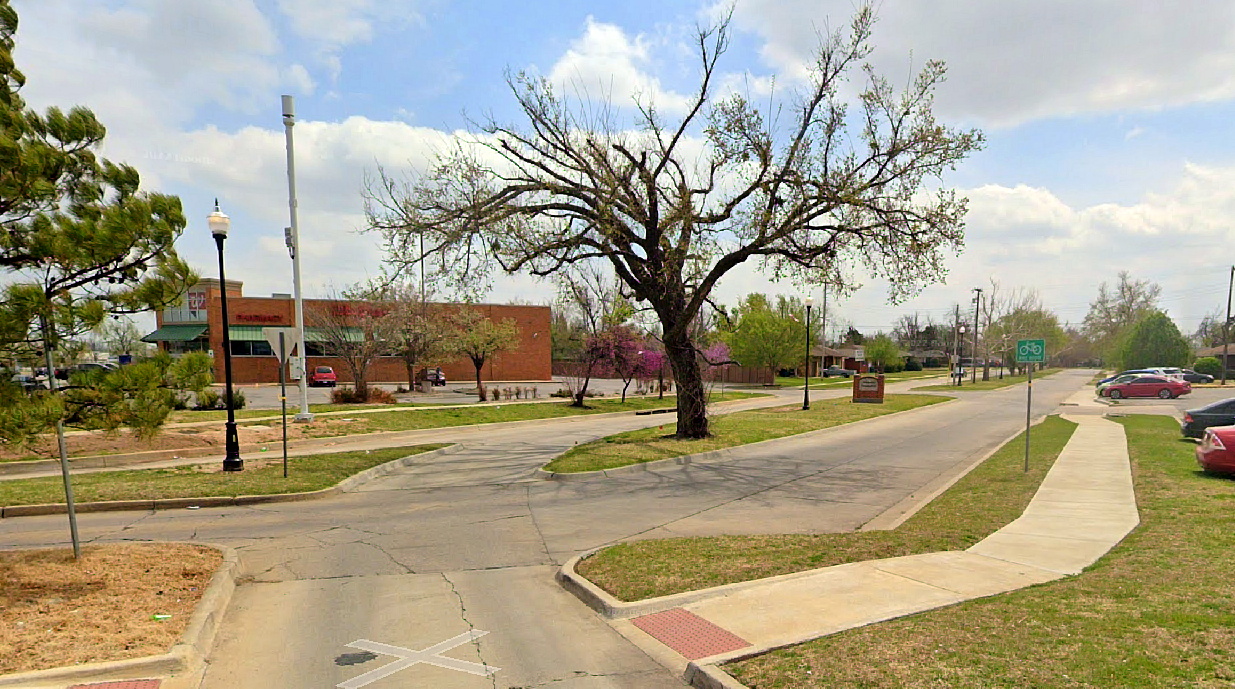
The diagonal part of NW 19th St just southeast of 23rd & Meridian, at the entrance of the Musgrave Pennington neighborhood; the split boulevard was built to have a streetcar line running down the center

The original homesteader Thomas A. Cook had a fruit farm on his property, which Classen’s wife, Ella, purchased and operated. Anton Classen died in 1922, and the streetcar service ended in 1947. But by then, part of the Classen Fruit Farm had become a golf course.

Golf Course

Floyd Farley designed many golf courses around OKC

Golf pro Floyd Farley leased land from the Classen Fruit Farm in 1941. He built his first course and later shared, “Everybody liked it; it was a natural. I hardly moved any dirt to build it, and the bulldozer bill was only $2,000. It was just a natural piece of ground, but everybody liked it so well and thought I was responsible for it that people started hiring me to build them a golf course. So that’s how I got started.”

Farley was drafted into the army during World War II. After his discharge he returned to golf, turning from being a golf pro to designing courses full-time. He owned the golf club until 1961. Floyd Farley passed away in 2005, having designed over 40 golf courses over six decades, with almost 20 of them in the Oklahoma City area.

Early 1950s aerial image of the golf course that became Windsor Hills in OKC in 1961; the house my parents owned from 1977-2022 was built in 1965 at the location of the star icon

Let’s tackle the features we can see in the above aerial image from the early 1950s:

Streets

Almost all of Oklahoma City is laid out in a square-mile grid. Three of the one-mile grid streets are visible: NW 23rd Street, NW 36th Street, and Meridian Avenue. Ann Arbor Avenue is one-half mile west of Meridian. Running east-west farther north is NW 39th Expressway, which is also the famous U.S Highway 66, and was built along the former interurban rail line from Oklahoma City westward to El Reno. The diagonal entry road leading northwest into the golf course clearly follows the route of the streetcar line to Putnam City that was never built.

Orchards

In the photograph, there are still remnants of the fruit farm visible as a stand of pear trees in the central west portion, and another orchard just southwest of 36th & Meridian. That second little orchard would be developed before Windsor Hills, just after the above photograph was taken, as the Meridian Court additions, which is where Jeff, my best friend from junior high through college, once lived.

Railroad

The old Chicago, Rock Island, and Pacific main line ran east-west across Oklahoma City between Reno and NW 10th St. In the 1950s, the Warr Acres Industrial Spur rail line was built, running north from the Rock Island main line to terminate at 38th St, where it ran east and west behind businesses south of US 66 for about a mile.

C.B. Warr developed the Warr Acres housing additions in the 1930s and 1940s. In 1948, 11 housing additions, including the Warr Acres ones and Putnam City, petitioned to incorporate. The City of Bethany sued to stop them, but lost a Supreme Court decision, and they incorporated as Warr Acres. Warr Built Homes constructed thousands of homes over the years.

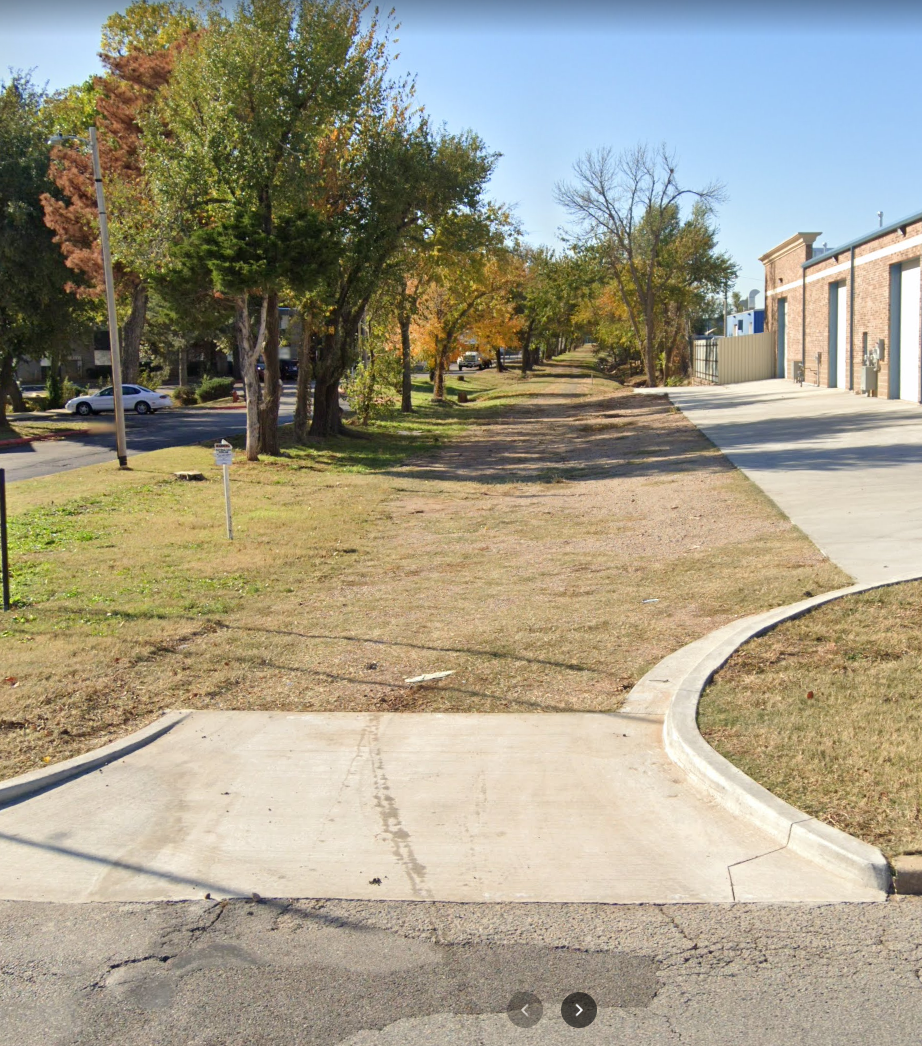
There used to be a spur railroad line east of Ann Arbor Avenue that ran up to NW 39th Expressway
Looking west from Ann Arbor along the former Warr Acres Industrial Spur railway route

That railroad spur line was still in occasional use when I lived in Windsor Hills. It carried lumber and other building supplies to Leonhardt’s Big L lumberyard up on 39th St., a family-owned business which operated in the city for over 80 years. Leonhardt’s peaked in 1983 with multiple stores in Oklahoma City and Tulsa, but filed for bankruptcy in 1988 and reorganized with full restitution to unsecured creditors. It finally closed its operation on 39th in 1995.

Over the years, the rail spur trains also served Wilsey Bennett butter house, General Electric, and provided team track service to businesses east of MacArthur Boulevard, including carloads of sacks for Kiespert’s grocery store.

Back in seventh grade, a friend and I heard the slow train coming and put some pennies on the track. The train passed by, leaving them warm and flattened.

In the early 1990s, the line was abandoned and the rails and ties removed. I hoped that the Windsor Hills neighborhood would keep that right-of-way to form a walking/biking trail, but they opted to just divide up the right-of-way to enlarge the back yards of the homes along it.

Streams

The headwater of the Deep Fork of the North Canadian River begins just northwest of Windsor Hills along the abandoned Warr Acres Industrial Spur in what is now the Woodbrier Apartments. The river runs 230 miles eastward before emptying into Eufaula Lake, and it is now impounded northeast of Oklahoma City to form Arcadia Lake.

Just northwest of Windsor Hills are the headwaters of the Deep Fork River

The headwater cut down and across the golf course back in the day, exiting just south of 30th St. When we first moved to Windsor Hills, it had become a big ditch running behind the houses across the street. Brush would build up and cause flooding.

The Meridian Golf Club in 1949, looking north

While I was in junior high the city funded a concrete channelization of the entire stream through the neighborhood. The deep channel had very steep sloping sides, and curious kids like us found ways down to walk along it. Between rains, it was often fairly dry with large puddles, but it gradually built up thick and smelly sheets of moss.

The city channelized the Deep Fork headwater when I was in junior high

With a different friend than Jeff, I also explored an underground storm sewer the city constructed along the railroad spur south from 32nd Street. It was large enough to walk along for several blocks if you ducked, narrowing to a tunnel you could scuttle through by 26th Street. I remember how that friend stole a Penthouse magazine from either his father or an older brother, which we hid on a high ledge in that storm sewer. A big rainstorm eventually swept our treasure away.

Wendy and I were married at the headwater of the Deep Fork in Will Rogers Park

During junior high, my friend Jeff and I explored the channelized headwaters of the Deep Fork through Windsor Hills and on eastward for a mile through the neighboring Windsor Highland and Pennington 10 neighborhoods to Will Rogers Park. I drew up a huge street map of the neighborhoods on the back of one of my father’s Cities Service Gas blueprints, and we gradually mapped out the walkable underground storm sewers and the channelized streams. Little did I know that over three decades later I would get married at the headwater of the Deep Fork in Will Rogers Park.

Part 2

In the next post, I cover the initial layout of the Windsor Hills neighborhood and the development and my memories of the Windsor Hills Shopping Center.

Posted in history, nostalgia | 8 Comments

My 2022 Book Report

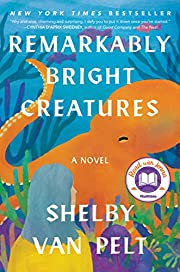
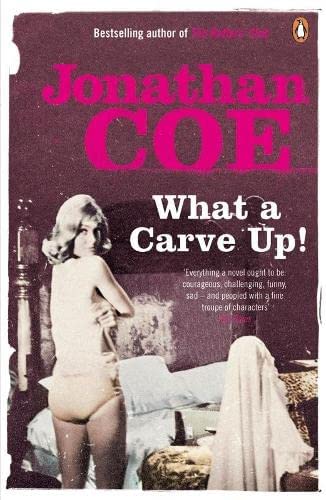
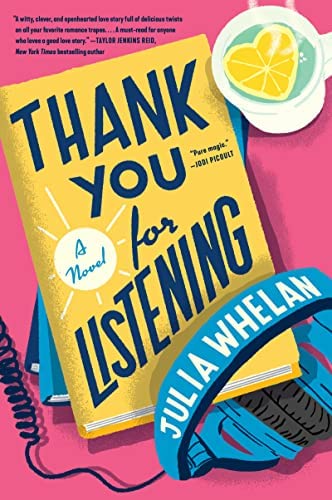
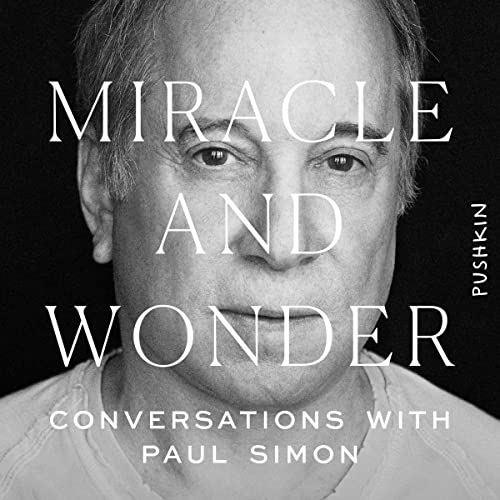
For 15 years, I have been logging my reading at LibraryThing, so I decided to peruse my statistics and share some recommendations.

Favorite Books of 2022

Reading Rate

I have been reading more books in recent years, up from a little over one per month in the early 2010s to three or more per month for the past four years. I haven’t watched television in decades, but YouTube is now a daily distraction since there is so much highly focused and decent content being produced for it.

An obvious reason for my increased reading in recent years was my declining interest in day hikes. The median American reads four books per year, so even when I was distracted with day hikes, my reading was more than three times that rate, and lately it has been about ten times. But I know folks who read 60, 80, and more books annually. At any given time, I am usually working my way through multiple books in various formats, switching from one to another, so it may take me weeks to finish a particular book.

In 2010-2012, I drove out for day hikes almost every weekend, with 44-50 hiking days each year, with a bit over six miles of hiking each day. In 2013-2015, I was still doing about 30 hiking days each year, even though the novel trails within driving range had been exhausted, as I took Wendy out to enjoy my favorite trails. But by the time we married in July 2016, we had hiked the best nearby trails, and that freed up more time for reading.

It is no surprise that my reading peaked in 2020, as that was the year of pandemic lockdowns and highly circumscribed travel before vaccines were available. I moved our covered patio swings onto a deck at the side of our yard and have spent many hours out there from spring through autumn, reading my Kindle Voyage or listening to an audiobook. The daylight glare prevents me from using my iPad, thus freeing me from the distractions of YouTube and web surfing. I finally stopped tracking my day hikes in 2022, focusing much more on weekend walks and photography along the Pathfinder Parkway trails in Bartlesville during the warmer months.

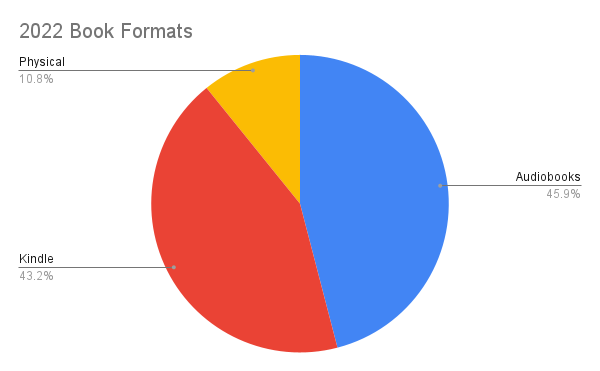
Book Formats

Years ago, I embraced audiobooks to keep me entertained when on the road and on day hikes. I still listen to them when walking on the Pathfinder Parkway, and sometimes listen to them when I’m out relaxing on my side deck swings at home.

But when inside the house, I mostly read e-books using either my Kindle Voyage or the Kindle app on my iPad. I purchased the first generation Kindle in June 2008 and have purchased and used five later models. In addition to the Voyage, I still have a slightly larger Kindle Oasis along with a big 10″ Boox Note Air e-reader, but I like the portability and physical buttons of the older Voyage.

Hardcover and paperback books are now mostly limited to things unavailable in the other formats, books where diagrams or high-quality photographs are essential, or ones I purchase when browsing at Barnes & Noble. I want those remaining bookstores in Tulsa to stick around, as I discover books while browsing there that I would never discover online.

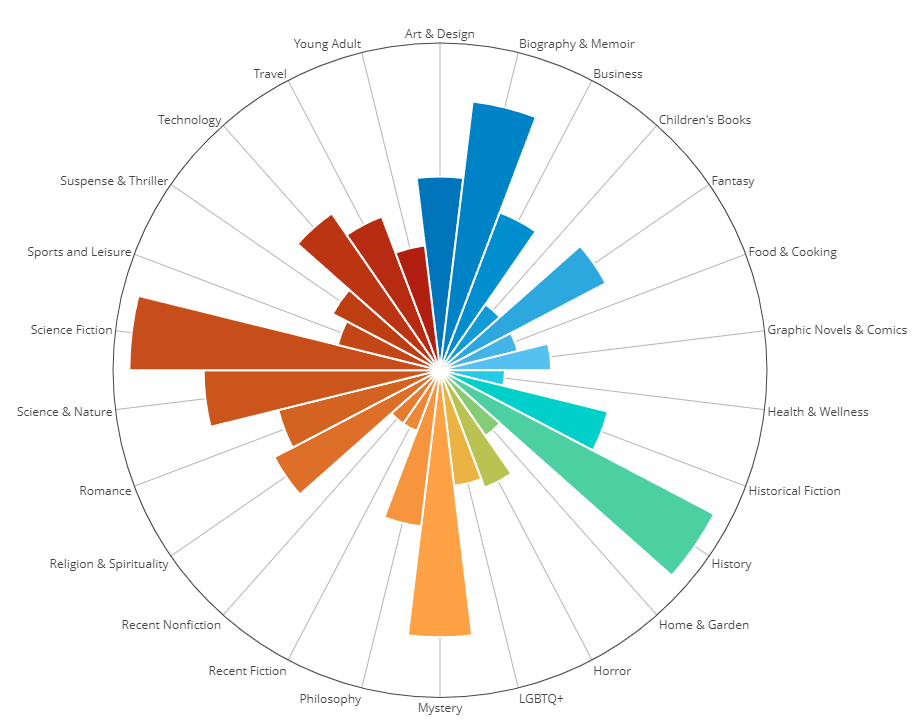
Genres

My top genres over the past 15 years are science fiction, history, biography & memoir, mystery, and science & nature. Below I provide some details on my history with each of those top genres.

Science Fiction

As I child, I ordered The Haunted Spacesuit and Other Science Fiction Stories from Weekly Reader. I loved the featured story by Arthur C. Clarke, and would go on to read everything by him, Isaac Asimov, and Ray Bradbury. While I’ve read a few works by Robert Heinlein, his style wore thin pretty quickly for me.

Hard sci-fi was my thing, so I went on to read all of the solo works of Larry Niven, his collaborations with Jerry Pournelle, and I read a lot of Greg Bear, Gregory Benford, David Brin, and Charles Sheffield. I also read Frank Herbert‘s Dune books, and when cyberpunk hit, I enjoyed the books of William Gibson and Bruce Sterling.

In recent years, I’ve enjoyed books by Alastair Reynolds, Charles Stross, Gene Wolfe, short stories by Jack Vance, and I am now reading Becky Chambers.

Specifics on my top three science fiction authors:

You can find much more on my science fiction preferences in that recommendations section of this website.

History

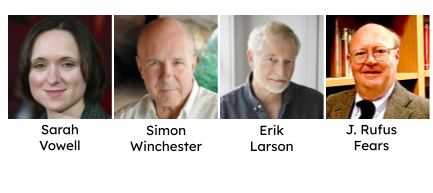
This genre inherently depends on which topics are of personal interest, but I have thoroughly enjoyed every American History audiobook by Sarah Vowell. The Wordy Shipmates, Unfamiliar Fishes, and Lafayette in the Somewhat United States were all treats for me. I first encountered Sarah via audio essays on NPR, and as with the hilarious essayist David Sedaris, I would feel cheated if I didn’t listen to Sarah reading her own works.

Empire of Pain: The Secret History of the Sackler Dynasty by Patrick Radden Keefe, a renowned writer for The New Yorker, was a superb 2022 publication, and can be enhanced by watching Georg Rockall-Schmidt’s three-part video series on the Sacklers.

And if you’re an Oklahoman, it is eye-opening to read David Grann’s Killers of the Flower Moon: The Osage Murders and the Birth of the FBI. Anything by Erik Larson is great, and I love listening to Simon Winchester read his books.

Back when I was avidly day hiking, I often listened to academic lectures in The Great Courses, and I particularly enjoyed the mesmerizing talks by Rufus Fears.

I count myself fortunate to have been able to attend in-person talks by Winchester and Larson via the University of Tulsa Presidential Lecture Series and to have met Fears at a Circle of Excellence meeting of the Oklahoma Foundation for Excellence. See more on my favorite history books in that recommendations section of this website.

Biography & Memoir

This genre also requires personal interest in the particular subject, but recent highlights for me have included:

Mysteries

As child, I loved juvenile adventure series: The Hardy Boys and The Three Investigators, plus, by raiding a spinster aunt’s collections, Trixie Belden, Nancy Drew, and The Dana Girls. When I was a bit older, I read all of the Sherlock Holmes novels and short stories by Arthur Canon Doyle.

As an adult, I first read a great deal of true crime by Ann Rule and Vincent Bugliosi. Then my librarian friend, Carrie Fleharty, introduced me to the Brother Cadfael mystery books by Ellis Peters, which was a pseudonym for Edith Pargeter. So I started checking out that series on cassette tapes from Tulsa’s Central Library to listen to on all of my road trips and later day hikes, enjoying the narration of Patrick Tull.

I stumbled into mysteries by Elizabeth Peters, a pseudonym for Barbara Mertz, since those were shelved next to Ellis Peters at the library. I particularly enjoyed her Vicki Bliss and Jacqueline Kirby series, although I disliked her characters in the more popular Amelia Peabody series. I’ve listened to several gothic thrillers she wrote as Barbara Michaels, but those books are pretty formulaic.

Then I decided to listen to Agatha Christie. I already knew about the most successful of the mystery authors, having enjoyed Hercule Poirot movies with Peter Ustinov. (And it is a blessing that Ustinov encouraged David Suchet to do his more accurate portrayal of the character on television.) I purchased most of Christie’s works via Audible, and was struck by her particular mastery of dialogue, enjoying everything she wrote, although I like her standalone works better than her Poirot and Miss Marple series.

During the pandemic, I returned to Edith Pargeter, listening and/or reading to her entire Inspector Felse series, which was mostly excellent. I listened to the first of the Lord Peter Wimsey books by Dorothy L. Sayers, but that Richie Rich character didn’t appeal to me. Lately I’ve been listening to America’s answer to Agatha Christie, Mary Roberts Rinehart. She is funnier than Christie, but her writing style is more dated.

Specific recommendations:

And you can find additional info in the recommendations section of this website.

Science & Nature

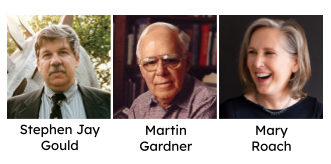
My all-time favorite science writer was Stephen Jay Gould, a paleontologist polymath whose collected columns were a treasure trove, and it was an honor to meet him at a National Science Teachers Association conference in the 1990s. Another great favorite of mine is Martin Gardner, another polymath and a renowned skeptic. And there is no funnier science writer than Mary Roach. Some more information is in the recommendations section of this website.

Author Gender

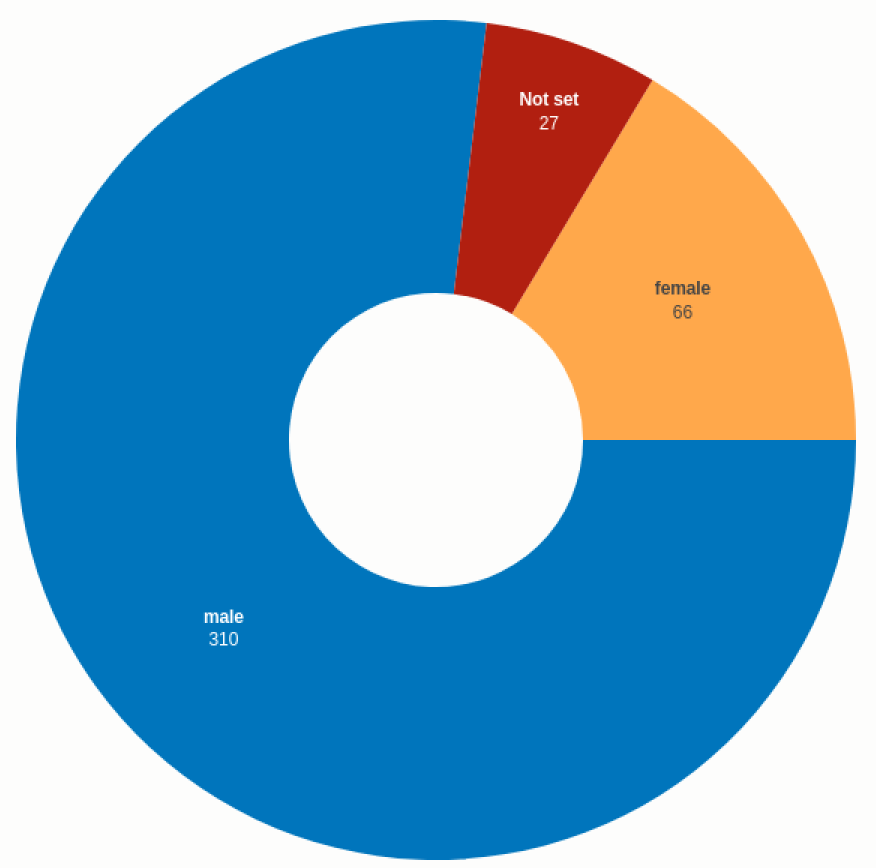
I have never paid much attention to the gender of authors, and grew up voraciously reading both boys’ and girls’ adventure series. But my early interest in golden age science fiction meant that I read a lot of fiction by males, while all of my favorite mystery authors are female. Here is the gender breakdown across my entire LibraryThings database:

Fiction vs. Nonfiction

LibraryThing reports that in the past 15 years, 53% of my reading has been fiction.

And if we delve into the nonfiction categorization, we see that I particularly enjoy literature, the arts, and history and geography, while avoiding philosophy and psychology, religions, and language. But I did recommend three philosophy and religion books, and I enjoyed Asimov’s Guide to the Bible.

Publication Dates

Since audiobooks are published much later than their source texts, that completely skews the LibraryThing tracking, which fails to accurately reflect that I’ve read a number of Mark Twain books from the late 19th century and many novels from the first half of the 20th century, including 50 of Agatha Christie’s books published before 1950…and dozens published later, up until her death in 1976. During the pandemic, I listened to eleven books by P.G. Wodehouse to cheer myself up, and those were published between 1915 and 1964. I also listened to eight books by Mary Roberts Rinehart, published between 1908 and 1945.

Tracking

I prefer LibraryThing, but I also have tried to track at Goodreads since 2019. I dislike the Goodreads interface, and my tracking there is less accurate.

Think before you speak. Read before you think.

Fran Lebowitz
Posted in books | Leave a comment

Cuba Baion

One of my favorite YouTube channels is Techmoan, which I’ve supported on Patreon since 2016. The creator is Mat Taylor, a Scot who mainly posts videos about obscure audiovisual technologies. One of his most interesting posts was in 2015 about the Tefifon, a tape cartridge player that didn’t use magnetic tape, but instead had a loop of plastic tape with grooves that were played with a stylus in what was a bizarre combination of phonograph and tape technology.

The Tefifon was inherently interesting, but a catchy song Mat played from it in the background during part of the video would become a staple of his channel, with him using it as background music for various puppet segments he used to include in his videos.

Mat used that recording of Cuba Baion because he doubted it would trigger a copyright content match. He later learned that it was safe to use since it was copyrighted in Germany and was by now public domain. If it had been copyrighted in the United States, it might not be safe to use until 2066!

Funly enough, internet nerds have given the song new life.

Here’s Mat’s original video:

The video caused such a commotion that Mat made a follow-up, which included the full song:

Here’s the isolated recording of Cuba Baion from Mat’s Tefifon:

Here’s the song from a long-playing record, with a slower speed and deeper tone:

Here’s a fellow who figured out how much the Tefifon playback was off, and applied some playback curves:

Here’s a MIDI version that Anders Enger Jensen created:

And topping these off is a version played on a Fata Morgana Dutch Street Organ for residents of the Gagelbosch care center in Eindhoven, The Netherlands:

That is delightful! There is now even sheet music for Cuba Baion prepared by Kaden Dayog, who was also inspired by Techmoan’s videos.

Kurt Drabek was a German accordionist and bandleader. He was born in 1912 and passed away in Berlin in 1995. More than 1,100 compositions are attributed to him.

If Techmoan might be your cup of tea, here is a sampling of his output in 2022.

Posted in music, video | Leave a comment

Putnam City and the Prophet

There was a Putnam, and eventually there was a city, but there never was a Putnam City.

I attended Putnam City schools from first through twelfth grades. But I never lived in Putnam City, because it never officially existed.

Israel Mercer Putnam

Israel Mercer Putnam

Israel Putnam arrived in Oklahoma City on July 4, 1901, a dozen years after 5,000 people settled it overnight in a land run. He was 27 years old, out of law school in Georgia.

He expanded his law business into real estate, developing residential additions. A common scheme at the time was to construct interurban streetcar lines out to undeveloped land, build amusement parks at the end of the lines to drive weekend traffic, and sell lots.

Putnam Park was one such operation for his Putnam Heights addition. It included a boating lake, gazebo, and picnic area. In 1928, it became Memorial Park, with a fountain replacing the lake, and is one of the city’s oldest parks at 36th and Classen Blvd.

Putnam Park was developed at the end of a streetcar line to promote the Putnam Heights development

Putnam was also instrumental in other Oklahoma City institutions. He and fellow land developer Anton Classen brought Epworth University to town, which would evolve to become Oklahoma City University. In 1905, he donated 40 acres at modern-day 63rd & Pennsylvania Ave. to a Baptist group known as the Indian Territory-Oklahoma Territory Orphan’s Home. The Baptist Orphans Home was sold in 1981 and the site is now the Waterford Hotel, office complex, and condominiums.

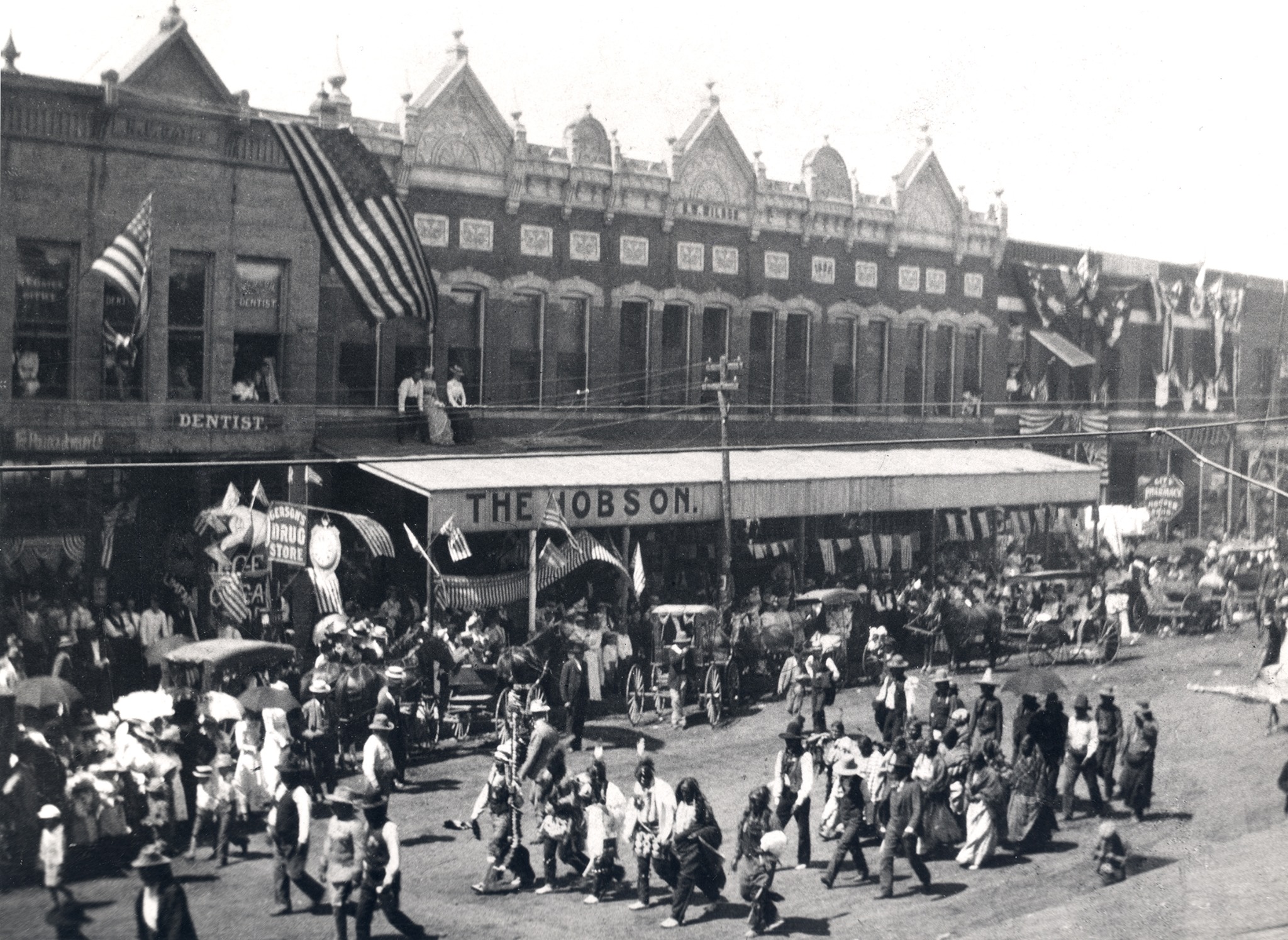
Rough Riders Reunion Parade in OKC in July 1900
Oklahoma City in 1900

In 1907, when Oklahoma became a state, Putnam was elected to the legislature. In 1910, voters approved moving the state capital from Guthrie to Oklahoma City. Putnam purchased 2,000 acres northwest of the city, just west of some of his earlier additions and along the interurban streetcar line being constructed that ran west to El Reno along what is now NW 39th Expressway/Route 66. He initially called it “Oklacadia”.

Putnam City was to be located along the streetcar line running west from north Oklahoma City to El Reno

Putnam later called his land “Model City” and began to make improvements. Partnering with John Shartel, he created a layout for “Putnam City’ and then offered “Putnam City Grove” within that layout to the state as a site for the new capitol building.

The Grove’s northwest corner was at what is now the intersection of Grove Avenue and 39th Expressway, and it extended south to 34th Street and east to what is now Ann Arbor Avenue. The Putnam City Central schools campus would later develop directly to the north of that between 39th and 40th streets. Today various businesses along Route 66, homes, and the Woodbrier Apartments occupy what was labeled Putnam City Grove and intended for the capitol building. Putnam’s land is now partially in the south end of the City of Warr Acres and partially in greater Oklahoma City. Putnam and Shartel planned to recoup their investment by selling lots around the new capitol building.

Putnam City Proposed Layout
The proposed layout for Putnam City; Grove and Meridian Avenues and 36th were built as shown; Putnam City Boulevard with the interurban later became 39th Expressway/Route 66, Main Street became Ann Arbor Avenue, and West End Avenue became MacArthur Blvd.

Governor Haskell and a State Capitol Commission agreed to the proposal, and Putnam began development. North of the future capitol along the interurban route, he built a block of brick-front stores and a hotel that was to house out-of-town legislators. But then the state Supreme Court ruled that legislative approval was needed to select a site for the capitol.

Putnam Hotel
The former Putnam Hotel when it had become the Arnett Building, with “The Home of Thrift” signage

The state House of Representatives accepted Putnam and Shartel’s land deal, but the Senate objected. Other Oklahoma City business leaders argued the site was too far from downtown and the central business district. William F. Harn and John J. Culbertson offered 40 acres at NE 23rd Street and Lincoln Boulevard northeast of downtown, and a Senate commission stunned Putnam by choosing that site for the new capitol building.

Putnam’s reputation suffered, a bank he was associated with failed, and the bottom fell out of his stock as he was branded a “land shark”. In 1914, he donated 40 acres of the unplatted land and his Putnam building to the leaders of four one-room schools so they could consolidate under a new state law, asking only that the new school district be named for him and the city that never existed.

Putnam went on to land development schemes in Ardmore and Miami, OK and later moved to San Antonio, TX where he developed a resort, a hotel, and Pan American College. He died there in 1961.

Brick school at 40th & Grove built in 1915 west of the Putnam Hotel; it had six classrooms, an auditorium, and basement; it burned in 1940

Using the land donated by Putnam in Oklahoma City, Consolidated School District No. 1 was formed in 1914. They initially held classes in the Putnam building, but after building a brick school at present-day 40th and Grove, they sold the sprawling Putnam building to the eccentric Eugene Arnett, who became the Putnam City prophet.

The Putnam City Prophet

Eugene Arnett, the Prophet of the Purebred People

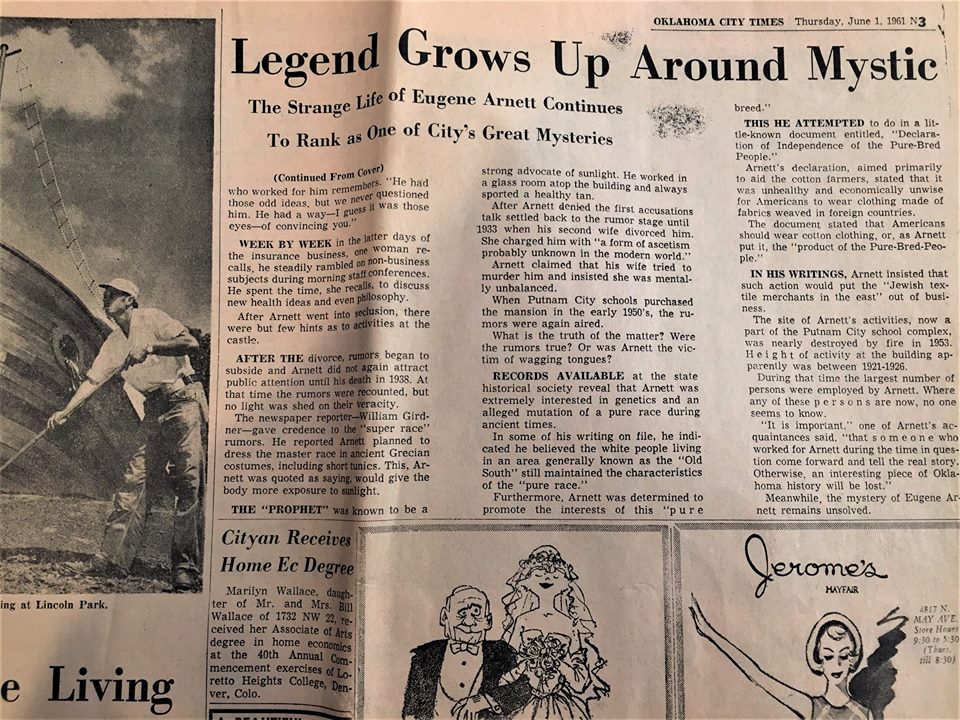
Arnett had become a millionaire as an insurance broker in Oklahoma, Louisiana, and Arkansas. He began steadily rambling on about health ideas and philosophy at morning staff conferences in the former Putnam building, confounding his employees. A reporter infiltrated his organization and reported on his interest in developing a “super-race” which he planned to dress in ancient Grecian costumes, including short tunics in order to give the body more exposure to sunlight.

At age 42, he suddenly retired, proclaiming himself the Prophet of the Purebred People. He had a stone sign placed around the building saying, “Place of the Poor Prophet” and in later years dubbed it “Arnett Athenoreium”. He had a glass room atop the east wing where he would work in the sunlight and reportedly sunbathe in the nude. About 40 to 50 employees lived and worked on the grounds, with mandatory daily exercises, eating foods that he insisted not be fried or contain caffeine. He disapproved of smoking, drinking, and girdles.

Arnett had peculiar racist and anti-Semitic ideas that white people living in the “Old South” maintained traits of the “Purebred People” and urged Americans to not wear clothing made of fabrics woven in foreign countries. He said Americans should wear cotton clothing to support southern farmers and put the “Jewish textile merchants in the east” out of business.

Arnett became a recluse, with rumors swirling about his activities after divorcing his first wife and marrying his secretary. In 1930, A.W. Whitten of Birmingham, Alabama sued Arnett for libel, demanding $100,000 because Arnett had written a letter stating Whitten was “the greatest egoist the Lord has ever allowed to live.” In 1933 he divorced the secretary, claiming she was mentally unbalanced and had tried to shoot him while riding in an automobile, while she charged him with “a form of asceticism probably unknown in the modern world.” He then remarried his first wife.

Arnett had employees build a brick-lined tunnel southward under the interurban tracks (present-day 39th Expressway/Route 66) with plans to transfer coal and cement from the interurban to his mansion using his own underground cars. The tunnel was reportedly never used, however, and was allowed to fill with water. It had hatches inside the Arnett building and in what was later the back lot of a car dealership on the south side of Route 66. A Warr Acres fireman claimed it also extended north past 42nd St.
The Arnett Building/East Annex

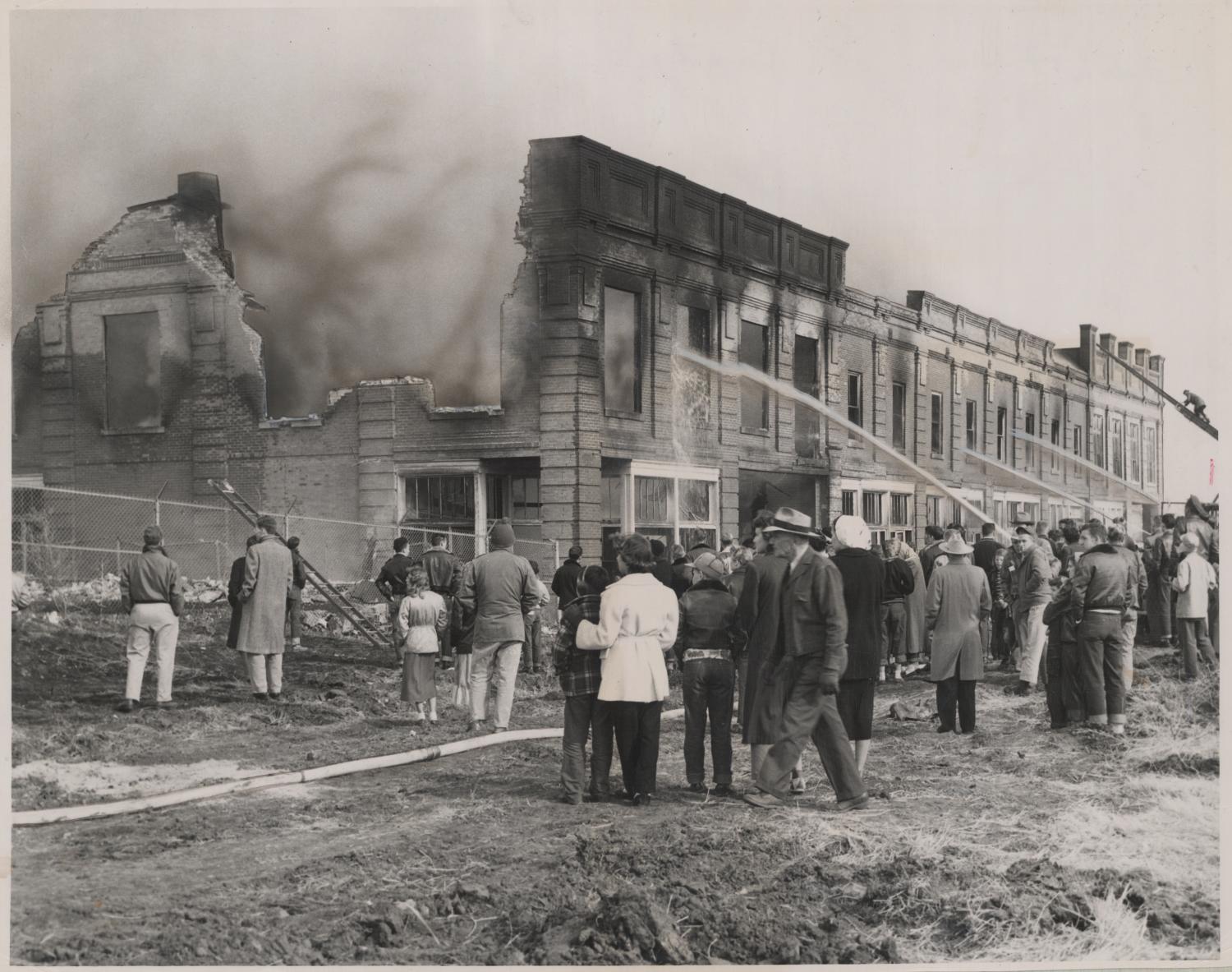
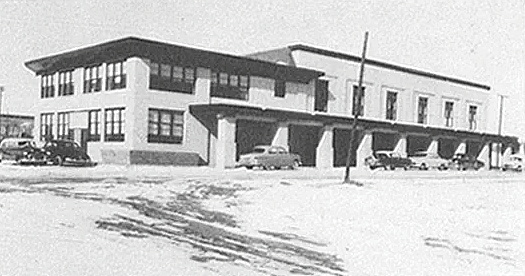
Arnett died in 1938, and the building was found to include a library with more than 60,000 volumes and pamphlets. His widow, Mabel Arnett, continued to live in the rambling 56-room mansion, which became dilapidated. She sold it back to the Putnam City school district in 1950, but the west wing was lost to fire on December 27, 1951.

Much of the Arnett Building burned on December 27, 1951

The remaining east wing had housed construction equipment at the time of the fire, in support of the new junior high being built across State Street, which later became Central Intermediate. The remaining portion of the Arnett building was heavily remodeled to become the district’s maintenance building with wood and metal shops.

The Arnett building in the 1950s

In my childhood, the Arnett building was an imposing oddity just across State Street from the playground of Central Intermediate, where I attended grades 4-6. A beige painted exterior hid its original brick, and by then it had huge metal louvers over the windows. I never saw inside the “east annex” but was told that the junior high shop classes were held in there. In sixth grade, I walked by it each week on my way to and from the west end of campus where I was a crossing guard for kindergarten kids headed to after-school care across 40th street.

The Arnett building was just west across State Street from Central Intermediate

In addition to Arnett’s abandoned tunnel under 39th Expressway, there was a tunnel leading westward from the Arnett building underneath the practice field; it was exposed when the Arnett building was demolished in 2017. I presume it was for steam pipes and other utilities, since there used to be a central plant along 40th.

Tunnel from the Arnett building leading west under the Putnam City Central practice field; photo by MattB

There were likely additional utility tunnels underneath the various other buildings across the campus.

My memories of the PC Central buildings

In 1971-72, I lived with my parents in the Western Village addition near Hefner & Western, over six miles northeast of PC Central. I walked a half-mile along 104th Terrace to and from kindergarten at the neighborhood school in the Oklahoma City school district. But then court-ordered busing was going to bus me miles across town, and my parents moved to Bethany. The Bethany school district, however, was only about a square mile and smaller than the town’s borders, and I ended up going to Putnam City Central for grades 1-6.

For my first day at the new school, my mother put me on the bus. My recollection is that she was the homeroom mother and was heading to the school early to help my teacher set up. I’d never ridden a school bus, but Mom told me which building to head for when I got to school, where to find the classroom, etc. The problem was that the campus extended for 2100 feet along 39th Expressway and was so large that there were three bus stops, and my mother didn’t know that.

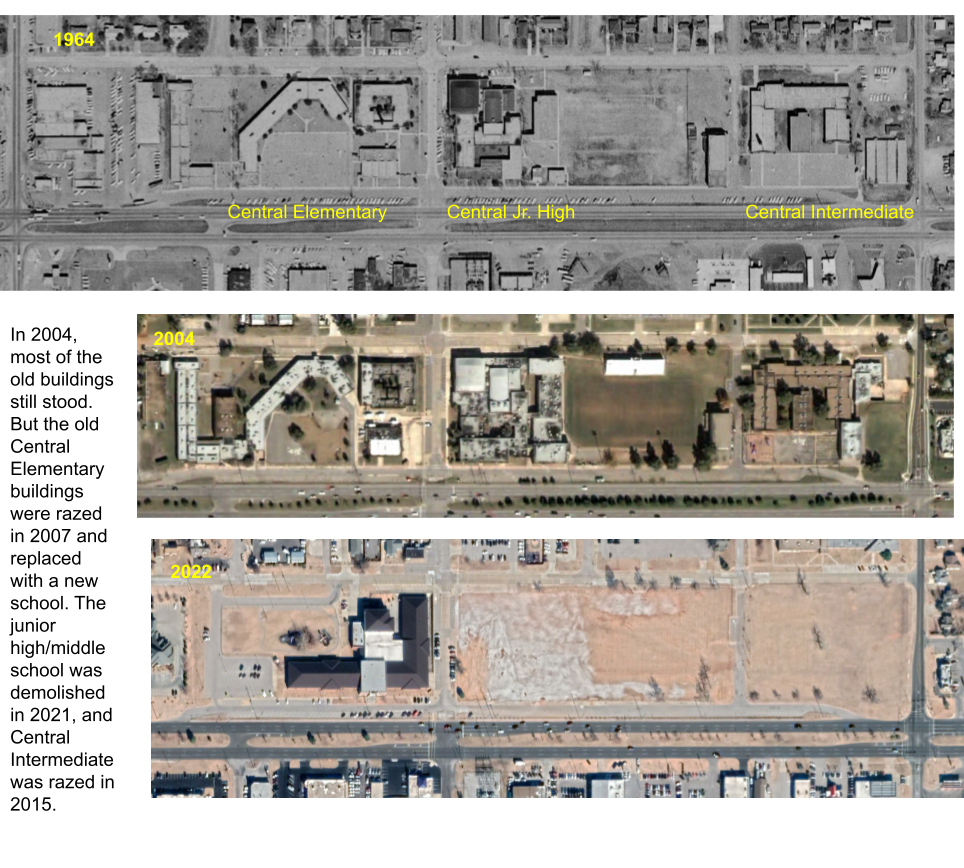
The Putnam City Central campus in the 1960s and 1970s

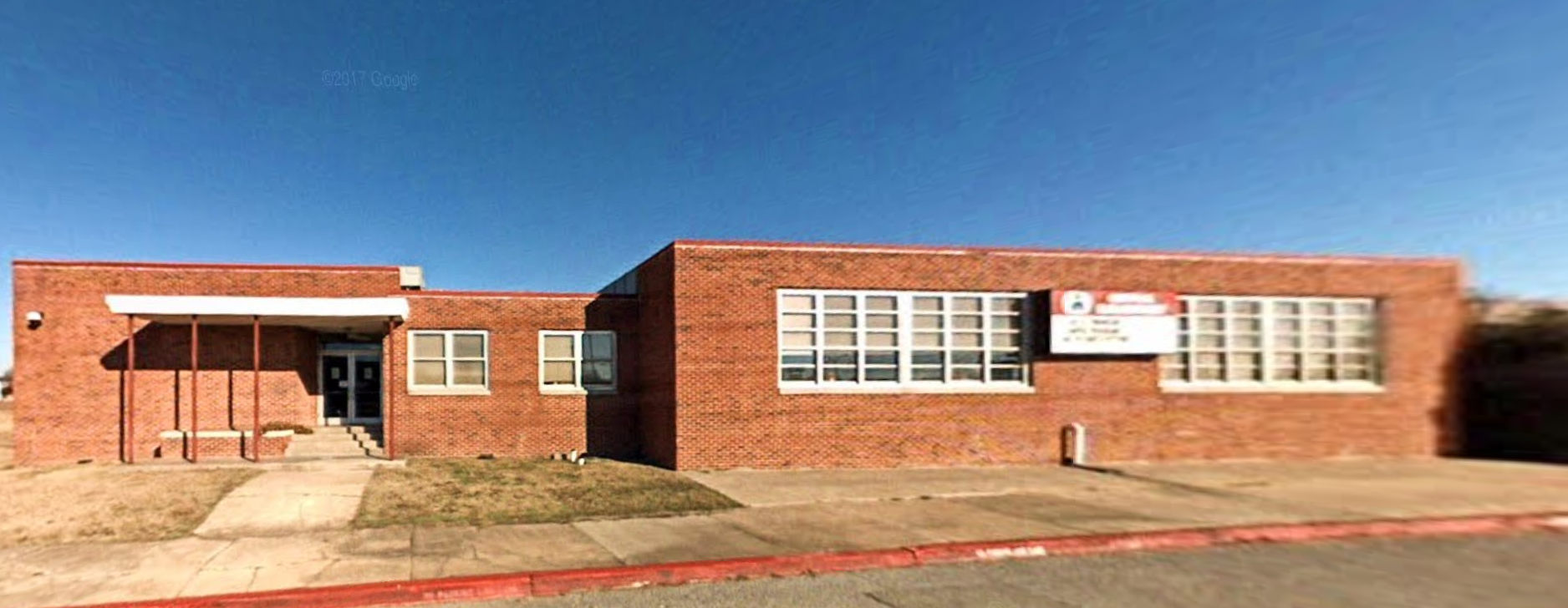
The first bus stop was on the east end for grades 4-6 at Central Intermediate, originally built as a junior high in 1952. It had a separate fourth grade building in the center, surrounded on three sides by a building for grades five and six, with asphalt playgrounds on the south along 39th Expressway. There were old wooden barracks-style buildings east of the playground which were the district offices. While I was in fourth grade, they built a new gym on the east end of the playground.

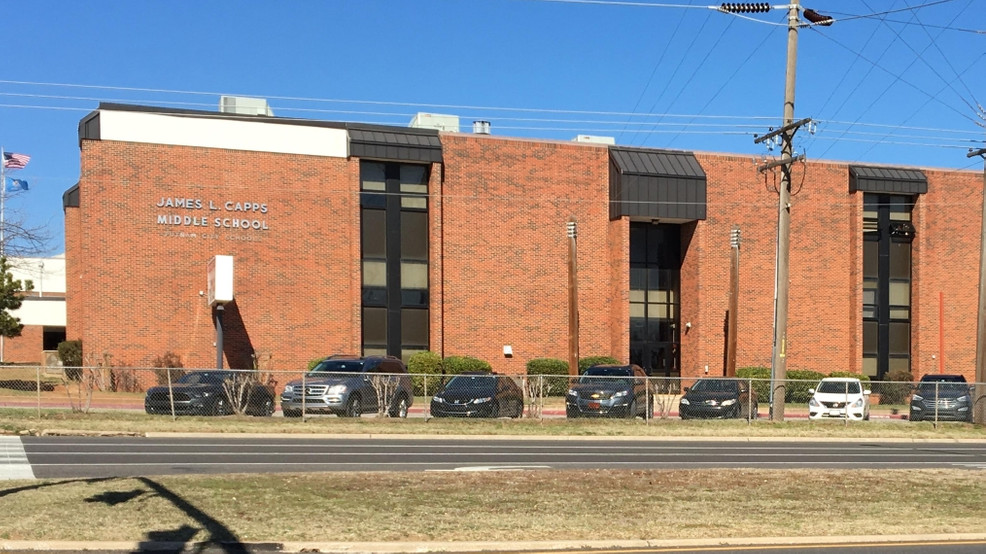
The second bus stop was for Central Junior High. Parts of it reportedly dated back to 1914, but 1961 and 1971 additions made it look much newer than the rest of the campus. It became James L. Capps Middle School years later. There was a practice field to the east, and the old Arnett building was between it and Central Intermediate.

This was Central Junior High back in the 1970s, and additions made it look far more modern than the rest of the campus

The final stop was for Central Elementary, which had its own newer cafeteria building on the east side, which also housed the district police. There was a polygonal brick building, dating back to 1931, for second and third grades. First grade was in a separate building to the west built in 1948.

The 2nd and 3rd grade building at Central Elementary dated back to 1931; this photo is from 2007 before it was demolished

On my first day of school, I unknowingly got off at Intermediate, not realizing I needed to wait two more stops. My mother had told me to go to the building on the left. I marched up the steps into the leftmost building, went down the hall as instructed to what should be my first grade classroom, and peered in. I was shocked to see a classroom of sixth graders with no mommy in sight.

I remember how a sweet sixth grade boy noticed me, realized what had happened, and took me by the hand. He led me on what seemed like an endless walk west along 39th Expressway across a street and past the Arnett building, the practice field, and the junior high, across another street and past the elementary cafeteria, past the grades 2-3 building, and finally into the first grade building at the opposite end of the huge campus and marched me up to my mother. What a way to start! But at least I knew this was a campus with people willing to help! Little did I know that I would be repeating that walk regularly myself when I became a sixth grader headed to and from crossing guard duty at the kindergarten, learning to hide my Junior Policeman sash as I walked by the junior high to avoid being taunted.

A helpful 6th grader escorted me to the 1st grade building on the west end of the campus on my first day of school

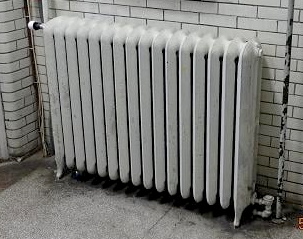
The 1931-1948 buildings still had old steam radiators, bathrooms with long porcelain urinal troughs, and long trough drinking fountains, including some outside that were supported only by their pipes. The playgrounds were asphalt with no protection under the jungle gyms, so a fall meant plenty of scrapes and cuts or worse. And the decrepit boys bathrooms in the second and third grade building made that entire building stink.

I was aghast, since I was used to a school in Oklahoma City that had been built in 1963. What was this old backward place we had moved to? Our house in Bethany was old too, but made interesting by an oversized lot and newer additions…hmmm…sounds a lot like PC Central!

  • Typical steam radiator
  • Urinal
  • Drinking fountain
  • Asphalt playground

Some of the classrooms in the old elementary buildings had full-width coatrooms at one end where we could hang up our coats and line up our galoshes. Nowadays, those would be completely filled with teaching supplies and junk that resource-poor teachers are unwilling to throw out.

At that time, Putnam City’s patrons passed a bond issue like clockwork year after year. So, in addition to building more schools across the growing district, they started renovating one grade at a time at old Central Elementary. But they did each renovation the year after I exited that grade level. So I saw that facility at its worst. We did get lucky one year, with air conditioning being added. But it was an immense window unit that was so loud that our teacher could only turn it on during guided practice when no one was talking. So we still sweated our way through many lessons.

When I graduated to 4th grade, I began getting on and off the bus at Intermediate. A new gymnasium was constructed on part of the playground while I was there, which was nice. And they eventually added rubber mats below the playground equipment, but that didn’t save me from my worst injury there.

There were long steel single-pipe handrails along the sides of the playgrounds, and in fifth grade I was walking alongside the handrail during recess when a fellow student was running and slammed into me. He was probably playing a ball game and not paying enough attention. That flipped me a full 360 degrees around the handrail to land face-first on the asphalt. Nowadays handrails usually have an extra lower rail to prevent such rotations.

I had just gotten braces and glasses that year. My glasses had durable and flexible black plastic frames, but my braces cut up my mouth, and I was a bloody mess. My mother was called to retrieve me and she took me to the dentist to have my teeth checked. The braces cut me up, but they did prevent me from losing any teeth. My mother placed a high value on education, so she took me back to school, and I was deposited in my empty classroom while my classmates were in the gym for physical education. I remember them coming up the alleyway and seeing me looking down out of the classroom. They ran in to gawk at my facial cuts and swollen mouth. Several told me that they thought I had died!

The Intermediate building was newer than the Elementary ones, but it had tiles coming loose in the bathrooms. My fifth grade teacher designated me to make sure my classmates didn’t keep pulling tiles off the walls of the boys bathroom when we went for a break. Despite always being a short and thin lad of no athletic ability, I was bossy and confident enough to protect our restroom from further vandalism.

Sixth grade at Central Intermediate was interesting since we had separate teachers specializing in English, Math, Science, and Social Studies, and were assigned to one of them for homeroom. The teachers banded together to give themselves some grading and planning time by marching the entire grade to room 201 each Friday after lunch for films. It was extra large and had a small stage.

We would watch 16mm educational films all afternoon with one teacher at a time taking her turn to monitor while the rest worked in their rooms. We watched a lot of Encyclopedia Brittanica travelogues, leading us to think most countries were filled with people who dressed in native costumes and danced. And there was a slew of hokey mental hygiene films from Coronet and Centron.

A mental hygiene film from Coronet

I only remember the stage in Room 201 being used once. My classmate Carter Steph had been watching the 1976 BBC Television production of I, Claudius on the local PBS channel; we only had NBC 4, ABC 5, CBS 9, and PBS 13 back then. He convinced several of us to play roles in an adaptation of it he wrote, which we performed for the sixth grade. I remember the climax being Claudius eating a poisoned mushroom given to him by his wife, Agrippina, and having a protracted death. As bright and energetic as he was, I’m not surprised that Carter went into law and made good money in real estate.

My mother was homeroom mother so much, handling parties and crafts, that one year at Central Intermediate, I asked if she could not be homeroom mother, just for a change. She laughed and acquiesced, but still volunteered here and there. We moved from Bethany to the Windsor Hills neighborhood after sixth grade. Even though we then lived closer to Central than before, district boundaries meant I was then destined for Leo C. Mayfield Junior High and Putnam City West High School, while all of my Central friends advanced to Central Junior High and then to Putnam City High School. But my sixth grade teachers at Central liked my mother so much that they asked her to still come do crafts with the kids, and she did that for years after I had left Central behind.

After sixth grade, we moved from the Central Elementary district (in an area now served by Overholser Elementary) to Windsor Hills, so I was diverted to a different junior high & high school than my friends at Central

Our move out of Bethany meant that I never experienced Central Junior High except when they marched us to its auditorium for a special program, usually to hear an orchestra perform. It seemed absolutely enormous to us, and I remember watching the 1974 movie Where the Red Fern Grows in there. I was a nerd, so I was fascinated that they showed it in widescreen and with reel changes I could see two halves of the image on the screen being realigned. We had passed the projection booth on our way in, and I snuck back up to it to see how they had synchronized two 16mm projectors to pull it off. Is it any surprise that I would go on to run projectors and other audiovisual equipment in junior high?

Gone, all gone

Time marches on, and 45 years after leaving it, everything I knew at Central is now gone.

My Central Elementary memento

Central Elementary was demolished in 2007, and a new building opened on the former playground and cafeteria plot in 2009. One of my father’s friends saved some bricks from the old building, and Dad gave me one. Despite writing this post and my gratitude to the many good teachers I had at Central, I had no fond feelings for the run-down old buildings. So I’ll confess that I’m using that brick to conserve water…it sits in one of the toilet tanks at Meador Manor.

Central Intermediate became Arbor Grove Elementary by 2009 when the new Central Elementary opened, and then was razed in 2015 after a new Arbor Grove Elementary opened at 5430 NW 40th.

The Arnett building, the former home of the Prophet of the Purebred People, was razed in 2017.

  • Arnett Building before demolition
  • Demolished

Central Junior High became Central Middle School in the early 1990s and finally Dr. James L. Capps Middle School in 2006. It was razed in 2021, with a new Capps Middle School built at 5300 NW 50th St.

So there is now almost nothing left of Putnam City, the city that never existed.

Posted in education, history, nostalgia, photos | 18 Comments

COVID at Meador Manor

November 18, 2022; updated November 27, 2022

It took me two years and eight months to finally contract COVID-19. But I did finally succumb, so I will share my story and the lessons I take from it.

Be Careful, Man

As a leader in our school district’s pandemic response, I was quite careful for the first two years of the pandemic. I routinely wore KF-94 masks, avoided crowds and indoor dining at restaurants, and had air purifiers at home and at work. Until we could get fully vaccinated, Wendy and I curtailed our in-person social activities to only a few outdoor gatherings and did not visit my parents. During the first winter wave before we had vaccines, I even shaved my beard for a better seal with my KF-94 masks. I was able to regrow it once Wendy and I received our primary doses of Pfizer vaccine in February and March 2021. We both had a Pfizer booster in October 2021, I was able to get the Moderna booster for those 50 years and older in April 2022, and we both received Moderna boosters in October 2022.

Those precautions worked. My 97-year-old father was a victim of the Omicron wave last winter and died while on oxygen in hospice about a month later, despite being vaccinated and boosted. The lower immune response of the elderly meant that his vaccinations helped but could not fully protect him. Thankfully, my mother, Wendy, and I were able to visit Dad in a crowded emergency room overwhelmed by Omicron and in understaffed hospital wards, with our KF-94 masks and basic handwashing hygiene preventing infection.

Riding the Waves

Wendy and I managed to avoid any known COVID-19 infection through its first five waves here. There was the initial wave in the spring of 2020, when outbreaks at multiple nursing homes in Bartlesville resulted in a high local mortality rate. Next was the winter wave of 2020-2021, then the Delta wave in the late summer of 2021, the tremendous Omicron spike in early 2022, and a wave this past summer. We know that over 70% of Americans had been infected with COVID-19 by autumn 2022, and that infection rate is no doubt even higher in Oklahoma, which ranked next to last among the states in its pandemic response. The IHME estimates that 95% of Oklahomans had been infected at least once as of mid-October 2022.

COVID-19 waves in Washington County, OK

Pandemic fatigue and the lower mortality risk from Omicron, coupled with more treatment options, meant that most pandemic precautions ended by the summer of 2022. At work we have air purifiers running, with planned filter refreshes, and we still track and isolate reported positives. But there are no precautionary quarantines, and very few people choose to mask up. Wendy and I no longer shy away from indoor dining.

Letting My Guard Down

Last Thursday I attended a public event in a local auditorium. I considered masking up, but instead just sat up in a high section, several rows away from anyone else. I have no way of knowing for sure, but that may have been my undoing, as I had my first symptoms three days later. I knew it was a high-risk environment, but I am not immune from pandemic fatigue. I certainly wish I had worn my KF-94 mask!

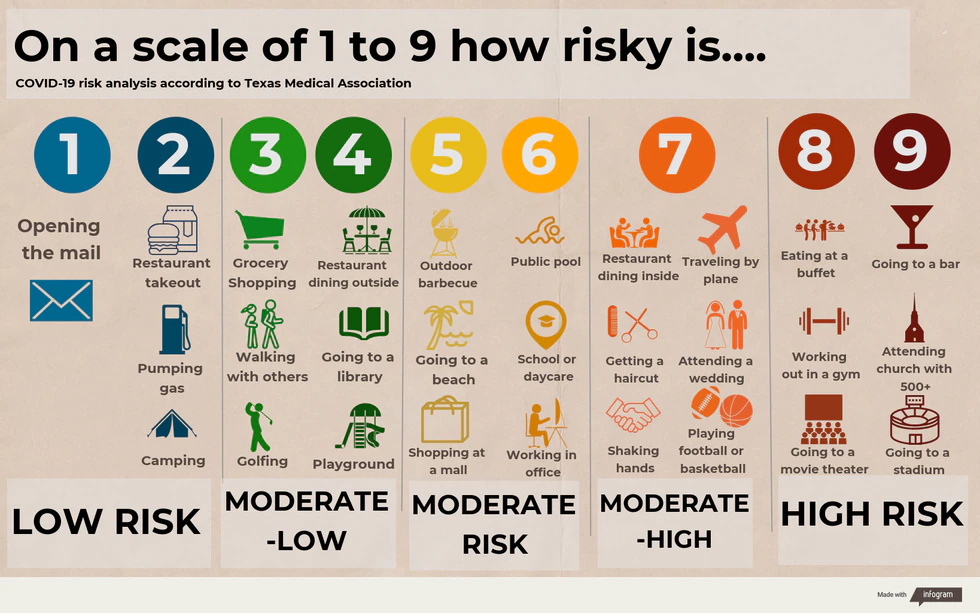
COVID-19 risk chart

Taking Precautions

I began to feel congested on Sunday evening, and when I awoke on Monday morning I checked, but I had no fever and got a negative result on a rapid COVID-19 test. I decided to go to work to do some budgetary analysis and play my part at a school board meeting.

But I began to cough that day, so I isolated myself in my office with the air purifier on high, and wore a KF-94 mask at the board meeting in order to protect others. When I got home that evening, I took sick leave on Tuesday.

On Tuesday morning, another COVID-19 rapid test was negative, and I still had no fever. But I was still coughing and began that lovely contradiction of nasal congestion and a runny nose. I took another day of sick leave on Wednesday, and consulted online symptom charts. Below is one devised to help parents regarding cold, flu, COVID-19, and RSV.

My symptoms matched up to cold, COVID-19, or RSV. I had no loss of taste or smell, but that is no longer a symptom associated with Omicron and some newer variants. Wednesday night I had chills, but still no fever. My cough subsided a bit on Thursday, and I finally got my first good night’s sleep since Saturday. So I felt much better on Friday morning, but I had already decided to play it safe and stay home for a fourth workday, which set off alarm bells for those who know me, as I’ve almost never missed that many consecutive days in my 34 years in the school district.

Back when I was teaching, I only missed work when I was running a fever, had laryngitis, or an uncontrollable cough. The pandemic has changed my approach; now I don’t hesitate to enjoy the privilege of sick leave, both to help myself heal and to avoid putting coworkers at risk.

Congratulations

Although I felt much better on Friday, I decided to go ahead and take a third COVID-19 rapid test since Wendy and I were planning to leave for a vacation in Arkansas on Sunday.

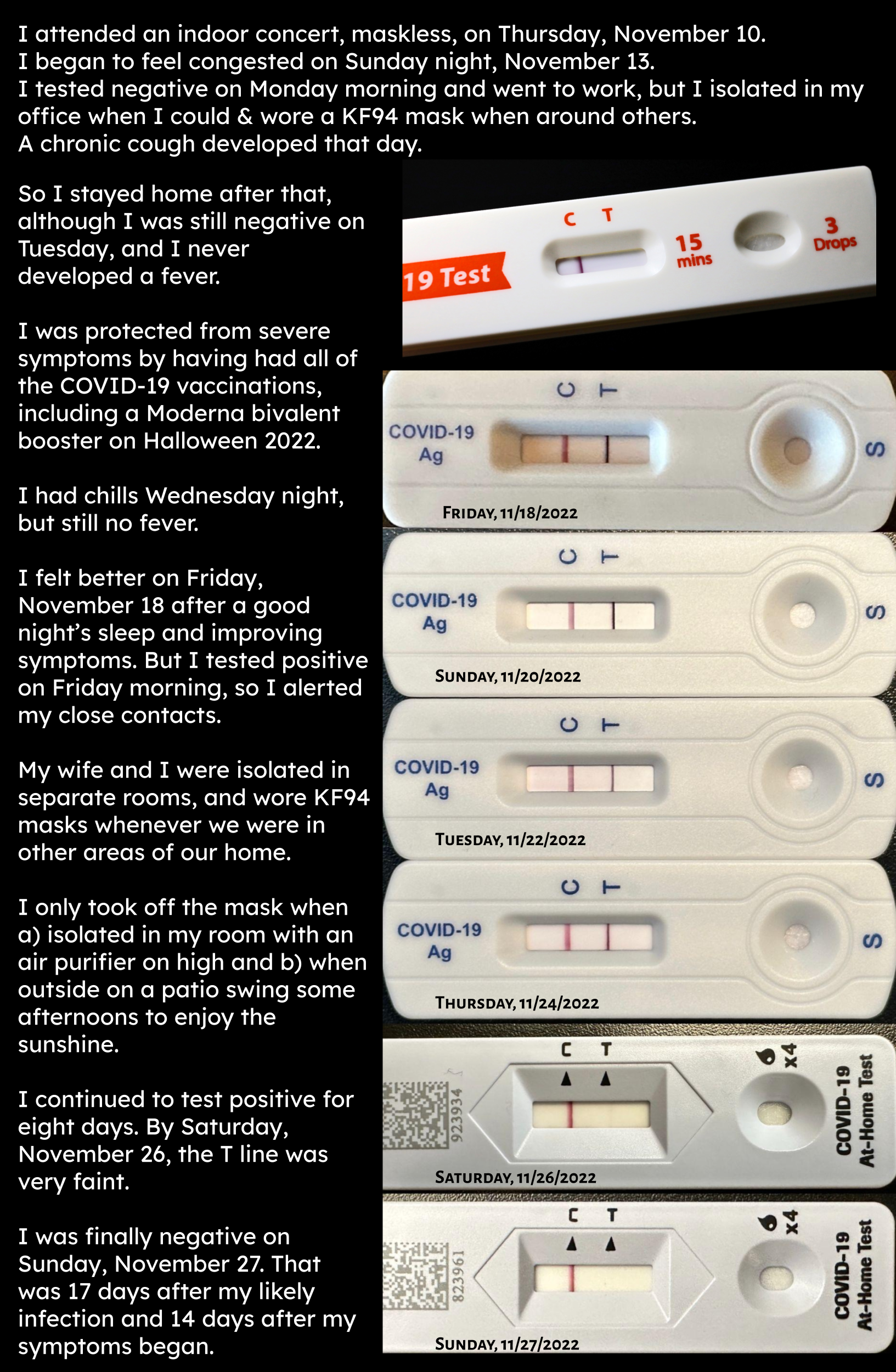
Positive tests

Boom! The T test bar was dark long before the 15 minutes were up. We have plenty of rapid tests at home, so I took one from another manufacturer. The T bar appeared almost as soon as the fluid reached that location on the test strip. I was truly infectious.

Reaction

I notified Wendy, my coworkers, etc. and cancelled our vacation cabin rental, forfeiting the deposit. Wendy came home and took a rapid test, but she still showed as negative. We had avoided most direct contact since my symptoms began, slept in different rooms, and I had been running our air purifier on high. Thankfully Wendy is almost a decade younger than me and was able to get a Moderna booster last month. So she may well have been infected and fought it off, or somehow she has dodged intaking too many viral particles.

I had already taken vacation next week for Thanksgiving Break, so I won’t be back at work until 15 days after my symptoms began, by which time I should be fully recovered and non-infectious. But if I were still scheduled for work, I would continue to take sick leave or work virtually until I got a negative rapid test.

I will also wear an effective mask when around others for at least 10 days after symptoms began and will continue masking after that if I have not both tested negative and been symptom-free for 24 hours. Thanksgiving Break 2022 will be very much in the pandemic mode here at Meador Manor!

Lessons Learned

Here are the things I think I did right:

  • Keep your vaccinations up-to-date
  • Check your temperature daily if you have any symptoms
  • Take a rapid test at symptom onset and do another test later
  • If you have any symptoms, wear an effective mask when around others and isolate as much as feasible both at work and at home
  • If you have multiple symptoms or a cough, stay home even if you test negative

And here are things I wish I had done:

  • Wear a mask when in a high-risk environment, regardless of the CDC Community Risk Level
  • Go home as soon as a chronic cough develops (I isolated in my office and wore a mask when around others for the rest of the day, but I should have just immediately headed home)
  • Do an additional rapid test every 48 hours until you test positive or your symptoms go away

Regarding CDC measures, our county is currently Low in the Community Risk Level, which I consider garbage propaganda. Our county is currently High in their older Community Transmission measure.

Regarding rapid testing, I tested on Monday and Tuesday, but when I stayed home on Wednesday and Thursday, I didn’t bother to test again, so I didn’t find out until Friday that I had COVID-19. I wish I had tested on Monday, Wednesday, and Friday instead, hoping it might have been positive on Wednesday allowing me to warn my coworkers sooner. And if I were high risk, Friday would have been too late to begin Paxlovid. Those with insurance can still obtain 8 free COVID rapid tests per month at pharmacies in their plans, so we should each have a stockpile of them on hand both to confirm an infection and then later to confirm when you are likely no longer infectious.

And that’s my story of how at age 56, 32 months after the pandemic began, I finally joined the 95% of Oklahomans who have been infected by COVID-19. Be careful out there.


Recovery

I finally tested negative 17 days after my likely infection, 14 days after my symptoms began, and 8 days after first testing positive. Our precautions at home worked, with Wendy never testing positive.

I likely had Omicron BA.5 or BA.4, which were dominant in Oklahoma. The 2022 COVID-19 mortality rate in Oklahoma for my age range was 70 times higher than for young adults. So although the Moderna bivalent booster on Halloween was unable to prevent my infection, it likely spared me from severe symptoms or worse. Bivalent boosters could be located at https://www.vaccines.gov/search/

COVID-19 test results
Posted in pandemic | 1 Comment