June is when Wendy and I usually escape Oklahoma for an adventure out west. As the initial Omicron variants of COVID waned, I considered flying to southern Oregon to enjoy the coast and the redwoods in northern California. But the cost of the flights was too high with skyrocketing fuel prices.
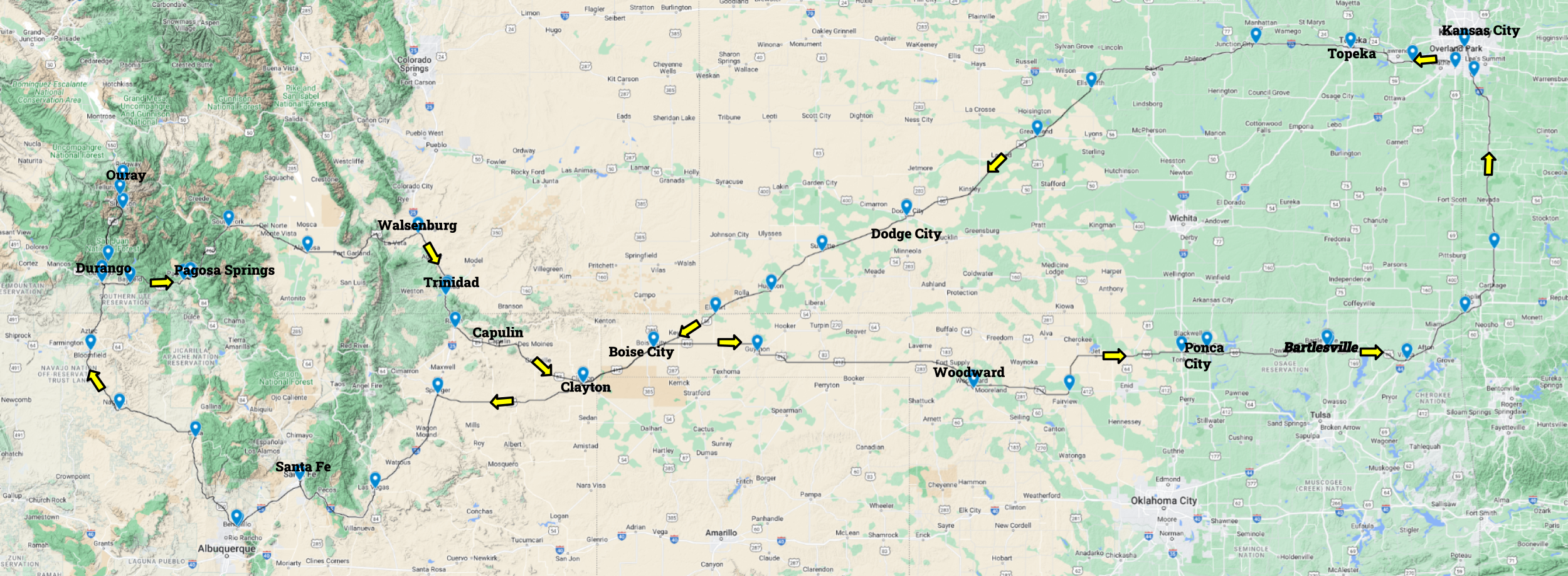
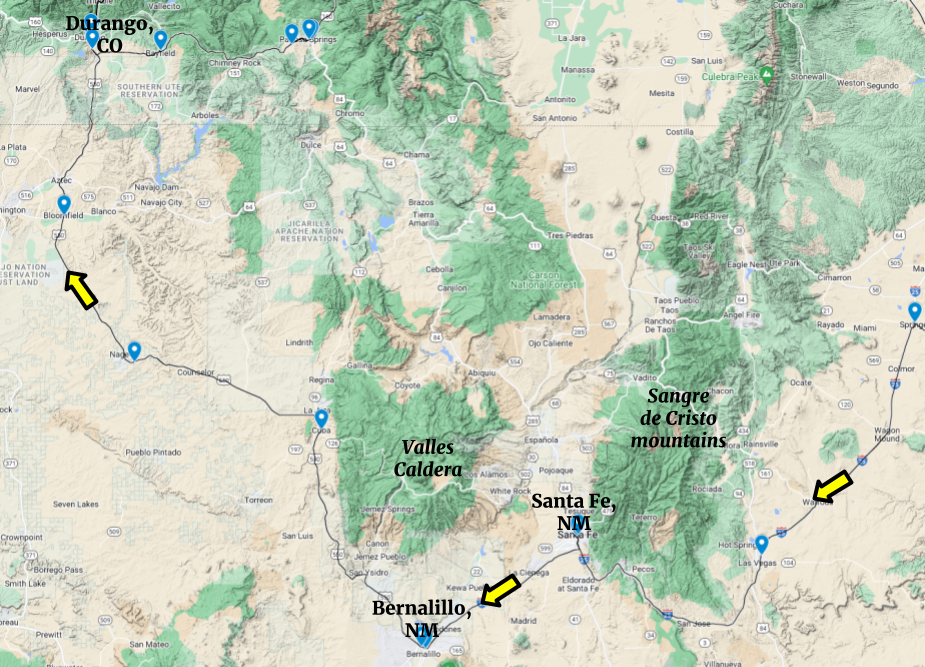
So I opted to return to southwestern Colorado with a few nights in Ouray as the centerpiece. I briefly drove through it in July 2011 when taking the San Juan Skyway route, and I had filed away the possibility of returning to explore it. Over a decade later, that ambition was finally realized as part of a giant figure-8 loop we drove across Oklahoma, Missouri, Kansas, New Mexico, and Colorado.
Our figure-8 loop; click to enlarge
Trailer Trash Tammy
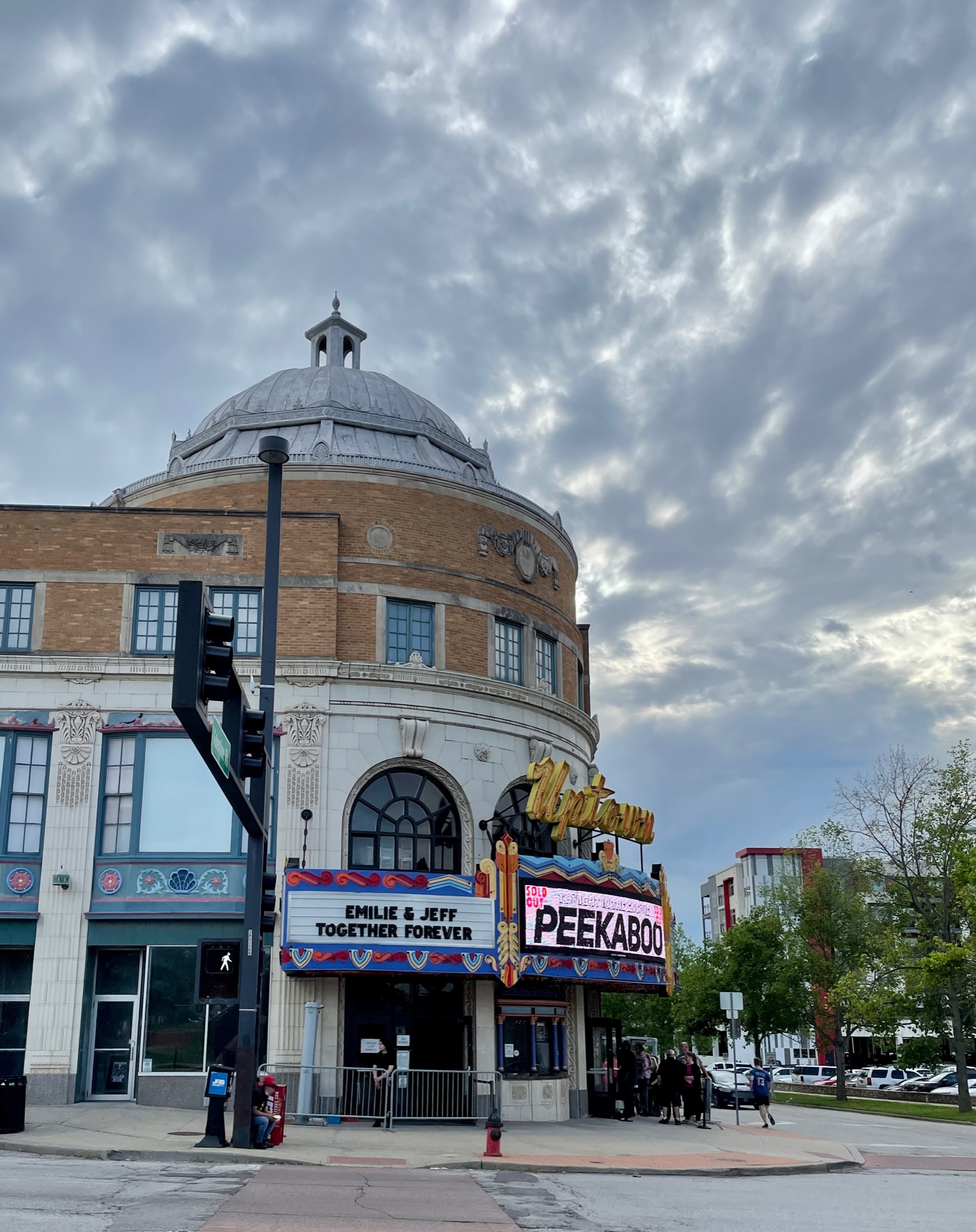
Before the pandemic, Wendy and I enjoyed a live performance in Arkansas by Randy Rainbow, a YouTuber that Wendy discovered in the Trump years. Wendy has also enjoyed the ribald humor of Chelcie Lynn as Trailer Trash Tammy on YouTube, so she bought us tickets to a live show of hers in Kansas City. That event kicked off our vacation.
Rather than the usual routes through Kansas, I opted to steer the minivan up along Interstate 49 in Missouri this time for the journey to Country Club Plaza in Kansas City. We dined at the Cheesecake Factory and then checked in to the Courtyard by Marriot. A little window above the bed afforded a view of the nearby Plaza.
Country Club Plaza view from our hotel room
Then we headed to the Uptown Theater for the show, where we may have been the only masked members of the audience. We enjoyed the middle segment by Libbie Higgins the most, but you’ll have to ask me in person if you want me to recite any of her piquant observations.
Chelcie Lynn, Tina Dybal, and Libbie Higgins
The next day we had lunch at Stroud’s in Overland Park before heading to our next hotel room in Dodge City. That would break up the long drive from Kansas City, MO to Santa Fe, NM. Along the way, we stopped in Topeka.
Mulvane Art Museum
Joab R. Mulvane, 1837-1929, came to Kansas in 1876. He was the president of at least nine railroads and presided over the Chicago, Kansas and Western Railway Company when it built over 900 miles of rail lines for the Santa Fe. In 1922, Mulvane pledged a gift to build an eponymous Art Museum at Washburn University, and the building opened to the public in 1924. Its interior was replaced after a 1966 tornado destroyed or heavily damaged every building on the campus.
Wendy and I were amused by how an old cigarette vending machine had been repurposed as an Art-o-Mat.
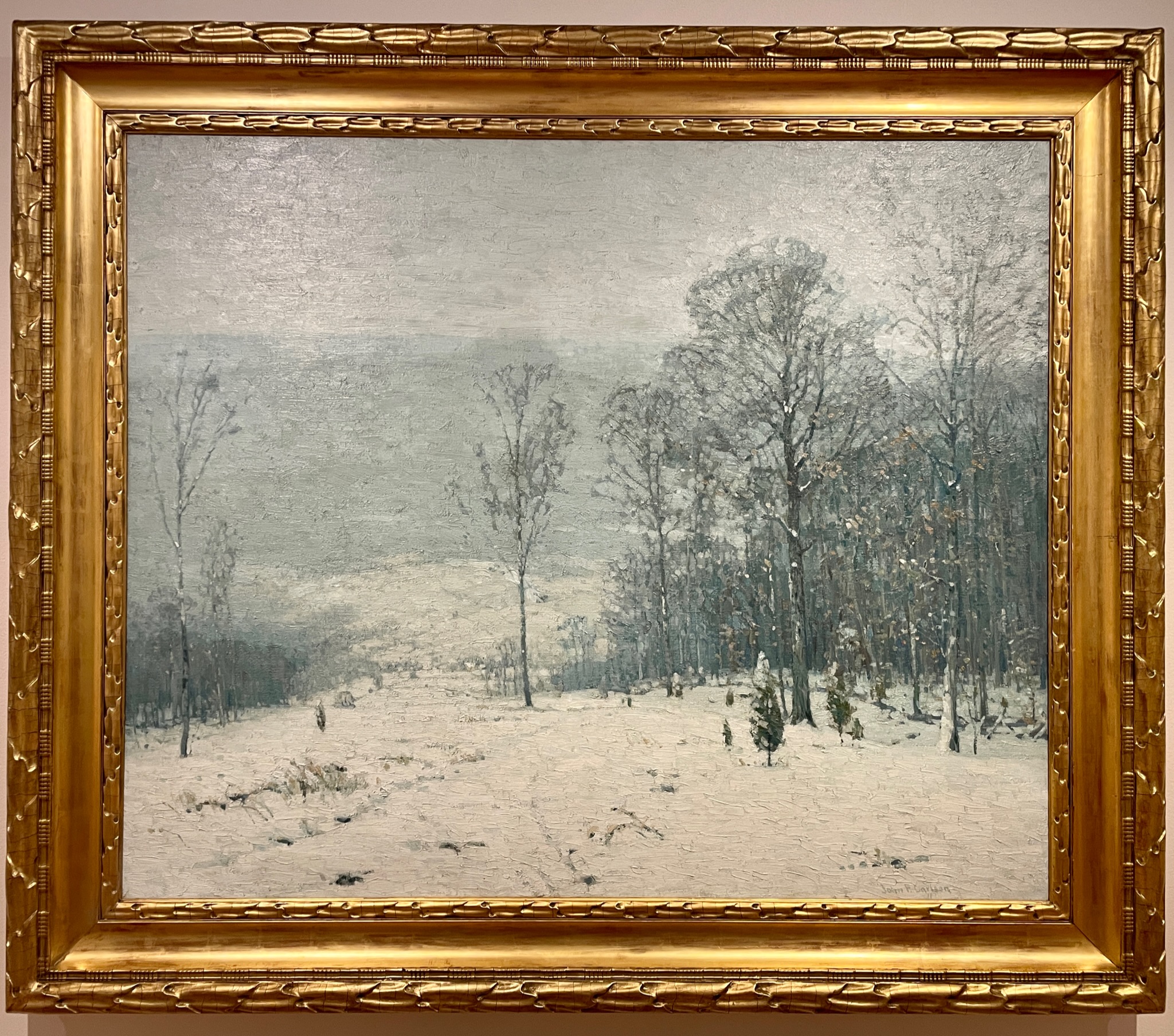
Frosty Morning by John Fabian CarlsonSun, Sand, and Shadow by Frank V. Dudley
My favorite work was hanging in a conference room: Canto No. 20 by Cheryl Wall.
Canto No. 20 by Cheryl Wall
We rolled onward to a Best Western in Dodge City. We had already seen enough of Dodge in a previous visit, and quickly departed the next morning for the long roll down across Kansas and the Oklahoma Panhandle, through northeast New Mexico to loop around the southern end of the Sangre de Cristo mountains to Santa Fe. I played Bob Wills’ & Tommy Duncan’s 1960 album Together Again as we rolled through the Panhandle. When Tommy sang Dusty Skies, Wendy remarked how perfect it was for the setting:
Dusty skies I can’t see nothing in sight Good old Dan you’ll have to guide me right If we lose our way the cattle will stray And we’ll lose them all tonight Cause all of the grass and water’s gone We’ll have to keep the cattle moving on
Sand blowing I just can’t breathe in this air I thought it would soon be clear and fair But dust storms played hell with land and folks as well Got to be moving somewhere Hate to leave the old ranch so bare I’ve got to be moving somewhere
Get along doggies we’re moving off of this range I never thought as how I’d make the change The blue skies have failed so we’re on our last trail Underneath these dusty skies These ain’t tears in my eyes Just sand from these dusty skies
Cindy Walker wrote that song in the mid-1930s. She was just a teenager, inspired by newspaper accounts of the Dust Bowl. Cindy went on to have top 10 hits spread over five decades. Bob Wills and the Texas Playboys eventually recorded over 50 of her songs, including Bubbles in My Beer. More than 500 of Walker’s songs have been recorded and her songs made the Top 40 charts in country or pop more than 400 times.
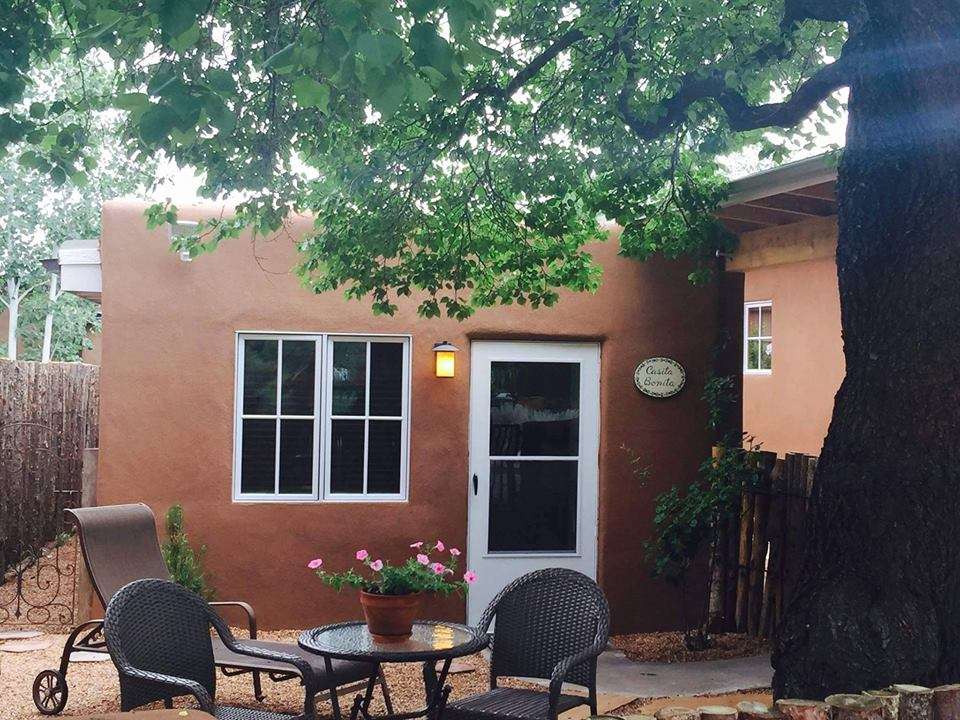
We were glad to finally roll into Santa Fe that evening on the Old Pecos Trail. We were unwilling to brave the crowd at Tomasita’s, both out of concern about the circulating Omicron variants and being road-weary. So we just had DoorDash deliver our delicious meals to our nearby Casita Bonita. It was delightful to enjoy them in the peaceful courtyard.
Our favorite place to stay in Santa Fe
The next morning we drove to the Santa Fe Plaza for some shopping and then looped around the Valles Caldera on our drive to Durango, Colorado for a chuck wagon music show that night. I’ll cover that in the next post.
I have never particularly enjoyed yardwork. I mow the yard weekly in season, hand-rake and mulch the leaves once or twice per year, almost never edge or string trim, and viciously assault the greenery on occasion as what I call pruning but others denounce as butchery. However, my recent purchase of my first electric lawnmower has me pondering my sordid past in lawncare.
When I was in elementary school we lived in Bethany, a suburb of Oklahoma City, in the Cross Timbers. That is a strip of land from southeastern Kansas across central Oklahoma to the middle of Texas. It has coarse and sandy soil so that the woodlands are mostly post and blackjack oak. If you have been to Osage Hills State Park west of Bartlesville, or you’ve been bored and looked at much of the scenery along the Turner Turnpike between Tulsa and Oklahoma City, then you’ve observed that biome.
My parents’ home in Bethany sat on the middle of three lots they owned which had over seventy blackjack oaks at the time…my father counted them.
They produced an immense amount of leaves, and my late friend Gene Freeman and I loved raking them into piles and pathways to race around in my pedal car and his Big Wheel. Here’s a photo of Gene and me in first grade in the Cross Timbers. We were best friends through sixth grade, even though his family moved southwest after first grade, and he went to a different school. Almost every Saturday Gene’s mother would drive him over to my house, or my mother would drive me over to theirs to play.
Here’s Mom in the front yard during our first autumn at the house in Bethany. All of those leaves and many, many more would soon be falling, prompting Dad to buy a leaf shredder to try to keep up with them.
I was amused that the first photo of our former home in Google Maps shows several dozen bags of leaves in front. The house is now a dark green instead of red, it now has a carport, and the people that bought the house from my folks built a new home on one of the side lots. But several of the blackjack oaks are still there, and their leaves must be dealt with.
When we lived there, grass still poked up amidst the leaves and sand, and Dad used an old riding lawnmower to handle the three lots. He would disengage the blades and let Gene and me drive the mower around. Gene absolutely loved it, while I was only mildly entertained. I wasn’t surprised that Gene eventually traded in his Big Wheel for a motorcycle, while my pedal car led me to sedans.
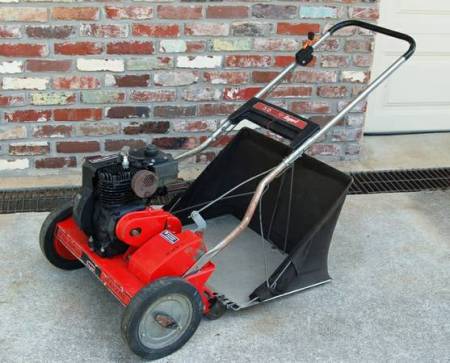
The dust and allergies from all of those oak leaves were a major reason we moved a little over a mile east as I entered junior high. Gene and the oak leaves receded into the past, and in high school I mowed my parents’ hilly yard in Windsor Hills with a red self-propelled reel mower. It looked something like the one shown here and was the last reel mower, and the last self-propelled one, that I ever used.
Dad had me collect the clippings in the hopper, dumping it repeatedly into bags to set at the curb. A decade after graduating from high school, I was renting a house in Bartlesville and needed a mower of my own for the first time. Naturally my Greatest Generation father found something cheap at a garage sale: a Lawn-Boy with a D-400 two-stroke engine.
My eyes narrow to slits whenever I see that distinctive green rectangular cowling with its two-finger vertical recoil starter and primer button. While Dad loved Lawn-Boys, I wasn’t a fan. The D-400 engine was manufactured by the Outboard Marine Corporation, which also produced distinctive Evinrude and Johnson boat motors. Two-stroke engines have no lubrication system, so you have to mix oil with the gasoline, and they produce a lot of noise and pollution. But they are cheap!
I’ve never been one to adjust a carburetor or replace a spark plug, so when the Lawn-Boy quit one day, I happily gave it back to my father for him to mess with and bought a four-stroke push lawnmower. It was quieter and less smoky, using regular gas without added oil. I had to drain the lubricating oil from it each winter and replace it each spring, but overall it was a big improvement.
At the rent house, I’d given up on bagging, simply side-discharging the crabgrass clippings. But in 1994 when I bought a home in Arrowhead Acres that had a pretty shaded fescue lawn out front, and lots of leaves blowing in that clogged the flowerbeds each autumn, I decided to mulch everything.
In 2010 the metal housing for the rotary blade rusted out and a wheel came off. So I checked Consumer Reports and ordered a Husqvarna with a Kohler engine. Or maybe it was a Kohler with a Husqvarna engine…I certainly don’t care which. When that mower quit suddenly in 2016, I didn’t try to fix it, as I hadn’t been all that happy with it. Instead I ordered a Cub Cabet SC100 push mower from Home Depot, which I used through the spring of 2022.
But I truly don’t take care of my lawnmowers. A neighbor once borrowed one of my mowers and was sufficiently taken aback that he took off the blade to have it sharpened! I used to be sure to run them dry of gasoline for winter, but then I just started purchasing ethanol-free gas and leaving it in the tank year-round, and I have only changed the oil in the Cub Cadet every other year.
The Cub Cadet lived up to its moniker when it came to mulching raked piles of leaves, with me having to nurse that wimp through the process. And in recent months it got noticeably louder, even through the earplugs I’ve used for years when mowing, plus it developed a vibration. I could turn it over and check on the condition of the blade, but I really don’t like the @#$% thing.
So I thought about getting yet another gas push mower even though the two on hand probably only need a bit of engine and blade work. But then I’d still be using a loud mower that needed more care than I wish to provide. Noise irritates me and my hearing is going, and avoiding noise is why I’ve always raked rather than use a leafblower.
Hmmm…for years I’ve planned to eventually replace my 2014 Toyota Camry gas sedan with a fully electric car…if an electric car is now practical for use in town, would a cordless electric mower be out of the question?
Consumer Reports and other parts of the internet assured me that improved batteries and designs have indeed allowed cordless electric lawnmowers to take on more than small urban patches of grass. But in the past I have had mixed results with electric lawncare equipment.
When I bought my house in Bartlesville, Dad gave me his vintage Craftsman electric edger. I used it once, creating sparks and noise, occasionally veering off from the curb to make narrow cuts in the lawn. I hated the experience, so rather than improve with practice I went out and bought a corded electric string trimmer.
That worked okay for me, with its swivel head that I could rotate from curb edging to fence clearing mode when the grass growing against the chain link fence in part of the backyard got too bad. But I quickly tired of running out 100′ of cord to stretch from an exterior outlet to the back corner of the chain link fence in my wedge-shaped yard; cul-de-sacs are nice, but they create weirdly shaped plots. So I bought a gas-powered string trimmer. But that meant I was back to mixing oil and gas, with a lot of noise, and while it was powerful, I was so clumsy that I burned my skin once on its hot exhaust.
So I went back to electric, purchasing a cordless 18-volt Black & Decker Grasshog. I loved how light and easy it was to use, but it had two big drawbacks. One was planning ahead to charge its batteries; I trim so rarely that the trickle charging from leaving the batteries plugged in all the time would be a mistake. The other was that it was too wimpy for some jobs. In 2013 I bought a 36-volt Black & Decker LST136 trimmer, which is plenty powerful. I like to use the 36-volt unit for edging and the 18-volt unit for fence trimming, but whenever I finally get the urge to use them, I have to remember to plug in their chargers and batteries hours or days in advance.
So I knew that an electric lawnmower would need even higher voltage (power = current times voltage). I am a paid electronic subscriber to Consumer Reports, and it rated the 56-volt Ego LM2135 as top of the heap for battery push mowers. I watched several video reviews about it, seeking out regular folks who had used one for months. It all looked okay, although I don’t need a self-propelled mower for my lawn, which only slopes off a bit at the back, and I mulch everything, so I wanted a Select Cut model with a second mulching blade. Thus I ordered the Ego LM2130.
It came ready to go right out of the box, except that I had to plug the 5.0 amp-hour battery into the accompanying rapid charger to top it off before cutting the grass. Since the Cub Cadet was still occupying the mower slot in the outdoor shed, I just tipped the electric mower on one set of wheels with its handle folded up and set it near a wall in the garage beside my sedan. If we didn’t have the nice outdoor shed that John & Betty Henderson purchased and assembled for Wendy and me as a wedding gift, I’d make regular use of that feature.
Yesterday I had my first mow with it. I had let the grass grow high while waiting for my new mower, so I knew that the battery probably wouldn’t have enough capacity to mow my entire lawn. It did a nice job, being significantly quieter and a bit easier to maneuver than my gas mowers. It never balked or overloaded, and I was able to mow about 2/3 of the entire lawn before the battery drained completely. Better still, I will never have to put gas or oil in it, although you are supposed to apply some light oil to a few springs and bearings once per season. The odds of that happening are not good.
I’m sufficiently pleased that I plan to get rid of both of my gas mowers, but I will need another battery since I don’t want to break up my weekly mowing into two sessions with a battery recharge in-between. EGO has 2.5, 5, 7.5, and 10 amp-hour batteries that will work with my mower, but you can’t find the 10 amp-hour one on Amazon. So this weekend I plan to purchase one in meatspace at an Ace Hardware in Broken Arrow, which was the only place that showed one in stock. That should give me plenty of capacity even for extended leaf mulching sessions.
I’m not much of a lawn boy, but I actually enjoyed mowing the lawn yesterday. Here’s hoping I’m not blinded with science!
When there is nothing left to learn from the winter, move on to the spring!
―Mehmet Murat İldan
We welcomed the spring of 2022 after a winter that brought the Omicron variant. We endured new highs in local coronavirus cases, driven by many who refused to take even the simplest precautions. Wendy and I thankfully continued to avoid infection, with layers of protection from vaccinations, boosters, masking, air purifiers, and curtailed activities. That was despite direct exposure in an overloaded hospital emergency room and a COVID ward in Oklahoma City at the height of the Omicron wave. But precautions are not impervious, and this is the first of my blog posts that my father will never read.
Dad fell at my parents’ home early on New Year’s Day, fracturing his pelvis. He was hospitalized, and then Mom and I identified a nursing home for his recovery. He was boosted, had an air purifier in his room, and his caregivers wore masks. But the Omicron wave was too much, and Dad was hospitalized with COVID in late January just before his 97th birthday and a planned move into assisted living. In less than a week he was released from his second stay in a hospital, but on oxygen and in hospice. Dad found it more difficult to breathe in late February, but Mom was with him every day except when wintry roads were too dangerous, and he took great comfort in that. Dad died on March 4.
For over two years I have labored to protect my loved ones and the students and staff of our school district from COVID. It is emotionally wrenching that I could not adequately protect my father in 2022. But he had a full, happy, and honorable life. Our little family will cherish our yesterdays, dream our tomorrows, and live our todays.
I made 11 round trips between Bartlesville and Oklahoma City before Spring Break, and there are more to come as we prepare to help Mom move into independent living in Bartlesville. But after a cold and windy graveside service for Dad on March 10, Wendy and I headed into Spring Break. It always falls just before spring actually begins and is often chilly and cloudy. Sometimes winter snow reminds us of the misnomer. But we were grateful to enjoy several warm and sunny days in Arkansas, in an area of the Ozarks that my father loved.
Crystal Bridges
The threat of Omicron faded so rapidly that by Spring Break Wendy and I could safely forego masking for our first visit to Crystal Bridges in Bentonville since before the pandemic began. We had to park in a temporary lot since a building for the Whole Health Institute was being constructed on the former overflow lot. A six-story parking garage is also under construction and will open in the fall. The museum itself will expand by 50 percent in the coming years.
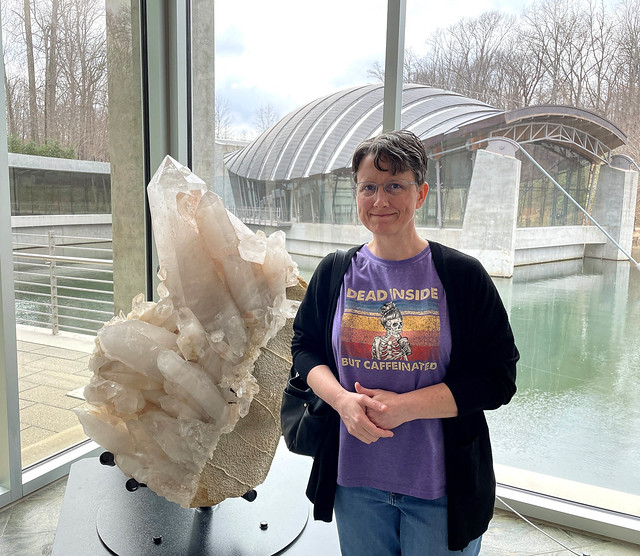
I led us along the Tulip Trail to enter the museum by the less-used south entrance. Wendy posed by the huge Holy Grail quartz cluster by the pond. When we made our way to the main entrance to get our tickets for the main temporary exhibition (which were free thanks to the NARM benefit from our membership at Woolaroc), I was startled to find a new dome transforming the sunken courtyard into a lobby with an improved front to the gift shop, which were welcome improvements.
Wendy at Crystal Bridges
We viewed the exhibition The Dirty South: Contemporary Art, Material Culture, and the Sonic Impulse. Wendy liked The Heavens Rain by Emma Amos, Zulu Boogie-Woogie by James Little, and The Burning Bush by Beauford Delaney. I wasn’t engaged by most of the exhibition but did find the video King of Arms by Rashaad Newsome to be striking.
The Heavens RainZulu Boogie-WoogieThe Burning BushClick an image to enlarge it
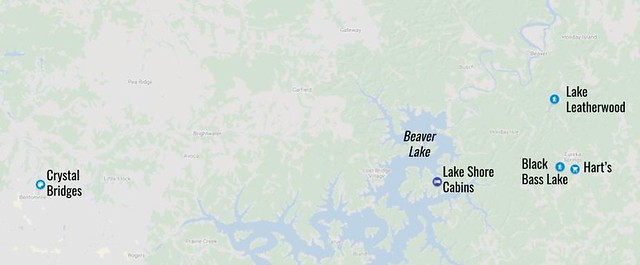
Beaver Lake
We have stayed at Sugar Ridge Resort on Beaver Lake several times. This time, I opted for Lake Shore Cabins on Beaver Lake, which is 3.5 miles south of Sugar Ridge off Mundell Road. We were in Mountain Top Cabin #7 and could see the Sugar Ridge buildings in the distance across the lake. The decor was hokey, and I missed having a dishwasher, but the mountain top was peaceful with a great view of the lake below.
The view from our cabin on Beaver Lake
Doing the dishes
Before spending the first of four nights at the cabin, we drove 11 miles to Hart’s Family Center in Eureka Springs, where Wendy stocked up on groceries for our stay. During our stay, she cooked while I cleaned.
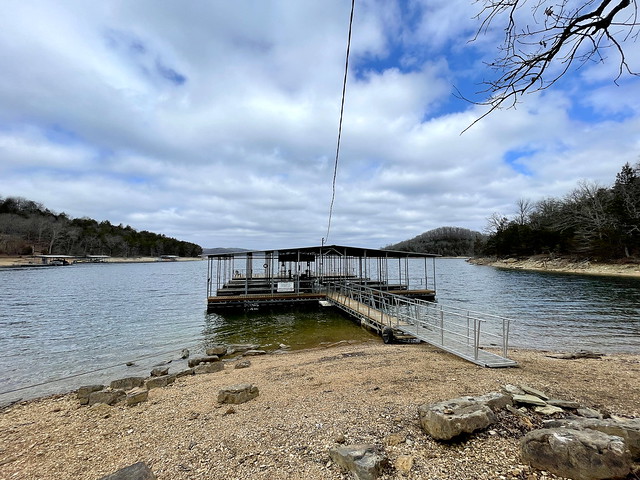
There was a so-called trail down the mountainside to a boat dock about 200 feet below our cabin. But we found it was treacherously steep with plenty of opportunities to slip on gravel. We opted to take a longer route back up using the roadway, which was still steep but not as daunting.
It was a treacherous descent to the boat dock
Lake Leatherwood
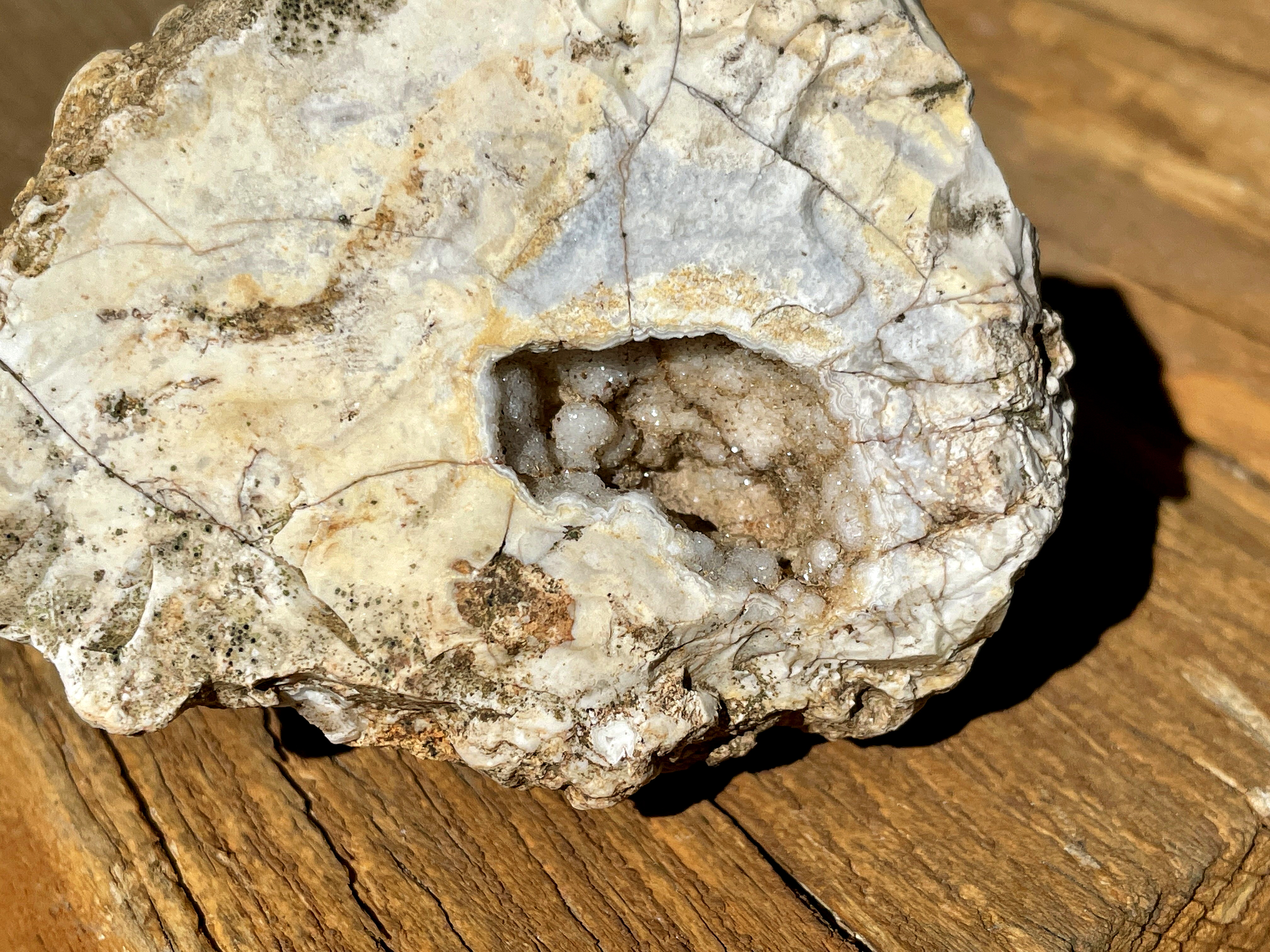
Wendy has long enjoyed searching for rocks with crystals along a stream that feeds into Lake Leatherwood at Eureka Springs. We parked at the upper level near the bike huts and made our way along the Foster, Beacham, and Fuller Trails to what I call Crystal Creek. There Wendy set off southwest along the creek bed, searching for crystalline rocks.
I proceeded along the Fuller Trail to the dam, intending to cross it and explore a trace on the east side of the lake that was shown to lead up to a knob just northeast of Pivot Rock Hollow.
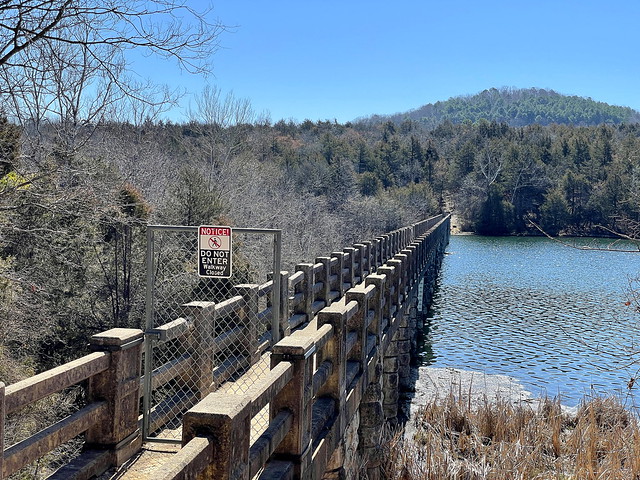
The deteriorating rails have led to the closure of the dam walkway at Lake Leatherwood
But I was stymied, finding the dam walkway fenced off. Deterioration of the dam’s railings led the city to shut down the walkway a year ago. The dam has long been neglected, so I won’t hold my breath for the city to fund repairs. But the deterioration at one of the largest hand-cut limestone dams in the nation was minor compared to what we would see the next day at the nearby Black Bass Lake.
I made my way down the dam’s spillway side to enjoy the cascading flow, but there is no easy path across the flow to the rest of the trails. I am not sure why the city doesn’t simply provide stepping stones to make it easy to ford there.
Click an image to enlarge it
I didn’t feel like trying to ford the stream, so I returned along the Beacham Trail to await Wendy at the high end of Crystal Creek. She had found several nice specimens.
Click an image to enlarge it
We returned to the car along the Beacham and Fuller Trails, stopping to photograph the seven-foot-high seated Sasquatch installation by Stephen Feilbach.
Sasquatch by Stephen Feilbach
Black Bass Lake
The following day we drove to Black Bass Lake, which is just southwest of downtown Eureka Springs. It was constructed in Oil Spring Gulch in 1893-1894 after the town had burned four times between 1880 and 1892. The dam was hand-cut stonework and is now the oldest stone cut dam in Arkansas. Steam pumps moved water up to an iron standpipe at the top of the mountain. Hotels in the resort town paid $1/room/month for their water while private homes without a meter paid $4/year, or $7/year if they had a bathtub.
Fermenting vegetable matter made the water taste offensive, so the dam was raised from 20 feet to 28 feet in 1914-1915. It remained the town’s water supply until wells were drilled in the 1960s, and Eureka Springs switched to water from Beaver Lake around 1970.
Black Bass Lake Dam in its prime
The mortar in the 8-foot high dam expansion has failed, with much of the later fill washed away and major leaks developing by 2009. The city lowered the water level to what it was before the expansion, repaired and lowered the dam’s spillway, and had grout injected into the dam. The injection effort was a failure, but the lake was lowered to reach a concrete face below the spillway to stop much of the leaking.
However, the dam is still in danger of failing. That would wipe out the water lift station for half of the town, so the city has secured $300,000 in FEMA funds and will need to augment that with over $100,000 of its own funding to preserve the dam and save the lift station as well as the trails the city has constructed around the scenic lake.
The deteriorating dam at Black Bass Lake
I had driven us down the narrow gravel Oil Springs Road to the lake on a previous trip, but limited parking at the time led me to abandon that visit. This time we were early enough to be one of only three vehicles when we arrived, so we disembarked and started out on the Bluff Trail on the north side of the lake.
The trail ascended past the lower Sycamore Spring Trail to a fork with the Oil Spring Trail, which we will return to hike some day. We turned to follow the Bluff Trail along the St. Joe limestone outcropping that rims the valley.
St. Joe Limestone
Bluff Trail
The trail was pretty even in winter, with nice views of the lake below and the large Standing Rock formation that juts out from the lake’s southern shore.
Standing Rock viewed from the Bluff Trail
I was surprised to see a tree that seemed to be holding in a branch its own broken top section that must have broken off and slid down in a storm.
The tree that caught itself
At the far end of the lake, social trails led off the official park trails in the day use area. We ventured far enough to see Black Bass Pond, formed by an earthen dam upstream of the lake which failed some time back, with a large gash torn through it.
Failed earthen dam at Black Bass Pond
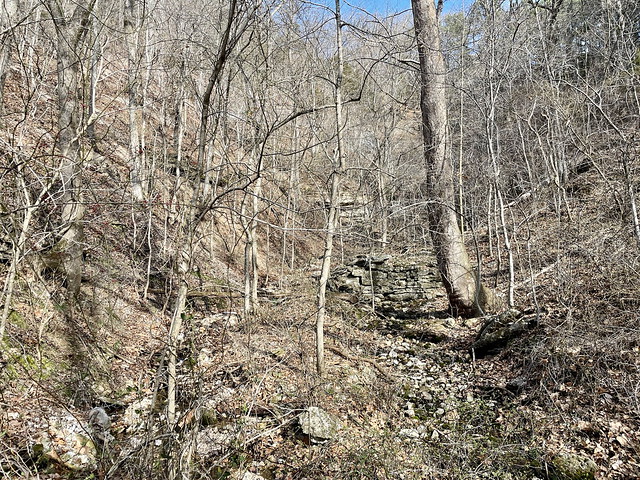
Upstream along a northern feeder creek there were the remains of a rock wall, which I presume was once a small rock dam.
Old dam upstream of the lake and pond?
We crossed West Leatherwood Creek via a new wooden bridge, and there was another new bridge across the dry creekbed of Hobo Hollow.
West Leatherwood CreekHobo Hollow
I saved the trail loop there for a future visit, pausing to take a shot from the far end of the lake toward the dam.
Black Bass Lake
We then made our way back to the dam along the south side of the lake on Standing Rock Trail, which is a former pump road. A couple and their daughter were taking pictures at Standing Rock, so I offered to take a shot of the three of them together, and the daughter returned the favor by snapping a photo of Wendy and me there.
Standing Rock at Black Bass Lake
By the time we returned to the dam, the parking areas were filling up. The trails at Black Bass Lake were quite nice, and we look forward to exploring more of them on a future visit.
Spring Forward
We entered Daylight Saving Time just before our trip, and I composed this post on the first day of spring. Wendy and I had a wonderful time relaxing in the Ozarks at the end of a rough winter. Mom will be joining us in Bartlesville in a week to tour an independent living facility, and we look forward to her move to town, 33 years after I moved here from the metropolis. May this spring serve as a lovely reminder of how beautiful change can be.
Knowing that the pandemic could throw us some curve balls, Wendy and I waited until the last minute to make any plans for our two-week winter break. The Omicron variant was poised to infect the majority of Oklahomans in the coming weeks, but its surge had not yet begun around here. Wendy and I were boosted in early October, so we had strong protection against hospitalization and maybe 40-50% protection against infection by Omicron. So we decided to travel the week before Christmas and after that hunker down in Bartlesville.
Early Christmas in OKC
I purchased some rapid tests, and Wendy and I both tested negative on December 18 and again on the 20th, clearing us to travel to Oklahoma City to see my folks. We both wore KN95/KF94 masks in the convenience stores we stopped at throughout our trip.
We exchanged presents with my parents in the city, enjoying Five Guys burgers I ordered for us using Doordash. Then Wendy and I headed southwest to our granite retreat.
The current lodge was built for $17 million in 2001, and the resort was taken over by the State Regents for Higher Education in 2002. It has been the home to a state summer arts institute since 1978, but its remote location means the lodge has long required subsidies to operate.
The regents lacked the funding to adequately maintain the underused property, so in 2020 they turned the property back over to the state, and it invested over $10 million in lodge renovations. This fall, Swadley’s opened one of its Foggy Bottom Kitchens there, so it seemed likely to be a good place to escape to at this stage of the coronavirus pandemic.
I went online to book a room, but the state’s tourism website lacks the details and photos a commercial resort would provide. There was only a tiny glimpse of one of the suites, but I could tell that by booking a suite instead of a standard room I could secure a full-size refrigerator, which would come in handy if the restaurant were closed or its fare lacked appeal. So I booked the Executive Hospitality Suite for three nights…and never got a confirmation.
So at a pit stop during our drive to OKC, I had called the lodge, confirmed they had no record of my online reservation, and rebooked the suite a second time. I wasn’t worried about availability, knowing from past experience how few stay there at Christmastime.
We took the H.E. Bailey turnpike from OKC to Lawton on a sunny afternoon with temperatures in the 60s. Southwest Oklahoma is yet again in severe drought, and we saw clouds of smoke along the turnpike from a grass or brush fire. So it was no surprise to later see the resort’s fire danger signs set at Extreme.
Smoky skies above the H.E. Bailey Turnpike from OKC to Lawton
We stopped at the United supermarket in Altus to get breakfast and sandwich supplies, knowing that our suite at the lodge would have a microwave and coffee maker in its little counter alcove but no stove or oven. Frankly, I would have booked a cabin at the park to get some cooking options besides an outdoor grill, but I found no indication that the cabins had been renovated plus they choose not to provide any pots, pans, plates, utensils, or cups. So we dared hope that the lodge restaurant and a few groceries would be sufficient, with a backup plan to make the 30-minute drive to Altus if we got desperate.
The Falcon Suite
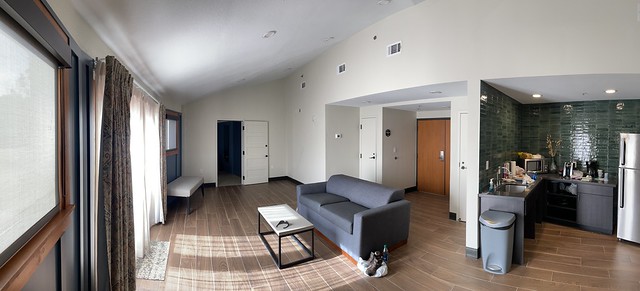
We checked in after dark on the shortest day of the year, parking the minivan as directed at one end of a parking lot for the closest access to the suite. All of the rooms and suites are in a separate building from the lobby, restaurant, and meeting rooms. We schlepped our bags and groceries into what they bill online as the Executive Hospitality Suite, although its corridor signage calls it the Falcon Suite. It faced into the courtyard instead of looking out across the lake and had just a hideaway bed couch, coffee table, and a couple of platform seats in its spacious central room with the counter area at one side. There were a number of conference chairs stowed in closets on either side of the door; the central room has a fire occupancy limit of 58 and is suitable for events.
The Falcon Suite, aka the Executive Hospitality Suite
At one side was a connected bedroom with a king-size bed with bathroom and shower, and on the opposite end was a connected bedroom with two queen-size beds and its own bathroom and shower. Each of the side rooms also had their own mini-refrigerators and microwaves, but we just used the full-size refrigerator and larger microwave in the central room.
The suite wasn’t homey, with bright lights in the central room that could not be dimmed, and one wall was clearly missing past artwork. So whenever we return we’ll book the cozier Scissortail Suite across the hall. That one faces the lake and includes a fireplace, a bar counter with stools, and at least one sitting chair along with the hideaway couch. We discovered that during the winter the Foggy Bottom Kitchen was closed on Mondays and Tuesdays and offered no breakfast. But it would be open for lunch and dinner for the rest of our stay. So we made sandwiches and retired for the night.
Foggy Bottom
I associate Foggy Bottom with an area of Washington, DC where the State Department is located, having been there 37 years ago at a reception at one of the many nearby embassies. But it is also the name of six restaurants that Swadley’s operates at the Sequoyah, Roman Nose, Robbers Cave, Lake Murray, Beavers Bend, and Quartz Mountain resorts. My parents have enjoyed eating at Swadley’s Bar-B-Q in Bethany, and Wendy and I had eaten there with them once. So I figured the Foggy Bottom place might feature barbecue, but thankfully it had a more diverse menu.
We ate at the restaurant twice for lunch and twice for dinner. We had a different server each time, and everyone was friendly, and every dish was quite good. My lunches were the chicken fried steak and chicken tenders and my dinners were the ribeye and sweet tea glazed chicken. Sides included jalapeno sweet corn, green beans, and mashed potatoes and gravy. Wendy had their grilled chicken salad, chicken tenders, and spicy yardbird sandwich, which was a spicy fried chicken sandwich with spicy mayonnaise and hot honey drizzle. The portions were large, so we never had room for dessert. My ribeye was so large that I saved half of it for a yummy sandwich the next day. Wendy especially liked the crunchy apple fritters served before every meal.
So we highly recommend that you try Swadley’s Foggy Bottom Kitchen if you are at any of the lodges mentioned above.
Renovations
Some of the artwork that adorned the lodge in the prior decade was changed in the renovations and many furnishings were updated. I missed the decorations that used to adorn the Sundance Cafe’s walls and the western-themed corridor wall lighting fixtures, but those were minor quibbles. There were still nice chandeliers, statues, and wall decorations in the lodge. The Survivor sculpture by Ron Bertocchi, a memorial to the loss of the artwork in the original library when the old lodge burned in 1995, was still there. Wendy loved its huge quartz crystals.
The Survivor by Ron Bertocchi
A Hike on Quartz Mountain and a stroll around Twin Peaks
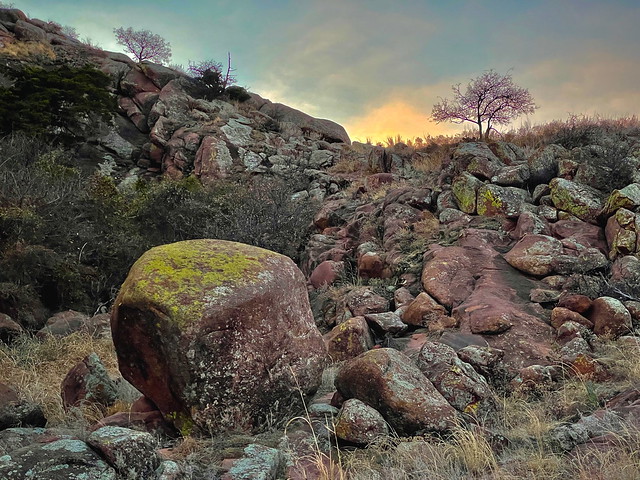
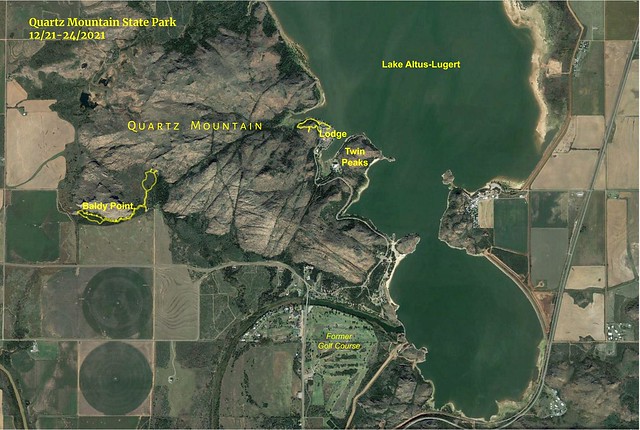
We enjoyed unusually warm and sunny weather on our hikes. The first day we hiked a couple of miles on the Sunrise Trail, making our way up to the top of the nearest hill on Quartz Mountain, then going down to the old Rock Creek Trail to connect with the Cave Trail and pop back out at the lodge.
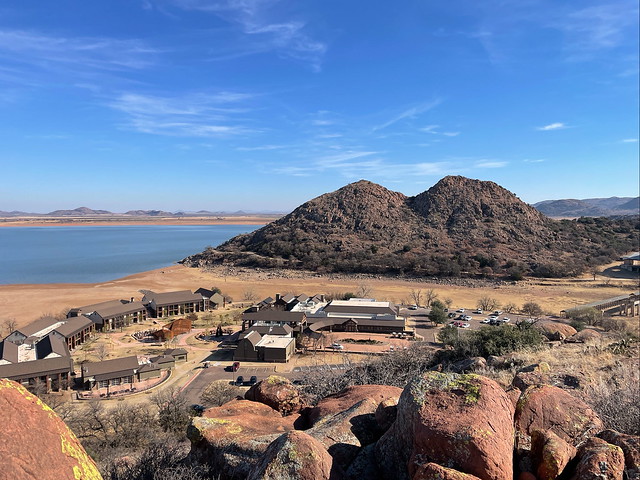
The Sunrise Trail provides nice views of the lodge buildings with Twin Peaks in the background. Every time we have been there, Lake Altus/Lugert has been low, and this time was no exception. I know that the lake was full a few years back, so maybe someday we’ll see water closer to the lodge.
The lodge and Twin Peaks viewed from the Sunrise Trail
While at the summit, Wendy spotted one of the large tankers from the air force base at Altus flying across our field of view above Twin Peaks. I had my Canon PowerShot SX700 HS camera with me, which has a 30x stabilized optical zoom. That allowed me to deduce it was probably one of the Boeing KC-46A Pegasus tankers.
Tanker in the background above Twin Peaks
Notably, that was the only use I’ve made of that handheld digital camera since the pandemic began for us in March 2020. My iPhone 12 Pro has finally supplanted my carrying of a dedicated camera, thanks to its 2x telephoto lens and the convenience of its automatic syncing with the cloud with quick editing on my iPad. I have found that my iPhone 12 Pro often works just as well or better than my Canon EOS Rebel T6 digital SLR camera for work shots as well, and it is certainly far more convenient.
After dinner that day we took the easy paved Twin Peaks Trail that leads about a half-mile around the base of the one of the peaks. The skies were pretty to the west over Quartz Mountain and the lodge.
Wendy had been delighted by a couple of deer near the trailhead, and was thrilled to spot nine deer foraging in the dry slough below the long pedestrian bridge that connects the Robert M. Kerr Performance Hall at Twin Peaks with the lodge. I still dream of someday visiting when the lake is full and there is actually water in that slough.
Deer near the Twin Peaks Trailhead
Baldy Point
Our other hike of the trip was over on the opposite western side of Quartz Mountain at Baldy Point.
We drove over to park near the Wallace Mt. Ranch, where there is a scenic abandoned house.
Wallace Mt. Ranch
Back in 2014, we avoided the Cedar Valley Trail there because the valley had been burned over in a fire. This time we took that short flat loop northeast of Baldy Point.
Wendy enjoys the cool air flowing from a boulder pile at the base of Baldy Point
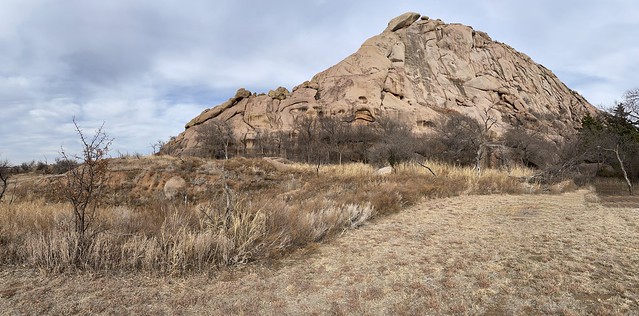
Baldy Point looming above the mesquite and cedar trees
We reached the other parking area in this western section of the park and then retraced our steps back to the car to wrap up our 2.12 mile walk.
Western end of Baldy Point
Home for Christmas
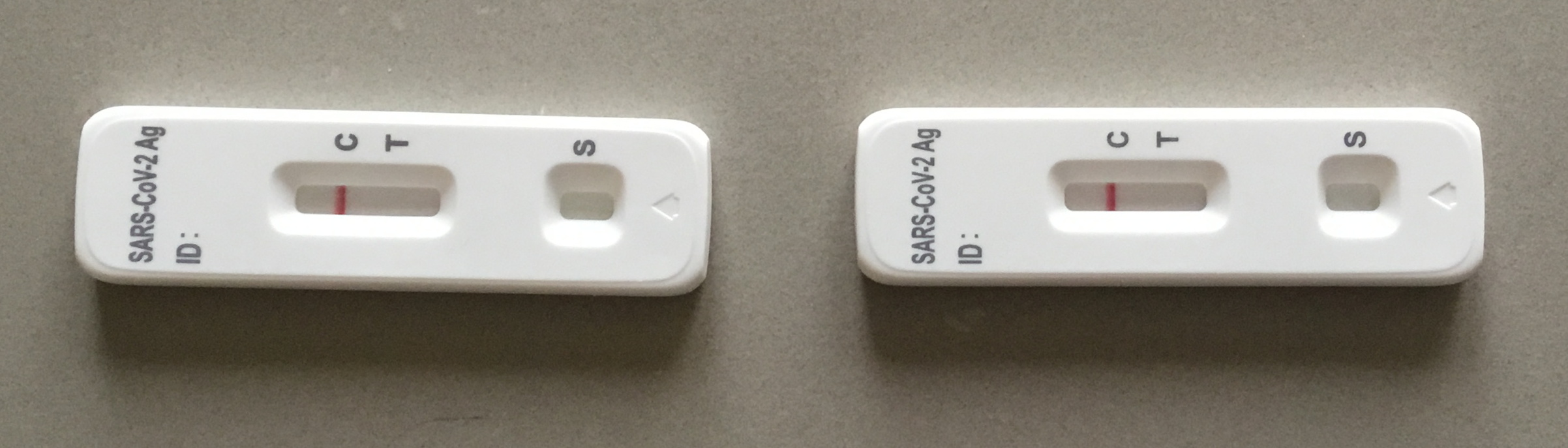
The day before our departure, we drove to Altus to pick up some hand lotion for Wendy, who was suffering from the arid conditions. I made sure to visit the Whataburger drive-through so Wendy could indulge in some of her favorite fast food, and we also picked up a couple of rapid COVID-19 tests. I had forgotten to pack some for our return journey, which would include a stop to chat with my parents in Oklahoma City on Christmas Eve. We had worn our KN95/KF94 masks at pit stops but had repeatedly eaten inside the park restaurant. Although it was spacious and had few customers, we might have been exposed, so caution was warranted.
We tested negative as we prepared to head back to Oklahoma City
We felt fine and tested negative, so we headed back with Trixie, my TomTom GPS app, directing us along state highway 44 past Lone Wolf and highway 9 to Hobart. State highway 183 from Hobart through New Cordell to Clinton had been repaved and surprisingly had a number of four-lane segments, making our trip north to interstate 40 quite relaxing. Then it was a speedy roll to OKC to revisit my folks.
The all-too-familiar trip along the Turner Turnpike was uneventful. I like the new eastbound stop between Chandler and Stroud, which is part of the scheme to close the Hoback Plaza near Stroud. The truck traffic on the turnpike has increased such that the state plans over the next decade to finally expand the rest of the Turner to three lanes in each direction, as has already been done from between Bristow and Kellyville onward to Tulsa.
We were back at home after dark on Christmas Eve, ready to relax with a couple of 1947 Christmas movies on Christmas Day. We are grateful that the state tourism department has re-invested in Quartz Mountain and Swadley’s provided such great meals during our stay. It was a perfect escape for us between the Delta and Omicron waves, but we plan to take it easy near home for the final week of our winter break since we know Omicron will begin spreading rapidly. The science is perfectly clear that vaccination, masking, and distancing are vital protections during the pandemic for those with the wisdom and resilience to follow through. Stay safe and live well!
Life moves pretty fast. If you don’t stop and look around once in a while, you could miss it.
-Ferris Bueller
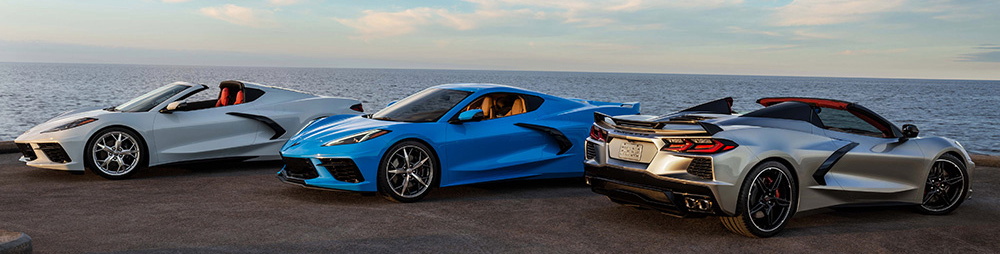
An article in the Tulsa World caught my attention this Thanksgiving Day morning. The Putting physics to work headline easily ensnared this former physics teacher, but upon realizing it was about the 2021 Corvette C8 Stingray supercar, my eyes glazed over and I turned to the next (virtual) page of the electronic edition.
I’m not a car enthusiast and was particularly disinterested in a car with a list price of $67,495 which cost over $90,000 as tested. But then a shot on the next page, of the coupe with its removable targa roof panel and the retractable hardtop convertible, looked pretty snazzy. I was in no hurry this morning, as Wendy and I had already celebrated Thanksgiving earlier this week with my parents in Oklahoma City, so I threw my e-edition into reverse to scan the piece.
2021 Chevrolet Corvette Stingray Coupe and Convertible
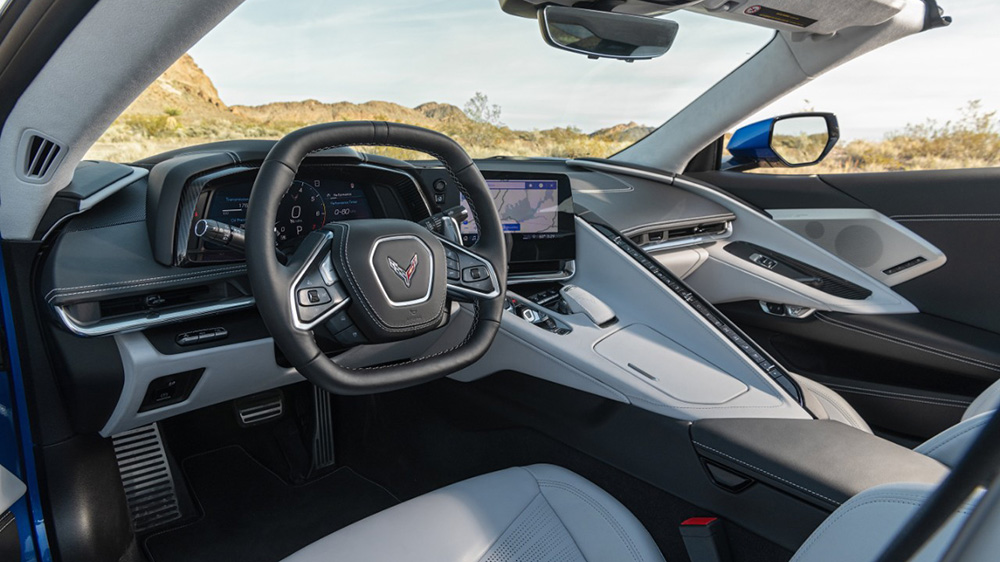
Mild interest became incredulity when I read that the supercar has no stickshift option – it only offers an 8-speed automatic transmission with paddle shifters. Say what?
The new Chevrolet Corvette Stingray has no stickshift
I knew that for decades high-end sports cars offered manual transmissions so that enthusiasts could shift more quickly and maximize power output, whereas cost-conscious folks would put manual transmissions into economy cars to save weight and get more miles per gallon. But clearly things have changed. Heck, my wife’s minivan has a 9-speed automatic transmission with paddle shifters, so what is something like that doing in a supercar?
That prompted me to research how car transmissions have been evolving, which led to learning more about other interesting changes I was only vaguely aware of. I’m sharing my findings in this long post since they might interest some of my Gentle Readers. Again, I’m no car buff, although I do understand their basic components and the principles behind them.
This Gen-Xer Can’t Drive a Stick
We hear jokes about how Millenials can’t drive a stick, but this early Gen-X can’t either. I did have three friends in high school and college who drove stick shifts. My best friend drove an old used manual car more out of budgetary necessity than enthusiasm, while one of the smartest girls in our school adored driving her stick shift car and would rev it up when tooling around. Another good friend and landlord drove an old pickup with a column shifter.
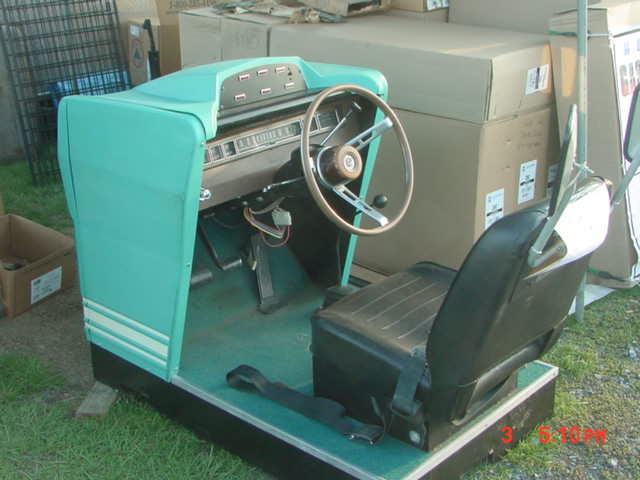
An old driver’s ed simulator
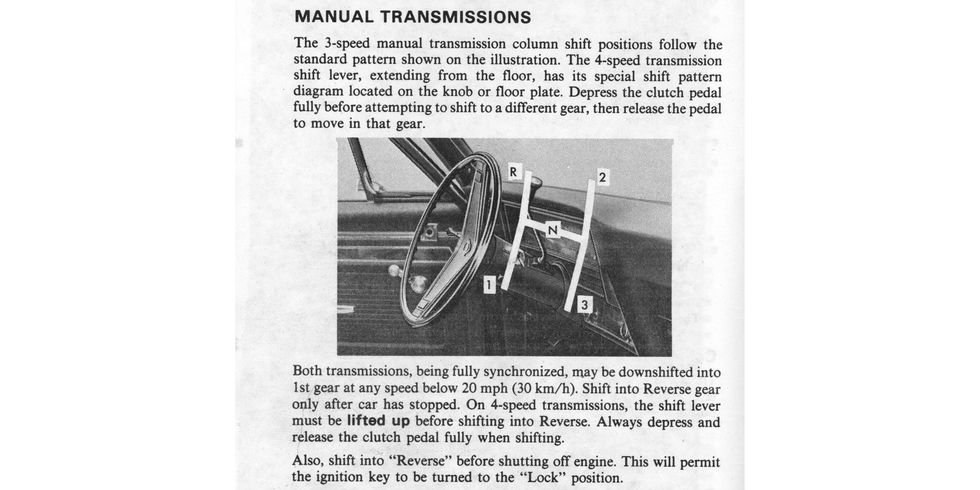
But I have zero actual experience operating a manual transmission. The closest I ever came was in our high school driver’s education course. When I was 15, I was in one of several simulators positioned in front of a 16mm film projector screen when Mr. Cornelius told us to reach under the dashboards of our simulators and pull down an unsuspected clutch pedal. Then we pulled a knob and rotated our steering columns to bring a disused handle into position…a column shifter. After some confusing and cursory instructions, Mr. Cornelius stepped back, started the film, and red warning lights flooded my simulator’s display as I struggled to get my “car” into gear. I never got all of the red lights to go out that day, and that was that.
A column shifter
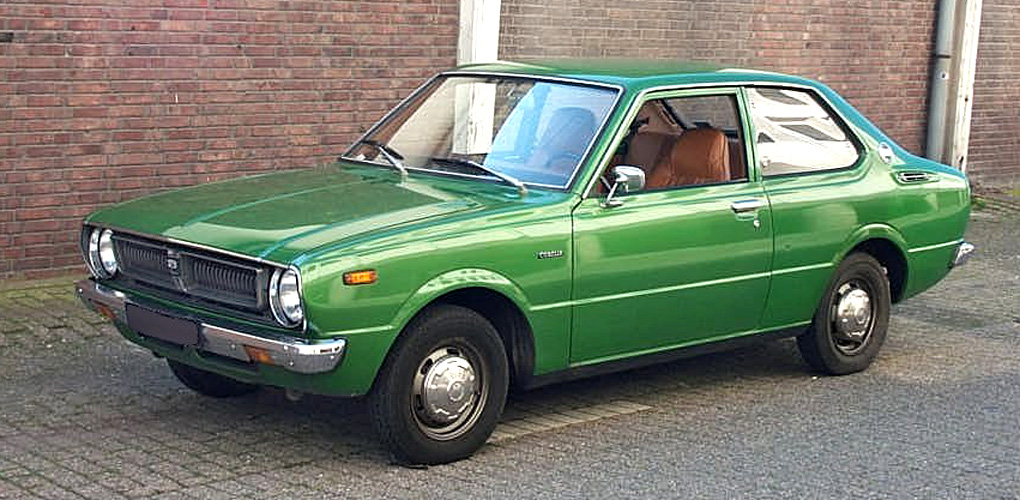
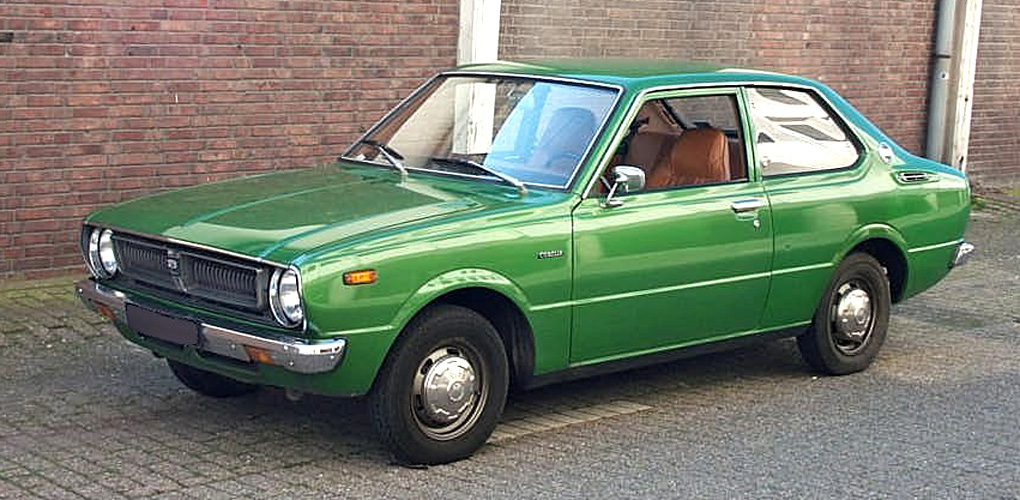
My first car was a puny 1976 Toyota Corolla I had inherited from a grandmother who only learned to drive when she was in her 70s. It had no cruise control, no air conditioner, and no power steering, let alone power windows, locks, or seats. Gosh, it didn’t even have a decent radio, which suited Big Mama just fine, as she proclaimed Satan was the prince of the power of the air. But I can attest that she drove like the devil on old US 77 from Paoli to do her grocery shopping in Pauls Valley and Purcell.
My first car was a pitiful 1976 Toyota Corolla, but even it had an automatic transmission
That pitiful vehicle had no added features at all save one…a three-speed automatic transmission. And all of the cars I drove after that were automatics as well.
My unfamiliarity with stick shifts was never a handicap. It was actually a bonus when I worked for the state tourism department. I was told to drive a truck to go pick up items from the bus depot. I dutifully walked out to the truck but, upon discovering it was a manual, trudged back. They had to send one of my laziest coworkers out to chauffeur me to the bus depot, and I appreciated that, along with having another fellow on hand to help schlep the supplies.
In 2016, US News & World Report unhelpfully said anywhere from 18% to 60% could drive a stick. In a 2020 Harris Poll, 55% of Americans said they have owned a manual transmission car at some point, and 66% said they knew how to operate one, but I’m skeptical of those figures.
Supercar Transmissions
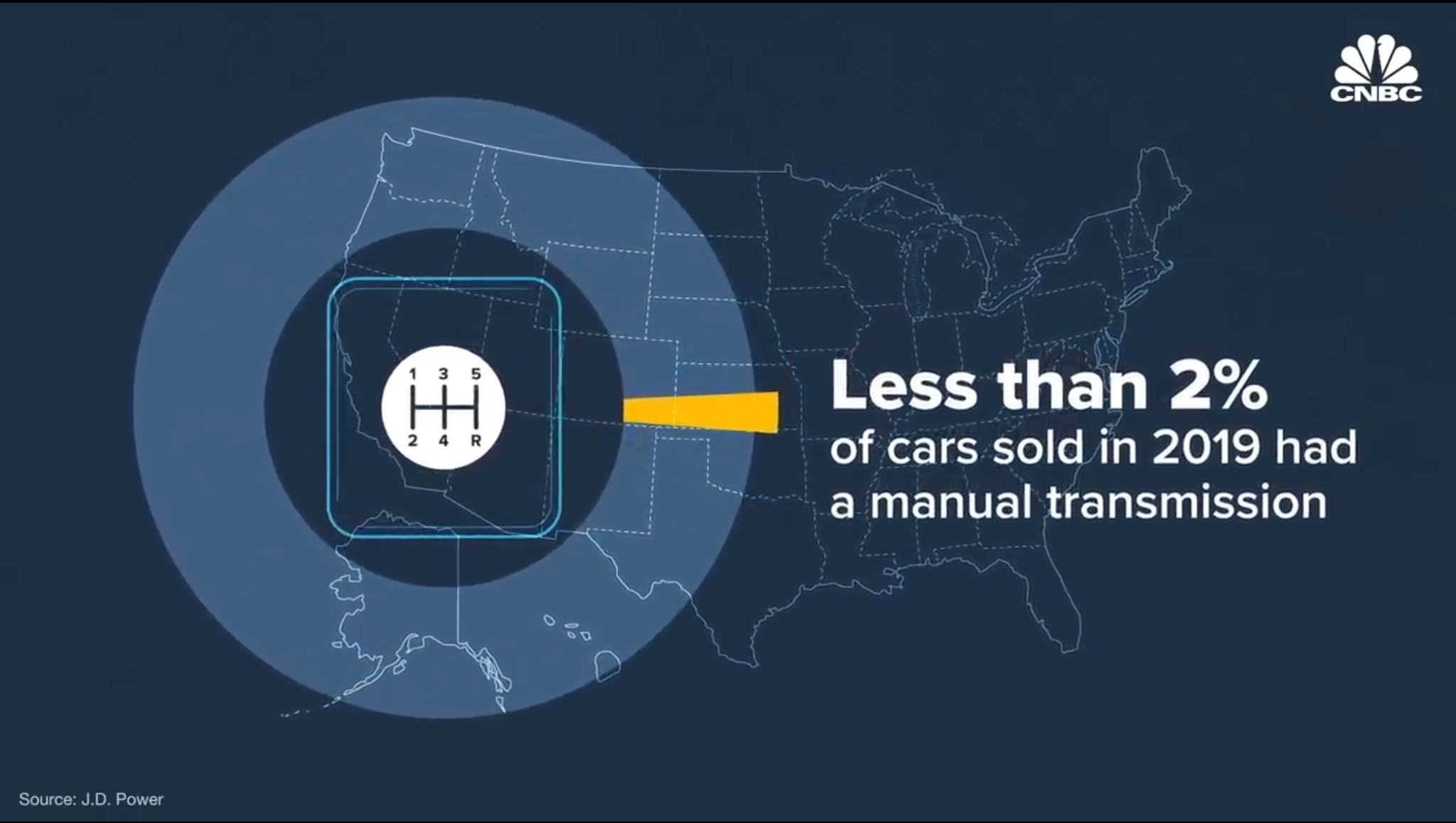
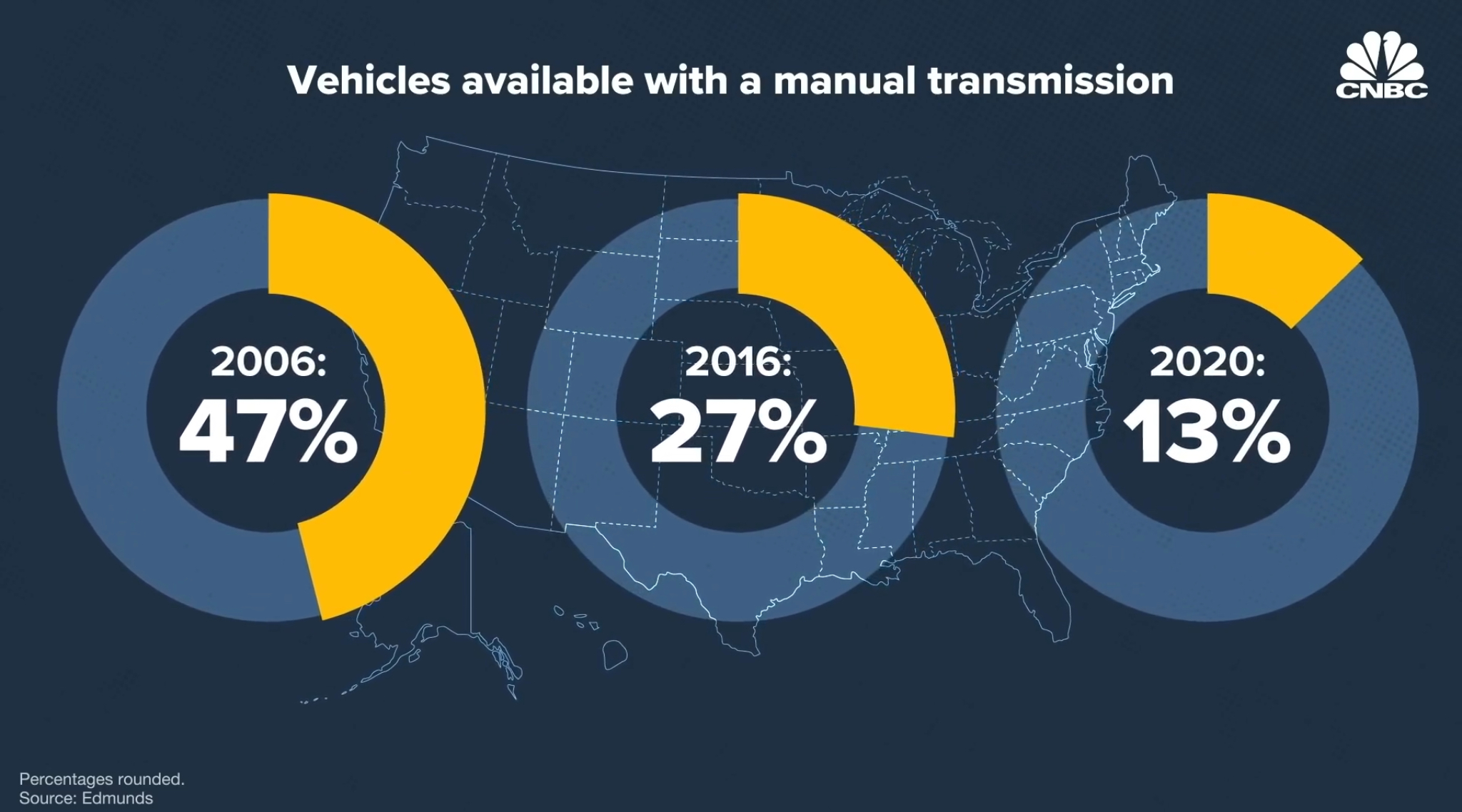
It turns out that many high-end European sports cars stopped offering manual transmissions years ago. You can’t get a stick shift Ferrari, McLaren, or Lamborghini anymore, so Chevy is just following the trend with its latest Stingray. I found a great video from CNBC on the matter.
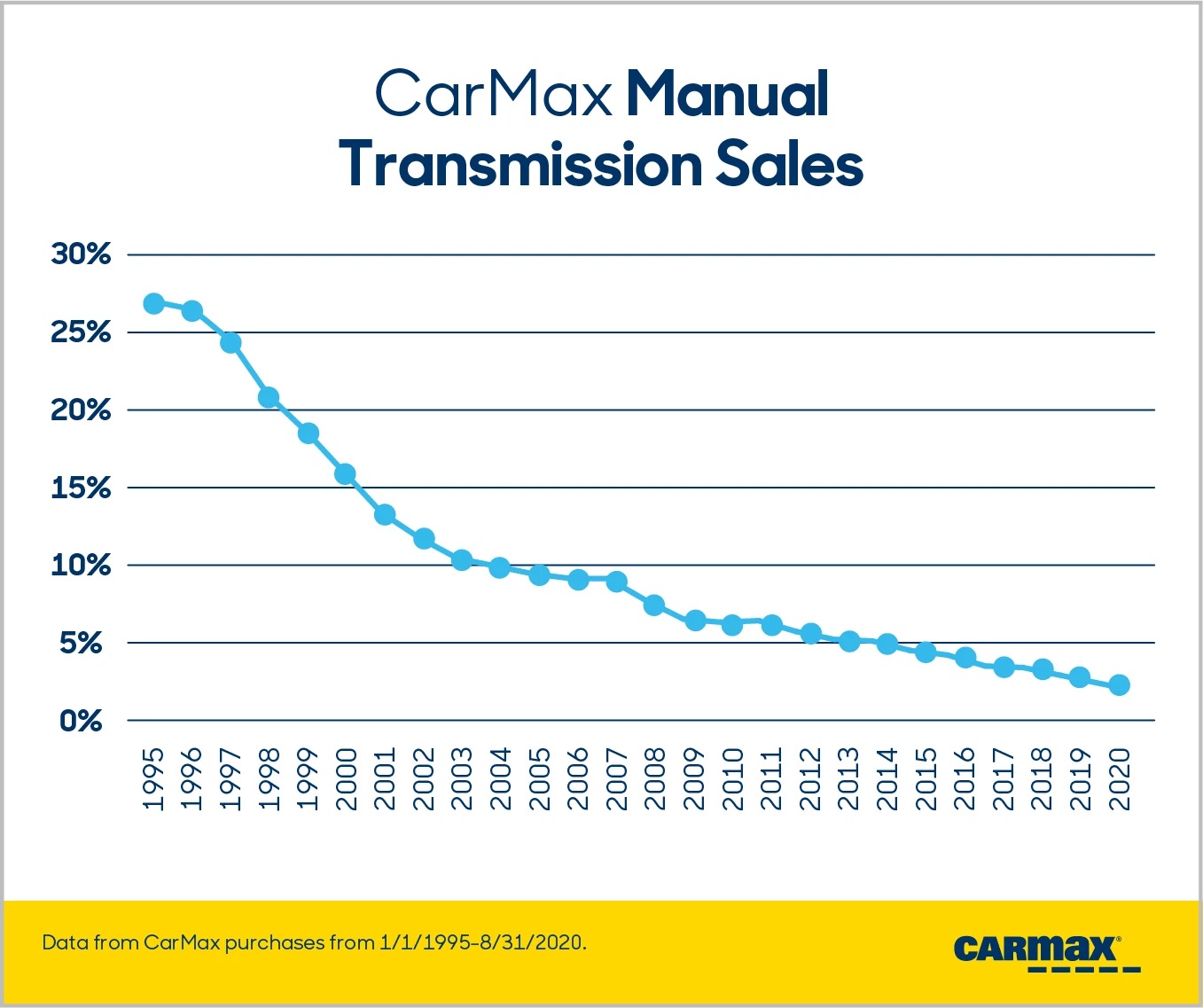
The statistics on the decline in manual transmissions were striking.
I was similarly surprised when the video revealed that 2018 was the last year any full-size pickups had a manual option. That left me pondering what else has been changing in the vehicle industry that might have eluded my notice.
My Fleet
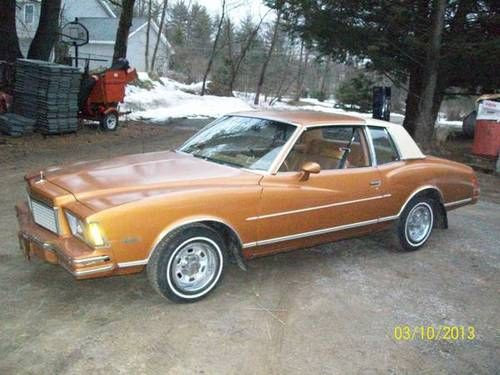
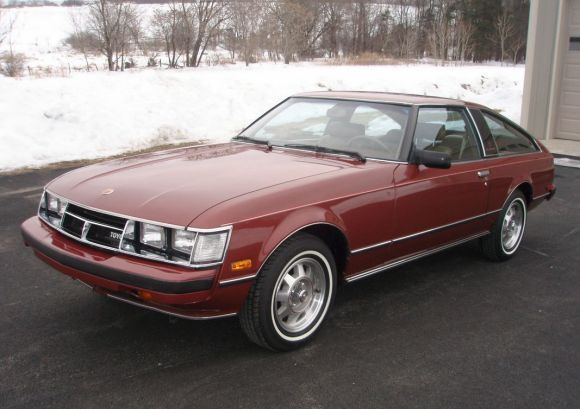
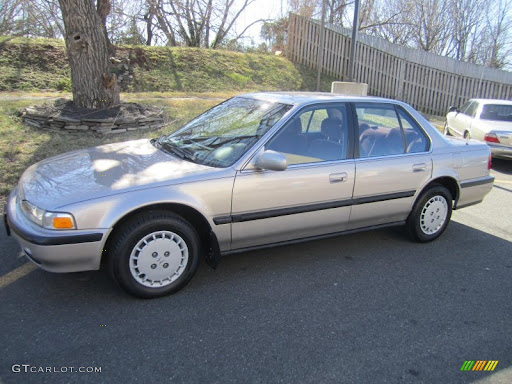
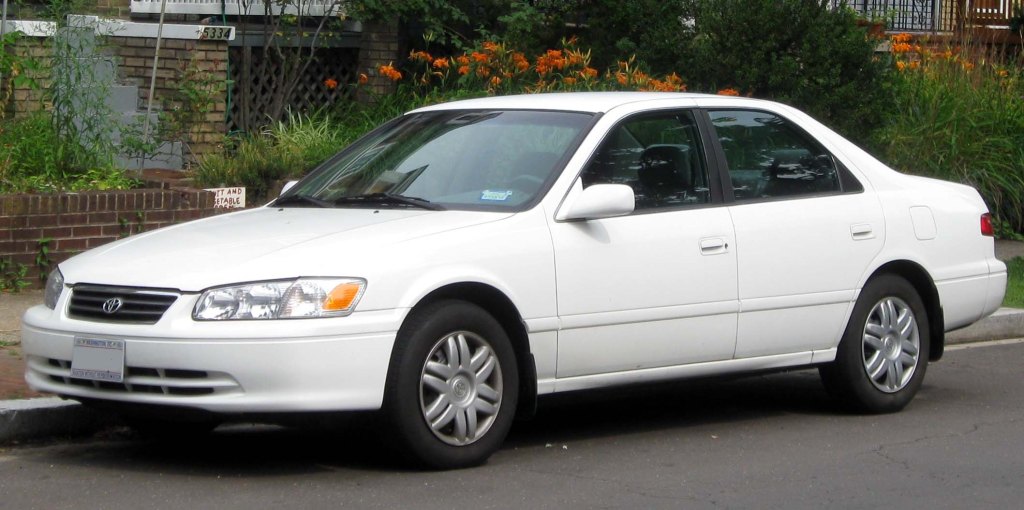
Here are the cars I have driven over the years, with the initial three being used cars during high school and college and the final three new cars I bought and drove as a working adult:
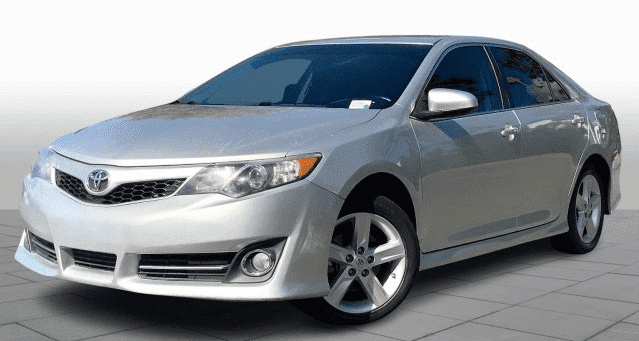
1976 Toyota Corolla1978 Chevrolet Monte Carlo1981 Toyota Celica Supra1991 Honda Accord2001 Toyota Camry2014 Toyota CamryMy cars over the years
Year
Make
Model
Transmission
Drive
Cylinders
Horsepower
Miles per Gallon
1976
Toyota
Corolla
3-speed automatic
Rear
Inline 4
55
25
1978
Chevrolet
Monte Carlo
3-speed automatic
Rear
V8
160
16/22
1981
Toyota
Celica Supra
4-speed automatic
Rear
Straight 6
116
22/29
1991
Honda
Accord
4-speed automatic
Front
Inline 4
140
19/26
2001
Toyota
Camry
4-speed automatic
Front
Inline 4
130
20/29
2014
Toyota
Camry
6-speed automatic
Front
Inline 4
178
25/34
2019
Honda
Odyssey
9-speed automatic
Front
V6
280
19/28
I added my wife’s minivan as the final entry in the table, since I have ample experience driving it on road trips and hauling items around town.
My folks allowed me to add a FM radio/cassette deck and speakers as well as air conditioning to the horrid 1976 Corolla. After I had proven myself, they provided the upgrade to the big used Monte Carlo. But it wasn’t very reliable and guzzled gas, so in college my dad helped me get the sportiest car I’ve ever had – a used Celica Supra built before Supras became an independent line of high-performance sports cars. It was great fun to drive, but tended to overheat and was treacherous on winter roads. As an adult I have only bought new but boring front-wheel-drive sedans, with reliability being my top priority.
The 2001 Camry was my favorite of the six cars, with the fun Supra coming in second. I paid for alloy wheels on both Camrys, having liked them on the Supra and disliking the plastic hubcaps on the Accord. Even though I splurged on leather seats and a moon roof for my quite reliable 2014 Camry, I’m just not fond of it. It has a rough and noisy ride and is not much to look at. My disconnect from it is illustrated by how I responded to hitting a raccoon years ago along US 60 between Bartlesville and Nowata. I lost a fog light and several underpanels were knocked loose. I never replaced that light and just wired up the panels to keep them from flapping and dragging. After I took the car in to the dealer for its 75,000-mile maintenance, I noticed that they replaced some of my old wires with zip ties, and that’s all the love it is likely to get. I plan to replace the car around 2025; more on that later.
Transmissions
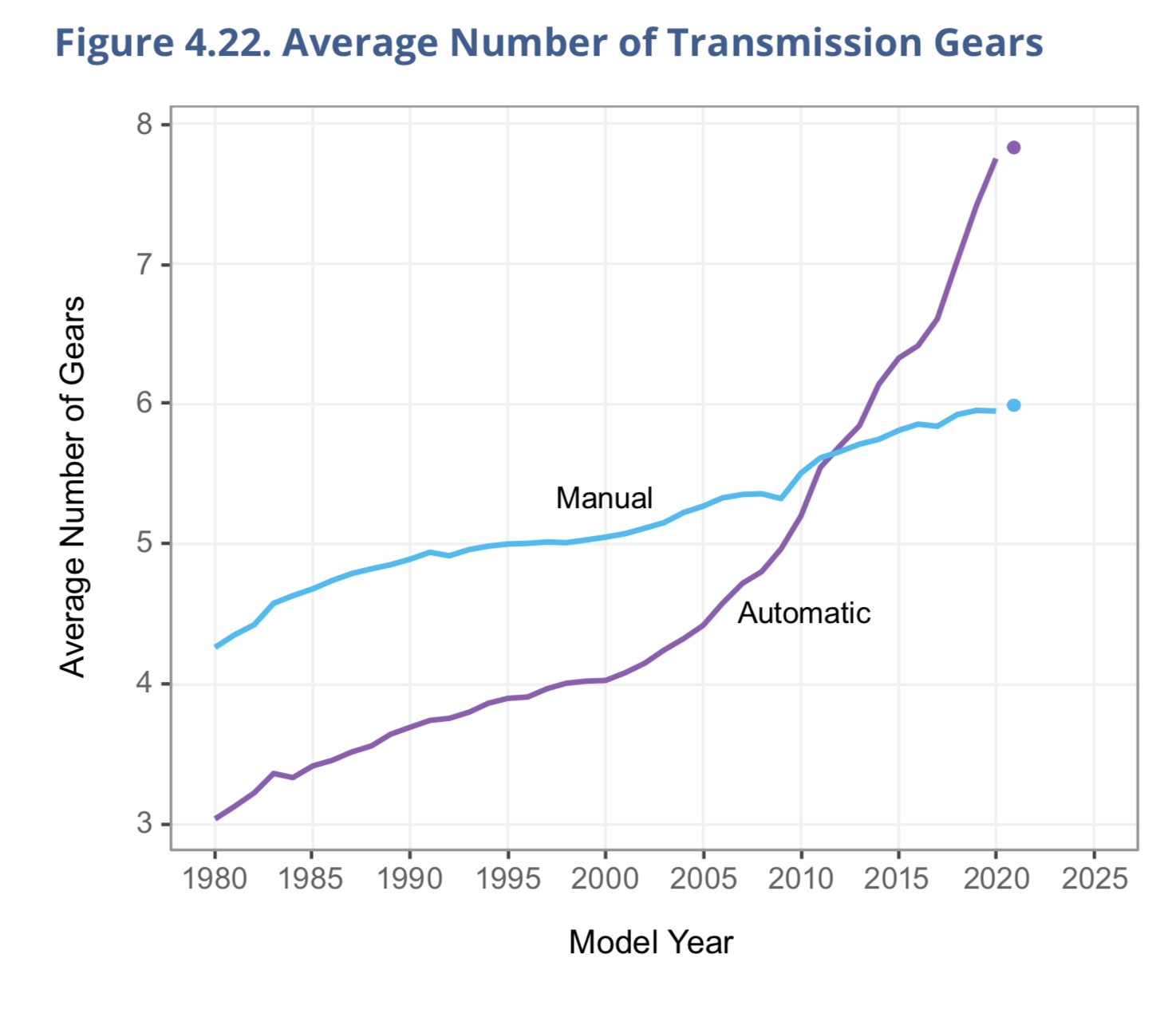
For over thirty years all of my cars had 3 or 4-speed automatic transmissions. I only realized my second Camry had more gearings when I downshifted for big hills. But the first time I drove the minivan, I immediately noticed how rapidly it was shifting gears, recognizing it had oodles of them, and I’ve accidentally stumbled into the “manual” paddle shifting mode once or twice.
Here’s a chart showing how the number of gears has multiplied over the past 20 years, which I extracted, like many others, from the EPA’s 2021 Automotive Trends Report.
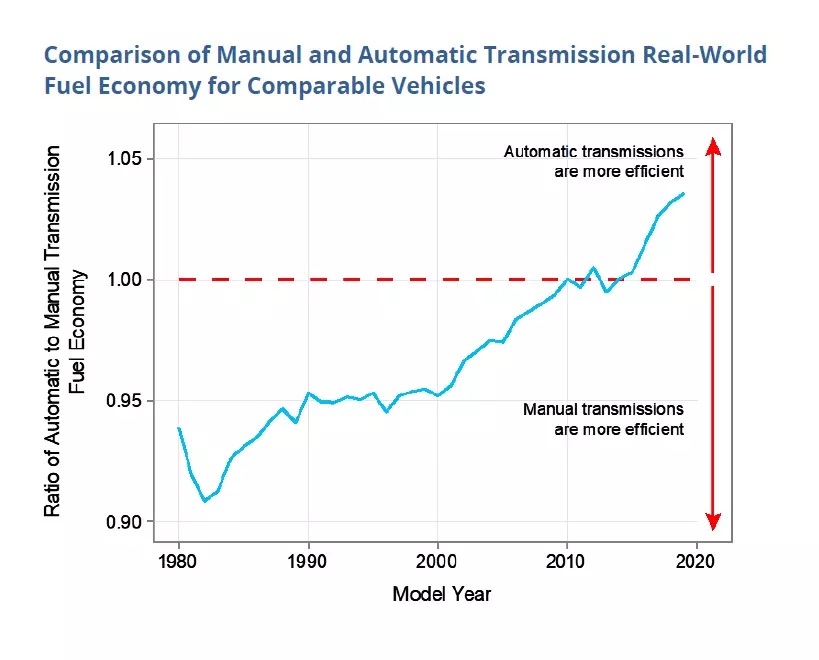
Another chart shows how in the past decade automatic transmissions actually overtook manual transmissions on fuel economy.
Which is a contributor to the continuing long slide in manual transmission sales.
In addition to the dramatic increase in the number of gears, almost all automatic transmissions these days have a lock-up control system. That likely needs some explanation.
In a manual transmission, the clutch transfers the rotational power from the engine to the wheels. You press the clutch pedal to break that connection so that you can change gears in the transmission. You need the gears since the engine has a limited range of revolutions per minute. In low gear, the engine spins many times for each rotation of the wheels. A 2020 Honda Civic’s engine spins almost 16 times to turn the driven wheels once when in first gear. But if you drive 30 miles per hour in that gear, the poor engine is having to spin over 6,000 revolutions per minute, which is near its limit. So you have to shift to higher gears to lower the number of engine revolutions for each wheel revolution. By the time you reach sixth gear, the engine is only spinning 3 times to turn the driven wheels once.
An automatic transmission shifts gears for you, and since the late 1960s, they have used torque converters as the power linkage to the engine, with an impeller connected to the engine and a turbine connected to the transmission.
A lock-up control system uses a clutch within the automatic transmission to mechanically link the impeller and turbine at high speeds, rather than continuing to rely on the fluid linkage between them. That reduces energy losses from fluid drag, improving fuel economy. My earliest cars didn’t have the lock-up clutch in their automatic transmissions, but nowadays most cars and trucks have them: in the charts below, the As without lock-ups have been replaced with Ls. And notice the rise in the past 15 years in continuously variable transmissions, which typically use a belt and variable-diameter pulleys to dispense with discrete gears altogether.
Vehicle Types
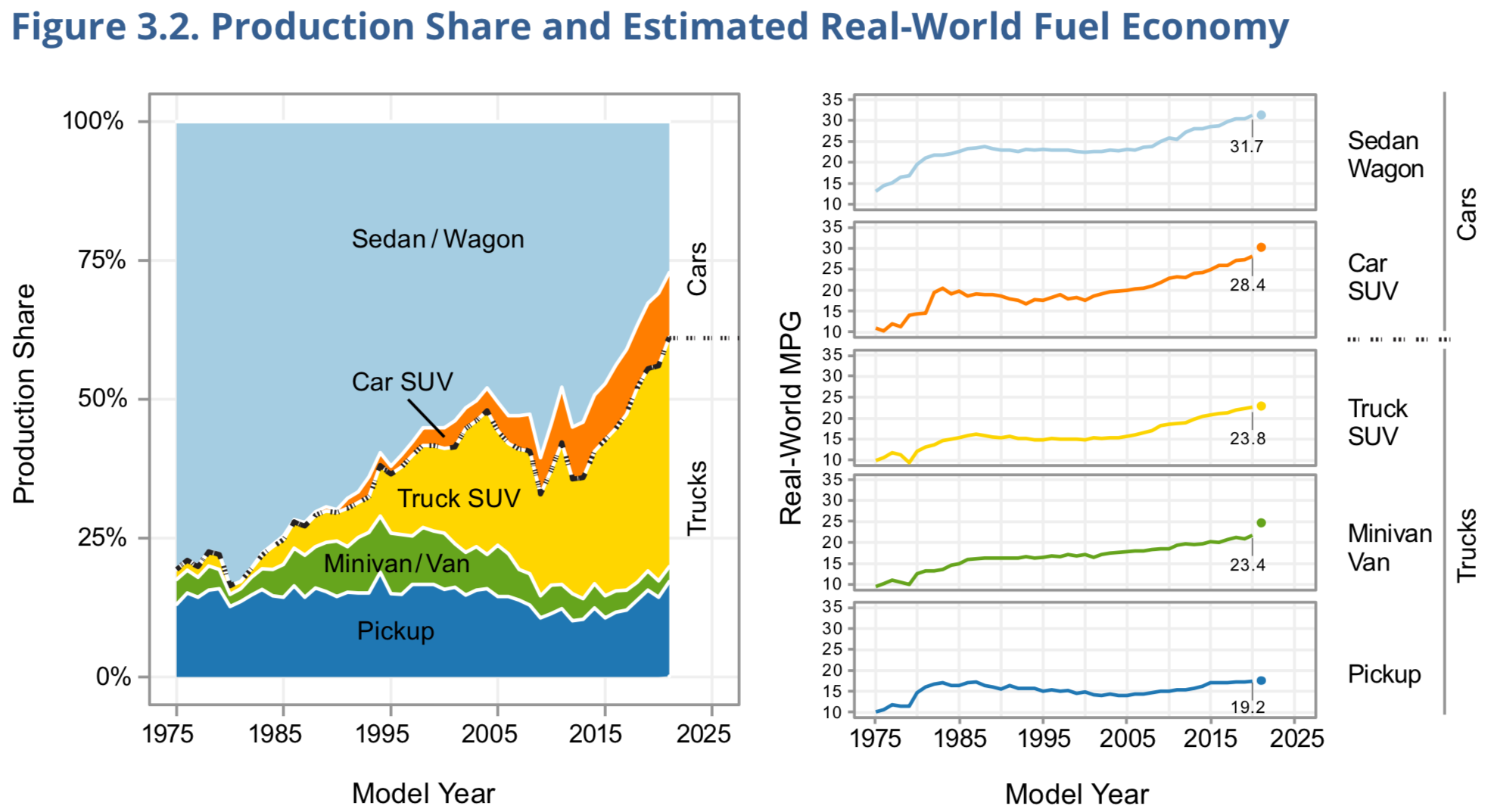
I’ve long realized that I was out of sync with many Oklahomans, who typically drive pickups and sports utility vehicles (SUVs), whereas I started out with a couple of two-door coupes and a two-door hatchback and have driven three four-door sedans for 30 years. My father liked station wagons and Volkswagen campers, which are even rarer these days. The next chart shows how sedans and wagons have dropped from over 3/4 of the market back when I began driving to only a bit over 1/4 today.
I find it interesting how the proportion of pickups has changed little over time and how minivans and vans peaked in the mid-1990s and are now the smallest major category. It is no surprise to see that large SUVs now dominate the market.
The accompanying MPG chart shows how fuel economy has improved for each segment since I began driving…except for pickups. I’ve never liked pickups, but it has been fun to drive my wife’s minivan, which I appreciate for its road comfort and spacious enclosed room for cargo. I’m likely to stick with a sedan or coupe in the future, using it to commute around town, so long as Wendy has a minivan or other capacious vehicle we can use for long trips and to haul things.
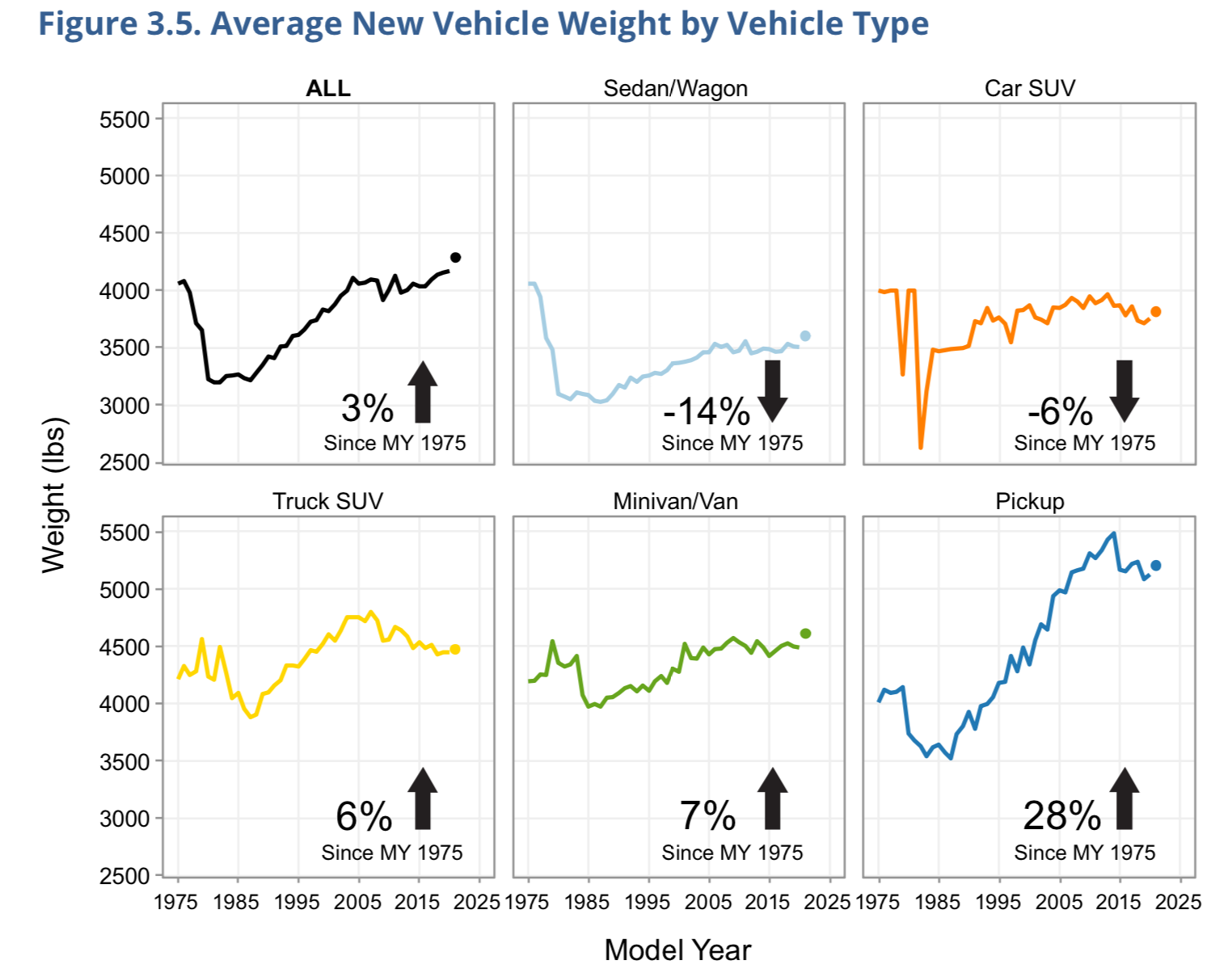
As for why pickup mileage hasn’t improved, it’s because they have put on so much weight. Since 1975 their weight has increased by 28%, whereas smaller footprints and lighter engines and transmissions have helped sedans shed weight.
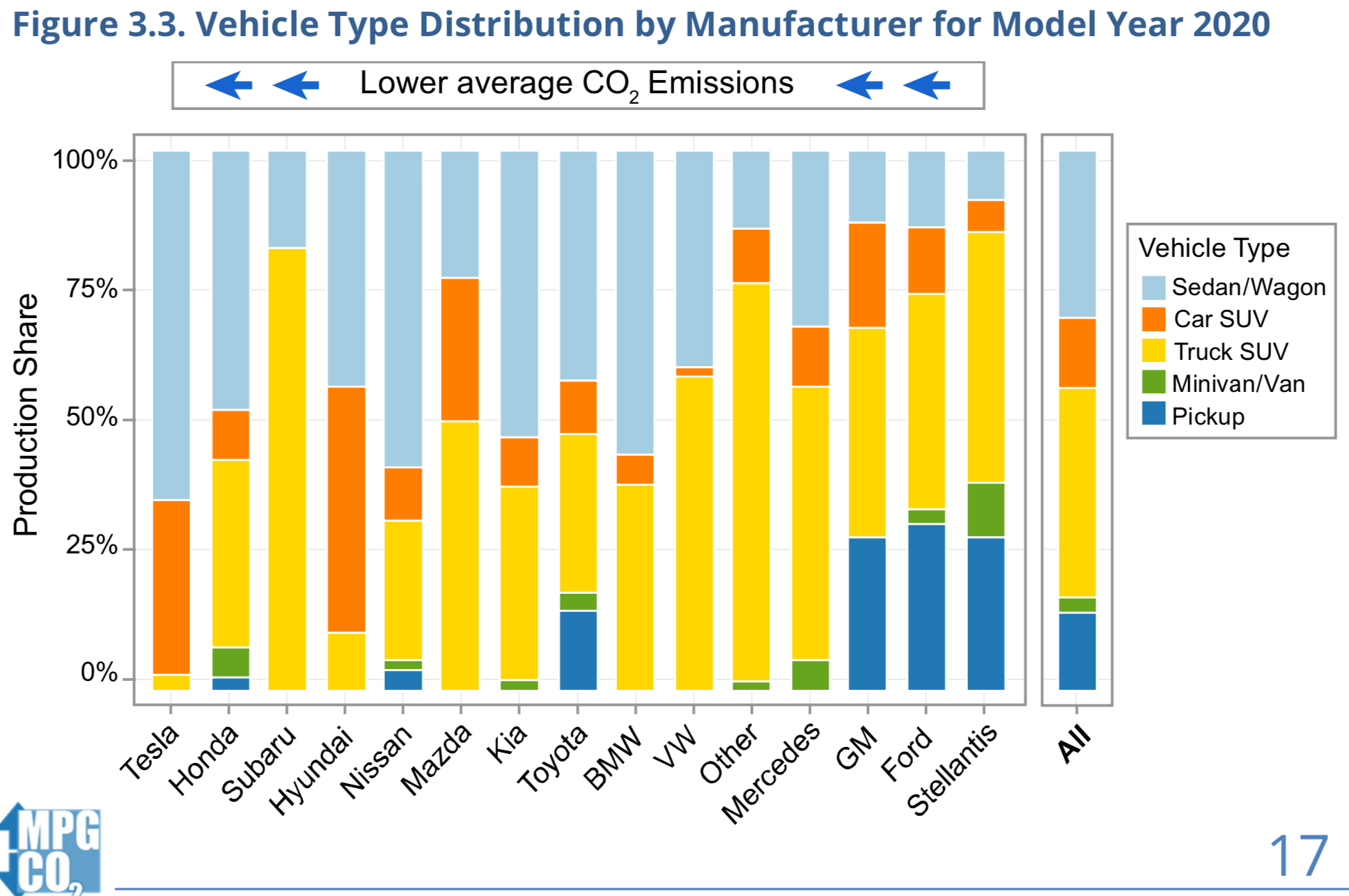
Here’s a look at the type distribution of vehicles by manufacturer in 2020. I am amazed that General Motors only has three sedans left in the US market: two Cadillacs and the Chevy Malibu. What a change from my childhood!
Better, Stronger, Faster
In the 1970s, The Six Million Dollar Man, in one of the best television show introductions ever made, told kids each week how they had rebuilt astronaut Steve Austin with bionics to make him better, stronger, and faster.
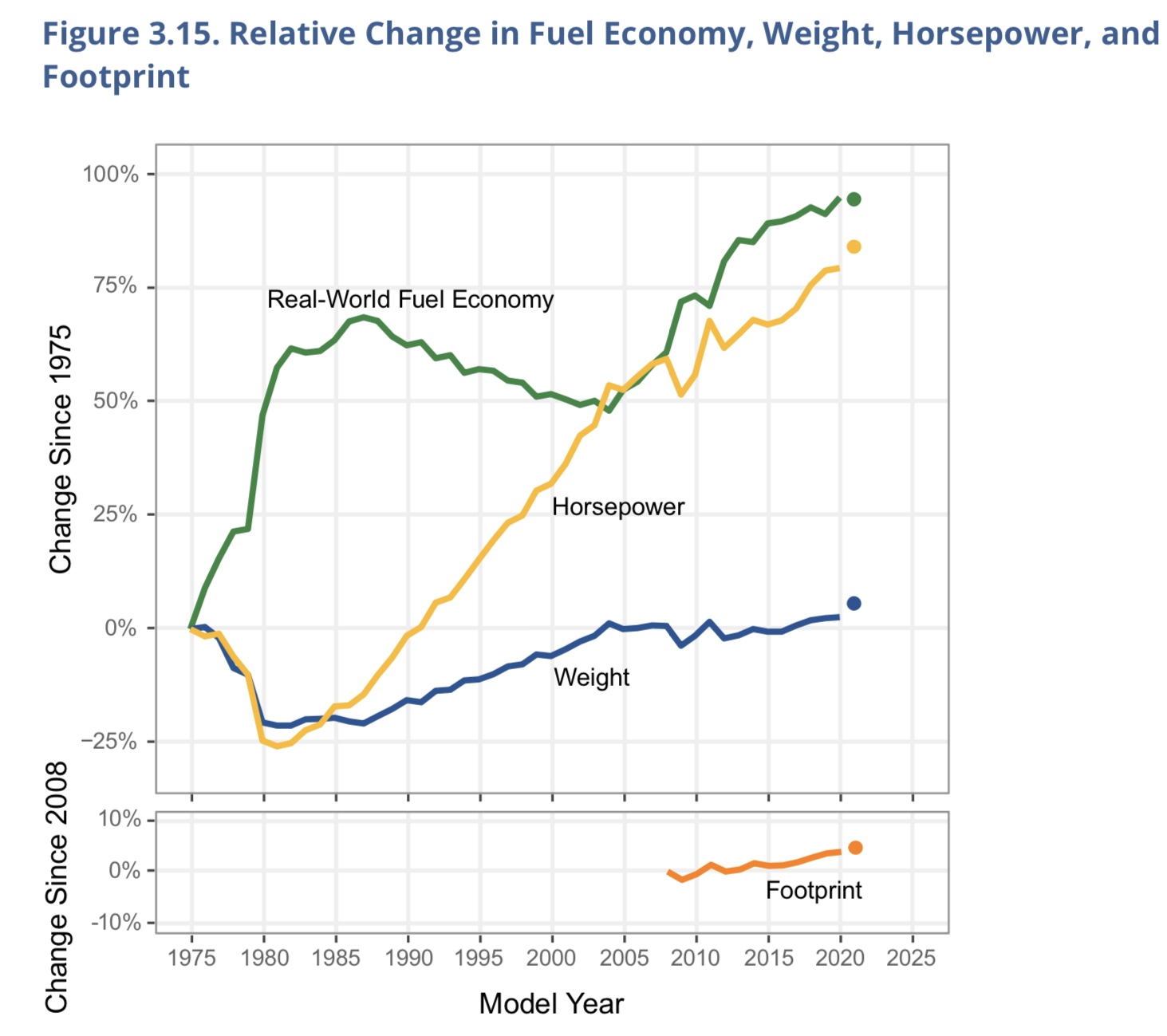
Vehicles are not bionic, but they’ve certainly embraced those improvements. Look at the incredible growth in horsepower since I began driving, after a sharp dip in the late 1970s after the Arab oil embargo in 1973-1974 and emission controls sapped domestic automobiles of their size and power and led to far more imports of smaller foreign models.
Fuel economy sharply improved in the late 1970s after the Arab oil embargo, which I recall as a time of lines at gas stations and the imposition of a nationwide 55 mph speed limit. We lost some of those gains from the late 1980s to the mid-2000s as vehicle weights crept back upward due to the transition from sedans to SUVs, but since then the increase in weight has leveled off and fuel economy has improved.
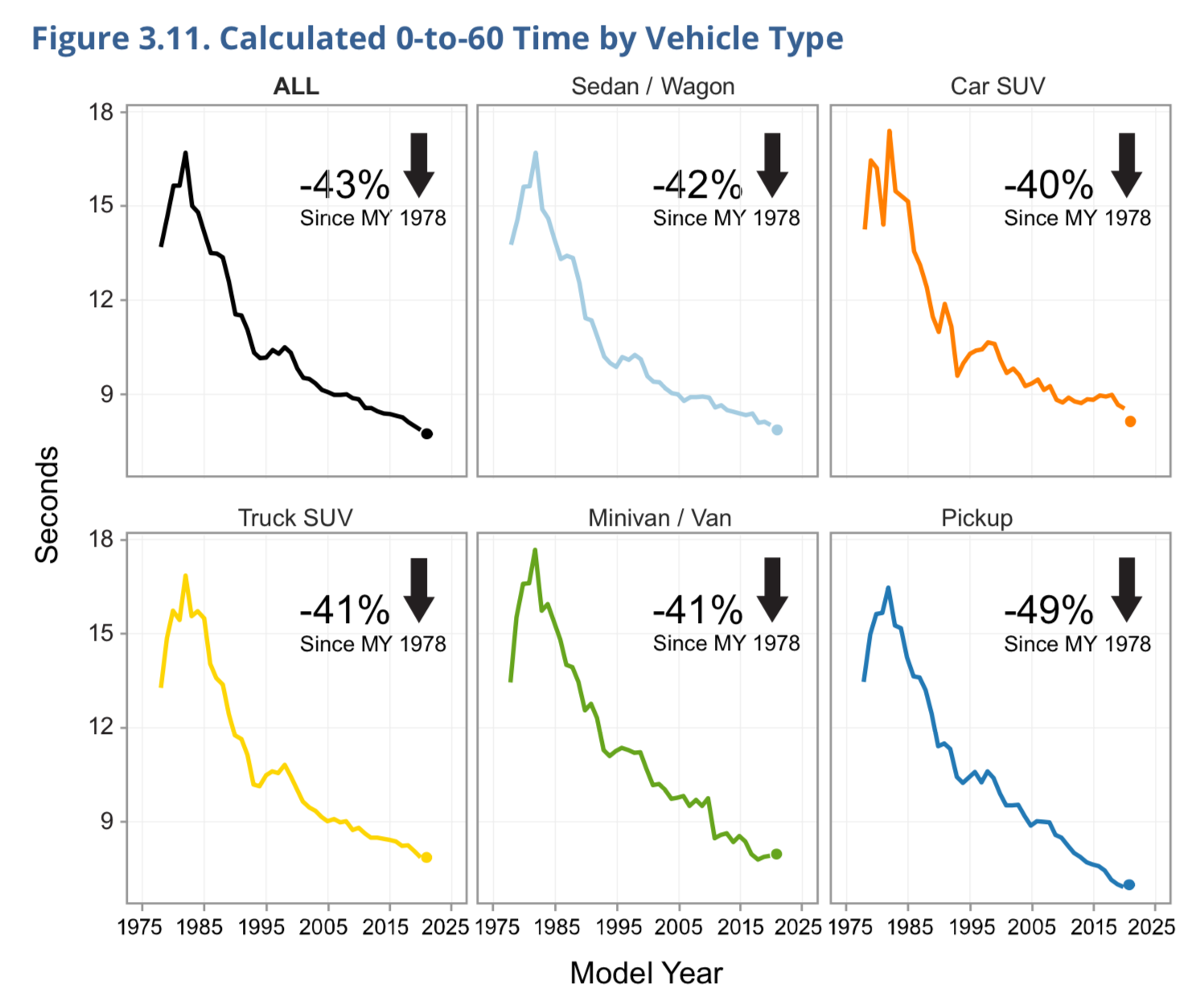
So better fuel economy and stronger engines, but what about faster? Well, take a gander at the 40% or more decrease in the time to go from 0 to 60 miles per hour across all vehicle types. That extra horsepower made it possible, and the incredible torque of fully electric sports cars allows a Tesla to match the times of the quickest Porsche or Corvette.
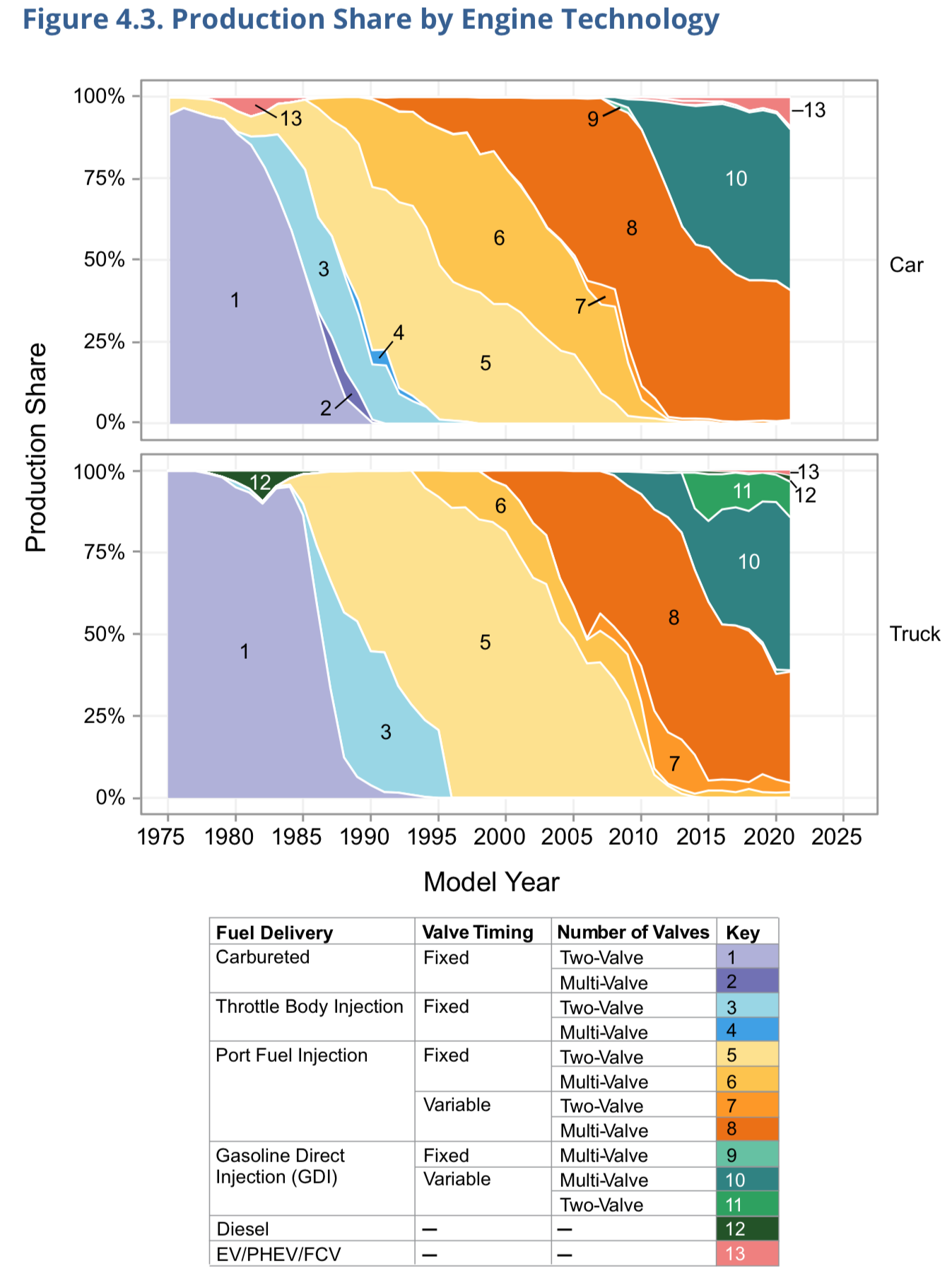
Another big improvement in my lifetime has been the shift from carburetors to fuel injection. My first two cars had carburetors, and I’m glad to have had fuel injection in the rest. The only advantage to carburetors is simplicity, with fuel injection improving emissions, fuel economy, power, and performance.
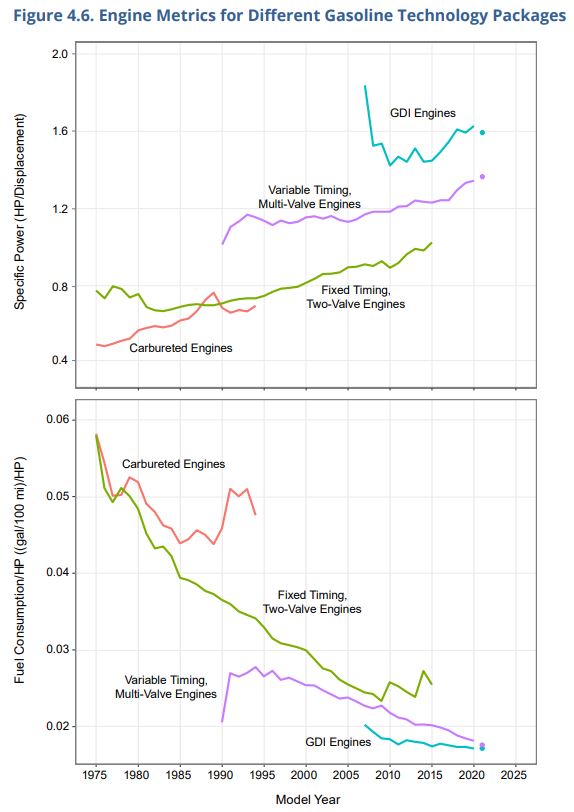
Carbureted engines disappeared in the early 1990s, and now the vast majority of vehicles have multi-valve variable port fuel injection or gasoline direct injection, with the latter becoming much more common over the past decade. In it, fuel from the tank is supplied to a common header and injected into a shared combustion chamber rather than the intake manifold, which increases engine efficiency and specific power output while reducing exhaust emissions. Those advantages led it to grow from 2% of US automobiles in 2008 to almost 50% today.
Cylinders
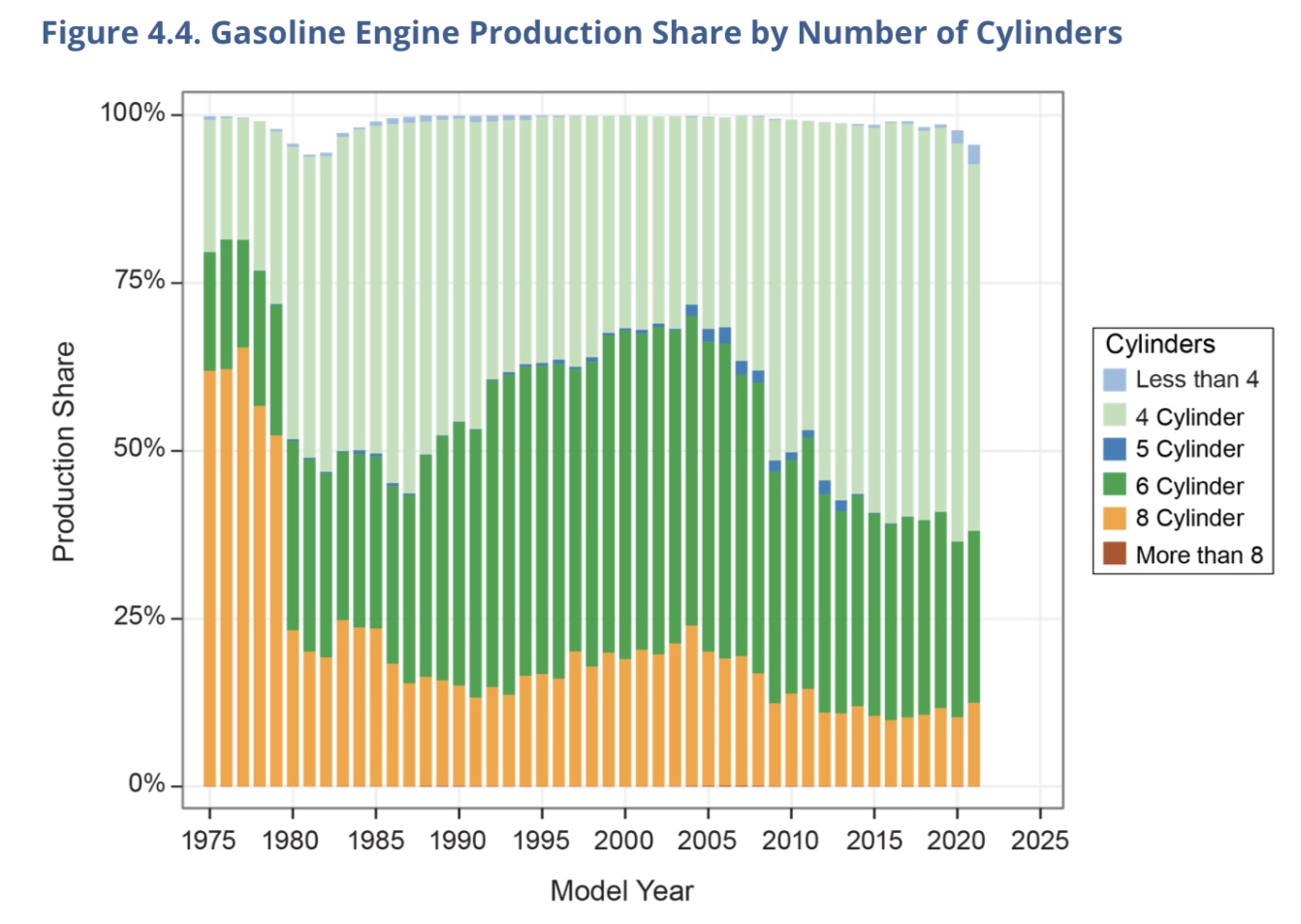
A cylinder is the chamber where fuel is combusted and power generated by pushing a piston, with valves to let fuel and air enter and leave. Most of my cars have had four cylinders in a straight line, although my Supra had six inline ones. My Monte Carlo had a big old V8 with four tilted cylinders on each side of the crankshaft, and Wendy’s minivan has a V6 with three tilted cylinders on each side. Inline engines are taller and narrower and, if mounted transversely, allow vehicles to have a smaller front end. V-type engines sit lower with an improved center of gravity.
When I began driving, 8-cylinder cars were being supplanted by 4-cylinder ones. V6 engines were increasingly common from 1987-2004, but since then four cylinders have been the most common configuration. The graph doesn’t always reach 100% since there are a few rotary engines and the like which have no cylinders, but rotary engines have several disadvantages.
Engines that Stop…and Restart
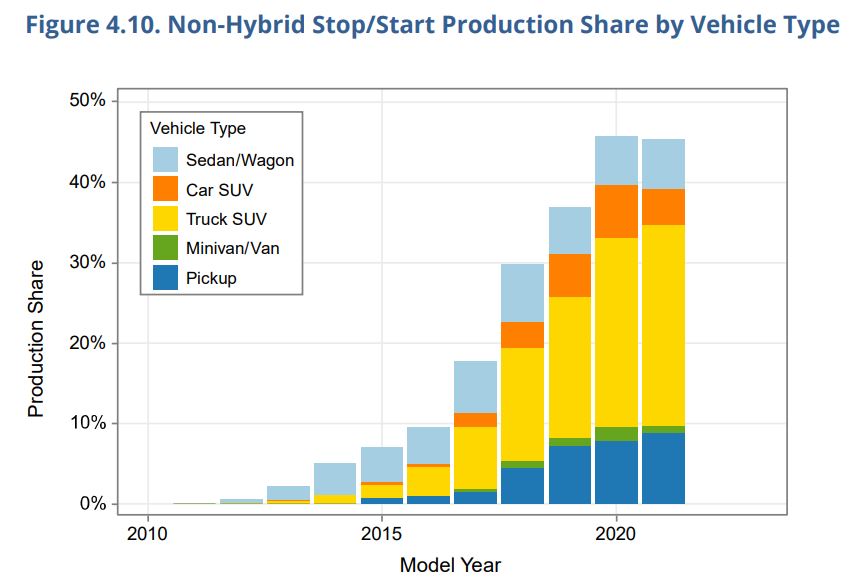
One oddity to me is that some gasoline engines now turn off at idle and quickly restart when you release the brake pedal. Less than 1% of cars did that in 2012, but in 2020 almost half of new vehicles, excluding hybrids, did this trick.
I’ve only experienced that behavior in a Ford Fusion Hybrid we rented for travels in Utah in 2018. I enjoyed driving it enough in electric-only mode to reconsider even having an engine in my next car.
Engines Versus Motors
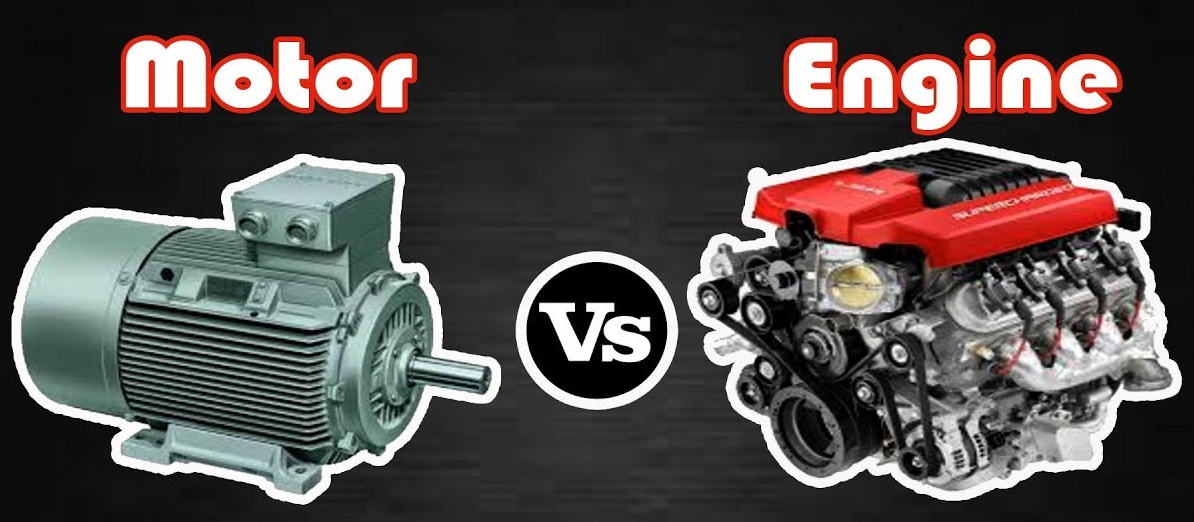
We often say cars have big motors, but technically we are often wrong. The vast majority have internal combustion engines, with various small electrical motors used for accessories like power windows and wipers but not for locomotion.
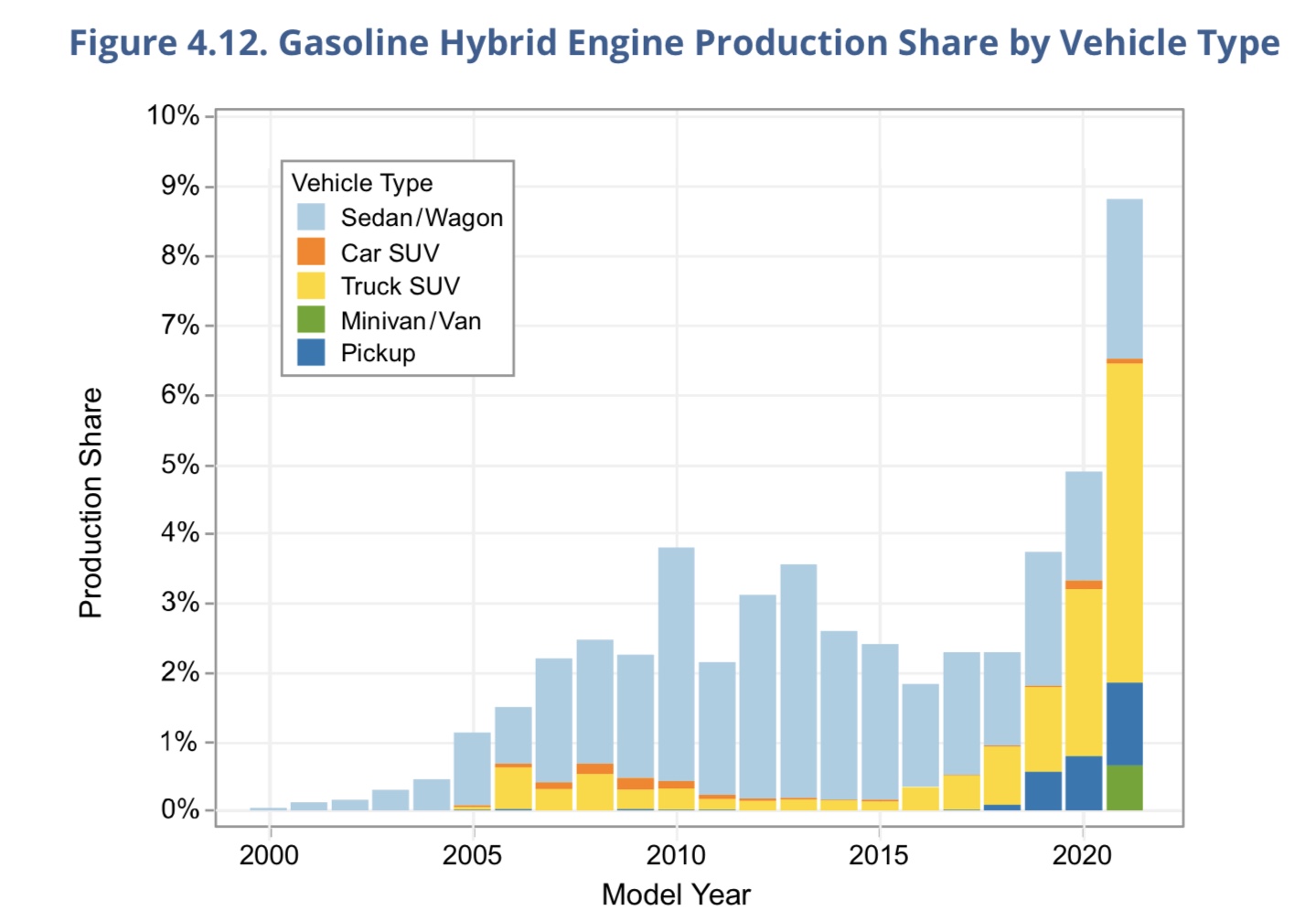
For two decades we’ve had a growing share of vehicles that are gasoline-electric hybrids, and they have recently exploded in popularity.
Hybrids come in a variety of forms. They all have battery packs (separate from the conventional 12-volt battery) that can be recharged by capturing energy from deceleration that otherwise would have been lost to heat. The Toyota Prius is a parallel hybrid which connects both an electric motor and gasoline engine to a continuously variable transmission. The Prius and the Ford Fusion Hybrid we drove in Utah don’t ever get plugged into an outlet, instead having their gasoline engines recharge their battery packs. There are also plug-in hybrids with larger battery packs that must be recharged with an external electricity source, allowing for extended all-electric driving before the gasoline engine has to kick in.
Back in 2014, my 13-year-old Camry had 236,000 miles on her and one month had repairs which exceeded her bluebook value. So it was time to move on. I debated getting a hybrid Camry, but given that I had driven my previous two cars for over a decade each, the limited lifespan of the battery packs of that era and greater complexity of a hybrid led me to opt for another completely gasoline-powered Camry.
But now that we have the minivan, I rarely take my car out on long trips. I drive the car less than 20 miles most work days, so even with its limited range, a fully electric car would be a practical option if I had a 240-volt charging station installed in our garage. I like the idea of dispensing with over two dozen mechanical components and saying goodbye to oil changes, cooling system flushes, transmission servicing, the engine air filter, spark plugs, drive belts, and tune-ups. Electric vehicle owners spend about 1/3 of what owners of conventionally powered autos do for regular service.
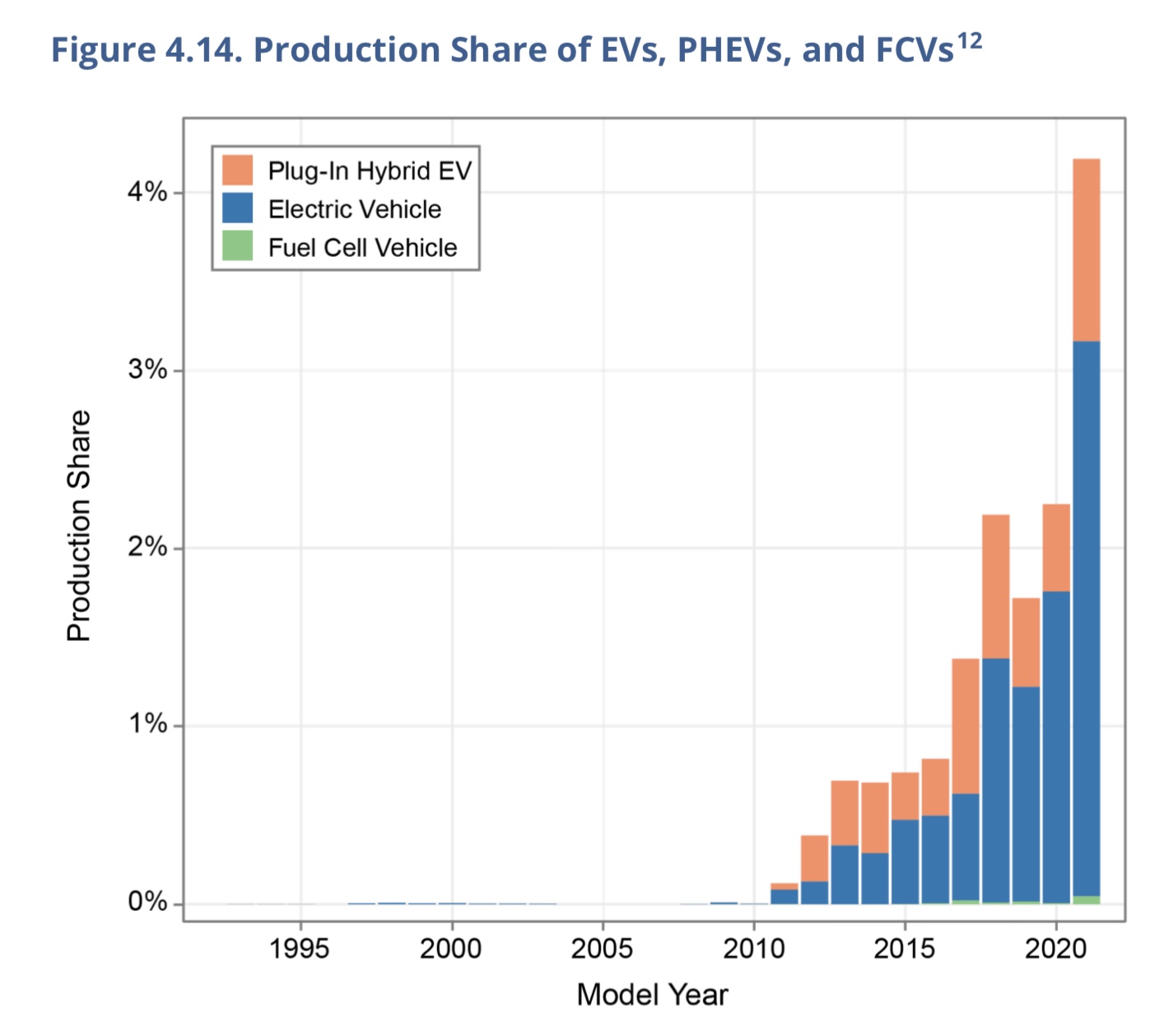
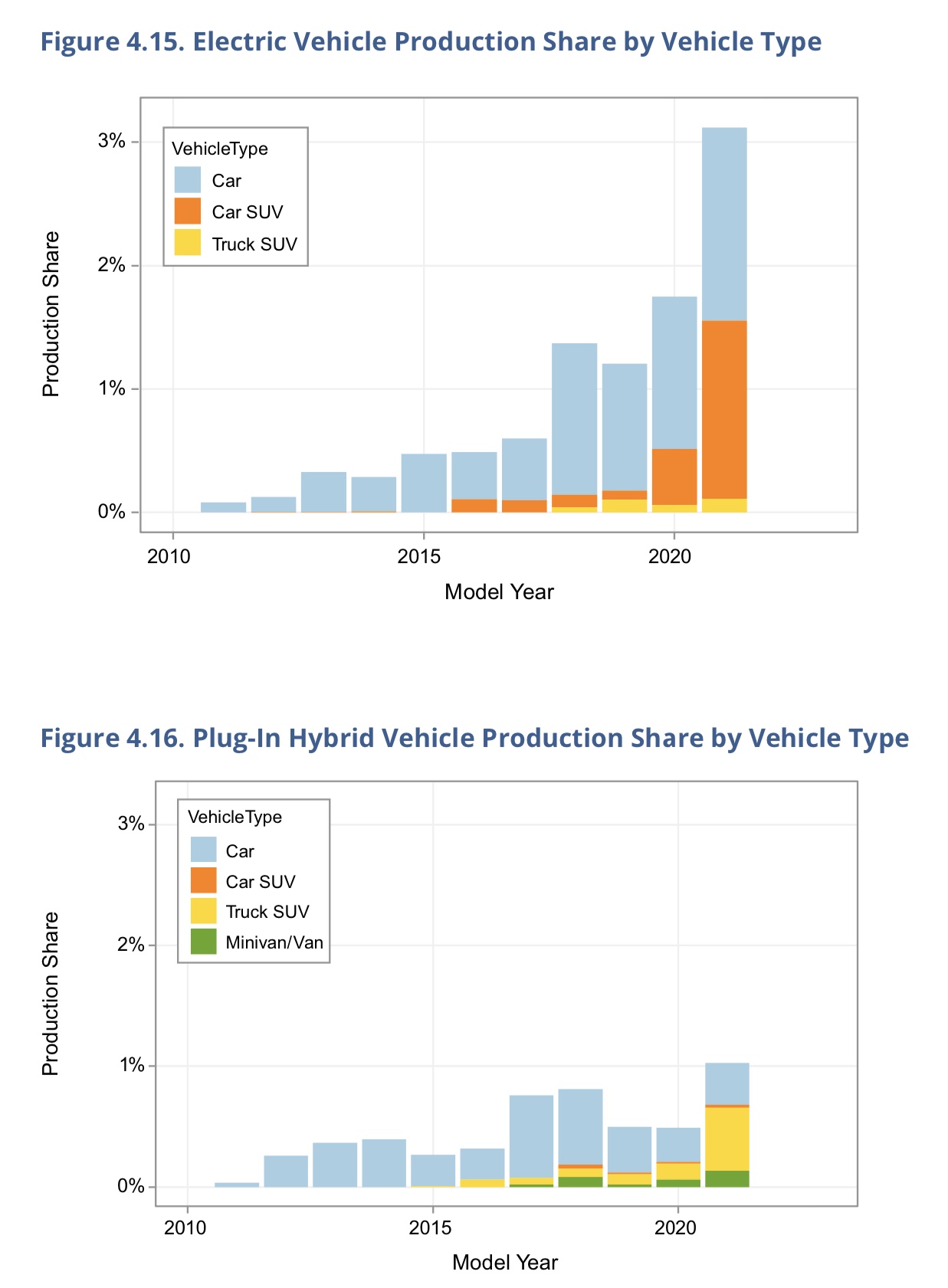
I’d still need tire rotations, wiper blades, washer fluid, and would have to replace the cabin air filter now and then. The battery pack might last ten years if I can avoid fast-charging stations which tend to overheat them and shorten their life. All-electric cars have become much more common this year, although they are still fairly rare.
I see smaller electric SUVs are becoming more common as well, while large SUVs are more likely to be plug-in hybrids than fully electric.
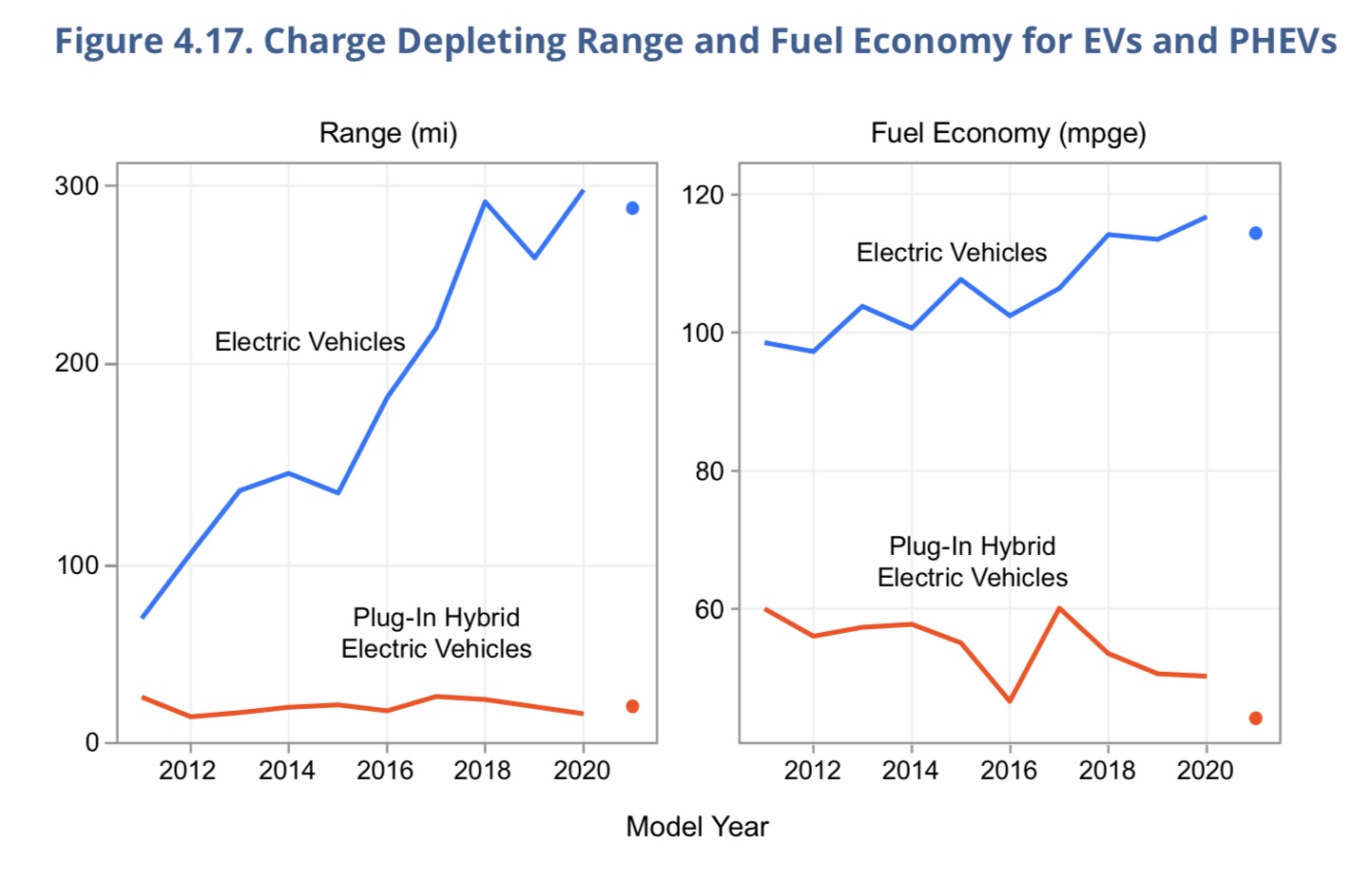
The range of fully electric vehicles has improved a lot in recent years, and of course their fuel economy is stunning (and measured in miles per gallon electric, which uses the amount of electric energy equal to the energy in one gallon of gasoline).
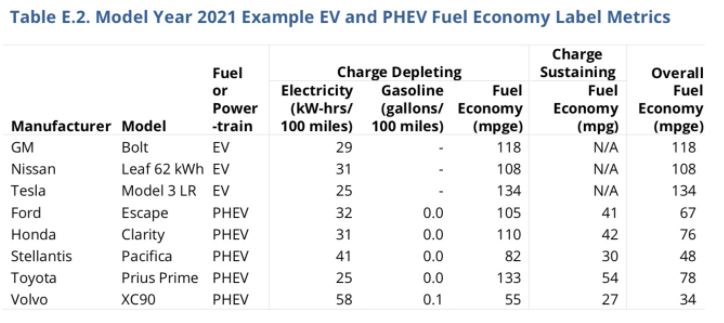
One can estimate the cost of driving an electric car with the vehicle’s kilowatt-hours-per-100-miles rating and then looking up the cost of electricity per kilowatt-hour overnight when you would set your home charger to operate. That’s the fourth column in the next table, while the rightmost column shows the overall energy efficiency of various vehicles for all of the fuels they can use.
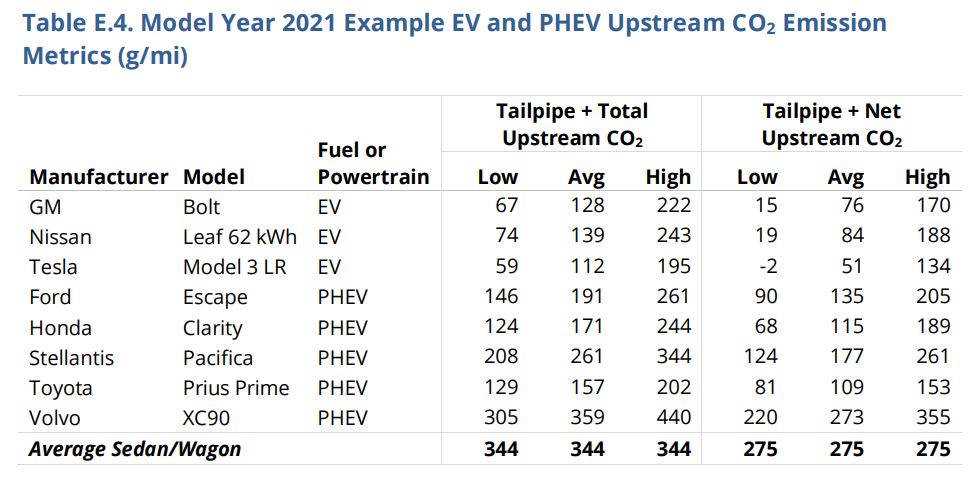
Some buy electric cars for their reduction in greenhouse gases, but one has to take into account the carbon dioxide emitted upstream by any fossil fuel power plants that generate the electricity you use to recharge the car’s battery pack. The next table illustrates how there is still a big reduction in overall carbon dioxide emissions for various electric and plug-in hybrids when compared to the average sedan.
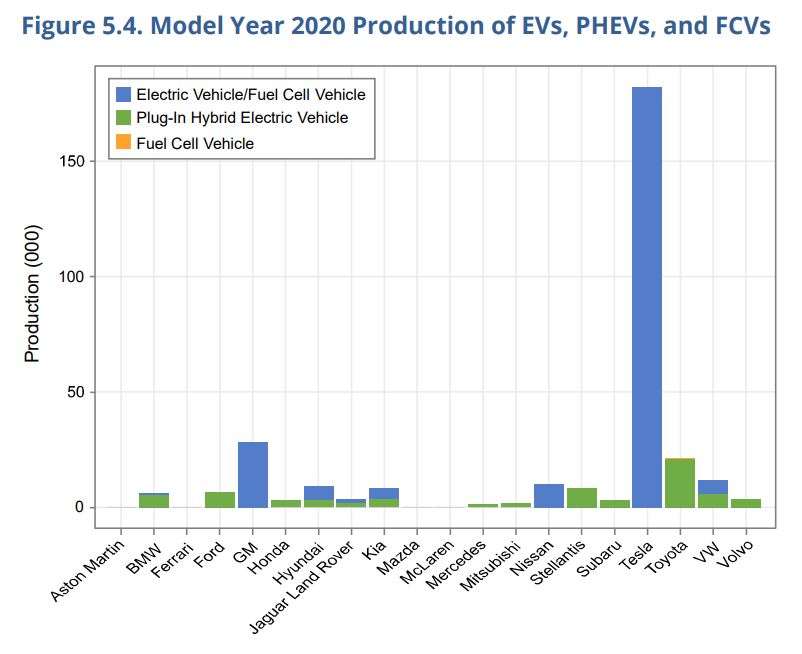
But it is a good thing I don’t plan on purchasing my next car until 2025 or so. The actual production of electric and plug-in hybrid vehicles is still low.
Tesla is currently the overwhelmingly dominant player in this space, but it was next to dead last in brand reliability in the latest Consumer Reports ranking. All-electric SUVs were the lowest-ranking category overall, while gas-electric hybrids were among the most reliable vehicles. Recommended models were the Kia Niro Electric, Toyota RAV4 Prime, Toyota Prius Prime, and Nissan Leaf.
I’m hopeful that Toyota will enter the all-electric vehicle market with something quite reliable, but we shall see. They only now have announced their first mass-produced electric vehicle, the weirdly named bZ4X SUV, but say they will have a line-up of 15 battery-powered electric vehicles by 2025.
Changes Will Keep Coming
Automobiles will keep changing, of course, and one hopes that will bring ever greater improvements in fuel economy, reductions in greenhouse gas emissions, and improved reliability. A bit of style and panache wouldn’t hurt, either.
I cannot say whether things will get better if we change; what I can say is they must change if they are to get better.



































 Meador Manor