Revisiting my ABCs in my middle age

2/24/2017

And mostly all I have to say about these songs is that I love them, and want to sing along to them, and force other people to listen to them, and get cross when these other people don’t like them as much as I do.

Nick Hornby

Most of these blog posts cover photographed travels and dayhikes to draw in a core group of armchair travellers. But there are also posts on technology, music, home repair, and various other interests. It is interesting to note that the relatively few home repair posts have the longest legs, reliably drawing in a trickle of daily readers searching for help with challenges such as a broken bathroom heater, a dishwasher installation, and upgrading an old car to connect to a modern device. The technology posts by their nature quickly become dated and have less broad appeal, but posts on music draw the least engagement. Yet here’s another one post on music, as it has always been an essential part of my life.

The relative lack of reader interest is understandable, as musical tastes vary so widely and musical styles fall out of fashion, often leaving their adherents stranded in nostalgia for the music of their youth. I enjoy a wide range of musical styles, only repelled by a few such as opera, rap/hip-hop, and metal. Yet I am certainly biased to prefer the pop music I enjoyed in my teenage and college years. My favorite album, by a long shot, arrived when I was 16 years old, primed to learn The Lexicon of Love.
abc lexicon of love

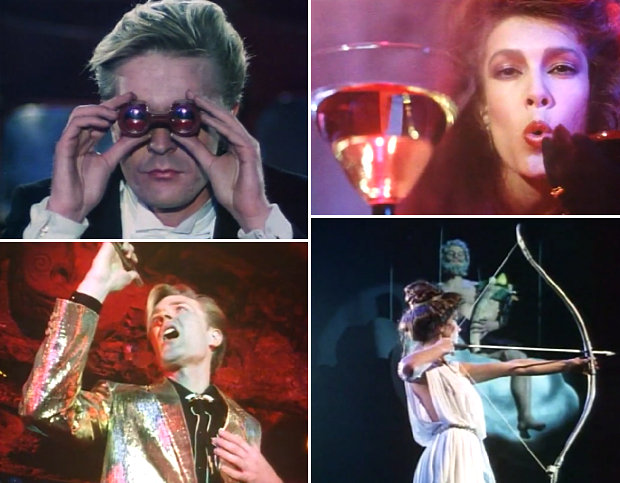
The theatrical video for Poison Arrow

I was in my first romantic relationship when ABC released The Lexicon of Love in 1982. Those who lived in the 1980s won’t be surprised that I was introduced to the album through videos on MTV. The three hits featured on that cable channel drew me in with the theatricality of both the visuals and the music. Their blend of orchestral strings and dance music was certainly not the usual fare, and I decided to buy the album. On vinyl…I did not have a CD player yet.

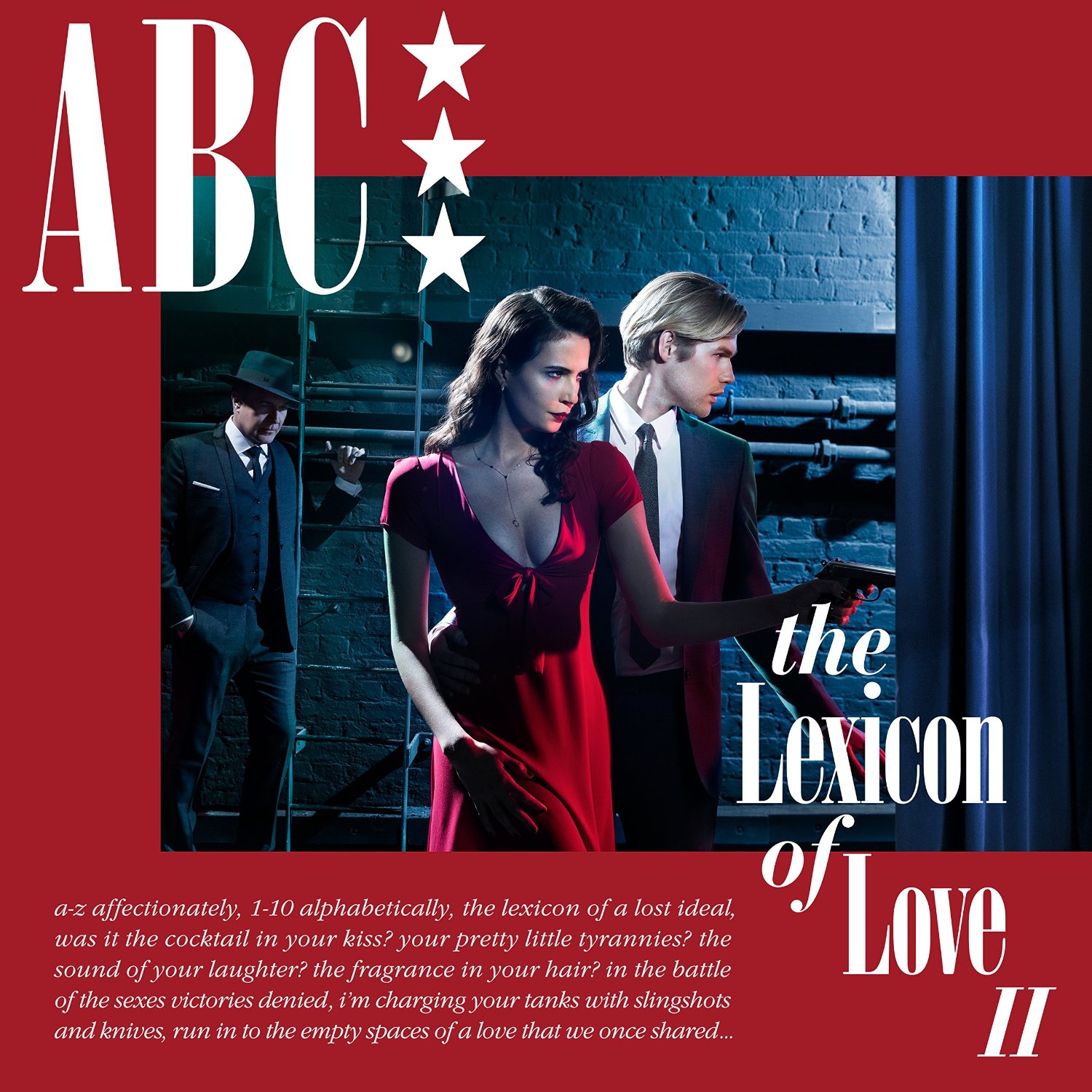
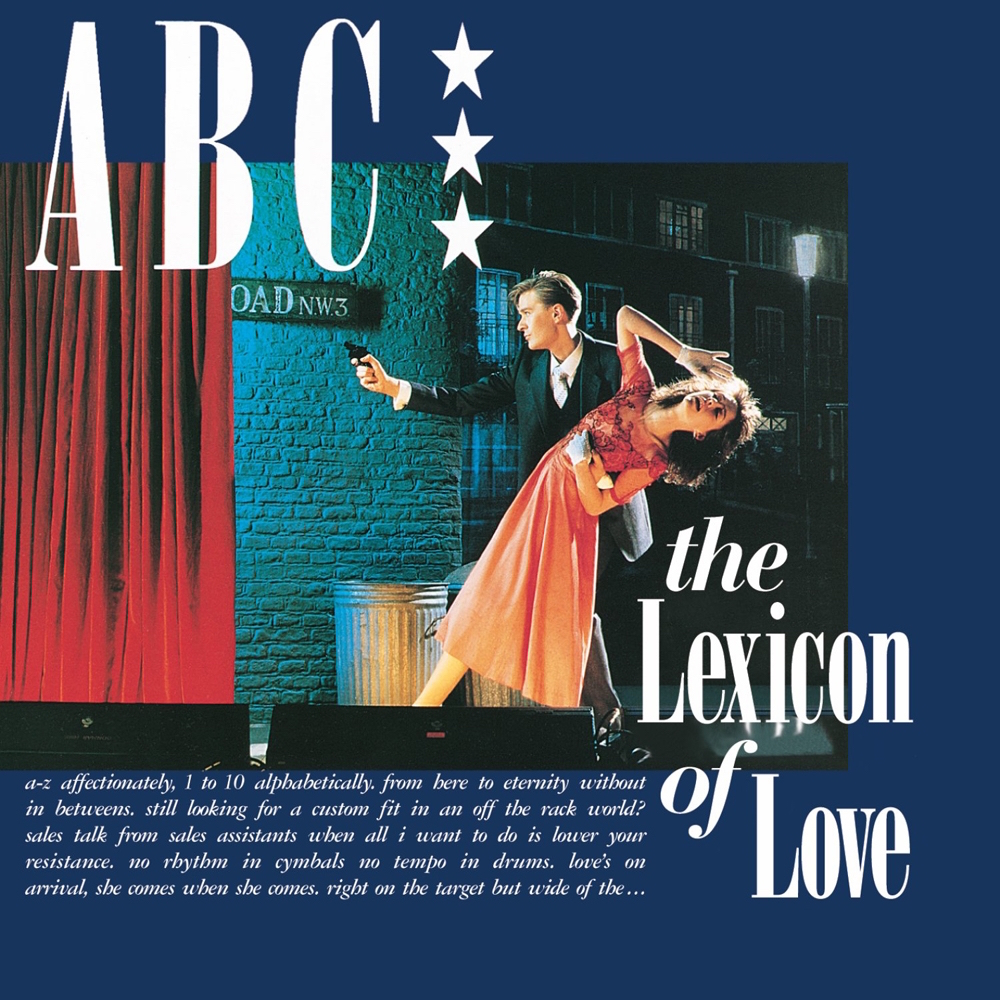
The Lexicon of Love was a New Wave album unlike anything else I had heard…or seen, for that matter. The album cover was literally theatrical, with its Technicolor red stage curtain and mood lighting as Martin Fry points a gun at something unseen and holds up a fainting woman. The front also made a point of printing lyrical excerpts:

a-z affectionately, 1 to 10 alphabetically, from here to eternity without in betweens. still asking for a custom fit in an off the rack world? sales talk from sales assistants when all i want to do is lower your resistance. no rhythm in cymbals no tempo in drums. love’s on arrival, she comes when she comes. right on the target but wide of the…

This proclaimed itself to be literate dance music. Sure enough, the vocals were not drowned out in the mix. I don’t often pay particular attention to verses in pop music, focusing more on the music, rhythm, and chorus. But clearly this album wanted me to pay attention. It asked to be in that select group for which I would play a record in a dimmed room with a lamp illuminating the album insert, intensely reading and meditating on the lyrics as I listened.

Background
Vice Versa: Martin Fry, Stephen Singleton, & Mark White
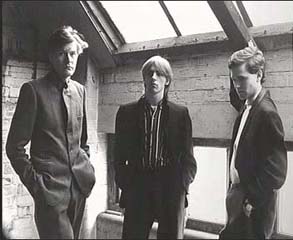
Vice Versa: Martin Fry, Stephen Singleton, and Mark White

A couple of years earlier, in the struggling industrial city of Sheffield, England, young music writer Martin Fry had been recruited by guitarist and keyboardist Mark White and saxophonist Stephen Singleton to join their little band Vice Versa, first as a keyboardist and then as a vocalist.

Their group evolved into ABC, and they recruited Trevor Horn of The Buggles to produce their debut album. Horn described ABC’s songs as, “like disco, but in a Bob Dylan way.”
Trevor Horn, Anne Dudley, J.J. Jeczalik, and Gary Langan
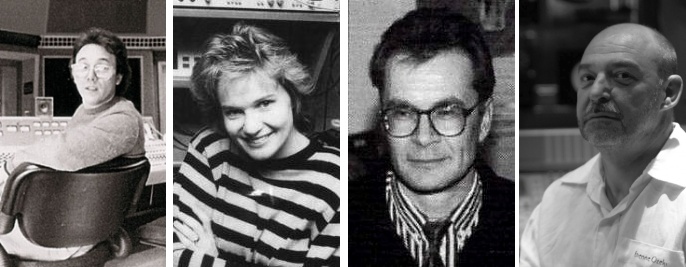
Trevor Horn, Anne Dudley, J.J. Jeczalik, and Gary Langan would go on to found The Art of Noise

Thankfully, for this literate dance music, Horn brought in Anne Dudley to play keyboards, and she would go on to provide lush string arrangements to envelop several of their songs of failed romance, which pulsed with elements of funk, punk, and disco. Gary Langan engineered the album, and J. J. Jeczalik programmed a Fairlight CMI synthesizer for it. A year later, Horn, Dudley, Jeczalik, and Langan would form the group The Art of Noise.

Throughout the album, singer Martin Fry wasn’t afraid to use falsetto to evoke the elation and despair of a man’s heartaches as he tried and failed to establish a meaningful relationship. This is a mighty album about love, but it is failed, rejected, and lost love.

Marcello Carlin has structured his blog Then Play Long, about every number one album in the United Kingdom, around this album. He remarks about Fry’s achievement:

He made a pop record which continues to tower over all other ones, and not just number one albums either, in terms of ambition, cheek, purpose (not the same thing as ambition) and adventure. It is as if the rest of this tale has been leading up to Lexicon; then again, that is how I structured it. The album seems so much more complete than other ones. The point of it all – in terms of the high point, the apex.

Listening to The Lexicon of Love

The album was released in an era when two-sided vinyl still held sway. The five songs on the first side build on each other, with superb transitions. Show Me starts things off with somber low-volume strings and brass, which slowly build until the band suddenly blasts in with a thudding bass line and piano chords. The first lines?

Once I needed your love
But that was just one thing left on my mind
Then I needed to feel you near me
You said, “Don’t have the time.”

This is not going to be a happy-go-lucky record. The next song was a hit. Poison Arrow portrayed Fry’s anger and despair:
poison-arrow

Who broke my heart?
You did you did
Bow to the target
Blame cupid, cupid
You think you’re smart
Stupid, stupid
Right from the start
When you knew we would part
Shoot that poison arrow to my heart

In the song, “the music resonates and rages all around him like an irate cathedral” according to Marcello Carlin in an epic blog post. He points out the way Fry stops singing to say, “I thought you loved me, but it seems you don’t care” only to have the woman reply, “I care enough to know, I can never love you.” And then “drums explode downwards like Zeus kicking a fridge down the side of Mount Olympus.” Power pop, indeed.

Many Happy Returns starts out calm, but then revs things back up. Fry lets loose toward the end, his emotions veering him into punk, only to be followed by Dudley’s meandering electric piano to remind us that there are real musicians at work here.

Many Happy Returns ends on a sustained note and then jump cuts into the frenetic dance number Tears Are Not Enough. This was the group’s first single and is forceful and angry in a dance music way. The album version has a harpischord section courtesy of Trevor Horn.

The first side concludes with Valentine’s Day. Its initial lyrics are more interlude than lead, but it then builds up toward the end, concluding with a fun tirade:

When I’m shaking a hand, I’m clenching a fist
If you gave me a pound for the moments I missed
And I got dancing lessons for all the lips I shoulda kissed
I’d be a millionaire, I’d be a Fred Astaire

Side Two launches with another hit, The Look of Love, which is an extended wry admission of failure and want:
look-of-love

When your girl has left you out on the pavement (Goodbye)
Then your dreams fall apart at the seams
Your reason for living’s your reason for leaving
Don’t ask me what it means.
Who got the look? I don’t know the answer to that question
Where’s the look? If I knew I would tell you
What’s the look? Look for your information
Yes there’s one thing, the one thing, that still holds true
What’s that?
That’s the look, that’s the look, the look of love

That song features string arrangements over a heavy moog basslineAnne Dudley recalled, “I remember hearing the mix of The Look of Love and being amazed at how loud Trevor had made the strings. It was really nailing the ABC colours to the mast: this was to be an unapologetically lush and epic album.”

There are at least four variations on The Look of Love, which the group called “Parts”. Only Parts One and Four were on the initial album:

Plus, since this is dance music, there was a wonderfully weird 12″ single version. I am always amused by the part where the bassline from the moog synthesizer takes over completely. Disco made 12″ singles popular as they allowed more dynamic range than the typical 7″ vinyl singles with their wider groove spacing, while preserving the better sound quality 45 rpm provided over long-playing albums played at 33 1/3.

Date Stamp brings us love as commerce, with its jangling cash registers and lyrics like:

So redevelop product, redesign this package
Still refuse to reach in your pocket
Everything is temporary written on that sand
Looking for the girl that meets supply with demand

Love has no guarantee (Yes, I’m date stamped)
Promise me eternity (Guess I’ll fade away)
Even with a pedigree (Yes, I’m date stamped)
Love has no guarantee

I get sales talk from sales assistants
When all I want to do girl is lower your resistance
Everything is temporary, written on that sand
Looking for the girl that meets supply with demand

We need an antidote to that cynicism. And we get it in spades, with the heartbreaking ballad All of My Heart.
allofmyheart

What’s it like to have loved and to lose her touch?
What’s it like to have loved and to lose that much?
Well, I hope and I pray that maybe someday
You’ll walk in the room with my heart.
Add and subtract but as a matter of fact
Now that you’re gone I still want you back.
Remembering, surrendering,
Remembering that part – all of my heart.

It is an orchestral pop masterpiece. The last two lines of the chorus change each time, but always have that dash, that pause when all of the music stops, and Fry sings all of my heart a cappella, followed first by a tympanic crash, later by a string and rhythm section, and finally by a tickling of an electric piano.

But that’s not all, far from it, although the idiotic Vevo video shown above cuts it off at that point. There’s a wonderful denouement.

As Marcello Carlin describes it, after Fry sobs that final all of my heart, “in the most sublime passage in all of British pop music, Dudley’s string orchestra rises to embrace him, to accommodate the sobbing singer in its bosom.” Another writer commented, “As he turns to weep, to sob, to mourn for a lost reality, the orchestra cushions him, cradles him in its bosom in what is one of the most compassionate and breathtaking moments in all of pop.” (Who doesn’t like an orchestral bosom? Or bosoms in general, for that matter.)

And then the orchestra very slowly dies away, leaving only Stephen Singleton’s lonely saxophone to conclude one of the longest fade-outs in pop music.

The album could end there, but it has more to say with 4 ever 2 gether, a dark and brooding track. Horn often distorts evil in the “Speak…no…evil” vocals so much you can’t really make it out. And the lyrics can be just as turgid:

I stuck a marriage proposal
In the waste disposal
If that’s the trash aesthetic,
I`d suggest that we forget it
Your 12 disciples might kiss and tell, but
You can tell me much more than they can,
Right now

A mathematical equation
Won`t describe my liaison
The stars in the sky might try persuading
But you can tell me, I won`t hear you
You can`t tell me, I gave up the listening
Years ago

4 ever together, 4 years 2 come
4 love 2 strong, 4 us 2 part

Wisely they choose to close out the album with the orchestral reprise of The Look of Love, Part Four, with strings, brass, xylophones, and harp.

Back in the early 1980s it was the greatest album I’d ever heard…not a clinker in the bunch. In the years to come I’d eagerly await the next ABC album, hoping for more.

More to come?
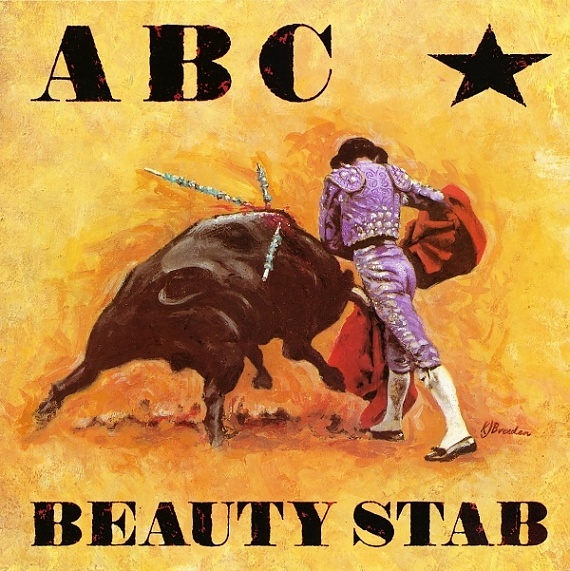
The second album lived up to its name - they stabbed beauty to death
The second album lived up to its name – they stabbed beauty to death

The sophomore slump hit ABC particularly hard. They followed up the lush Lexicon with the aptly named Beauty Stab, in which the only strings were on the guitars. It was harsh and thin, with them clearly trying to avoid a repeat of Lexicon, which makes it a loss all around. Their third album, How to be a Zillionaire!, was a hard turn back to dance, but of a cartoonishly bizarre bubble gum kind, with a flavor that quickly faded. And they added two non-performing band members. Uh, what?

Thankfully the later albums were more even-keeled, with 1997’s Skyscraping and 2008’s Traffic my favorite of their post-Lexicon releases. Here is Martin Fry’s own synopsis of each album:

Lexicon of Love (1982, Mercury): An orchestrated, polished neurotic affair of hysteria behind a red curtain. It’s the Yin & Yang of ABC.

Beauty Stab (1983, Mercury): An abrasive protest wrapped in anger and shrilled emotions.

How to be a Zillionaire! (1985, Mercury): A highly entertaining, irreverent coaster ride into outer space controlled by surreal cartoon characters on a quest to make guerilla pop. We built a machine!

Alphabet City (1987, Mercury): It wears the cuff-lengths of our career. It’s quite suave, like a midnight, seductive beam of moonlight.

Up (1989, Mercury): A weekend party rave to close the ‘80s. This was our swan dance to end the great decade.

Abracadabra (1991, MCA): A hybrid of different genres, it’s idealistic really. You can hear the civil war internally as our lucrative opportunity to make the album of our career slithered through our hands. We perfected the music and atmosphere that became the record, yet the process was indirectly intense.

Skyscraping (1997, Blatant, import-only): The jigsaw puzzle that challenged me to re-enter the ring after a long period of absence.

Traffic (2008, Borough Music): The joints are lubed and the muscles are flexed. There are nostalgic elements of déjà vu all over it, similar to Forrest Gump’s stories from the park bench. It stands firm and proud, despite the odds.

Lexicon lives on
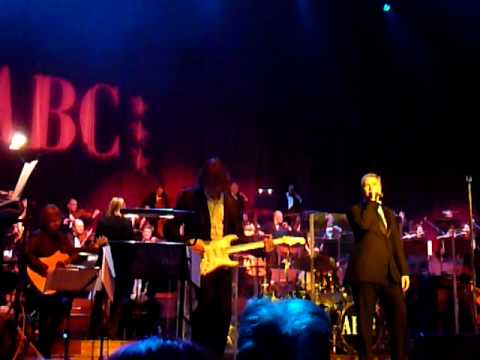
The Lexicon of Love was performed live at the Royal Albert Hall in 2009

I was thrilled in 2009 when Martin Fry, drummer David Palmer, and Anne Dudley reunited to perform the entire The Lexicon of Love album live at the Royal Albert Hall with the BBC Concert Orchestra. I managed to capture the audio from the online show, and it was such a treat! But then I heard nothing more for years.

Until this month, when I happened across a mention of the album The Lexicon of Love II. What?!? How could I have missed that? But a search in my Amazon Music Unlimited service yielded nothing. Nothing for sale in the iTunes store. Time to go to the source: abcmartinfry.com showed that yes, lo and behold, there was such an album. Martin Fry was inspired by the 2009 concert to create a sequel album, but it was only released in Britain in May 2016, followed by a British tour. No U.S. release.

Well, that just would NOT do. So I went to smile.amazon.com (which contributes a small fraction of my purchase cost to a charity of my choice; in my case, the high school’s parent support group) and ordered an imported CDYes, a CD! First one in a long time…after all, I sold off my collection of over 360 compact discs back in 2010.

abc-lexiconoflove2ukcda

The CD arrived in the mail a couple of days later (thank you, Amazon Prime). I popped it into my system’s optical drive (yes, my heavily upgraded 2009-vintage desktop still has one) and iTunes took forever to slowly convert it into 256 kbps MP3s and upload them into iCloud. That would let me play it on my desktop computer, Apple TV, iPhone, and iPad. But I want my music available everywhere, so I then uploaded the files to my online Amazon music collection. That would let me play them on the Amazon Echos in the bedroom and the kitchen, on the television via its Amazon Fire Stick, as well on on my Chromebook. Plus I could then also play it on my desktop computer, iPhone, and iPad with Amazon Music apps.

Musical sequels

So…was the new album a worthy sequel to The Lexicon of Love? While successful musicians release multiple albums, few market later albums as full-fledged sequels. I do own a couple of album trilogies, with their entries spread out over decades. Meat Loaf released Bat Out Of HellBat Out of Hell in 1977, the superb Bat out of Hell II: Back into HellBat Out of Hell II: Back Into Hell in 1993, and the far lesser Bat Out Of Hell IIIBat Out of Hell III: The Monster Is Loose in 2006. The Nitty Gritty Dirt Band, joined by various country and bluegrass superstars, released Will The Circle Be UnbrokenWill the Circle Be Unbroken in 1972. Mother Maybelle Carter, a key part of making the original album work, had passed before they released Will The Circle Be Unbroken Volume TwoWill the Circle Be Unbroken Volume Two in 1989, and Will The Circle Be Unbroken, Volume IIIWill the Circle Be Unbroken, Volume III in 2002 was a further diminishment.

The Lexicon of Love II is a fine album. But this sequel lacks the sweep and undiminished appeal, song after song, of the original. It also lacks a standout like All of My Heart. But, as Tim Sendra points out, it has “Dudley’s epic string arrangements embellished with grand pianos, some fluid fretless bass playing, impassioned backing vocals, and the occasional moment that, if you close your eyes, almost sounds like 1982 – not only because of the musical backing, but also because Fry’s voice is relatively untouched by age.”

The Flames of Desire is the closest to the spirit of the original album in its music and lyrics.

My favorite track musically is Kiss Me Goodbye, although it reminds me more of something from a later album than the group’s debut.

But my favorite lyrics are from the last vocal track, Brighter Than the Sun, which has a nice sentiment from a man who was looking in vain for love so long ago:

I am amazed and a little fazed
By what passes for wit these days
I’m not crazy about the trash they praise
Or the flags they wave these days

I’m amazed and a little fazed
By the drugs they crave these days
That’s just the way it plays
It’s a masquerade these days

I’m a man out of time
Until the stars realign
With taste so refined
I don’t know which way we’re heading

I’m a man out of time
With a mountain to climb
Just looking for a sign
Do you know which way we go?

I’ll ask the boy that I once was
About the man that I’ve become
About the days and days and days gone by
And the night still yet to come

That boy would turn to me and say
You’re not the only one
When all’s said and done
Our future’s looking brighter than the sun

I’m amazed and little fazed
By the way love stays today
By the facts that they portray
In a lover’s gaze today

I’m amazed and a little fazed
By the things you say to me
By the faith you place in me
And all that we can truly be

I’m a man out of time
Until the stars realign
With taste so refined
I don’t know which way we’re heading

I’m a man out of time
Trapped in rewind
Just looking for a sign
Do you know which way we go?

I’ll ask the boy that I once was
About the man that I’ve become
About the days and days and days gone by
And the night still yet to come

That boy would turn to me and say
You’re not the only one
When all’s said and done
Our future’s looking brighter than the sun

Martin Fry has been married for 30 years, survived Hodgkin’s Disease, and he and his wife have two grown children. He said, “When you’re with someone that length of time, they see the good, the bad and the ugly. Despite all the twists and turns and trials and tribulations, love can survive. That’s the most magical thing of all.”

I’m glad he found his love long ago. That’s the true sequel to his story. And like any good fairy tale, it has a happy ending.
Posted in music, nostalgia, video | Leave a comment

Love trumps hate amidst many losses

2/19/2017

In too many ways 2016 was a year of loss. I was surprised but not shocked at losing David BowieGlenn Frey, and Alan Rickman, who were all in their late 60s. Years of substance abuse claimed Carrie Fisher at 60, Prince at 57, and George Michael at 53.

But what truly hurt me, to my surprise, was the loss of artists who were in their 80s. On the acting front, I mourned Gene Wilder, who was so wonderful in Mel Brooks’ The Producers, Blazing Saddles, and Young FrankensteinWendy and I celebrated his legacy by attending a Labor Day weekend revival of Blazing Saddles on the big screen in Oklahoma City.

My favorite Gene Wilder role was his spot-on portrayal of Willy Wonka. Johnny Depp’s Wonka was sick and creepy in comparison. I love the office scene at the end of Willy Wonka & the Chocolate Factory:

So shines a good deed in a weary world.

On the political front, the ascendance of Donald Trump was the product of the woes of a weary world, with his own victory sorely lacking in good deeds. I mourn the lack of civility, truth, and morality in presidential politics.

And then we come to poet and songwriter Leonard Cohen. A couple of years ago I read a great biography about him. In October 2016, at age 82, he released You Want It Darkerhis fourteenth studio album. He knew it would be his last.

Betty Henderson, my long-time friend and fellow science teacher, and I were introduced to the Canadian singer/songwriter’s works by Professor Bill Reynolds when we took a couple of graduate curriculum courses via compressed video from OSU in the 1990s. Prof. Reynolds had assigned us to watch the movie Pump Up the Volume, which featured Cohen’s hauntingly cynical Everybody Knows. We were both fascinated by the shattering bass voice linked to such powerful lyrics. That led us to the I’m Your Man album and beyond. I realize many folks might only know him as the guy who wrote Hallelujah.

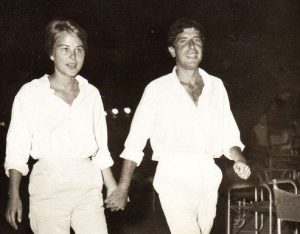
Marianne Ihlen and Leonard Cohen

Marianne Ihlen and Leonard Cohen

I was grateful when the New Yorker offered a wonderful long last look at Leonard. But that article shook me to the core when I read in it the last note he wrote to his long lost muse, Marianne Ihlen, having learned she was dying of cancer:

Well Marianne, it’s come to this time when we are really so old and our bodies are falling apart and I think I will follow you very soon. Know that I am so close behind you that if you stretch out your hand, I think you can reach mine. And you know that I’ve always loved you for your beauty and your wisdom, but I don’t need to say anything more about that because you know all about that. But now, I just want to wish you a very good journey. Goodbye old friend. Endless love, see you down the road.

When her family read that aloud to her, Marianne smiled. When she heard Leonard saying he was right behind, close enough to reach her, she lifted her hand. And two days later, Marianne slipped away. Leonard, true to his word, followed her four months later. Know that I am so close behind you that if you stretch out your hand, I think you can reach mine.

So 2016 was a year of love and loss. I will always delight in it as the year in which Wendy and I were married. But my emotions are quickly shredded if I listen to the reprises of Leonard Cohen’s Treaty or George Michael’s WaitingToo much loss. Too much pain.

Will 2017 be better? It hasn’t been much fun thus far. Our country is ripped apart by politics and partisanship. Anger, conflict, fear, and hatred pour out of Facebook every time I scan the newsfeed.

But love trumps hate. A few weeks ago I was tipped off by NPR Listeners’ Favorite 100 Albums of 2016 podcast to Sturgill Simpson’s album A Sailor’s Guide to EarthTaking his life as an object lesson, Simpson shares hard-won wisdom with his young son. I enjoy the boisterous Keep It Between The Lines, which has advice too many teenagers will ignore:

Keep your eyes on the prize
Everything will be fine
Long as you stay in school
Stay off the hard stuff
And keep between the lines

And I like how love “trumps” hate in his video for All Around You:

If you can’t make out the lyrics (Wendy says he sounds like a mush-mouthed Garth Brooks), here ya go:

There will be days
When the sun won’t shine
When it seems like the whole world is against you
Don’t be afraid
Life is unkind
You can let go of the pain if you choose to

‘Cause time slips away
Skies fall apart
It ain’t too hard
A universal heart
Glowing, flowing, all around you

There will be nights that go on forever
Like you’re long-lost at sea
Never to be found
Just know in your heart
That we’re always together
And long after I’m gone
I’ll still be around

‘Cause our bond is eternal
And so is love
God is inside you
All around you
And up above

Love me, show me you’re the way

‘Cause time slips away
Skies fall apart
It ain’t too hard
A universal heart
Glowing, flowing, all around you 

Now that’s more like it.

Posted in music, random, video | Leave a comment

Honeymoon, Days 14-16: Back to U.S.

TRIP DATE: July 15-17, 2016 | SLIDESHOW | PHOTO ALBUM | Other Honeymoon Posts

We spent part of our last day in Victoria at the Laundrolounge a few blocks from hotel. Perhaps we were preparing for our return home to domesticity after our long adventure in the Pacific Northwest.

Mammoth

I wanted Wendy to see the fun natural history dioramas and spooky First Peoples Galleries at the Royal British Columbia Museum. The big mammoth I remembered was there, along with a huge model of the dreaded Pine Beetle that has devastated forests in Colorado and elsewhere. A special exhibit was Lyuba, a 40,000-year-old baby woolly mammoth, the best-preserved specimen in existence. Found by a reindeer herder in frozen Siberia in 2007, the animal was about 30 days old when she suffocated after being trapped in mud along a riverbank. It was amazing to gaze upon her flesh 40,000 years later, over seven times longer than written human history.

Baby Mammoth
Intimidating

I posed by a very intimidating bear, while Wendy braved the silent roar of a sabre tooth tiger. I especially enjoyed revisiting the Old Town exhibit, which is much like Prosperity Junction in the old Cowboy Hall of Fame in Oklahoma City.

We walked back to our lovely room at the Magnolia for our final night in Canada, knowing we would have to catch the ferry back to Washington state the next morning.

Wendy had done her research for this second crossing, doubling up on the Dramamine and staying up top where she could watch the passing scenery. The water was calm as we thrummed away from Victoria. The stark view of the strait through the windscreen on the sparsely populated top deck after we lost sight of land reminded me of an Edward Hopper painting. I deliberately framed it with part of a fellow traveler’s arm in the shot to give a touch of humanity to the scene.

Edward Hopper Ferry

The calm gave way to choppy swells. The ferry heaved and rolled, turning westward to dodge the worst of the waves. The detour lengthened our journey back to Port Angeles, making for a long and sometimes violent ride across the rough sea. I worried that the rollicking boat ride would make Wendy miserable, but her strategies paid off and she did swell despite the swells. That reassured us that she need not dread ferry rides in the Pacific Northwest in future years.

We were both thankful and hungry when we reached Port Angeles. I drove to the nearby Chestnut Cottage Restaurant for a late lunch. My Goldminer roast beef sandwich was quite good, and Wendy enjoyed her ciabatta club sandwich with turkey, bacon, tomato, Swiss cheese, and delicious Italian dressing. We waited awhile for our food, so I mapped our car journey to reach the Seattle-Tacoma airport for our flight home on the following day.

I did not want to make the loop around the Hood Canal (which is actually a natural fjord created by the Vashon Glacier 10,000 years ago). Neither of us wanted to ride another ferry at Bainbridge Island, so I decided we’d take the long bridge on highway 104 across the Hood Canal to Port Gamble and gambol our way south through Tacoma and back up to SeaTac.

But while devising our route, I noticed a topographic pimple about 20 miles south of the highway 104 fork, with a road winding its way to the top. A web search told me there were north and south viewpoints there from atop Mount Walker, about 2600 feet above the surrounding countryside and 2800 feet above the Canal. Mister Panorama could not resist that!

So we drove around the northeast corner of the Olympic Peninsula, did NOT take the fork in the road, and headed up Mount Walker. We passed a rockfall before the road turned to miles of gravel as we ground our way to the summit. There were fellow tourists at each viewpoint, with the one to the south affording a nice view of the Hood Canal. Through the haze we could barely see the skyscrapers of Seattle, one of the places I’ll share with Wendy on a future visit.

Mount Walker south viewpoint

We passed under enormous trees on our way to the north end, where we could see Quilcene Bay, separated from Dabob Bay by the Bolton Peninsula.

The rest of our trip to SeaTac was uneventful, and we were tired and worn out as we pulled into the Coast Gateway Hotel for the night. I was too pooped to drive any more, so we were glad to find Sharps RoastHouse conveniently parked in the hotel lot. It wasn’t fast, and the meat was a bit dry, but we wolfed down our food and collapsed back at the hotel to rest before our late morning flight back to Oklahoma City.

The car rental return was as confusing and frustrating as ever at SeaTac, and I was quite annoyed by how the shysters at Hertz failed to honor some of the discounts I had arranged. I will look elsewhere for future rentals.

The flight home was a direct one back to Oklahoma City. We again flew first class, in larger and more comfortable seats but in a smaller plane than what I grew used to in the 1990s and 2000s. My folks picked us up at Will Rogers World Airport and by Monday, July 18 we were back in Bartlesville for the first time in 18 days.

Before we had left, Betty Henderson had arranged for the purchase of a new portable building, funded by her and other friends. Betty and I had picked it up from Costco in Tulsa back in June, leaving the huge boxes in the garage at Meador Manor. Wendy and I returned home to find the portable building assembled on a new platform in the yard, thanks to the skilled efforts of John, Betty’s husband, who has graciously helped us with several home improvement projects. After we got our bearings, Wendy and I would host an informal cookout at a shelter at Lake Copan for them and other dear friends. That’s as close to a wedding reception as we wanted to get.

Portable Building

Non-stop school work resumed as soon as we arrived home and continued on into 2017. But when we paused and reflected on our favorite experiences from the trip, Wendy recalled seeing all of the roses, collecting rocks, the Magnolia Hotel and spa, and the excellent salmon at several restaurants plus some great blueberry pie in Portland. She noted how the alcohol inks she picked up in Astoria, after seeing a Facebook video on making decorative tiles, started a long exploration of the craft.

Varied transportation was another highlight for Wendy. Even though the first ferry ride was miserable for her and the second one was violent, she found it a new and exciting experience. The plane rides were fun too; she said sleeping on the planes gave her some of the best sleep she ever got, and she marveled at seeing Mount Hood from the air during the golden hour as we landed in Portland. And she loved tracking the huge cargo vessels on her iPad and iPhone during our stay in Astoria.

Highlights for me included the windy but beautiful Loowit Viewpoint at Mt. St. Helens, Wendy giggling as she crafted a photo of me as Carmen Miranda, the forest pullout at La Poel, the orchards arranged before Mount Hood at Panorama Point, and Wendy joyfully scouring Ruby Beach for rocks.

We have many more shared adventures ahead of us, and look forward to sharing them with our gentle readers as well.

SLIDESHOW | PHOTO ALBUM | Other Honeymoon Posts

Honeymoon Day 13: Art & Butchart

Posted in photos, travel, video | Leave a comment

Honeymoon, Day 13: Art & Butchart

TRIP DATE: July 14, 2016 | SLIDESHOW | PHOTO ALBUM | Other Honeymoon Posts

Our second full day in Victoria was devoted to visual and botanical art. We headed out in the afternoon to the Art Gallery of Greater Victoria. It occupies and extends the 1889 Spencer Mansion, which was designed by William Ridgeway Wilson and built by George Mesher as Gyppeswyk, the Old-English name for the Suffolk town of Ipswich, for original owner Alexander Green, a banker who made his fortune in the Australian and American gold rushes. David Spencer was the last owner, having made his money in dry goods, and his family occupied the mansion from 1903 to 1951. His daughter Sara gave it to the city as an art gallery. The only intact feature of the mansion is the beautiful foyer, featuring gorgeous paneling.

A room with art for sale caught much of our attention, as I did not care for the exhibit on Emily Carr. Wendy snapped Michael Munday’s Abstract #1 and giggled at Cheryl Martin Bakke’s It’s A Good Day to Dance and I See You as well as Hare Boy by Karina Kalvaitis. We both liked the colors of Sunset by Stephanie, but not enough to pay $340 Canadian for it. Wendy liked Leah Patterson’s  A Long Walk on the Beach and TofinoI was very impressed by Elspeth McLean‘s Orca’s Kiss, Solstice Sunsetand Over the Hills.

Orca's Kiss by Elspeth McLean

We ate at John’s Place before driving half an hour north to Butchart Gardens at Brentwood Bay. The huge collection of roses was the primary focus, and Wendy has posted about those previously. She delightedly made the rounds, admiring and photographing different blooms.

Rose Arch
Huge Hosta

The garden brims with beautiful beds with specimens of various sorts in a variety of colors. Most have big blooms, some of which are quite stunning. Wendy posed beside a huge hosta to give it scale. Creative topiary and a barrage of plantings adorn the sunken garden, which we could admire from above and closer in. From most vantage points you see layers of color.

Stunner

We saw specimens with black petals, a profusion of petals, a stack of petals, a cup of petals, and much more. I would go in close for a macro shot of a flower with its many stamens or the varying color of some petals, including some that reminded me of an explosion.

A brief shower had us ducking under some plants for shelter near the Butchart house at one point, opting again to forego another Japanese Garden overrun with visitors. We viewed, but did not ride, the Rose Carousel.

By the time we ended our visit by shopping at the large gift store, it was dark for the drive back to Victoria.

We had one more day to spend in Victoria, and then two days of travel to return home. I’ll cover that in the next and final post about our honeymoon.

Cup

SLIDESHOW | PHOTO ALBUM

< Honeymoon, Day 12: A Walk in Victoria

Posted in art, gardening, photos, travel, video | Leave a comment

Honeymoon, Day 12: A Walk in Victoria

TRIP DATE: July 13, 2016 | SLIDESHOW | PHOTO ALBUM | Other Honeymoon Posts

Victoria, the “Garden City”, is the capital of British Columbia and is situated on the southeastern tip of Vancouver Island, only twenty miles north of Washington State. It has a temperate, sub-Mediterranean climate with mild and rainy winters and relatively dry summers, and is one of the sunniest places in Canada. We Okies think of the Pacific Northwest as gloomy and rainy, but Victoria sits in the rain shadow of the nearby Olympic Mountains. It is the driest location on the British Columbia coast, averaging 24 inches of precipitation per year, with about 10 inches of snowfall.

That contrasts with Bartlesville’s humid sub-tropical climate. We get about 40 inches of precipitation annually, including 9 inches of snowfall. More significantly for our honeymoon, Bartlesville’s average temperature in July is 93 degrees, while Victoria’s is 68 degrees. But my use of Fahrenheit reflects my American upbringing; a Canadian would say Victoria reaches about 20 degrees Celsius in July while Bartlesville shoots up to 34 degrees!

Wendy and I spent four nights and three full days enjoying the mild and sunny weather in Victoria before heading back to the states. Our first day featured a walk of a couple of miles to and from Beacon Hill Park.

Victoria Day 12 Map

I discovered that 200 acre park on my first visit to Victoria in 1998. One day I ventured southeast from the Inner Harbour and spent a lovely afternoon strolling through the park. I stumbled onto a fun afternoon jazz concert by Chris Millington and his band, which I would later hear again in Butchart Gardens a decade later when his group was playing dance tunes.

For this visit, I knew Wendy would love to see some roses, and a small rose bed was promised in the middle of the park’s 3/4-mile long western edge. So that became our target after we enjoyed breakfast at the Magnolia Hotel’s Catalano Restaurant, paid for by the hotel credit our neighbors had arranged.

Empress Roses

We walked a couple of blocks to the Inner Harbour Causeway just west of the Empress Hotel. A mosaic orca statue near one entrance caught our eye. The causeway always features artists and buskers, and during this trip we were entertained by Dave Lang & The Insolent Rabble.

Leaving the causeway, we turned east across the hotel’s south lawn, and Wendy stopped to smell the roses. There were roses all along the south side of the hotel, including a large plot of beautiful specimens. She mentioned these in her earlier blog post about honeymoon roses. That was our favorite rose garden from the entire trip, although the famous Butchart Gardens certainly had magnificent, if crowded, rose gardens which we would tour the next day.

Roses at the Empress Hotel in Victoria

Totem Poles

Gwiskunas' Haida Totem Pole

We walked south on Douglas Street past the totem poles outside the Royal British Columbia Museum. In 1941 six vacant lots were transformed into Thunderbird Park, and the museum displayed its collection of totem poles. The ones now on display are replicas of the originals, which have been moved inside to be preserved. Mungo Martin, a Kwakwaka‘wakw master carver, Henry Hunt, and Hunt’s sons Tony and Richard created most of the replicas. The chief carver is now Nuu-chah-nulth artist Tim Paul.

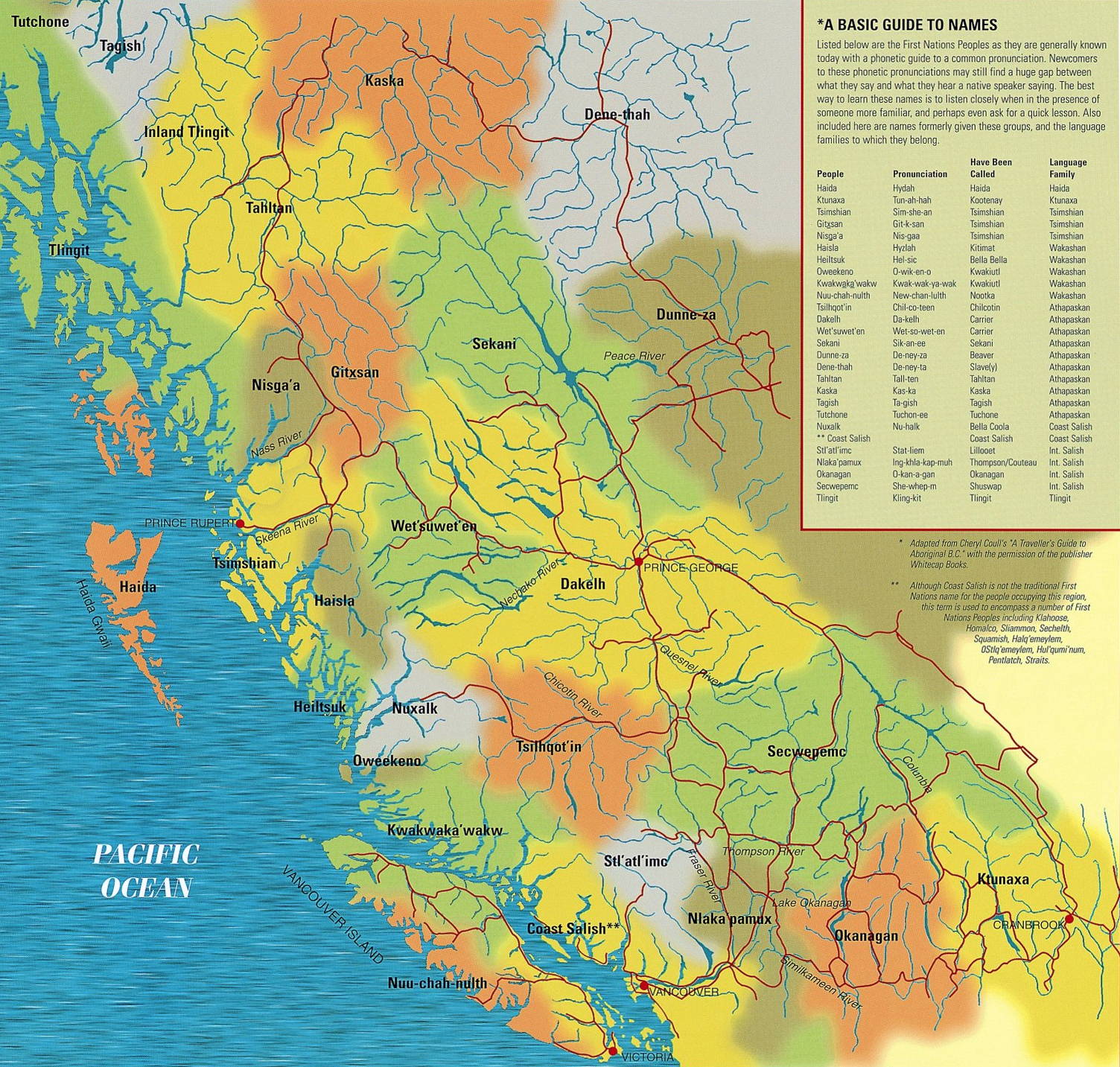
Wendy got a kick out of the totem pole figures. I found a map online to help me figure out where the originating First Nations were located who carved the poles.

Two Haida mortuary poles are on the south end of the park. They were erected at t’anuu ‘llnagaay (eelgrass town). One was built for a high-ranking woman who was shot while traveling through the San Juan islands. Her cremated remains were placed in the cavity behind the frontal board. The other was in front of the House That Makes a Noise, a large six-beamed house owned by Gwiskunas, a member of the Qadasgo Creek lineage of the Raven clan of the Haida.

Kwawaka'wakw Honouring Pole

A Kwakwaka‘wakw Heraldic Honouring Pole was built to recognize the Hunt and Whonnock families of the carvers. It was carved by Sean Whonnock and Johnathan Henderson in 1999 from a log that was 553 years old.

Nearby is a Gitxsan Pole, raised by chiefs Tu’pesu and Wawralaw in the second half of the nineteenth century at Gitsegukla (Skeena Crossing). Its name translates to Great Protruding (Being) from the Lake and includes a section of figures representing a legend of a woman crossing the lake who saw the faces of children in the water, leading to a song about that vision becoming a crest for her family.

Another Gitxsan Pole named Skim-sim and Will-a-daugh belonged to Chief Wiha (Wee-kha, Ernest Smith) of the Wolf (Gilt-Winth) clan. Topped by a giant woodpecker, it has a prominent beak of the mountain eagle Skim-sim, who kidnapped and mated with a young woman and devoured their offspring. At the base is Will-a-daugh, a chief’s niece at Ke-an (Prince Rupert), who carries with her a child she conceived from a wood grub. Seems like a rather gruesome pole from my perspective, but we’re just getting started.

Wawadit'la House

The Wawadit’la House was built by Mungo Martin as an authentic Kwakiutl house with the hereditary crests of his family on the house-posts. The Kwakwaka‘wakw Heraldic Pole out front features crests from the various nations of the tribe. At the base is Dzunukwa, the Wild Woman of the Woods. The story goes that a man chased her for stealing dried fish and eventually married her, and her half-human son became the founder of the Namgis family at ‘Yalis (Alert Bay).

Kwakwaka'wakw House Post

Wendy particularly liked the Huxwhikw, or Cannibal Bird, that graced the top of a Kwakwaka‘wakw House Post. The story is that this servant of Baxwbakwalanuksiwé, the Cannibal-at-the-North-end-of-the-World, uses its long snapping beak to crack open the skulls of men to eat their brains or pluck out their eyeballs. Ewww!

I’m glad that the bird now has a disc in its beak to change the reference to the Raven stealing the sun, a story of how the Raven was once a snow-white bird who fell in love with the daughter of Gray Eagle, the guardian of the sun, moon and stars, and fresh water. Gray Eagle hated people and kept these treasures hidden. Raven stole the sun, moon and stars, and water hanging on the side of Gray Eagle’s lodge, along with a brand of fire. Raven flew with them up through the lodge’s smoke hole. He then hung the sun up in the sky along with the moon and stars, and dropped the water on the land. The fire brand’s smoke turned the Raven black and eventually burned his bill, so he dropped it into rocks, which is why if you strike two stones together sparks of fire fly out. I’m not sure of the physics in that tale, but I sure like it better than skull-cracking cannibal birds!

Beacon Hill Park

Beacon Hill Park Pinks

We eventually reached the tiny plot of roses at Beacon Hill Park. They paled in comparison to the roses at the Empress, but the park did feature many beautiful plants, including Tibouchinas, pink stunners, and a fascinating Red Tiger flowering maple. It isn’t actually a maple, but this Abutilon’s leaves resemble that of a maple. It has yellow flowers with deep red veining that remind me of Chinese lanterns, complete with pull cord.

Red Tiger Abutilon flower

Walking back towards our hotel, we passed through the park’s open grassy hilltop, lovely ponds, and majestic trees. It is truly a wonderful urban park.

We were hungry by the time we returned to the hotel area, so we had a tasty lunch at The Old Spaghetti Factory.

As we passed the Inner Harbour Causeway on our way back to the hotel, we could see the Coho ferry we would be riding back to Washington in a few days. I got a shot of boats with the British Columbia Parliament Buildings in the background.  Each night from our hotel room we could see them outlined in lights. We had started our walk with a mosaic orca, and ended with a horicultural one: the Surfacing orca made of plants at one street corner.

Inner Harbour

Later that afternoon, Wendy relaxed at the hotel while I walked over to the Old Victoria Custom House. This striking three-story building was completed in 1875. I like its bright red brick walls with stone corner quoins. One of the houses on our cul-de-sac acquired some weird fake stone corner quoins a few years back, and let’s just say that the Custom House pulls off the look much better.

Old Victoria Custom House
Kayak on the Inner Harbour

I didn’t just walk over there to see the Custom House, however. I walked out on a nearby float to view the seaplanes, boats, and kayakers. I watched with some amusement as tourists made their way across the harbour, some struggling to dock their kayak at a rental shop.

Back in July 1998 my friend Wendy Robinson, who at that time taught science at Bartlesville High and was known as Miss R., treated me to a birthday ride on an old de Havilland seaplane out of Victoria’s Inner Harbour. It was great fun to take off and land on the water. I’d always wanted to fly in a seaplane since reading The Viking Symbol Mystery as a young boy. In that tale the Hardy Boys visited the Canadian Northwest Territories and learned to fly a seaplane. I’m not sure if it was a DHC-2 Beaver or a DHC-3 Otter that Miss R. and I rode in, but I do know one thing: it sure was noisy! I don’t plan to ever fly in one again, but it was a worthwhile experience.

Seaplanes

My bride and I had a fun first day in Victoria, to be followed the next day with a trip to the Victoria Art Gallery and Butchart Gardens.

SLIDESHOW | PHOTO ALBUM

Honeymoon Day 13: Art & Butchart

< Honeymoon Day 11: To Canada from the Port of the Angels 

Posted in art, photos, roses, travel, video | Leave a comment