Told Tales, Part 2: The Life You Save May Be Your Own

March 5, 2016

The Life You Save May Be Your OwnMeador PostDuring our Spring Break in 2015, Wendy and I were snuggled in a cabin in the Ozarks when she read to me “The Life You Save May Be Your Own” by Flannery O’Connor.

The title is taken from the road safety signs that once adorned roadside billboards across rural America. Ad man Robert S. Walstrom coined the phrase in 1931, and O’Connor borrowed it for her Southern Gothic tale.

O’Connor’s works examine life through the lens of her Roman Catholic faith and often feature grotesque and freakish characters. She once wrote:

Whenever I’m asked why Southern writers particularly have a penchant for writing about freaks, I say it is because we are still able to recognize one.

flannery o'connor

Flannery O’Connor

“The Life You Save May Be Your Own” tells of the intersection of desolate older Lucynell Crater and her deaf-mute daughter with the tramp Tom T. Shiftlet. The names hit you over the head: shiftless Shiftlet confronting the empty Craters. The color imagery is strong and clear: Shiftlet’s black suit, Crater’s gray hat, and the daughter’s “long pink‑gold hair and eyes as blue as a peacock’s neck.” Shiftlet paints a car green, but then adds a band of cowardly, sickly yellow.

Flannery once wrote:

When you can assume that your audience holds the same beliefs you do, you can relax and use more normal means of talking to it; when you have to assume that it does not, then you have to make your vision apparent by shock — to the hard of hearing you shout, and for the almost-blind you draw large and startling figures.

A particularly strong figure at the start of the tale introduces Shiftlet:

He turned his back and faced the sunset. He swung both his whole and his short arm up slowly so that they indicated an expanse of sky and his figure formed a crooked cross.

Shiftlet’s opportunity for grace is heightened by additional Christ imagery, including his occupation as a carpenter. But when he sees a chance to acquire the car, “In the darkness, Mr. Shiftlet’s smile stretched like a weary snake waking up by a fire.” He squanders the offerings and the storm clouds build. He is cut off from the sun, and we know that means from the Son as well. His prayer that the Lord would “Break forth and wash the slime from this Earth!” is answered by raindrops pelting down upon his car as he races towards Mobile.

But this is a story with much more than stark imagery, for it is laced with black humor. There is the daughter following Tom about, babbling “Burrttddt ddbirrrttdt” and clapping her hands. There is the old woman offering a car for Tom to sleep in, and, when he says the monks of old slept in their coffins, her reply, “They wasn’t as advanced as we are.”

Wendy had read to me a story overflowing with symbols of all sorts, an evocative and harrowing tale of bartering, betrayal, and bluster. I responded over time with a few favorite stories by another master of imagery, Ray Bradbury. Those will be the subjects of the next installment of this series of posts on our Told Tales.

Posted in short stories, Told Tales | 1 Comment

Return to Sparrow Hawk Mountain

Meador PostHike Date: February 21, 2016 | SLIDESHOW | PHOTO MOSAIC

On a sunny and warm Sunday afternoon in February 2016, Wendy and I decided to return to Sparrow Hawk Mountain near Tahlequah. We’d thoroughly enjoyed a five-mile hike there the previous April, and I was interested in exploring some of the side trail loops we had skipped on that initial outing, while Wendy was looking forward to a workout in the woods. The elevation changes on the trail certainly provided some exercise on what turned out to be a 3.8 mile hike.

Sparrow Hawk Mountain Trail Tracks

Before we had headed out to Tahlequah, Wendy and I checked that our state fishing licenses were in our packs, knowing that one can face a hefty fine for hiking at Sparrow Hawk Mountain without a fishing or hunting license or a wildlife conservation pass. In fact, a woman had run up to our car at the trailhead, having heard about the fines and asking for verification of the issue; she decided her group would forgo a hike since they lacked licenses. As it turned out, Wendy and I hiked on invalid licenses. I had presumed they were good for a year and would last until April 2016. But when I happened to pull out my license at a stop along the hike and actually read it, I was chagrined to discover that the licenses are for the calendar year only and had expired at the end of 2015. Thankfully no game wardens were present to fine us or the other hikers, many of whom may have similarly lacked valid licenses.

We drove 45 miles south to Tulsa for lunch at Spaghetti Warehouse before driving 47 miles east on US Route 412 and then 26 miles southeast on Oklahoma Highway 82 and through Steely Hollow over to Sparrow Hawk Mountain, which lies a few miles northeast of Tahlequah.

There were quite a few cars at the trailhead, and we climbed the initial steep ascent and regularly encountered fellow hikers throughout the hike, except on the side loops and on a bushwhack we made off one of those loops. Many were college students from Northeastern State University, including a very tall male basketball player escorting a rather short girl. I smiled, thinking how she would need to stand on her own shoulders to snatch a kiss from him. I’m grateful Wendy and I are not so mismatched in height.

Above the Illinois River

Binghams Trail

We reached the high spot above the Illinois where the trail heads north along the mountainside for great river views. Soon we reached the south entrance to Binghams Trail, a side loop constructed by Green Country Cyclists. It was a pleasant diversion and included an accurate mile marker sign.

Eventually it looped back to the main trail, not far south of the popular overlooks on the Illinois. Young lovers were out on the slopes down below the trail, enjoying the views and each other. Wendy and I had already descended down the bluffs back in April for the vistas, so we just stopped for a snack up on the main trail.

We headed on north, both of us suffering from strong allergies in the warm winter air. I even saw a fly and some gnats on the hike, unwelcome reminders that our mild winter means the insects will be out in force this spring. We eventually reached the entrance to the other major side trail, this one marked only by a couple of crossed limbs. So I’ve termed that loop the X Trail. Like Binghams Trail, it heads eastward along the top of the mountain before turning north and then returning west to the main trail.

X Trail

Wendy was enjoying hunting for pretty rocks with crystals throughout our hike, so when I spotted a large stony wash down below, we bushwhacked down to it in case some interesting rocks had washed down. While it wasn’t a lode of crystal rocks, the rocky bed of the dry hollow was interesting to traverse.

Down in the wash

Bushwhacking our way back up the hillside, we passed a violently ripped tree. Back on the trail, we came across a ROTC wayfinding marker, and I posed by a large tree trunk gall.

Such gall

The Illinois

It was warm enough and our allergies severe enough that I decided to not continue northward to Sparrow Hawk Village. We turned back along the main trail, I took a final shot of the Illinois, and we made a final diversion along a side route down to the trailhead. It had been great to be out and about, even with our drippy noses. It is a long haul at school between the winter and spring breaks, and Wendy and I are eagerly looking forward to getting away to Sugar Ridge Resort at Beaver Lake in Arkansas in the middle of March.

SLIDESHOW | PHOTO MOSAIC

Posted in day hike, photos, travel | Leave a comment

Icy Bluffs at Osage Hills

Hike Date: January 24, 2016 | SLIDESHOW | MOSAIC

Meador PostWe were blessed with two warm weekends in late January 2016, and Wendy and I were determined to do some hiking. A sunny and windy Sunday afternoon found us undulating westward along hilly Highway 60 west of Bartlesville to Osage Hills State Park for a three-mile hike.

I’ve hiked at the park over 30 times since July 2009, with many of those treks documented on Flickr. I had fun creating a trail map over the years, which is still featured on the state’s tourism website. For this outing, I opted to park at the old stone pump house [2012 photo] built by the CCC. While the three mountain bike trails originate there and are a welcome alternate hiking system, I was hoping we might find the nearby off-trail bluffs interesting. So we headed southwest around the field to the big metal shed, where a side trail (a dotted line on my trail map) leads over to the Lake/Tower Loop.

Trail Track

Wendy and I were surprised at how muddy and wet the trail was; we hadn’t experienced this much moisture over in Bartlesville. Thankfully that meant that when we clambered down into a gully between this side trail and the main lake loop trail, we found a frozen side stream. There was a nice frozen puddle below some lovely icicles.

Farther upstream there were layers of icicles clinging to the bluff, and Wendy posed amidst this winter wonderland to provide scale. At the head of the gully I shot a panorama of the icy bluff, frozen waterfall, and its pool from beneath a large overhang.

Wendy had fun ducking behind an icicle curtain, and plucked an ice sword for herself.

Panorama

Then we hiked past the park office to the campground for a pit stop at the bath house that is kept open through the winter. Ascending the hillside on the lake trail, we passed the CCC observation tower [2011 photoand climbed past the old amphitheater [2009 phototo the remains of the CCC camp. Recently I found some great photos of the camp online at Kyle Thoreson’s Crosstimber Naturalist website. That told me the old stone chimney at the camp [2011 photo] was once on the north wall of the officer’s quarters, as shown in a nice schematic and a historical photo. The display board at the camp site, which has been blank for years, ought to be refitted with blow-ups of these photos and diagrams and protective transparent covers.

Wendy got a nice shot of a fractured smoking mushroom along the trail. When we reached Lake Lookout, she spotted a frozen sheet of water flowing down a rock slab. She clambered down to search for more icicles and found them, snapping a photo of me atop the water feature.

We took the side trail down to the dam and visited the spillway, but there was too much flow from the lake for icicle formations. We walked along the Lake Lookout access road to complete our three mile hike at the old pump house. Wendy and I are both grateful to have the trails of Osage Hills only 30 minutes west of home, and the following weekend would find us journeying an hour north to revisit the trails at Elk City Lake up in Kansas.

Slideshow | Photo Mosaic


Posted in day hike, photos | Leave a comment

Told Tales, Part 1: De Profundis

Meador PostA tradition Wendy and I have followed when we are on the road, particularly at Christmastime, is reading short stories to each other. It all began a few years ago with me reading to her the final paragraphs of Oscar Wilde‘s De Profundis, even though it is actually not at all a short story.

De Profundis (From the Depths)

De Profundis

In 1897 Oscar Wilde was completing the final months of a two-year imprisonment for homosexual acts. He composed a 50,000 word letter to his dissolute lover, an epistle which may never have been delivered. It was partially published in 1905 but not completely and correctly published until 1962Max Nelson in The Paris Review describes the piece as, “…petulant, vindictive, bathetic, indulgent, excessive, florid, massively arrogant, self-pitying, repetitive, showy, sentimental, and shrill, particularly in its first half…It’s also one of the glories of English prose.”

The title refers to the penitential Psalm 130, which begins with, “From the depths, I have cried out to you, O Lord” or “De profundis clamavi ad te, Domine” in the traditional Latin translation. The final part of the letter is the most touching, in which Wilde longs for nature after spending two years in harsh conditions, including months of hard labor. A fall he suffered in the jail chapel, caused by illness and hunger, had ruptured his ear drum, an injury that would contribute to his death three years after his release, at age 46.

I have a strange longing for the great simple primeval things, such as the sea, to me no less of a mother than the Earth. It seems to me that we all look at Nature too much, and live with her too little. I discern great sanity in the Greek attitude. They never chattered about sunsets, or discussed whether the shadows on the grass were really mauve or not. But they saw that the sea was for the swimmer, and the sand for the feet of the runner. They loved the trees for the shadow that they cast, and the forest for its silence at noon. The vineyard-dresser wreathed his hair with ivy that he might keep off the rays of the sun as he stooped over the young shoots, and for the artist and the athlete, the two types that Greece gave us, they plaited with garlands the leaves of the bitter laurel and of the wild parsley, which else had been of no service to men.

We call ours a utilitarian age, and we do not know the uses of any single thing. We have forgotten that water can cleanse, and fire purify, and that the Earth is mother to us all. As a consequence our art is of the moon and plays with shadows, while Greek art is of the sun and deals directly with things. I feel sure that in elemental forces there is purification, and I want to go back to them and live in their presence.

NPG P317,Oscar Wilde,probably by Lord Alfred Bruce DouglasI strongly identify with Oscar’s longing to escape into Nature. I wear too many hats at work, and my varied responsibilities tax and sometimes overwhelm me. Day hiking is my escape, allowing me to shift my focus from the endless to-do list at work to the serenity and beauty of the natural world. Oscar’s suffering far exceeds my own, however, and the final paragraph of De Profundis shatters me:

All trials are trials for one’s life, just as all sentences are sentences of death; and three times have I been tried. The first time I left the box to be arrested, the second time to be led back to the house of detention, the third time to pass into a prison for two years. Society, as we have constituted it, will have no place for me, has none to offer; but Nature, whose sweet rains fall on unjust and just alike, will have clefts in the rocks where I may hide, and secret valleys in whose silence I may weep undisturbed. She will hang the night with stars so that I may walk abroad in the darkness without stumbling, and send the wind over my footprints so that none may track me to my hurt: she will cleanse me in great waters, and with bitter herbs make me whole.

Sharing that profound prose triggered a series of shared stories between Wendy and me, with Wendy eventually responding by reading to me “The Life You Save May Be Your Own” by Flannery O’Connor, which will be the subject of the next installment of this series of posts on our Told Tales.

Posted in short stories, Told Tales | 1 Comment

Winter Break 2015, Part 3: San Antonio

December 30, 2015 – January 2, 2016 | SLIDESHOW | MOSAIC

Meador PostOur penultimate stop for Winter Break 2015 was a return, after two years, to the River Walk area of San Antonio near the memorable Alamo. This time, instead of staying at a hotel east of I-30 and having to walk several blocks to reach the Alamo and the River Walk, we splurged on a second-floor room at the Emily Morgan Hotel, overlooking the north wall of the Alamo. I chose that venue for its prime location and architectural interest.

Emily Morgan & The Yellow Rose of Texas

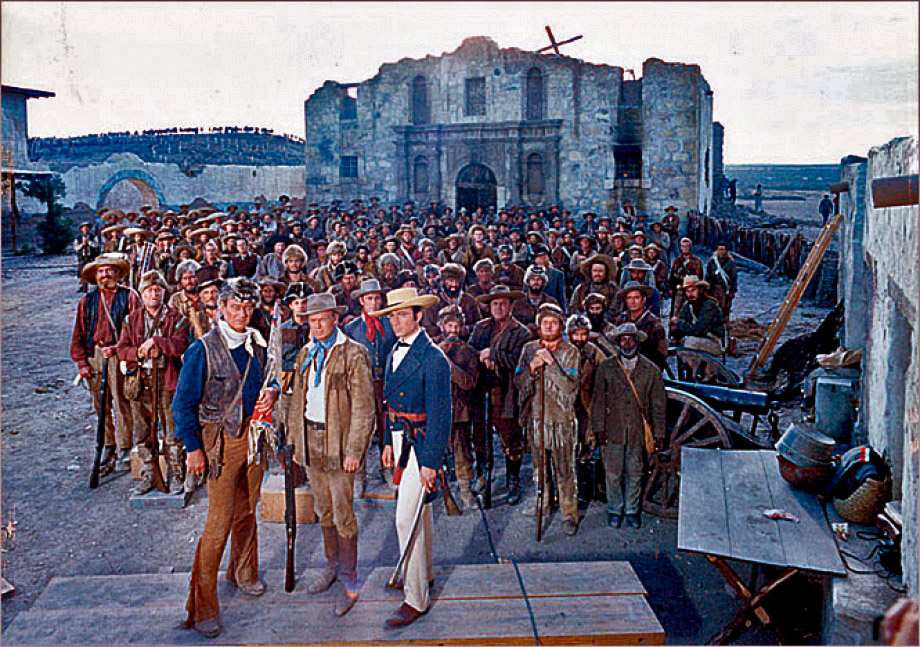
The Emily Morgan, now a Hilton Doubletree hotel, is a 13-story flat-iron building. It is a major contributor to the shock that greeted me, like many others, upon first seeing the fabled Alamo. When I first visited San Antonio in 1984, I was expecting the Alamo to be an old fort/mission out in the desert, with images from the 1960 movie by John Wayne in my head. So I was flabbergasted to find the iconic building dwarfed by skyscrapers crowded around what is left of its footprint. The 13-story Emily Morgan building, with its front door 13 steps from the north edge of the Alamo, was built in the 1920s as a medical building. Back then it was filled with 400 doctors’ offices, a 50-bed hospital on the top floor, and a morgue with crematorium. It became a general office building in the 1970s and then a hotel in the 1980s. In 2012, $4.5 million was spent renovating it into a 177-room Doubletree by Hilton.

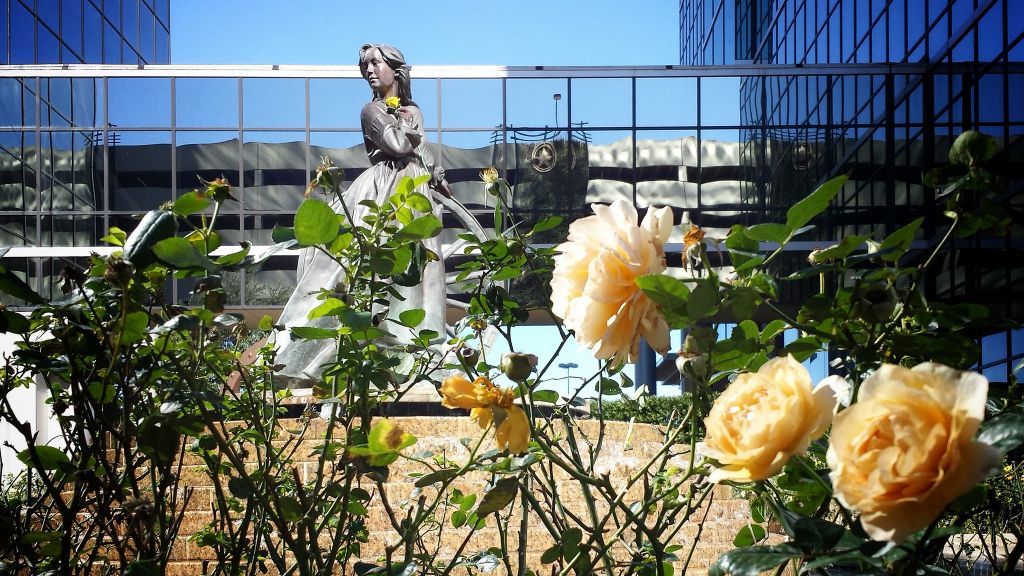
Emily Morgan is sometimes called the Yellow Rose of Texas

Emily Morgan is sometimes called the Yellow Rose of Texas

While the building had always caught my eye whenever I visited San Antonio, its name carried far more meaning for Wendy, a native Texan, than it did for this Okie. Emily Morgan is a misnomer for Emily D. West, a free black of mixed race who was born in Connecticut and contracted to work at a hotel at Morgan’s Point, Texas in 1836. She was captured by Mexican cavalrymen and was in the Mexican camp during the decisive Battle of San Jacinto. A myth arose that Santa Anna was caught unprepared by Sam Houston’s forces because he was preoccupied by a dalliance with Emily.

Later this was amplified by mid-20th century claims that she fit the description of the girl in the blackface minstrel song The Yellow Rose of Texas. I was unaware of the song’s history, as I’d only heard it a few times, and then in the sanitized cowboy versions from Gene Autry, Roy Rogers, or Ernest Tubb. Mitch Miller’s version of the song, which portrayed it as a Confederate marching tune, was once quite popular. Personally, if I’m going to listen to a Texas song, I’d rather listen to Bob Wills’ western swing version of Deep in the Heart of Texasor clap along with Gene Autry on it; even Pee Wee Herman knew about that.

Neogothic Architecture of the Emily Morgan

The Emily Morgan hotel interested me more for its architecture than for the historical connotations of its name. The building is a very tall V, with rooms trailing back from the point, and we secured a second-floor room at the point, directly above the lobby. Thankfully, the very point itself was the bathroom, providing auditory insulation from the tourists on the streets below. It had a huge frosted window beside a bathtub which could produce “champagne” bubbles. In the living area we could look down from an arched window and see tourists snapping photos in the north yard of the Alamo.

The building’s Gothic Revival exterior features carvings and grotesques appropriate for its origins as a medical building. An old crone and a fellow holding his tongue and his head adorn the doorway, and there is a caduceus, the winged staff with entwined snakes, to symbolize the medical arts.

Alamo Plaza and Paseo del Rio

Alamo Plaza Christmas Tree

We were just steps from Alamo Plaza, so I stepped out one night to capture photos of the lights in the trees, the Emily Morgan rising up into the sky, and the beautiful Christmas tree, which came complete with boot spurs. I took the opportunity to snap some photos for folks struggling to compose family shots in front of the tree and the old mission. People are uniformly grateful when a friendly stranger offers to help out so everyone can be in the family shot.

We walked over to the Paseo del Rio, the River Walk, of course. Wendy took day and night shots from the Commerce Street bridge, happy to be up out of the crowds on the riverside sidewalks below. I delighted in lunch at the Casa Rio, my favorite stop in San Antonio, with its colorful sidewalk umbrellas, yummy food, and fun mariachi band. We also enjoyed the holiday lights from the Market Street bridge. San Antonio is a beautiful, and warm, place for Christmas.

Paseo del Rio on a holiday night

Briscoe Western Art Museum

The river taxis were too crowded with tourists for me to suggest we take their “Museum Reach” taxi service upriver to the San Antonio Museum of Art. I saved that for a future visit. But we did walk to the Briscoe Western Art Museum. Its three floors featured more recent works than what one finds at most western art museums in Oklahoma. That’s because it is relatively new, housed in an old Carnegie library that for years was the Hertzberg Circus Museum. Its opening evidently was troubled and long delayed, but we enjoyed it.

Wendy and I both promptly noticed Canyon Princess by Gerald Balciar, a smaller and darker cousin to the huge rendition of it gracing Oklahoma City’s National Cowboy and Western Heritage Museum. I liked the diorama of the Battle of the Alamo, and the striking bronze The Line – Colonel Travis by James Muir. The image of Colonel Travis drawing a line in the sand, asking men to cross who were willing to die in a doomed defense of the Alamo, is a dramatic part of the Alamo legend. Much like the tale of Emily Morgan, there is no hard evidence this actually happened, but it is a memorable, if possibly fanciful, episode.

How Many More by Blair Buswell

The museum’s standout piece for both Wendy and me was Blair Buswell’s magnificent How Many More bronze of a Native American with his arms wrapped about himself, prepared to swing a tomahawk. The museum wisely put him at a height where he could gaze into our faces with an intense but weary look. “Look at that face!”, we both exclaimed. Wendy took a great shot of his visage with her iPhone, staring down the Indian warrior with her modern technology.

Fort Worth

Trip Map

All too soon it was time for us to head to Fort Worth for our reservation at the downtown Omni for New Year’s Eve. I chose to take the Hill Country route along Route 281 instead of I-35. Wendy and I enjoyed the scenery, but it was still a long drive north. By the time we reached the hubbub of the hotel overlooking the convention center and the railyard, we were too exhausted to contemplate our planned event at Bass Hall. Instead, we ordered up room service and had a quiet New Year’s Eve together. The next day we met seven of her relatives for lunch at Babe’s in Arlington and enjoyed a family-style meal. It was fun to meet folks I had only known through Facebook posts and Wendy’s remembrances. Then we drove north back home, with a full weekend to recuperate from our adventure before returning to work.

A final panorama from this trip

It had been a long trip down to the Texas coast, but we were glad we had made the most of our Winter Break. The cold grip of winter would embrace us soon, leaving us pining for our Spring Break in mid-March.

SLIDESHOW | PHOTO MOSAIC

< Winter Break 2015, Part 2: Corpus Christi & Padre Island

Posted in art, photos, travel | Leave a comment