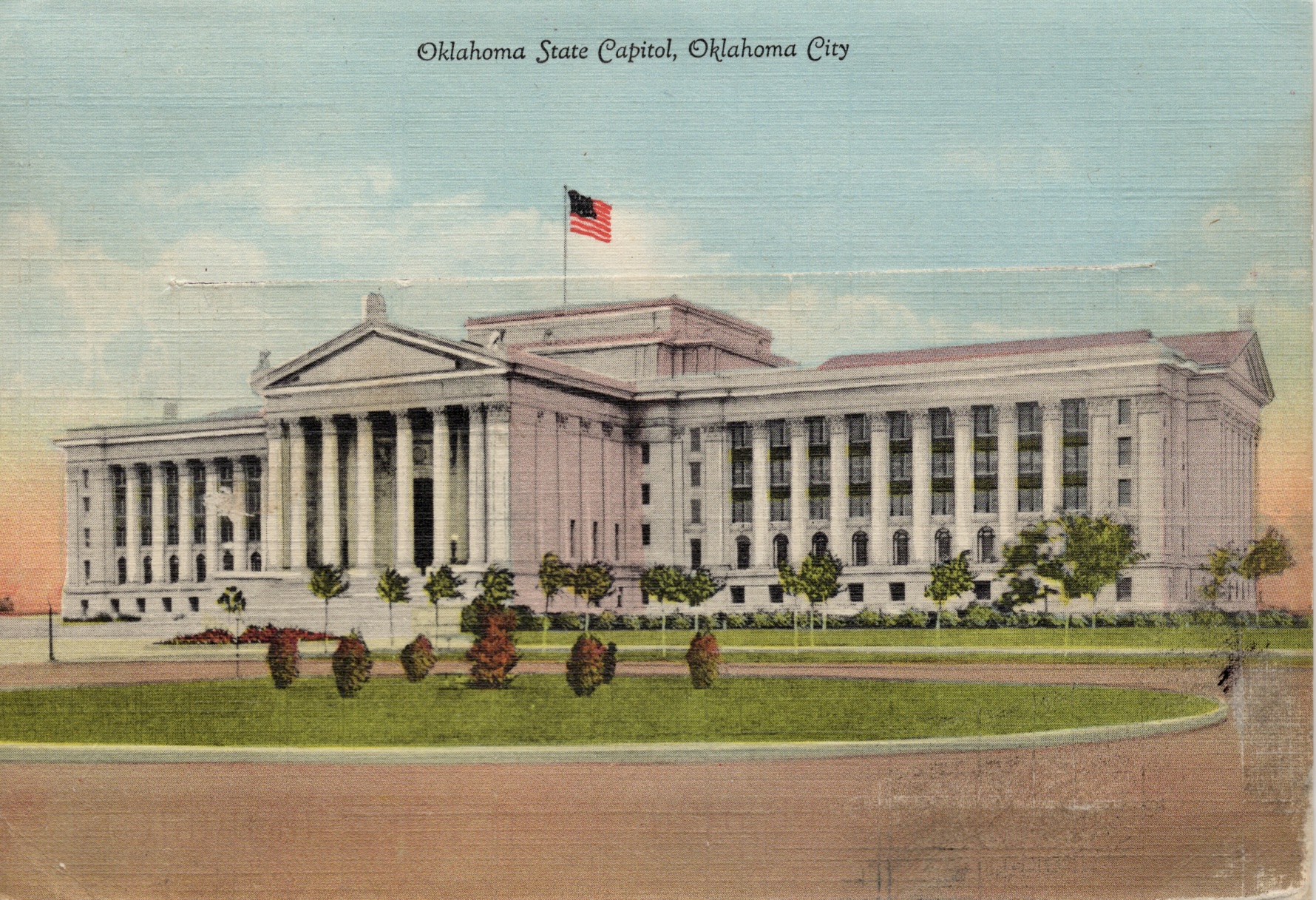
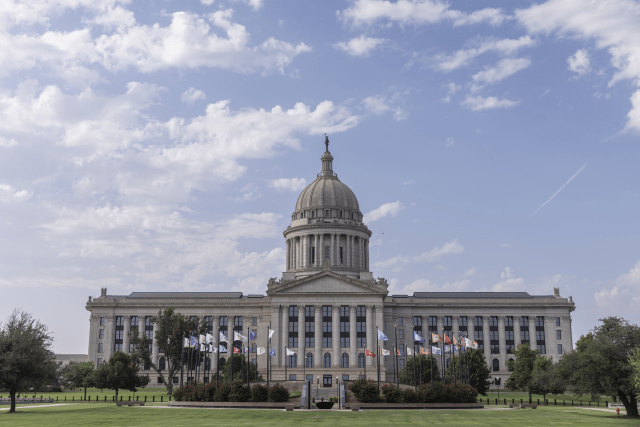
Today’s postcard from a 1940 Oklahoma souvenir pack is of Oklahoma’s Capitol. It is the back cover of the pack and yes, the Capitol looks a bit different these days.
Most obviously, back then there was no dome, and it didn’t get one until the early 21st century. When I was a kid, I thought it appropriate that while the 1914 blueprints included a dome, budget shortfalls and a supply shortage from World War I led to that being cut from the project. The conspicuous absence of a dome decades later effectively symbolized my home state’s struggles.
I worked at the capitol complex in the summer of 1985 as a minimum wage office boy for the Oklahoma State Department of Tourism. On $3.35 per hour, even with free room and board from my parents, I couldn’t afford to eat in the basement cafeteria very often, but there were a few times when I walked along the tunnel from the Will Rogers building to the Capitol for lunch. Frosty Troy, the watchdog publisher of The Oklahoma Observer, could usually be spotted at one of the tables, regaling someone.
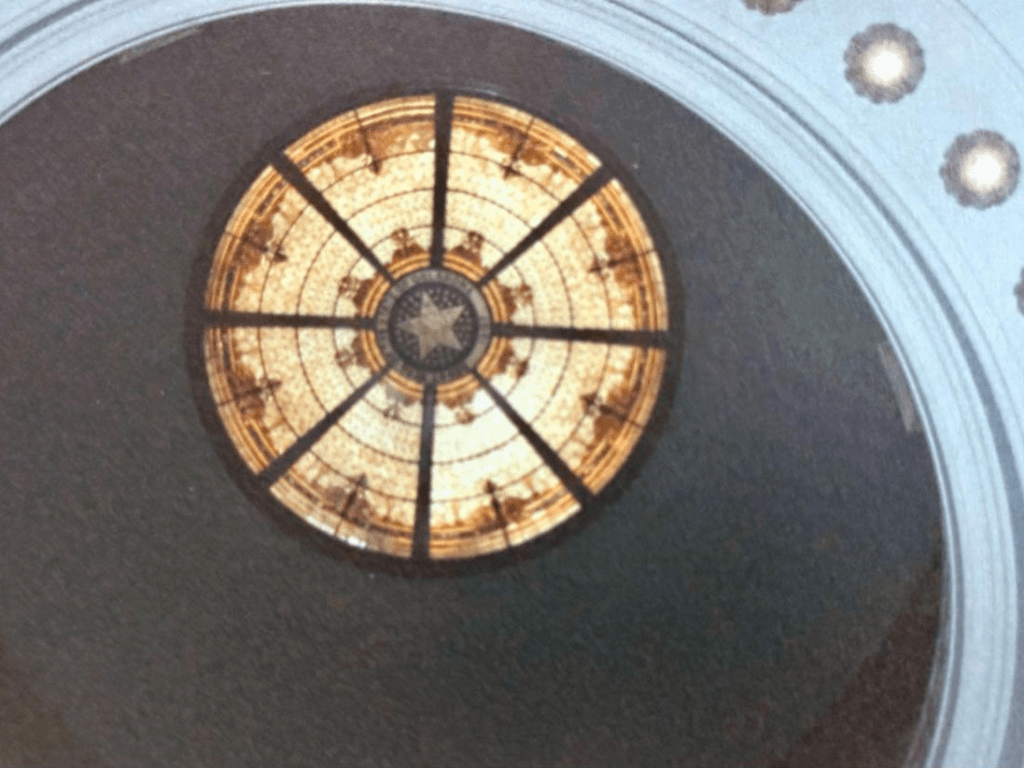
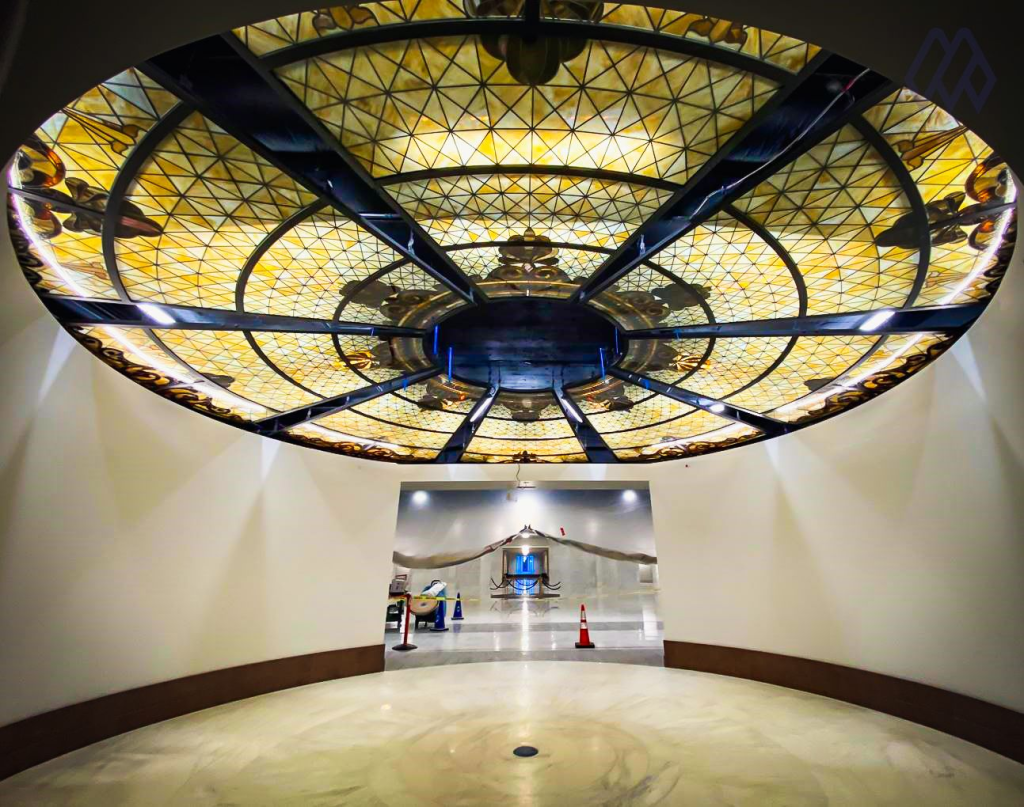
One day that summer, I took my lousy Kodak Ektralite 110 camera over with me and photographed the shallow stained glass saucer dome that used to grace the fourth level of the truncated rotunda. Decades after the real dome was added, the remnants of the old saucer dome were put on display in the State Capitol Museum.
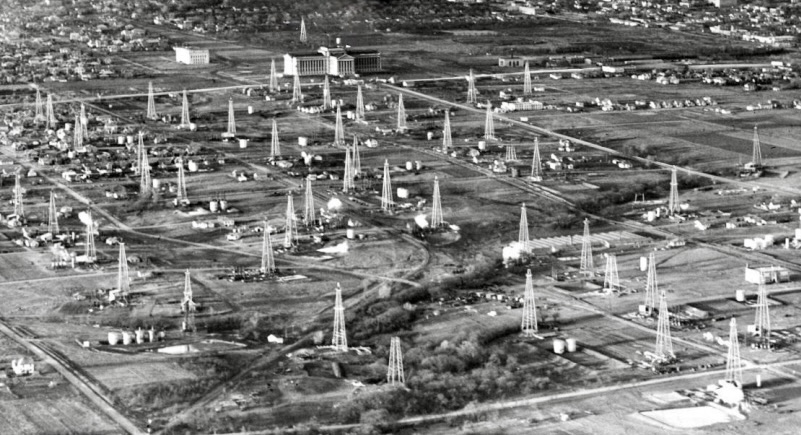
Back in 1928, the discovery of the Oklahoma City Oil Field led to oil wells being scattered across the city. They were once so common that there were still stripper wells and tank batteries scattered about my neighborhood when I was a kid. Dozens of active oil wells were drilled near the Capitol.
A Bartlesville Connection
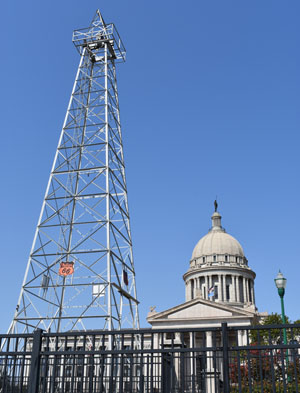
The wells on the capitol grounds included Petunia #1, which was drilled in a flower bed in front of the building in 1941. Fain-Porter Drilling company whipstocked the bore hole for Bartlesville’s Phillips Petroleum, making it a non-vertical directional drill that burrowed beneath the Capitol itself.
A year after my stint at the Capitol, Petunia #1 was plugged by Phillips, its operator and half-owner. That well alone had produced 1.5 million barrels of oil and 1.6 billion cubic feet of gas, providing the state with over $1 million in royalties and gross production taxes…and the Capitol still didn’t have a dome.
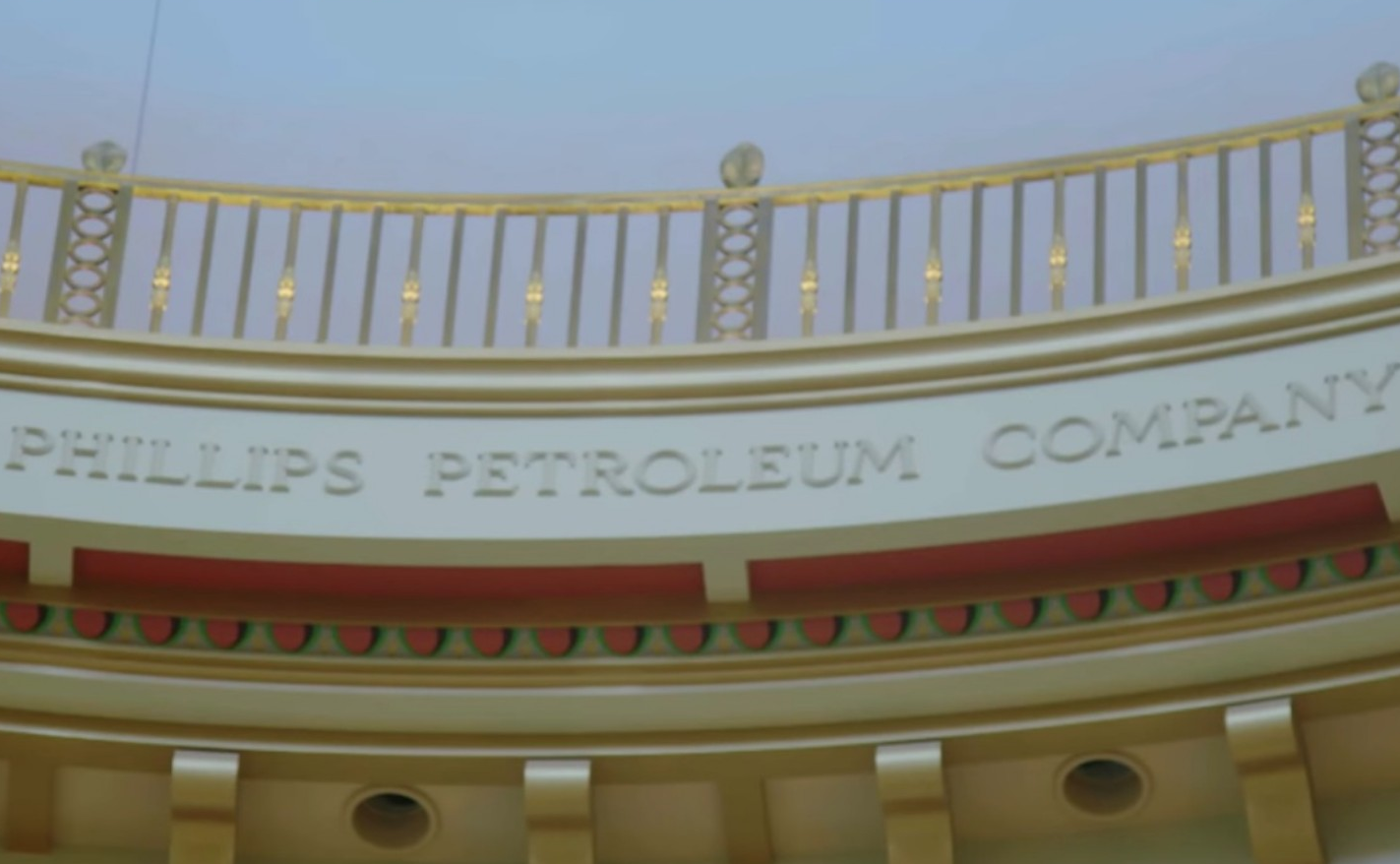
It was an oddball distinction. Governor Frank Keating spearheaded a fundraising drive to finally add a dome, and that work began in 2001. Phillips Petroleum was one of the sponsors, donating $3.5 million towards the project’s $22 million cost.
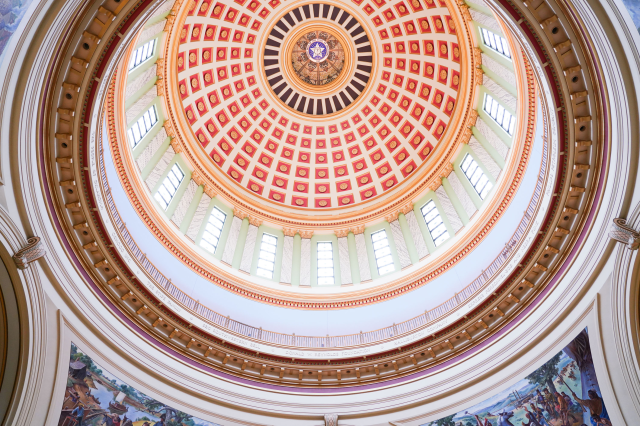
The dome is 157 feet tall with an 80-foot diameter. The outer dome is precast concrete and cast stone, with an inner coffered dome of cast gypsum panels. The gorgeous interior is an interpretation of the state wildflower, the Indian Blanket Gaillardia pulchella.
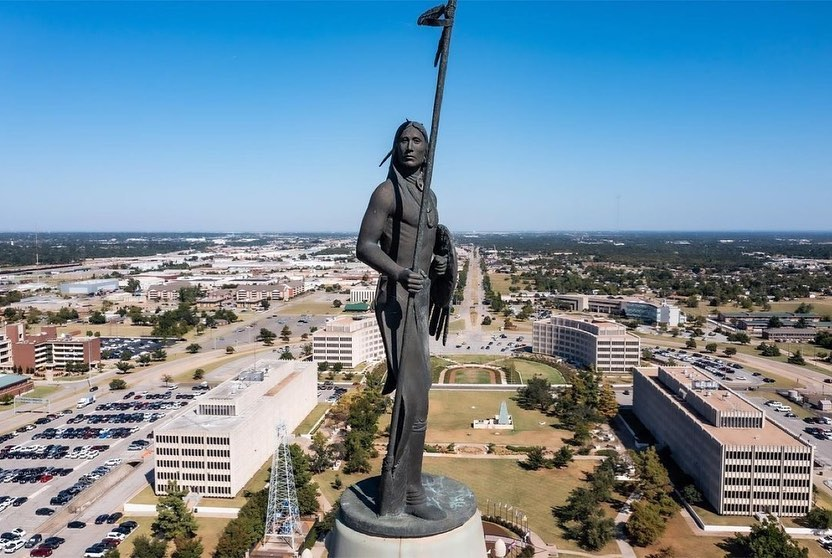
A 17.5-foot bronze statue of an American Indian warrior, called The Guardian, was created by artist and former state senator Enoch Kelly Haney. He refused the $50,000 commission for the piece. There is a 9-foot bronze replica of it inside the Senate Lounge.
You can view many of the artworks decorating the Capitol at the Oklahoma Arts Council’s Oklahoma State Capitol Art Collection website. That does it for this entry in the postcard pack. Tomorrow we head to Ponca City.